
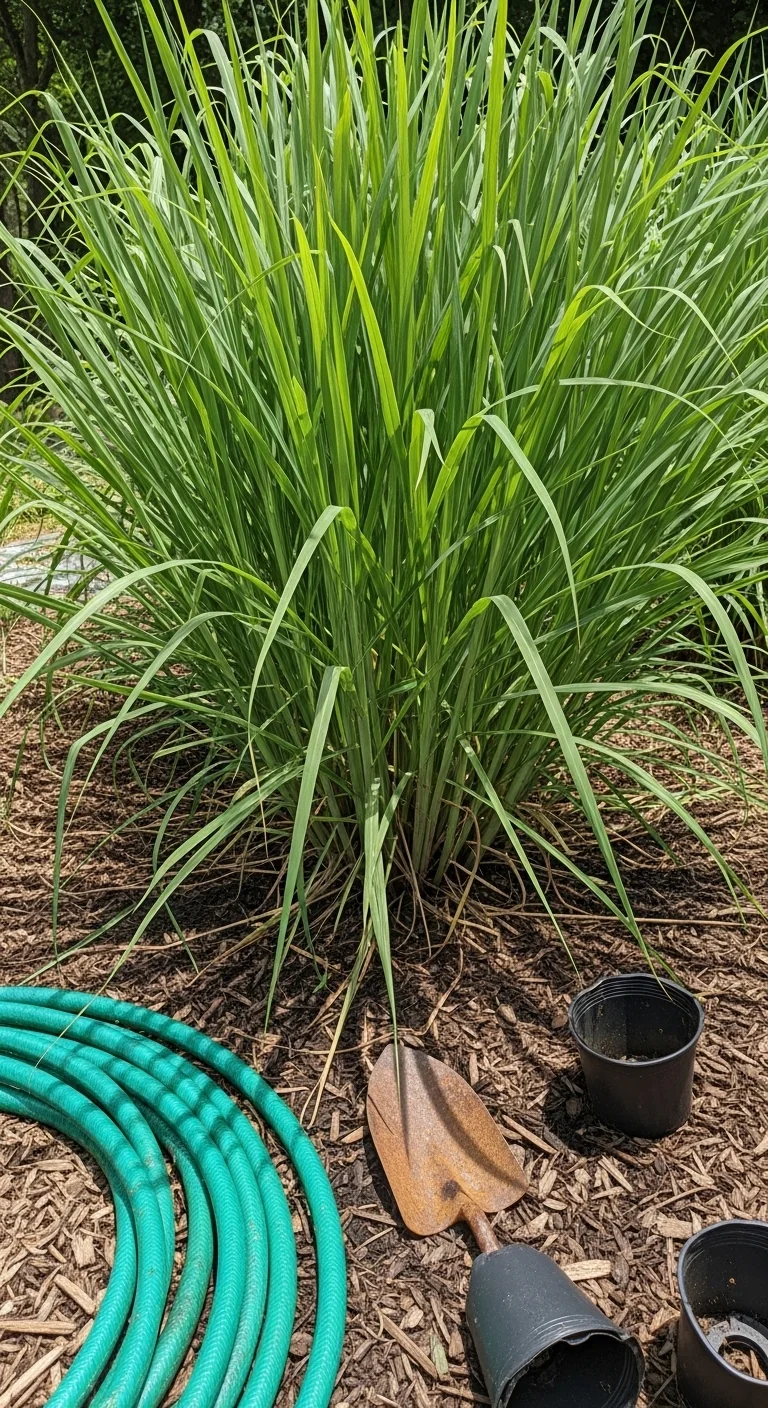
Lemongrass growing works best when you treat the plant as a zone-specific investment instead of a single-season experiment. Match your winter low temperatures and available space to the right propagation method and protection plan, and established clumps deliver edible stalks year after year without repurchase.
This article covers propagation from stalks or division, site selection for ground or containers, soil and watering rules, light needs, overwintering, companions, and harvesting. It excludes commercial-scale oil extraction, purely decorative landscaping, or advanced hydroponics.
You will select the propagation route that fits your setup, decide between in-ground expansion or portable pots, and set measurable thresholds for water, light, and cold protection to avoid common die-off.
Align your local conditions with one of the three decision branches below to lock in the two starter items that give multi-season returns.
The Yield Grid Decision Grid
Branch 1 (Warm climates): Winter lows remain above 20 °F or frost-free periods exceed eight months (USDA zones 9-11 equivalent). In-ground planting supports clump expansion up to 4 feet wide.
Recommended: Items 2, 4, and 7 below. For foundational setup details see the herb gardening for beginners guide.
Branch 2 (Temperate climates): Occasional frosts occur but summers stay warm (USDA zones 6-8 equivalent) and pots can move indoors. Container culture allows seasonal relocation.
Recommended: Items 3, 5, and 8 below.
Branch 3 (Cool or indoor setups): Frequent freezes below 20 °F or limited outdoor space (USDA zones 5 and below or apartments). Stalk propagation plus protected growth cycles maintain supply.
Recommended: Items 1, 6, and 9 below.
Quick Comparison Table
| Option | Key mechanism | Best for | Decision Grid Branch | Effort Score |
|---|---|---|---|---|
| Rooting Store-Bought Stalks | Water rooting followed by soil transplant | Quick indoor starts | Branch 3 | 2 |
| Planting in Raised Beds | Elevated drainage with native soil amendment | Ground expansion | Branch 1 | 3 |
| Growing in Containers | Mobile pots with potting mix | Seasonal moves | Branch 2 | 4 |
| Preparing Soil Mix | Custom blend for drainage and nutrients | All setups | Branch 1 | 1 |
| Watering Thresholds | Top-inch dry check before deep soak | Consistent moisture | Branch 2 | 3 |
| Optimizing Light Placement | Full-sun positioning or supplemental hours | Stalk thickness | Branch 3 | 2 |
| Overwintering Indoors | Cool dark dormancy or bright windowsill | Cold protection | Branch 2 | 4 |
| Companion Planting | Integrated herb bed layout | Pest deterrence | Branch 1 | 1 |
| Harvesting and Maintaining Clumps | Outer-stalk pull and division | Ongoing yield | Branch 3 | 3 |
1. Rooting Lemongrass from Grocery Store Stalks
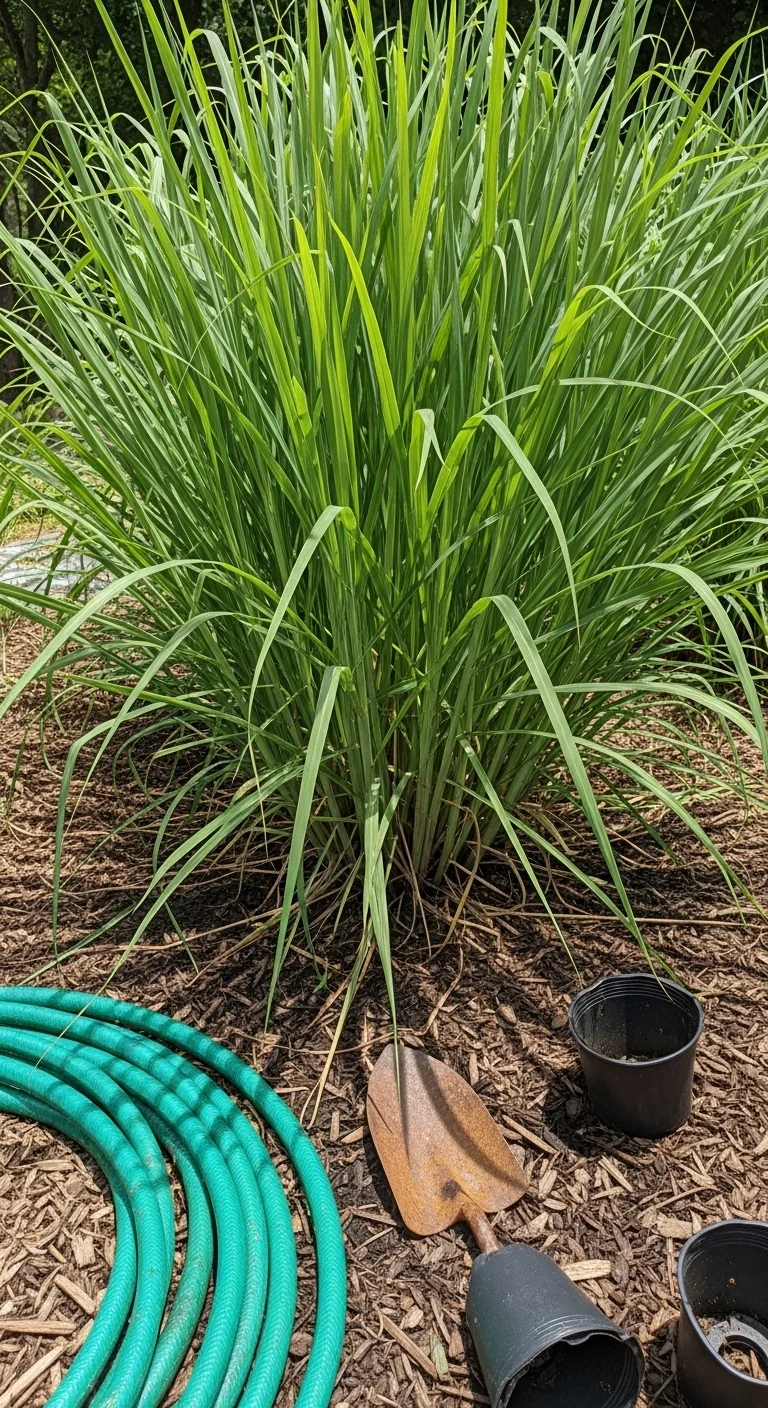
Best for: Branch 3
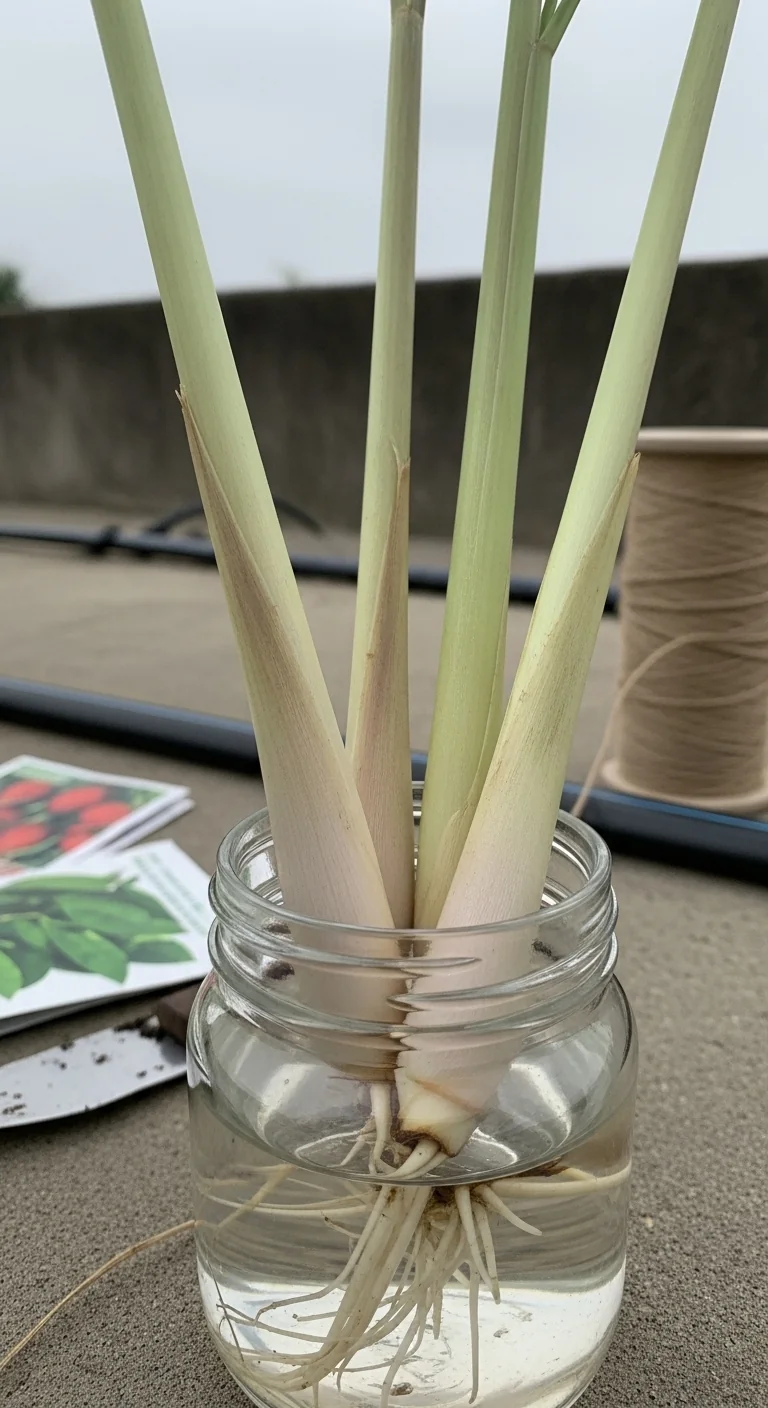
Select fresh stalks with firm bases from the produce section. Cut the bottom inch cleanly, stand them in a jar with 1-2 inches of room-temperature water, and place in bright indirect light. Change the water every two to three days to prevent bacterial rot. Roots appear within 7-14 days at 70 °F or warmer. Once roots reach 1 inch long, transplant into 5-gallon pots or ground beds with the crown just below soil level. This method delivers established plants faster than seed starting and works year-round indoors. Space transplants 24 inches apart to allow clump development up to 3 feet tall. The edge case: stalks stored longer than two weeks in the refrigerator rarely root reliably. Follow with the soil-mix protocol in item 4 for best establishment.
2. Planting Lemongrass in Raised Beds
Best for: Branch 1
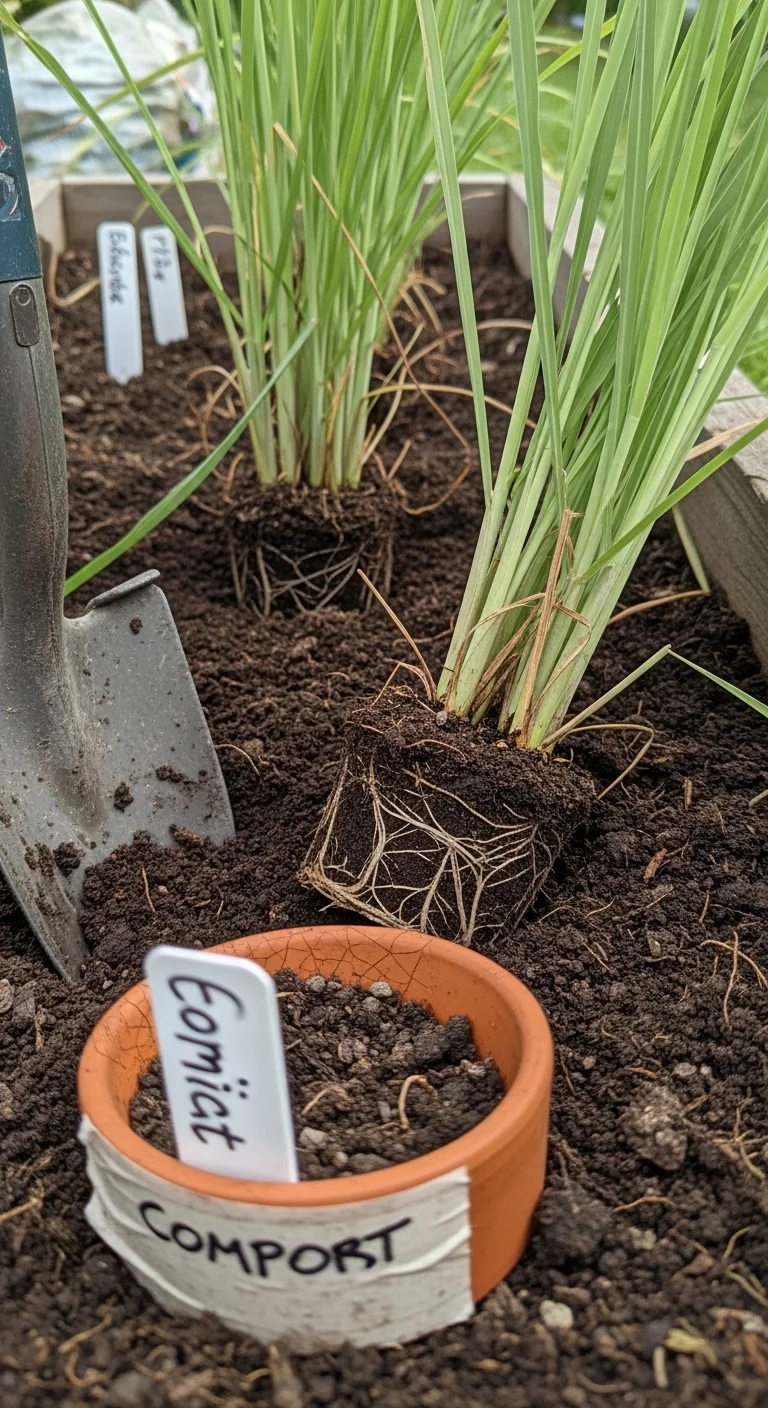
Raised beds provide the drainage and warmth lemongrass needs for perennial clumps. Build beds at least 12 inches high and fill with amended native soil. Plant after all frost risk passes, spacing divisions 24-36 inches apart. This setup suits warm climates where plants remain outdoors year-round.
3. Growing Lemongrass in Containers
Best for: Branch 2
Use 5-gallon or larger pots with drainage holes and quality potting mix. Containers let you move plants indoors before frost and back out in spring. Choose a sunny patio or balcony location and water when the top inch of soil feels dry. See the best herbs for containers guide for complementary pot choices.
4. Preparing the Ideal Soil Mix
Best for: Branch 1
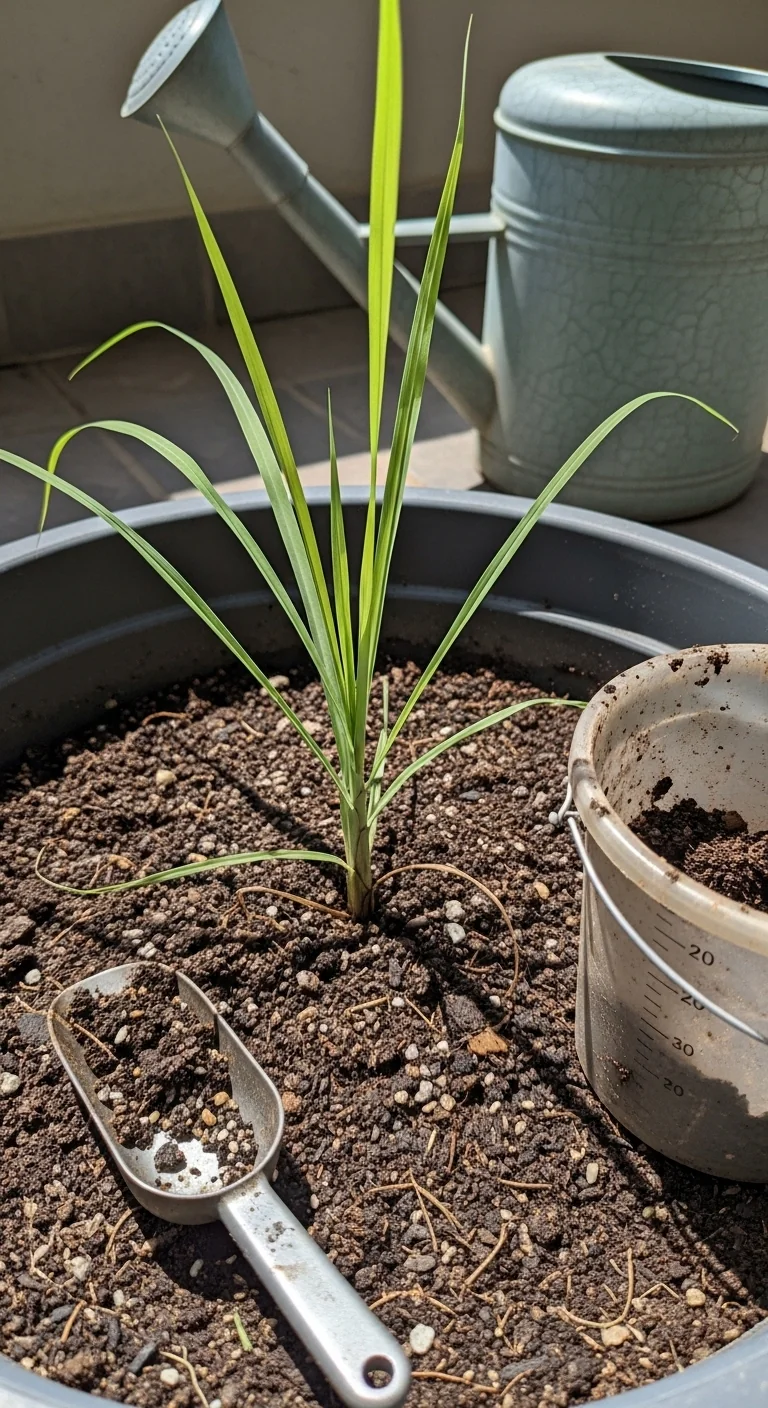
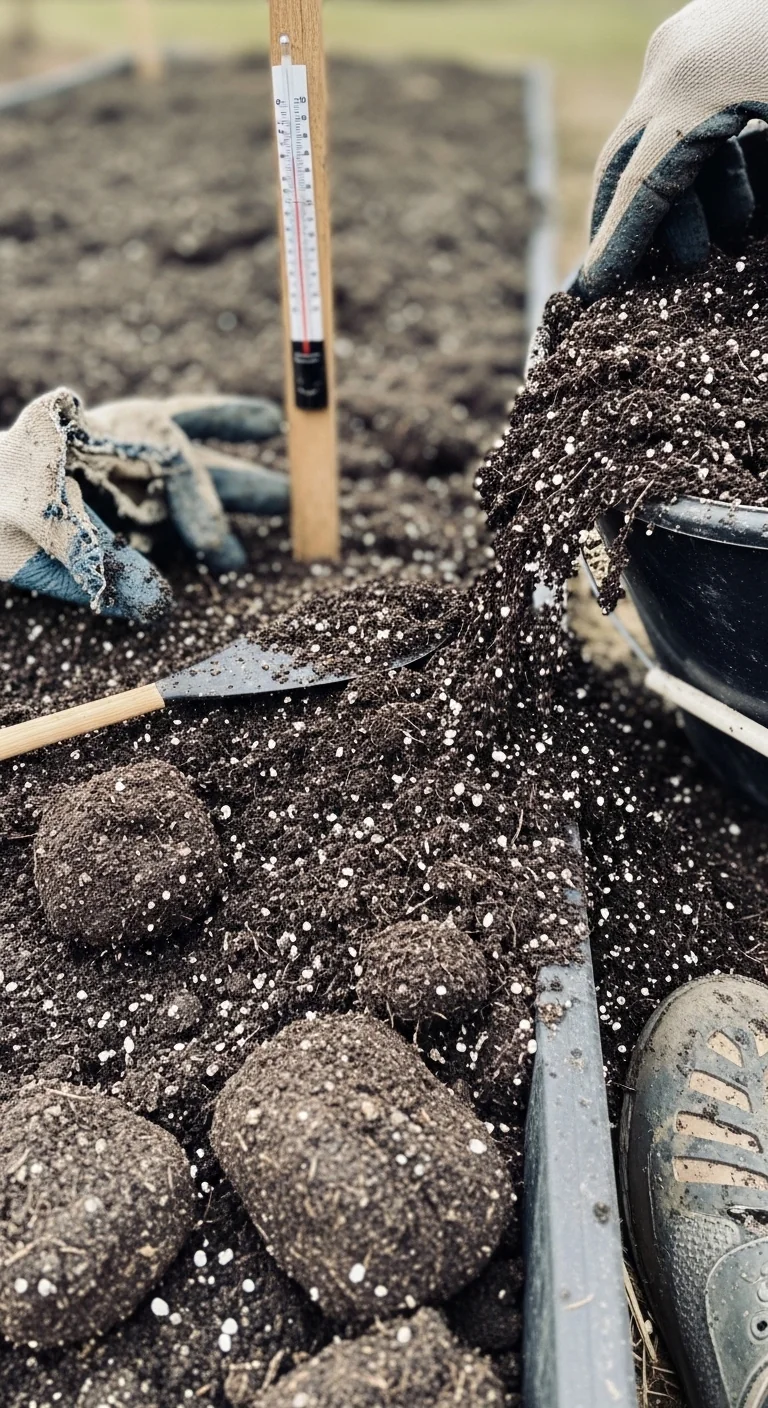
Lemongrass demands well-drained yet moisture-retentive soil with a pH of 6.0 to 7.0. Mix two parts garden soil, one part compost, and one part perlite or coarse sand. This blend prevents waterlogging while supplying nutrients for thick stalks. Test your final mix with a simple pH probe before planting. In warm in-ground sites this preparation supports clumps that expand 3-4 feet wide within two seasons. Avoid heavy clay without amendment, as compacted soil leads to root decline within weeks. The full recipe appears in the soil mix for herbs resource.
5. Establishing Consistent Watering Routines
Best for: Branch 2
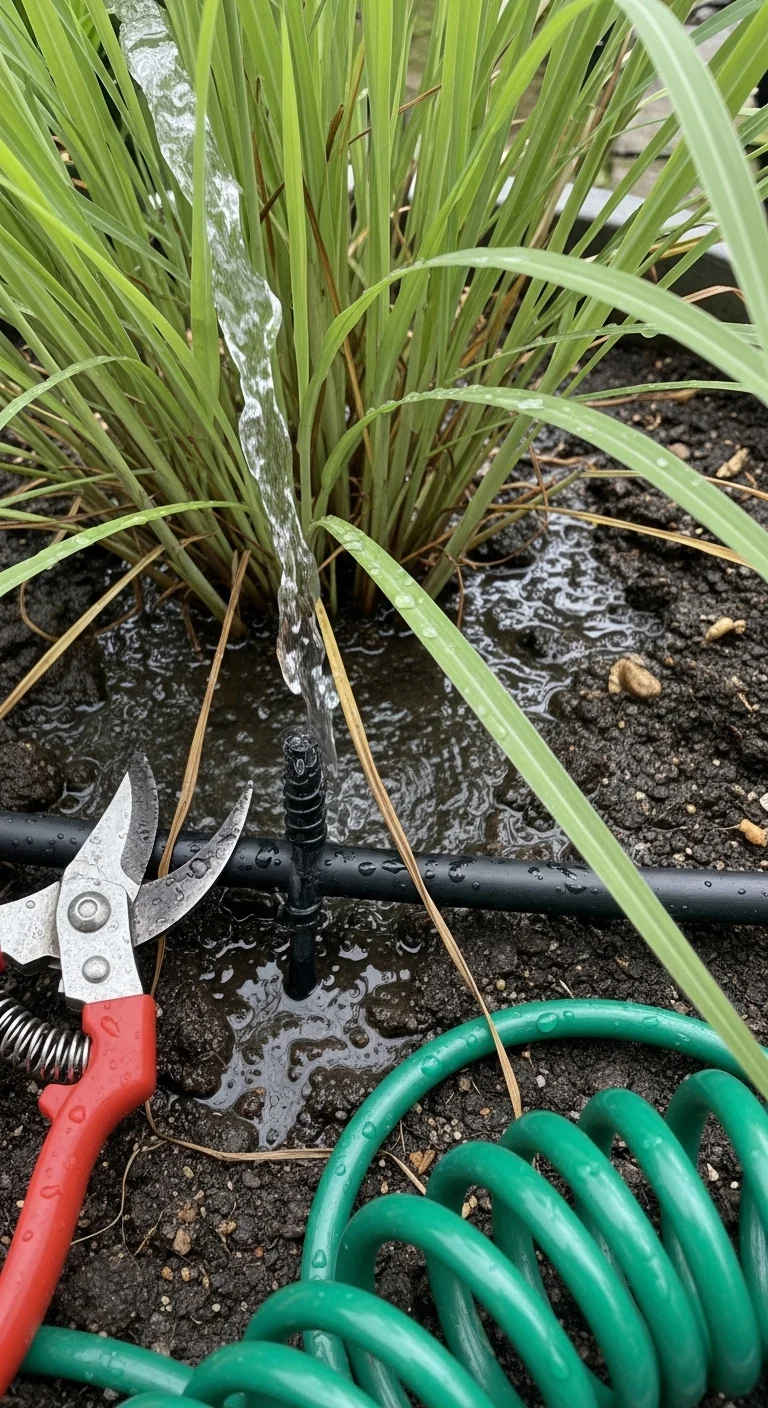
Water when the top inch of soil dries out, delivering a deep soak until it runs from drainage holes. In containers this check occurs every 3-5 days in summer heat. Maintain even moisture without constant sogginess to promote strong root systems.
6. Optimizing Light and Placement
Best for: Branch 3
Provide 6-8 hours of direct sun daily for sturdy stalks and aromatic oils. In indoor or low-light conditions supplement with grow lights kept 12-18 inches above foliage for 12-14 hours. South-facing windows work in temperate regions during summer. Rotate pots weekly for even growth. The threshold rule: fewer than 6 hours of strong light produces thin, pale leaves and delayed harvest readiness. Position away from drying winds or reflective surfaces that scorch foliage.
7. Overwintering Techniques for Cold Climates
Best for: Branch 2
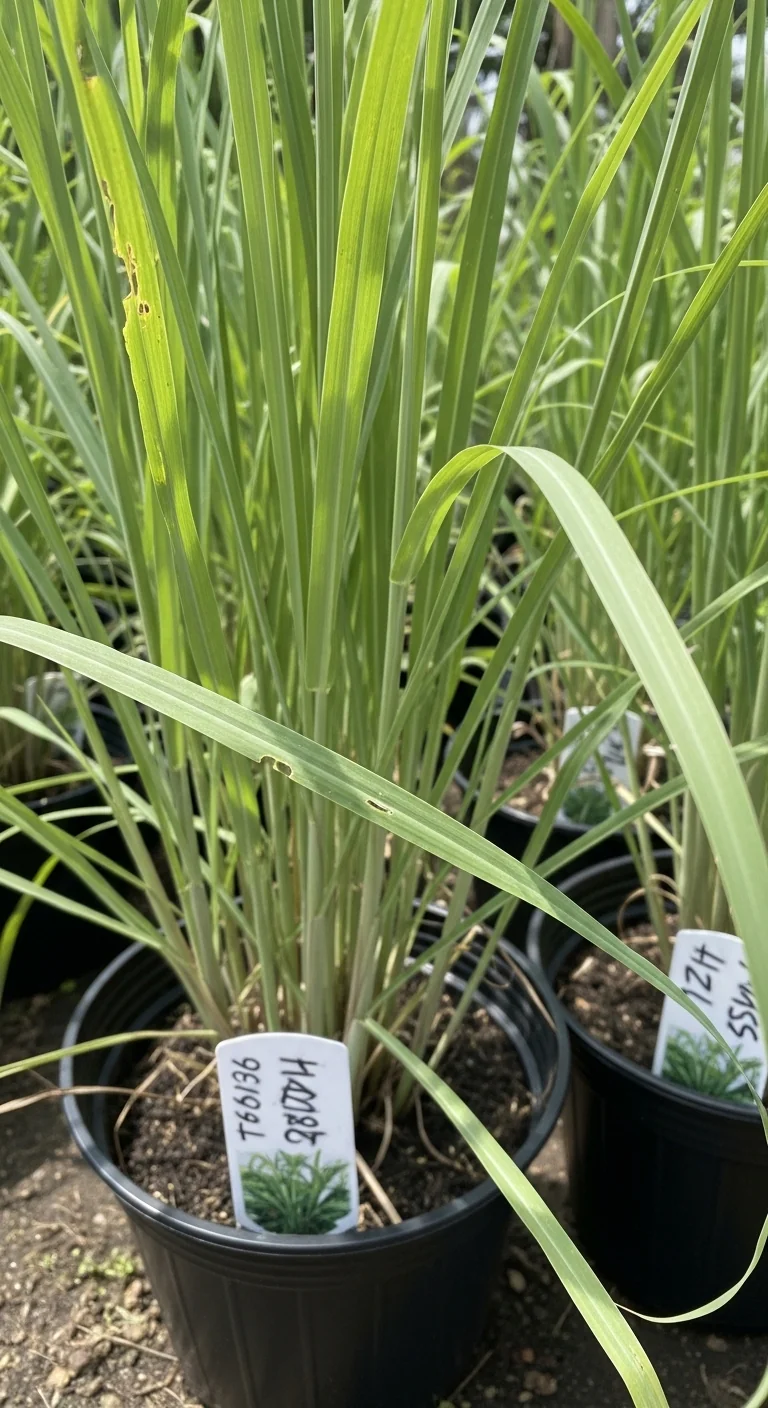
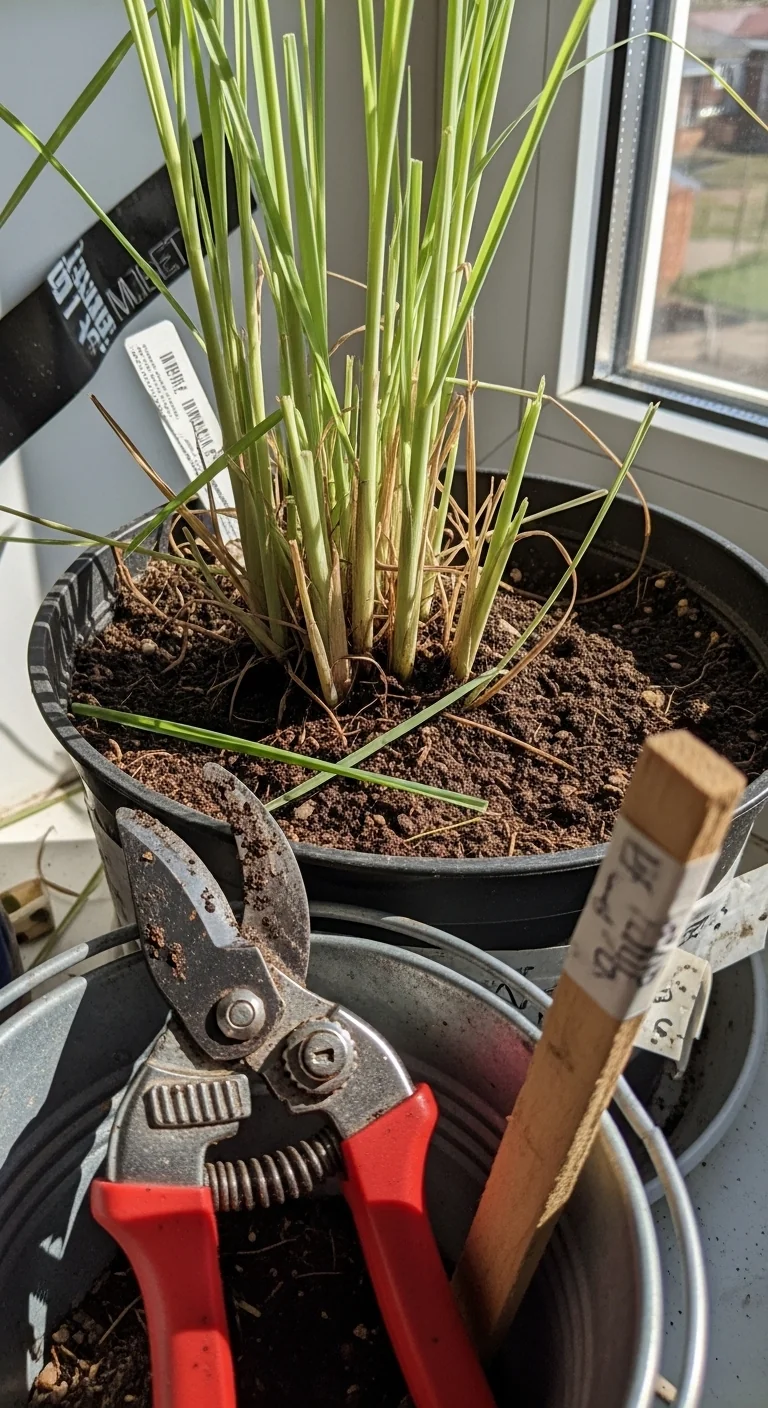
Before overnight temperatures drop below 50 °F, move container plants indoors to a cool, bright spot or dark basement for dormancy. Reduce watering to keep soil barely moist. Trim foliage to 6 inches and resume normal care in spring once outdoor nights stay above 55 °F. This cycle keeps plants alive through winters that would kill in-ground specimens. For ground plantings in marginal zones, dig and pot divisions in late fall. Combine with the harvesting routine in item 9 to divide clumps at the same time and gain free new starts.
8. Companion Planting with Lemongrass
Best for: Branch 1
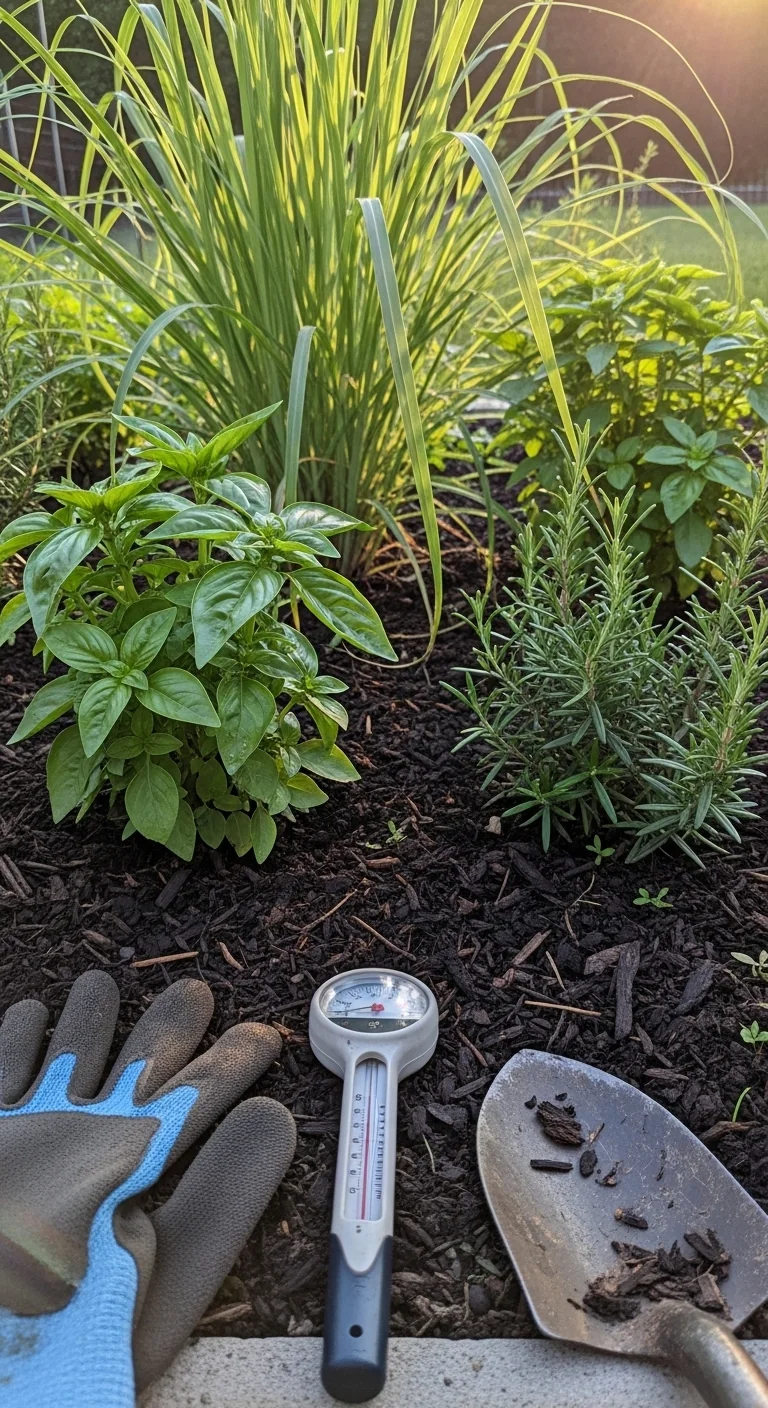
Lemongrass deters certain insects when grown near basil or rosemary. Plant in mixed herb beds with 24-inch spacing. The aromatic foliage creates a natural barrier along garden edges. Full details appear in the companion planting herbs chart.
9. Harvesting and Maintaining Clumps
Best for: Branch 3
Harvest outer stalks when they reach 12 inches tall by grasping near the base and pulling firmly upward. Cut at soil level and leave inner shoots to continue growth. Regular removal stimulates new tillers and prevents overcrowding. Divide clumps every two to three years in spring by separating sections with roots attached. This technique keeps plants productive and supplies material for new plantings. Store harvested stalks in the refrigerator for up to three weeks or freeze for longer use. See the harvesting herbs guide for timing across the season.
Starter Stack (What to Choose First)
For Branch 1 (Warm In-Ground Climates)
Start with item 4 (soil mix) and item 8 (companion planting). The custom soil blend establishes strong roots immediately while companions maximize space efficiency in raised beds. Time estimate: 45 minutes for soil prep plus 20 minutes for layout. Cost range: $15-30 for amendments and starter divisions.
For Branch 2 (Temperate Container Climates)
Start with item 3 (containers) and item 7 (overwintering). Large pots provide mobility for frost protection while the dormancy protocol ensures survival through winter. Time estimate: 30 minutes for potting plus seasonal move. Cost range: $20-40 for one large pot and soil.
For Branch 3 (Cool or Indoor Climates)
Start with item 1 (rooting stalks) and item 6 (light placement). Grocery stalks deliver free plants quickly, and proper light hours guarantee thick growth indoors. Time estimate: 15 minutes for initial setup plus weekly rotation. Cost range: $5-15 for jars and optional grow light timer.
When This Won’t Work
Lemongrass fails when soil remains saturated for more than 48 hours after watering, causing root rot within two weeks. Switch to raised beds or containers with extra perlite if drainage tests show water pooling. The raised bed herb garden layout resolves this issue in heavy soils.
Plants also stall when daily light drops below six hours, producing weak stalks and yellowing foliage. Relocate to a sunnier spot or add supplemental lighting before the growing season ends.
Choosing the Right Option for Your Situation
Budget Threshold
Under $20 total: choose stalk rooting (item 1) plus basic potting mix. Above $30: invest in raised-bed soil amendments and larger containers for faster returns.
Time Threshold
Less than 30 minutes weekly: select in-ground raised beds (item 2) with automated drip if available. More flexible schedule: container setups (item 3) allow batch watering and seasonal moves.
Technical Constraint: Available Light Hours
Less than six hours of direct sun: rely on indoor stalk propagation (item 1) and grow lights. Full sun available: prioritize ground or large-container options (items 2 and 3).
Yes/No checklist:
Do you have a full-sun spot for at least six hours daily?
Can you move pots indoors before frost?
Is your soil drainage test positive (water drains within one hour)?
Will winter lows stay above 20 °F without protection?
Expert Q&A
What pH range keeps lemongrass stalks thick and flavorful?
Aim for 6.0 to 7.0. Outside this window nutrient uptake slows, resulting in thinner stalks even with full sun and water. Test soil before planting and adjust with lime or sulfur only if readings fall below 5.8 or above 7.2.
Can lemongrass survive division in midsummer heat?
Division succeeds only when soil stays consistently moist for the first two weeks after splitting. Perform the task in early morning, shade the new sections for seven days, and water daily until new growth appears.
How do you prevent container lemongrass from becoming root-bound?
Check roots every 18 months. If they circle the pot, lift the plant, trim outer roots by one-third, and repot into fresh mix. This step coincides naturally with spring pruning and maintains stalk production.
Does lemongrass pair well with drought-tolerant herbs in the same bed?
Pair it only with moderate-water companions such as thyme or chives. Its high moisture demand conflicts with true drought-tolerant species and leads to uneven watering challenges across the bed.
What indoor temperature range supports year-round stalk growth?
Keep daytime temperatures between 70 °F and 85 °F with nights above 55 °F. Below 50 °F growth stops and foliage yellows. Use a small space heater or heat mat under pots if windowsills dip too low in winter.
Conclusion
Begin today by selecting your branch, gathering the two recommended items, and preparing one test planting. Next, explore herb garden design ideas to integrate lemongrass into a productive edible layout that expands each season.