
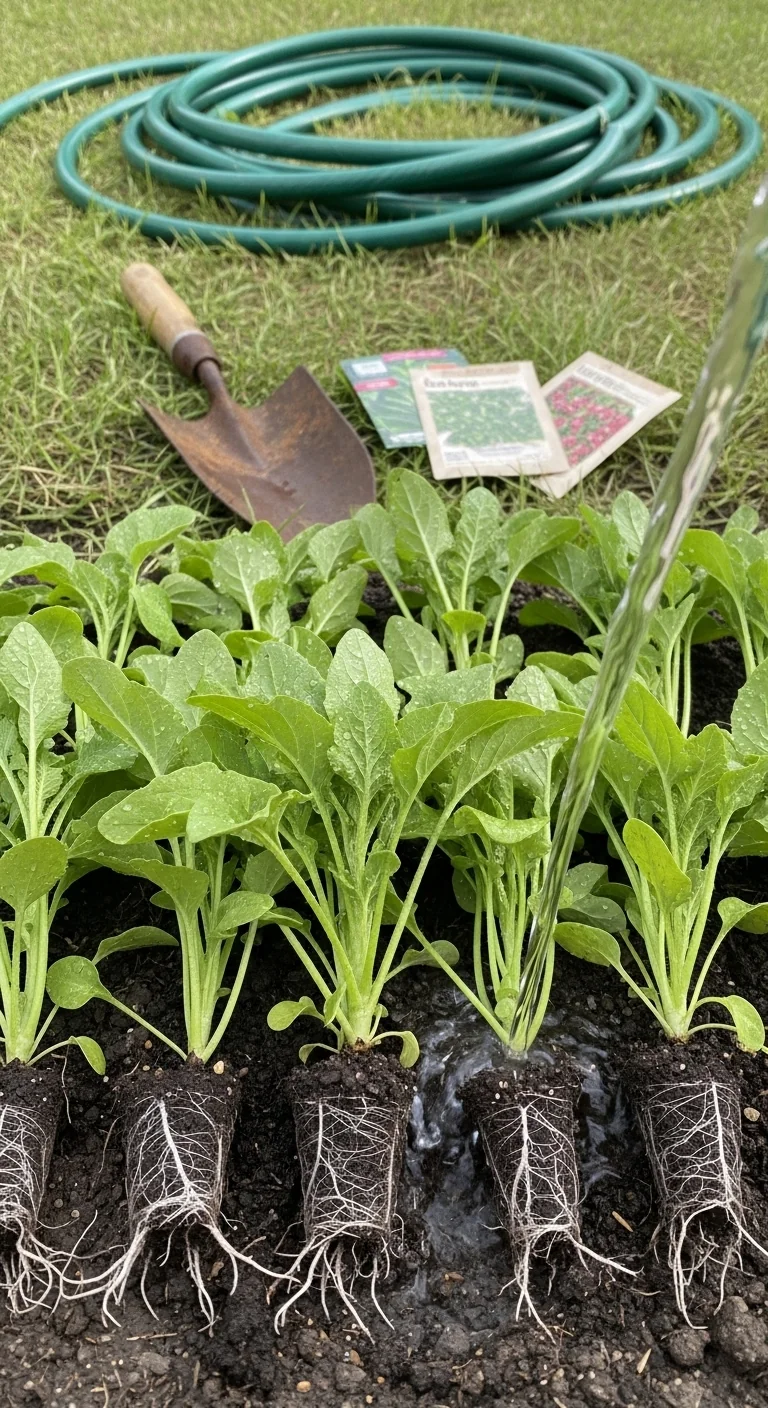
Companion planting herbs succeeds when you match growth habits instead of relying on generic friend-or-foe lists. Group herbs by shared light exposure, water requirements, and root behavior to reduce competition for resources and support steady development in home edible gardens.
This guide covers herb-to-herb pairings and select herb-to-vegetable combinations suited to backyard or balcony setups. It excludes purely ornamental flower companions and large-scale farming systems.
You will select precise stacks that align with your actual site conditions, then apply spacing and timing rules that prevent common failures such as stunted growth or uneven harvests.
Match your conditions to the three-branch decision grid below and select the right herb combinations for your setup.
The Yield Grid Decision Grid
Branch 1 applies when the site receives full sun (more than 6 hours daily) and low water needs (top 2 inches of soil dry between waterings). These conditions favor woody, drought-tolerant Mediterranean types that share essential-oil profiles for natural pest deterrence.
Recommended: Items 1, 4, and 7 below. For a visual overview, see our herb companion chart.
Branch 2 applies under partial shade (4 to 6 hours of sun) or consistent soil moisture (top inch remains damp). These conditions suit leafy, moisture-loving herbs that benefit from overlapping pest-repelling volatiles without drying out.
Recommended: Items 2, 5, and 8 below.
Branch 3 applies in limited root space such as containers, raised beds under 18 inches deep, or balcony plots. These conditions require compact or contained habits that avoid aggressive runners or deep taproots.
Recommended: Items 3, 6, and 9 below.
Quick Comparison Table
| Option | Key mechanism | Best for | Decision Grid Branch | Effort Score |
|---|---|---|---|---|
| Mediterranean Stack | Shared low water and full sun needs minimize competition; aromatic oils repel pests | Drought-tolerant sun beds | Branch 1 | 2 |
| Basil and Parsley Pairing | Matching moisture levels and partial shade support flavor enhancement and pest confusion | Even-moisture partial shade spots | Branch 2 | 3 |
| Chives Border Setup | Sulfur compounds deter aphids; upright habit fits tight spaces | Containers or small plots | Branch 3 | 1 |
| Sage and Lavender Duo | Woody stems and essential oils create pest barrier; similar drainage tolerance | Full sun borders | Branch 1 | 2 |
| Dill Succession Pairing | Early-season attractant for beneficial insects; short cycle avoids long-term competition | Partial shade succession beds | Branch 2 | 4 |
| Oregano Ground Cover | Trailing habit acts as living mulch; drought tolerance suits limited soil volume | Containers or raised beds | Branch 3 | 2 |
| Thyme and Perennial Base | Low-growing mat reduces weed pressure; shared sun and drainage requirements | Full sun perennial zones | Branch 1 | 1 |
| Cilantro and Chives Combo | Fast cycle and moisture match provide continuous pest protection | Partial shade quick-turn beds | Branch 2 | 3 |
| Mint Contained Stack | Runner containment in pots prevents takeover; pairs with upright herbs | Balcony or small-space pots | Branch 3 | 5 |
Rosemary, Thyme, and Oregano: The Mediterranean Stack
Best for: Branch 1
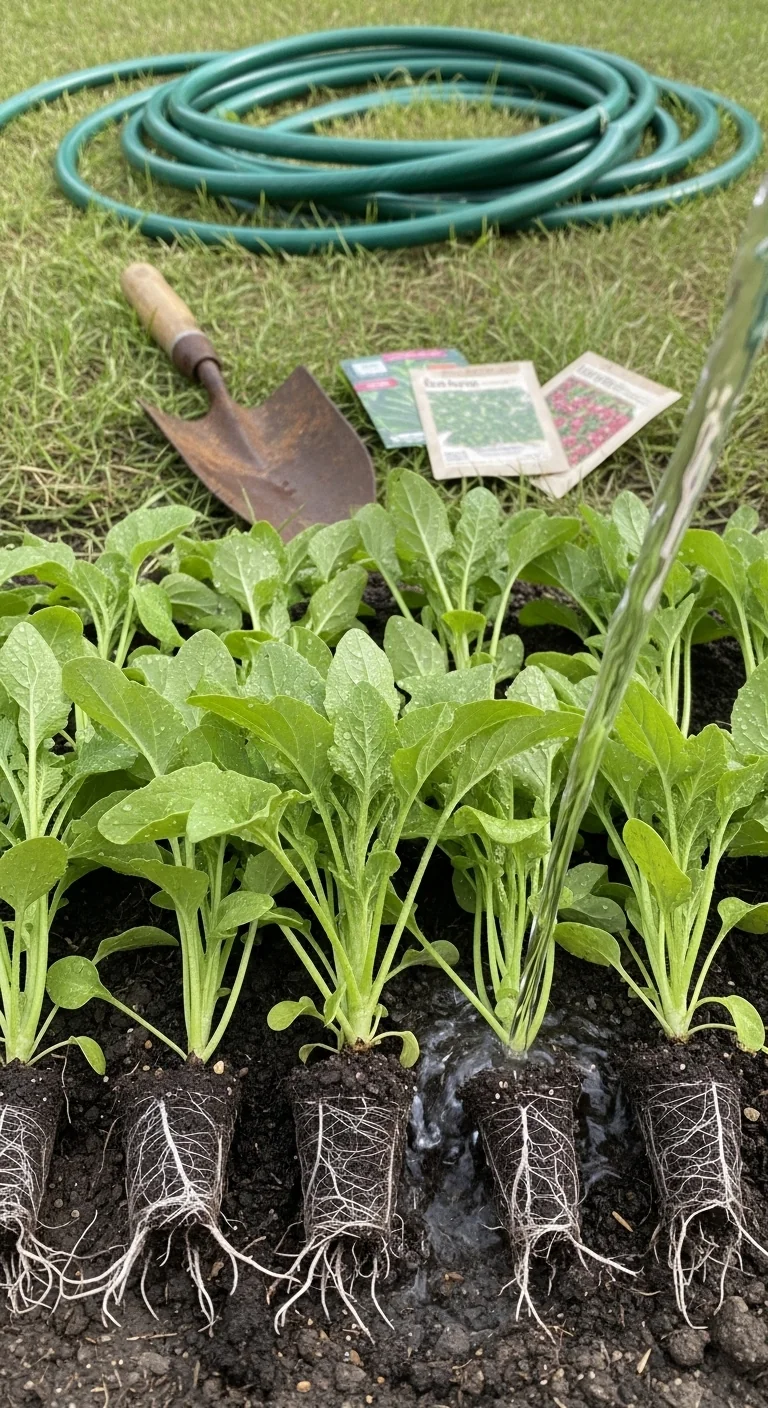
This blueprint delivers a low-competition trio for full-sun, dry conditions. Plant rosemary, thyme, and oregano together because their woody stems and shallow fibrous roots occupy different soil layers while their essential oils create a shared pest-repelling zone. Space plants 12 to 18 inches apart in soil that drains within 24 hours after watering. Begin by preparing the bed with 2 to 3 inches of coarse sand or grit mixed into the top 6 inches. Set transplants in a triangular pattern so each receives even air flow. Water at the base only when the top 2 inches feel dry to the touch. The common mistake is placing them closer than 10 inches, which traps humidity and invites fungal issues on lower leaves. For spacing examples suited to different bed shapes, see our herb garden layout ideas.
Basil and Parsley: Moisture-Matched Pairing
Best for: Branch 2
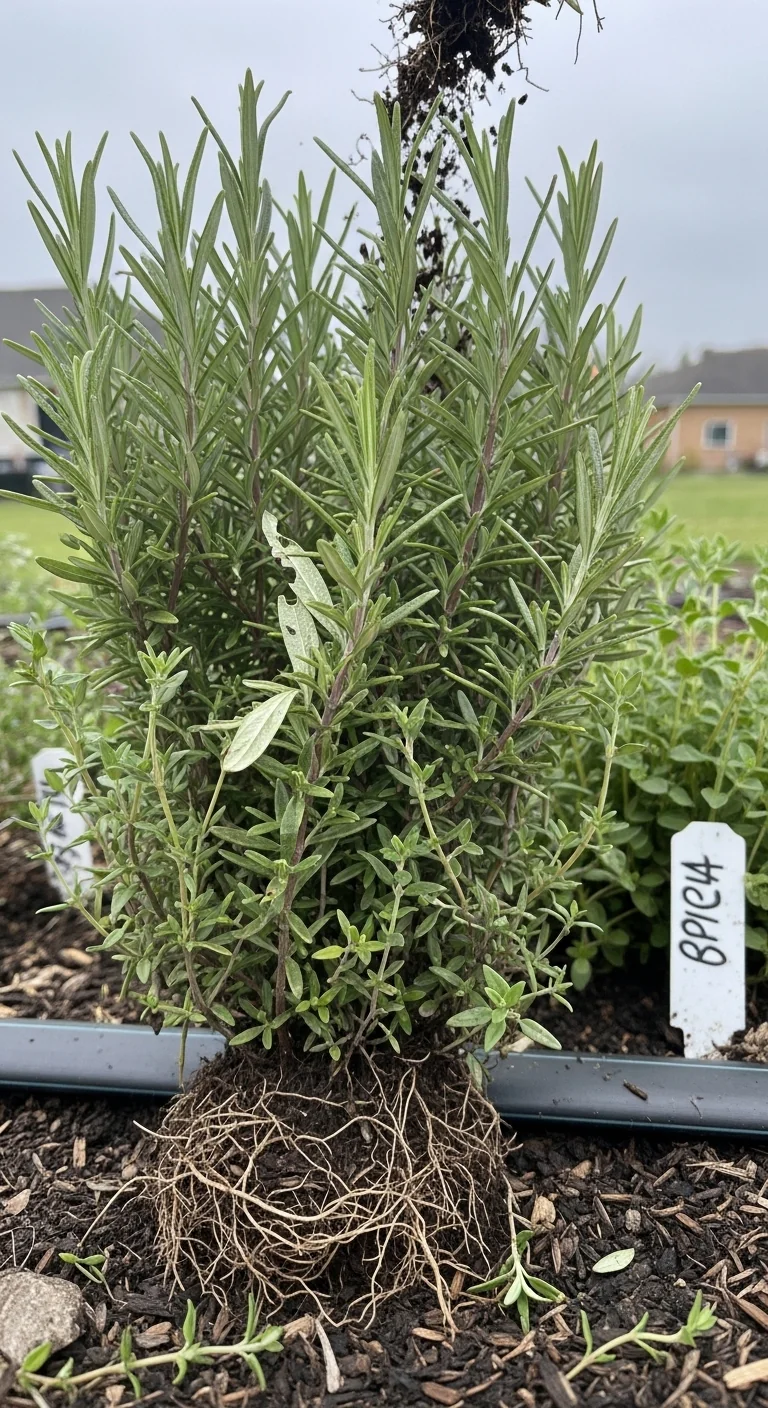
Use this pairing in partial-shade spots that stay evenly moist because both herbs thrive on consistent surface moisture and produce complementary volatiles that confuse common garden pests. Skip it in full-sun dry beds where basil wilts and parsley bolts early. Edge case: in regions with intense afternoon heat, position parsley on the shadier side of basil to extend leaf production into late summer. The combination occupies the same 8- to 10-inch root zone without overlap when spaced 10 inches apart.
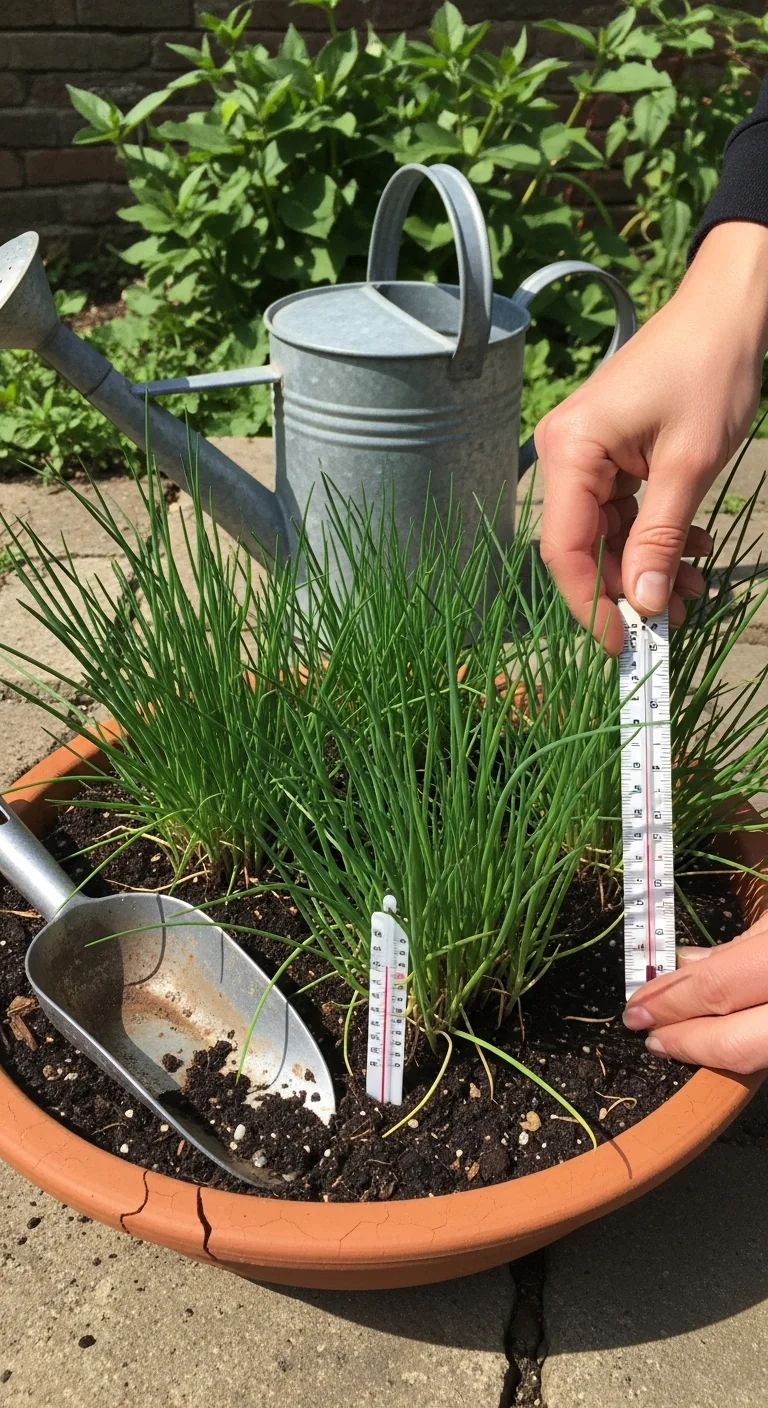
Chives Border Setup
Best for: Branch 3
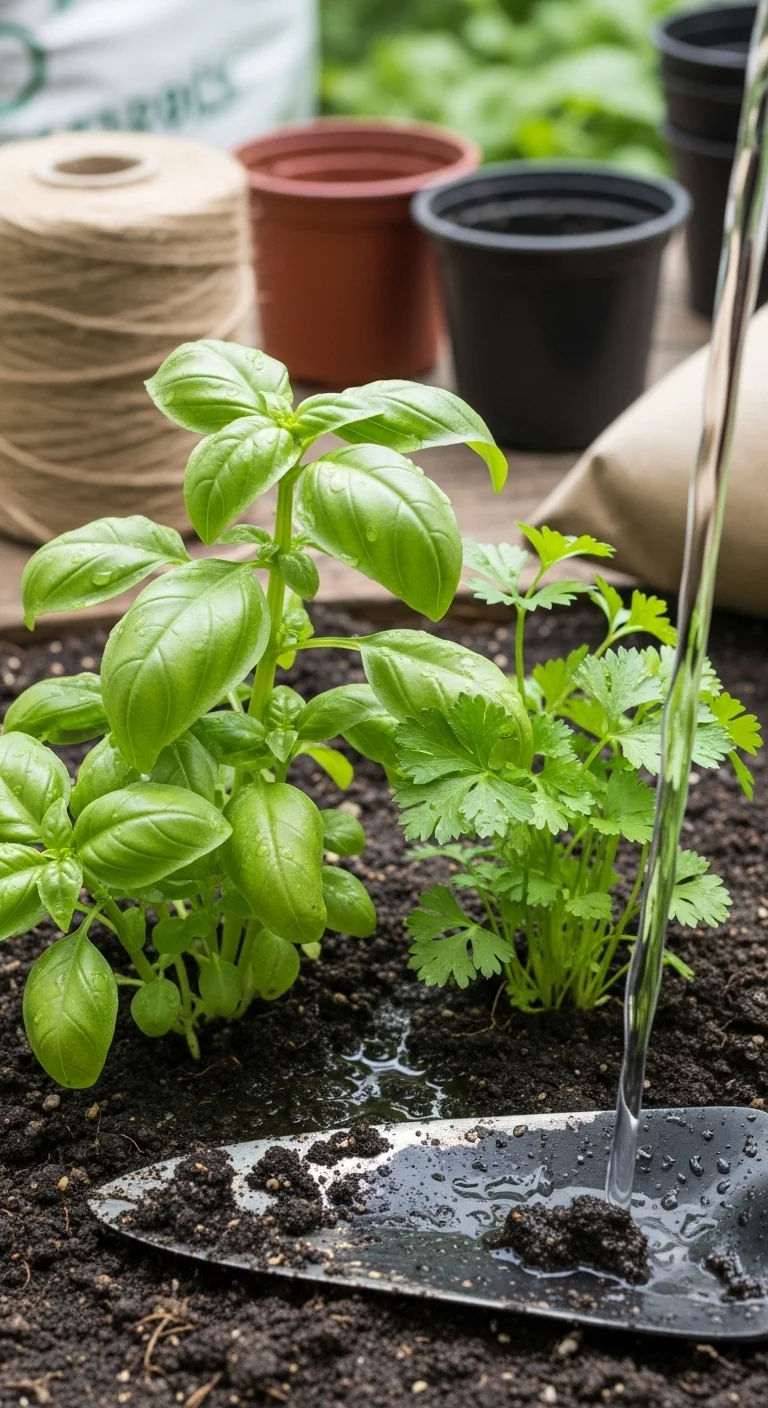
Apply the threshold rule of 8 inches minimum spacing from any central herb and a container diameter of at least 12 inches. Below these measurements the clump becomes congested and air flow drops, increasing mildew risk. Chives release sulfur compounds through their leaves that deter aphids on nearby plants while their upright, grass-like habit fits vertical space in pots or narrow raised beds. Adjust by dividing clumps every 18 months when the center turns woody.
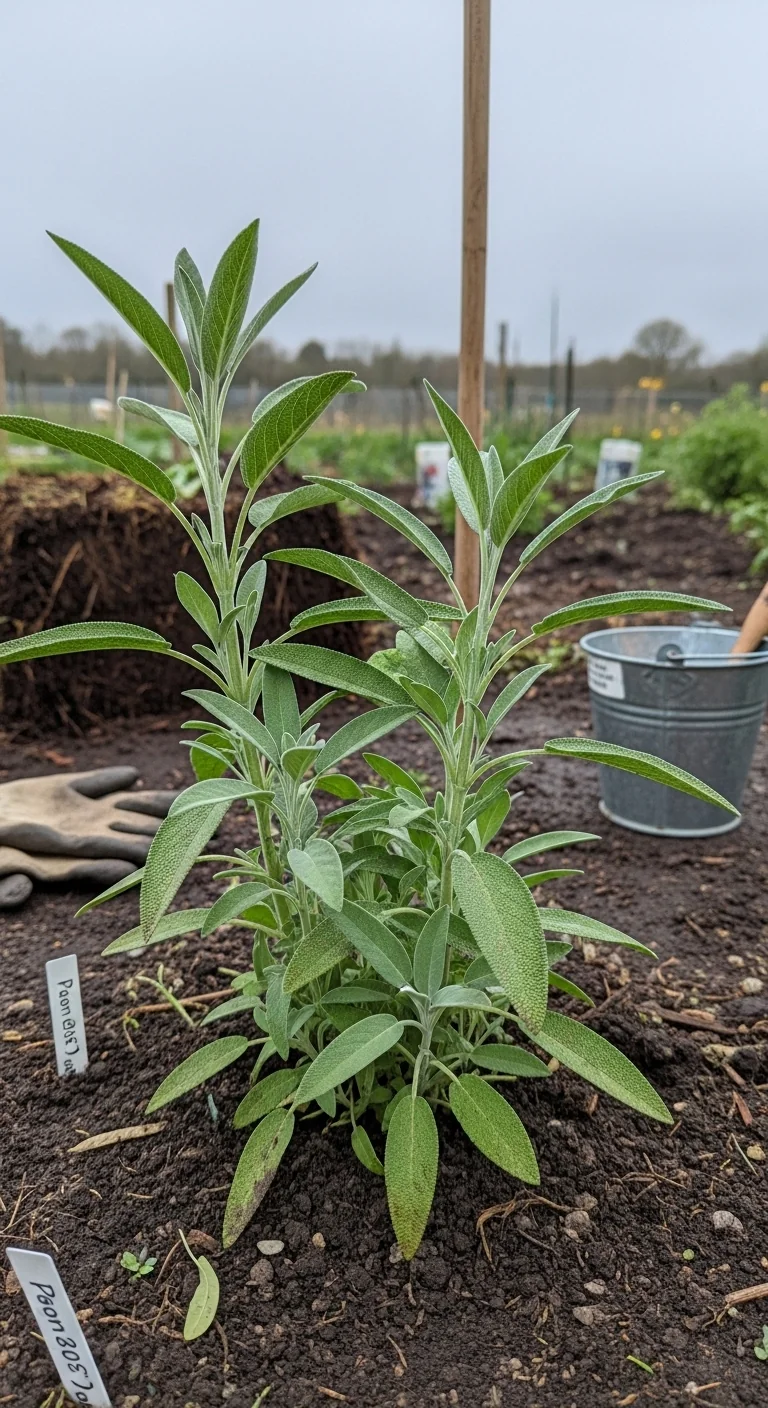
Sage and Lavender: Aromatic Pest Deterrent Duo
Best for: Branch 1
Follow this 10-minute workflow for full-sun borders. Minute 1 to 3: loosen soil to 8 inches deep and add gravel for drainage. Minute 4 to 6: set sage and lavender 15 inches apart in a staggered row. Minute 7 to 9: water deeply once at planting then only when the top 2 inches are dry. Minute 10: apply a 1-inch layer of coarse mulch pulled back from stems. Upgrade option: interplant with low-growing thyme for a three-tier border that fills gaps within one season. For bed preparation details, see our raised bed herb garden guide.
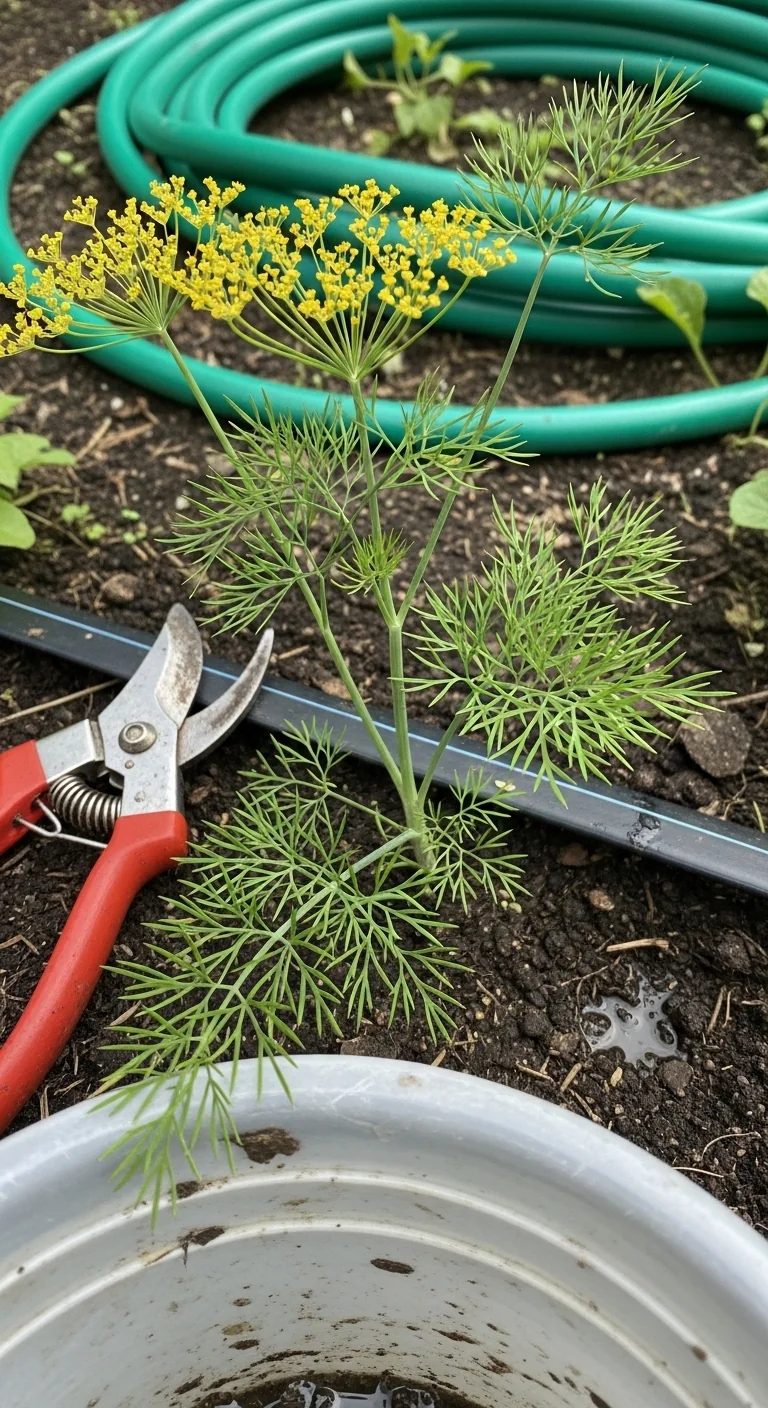
Dill Succession Pairing
Best for: Branch 2
This blueprint starts with dill sown every 3 weeks in partial shade to attract beneficial insects throughout the season. Pair it with short-cycle herbs that finish before dill reaches 18 inches tall. The mechanism relies on dill’s umbel flowers drawing predatory wasps while its taproot stays narrow and does not compete heavily for surface moisture. Plant at 10-inch centers and remove spent stems before seed set to prevent volunteer spread.
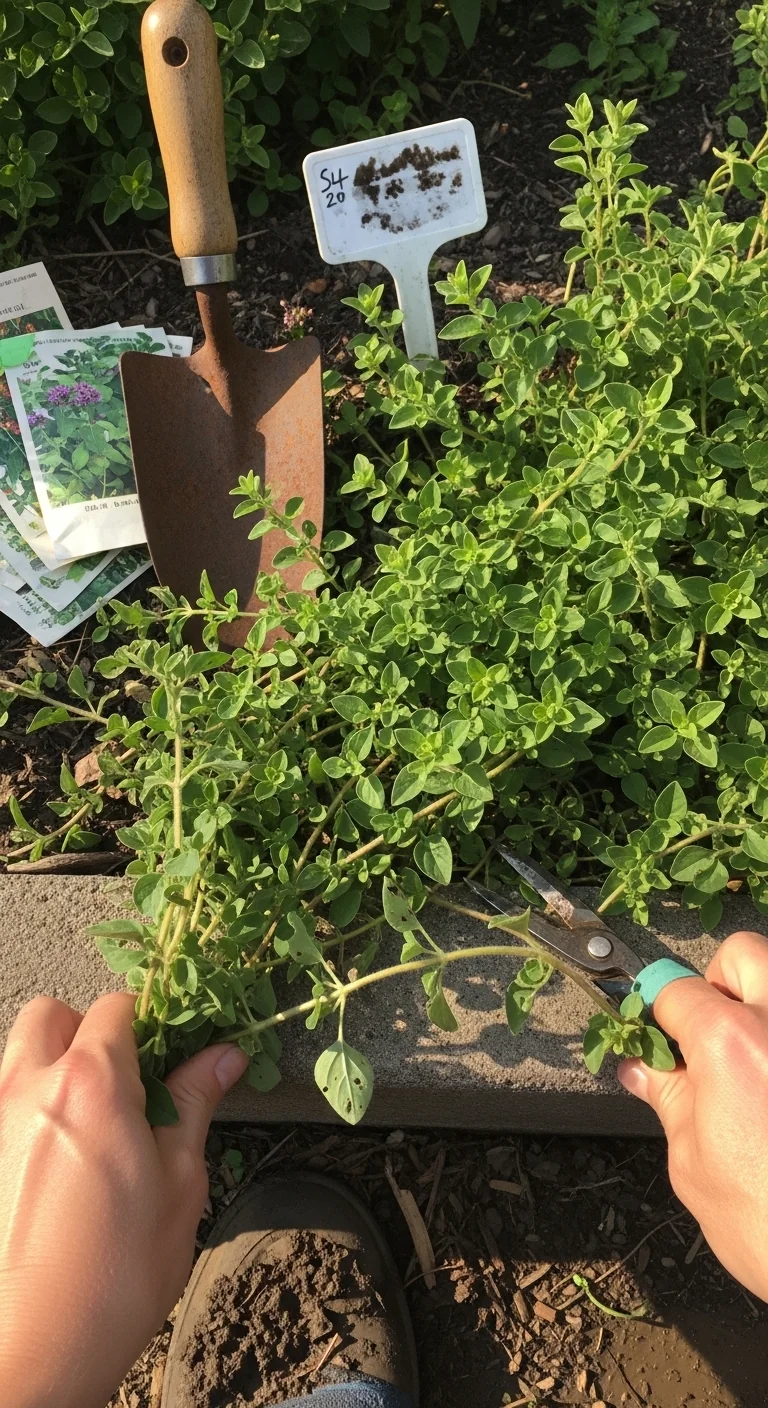
Oregano Ground Cover
Best for: Branch 3
Use oregano as living mulch in containers or shallow raised beds because its trailing stems cover soil quickly and its drought tolerance matches limited soil volume. Skip it beside moisture-loving herbs that require frequent watering because oregano prefers drier surface conditions. Edge case: in zones with winter temperatures below 20 degrees Fahrenheit, treat as an annual or bring pots indoors to maintain the ground-cover effect year-round. Space starts 12 inches apart for full coverage within 8 weeks.
Thyme and Perennial Base
Best for: Branch 1
Apply the threshold rule that thyme must sit at the front of any perennial row with at least 10 inches of open soil in front to form its low mat. When soil pH stays between 6.5 and 7.5 and drainage occurs within 24 hours, the mat suppresses weeds while the taller perennials behind it gain wind protection. Test drainage by digging a 6-inch hole and filling it with water; it must empty in under 30 minutes. Adjust by trimming the mat edge every spring to keep the 10-inch buffer.
Cilantro and Chives Combo
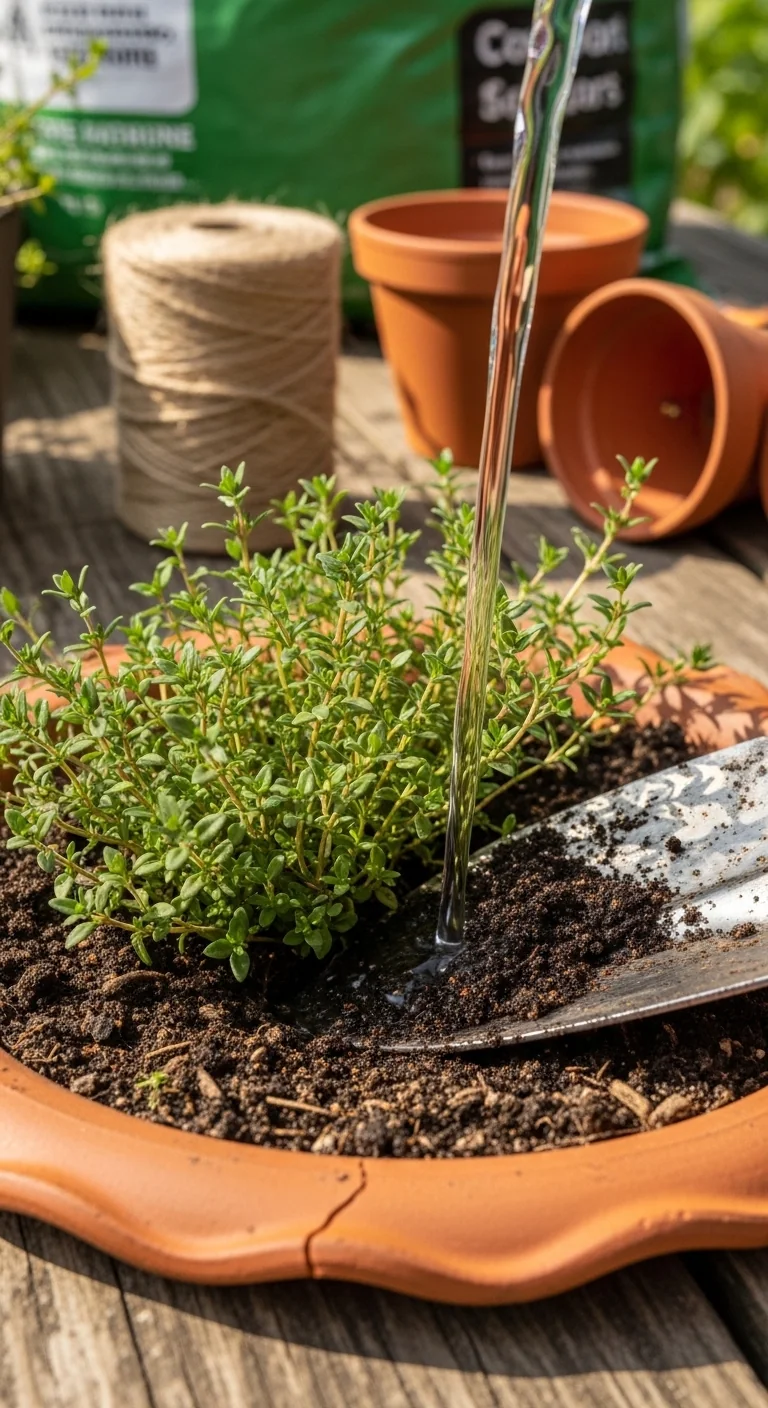
Best for: Branch 2
Use this pairing for quick-turn beds because cilantro’s fast 45-day cycle overlaps with chives’ steady leaf production under partial shade and even moisture. The combination provides continuous sulfur-based pest protection without root overlap when spaced 8 inches apart. Skip in full sun where cilantro bolts within 30 days. Edge case: succession-sow cilantro every 14 days to maintain the protective canopy through midsummer heat.
Mint Contained Stack
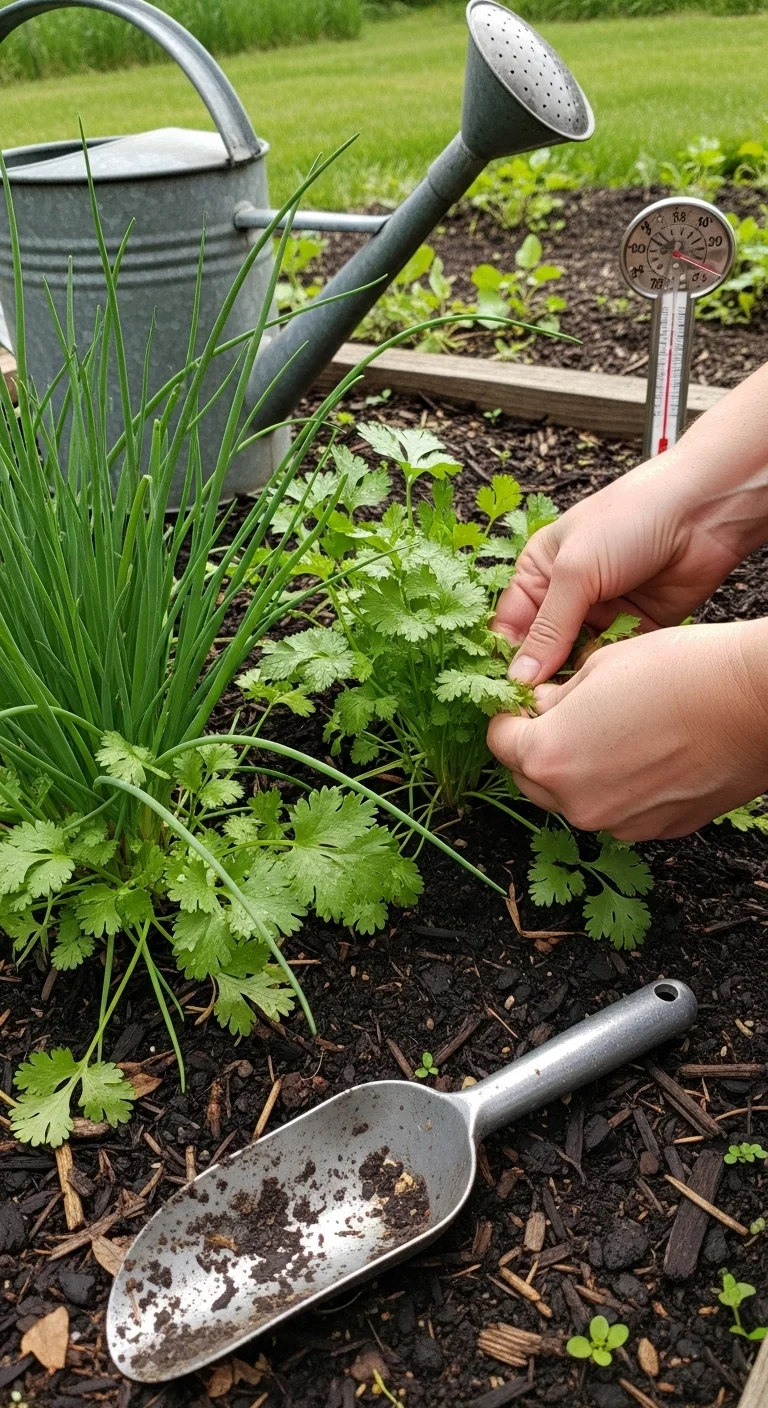
Best for: Branch 3
This blueprint confines mint in its own 12-inch pot sunk into larger containers or balcony planters so runners cannot escape. Pair the pot with upright chives or parsley at 10-inch centers because mint’s vigorous top growth stays isolated while its shallow roots share surface moisture. The 10-minute workflow includes drilling extra drainage holes, filling with a 50 percent compost blend, and setting the mint pot rim even with soil level. Check weekly for runner escape and prune back to the pot edge.
Starter Stack (What to Choose First)
For Branch 1 (Full Sun Low Water)
Begin with the Mediterranean Stack and the Sage and Lavender Duo. Both require the same drainage profile and share pest-repelling oils so they reinforce each other with no extra monitoring. Expect 90 minutes total setup time and monthly checks only.
For Branch 2 (Partial Shade Consistent Moisture)
Begin with the Basil and Parsley Pairing and the Cilantro and Chives Combo. Their overlapping moisture needs and fast cycles provide season-long leaf production with 45 minutes setup and biweekly succession sowing.
For Branch 3 (Limited Root Space)
Begin with the Chives Border Setup and the Oregano Ground Cover. The upright chives fit vertical space while oregano fills gaps horizontally; together they occupy under 2 square feet per container with 30 minutes setup and monthly trimming.
When This Won’t Work
Companion stacks fail when soil stays saturated for more than 48 hours after rain or when light drops below 4 hours daily. In both cases root competition intensifies because drainage-tolerant herbs drown and shade-adapted ones stretch and weaken. Measure saturation by digging a 4-inch test hole after rain; if water remains after 48 hours, the Mediterranean and perennial stacks will develop rot within 10 days.
Heavy clay without amendment also triggers failure because compaction restricts oxygen to fibrous roots. Switch to containers filled with a custom blend instead. For soil amendment recipes suited to herb roots, see our soil mix for herbs guide.
In deep shade under 4 hours, even moisture-loving options compete poorly for light. Relocate to balcony pots or use grow lights indoors as the alternative action.
Choosing the Right Option for Your Situation
Budget threshold under 30 dollars initial investment
Choose the Chives Border Setup or Thyme and Perennial Base because both start from seed packets or small nursery pots and require only existing soil plus basic gravel for drainage. Avoid stacks needing multiple woody transplants or custom potting mixes.
Time threshold under 30 minutes weekly maintenance
Select the Mediterranean Stack or Chives Border Setup. These need only spot watering when the top 2 inches dry and one annual division; they avoid weekly succession sowing or runner containment.
Technical constraint of heavy clay soil
Choose any Branch 3 container option such as the Oregano Ground Cover or Mint Contained Stack. Raised or potted systems let you control drainage independently of native soil compaction.
Yes/No checklist:
Does your site receive more than 6 hours of sun and drain quickly? Yes leads to Branch 1 stacks.
Is light limited to 4-6 hours or soil moisture consistent? Yes leads to Branch 2 stacks.
Are you working in pots or beds under 18 inches deep? Yes leads to Branch 3 stacks.
If none match exactly, start with one container test before scaling the full grid.
Expert Q&A
How do annual and perennial herbs interact in the same bed?
Annuals such as basil or cilantro finish their cycle in 45 to 60 days and leave gaps that perennials like thyme or sage expand into. Plant the perennial first as the structural base, then tuck annual seedlings into the front edge at 8-inch spacing. This timing prevents the perennial from shading the annual during its rapid growth phase.
Does companion planting still apply in low-light shade gardens?
Yes, but shift to moisture-matched leafy types such as parsley and chives. Their sulfur and aromatic compounds still deter aphids even when light is 4 hours or less. Avoid woody Mediterranean herbs because they stretch and lose density below the 6-hour sun threshold.
What spacing rules matter most for stacked herb combinations?
Keep 10 to 12 inches between different species to maintain air flow and prevent foliar disease. Within the same species, 8 inches suffices. Always measure from the center of one crown to the next rather than leaf tip to leaf tip because foliage expands after planting.
Can companion planting integrate directly with regular harvesting routines?
Yes. Harvest outer leaves or stems first from each plant in the stack to keep centers open for air circulation. This pruning also stimulates new growth that refreshes the pest-repelling volatiles. Time harvests for early morning when essential oils are most concentrated.
How does soil pH affect which herb stacks succeed together?
Most herb stacks perform best between pH 6.0 and 7.5. Below 6.0, Mediterranean types develop yellow leaves and reduced aroma; above 7.5, leafy moisture lovers bolt early. Test soil once per season and adjust only the top 4 inches with the appropriate amendment before planting.
Conclusion
The decision grid lets you stack herbs by matching light, water, and root habits instead of guessing from static lists. The number-one mistake is ignoring drainage differences, which leads to root competition and uneven growth within weeks.
Next step: map your site conditions against the grid and test one stack this season using our herb garden design ideas for layout templates.