
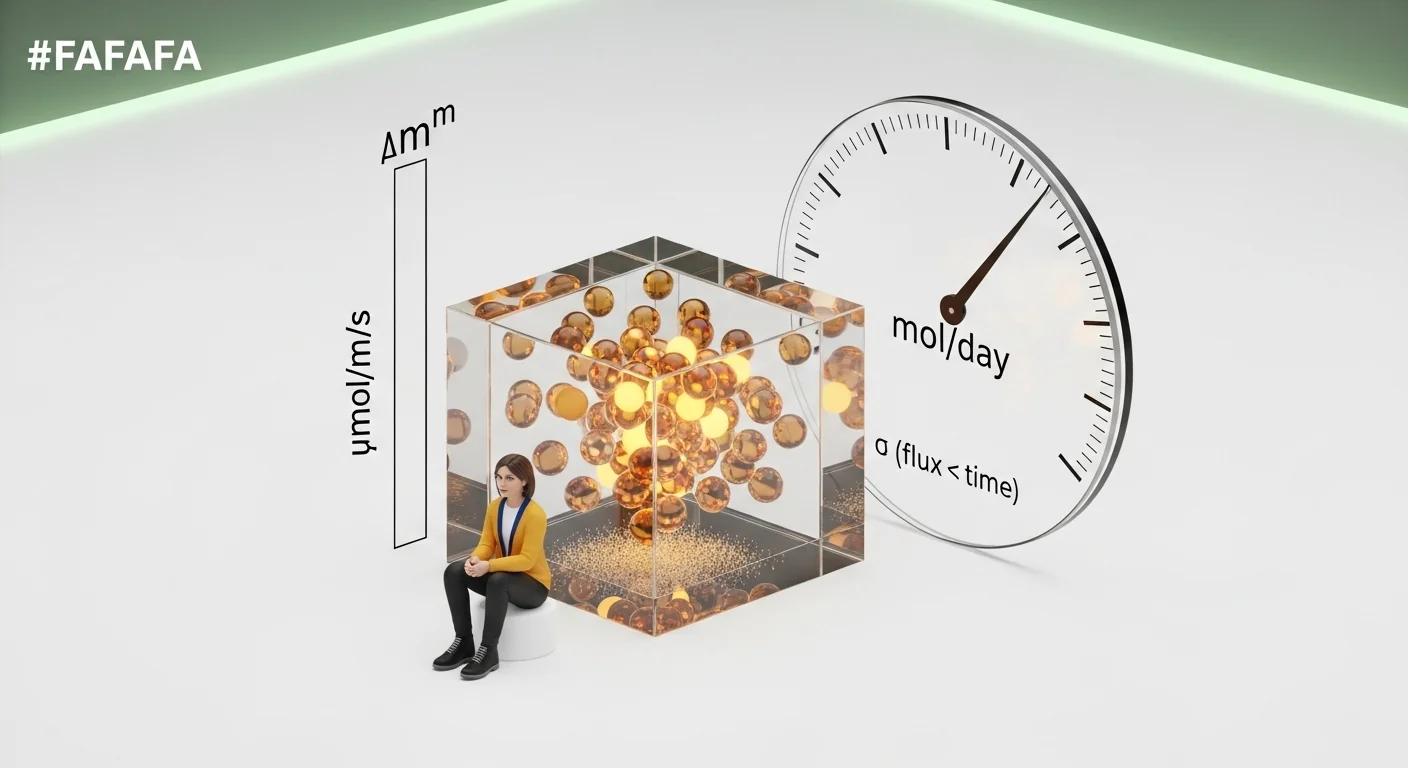
Daily Light Integral (DLI) Calculator
Convert PPFD & photoperiod to moles of light per day for any crop
| Crop | Target DLI (mol/day) | Hours needed @ your PPFD | Zone |
|---|
How this DLI Calculator works
Formula:
Step-by-step:
1. PPFD × 3600 — converts your per-second photon flux (µmol/m²/s) into per-hour by multiplying by 3,600 seconds.
2. × Photoperiod (hours) — scales to the total hours of light received per day.
3. ÷ 1,000,000 — converts µmol to mol (1 mol = 1,000,000 µmol), giving you moles of photons per square meter per day.
Units: PPFD in µmol/m²/s · Photoperiod in hours · DLI result in mol/m²/day.
Assumptions & Limits:
• PPFD is assumed uniform across the canopy for the full photoperiod (no dimming ramps or sunrise/sunset curves).
• Result applies to the measured point — actual canopy DLI varies with fixture mounting height, spread, and reflectivity.
• Valid for sole-source (indoor) and supplemental greenhouse lighting. Outdoor natural-light DLI requires integration of measured irradiance over time.
• PPFD valid range: 1–3000 µmol/m²/s. Photoperiod valid range: 0.5–24 hours/day.
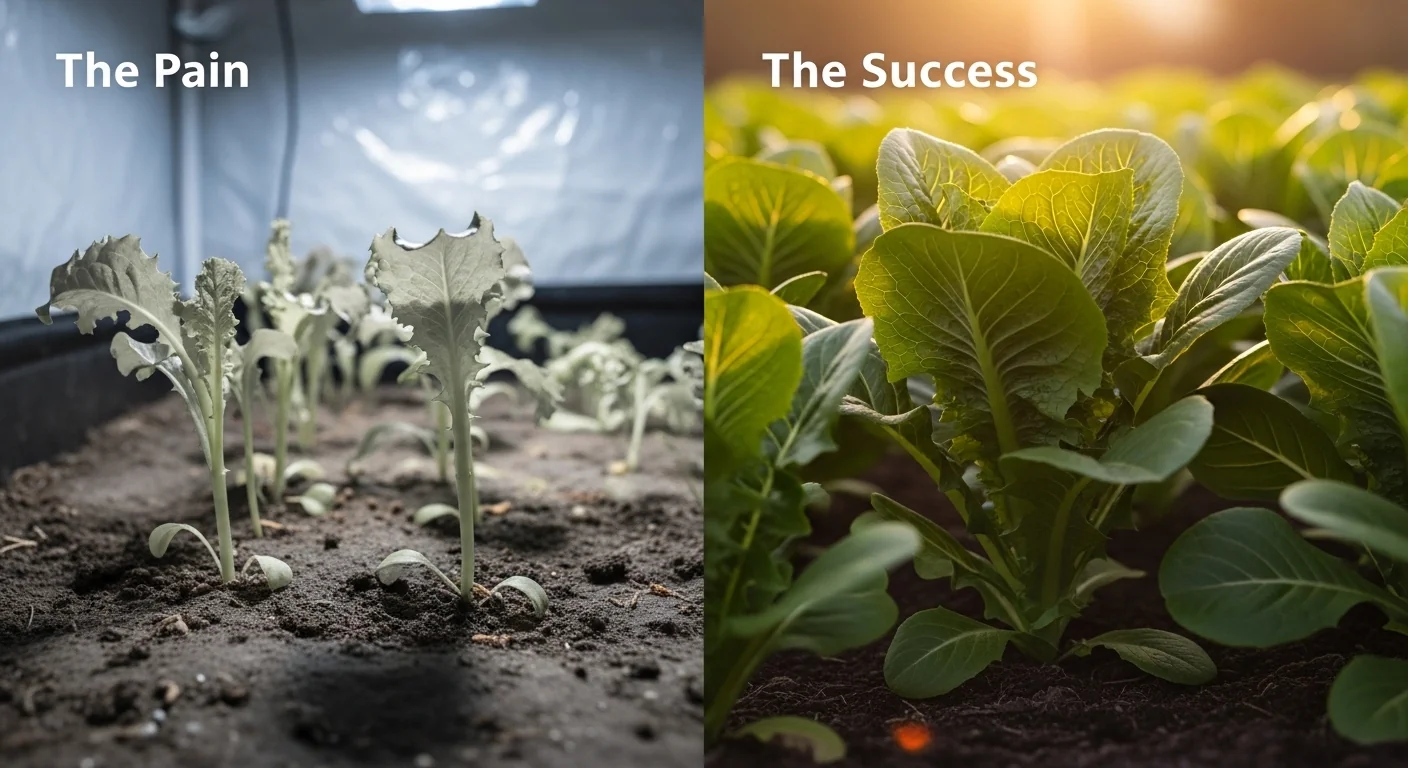
Light intensity alone does not determine how well a crop grows. A fixture running at 600 µmol/m²/s for eight hours delivers less total photon energy than one running at 300 µmol/m²/s for eighteen hours. The number that actually governs photosynthetic accumulation is the Daily Light Integral (DLI): total moles of photosynthetically active photons received per square meter in a 24-hour period. Treating PPFD as a proxy for DLI is one of the most common and costly errors in controlled-environment agriculture.
This DLI calculator takes two measured values, PPFD (µmol/m²/s) at canopy level and photoperiod in hours, and computes the mol/m²/day value your crop is actually receiving. It does not account for light transmission losses through glazing, canopy architecture, fixture spacing, or photosynthesis rate. It calculates the photon dose delivered to a point, not the whole-plant response to that dose. That distinction matters and is covered in detail below.
After running this calculator, you can confirm whether your current PPFD-plus-hours combination hits the accepted DLI benchmark for your crop species and growth stage, and if not, see whether it is faster to extend the photoperiod or increase fixture intensity.
Use the Tool
Before entering values, have your light meter reading ready. PPFD must be measured at the canopy surface, not at fixture height. Use the manufacturer’s specification only as a starting point. If you are planning a new lighting installation rather than measuring an existing one, the grow light cost calculator can help you model fixture output and operating cost before committing to a setup. Enter PPFD in µmol/m²/s and photoperiod as decimal hours (for example, 16.5 for sixteen and a half hours). Results update automatically once both fields are filled.
Quick Start (60 Seconds)
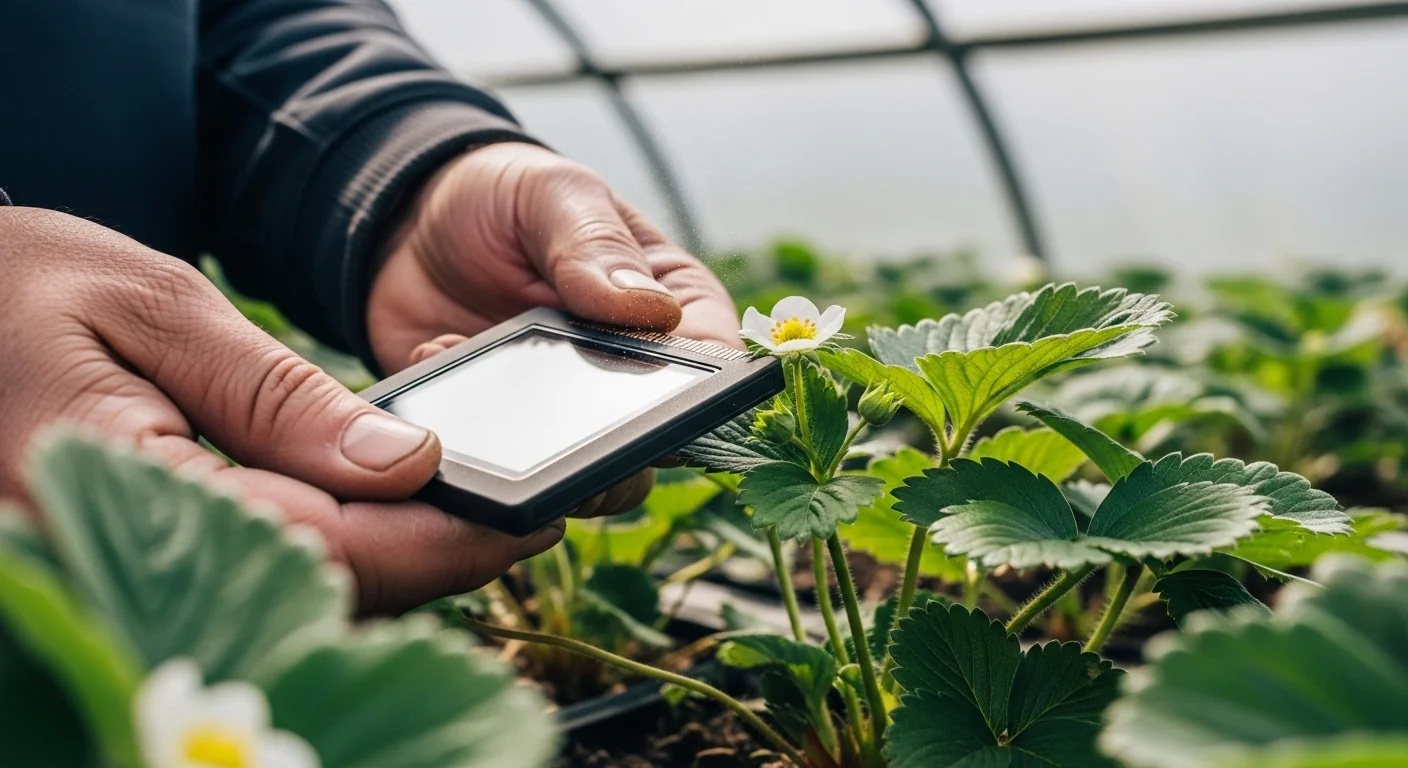
- Measure PPFD at canopy level, not at the light fixture. A reading taken 30 cm above the canopy can be two to three times higher than what leaves actually intercept.
- Use a quantum light meter calibrated for PAR (400–700 nm). Lux meters and standard photographic light meters do not accurately measure photosynthetically active radiation.
- Enter photoperiod as total hours of light per 24 hours. If your controller runs a 15-minute sunrise ramp, those minutes count. Round to the nearest 0.5 hours for practical purposes.
- Do not average multiple PPFD readings into one input unless your fixture provides genuinely uniform distribution. Hotspot readings will overstate canopy DLI.
- PPFD range accepted: 1 to 3000 µmol/m²/s. Values above 3000 exceed the light saturation point of virtually all commercial crops under ambient CO₂ and are likely measurement errors.
- Photoperiod range: 0.5 to 24 hours. Most photoperiod-sensitive crops have a critical night length requirement; verify before extending the photoperiod beyond species limits.
- Note the crop zone your result lands in (Low, Medium, High, Very High). The color-coded gauge and benchmark table show how your DLI compares to published targets for common species.
Inputs and Outputs (What Each Field Means)
| Field | Unit | What It Means | Common Mistake | Safe Entry Guidance |
|---|---|---|---|---|
| PPFD | µmol/m²/s | Photosynthetic Photon Flux Density: the instantaneous rate of PAR photons hitting one square meter of canopy surface each second. | Using fixture-height readings or manufacturer peak values instead of an actual canopy-level measurement. | Measure at the top of the canopy with a calibrated quantum sensor. Average readings from at least four points if fixture uniformity is unknown. Valid range: 1–3000. |
| Photoperiod | Hours/day | Total hours the grow lights are on within a 24-hour cycle. Determines how long photons accumulate toward the daily integral. | Forgetting to include ramping periods controlled by a dimmer or timer, or confusing the light-on hours with the total day cycle. | Check your controller’s timer log. Include any partial hours as decimals (e.g., 16.5). Valid range: 0.5–24 hours. |
| DLI Result | mol/m²/day | Total moles of PAR photons delivered to one square meter of canopy surface in a 24-hour period. The primary metric for comparing light regimes across different fixtures and photoperiods. | Treating DLI as a stand-alone success metric without cross-checking CO₂ concentration, temperature, and VPD. | Compare the result to published crop benchmarks. A high DLI in a CO₂-limited environment can cause photoinhibition rather than yield gains. |
Understanding how the leaf area index of your canopy interacts with delivered DLI can help you refine how much light your crop is actually intercepting versus what is lost to gaps between plants.
Worked Examples (Real Numbers)
Example 1: Lettuce Under Sole-Source LED
- Crop: Butterhead lettuce
- PPFD at canopy: 200 µmol/m²/s
- Photoperiod: 16 hours
Result: (200 × 16 × 3600) ÷ 1,000,000 = 11.52 mol/m²/day
This sits just below the upper boundary of the Low zone (target: 10–12 mol/day for leafy greens). The setup is well-matched to the crop’s requirements. Increasing the photoperiod to 17 hours would push DLI to 12.24 mol/day, crossing into the Medium threshold, which is unnecessary and wastes electricity.
Example 2: Tomatoes in Vegetative Stage
- Crop: Beefsteak tomato, transplant to pre-flowering
- PPFD at canopy: 400 µmol/m²/s
- Photoperiod: 18 hours
Result: (400 × 18 × 3600) ÷ 1,000,000 = 25.92 mol/m²/day
This exceeds the commonly cited vegetative target of 18–20 mol/day for tomatoes. The crop will use this DLI productively only if ambient CO₂ is elevated above 400 ppm. At ambient CO₂, the additional photons above approximately 20 mol/day return diminishing photosynthetic gains.
Example 3: Cannabis in Flowering Stage
- Crop: Cannabis sativa, week 4 of flowering
- PPFD at canopy: 800 µmol/m²/s
- Photoperiod: 12 hours
Result: (800 × 12 × 3600) ÷ 1,000,000 = 34.56 mol/m²/day
This falls in the Very High zone, consistent with published targets for high-light cannabis production (30–40 mol/day). Achieving productive use of this DLI requires CO₂ enrichment, controlled VPD, and adequate nutrient delivery. Running this light level without matching climate management is a common source of heat stress and yield loss.
Reference Table (Fast Lookup)
The table below shows the minimum PPFD required at three common photoperiods to hit each crop’s target DLI. Values are computed from the formula: PPFD = (Target DLI × 1,000,000) ÷ (Hours × 3,600). Use this to plan fixture intensity before measuring.
| Crop | Target DLI (mol/day) | Min PPFD @ 12 hrs (µmol/m²/s) | Min PPFD @ 16 hrs (µmol/m²/s) | Min PPFD @ 18 hrs (µmol/m²/s) | Zone |
|---|---|---|---|---|---|
| Lettuce / Microgreens | 10 | 232 | 174 | 154 | Low |
| Spinach / Kale | 12 | 278 | 208 | 185 | Low |
| Basil / Herbs | 14 | 324 | 243 | 216 | Low |
| Tomatoes (vegetative) | 18 | 417 | 313 | 278 | Medium |
| Peppers (vegetative) | 20 | 463 | 347 | 309 | Medium |
| Strawberries | 22 | 509 | 382 | 340 | High |
| Tomatoes (fruiting/flower) | 30 | 694 | 521 | 463 | High |
| Cannabis (flowering) | 38 | 880 | 660 | 587 | Very High |
How the Calculation Works (Formula + Assumptions)
Show the calculation steps
Formula:
DLI (mol/m²/day) = (PPFD × Photoperiod × 3,600) ÷ 1,000,000
Step 1: Convert per-second flux to per-hour accumulation
PPFD is measured in µmol per square meter per second. Multiplying by 3,600 (seconds in one hour) converts the instantaneous rate into the total photons delivered in one hour at that intensity.
Step 2: Scale by photoperiod
Multiplying by the number of light-on hours gives the total photon dose for the full day at the measured PPFD. This step assumes PPFD is constant throughout the photoperiod. Variable intensity (dimming, sunrise/sunset curves) will cause the actual DLI to differ from this result.
Step 3: Convert µmol to mol
Dividing by 1,000,000 converts micromoles to moles (the standard reporting unit for DLI). One mole equals one Avogadro’s number of photons (approximately 6.022 × 10²³).
Rounding: Results above 10 mol/day are rounded to one decimal place. Results below 10 are shown to two decimal places. The underlying calculation retains full floating-point precision.
Assumptions and Limits
- PPFD is assumed constant for the entire photoperiod. Dimmer ramps, scheduled intensity changes, or multiple fixture zones are not modeled.
- The calculation represents a single measurement point. PPFD uniformity across the canopy is not accounted for; actual canopy DLI will vary based on fixture spacing, mounting height, and canopy reflectivity.
- Greenhouse glazing reduces incoming PPFD. Standard twin-wall polycarbonate transmits roughly 70 to 80 percent of outdoor light. This tool does not apply any transmission factor automatically. For glazing-specific estimates, the greenhouse plastic light transmission calculator handles that step separately.
- DLI describes photon quantity, not quality. Spectrum (ratio of red, blue, far-red wavelengths) is not captured by this formula and can independently affect morphology and yield.
- The tool does not model plant response to DLI. Actual photosynthetic gain depends on CO₂ concentration, temperature, humidity, nutrient status, and leaf-level light saturation.
- Valid PPFD range is 1 to 3,000 µmol/m²/s. Valid photoperiod range is 0.5 to 24 hours. Inputs outside these ranges trigger inline validation errors and block calculation.
- DLI benchmarks listed in the reference table and widget are derived from published controlled-environment agriculture literature. Individual cultivars, growth stages, and production systems may have different optimal ranges.
Standards, Safety Checks, and “Secret Sauce” Warnings
Critical Warnings
- Canopy vs. fixture-level PPFD: A sensor held at fixture height rather than at canopy surface will record values dramatically higher than what leaves receive. The inverse-square law means that doubling the distance from a fixture can reduce PPFD by a factor of four. Always measure at canopy height.
- High DLI without matching CO₂ causes photoinhibition, not growth: Beyond roughly 20–25 mol/m²/day under ambient CO₂ (400 ppm), most C3 crops cannot use additional photons productively. Pushing DLI into the High or Very High zone without CO₂ enrichment can actually suppress photosynthesis.
- Photoperiod extension has biological limits: Many flowering crops (cannabis, chrysanthemum, strawberry) are photoperiod-sensitive. Extending the dark period below the critical night length to chase a higher DLI will disrupt flowering, regardless of what the DLI number shows. Verify the species’ photoperiod classification before adjusting hours.
- Supplemental lighting targets differ from sole-source targets: A greenhouse crop already receiving outdoor DLI needs only the deficit added by supplemental fixtures. Adding a full indoor target DLI on top of ambient natural light will result in chronic overexposure. Resources on greenhouse supplemental lighting cover how to calculate the supplemental DLI needed based on seasonal natural light levels.
Minimum Standards
- Leafy greens and low-light crops: 6 to 12 mol/m²/day minimum for commercially viable growth rates.
- Vegetative fruiting crops (tomato, pepper, cucumber): 12 to 20 mol/m²/day is the accepted production range under ambient CO₂.
- High-light flowering crops: 20 to 30+ mol/m²/day, achievable only with CO₂ enrichment and matched climate control.
- Managing excess light: When DLI exceeds crop capacity, shade cloth is a cost-effective intervention before reducing fixture wattage. The shade cloth percentage calculator helps size the correct density.
Competitor Trap: Most DLI articles online display a simple formula and a PPFD-to-DLI conversion table, then stop. What they skip is the feedback loop between DLI, CO₂, and vapor pressure deficit. A grower who reads that their DLI is “in the optimal range” without also verifying that CO₂ and VPD are matched to that light level will hit a ceiling on photosynthetic rate that no amount of additional light can break. DLI is a necessary input to the system, not the only one.
Common Mistakes and Fixes
Mistake: Measuring PPFD at the Wrong Height
Hanging a light meter at fixture height or at the top of the tent rather than at canopy surface produces readings that can be two to four times higher than what leaves actually receive. This inflates the calculated DLI and leads to underlit crops being managed as though they were receiving adequate or excess light.
Fix: Place the sensor at the top of the plant canopy, at the height of the newest growth tips, before entering PPFD into the calculator.
Mistake: Ignoring Glazing Transmission in Greenhouses
In a greenhouse, the DLI your sensor reads indoors is already reduced by the covering material. Standard clear glass transmits around 90 percent of light; diffuse polycarbonate and aged polyethylene film can transmit 65 to 78 percent. Treating the transmitted PPFD as identical to outdoor PPFD causes systematic underestimation of what supplemental lighting must add.
Fix: Measure PPFD inside the greenhouse, not outside. Use the transmitted reading as your calculator input.
Mistake: Targeting DLI Without Checking the Photoperiod Classification
of the Crop
Extending photoperiod from 12 to 18 hours to raise DLI will push short-day crops like cannabis or strawberry into continuous vegetative growth, preventing flowering entirely. The DLI value looks correct on paper while the crop fails to transition.
Fix: Before adjusting hours, confirm whether the crop is day-neutral, short-day, or long-day. For day-neutral crops, extending photoperiod is safe; for short-day crops, increase PPFD instead. Proper air circulation also matters as you raise light intensity, and a grow tent fan size calculator helps maintain airflow to manage the additional heat load.
Mistake: Treating a Single-Point PPFD as Representative of the Whole
Canopy
One quantum sensor reading at the center of a canopy will often reflect the peak intensity zone of the fixture. Corners and edges of a bench or tray can receive 30 to 60 percent less PPFD, meaning actual canopy-average DLI is much lower than the calculator result suggests.
Fix: Take readings at a minimum of five points (four corners and center), then use the average as the PPFD input if you want a whole-canopy estimate, or use the minimum reading if you need to ensure all plants meet the DLI floor.
Mistake: Assuming High DLI Always Means Better Yield
DLI and yield have a diminishing-returns relationship for every crop. Above the light saturation point, additional photons do not increase photosynthesis and instead generate excess heat and potentially photooxidative stress. Growers chasing Very High DLI targets on medium-light crops waste electricity and can damage the crop.
Fix: Match DLI to the published benchmark for the specific crop and stage. Use the calculator’s zone output as a guide, not just the raw number.
Next Steps in Your Workflow
Once you have confirmed your DLI sits in the appropriate zone for your crop, the next variable to validate is vapor pressure deficit. DLI and VPD are tightly coupled: higher light drives higher transpiration rates, and if VPD is too low, stomata close and CO₂ uptake drops regardless of how much light is available. The VPD calculator gives you the same kind of instant benchmark check for your temperature and humidity inputs that this tool provides for light.
If your DLI result is in the High or Very High zone, you will also want to verify CO₂ concentration. Crops operating above 20 mol/m²/day that are not receiving elevated CO₂ are leaving photosynthetic capacity on the table. The CO₂ calculator can help you determine the enrichment rate needed to match your light level. Lighting, VPD, and CO₂ are the three interdependent levers in a high-performance growing environment, and tuning one without the others typically produces diminishing returns.
FAQ
What is a good DLI for most crops?
For leafy greens and herbs, 10 to 14 mol/m²/day is generally sufficient for commercial growth rates. Vegetative fruiting crops such as tomatoes and peppers benefit from 15 to 20 mol/m²/day. High-light flowering crops and cannabis typically require 25 to 40 mol/m²/day, achievable only with CO₂ enrichment and carefully managed climate conditions.
What is the difference between PPFD and DLI?
PPFD is an instantaneous measurement, the rate of PAR photons arriving at a surface at a specific moment, expressed in µmol/m²/s. DLI is a cumulative measurement, the total photon dose integrated over a full day, expressed in mol/m²/day. The relationship between them depends on how many hours the lights run. Both metrics are necessary; neither alone is sufficient to describe a light environment.
Can I use this calculator for outdoor or natural light?
This calculator assumes constant PPFD throughout the photoperiod, which is accurate for sole-source indoor lighting. Outdoor and greenhouse natural light follows a bell-curve intensity pattern across the day. For outdoor DLI, you need a data-logging quantum sensor that integrates variable PPFD over time. A single midday PPFD reading entered into this tool will significantly overestimate actual outdoor DLI.
Why does the calculator reject PPFD values above 3000?
A PPFD of 3000 µmol/m²/s exceeds the light saturation point of virtually all commercial crops under normal CO₂ conditions and is above the output ceiling of all commercially available sole-source grow fixtures at canopy distance. Readings above this value almost always indicate a measurement error, such as the sensor being pointed at a bare bulb rather than measuring reflected or transmitted light at canopy level.
How do I hit a higher DLI without buying more lights?
The two levers are PPFD and photoperiod. If your crop’s biological constraints allow it (day-neutral species only), extending the photoperiod is often cheaper than increasing fixture intensity. The calculator’s Fix It output shows exactly how many additional hours or how much additional PPFD would be required to reach the medium-crop target from your current inputs. Check the reference table to confirm the target DLI for your specific species before adjusting.
Does DLI account for light spectrum?
No. DLI counts all PAR photons (400 to 700 nm wavelengths) equally, regardless of whether they are red, blue, or green. A quantum sensor reports total photon flux density across the PAR band without distinguishing wavelengths. Spectrum affects crop morphology, photoperiod response, and secondary metabolite production through separate photoreceptor pathways. DLI is a quantity metric, not a quality metric.
Conclusion
The single most important mistake to avoid is measuring PPFD at the wrong height. A canopy-level measurement and a fixture-height measurement from the same setup can differ by a factor of two or more, and the entire DLI calculation cascades from that first number. Get the measurement right, cross-check the result against the crop benchmark, then use the workflow tools to verify that your CO₂, humidity, and airflow are scaled to match the light level you are delivering. For growers running greenhouses who need to model how much supplemental lighting to add during low-light seasons, the resources on greenhouse supplemental lighting build directly on the DLI framework covered here.