
The real difference between compact, flavorful indoor herbs and leggy, pale stems comes down to matching light output and coverage to your exact home setup and the specific light hunger of your chosen herbs rather than defaulting to the brightest full-spectrum model on the shelf.
This article covers only grow lights suited to home-scale edible herb gardens in containers or small indoor spaces. It leaves out commercial greenhouse arrays, large flowering crop systems, and purely decorative houseplant fixtures.
You will finish with a clear path to the right light type, the measurable hanging distance and daily hours that keep growth tight, and the two-item starter stacks that pair with your existing pots for steady harvests through winter.
Spot your decision grid branch below, then head straight to the matching recommendations to lock in reliable herb production.
The The Yield Grid Decision Grid
Branch 1 applies when your available space fits 1 to 4 pots inside less than 2 square feet (typical kitchen counter or deep windowsill). Recommended: Items 1, 2, and 3 below.
Branch 2 applies when you have shelf or vertical rack space for 5 to 12 pots across 2 to 8 square feet. Recommended: Items 4, 5, and 6 below.
Branch 3 applies when you run a dedicated indoor station with 8 or more square feet and year-round rotation of multiple herb varieties. Recommended: Items 7, 8, and 9 below.
If you are just starting indoor herb growing, review our herb gardening for beginners guide first to align your herb choices with these branches.
Quick Comparison Table
| Option | Key mechanism | Best for | Decision Grid Branch | Budget Tier |
|---|---|---|---|---|
| Adjustable Clip-On Gooseneck LED Lights | Flexible arms position two or three full-spectrum heads at precise angles | 1 to 4 small pots on a narrow counter | Branch 1 | Low |
| Compact Tabletop Herb Garden Kits | Integrated low-profile LED array with built-in timer | Ready-to-use single-surface setups | Branch 1 | Medium |
| Linkable LED Shelf Strips | Daisy-chainable 2- or 4-foot full-spectrum strips with mounting clips | Even coverage across standard shelving | Branch 2 | Low |
| Full-Spectrum Panel Lights for Shelves | Flat panel with uniform 120-degree beam and adjustable hangers | Medium-density shelf gardens | Branch 2 | Medium |
| E26 Base Screw-In Grow Bulbs | Single bulb that fits any standard lamp socket | Quick supplement to existing fixtures | Branch 2 | Low |
| T5 Fluorescent Tube Fixtures | High-output linear tubes in reflective housings | Balanced spectrum on budget shelves | Branch 2 | Medium |
| Height-Adjustable Grow Light Stands | Telescoping poles with crossbars for multiple heads | Larger collections with changing plant heights | Branch 3 | High |
| Smart WiFi-Enabled Grow Lights | App-controlled spectrum and timer scheduling | Automated multi-variety stations | Branch 3 | Medium |
| Budget LED Shop Lights for Larger Setups | Linkable 4-foot shop-style fixtures with full-spectrum diodes | High-volume herb production on a budget | Branch 3 | Medium |
Adjustable Clip-On Gooseneck LED Lights
Best for: Branch 1
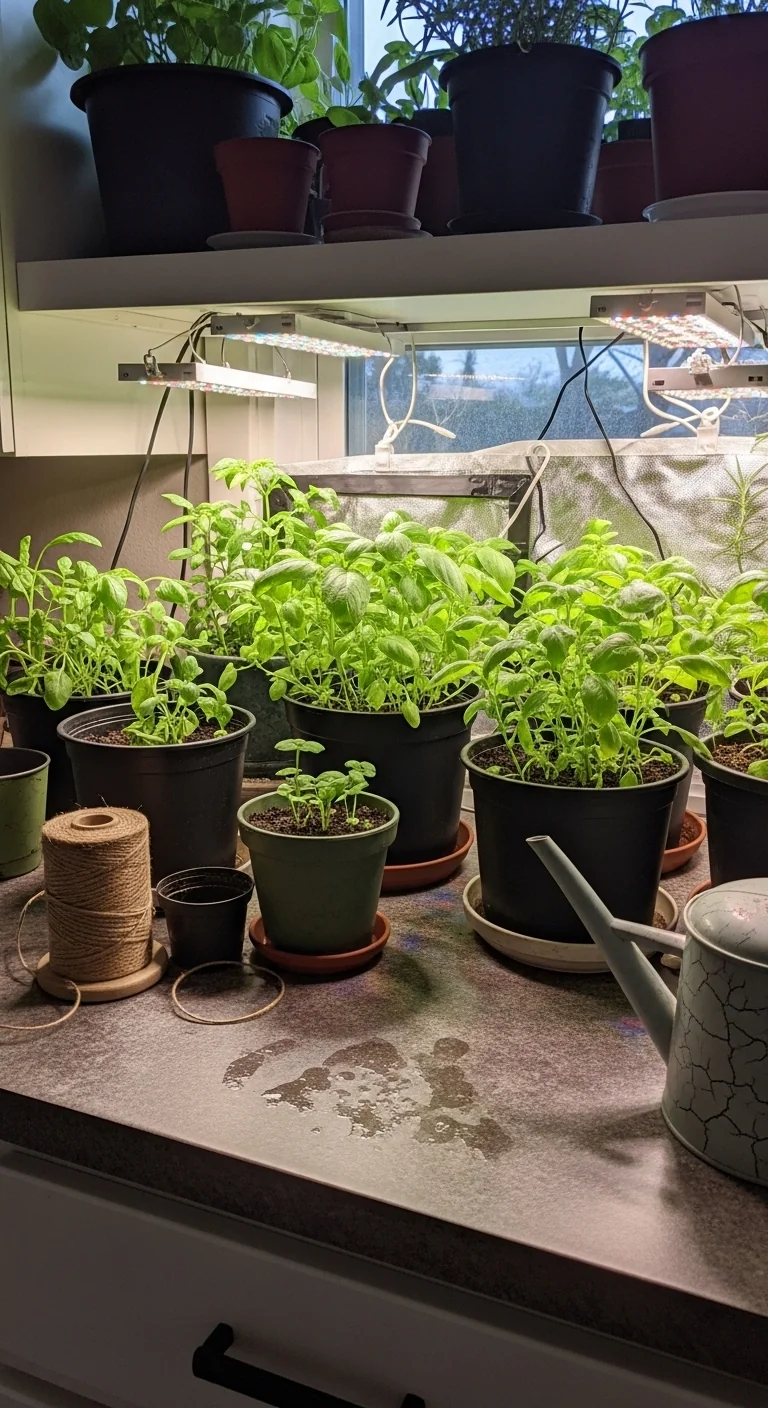
These lights use two or three gooseneck arms that clamp to any edge and bend to place full-spectrum heads exactly 12 to 18 inches above foliage. The design keeps heat low while delivering the 220 to 400 micromoles per square meter per second range most culinary herbs require for tight leaf growth.
Blueprint: clamp the base, bend arms to center each head over one or two pots, plug in, and set a basic timer for 14 to 16 hours daily. Common mistake: leaving arms too far out so edge pots fall below 200 micromoles and stretch. Adjust weekly as plants grow taller.
Pair this option with best herbs for containers to select varieties that stay compact under close-range light.
Edge case: works on a narrow balcony ledge but needs wind protection if moved outdoors temporarily.
Compact Tabletop Herb Garden Kits
Best for: Branch 1
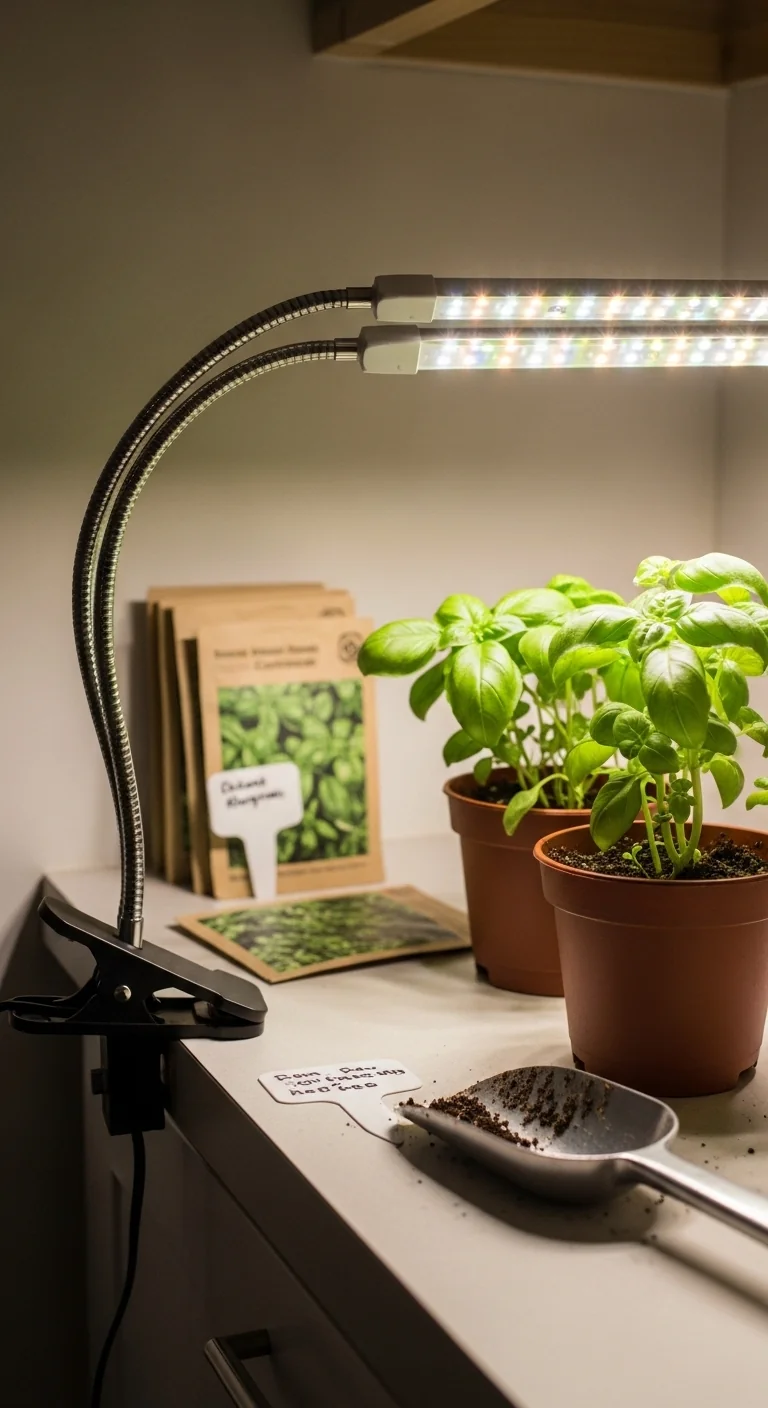
Use versus skip: choose these when you want a self-contained unit with built-in tray and timer for zero extra setup. Skip if you already own pots and prefer flexible placement.
Edge case: they shine for three or four kitchen herbs but become cramped once basil or parsley reaches 8 inches tall.
Linkable LED Shelf Strips
Best for: Branch 2
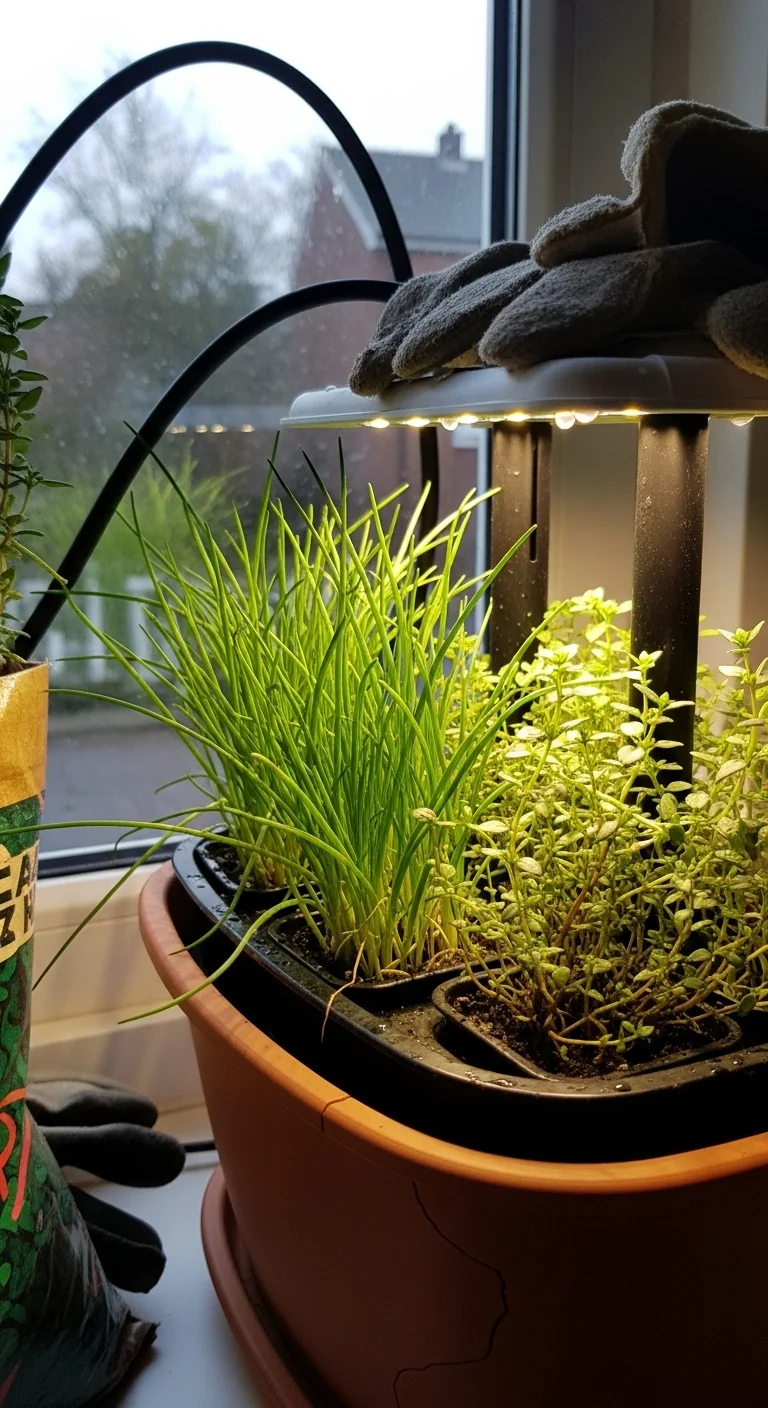
Threshold rule: each 2-foot strip covers 2 square feet at 14 hours per day when mounted 10 to 14 inches above plants. Link up to four strips end to end for a full shelf without extra outlets. Keep total run time under 16 hours to avoid stressing shade-tolerant herbs such as mint.
These strips maintain even intensity across the length, which prevents the patchy growth common with single bulbs on longer shelves.
Anchor them to standard wire or wood shelving for quick seasonal moves.
Full-Spectrum Panel Lights for Shelves
Best for: Branch 2
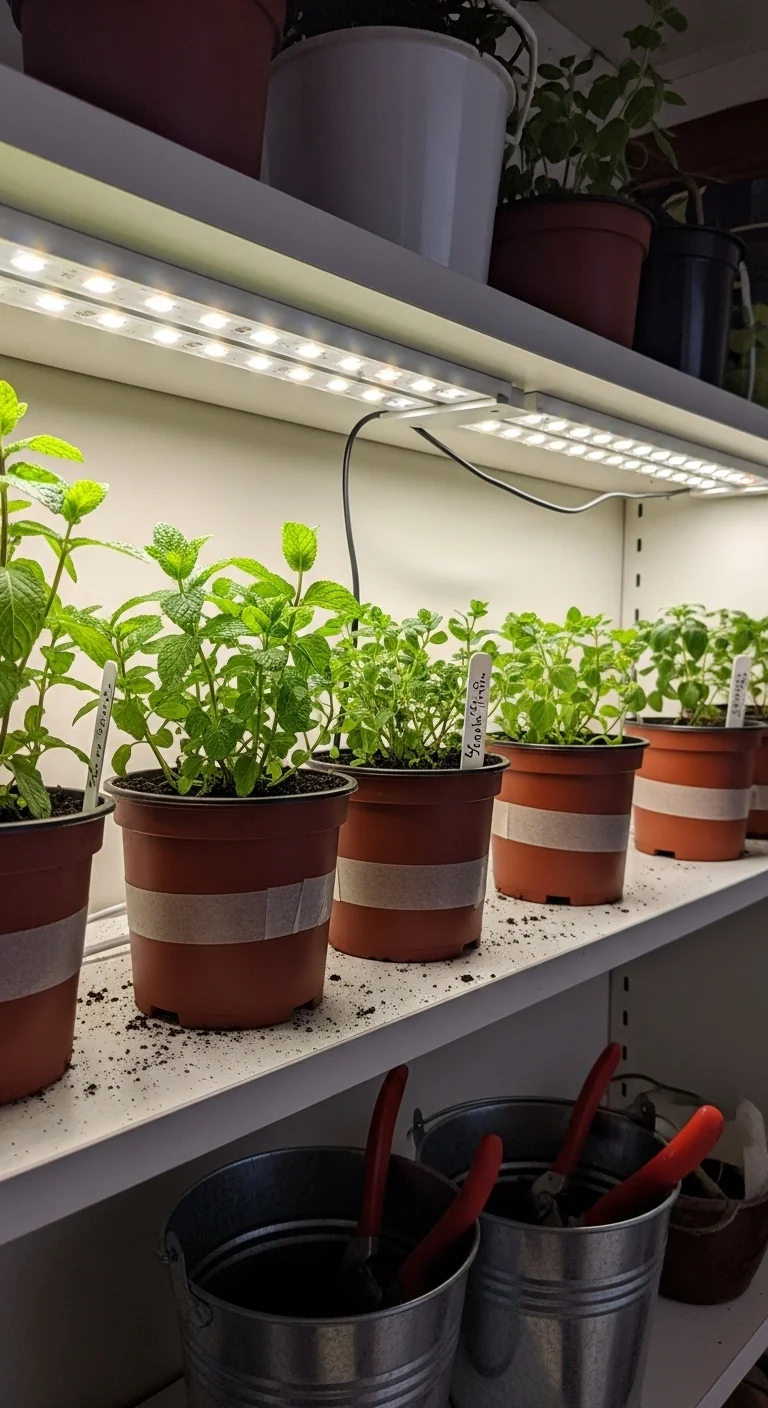
10-minute workflow: unpack the panel, attach the two included hangers to shelf brackets, lower to 12 inches above the top leaves, plug into a timer set for 14 hours, and check coverage with a hand test (palm should feel mild warmth at plant height after 5 minutes). Upgrade option: add a second panel side by side for 4-foot-wide shelves.
The flat panel spreads light uniformly so every pot receives the same intensity, unlike gooseneck arms that favor center plants.
Real-world constraint: panels run cooler than older fluorescents, so no need for extra fans in most apartment kitchens.
E26 Base Screw-In Grow Bulbs
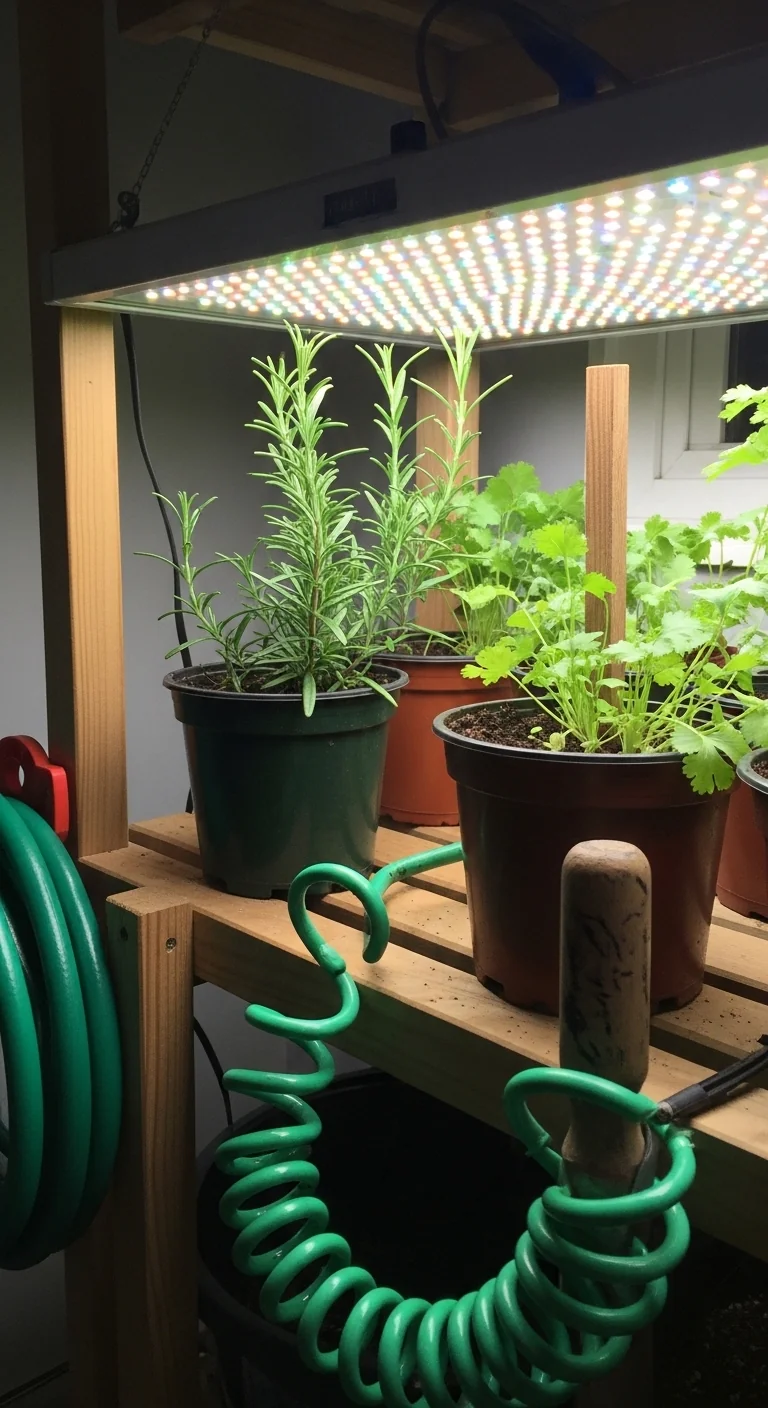
Best for: Branch 2
Use versus skip: screw these into any existing desk lamp when you need instant supplement without buying new fixtures. Skip if your shelf spacing is under 10 inches because the bulb housing can crowd taller herbs.
Edge case: one 15-watt bulb per pot works for parsley or chives but two bulbs side by side become necessary once rosemary starts to bush out.
T5 Fluorescent Tube Fixtures
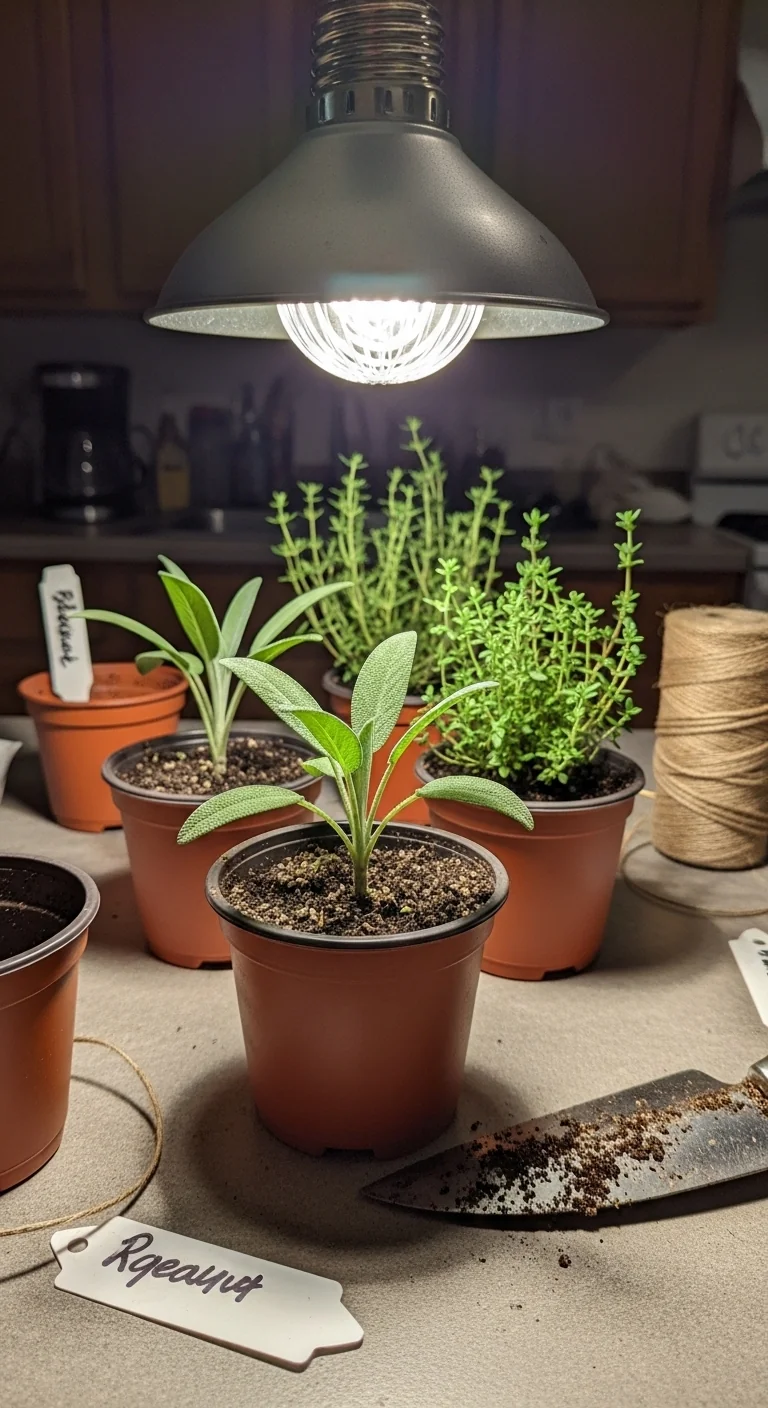
Best for: Branch 2
These fixtures hold two or four T5 tubes in a reflective hood and deliver balanced blue-heavy spectrum ideal for leafy herbs. Hang at 8 to 12 inches and run 14 hours to keep cilantro and dill from bolting early.
They cost less upfront than many LEDs yet still produce low heat, making them practical for stacked shelves in a garage or basement corner.
Replacement tubes last 20,000 hours before noticeable drop-off, so plan annual swaps to maintain intensity.
Height-Adjustable Grow Light Stands
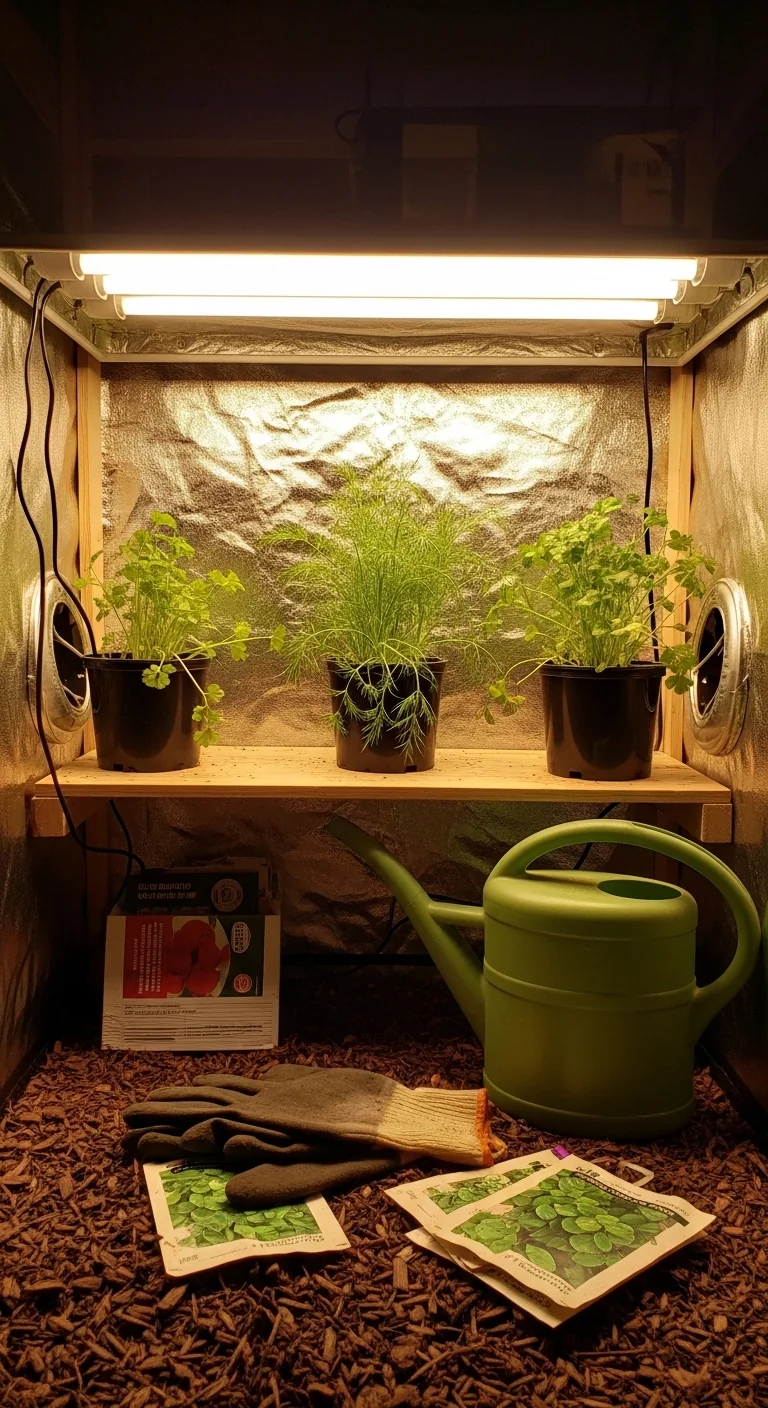
Best for: Branch 3
Blueprint: assemble the telescoping poles and crossbars, mount two or four full-spectrum heads, raise or lower the entire frame in 2-inch increments as plants mature, and connect to a timer. The adjustable height prevents the common error of fixed lights that become too distant once perennial herbs fill out.
Unique detail: crossbars accept different head styles so you can mix one blue-heavy panel for vegetative growth with a red-boosted head for flowering rosemary or thyme in the same station.
Constraint: stands need 24 inches of vertical clearance to reach full extension without hitting the ceiling.
These stands turn any corner into a scalable herb factory that expands with your collection.
Smart WiFi-Enabled Grow Lights
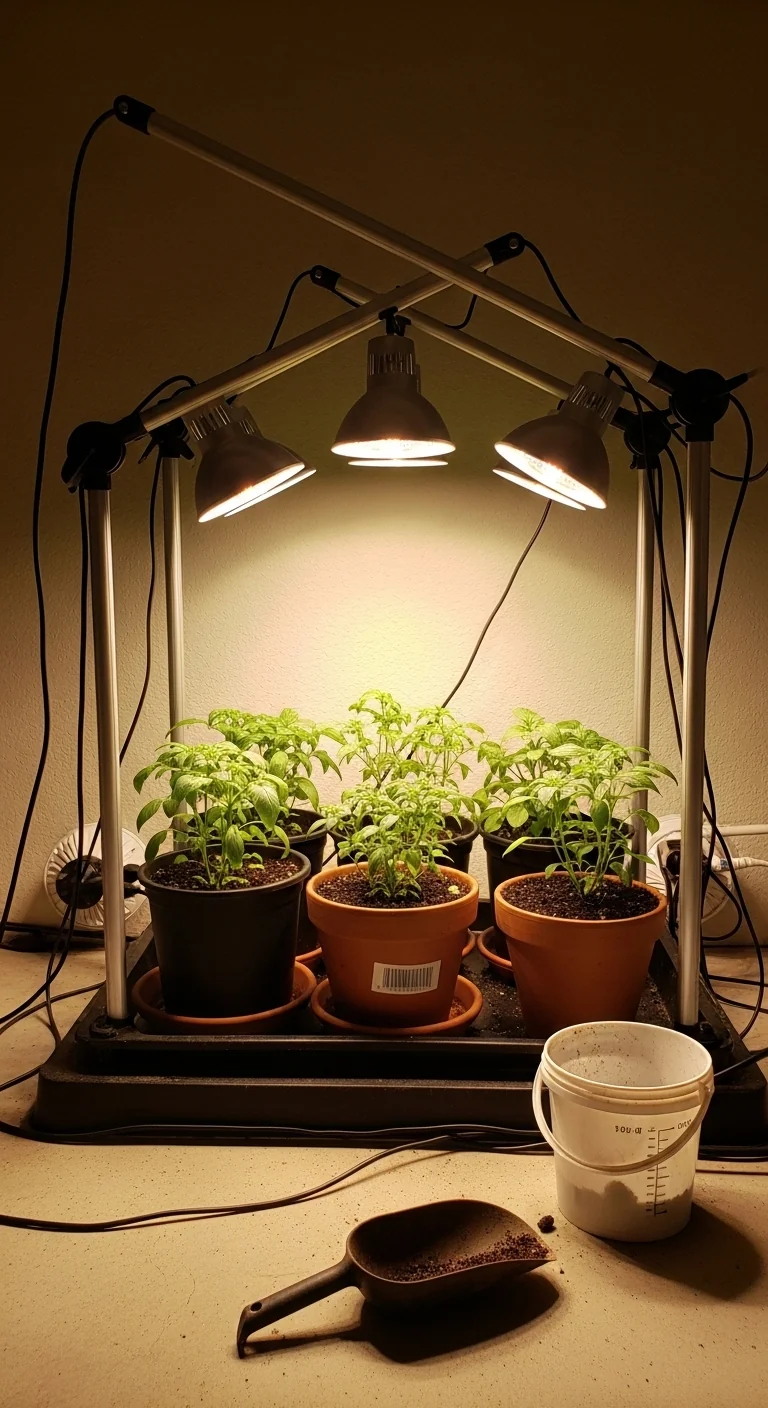
Best for: Branch 3
Use versus skip: select these when you travel often or want automatic sunrise-sunset simulation. Skip if you prefer simple analog timers and manual checks.
Edge case: app scheduling lets you drop to 12 hours in summer when ambient window light adds extra intensity.
Budget LED Shop Lights for Larger Setups
Best for: Branch 3
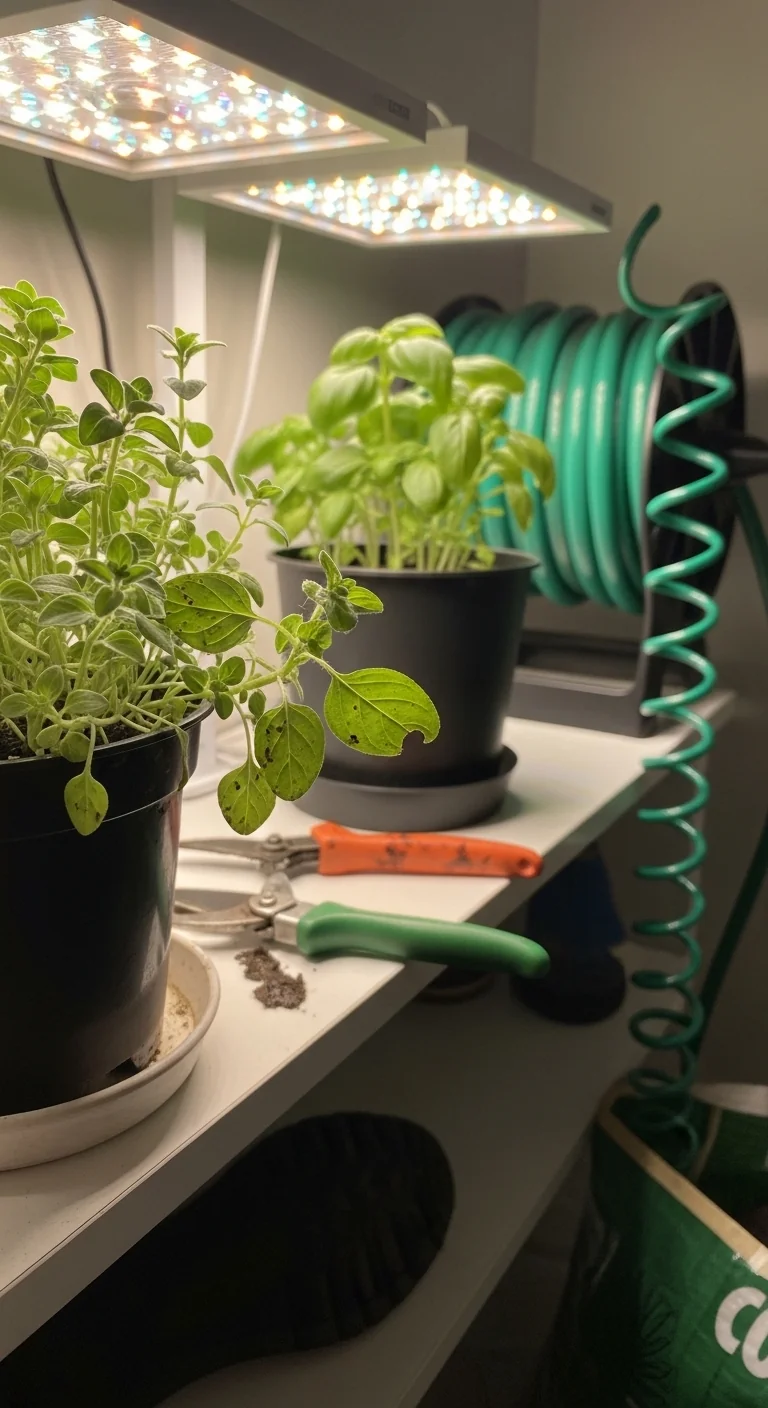
Threshold rule: each 4-foot shop light covers 4 square feet at 14 to 16 hours when suspended 14 to 18 inches above the canopy. Link three or more units for a 12-foot production wall without separate ballasts.
They deliver sufficient intensity for fast-growing annuals like basil while staying under 50 watts per fixture, which keeps electricity costs manageable for continuous winter use.
Mount them on chains or S-hooks so you can raise the whole row as the herb canopy thickens.
Starter Stack (What to Choose First)
Branch 1 Starter Stack
Begin with the adjustable clip-on gooseneck LED lights plus one compact tabletop herb garden kit. The goosenecks handle overflow pots while the kit gives a plug-and-play base. Total setup cost stays under $80 and takes under 15 minutes.
Branch 2 Starter Stack
Start with linkable LED shelf strips plus one full-spectrum panel light. Strips cover the length of the shelf while the panel fills any gaps on deeper tiers. Combined cost runs $60 to $110 and installs in 20 minutes or less.
Branch 3 Starter Stack
Pair the height-adjustable grow light stand with budget LED shop lights. The stand provides vertical flexibility while shop lights deliver low-cost linear coverage. Expect $150 to $220 total and assembly in under 30 minutes.
In each stack, pair the lights with soil mix for herbs to keep roots oxygenated under consistent artificial light.
When This Won’t Work
Grow lights will not deliver compact growth if your space already receives more than 6 hours of direct south-facing sun daily. In that case the extra intensity pushes herbs to bolt or scorch leaves. Switch instead to sheer curtains and move pots back from the glass.
They also fail when humidity stays below 40 percent without supplemental misting or trays because dry air compounds the heat from any fixture. Add pebble trays or consider balcony herb garden placement during milder months to restore natural humidity cycles.
Finally, lights cannot compensate for pots larger than 8 inches deep without bottom drainage holes because waterlogging cancels the benefit of steady light.
Choosing the Right Option for Your Situation
Budget Threshold
If your total spend must stay under $40, pick clip-on goosenecks or screw-in bulbs and expand later with linkable strips. Above $100 opens height-adjustable stands for future-proofing.
Time Threshold
Under 10 minutes weekly maintenance favors smart WiFi models with auto timers. More hands-on time allows simple analog fixtures that you adjust manually each week.
Technical Constraint: Spectrum and Heat
Choose full-spectrum LEDs when you grow both leafy and woody herbs in the same station. Avoid older fluorescents if your space has poor airflow because they run warmer than modern diodes.
Yes/No checklist:
Do you have under 2 square feet and 1 to 4 pots? Yes → Branch 1 options.
Do you need even coverage across shelves? Yes → Branch 2 strips or panels.
Do you plan year-round rotation of 10-plus plants? Yes → Branch 3 stands or shop lights.
Is your ambient light under 4 hours daily? Yes → any branch works with 14-hour timer settings.
Expert Q&A
How many hours of grow light do perennial herbs actually need once established?
Rosemary, thyme, and oregano stay compact and flavorful with 12 to 14 hours daily once mature. Extend to 16 hours only during the shortest winter weeks when natural daylight drops below 8 hours total.
Can one light type work for both fast-growing basil and slower mint in the same setup?
Yes if you stagger pot heights or rotate positions weekly. Basil prefers the brightest center spot while mint tolerates slightly lower intensity at the edges without stretching.
What distance should lights stay from the foliage to avoid burn while preventing leggy stems?
Keep most LED heads 12 to 18 inches above the top leaves. Measure with a ruler weekly and raise the fixture as the canopy fills in.
Do I need a separate light meter or can I judge intensity by eye?
Eye judgment works for first-season use: leaves should stay medium green and stems short. If lower leaves yellow or plants lean sharply, lower the light or add hours.
How do grow lights interact with self-watering planters for long-term herb health?
They pair well because consistent light drives steady transpiration that keeps reservoir water moving. Just top off the reservoir every 5 to 7 days instead of letting it sit stagnant.
Conclusion
The decision grid plus the right two-item starter stack removes guesswork so you select only the coverage and intensity your herbs need. The number-one mistake remains hanging lights too high or running them fewer than 12 hours, which wastes electricity and produces weak flavor.
Take the next step by reviewing your current herb list against the perennial herbs list and slotting the matching lights into your grid branch today.