

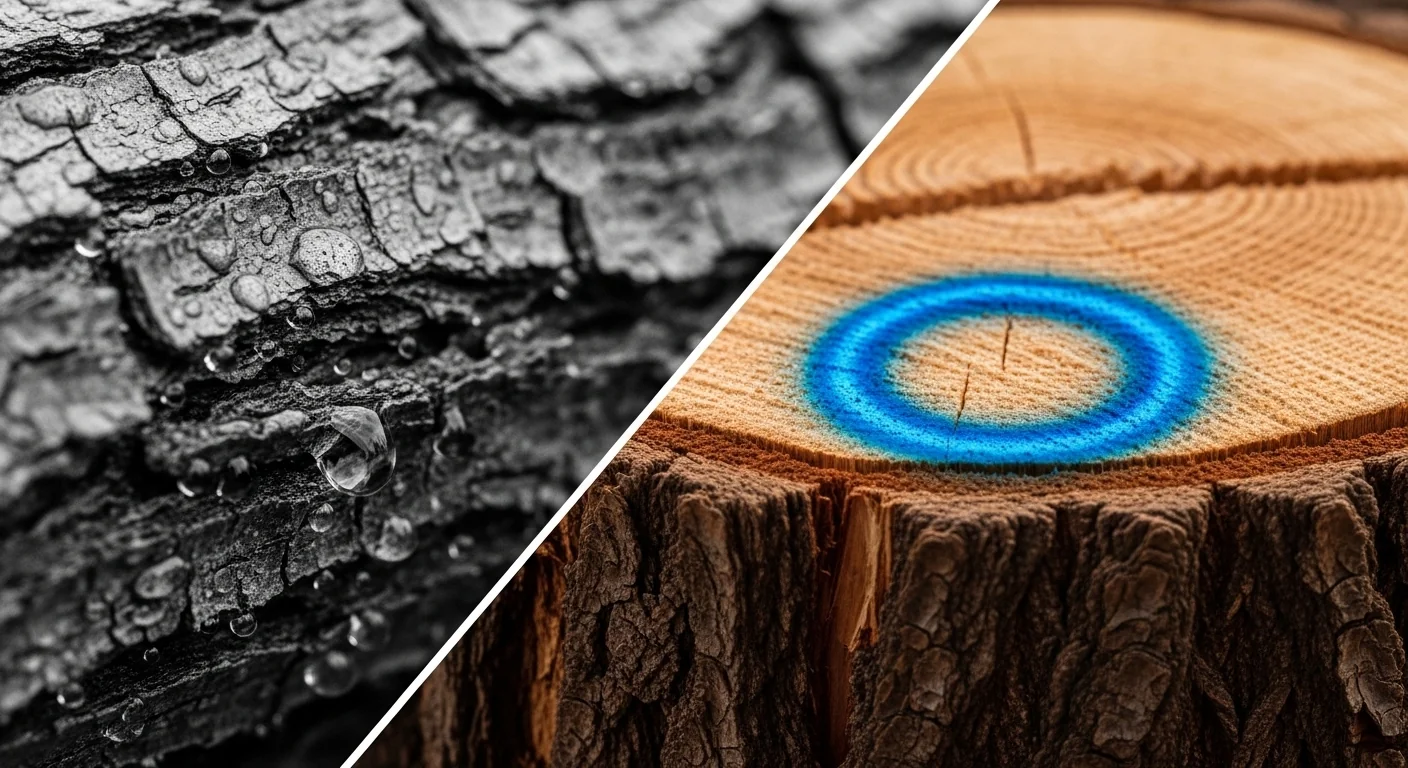
Herbicide concentration is only half of the equation when treating invasive woody plants. The other half, the one that most property owners get wrong, is whether the carrier fluid can actually deliver the active ingredient into living tissue. Bark is hydrophobic. It is built to shed water. A herbicide mixed in water and sprayed onto an untreated trunk will roll off the surface before a single molecule of active ingredient crosses the bark boundary, regardless of the concentration used.
This calculator determines the correct herbicide-to-carrier ratio for three application methods: Cut-Stump, Basal Bark, and Foliar Spray. It also enforces a hard block on the carrier-method combinations that produce zero efficacy at the biology level, not just as a best-practice suggestion. What the tool does not do: it does not account for soil conditions, re-treatment timelines, or species-specific resistance patterns. Those factors require site-specific assessment beyond any calculator.
After using this tool, you will know exactly how many ounces of active herbicide and how many ounces of carrier to combine for your chosen volume, method, and species, and you will know whether your carrier choice is compatible with your method before you mix a drop.
Use the Tool
Basal Bark & Cut-Stump Herbicide Dilution Calculator
How This Calculator Works
This calculator determines the correct herbicide-to-carrier ratio based on your chosen application method:
- Cut-Stump: Uses a 20% to 25% herbicide concentration. Apply directly to freshly cut stump surface within minutes of cutting.
- Basal Bark: Uses a 15% to 20% concentration. Spray or paint the lower 12–18 inches of trunk bark. Requires oil-based carrier — water will bounce off bark.
- Foliar Spray: Uses a 2% to 3% concentration. Spray leaves to full coverage without dripping.
Formula: Herbicide Amount (oz) = Total Mix Volume (oz) × Concentration Rate (%)
Carrier Amount (oz) = Total Mix Volume − Herbicide Amount
Critical Rule: Basal Bark application with a water carrier is blocked. Tree bark is lipophilic (oil-loving) and hydrophobic (water-repelling). A water-based mix will bounce off the bark without being absorbed, resulting in zero efficacy.
Assumptions & Limits
- Concentrations are based on standard label rates for woody invasive species control.
- Actual label directions for your specific product must be followed — this tool provides guidance, not a replacement for the product label.
- Basal bark treatments work best on stems less than 6 inches in diameter.
- Cut-stump applications should be made within 5 minutes of cutting for best results.
- Foliar applications are most effective on actively growing foliage (spring/summer).
- Diesel fuel or commercial basal oil are the only suitable carriers for basal bark treatment.
- This calculator does not account for surfactants or dye additives — add those separately per label directions.
- Maximum mix volume: 2,560 oz (20 gallons). For larger batches, calculate per-gallon and scale.
Quick Reference: Concentration by Method
| Method | Low Rate | High Rate | Carrier | Timing |
|---|---|---|---|---|
| Cut-Stump | 20% | 25% | Water or Oil | Within 5 min of cut |
| Basal Bark | 15% | 20% | Oil / Diesel ONLY | Year-round |
| Foliar | 2% | 3% | Water | Active growth |
Precomputed: Herbicide Oz per Gallon (128 oz) of Mix
| Method | Rate | Herbicide (oz) | Carrier (oz) |
|---|---|---|---|
| Cut-Stump | 20% | 25.6 | 102.4 |
| Cut-Stump | 25% | 32.0 | 96.0 |
| Basal Bark | 15% | 19.2 | 108.8 |
| Basal Bark | 20% | 25.6 | 102.4 |
| Foliar | 2% | 2.6 | 125.4 |
| Foliar | 3% | 3.8 | 124.2 |
Before running the calculator, have the following on hand: the product label for your herbicide (to confirm the active ingredient concentration listed on the label), your intended mix volume in fluid ounces, and a clear decision on application method. If you have not yet assessed the size and condition of the stems you plan to treat, the tree height calculator can help you characterize the target stand before selecting a method. Enter all five fields and click Calculate. The tool will not run on partial inputs.
Quick Start (60 Seconds)
- Target Invasive Species: Select the plant you are treating from the dropdown. Species identity affects applicator guidance but does not change the core concentration formula. When in doubt, choose “Other Woody Invasive.”
- Herbicide Active Ingredient: Match the product label exactly. Triclopyr Ester (Garlon 4 / Remedy) and Triclopyr Amine (Garlon 3A) behave differently in oil carriers; do not substitute one for the other on basal bark work.
- Application Method: Cut-Stump requires a fresh cut surface within minutes of cutting. Basal Bark is applied to intact trunk bark. Foliar is a leaf-contact method and requires actively growing foliage to move the herbicide into the vascular system.
- Carrier Fluid: For Basal Bark, you must select Oil/Diesel. Selecting Water with Basal Bark will trigger a blocked calculation with an explanation. For Cut-Stump and Foliar, water is standard.
- Total Mix Volume: Enter the total batch size in fluid ounces. One gallon equals 128 oz. The field accepts values between 1 and 2,560 oz (20 gallons). Do not enter gallons directly; convert first.
- Unit reminder: All output values are in fluid ounces. If your measuring equipment uses cups or quarts, convert after: 1 cup = 8 oz, 1 quart = 32 oz, 1 gallon = 128 oz.
- Common entry mistake: Entering the herbicide label concentration (for example, 61.6) instead of your mix volume in the volume field. The volume field expects a batch size, not an ingredient specification.
Inputs and Outputs (What Each Field Means)
| Field | Unit | What it represents | Common mistake | Safe entry guidance |
|---|---|---|---|---|
| Target Invasive Species | Selection | The plant species being treated; shapes interpretation and warning text | Guessing or selecting a wrong species with different treatment timing requirements | Choose “Other Woody Invasive” if unsure rather than selecting a wrong species |
| Herbicide Active Ingredient | Selection | The formulation type and concentration of the product; controls compatibility logic | Treating Triclopyr Amine as interchangeable with Triclopyr Ester for bark treatments | Match exactly to the “Active Ingredient” line on your product label |
| Application Method | Selection | The physical delivery technique, which determines the required concentration range | Selecting Foliar when the plant has already been cut, or vice versa | Cut-Stump = freshly severed stem; Basal Bark = intact standing trunk; Foliar = actively growing leaves |
| Carrier Fluid | Selection | The diluting liquid that transports the herbicide to the target tissue | Using water as the carrier for basal bark, which causes the mix to bead off hydrophobic bark | Basal Bark requires Oil/Diesel only. Cut-Stump and Foliar use water as standard |
| Total Mix Volume | Fluid ounces | The total batch size to prepare; all output amounts scale to this value | Entering gallons instead of ounces, which produces calculations 128x too small | Multiply gallons by 128 before entry. Range: 1 to 2,560 oz |
| Herbicide Amount (output) | Fluid ounces | How many oz of concentrated herbicide product to measure into the mix | Using this number as the concentrate on a per-application basis rather than per-batch | This is a batch total. If you fill two separate sprayers, you do not double it; you split the batch |
| Carrier Amount (output) | Fluid ounces | How many oz of oil or water to add to reach the correct dilution | Adding herbicide to a pre-filled container without accounting for displacement | Add herbicide first, then carrier; this prevents foaming and ensures accurate total volume |
Worked Examples (Real Numbers)
Example 1: Cut-Stump Treatment on Tree of Heaven
- Species: Tree of Heaven (Ailanthus altissima)
- Herbicide: Triclopyr Ester 61.6% (Garlon 4)
- Application Method: Cut-Stump
- Carrier: Water
- Total Mix Volume: 128 oz (1 gallon)
- Rate applied: 20% (low end of cut-stump range)
Result: 25.6 oz of Triclopyr Ester + 102.4 oz of water
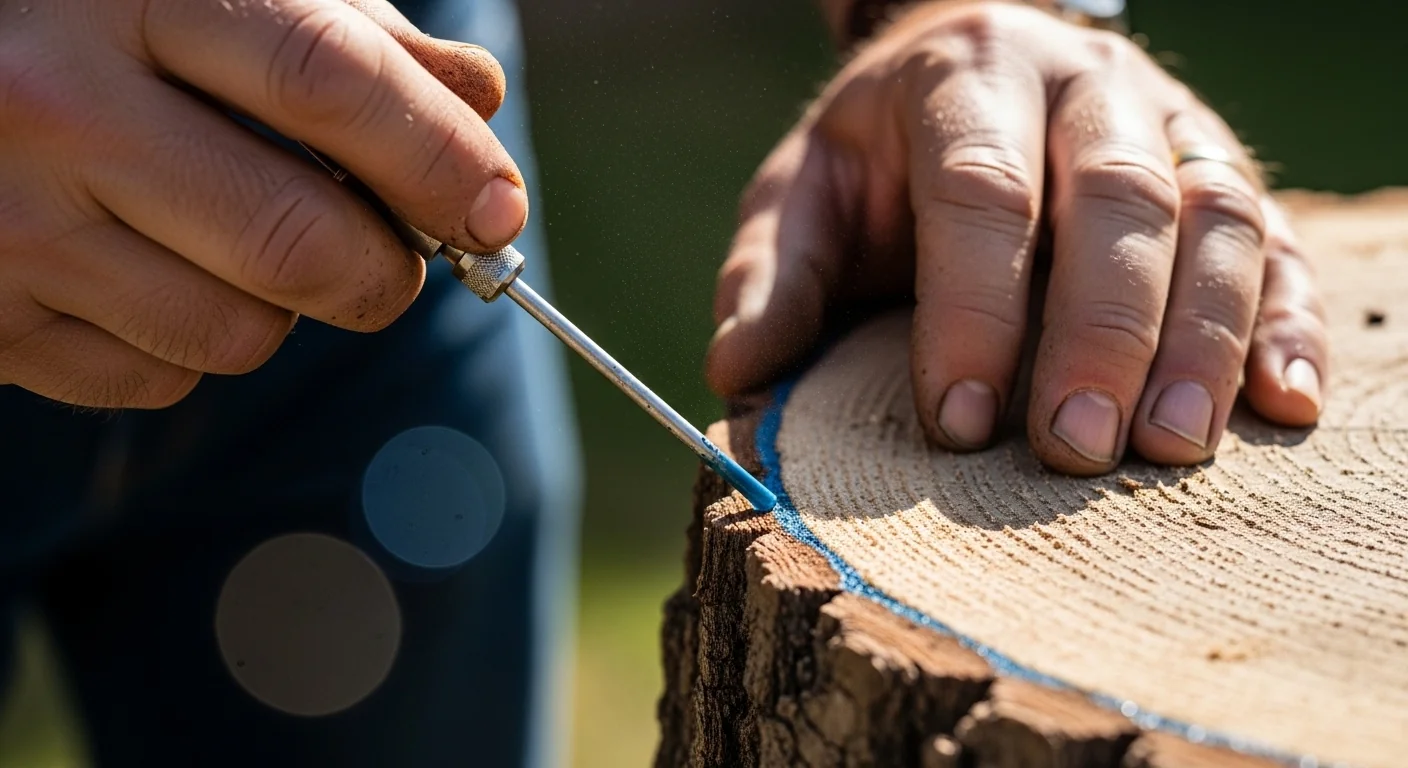
Tree of Heaven is exceptionally vigorous and resprouts aggressively from cut stumps. Apply the mix to the outer ring (cambium zone) of the freshly cut stump surface within five minutes of cutting. Missing the cambium band and treating only the heartwood wastes material and allows root sprouting to continue.
Example 2: Basal Bark Treatment on Buckthorn (Small Stem)
- Species: Buckthorn (Rhamnus cathartica)
- Herbicide: Triclopyr Ester 61.6% (Garlon 4)
- Application Method: Basal Bark
- Carrier: Basal Oil / Diesel
- Total Mix Volume: 64 oz (0.5 gallon)
- Rate applied: 15% (low end of basal bark range)
Result: 9.6 oz of Triclopyr Ester + 54.4 oz of basal oil or diesel
Basal bark is the preferred method for Buckthorn when cutting is not practical or when treating large numbers of stems quickly. Treat the lower 12 to 18 inches of the trunk, wetting the bark uniformly around the circumference. Basal bark application is effective year-round, including winter when the bark is dry, which makes it useful for off-season control work.
Example 3: Foliar Spray on Multiflora Rose
- Species: Multiflora Rose (Rosa multiflora)
- Herbicide: Glyphosate 53.8% (Roundup Pro)
- Application Method: Foliar Spray
- Carrier: Water
- Total Mix Volume: 256 oz (2 gallons)
- Rate applied: 2% (low end of foliar range)
Result: 5.1 oz of Glyphosate concentrate + 250.9 oz of water
Foliar applications on Multiflora Rose work best in late summer when the plant is actively photosynthesizing and the herbicide can be translocated into the root system before dormancy. Spray to full coverage without runoff. Adding a surfactant (per label directions) improves leaf uptake on waxy or hairy foliage, but this calculator does not account for surfactant volumes; add those separately at label rates.
Reference Table (Fast Lookup)
| Method | Rate | Mix Volume (oz) | Herbicide (oz) | Carrier (oz) | Carrier Type |
|---|---|---|---|---|---|
| Cut-Stump | 20% | 64 | 12.8 | 51.2 | Water or Oil |
| Cut-Stump | 20% | 128 | 25.6 | 102.4 | Water or Oil |
| Cut-Stump | 25% | 128 | 32.0 | 96.0 | Water or Oil |
| Cut-Stump | 25% | 256 | 64.0 | 192.0 | Water or Oil |
| Basal Bark | 15% | 64 | 9.6 | 54.4 | Oil / Diesel ONLY |
| Basal Bark | 15% | 128 | 19.2 | 108.8 | Oil / Diesel ONLY |
| Basal Bark | 20% | 128 | 25.6 | 102.4 | Oil / Diesel ONLY |
| Basal Bark | 20% | 256 | 51.2 | 204.8 | Oil / Diesel ONLY |
| Foliar | 2% | 128 | 2.6 | 125.4 | Water |
| Foliar | 3% | 128 | 3.8 | 124.2 | Water |
| Foliar | 2% | 256 | 5.1 | 250.9 | Water |
| Foliar | 3% | 256 | 7.7 | 248.3 | Water |
How the Calculation Works (Formula + Assumptions)

Show the calculation steps
Step 1: Identify the target concentration range
The application method determines a standard concentration range for the herbicide in the final mix:
- Cut-Stump: 20% to 25%
- Basal Bark: 15% to 20%
- Foliar: 2% to 3%
The calculator uses the midpoint of each range as the primary displayed result, and the low and high endpoints for the breakdown columns.
Step 2: Calculate herbicide volume
Herbicide Amount (oz) = Total Mix Volume (oz) x Concentration Rate
Example: 128 oz x 0.20 = 25.6 oz of herbicide concentrate
Step 3: Calculate carrier volume
Carrier Amount (oz) = Total Mix Volume (oz) – Herbicide Amount (oz)
Example: 128 oz – 25.6 oz = 102.4 oz of carrier
Rounding rule: All results are rounded to one decimal place. No rounding occurs during intermediate steps; only the final displayed values are rounded.
Unit convention: All inputs and outputs are in fluid ounces. Volume in gallons must be converted before entry (1 gallon = 128 fluid oz).
Compatibility block logic: Before calculating, the tool checks two conditions. If Application Method = Basal Bark and Carrier = Water, the calculation is blocked entirely and an absorption failure explanation is shown. If Application Method = Basal Bark and Herbicide = Triclopyr Amine, the calculation is also blocked because the amine salt formulation is water-soluble and will not penetrate bark in an oil carrier.
Assumptions and Limits
- Concentration ranges are based on standard label guidance for woody invasive species control in the landscaping and land management context. Specific products may have narrower label-stated ranges; always defer to the product label.
- The calculator does not account for the concentration of the active ingredient within the commercial product (for example, the label concentration of 61.6% in Garlon 4). Concentration ranges here refer to the volume-to-volume ratio of product concentrate in the final mix, not the active ingredient mass per unit volume.
- Surfactant volumes are not included in the calculation. Add surfactants separately at label-specified rates after determining the herbicide and carrier volumes.
- Indicator dye volumes are not included. Field practice typically calls for dye addition at 1 to 2 oz per gallon of mix; this does not substantially change the herbicide concentration at those volumes.
- Basal bark effectiveness diminishes on stems larger than approximately 6 inches in diameter; the tool does not adjust for stem diameter.
- The maximum supported mix volume is 2,560 oz (20 gallons). Larger batches should be calculated per gallon and scaled manually.
- Cut-stump application timing is critical. The 5-minute window after cutting is a field standard, not a hard biological constant; it represents the point at which the wound response begins sealing the cut surface. This tool cannot model timing compliance.
- Foliar efficacy depends on weather conditions (temperature, humidity, rainfall window) that this calculator does not model.
Standards, Safety Checks, and “Secret Sauce” Warnings
Critical Warnings
- The Water-Bounce Bark Failure: Applying any herbicide in a water-based carrier to uncut bark will fail. Tree bark is structurally lipophilic. The suberin and lignin layers that make up outer bark are chemically similar to wax; water-soluble solutions bead and shed without penetrating to the cambium. No amount of increased concentration or repeated application fixes this failure mode. The fix is not more herbicide; it is the correct carrier (oil-based) or a different method (cut-stump).
- Formulation matters as much as concentration: Triclopyr Amine (Garlon 3A) is a salt formulation designed for water-based foliar and cut-stump use. Even in an oil carrier, it does not penetrate bark reliably. Basal bark work requires Triclopyr Ester (Garlon 4 or Remedy), which is an oil-soluble ester that dissolves into and moves with the oil carrier through bark tissue. Substituting the amine formulation and using an oil carrier produces a chemically incompatible mix with poor absorption.
- Cut-stump timing is non-negotiable: The wound response in woody plants begins within minutes of a cut. As the parenchyma cells seal the xylem, the window for herbicide absorption shrinks rapidly. Treatments applied more than 5 to 10 minutes after cutting face a progressively sealed surface. Pre-mixing and having the solution ready before the cut is standard field practice for a reason.
- Foliar concentration at cut-stump rates causes non-target injury: Using a 20% concentration solution (designed for cut-stump) as a foliar spray will cause contact kill of leaf tissue without translocation to the roots, and will cause significant drift risk to adjacent non-target vegetation. Always match concentration to method.
Minimum Standards
- Basal bark treatment requires an oil-based carrier. Basal oil products designed for herbicide work are preferred over diesel; diesel can still perform but introduces additional handling concerns. Either way, water is not an acceptable substitute for this method.
- All herbicide application equipment used with oil-based carriers must be compatible with petroleum-based solvents. Standard pump sprayers with rubber gaskets may degrade; use sprayers rated for oil-based chemicals.
- Indicator dye should be added to all field mixes to enable visual tracking of treated vs. untreated stems. Blue or purple dye is standard; it fades within days without interfering with treatment efficacy.
- Applicators must follow federal and state pesticide regulations. Some herbicide products require a pesticide applicator license for use on certain land types. Verify regulatory requirements for your jurisdiction before treating land other than your own property.
Competitor Trap: Searches for “stump killer mixture ratio” return a large number of pages that provide concentration numbers without addressing the carrier compatibility question at all. A property owner can read those pages, mix Triclopyr Ester at the correct 20% concentration in water, spray it on standing Buckthorn stems for an entire afternoon, and return the following spring to find every treated plant alive. The concentration was right. The application was wrong. The content that stops at “use X concentration” has answered the arithmetic question while leaving the actual biology question entirely unaddressed. This calculator blocks the failing combination before a batch is mixed.
Understanding the biology of the plants you are targeting also matters when planning a treatment program. Knowing the approximate age and root development of a woody invasive informs whether basal bark or a cut-stump approach will be more effective for long-term control. The critical root zone calculator can help you understand the extent of root systems when working near desirable trees you need to protect from herbicide exposure.
Common Mistakes and Fixes
Mistake: Using water as the carrier for basal bark treatment
This is the single most common reason that basal bark treatments fail. Water cannot move through the hydrophobic outer bark layers regardless of the herbicide concentration used. The active ingredient stays on the bark surface and degrades without ever reaching the cambium layer. The tree does not absorb it, and the treatment has no effect.
Fix: Switch to a basal oil product or diesel as the carrier for any basal bark application.
Mistake: Selecting the wrong Triclopyr formulation for bark work
Triclopyr comes in two commercial formulations with very different properties. The amine formulation (Garlon 3A) is water-soluble and designed for water-carrier applications. The ester formulation (Garlon 4 / Remedy) is oil-soluble and designed for bark penetration. Using Garlon 3A in an oil carrier does not convert it into a bark-penetrating product; the chemistry is incompatible.
Fix: Confirm the label. “Ester” formulations are required for basal bark. “Amine” formulations work for foliar and cut-stump with a water carrier.
Mistake: Applying cut-stump herbicide more than five minutes after cutting
Woody plants begin sealing cut surfaces immediately as a wound response. The vascular tissue in the cambium zone closes progressively, and a delayed application may contact a partially sealed surface. The tree age calculator can help you understand how established root systems are before you start; older, more developed root systems resprout more aggressively if the initial cut-stump treatment is compromised.
Fix: Pre-mix the herbicide solution before beginning cuts. Have a labeled squeeze bottle or low-volume sprayer immediately accessible at the cutting location.
Mistake: Treating stems that are too large for basal bark penetration
Bark thickness increases with stem diameter. On stems larger than approximately 6 inches in diameter, the oil carrier and herbicide mixture may not penetrate fully through the bark to reach the cambium. The treatment may contact outer bark layers only, resulting in partial or no translocation into the vascular system.
Fix: Use cut-stump treatment on larger diameter stems. Reserve basal bark for stems under 6 inches where bark thickness is manageable.
Mistake: Mixing herbicide volume at foliar concentration for foliar work and then re-using the same mix for cut stumps
A foliar mix at 2% to 3% concentration is far below the 20% to 25% required for cut-stump applications. Applicators who prepare a foliar batch and then use the remaining mix on freshly cut stumps as a convenience will achieve essentially no cut-stump efficacy from that lower-concentration solution.
Fix: Prepare separate mixes for different application methods. If work involves both foliar and cut-stump treatment in the same session, mix and label them separately before going into the field.
Next Steps in Your Workflow
After calculating your mix ratio, the immediate next steps are preparation and equipment check. Confirm your sprayer or applicator is rated for the carrier you are using. Oil-based carriers are not compatible with all pump sprayer seals. Add indicator dye to the batch at label-specified rates. Label the container with species, method, rate, and mix date before heading into the field. If the treatment area includes bare soil work or involves clearing significant amounts of invasive vegetation, planning for site restoration is worth doing before treatment rather than after. The grass seed calculator can help you estimate seeding requirements for the cleared area once invasive cover is removed.
For larger properties where invasive removal is part of a broader land management project, chemical treatment is rarely the final step. The cleared canopy openings often accelerate erosion and allow new invasive seed germination from the seedbank. Coupling herbicide treatment with a mulch or erosion control plan around any disturbed soil is standard practice in professional land management. The mulch calculator can assist with estimating material volumes for covering treated and cleared areas as part of a complete site restoration plan.
FAQ
Can I use diesel fuel as the carrier for basal bark treatment?
Diesel fuel functions as a carrier for basal bark treatment and has been used in professional settings for decades. Commercial basal oil products designed specifically for herbicide work are generally preferred because they are formulated to optimize bark penetration and reduce environmental concerns associated with petroleum-based solvents. Both options penetrate bark; basal oil is the cleaner and more refined choice where available.
How long does it take for basal bark treatment to kill the tree?
Visible dieback from a basal bark treatment typically begins within two to six weeks during the growing season. Full plant death, including root system kill, may take one to two full growing seasons depending on species, stem size, and treatment timing. Trees may appear dead above ground before the root system is fully exhausted. Do not assume failure if foliage does not drop immediately after treatment.
What is the difference between cut-stump and basal bark in terms of regrowth risk?
Cut-stump treatment removes the above-ground biomass and treats the exposed cambium directly, providing faster visible results. Basal bark leaves the plant standing and relies on translocation through the root system over time. Both methods, when applied correctly, suppress root resprouting. The primary advantage of basal bark is speed of application across many stems without the labor of cutting each one individually.
Can glyphosate be used for basal bark treatment?
Glyphosate is a water-soluble formulation and does not penetrate intact bark effectively regardless of carrier. It is not a registered basal bark product for this reason. Glyphosate is most effective as a foliar spray or as a cut-stump application where it contacts exposed vascular tissue directly. Triclopyr Ester is the standard active ingredient for basal bark work due to its oil-soluble ester chemistry.
Does the time of year affect which method I should use?
Method selection and timing interact. Foliar spray requires actively growing foliage, which limits it to the growing season. Cut-stump is effective year-round as long as the cut is fresh. Basal bark is highly effective during late fall and winter when bark is dry and the plant is dormant, because oil carrier penetration is not impeded by sap flow. Winter basal bark work is often preferred for efficiency on large-scale invasive management projects.
Why does the calculator block Triclopyr Amine for basal bark even with an oil carrier?
Triclopyr Amine is a salt of triclopyr acid that dissolves in water, not in oil. Even when added to an oil carrier, the amine formulation does not homogeneously dissolve and will not move with the carrier through bark tissue the way an ester formulation does. The combination produces a poorly blended solution with unreliable penetration. Only the ester formulation (Garlon 4 / Remedy) is chemically suited for oil-carrier basal bark work.
Conclusion
The stump killer mixture ratio question has a clear arithmetic answer, but arithmetic is not where the treatment fails. It fails at the biology layer, when a water carrier hits a hydrophobic bark surface, or when an amine formulation is used where only an ester will work. This calculator handles both the math and the compatibility check together, so the output is not just a number but a confirmed-usable mix specification before a drop is measured.
The single most important mistake to avoid is using a water carrier for basal bark work. No other error is as common or as invisible in the moment; the mix looks correct, the sprayer works correctly, and the stems get thoroughly coated. The tree survives anyway. If you are approaching a multi-species invasive control project that extends beyond chemical treatment into site preparation and erosion management, the compost blanket erosion calculator can help you plan protective groundcover for areas where invasive removal opens bare soil.