
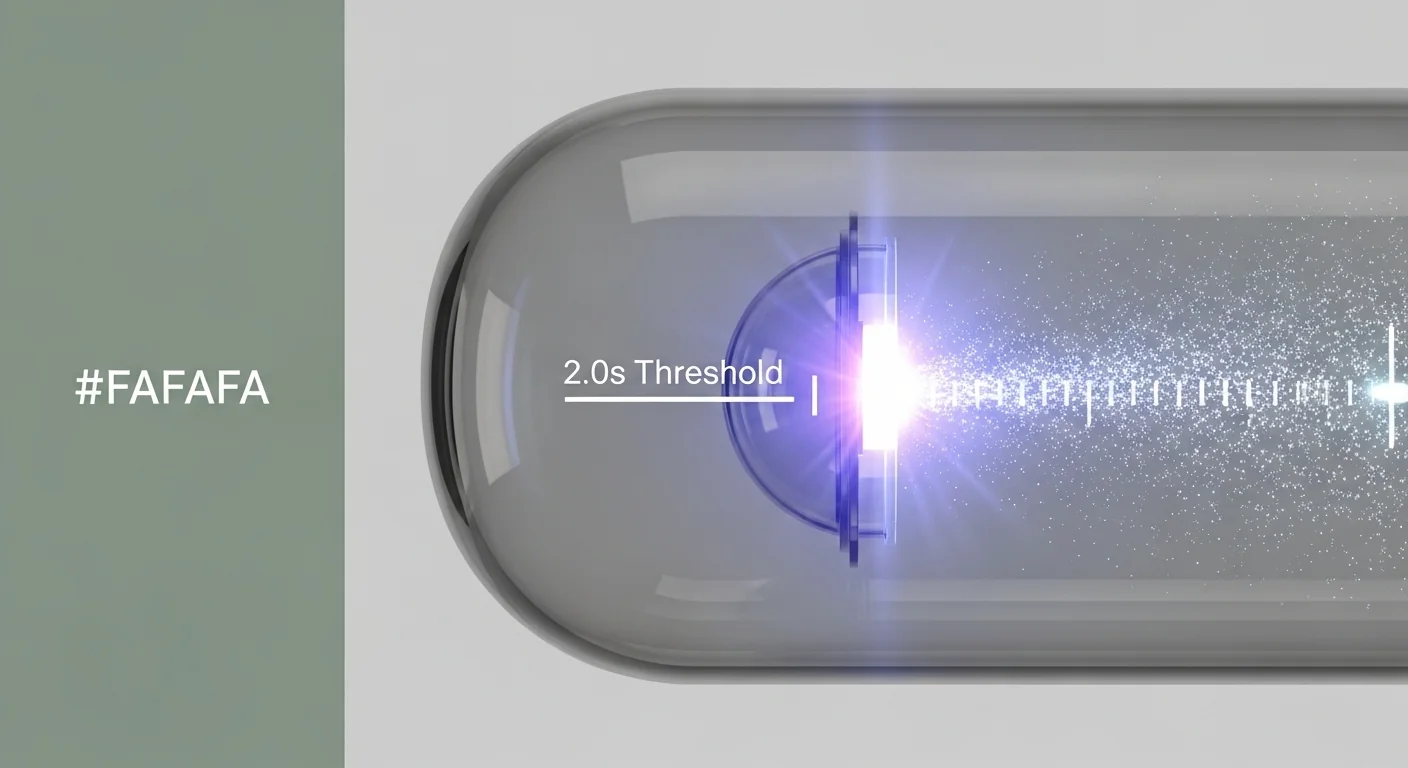
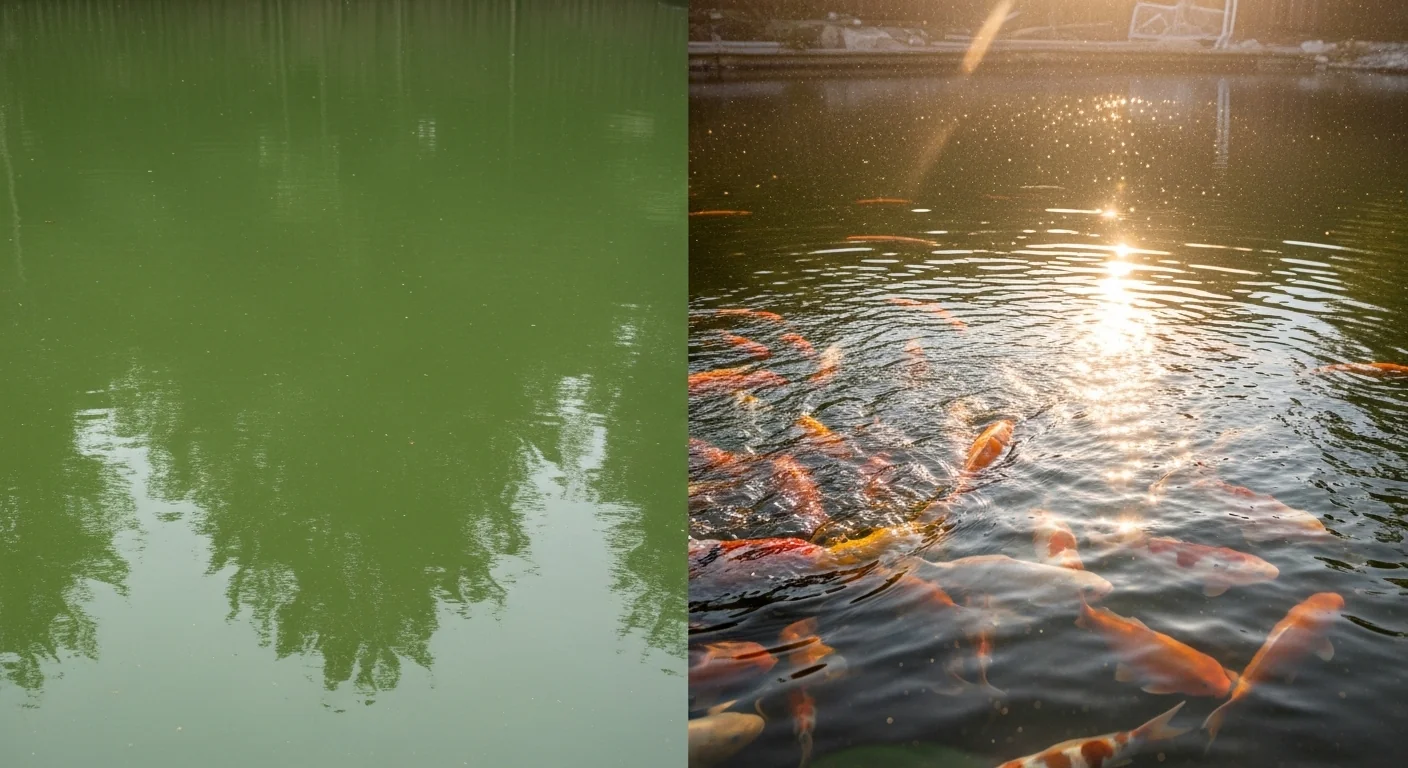
Green water does not survive UV-C light. That sentence is technically true and practically useless without the critical qualifier: only if the water moves slowly enough. The core failure in most residential pond UV setups is not wattage, not bulb age, and not brand quality. It is flow rate. Water pushed through a UV chamber faster than the lamp can deliver a germicidal dose produces algae that survives, adapts to nothing, and returns the following week. The pond stays green. The owner buys a bigger UV unit. The cycle repeats.
This tool calculates dwell time, the number of seconds each parcel of water spends inside the UV tube directly under the bulb, and compares that against the minimum UV dose thresholds required to destroy the DNA of single-cell green water algae (30,000 microWatt-seconds per square centimeter) and parasites including Ich, Costia, and flukes (90,000 microWatt-seconds per square centimeter). It does not model UV bulb degradation curves, water turbidity factors, or quartz sleeve fouling, all of which reduce effective output. What it gives you is a clear pass/fail answer based on the physics of germicidal exposure. When you are also at the stage of planning or sizing your pond liner and basin volume, start with volume first because every downstream calculation depends on it.
After running this tool, you will know whether your current pump-and-UV pairing can actually kill algae, or whether you need to throttle flow, upgrade wattage, or add a bypass valve before spending another season fighting green water.
Use the Tool
| UV Wattage | Max GPH (Algae) | Max GPH (Parasites) | Chamber Vol (oz) |
|---|
How This Calculator Works
Step 1: Convert Flow Rate. Your pump’s GPH is converted to Gallons Per Minute (GPM = GPH ÷ 60).
Step 2: Estimate UV Chamber Volume. Based on the UV wattage, we estimate the internal chamber volume of the UV unit. Higher-wattage units have larger chambers that hold more water.
Step 3: Calculate Dwell Time. Dwell Time (seconds) = (Chamber Volume in gallons) ÷ (GPM ÷ 60). This is how long each parcel of water stays inside the UV tube under the UV-C lamp.
Step 4: Compare Against Kill Thresholds. To destroy single-cell green water algae DNA, the required UV dose is approximately 30,000 μWs/cm². For parasites (Ich, Costia, Flukes), the required dose is approximately 90,000 μWs/cm² — three times higher. These doses require a minimum dwell time of 2–3 seconds for algae and 5+ seconds for parasites.
Step 5: Sunburn Pass-Through Check. If your pump pushes water past the UV bulb faster than the lamp can deliver the required dose, the algae or parasites only receive a partial exposure — like a brief suntan instead of a lethal burn. The tool flags this condition.
Assumptions: Chamber volumes are estimated from typical inline UV clarifier designs (AquaUltraviolet, OASE, TotalPond). Actual chamber volume varies by manufacturer. UV bulb output assumes a new bulb at full rated output — UV-C bulbs lose approximately 20% effectiveness after 8,000–10,000 hours and should be replaced annually.
Assumptions & Limits
This calculator assumes clear plumbing with no significant head loss, a new UV-C bulb, and a properly sealed quartz sleeve. Results are estimates for typical inline UV clarifiers.
Water clarity affects UV penetration: heavy tannins or suspended solids reduce effective dose. Pre-filtration is recommended for best UV performance.
Temperature: UV-C output is optimized between 60–104°F (16–40°C). Extreme cold reduces lamp efficiency.
Valid ranges: Pond 50–100,000 gal, Pump 50–10,000 GPH, UV 8–240W.
Before you calculate, have the following ready: your pond's total water volume in US gallons (length x width x average depth x 7.48 is a rough starting point for rectangular ponds), your submersible pump's rated flow in GPH from the product label or spec sheet, the UV clarifier's wattage stamped on the unit or in the manual, and the primary problem you are treating. If your pump feeds a waterfall or stream, its effective flow at head pressure will be lower than the rated open-water figure. The waterfall pump flow rate calculator can help you determine the corrected GPH at actual head height before entering it here.
Quick Start (60 Seconds)
- Pond Volume (gallons): Measure length, width, and average depth in feet. Multiply all three together, then multiply by 7.48. Irregular ponds: break the shape into rectangles and add them. Enter the total, not the surface area.
- Pump Flow Rate (GPH): Use the actual delivered flow at your head height, not the zero-head rated maximum. A pump rated 1,800 GPH at 0 ft of head may only deliver 900 GPH at 5 ft. Check your pump curve.
- UV Wattage: This is the UV-C lamp wattage, not the total power draw of the unit. Some multi-lamp UV sterilizers list total wattage across all bulbs. Confirm you are entering a single UV-C lamp's rated output if the tool is sizing a single inline unit.
- Target Pest: Choose Algae for green water, pea-soup, or brown tint problems. Choose Parasites only if you are treating an active disease outbreak such as Ich or flukes. Parasite treatment requires three times the UV dose and demands a far slower flow rate.
- Unit consistency: Do not mix liters and gallons, or liters per hour with GPH. The tool uses US gallons and GPH exclusively.
- New bulb assumption: The tool assumes a new UV-C bulb at full rated output. If your bulb is more than 12 months old, results will be optimistic. Consider the result a best-case scenario.
- Single inline UV: If you are running two UV units in series, calculate each unit separately and evaluate the combined effect based on the slower flow through each stage.
Inputs and Outputs (What Each Field Means)
| Field | Unit | What It Means | Common Entry Mistake | Safe Entry Guidance |
|---|---|---|---|---|
| Total Pond Volume | US Gallons | Full water volume in the pond basin, including shelves and plant zones | Using surface area instead of volume; ignoring deep zones | 50 to 100,000 gal; use L x W x avg depth (ft) x 7.48 |
| Pump Flow Rate | GPH (gallons per hour) | Actual delivered flow through the UV unit at operating head height | Using the zero-head rated GPH instead of head-corrected flow | 50 to 10,000 GPH; check pump curve at actual head |
| UV Clarifier Wattage | Watts (W) | UV-C lamp power rating determining bulb output intensity and chamber size | Entering total unit wattage for multi-lamp units; confusing watts with lumens | 8 to 240W; use per-lamp wattage, not total power draw |
| Target Pest | Selection | Sets the required kill dose threshold (30,000 vs 90,000 µWs/cm²) and the minimum dwell time | Selecting Algae when treating a fish disease outbreak; parasites require 3x higher dose | Use Algae for green water clarity; Parasites for active fish disease treatment only |
| Output: Dwell Time | Seconds | Time each water parcel spends inside the UV chamber under the lamp | Assuming any positive dwell time is effective; short exposures are sub-lethal | Algae kill requires ≥2s; parasite kill requires ≥5s |
| Output: Max Rated Flow | GPH | Estimated maximum flow the UV unit can handle for the selected target without triggering pass-through | Treating this as a recommended operating point; it is an upper limit | Keep actual pump GPH at or below this figure for reliable kill |
| Full Pond Turnover | Hours or minutes | Time to circulate the entire pond volume once through the UV unit | Assuming one turnover is sufficient to clear the pond; most ponds need multiple turnovers | Target at least 2 complete turnovers per day for green water treatment |
Worked Examples (Real Numbers)
Scenario 1: Small Koi Pond, Dialed In Correctly
- Pond Volume: 1,500 gallons
- Pump Flow Rate: 200 GPH
- UV Clarifier: 36 watts
- Target: Green Water Algae
GPM = 200 / 60 = 3.33 GPM. Estimated chamber volume for a 36W unit = 18 fluid oz = 0.1406 gallons. Dwell Time = 0.1406 / (3.33 / 60) = 0.1406 / 0.0556 = 2.53 seconds.
Result: 2.53 seconds dwell time. Status: EFFECTIVE.
At 200 GPH this 36W unit delivers well above the 2-second minimum for algae kill. Full pond turnover occurs in 7.5 hours. Running the UV continuously, the pond should show visible clearing within 3 to 5 days as dead algae cells clump and settle or are captured by mechanical filtration.
Scenario 2: Waterfall Pond, Sunburn Pass-Through Triggered
- Pond Volume: 3,000 gallons
- Pump Flow Rate: 2,500 GPH (waterfall recirculation pump, zero-head rated)
- UV Clarifier: 36 watts
- Target: Green Water Algae
GPM = 2,500 / 60 = 41.67 GPM. Chamber volume for 36W = 0.1406 gallons. Dwell Time = 0.1406 / (41.67 / 60) = 0.1406 / 0.6944 = 0.20 seconds.
Result: 0.20 seconds dwell time. Status: FAIL. Sunburn Pass-Through detected.
Water shoots past the 36W bulb in 0.20 seconds. The algae receives a brief UV flash, absorbs minor photon energy, and exits the chamber alive. The pond stays green indefinitely regardless of how long the UV runs. A PVC ball valve on the UV intake line, throttled to 250 GPH or below, would resolve this without replacing the pump or the UV unit.
Scenario 3: Active Parasite Treatment, 57W Unit
- Pond Volume: 2,000 gallons
- Pump Flow Rate: 150 GPH (deliberately slowed via ball valve)
- UV Clarifier: 57 watts
- Target: Parasites (Ich / Costia / Flukes)
GPM = 150 / 60 = 2.5 GPM. Chamber volume for 57W = 28 fluid oz = 0.21875 gallons. Dwell Time = 0.21875 / (2.5 / 60) = 0.21875 / 0.04167 = 5.25 seconds.
Result: 5.25 seconds dwell time. Status: EFFECTIVE for parasite kill.
The 57W unit at 150 GPH exceeds the 5-second minimum required to deliver a 90,000 µWs/cm² lethal dose to parasites. Pond turnover at this flow rate takes 13.3 hours, so the UV should run 24 hours per day during treatment. This is a dedicated treatment configuration, not a general-purpose algae setup.
Reference Table (Fast Lookup)
The table below shows, for each UV wattage, the maximum safe pump flow rate that still achieves a lethal 2-second dwell time for algae and a 5-second dwell time for parasites. These are calculated values derived from the chamber volume formula, not manufacturer marketing figures. If your pump exceeds the "Max GPH for Algae" column for your UV wattage, you are in Sunburn Pass-Through territory.
| UV Wattage | Est. Chamber (fl oz) | Max GPH for 2s Algae Kill | Max GPH for 5s Parasite Kill | Dwell at 500 GPH (s) | Algae Kill at 500 GPH? |
|---|---|---|---|---|---|
| 8W | 5 | 70 GPH | 28 GPH | 0.28s | No |
| 15W | 8 | 113 GPH | 45 GPH | 0.45s | No |
| 18W | 10 | 141 GPH | 56 GPH | 0.56s | No |
| 25W | 14 | 197 GPH | 79 GPH | 0.788s | No |
| 36W | 18 | 253 GPH | 101 GPH | 1.01s | Marginal |
| 57W | 28 | 394 GPH | 158 GPH | 1.575s | Marginal |
| 80W | 38 | 534 GPH | 214 GPH | 2.14s | Yes |
| 120W | 52 | 731 GPH | 293 GPH | 2.93s | Yes |
The "Dwell at 500 GPH" column reveals a pattern that most UV sizing guides ignore: only an 80W or larger unit can reliably kill green water algae at a typical mid-range pump flow of 500 GPH. Running a 36W unit at 500 GPH produces less than 1 second of dwell time, which is biologically sub-lethal regardless of the wattage claim on the box.
How the Calculation Works (Formula + Assumptions)
Show the calculation steps
Step 1: Convert GPH to GPM.
GPM = GPH ÷ 60
Example: 300 GPH ÷ 60 = 5.0 GPM
Step 2: Estimate UV chamber volume in gallons.
Chamber volume is estimated from the UV wattage using a lookup table of typical inline UV clarifier chamber sizes. Chamber Volume (gallons) = Chamber Volume (fl oz) ÷ 128.
Example: A 36W unit with an 18 fl oz chamber = 18 ÷ 128 = 0.1406 gallons
Step 3: Calculate dwell time in seconds.
Dwell Time (seconds) = Chamber Volume (gallons) ÷ (GPM ÷ 60)
This is equivalent to: Dwell Time = Chamber Volume × 3,600 ÷ GPH
Example: 0.1406 ÷ (5.0 ÷ 60) = 0.1406 ÷ 0.08333 = 1.69 seconds
Step 4: Compare against kill thresholds.
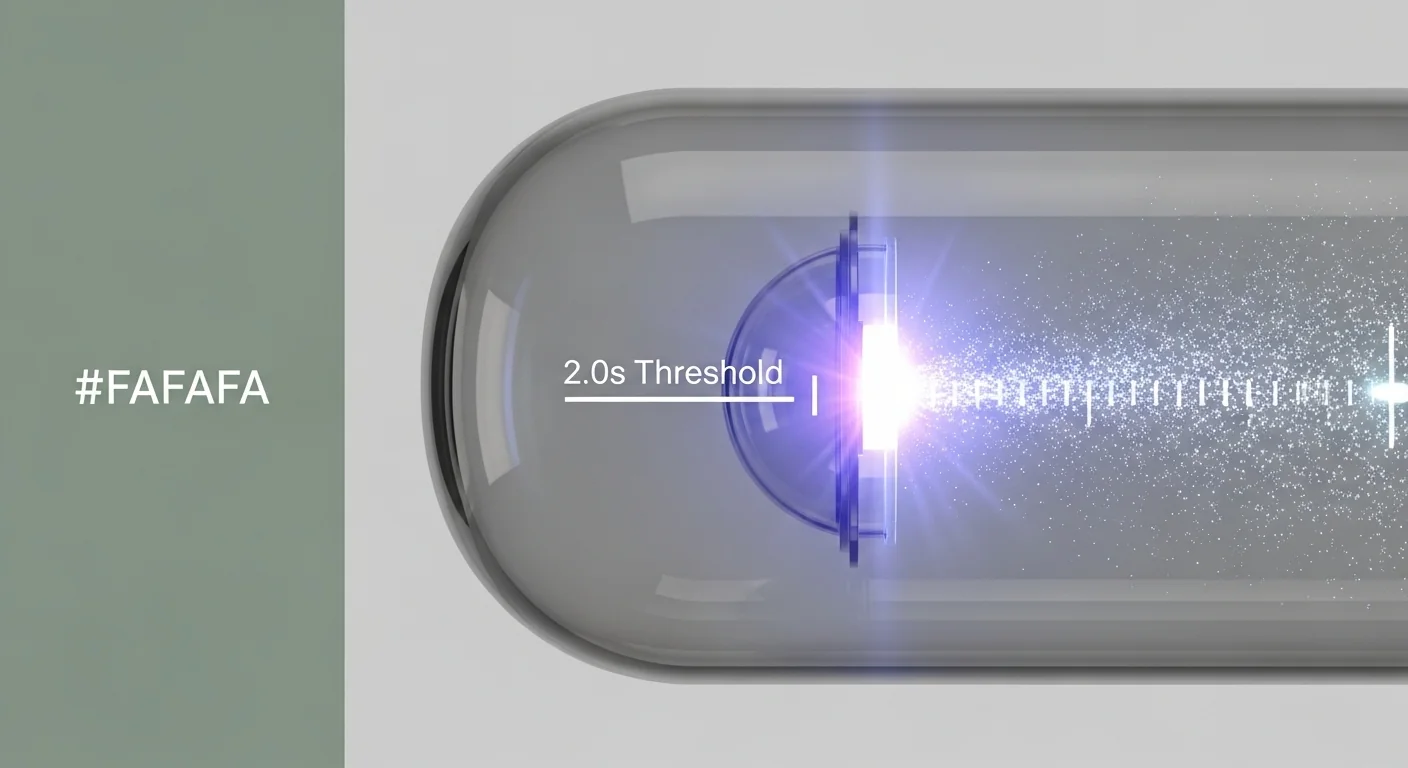
Algae (single-cell, green water): Target dose = 30,000 µWs/cm². Minimum safe dwell time = 2.0 seconds.
Parasites (Ich, Costia, Trichodina, flukes): Target dose = 90,000 µWs/cm². Minimum safe dwell time = 5.0 seconds.
If dwell time is less than half the minimum, status = FAIL (Sunburn Pass-Through).
If dwell time is between half and the full minimum, status = MARGINAL.
If dwell time meets or exceeds the minimum, status = EFFECTIVE.
Step 5: Check for Sunburn Pass-Through.
If pump GPH exceeds the UV unit's maximum rated flow for the selected target, the Sunburn Pass-Through warning is triggered independently of the calculated dwell time.
Rounding: Dwell time is displayed to two decimal places. GPM is displayed to one decimal place. All intermediate values use full floating-point precision before rounding for display.
Assumptions and Limits
- Chamber volumes are estimates based on typical inline UV clarifier designs from manufacturers like AquaUltraviolet and OASE. Actual internal chamber dimensions vary by model and may differ from these estimates by a meaningful margin.
- UV-C bulb output is assumed to be at full rated new-bulb intensity. UV-C lamps lose output over time, with meaningful degradation occurring after roughly 8,000 to 10,000 operating hours. Annual bulb replacement is recommended regardless of apparent lamp function.
- Water clarity is assumed adequate for UV penetration. Heavily tannin-stained water, fine suspended sediment, or high organic load all reduce the effective UV dose even at correct dwell times. Pre-filter turbid water before it enters the UV chamber.
- The quartz sleeve surrounding the bulb is assumed clean. Mineral deposits, algae films, or biological fouling on the sleeve reduce UV transmission significantly. Sleeves should be inspected and cleaned quarterly.
- The tool does not model multi-pass cumulative UV exposure. Each pass through the UV chamber is treated independently. Some cells will take multiple passes to receive a lethal cumulative dose.
- Temperature is assumed to be within the 60 to 104 degrees Fahrenheit operating range. Cold water (below 50 degrees) can reduce UV-C lamp efficiency, particularly in uninsulated outdoor installations.
- The tool models a single inline UV clarifier. Running two units in series requires separate calculations for each unit based on shared flow.
Standards, Safety Checks, and "Secret Sauce" Warnings
Critical Warnings
- The Sunburn Pass-Through Effect: A pump that is too large for the UV unit is the single most common reason a UV clarifier fails to clear green water. The algae does not die; it absorbs a sub-lethal dose, exits the chamber alive, and reproduces at the same rate it always did. This is not a UV product failure. It is a flow rate mismatch that no wattage increase alone will solve if you do not also control flow speed.
- Old Bulbs, False Confidence: UV-C lamps continue to glow visibly for two to three years, but germicidal output begins declining well before the lamp burns out. A lamp that looks functional may be delivering far less than its rated dose. UV output cannot be assessed visually. If a bulb is more than 12 months old and green water persists despite a correct flow rate, replace the bulb before diagnosing any other problem.
- Parasite Treatment Requires a Dedicated Configuration: The 90,000 µWs/cm² dose required to kill parasites demands roughly three times the dwell time needed for algae. This typically requires reducing pump flow to below 30 to 40 GPH through most residential UV units. Running a single pump at a flow rate that treats both algae and parasites simultaneously is almost never possible without a bypass valve system.
- UV Clarifiers Do Not Filter: Dead algae cells remain in the water column after UV exposure. They must be captured by mechanical filtration (foam, brushes, bead filter) or they will clump into visible brown mats. A UV clarifier without adequate mechanical filtration upstream will appear to fail even when the dwell time is correct.
Minimum Standards
- Algae eradication: minimum 2.0 seconds dwell time at a germicidal dose of 30,000 µWs/cm²
- Parasite (Ich, Costia, Trichodina, flukes) eradication: minimum 5.0 seconds dwell time at 90,000 µWs/cm²
- UV-C bulb replacement interval: every 12 months regardless of visual lamp condition
- Flow control: maintain pump GPH at or below the UV unit's maximum rated flow for the target pest; install a PVC ball valve on the intake line for adjustability
Competitor Trap: Most UV sizing guides recommend a UV unit based on pond volume alone, often stating a wattage-per-gallon rule. That advice is not wrong, but it is radically incomplete. Wattage determines the intensity of UV-C output inside the chamber. Dwell time determines how long the target organism is exposed to that intensity. Both variables must be correct simultaneously for the kill dose to be achieved. A pond owner following wattage-per-gallon rules with a high-flow waterfall pump will buy the right UV unit and still have green water all summer, because nobody told them about the other half of the equation.
If you are evaluating pump options for a UV-optimized setup, a variable-speed or solar pump can be sized to deliver flow in the precise range required by the UV unit's dwell time threshold rather than being locked to a fixed high-output rate.
Common Mistakes and Fixes
Mistake: Using the Waterfall or Filtration Pump to Feed the UV Unit
Waterfall and stream pumps are sized for high-volume, high-head applications and commonly deliver 1,500 to 4,000 GPH. Connecting a UV clarifier rated for 500 GPH on the output of a 3,000 GPH pump sends water through the UV chamber in fractions of a second. The UV clarifier cannot perform its function at that speed. Fix: Install a dedicated low-flow pump for the UV line, or add a PVC ball valve bypass to divert the majority of flow around the UV unit.
Mistake: Sizing the UV Unit for Pond Volume Without Checking Flow Rate
A "1 watt per 100 gallons" rule applied to a 3,000-gallon pond produces a 30W UV recommendation. That UV unit may have a dwell-time-effective maximum flow of 225 GPH, but the pump already installed might push 2,000 GPH. The wattage is technically correct for the volume; the flow rate makes it completely ineffective. Fix: Run this calculator with actual pump GPH before purchasing a UV unit, not after installation.
Mistake: Assuming the UV Clarifier Treats the Entire Pond Simultaneously
Only water that physically passes through the UV chamber receives treatment. Stagnant zones, shelves, and poorly circulated corners continue to harbor live algae and parasites regardless of UV runtime. Fix: Position inlet and outlet returns to maximize whole-pond circulation, and confirm at least two full pond turnovers per day during treatment.
Mistake: Ignoring UV Bulb Age During Troubleshooting
When green water persists despite a correct flow rate, pond owners frequently suspect the UV unit itself and replace the entire clarifier. In many cases the issue is a two-year-old bulb operating at a fraction of its original germicidal output. The lamp glows but delivers far less than its rated dose. Fix: Before replacing the unit, replace the bulb and track any clear-water response over the following week. Also check that you are using the correct replacement UV-C pond bulb for your model, as the physical sizing of the pond system affects which replacement bulb type is appropriate.
Mistake: Confusing UV Sterilizers with UV Clarifiers
UV sterilizers operate at much lower flow rates and higher dwell times than UV clarifiers. A UV sterilizer designed for aquarium use at 30 to 50 GPH will be overwhelmed by a pond pump running 800 GPH and will fail to treat either algae or parasites. The terms are used interchangeably by some retailers, but the products are designed for different operating ranges. Fix: Confirm the product is specified for pond use and check the manufacturer's maximum rated pond volume and flow range, not just the wattage.
Next Steps in Your Workflow
Once the calculator confirms your dwell time is in the effective range, the practical next step is mechanical filtration. UV-treated water contains dead and dying algae cells that will cloud the water until captured. A foam pre-filter or bead filter upstream of the UV unit prevents organic load from reducing UV penetration, while a settlement chamber or sieve filter downstream captures the clumped dead cells. Maintaining water volume accuracy matters too: if significant evaporation is occurring, your effective pond volume is lower than calculated, which means GPH-to-volume ratios shift. Running the pond evaporation calculator periodically gives you a more accurate current volume to work with, especially during hot weather.
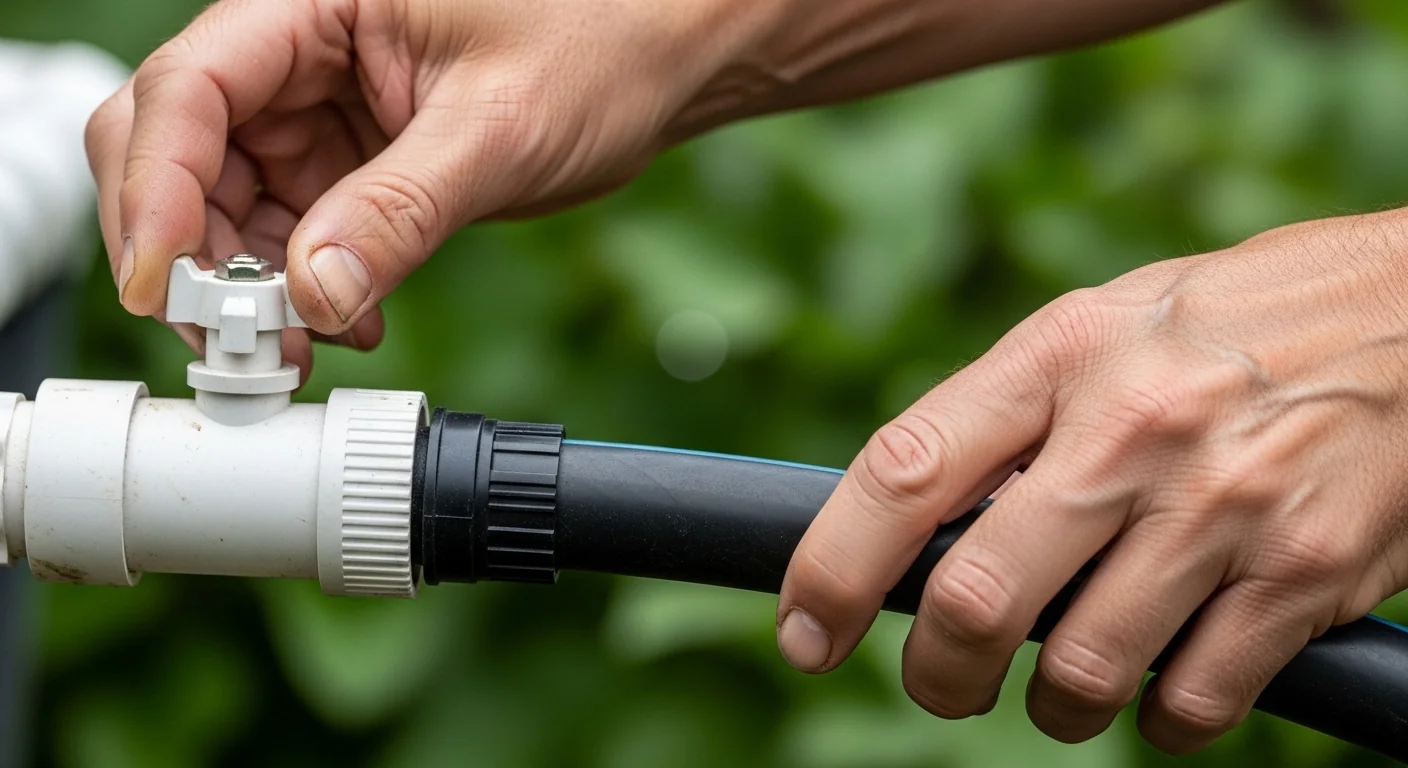
If this tool revealed a Sunburn Pass-Through condition, the first physical fix is a PVC full-port ball valve installed on the UV intake line. This lets you dial flow from zero to full pump output without modifying the pump or plumbing. Pair it with a flow meter or measure output volume manually to calibrate the valve position. For longer-term pump decisions, replacing a fixed-output pump with a variable-speed model removes the flow constraint permanently. The full waterfall and pump flow planning tool can help you select a pump that serves both your UV dwell time needs and your waterfall aesthetic goals without requiring a separate bypass loop.
FAQ
What is dwell time and why does it matter for pond UV clarifier sizing?
Dwell time is the number of seconds a parcel of water spends inside the UV-C chamber directly under the bulb. For algae or parasites to receive a lethal UV dose, they must be exposed long enough for photon energy to disrupt their DNA. Flow rate determines dwell time. A watt rating alone does not guarantee kill; if water moves too fast, the UV dose is sub-lethal regardless of bulb power.
How many watts of UV-C do I need per gallon in a pond?
Wattage-per-gallon rules are a starting point, not a sizing method. A more reliable approach is to determine the maximum GPH your pump delivers, then select a UV unit whose maximum rated flow at the required dwell time is equal to or greater than your pump's output. This tool calculates the actual dwell time your current setup produces rather than relying on generic wattage ratios.
Will a UV clarifier kill beneficial bacteria?
Beneficial nitrifying bacteria live attached to filter media, gravel, and pond surfaces, not suspended freely in the water column in large numbers. UV clarifiers primarily affect free-floating single-cell organisms. Well-established biological filter colonies are not meaningfully disrupted by UV treatment under normal operating conditions, though running a UV unit directly through new biological filter media during cycling is not recommended.
Can I run my UV clarifier continuously?
Continuous operation is the standard recommendation for UV clarifiers used for algae control. UV light only treats water passing through the chamber at that moment, so intermittent operation leaves untreated water in circulation. During active parasite treatment, 24-hour continuous operation is strongly advised. The UV-C bulb's rated hour life accounts for continuous use in most pond-grade units.
Why is my UV clarifier not clearing green water even though it is running?
The three most likely causes are: flow rate too high (Sunburn Pass-Through), UV-C bulb past its effective life but still glowing, or inadequate mechanical filtration downstream failing to capture the dead algae cells. Check all three before assuming the UV unit itself is defective. This calculator identifies the flow rate issue directly from your inputs.
How often should I replace the UV-C bulb in my pond clarifier?
Every 12 months is the standard recommendation, regardless of whether the lamp is still illuminated. UV-C lamps degrade in germicidal output well before visible failure. Replacing an aging bulb after a season where green water persisted despite correct flow rates often resolves the problem without any other changes to the system.
Conclusion
Pond UV clarifier sizing is misunderstood because it involves two independent variables that both need to be correct simultaneously: wattage and flow rate. Wattage is visible on the box. Flow rate is ignored on the spec sheet. The result is that a well-intentioned purchase with correct wattage delivers no meaningful algae control because the waterfall pump sending 2,000 GPH through a 36W unit is producing 0.2 seconds of dwell time. This tool makes that gap visible before you waste a season.
The single mistake worth repeating: do not connect a UV clarifier to whatever pump is already running the pond without checking dwell time first. A ball valve costs less than a replacement UV unit, and throttling flow takes an afternoon. If you are still in the planning phase and have not yet sized your filtration or determined your pond volume and liner requirements, do that work first. Every UV sizing decision downstream depends on accurate pond volume as its foundation.