
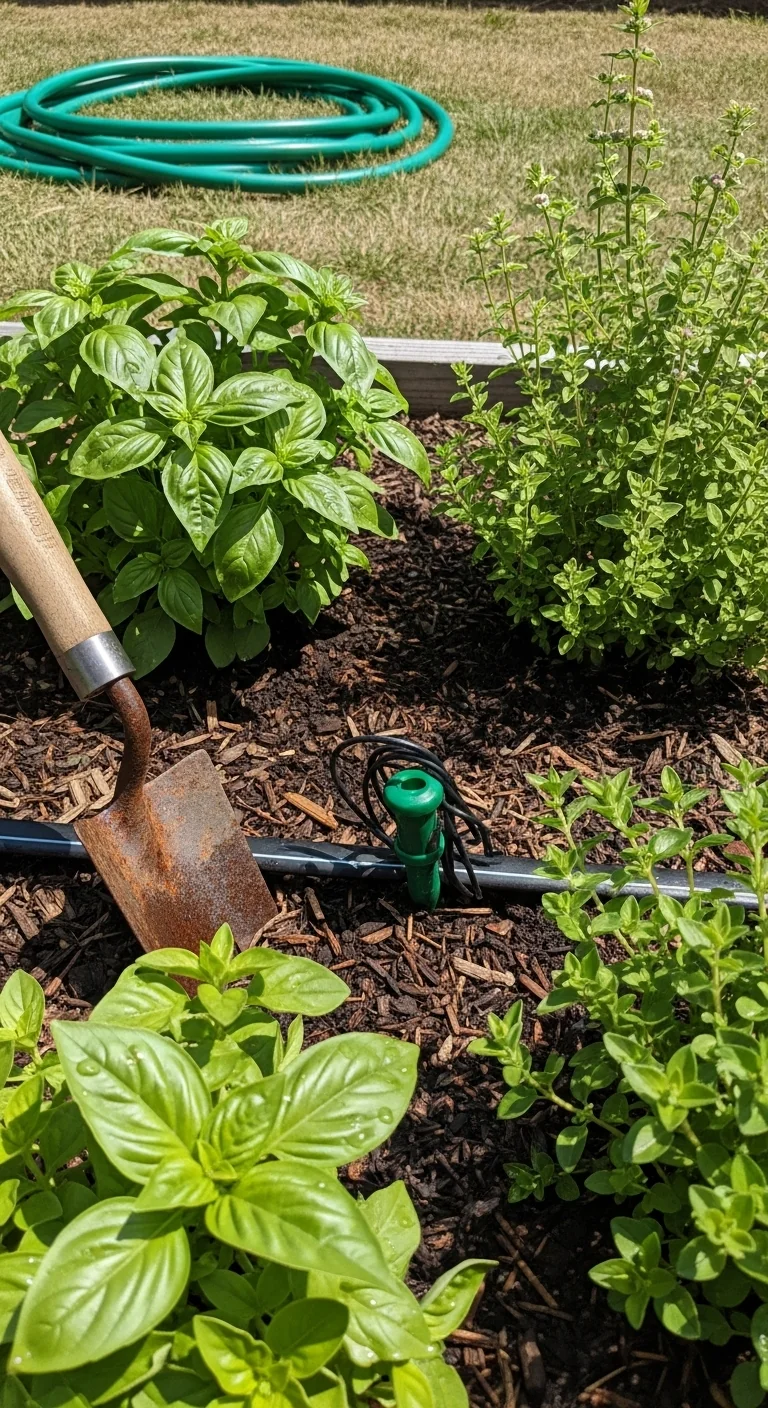
Standard herb companion charts list every possible pairing without regard for your actual garden. This one starts with three measurable factors: daily direct sunlight hours, total planting area, and soil drainage to deliver only the combinations that share compatible growth requirements.
The chart covers nine culinary herb sets drawn from university extension recommendations on shared light, water, and soil needs. It excludes vegetable pairings, purely ornamental options, and unverified folklore claims.
You will exit with exact spacing guidelines, planting timing windows, and one constraint to monitor so you can install the right mix the first time.
Match your garden profile to one Decision Grid branch first, then install the matching sets below.
The Yield Grid Decision Grid
Branch 1: Gardens receiving 6 or more hours of direct sunlight daily. These conditions favor Mediterranean herbs that share full sun exposure and low water needs once established.
Recommended: Items 1, 4, and 7 below. For full principles behind these pairings, see our companion planting herbs guide.
Branch 2: Areas receiving 3 to 6 hours of direct sunlight daily. These partial shade spots suit herbs that tolerate filtered light and retain soil moisture longer.
Recommended: Items 2, 5, and 8 below.
Branch 3: Container or small raised beds under 4 square feet of total planting area. Limited root zones require non competitive, slow spreading combinations.
Recommended: Items 3, 6, and 9 below.
Quick Comparison Table
| Option | Key mechanism | Best for | Decision Grid Branch | Effort Score |
|---|---|---|---|---|
| Basil and Oregano Companion Set | Shared full sun needs and soil pH range of 6.0 to 7.0; aromatic foliage deters aphids | Italian and Greek herb blends | Branch 1 | 1 |
| Parsley and Chives Pair | Both tolerate partial shade and moist soil; chives sulfur compounds support parsley vigor | Fresh garnishes and soups | Branch 2 | 1 |
| Mint Containment Strategy | Physical barriers stop aggressive runners in limited root zones | Teas and cocktails where isolation matters | Branch 3 | 3 |
| Rosemary and Thyme Duo | Drought tolerant woody perennials that share full sun and minimal water | Roasted meats and poultry seasoning | Branch 1 | 1 |
| Sage and Chives Pair | Chives tolerate partial shade while sage adapts with good drainage | Poultry rubs and egg dishes | Branch 2 | 2 |
| Thyme and Sage Container Duo | Slow growing perennials fit small pots with identical drainage needs | Everyday seasoning blends | Branch 3 | 1 |
| Oregano and Sage Companion Set | Both require full sun and well drained soil; combined aroma repels pests | Pizza and pasta herb mixes | Branch 1 | 1 |
| Parsley and Mint Pair | Both prefer partial shade and consistent moisture without root competition when contained | Tabouli and fresh sauces | Branch 2 | 2 |
| Chives and Thyme Container Pair | Compact growth habits suit small containers with shared drainage requirements | Potato and fish dishes | Branch 3 | 1 |
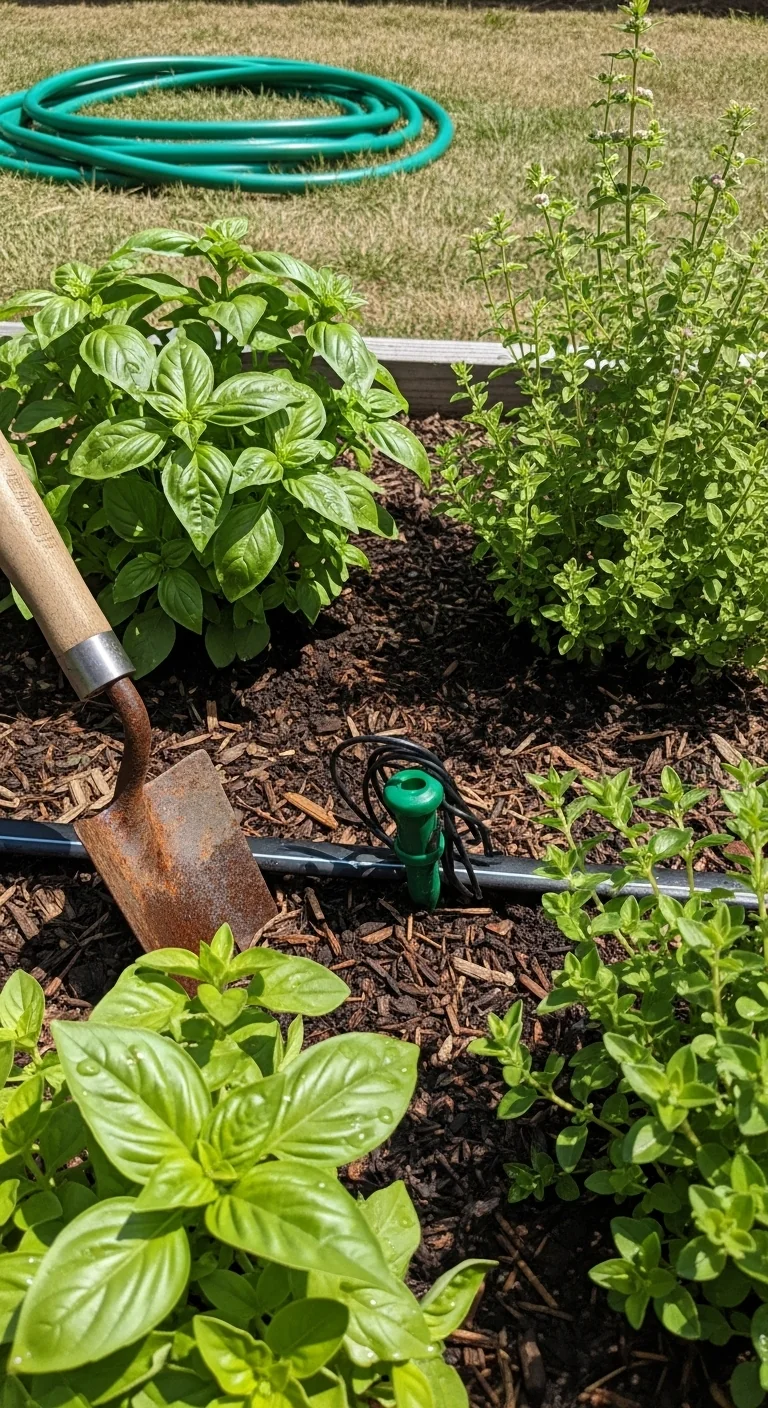
Basil and Oregano Companion Set
Best for: Branch 1
This blueprint delivers a reliable Mediterranean pairing for full sun beds. Basil acts as the annual anchor while oregano provides perennial structure. Both thrive in soil pH 6.0 to 7.0 and require spacing of 10 to 12 inches apart to allow air circulation that reduces fungal pressure.
Steps: Prepare a raised bed or in ground area with well drained soil mix. Plant after the last frost when soil temperature reaches 60 F. Water deeply at planting then reduce to once weekly once roots establish. Harvest basil leaves from the top to encourage bushiness and oregano stems as needed for drying.
Common mistake to avoid: planting too close in the first year. Tight spacing leads to shading and lower essential oil production in both plants. Follow the 10 to 12 inch rule and rotate the bed location every three years to maintain soil balance. For basil specific timing details, see our basil growing tips.
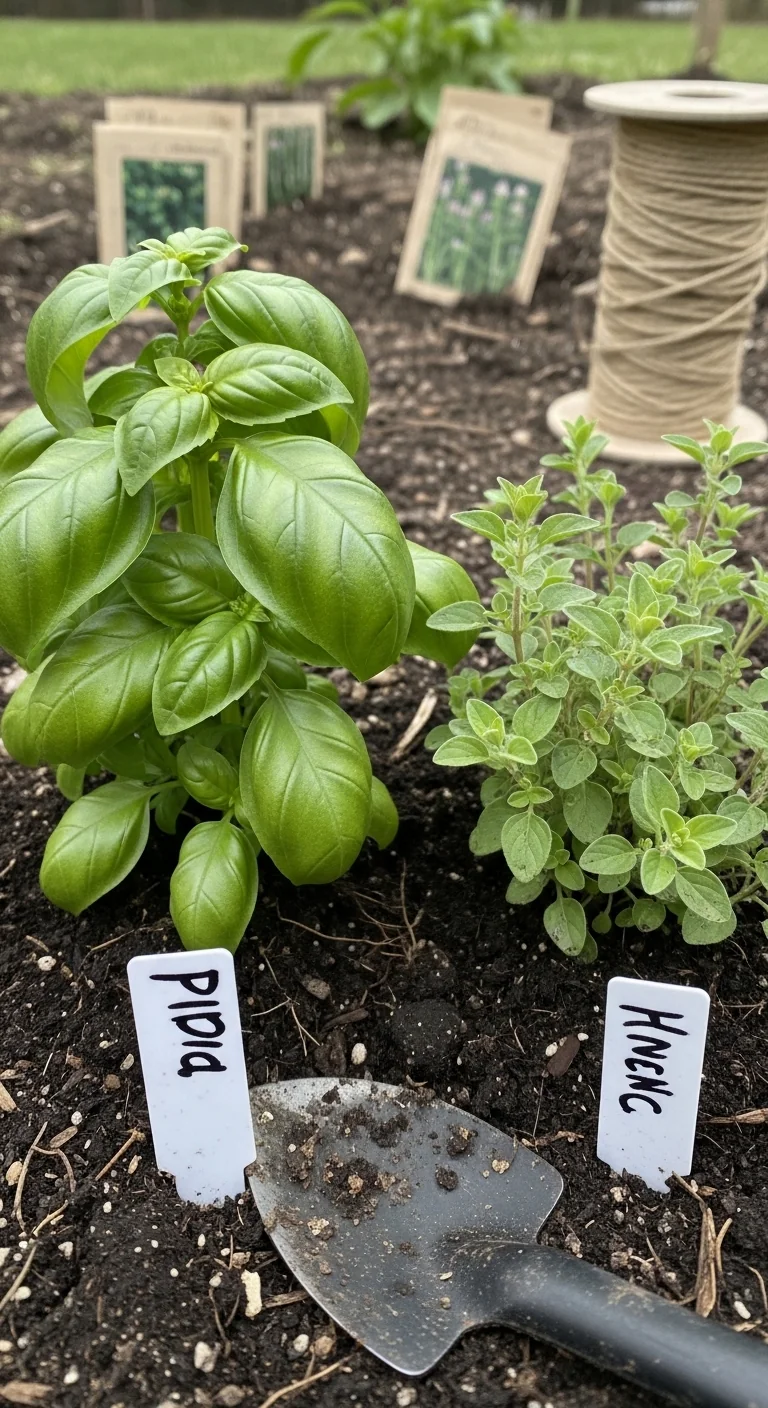
Parsley and Chives Pair
Best for: Branch 2
Use this pair in partial shade gardens or east facing borders where direct sun falls below six hours. It works because both herbs tolerate filtered light and prefer evenly moist soil without waterlogging. Skip it in full sun exposed spots or dry climates where parsley bolts early and chives lose flavor intensity.
Edge case: high humidity areas where air flow drops below average. In those conditions add extra spacing of 8 inches between plants to prevent mildew.
Mint Containment Strategy
Best for: Branch 3
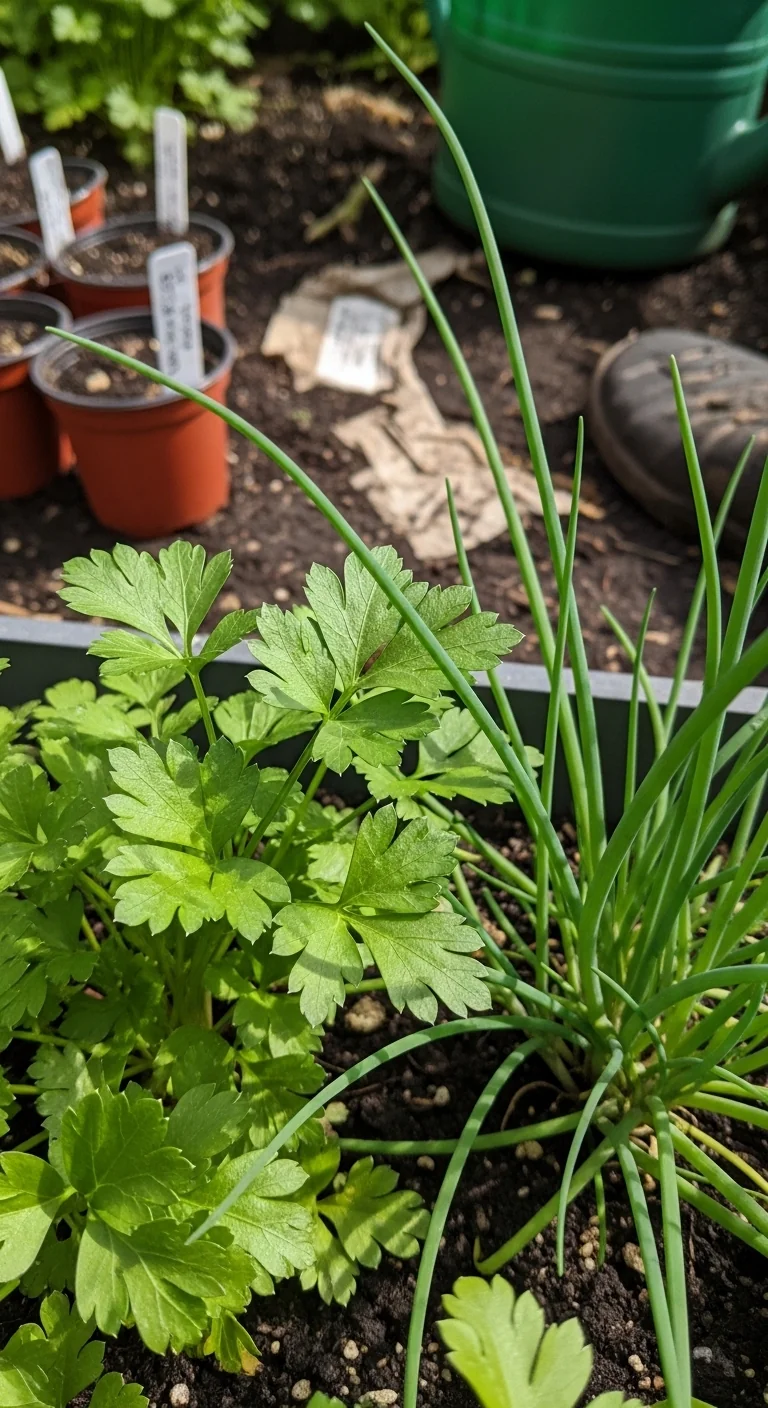
Mint spreads via underground runners that can overtake a small container or bed within one season if unchecked. The threshold rule is simple: install a physical root barrier at planting and check it monthly during the growing season. Use a 12 inch deep pot or fabric barrier to keep runners contained within the assigned 4 square feet or less.
Water when the top inch of soil dries and fertilize lightly once in spring. This setup keeps mint productive for teas while protecting neighboring herbs from invasion. Adjust barrier depth to 18 inches in warmer zones where growth accelerates.
Rosemary and Thyme Duo
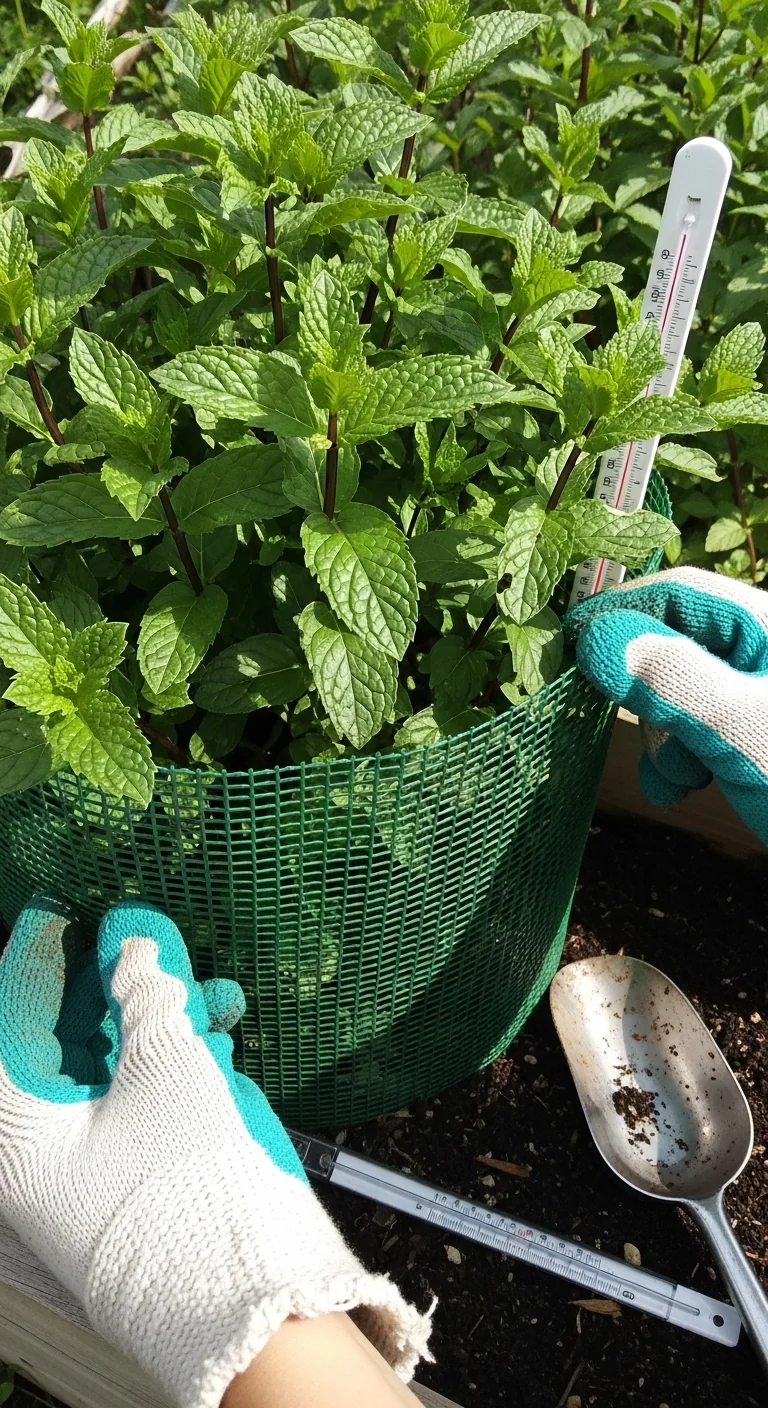
Best for: Branch 1
This 10 minute workflow installs a low maintenance full sun duo. Start by selecting a south facing spot with excellent drainage. Gather two rosemary starts and three thyme plugs plus a trowel and compost.
Step 1: Dig holes 14 inches apart. Step 2: Add a handful of compost to each hole. Step 3: Set plants at the same depth as their nursery pots and firm soil. Step 4: Water once then mulch lightly with gravel to retain heat.
Upgrade option: add a second layer of thyme around the rosemary base after year one to create a living ground cover that further reduces weed pressure. For rosemary container options, see our rosemary in pots guide.
Sage and Chives Pair
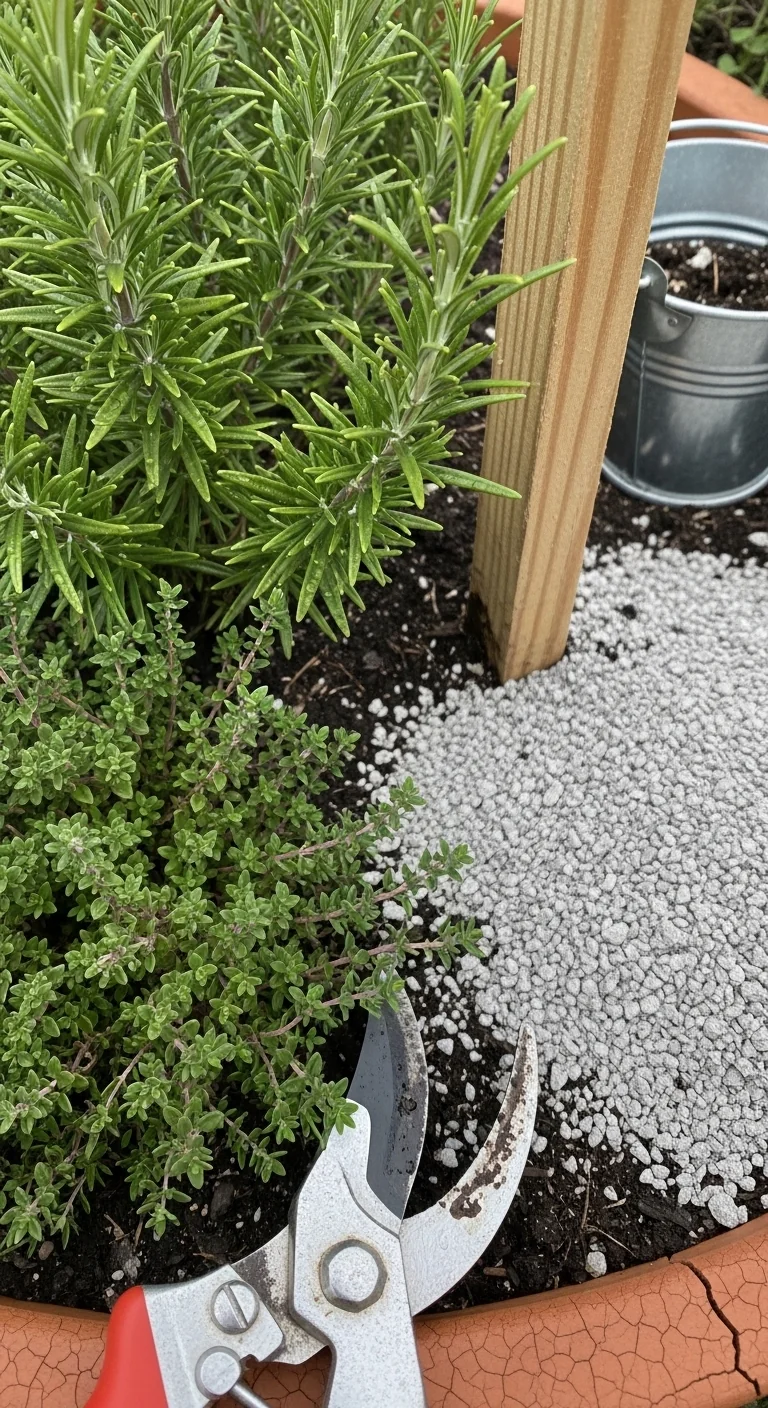
Best for: Branch 2
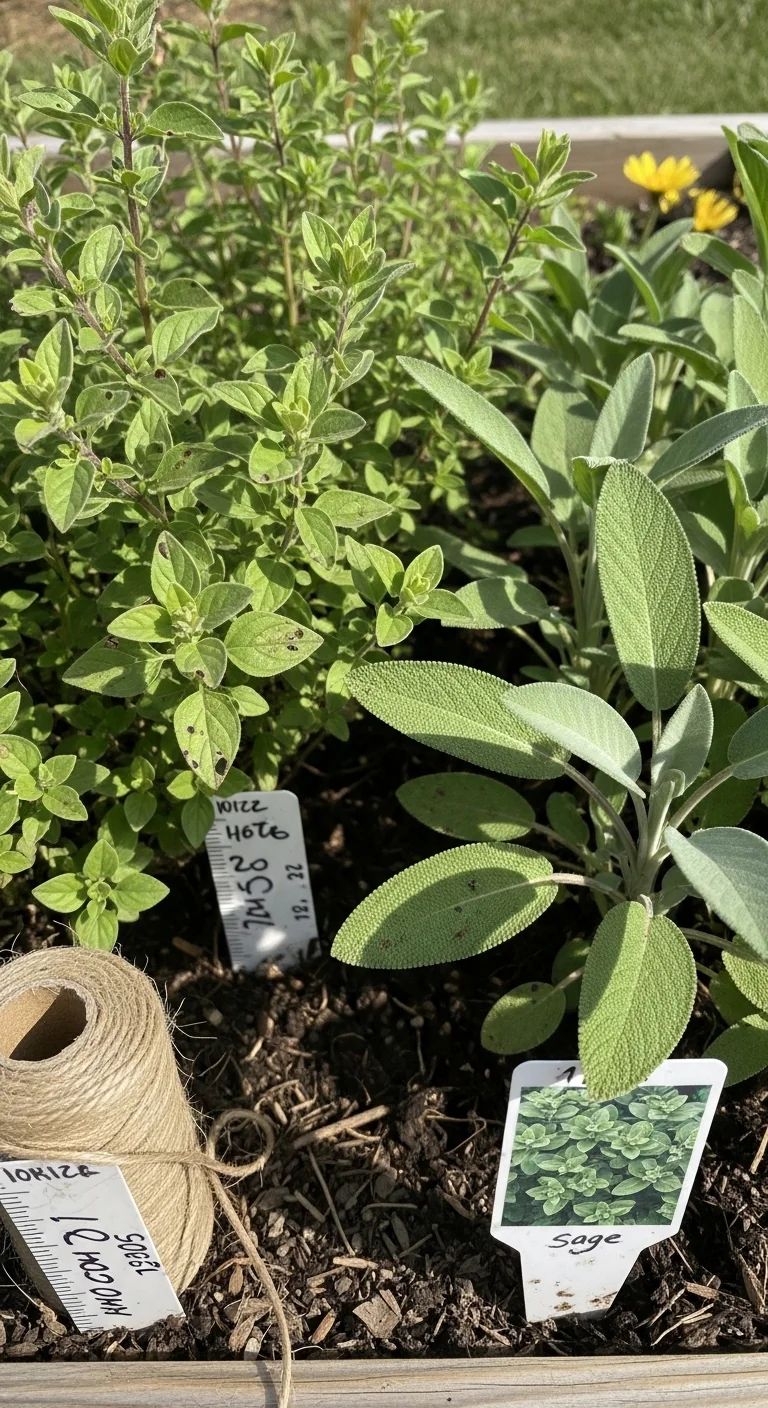
This blueprint pairs woody sage with clump forming chives for partial shade beds. Both share a preference for well drained soil and benefit from chives sulfur content that supports nearby foliage health. Plant sage first as the anchor then ring it with chives at 8 inch intervals.
Steps: Work soil to 8 inches deep, add grit for drainage, and set plants after soil warms above 55 F. Harvest chives by cutting to 2 inches above soil and sage leaves from outer stems. Monitor for woody sage stems after year two and prune back by one third in early spring.
Thyme and Sage Container Duo
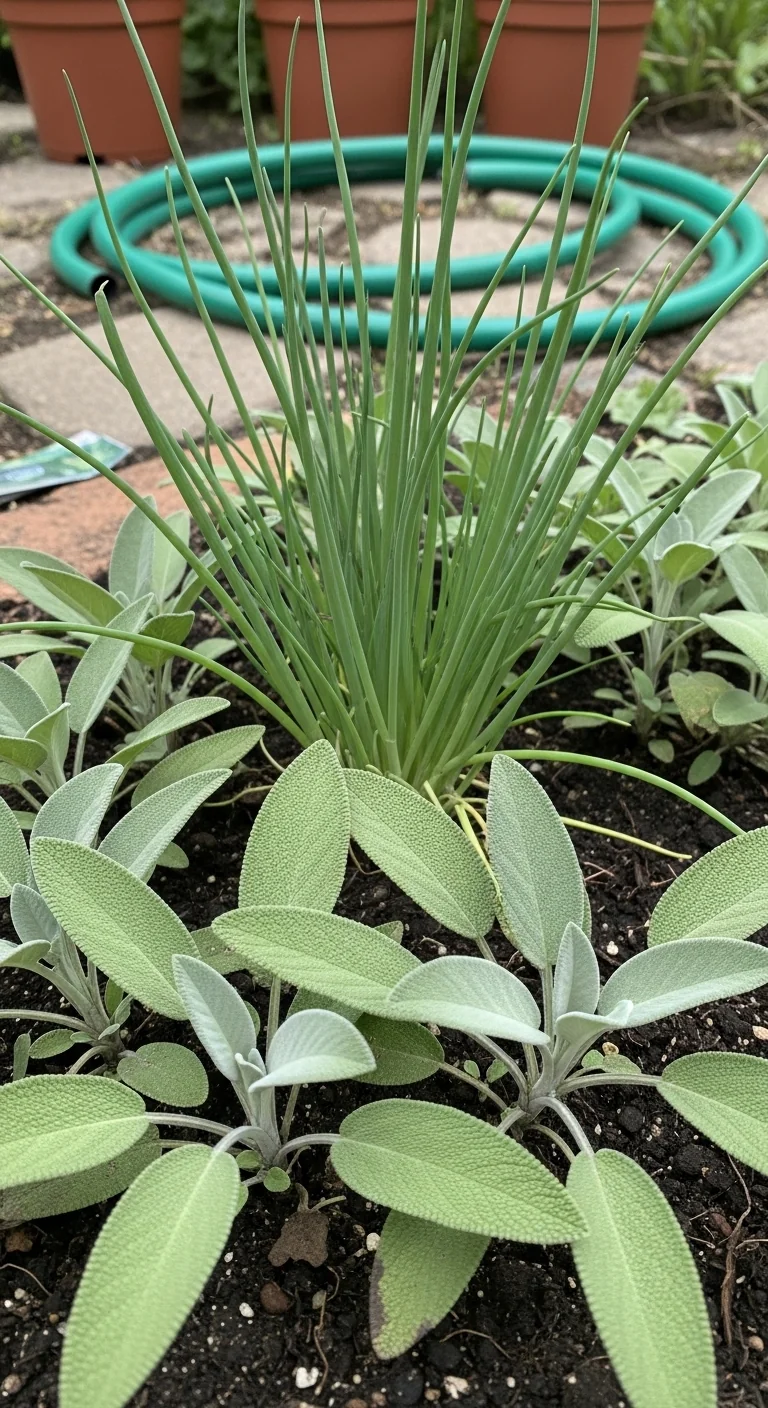
Best for: Branch 3
Use this duo when container space limits you to under 4 square feet. Skip it if drainage holes are absent or if you plan frequent heavy watering because both herbs resent wet feet. Edge case: coastal wind exposure where salt spray arrives. In that setting choose a sheltered balcony corner and rinse foliage monthly.
Both plants stay compact and require only one deep watering every 10 to 14 days once established.
Oregano and Sage Companion Set
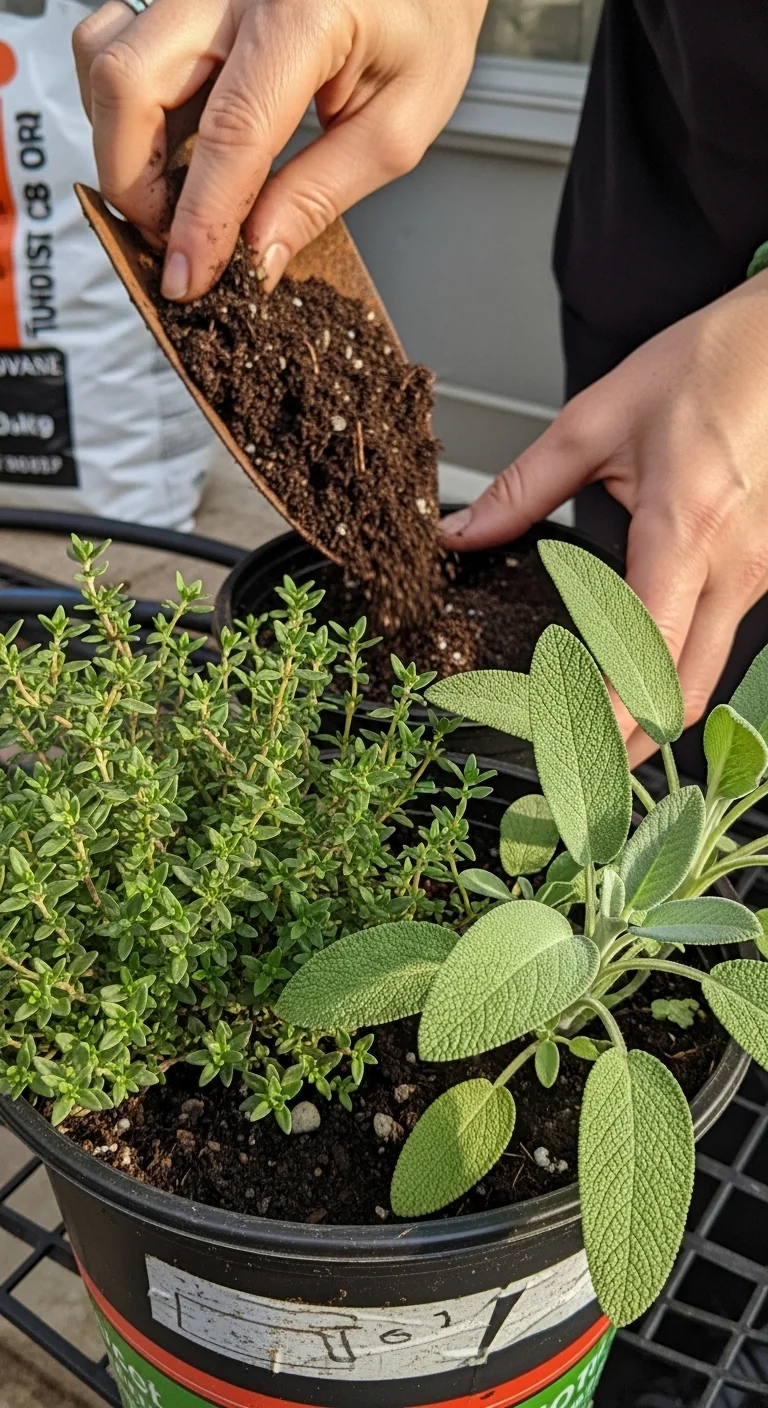
Best for: Branch 1
The threshold rule here centers on soil drainage and sun exposure. Oregano and sage demand full sun plus soil that drains within 30 minutes after watering. Test by digging a 6 inch hole and filling it with water: if it empties in under 30 minutes the site qualifies.
Plant 12 inches apart after the last frost. Water at transplant then taper to every two weeks. Prune oregano by half in midsummer to prevent legginess and harvest sage before flowering for best flavor. This combination delivers consistent aroma compounds that naturally deter common garden pests when grown together.
Parsley and Mint Pair
Best for: Branch 2
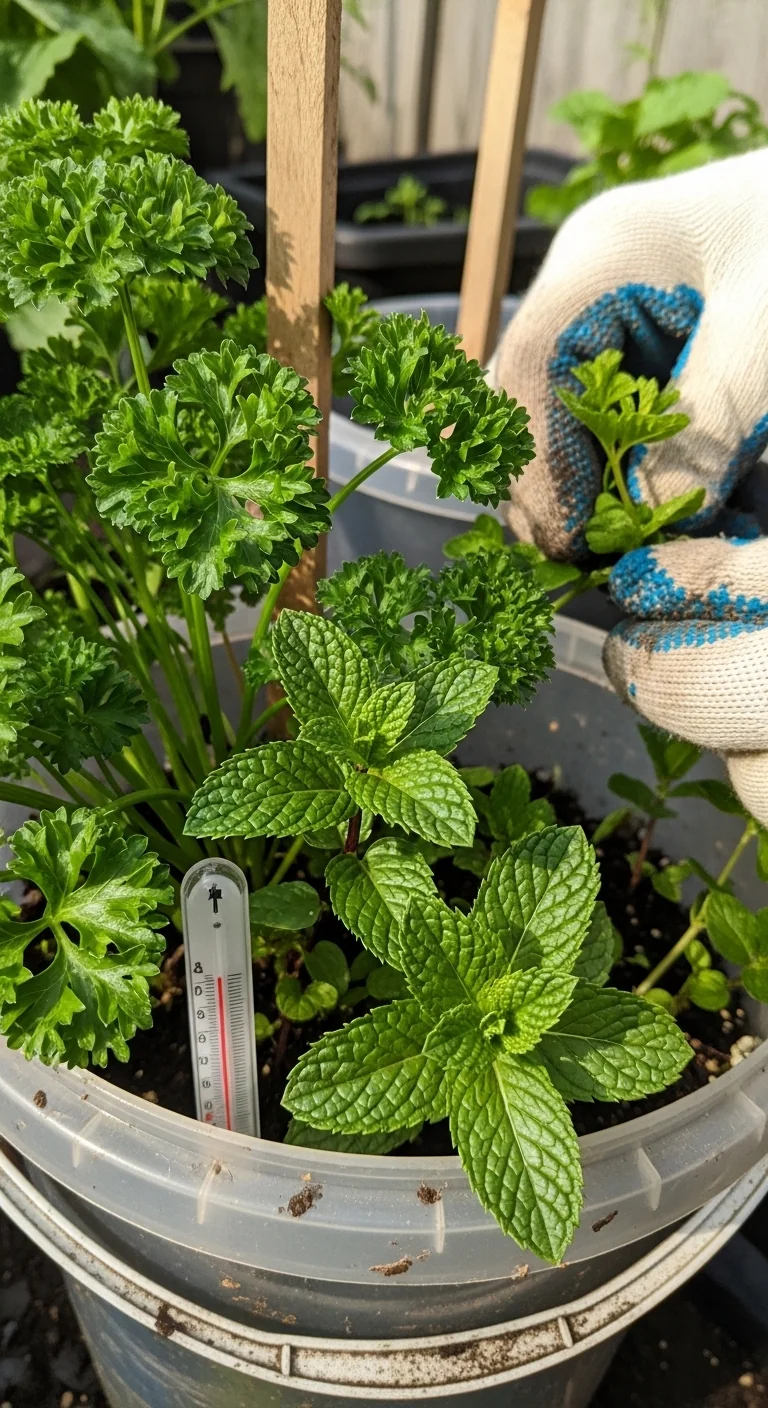
This 10 minute workflow sets up a partial shade container pair. Select a 12 inch pot with drainage holes. Add potting mix amended with compost. Plant one parsley in the center and three mint starts around the edge at 6 inch spacing. Water thoroughly and place where morning sun reaches 3 to 6 hours.
Upgrade option: top dress with gravel mulch to keep soil cool and reduce evaporation. Harvest parsley outer leaves and mint sprigs weekly to maintain compact shape. For more container herb ideas, see our best herbs for containers guide.
Chives and Thyme Container Pair
Best for: Branch 3
This blueprint fits chives and thyme into the smallest pots. Both remain compact and share a need for sharp drainage plus occasional trimming. Plant in a 10 inch container with one chives clump in the center and thyme around the perimeter at 4 inch spacing.
Water when the top inch dries and harvest chives by cutting back to 2 inches. Thyme benefits from light shearing after flowering. The pair produces steady harvests for potato dishes without root competition.
Starter Stack (What to Choose First)
For Full Sun Gardens (Branch 1)
Start with Items 1 and 4: Basil and Oregano plus Rosemary and Thyme. These four share Mediterranean origins, identical drainage needs, and complementary aromas that reduce pest pressure together. Plant in one 4 by 4 foot bed in under 60 minutes using six starts. Seed or plant cost stays between 8 and 18 dollars depending on source.
For Partial Shade Gardens (Branch 2)
Start with Items 2 and 8: Parsley and Chives plus Parsley and Mint. The shared moisture tolerance and shade adaptation create a productive border that harvests in 30 to 45 days. Install in two 12 inch pots or a narrow bed strip in 40 minutes or less. Total cost for starts ranges from 6 to 14 dollars.
For Container Gardens (Branch 3)
Start with Items 3 and 6: Mint Containment Strategy plus Thyme and Sage Container Duo. These stay contained within small pots and deliver repeated harvests without crowding. Setup takes 25 minutes across three 10 inch pots. Plant cost falls between 7 and 15 dollars.
When This Won’t Work
Heavy clay soil that holds water longer than 24 hours after rain creates root rot risk for every set in this chart. Most of these herbs evolved in well drained conditions and decline quickly when roots stay saturated. Switch to individual pots elevated on feet and fill with a custom mix that drains freely.
Extremely windy sites with gusts over 20 miles per hour also damage tender basil and parsley stems before they establish. In those conditions relocate containers to a sheltered wall or use windbreaks made from temporary fencing. Test and amend your soil first using our soil mix for herbs guide.
Choosing the Right Option for Your Situation
Budget Threshold
If your total spend for starts stays under 20 dollars, select any Branch 3 container sets or the Parsley and Chives Pair. These deliver the highest leaf yield per dollar invested because they use small pots and reuse existing soil amendments.
Time Threshold
If you have 45 minutes or less available for installation, choose Branch 3 container options or the Rosemary and Thyme Duo. Both require only hole digging and watering with no complex spacing adjustments.
Soil Drainage Constraint
If your soil drains slower than 30 minutes per 6 inch test hole, limit choices to Branch 3 sets and add perlite or sand to every pot. Avoid Branch 1 full sun beds until you amend the site.
Yes or no checklist:
Does your site receive at least 3 hours of direct sun?
Does your planting area stay under 4 square feet or fit in pots?
Does water drain from a test hole in 30 minutes or less?
Are you willing to check mint barriers monthly if chosen?
Expert Q&A
How does mixing annual and perennial herbs affect long term bed maintenance?
Annuals like basil and parsley reach peak flavor in 60 to 90 days and require full replacement each spring. Perennials such as oregano and thyme remain productive for three to five years with one annual prune. Plan the bed layout so annuals occupy the front row for easy removal while perennials anchor the back.
Can these companion sets adapt to indoor grow lights?
Yes when lights deliver 14 to 16 hours of full spectrum output at 12 to 18 inches above foliage. Position sets from Branch 1 under stronger lights and Branch 2 sets under moderate intensity. Maintain 65 to 75 F daytime temperatures and good air circulation to replicate outdoor conditions.
Do companion pairings change harvesting windows for the herbs involved?
Chives and parsley reach first harvest at 30 days while rosemary and thyme need 60 days to develop flavor oils. Harvest the faster herbs weekly to prevent shading the slower ones. This staggered schedule keeps the bed productive from early spring through late fall.
What storage steps preserve flavor from these mixed herb harvests?
Air dry oregano, thyme, and sage in bundles for two weeks then store in airtight jars away from light. Freeze basil and parsley chopped in ice cube trays with oil for up to six months. Label every batch with the harvest date to track peak flavor periods.
How do I transition between annual versus perennial heavy sets?
At season end remove spent annuals and top dress the soil with compost. Perennials stay in place and expand slowly. Replant annuals the following spring in the same spots or rotate them 12 inches to refresh soil nutrients without disturbing established roots.
Conclusion
The key decision is matching your sunlight hours and space to one Decision Grid branch before planting. The number one mistake is ignoring drainage tests or runner barriers which leads to lost plants within weeks.
Install your chosen starter stack this weekend then monitor the single constraint listed for each set. For layout examples that scale these combinations, see our herb garden layout ideas.