
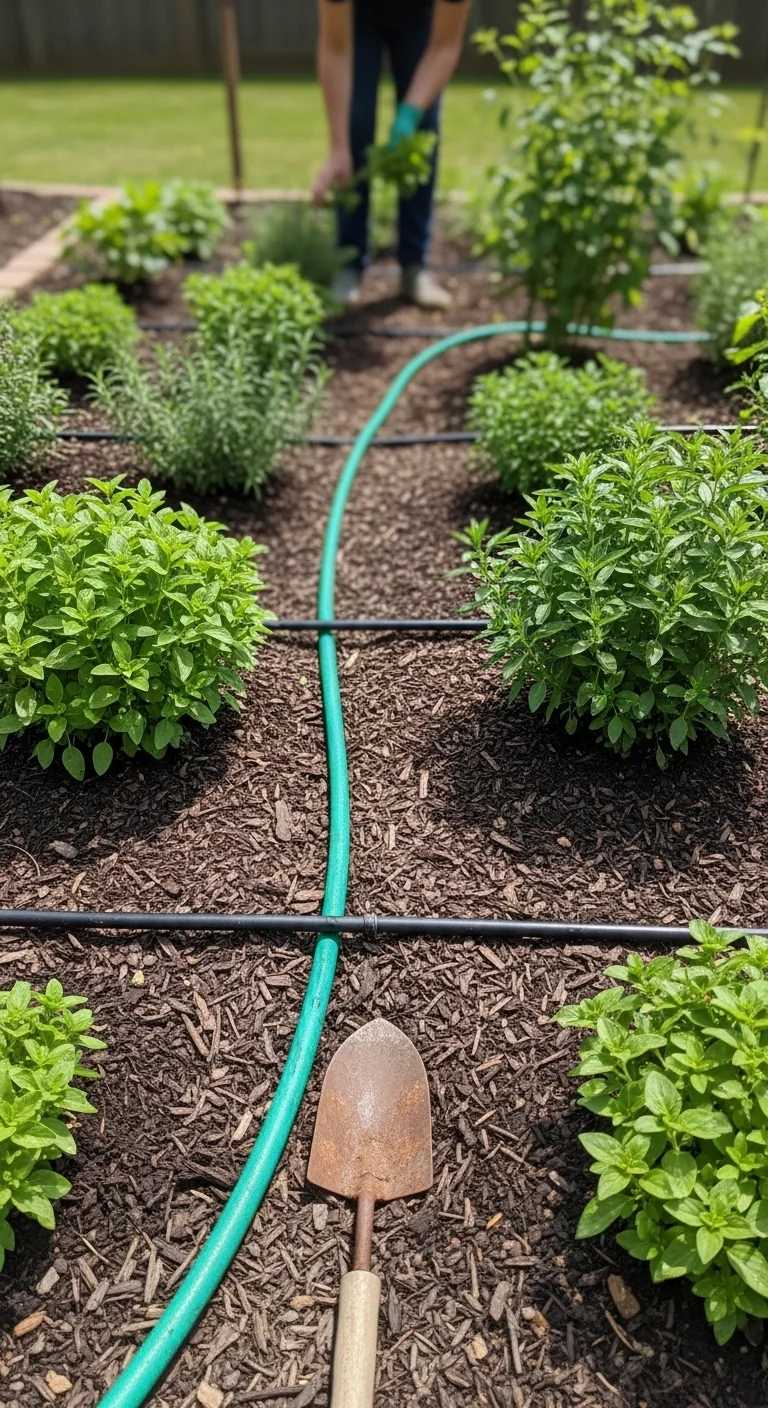
Most herb garden layout ideas prioritize pretty patterns. This reframing uses your measured space footprint, daily sun hours, and harvest access frequency to select the right design.
The guide covers nine layouts suited to edible gardening in typical home conditions across the US, UK, Canada, and Australia. It includes options for balconies, raised beds, spirals, containers, vertical setups, pizza themes, shade borders, companion zones, and drought tolerant arrangements. It excludes large scale medicinal plots or full vegetable bed integration.
You will identify which layout fits your conditions and which two to combine first for synergy.
Match the layout to your square footage and number of weekly harvest trips to minimize effort and maximize convenience.
The Yield Grid Decision Grid
Branch 1: Limited space (under 25 square feet or balcony or patio with at least 4 hours sun). Recommended: Items 1, 2, 5 below.
Branch 2: Medium yard with full sun (25 to 100 square feet, 6 or more hours direct sun). Recommended: Items 3, 4, 6 below.
Branch 3: Partial shade or low maintenance needs (under 4 hours sun or drought conditions). Recommended: Items 7, 8, 9 below.
For pairing details, see our companion planting guide for herbs.
Quick Comparison Table
| Option | Key mechanism | Best for | Decision Grid Branch | Effort Score |
|---|---|---|---|---|
| Balcony Herb Garden | Rail and wall mounting for vertical use | Small patios with limited floor space | Branch 1 | 3 |
| Container Herb Garden | Individual pots for mobility | Flexible placement near kitchen | Branch 1 | 2 |
| Spiral Herb Garden | Elevated mound with drainage gradient | Space efficient with varied moisture zones | Branch 2 | 1 |
| Raised Bed Herb Garden | Elevated soil for better drainage and access | Standard yard spaces | Branch 2 | 2 |
| Pizza Herb Garden | Pie slice zoning for themed groups | Themed culinary use in small circles | Branch 1 | 2 |
| Companion Planting Herb Layout | Zoned groups by growth habits | Maximizing plant health in beds | Branch 2 | 4 |
| Shade Herb Garden Layout | Low light tolerant grouping | Areas with partial shade | Branch 3 | 2 |
| Vertical Herb Garden | Pocket or tower systems | Very small footprints | Branch 3 | 3 |
| Drought Tolerant Herb Layout | Grouped Mediterranean herbs | Low water areas | Branch 3 | 1 |
Balcony Herb Garden
Best for: Branch 1
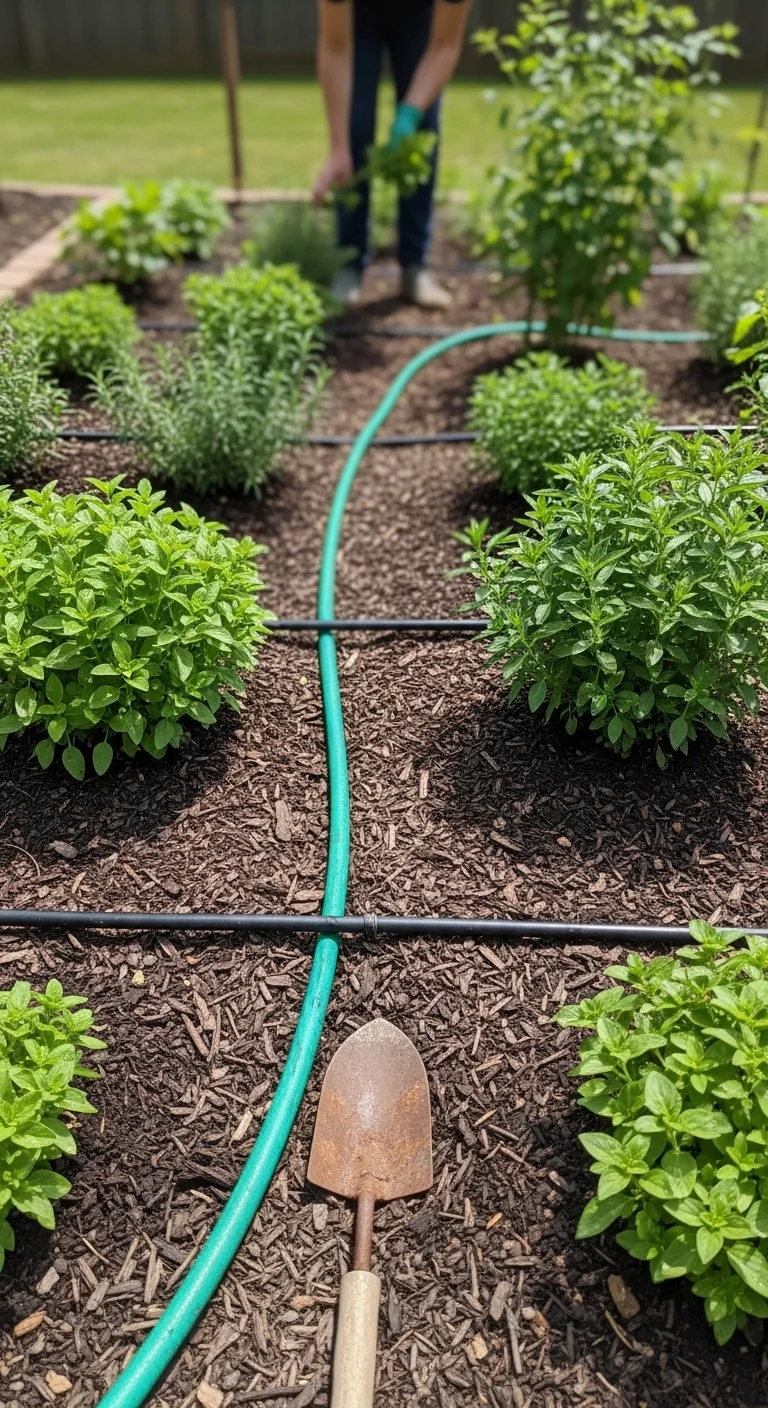
Blueprint: Start by measuring railing length or wall area in feet. Select pots or pockets between 8 and 12 inches wide. Position taller herbs such as rosemary toward the back or base level. Add trailing varieties like thyme and oregano at the front edges for natural spill over. Secure all fixtures with brackets rated for wet soil weight. Fill with well draining mix and water from the top to encourage root establishment. The unique mechanism here relies on elevation to improve air flow around roots in confined areas. Common mistake: ignoring weight distribution on railings in windy conditions. This setup works especially well when you can rotate pots to follow sun patterns throughout the day.
Container Herb Garden
Best for: Branch 1
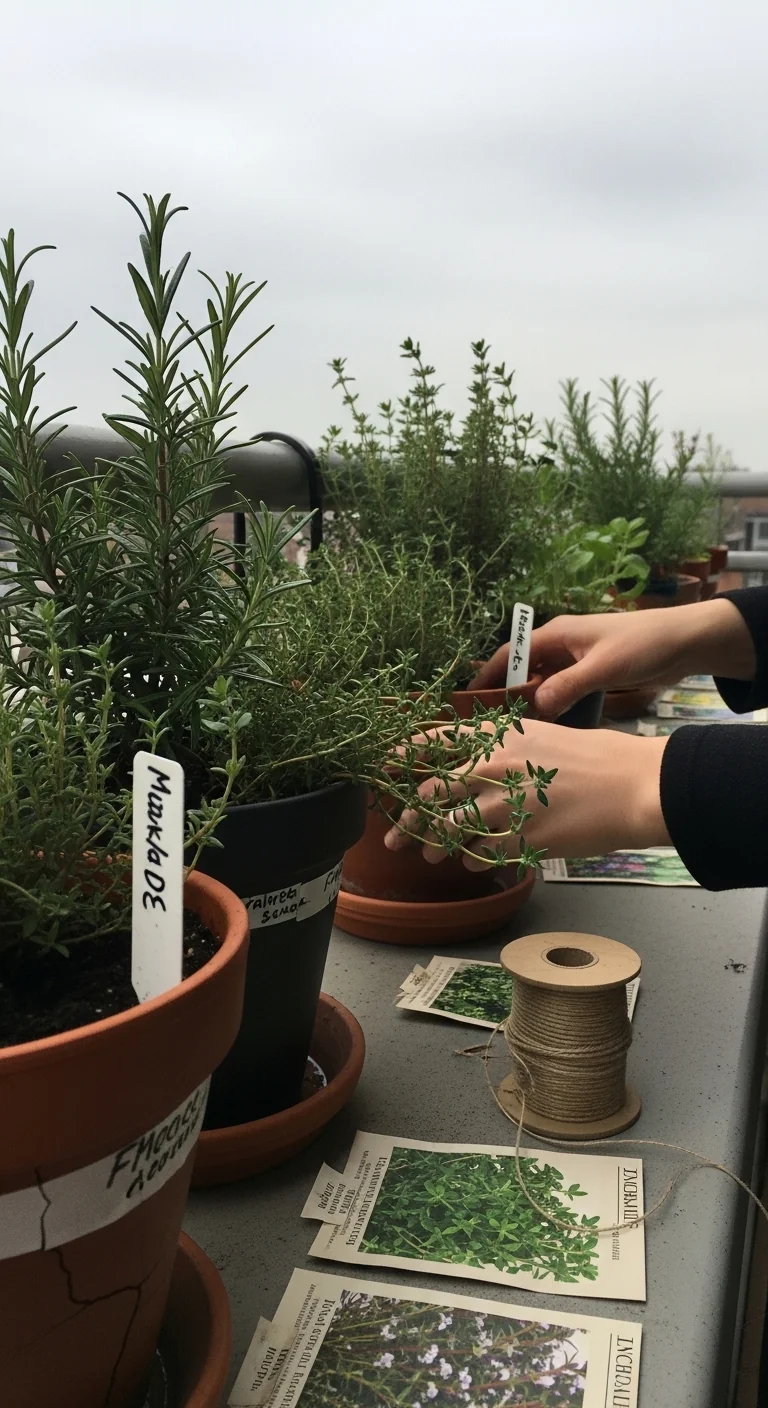
Use containers when you need mobility to chase sun or move indoors for frost protection. Skip if your area has strong winds without windbreaks because pots can tip. Edge case: mint spreads aggressively unless isolated in its own pot.
Spiral Herb Garden
Best for: Branch 2
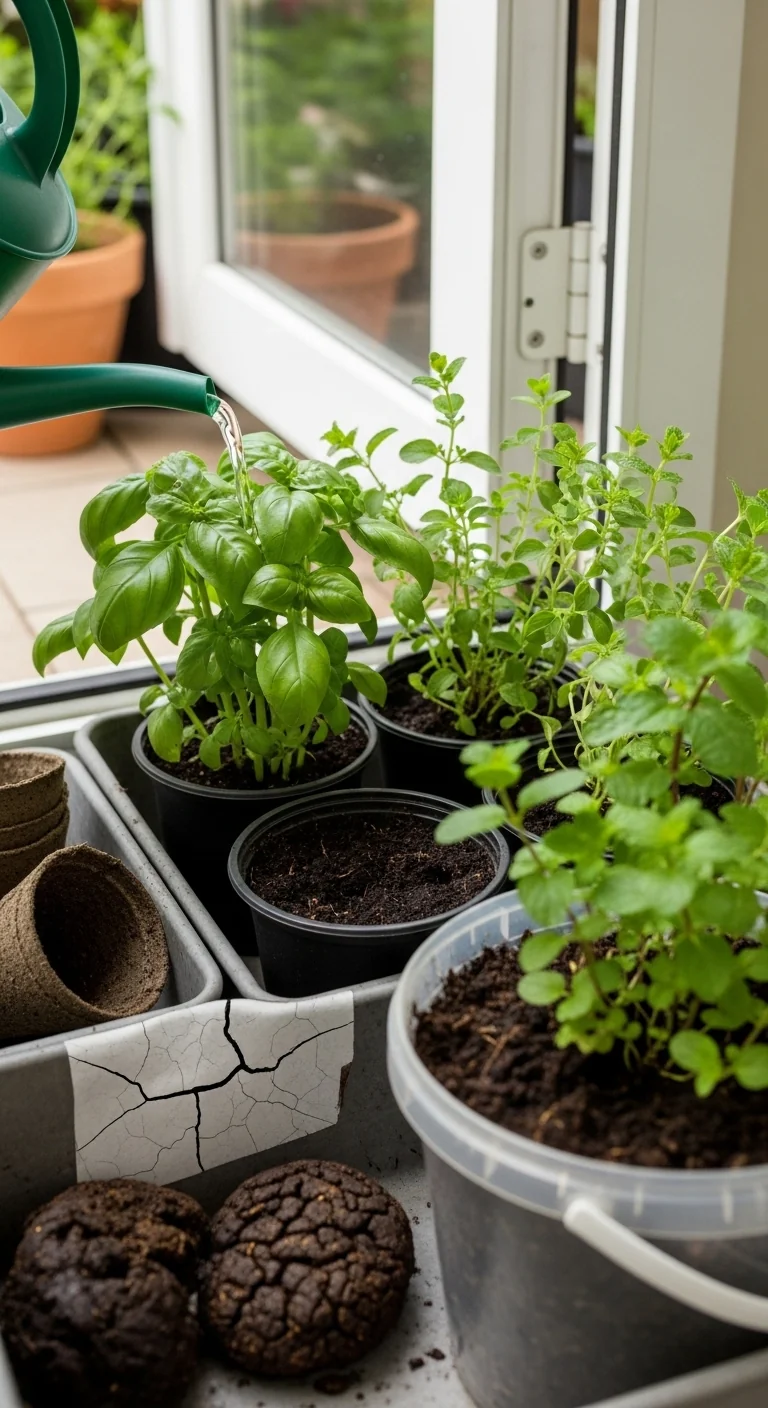
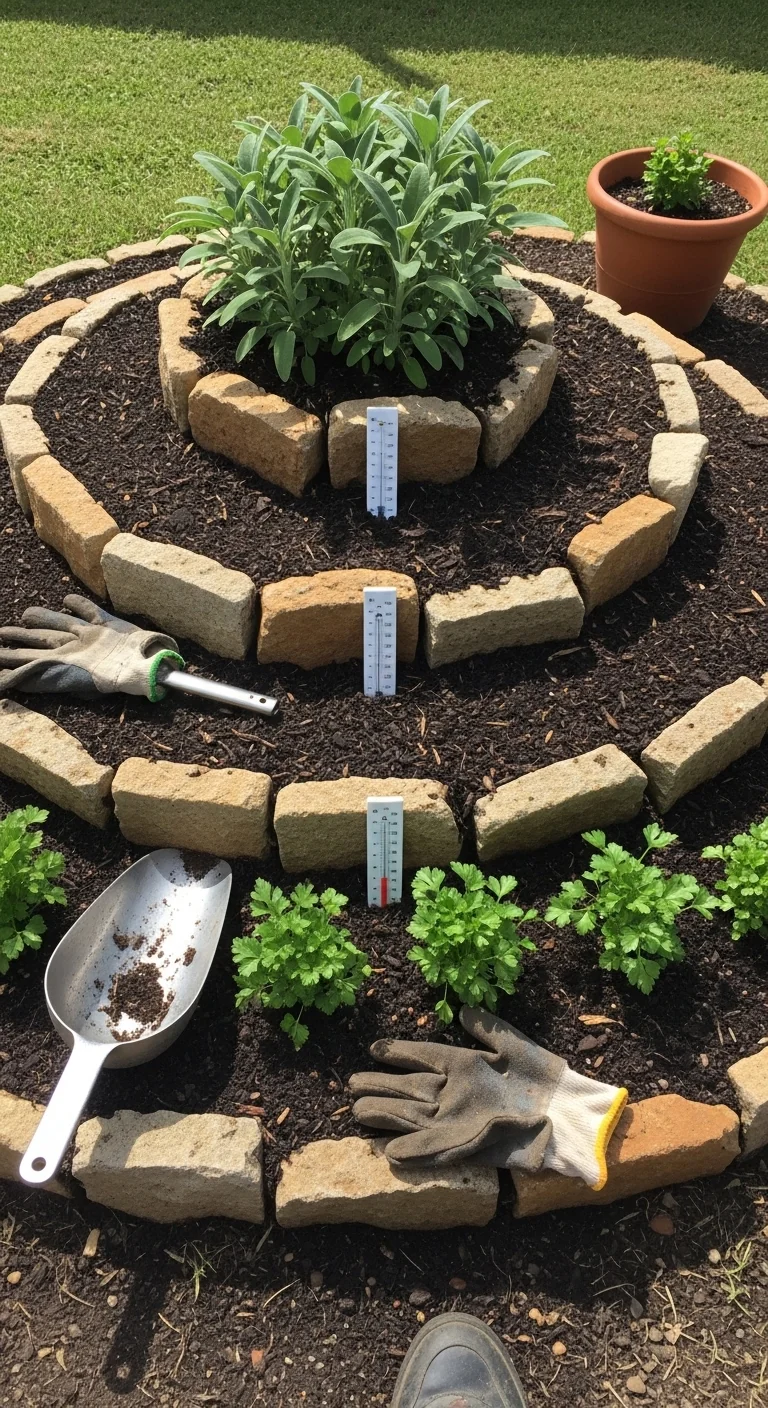
Threshold rule: Build only if you have at least 4 feet diameter of open ground. Top of the spiral stays drier (ideal for rosemary and sage) while the base retains more moisture (suited to parsley and chives). Adjust stone height by 6 inches per layer to create the gradient. If your soil stays soggy after rain, add extra gravel at the base before filling.
Raised Bed Herb Garden
Best for: Branch 2
10 minute workflow: Mark bed outline with string. Level the site and add 4 by 4 lumber frame. Fill with soil mix to 12 inches deep. Plant in grid pattern with 12 inch spacing for most herbs. Upgrade option: add a simple path border for easier access. For full details on this approach, see our raised bed herb garden guide.
Pizza Herb Garden
Best for: Branch 1
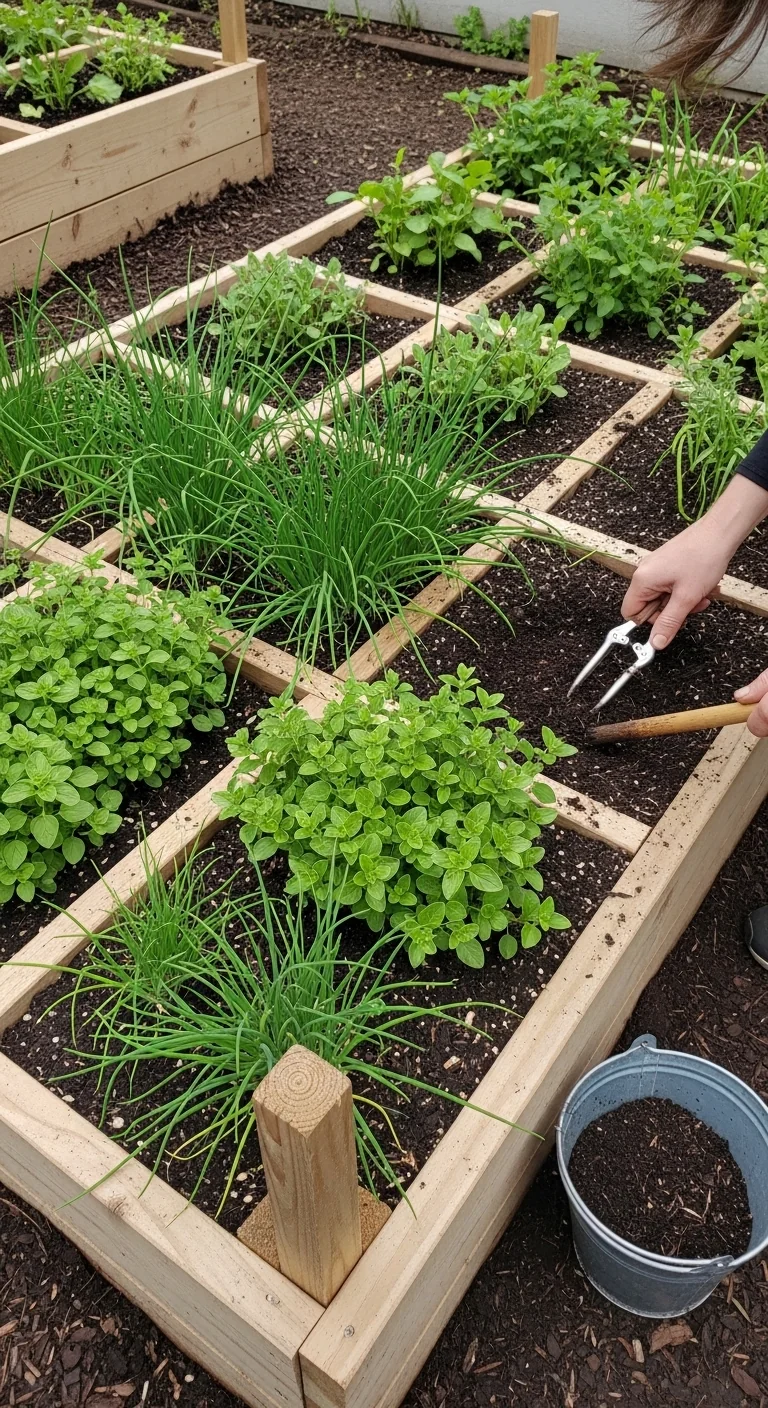
Blueprint: Mark a 4 foot circle and divide into six pie slices with bricks or stones. Assign each slice to a culinary group such as Italian herbs in one section. Plant basil, oregano, and thyme in their zones. Water each slice separately to match needs. The design keeps harvest simple because every slice sits within arm reach from the center.
Companion Planting Herb Layout
Best for: Branch 2
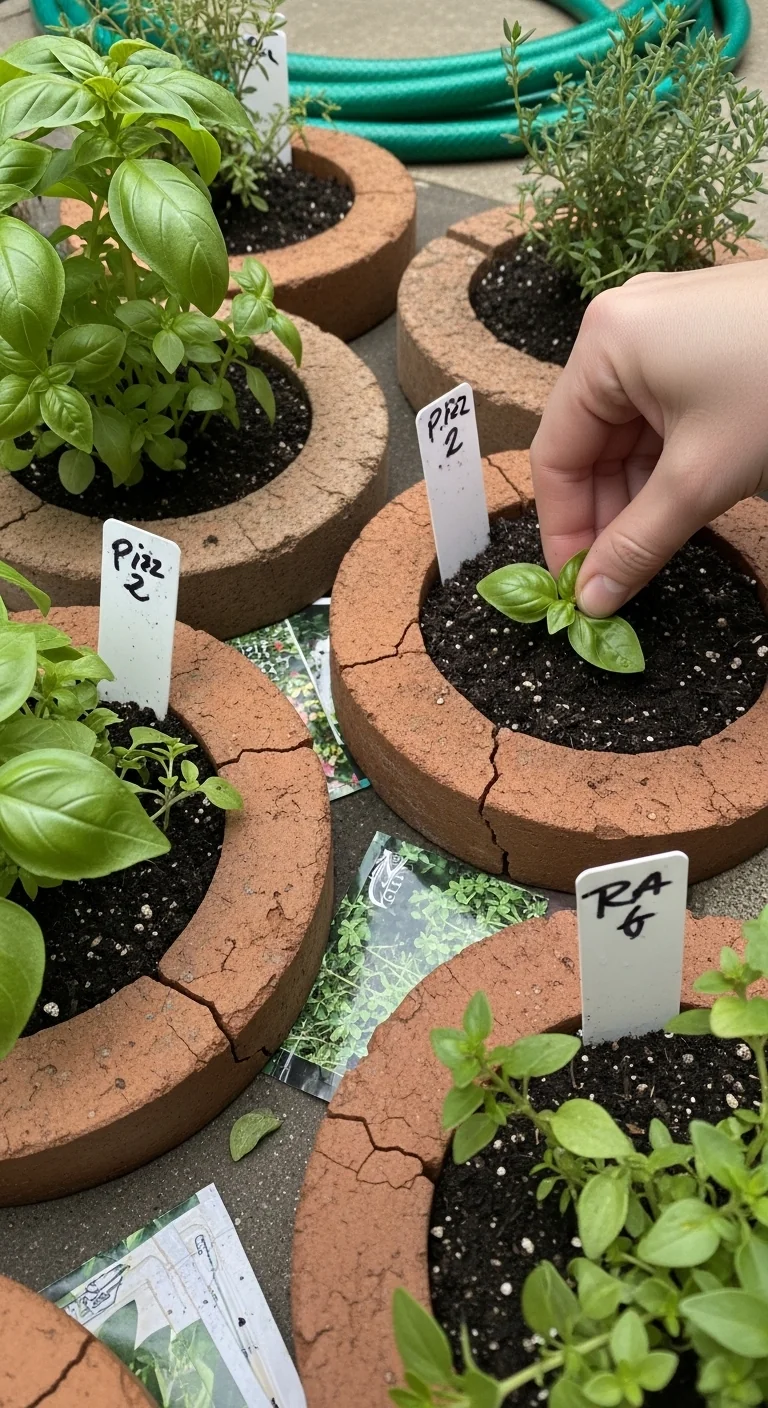
Use vs skip: Use this layout when you want to boost natural pest resistance through grouping. Skip if you prefer single variety beds because mixing requires monitoring spread. Edge case: tall dill can shade lower herbs unless placed at the north side of the bed. For quick reference pairings, consult our herb companion chart.
Shade Herb Garden Layout
Best for: Branch 3
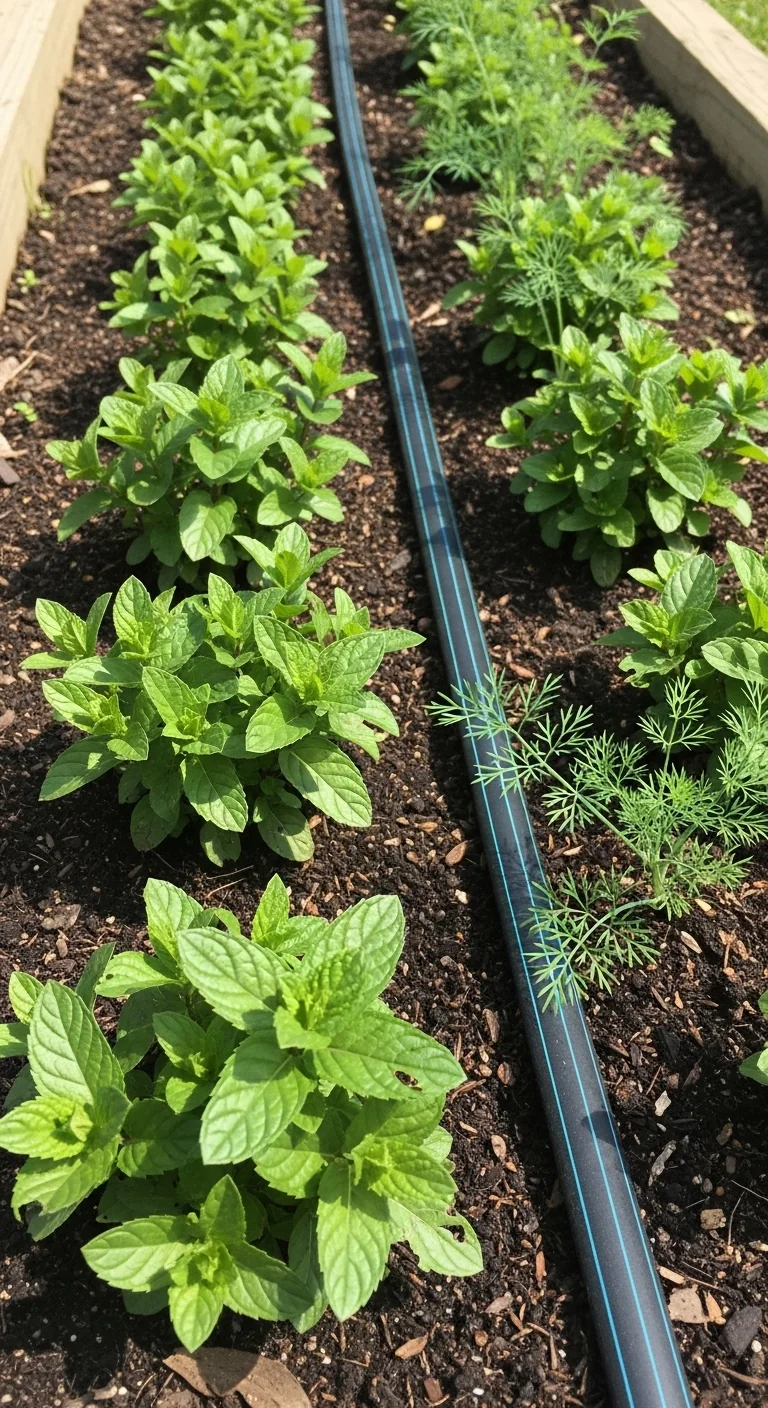
Threshold rule: Proceed only if your area receives 2 to 4 hours of filtered sun daily. Group lemon balm, mint, and parsley together because they tolerate lower light. Space plants 18 inches apart to allow air circulation. If light drops below 2 hours, supplement with reflective mulch to bounce available rays.
Vertical Herb Garden
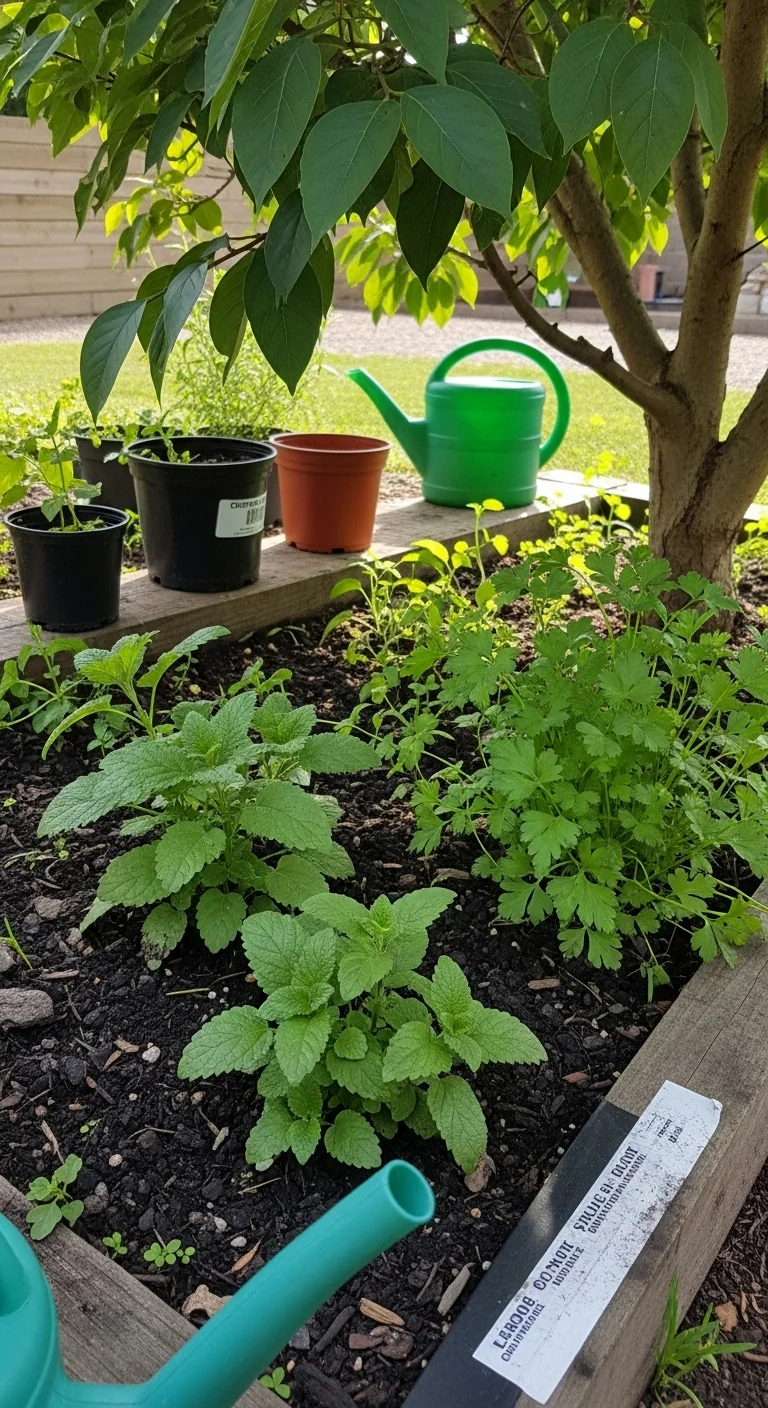
Best for: Branch 3
10 minute workflow: Assemble pockets or tower frame. Fill bottom to top with potting mix. Insert shallow rooted herbs first at lower levels. Water from the top so excess drains through all tiers. Upgrade option: add casters for seasonal repositioning.
Drought Tolerant Herb Layout
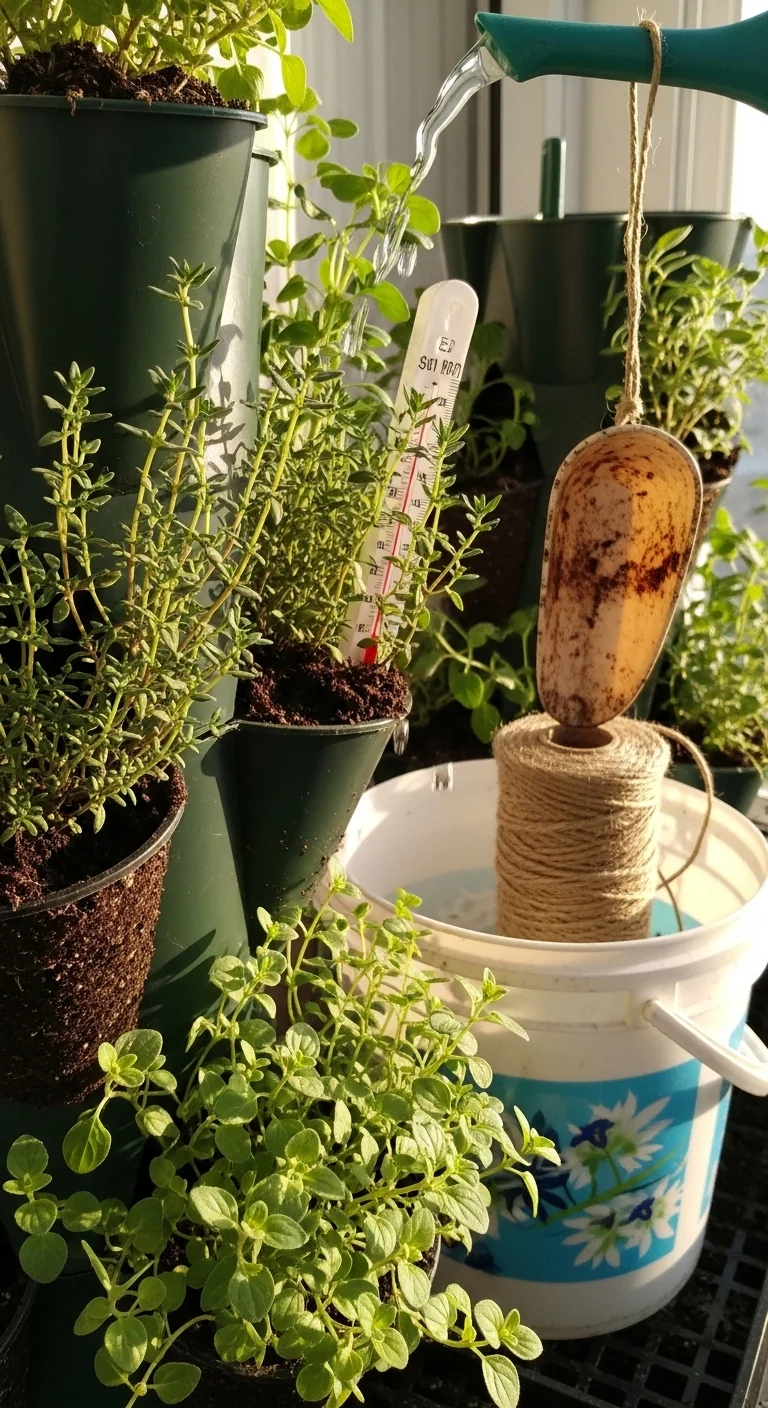
Best for: Branch 3
Blueprint: Select a south facing slope or dry bed area. Group rosemary, thyme, oregano, and sage in clusters. Space 18 to 24 inches apart to allow root spread. Mulch with gravel to retain heat and reduce evaporation. The mechanism relies on Mediterranean origins that thrive once established with minimal supplemental water after the first month.
Starter Stack (What to Choose First)
For Branch 1
Combine Balcony Herb Garden and Container Herb Garden. The vertical mounting pairs with movable pots for full sun tracking in tight areas. Materials cost 30 to 60 dollars and setup takes 2 to 4 hours.
For Branch 2
Combine Spiral Herb Garden and Raised Bed Herb Garden. The drainage gradient complements the elevated frame for easier access and varied moisture zones. Materials cost 80 to 150 dollars and setup takes 4 to 6 hours.
For Branch 3
Combine Shade Herb Garden Layout and Drought Tolerant Herb Layout. Low light tolerant plants overlap with water wise varieties for minimal care areas. Materials cost 20 to 50 dollars and setup takes 1 to 3 hours.
When This Won’t Work
These layouts fail when soil stays waterlogged for more than 24 hours after rain because roots rot quickly in herbs. Switch to raised or container options with added drainage holes. They also fail when sun drops below 2 hours daily without adjustment because growth becomes leggy and flavor weakens. In that case, relocate to a brighter spot or use the shade specific grouping instead. For low effort alternatives in wet conditions, see our self watering herb planters guide.
Choosing the Right Option for Your Situation
Budget Threshold
Under 50 dollars in materials points to container or vertical options using recycled pots or basic pockets. Over 100 dollars opens raised beds or spiral builds with quality lumber and stone.
Time Threshold
Setup under 3 hours favors pizza or drought tolerant groupings. Over 5 hours allows full raised bed or spiral construction with paths.
Technical Constraint
Sun exposure under 4 hours requires shade or vertical repositioning. Soil pH outside 6.0 to 7.5 calls for container adjustments with custom mix.
Yes or no checklist:
Do you have under 25 square feet available? Yes or no.
Does your site receive 6 or more hours of sun? Yes or no.
Is weekly harvest access within 20 paces? Yes or no.
Do you prefer low watering? Yes or no.
Expert Q&A
How do drainage gradients in spirals affect herb choice?
The top stays drier and suits rosemary or sage while the base holds more moisture for parsley or chives. Match placement to each plant preference before filling to avoid root issues after heavy rain.
What spacing works best in a pizza themed layout?
Divide the circle into six slices and space plants 12 inches apart within each. This keeps harvest paths clear and prevents any single group from crowding neighbors.
Can vertical systems work on balconies with wind exposure?
Yes if you secure the frame to the railing and choose low growing herbs like thyme. Add a windbreak panel on the exposed side to reduce tipping risk.
How does companion zoning change harvest timing?
Group fast regrowing herbs like basil together away from slower perennials like rosemary. This lets you cut one zone heavily without disturbing the rest of the bed.
What soil depth is minimum for raised bed herb success?
12 inches works for most culinary herbs. Shallower than 8 inches limits root development in perennials and leads to quicker drying in summer heat.
Conclusion
The right herb garden layout comes down to aligning your measured space and access needs with one primary design and a complementary second option. The number one mistake is ignoring harvest frequency and ending up with a layout that requires extra trips across the yard.
Next step: Review plant selection by growth habit before buying starts. Begin with our herb garden design ideas overview to finalize your list.