
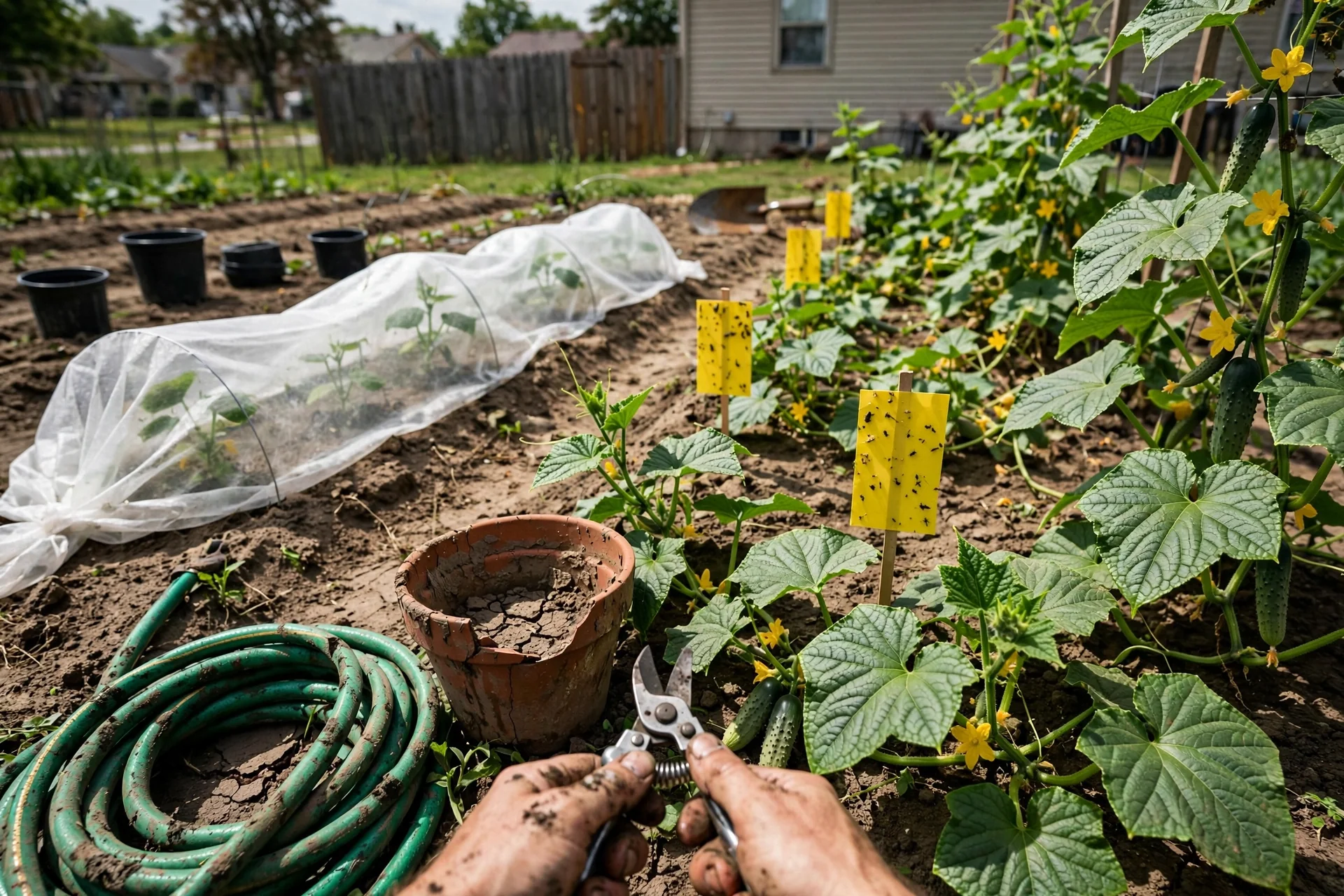
Bottom line: The most effective cucumber beetle control is not about finding a single best product—it is about matching your intervention to the plant’s growth stage, because a seedling’s tolerance is near zero while a flowering vine can sustain some feeding without yield loss.
The Yield Grid Decision Grid
Most cucumber beetle advice lumps all strategies together. Our grid splits control into three decision branches based on plant development stage—the single factor that most determines whether a method will succeed or waste your time.
Branch 1: Seedling Shield (cotyledon to 3 true leaves). Plants have zero tolerance for beetle feeding; bacterial wilt infection at this stage is almost always fatal. Threshold: 0.5 beetles per plant for cucumbers and melons, 1 beetle per plant for squash and pumpkins. Action must be preemptive, not reactive. Recommended: Items 1, 2, 3 below.
Branch 2: Vegetative Defense (4+ true leaves to pre-bloom). Plants can tolerate some feeding—threshold rises to 1 beetle per plant for susceptible crops and 5 beetles per plant for tolerant crops. You have time to deploy deterrents and build beneficial insect populations. Recommended: Items 4, 5, 6, 7 below.
Branch 3: Flowering & Fruiting Guard (bloom through harvest). Pollinators are active; broad-spectrum insecticides risk crop loss from poor pollination. Focus on selective, pollinator-safe options and physical removal. Threshold: 5 beetles per plant for squash and pumpkins, 1 beetle per plant for cucumbers and melons. Recommended: Items 8, 9, 10, 11, 12 below.
For a deeper understanding of predator-prey dynamics that make Branch 2 strategies effective, see our guide on beneficial insects.
Quick Comparison Table
| Option | Key Mechanism | Best For | Decision Grid Branch | Effort Score (1–5) |
|---|---|---|---|---|
| Floating Row Covers | Physical exclusion barrier | Seedlings, pre-bloom plants | Branch 1 | 1 |
| Trap Cropping | Behavioral diversion using cucurbitacin-rich plants | Perimeter defense, all stages | Branch 1, 2 | 2 |
| Kaolin Clay Spray | Physical repellent that coats antennae and disrupts navigation | Vegetative stage, organic systems | Branch 2 | 4 |
| Neem Oil (Azadirachtin) | Antifeedant, growth regulator, mild contact toxicity | Vegetative to pre-bloom | Branch 2 | 4 |
| Insecticidal Soap | Contact desiccation of soft-bodied insects | Spot treatment, low-pressure situations | Branch 2, 3 | 3 |
| Beneficial Nematodes | Soil-dwelling parasites that attack larval and pupal stages | Long-term soil management | Branch 2 | 2 |
| Diatomaceous Earth | Abrasive desiccant that damages exoskeleton | Dry conditions, soil surface application | Branch 2 | 3 |
| Handpicking & Soapy Water | Manual removal during cool morning hours | Small gardens, low beetle counts | Branch 3 | 5 |
| Horticultural Oil | Suffocation of eggs and soft-bodied stages | Dormant or pre-bloom application | Branch 2 | 3 |
| Resistant Varieties | Reduced cucurbitacin levels lower attractiveness | Pre-planting decision | Branch 1, 2, 3 | 1 |
| Pyrethrin-Based Insecticides | Broad-spectrum contact neurotoxin | Emergency rescue, evening application only | Branch 3 | 4 |
| Yellow Sticky Traps | Visual attractant plus adhesive capture | Monitoring and mass trapping | Branch 2, 3 | 3 |
Floating Row Covers
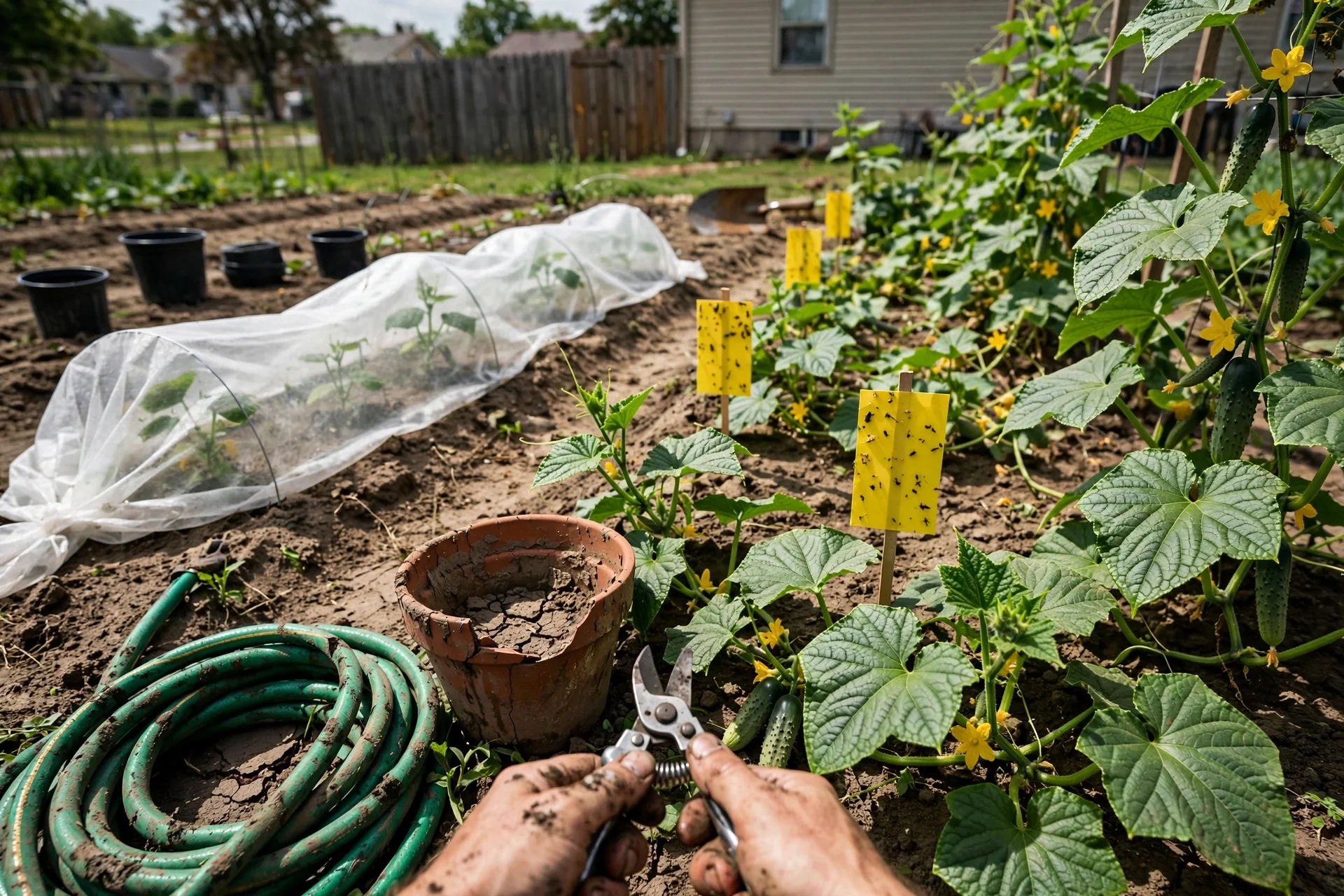
Best for: Branch 1 (Seedling Shield)
What: Lightweight spun-bonded fabric laid directly over plants or supported on hoops. For: Physical exclusion of adult beetles from crop access. Steps: (1) Install immediately after seeding or transplanting. (2) Bury edges with soil or secure with pins to prevent beetles from crawling underneath. (3) Remove when female flowers appear to allow pollination, or extend removal by up to 10 days after bloom begins—research from Iowa State University showed this delay can reduce bacterial wilt incidence in muskmelons without cutting yield. Mistake: Leaving covers on too long in hot weather can overheat plants; use lightweight Reemay-style fabric in warm climates. Row covers also exclude flea beetles; see our flea beetle control guide.
Trap Cropping with Blue Hubbard Squash
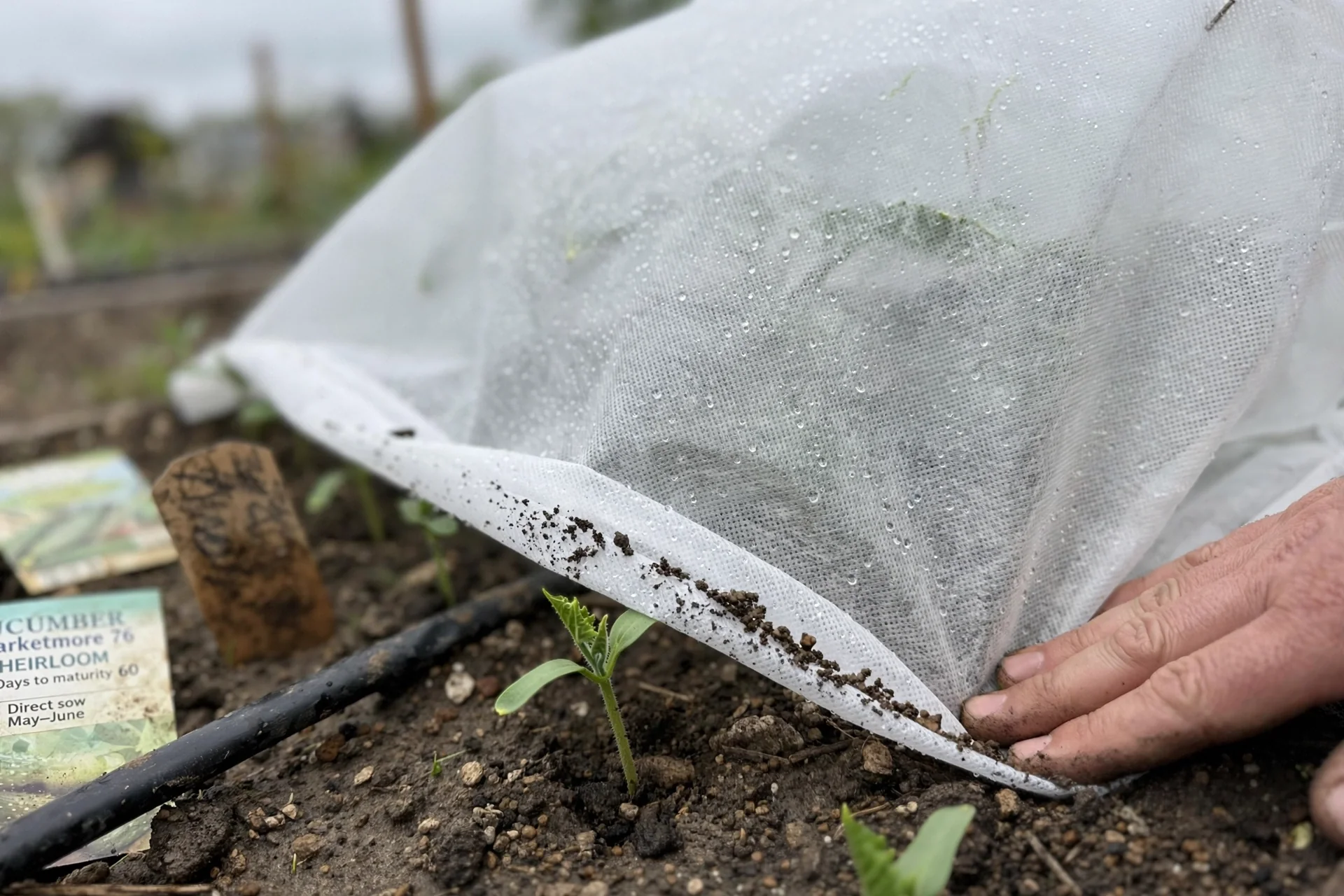
Best for: Branch 1 and 2 (Seedling Shield and Vegetative Defense)
Plant Blue Hubbard squash around the perimeter of your cucurbit patch two weeks before your main crop. Blue Hubbard contains high levels of cucurbitacin, the compound that attracts striped cucumber beetles. Once beetles congregate on the trap crop, spray only the perimeter plants with insecticide or remove and bag them. This concentrates control effort on a fraction of your total planting area. One constraint: trap cropping is less effective if beetles are already established throughout the field; it works best as a preventative measure deployed before beetles arrive.
Kaolin Clay Spray
Best for: Branch 2 (Vegetative Defense)
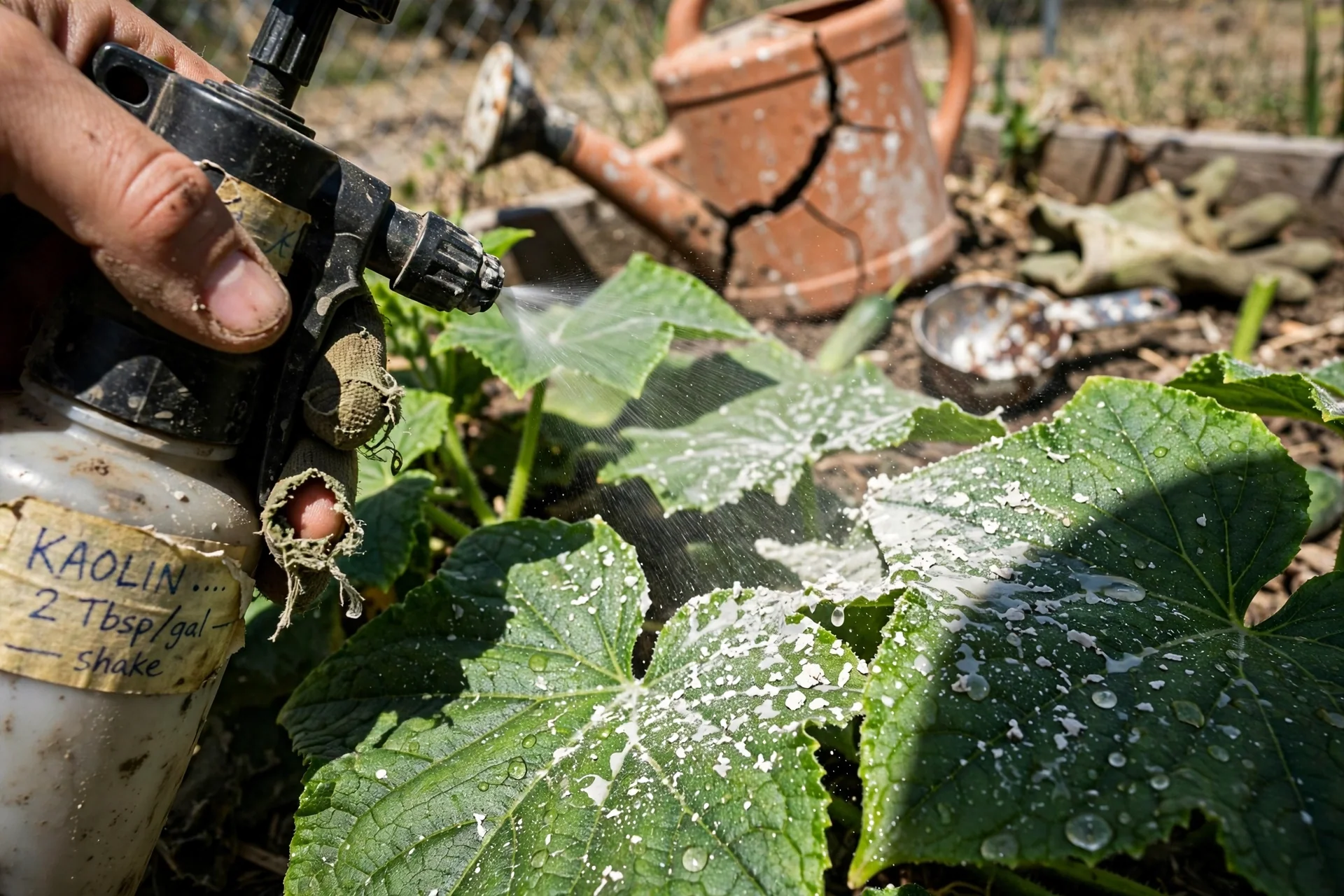
Kaolin clay forms a white particle film on leaf surfaces that physically repels beetles by gumming up their antennae, making navigation and feeding difficult. It does not kill beetles, so it is not a rescue treatment for active infestations. Organic growers in the Mid-Atlantic region typically apply it twice weekly during the early growing season. A constraint: the white residue is visible on produce and can be difficult to wash off completely, which matters if you sell at market. For detailed application guidance, see our kaolin clay spray guide.
Neem Oil (Azadirachtin)
Best for: Branch 2 (Vegetative Defense)
Neem works primarily as an antifeedant—beetles that ingest treated tissue reduce feeding activity. It also acts as an insect growth regulator, disrupting molting and egg development. Apply at 0.5 percent to 1 percent solution (roughly 2 to 4 teaspoons per gallon) weekly during the vegetative stage. One edge case: neem degrades rapidly in sunlight, so apply in late afternoon or evening for maximum residual activity. It is less effective against adult beetles with hard exoskeletons compared to soft-bodied pests. For more on neem applications, visit our neem oil for bugs page.
Insecticidal Soap

Best for: Branch 2 and 3 (Vegetative Defense and Flowering/Fruiting Guard)
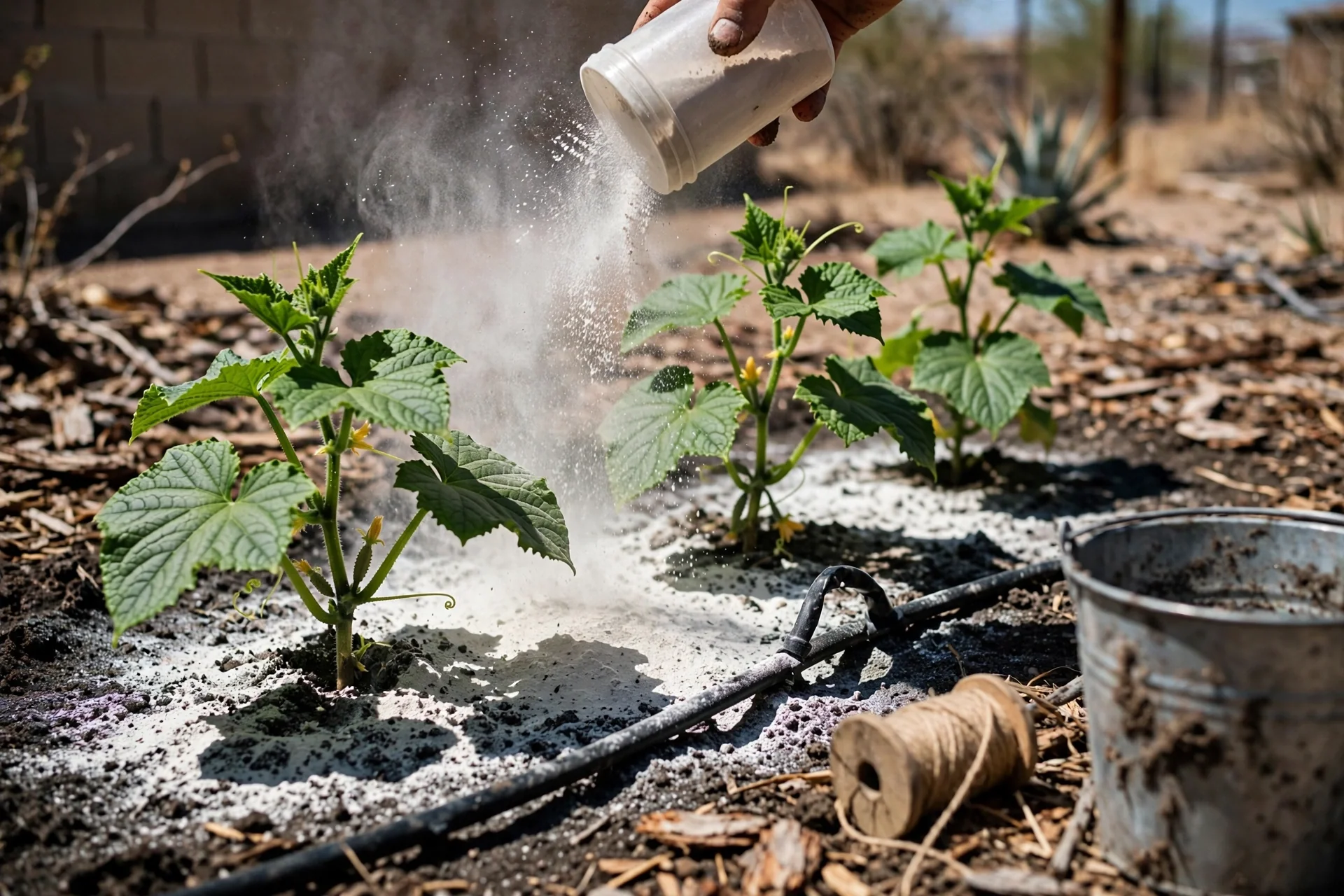
Insecticidal soap works by disrupting cell membranes on contact, causing desiccation. It only affects insects that are directly sprayed, and it has no residual activity once dry. This makes it a safer option during flowering when pollinators are present—apply in the evening after flowers close. It is most effective against soft-bodied insects; hard-shelled adult cucumber beetles may survive a single application. Use a 1 percent to 2 percent solution and target beetles directly. For formulation details, see our insecticidal soap guide.
Beneficial Nematodes
Best for: Branch 2 (Vegetative Defense)
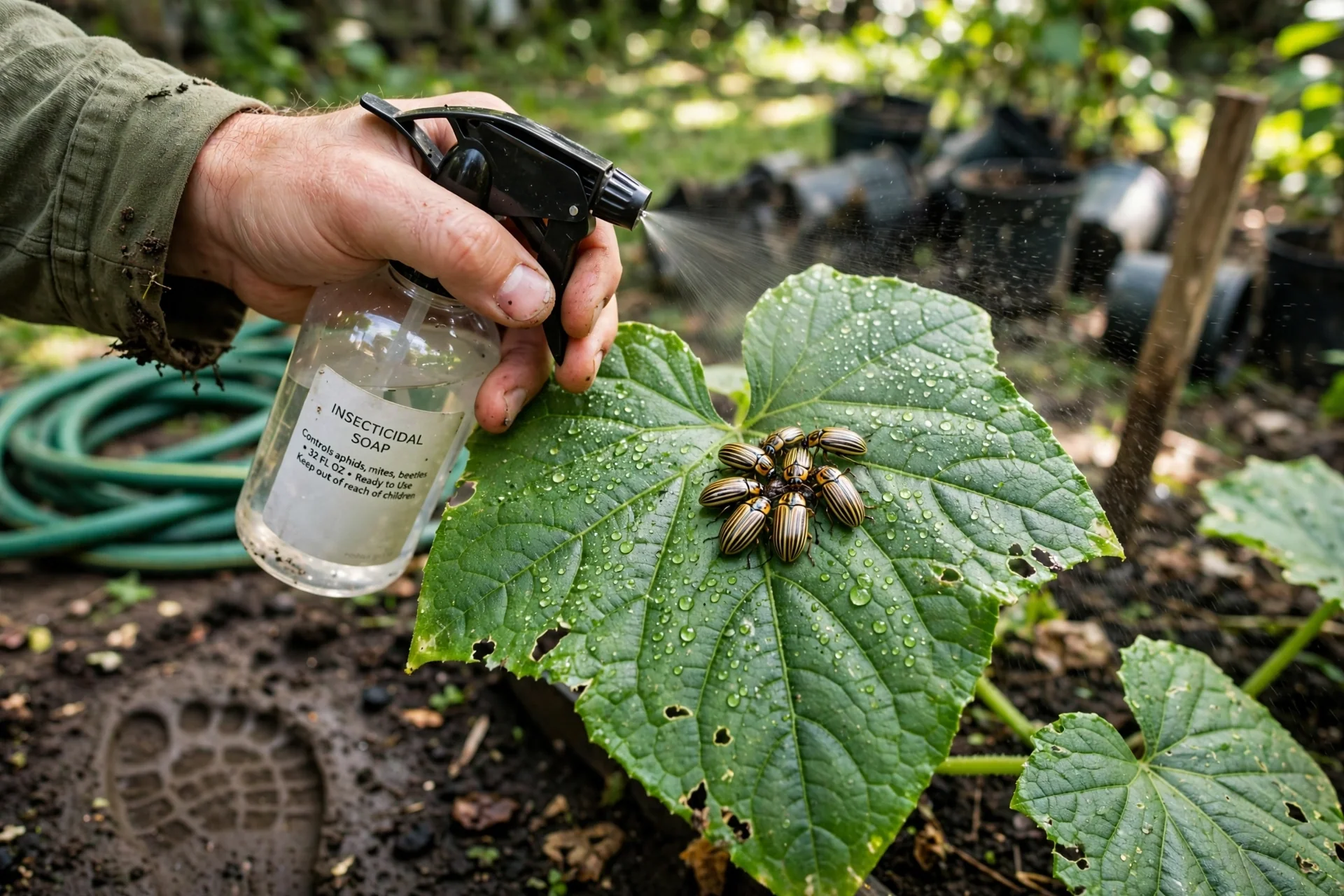
Entomopathogenic nematodes (Steinernema feltiae or Heterorhabditis bacteriophora) are microscopic roundworms that enter cucumber beetle larvae and pupae in the soil, releasing symbiotic bacteria that kill the host within 24 to 48 hours. Apply as a soil drench when soil temperatures are between 55°F and 85°F (13°C to 29°C). One application per season, timed to target the larval generation in early summer. A limitation: research data from Penn State indicates nematode applications reduce striped cucumber beetle populations but may not adequately control the subsequent generation that emerges later in the season. For broader biological control strategies, read our beneficial insects guide.
Diatomaceous Earth
Best for: Branch 2 (Vegetative Defense)
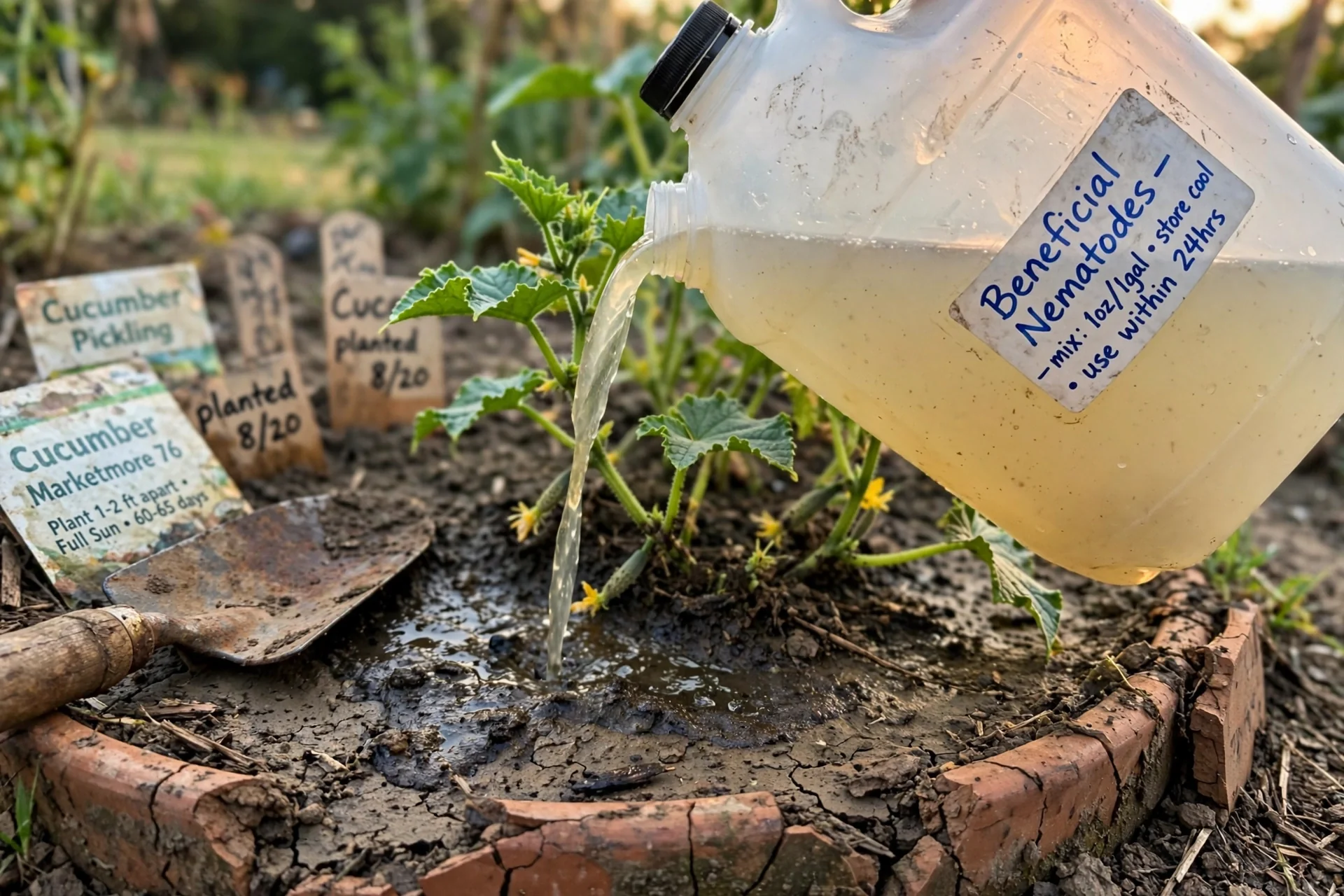
Diatomaceous earth consists of fossilized diatom shells that abrade the waxy cuticle of beetles, causing death by desiccation. It only works when dry—rain or overhead irrigation washes it away and renders it ineffective until reapplied. Dust the soil surface around plant bases and on lower leaves where beetles congregate. Reapply after each rain event. A practical constraint: diatomaceous earth is non-selective and can harm ground-dwelling beneficial insects if applied broadly. For application specifics, see our diatomaceous earth garden guide.
Handpicking into Soapy Water
Best for: Branch 3 (Flowering and Fruiting Guard)
Cucumber beetles are most sluggish in early morning when temperatures are below 60°F (15°C). Place a container of soapy water beneath the plant and tap or shake the stem—beetles drop downward when disturbed and will drown in the soap solution. This is labor-intensive but uses no chemicals and is safe during bloom. One often-overlooked technique: use a handheld cordless vacuum in larger plantings to suck beetles off plants, then empty the canister into soapy water. This method is only practical for gardens under roughly 500 square feet; beyond that, the time commitment becomes prohibitive.
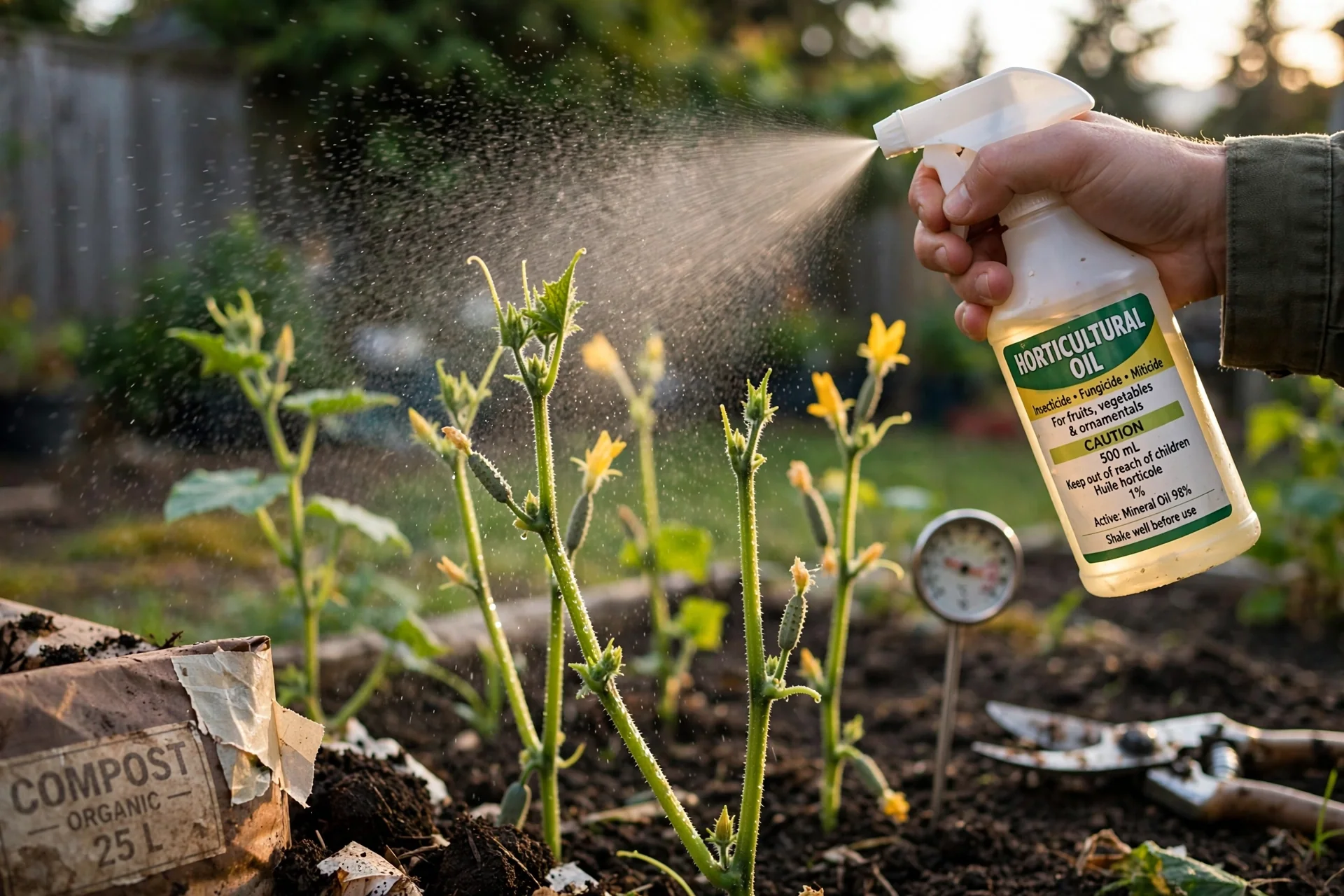
Horticultural Oil

Best for: Branch 2 (Vegetative Defense)
Horticultural oils smother beetle eggs and soft-bodied nymphs by coating their breathing pores. Apply as a 1 percent to 2 percent dormant or delayed-dormant spray before plants begin rapid spring growth. Avoid applying when temperatures exceed 85°F (29°C) or when plants are drought-stressed, as phytotoxicity risk increases sharply. Oils have no residual activity once dry, so timing must coincide with egg hatch. For application guidelines, see our horticultural oil page.
Resistant Varieties
Best for: Branch 1, 2, and 3 (All Stages)
Certain cucumber varieties contain lower levels of cucurbitacin, making them less attractive to both striped and spotted cucumber beetles. County Fair 83 and Marketmore 97 are two slicers with documented non-preference resistance. Shintokiwa, Arkansas Little Leaf, and Little Leaf are reported by Cornell University to show tolerance or resistance to bacterial wilt. This is a pre-planting decision that reduces beetle pressure throughout the season without additional labor. The trade-off: resistant varieties may not match the flavor profile or fruit type you prefer. For related pest-resistant planting strategies, see our companion planting for pests guide.
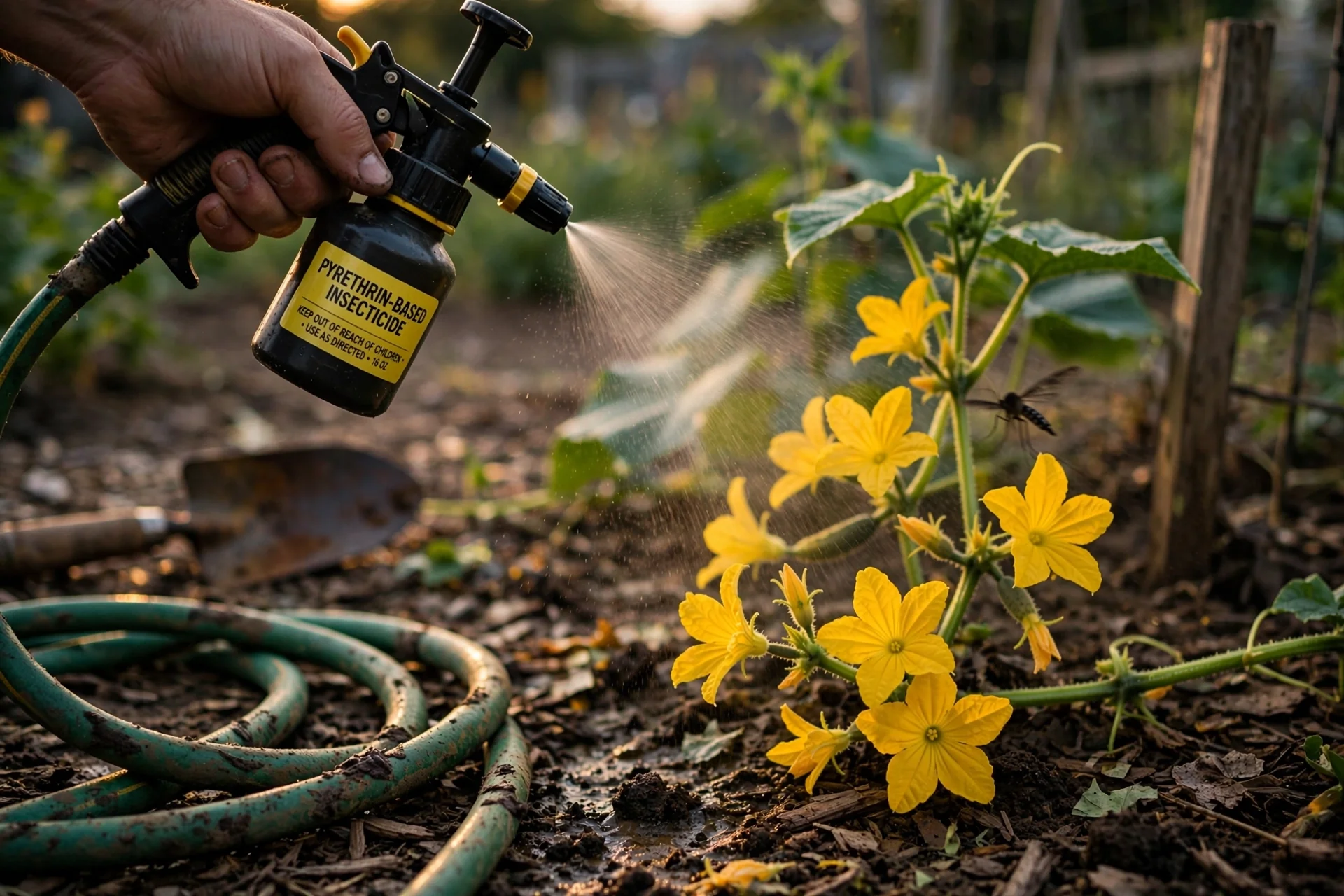
Pyrethrin-Based Insecticides

Best for: Branch 3 (Flowering and Fruiting Guard, emergency use only)
Pyrethrins provide rapid knockdown of adult cucumber beetles on contact. Apply in late evening after flowers close to minimize pollinator exposure—bee kills are significantly reduced when sprays dry overnight. Use only when beetle counts exceed the action threshold for your crop and growth stage. One critical constraint: pyrethrins are broad-spectrum and kill beneficial insects including tachinid flies that parasitize cucumber beetles. Repeated use can trigger secondary pest outbreaks of aphids and spider mites. For bee-conscious pest management, see our bee-safe pest control guide.
Yellow Sticky Traps
Best for: Branch 2 and 3 (Vegetative Defense and Flowering/Fruiting Guard)
Both striped and spotted cucumber beetles are attracted to yellow. Unbaited yellow sticky cards or tape placed at canopy height capture adult beetles and serve as a monitoring tool. Replace traps when surfaces become covered with insects or dust—trapping efficiency declines sharply as the adhesive fills. Use traps for scouting (count beetles weekly to determine if thresholds are exceeded) rather than as a standalone control. One limitation: yellow traps also capture beneficial insects including hoverflies and small parasitic wasps. Research using TIC lures (trimethoxybenzene, indole, trans-cinnamaldehyde) can increase beetle specificity, but these lures are not widely available to home gardeners.
Starter Stack (What to Choose First)
Branch 1: Seedling Shield Stack
Floating row covers plus resistant varieties. Install row covers at planting over a resistant variety like County Fair 83. The resistance reduces attractiveness if any beetles breach the cover; the cover provides physical exclusion during the critical cotyledon-to-3-leaf window. Estimated cost: $15–$30 for row cover fabric (reusable for multiple seasons) plus $3–$5 for a seed packet. Time: 15–30 minutes to install covers over a 4-foot by 8-foot bed.
Branch 2: Vegetative Defense Stack
Kaolin clay spray plus beneficial nematodes. Apply nematodes once as a soil drench when soil temperatures reach 55°F (13°C) to target larvae. Begin kaolin clay applications when plants reach the 4-leaf stage, reapplying twice weekly. The nematodes reduce the next generation of beetles emerging from soil; kaolin repels current adults from feeding. Estimated cost: $20–$35 for nematodes (single application covers 200 square feet) plus $15–$25 for a season’s supply of kaolin clay. Time: 30 minutes for nematode application plus 20 minutes per spray session.
Branch 3: Flowering and Fruiting Guard Stack
Handpicking plus yellow sticky traps. Scout daily during the first hour after sunrise when beetles are torpid. Place yellow sticky traps at canopy height to capture adults and monitor population trends. If beetle counts exceed 5 per plant on squash or 1 per plant on cucumbers during bloom, escalate to evening pyrethrin application. Estimated cost: $8–$15 for sticky traps (pack of 10–20) plus $15–$25 for a pyrethrin product if escalation is needed. Time: 10–15 minutes daily for handpicking, 5 minutes weekly to check and replace traps.
When This Won’t Work
Condition 1: Beetle populations arrived before any preventative measures were deployed. If you are seeing 20 or more beetles per plant and plants are already showing bacterial wilt symptoms (wilting during the day, recovering at night), none of the deterrent methods above will reverse the infection. Infected plants should be removed immediately and destroyed—they cannot be saved and serve as a reservoir for the bacterium. The alternative: remove all symptomatic plants, apply a pyrethrin spray in the evening to knock down remaining beetles, and replant with a bacterial wilt-tolerant variety if the season allows.
Condition 2: You are growing in an area with year-round cucurbit host plants. In regions where cucurbits grow continuously (USDA zones 9–11 or tropical climates), cucumber beetles may not experience a winter die-off and can sustain overlapping generations year-round. In these conditions, no single-season strategy will provide lasting control. The alternative: implement a minimum 60-day cucurbit-free period in your garden, combined with soil solarization during the hottest month, to break the reproductive cycle before replanting. For related soil-borne pest management, see our cutworm prevention guide.
Choosing the Right Option for Your Situation
Budget Threshold
If your total pest control budget is under $20 for the season, prioritize floating row covers (reusable across multiple years) plus handpicking. Skip kaolin clay and nematodes, which require ongoing product purchases. Resistant seeds cost no more than standard varieties and provide season-long baseline protection at zero additional expense.
Time Threshold
If you can garden only on weekends, avoid methods requiring twice-weekly reapplication (kaolin clay, neem oil). Instead, deploy row covers at planting, plant a Blue Hubbard squash trap crop perimeter, and use yellow sticky traps as a low-maintenance monitoring tool. Replace sticky traps during your weekly visit.
Technical Constraint: Sprayer Access and Water Quality
Kaolin clay and diatomaceous earth require a sprayer capable of handling suspended particles—standard backpack sprayers with fine nozzles will clog. Use a sprayer with a diaphragm pump and large-orifice nozzle, or switch to wettable powder formulations designed for suspension. Hard water (above 150 ppm calcium carbonate) reduces the effectiveness of insecticidal soap; if you have hard water, use distilled water or add a water conditioner before mixing.
Quick Yes/No Checklist:
Are plants still at or below the 3-leaf stage? → Yes: Use Branch 1 methods (row covers, trap crops, resistant varieties).
Are flowers open and pollinators active? → Yes: Avoid broad-spectrum sprays; use Branch 3 methods (handpicking, sticky traps, evening-only pyrethrin if necessary).
Have you seen wilting that recovers overnight on any plant? → Yes: Remove infected plants immediately; this is bacterial wilt and no treatment reverses it.
Will you be able to reapply sprays at least twice weekly? → No: Skip kaolin clay and neem oil; choose row covers, resistant varieties, and trap cropping instead.
Expert Q&A
Why do cucumber beetles return even after I spray?
Striped cucumber beetles produce an aggregation pheromone that attracts more beetles to feeding sites. A sprayed plant may still emit residual pheromone, drawing in new arrivals from surrounding areas. Reapplication is necessary not because the product failed but because the chemical signal persists. Removing heavily infested plants can reduce this beacon effect.
Can I use row covers on plants that need pollination?
Row covers must be removed when female flowers appear, or you will get no fruit set. However, research from Iowa State University found that leaving covers on muskmelons for 10 days after bloom began reduced bacterial wilt incidence without reducing overall yields—the plants compensated with later fruit set once covers were removed.
Are there any natural predators that effectively control cucumber beetles?
Tachinid flies (Celatoria diaborticae) are the most important natural enemy—adult flies lay eggs on cucumber beetles, and the hatching larvae burrow into and kill the host. Soldier beetles (Chauliognathus pennsylvanicus) also prey on cucumber beetle eggs and larvae. However, neither predator alone can reduce populations below economic thresholds in outbreak years.
Does mulching help or hurt cucumber beetle control?
Straw mulch can increase cucumber beetle populations by providing moist, sheltered conditions for egg-laying and larval development. Reflective plastic mulches, in contrast, disorient beetles with light reflection and have been shown to reduce colonization. If using organic mulch, keep it pulled back several inches from plant stems to reduce habitat directly at the plant base.
What is the difference between striped and spotted cucumber beetle control?
Both species respond to the same control methods, but their host ranges differ. Spotted cucumber beetles feed on over 200 plant species including beans, corn, and ornamentals, so they may persist in gardens even without cucurbits. This broader diet means crop rotation alone is less effective against spotted beetles than against striped beetles, which specialize on cucurbits.
Conclusion
The single biggest mistake gardeners make with cucumber beetle control is waiting until beetles appear in large numbers before taking action. By that point, bacterial wilt may already be transmitted even if symptoms have not yet appeared. Align your control method with your plant’s growth stage—seedling protection first, then deterrents, then targeted rescue treatments only if thresholds are breached. For a complete integrated pest management plan that addresses the full season, see our guide on companion planting for pests, which covers how strategic plant placement can reduce beetle pressure before it starts.