
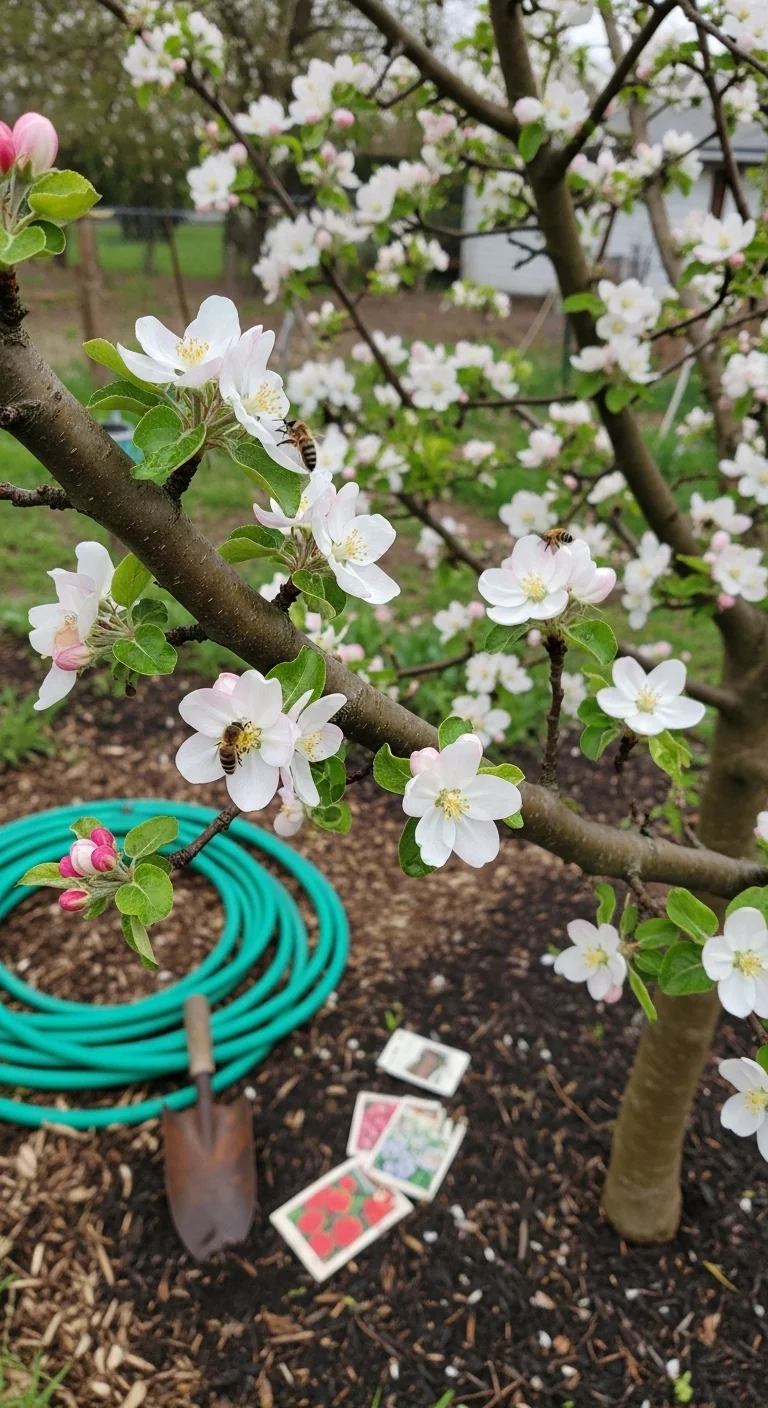
Apple tree pollination succeeds when you align variety compatibility, space constraints, and local pollinator activity instead of relying on generic charts that ignore your yard layout or bee presence.
This guide covers cross-pollinizer selection, self-fertile options, crabapple use, training systems, bee habitat, hand methods, pruning, and bloom support. It applies to home edible gardens in the US, UK, Canada, Australia, and New Zealand. It excludes commercial-scale operations and chemical aids.
You will identify your exact branch below and select the matched items to set fruit reliably this season.
Identify your Decision Grid branch based on space and pollinator presence, then implement the corresponding strategies below.
The Yield Grid Decision Grid
Branch 1 applies if your garden provides space for two or more trees (or trained forms) within 50 feet. Recommended: Items 1, 3, and 7 below.
Branch 2 applies if your setup limits you to a single tree or footprint under 10 feet wide. Recommended: Items 2, 4, and 8 below.
Branch 3 applies if observed bee activity during bloom stays below three visits per tree per minute or the site sits isolated from natural habitat. Recommended: Items 5, 6, and 9 below.
For guidance on establishing trees before bloom season, consult our when to plant fruit trees guide.
Quick Comparison Table
| Option | Key mechanism | Best for | Decision Grid Branch | Effort Score (1-5) |
|---|---|---|---|---|
| Selecting Compatible Cross-Pollinizer Varieties | Overlapping bloom groups for pollen transfer | Multi-tree gardens | Branch 1 | 1 |
| Choosing Partially Self-Fertile Apple Varieties | Partial self-set with optional cross support | Single-tree setups | Branch 2 | 1 |
| Using Flowering Crabapples as Pollinizers | Abundant pollen and extended bloom window | Multi-tree gardens | Branch 1 | 2 |
| Espalier and Columnar Training for Pollination | Compact layout with close proximity to pollinizers | Single-tree setups | Branch 2 | 3 |
| Building Bee Habitat Around Apple Trees | Adjacent flowers and nesting sites for native bees | Low bee activity sites | Branch 3 | 2 |
| Hand Pollination for Low Bee Activity | Manual pollen transfer with brush | Low bee activity sites | Branch 3 | 4 |
| Pruning to Enhance Flower Set and Pollination | Increased flower buds through targeted cuts | Multi-tree gardens | Branch 1 | 2 |
| Applying Targeted Fertilizing for Bloom Health | Nutrient support for strong flower development | Single-tree setups | Branch 2 | 2 |
| Avoiding Pesticide Interference During Bloom | Preservation of active pollinators at flowering | Low bee activity sites | Branch 3 | 1 |
Selecting Compatible Cross-Pollinizer Varieties
Best for: Branch 1
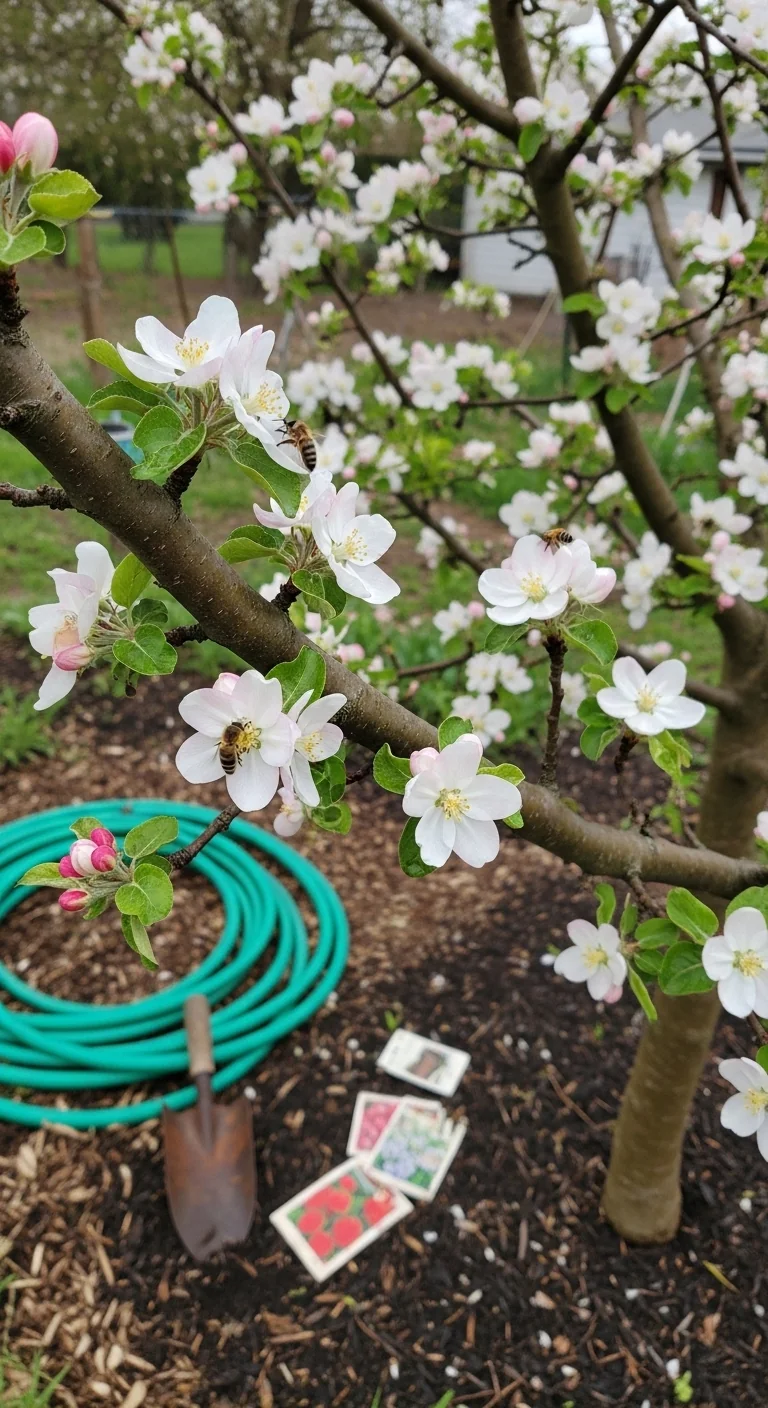
Most apple trees require a compatible pollinizer with overlapping bloom groups for effective pollen transfer. Bloom groups run from 1 (earliest) to 7 (latest) or early, mid, and late categories. For example, pair a mid-bloom variety such as Gala with a matching mid-bloom Golden Delicious. Triploid varieties including Gravenstein, Jonagold, and Mutsu produce sterile pollen and need two separate diploid pollinizers within range.
Blueprint: Identify your main variety bloom group first. Select a pollinizer from the same or adjacent group planted within 50 feet. Verify compatibility through nursery charts or our linked plum pollination chart for similar logic. Common mistake: planting two triploids together, which leaves both without viable pollen.
This approach works across US, UK, and Canadian zones where standard trees reach full size. Check rootstock vigor to confirm final spacing needs.
Choosing Partially Self-Fertile Apple Varieties
Best for: Branch 2
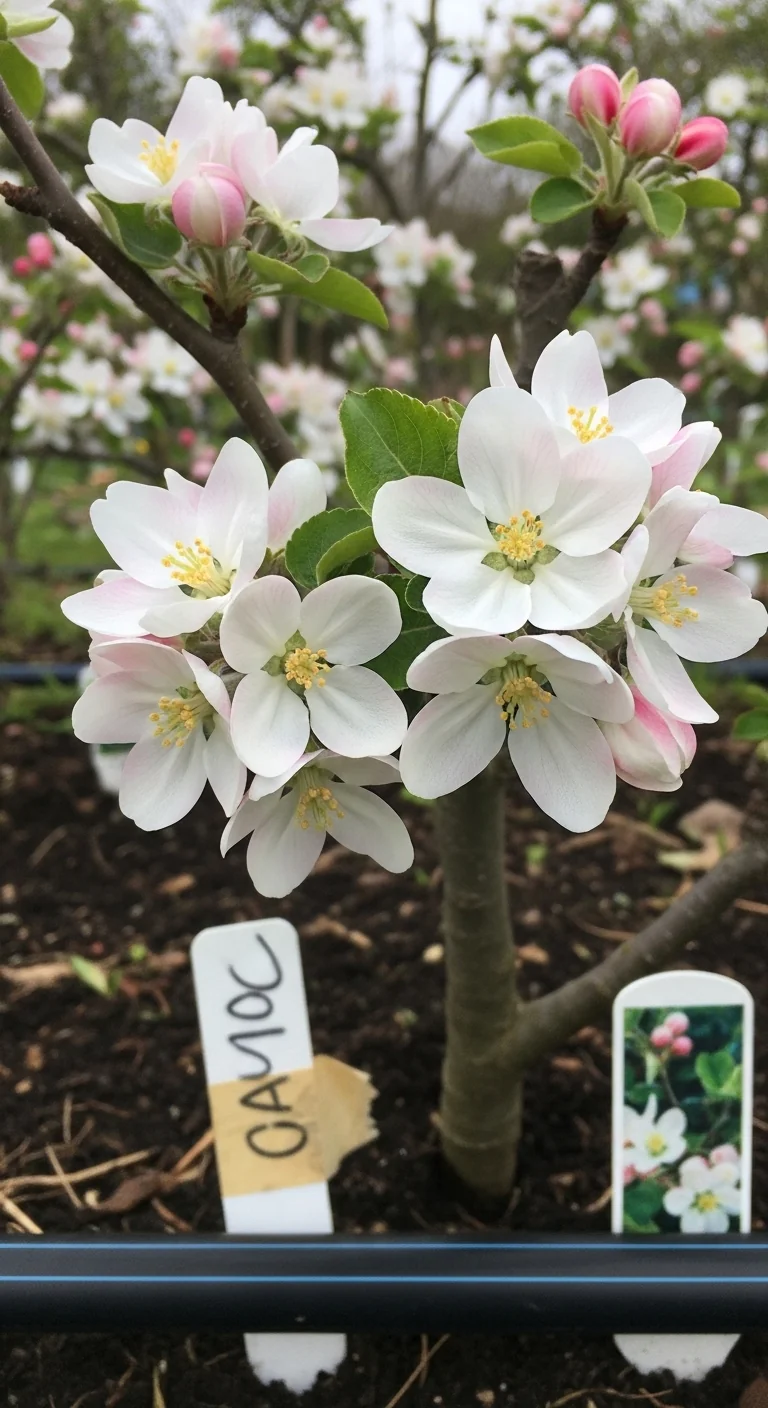
Use vs skip: Choose varieties such as Anna, Golden Delicious, or Braeburn when space allows only one tree. These set some fruit alone but produce heavier crops with a nearby pollinizer. Skip fully self-sterile types like Granny Smith in solo plantings. Edge case: low-chill regions where Anna thrives without extra trees.
Using Flowering Crabapples as Pollinizers
Best for: Branch 1
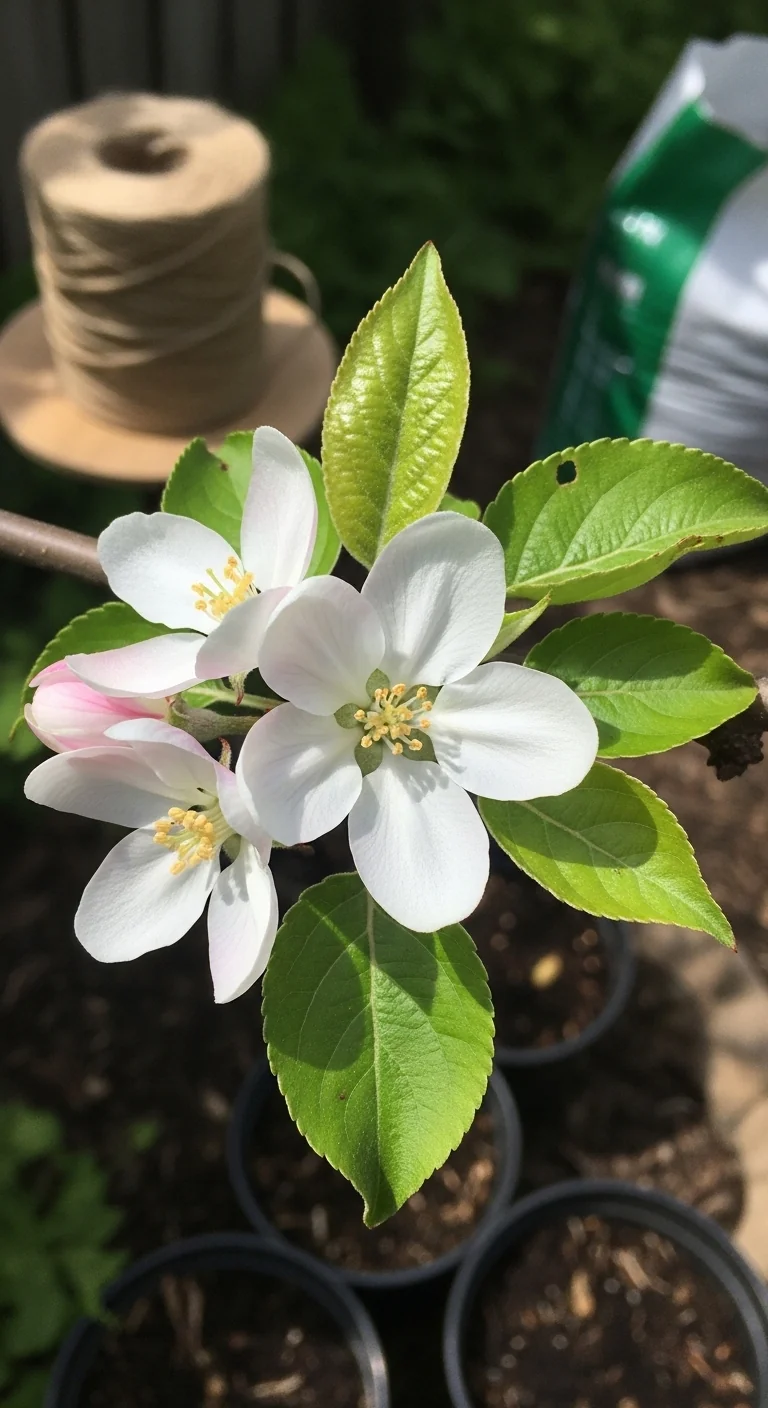
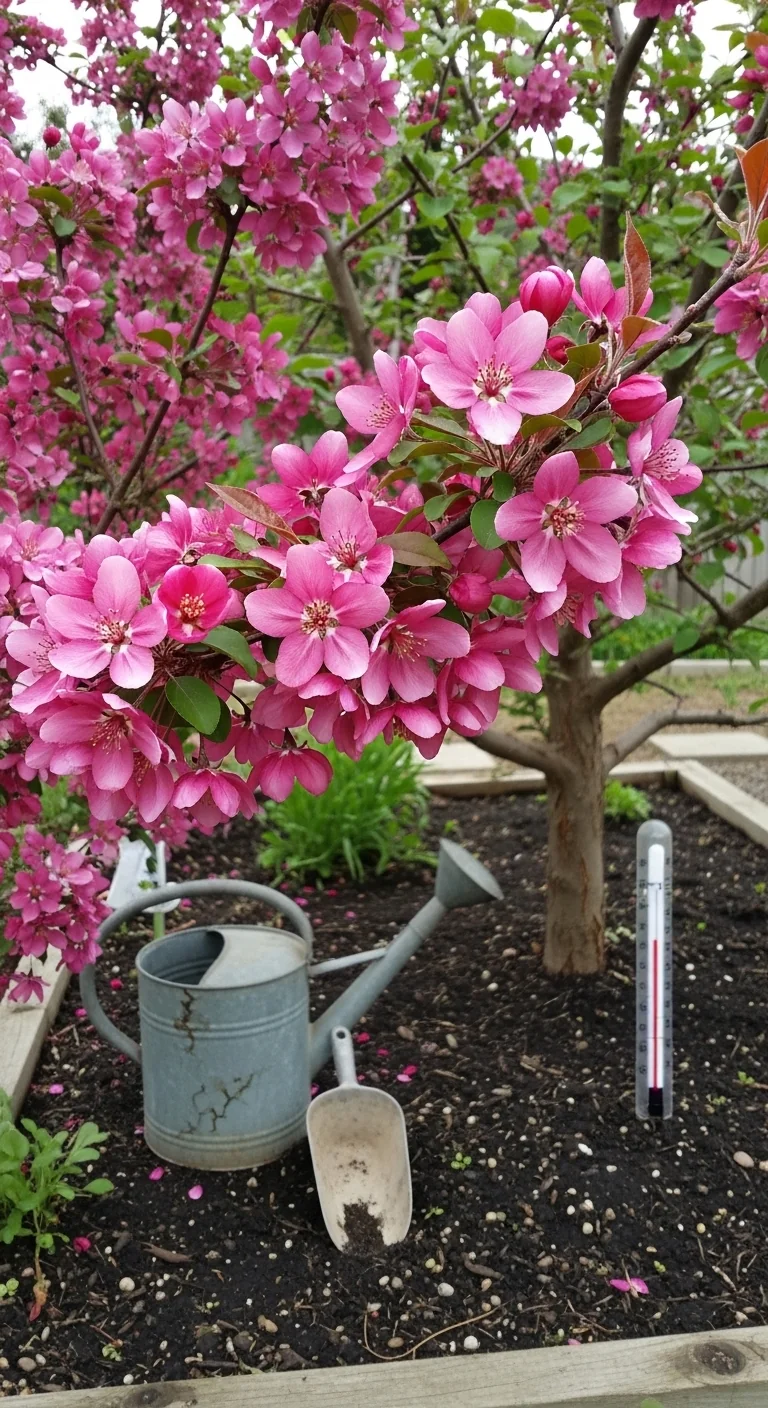
Threshold rule: Plant a flowering crabapple if your main apple trees sit more than 30 feet apart or bloom timing varies by more than one group. Crabapples deliver abundant pollen over a longer window and suit distances up to 100 feet. Select varieties with mid-season bloom to cover most common apples. Adjust by adding one crabapple per three main trees in larger layouts.
Espalier and Columnar Training for Pollination
Best for: Branch 2
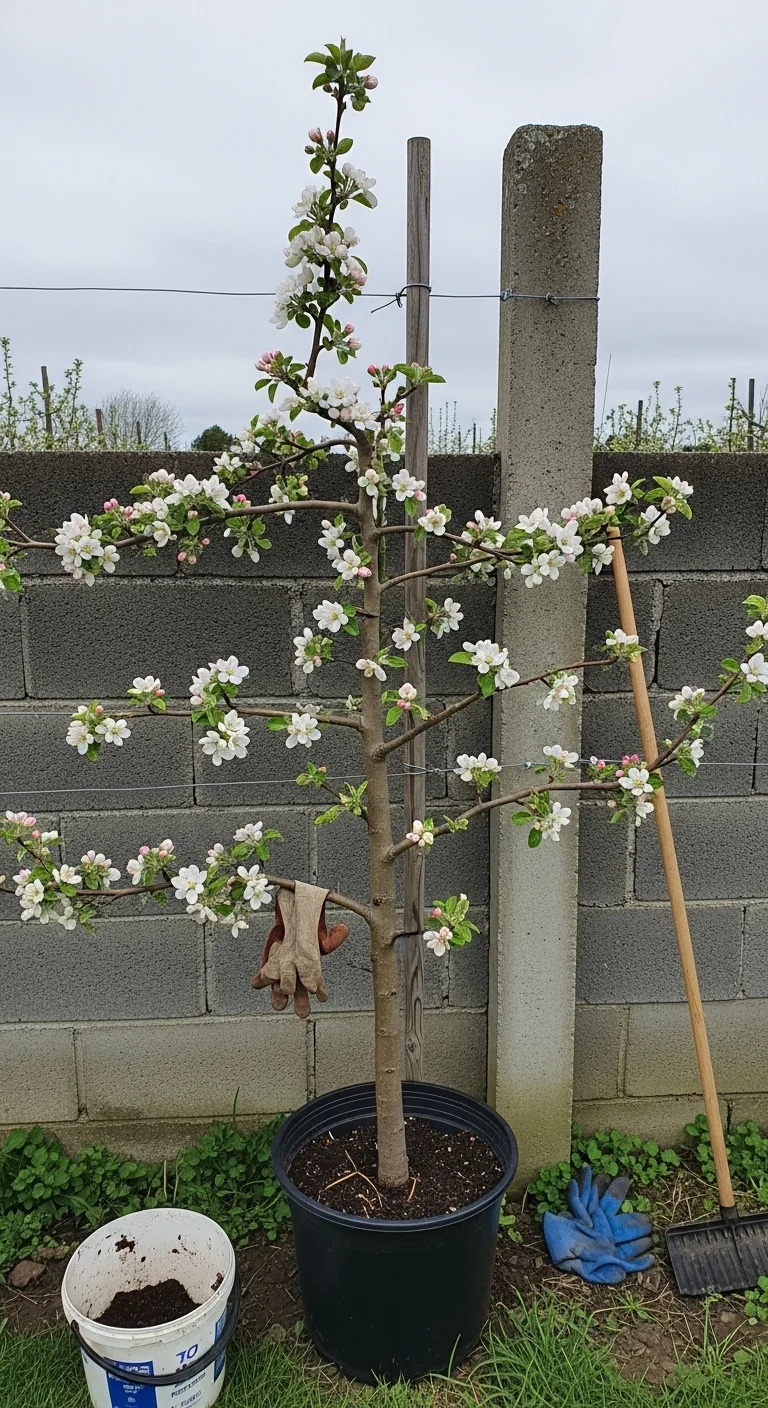
10-minute workflow: Select dwarf rootstock columnar or espalier forms. Plant two compatible varieties 6 to 8 feet apart along a wall or fence. Step 1: tie main branches horizontally. Step 2: maintain 12-inch spacing between laterals. Step 3: monitor bloom overlap each spring. Upgrade option: add a third trained tree in the same line for extra pollen security. This fits patios or narrow yards while keeping trees within bee flight range.
Details in our espalier fruit trees and columnar fruit trees guides.
Building Bee Habitat Around Apple Trees
Best for: Branch 3
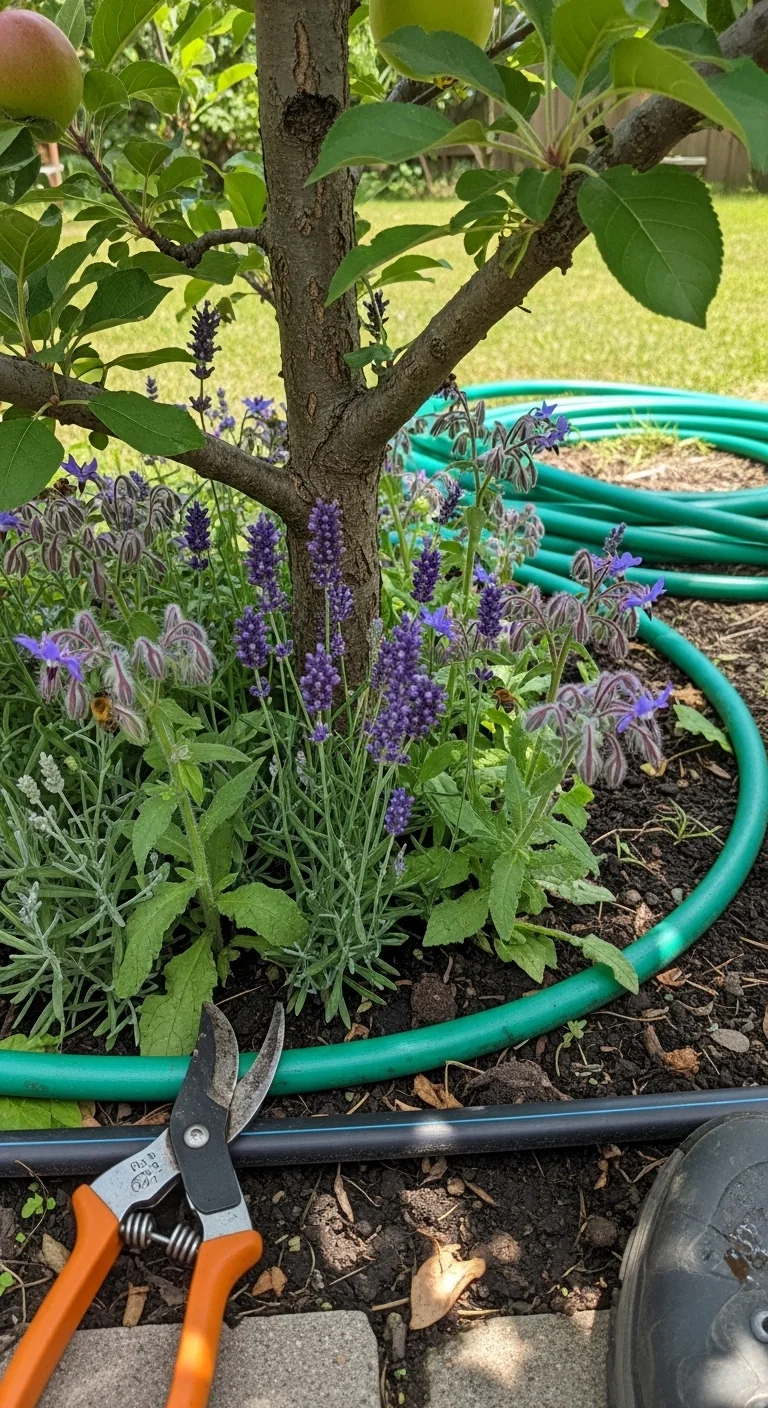
Use vs skip: Plant nectar-rich flowers such as borage or lavender within 10 feet of the apple trees to draw native bees and bumblebees. Skip if your site already borders woodland or meadow. Edge case: urban balconies where container herbs provide the only nearby forage.
Hand Pollination for Low Bee Activity
Best for: Branch 3
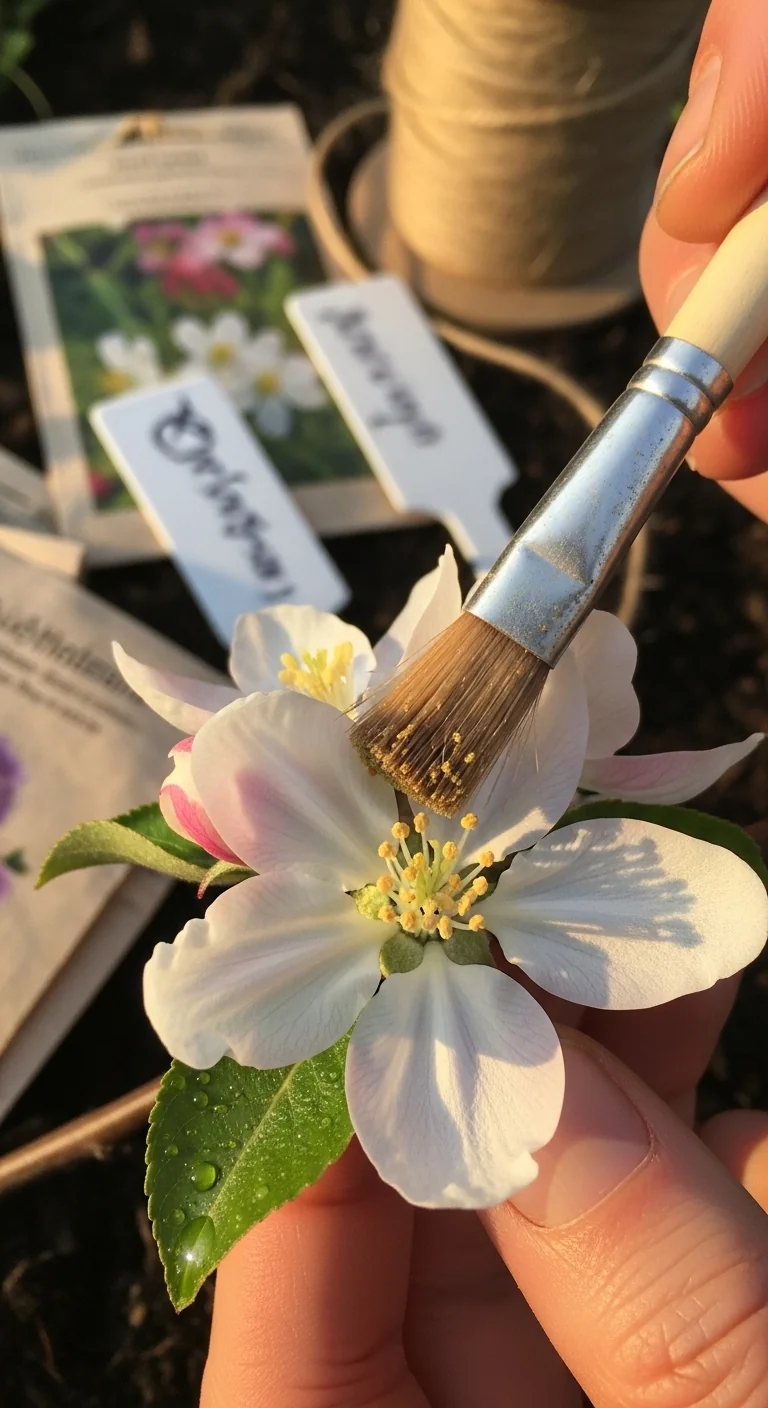
Threshold rule: Switch to hand pollination when temperatures stay below 55 degrees F during bloom or fewer than three bees visit per tree per minute. Collect pollen from donor flowers using a soft brush. Transfer directly to the stigma of open blossoms on the target tree. Repeat every two to three days while flowers remain receptive. This method covers isolated trees or poor weather spells.
Pruning to Enhance Flower Set and Pollination
Best for: Branch 1
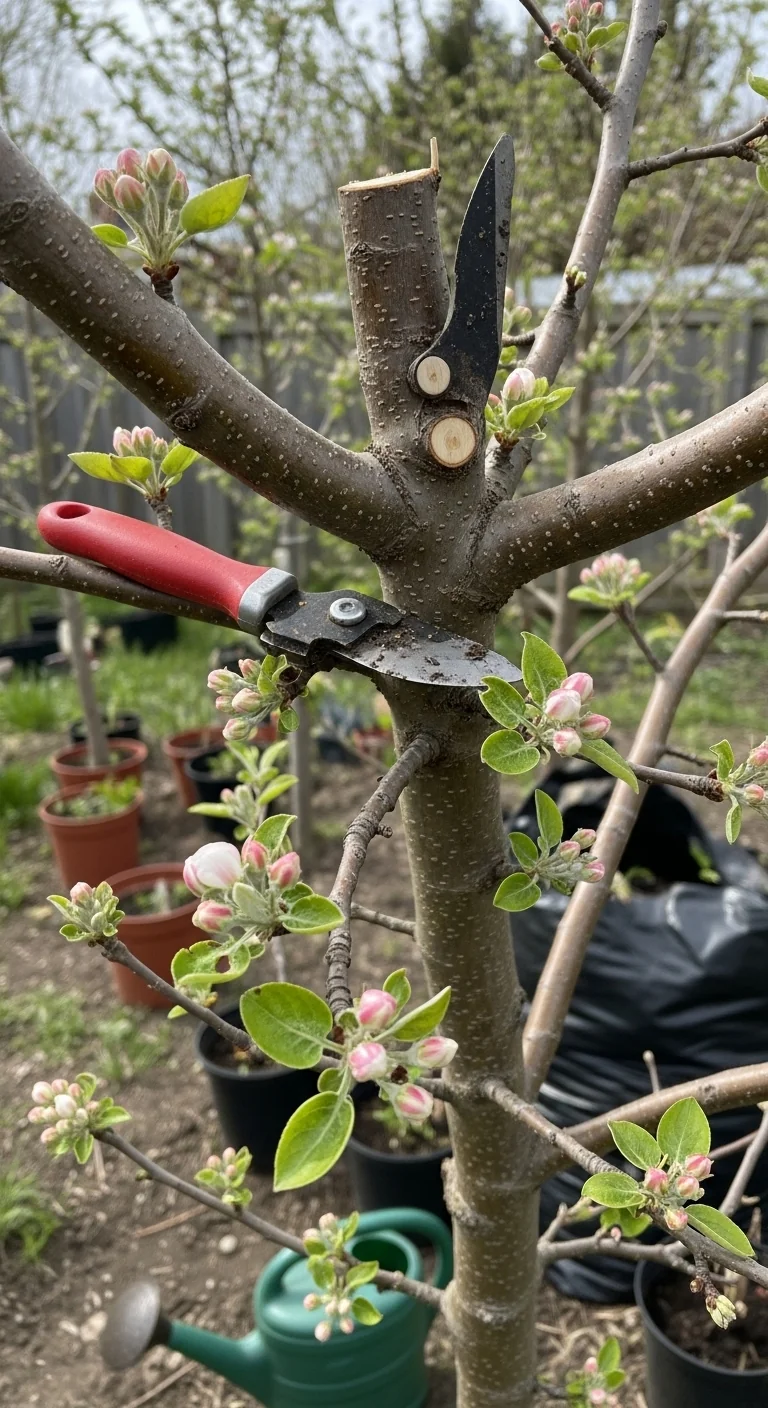
Pruning increases flower buds by opening the canopy and directing energy to spurs. Remove crossing branches and shorten laterals by one third in late winter. Focus cuts on wood two to four years old where most flowers form. Avoid heavy pruning on young trees, which delays bloom. This step pairs directly with cross-pollinizer planting for maximum pollen availability. Full steps appear in our apple pruning guide.
Applying Targeted Fertilizing for Bloom Health
Best for: Branch 2
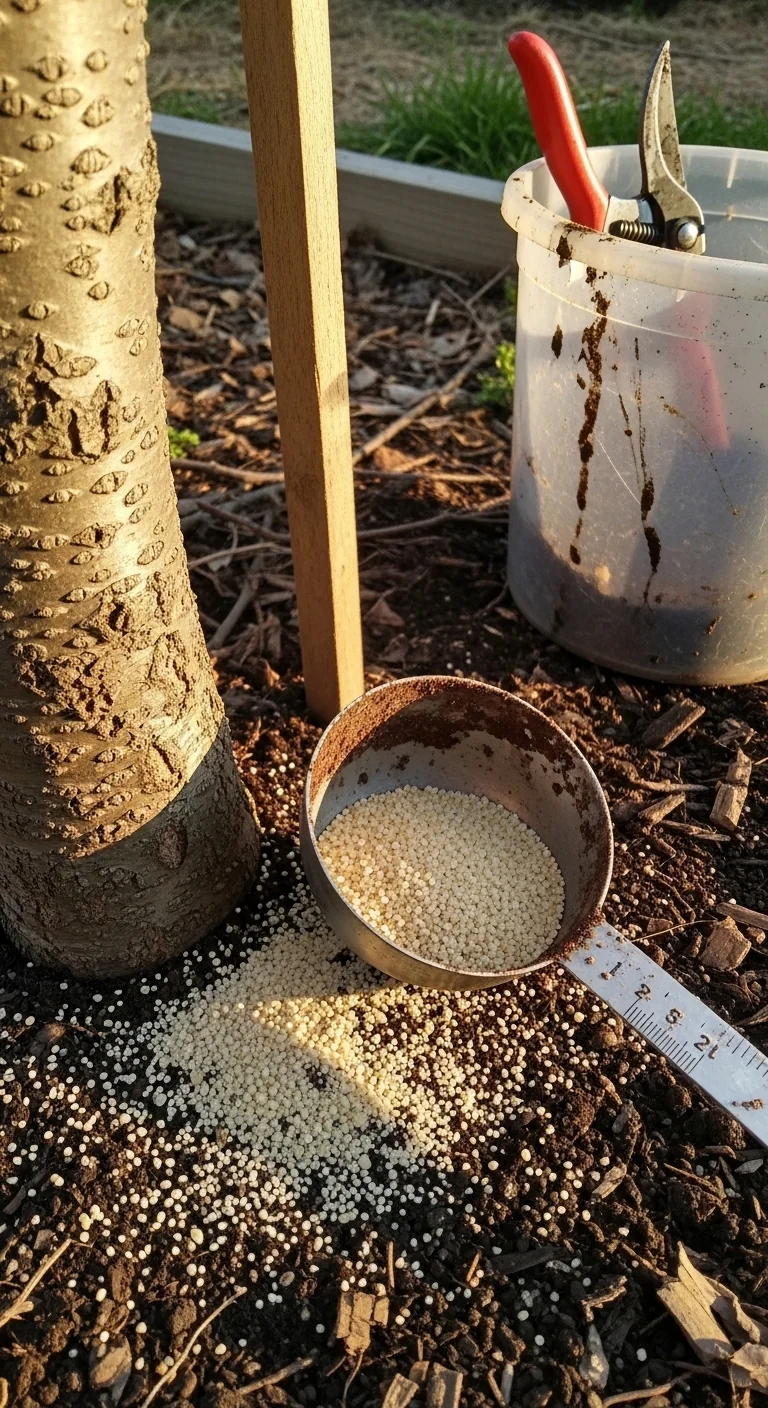
Use vs skip: Apply balanced fruit tree fertilizer in early spring before bud break when soil tests show low nitrogen or potassium. Skip summer applications that push leaf growth over flowers. Edge case: container trees that deplete nutrients faster and need half-rate feeding every six weeks during active growth.
Avoiding Pesticide Interference During Bloom
Best for: Branch 3
Threshold rule: Halt all insecticide sprays from tight cluster stage through petal fall when bees forage most actively. This preserves honeybees and mason bees that move pollen between flowers. Monitor weather forecasts and delay any necessary dormant sprays until after bloom ends. The practice protects natural pollinators without extra equipment.
Starter Stack (What to Choose First)
For Branch 1 (ample space)
Start with Items 1 and 7. Compatible cross-pollinizers plus targeted pruning create more flowers and reliable pollen transfer. Time investment: 3 to 4 hours total for planning and dormant pruning. Cost range: 40 to 80 dollars for one additional pollinizer tree.
For Branch 2 (limited space)
Start with Items 2 and 4. Partially self-fertile varieties combined with espalier or columnar training deliver fruit in tight footprints. Time investment: 2 hours for initial training plus one spring check. Cost range: 30 to 60 dollars for rootstock and supports.
For Branch 3 (low bee activity)
Start with Items 5 and 6. Bee habitat planting plus hand pollination as backup ensures pollen reaches stigmas even when natural visitors stay low. Time investment: 1 hour for habitat setup plus 30 minutes per tree during bloom. Cost range: 15 to 35 dollars for seed packets and basic brush.
When This Won’t Work
These strategies fail when the tree shows clear signs of nutrient deficiency or disease that reduce flower quality, such as yellow leaves or cankers visible before bloom. In that case, address the underlying issue first through soil correction rather than adding pollinizers.
They also fail on extremely young trees under three years old that have not yet reached flowering age. Wait until the tree produces consistent buds before investing in extra pollinators or training. Shift to our thinning fruit trees guide once initial fruit set begins.
Choosing the Right Option for Your Situation
Budget threshold
Under 50 dollars: select Items 2 or 8 for minimal new purchases. Over 50 dollars: invest in Items 1 or 3 for long-term pollinizer trees.
Time threshold
Less than 2 hours available in spring: choose Items 2 or 9 for one-time decisions. More than 4 hours: add Items 4 or 7 for training or pruning work.
Technical constraint: triploid varieties present
If your main tree is a known triploid, always pair it with two diploid pollinizers and skip solo self-fertile options.
Yes/No checklist:
Do you have space within 50 feet for an extra tree? Yes: start Branch 1.
Is your planting a single container or narrow bed? Yes: start Branch 2.
Do bees visit fewer than three times per minute in bloom? Yes: add Branch 3 backups.
Ready to act this season? Yes: pick your two starter items now.
Expert Q&A
What bloom overlap matters most for apples in cooler UK or Canadian zones?
Bloom groups 3 and 4 cover the majority of mid-season varieties common in those climates. Early group 1 or 2 trees often finish flowering before later ones open, so match within one group to guarantee overlap even when cool springs delay development by up to two weeks.
Can crabapples serve as the only pollinizer for a home orchard?
Yes in most cases. Their extended bloom and high pollen output make them reliable stand-ins, especially when main varieties span multiple bloom windows. One well-placed crabapple can support up to five standard apples within 100 feet.
How close must columnar or espalier trees sit to achieve good pollination?
Six to eight feet works well for dwarf forms because bees travel short distances between flowers on the same structure. Tighter spacing than standard trees still allows full cross-pollination without sacrificing fruit size.
Does soil pH affect pollination success indirectly?
Yes through flower and pollen quality. Trees in soil outside the 6.0 to 7.0 range produce fewer or weaker blooms, reducing the window for successful pollen transfer even when compatible varieties are present.
When should you switch from habitat building to hand pollination?
Switch if you count fewer than three bee visits per tree during the first three days of full bloom. Habitat improvements take one full season to show results, while hand pollination provides immediate results in the current year.
Conclusion
The right apple tree pollination approach combines your space assessment with one or two targeted items from the matching branch. The most common mistake is assuming any two apple trees will work together without checking bloom groups or triploid status.
Next step: measure your available spacing today and pick the two starter items from your branch using the comparison table. For analogous planning on related stone fruit, see our plum pollination chart.