
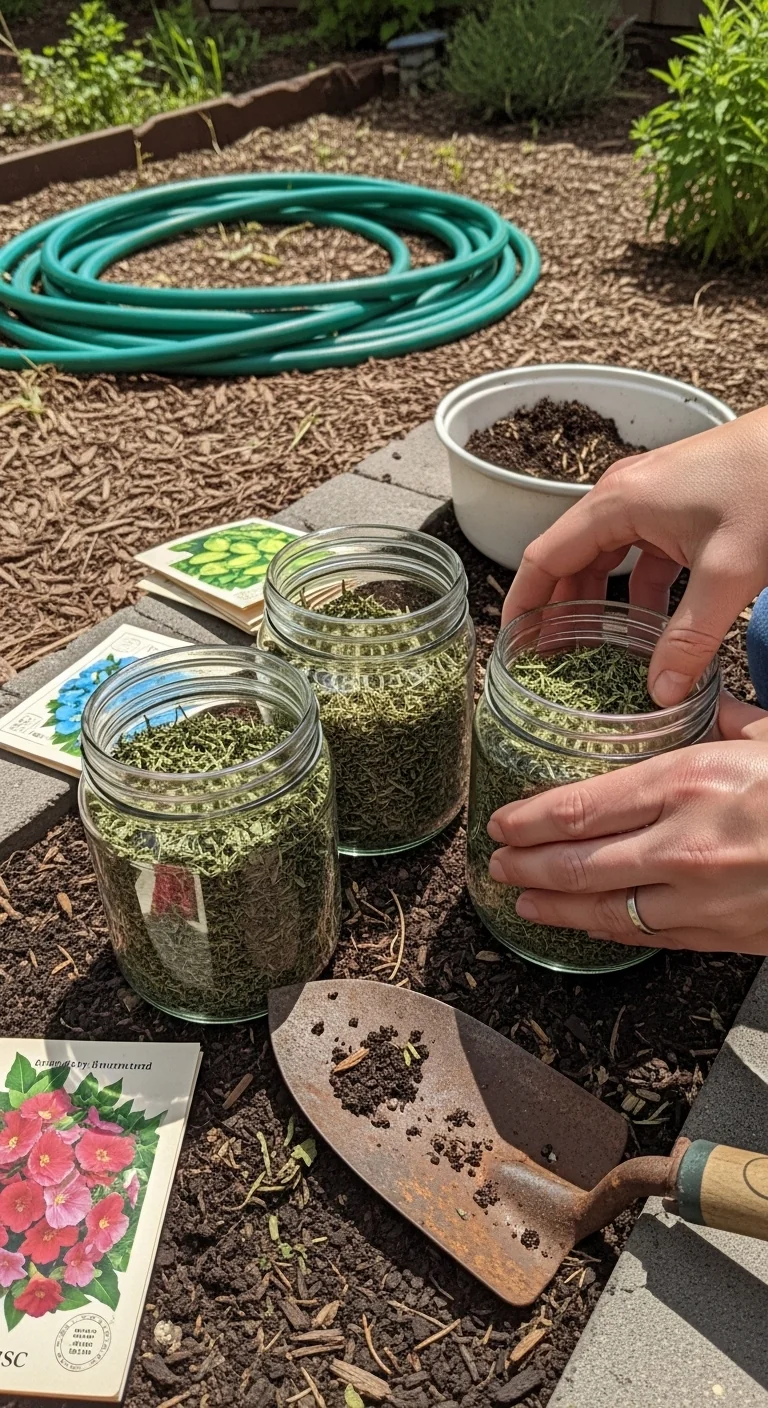
Storing dried herbs succeeds when you match the container and placement to your exact kitchen habits and storage conditions instead of defaulting to one universal jar. The Yield Grid reframes the entire process around three measurable branches that account for access frequency, harvest volume, and environmental factors.
This guide covers container choices, placement rules, herb-type adjustments, and workflow systems. It excludes drying techniques themselves (covered in our dedicated guides) and fresh herb preservation methods.
You will walk away knowing which system fits your setup so you can avoid repeated air exposure, heat fluctuations, and light damage while keeping your home-grown herbs usable longer.
Identify your branch first, then select the matching storage items to preserve aroma and color through daily use or seasonal reserves.
The Yield Grid Decision Grid
Branch 1: Frequent access kitchens. Herbs get pulled for cooking three or more times weekly. Conditions include high daily turnover and repeated container openings. Recommended: Items 2, 4, and 9 below. Start with optimal harvesting herbs at peak essential oil levels to set up strong initial quality.
Branch 2: Bulk seasonal storage. Large harvests fill multiple jars and see infrequent use over months. Conditions include dedicated pantry space and minimal openings. Recommended: Items 1, 3, and 8 below.
Branch 3: Constrained or variable conditions. Limited cabinet space, warmer kitchens, or fluctuating humidity near sinks or windows. Conditions include small apartments or coastal climates. Recommended: Items 5, 6, and 7 below.
Quick Comparison Table
| Option | Key mechanism | Best for | Decision Grid Branch | Effort Score |
|---|---|---|---|---|
| Whole-Leaf Storage in Airtight Glass Jars | Minimizes oxygen volume with full jars and sealed lids | Bulk reserves | Branch 2 | 1 |
| Metal Tins for Daily Quick Access | Quick open-close cycle with light-blocking metal | Daily cooks | Branch 1 | 3 |
| Vacuum-Sealed Pouches for Reserves | Removes air entirely before sealing | Long-term bulk | Branch 2 | 2 |
| The Two-Jar Refill System | Bulk sealed jar plus small kitchen jar | Frequent access | Branch 1 | 3 |
| Amber or Opaque Containers for Light Protection | Blocks all light wavelengths | Variable light exposure | Branch 3 | 2 |
| Adjustments for Tender-Leaf Herbs vs Woody Types | Tailors headspace and crush level by herb family | Herb-specific needs | Branch 3 | 4 |
| Optimal Pantry Placement to Avoid Heat and Moisture | Distance rules from stoves and sinks | Warm or humid kitchens | Branch 3 | 2 |
| Seed Storage vs Leaf Storage Differentiation | Separate chaff removal and crush rules | Mixed harvests | Branch 2 | 1 |
| Date Labeling and Stock Rotation System | Harvest-date labels plus first-in-first-out rotation | All users | Branch 1 | 2 |
Whole-Leaf Storage in Airtight Glass Jars
Best for: Branch 2
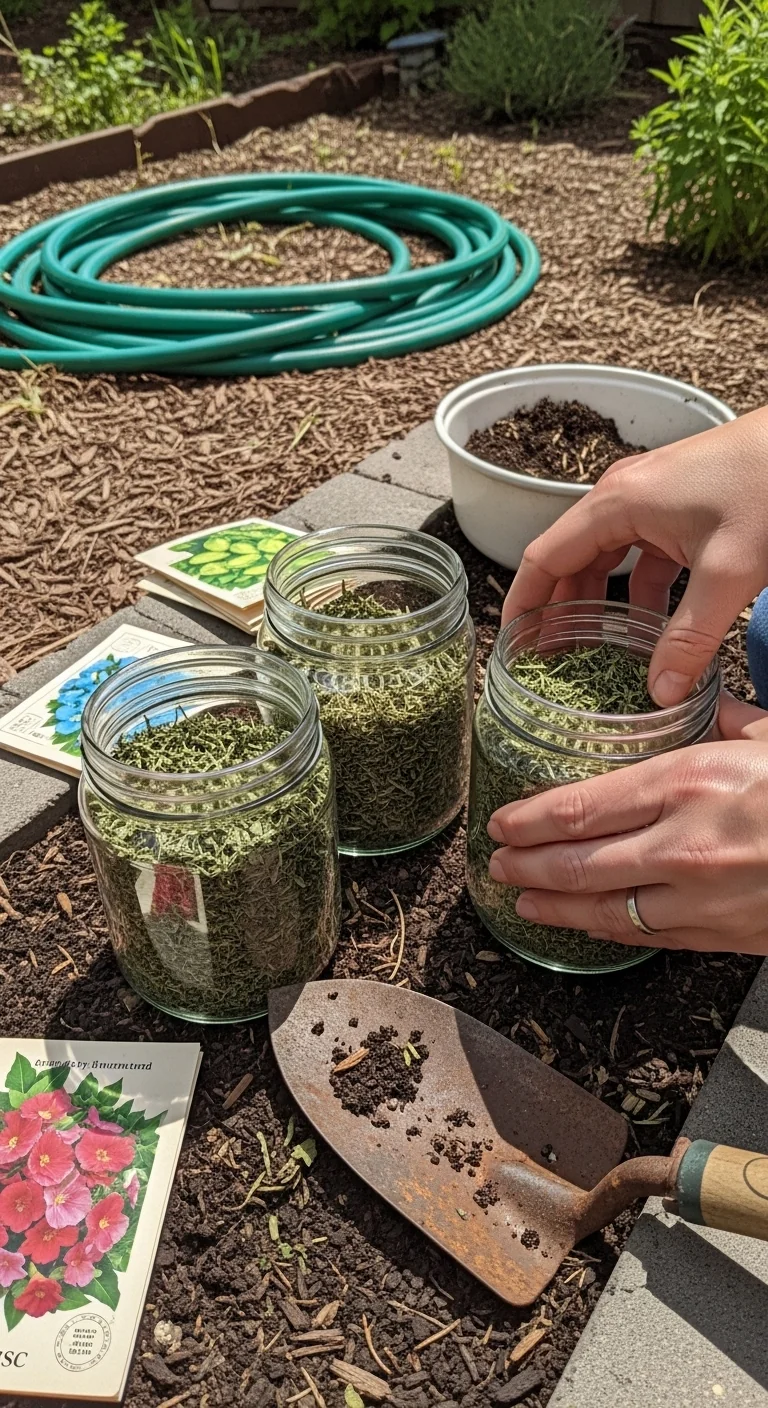
Whole-leaf storage in airtight glass jars protects essential oils by limiting exposed surface area to oxygen. This blueprint works after completing drying herbs at home until leaves snap cleanly between fingers.
For: Large harvests destined for pantry reserves. Steps: Select jars sized so herbs fill at least three-quarters of the volume to minimize headspace. Transfer whole leaves without crushing. Seal lids tightly. Label with herb name and harvest date. Store in a cupboard. Common mistake: overfilling one jar then repeatedly opening it for small amounts, which introduces air each time.
Edge case: If your harvest exceeds jar capacity, split across multiple jars rather than packing tightly and risking crushing.
Metal Tins for Daily Quick Access
Best for: Branch 1
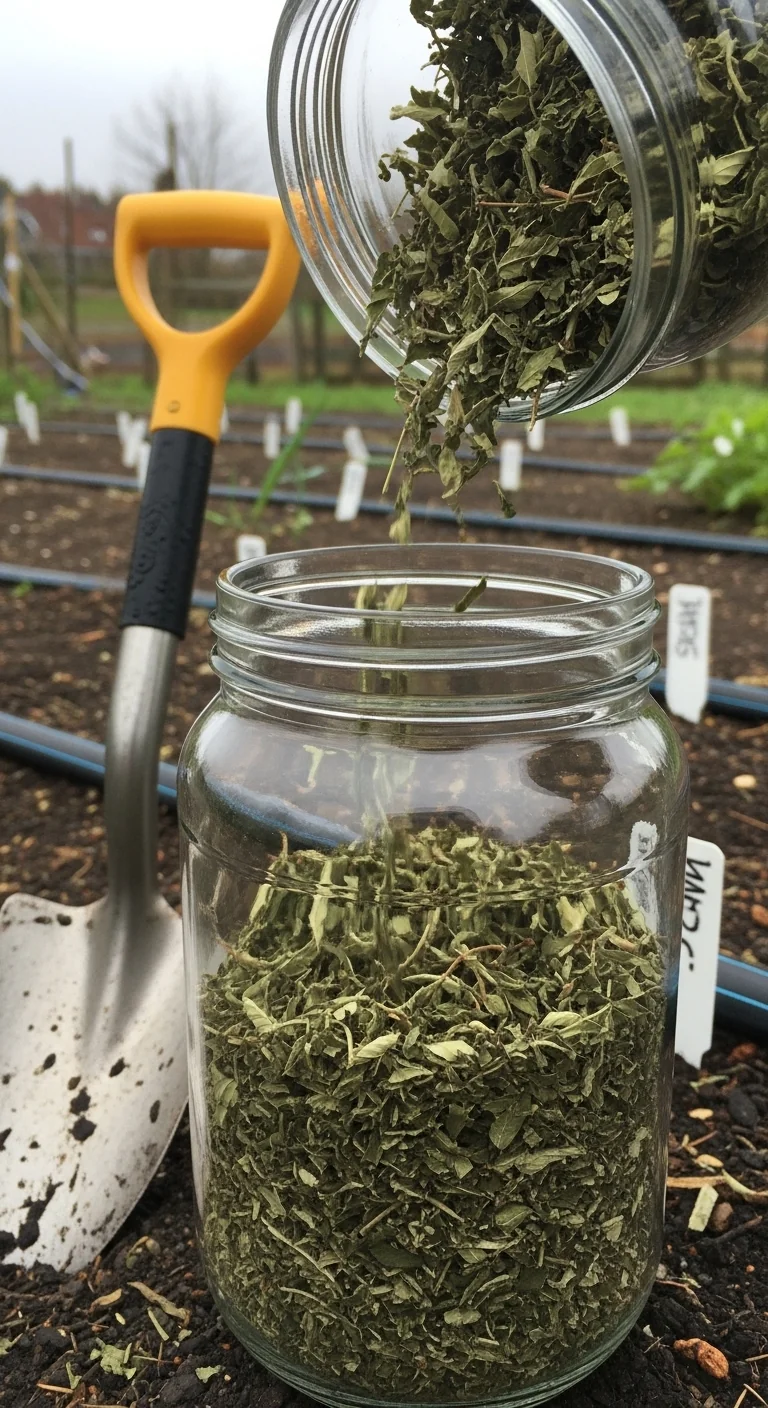
Use metal tins when your kitchen sees constant herb pulls. Skip them only if your space has high humidity that could cause internal condensation on metal surfaces. Pros include fast open-close action and natural light blocking. Cons appear in very warm kitchens where tins near appliances heat up faster than glass.
Edge case: In apartments with no pantry, a single small tin on a cool shelf works better than frequent jar openings that accelerate flavor fade.
Vacuum-Sealed Pouches for Reserves
Best for: Branch 2
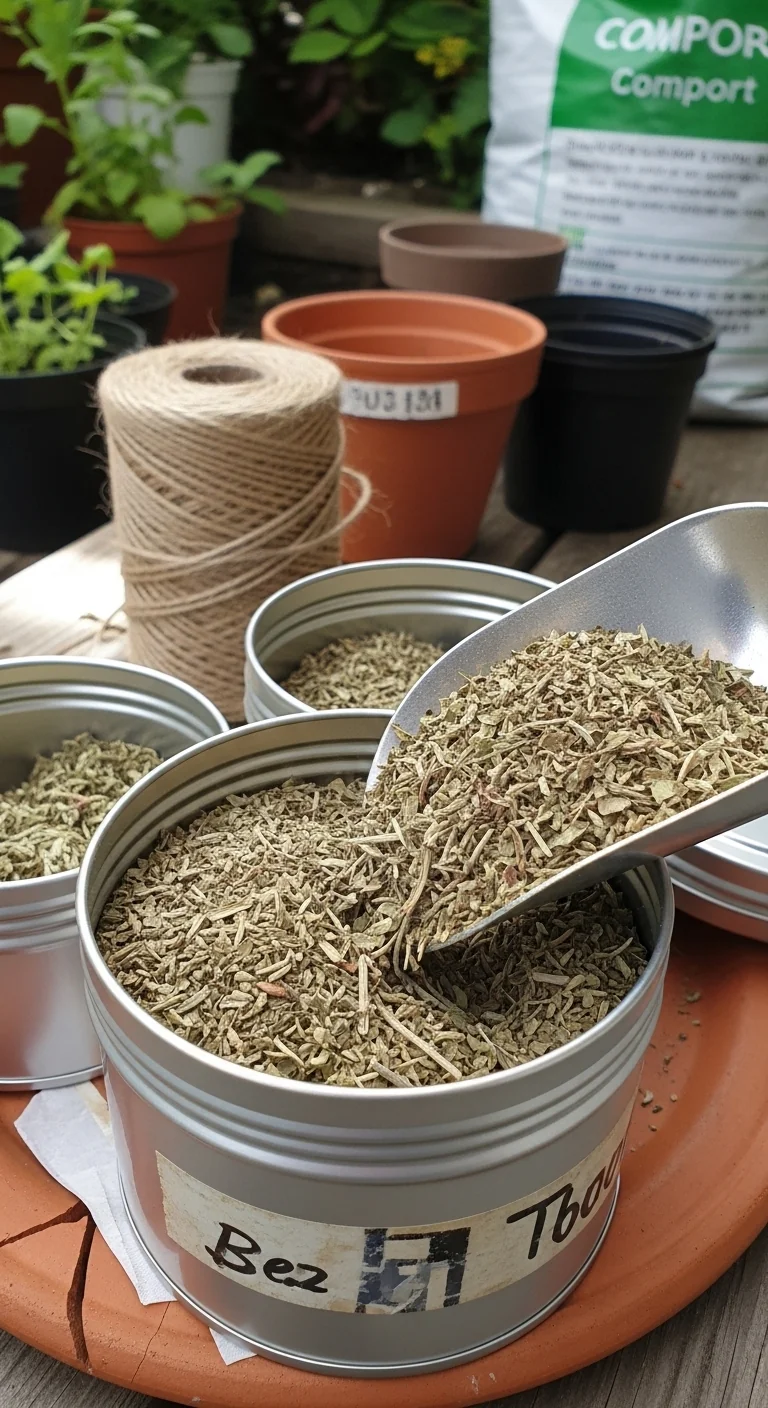
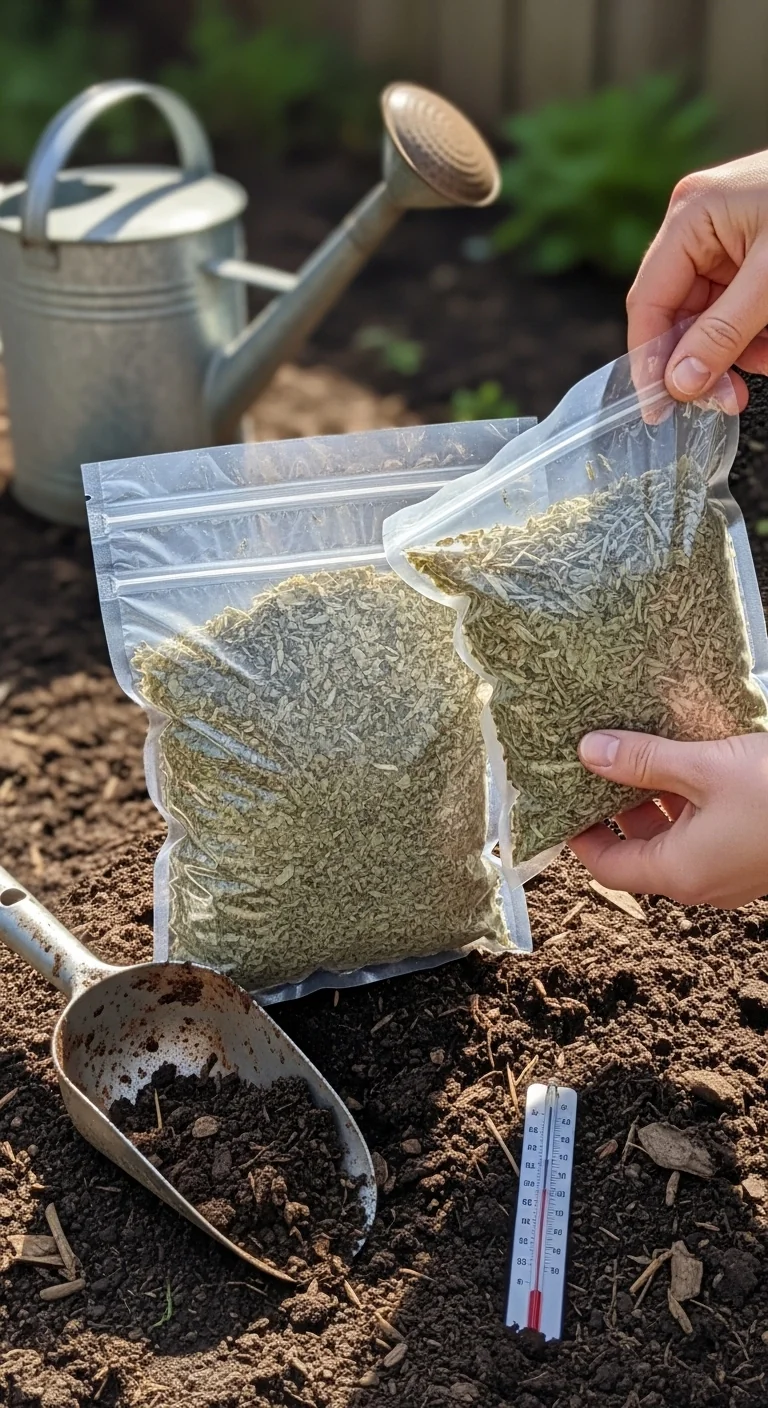
Vacuum-sealed pouches suit bulk reserves when harvest volume exceeds weekly needs. Threshold rule: Apply vacuum only after herbs reach full crispness and if your storage area stays consistently cool and dry. Adjust by using food-grade pouches sized to exact batch volume so no excess air remains after sealing.
Pair with glass jar transfer for daily use. This keeps the bulk reserve untouched for months while daily portions stay fresh in smaller containers. Works especially well after drying herbs in an air fryer because the low-heat process yields extra brittle leaves that seal cleanly.
The Two-Jar Refill System
Best for: Branch 1
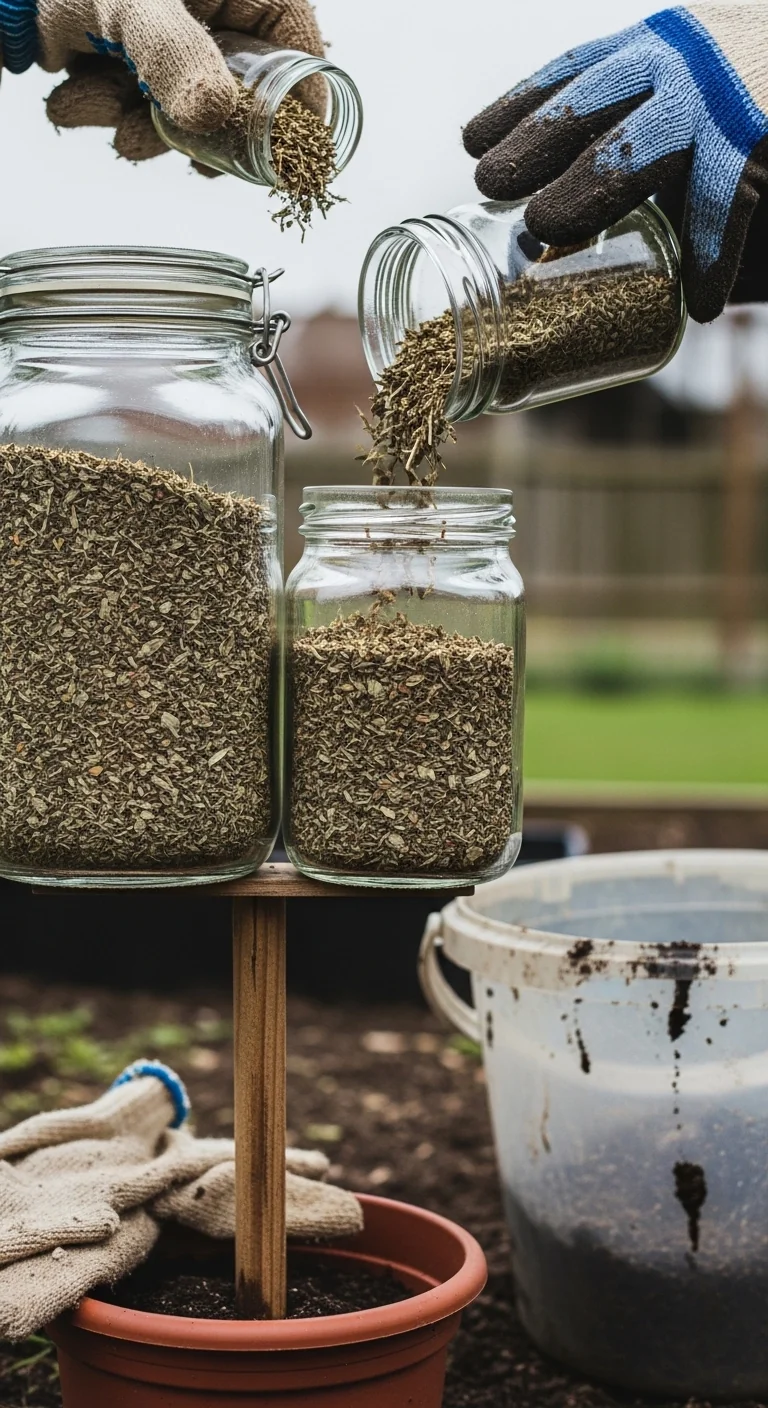
The two-jar refill system separates bulk storage from daily access to limit air exposure in the jar you open most. This 10-minute workflow fits frequent cooks. Steps: Store the full harvest in one large airtight jar in the pantry. Transfer a two-week supply to a small jar kept in the kitchen. When the small jar empties, refill from the bulk jar in under 10 minutes. Upgrade option: Add a small funnel for mess-free transfer.
Synergy appears when combined with freezing fresh herbs for peak-season overflow so dried reserves last longer overall.
Amber or Opaque Containers for Light Protection
Best for: Branch 3
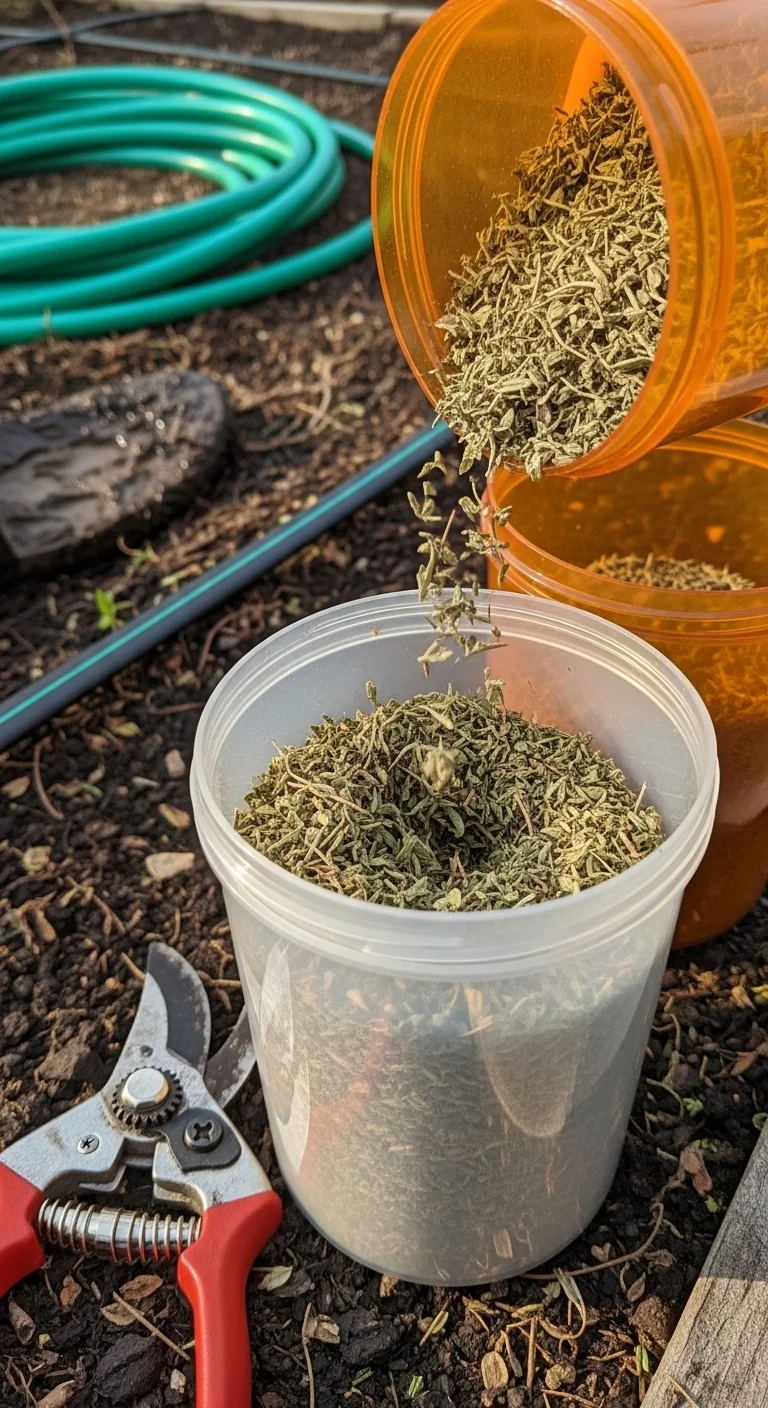
Amber or opaque containers block light wavelengths that degrade color and aroma. Use versus skip: Choose them in kitchens with windows or glass-front cabinets. Skip clear glass only if your cupboard stays completely dark year-round.
Edge case: In bright open shelving, opaque containers prevent the gradual fade seen with clear jars even when placed away from direct sun.
Adjustments for Tender-Leaf Herbs vs Woody Types
Best for: Branch 3
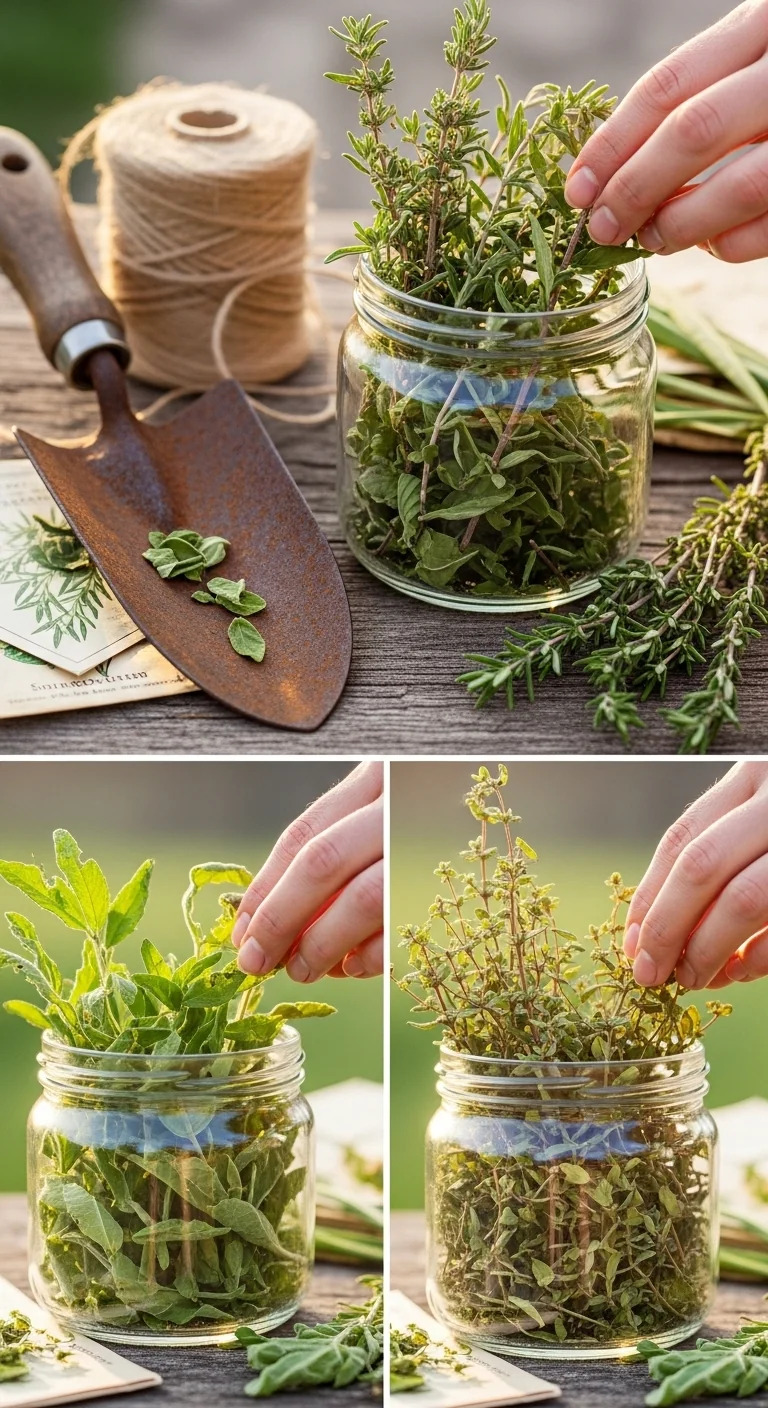
Tender-leaf herbs such as basil, mint, and oregano lose volatiles faster than woody types like rosemary or thyme. Threshold rule: For tender leaves keep headspace under one-quarter of jar volume and avoid any crushing before storage. For woody stems allow slightly larger jars and store stems intact until use. Adjust based on your annual versus perennial herbs mix because perennials often fall into the woody category and tolerate minor air exposure better.
Optimal Pantry Placement to Avoid Heat and Moisture
Best for: Branch 3
Optimal pantry placement keeps dried herbs away from stoves, sinks, and windows. This blueprint delivers results in warmer or humid kitchens. Steps: Measure 3 feet minimum distance from any heat source or water area. Place jars on middle or upper shelves where air circulates but light stays blocked. Check placement once per season. Common mistake: Storing on countertops near cooking zones where temperature swings introduce condensation risk.
Result: Stable cool and dry conditions that match extension service guidelines for cupboards and drawers.
Seed Storage vs Leaf Storage Differentiation
Best for: Branch 2
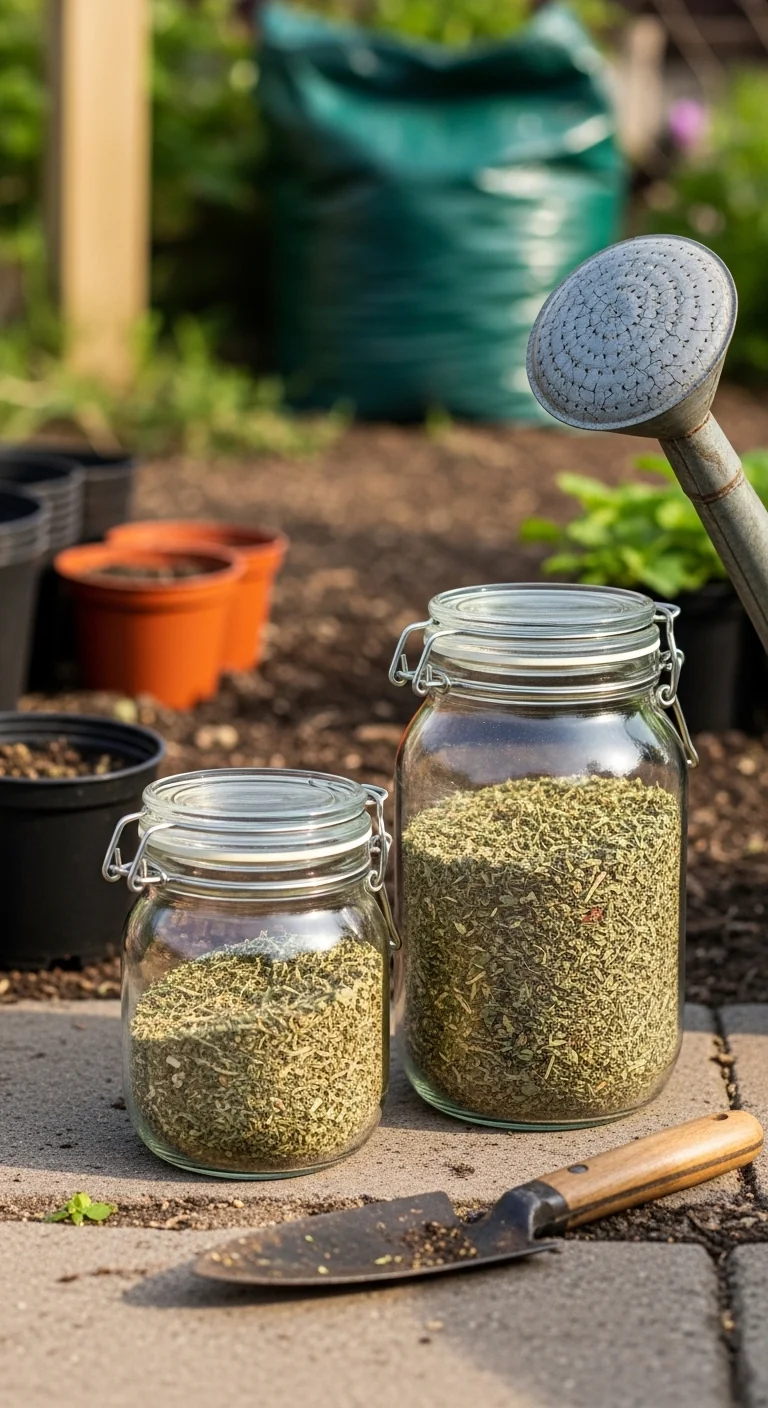
Use separate rules for seeds versus leaves after harvest. Store seeds after rubbing off husks and blowing away chaff then sealing in airtight containers. Leaves stay whole without crushing. Skip mixing seeds and leaves in one container because seeds release different oils that can transfer flavors.
Edge case: Bulk coriander or dill seed harvests store longest when kept fully separate from leafy reserves.
Date Labeling and Stock Rotation System
Best for: Branch 1
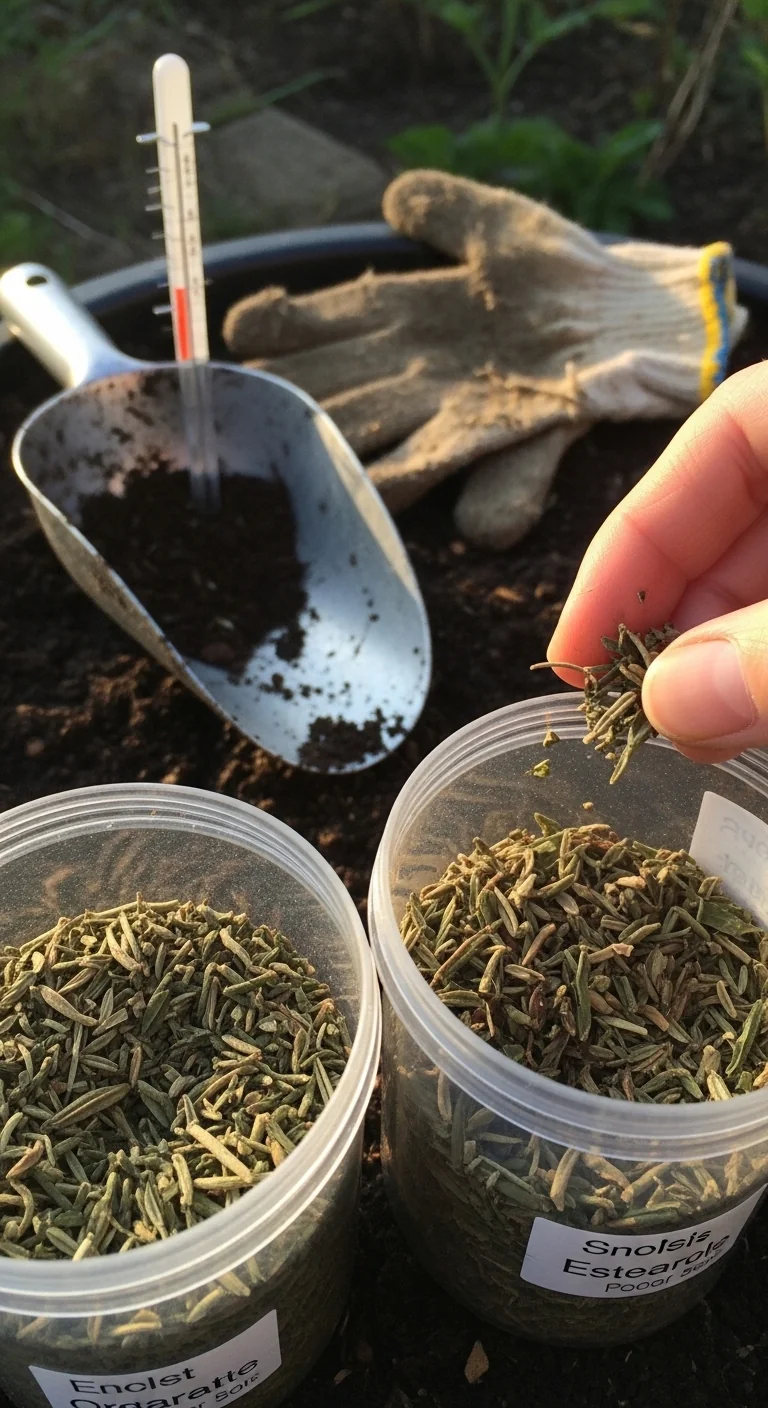
Date labeling and stock rotation keeps your most recent harvest in front. Threshold rule: Label every jar with harvest month and year then rotate so oldest stock moves to daily use first. Adjust by checking labels every three months during heavy cooking seasons to prevent any jar from sitting unused beyond its prime window.
This system integrates across all container types and prevents flavor fade from forgotten back-shelf jars.
Starter Stack (What to Choose First)
For Branch 1 (Frequent Access Kitchens)
Start with the two-jar refill system plus metal tins. Synergy: The bulk jar stays sealed while the kitchen tin handles daily pulls and the refill step takes under 10 minutes every two weeks. Estimated setup cost under $15 and time under 20 minutes total.
For Branch 2 (Bulk Seasonal Storage)
Start with whole-leaf glass jars plus vacuum-sealed pouches. Synergy: Glass handles primary storage while vacuum pouches create backup reserves that stay untouched until needed. Estimated setup cost $10 to $25 and time under 30 minutes once herbs are dry.
For Branch 3 (Constrained or Variable Conditions)
Start with amber containers plus optimal pantry placement rules. Synergy: Opaque jars block light while measured cupboard distance controls heat and moisture. Reference our perennial herbs list to prioritize woody types that tolerate variable conditions better. Estimated setup cost under $12 and time under 15 minutes.
When This Won’t Work
Storage systems fail when herbs enter jars before reaching full crispness or when placement exposes them to repeated heat fluctuations near stoves. In both cases leaves soften and lose aroma within weeks instead of months.
Another measurable failure occurs if repeated openings happen in humid kitchens without the two-jar system. Condensation risk rises and mold potential increases even in airtight containers.
Alternative action: Re-dry any soft herbs immediately using your chosen method then switch to smaller daily portions or vacuum reserves to limit future exposure.
Choosing the Right Option for Your Situation
Budget Threshold
If your total container budget stays under $20, begin with basic glass jars and metal tins. Above $25 opens vacuum sealers and amber sets for longer reserves.
Time Threshold
If you have under 10 minutes weekly for maintenance, select set-and-forget options like whole-leaf jars or vacuum pouches. Above 15 minutes weekly allows the two-jar system and monthly rotation checks.
Technical Constraint (Herb Family Mix)
If your garden grows mostly tender-leaf herbs, prioritize minimal-headspace glass or amber jars. Woody or seed-heavy mixes tolerate metal tins and larger containers with less adjustment.
Yes/No checklist:
Do you open containers multiple times weekly? Yes → Branch 1
Does your harvest fill multiple jars? Yes → Branch 2
Is your kitchen warm or space-limited? Yes → Branch 3
Match your answers to the grid above before buying supplies.
Expert Q&A
Do culinary herbs and tea herbs store under the same rules?
Tea herbs such as chamomile or lemon balm follow the same airtight cool dark guidelines but benefit from extra care against crushing because infusions release flavor from whole flowers or leaves. Keep them in dedicated smaller jars to avoid cross-contamination with stronger culinary blends.
Should I store herb blends together or keep singles separate?
Keep singles separate until ready to blend. Pre-mixed blends lose individual potency faster because oils interact and the first-opened herb dominates the jar. Store components whole then mix small batches for immediate use.
How do I confirm stored herbs still hold flavor without tasting every batch?
Rub a small pinch between fingers and check for strong aroma release. Visual cues include bright color retention and no clumping. If aroma stays weak after rubbing, rotate that jar to immediate use and refresh from newer stock.
Does container material beyond glass affect shelf quality?
Food-grade metal and certain plastics work if lids seal completely, but glass remains inert and shows moisture or color changes immediately. Avoid non-food-grade plastics that can absorb or transfer odors over time.
Can growing method influence how long dried herbs stay potent in storage?
Herbs grown in optimal soil and harvested at correct maturity start with higher essential oil content so they retain quality longer regardless of container. Focus first on harvest timing and full drying before choosing any storage system.
Conclusion
The Yield Grid decision grid eliminates guesswork by tying every container choice to your specific access frequency, harvest size, and kitchen conditions. The single biggest mistake remains storing everything in one large jar that gets opened daily, which introduces air and heat far faster than necessary.
Next step: Review your current herb inventory against the grid then build your starter stack. For gardeners expanding their setup, explore best herbs for containers to plan next season’s harvest with storage in mind from the start.