
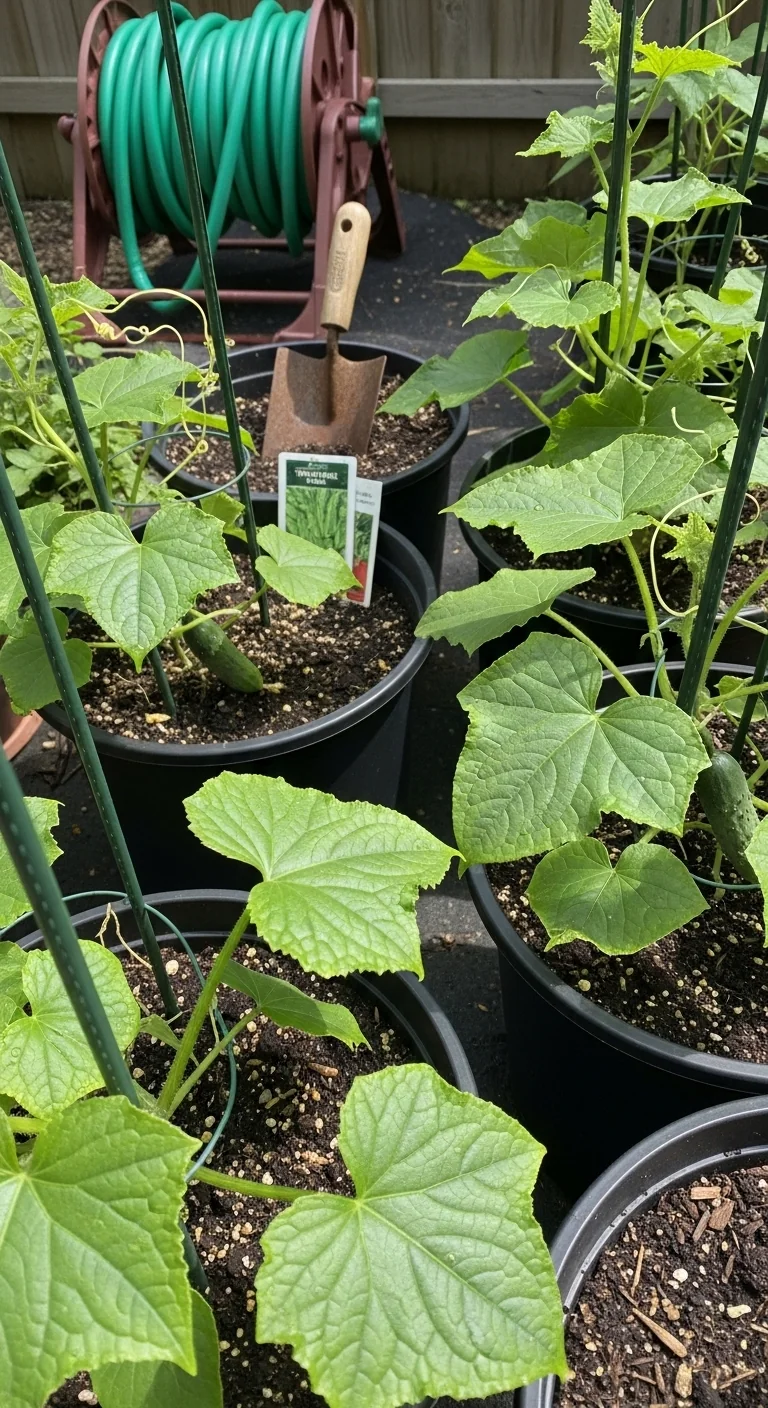
Growing cucumbers in containers succeeds when you match variety type, pot volume, and support method to your exact space footprint and local temperature range. This alignment addresses the root causes of failure that most guides skip, such as insufficient root room in small setups or inconsistent moisture in heat.
This framework covers container selection, variety choice, support integration, soil preparation, watering, fertilization, and harvesting for container-grown cucumbers. It excludes in-ground planting methods and advanced hydroponic systems.
You will gain the ability to evaluate your balcony or deck setup against measurable thresholds such as minimum pot diameter, soil temperature at planting, and daily sun hours, then select the system that fits your constraints for reliable production.
Identify your Decision Grid branch first, then follow the matched items below to build a setup that works within your space and climate.
The Yield Grid Decision Grid
Branch 1 applies if your available floor space measures under 4 square feet per plant and you have 6 to 8 hours of direct sun. Recommended: Items 1, 2, 3, and 5 below.
Branch 2 applies if you have vertical clearance of 6 feet or more for support structures and daytime temperatures stay between 70 and 85 degrees F. Recommended: Items 4 and 8 below.
Branch 3 applies if daytime highs regularly exceed 85 degrees F or watering access is irregular. Recommended: Items 6, 7, and 9 below.
For broader context on scaling these systems, see the container vegetable gardening guide.
Quick Comparison Table
| Option | Key mechanism | Best for | Decision Grid Branch | Effort Score |
|---|---|---|---|---|
| Bush Cucumber Varieties in Compact Pots | Shorter vines limit sprawl to under 3 feet | Balconies with floor space constraints | Branch 1 | 2 |
| Parthenocarpic Cucumber Hybrids | Fruit set without bee pollination | Shaded or low-pollinator areas | Branch 1 | 1 |
| Fabric Grow Bags for Aeration | Breathable sides prevent root circling | Urban patios needing lightweight mobility | Branch 1 | 3 |
| Vertical Trellis Systems for Vining Types | Upward training maximizes airflow | Decks with railing or wall anchors | Branch 2 | 3 |
| Custom Soil Mixes with pH 6.0 to 6.5 | Balanced drainage and nutrient hold | Any setup requiring root health baseline | Branch 1 | 4 |
| Drip Watering Protocols for Moisture Stability | Targeted delivery at soil level | Hot or windy exposures | Branch 3 | 4 |
| Timed Fertilizer Applications Using Organic Blends | Side dressing at 2-week intervals after first flowers | Setups needing steady nutrient supply | Branch 3 | 4 |
| Companion Planting with Flowers in Adjacent Pots | Attracts pollinators and deters pests | Multi-pot groupings on patios | Branch 2 | 2 |
| Threshold-Based Harvesting at 6- to 8-Inch Lengths | Picks before seeds harden | All setups to extend production window | Branch 3 | 1 |
Bush Cucumber Varieties in Compact Pots
Best for: Branch 1
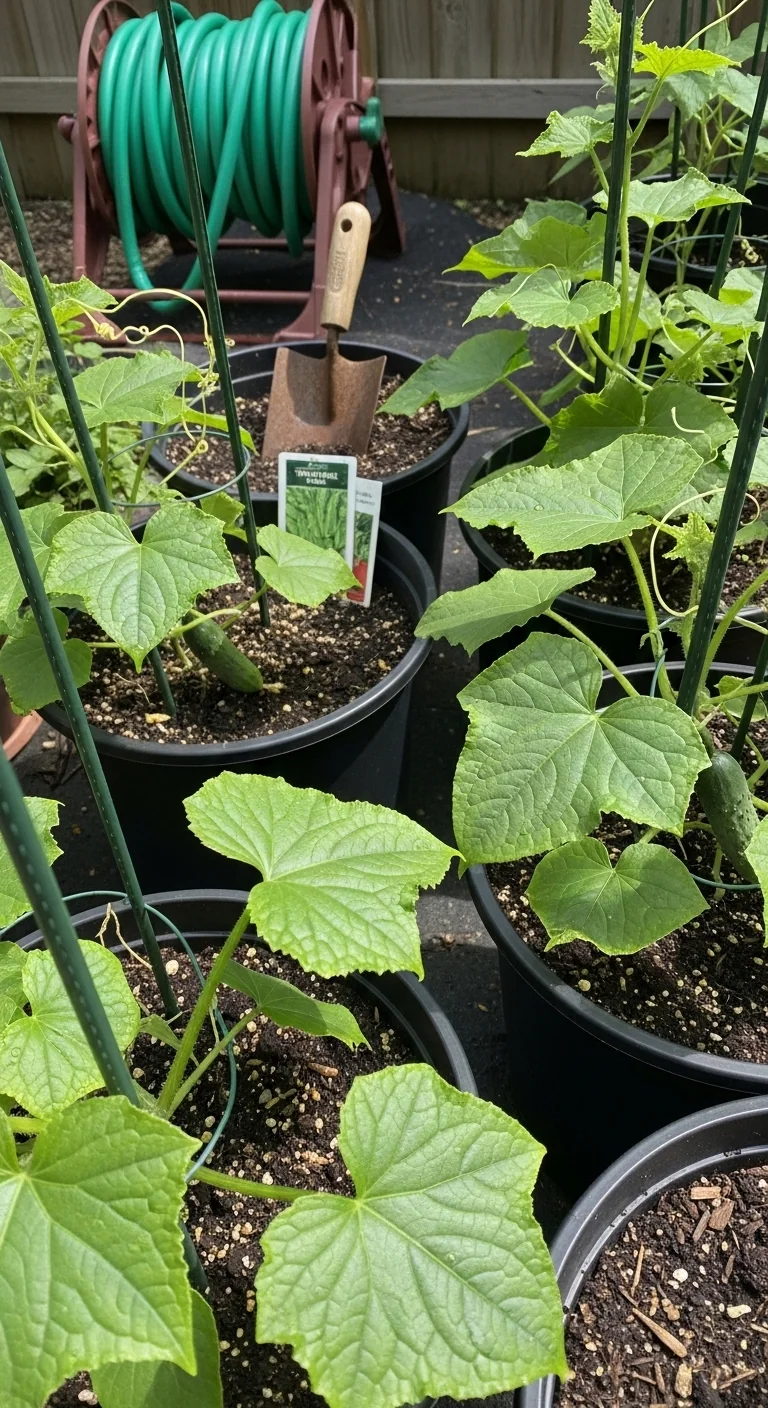
Bush varieties stay under 3 feet wide and fit containers as small as 12 inches in diameter and 10 inches deep. These types produce slicing or pickling fruit on compact plants that require no trellis, making them ideal when floor space is the limiting factor. Plant two seeds per pot and thin to one after true leaves appear. Soil temperature must reach 60 degrees F before direct sowing to ensure germination. Key edge case: in zones with short summers, start seeds indoors 3 to 4 weeks before last frost in peat pots to protect the taproot during transplant. This setup avoids the vine sprawl that turns small patios into obstacles while still delivering full-size fruit. (178 words)
Parthenocarpic Cucumber Hybrids
Best for: Branch 1
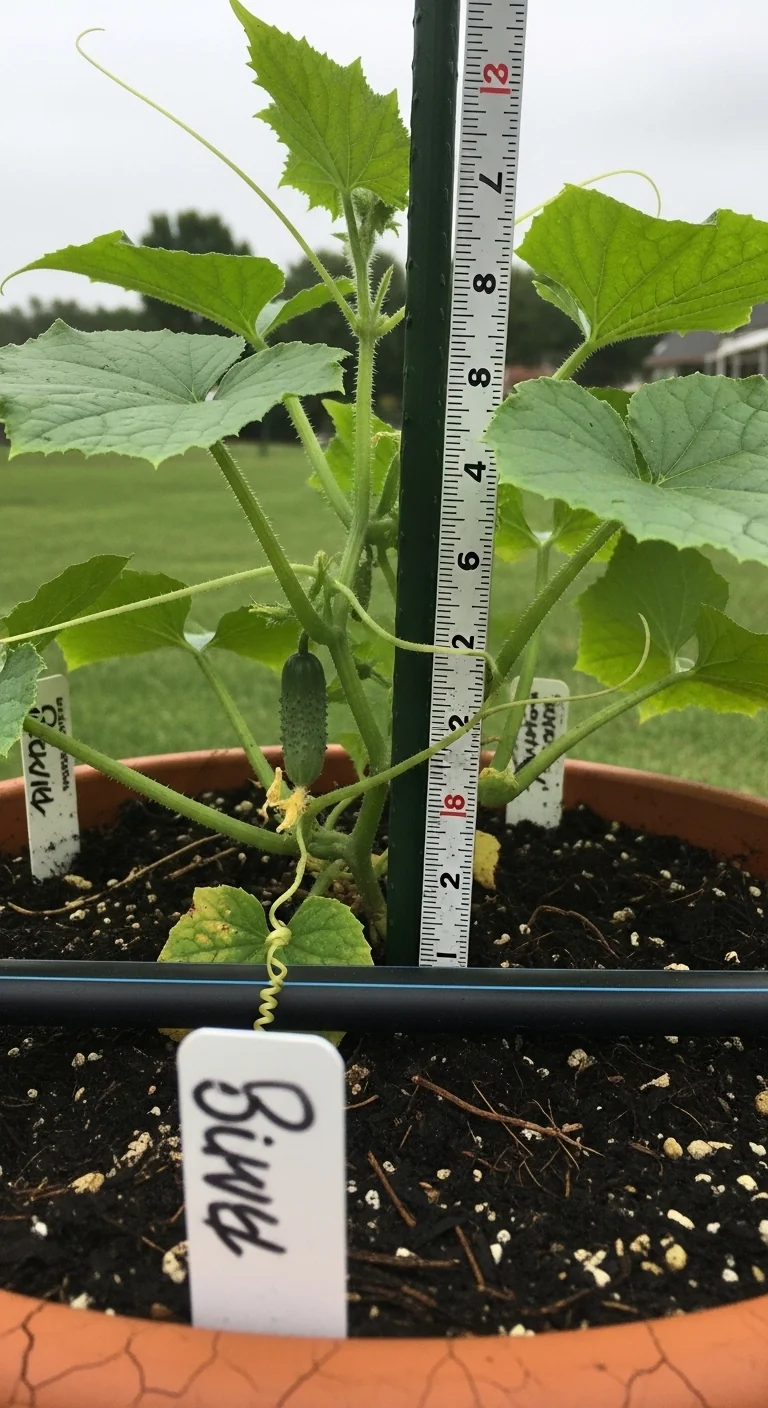
Parthenocarpic hybrids set fruit without pollination, removing dependence on bee activity that often limits container yields on balconies. Varieties such as Diva or Sweet Success perform well in pots because they focus energy on fruit rather than male flowers. Sow directly or transplant at the two-leaf stage. This option suits shaded patios or high-rise setups where pollinators are scarce. (68 words)
Fabric Grow Bags for Aeration
Best for: Branch 1
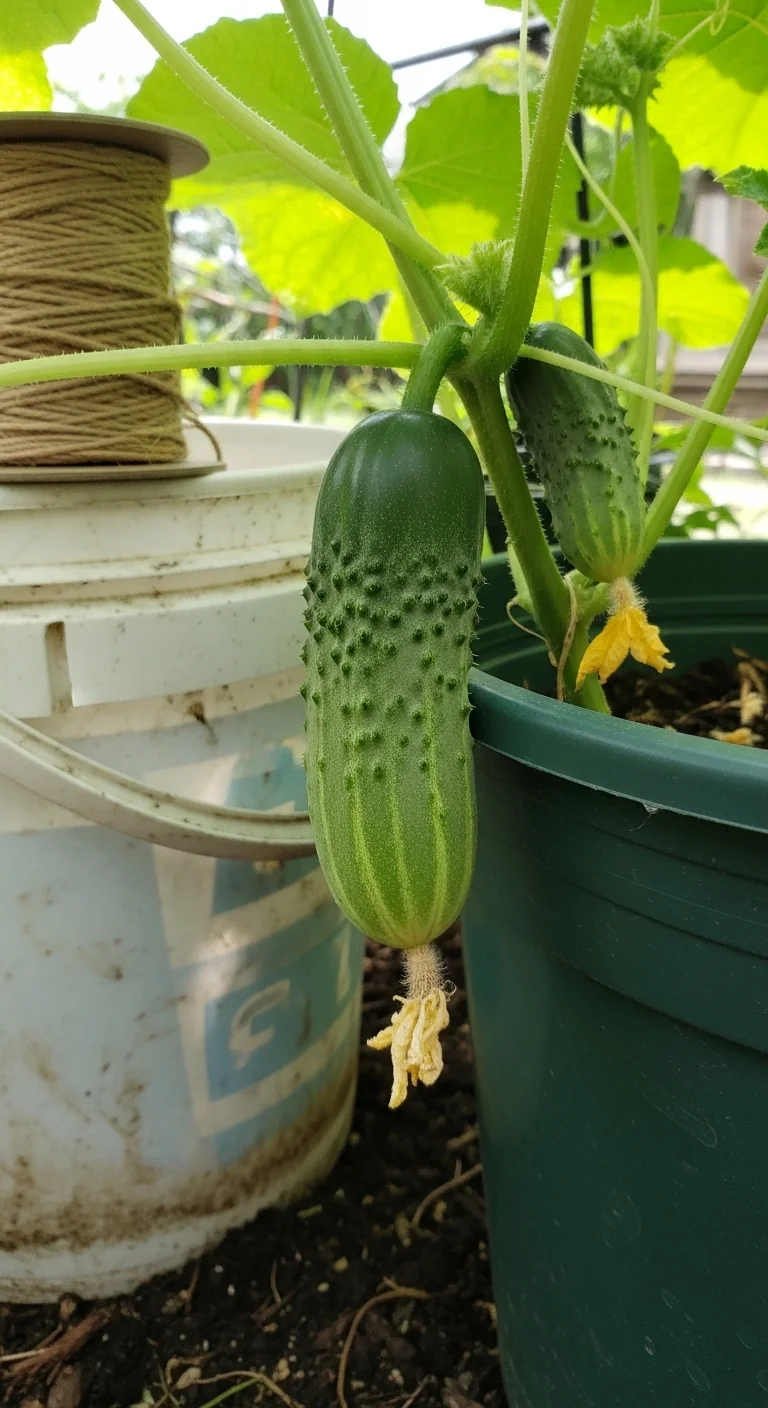
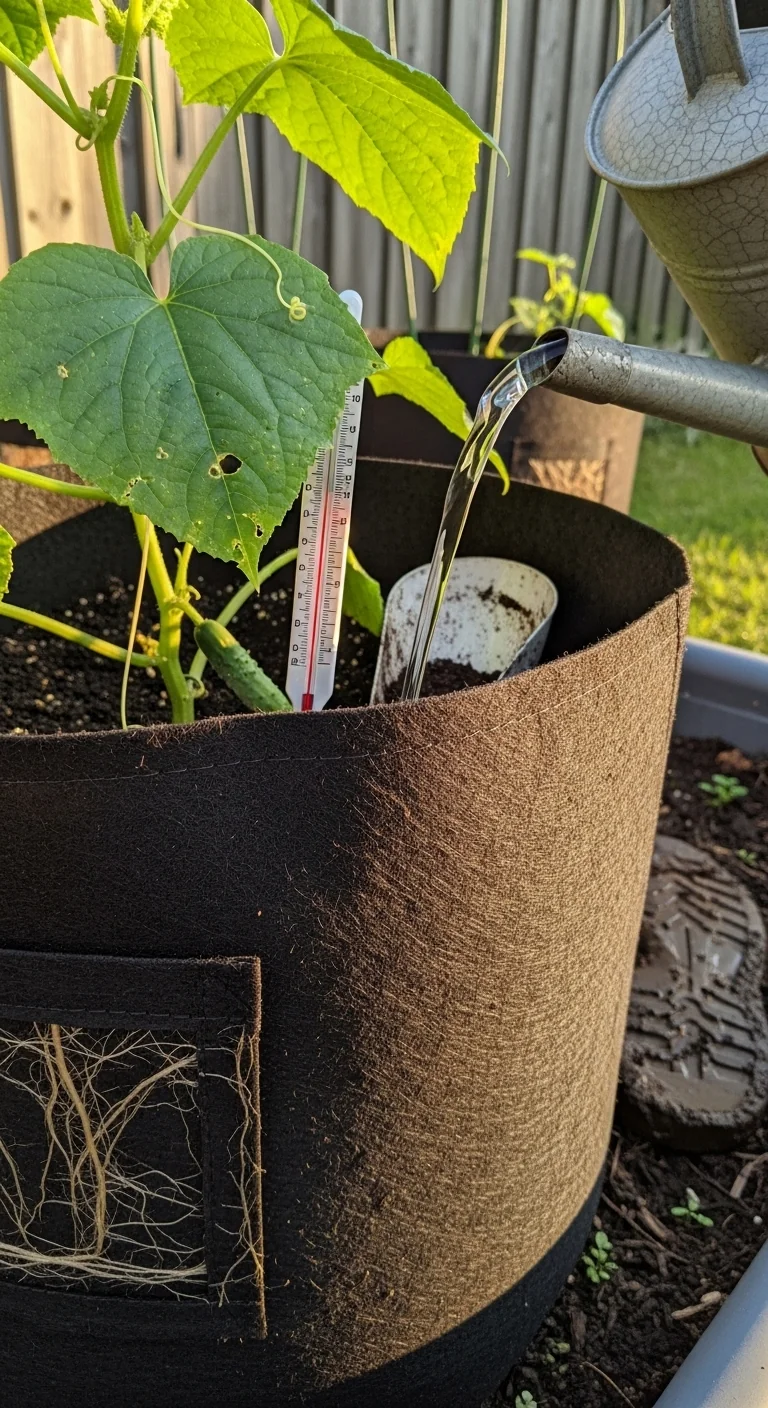
Fabric grow bags in 5- to 7-gallon sizes allow air pruning of roots, which prevents circling and promotes denser feeder roots compared with solid plastic pots. Choose bags at least 12 inches wide for one plant. The porous material also moderates soil temperature swings. Fill with a 1:1:1 blend of compost, coco coir, and perlite. Move bags easily for sun tracking or storm protection. This mechanism gives better drainage than rigid containers without added weight. (112 words)
Vertical Trellis Systems for Vining Types
Best for: Branch 2
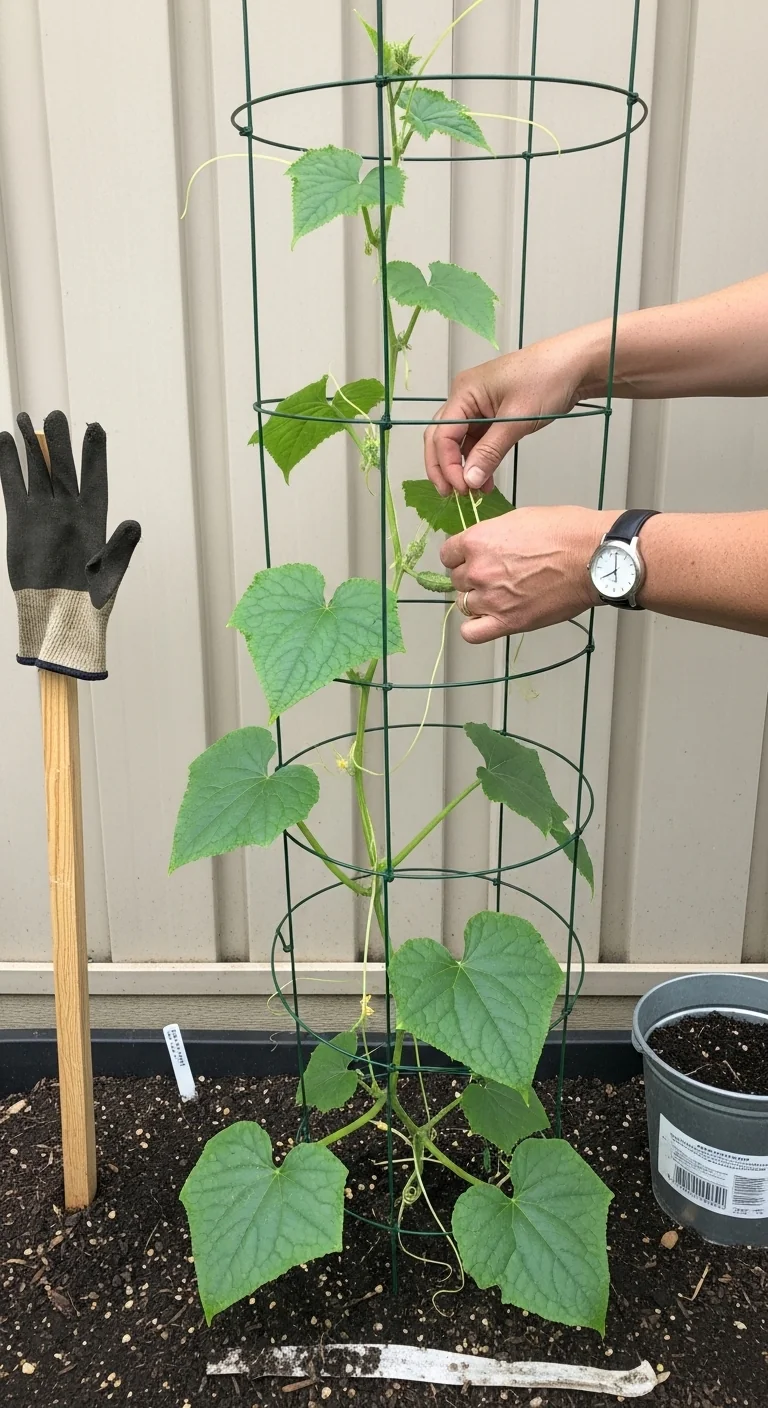
Vining cucumbers trained upward on a trellis use vertical space instead of floor area and improve airflow to reduce disease pressure. Install a 6-foot sturdy support such as bamboo or netting anchored to the container rim or nearby railing. Tie vines loosely every 7 to 10 days as they climb. This method works for standard slicing types once daytime temperatures hold above 70 degrees F. See detailed training steps in the cucumbers on trellis guide. The upward growth also keeps fruit clean and visible for timely harvest. (124 words)
Custom Soil Mixes with pH 6.0 to 6.5
Best for: Branch 1
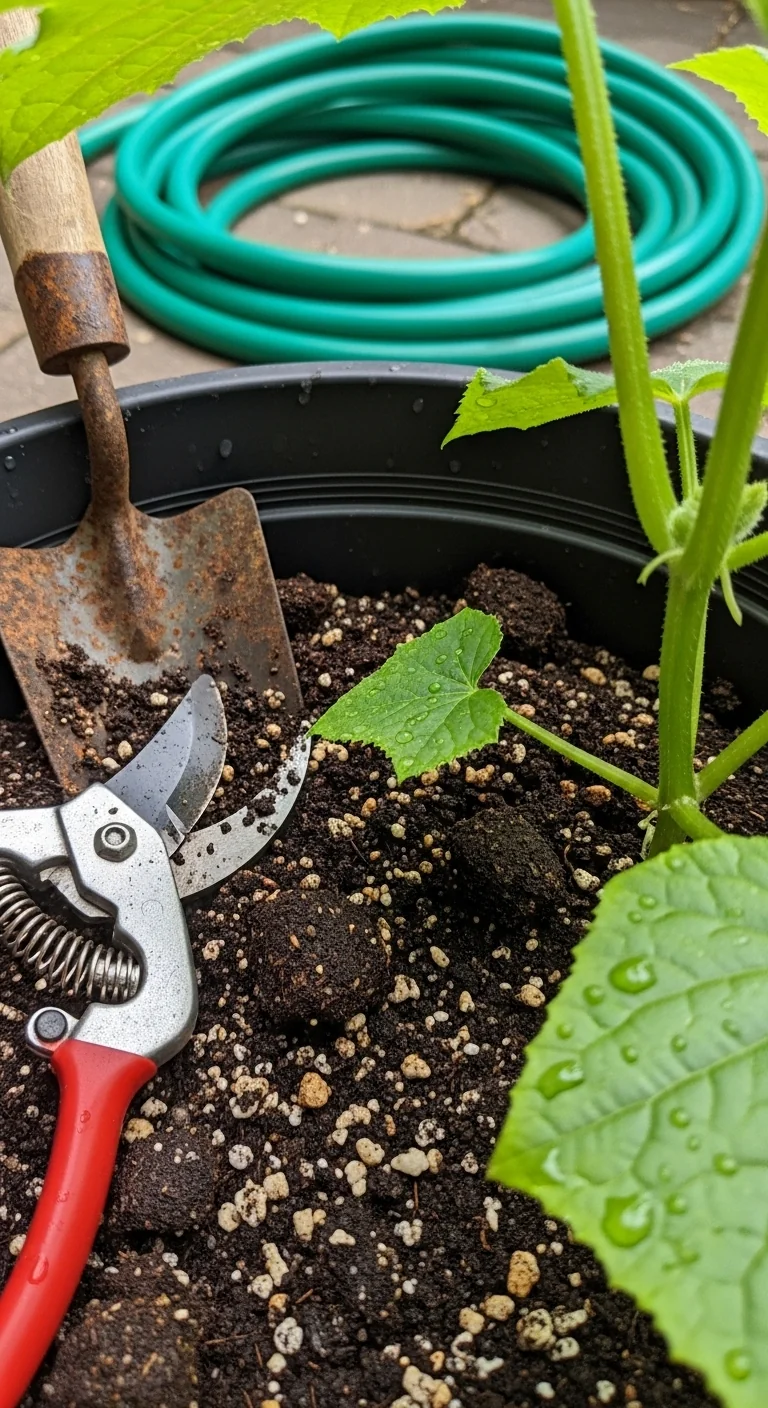
A custom mix of one-third compost, one-third coco coir, and one-third perlite maintains pH between 6.0 and 6.5 while ensuring drainage and moisture retention. Test pH after mixing and adjust with lime if below 5.8 or sulfur if above 6.5. This balance supports the shallow root systems typical in containers and prevents nutrient lockout. Refresh the top 2 inches each season rather than replacing the entire volume. (78 words)
Drip Watering Protocols for Moisture Stability
Best for: Branch 3
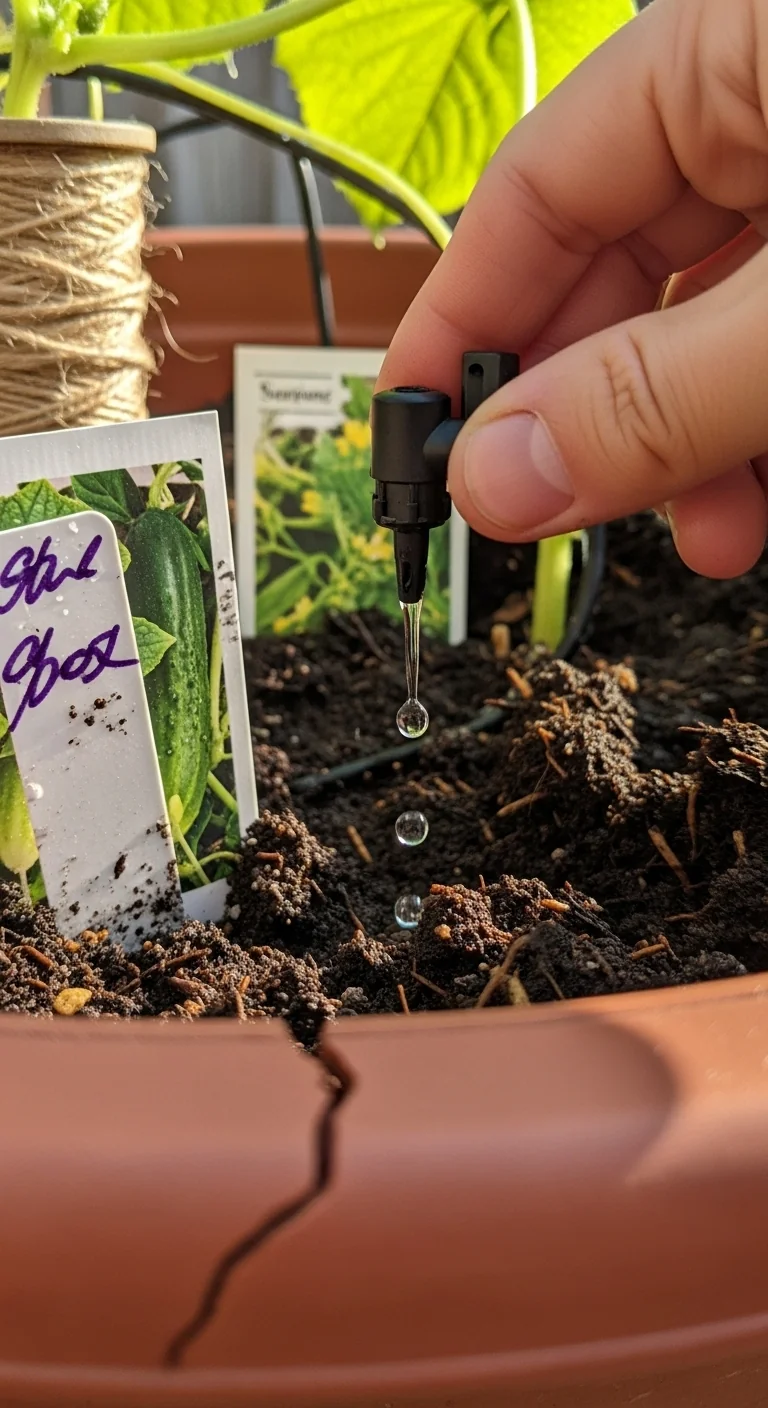
Drip irrigation delivers water directly to the root zone at 1 to 2 inches per hour, keeping soil evenly moist without leaf wetting that invites mildew. Use a timer set for early morning runs when daytime highs exceed 85 degrees F. Cucumbers need consistent moisture; allow the top inch of soil to dry slightly between cycles but never fully. Pair with mulch to reduce evaporation. This protocol maintains steady hydration during heat waves or travel gaps. (102 words)
Timed Fertilizer Applications Using Organic Blends
Best for: Branch 3
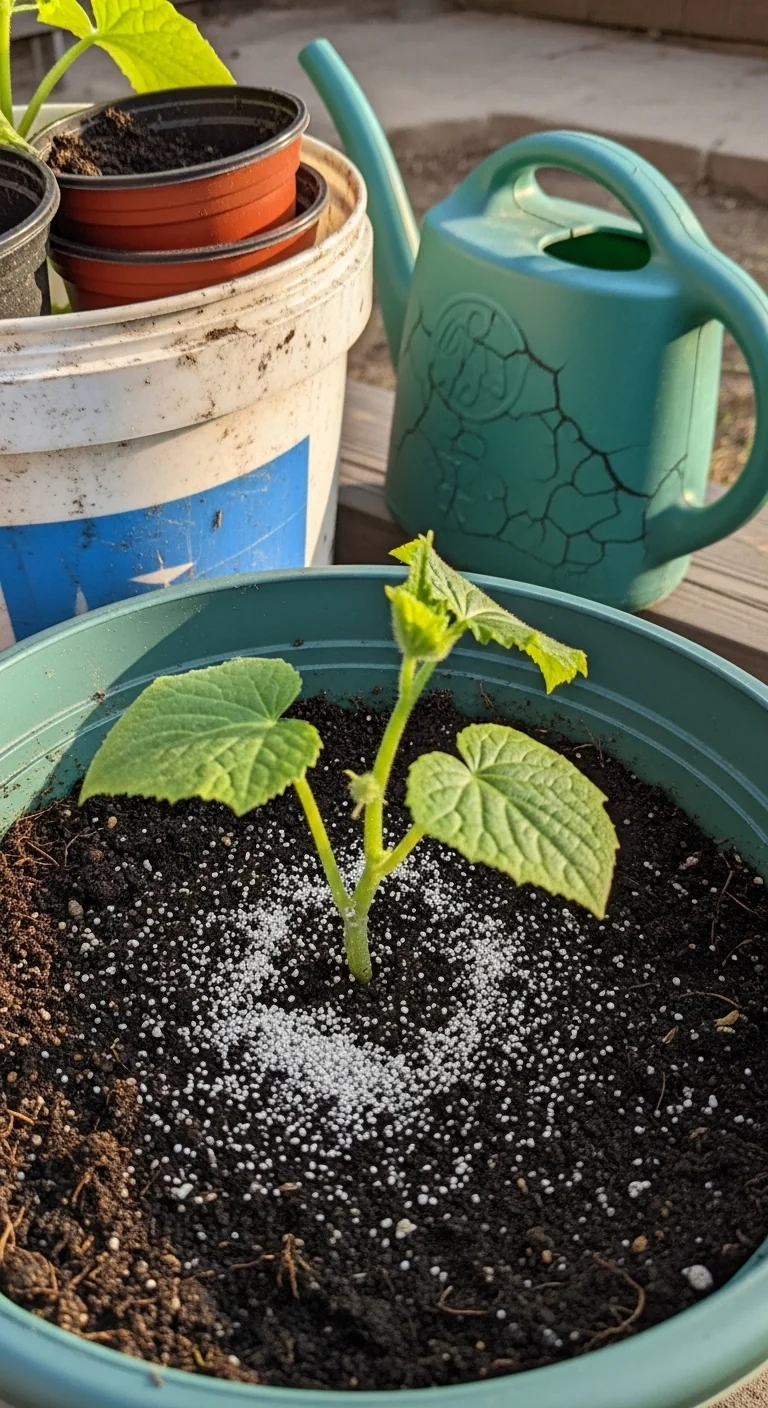
Apply a balanced organic vegetable fertilizer as a side dressing every two weeks after the first flowers appear, using rates listed on the product label for container volume. Incorporate at planting with a slow-release blend, then switch to liquid feeds diluted per instructions during peak growth. This schedule matches the rapid nutrient draw of fruiting cucumbers without overfeeding that leads to lush foliage at the expense of fruit. Test soil nitrogen levels monthly in hot weather to guide adjustments. Combine with the organic fertilizer for vegetables guide for blend options. (158 words)
Companion Planting with Flowers in Adjacent Pots
Best for: Branch 2
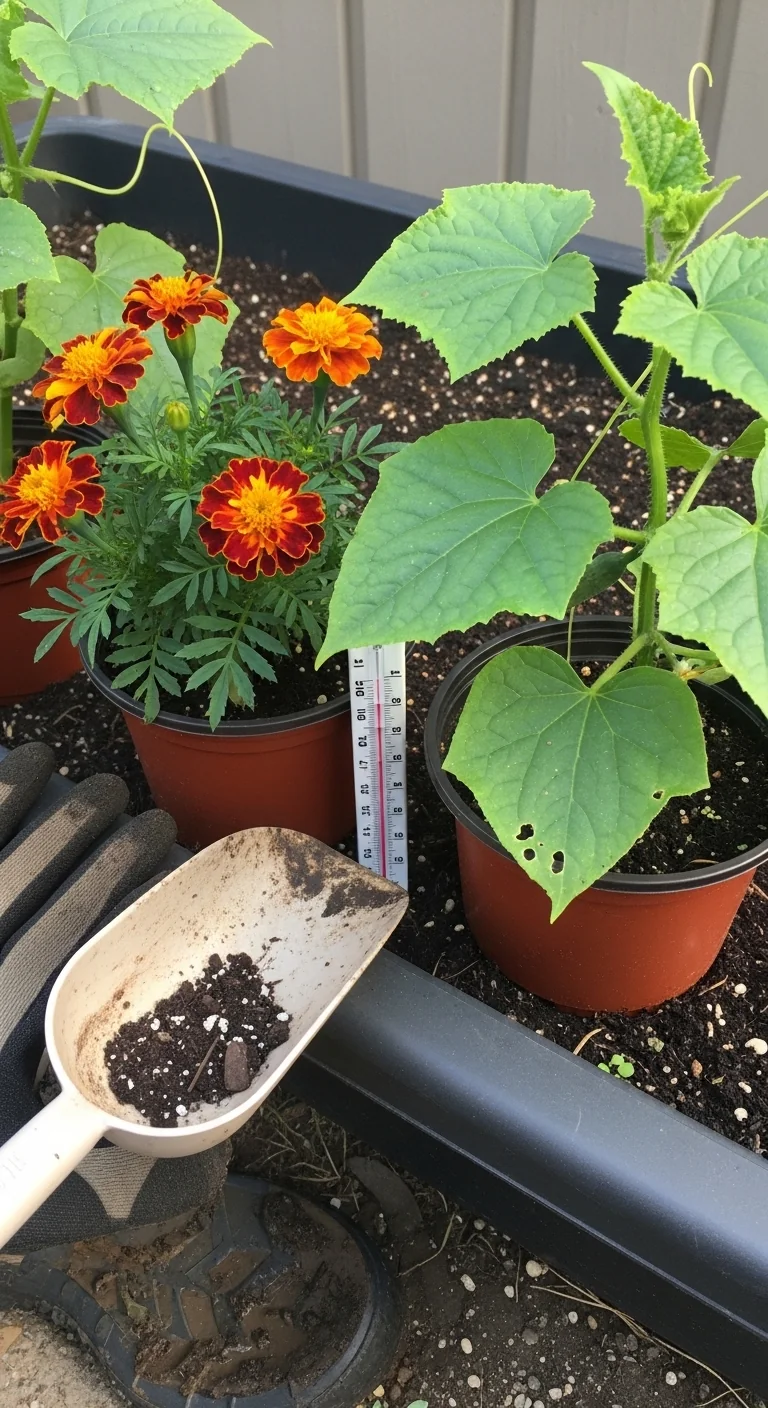
Place marigold or nasturtium pots within 12 inches of cucumber containers to draw beneficial insects and repel cucumber beetles. These companions share the same sun and water needs without competing for root space. Use one companion pot per two cucumber containers. This pairing increases overall pollinator traffic and provides natural pest control in grouped patio layouts. (71 words)
Threshold-Based Harvesting at 6- to 8-Inch Lengths
Best for: Branch 3
Harvest slicing cucumbers at 6 to 8 inches and pickling types at 3 to 4 inches to keep plants productive longer. Check daily once flowering starts; larger fruit signals the plant to slow new flower production. Cut stems with clean shears rather than twisting to avoid vine damage. This threshold timing prevents bitterness from over-mature fruit and extends the harvest window through summer. (95 words)
Starter Stack (What to Choose First)
For Branch 1 (limited floor space)
Start with bush varieties in compact pots plus fabric grow bags. Synergy comes from the compact growth habit paired with breathable containers that stay lightweight for balcony movement. Setup cost ranges from 15 to 25 dollars per plant; weekly maintenance takes 5 to 10 minutes.
For Branch 2 (vertical space available)
Begin with vertical trellis systems plus companion planting in adjacent pots. The trellis provides structure while companions boost pollinators for better fruit set. Setup cost ranges from 20 to 35 dollars per station; weekly maintenance takes 8 to 12 minutes.
For Branch 3 (high heat or irregular watering)
Combine drip watering protocols with timed fertilizer applications. Consistent moisture delivery supports steady nutrient uptake during temperature spikes. Setup cost ranges from 25 to 40 dollars per system; weekly maintenance takes 10 to 15 minutes.
When This Won’t Work
Container cucumber growing fails when soil temperature stays below 60 degrees F at planting time or when daily direct sun falls under 6 hours. In either case the plants stall, produce few flowers, and develop weak vines that cannot support fruit.
It also fails when soil pH sits outside 5.8 to 6.5 without correction, locking out nutrients and causing yellowing leaves or misshapen fruit. The alternative is to shift to raised beds or protected structures that allow better temperature and light control.
See the raised bed vegetable garden guide for transition steps if containers prove unsuitable after one season.
Choosing the Right Option for Your Situation
Budget threshold
If your total setup budget is under 30 dollars per plant, select bush varieties in basic plastic pots or fabric grow bags with store-bought compost mix. Avoid trellises or drip systems at this level.
Time threshold
If you can spend only 10 minutes daily on maintenance, choose parthenocarpic hybrids in fabric grow bags with mulch. Skip drip irrigation and frequent fertilizer checks.
Technical constraint
If vertical clearance is under 4 feet or wind exposure is high, limit choices to bush types in weighted pots. Vining varieties and tall trellises will topple or tangle.
Yes/No checklist:
Do you have at least 6 hours of direct sun daily?
Is soil temperature at or above 60 degrees F?
Can you provide consistent moisture without daily hand watering?
Does your space allow 12-inch pot diameter per plant?
Expert Q&A
What daytime temperature range causes poor fruit set in container cucumbers?
Daytime temperatures above 85 degrees F for more than three consecutive days reduce fruit set because pollen becomes sterile and flowers drop. Nighttime lows below 60 degrees F slow growth equally. Maintain 75 to 85 degrees F daytime and above 65 degrees F at night for steady production. (52 words)
How does container depth versus width affect root health for cucumbers?
Depth of at least 10 inches allows the taproot to develop without circling, while width of 12 inches or more gives lateral roots room to spread. Shallow wide pots lead to surface rooting and drought stress; narrow deep pots restrict lateral expansion and nutrient uptake. (48 words)
Can cucumbers share containers successfully with other vegetables?
Cucumbers can share large 15-gallon or bigger containers with bush beans or lettuce if spacing leaves 12 inches between plants and all share the same sun and water needs. Avoid heavy feeders like tomatoes in the same pot because they compete for the same nutrients. (55 words)
What soil amendment thresholds prevent bitterness in container cucumber fruit?
Keep soil moisture even and pH between 6.0 and 6.5; uneven watering or pH below 5.8 triggers bitterness by stressing the plant. Add compost at planting and mulch 2 inches deep to buffer fluctuations. Test pH every four weeks in heat. (49 words)
How should high-balcony wind exposure change container cucumber care?
Wind above 15 miles per hour dries soil faster and can snap vines. Use heavier 10-gallon fabric bags, add windbreaks such as lattice panels, and increase mulch depth to 3 inches. Check soil moisture twice daily instead of once. (47 words)
Conclusion
The core decision is to lock in your Decision Grid branch before buying pots or seeds so every later choice reinforces rather than fights your constraints. The number-one mistake is planting without confirming soil temperature or pH, which wastes the entire season.
Next step: review the vegetable planting calendar and schedule your first sowing window based on local last-frost date and 60-degree-F soil threshold.