
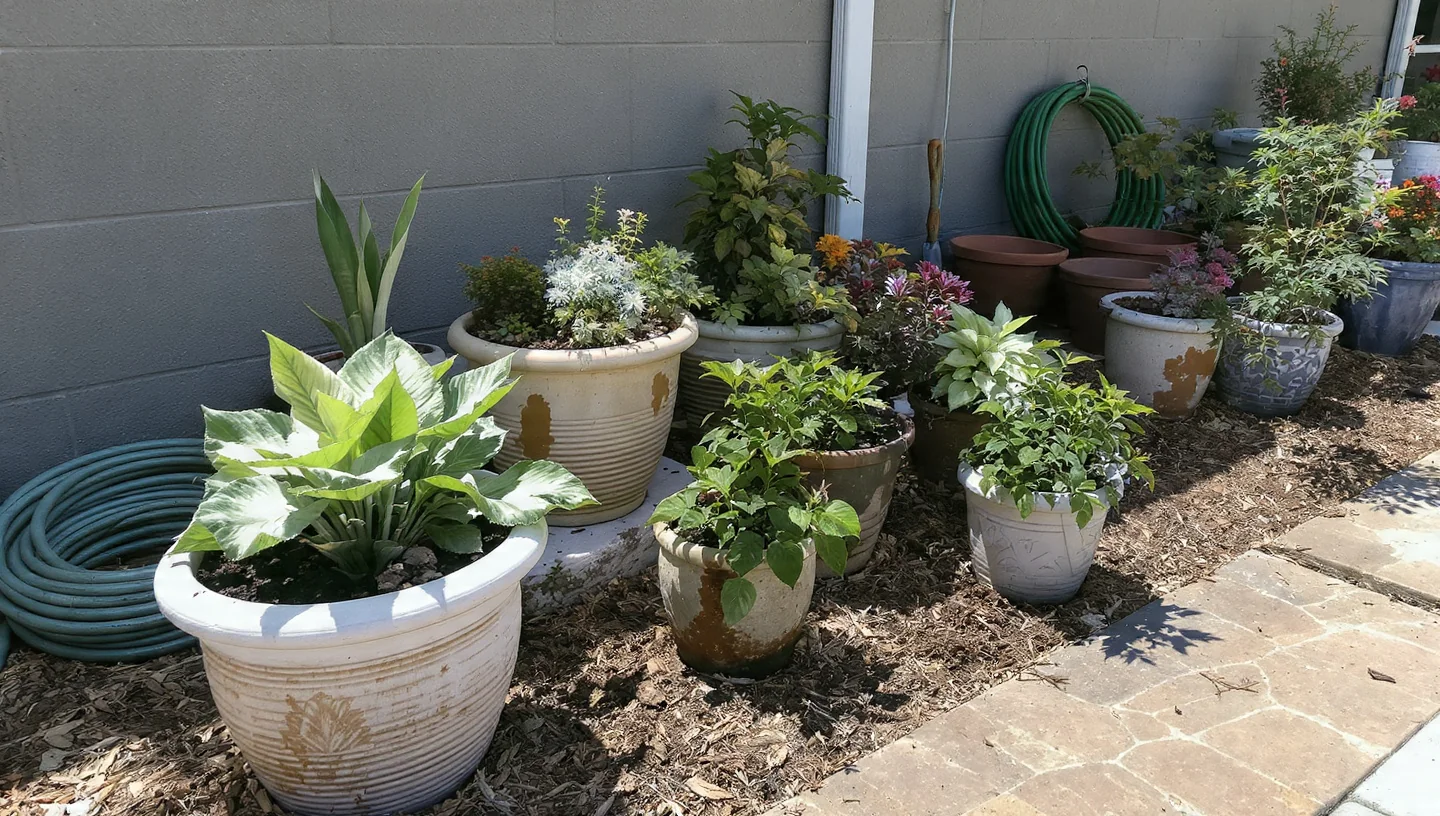
Container garden ideas succeed when container volume, light exposure, and plant growth habit align exactly. Most lists overlook this match and leave gardeners swapping pots after one season of leggy stems or root crowding. This grid classifies every idea by measurable site conditions so the ornamental structure holds from spring through fall with routine care.
The nine setups focus on design impact for patios, balconies, decks, and entryways. They emphasize texture, height layering, and color persistence in ornamental combinations. The guide excludes vegetable-only plantings, full in-ground beds, and purely indoor houseplant displays.
By the end you select the single idea that fits your exact conditions and understand the mechanism behind its visual balance. You avoid common mismatches such as undersized containers for mature spread or sun-loving species in shade.
Bottom line: Match the idea to your decision grid branch and you gain a container display that holds its shape and color with standard care routines.
The Yield Grid Decision Grid
Branch 1 applies to full-sun sites with 6 or more hours of direct sunlight daily and typical wind exposure on open patios, decks, or rooftops. Recommended: Items 1, 4, 7 below.
Branch 2 covers partial-shade conditions with 3 to 6 hours of direct sun, common on covered porches or side patios. Recommended: Items 2, 5, 8 below.
Branch 3 fits low-light areas with fewer than 3 hours of direct sun, suited to shaded balconies or entryways under overhangs. Recommended: Items 3, 6, 9 below.
For ways to combine these with fixed hardscaping elements, see our patio planting ideas.
Quick Comparison Table
| Option | Key mechanism | Best for | Decision Grid Branch | Effort Score |
|---|---|---|---|---|
| Tiered Pot Cascade for Full Sun | Staggered heights with gravity drainage between levels | Rooftop or balcony elevation | 1 | 3 |
| Succulent Monochrome Bowl | Single-species density in wide shallow container | Low-profile entry accents | 2 | 1 |
| Fern and Foliage Shaded Window Box | Arching fronds paired with upright companions | Shaded rail or ledge | 3 | 2 |
| Gravel Topped Urn Display | Inorganic mulch layer over slow-release soil mix | Statement focal point | 1 | 2 |
| Trailing Ivy Basket Cluster | Multiple hanging baskets at staggered lengths | Overhead interest on partial shade walls | 2 | 3 |
| Hostas and Heuchera Companion Grouping | Contrasting leaf textures in matched pot sizes | Low-light corner softening | 3 | 2 |
| Vertical Trellis Screen Container | Integrated trellis anchored inside large pot rim | Privacy or division on open sites | 1 | 4 |
| Color-Echo Pot Trio | Repeated foliage tones across three graduated pots | Partial-shade pathway definition | 2 | 2 |
| Bold Leaf Planter Stack | Stacked containers with large-leaf underplanting | Entryway drama in low light | 3 | 3 |
Tiered Pot Cascade for Full Sun
Best for: Branch 1
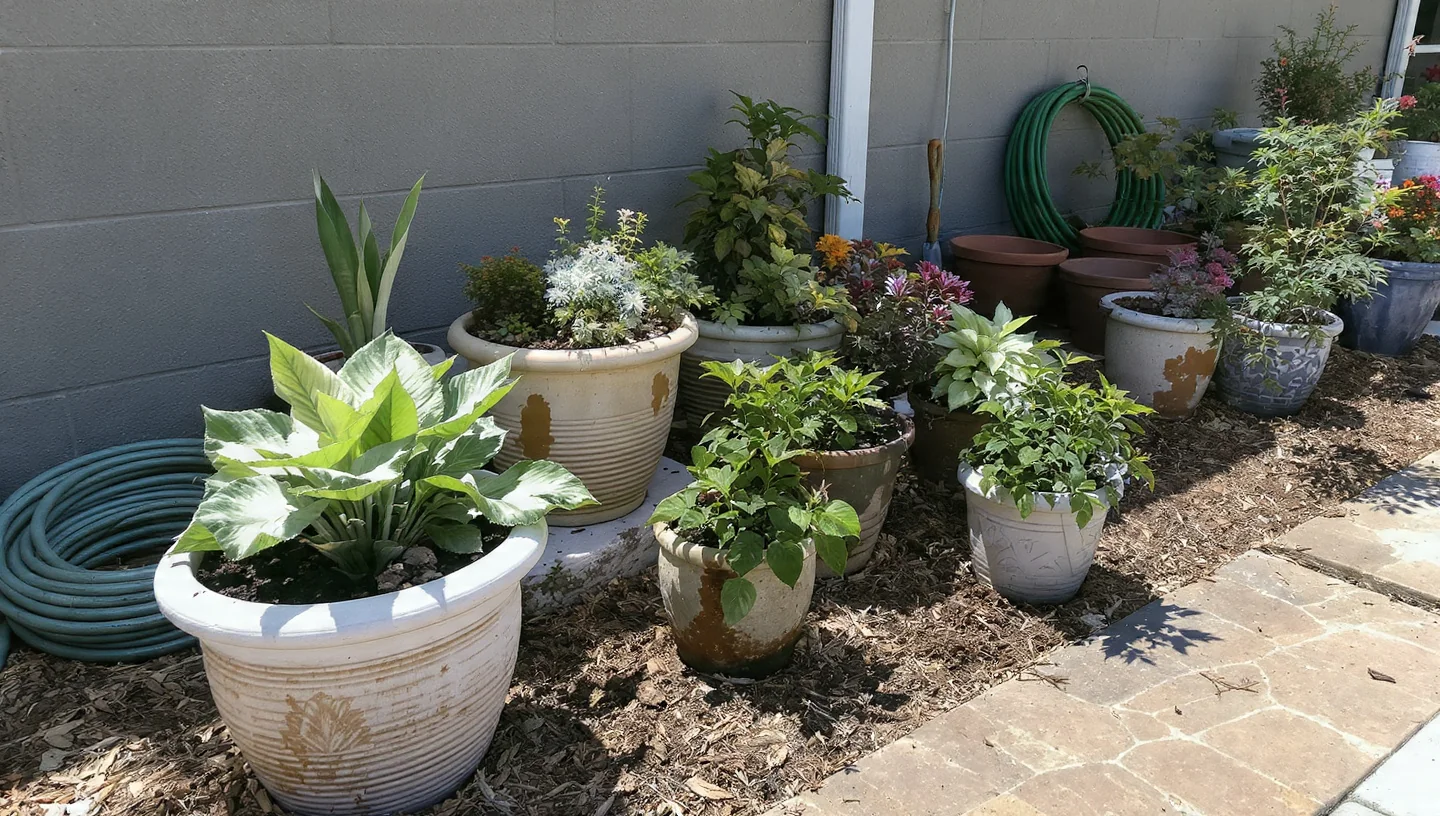
This blueprint creates vertical flow using three container sizes stacked on a stable base. Use it for sites needing height without permanent structures. Start with a 24-inch wide base pot filled to 2 inches below rim with well-draining mix. Add a 16-inch middle pot offset slightly and top with a 10-inch accent pot. Plant sun-tolerant ornamentals such as ornamental grasses in the base, mid-height perennials in the center, and trailing types at the top. The mechanism relies on open drainage holes at each level so excess water moves downward rather than pooling. Common mistake: placing the stack on uneven paving without leveling blocks, which leads to tipping after heavy rain. In full-sun wind zones this arrangement stays stable when the base pot weighs at least 40 pounds when filled.
Succulent Monochrome Bowl
Best for: Branch 2
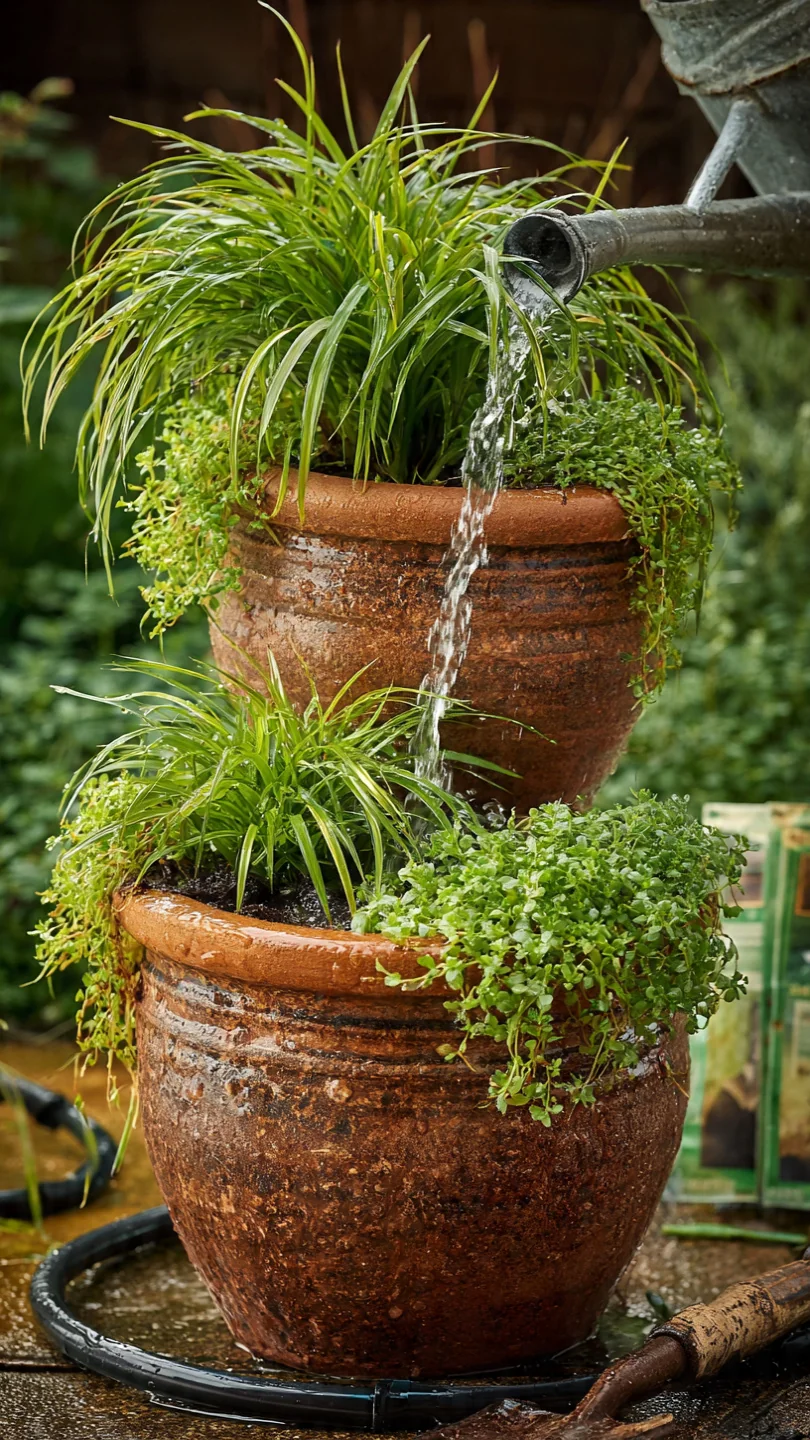
Use this when you want low-profile impact with almost no upkeep. Skip it on windy rooftops or if you prefer seasonal color changes. A single wide shallow bowl filled with identical succulents creates uniform texture that reads as one bold shape. The tight grouping resists gaps better than mixed species and handles partial shade without stretching. Edge case: in areas with summer humidity above average, increase spacing by one inch to improve airflow.
Fern and Foliage Shaded Window Box
Best for: Branch 3
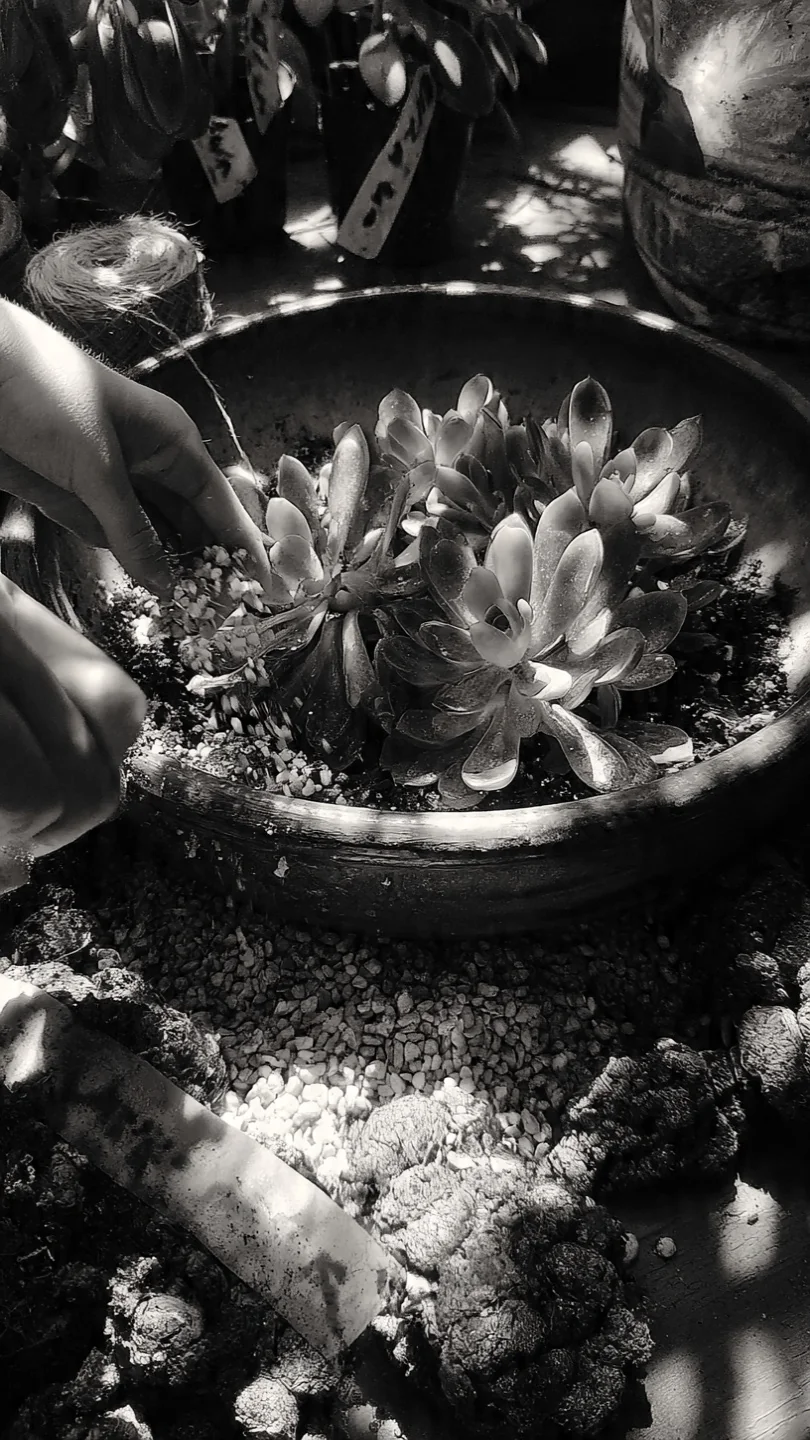
Apply this threshold rule: choose the setup only when your site receives fewer than 3 hours of direct sun and the container depth stays at least 8 inches. Below that depth ferns develop shallow roots and dry out faster. Pair arching ferns with upright heuchera for contrast; the combination fills the box edge to edge within one season. Adjust by adding one extra fern if the box exceeds 36 inches long. This keeps the display dense without supplemental feeding in low light.
Gravel Topped Urn Display
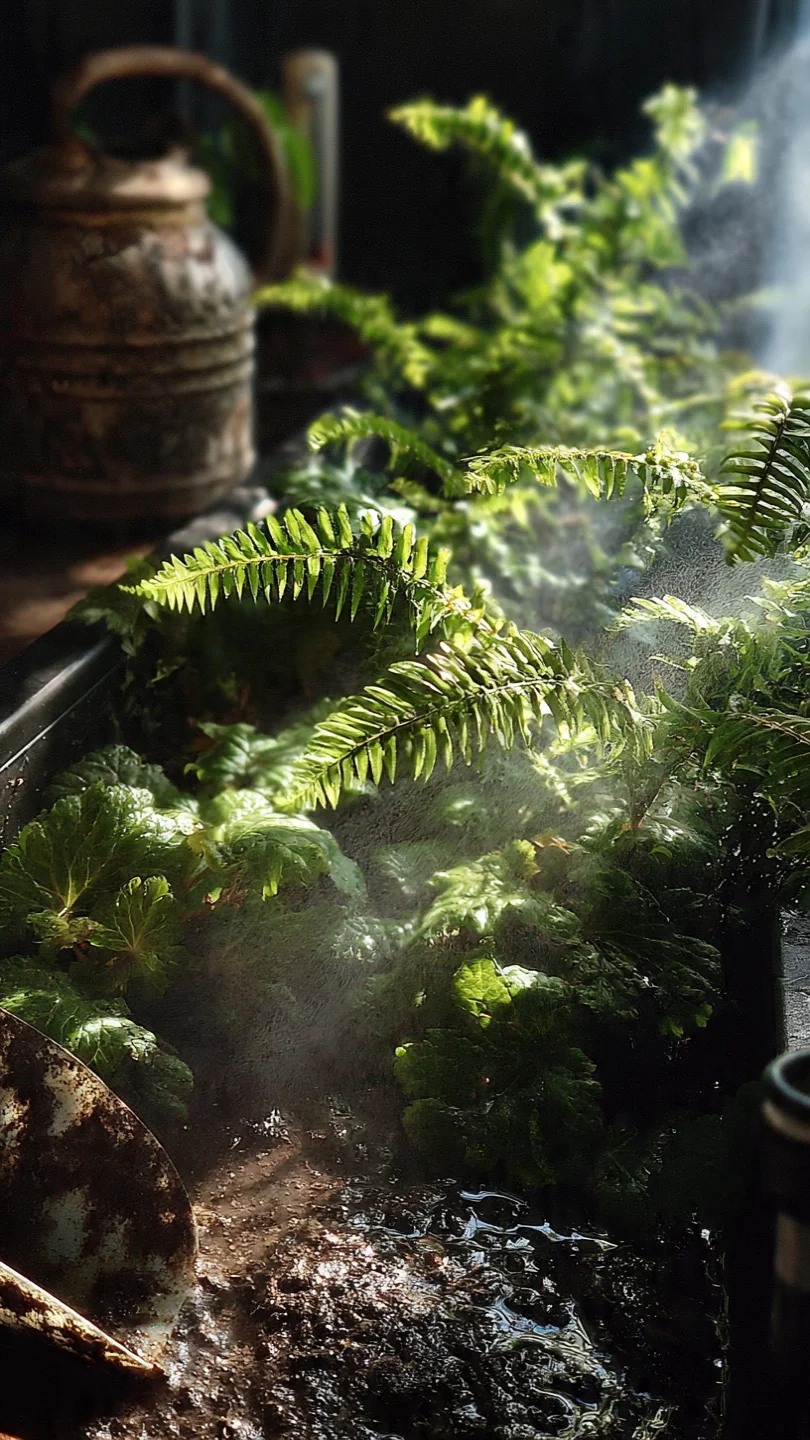
Best for: Branch 1
Complete this 10-minute workflow for instant focal impact. Select one large urn at least 20 inches tall. Add a 2-inch gravel base, fill with potting mix to 3 inches below rim, plant three upright ornamentals in the center, then spread 1 inch of gravel as top dressing. The inorganic layer cuts surface evaporation and prevents soil splash on leaves. Upgrade option: embed a low-voltage solar spike light at the base during installation for nighttime definition. Total time stays under 10 minutes once materials are gathered. This fits full-sun sites where soil temperatures rise quickly.
Trailing Ivy Basket Cluster
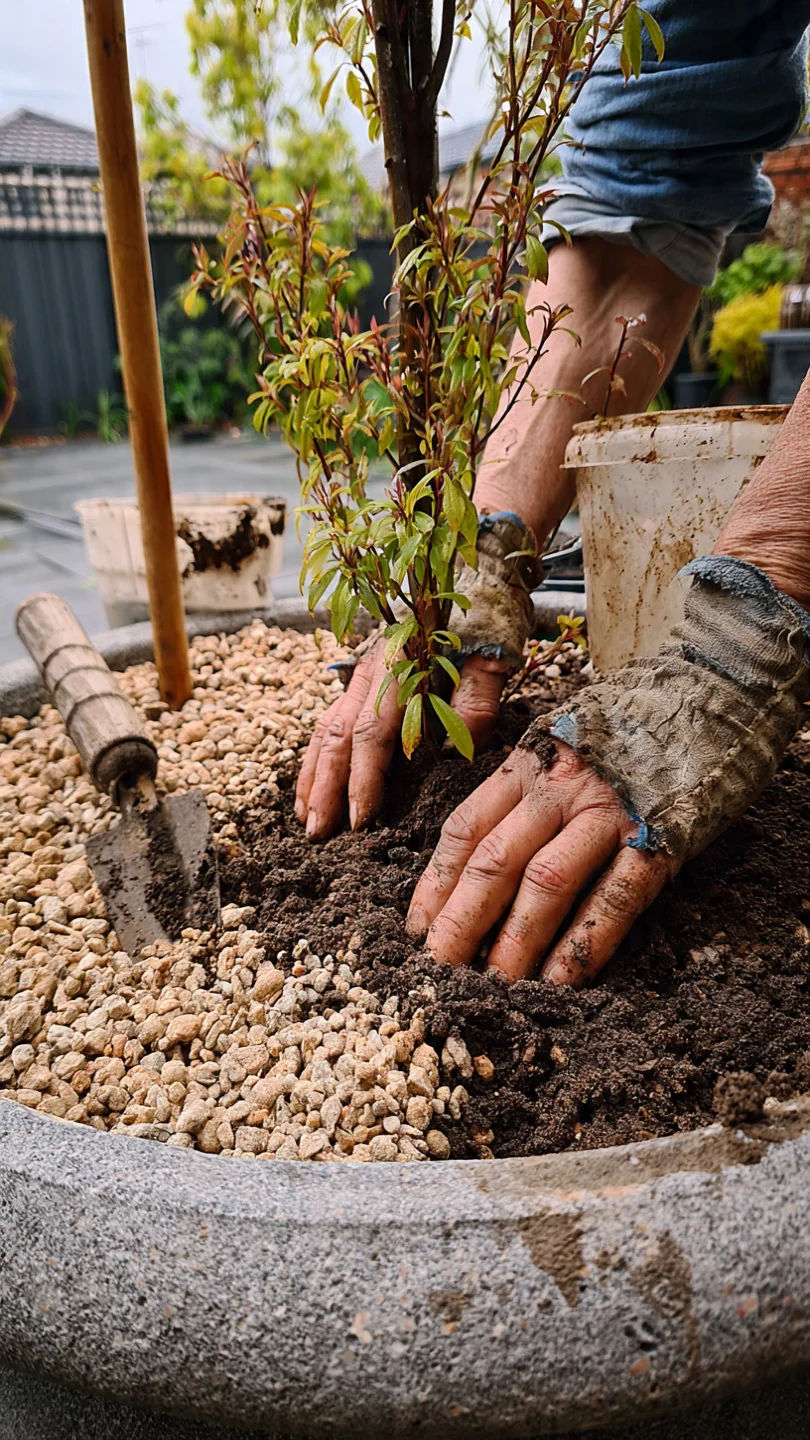
Best for: Branch 2
This blueprint scales overhead interest using three matching baskets hung at staggered lengths from a single bracket. It works for partial-shade walls because ivy tolerates the light range and fills downward without support. Steps: install the bracket rated for 30 pounds, line each basket with coir, add soil, plant one ivy per basket, and hang so the lowest trails 12 inches longer than the middle. The mechanism prevents tangling because each chain hangs independently. In balcony settings this pairs well with balcony garden ideas for coordinated vertical layers.
Hostas and Heuchera Companion Grouping
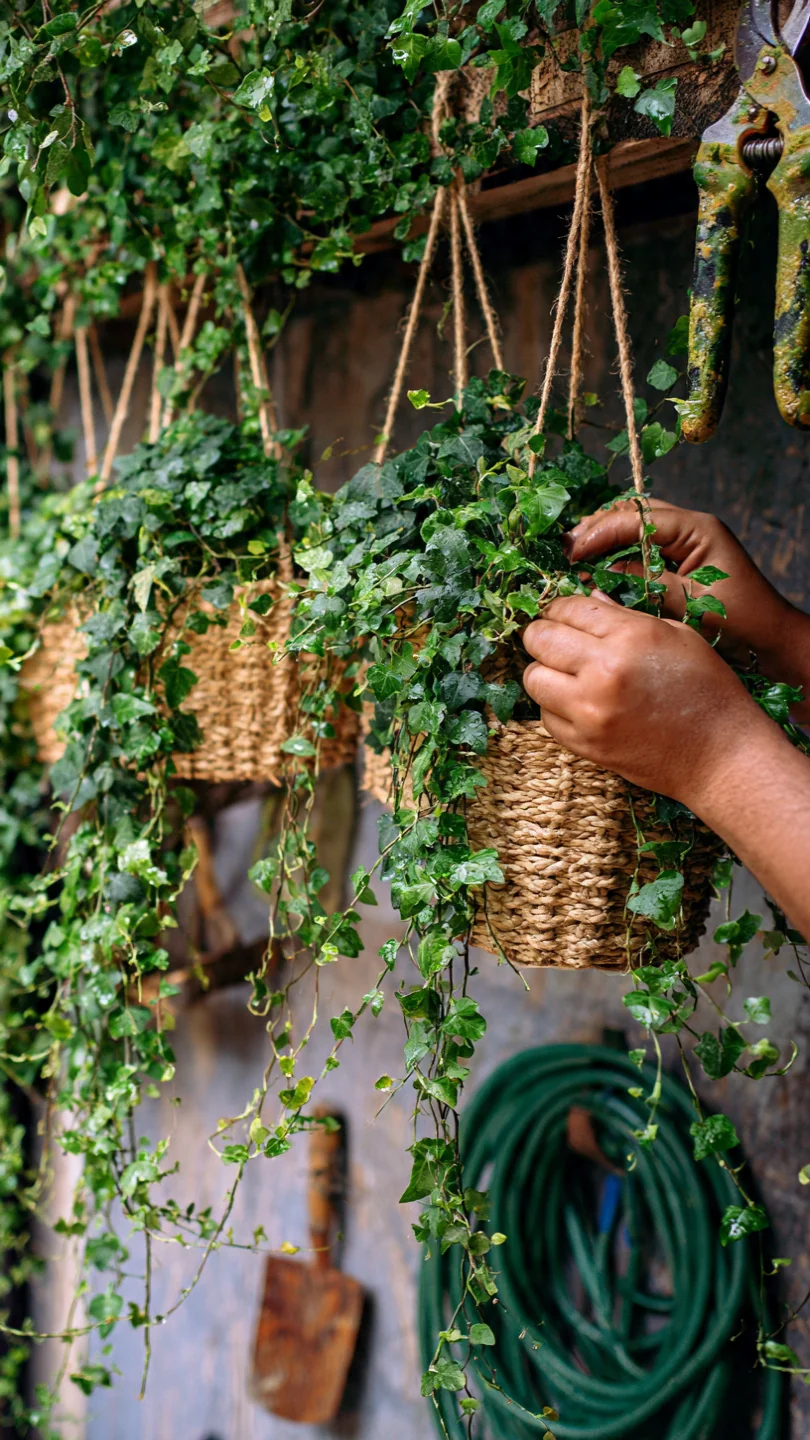
Best for: Branch 3
Use versus skip: choose this grouping when your low-light corner needs soft texture and you accept occasional slug checks. Skip it if deer browse regularly because both plants sit at accessible height. The contrasting leaf sizes (large hosta, small heuchera) create depth in three identical pots arranged in a loose triangle. Edge case: in zones with late spring frost, delay planting until soil reaches 50 degrees Fahrenheit to avoid leaf burn.
Vertical Trellis Screen Container
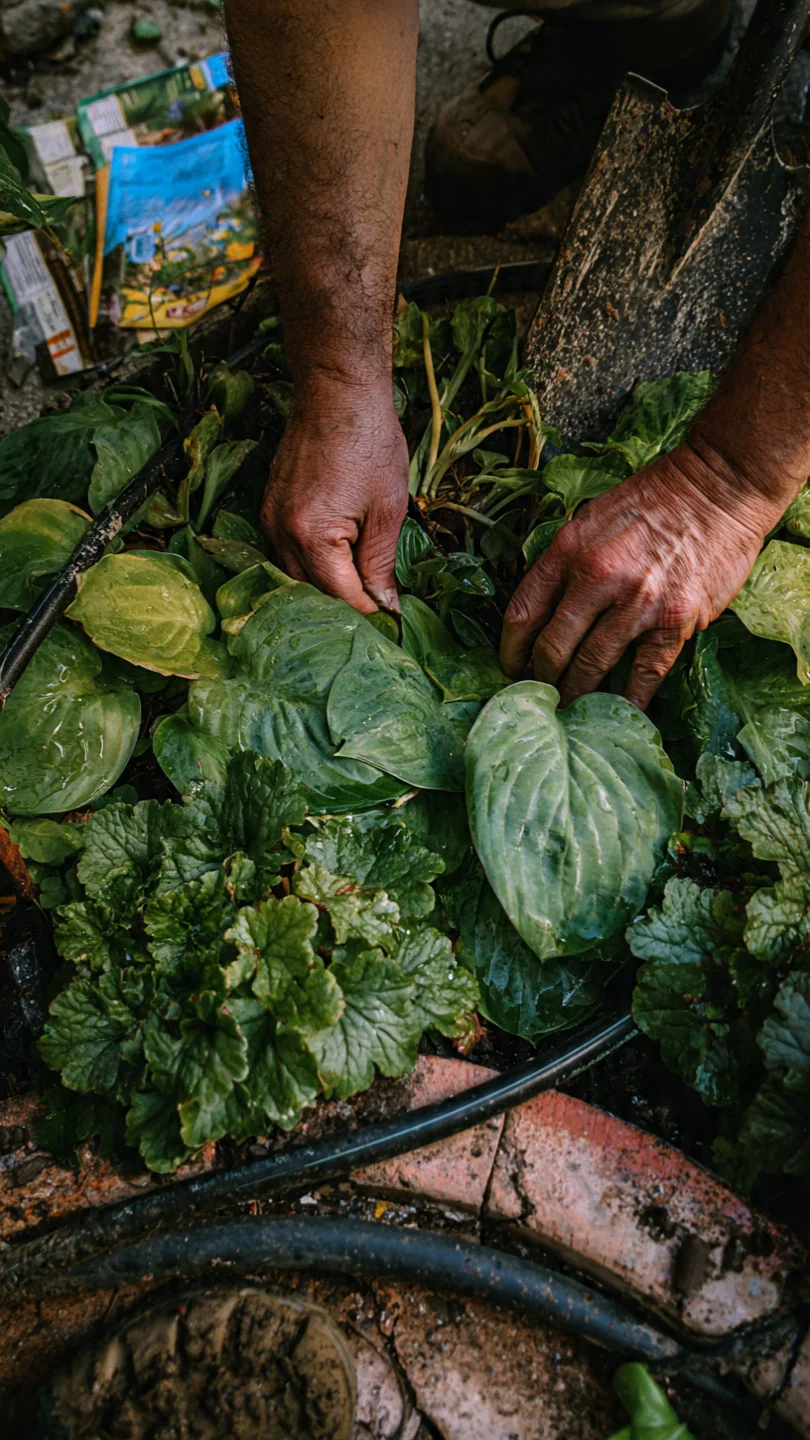
Best for: Branch 1
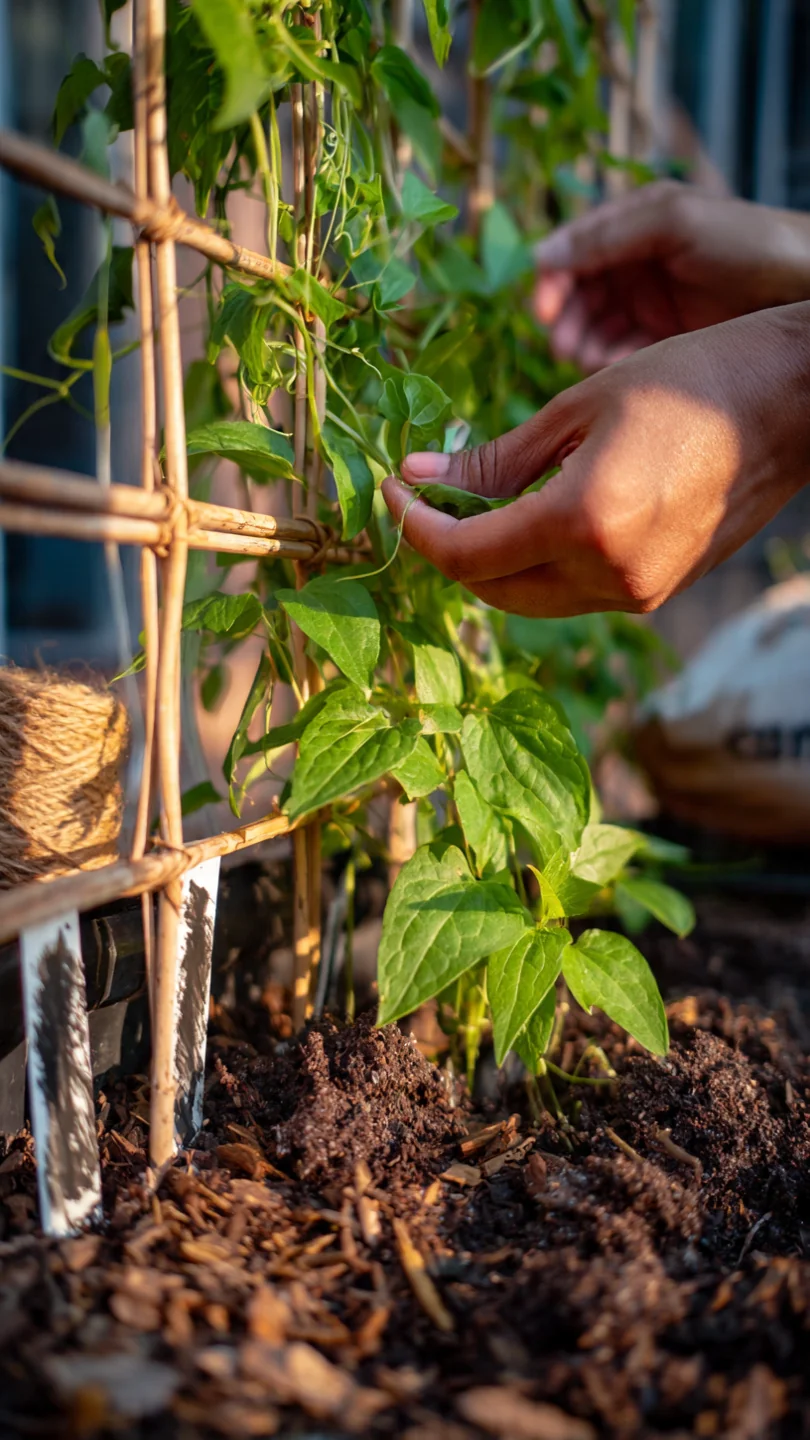
Follow this threshold rule on open full-sun sites: the container volume must exceed 15 gallons and the trellis height must stay under 6 feet to remain stable without guy wires. Anything smaller topples in wind over 15 mph. Insert a wooden or metal trellis inside the pot rim before filling, then plant a climbing ornamental at the base. The integrated anchor distributes weight downward so the screen stays upright season after season. Test stability by gently pushing the top after planting; if it moves more than 2 inches, add gravel to the base. This setup defines space without permanent fencing and pairs naturally with vertical garden ideas.
Color-Echo Pot Trio
Best for: Branch 2
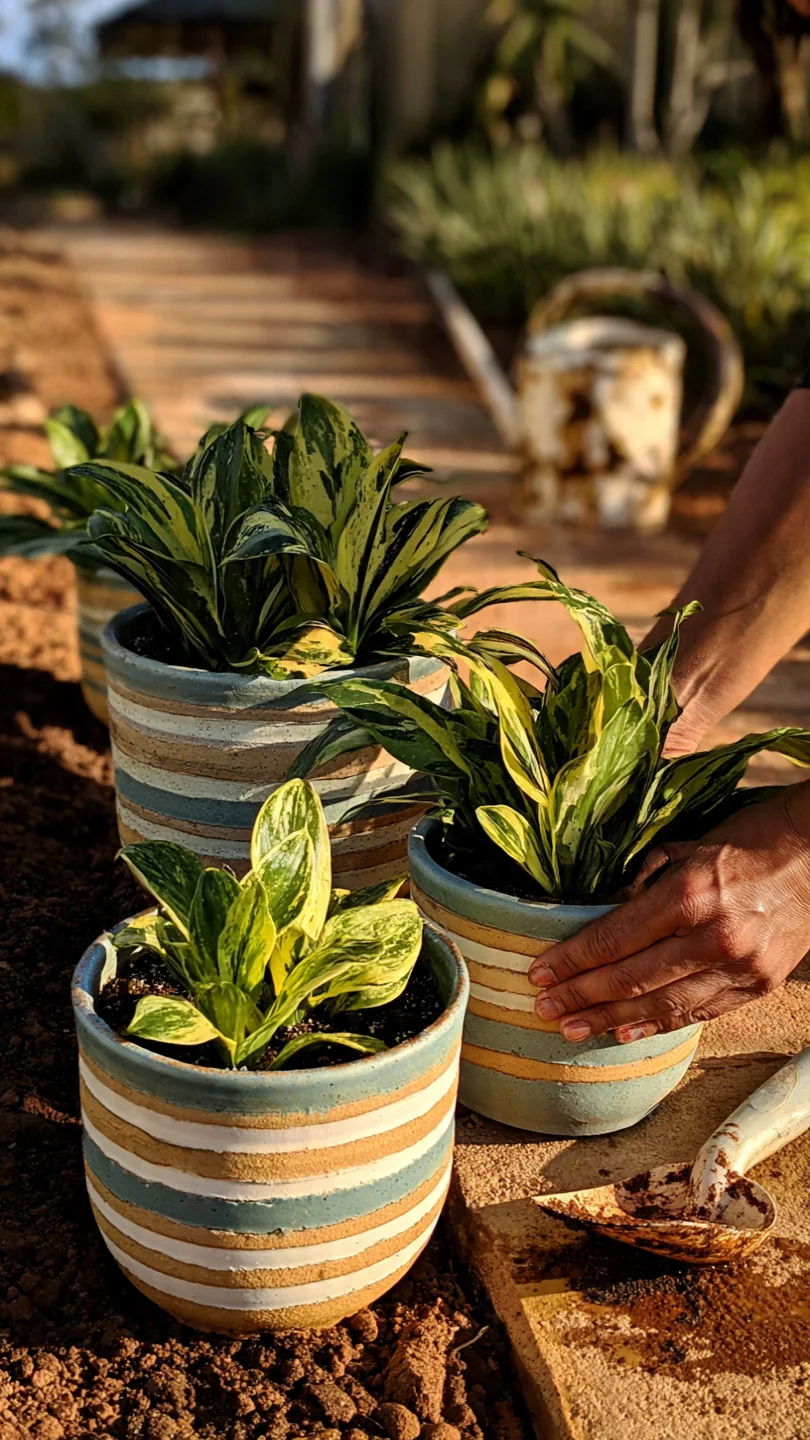
Execute this 10-minute workflow to define a pathway in partial shade. Gather three pots in graduated sizes (12, 16, and 20 inches). Fill each with the same soil mix, plant one repeating foliage variety per pot, and arrange in a gentle arc with the largest at the back. The repeated tones create rhythm without clashing. Upgrade option: add matching saucers to protect paving. The entire process takes under 10 minutes and maintains clean lines through the season.
Bold Leaf Planter Stack
Best for: Branch 3
This blueprint stacks two containers for entry drama in low light. Place a wide 18-inch base pot, add soil, plant large-leaf ornamentals, then center a narrower 12-inch pot on top using a sturdy riser. Fill the upper pot with smaller companions. The vertical offset increases perceived height while keeping the footprint under 3 square feet. Common mistake: omitting the riser, which compacts the lower soil and reduces drainage. In shaded entryways the large leaves catch what little light reaches the area and reflect it outward for brighter impact.
Starter Stack (What to Choose First)
For Branch 1 (Full Sun)
Start with Item 1 (Tiered Pot Cascade) and Item 4 (Gravel Topped Urn Display). The cascade supplies vertical layers while the urn anchors as a single strong shape. Together they create balanced height without crowding the footprint. Material cost range: 40 to 80 dollars. Setup time range: 45 to 60 minutes.
For Branch 2 (Partial Shade)
Begin with Item 2 (Succulent Monochrome Bowl) and Item 5 (Trailing Ivy Basket Cluster). The bowl gives ground-level density and the baskets add overhead movement. The combination fills both planes with minimal overlap. Material cost range: 30 to 65 dollars. Setup time range: 30 to 45 minutes.
For Branch 3 (Low Light)
Choose Item 3 (Fern and Foliage Shaded Window Box) and Item 6 (Hostas and Heuchera Companion Grouping) first. The window box softens linear edges while the grouping adds rounded texture nearby. The two setups reinforce each other through shared foliage contrast. Material cost range: 35 to 70 dollars. Setup time range: 35 to 50 minutes.
When This Won’t Work
These container garden ideas will not deliver lasting structure if your chosen container holds standing water longer than 24 hours after a thorough watering. That condition signals blocked drainage holes or compacted soil; switch immediately to pots with multiple side and bottom holes and elevate them on feet at least 1 inch high.
The setups also fail when wind speeds regularly exceed 20 mph and the container base diameter stays under 14 inches. Toppling becomes likely and ornamental plants suffer stem breakage. In those conditions move to heavier ceramic or concrete bases or relocate to a more sheltered spot.
For protected low-effort alternatives explore our low maintenance garden ideas.
Choosing the Right Option for Your Situation
Budget Threshold
If your total materials budget stays under 100 dollars for three containers and plants combined, limit selections to Items 2, 3, or 8. These use smaller volumes and repeatable plant varieties that keep costs low while still delivering ornamental contrast.
Time Threshold
If you can commit only to checks every two weeks or less, select options with Effort Score 1 or 2. These require no weekly pruning and rely on slow-release soil mixes plus top dressings that hold moisture longer in their assigned light conditions.
Technical Constraint
If measured soil pH falls outside the 5.5 to 7.0 range common for ornamental mixes, test and amend the potting blend before planting. Containers isolate the root zone so adjustments remain localized and take effect within one watering cycle.
Yes/No checklist:
Does your site match one decision grid branch exactly?
Is container volume at least 5 gallons per plant for upright types?
Will the chosen mechanism (drainage, height, or mulch) address your main constraint?
Do you have space to store empty pots off-season?
Expert Q&A
How do I prevent root bound conditions in long-term container setups?
Choose a container volume at least twice the nursery pot size at planting. Every two years in spring slide the root ball out, prune circling roots by one third, and refresh the outer inch of soil. This keeps nutrient uptake steady without full replacement.
What drainage strategy works best for ornamental perennials in pots?
Place a 2-inch layer of coarse gravel or broken pottery at the bottom before adding soil. Combine with containers that have at least four drainage holes. The layer creates an air gap that stops soil from migrating into the holes over time.
Can container designs incorporate winter interest without extra effort?
Include evergreen grasses or shrubs rated for your hardiness zone in at least one pot per group. Their structure remains visible after perennials die back, and no additional wrapping is needed if the container material resists cracking at temperatures down to 0 degrees Fahrenheit.
How does container choice affect pollinator attraction in ornamental displays?
Larger surface areas in wide bowls or urns allow more flower clusters at one height, which bees and butterflies locate faster than scattered small pots. Group three or more containers within 3 feet of each other to concentrate scent and color cues.
What scaling rule applies when expanding from one pot to a group?
Keep the tallest element in each new pot at the same height ratio as the original (roughly two thirds of container height). This preserves visual balance as the display grows outward instead of upward.
Conclusion
The decision grid turns container garden ideas into reliable design tools by linking each mechanism directly to site conditions. The number-one mistake remains choosing containers too small for mature plant spread, which crowds roots and collapses the intended layers within months.
Take the next step with the starter stack that matches your branch, then expand using our deck garden ideas for coordinated hardscape integration.