
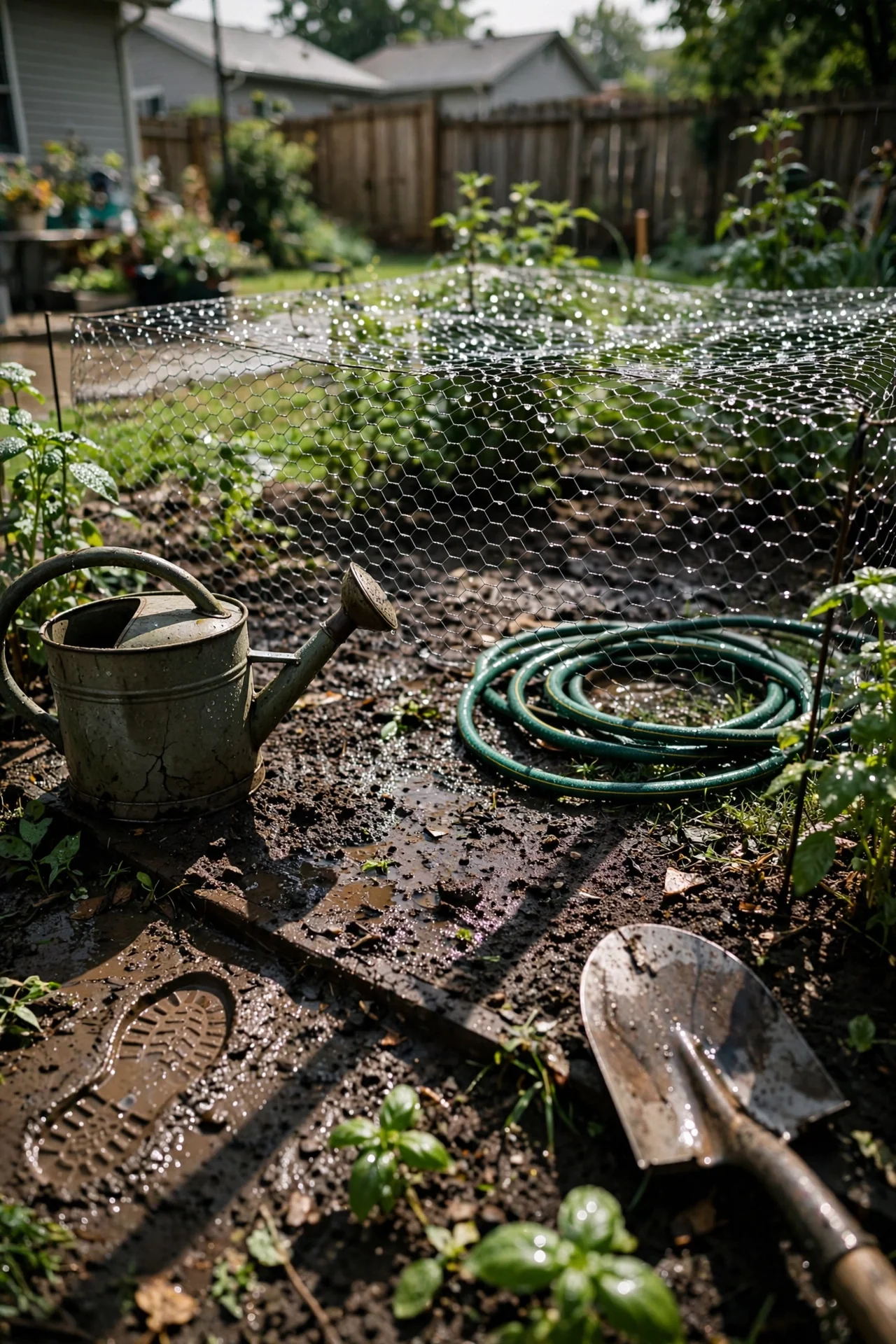
Most cat deterrent advice reads like a grocery list: citrus peels, coffee grounds, motion sprinklers. What those lists rarely mention is that the number one variable determining success is not the cat. It is the weather. A scent deterrent that works beautifully in a dry Mediterranean climate can vanish entirely after 20 minutes of moderate rain. This guide reframes the entire category around persistence: how each method holds up after watering, and what that means for your weekly routine.
This article covers deterrents suitable for flower beds, vegetable gardens, and ornamental borders in residential settings. It excludes indoor-only solutions, commercial trapping programs, and any method that causes injury to cats. Every option listed is humane and legal across the US, UK, Canada, Australia, New Zealand, Germany, and the Netherlands.
By the end, you will know exactly which deterrent matches your watering schedule, your tolerance for reapplication, and the specific way cats are using your garden (digging, marking, or transiting). You will also know when to stop spending money on methods that cannot work for your setup.
Bottom line: Match your deterrent to your irrigation reality, not to the most confident-sounding review.
The Yield Grid Decision Grid
Branch 1: I need a quick, low-cost solution and I am willing to reapply after rain. Your best options are scent-based deterrents that degrade with moisture. Expect to refresh every 7 to 14 days, or immediately after heavy rain. Recommended: Items 1, 2, 3, and 4 below.
Branch 2: I want a set-and-forget solution that survives irrigation. Your best options are physical barriers and texture-based deterrents that water cannot wash away. Most require a one-time installation with seasonal touch-ups. Recommended: Items 5, 6, 7, and 8 below.
Branch 3: I am willing to invest in a permanent, higher-cost system. Your best options are powered devices and structural modifications. These cost more upfront but demand almost no weekly maintenance. Recommended: Items 9, 10, and 11 below.
For a broader look at how deterrent strategies compare across different animal pests, see our deer-resistant plants guide, which uses a similar persistence framework.
Quick Comparison Table
| Option | Key Mechanism | Best For | Decision Grid Branch | Effort Score |
|---|---|---|---|---|
| Citrus Peels | Scent aversion (limonene) | Small beds, dry climates | Branch 1 | 5 |
| Coffee Grounds | Scent aversion plus soil amendment | Acid-loving plant beds | Branch 1 | 4 |
| Commercial Repellent Sprays | Methyl nonyl ketone or putrescent egg solids | Targeted problem spots | Branch 1 | 4 |
| Lion Dung Pellets | Territorial threat mimicry | Large gardens, persistent cats | Branch 1 | 3 |
| Chicken Wire on Soil | Texture barrier (paw discomfort) | Vegetable beds, bare soil | Branch 2 | 1 |
| Pine Cone Mulch | Pointed surface deterrent | Flower borders, shrub beds | Branch 2 | 1 |
| Stone Mulch / Gravel | Weight and texture barrier | Xeriscape, succulent beds | Branch 2 | 1 |
| Dense Planting | Eliminates bare soil access | Established perennial borders | Branch 2 | 2 |
| Motion-Activated Sprinkler | Startle response (water jet) | Lawns, open beds, entry points | Branch 3 | 2 |
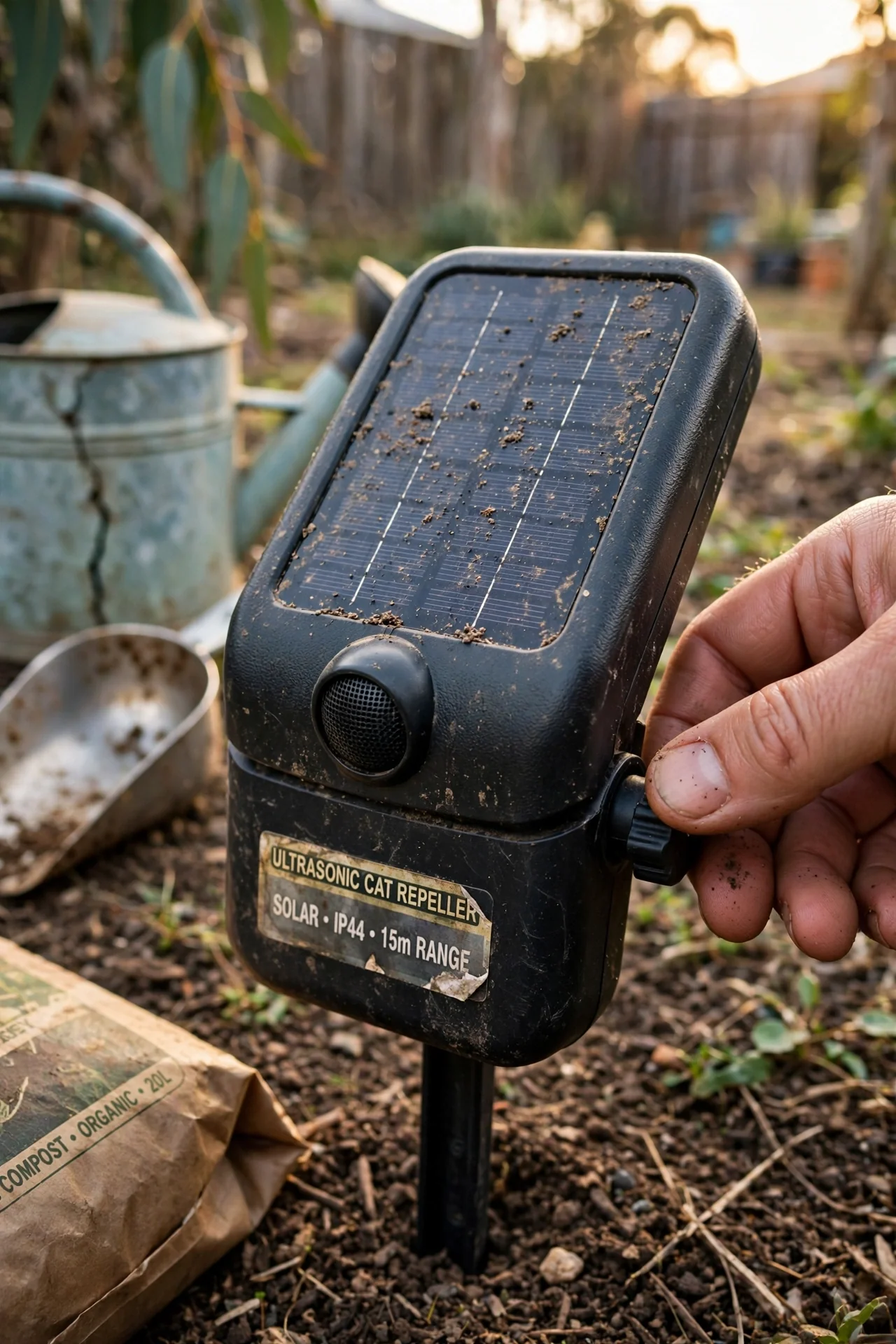
| Ultrasonic Device | High-frequency sound aversion | Perimeter defense, dry zones | Branch 3 | 2 |
| Cat-Proof Fencing | Physical exclusion (roller or angled top) | Whole-garden protection | Branch 3 | 1 |
1. Citrus Peels: Fastest Setup, Shortest Lifespan
Best for: Branch 1
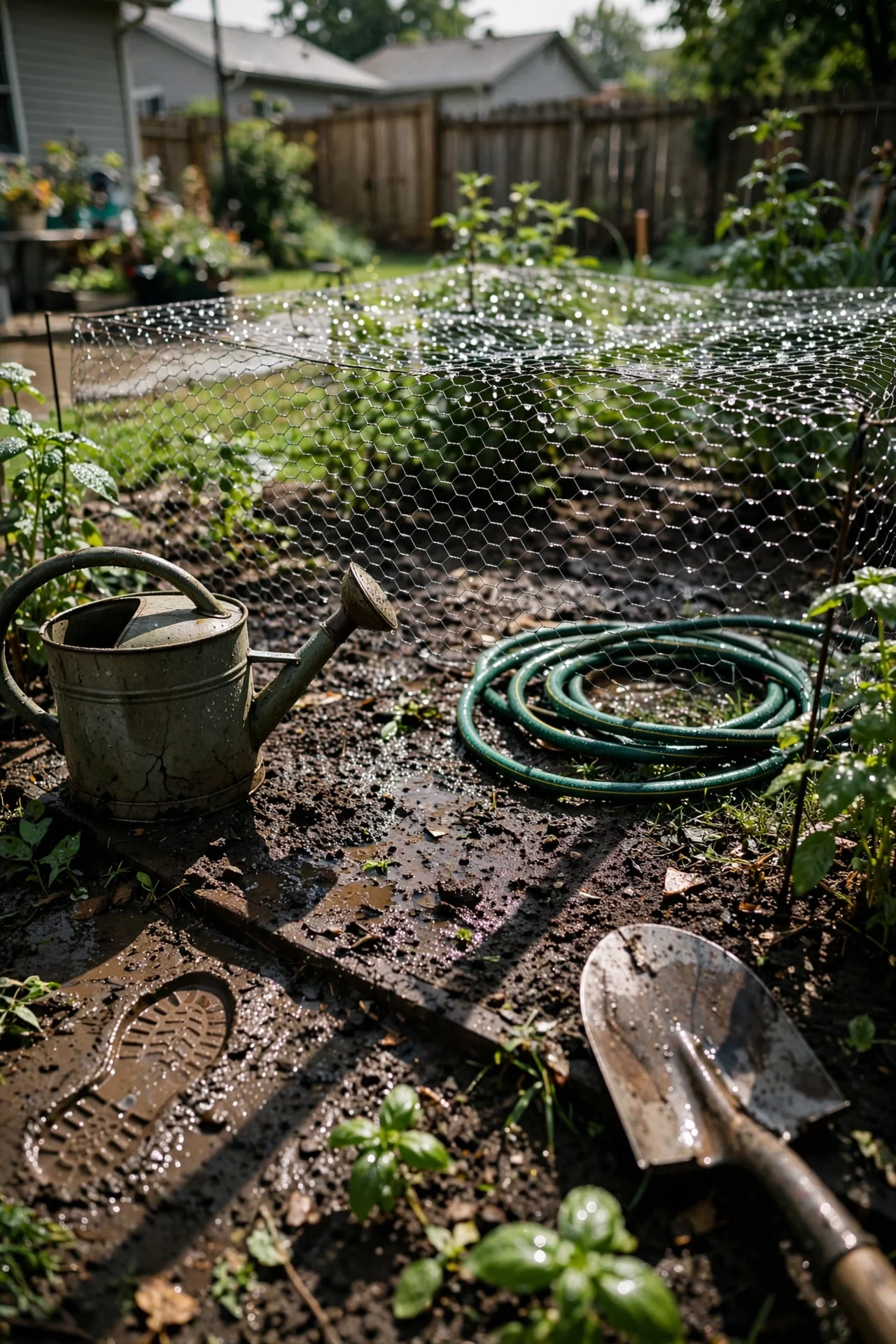
What it is: Fresh orange, lemon, lime, or grapefruit peels scattered directly on soil surfaces where cats dig or defecate. The active compound is limonene, a volatile oil concentrated in the peel’s outer rind.
What it is for: Small flower beds, container gardens, and isolated problem spots no larger than 10 square feet. Not suitable for large lawns or high-traffic zones where peel volume becomes impractical.
Steps: (1) Remove all existing cat waste and the top half-inch of soil touching it. (2) Scatter fresh peels in a single layer with roughly 2 inches of spacing between pieces. (3) Press peels lightly into the soil surface so wind does not displace them. (4) Replace every 5 to 7 days, or immediately after any rainfall exceeding 0.25 inches, because water leaches limonene rapidly.
Common mistake: Using dried or frozen peels. Limonene concentration drops sharply once the peel dehydrates. Fresh peels, used within 24 hours of peeling, deliver the strongest scent. If you cannot replenish that frequently, this method will underperform.
For gardens where scent deterrents wash out too quickly, a physical barrier approach like those in our bird netting guide may offer more reliable protection.
2. Coffee Grounds: Dual-Use but Rain-Vulnerable
Best for: Branch 1
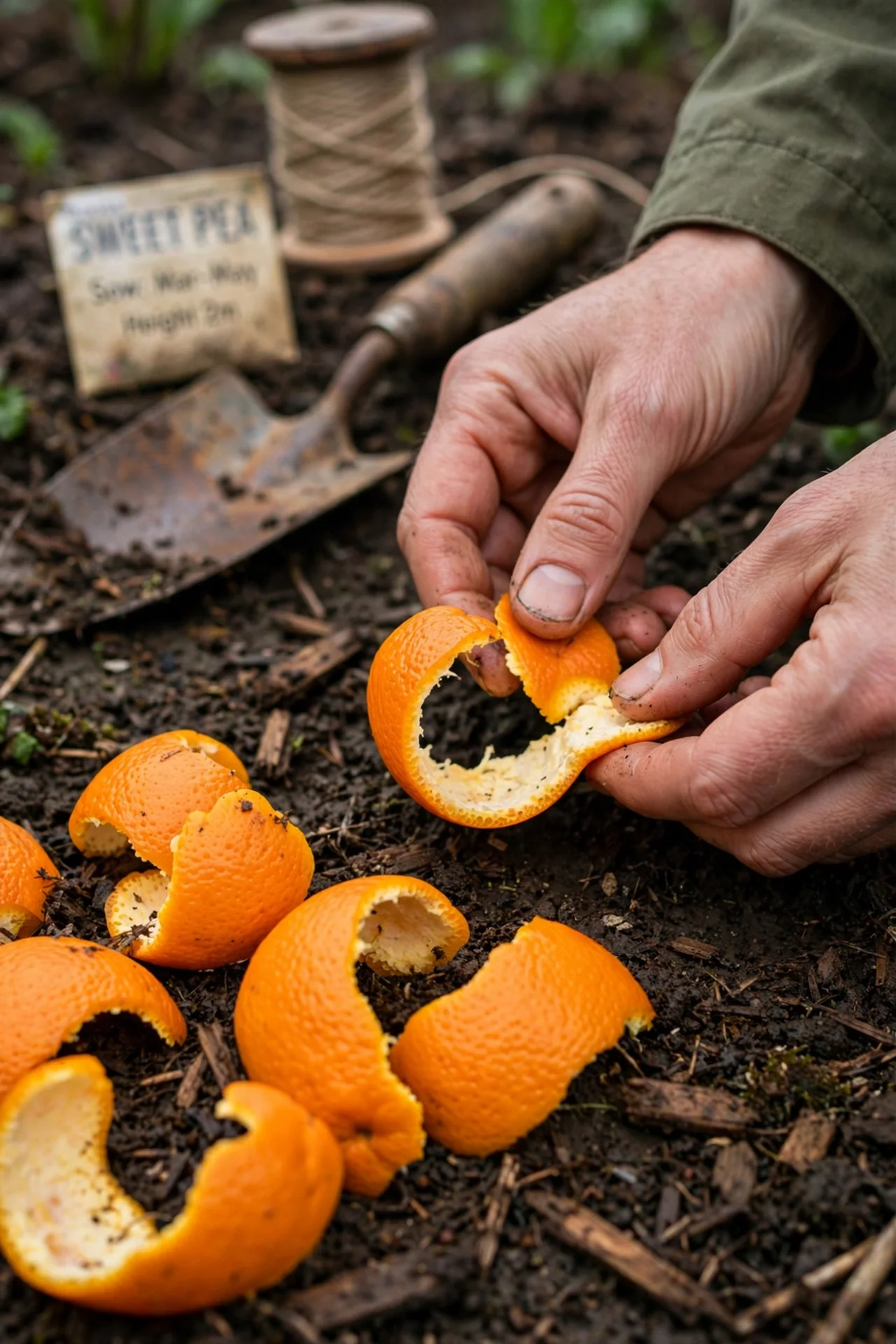
Used coffee grounds provide a mild scent deterrent while adding organic matter to soil. Apply a half-inch layer around target plants. The caffeine and diterpene compounds are the agents cats avoid, but both are water-soluble. Reapply every 10 to 14 days, or immediately after rain. A constraint often overlooked: fresh grounds can temporarily acidify soil (pH drop of 0.5 to 1.0 units). Avoid heavy application around plants that prefer neutral to alkaline soil, such as lavender or clematis.
3. Commercial Repellent Sprays: Precision Tool, Not a Blanket Fix

Best for: Branch 1
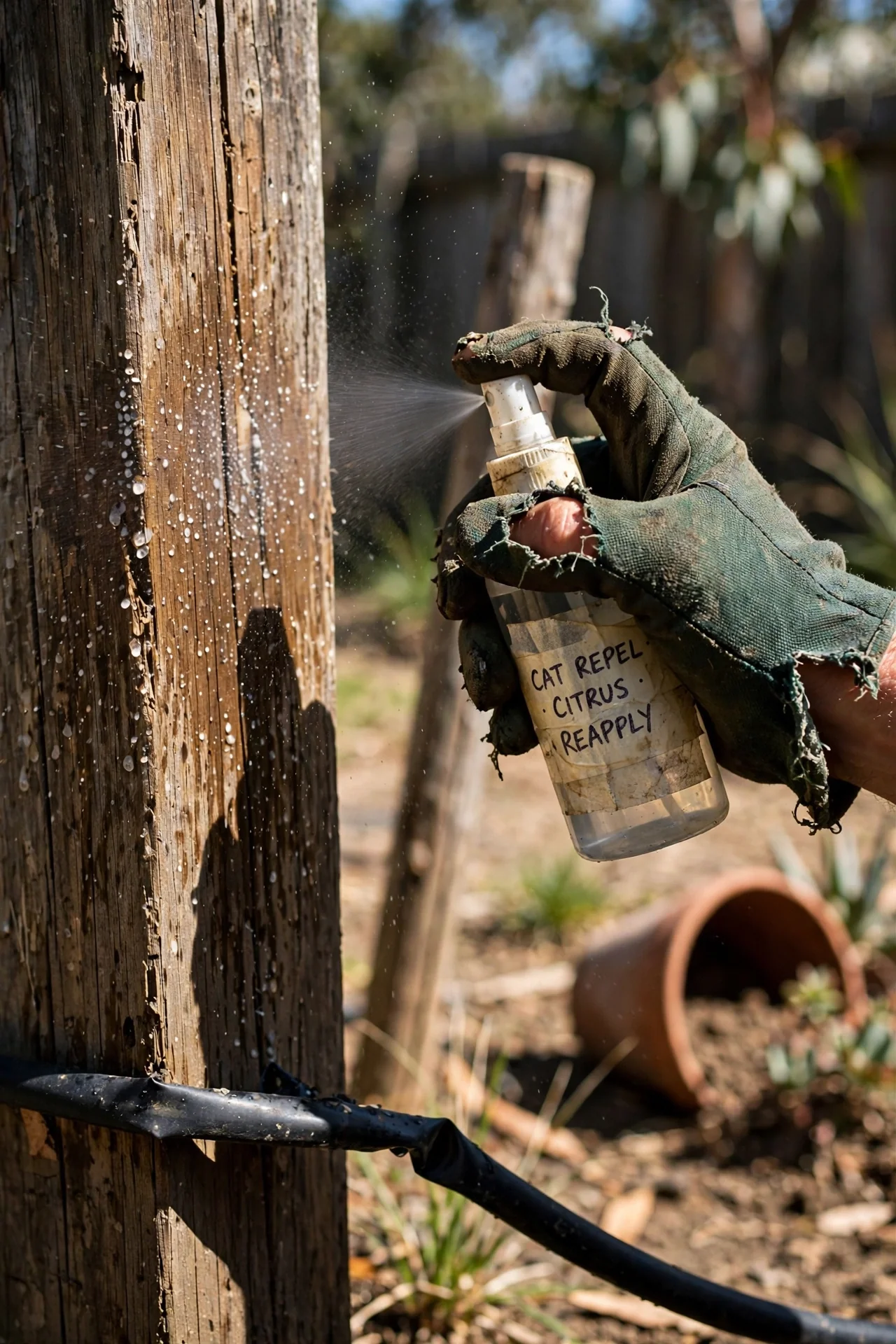
Most commercial cat repellents use either methyl nonyl ketone (a synthetic compound with a 12-hour environmental half-life) or putrescent whole egg solids (which degrade within 48 to 72 hours in moist conditions). Neither survives rain. Apply to hard surfaces like fence tops, pavers, and decorative stones rather than directly on plant foliage. Read the label for the reapplication interval: most specify every 24 to 48 hours during wet weather. These sprays work best as a supplemental tool alongside a primary physical barrier, not as a standalone solution.
If you are concerned about product safety around edible crops, our pet-safe pest control guide covers ingredient screening in detail.
4. Lion Dung Pellets: The Territorial Bluff That Rain Weakens
Best for: Branch 1
How it works: Domestic cats interpret the scent of a large predator’s feces as a territorial threat, triggering avoidance behavior. Commercially sold as dried, sterilized pellets (brands include Silent Roar), lion dung relies entirely on scent persistence.
Duration reality: Manufacturers claim effectiveness for up to 3 months under normal weather conditions. However, field reports and retailer guidance consistently note that heavy rain reduces longevity significantly. After a sustained downpour, effectiveness may drop within days rather than weeks. Sprinkle additional pellets after any storm exceeding 0.5 inches of rainfall.
Application protocol: Remove all existing cat waste first (cats return to their own scent markers regardless of lion dung). Scatter pellets at a rate of roughly 5 to 7 pellets per square yard. Focus on entry points and previously fouled areas. Wear gloves: although sterilized, these are still manure products.
Edge case where it fails: Some cats, particularly confident territorial males, show no avoidance response to predator scents. If you see no reduction in visits after 7 days, lion dung is unlikely to work for your specific intruder.
5. Chicken Wire on Soil: The Gold Standard for Vegetable Beds

Best for: Branch 2
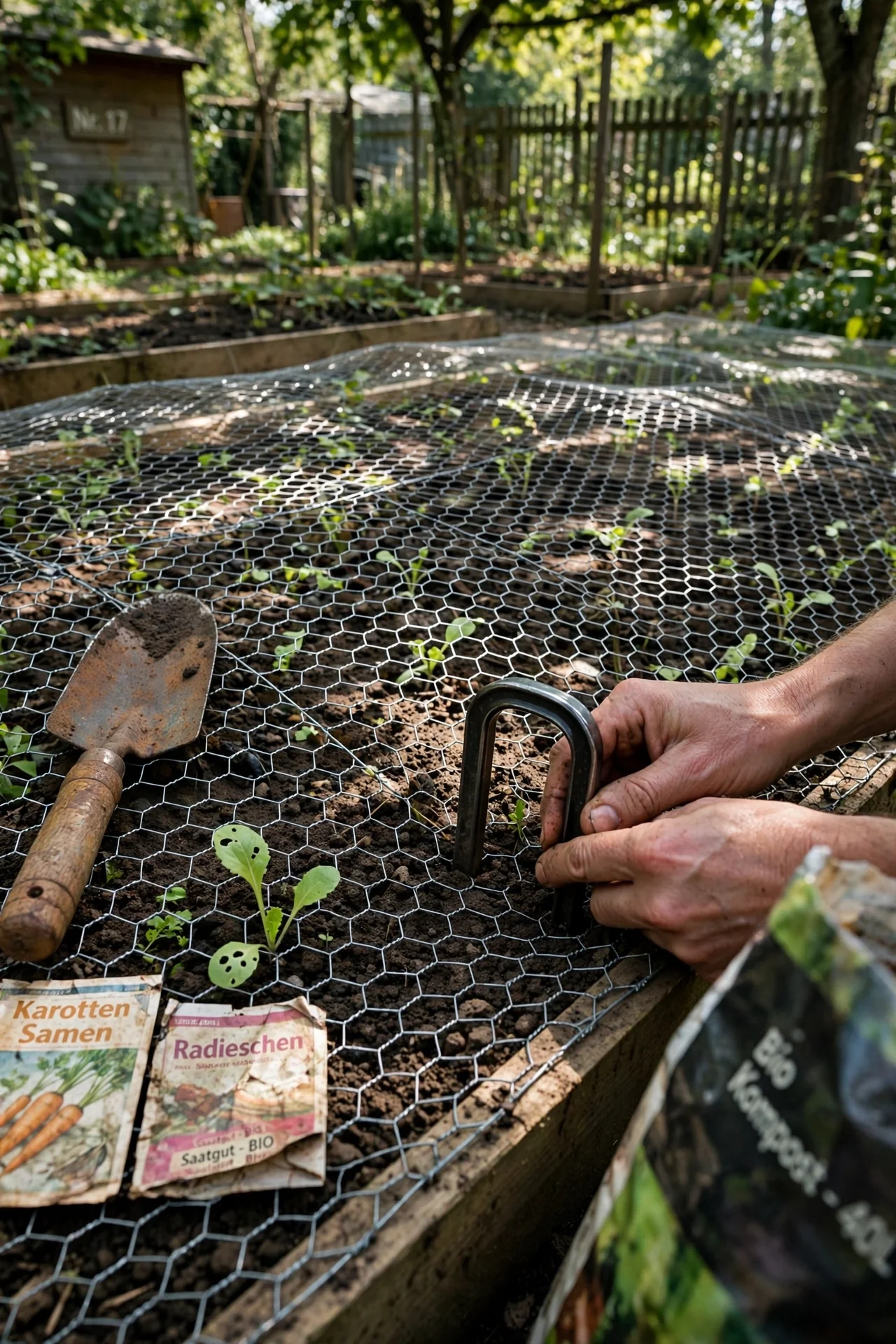
Lay galvanized chicken wire (1-inch hexagonal mesh) flat on the soil surface and secure with landscape staples every 12 to 18 inches. Cats cannot dig through it and dislike walking on the uneven wire. Most vegetable seedlings grow through the gaps without issue. Install before planting for easiest placement. This barrier persists through rain, irrigation, and snow. The only maintenance is checking for rust after 3 to 5 years in wet climates. For raised beds, combine with floating row covers for complete protection, similar to methods covered in our cutworm prevention guide.
6. Pine Cone Mulch: Aesthetic and Permanent
Best for: Branch 2
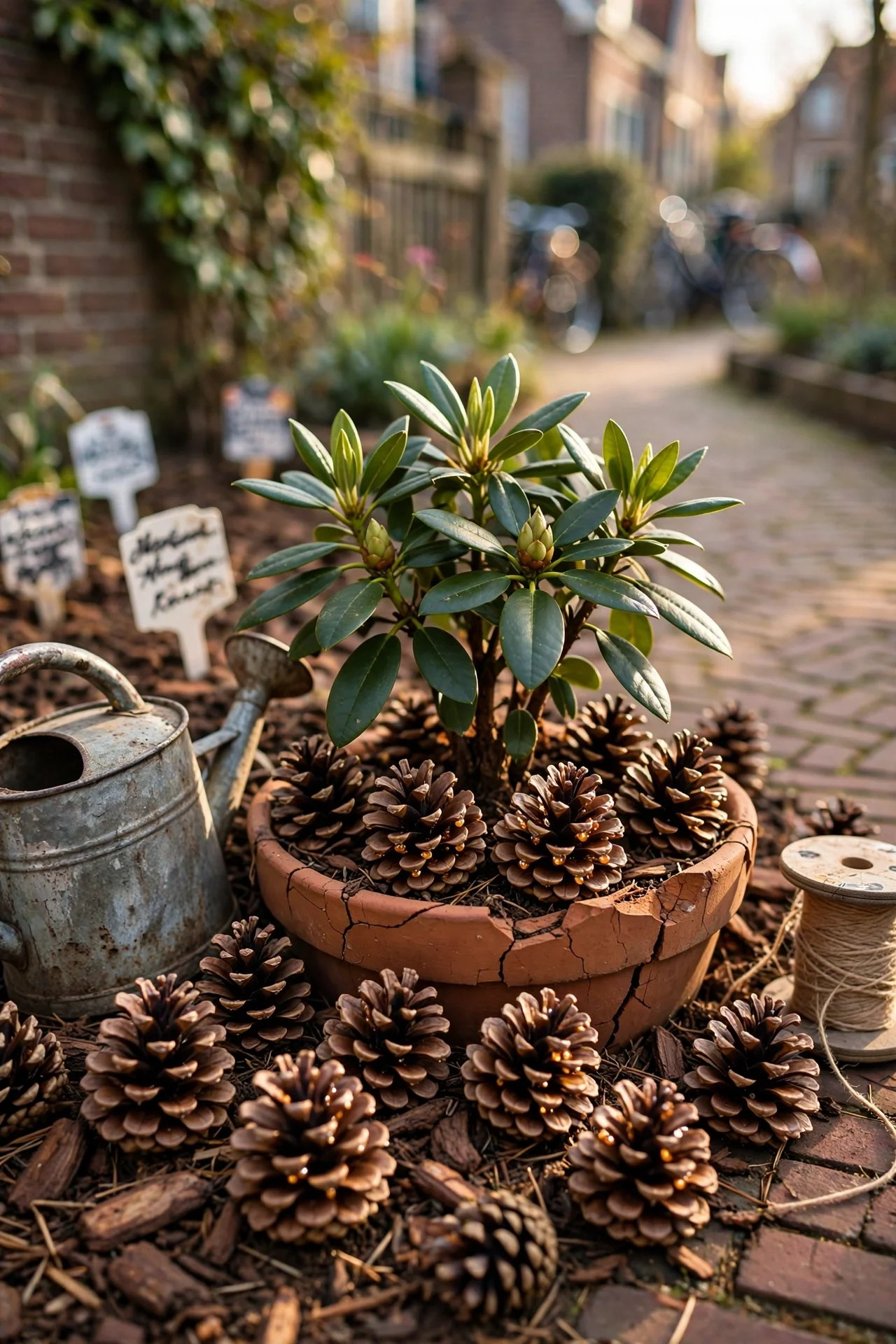
Whole pine cones laid point-side up create an uneven, prickly surface cats refuse to walk across. Unlike scented deterrents, this is purely textural: rain does not reduce effectiveness. Apply a layer 2 to 3 cones deep across exposed soil. Pine cones decompose slowly (2 to 4 years) and contribute mild acidity as they break down, making them especially suitable for azalea, rhododendron, and blueberry beds. One limitation: slugs and snails sometimes shelter beneath pine cones in wet conditions, so monitor in damp climates.
7. Stone Mulch and Gravel: Best for Dry Gardens
Best for: Branch 2
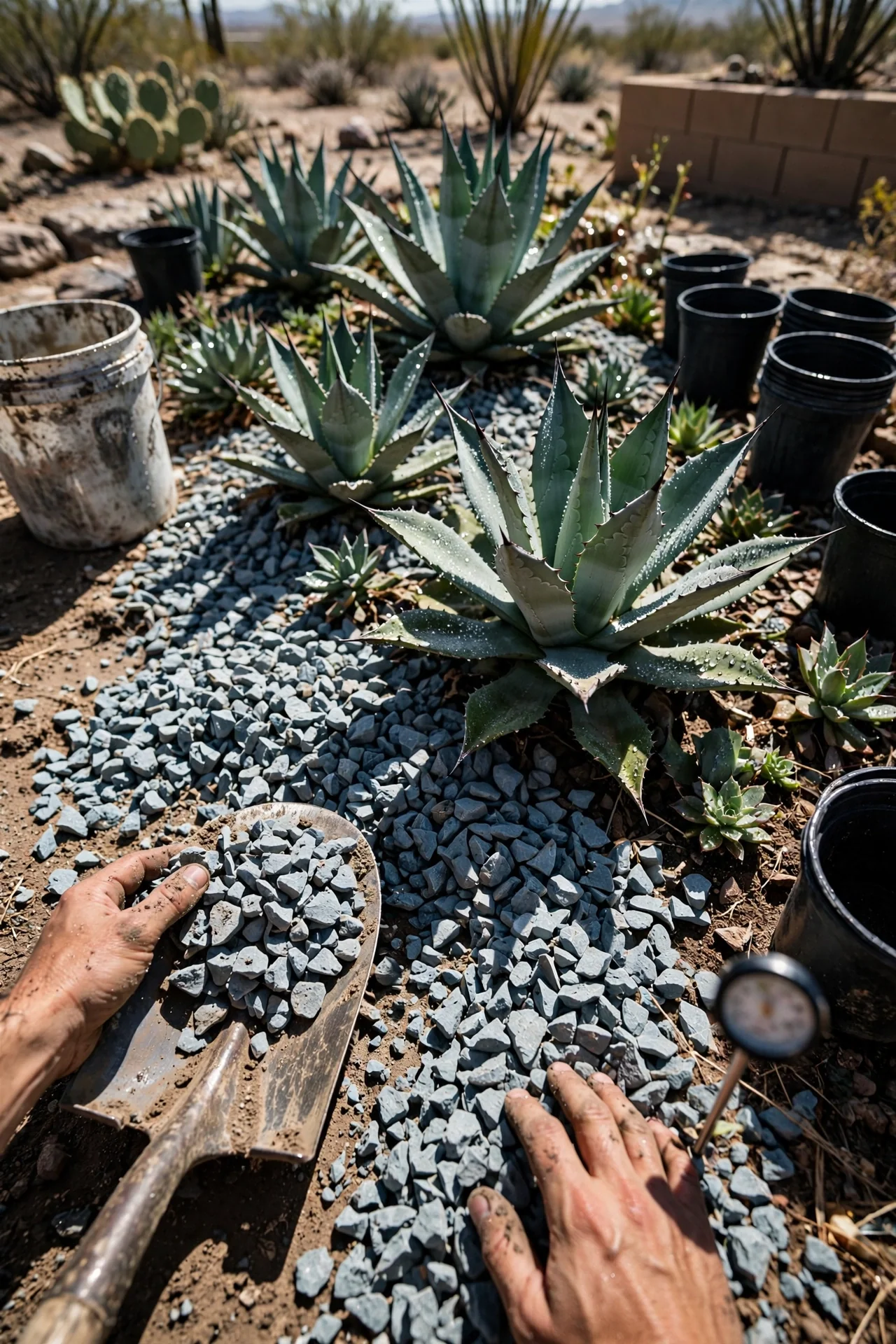
Use angular gravel or crushed stone with a diameter of 0.75 to 1.5 inches. Rounded pea gravel is less effective because cats can push it aside more easily. Apply a layer 2 inches deep. This method excels in xeriscape gardens and succulent beds, where it doubles as a weed suppressant. The weight and instability of the surface prevent both digging and comfortable walking. Rain has zero impact on performance. The trade-off is cost: stone mulch is more expensive per square foot than organic mulches, and it retains heat, which can stress shallow-rooted plants in full sun.
8. Dense Planting: Eliminate the Litter Box Opportunity
Best for: Branch 2
Cats seek bare, loose soil for defecation. If no bare soil exists, the behavior often stops without any other intervention. Pack perennial borders tightly so that foliage covers all soil surfaces by mid-spring. Use groundcover plants like creeping thyme, sedum, or ajuga to fill gaps between larger specimens. This is a one-time design solution that improves with each growing season. The constraint is time: dense planting takes 1 to 2 growing seasons to fully establish. In the interim, use a temporary physical barrier such as chicken wire or pine cones.
For plant selection ideas that also deter other garden visitors, see our companion planting for pest control resource.
9. Motion-Activated Sprinkler: The Highest Success Rate, With Trade-Offs

Best for: Branch 3
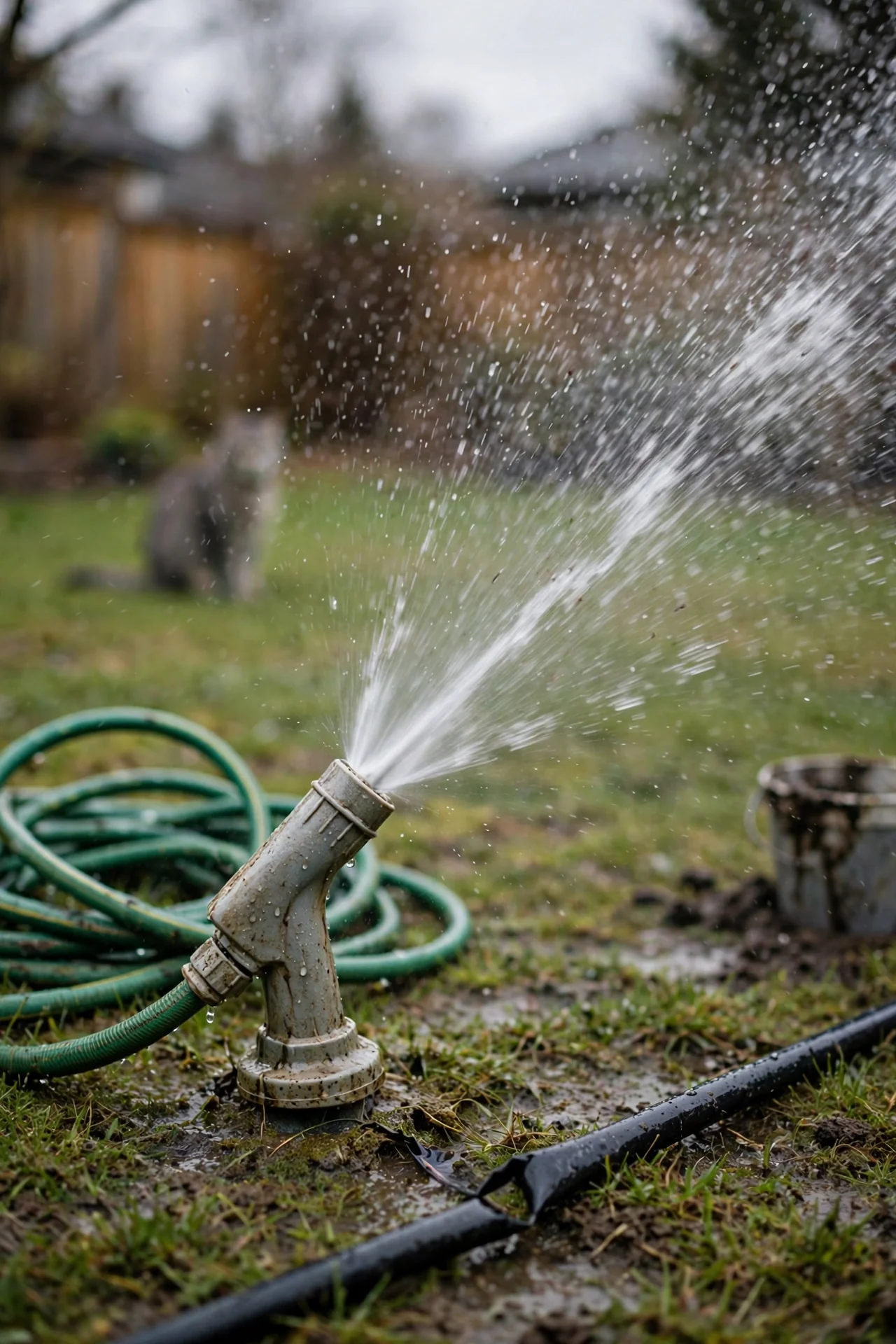
Mechanism: A passive infrared sensor detects heat and motion within a coverage cone (typically 30 to 40 feet in length and 90 to 120 degrees in width). When triggered, the unit releases a 2- to 3-second burst of water. The startle response creates a conditioned avoidance within 5 to 7 days of consistent exposure.
Installation requirements: Connect to a standard garden hose with water pressure between 30 and 80 PSI. Position the sensor above vegetation height to prevent false triggers from swaying plants. Most units run on 2 to 4 AA batteries lasting 3 to 6 months, or use a solar panel attachment.
Critical constraint: These units do not distinguish between cats and other warm-blooded animals. Hedgehogs, birds foraging on the ground, and even gardeners who forget to turn the unit off will trigger it. Place a visual marker (a small flag or stake) near the sensor to remind yourself to deactivate it before weeding or harvesting. In freezing temperatures, disconnect and drain the unit to prevent internal cracking.
Where it shines: Open lawns, wide borders, and garden entry points where cats have clear approach paths. The same infrared technology applies to other nuisance animals; our raccoon deterrent guide covers motion-activated strategies in more detail.
10. Ultrasonic Devices: Mixed Evidence, Specific Use Case
Best for: Branch 3
Ultrasonic deterrents emit high-frequency sound (above 20 kHz) when triggered by motion. A 2018 study across 18 suburban gardens in Australia found that ultrasonic devices reduced the frequency of cat incursions by resident cats by 46% and the duration of those visits by 78%. However, an earlier UK trial (Nelson et al., 2006) found a 32% reduction in one experiment but no significant effect in a longer second trial. The key variable appears to be habituation: some cats learn to tolerate the sound over weeks. Place units where the sound path is unobstructed by dense foliage, walls, or fences. Solar-powered models eliminate battery replacement but require at least 4 to 6 hours of direct sunlight daily.
11. Cat-Proof Fencing: The Permanent Perimeter Solution
Best for: Branch 3
Standard fences fail because cats can grip the top edge and pull themselves over. Cat-proof modifications work by creating an unstable or impassable ledge. Roller bars (spinning aluminum cylinders mounted on fence tops) prevent cats from gaining purchase. Angled mesh overhangs at 45 degrees, extending 18 inches outward, achieve the same effect. Both methods cost more than any other deterrent category but require zero ongoing maintenance. Install on all perimeter fences for full protection; cats will find and exploit any untreated section. For pet-owning households, this solution also keeps your own cat safely contained, aligning with principles discussed in our dog-safe pest control guide (applicable to multi-pet gardens).
Starter Stack (What to Choose First)
Branch 1 Starter: Scent Stack for Quick Wins
Begin with citrus peels (Item 1) on the most fouled area and add coffee grounds (Item 2) on surrounding soil. The combination provides two distinct scent profiles cats dislike, reducing the chance of habituation to a single smell. Total cost is near zero if you already consume citrus and coffee. Expect to spend 10 to 15 minutes per week on reapplication during dry weather, and double that during rainy periods.
Branch 2 Starter: Texture Stack for Low Maintenance
Lay chicken wire (Item 5) over vegetable beds and spread pine cone mulch (Item 6) in ornamental borders. Together these cover the two highest-risk zones in most gardens. Installation takes 1 to 2 hours for an average suburban garden. Ongoing time commitment is effectively zero except for seasonal mulch replenishment every 2 to 3 years.
Branch 3 Starter: Device Stack for Hands-Off Protection
Deploy a motion-activated sprinkler (Item 9) at the primary entry point and back it up with an ultrasonic device (Item 10) near secondary access routes. The sprinkler handles open areas while the ultrasonic unit covers tighter spaces where a water jet would overshoot. Budget approximately $60 to $120 USD for both devices. Expect to change batteries every 3 to 4 months and to disconnect the sprinkler during freezing conditions.
When This Won’t Work
Failure condition 1: The cat is using your garden as a transit route, not a toilet. If cats are simply walking through your garden en route to another location, scent deterrents and texture barriers placed only in beds will not stop them. You need perimeter intervention: motion-activated sprinklers positioned at entry points or cat-proof fencing along the property line. Without blocking the path itself, no in-bed deterrent will change behavior.
Failure condition 2: Multiple cats from different households are marking territory. When three or more cats compete over the same space, scent deterrents become a signal arms race. Each cat deposits its own scent markers in response to the deterrent, creating a cycle where you reapply repellent and cats overmark it. In this scenario, only physical exclusion (fencing) or consistent startle conditioning (motion sprinklers) breaks the loop.
If neither condition applies and your chosen method is still failing after 14 days of consistent use, switch branches rather than doubling down. A cat that ignores citrus peels may respond immediately to chicken wire. For gardens with multiple pest pressures, our rabbit deterrent guide covers additional physical barrier strategies that work against cats as well.
Choosing the Right Option for Your Situation
Budget Threshold
If your total budget is under $30, stay in Branch 1 (citrus peels, coffee grounds) or Branch 2 (chicken wire, foraged pine cones). Avoid ultrasonic devices under $25: these use lower-quality speakers with narrower frequency ranges and have poorer field results. The effective price floor for a reliable ultrasonic unit is approximately $35 to $50.
Time Threshold
If you can commit less than 30 minutes per month to cat deterrent maintenance, exclude all Branch 1 options. Scent deterrents demand weekly attention at minimum. Branch 2 (physical barriers) or Branch 3 (devices with battery changes every few months) are your only viable paths.
Technical Constraint: Soil Moisture Management
If you garden in a climate with frequent summer rain (more than 1 inch per week), scent deterrents degrade so quickly that their cost-to-effectiveness ratio collapses. The same applies to gardens with automatic irrigation systems that spray onto beds. In these conditions, choose Branch 2 or Branch 3 exclusively. The one exception is lion dung pellets, which hold up better than water-soluble sprays but still require post-rain replenishment.
Quick Yes/No Checklist:
- Does it rain more than once a week in your growing season? If yes, skip Branch 1.
- Do you have bare soil visible in beds? If yes, install Branch 2 barriers before trying anything else.
- Are cats entering from a single, identifiable path? If yes, a motion sprinkler (Branch 3) at that point may solve the problem alone.
- Have you removed all existing cat waste before starting? If no, do this first: cats navigate by scent memory.
Expert Q&A
Why do cats choose my garden over my neighbor’s identical garden?
Cats select sites based on substrate texture first (loose, dry soil is ideal) and scent history second. If your neighbor uses heavy mulch or waters frequently, their soil is less attractive. Once a cat has defecated in your garden, the residual odor signals “safe toilet site” to that cat and others, creating a self-reinforcing pattern.
Do the same deterrents work for stray cats and owned outdoor cats?
Owned cats with established home territories are generally more persistent and harder to deter than true strays. A 2018 Australian study found that resident cats (pets living nearby) accounted for more garden incursions than peripheral cats, and their activity was harder to suppress. Strays may avoid an area after a single negative experience, while owned cats often require repeated conditioning.
Can cat deterrents harm my vegetable garden soil or crops?
Coffee grounds can temporarily lower soil pH and may inhibit seedling germination if applied thicker than half an inch. Citrus peels are safe but attract fruit flies in warm weather. Vinegar sprays damage plant foliage on contact and alter soil pH: restrict them to hard surfaces only. Commercial repellents containing methyl nonyl ketone should not be sprayed directly on edible plant parts.
Will these methods work on kittens or only adult cats?
Kittens under 6 months have not yet developed strong territorial behaviors and may be less responsive to scent-based territorial deterrents like lion dung. However, they respond normally to texture barriers (chicken wire, pine cones) and startle devices (motion sprinklers). Juvenile cats also habituate to ultrasonic devices more quickly than adults in some observations.
How long should I try a method before deciding it does not work?
For scent deterrents, 14 days of consistent application is a fair trial. For physical barriers, you will see results within 48 hours if the barrier is correctly placed over the target area. For motion sprinklers, allow 5 to 7 days for conditioning. For ultrasonic devices, the habituation window varies widely: if you see no reduction after 3 weeks, the cat has likely acclimated.
Conclusion
The single decision that matters most is whether your chosen deterrent can survive your watering schedule. Gardeners who ignore this variable end up cycling through methods that all fail for the same reason: the active ingredient washes away before it can change behavior. Start by identifying your branch based on rain frequency and maintenance tolerance, then pick the specific item that matches how cats are actually using your space.
The number one mistake is trying to solve a perimeter problem (cats walking through) with an in-bed solution (scent deterrents on soil). If cats are simply passing through, no amount of citrus peel will redirect them. For a comprehensive look at managing multiple garden threats simultaneously, including four-legged visitors, explore our beneficial insects guide to build a resilient garden ecosystem that handles pests at every level.