
Most carnivorous plant advice dwells on choosing ingredients. The real lever you control is subtraction. These plants catch prey precisely because their native bog and cliffside soils are barren: low in nitrogen, nearly free of dissolved salts, and often acidic. Recreating that poverty is the decisive factor. When you treat the mix as a medium of strategic deprivation, root health and trap formation follow naturally.
This guide covers base materials, pre-formulated blends, and the non-negotiable rules around water quality. It excludes fertilizing regimens (you should not fertilize the soil of true carnivores) and propagation media that require hormone treatments. Every option below works only when paired with rainwater, distilled water, or reverse-osmosis water.
By the end, you will be able to match a soil recipe to your plant’s growth habit, spot hidden nutrient sources on a label, and assemble a mix that holds moisture or drains sharply depending on the species. You will also see exactly where common substitutions fail.
Bottom line: Build a nutrient-free, pH-adjusted, aerated root zone and commit to mineral-free water; the plants will feed themselves.
The Yield Grid Decision Grid
Start here to match your carnivore’s root behavior with the right soil architecture. All three branches assume pure water and no added fertilizer. For a deeper look at the raw components, see our guide to potting soil ingredients.
Branch 1: Constantly wet roots, high humidity. Sundews, terrestrial bladderworts, and butterworts that grow in boggy seepages. The soil must hold moisture continuously yet stay oxygenated at the surface.
Recommended: Items 1, 2, 3 below.
Branch 2: Wet-dry cycles with sharp drainage. Venus flytraps, Sarracenia, and many temperate pitcher plants. Roots demand rapid drainage and aeration; the crown rots if the mix stays soggy.
Recommended: Items 3, 4, 8 below.
Branch 3: Epiphytic or climbing root zones. Nepenthes and some Heliamphora that cling to mossy bark in the wild. The medium must be chunky, fast-draining, and airy.
Recommended: Items 1, 9, 10 below.
Quick Comparison Table
| Option | Key mechanism | Best for | Decision Grid Branch | Effort Score |
|---|---|---|---|---|
| 1. Long-Fiber Sphagnum Moss | High moisture retention, natural acidity, antifungal | Bog terrariums, Nepenthes mounts | Branch 1, 3 | 2 |
| 2. Peat Moss | Acidic pH, high water-holding capacity | Classic bog mixes, Sarracenia | Branch 1 | 3 |
| 3. Perlite | Neutral pH, lightweight aeration, no nutrients | Venus flytrap and Sarracenia drainage | Branch 1, 2 | 3 |
| 4. Silica Sand | Sharp drainage, weight anchors pots, inert | Outdoor flytrap bogs, heavy pots | Branch 2 | 4 |
| 5. Horticultural Charcoal | Adsorbs impurities, reduces anaerobic pockets | Closed terrariums, long-term containers | Branch 1, 3 | 2 |
| 6. Coconut Coir | Good aeration when rinsed, renewable alternative to peat | Nepenthes after rigorous salt removal | Branch 3 (only if salt-free) | 4 |
| 7. Pre-Made Carnivorous Plant Mix | Pre-blended, zero-nutrient, ready to use | Beginners, one-plant setups | Branch 1, 2 | 1 |
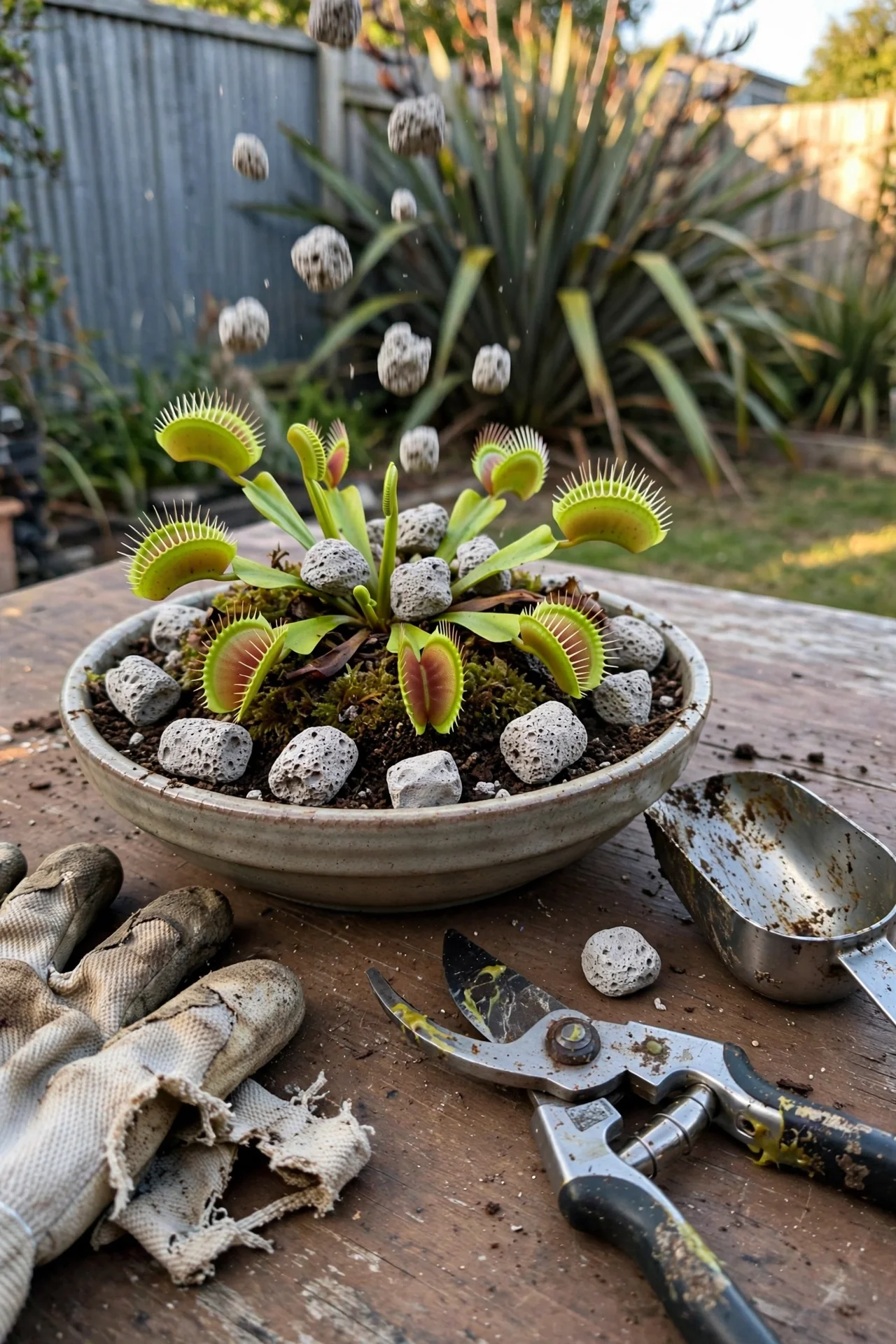
| 8. Pumice | Heavy, porous, doesn’t float, permanent drainage | Top-dressing flytraps, windy areas | Branch 2 | 3 |
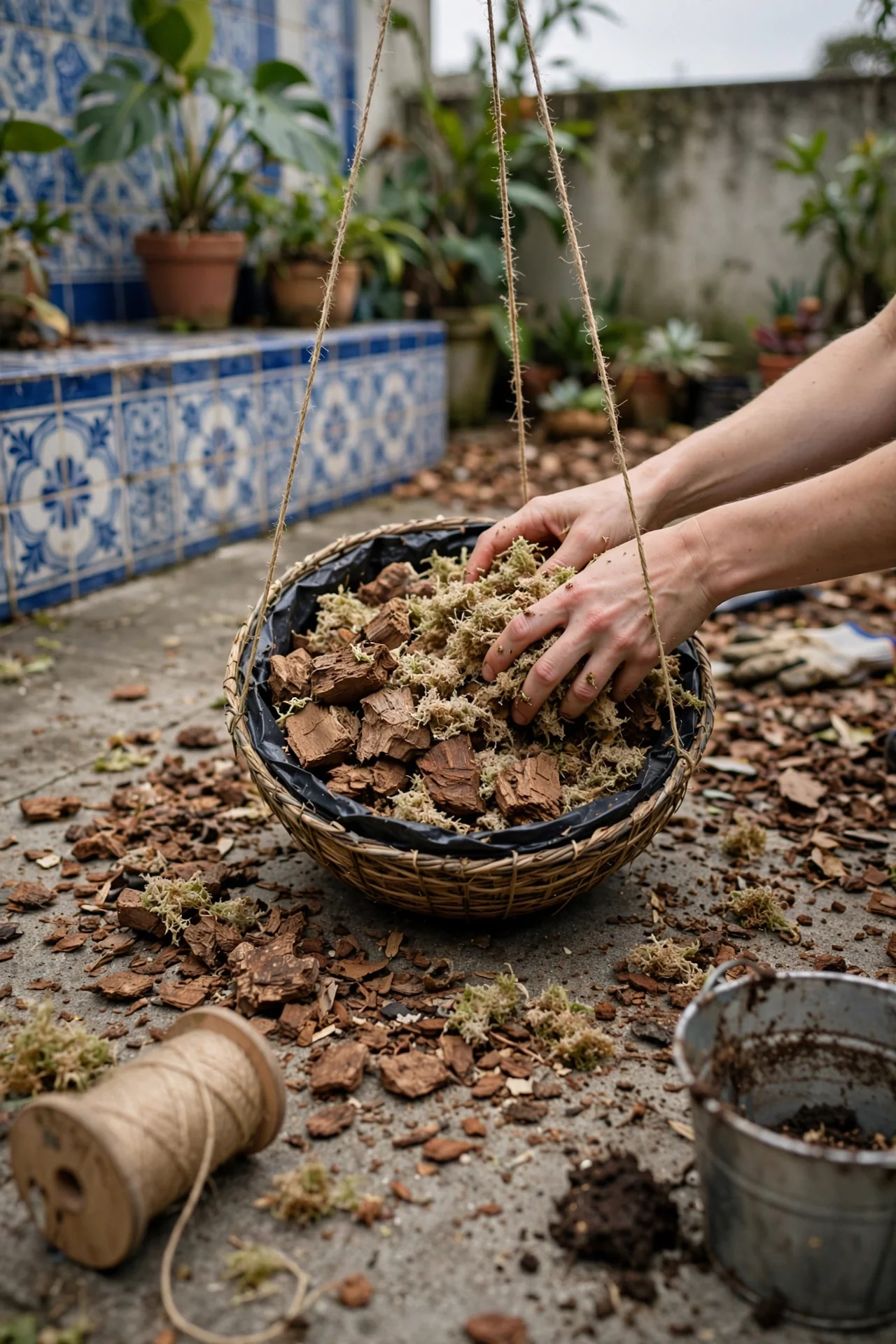
| 9. Orchid Bark | Chunky structure, air pockets, slow breakdown | Nepenthes pots, climbing species | Branch 3 | 3 |
| 10. Live Sphagnum Moss | Living, self-renewing acidity, top moisture regulator | Bog gardens, high-humidity displays | Branch 1, 3 | 5 |
1. Long-Fiber Sphagnum Moss
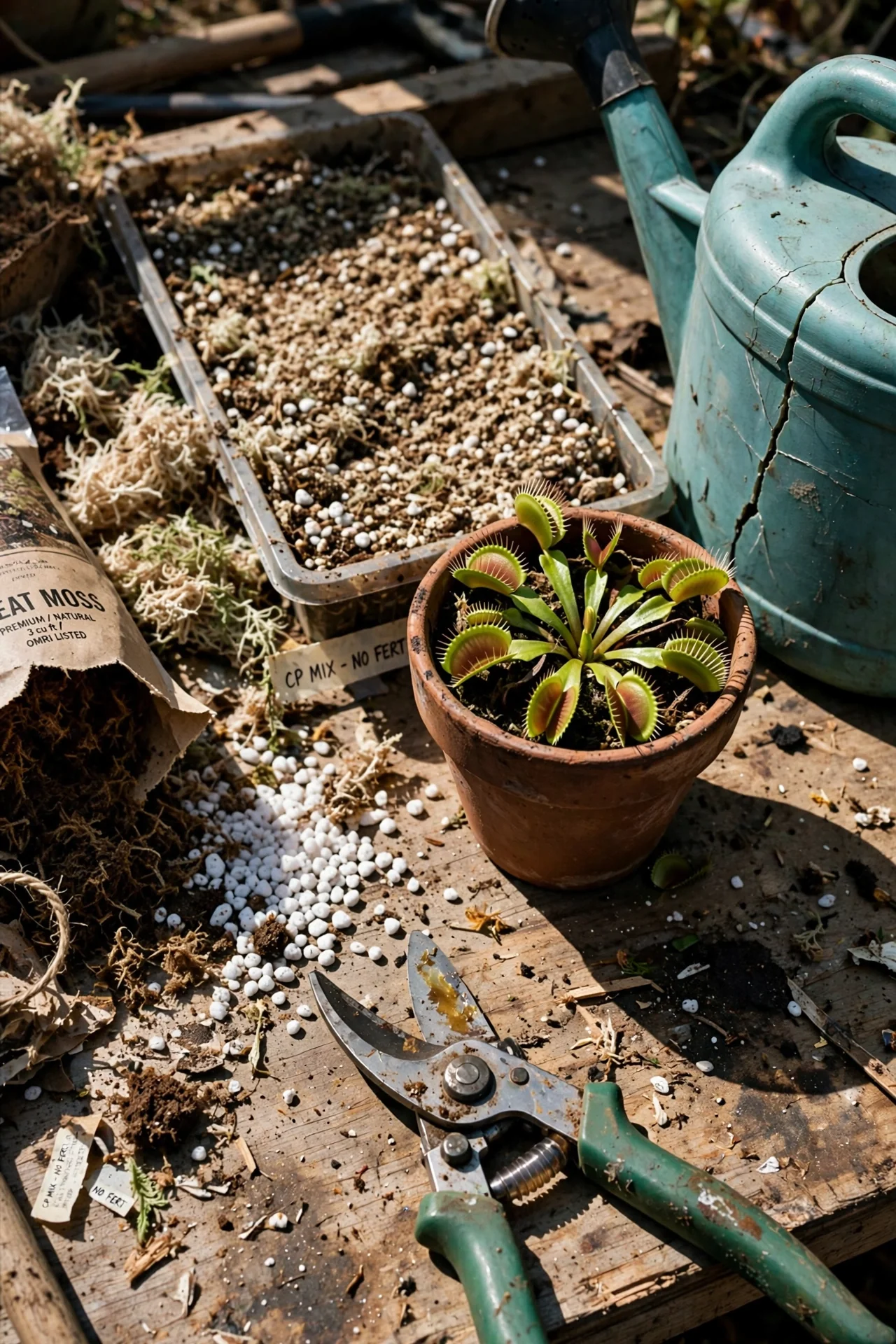
Best for: Branch 1 (Bog Plants) and Branch 3 (Epiphytic species).
What it is: Dried strands of sphagnum moss, not milled peat. It holds up to 20 times its weight in water yet leaves macro-pores for oxygen. Its natural pH hovers between 4.0 and 5.0, suppressing many root pathogens.
Blueprint:
1. Hydrate a compressed brick in distilled water until fully expanded, usually 15–20 minutes.
2. Gently fluff the strands; do not pack them into a pot. Loose structure is the entire point.
3. For Nepenthes, line a net pot with live or dried sphagnum and insert the root ball.
4. Common mistake: letting the top crust dry while the interior stays soggy. Finger-test the core, not just the surface.
For terrarium builds, the same moss serves as a backdrop and humidity buffer. Top-dress only with distilled water mist to avoid mineral crust. If you plan a closed terrarium, our potting mix for terrariums guide explains layer sequencing.
2. Peat Moss
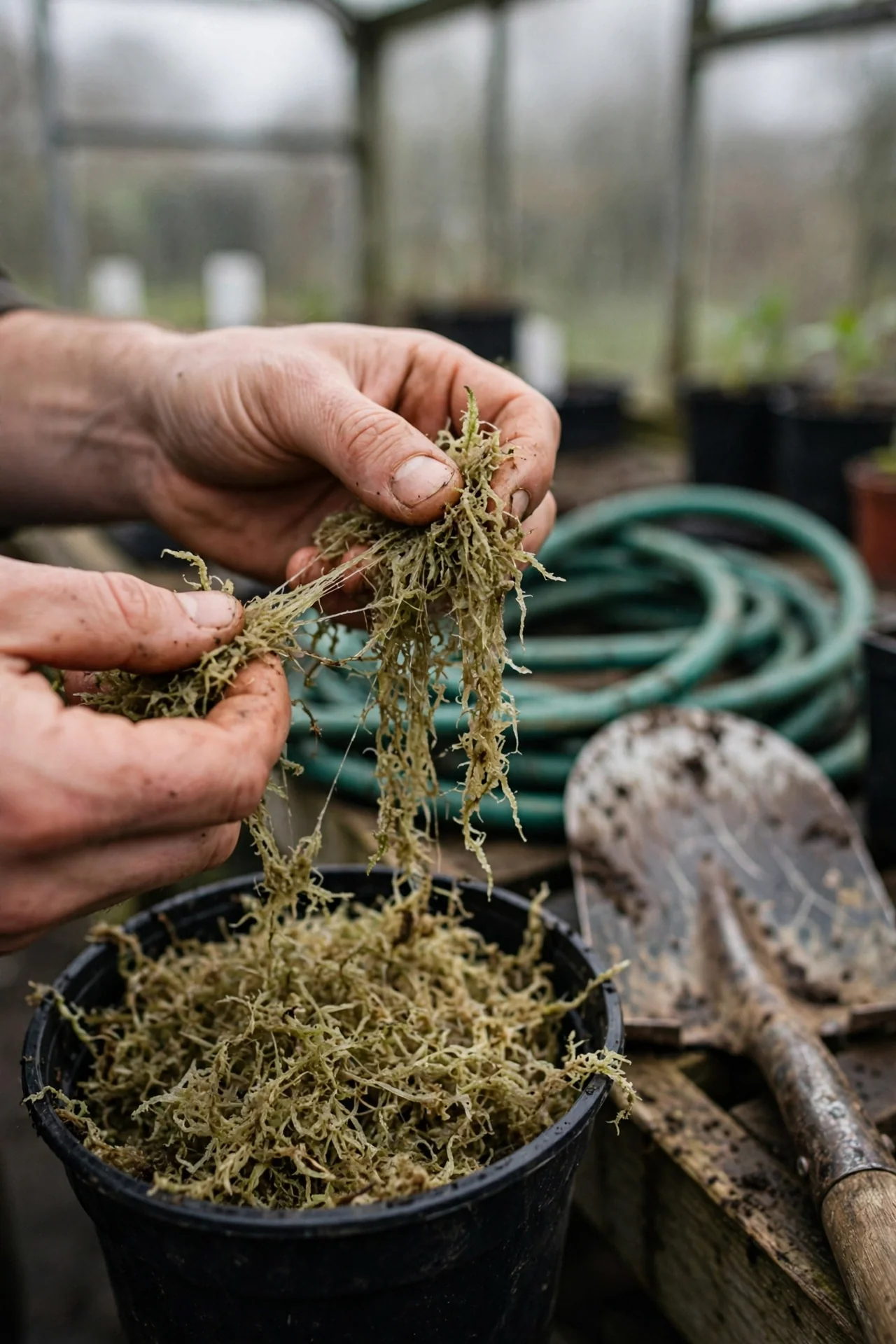
Best for: Branch 1 bog mixes.
Use it when you need a reliably acidic, sponge-like base that holds moisture for days. It is the classic ingredient for Sarracenia and sundew pots. Skip it when sustainability is a hard constraint or you cannot prevent complete drying: once bone-dry, peat becomes hydrophobic and resists rewetting unless you submerge the pot for hours. Edge case: use only with mineral-free water; any dissolved calcium will slowly neutralize the acidity and spoil the medium’s chemistry.
3. Perlite
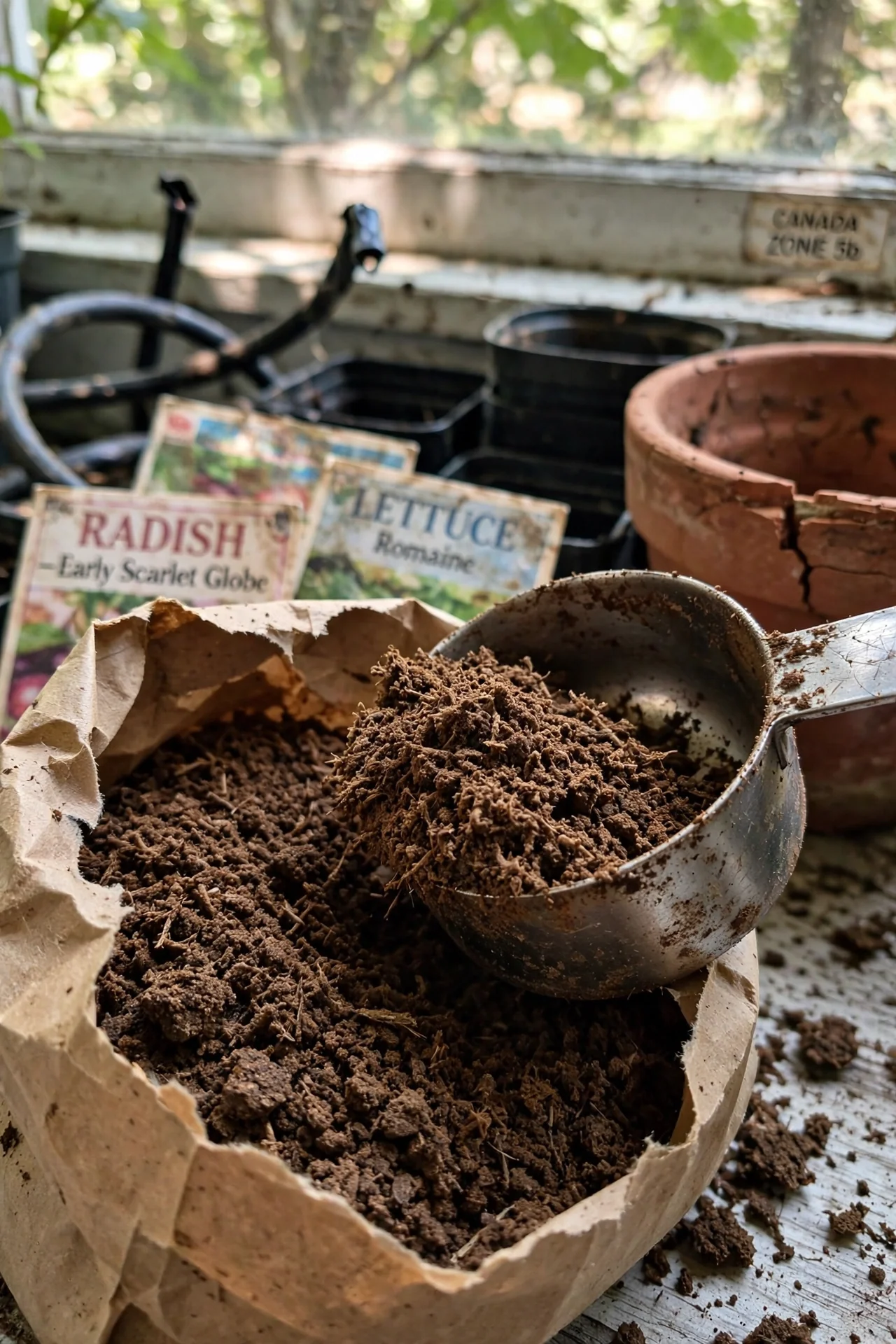
Best for: Branch 1 and Branch 2 drainage blends.
The threshold that matters is volume ratio. For a standard Venus flytrap or Sarracenia mix, combine 1 part perlite with 1 part peat moss. If your climate is humid and pots stay damp longer, shift to 2 parts perlite to 1 part peat. Perlite itself is pH-neutral (around 7.0) and contains no plant-available nutrients. Always rinse new perlite to remove fine dust that can clog air spaces. Our comparison of perlite vs pumice helps you decide if weight matters for your setup.
4. Silica Sand
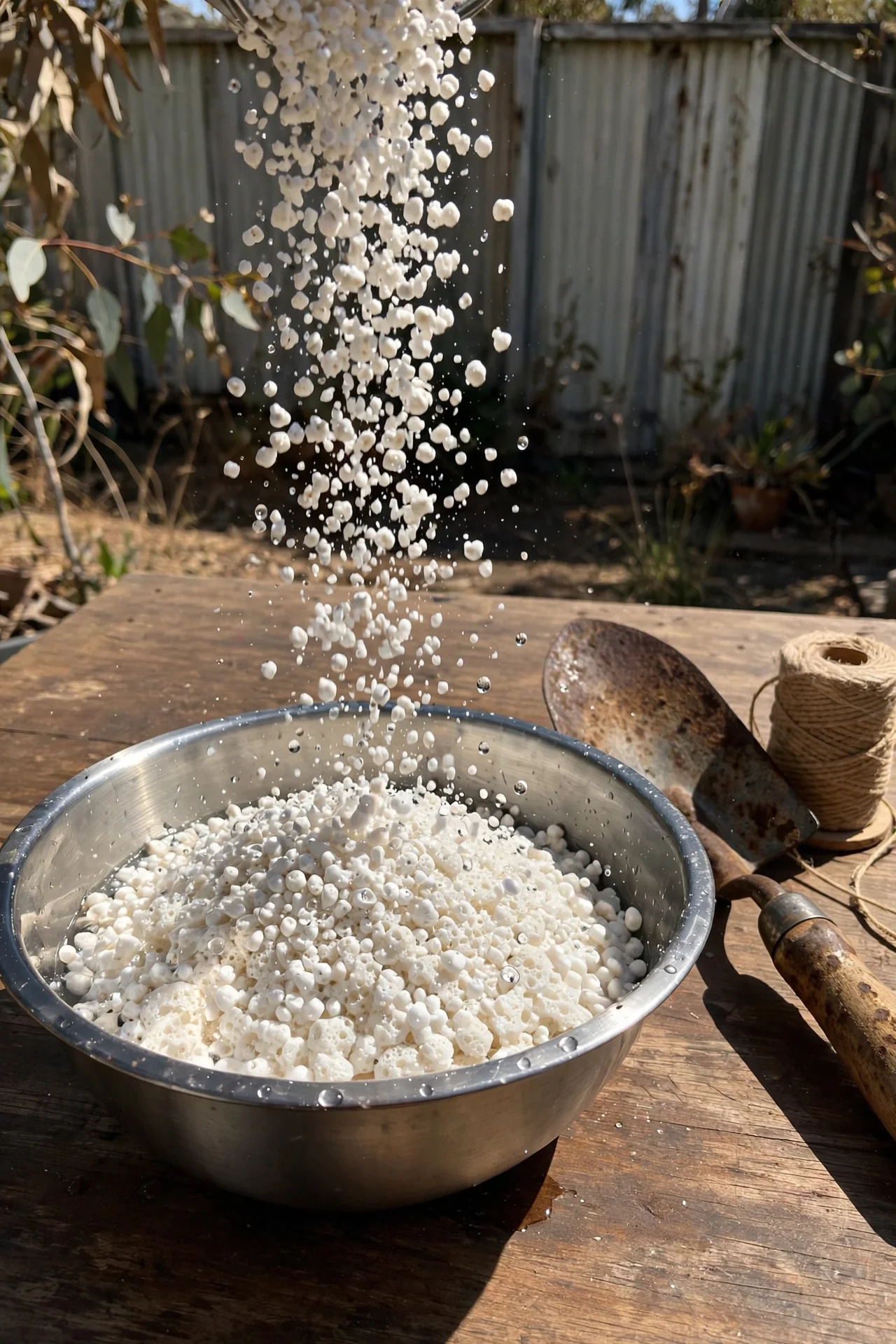
Best for: Branch 2 sharp-drainage applications.
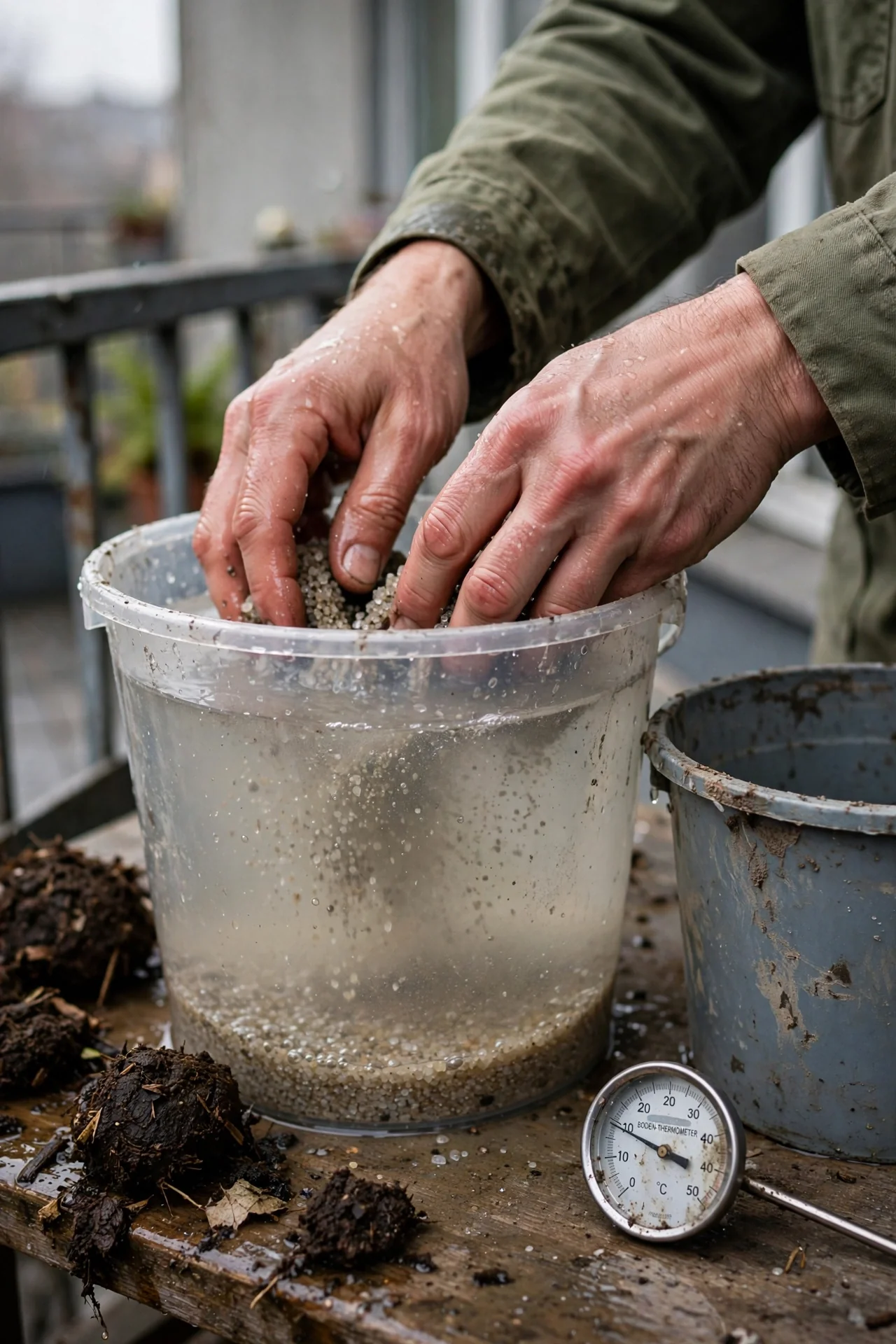
10-minute workflow: Procure #12 or #16 graded silica sand (not play sand, not builders’ sand). Place 2 cups of sand in a bucket, flood with distilled water, stir vigorously, let fines cloud the water, and pour off the murky top layer. Repeat until the water runs clear, usually three rinses. Mix 1 part clean sand with 1 part hydrated peat moss. Pack lightly; dense compaction kills the drainage purpose. Upgrade option: for permanent outdoor bogs, replace half the sand with pumice (item 8) to prevent gradual settling.
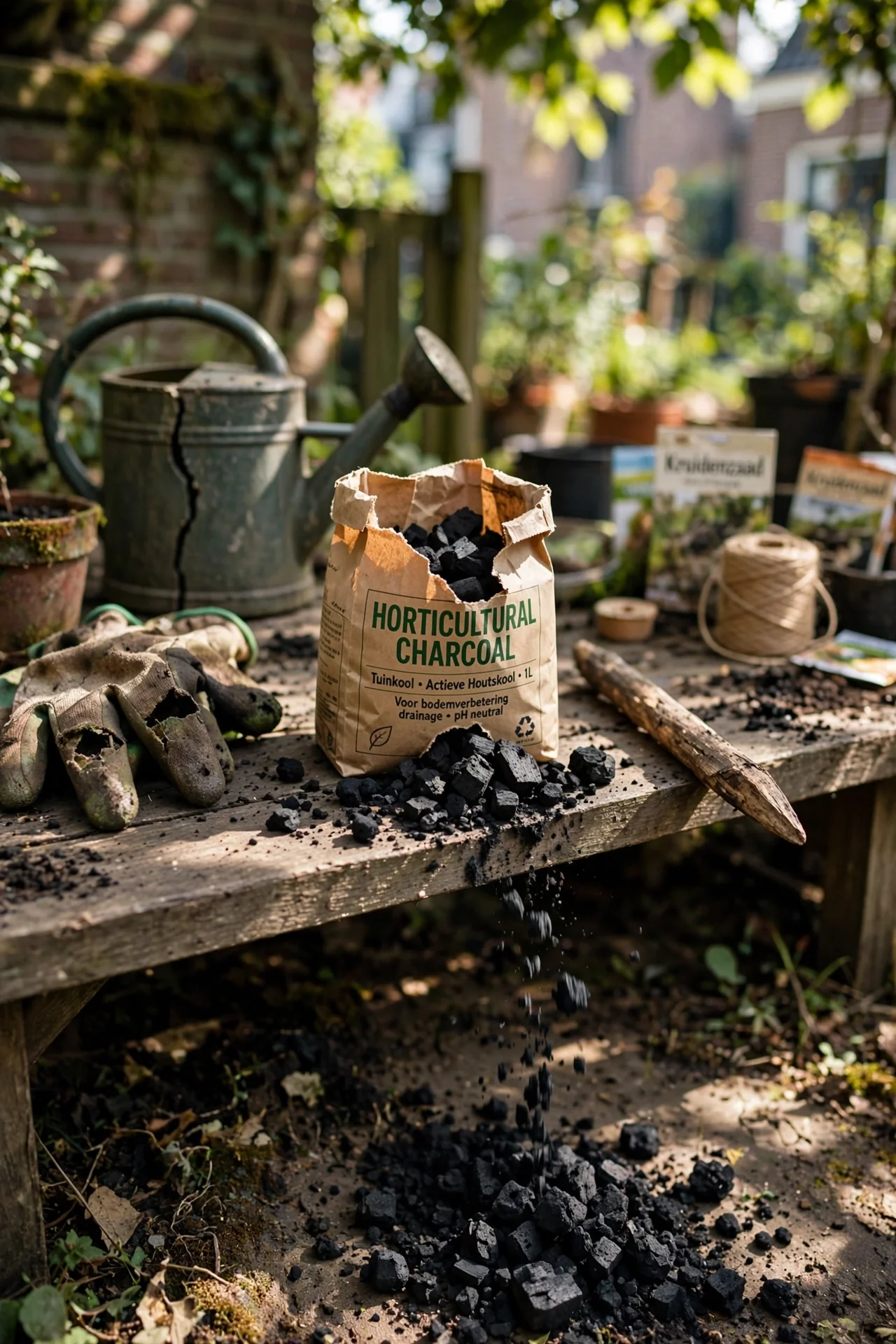
5. Horticultural Charcoal
Best for: Branches 1 and 3, especially closed containers.
Use it as a 5–10% addition by volume to adsorb organic acids and keep the root zone sweet in terrariums that aren’t flushed regularly. Skip it in simple, open pots where rainwater flushing already removes metabolic byproducts. Edge case: low-quality charcoal may contain ash that raises pH; always rinse it and check that it’s labeled horticultural grade, not barbecue briquettes.
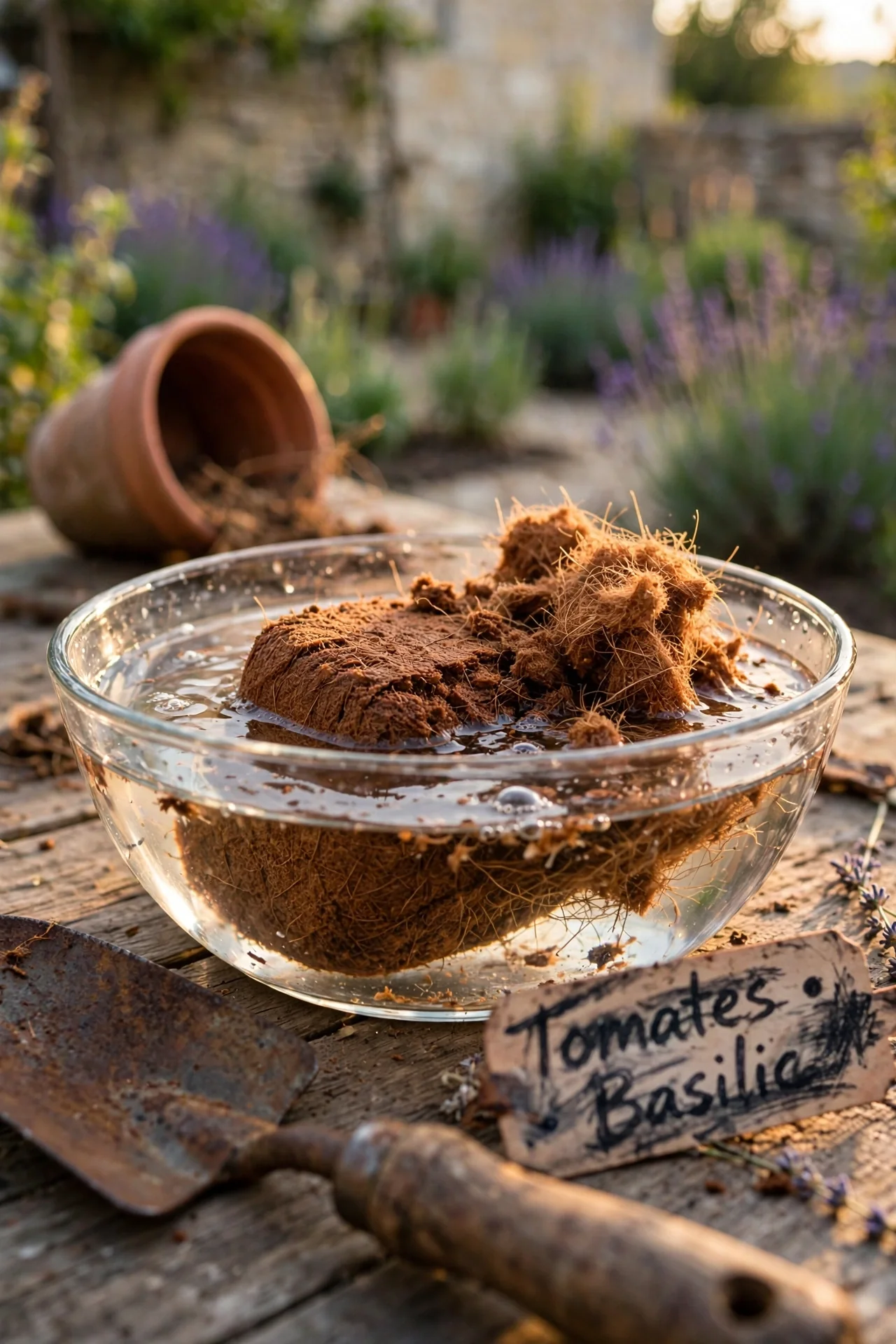
6. Coconut Coir
Best for: Branch 3 (only after verified salt removal).
Coir can mimic peat’s water-holding structure but comes with a hidden risk: residual sodium and potassium. The measurable threshold is an electrical conductivity (EC) below 0.5 mS/cm in the rinse water. Soak compressed coir in distilled water, drain, and test runoff with a basic EC meter. Repeat soaking until the reading drops. Even then, many growers avoid coir for salt-sensitive Venus flytraps; it remains a usable alternative for Nepenthes when properly buffered to a pH of 5.5–6.5.
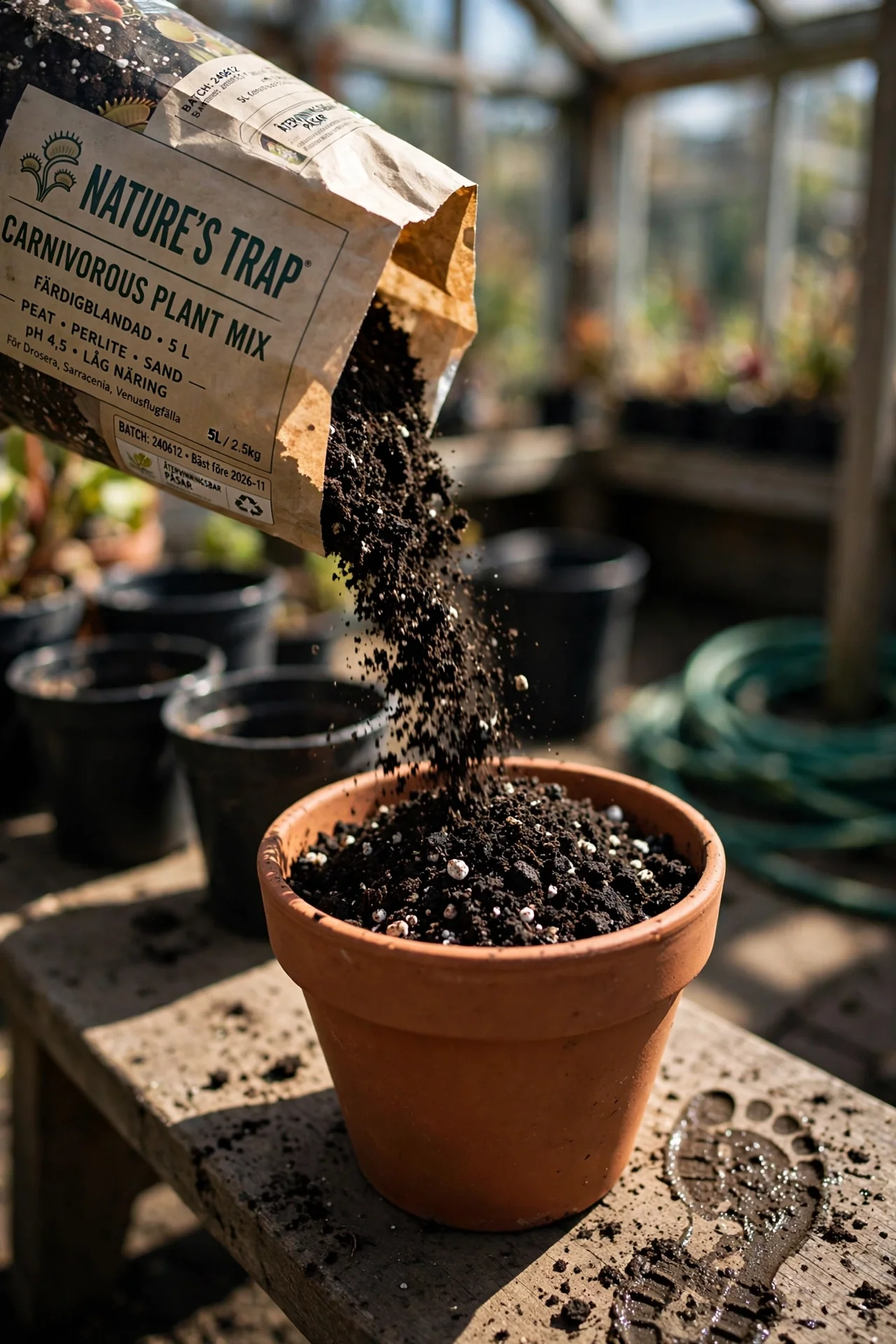
7. Pre-Made Carnivorous Plant Mix
Best for: Branch 1 and Branch 2 users who want a zero-mixing start.
What to look for: A short ingredient panel reading “sphagnum peat moss, perlite, sand” or “long-fiber sphagnum.” The absence of any fertilizer, compost, or water-retaining polymer is what makes it safe. Many cactus and orchid mixes still contain starter nutrients and will kill carnivores within weeks.
Blueprint: 1. Open the bag and hydrate with distilled water if it arrives compressed. 2. Crumble any clumps so the texture is consistent. 3. Pot the plant and water until it drains clear. 4. Critical mistake: assuming a “specialty” label means it’s carnivore-safe. Read the guaranteed analysis panel; any nitrogen number disqualifies it immediately.
8. Pumice
Best for: Branch 2 heavyweight drainage solutions.
Use pumice when perlite’s tendency to float to the surface during watering becomes a nuisance. Its extra mass keeps pots stable in wind and its porous structure still holds thin films of moisture around roots. Skip it for hanging baskets where weight is a concern or if you are mailing plants bare-root. Edge case: rinse pumice thoroughly; the fine dust can bind together into a sludge that defeats drainage.
9. Orchid Bark
Best for: Branch 3 Nepenthes and climbing species.
Use medium-grade bark pieces 1/2 inch to 1 inch in size. Soak them in distilled water for 24 hours before use to leach tannins and fully hydrate the interior. Unsoaked bark will pull moisture from the roots. A practical starting ratio is 1 part bark to 1 part long-fiber sphagnum moss. Never use bark that lists added fertilizer or moisture-retaining gel; those coatings turn a safe chunky medium into a nutrient bath.
10. Live Sphagnum Moss
Best for: Branches 1 and 3, surface layers and bog gardens.
10-minute workflow: Obtain a fist-sized clump of clean, green live sphagnum. Spread a 1/2-inch layer of moist peat and perlite in a shallow tray. Place the sphagnum strands on top, mist with distilled water, and cover with a clear lid to push humidity above 80%. Keep under bright indirect light at 65–78°F. Within weeks it will begin growing and can be transplanted as a living top-dressing onto potted plants. Upgrade: use a small cutting to line the inside of a terrarium background, as described in our potting mix for terrariums walkthrough.
Starter Stack (What to Choose First)
Branch 1: Bog-Loving Sundews and Butterworts
Start with Long-Fiber Sphagnum Moss (item 1) and Peat Moss (item 2). Sphagnum forms an airy, acidic net that holds water at the root tips; peat fills the bulk and keeps the whole mass from drying out between mistings. Together they need only an occasional top-up of distilled water. Cost for a 6-inch pot is roughly $8–12, and mixing takes under 10 minutes.
Branch 2: Venus Flytraps and Sarracenia
Begin with Perlite (item 3) and Silica Sand (item 4). Perlite opens the structure, and washed sand adds the rapid drainage that prevents crown rot. This two-part blend lets you adjust the ratio to match your local humidity. Estimated cost $10–16 for a typical batch; allow 15 minutes for rinsing the sand.
Branch 3: Nepenthes and High-Climbers
Use Orchid Bark (item 9) and Long-Fiber Sphagnum Moss (item 1). Bark creates large air channels, while sphagnum clings to the roots and holds just enough moisture. This duo drains almost instantly and stays fresh for a year. Budget around $12–20 for enough to fill a medium hanging basket, with a 10-minute assembly time after soaking the bark.
When This Won’t Work
Even a flawless soil mix will fail if you use tap water. Calcium and magnesium carbonates accumulate in the root zone, neutralize acidity, and coat root hairs until the plant cannot absorb water. This decline looks like underwatering, but adding more water only speeds the damage. Switch to collected rainwater or steam-distilled water and flush the pot thoroughly. A soil moisture meter can confirm that the medium is moist but not loaded with dissolved minerals; if the probe reads “wet” and the plant still wilts, suspect mineral toxicity.
The second common failure condition is letting a peat-based or sphagnum mix dry out completely. Once it shrinks and hardens, rewetting becomes nearly impossible from the top. If the surface looks dusty and pulls away from the pot sides, submerge the entire pot in a bucket of distilled water for 20–30 minutes until bubbles stop, then drain. In bright, warm rooms, monitor moisture every two days to prevent repeat shrinkage.
Choosing the Right Option for Your Situation
Budget Threshold
If cost is the primary constraint, a single bag of peat moss and a bag of perlite (items 2 and 3) will cover most bog and flytrap needs for under $15. Pre-made mixes (item 7) add a small premium for convenience but are still under $20 for a year’s supply of a small collection.
Time Threshold
For those with fewer than 10 minutes per week to dedicate to soil maintenance, choose a pre-made mix or a simple peat-perlite blend that only needs water top-ups. Live sphagnum (item 10) demands weekly misting and humidity checks; skip it unless you enjoy the daily ritual.
Technical Constraint: Water Quality
No component on this list works if the irrigation water has a total dissolved solids (TDS) reading above 50 ppm. Before any soil decision, test your water source. If you can only supply tap water with a TDS above that threshold, carnivorous plants in containers will slowly decline regardless of the mix.
Yes/No Checklist:
Will every watering be with rainwater, distilled, or RO water?
Does the chosen mix match the branch: bog, drainage, or epiphytic?
Have you checked labels for hidden fertilizer or wetting agents?
Do you have a way to keep bog mixes from drying completely?
Expert Q&A
Can I use sand from the hardware store’s play sand section?
No. Play sand is too fine and often contains limestone dust. It compacts into a paste that suffocates roots. Only coarse silica sand graded #12 or #16 with sharp, irregular grains provides the rapid drainage carnivores need.
Why is Miracle-Gro potting mix fatal even if I don’t add fertilizer?
Many commercial potting mixes come pre-loaded with slow-release fertilizer prills that release nitrogen and phosphorus for months. Carnivorous plant roots are adapted to near-zero nutrient levels; those salts cause root burn within days, and the plant cannot recover once the damage is done.
How often should I replace carnivorous plant soil?
Peat-based mixes break down and compact after about one year. Repot annually in fresh medium at the start of the growing season. Long-fiber sphagnum and bark-based Nepenthes mixes can last 18–24 months before they lose structure and begin to decompose noticeably.
Can I mix my own soil using unfertilized peat and perlite without any special treatment?
Yes, provided the peat is labeled as pure sphagnum peat without wetting agents and the perlite is standard horticultural grade. Rinse the perlite to remove dust, hydrate the peat with distilled water, and combine. This basic 1:1 recipe is safe for most bog and flytrap species.
Is it possible to grow carnivorous plants in pure water gel or hydrogel crystals?
No. Roots require oxygen, and water gels collapse into an anaerobic mush that encourages rot. A solid, air-filled matrix of sphagnum, bark, or coarse sand is non-negotiable. There is no verified long-term success with soil-free gel setups for Venus flytraps, Sarracenia, or Nepenthes.
Conclusion
The single decision that determines success with carnivorous plant soil is not which ingredient you choose but what you permanently exclude: nutrients, fertilizer salts, and dissolved minerals. Every mix described here is just a scaffold for roots, not a source of food. The most frequent mistake is compensating for slow growth by adding fertilizer, which triggers root collapse.
Once your mix is built and your water source is verified, shift your attention to light and dormancy cycles. For a broader view of how container soils differ across plant types, see our guide to the best potting soil for indoor plants.