
Most aphid control advice opens with a product list. That skips the decision that actually determines whether you succeed or waste a weekend: Is this infestation worth treating right now, and if so, with what mechanism? Aphids reproduce fast enough that a mistimed spray can select for resistance faster than it suppresses numbers. The reframe is simple: your goal is not aphid eradication (which is ecologically impossible in a living garden), but keeping populations below the action threshold where they cause measurable damage. The question stops being “how do I kill aphids?” and becomes “does this specific plant, at this specific stage, under these specific conditions, need intervention, and if so, which class of intervention disrupts the aphid life cycle without triggering collateral costs?”
This guide does not cover synthetic systemic insecticides (e.g., imidacloprid) because their use on flowering plants carries well-documented pollinator risk. It also excludes broad-spectrum pyrethroid sprays that knock down beneficial insects along with aphids, often causing secondary pest flare-ups of spider mites or thrips. What remains: physical controls, selective biological agents, particle films, horticultural oils and soaps, and botanical compounds with documented modes of action. Every option here has a measurable condition attached: a temperature window, a dilution ratio, a release rate, a reapplication interval, or a plant-growth-stage cutoff.
You will walk away knowing which of three decision branches your situation falls into, which two products or practices to reach for first within that branch, and, critically, when the correct move is to do nothing and let natural enemy populations catch up. The comparison table gives you a single derived value (Reapply Class) for every option so you can match your available bandwidth to the method.
Bottom line: The right aphid control method is determined first by temperature and plant developmental stage, not by product brand; choose the branch that matches your conditions before opening a catalog.
The Yield Grid Decision Grid
All aphid control decisions fall into one of three branches. The grid uses two thresholds: temperature (can you safely apply oils or soaps without phytotoxicity?) and infestation location (is the colony on edible reproductive tissue like developing fruit, flower buds, or seed heads?). Answer these two questions and you know your branch.
Branch 1: Cool-Season, Non-Bloom Tissue. Daytime highs remain below 85°F (29°C) and aphid colonies are on stems, leaf undersides, or vegetative shoots, not on open flowers or developing fruit. You have the widest toolkit. Oils, soaps, and contact desiccants all work here. Recommended: Items 1, 2, 3, 7, 8 below.
Branch 2: Warm-Season or Bloom-Stage, Edible Crop. Temperatures regularly exceed 85°F (29°C) or the plant is flowering/fruiting and you need to avoid spray contact with open blooms. Oils risk phytotoxicity; soap residues can burn in direct sun. Shift to biologicals, physical removal, or particle films. Recommended: Items 4, 5, 6, 9, 10 below.
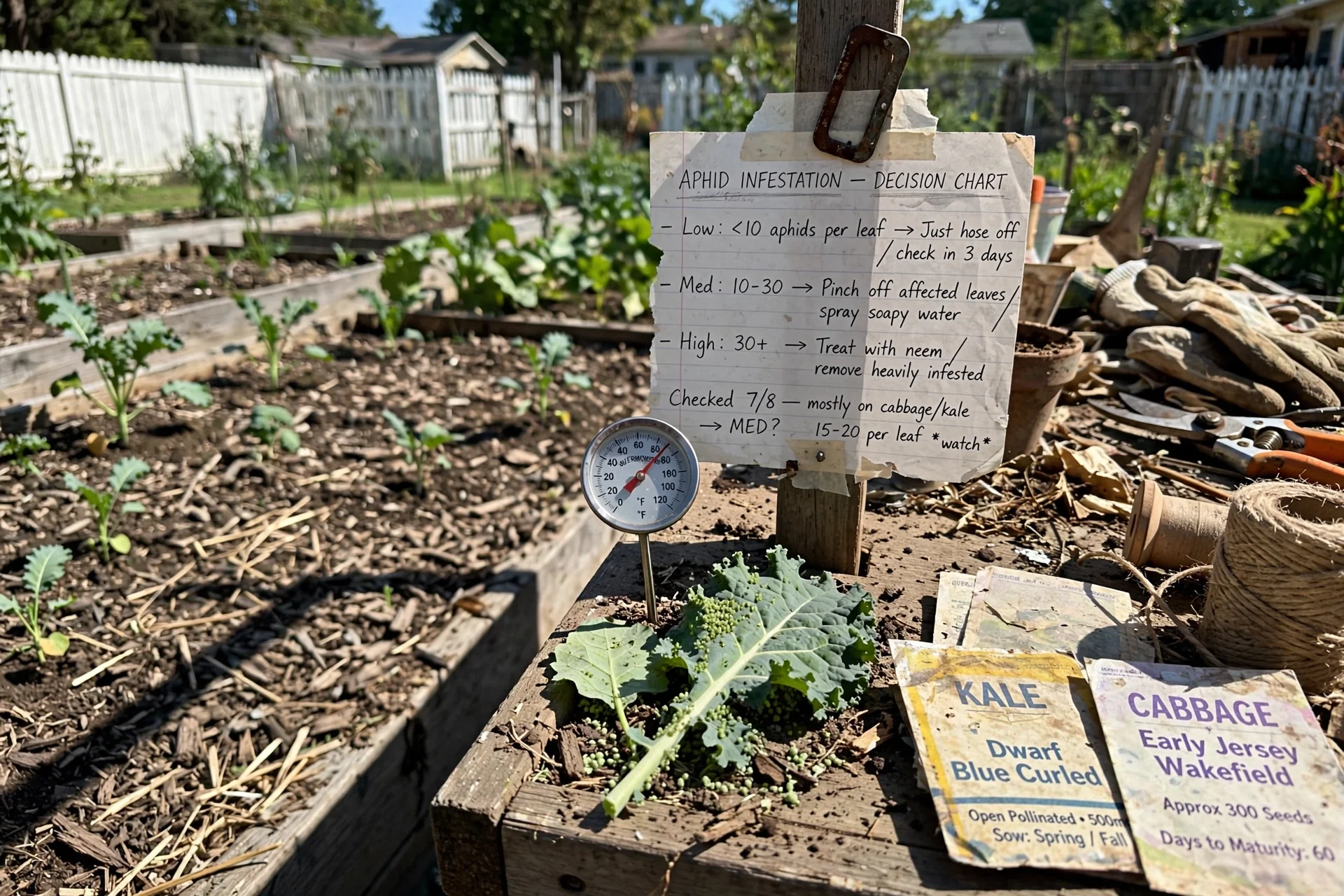
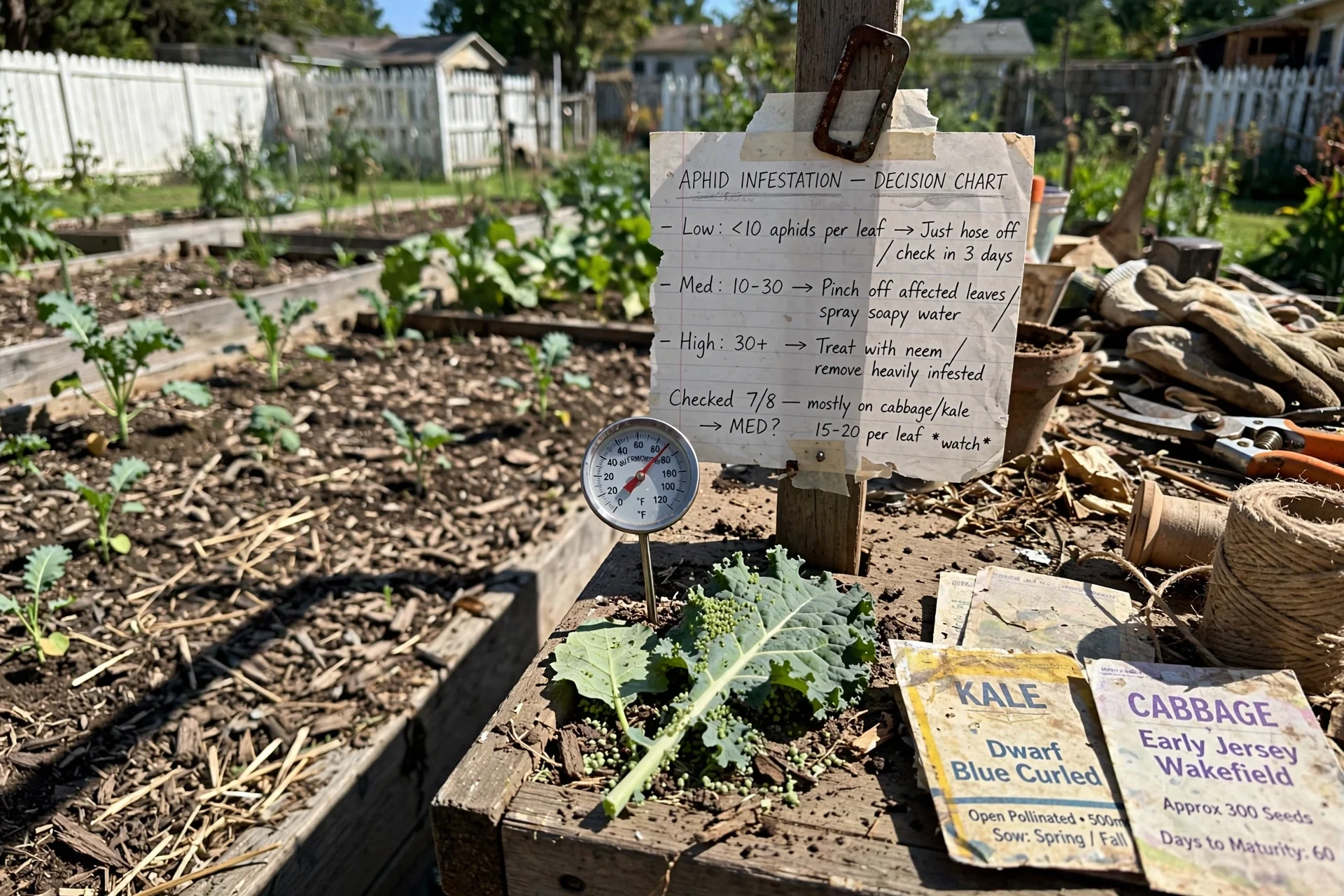
Branch 3: Threshold Not Met (Monitor Only). You have spotted fewer than 10-15 aphids per leaf on fewer than 10% of leaves, or natural enemy activity (lady beetle larvae, parasitoid mummies, lacewing eggs) is visible. Intervention now can disrupt that biological control. The correct action is to monitor twice weekly and intervene only if the population doubles without natural enemy response. Recommended: Items 6, 10 below. For a deeper look at organic spray options that align with Branch 1 conditions, see our organic aphid spray formulation guide.
Quick Comparison Table
| Option | Key Mechanism | Best For | Decision Grid Branch | Reapply Class |
|---|---|---|---|---|
| Horticultural Oil | Suffocation of eggs and soft-bodied nymphs by blocking spiracles | Dormant-season or cool-weather preventive knockdown | Branch 1 | Once-per-season (dormant) or Monthly (summer rate) |
| Insecticidal Soap | Disruption of cell membrane lipids causing rapid desiccation | Active infestations on vegetative tissue in moderate temperatures | Branch 1 | Weekly |
| Neem Oil | Azadirachtin disrupts molting and feeding; oil component smothers | Persistent colonies where ant attendance is also a factor | Branch 1 | Biweekly |
| Parasitoid Wasps (Aphidius colemani) | Adult wasps lay eggs inside aphids; larvae consume host from within, leaving mummified shells | Greenhouse or enclosed garden with moderate aphid pressure | Branch 2 | Weekly (releases) |
| Lacewing Larvae (Chrysoperla carnea) | Generalist predators that consume 100-200 aphids per larva during development | Outdoor gardens with mixed pest complexes | Branch 2 | Biweekly (releases) |
| Companion Planting / Trap Crops | Nasturtium or mustard draws aphids away from cash crop; umbellifer flowers sustain parasitoid adults | Preventive strategy for gardens with recurrent aphid pressure | Branch 3 | Once-per-season (planting) |
| Water Spray (Physical Dislodgement) | High-pressure water jet knocks aphids from plant; most dislodged aphids cannot reclimb | Early infestations on sturdy plants with accessible leaf surfaces | Branch 1 or 2 | Biweekly |
| Diatomaceous Earth | Microscopic silica shards abrade aphid cuticle causing lethal desiccation | Dry conditions on low-growing crops where foliage stays dry | Branch 1 | Weekly (after rain or irrigation) |
| Kaolin Clay Particle Film | Mineral barrier confuses host-finding and reduces feeding; also reduces heat stress | Hot-climate vegetable production where heat and aphids coincide | Branch 2 | Weekly |
| Action Threshold Monitoring | Quantified scouting protocol triggers intervention only when pest density exceeds economic break-even | Every garden, before any product is applied | Branch 3 | Biweekly (scouting) |
1. Horticultural Oil (Dormant and Summer-Rate Smothering)
Best for: Branch 1
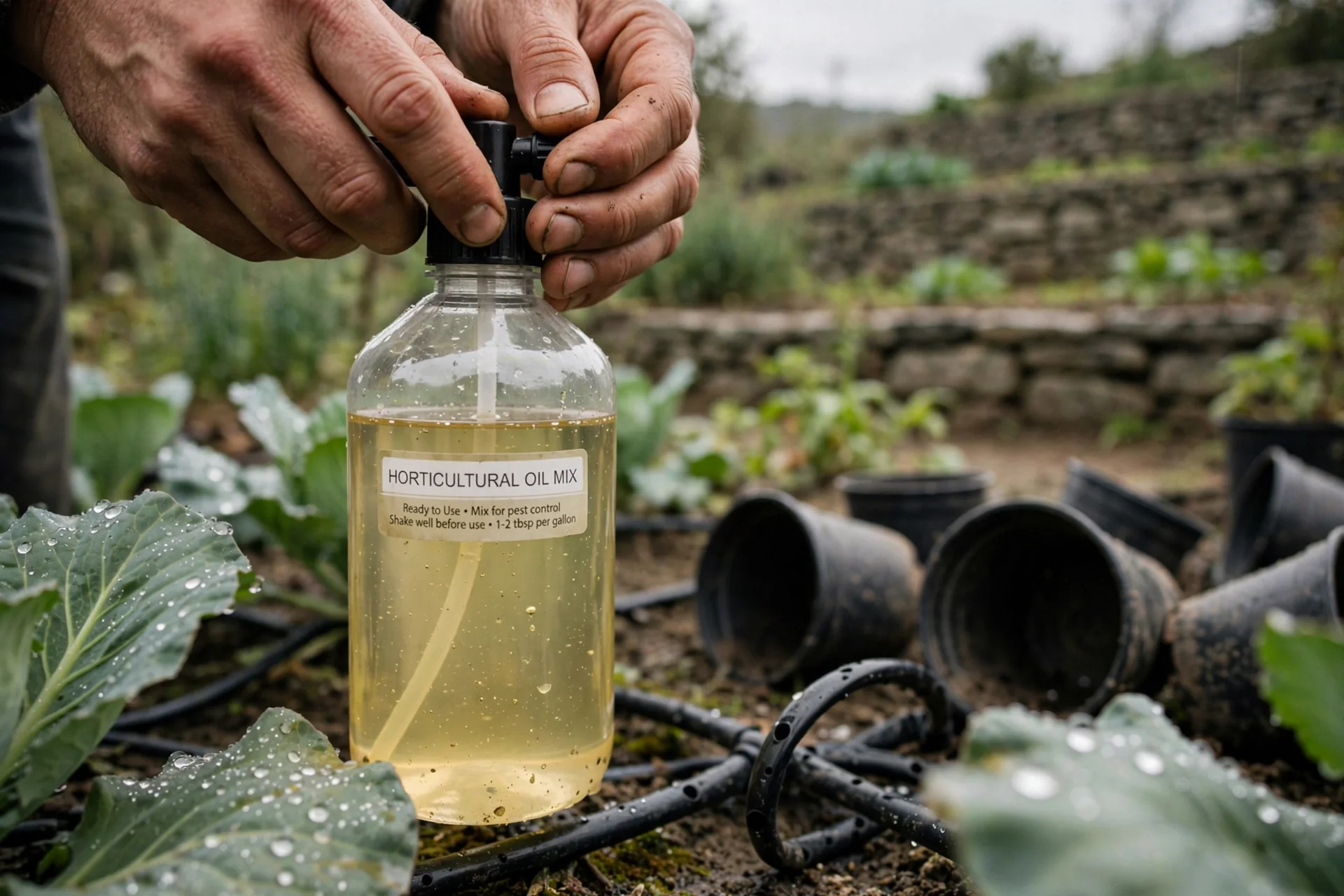
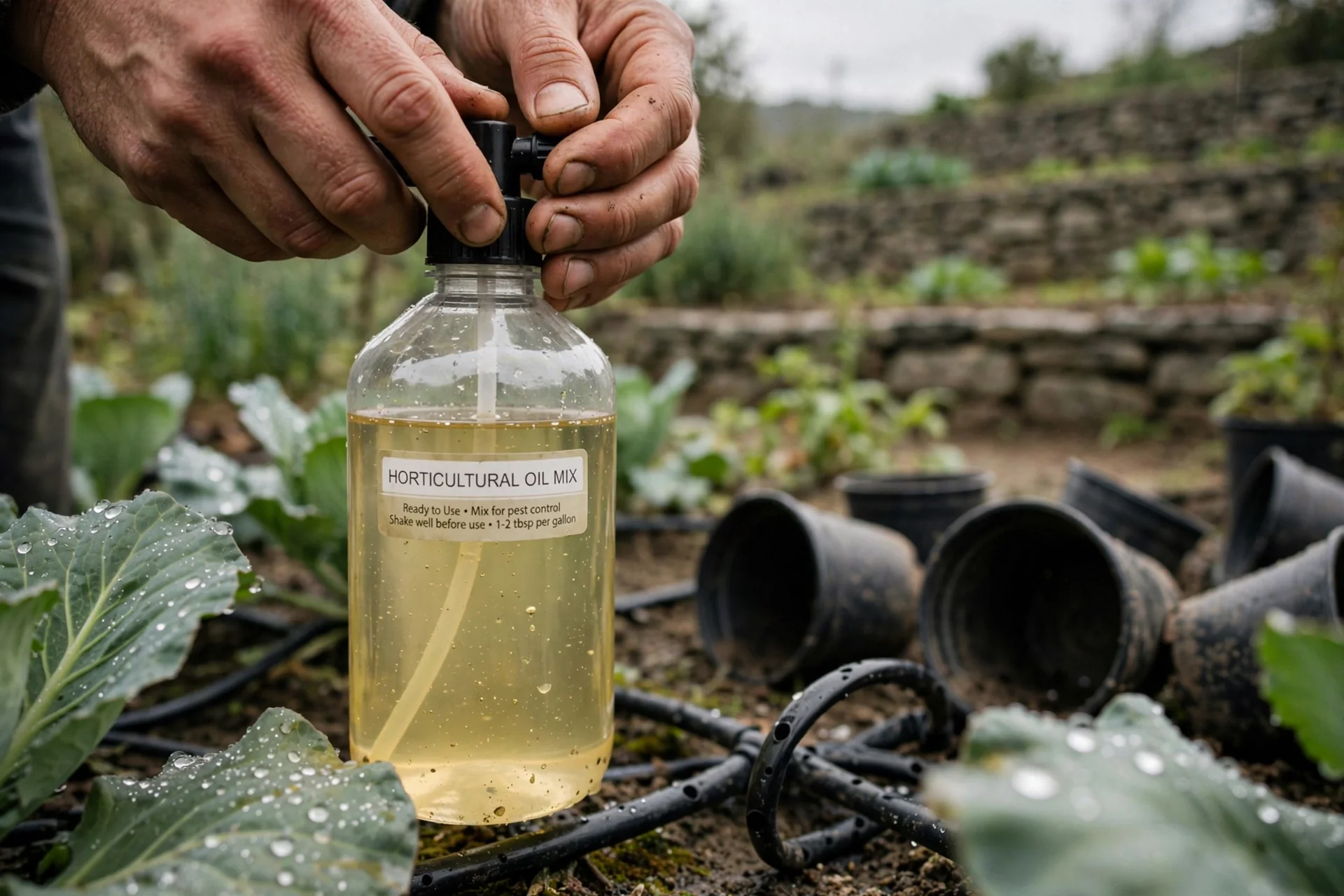
What it is: Highly refined petroleum or plant-based oil (mineral oil, cottonseed oil) that forms a thin film over aphid eggs, nymphs, and adults, physically blocking their breathing pores (spiracles). Unlike contact insecticides, there is no nerve target, so resistance cannot evolve.
What it is for: Overwintering aphid eggs on deciduous fruit trees and ornamental shrubs (dormant rate, 2-4 oz per gallon). Summer-rate applications (1-2 oz per gallon) on leafy greens and brassicas when temperatures stay below 85°F.
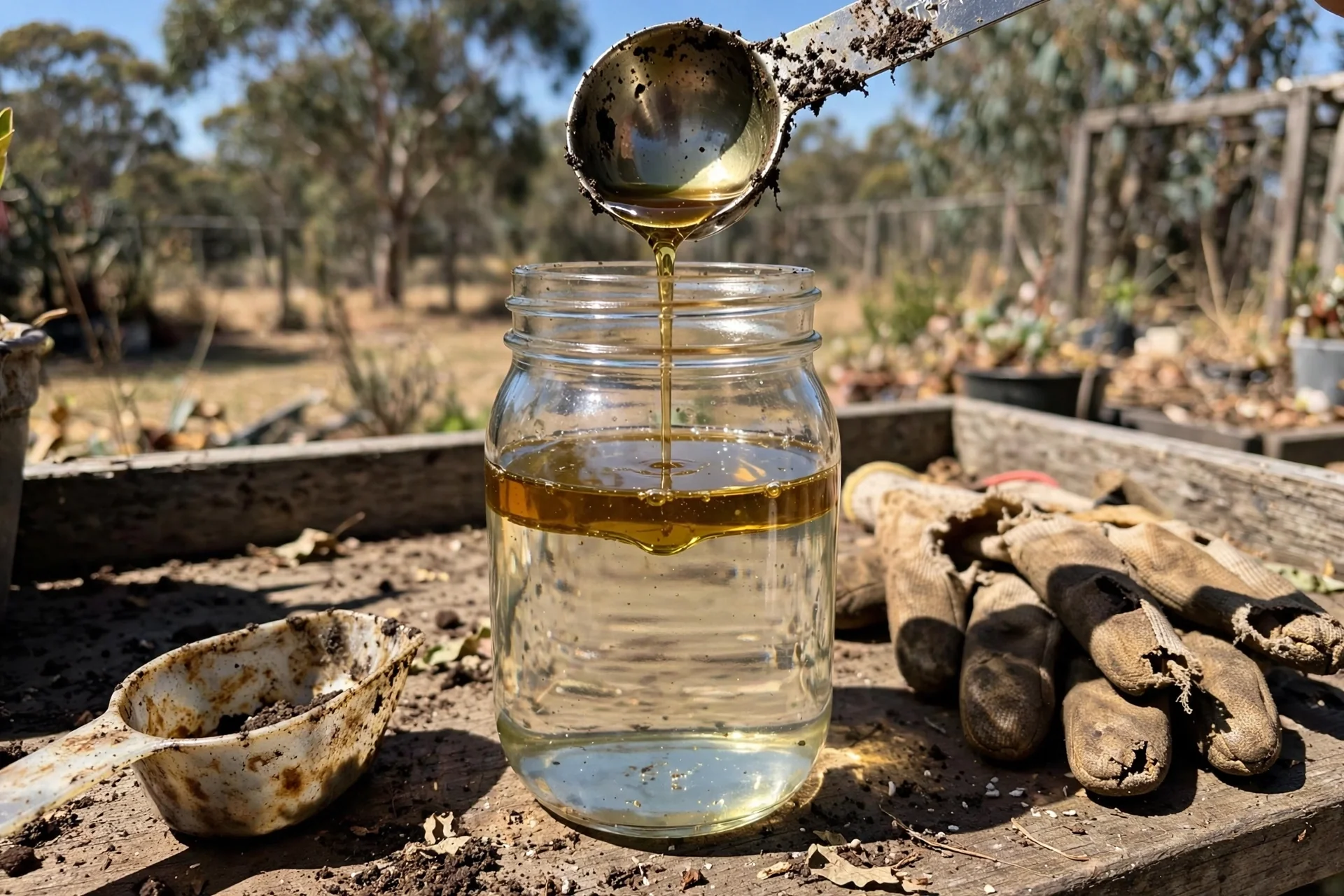
Steps: (1) Verify no rain forecast for 24 hours and temperature below 85°F. (2) Mix oil at the dormant rate (2-4 oz/gal) or summer rate (1-2 oz/gal) with water, shaking continuously. (3) Spray to runoff, covering both leaf surfaces and all bark crevices on woody plants. (4) Wait at least 2 weeks before applying any sulfur-containing product; oil-sulfur combinations within that window cause leaf scorch.
Common mistake: Applying horticultural oil to drought-stressed plants. Water-stressed leaf tissue is more permeable to oil penetration, which can cause phytotoxicity that looks exactly like the aphid damage you are trying to prevent. Irrigate deeply 48 hours before application. For detailed application timing by plant type, see our complete horticultural oil reference.
2. Insecticidal Soap (Contact Desiccation)
Best for: Branch 1
Insecticidal soap (potassium salts of fatty acids) works strictly on contact by dissolving the waxy outer layer of the aphid cuticle. No residue, no systemic uptake, no effect on aphids that walk onto the leaf after the spray dries. Dilution is critical: 2.5 tablespoons (1.25 fl oz) of concentrate per gallon of water produces a 1-2% solution. Spray in early morning when leaf temperatures are below 80°F and humidity is above 50%. Spot-test one leaf on each plant species 24 hours before full application; ferns and succulents with bloom (that powdery leaf coating) are frequently sensitive. For the full formulation ratios and plant-safety checklist, visit our insecticidal soap guide.
3. Neem Oil (Feeding and Growth Disruption)
Best for: Branch 1
Neem occupies a middle ground between a physical oil and a botanical compound. The oil fraction smothers eggs and early nymphs on contact; the azadirachtin component is absorbed by the aphid during feeding and blocks the release of molting hormone, so nymphs cannot progress to the next instar. Because azadirachtin must be ingested, coverage on leaf undersides is non-negotiable. Mix 1-2 tablespoons (0.5-1 oz) of clarified neem oil per gallon of water with an emulsifier (1 teaspoon of mild liquid soap) to prevent separation. Apply every 10-14 days. Edge case: neem is less effective when ants are actively tending aphids because ants physically remove the oil residue while harvesting honeydew. If you see ant trails on plant stems, deploy a sticky barrier at the base before spraying. Read our neem oil for bugs page for temperature ceiling data and tank-mix compatibility.
4. Beneficial Insects: Parasitoid Wasps (Aphidius colemani)
Best for: Branch 2
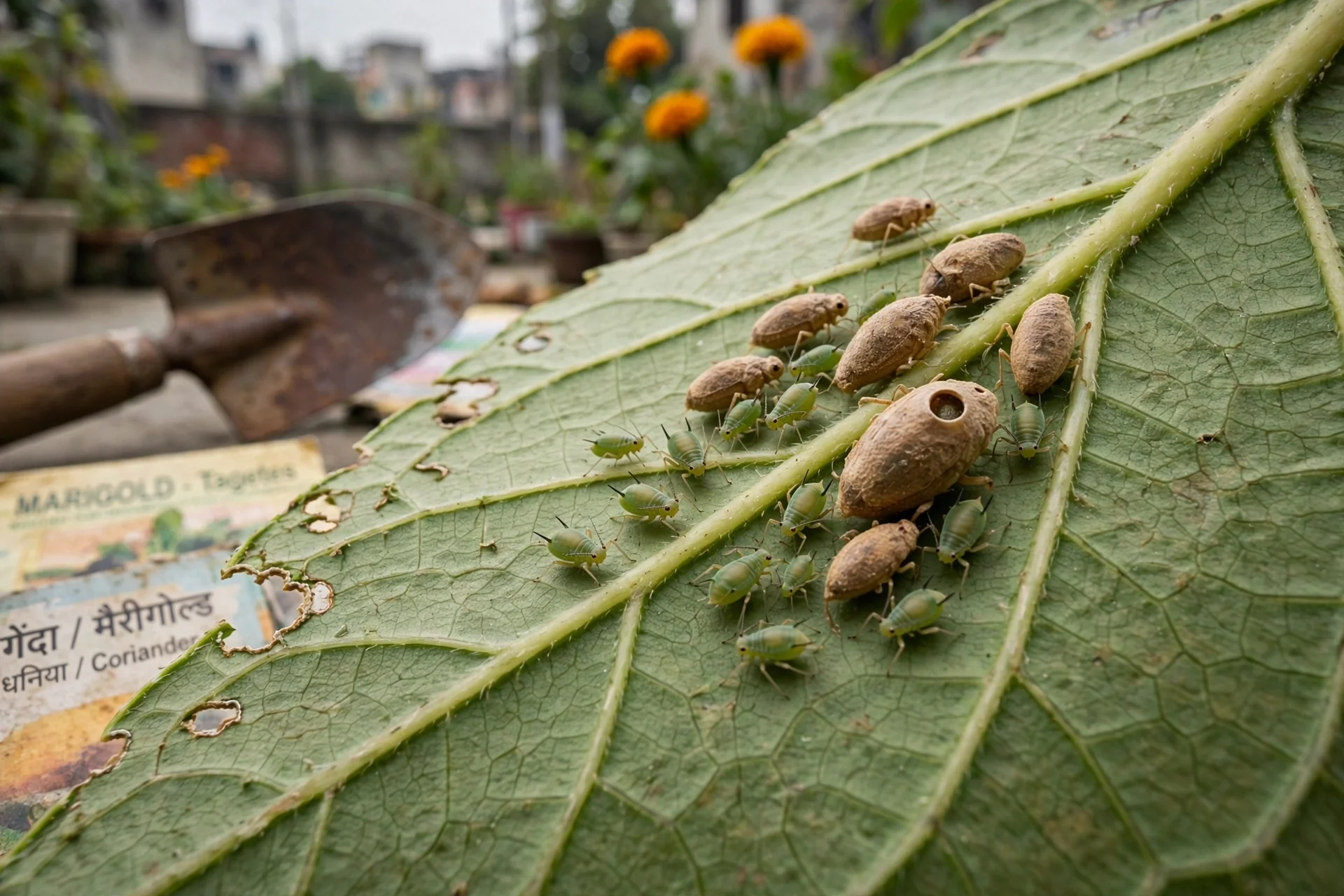
What it is: Aphidius colemani is a tiny (2-3 mm), non-stinging parasitoid wasp that specializes on green peach aphid and melon aphid. The female wasp deposits a single egg inside an aphid; the larva consumes the aphid from within over 5-7 days, then pupates inside the hollowed-out aphid body, which turns into a tan-brown, papery “mummy.” A new adult wasp emerges through a round exit hole you can see with a hand lens.
What it is for: Greenhouse and high-tunnel production where aphid colonies are established but not yet overwhelming. Also effective outdoors when minimum nighttime temperatures stay above 15°C (59°F), the lower activity threshold for A. colemani. Optimal performance occurs at 18-25°C with 60-80% relative humidity.
Steps: (1) Confirm aphid species: A. colemani targets green peach aphid (Myzus persicae) and cotton/melon aphid (Aphis gossypii); it is less effective against foxglove aphid or potato aphid. (2) For light infestations (fewer than 1 aphid per sq ft), release 1 wasp per 10 sq ft, weekly. (3) For moderate infestations, release 1 per sq ft, weekly. (4) Cease releases if you observe hyperparasitoid activity (small exit holes with jagged edges on mummies instead of clean round holes), which means a secondary parasitoid is attacking your Aphidius population.
Common mistake: Releasing parasitoids onto plants that were sprayed with a broad-spectrum insecticide within the previous 2-3 weeks. Even dried residues of pyrethroids or spinosad are lethal to adult wasps. Check the pre-harvest interval and beneficial-insect safety data on any spray used prior to release. See our beneficial insects overview for release-rate calculators and species matching.
5. Beneficial Insects: Lacewing Larvae (Chrysoperla carnea)
Best for: Branch 2
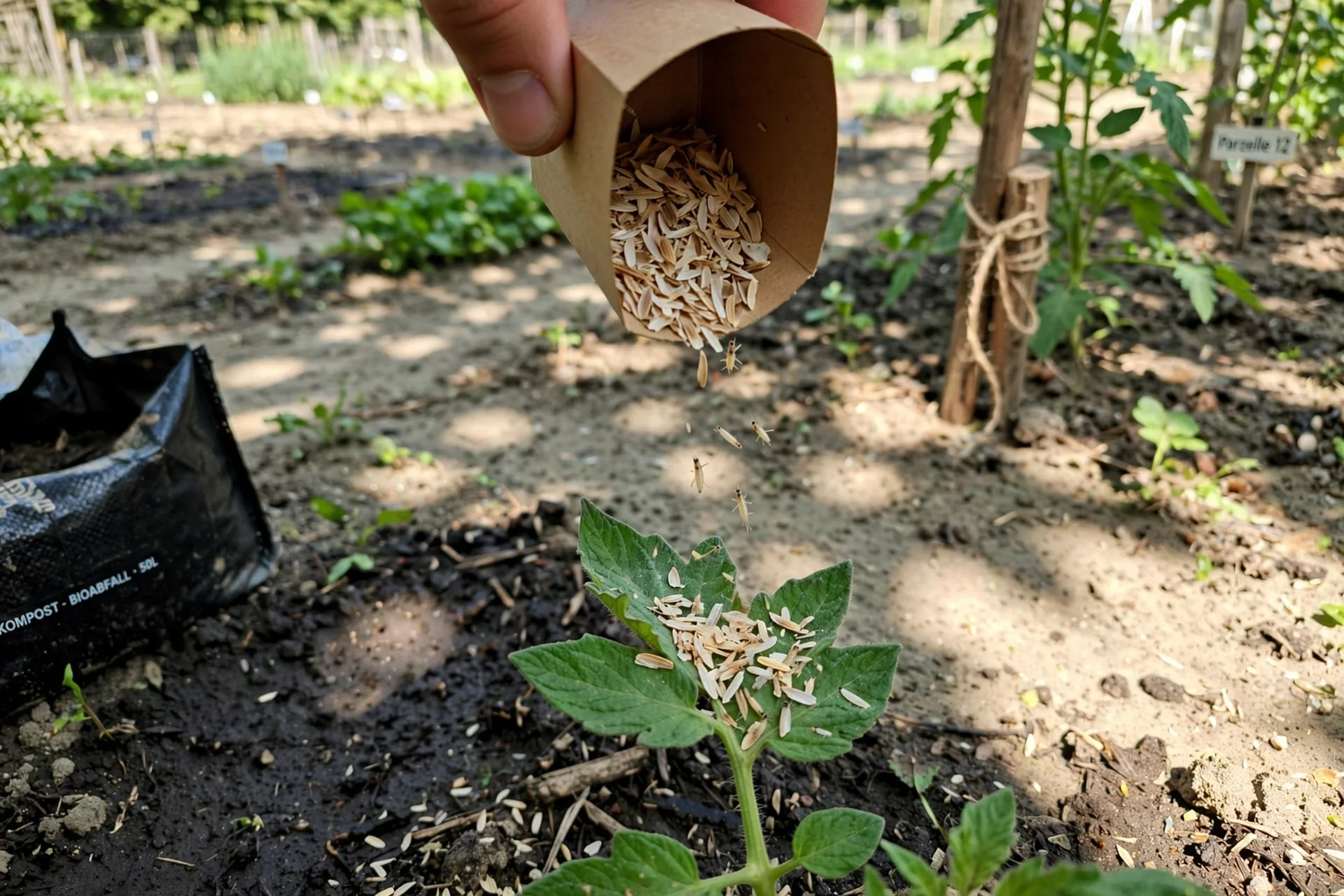
Green lacewing larvae, nicknamed “aphid lions,” are generalist predators that do not require species matching the way parasitoids do. A single larva consumes an estimated 100-200 aphids during its 2-3 week larval stage. Release 1,000 larvae per 200 sq ft of garden bed, applied as eggs or first-instar larvae in a carrier of rice hulls. The limiting factor: ants. If Argentine ants or other honeydew-farming ants are present, they will attack lacewing larvae. Eliminate ant access with sticky bands before releasing.
6. Companion Planting and Trap Crops
Best for: Branch 2 or Branch 3
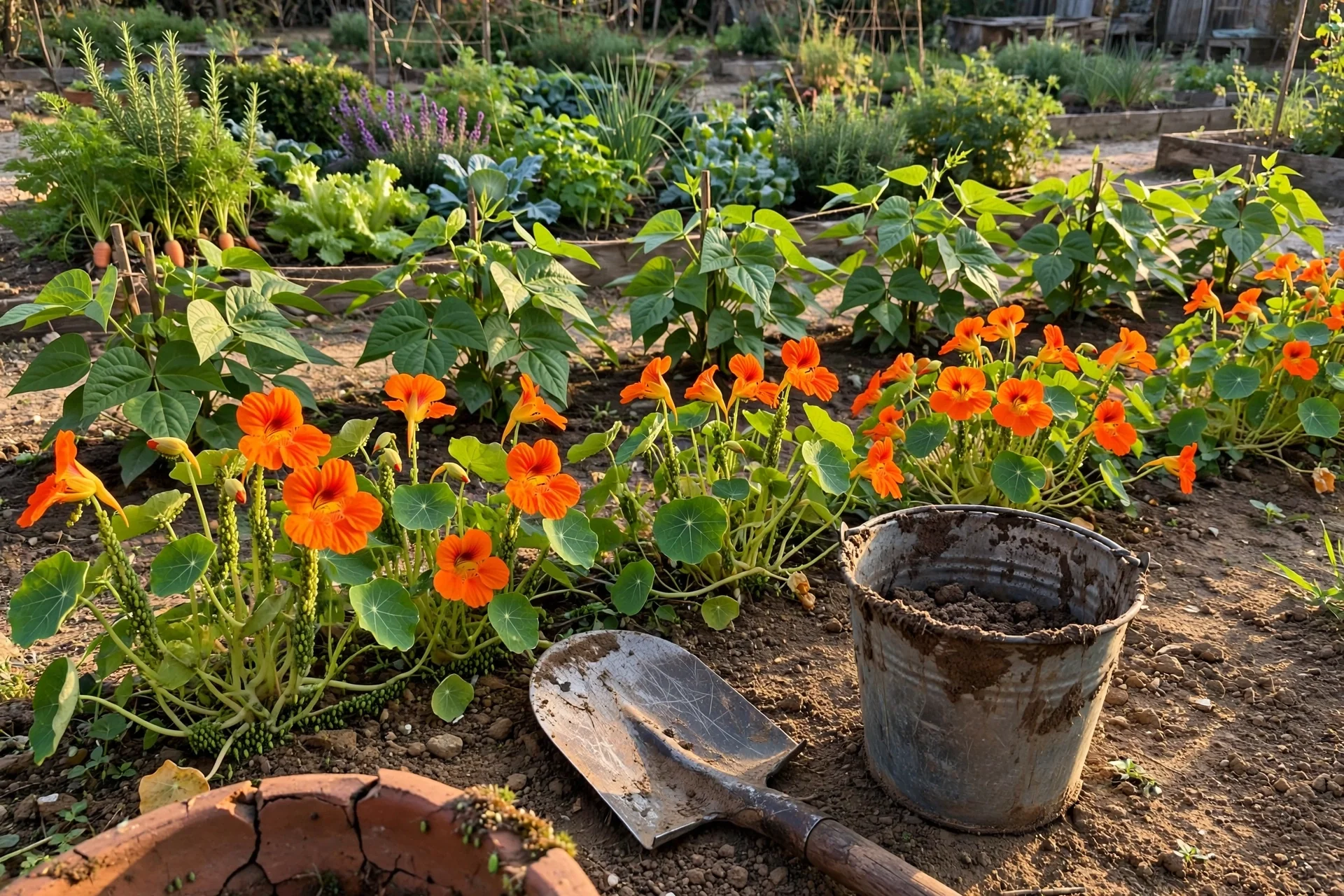
This is a spatial strategy, not a product. The principle: plant a more attractive host (trap crop) adjacent to your protected crop, concentrating aphids where you can manage them with a single targeted spray or physical removal. Nasturtium (Tropaeolum majus) is the most reliable trap crop for black bean aphid and green peach aphid: aphids preferentially colonize nasturtium over beans, brassicas, and solanaceous crops when the nasturtium is planted 12-18 inches from the main crop row. The constraint that is rarely mentioned: trap crops must be sown 2-3 weeks before the main crop to be larger and more attractive when aphid flight occurs. If both emerge simultaneously, the aphid preference is negligible. For nectar-source plants that sustain adult parasitoids, see our companion planting pest guide.
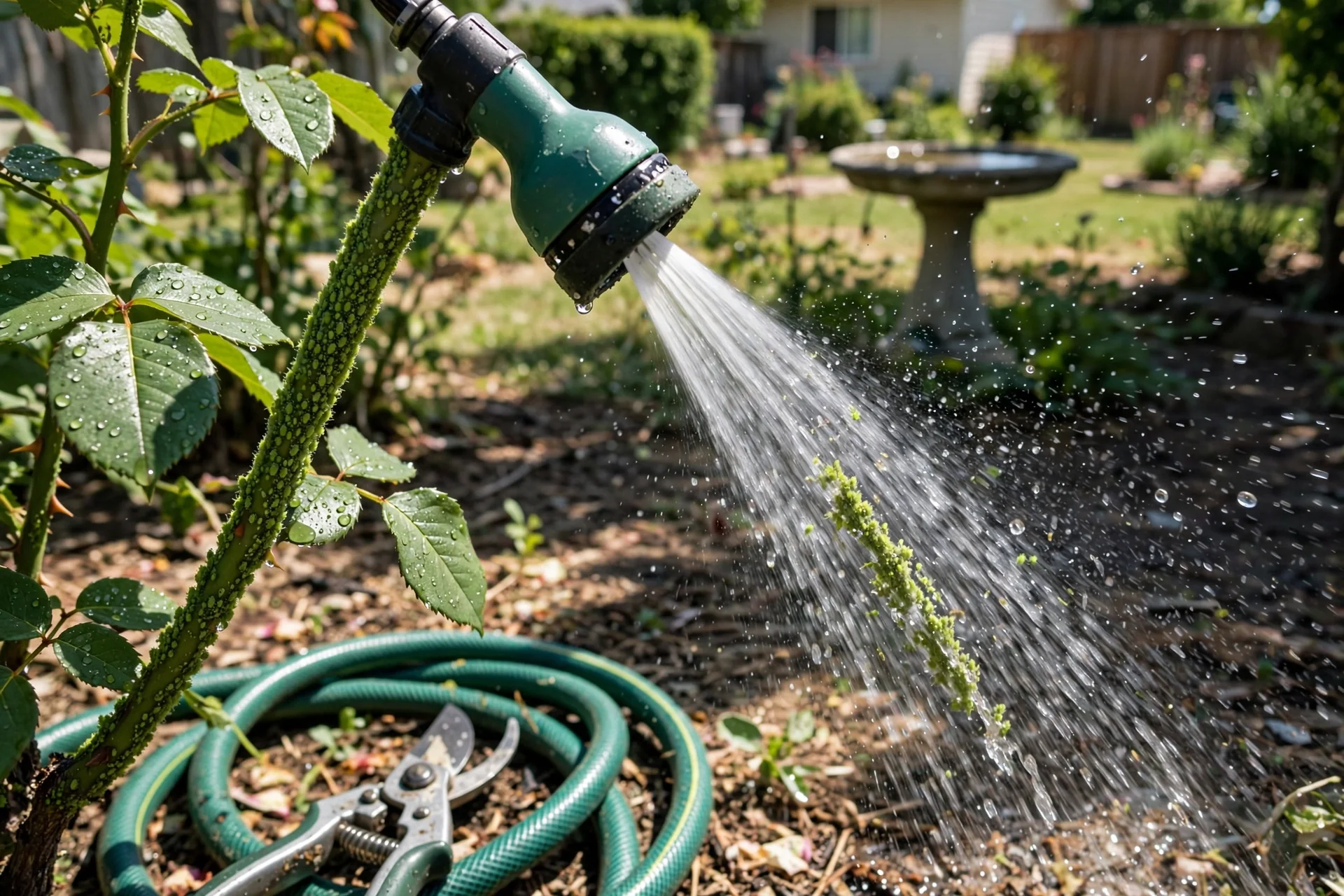
7. Physical Removal: Water Spray Dislodgement
Best for: Branch 1 or Branch 2
What it is: A sharp stream of water from a garden hose nozzle (not a gentle mist) that physically knocks aphids off the plant. Dislodged aphids have piercing-sucking mouthparts embedded in leaf tissue at the moment of impact; once removed, most cannot reinsert their stylets and either starve or become prey to ground-dwelling beetles. This is not a metaphor: the stylet (feeding tube) is a delicate structure, and reinsertion after being blasted off the plant surface is rarely successful.
What it is for: Early infestations on mature plants with sturdy stems and leaves (tomatoes, brassicas, roses, citrus). Best applied when you first notice aphid clusters and before leaves begin curling. Once leaves curl tightly around the colony, water spray cannot reach the aphids inside.
Steps: (1) Set nozzle to a flat or jet pattern, not cone mist. (2) Hold the nozzle 6-12 inches from the leaf at a 45-degree angle so aphids are knocked sideways off the plant rather than driven deeper into leaf axils. (3) Spray in the morning so foliage dries by midday, reducing fungal risk. (4) Re-inspect on day 3; if more than 5 aphids remain per leaf, spray again. (5) Upgrade to insecticidal soap if water alone fails after 2 cycles.
Common mistake: Using water spray on plants with powdery mildew pressure. Wet foliage accelerates mildew spore germination. If both aphids and powdery mildew are present, switch directly to a potassium bicarbonate or sulfur-based product that addresses both issues simultaneously. For formulation guidance, see our organic aphid spray page.
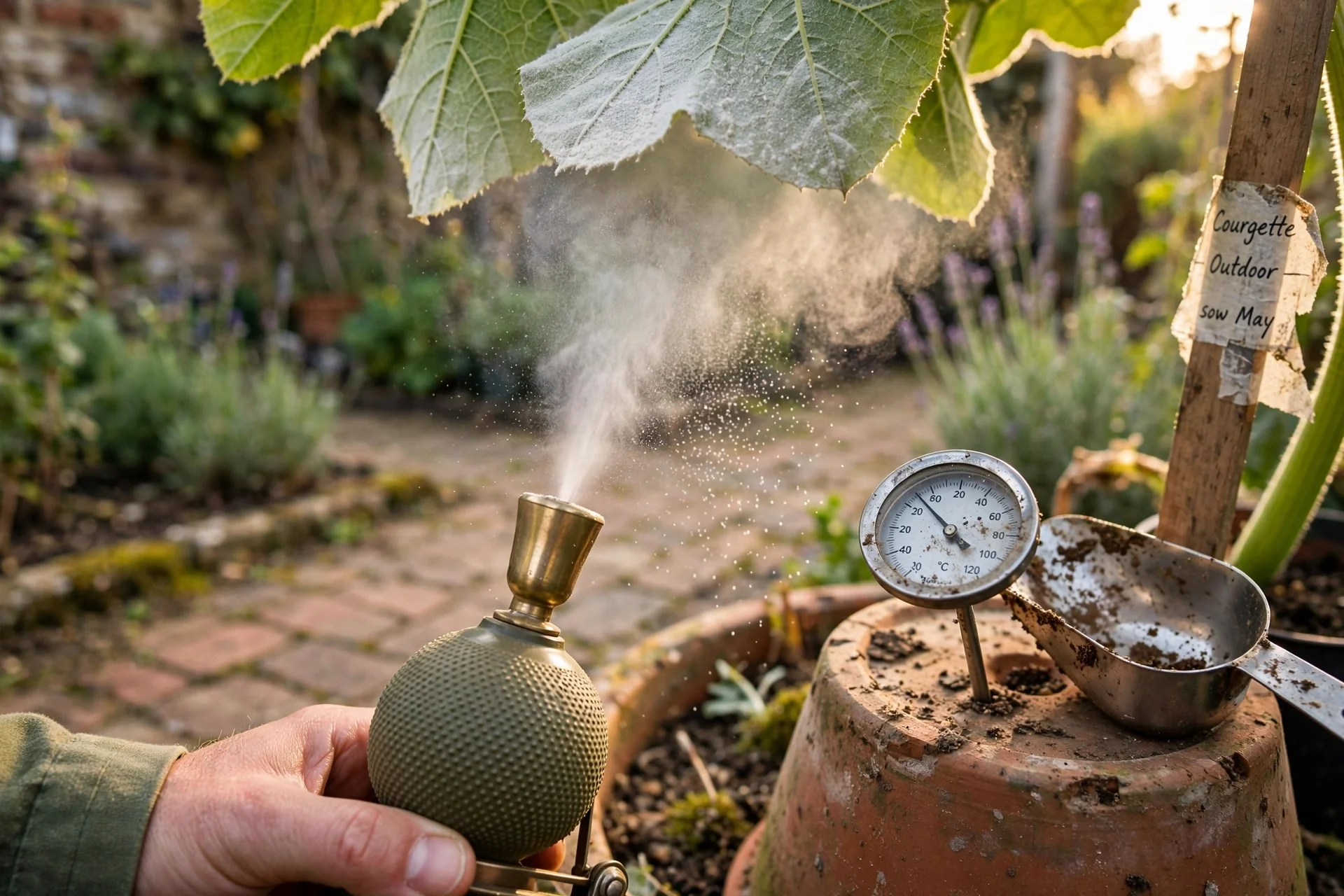
8. Diatomaceous Earth (Cuticle Abrasion)
Best for: Branch 1
Diatomaceous earth (DE) is fossilized diatom silica that abrades the aphid’s waxy epicuticle on contact, causing lethal water loss. It only works when dry: reapply after rain, overhead irrigation, or heavy dew. Dust lightly at 1-2 oz per 10 sq ft using a bellows duster, targeting leaf undersides and stem joints where aphids cluster. Do not apply to open flowers; the abrasive dust is harmful to foraging bees on contact. For application rates and safety data, visit our diatomaceous earth garden page.
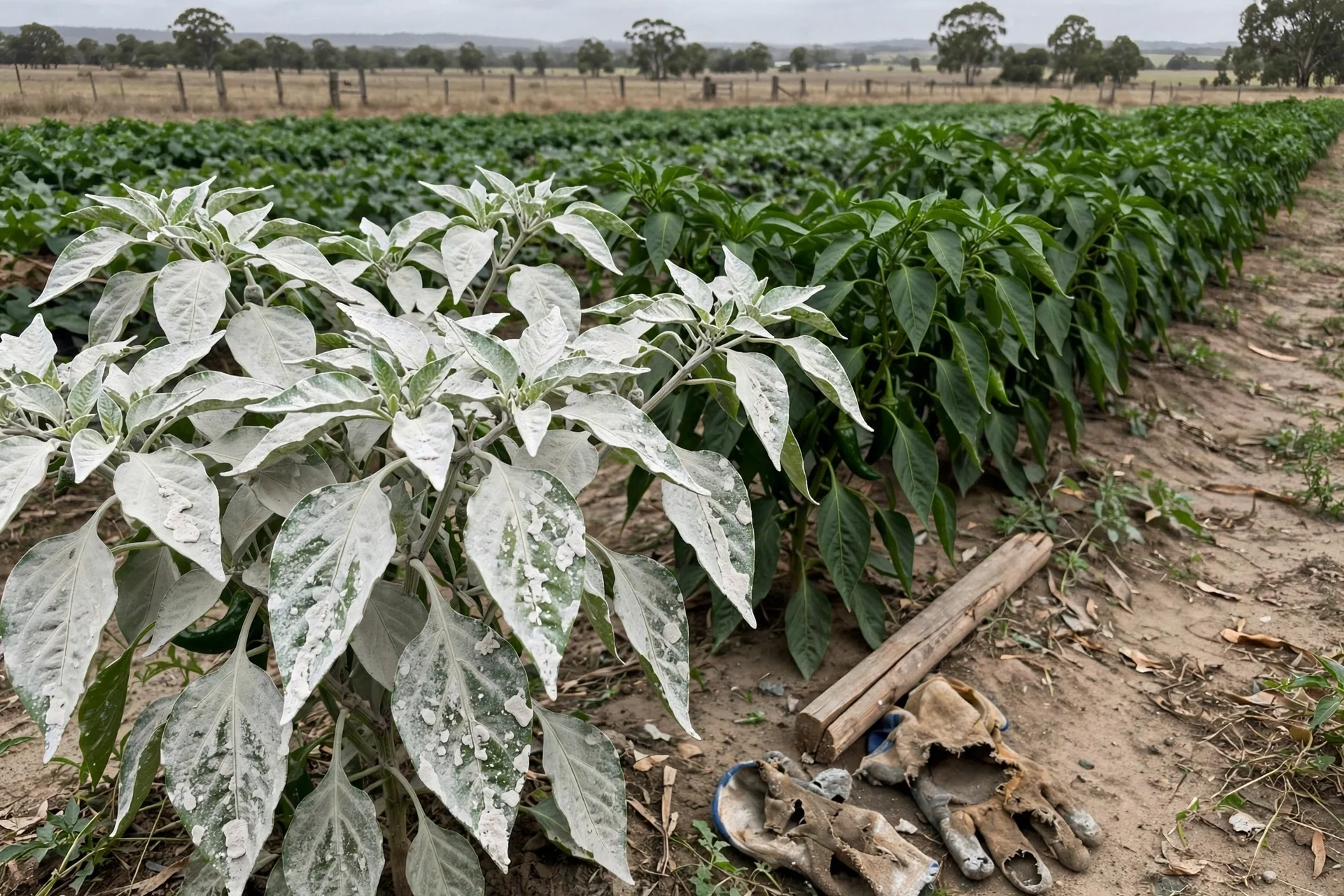
9. Kaolin Clay Particle Film
Best for: Branch 2
Kaolin clay (sold as Surround WP) forms a white mineral film on leaves that interferes with aphid host-finding in three ways: it masks the leaf’s visual reflectance that aphids use to locate plants, it coats the aphid’s tarsi (feet) making walking and feeding difficult, and it reduces leaf temperature by reflecting infrared radiation, which slows aphid development. Mix 3 cups of kaolin powder per gallon of water with a wetting agent; reapply weekly as new leaves expand. The edge case: kaolin film also reduces photosynthesis by an estimated 5-10% due to light reflection. On slow-growing crops like peppers in low-light conditions, reduce concentration to 1.5 cups per gallon. For formulation details, see our kaolin clay spray guide.
10. Action Threshold Monitoring: When Doing Nothing Is the Correct Intervention
Best for: Branch 3
What it is: A structured scouting protocol that defines, before you ever see an aphid, exactly what density triggers action. This flips the default from “spray when you notice aphids” (which guarantees overuse) to “spray only when aphid density exceeds the plant’s capacity to compensate through growth.”
What it is for: Every garden and crop, applied weekly from seedling emergence through harvest. Specific action thresholds exist for major crops: for soybean, 250 aphids per plant on 80% of inspected plants; for green peas, 3-5 aphids per plant tip at flowering; for brassica seedlings, 10-15 aphids per leaf on outer leaves. For garden crops without published thresholds, use the general rule: aphids on more than 20% of leaves with visible leaf curling or honeydew accumulation.
Steps: (1) Select 10 plants per 100 sq ft of bed, chosen randomly. (2) On each plant, examine the newest fully expanded leaf, one middle leaf, and one lower leaf. (3) Count aphids and note presence of natural enemies (lady beetle larvae, parasitoid mummies, syrphid fly larvae). (4) If natural enemies outnumber aphids by roughly 1:50 or better, delay any intervention for 3-4 days and re-scout. (5) If aphids exceed threshold AND natural enemies are absent or scarce, proceed with the Branch 1 or Branch 2 option that matches your temperature window.
Common mistake: Treating an aphid hotspot (one heavily infested plant in a bed of clean plants) as representative of the whole area. Hotspots are normal and often indicate a plant that was already stressed. Remove that single plant or prune the infested shoot and dispose of it in soapy water; do not treat the entire bed based on one plant’s condition.
Starter Stack (What to Choose First)
Branch 1 Starter: Cool-Season Contact Control
If daytime highs stay below 85°F and no blooms are open, start with insecticidal soap (Item 2) as your immediate knockdown tool, paired with horticultural oil (Item 1) applied at the summer rate 7-10 days later to catch any nymphs that hatched from surviving eggs. The soap works within hours on contacted aphids; the oil extends suppression by coating egg-laying sites. Cost for both concentrates combined: $15-$25 USD for a season’s supply; time investment: 30 minutes for mixing and application per treatment cycle.
Branch 2 Starter: Warm-Season Biological Control
When temperatures exceed 85°F or plants are blooming, begin with parasitoid wasps (Item 4) as your precision tool plus kaolin clay particle film (Item 9) as a plant protectant that reduces heat stress simultaneously. Release wasps at low rate (1 per 10 sq ft) for two consecutive weeks while applying kaolin to new foliage. The wasps establish a self-replicating control population; the kaolin buys time for that population to build. Cost: $25-$40 USD for wasps (two releases) plus $15-$25 USD for kaolin; time: 45 minutes per week for scouting, release, and spraying.
Branch 3 Starter: Monitoring-Only Baseline
If infestation is below threshold and natural enemies are present, invest in action threshold scouting (Item 10) supported by companion planting (Item 6) of umbellifer flowers (dill, cilantro, sweet alyssum) if not already present. The flowers provide nectar that extends adult parasitoid lifespan from 2-3 days to 2-3 weeks. Cost: $5-$10 USD for a seed packet; time: 15 minutes twice weekly for scouting and data recording.
When This Won’t Work
Condition 1: Aphid-vectored plant virus is the primary concern, not aphid feeding damage. Aphids transmit more plant viruses than any other insect group, and virus transmission can occur within seconds of probing, long before any contact spray kills the aphid. In crops where cucumber mosaic virus, potato virus Y, or barley yellow dwarf virus are endemic in your region, the action threshold described in Item 10 is irrelevant. The correct threshold becomes “first confirmed aphid arrival,” and the correct intervention is a reflective mulch (aluminized plastic or metallicized film) deployed at planting to repel the initial winged migrants, not a spray applied after arrival. No amount of post-arrival aphid control prevents virus infection if the vector has already probed the plant.
Condition 2: Ant attendance is the underlying driver of the infestation. When ants are actively farming aphids for honeydew, they will remove predatory insects, clean off oil and soap residues, and physically transport aphids to uninfested plants. If you can trace an ant trail down the stem of an aphid-infested plant to the ground and back to a nest, your aphid problem is actually an ant problem. Apply a sticky barrier (Tanglefoot or similar horticultural glue on a band of tree wrap, not directly on bark) to interrupt the ant highway. Without ant removal, every spray method in this guide will produce temporary suppression followed by rapid recolonization. For guidance on ant control that does not harm aphid predators, see our bee-safe pest control page.
Choosing the Right Option for Your Situation
Budget Threshold
If your total budget is under $15 USD: concentrate on Items 7 (water spray, zero cost), 6 (companion planting from seed), and 10 (monitoring). These three require no purchased product beyond what you likely already own. If you can spend $15-$40 USD: add Item 2 (insecticidal soap concentrate) or Item 3 (neem oil). Above $40 USD: add Item 4 or 5 (beneficial insect releases) and Item 9 (kaolin clay).
Time Threshold
If you have less than 30 minutes per week: choose Items with a Reapply Class of Biweekly or Monthly from the comparison table. Weekly-reapply methods (soap, DE, kaolin) demand a time commitment that will erode compliance if you are time-poor. Parasitoid wasp releases take 10 minutes weekly but require timely ordering and pickup; do not commit to this method if your schedule makes regular delivery receipt unreliable.
Technical Constraint: Water Quality
Insecticidal soap and neem oil emulsions break down in hard water (calcium carbonate above 150 ppm). If your water source leaves white scale on faucets, use distilled water or rainwater for mixing these products. A simple test: add 1 drop of liquid soap to a quart of your tap water, shake, and observe. If the solution turns cloudy or forms a scum within 30 seconds, your water is hard enough to reduce efficacy. Use distilled water or add a water conditioner (1 teaspoon of citric acid per gallon) before mixing.
Yes/No Checklist
1. Have you identified which Decision Grid branch matches your temperature and plant stage? If no, stop and answer that first.
2. Have you counted aphids on at least 10 randomly selected plants and compared the count to the threshold in Item 10? If no, you do not yet know whether intervention is warranted.
3. If ants are present on the infested plants, have you deployed a sticky barrier? If no, address ants before any spray.
4. Is your water hardness under 150 ppm or are you using distilled water for mixing? If no, adjust your water source before mixing soaps or oils.
Expert Q&A
Why do aphids keep returning to the same plant even after I spray?
Aphid reproduction is parthenogenetic: females give live birth to genetically identical female nymphs that are already pregnant at birth (telescoping generations). A single surviving aphid can rebuild a colony within 7-10 days. Combine this with the fact that winged females (alatae) arrive continuously from outside your garden, and the problem becomes clear: sprays kill the aphids present at that moment but do nothing to stop reinvasion. The solution is a repeat application at the interval matching the product’s residual period plus cultural practices (trap crops, reflective mulch) that reduce new arrivals.
Can I use dish soap instead of insecticidal soap?
Dish detergents are not soaps; they are synthetic surfactants designed to strip grease. They contain degreasers, fragrances, and dyes that can dissolve plant cuticle lipids, causing leaf burn within hours. True insecticidal soap is potassium salts of fatty acids, formulated at a specific pH (typically 9-10) and free of additives that damage plants. If you have no other option, use a pure castile soap (unscented, no additives) at half the standard dilution rate and rinse foliage with plain water 30 minutes after application. But this is a stopgap, not a recommendation.
Do aphids develop resistance to neem oil?
Resistance to azadirachtin (the active compound in neem) is possible but slower to develop than resistance to synthetic neurotoxic insecticides because azadirachtin affects multiple physiological pathways (feeding inhibition, growth regulation, fecundity reduction) rather than a single target site. However, resistance to the oil fraction (which suffocates on contact) is mechanically impossible: an aphid cannot evolve a way to keep its spiracles open under an oil film any more than a human can evolve to breathe underwater. For this reason, horticultural oil and neem oil remain among the lowest-resistance-risk aphid control tools.
How do I know if the brown aphids on my plant are dead mummies or just discolored?
A parasitoid mummy is swollen and papery, with a uniform tan to bronze color across the entire body. A discolored live aphid typically shows patchy color and remains somewhat translucent. Use a hand lens: if you see a round exit hole with a clean edge, the wasp has already emerged. If the mummy is intact, gently press it with a toothpick: a live parasitoid pupa inside will feel firm; an empty mummy crushes easily. Leave intact mummies on the plant: each one will release a new adult wasp that will parasitize more aphids.
What temperature kills aphids naturally without any spray?
Sustained temperatures above 95°F (35°C) suppress aphid reproduction and increase mortality, particularly when combined with low humidity. However, this is species-dependent: green peach aphid stops reproducing around 90°F, while melon aphid tolerates higher temperatures. The practical takeaway is that a heat wave of 3-4 consecutive days above 95°F can function as a natural population reset, provided plants are not simultaneously heat-stressed to the point of reduced defensive chemistry. If a heat wave is forecast and aphid numbers are moderate, delay any spray and monitor after the heat breaks.
Conclusion
The core mistake in aphid control is treating the symptom (visible aphids) without diagnosing the system: temperature, plant stage, natural enemy presence, and ant attendance. Spraying on sight is the fastest route to a pesticide treadmill where beneficial insects are eliminated and resistant aphids recolonize unchecked. The decision grid in this guide exists to break that cycle by forcing a branch choice before any product is selected.
The single most impactful practice you can adopt tomorrow is the action threshold scouting protocol in Item 10: count before you act. If you are not yet ready to implement full monitoring, start with the Branch 1 or Branch 2 starter stack that matches your current conditions, and pair it with the bee-safe approach to ant management if ants are present. For further guidance on controlling aphids without harming pollinators, visit our bee-safe pest control resource.