
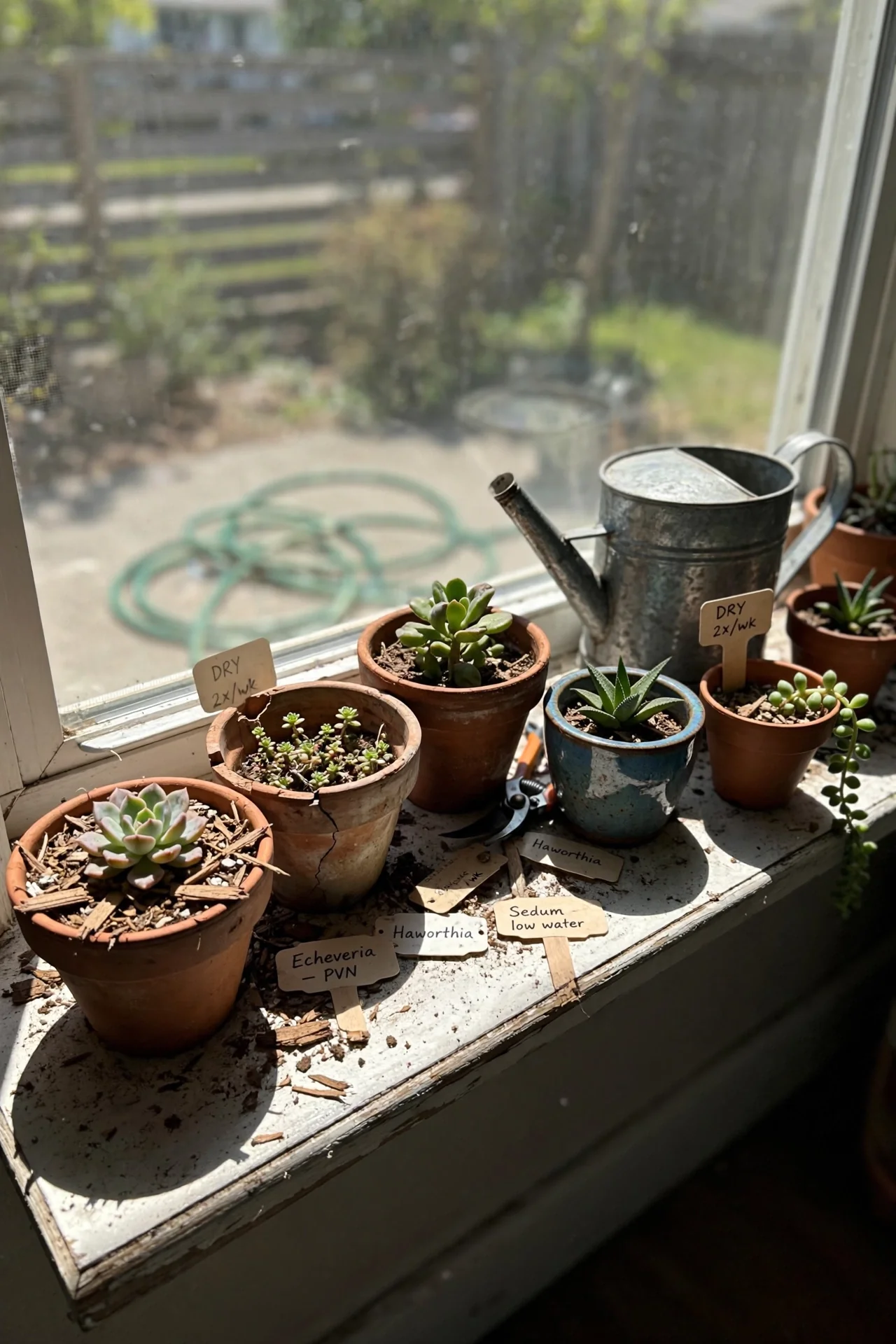
Most guides list succulents that are broadly “easy.” The gap between easy and alive is your specific indoor environment. A jade plant in a north-facing apartment behaves differently from the same jade in a south-facing sunroom. Two beginners with identical plants get opposite results because light, humidity, and watering habits interact in ways generic advice ignores.
This guide matches succulents to measurable home conditions: hours of direct sun, ambient humidity range, and how often you realistically water. It excludes outdoor-only varieties (like most Sempervivum in humid climates) and finicky species that demand precise seasonal cues (like Lithops). Every recommendation here grows indoors in typical household temperatures of 18–26°C (65–78°F).
By the end, you will know which three succulents fit your specific window orientation, which two to avoid for your watering tendencies, and why pairing plants from the same decision branch reduces maintenance conflicts.
Bottom line: Pick succulents that match your actual light and watering rhythm, not the plant you wish you had.
The Yield Grid Decision Grid
Choose your branch based on the window where the plant will live most of the year. Humidity and watering tendency refine the match.
Branch 1: Low Light (under 3 hours of direct sun daily), Low Humidity (under 45% RH), Forgetful Waterer (tends to go 3+ weeks between watering). This is the typical north-facing room, office cubicle, or interior shelf. Only succulents with CAM photosynthesis that stays efficient in dim conditions and thick water-storing leaves survive here without stretching. Recommended: Items 1, 4, and 10 below.
Branch 2: Bright Light (4+ hours of direct sun daily), Dry Air (under 40% RH), Attentive Waterer (checks weekly). South- or west-facing windowsills, especially above radiators or in arid climates. Succulents here need full-sun tolerance and compact growth habits. Recommended: Items 2, 3, 5, and 7 below.
Branch 3: Moderate Light (3–5 hours indirect or filtered sun), Higher Humidity (45–65% RH), Regular Waterer (every 7–14 days). Kitchens, bathrooms with frosted windows, or east-facing sills in humid regions. These spots demand succulents that tolerate moisture in the air and soil more than desert types allow. Recommended: Items 6, 8, and 9 below.
For a deeper breakdown of how succulent care diverges from cactus care in these conditions, see our cactus vs. succulent care guide.
Quick Comparison Table
| Option | Key Mechanism | Best For | Decision Grid Branch | Effort Score (1–5) |
|---|---|---|---|---|
| Haworthia | CAM photosynthesis in low light; thick leaves store water | Low-light rooms, forgetful waterers | Branch 1 | 1 |
| Jade Plant | Woody stems resist collapse during dry spells | Bright windowsills, occasional pruners | Branch 2 | 2 |
| Aloe Vera | Gel-filled leaves buffer watering gaps; pups signal health | Sunny kitchens, medicinal use | Branch 2 | 2 |
| Snake Plant | Vertical leaves minimize transpiration; tolerates near-darkness | Bedrooms, hallways, offices | Branch 1 | 1 |
| Echeveria | Compact rosette; farina coating reduces water loss | Bright, dry windowsills | Branch 2 | 3 |
| Sedum (Stonecrop) | Shallow roots exploit surface moisture; rapid spread | Kitchens, bathrooms, mixed bowls | Branch 3 | 2 |
| Burro’s Tail | Bead-like leaves store water; fragile attachment | Hanging baskets, high shelves | Branch 2 | 3 |
| Christmas Cactus | Epiphytic origin; absorbs moisture from air and soil | Humid rooms, seasonal bloom seekers | Branch 3 | 4 |
| Panda Plant | Fuzzy trichomes trap boundary-layer humidity | Moderate-light shelves, pet owners | Branch 3 | 2 |
| Ghost Plant | Color shift signals light adequacy; self-propagates | Full-sun windows, propagators | Branch 1 | 2 |
1. Haworthia (Zebra Plant)
Best for: Branch 1
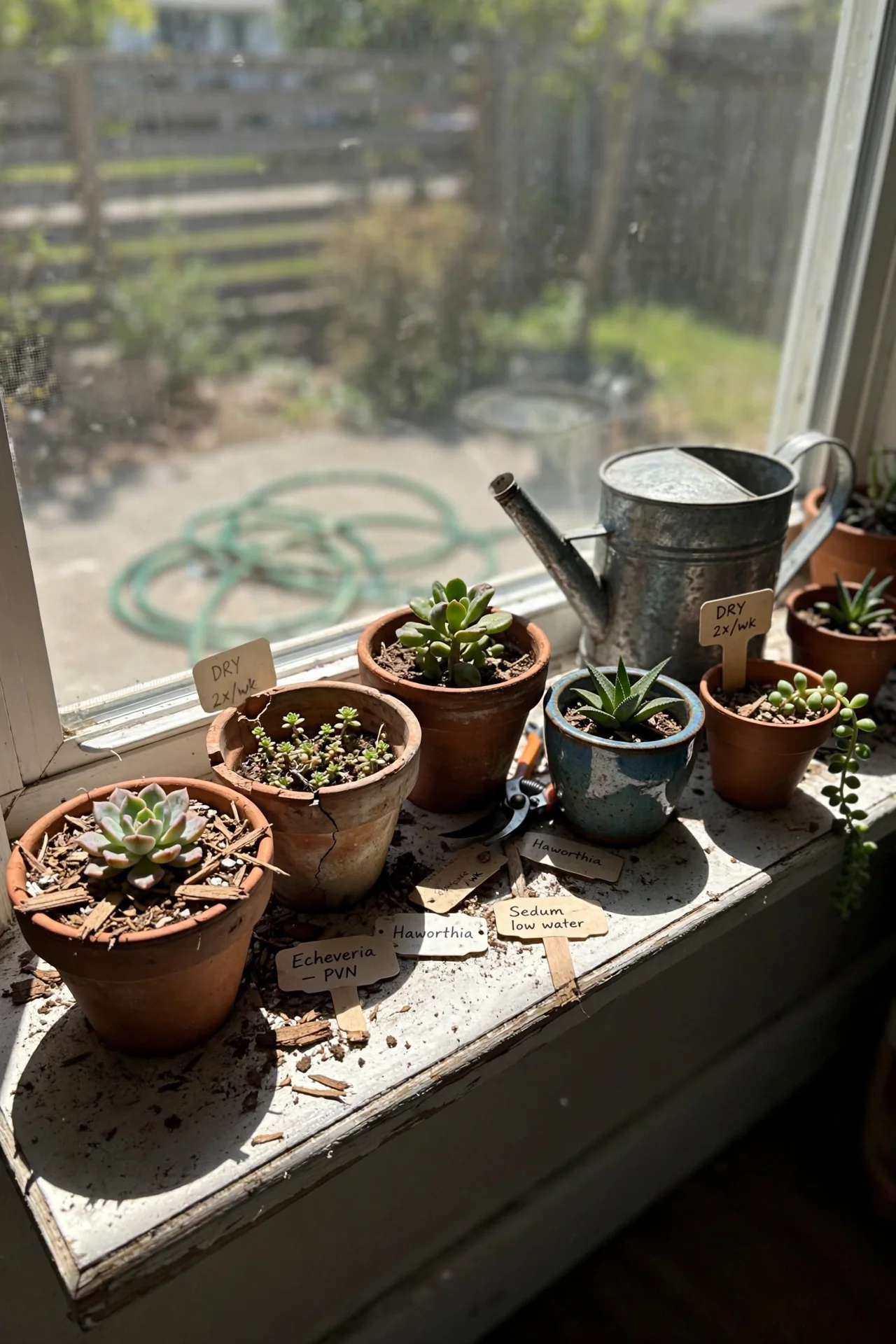
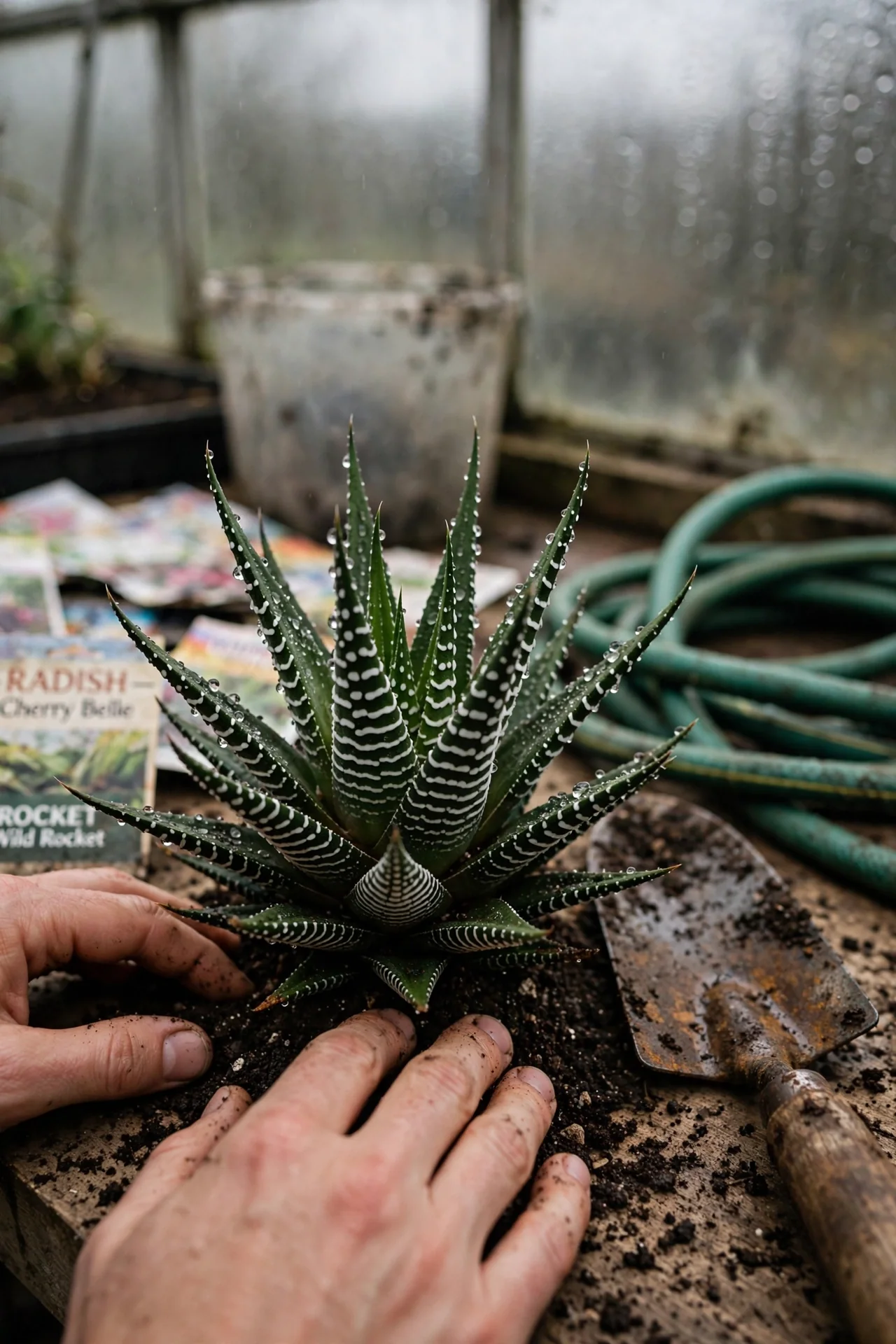
What: Small, rosette-forming succulents with pointed, striped leaves. For: Spaces receiving under 3 hours of direct sun where most succulents stretch and fade. Steps: Place in a shallow pot with a drainage hole. Use gritty mix (1 part potting soil, 2 parts perlite or pumice). Water only when leaves feel slightly soft, roughly every 3–4 weeks in low light. Keep between 15–30°C (60–85°F). Mistake: Treating Haworthia like a full-sun succulent. Direct midday light browns the leaf tips within days. This is one of the few succulents that genuinely prefers bright indirect light.
For more options that thrive without direct sun, see our low-light succulents guide.
2. Jade Plant (Crassula ovata)
Best for: Branch 2
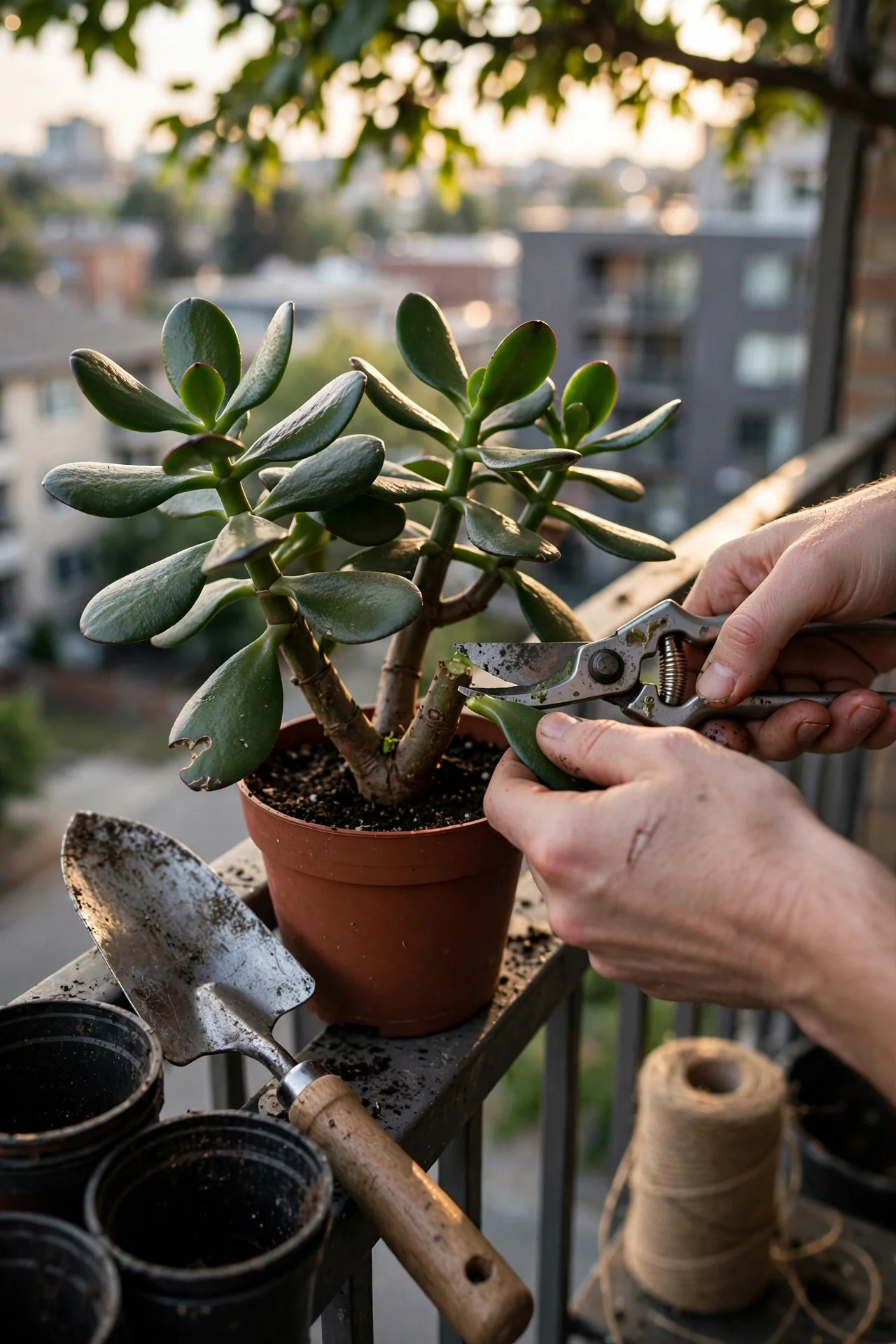
A woody-stemmed succulent with coin-shaped leaves. It forgives occasional overwatering better than most because its stems transport oxygen to roots even in damp soil. The catch: without 4+ hours of direct sun, stems elongate and leaves space out. Water every 10–14 days in summer, monthly in winter. Temperatures below 7°C (45°F) cause leaf drop.
Once established, occasional shaping keeps it compact. See our jade plant pruning guide for timing and technique.
3. Aloe Vera
Best for: Branch 2
Aloe stores water in thick, serrated leaves. The gel inside is usable for skin irritation, which adds a practical reason to keep one. It thrives between 13–27°C (55–80°F) and low humidity. Water deeply every 2–3 weeks when the top 5 cm of soil is dry. The edge case: Aloe pups prolifically. If left unseparated, a single plant fills a pot within 12–18 months, depleting soil nutrients. Repot pups annually or the mother plant stalls.
For a complete indoor care routine, read our aloe vera indoors guide.
4. Snake Plant (Sansevieria trifasciata)
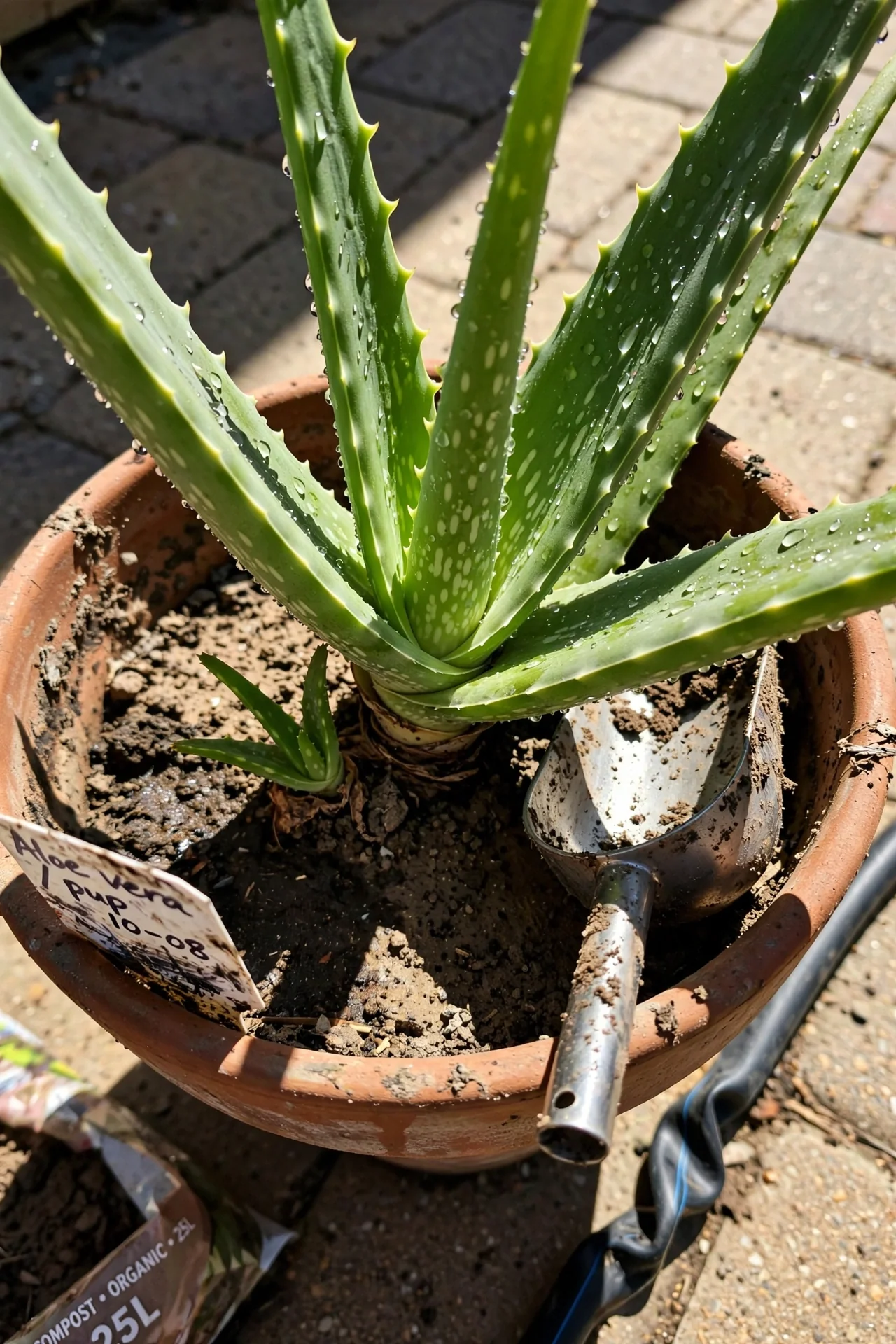
Best for: Branch 1
What: Upright, strap-like leaves with yellow margins. For: The lowest-light spots in a home: hallways, north-facing bedrooms, office cubicles with fluorescent lighting. Steps: Pot in any well-draining container. Use a standard succulent mix with extra perlite. Water every 3–4 weeks in low light, every 2–3 weeks in brighter spots. Let soil dry completely between waterings. Mistake: Assuming low light means no water. Snake plants still need occasional deep watering; chronic underwatering causes horizontal leaf cracks and brown tips. The mechanism that makes it work: vertical leaf orientation minimizes surface area exposed to light, reducing transpiration and water demand simultaneously.
The right soil structure prevents the root rot that kills most indoor snake plants. Our succulent soil mix recipe shows the ratio that works.
5. Echeveria
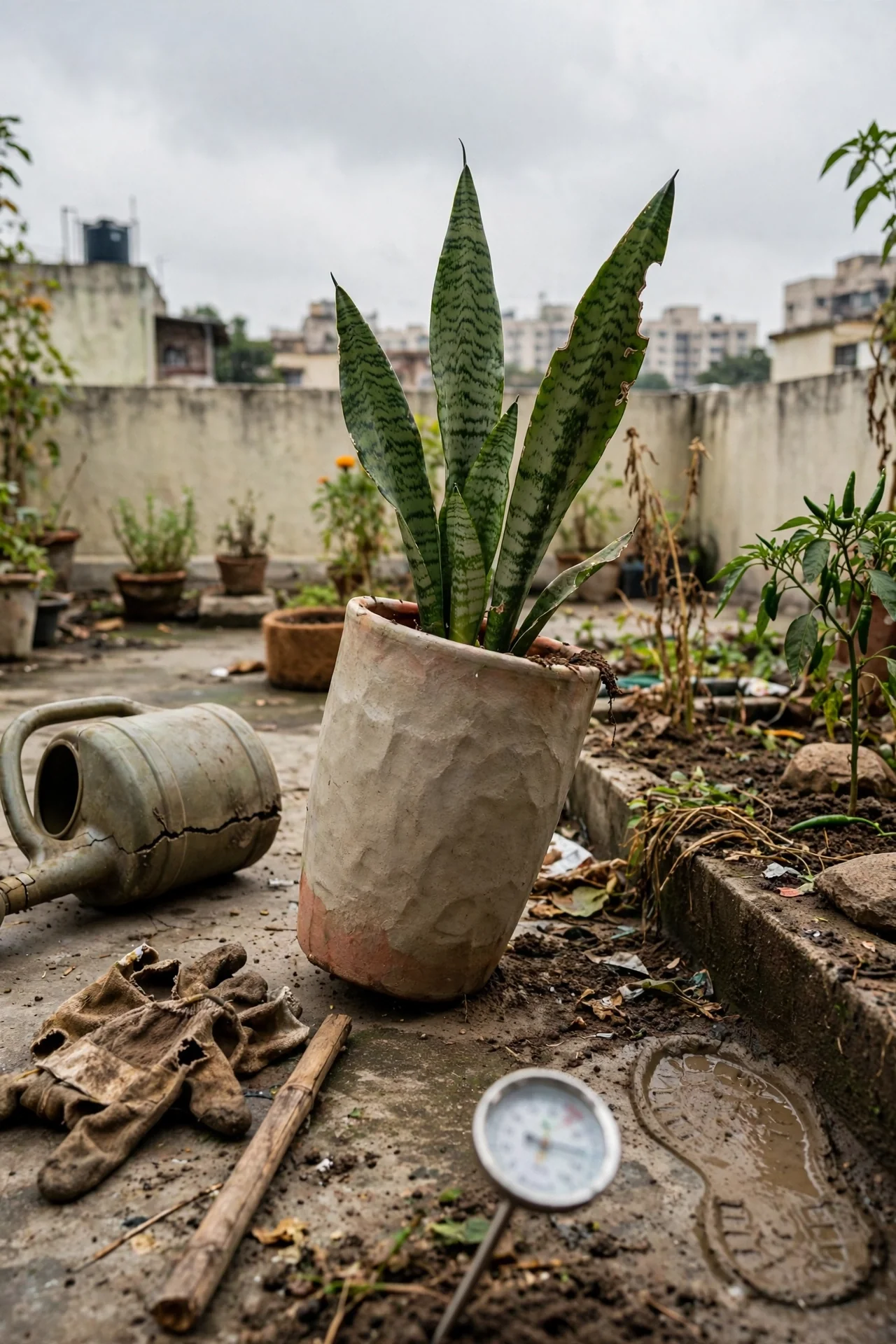
Best for: Branch 2
Rosette-forming succulents with a powdery farina coating. They demand bright light: at least 6 hours of direct sun or strong grow lights to maintain compact shape. Water every 10–14 days in summer, monthly in winter. The key constraint: never pour water into the rosette center; trapped moisture rots the crown within days. Bottom-watering solves this.
For detailed light and watering specifics across varieties, see our echeveria care guide.
6. Sedum (Stonecrop)
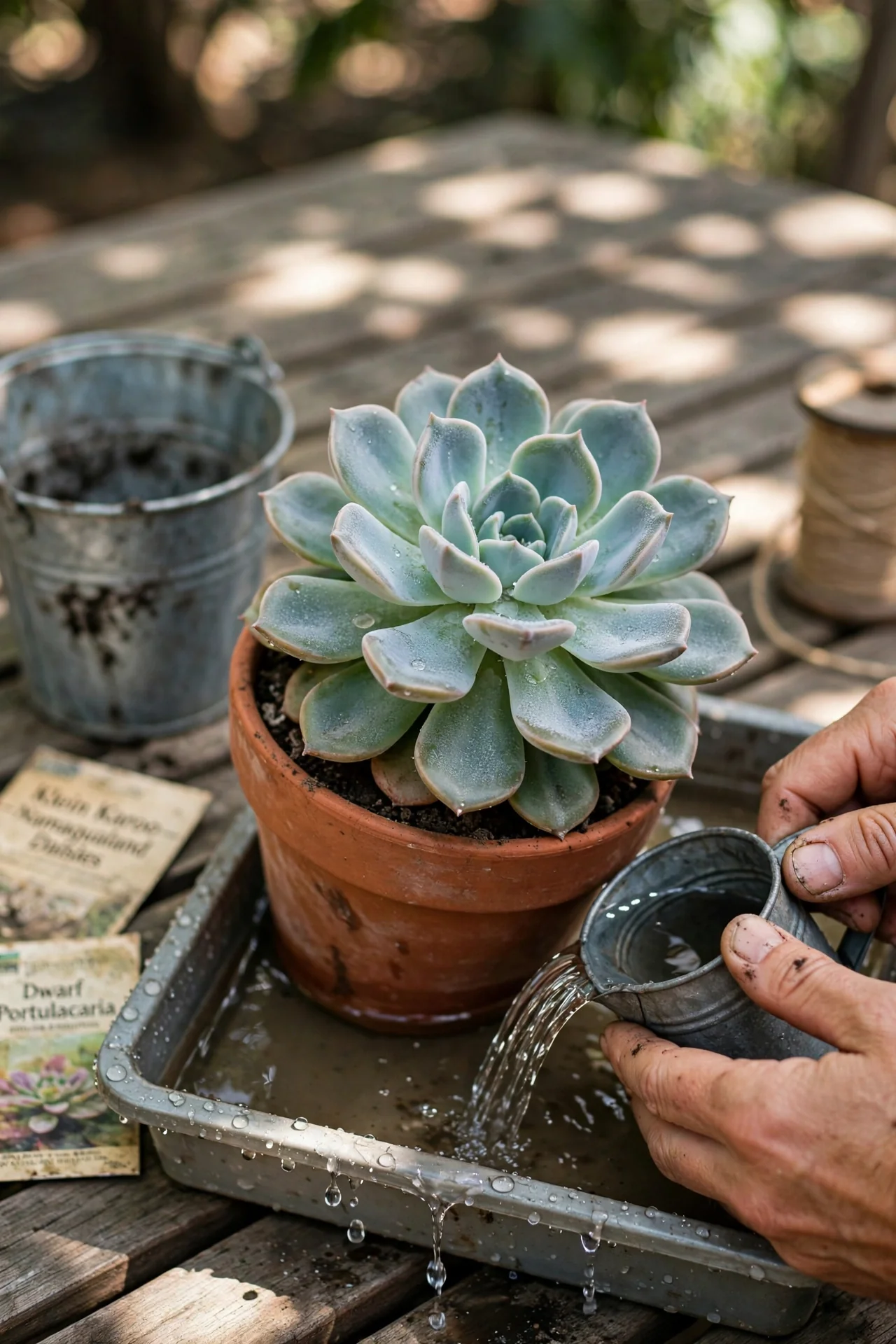
Best for: Branch 3
Trailing or spreading succulents with small, fleshy leaves. Sedum adapts to moderate humidity better than most desert succulents because its shallow root system extracts moisture from the topsoil layer without sitting in waterlogged conditions. Water every 1–2 weeks in humid rooms, allowing the top 2.5 cm of soil to dry. In low-humidity homes, water more frequently. The tradeoff: Sedum grows fast and can overwhelm neighboring plants in mixed arrangements.
Drainage is non-negotiable for any Sedum variety. See our succulent pot drainage guide for setup details.
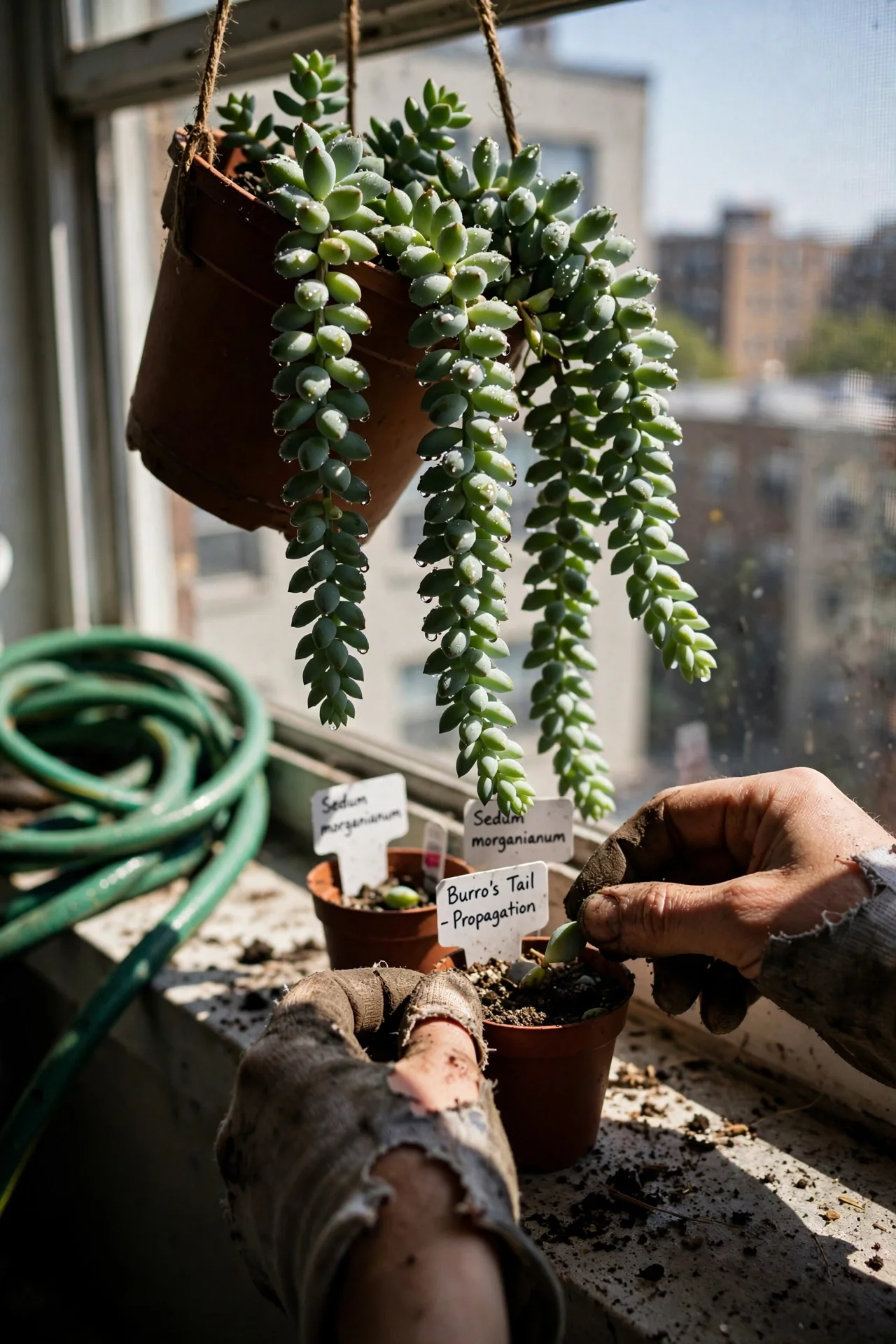
7. Burro’s Tail (Sedum morganianum)
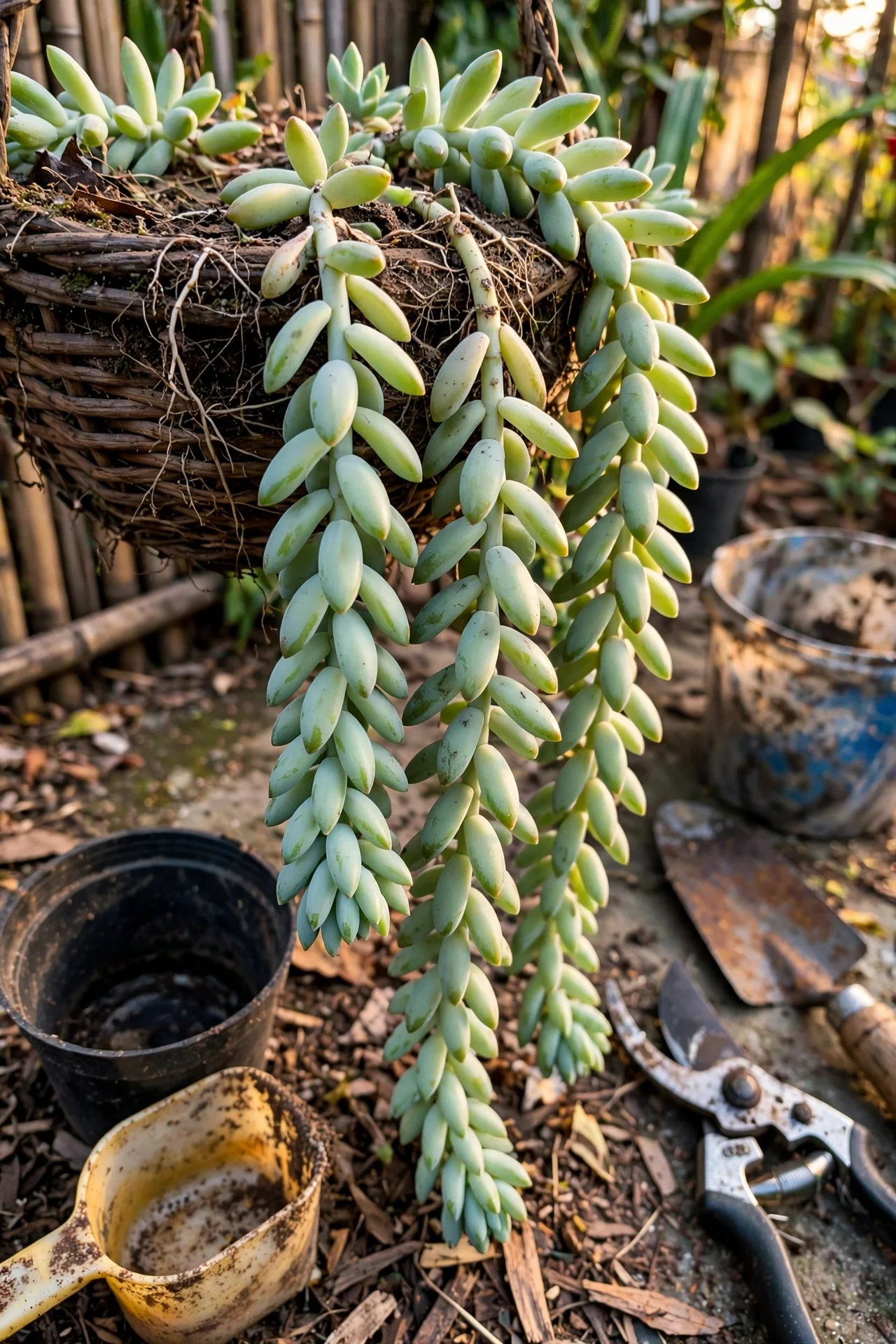
Best for: Branch 2
What: Trailing stems covered in overlapping, bead-like leaves. For: Hanging baskets in bright, south-facing windows where the trailing habit can cascade 60–90 cm. Steps: Use a shallow hanging pot with a drainage hole. Fill with gritty succulent mix. Water thoroughly every 9–14 days in growing season, letting soil dry completely between. Reduce to every 3–4 weeks in winter. Mistake: Moving the pot once established. The leaf attachments are deliberately weak: in nature, fallen leaves root where they land. Indoors, even gentle bumps shed leaves. Place it permanently and water in place. Temperatures below 10°C (50°F) trigger leaf drop.
When your plant outgrows its container, our how to repot succulents guide explains the low-loss method for fragile-leaved varieties.
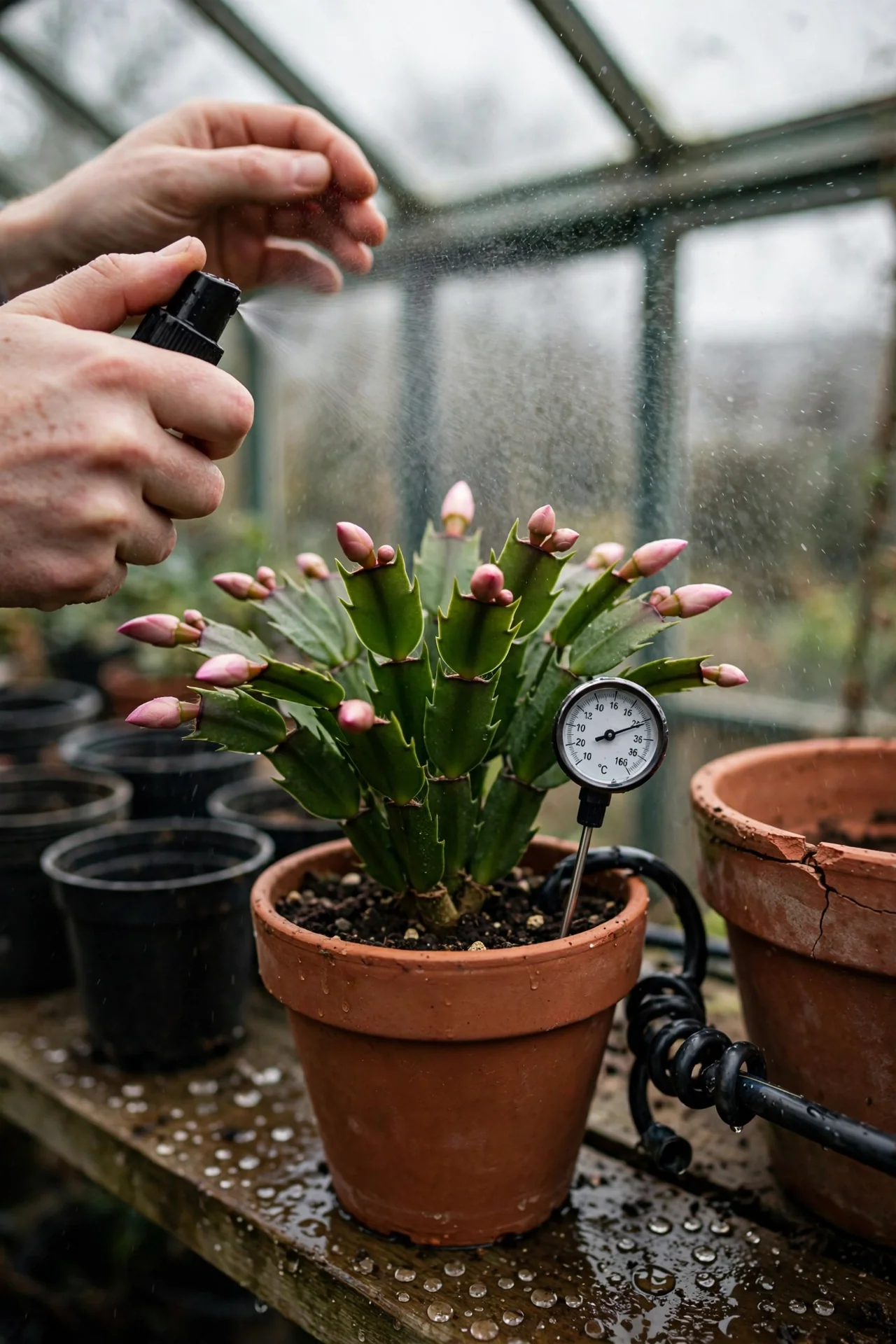
8. Christmas Cactus (Schlumbergera)
Best for: Branch 3
Unlike desert succulents, this epiphytic species evolved in Brazilian cloud forests. It wants more water and humidity: water when the top 2.5 cm of soil feels dry, roughly every 7–10 days in active growth. Humidity above 45% encourages bloom set. The constraint: to flower reliably, it needs 12–14 hours of darkness nightly for 6–8 weeks in autumn, plus temperatures near 15–18°C (60–65°F).
For bloom-cycle timing and year-round care, see our Christmas cactus care guide.
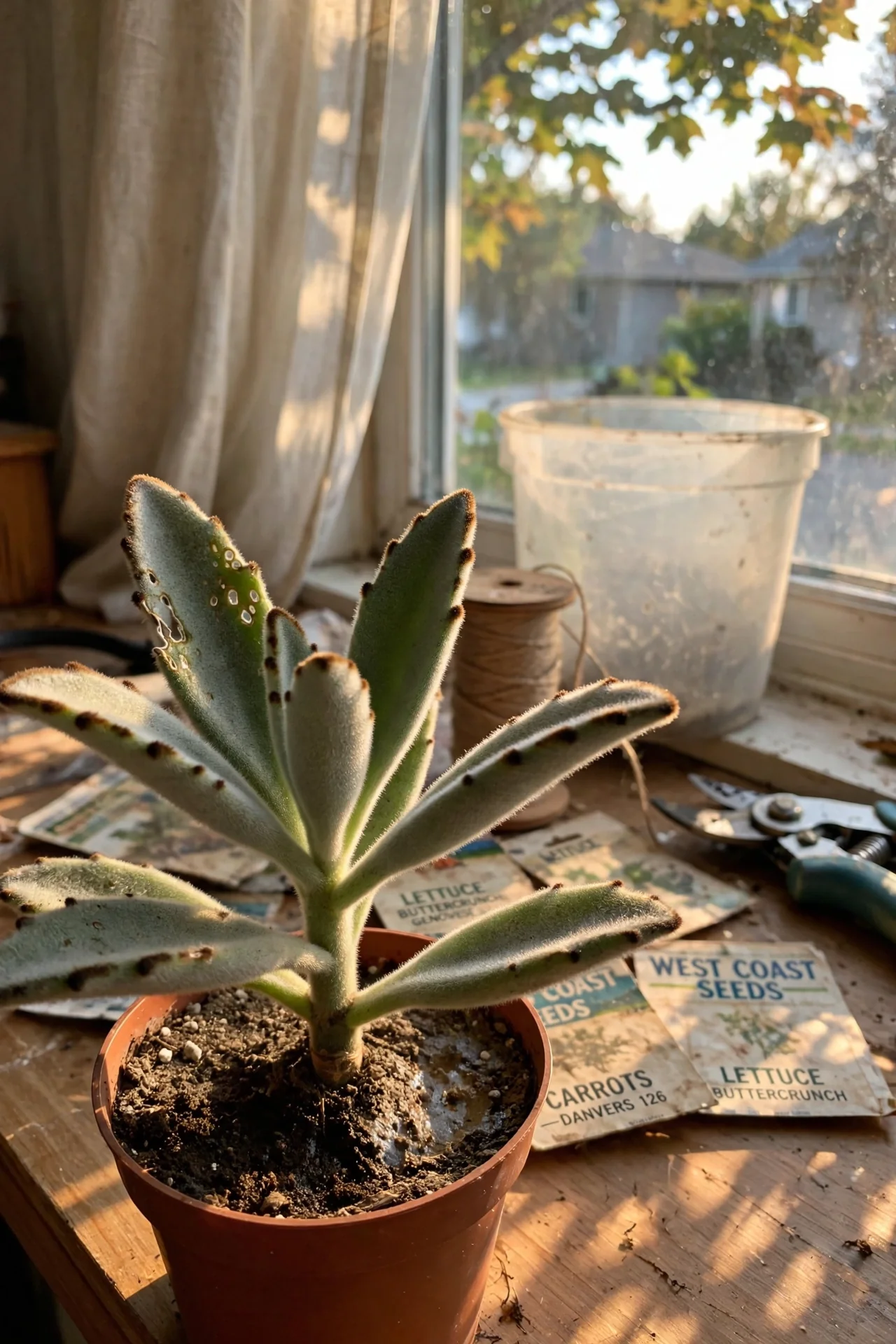
9. Panda Plant (Kalanchoe tomentosa)
Best for: Branch 3
Thick, fuzzy leaves with brown-dotted margins. The leaf hairs trap a thin layer of humid air around the leaf surface, letting it tolerate moderate ambient humidity without rotting. Water every 2–3 weeks, keeping water off the leaves: wet fuzz invites fungal spotting. This plant grows slowly, staying under 30 cm tall for years. One concern: Kalanchoe species contain cardiac glycosides toxic to cats and dogs.
If you share your home with pets, check our pet-safe succulents guide for non-toxic alternatives.
10. Ghost Plant (Graptopetalum paraguayense)
Best for: Branch 1
What: A rosette succulent whose leaves shift from pale blue-gray in shade to pinkish-yellow in full sun. For: Beginners who want visual feedback: color change directly signals whether light levels are adequate. Steps: Pot in gritty mix. Place in a spot with at least 3–4 hours of direct sun for pink tones, or bright indirect light for blue-gray. Water every 2–3 weeks when soil is dry. Mistake: Assuming pink means stressed and moving it to shade. Pink coloration is a harmless anthocyanin response to UV exposure, similar to a tan. The plant is healthier in bright light than in shade. Ghost plant also self-propagates: dropped leaves root where they fall, making it a continuous source of new plants.
To turn one ghost plant into many, see our propagate succulents from leaves guide.
Starter Stack (What to Choose First)
Branch 1 Starter: Low-Light Survivors
Combine Snake Plant (#4) and Haworthia (#1). The snake plant fills vertical space and thrives on neglect; the Haworthia adds texture at the pot base. Together they need watering only once monthly. Estimated cost for both in 10 cm nursery pots: $12–$22 (US), £10–£18 (UK), ₹300–₹700 (India). Time investment: under 10 minutes per month.
Branch 2 Starter: Sunny Windowsill Duo
Combine Jade Plant (#2) and Aloe Vera (#3). The jade provides height and structure; the aloe offers practical gel access and pups for gifting. Both tolerate the dry air above radiators. Estimated cost: $14–$28 (US), £12–£24 (UK), ₹400–₹900 (India). Time investment: 15–20 minutes every two weeks for watering and occasional leaf cleanup.
Branch 3 Starter: Humid Room Pair
Combine Christmas Cactus (#8) and Sedum (#6). The Christmas cactus delivers winter blooms when few other houseplants flower; the Sedum fills the pot surface and signals when the whole arrangement needs water (its leaves wrinkle first). Estimated cost: $16–$30 (US), £14–£26 (UK), ₹500–₹1,100 (India). Time investment: 20–30 minutes per week during the bloom cycle, less in summer.
When This Won’t Work
Failure Condition 1: Ambient temperature stays below 10°C (50°F) for more than 48 consecutive hours. Most succulents stop root activity below this threshold. Water sits unused in cold soil, causing root rot even with correct watering technique. If your space drops below 10°C regularly in winter, move plants away from single-pane windows or use a heat mat set to 18°C. The alternative: choose cold-tolerant genera like Sempervivum, which survive outdoors to USDA zone 5, rather than the indoor succulents listed here.
Failure Condition 2: Soil remains damp for more than 5 days after watering. This signals either a pot without drainage holes, soil with too much organic matter, or ambient humidity consistently above 70%. Succulents in perpetually damp soil develop pythium root rot, which is irreversible once leaves yellow and soften. The fix: repot into a container with drainage holes using a mix that is at least 50% inorganic material (perlite, pumice, coarse sand).
If you are battling persistent damp-soil problems, our best soil for succulents indoors guide covers amendments that increase drainage speed.
Choosing the Right Option for Your Situation
Budget Threshold
If your total budget (plant plus pot plus soil) is under $15/£12/₹500, start with a single Haworthia or Snake Plant in a recycled container with a drainage hole drilled in the bottom. These two species tolerate the widest range of conditions and require no specialized soil amendments beyond mixing in sand or perlite you may already have.
Time Threshold
If you can realistically check plants only once every 3–4 weeks, restrict your choices to Branch 1 species (Haworthia, Snake Plant, Ghost Plant). Branch 2 and 3 succulents need attention every 1–2 weeks during the growing season. Missing a watering by a week in Branch 2 causes leaf drop; in Branch 1, it rarely causes visible damage.
Technical Constraint: Water Quality
Tap water with total dissolved solids (TDS) above 250 ppm or water softened with sodium causes leaf tip burn and white crust on soil over time. If your water falls into either category, use rainwater, distilled water, or reverse-osmosis water for all succulents. Echeveria and Panda Plant are especially sensitive to sodium and fluoride accumulation.
Yes/No Checklist:
- Does my chosen spot receive the hours of direct sun the plant needs? (Yes: continue. No: pick from Branch 1.)
- Can I provide drainage holes in the container? (Yes: continue. No: stop and get a drill or a new pot.)
- Will the ambient temperature stay above 10°C year-round? (Yes: continue. No: reconsider succulent choice.)
- Am I willing to water on the plant’s schedule, not a calendar? (Yes: proceed. No: choose only Effort Score 1 plants.)
Expert Q&A
Why does my succulent grow tall and leggy even though I water correctly?
Etiolation is caused by insufficient light, not water. The plant stretches toward the nearest light source, increasing internode spacing. Move it to a spot with at least 3 hours of direct sun or add a full-spectrum grow light positioned 15–25 cm above the plant. Once stretched, the stem cannot shorten; prune and propagate the healthy top.
Can I plant different succulents together in one pot?
Yes, but only if all plants share the same decision grid branch. Mixing a Branch 1 Haworthia with a Branch 2 Echeveria in the same container guarantees one plant suffers: either the Haworthia burns in bright light or the Echeveria etiolates in shade. Match dormancy seasons too. Summer-dormant and winter-dormant succulents in one pot create watering conflicts.
Should I mist my succulents between waterings?
No. Misting raises humidity around the leaves without delivering water to the roots, where it is needed. For desert succulents, leaf moisture invites fungal infection. The exception is Christmas Cactus, which benefits from ambient humidity above 45% but still does not need direct misting. Use a pebble tray with water below the pot instead.
What is the difference between succulent soil and regular potting mix?
Succulent soil contains a higher proportion of inorganic material (perlite, pumice, coarse sand, or crushed granite) to create large pore spaces that drain quickly. Regular potting mix is peat- or coir-based and retains water for moisture-loving plants. Using regular potting mix for succulents keeps roots wet for days, which triggers rot. A minimum 50:50 ratio of inorganic to organic material is a safe starting point.
How do I know if my succulent is dormant or dying?
Dormant succulents slow growth, may drop older lower leaves, and need less water, but the stem remains firm and the center leaves stay plump. A dying succulent has soft, translucent leaves, a mushy or blackened stem base, and a foul smell from the soil. If the stem base is firm, reduce water and wait. If the stem is mushy, cut above the rot and propagate the healthy top.
Conclusion
The single decision that determines whether a beginner succulent thrives is matching the plant to the light hours and humidity of the exact spot where it will live. The number one mistake is choosing a succulent by appearance and then trying to change the environment to fit it, rather than the reverse.
Start with one plant from the decision grid branch that matches your window. Once it has been healthy for three months, add a second plant from the same branch. For help establishing a watering rhythm that works across multiple plants, see our succulent watering schedule guide.