
The most actionable cactus vs succulent care difference is invisible at a glance: the presence of areoles, the small cushion-like structures on a cactus stem from which spines, flowers, and new growth emerge. If you cannot spot an areole, you are not holding a cactus. This single botanical checkpoint ripples into every care decision: how long soil should stay wet, how many hours of direct sun a plant can tolerate, and which windowsill it will survive on. Most generic advice erases this line, telling you to treat both groups the same. That advice kills plants.
This article covers indoor container care for both desert cacti and non-cactus succulents commonly sold as houseplants: Echeveria, Aloe, Haworthia, Crassula, and similar genera. We exclude outdoor landscaping, holiday cacti from the Schlumbergera genus, and epiphytic jungle cacti whose care needs differ substantially. The focus is on measurable differences you can test with a light meter, a moisture probe, or your own observation.
By the end, you will know which plant type matches your actual home conditions, not the idealized conditions most guides assume. You will be able to decide whether a south-facing windowsill cactus or a bright-indirect succulent is the right choice, and you will have a repeatable method for adjusting care when things go wrong.
Bottom line: If you can count hours of direct light and measure soil dryness by finger depth, you have the data needed to stop guessing and start keeping both groups alive.
The Yield Grid Decision Grid
Use this three-branch grid to identify your starting point. Match your primary condition to a branch, then read the recommended items below for specific care thresholds.
Branch 1: High Light, Low Forgiveness. You have a south- or west-facing window delivering 5 or more hours of direct sun daily. You tend to underwater rather than overwater. You want plants with architectural structure and are willing to adjust care seasonally. Recommended: Items 1, 2, 4 below.
Branch 2: Bright Indirect, Moderate Margin. Your brightest spot receives 3 to 5 hours of filtered or indirect light. You water regularly and want leaf variety. You can commit to checking soil moisture weekly during the growing season. Recommended: Items 3, 5, 6 below.
Branch 3: Safety and Simplicity First. Light is limited or you share space with pets and children. You need plants that tolerate lower light without becoming hazardous, and you want care routines that are hard to get wrong. Recommended: Items 7, 8, 9, 10 below.
For a broader overview of easy-care options, see our guide to beginner succulents.
Quick Comparison Table
| Option | Key Mechanism | Best For | Decision Grid Branch | Reapply Class |
|---|---|---|---|---|
| 1. Light Intensity Tolerance | Photosynthetic acclimation range | South/west window owners | Branch 1 | Once-per-season adjustment |
| 2. Watering Interval | Soil drying rate tolerance | Under-waterers | Branch 1 | Biweekly in growing season |
| 3. Soil Drainage Speed | Particle size and porosity | Mix-at-home growers | Branch 2 | Once-per-season repot |
| 4. Temperature Minimum Threshold | Cold-hardiness zone floor | Draft-prone homes | Branch 1 | Once-per-season check |
| 5. Ambient Humidity Handling | Cuticle thickness and stomatal behavior | Bathroom/kitchen growers | Branch 2 | Weekly monitoring |
| 6. Nutrient Demand | Growth rate and native soil fertility | Infrequent fertilizer users | Branch 2 | Monthly in growing season |
| 7. Pest Susceptibility | Epidermal barrier strength | Pest-prone collections | Branch 3 | Biweekly inspection |
| 8. Repotting Frequency | Root-to-soil ratio and container size | Small-space growers | Branch 3 | Every 24-36 months |
| 9. Propagation Difficulty | Meristematic tissue accessibility | Budget-conscious growers | Branch 3 | Once per attempt |
| 10. Pet and Human Safety | Presence of irritant compounds or mechanical injury risk | Pet owners and parents | Branch 3 | Once at purchase |
1. Light Intensity Tolerance
Best for: Branch 1
What it is: The measurable range of light intensity, measured in foot-candles or hours of direct sun exposure, that a plant can accept without photoinhibition or etiolation.
What it is for: Matching plant placement to actual window orientation and light duration in your home.
Steps: (1) Measure how many hours of direct sun hit your intended spot using observation or a light meter app. (2) If the spot receives 5 or more hours of direct sun, desert cacti like Mammillaria or Ferocactus will hold compact form. (3) If the spot receives 3 to 5 hours of bright indirect light, most non-cactus succulents like Haworthia or Gasteria will thrive without bleaching. (4) Rotate the container a quarter-turn every 14 days to prevent phototropic lean.
Common mistake: Assuming all succulents tolerate direct sun equally. An Echeveria moved from a store shelf to full afternoon sun can develop epidermal bleaching within 72 hours. Gradual acclimation over 10 to 14 days reduces this risk. For shade-tolerant options, consult our low-light succulents guide.
2. Watering Interval
Best for: Branch 1
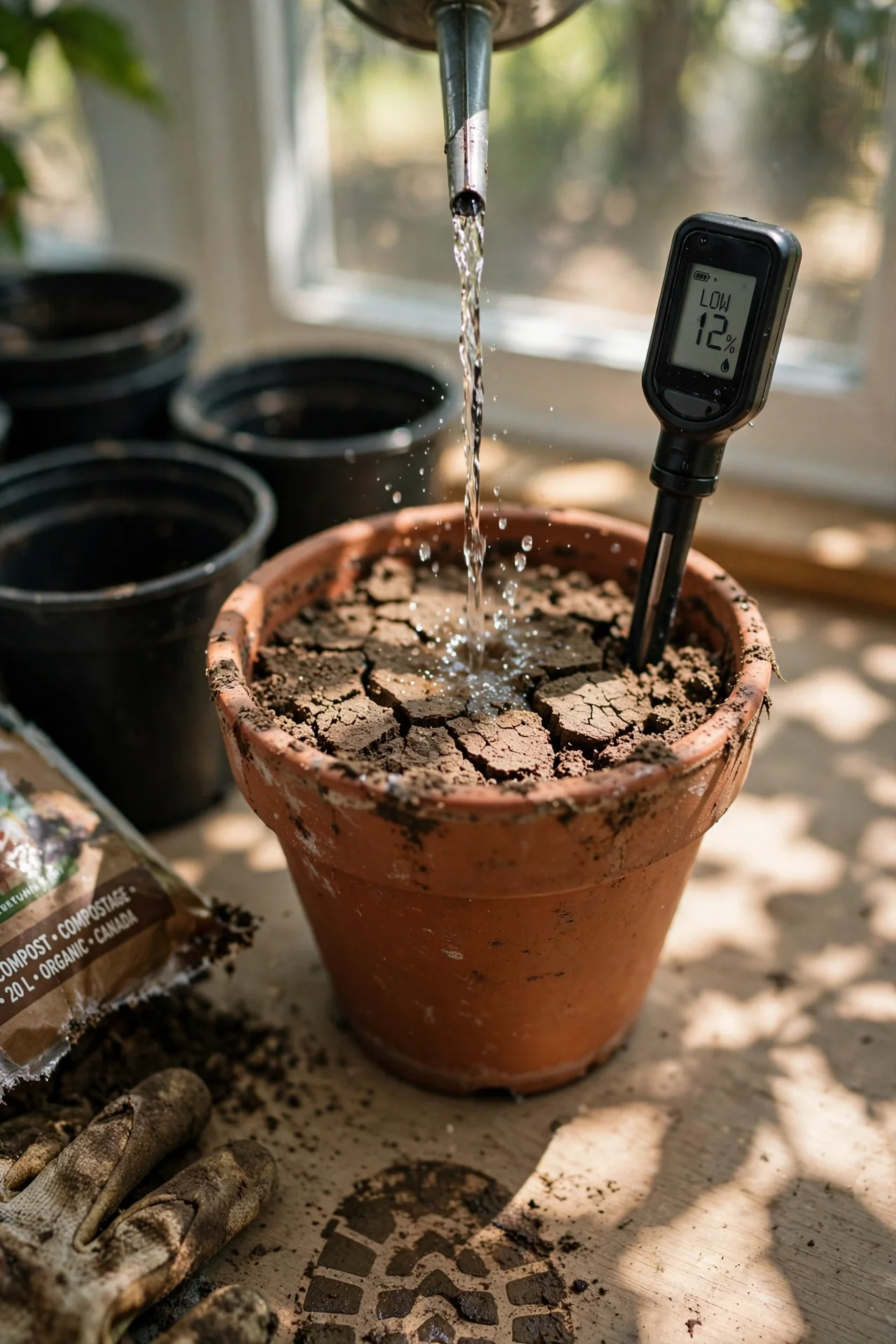
Use when: Your soil dries completely within 5 to 7 days after watering. Desert cacti in terracotta pots under direct sun typically reach this drying rate. Water deeply until runoff exits the drainage hole, then wait for the soil to become bone-dry at a depth of 2 inches before repeating.
Skip when: Your soil stays damp for 10 or more days. This signals insufficient light, oversize pots, or a poorly draining mix. Persistent moisture around cactus roots invites Fusarium and Phytophthora pathogens. Switch to a faster-draining mix before adjusting your interval. For a full schedule framework, see our cactus watering schedule.
3. Soil Drainage Speed
Best for: Branch 2
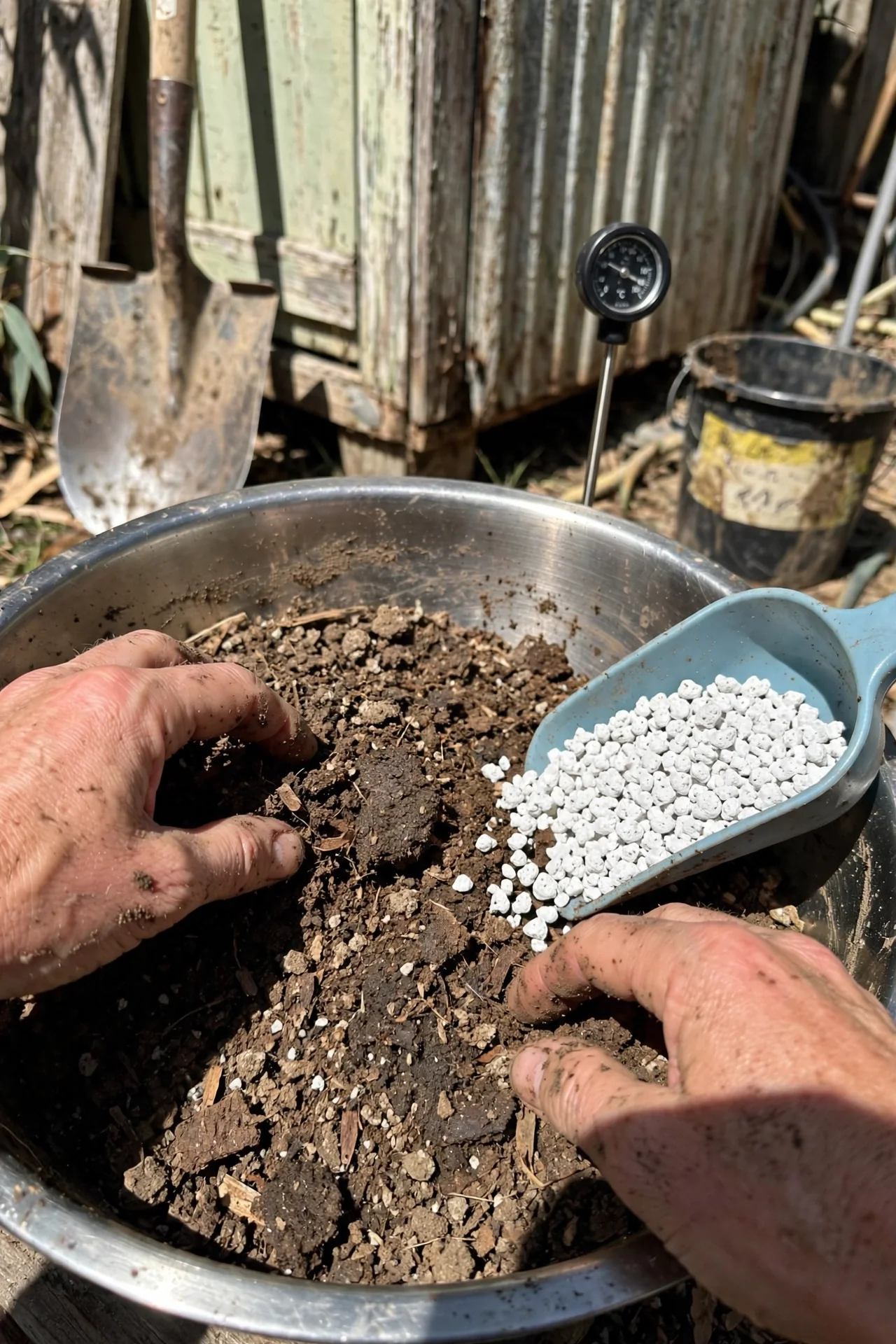
The threshold: A well-formulated cactus mix should drain 1 inch of water in under 30 seconds in a standard 4-inch pot. A succulent mix can retain moisture slightly longer, draining the same volume in 30 to 60 seconds. If water pools on the surface for more than 90 seconds, the mix needs amendment.
Adjustment: Mix 2 parts of a commercial cactus-and-succulent blend with 1 part coarse perlite or pumice (particle size 3 to 6 mm) to hit the drainage target. Avoid fine sand, which fills pore spaces and reduces aeration. For a full recipe breakdown, read our indoor succulent soil guide.
4. Temperature Minimum Threshold
Best for: Branch 1
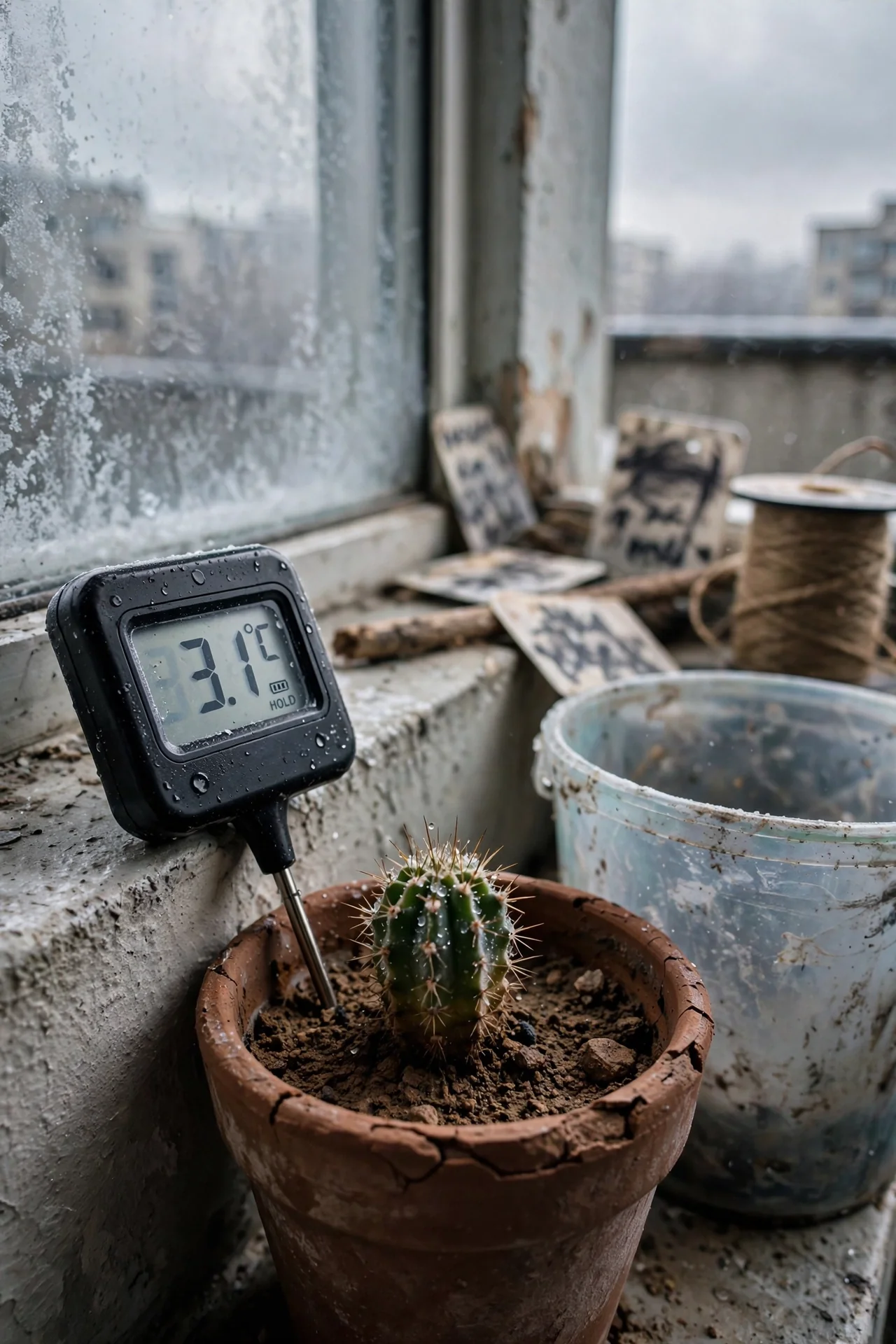
10-minute workflow: (1) Identify your coldest interior windowsill temperature during winter nights using a digital thermometer with a memory function; place it against the glass at 3 AM. (2) If the reading drops below 7 degrees Celsius (45 degrees Fahrenheit), move all desert cacti at least 30 cm (12 inches) away from the glass or onto an insulated surface. (3) Non-cactus succulents from higher-elevation genera like Sempervivum can tolerate brief dips to minus-1 degree Celsius (30 degrees Fahrenheit), but most indoor succulents like Aloe and Echeveria suffer cell wall rupture below 4 degrees Celsius (40 degrees Fahrenheit). (4) During cold snaps, cease all watering; dry roots survive cold better than wet ones.
Upgrade option: Use a seedling heat mat set to 18 degrees Celsius (65 degrees Fahrenheit) beneath pots during prolonged cold spells, controlled by a thermostat with a soil-temperature probe.
5. Ambient Humidity Handling
Best for: Branch 2
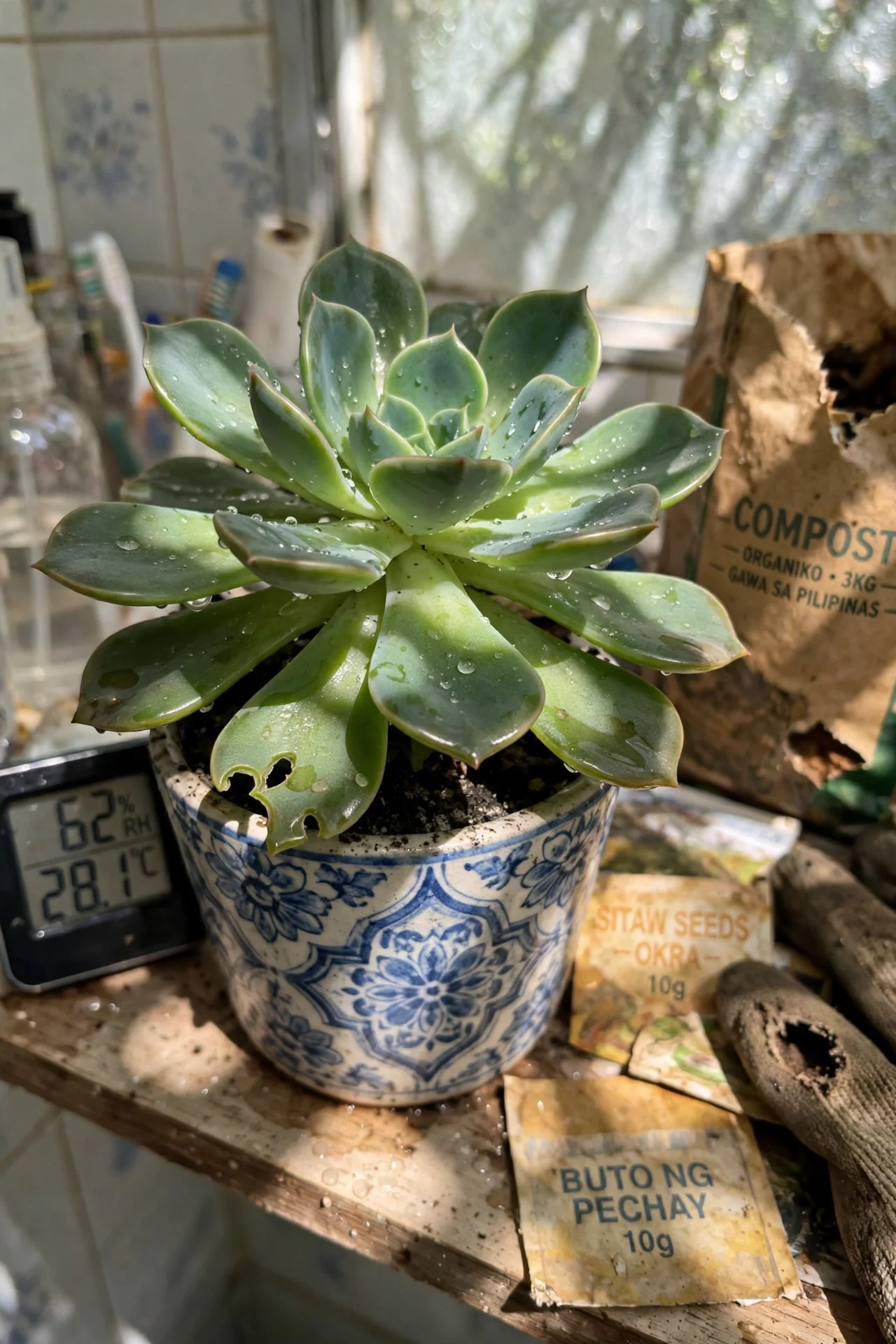
Use when: Your indoor relative humidity stays below 50 percent. Most cacti and succulents from arid regions operate optimally at 30 to 50 percent humidity. Bathrooms and kitchens that spike above 60 percent after showering or cooking challenge cactus cuticles, which are thinner than many assume and can develop fungal spotting in persistently humid still air.
Skip when: You lack ventilation. Even humidity-tolerant succulents like Haworthia need moving air. In a sealed terrarium or a room with no air circulation, a small USB fan running 8 hours daily can drop the effective microclimate humidity around leaf surfaces. For more on container design, see our drainage guide.
6. Nutrient Demand
Best for: Branch 2
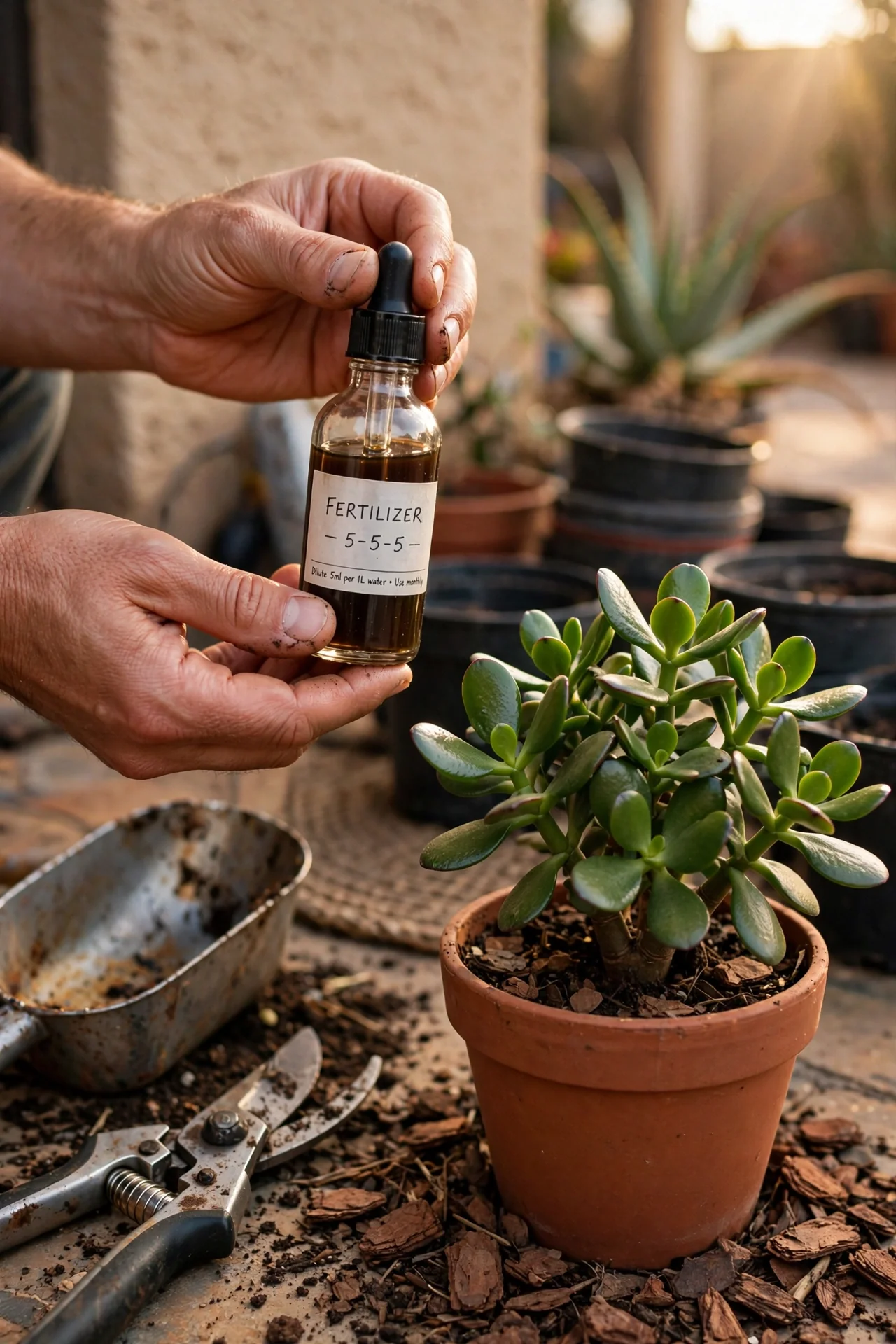
The threshold: Cacti native to mineral soils with negligible organic matter thrive on a fertilizer with an NPK ratio where nitrogen is the lowest number, such as 2-7-7 or 1-4-5, applied at quarter strength. Succulents from slightly richer substrates tolerate a balanced 3-3-3 or 5-5-5 dilution at half strength. In both cases, apply only during active growth when new leaves or spines are visibly elongating.
Adjustment: If you see pale new growth and no elongation, nitrogen is likely deficient. If you see soft, elongated, darkened growth, you are over-fertilizing. Flush the pot with distilled water and skip the next two scheduled feedings. For DIY soil nutrition, read our succulent soil mix recipe.
7. Pest Susceptibility
Best for: Branch 3
What it is: The differential vulnerability of cacti versus non-cactus succulents to common indoor pests, driven by epidermal structure and spine density.
What it is for: Prioritizing inspection frequency and choosing plants less likely to harbor infestations that spread to your wider collection.
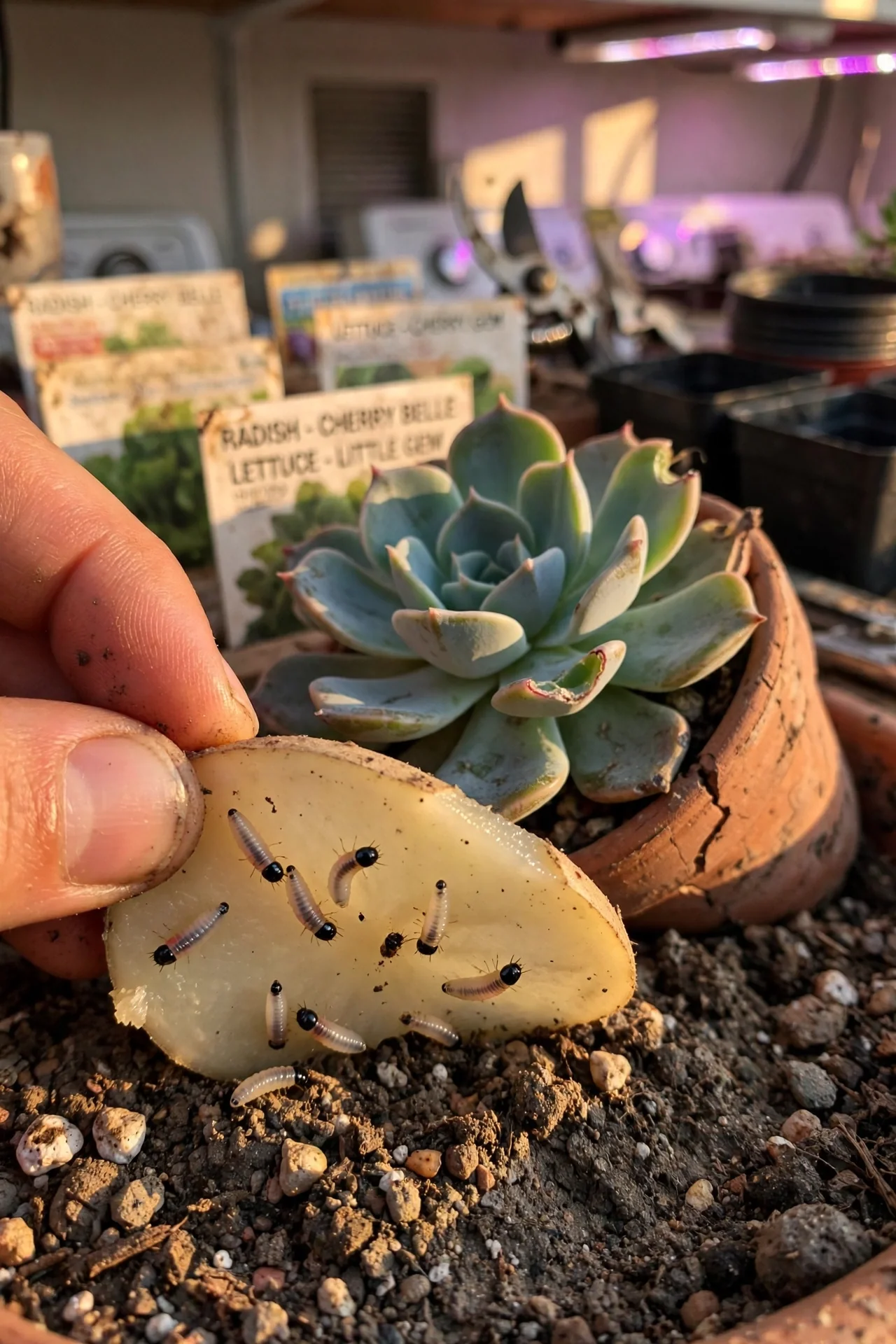
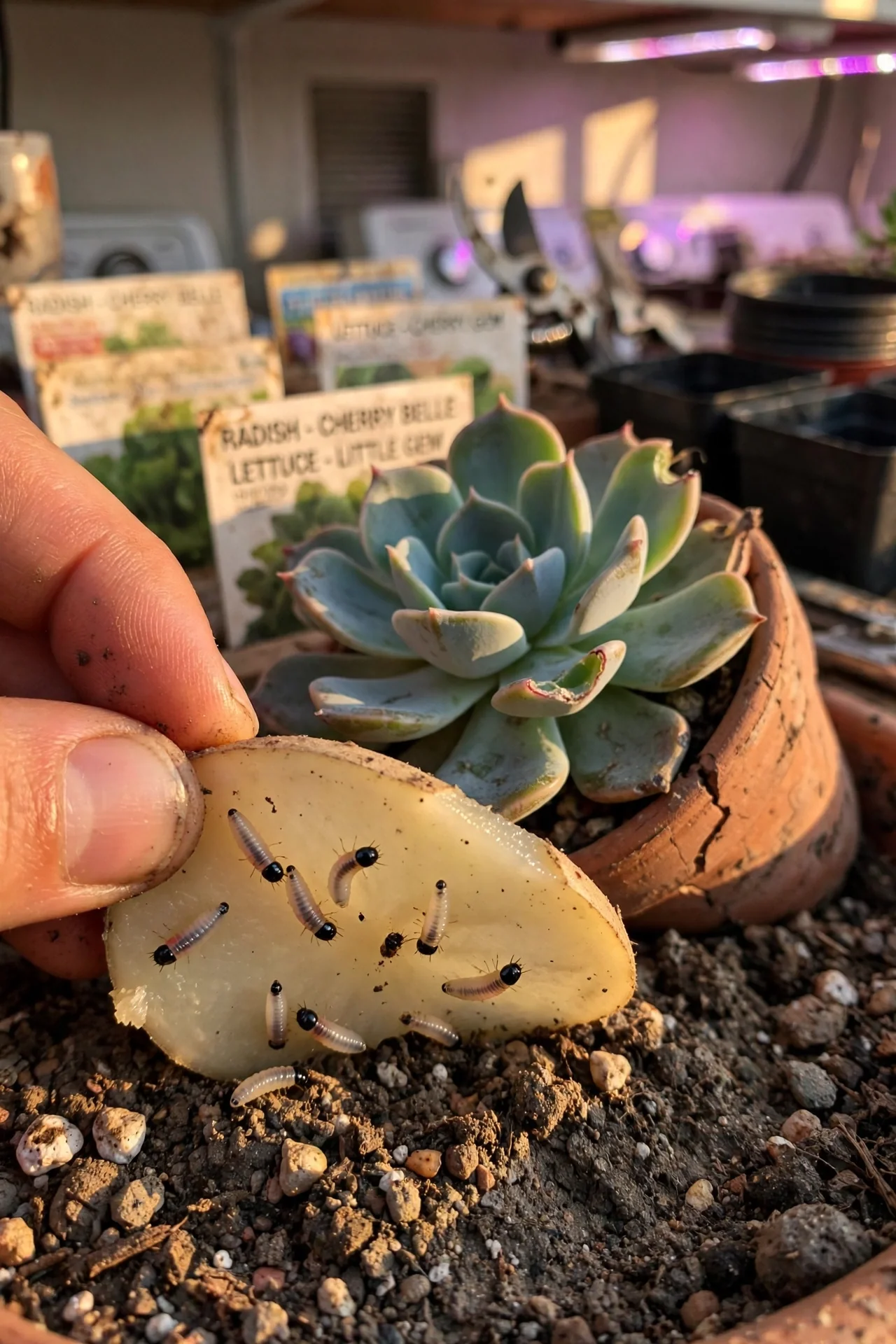
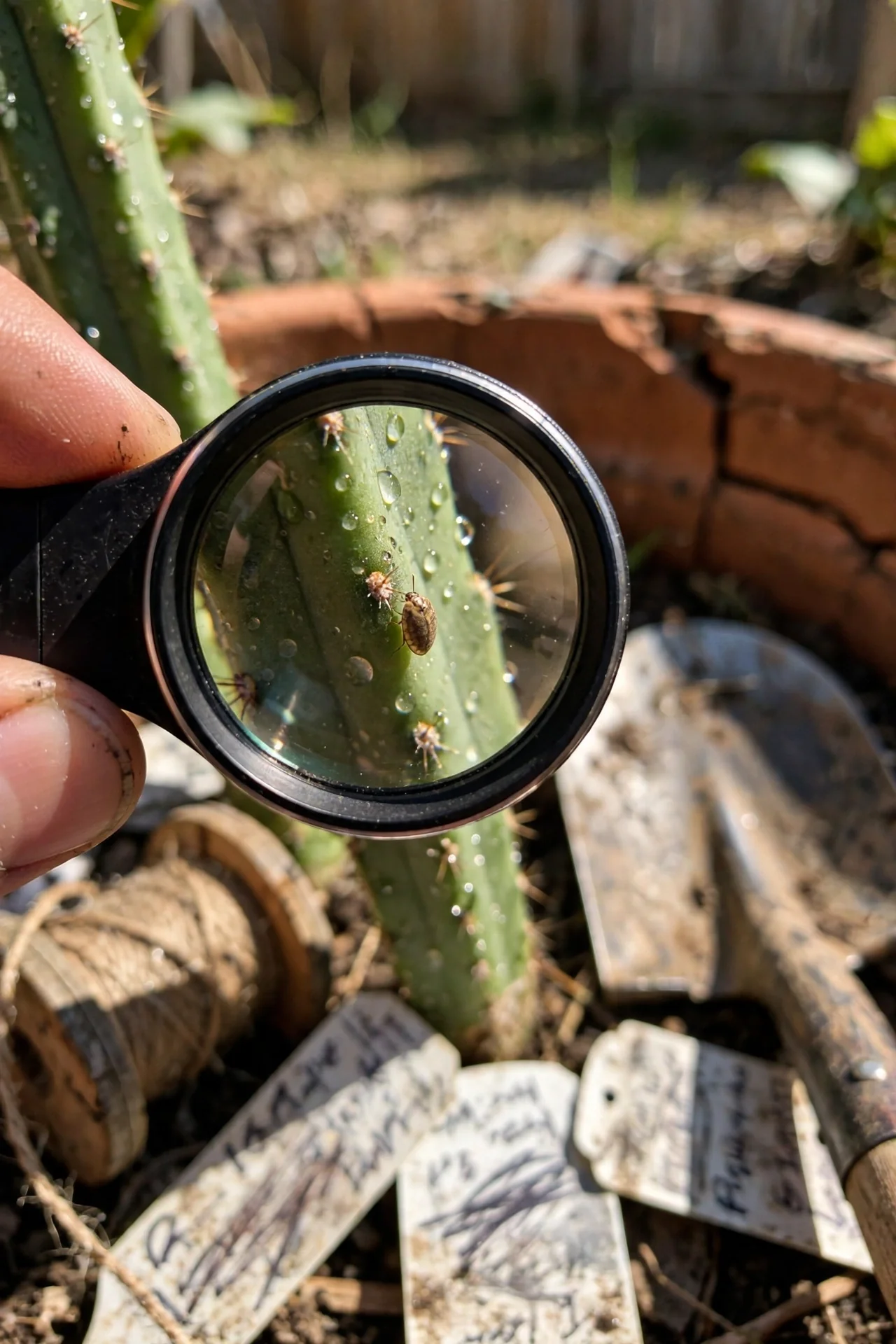
Steps: (1) Cacti with dense spine coverage, such as Mammillaria and Echinocereus, physically exclude mealybugs from reaching the stem epidermis; your inspection can focus on the crown and root collar every 14 days. (2) Smooth-leaved succulents like Echeveria and Graptopetalum are mealybug magnets at leaf axils; inspect every 7 days during warm months using a magnifying loupe. (3) Scale insects preferentially attack cactus stems because the areoles provide protected attachment points; if you find brown, domed bumps that scrape off with a fingernail, treat immediately.
Common mistake: Assuming drought means fewer pests. Spider mites reproduce faster in warm, dry indoor air, precisely the conditions cacti prefer. If you see fine webbing between spines, isolate the plant and increase ambient humidity around it. For diagnosis and treatment, see our scale on cactus guide.
8. Repotting Frequency
Best for: Branch 3
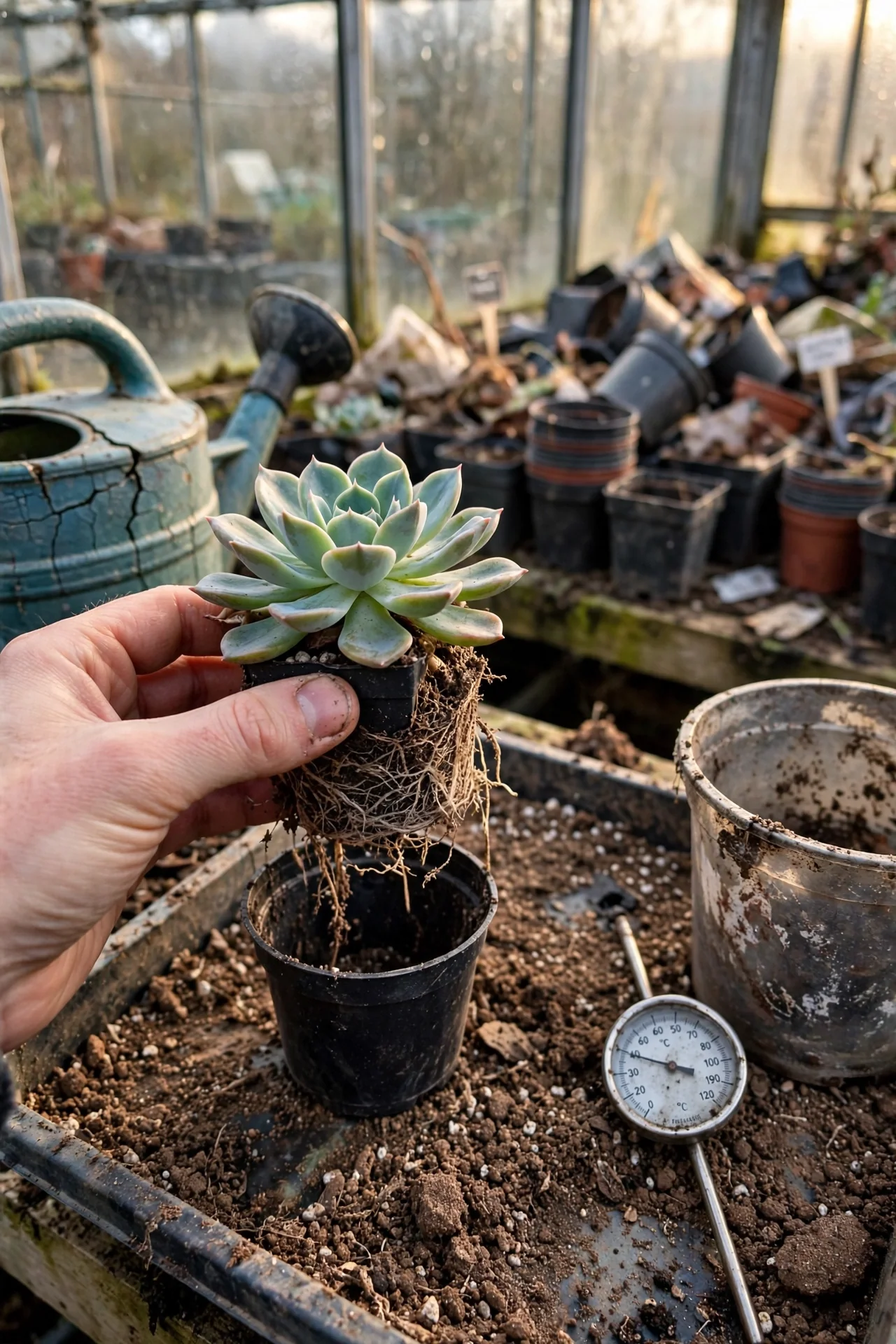
Use when: Roots are visible through the drainage hole, or the plant has been in the same pot for 24 months. Cacti tolerate cramped root conditions longer than most succulents; a Mammillaria can stay in the same 4-inch pot for 36 months if fertilized sparingly. Fast-growing succulents like Crassula ovata (jade plant) may need repotting every 18 to 24 months to prevent root binding that restricts water uptake.
Skip when: The plant is dormant (winter for most species). Repotting during dormancy leaves cut roots sitting in cool, damp soil for weeks, inviting fungal entry. Wait until you see new growth in spring. For the full method, read how to repot succulents.
9. Propagation Difficulty
Best for: Branch 3
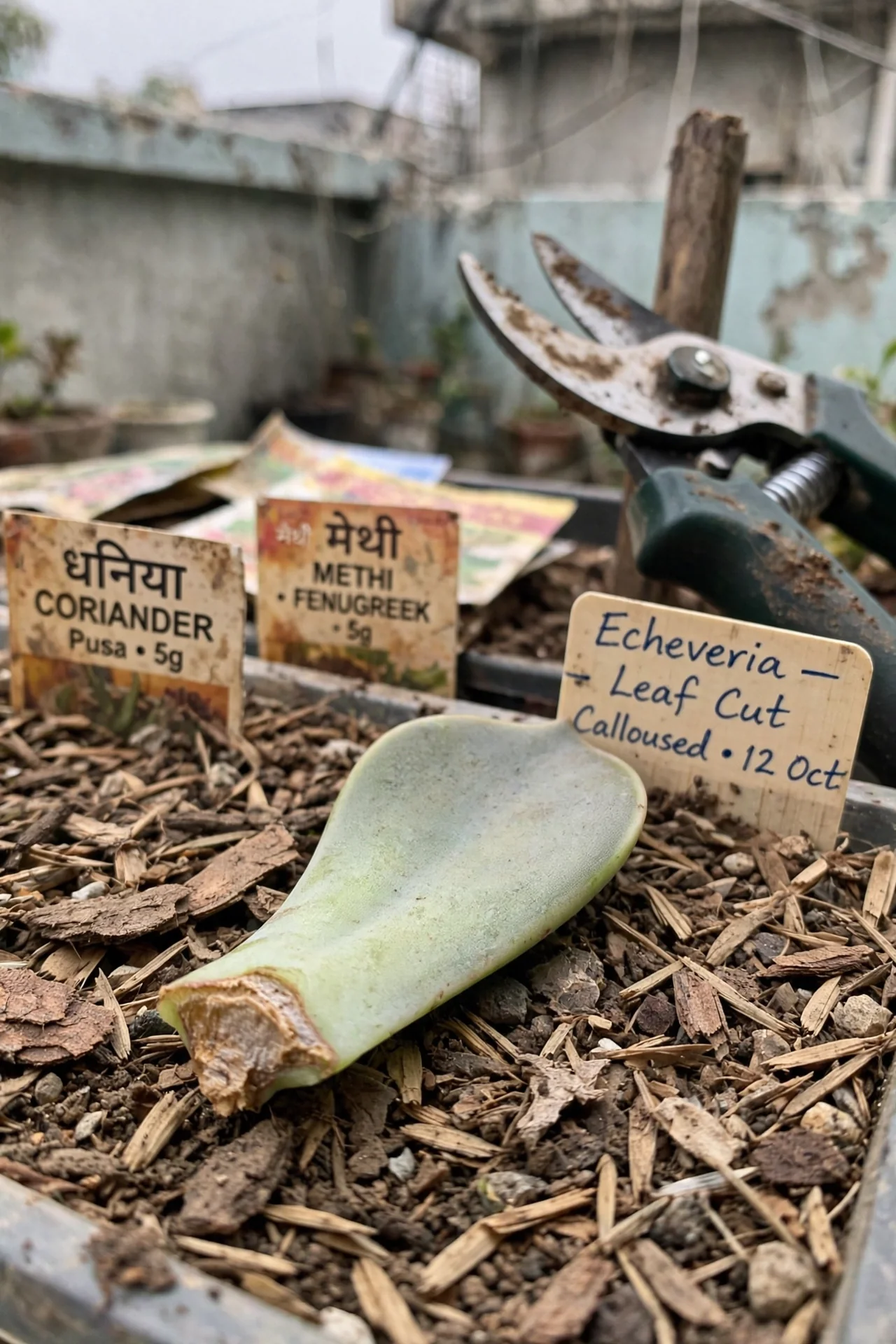
10-minute workflow: (1) Decide between leaf propagation (works for most Echeveria, Graptopetalum, and Sedum) and offset division (works for clumping cacti like Rebutia and Aloe). (2) For leaf propagation: twist a healthy leaf from the stem with a clean lateral motion; the leaf must detach with the basal meristem intact. (3) Place the leaf on dry, well-draining mix in bright indirect light; do not water until roots appear, typically in 7 to 21 days depending on ambient temperature. (4) For offset division: wait until the pup is at least one-third the size of the parent, then separate with a sterilized blade and let the wound callus for 48 hours before planting.
Upgrade option: Use a propagation tray with a transparent humidity dome and bottom heat set to 21 degrees Celsius (70 degrees Fahrenheit) to accelerate rooting in cooler homes. For leaf-based methods, see our leaf propagation guide.
10. Pet and Human Safety
Best for: Branch 3
The threshold: Spines are not the only hazard. Many Euphorbia species, often mistaken for cacti, exude a milky latex sap that causes corneal inflammation if transferred to the eyes and dermal irritation on contact. True cacti in the Cactaceae family do not produce this latex. Aloe vera gel is topical-use only; ingestion causes gastrointestinal distress in cats and dogs.
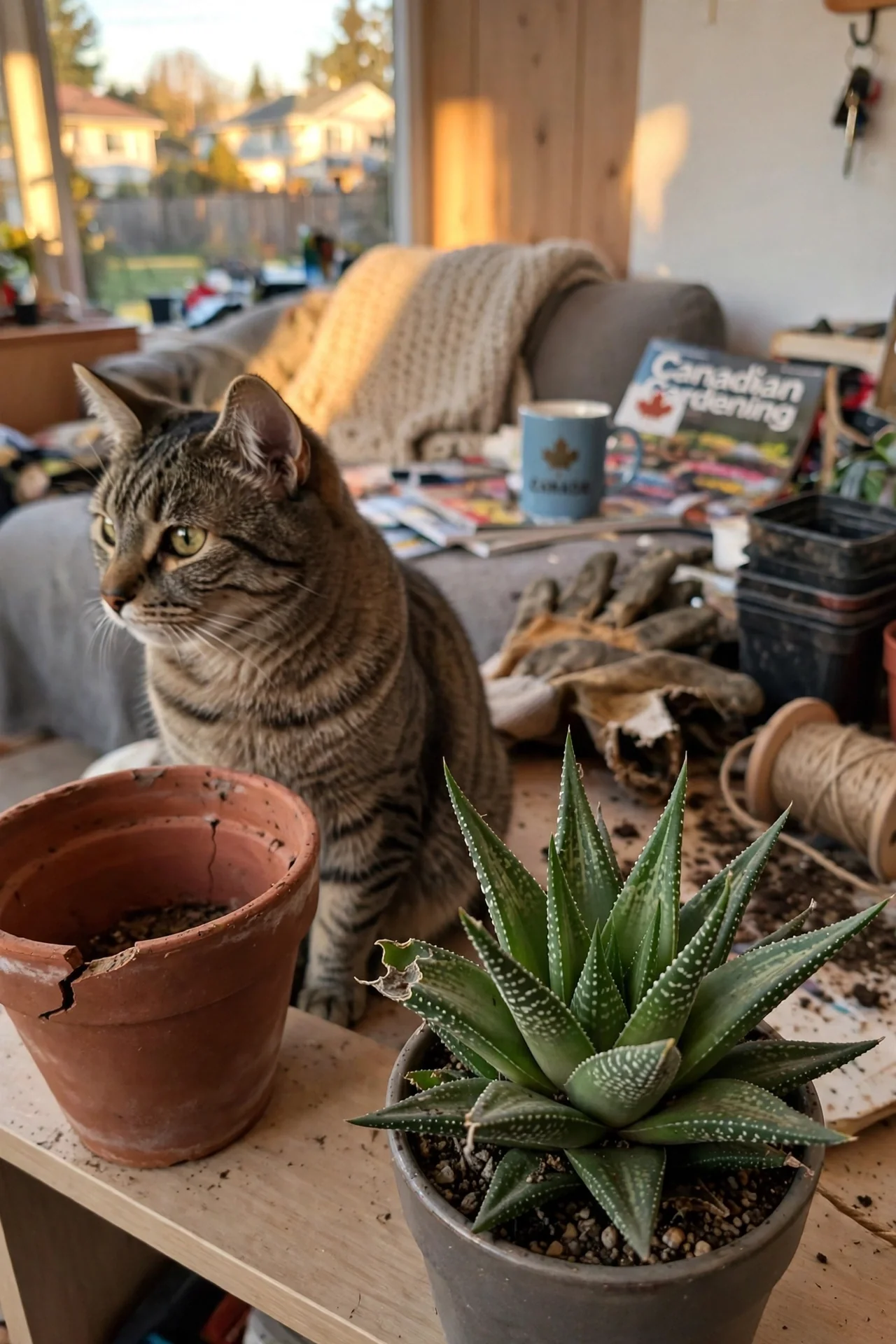
Adjustment: If you need a pet-safe display, choose Haworthia, Echeveria, or Sedum morganianum, all of which are non-toxic to cats and dogs per ASPCA records. Keep Euphorbia, Aloe, and Kalanchoe out of reach; the latter contains cardiotoxic bufadienolides. Always verify species identity at purchase, because many garden-center labels lump Euphorbia under “cactus.” For a full safe-plant list, see our pet-safe succulents guide.
Starter Stack (What to Choose First)
Branch 1: High Light, Low Forgiveness
Start with a Mammillaria species (Item 2) in a 4-inch unglazed terracotta pot on a south-facing sill, paired with a Ferocactus (Item 4) to test your cold-draft management. Both demand the 5-plus-hour direct sun window and the discipline to let soil go bone-dry. Together, they cost approximately $12 to $20 USD and require roughly 15 minutes of care per month during the growing season. The synergy: Mammillaria signals overwatering quickly by splitting at the base; Ferocactus signals cold stress by developing corky brown patches, giving you early warning on the two biggest Branch 1 failure modes.
Branch 2: Bright Indirect, Moderate Margin
Begin with a Haworthia attenuata (Item 5) and a Crassula ovata (Item 6). Haworthia tolerates the humidity spikes of a bathroom shelf; jade plant forgives occasional missed fertilizer doses. Budget approximately $10 to $18 USD total. Expect to invest 20 minutes per week checking soil and rotating containers. The synergy: Haworthia shows you when humidity is too high (leaf tip browning) while jade plant signals nutrient deficiency with pale older leaves, covering the two variables Branch 2 growers most often misjudge.
Branch 3: Safety and Simplicity First
Choose an Echeveria elegans (Item 9) and a Sedum morganianum (burro’s tail, Item 10). Both are non-toxic, propagate easily from leaves, and thrive in bright indirect light without demanding direct sun. Budget $8 to $15 USD. Weekly care is under 15 minutes. The synergy: Echeveria demonstrates leaf propagation within 2 to 3 weeks, while Sedum morganianum provides a hanging display that stays safely out of pet reach, giving you one propagation project and one display solution from the start.
When This Won’t Work
Failure condition 1: Your brightest window delivers under 3 hours of direct sun daily. No desert cactus will maintain compact form in this light; etiolation begins within 4 to 6 weeks, producing thin, pale, weak growth that attracts pests and resists recovery. The alternative: switch to low-light-tolerant genera such as Sansevieria or Zamioculcas, which are not cacti or succulents in the arid sense but share drought tolerance. Alternatively, invest in a full-spectrum LED grow light positioned 15 to 30 cm (6 to 12 inches) above the plants, running 12 hours daily.
Failure condition 2: You water on a calendar schedule without checking soil moisture. Cacti and succulents do not obey weekly rhythms. A pot in a cool, dim room may need water once every 4 to 6 weeks in winter. A pot in a hot, dry, sunny spot may need water every 5 days in July. If you cannot commit to testing soil dryness with a finger or moisture meter before each watering, choose a plant that tolerates wetter feet, such as a Pothos or Peace Lily.
If you are battling persistent fungus gnats alongside your succulents, our fungus gnat guide addresses the wet-soil root cause that both failure conditions above can trigger.
Choosing the Right Option for Your Situation
Budget Threshold
If your total budget for plant, pot, and soil is under $15 USD, select a single Echeveria or Haworthia in a plastic nursery pot with a pre-mixed cactus-and-succulent bagged soil. Avoid specialty terracotta and custom amendments until you confirm the plant survives 3 months in your conditions. Desert cacti often cost less upfront ($4 to $8 USD for a 2-inch specimen) but require a terracotta pot ($3 to $6 USD) and coarser mix that may push the total above budget.
Time Threshold
If you have under 15 minutes per week for plant care, choose Branch 1 cacti. A Mammillaria or Gymnocalycium in the right window needs watering every 2 to 3 weeks during the growing season and virtually no attention in winter. Branch 2 succulents demand more frequent moisture checks and leaf grooming. If your time commitment drops below 5 minutes per week in the growing season, reconsider whether any living plant fits your current schedule.
Technical Constraint: Drainage Hole Access
If your intended container lacks a drainage hole, stop. Neither cacti nor succulents survive long-term in stagnant-bottom containers. A cachepot system (plastic nursery pot inside a decorative outer pot) solves this, but adds a step: you must remove the inner pot for watering, let it drain fully in a sink or tray, then return it. If that two-step process feels burdensome, choose a plant that tolerates self-watering pots, such as a Spider Plant or Pothos, instead of any cactus or succulent.
Yes/No Checklist:
- Does my chosen spot receive at least 3 hours of direct sun, or do I own a grow light? (If no, stop.)
- Can I check soil dryness before every watering? (If no, choose cactus over succulent.)
- Does my pot have a drainage hole or a workable cachepot system? (If no, stop.)
- Do I know which plants in my home are toxic to my pets? (If no, review Item 10 before purchasing.)
Expert Q&A
Can I plant a cactus and a succulent in the same container?
Physically, yes. Horticulturally, it is risky. Cacti require soil to dry completely within 5 to 7 days; many succulents tolerate slightly longer moisture retention. The shared root zone forces a compromise watering schedule that suits neither plant perfectly. If you do combine them, use a fast-draining mineral mix and select species from the same native range with matched dormancy periods.
How do I tell if my plant is overwatered or underwatered without unpotting it?
Overwatered tissue feels soft, translucent, and cool to the touch; leaves may detach with minimal pressure. Underwatered tissue wrinkles, shrivels, or feels leathery but remains opaque and firmly attached. Cacti show underwatering as rib definition becoming sharper; overwatered cacti develop dark, sunken lesions at the soil line that spread upward.
Why did my cactus flower but my succulent never did, or vice versa?
Flowering in both groups is triggered by a combination of seasonal temperature drop, shortened day length, and a dry winter dormancy period. Cacti often need a winter rest at 10 to 15 degrees Celsius (50 to 59 degrees Fahrenheit) with zero water for 8 to 12 weeks to set buds. Many succulents flower in response to increasing day length in spring and do not require a cold period.
Do cactus spines grow back if they break off?
No. Once a spine is detached from its areole, that specific areole does not regenerate a replacement. New spines emerge only from new areoles produced as the cactus grows from its apical meristem. A damaged lower section remains permanently spineless, which is a useful identification marker if you are assessing a plant’s history at purchase.
Is tap water safe for cacti and succulents, or do I need distilled?
Most municipal tap water is safe if allowed to sit for 24 hours to off-gas chlorine. The larger concern is dissolved mineral accumulation: if your tap water measures above 150 ppm total dissolved solids on a TDS meter, salts will build up in the pot over months, appearing as a white crust on the soil surface or terracotta rim. In that case, use rainwater, distilled water, or flush the pot with distilled water every third watering.
Conclusion
The single most consequential decision in cactus vs succulent care is not which plant you buy, but whether you match it to the light hours and drainage conditions you can actually provide. The most common mistake is treating “low maintenance” as “no maintenance”: both groups need dry-wet cycling, seasonal rest, and airflow. Skip those fundamentals and neither spines nor thick leaves will save the plant.
If you take one action after reading, let it be measuring your brightest window’s direct-sun hours with a light meter app tomorrow morning. That number determines everything else. For the full year-round cactus watering framework, see our cactus watering schedule.