
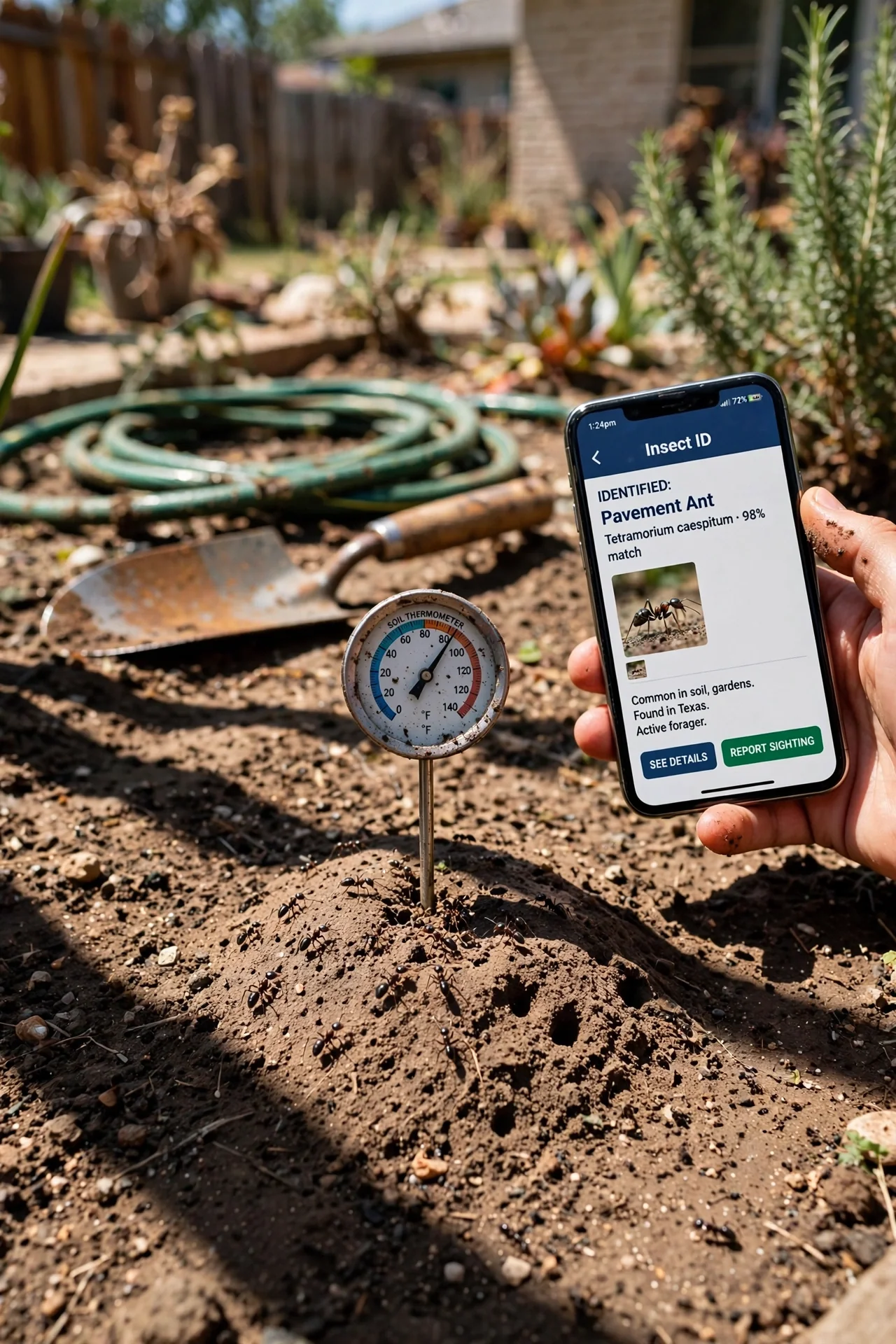
Garden ant control fails most often for one reason: the gardener treats every ant as the same problem. Black garden ants aerating your soil, red ants farming aphids on your roses, and carpenter ants tunneling into your raised bed frames each demand a fundamentally different response. The question is not “how do I kill ants” but “which ants do I actually need to address and why.” This guide maps every common garden ant scenario to a specific branch of action so you stop solving problems you do not have while neglecting the ones you do.
This article covers ants nesting in garden beds, lawns, containers, and around plant roots. It addresses nuisance mounds, aphid-farming behavior, and situations where ants threaten transplants or edible crops. It excludes indoor ant infestations, structural carpenter ant damage inside homes, and large-scale agricultural ant management, each of which involves distinct protocols beyond a garden scope.
By the end, you will know whether your ants are net-beneficial or harmful, which branch of the Decision Grid applies to your situation, and exactly which method fits your budget, available time, and tolerance for reapplication work. Every recommendation ties to a measurable condition like soil temperature, nest location, or plant type so you are matching methods to facts rather than guessing.
Bottom line: Identify the ant species and the specific problem they cause before choosing any control method; the wrong intervention wastes effort and can make the situation worse.
The Yield Grid Decision Grid
Branch 1: Are the ants damaging plants, creating a safety hazard, or making edible gardening impossible? If no, and you are seeing small soil mounds on lawns or ants moving through beds without visible plant decline, the ants are almost certainly providing soil aeration and pest predation benefits that outweigh the nuisance. Many common garden ants move soil volumes comparable to earthworms and prey on pest eggs and larvae. Beneficial insects including predatory ant species can reduce your need for other pest interventions. Recommended: Items 1, 2, 3 below.
Branch 2: Are the ants farming aphids or scale insects, invading containers, or creating excessive mounds in high-traffic areas? If yes, but the ants are not aggressive stingers and you are not losing plants, you need a repel-and-barrier strategy rather than elimination. Ants in this category are primarily a nuisance driven by honeydew food sources or nesting preferences you can disrupt. Recommended: Items 4, 5, 6, 7 below.
Branch 3: Are the ants fire ants or other aggressive stingers, nesting in edible garden beds, or protecting sap-sucking pests that are visibly damaging plants? If yes, and you have confirmed the ants are the cause rather than a symptom, targeted elimination is warranted. This branch requires the most precision because colony-level treatments risk collateral harm to soil life and pollinators if misapplied. Recommended: Items 8, 9, 10 below.
Quick Comparison Table
| Option | Key Mechanism | Best For | Decision Grid Branch | Effort Score (1-5) |
|---|---|---|---|---|
| 1. Tolerate & Redirect | Accept beneficial soil aeration and predation; modify garden practices to reduce conflict | Non-stinging ants in lawns and ornamental beds | Branch 1 | 1 |
| 2. Rake & Wash Mounds | Physical dispersal of excavated soil on lawns | Lawn ant mounds before mowing | Branch 1 | 2 |
| 3. Flood Nest with Cold Water | Repeated soil saturation encourages nest relocation | Container plants, compost bins, localized nests | Branch 1 | 3 |
| 4. Diatomaceous Earth Barriers | Fossilized diatom dust abrades ant exoskeletons causing dehydration | Dry soil areas around vulnerable plants; non-edible perimeters | Branch 2 | 4 |
| 5. Sticky Trunk Barriers | Physical barrier prevents ants climbing into canopies to farm aphids | Fruit trees and woody ornamentals with aphid problems | Branch 2 | 2 |
| 6. Repellent Companion Planting | Strong aromatic plants disrupt ant scent trails and deter nesting | Garden bed perimeters and near entry points | Branch 2 | 2 |
| 7. Vinegar & Citrus Perimeter Spray | Acetic acid and d-limonene disrupt ant trail pheromones | Patios, paths, greenhouse benches | Branch 2 | 4 |
| 8. Boiling Water Nest Treatment | Direct thermal kill of ants and brood in accessible mounds | Isolated mounds away from desirable plant roots | Branch 3 | 3 |
| 9. Borax Bait Stations | Slow-acting stomach poison carried to colony via trophallaxis | Persistent colonies where nest location is unknown; non-edible zones | Branch 3 | 3 |
| 10. Beneficial Nematodes | Microscopic worms enter ant larvae and release symbiotic bacteria | Lawns and ornamental beds with soil temperature above 10°C (50°F) | Branch 3 | 4 |
1. Tolerate & Redirect: When Doing Nothing Is the Smartest Strategy
Best for: Branch 1
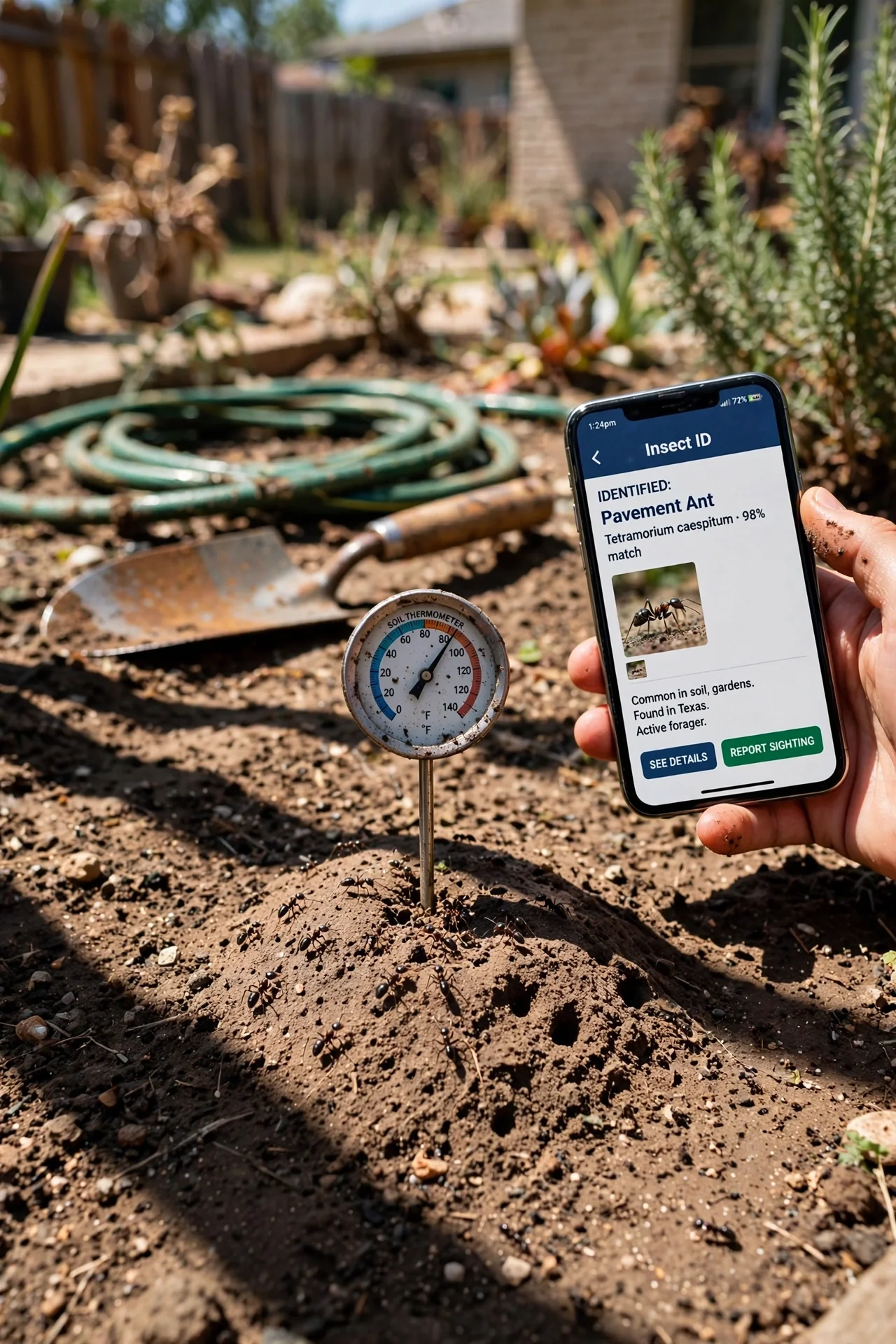
What it is: Deliberately choosing not to intervene against ants because their soil engineering and pest predation services outweigh any nuisance they create. Ant colonies in a 30-square-foot garden space can turn over roughly 80 pounds of soil annually, often exceeding earthworm activity in the same area. This tunneling creates macropores that improve water infiltration, gas exchange, and root penetration. Multiple ant species active at different times of day provide continuous soil maintenance and pest egg removal that no single applied product replicates.
Steps: Step 1: Verify the ant species present. Black garden ants (Lasius niger) and most field ants are non-stinging and primarily beneficial. Step 2: Check whether the ants are protecting aphids. If you see ants traveling up and down plant stems and the plant shows no sap-sucking damage, the relationship may be benign. If honeydew-producing pests are present, redirect your effort to aphid control rather than ant control. Aphid control often resolves the ant problem indirectly. Step 3: Brush small soil mounds on lawns flat on a dry day before mowing; this is a maintenance task rather than an ant eradication task.
Common mistake: Killing beneficial ants in lawns with broadcast insecticides, which then allows pest populations like white grubs and cutworms to surge because the predation pressure has been removed. Spot-treat only as a last resort, and never treat an entire garden for ants without identifying the species first.
2. Rake & Wash Mounds
Best for: Branch 1
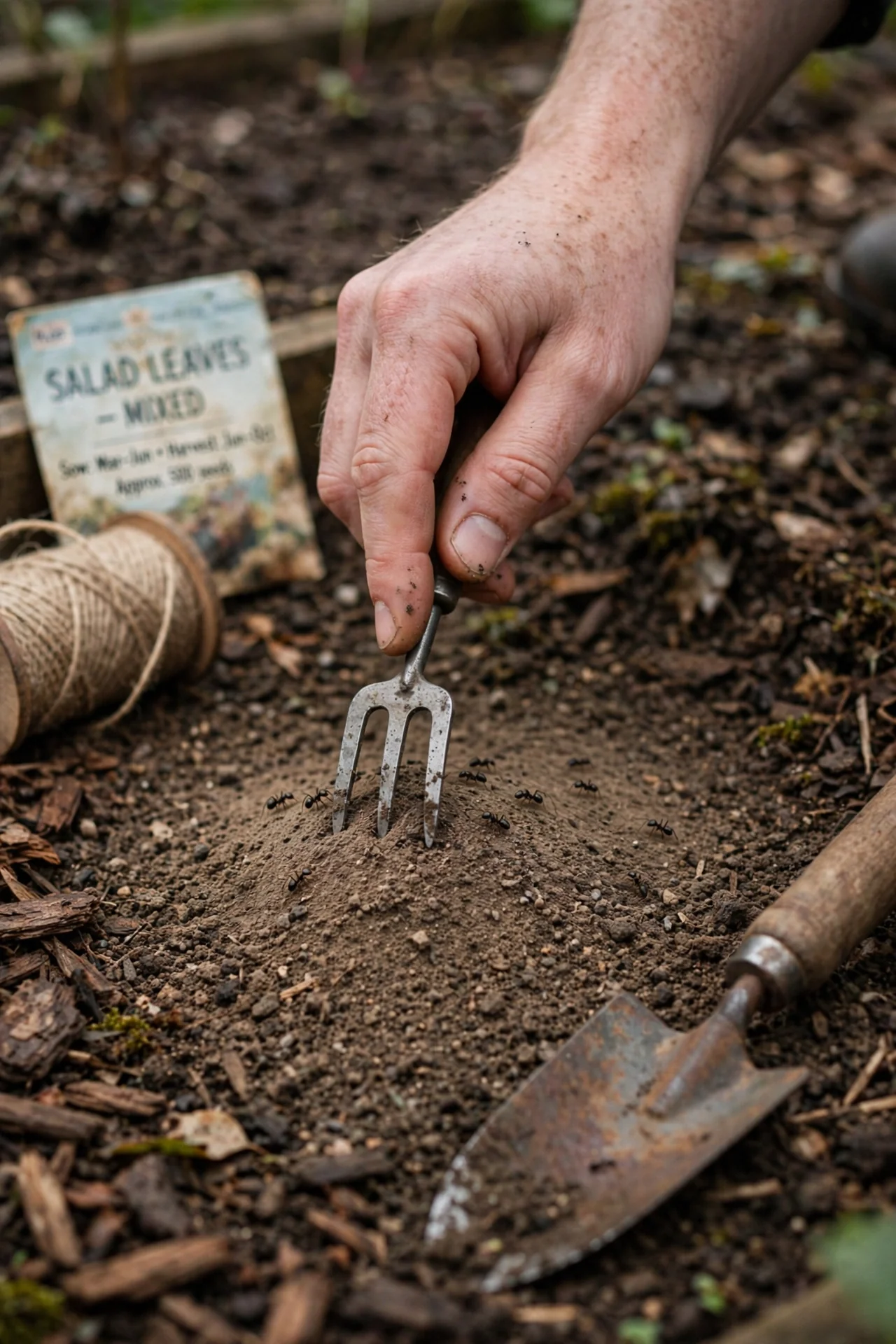
When ant mounds on lawns rise above the grass line, rake the excavated soil flat or wash it away with a forceful stream from a garden hose. This is purely cosmetic management, not ant control, but it prevents the soil from being smeared across the lawn surface by the mower. Perform this on a dry day before mowing. The ants will often relocate deeper or shift nesting activity, especially during wet spring weather when nesting is most prolific.
3. Flood Nest with Cold Water
Best for: Branch 1
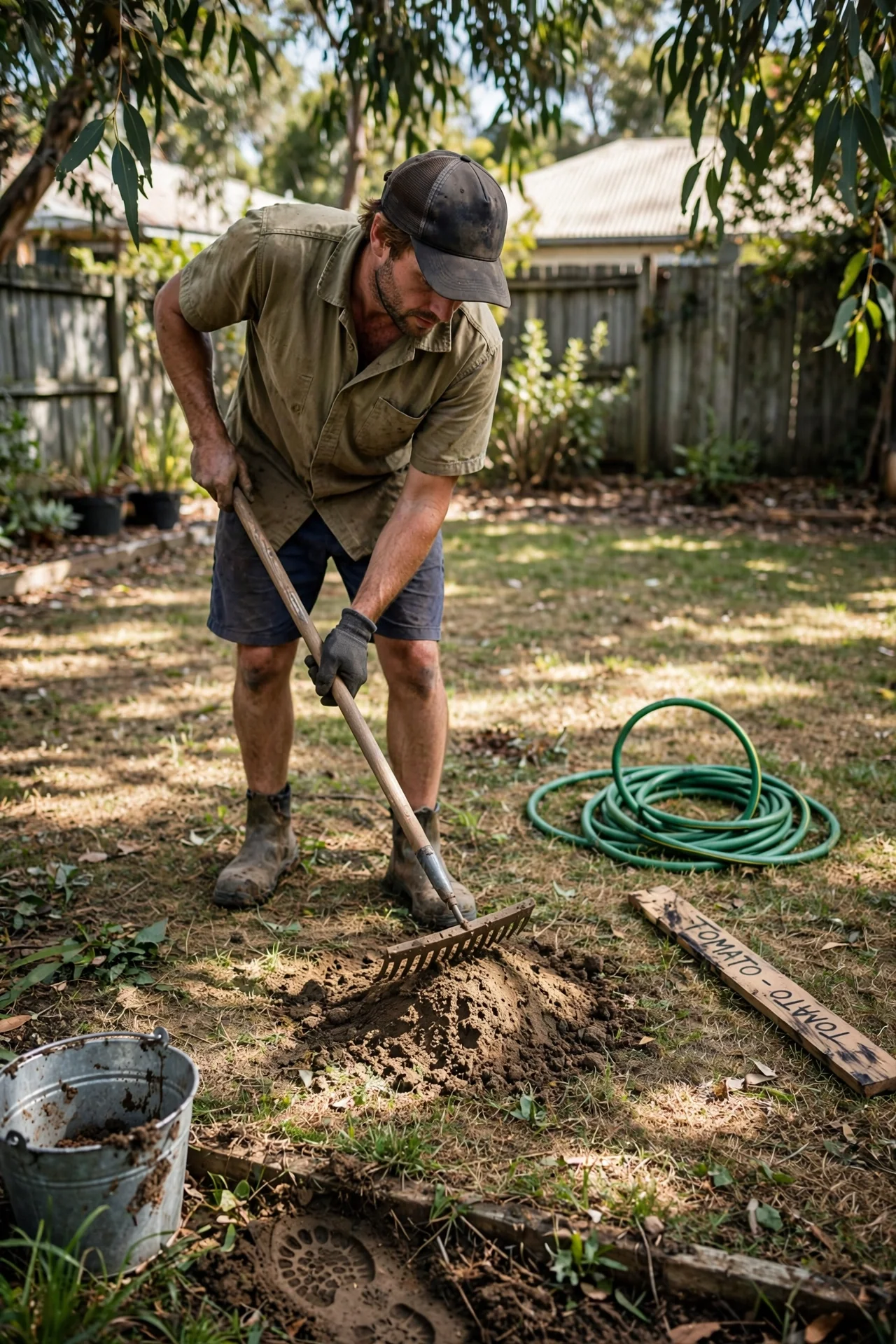
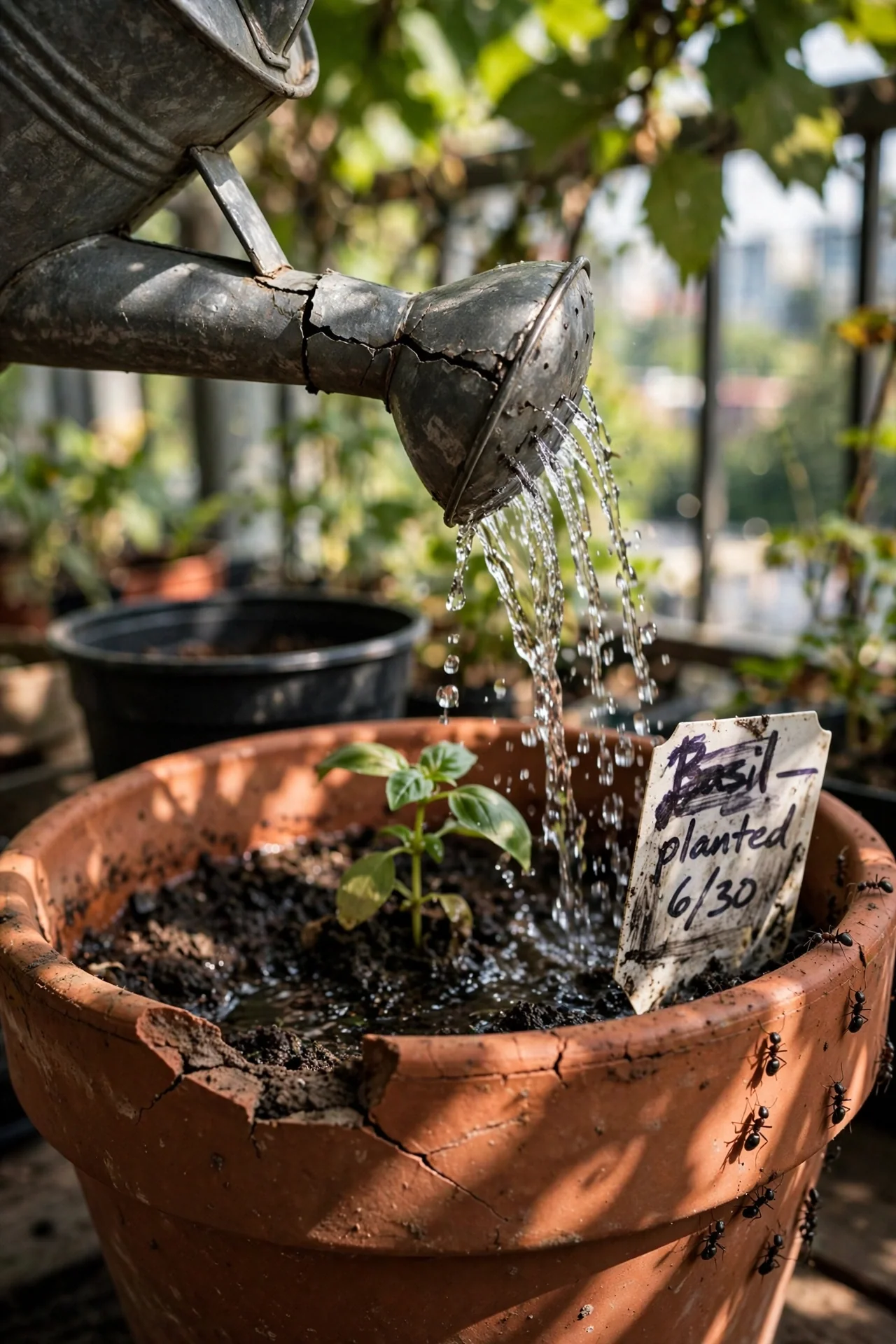
Ants consistently avoid persistently wet soil. Dousing a troublesome nest thoroughly with cold water, repeated every two to three days for a week, encourages the colony to relocate without killing the ants. This method works best in containers and raised beds where you can fully saturate the soil profile. The key constraint is patience: ants may move only a few feet away, so combine this with making the original site less attractive (remove mulch temporarily, increase sun exposure) while leaving a suitable alternative site nearby. Flooding is least effective in heavy clay soils that drain slowly and can stress plant roots if applied excessively.
4. Diatomaceous Earth Barriers
Best for: Branch 2
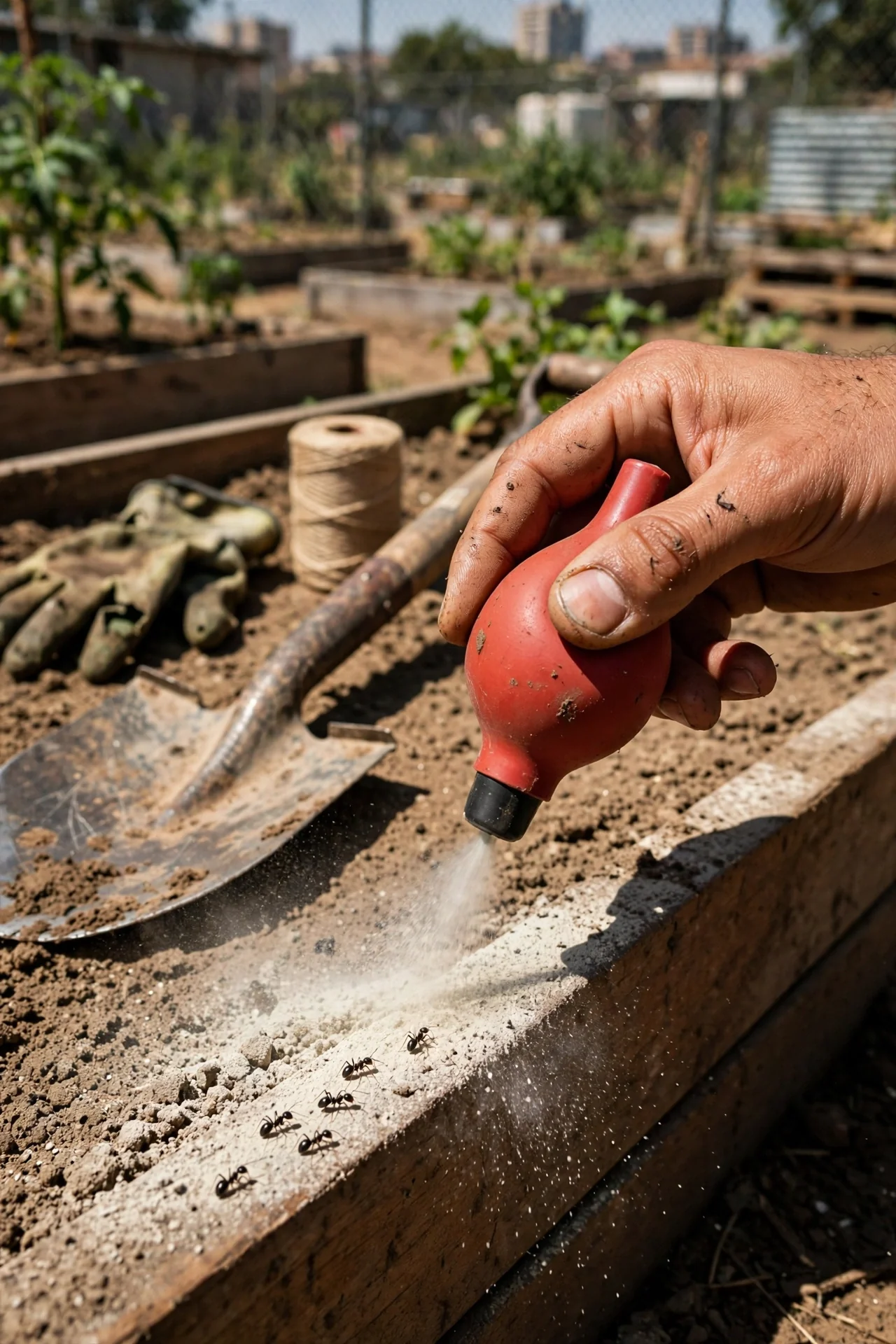
What it is: Food-grade diatomaceous earth (DE) is a fine powder of fossilized diatom shells. Under magnification, the particles are sharp-edged and abrasive. When ants walk through DE, it scratches their waxy cuticle, causing them to lose body moisture and die from desiccation. DE is a physical killer, not a chemical one, so ants cannot develop resistance. It is OMRI Listed for organic gardening.
Edge case where DE fails: DE stops working the moment it gets wet. In moist garden soil, after rain, or in regularly watered beds, reapplication is necessary each time the powder dries out. This makes it impractical as a standalone solution in irrigated vegetable gardens. Use DE as a perimeter barrier around dry zones: along the edges of raised beds, around the base of container plants, and on dry paths where ants travel.
Steps: Apply a thin, uniform dusting (visible but not piled) using a bulb duster. Wear a dust mask during application; the fine silica particles can irritate airways. Reapply after rain or heavy dew. For ant nests in dry areas, sprinkle DE directly into the nest entrance. See our diatomaceous earth guide for application rates and safety precautions.
Upgrade option: Combine DE barriers with insecticidal soap sprays on aphid-infested plants. The soap handles the honeydew producers above ground while DE blocks ant access from below.
5. Sticky Trunk Barriers
Best for: Branch 2
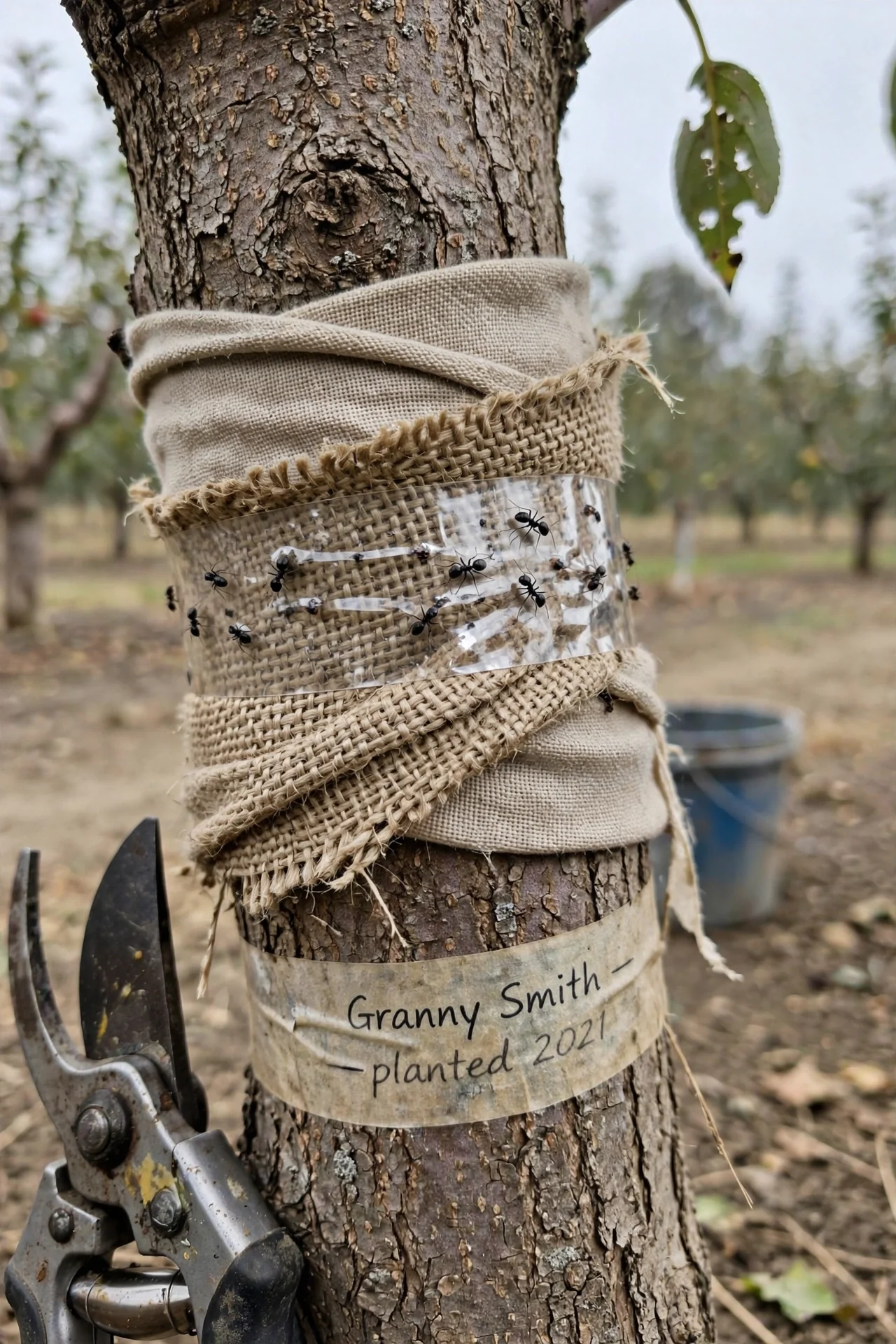
Apply a 3- to 4-inch band of sticky barrier material (such as Tanglefoot) around the trunk of fruit trees or woody ornamentals where ants climb to farm aphids. Wrap the trunk first with fabric tree wrap or masking tape to protect the bark, then apply the sticky material to the wrap. This physically blocks ants from reaching the canopy. Prune any branches touching fences, structures, or other plants that ants could use as alternate routes.
6. Repellent Companion Planting
Best for: Branch 2
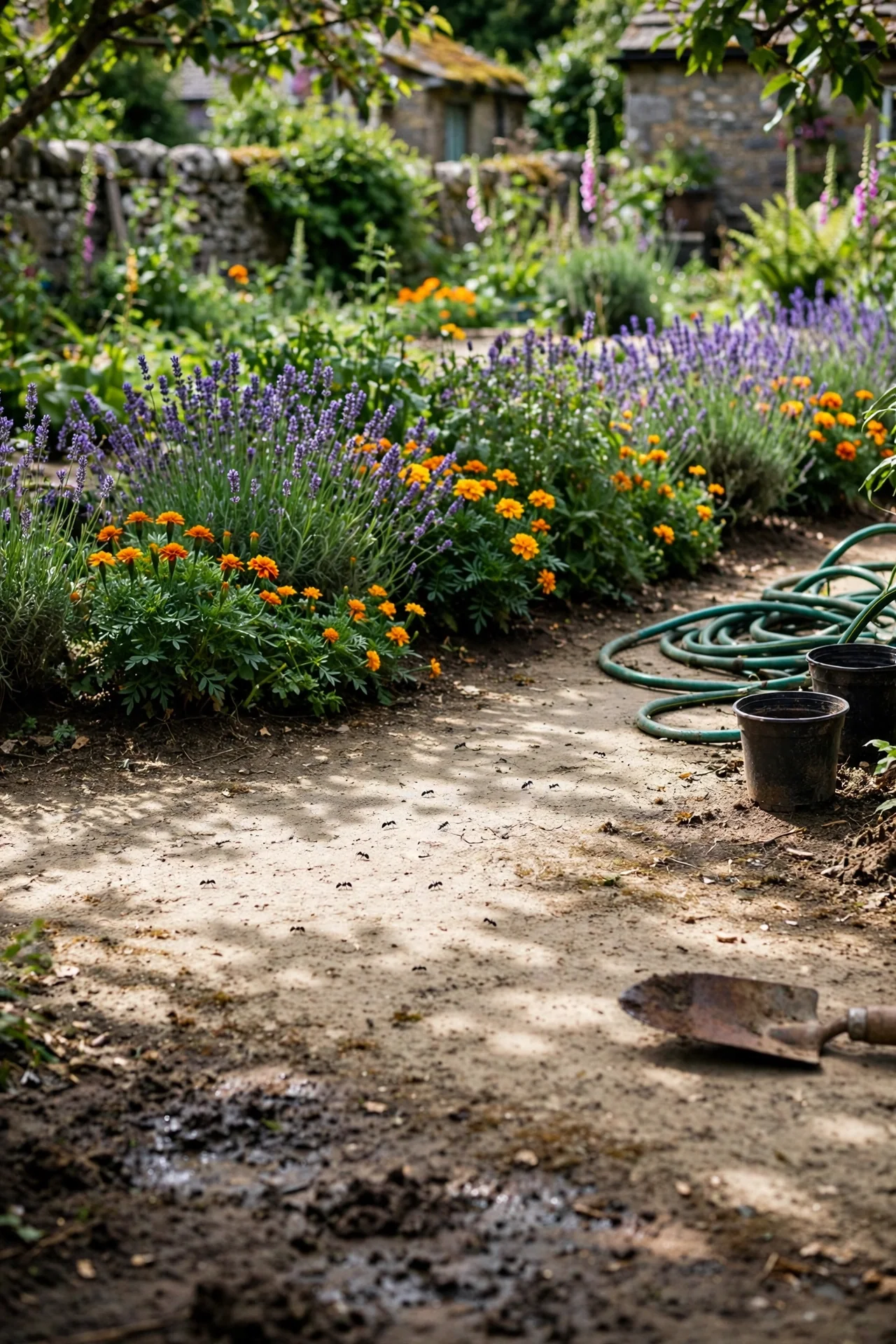
Threshold rule: Strongly aromatic plants including mint, lavender, tansy, and marigolds disrupt ant scent-trail following, but only when planted at sufficient density along the garden perimeter. A single mint plant in a corner will not create a meaningful barrier. Plant these repellent species in continuous bands at least 12 inches wide along bed edges where ants are entering. The constraint: mint spreads aggressively and should be confined to containers or buried barriers. Companion planting for pests works as part of a multi-layered strategy; relying on plants alone rarely resolves an established infestation.
7. Vinegar & Citrus Perimeter Spray
Best for: Branch 2
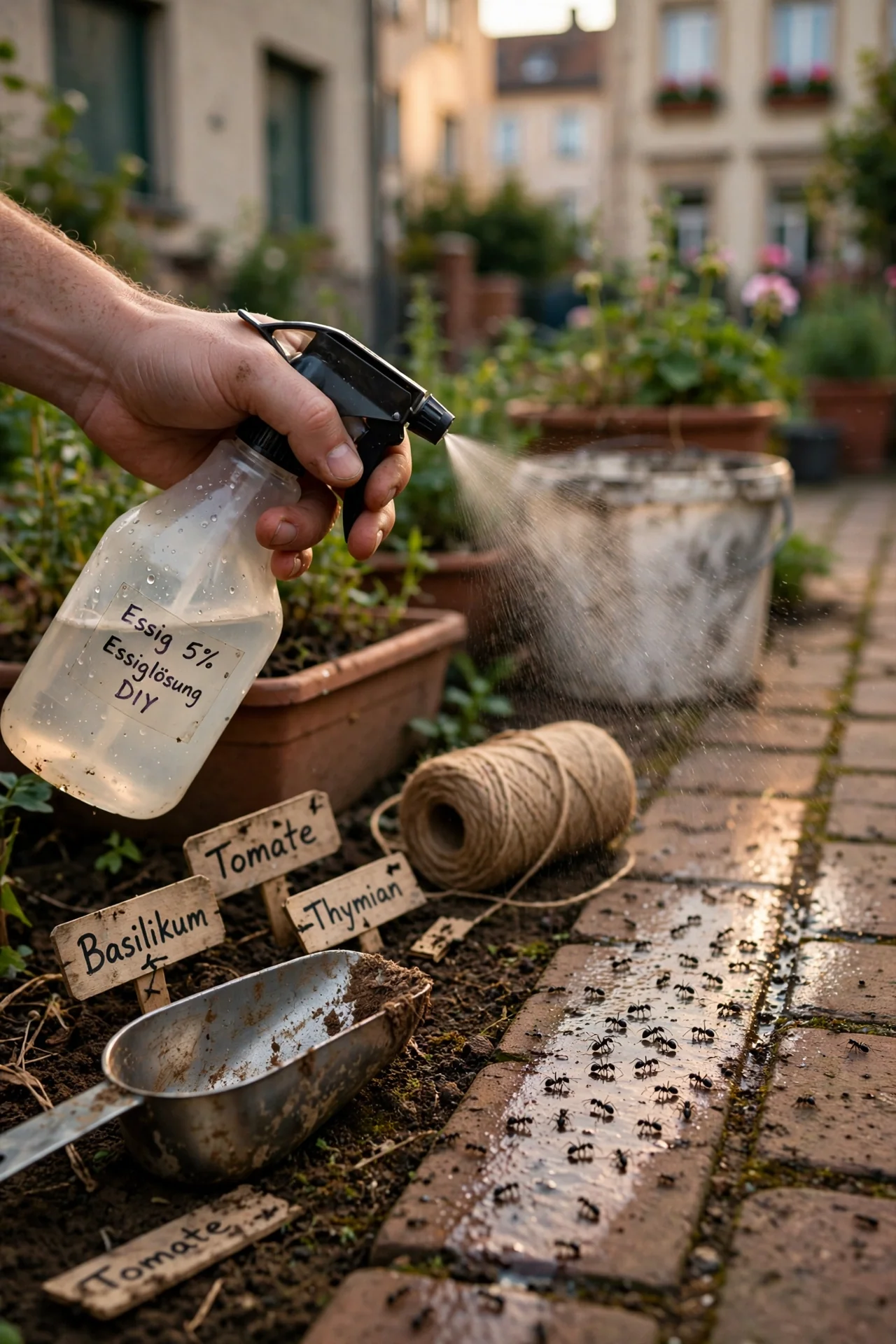
What it is: A solution of white vinegar and water (1:1 ratio) or citrus peel extract sprayed along ant trails, entry points, and hard surfaces disrupts the pheromone trails ants use to navigate. This is a temporary disruption method, not a kill method. Ants that lose their trail will wander and may eventually establish new routes, so consistency determines success.
Pros and cons: Vinegar is inexpensive and safe for use on hard surfaces near edible gardens. The limitation is that acetic acid can damage plant foliage and lower soil pH if oversprayed onto garden beds. Apply only to patios, paths, greenhouse benches, and the exterior sides of raised bed frames. Reapply every two to three days during active ant season and after rain. This method pairs well with a longer-term strategy like companion planting or sticky barriers.
8. Boiling Water Nest Treatment
Best for: Branch 3
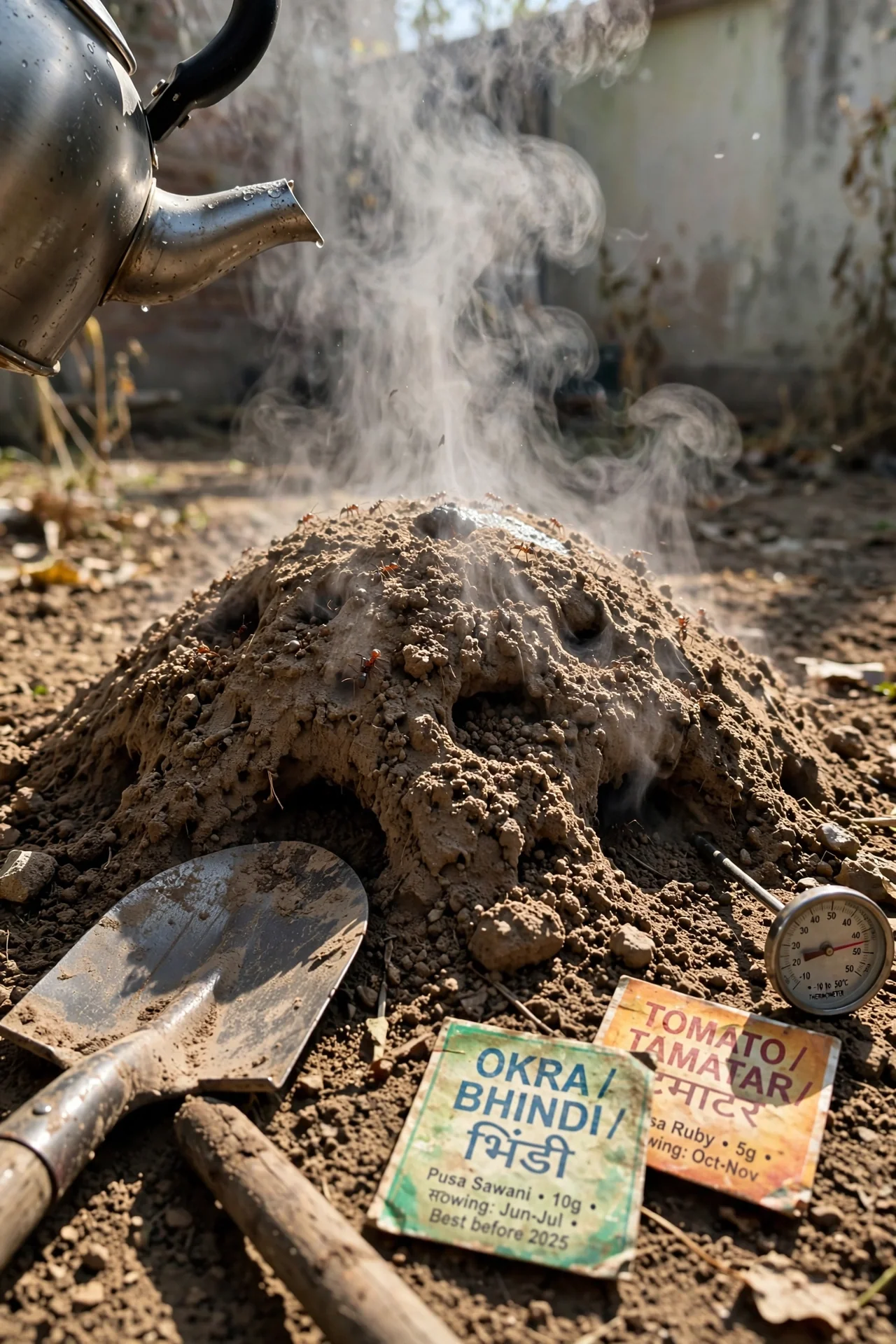
Pouring roughly 3 gallons of boiling water directly into an ant mound opening provides immediate thermal kill of ants, brood, and the queen if she is within reach. The constraint that makes this a Branch 3 item: boiling water also kills plant roots and soil organisms in the treated zone. Reserve this method for isolated mounds in paths, driveways, or bare soil at least 18 inches away from desirable plant roots. Apply in the early morning or after dark when most ants are inside the nest. A single pour rarely reaches the entire colony; expect to repeat two to three times over a week for nests deeper than 12 inches.
9. Borax Bait Stations
Best for: Branch 3
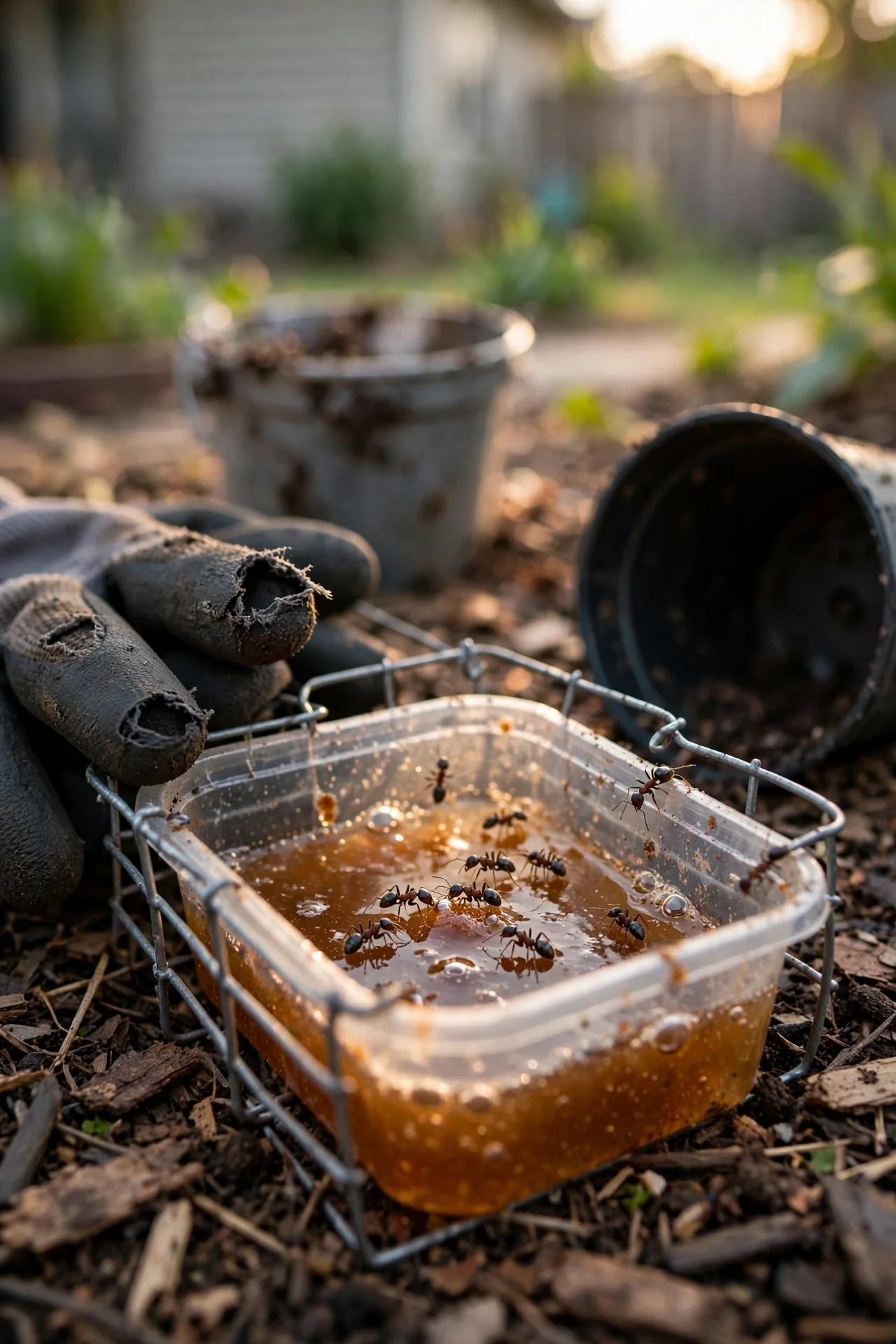
Threshold rule: The effective borax concentration for colony elimination is 0.5% to 1% of the bait mixture. Stronger mixes kill forager ants too quickly, before they can share the bait with the queen and brood through trophallaxis (mouth-to-mouth feeding). The classic recipe is 3 parts sugar to 1 part borax dissolved in warm water; for a liquid bait, use 2 tablespoons of borax and 1 cup of sugar per 1 cup of warm water. Place bait stations in shallow containers along active ant trails, in shaded spots to prevent rapid drying. Expect increased ant activity at bait stations during days 1 through 3 as workers recruit nestmates. Colony decline should be visible within one to two weeks for small, single-queen colonies; large colonies may take three to eight weeks. Keep bait stations inaccessible to children, pets, and wildlife. While borax has low acute toxicity to mammals at bait concentrations, ingestion of the bait mixture can cause gastrointestinal upset. See our guide to pet-safe pest control for additional precautions.
10. Beneficial Nematodes
Best for: Branch 3
What it is: Steinernema feltiae nematodes are microscopic roundworms applied as a water suspension to soil. They enter ant larvae and release symbiotic bacteria that kill the host within 48 to 72 hours. Unlike chemical treatments, nematodes do not kill adult ants directly. Instead, they make the nest environment hostile to brood development, causing the colony to abandon the site or collapse over successive generations.
Steps (10-minute workflow): Step 1: Verify soil temperature is consistently above 10°C (50°F); nematodes are ineffective in cold soil. Step 2: Mix the nematode product with water according to package instructions in a clean watering can or pump sprayer. Step 3: Apply to moist soil around nest entrances and along ant trails in the early morning or late evening to avoid UV damage to nematodes. Step 4: Water the treated area thoroughly after application and keep soil moist for at least two weeks. One application per season between April and September is typically sufficient for black and red garden ants in temperate regions. The limitation is cost: nematodes are more expensive per treatment than borax or boiling water, and they must be used fresh (check package expiration).
Upgrade option: Combine nematode soil treatment with an organic aphid spray on above-ground plant parts. The nematodes disrupt the ant colony below while the spray removes the honeydew incentive above, reducing the chance that surviving ants will re-establish aphid farms.
Starter Stack (What to Choose First)
Branch 1: Tolerate & Manage
Combine Item 1 (Tolerate & Redirect) with Item 2 (Rake & Wash Mounds). Start by identifying your ant species using a clear photo compared against a regional extension service guide. For non-stinging, soil-nesting ants in lawns or ornamental beds, commit to a season of observation before escalating. Rake mounds flat on dry days before mowing. This approach costs nothing beyond your time (roughly 10 minutes per week during peak nesting season in spring) and preserves the soil aeration and pest predation services ants provide.
Branch 2: Repel & Barrier
Combine Item 6 (Repellent Companion Planting) with Item 5 (Sticky Trunk Barriers). Plant a perimeter band of lavender, mint (in containers), or marigolds along the garden edge where ants enter. On any woody plants where ants are climbing to tend aphids, install sticky trunk barriers on wrapped trunks. Together, these two methods create a layered defense: the plants disrupt ground-level scent trails while the barriers block vertical access. Estimated cost: $15 to $30 for plants and barrier material. Maintenance: refresh sticky barriers every 2 to 4 weeks and water companion plants normally.
Branch 3: Eliminate
Combine Item 9 (Borax Bait Stations) with Item 4 (Diatomaceous Earth Barriers). Place borax-sugar bait stations along identified ant trails in shaded spots. Simultaneously dust a DE perimeter around the outside of garden beds to intercept ants that do not take the bait. This pairing addresses both the colony (via borax carried back to the nest) and the foraging routes (via DE barrier). Estimated cost: $10 to $20 for borax, sugar, and food-grade DE. Time: roughly 30 minutes for initial setup plus weekly checks to refresh bait and reapply DE after rain.
When This Won’t Work
Failure condition 1: Misidentified species. All 10 methods above target common ground-nesting garden ants. If you are dealing with carpenter ants nesting in wooden raised bed frames, trellises, or garden structures, none of these soil-focused methods will reach the colony. Carpenter ants nest in moist, decayed wood rather than soil. The correct response is to remove and replace the compromised wood and address the moisture source that attracted them. If ants are entering the garden from an indoor nest, seal exterior entry points rather than treating the garden itself.
Failure condition 2: Unresolved aphid or scale infestation. Ants that are vigorously farming honeydew-producing pests will continue returning as long as the food source remains. If you eliminate ants without also controlling aphids, scales, or mealybugs, new ant colonies will eventually discover and exploit the same resource. In this scenario, shift your primary effort to pest control on the affected plants. An application of neem oil or insecticidal soap to the infested plant foliage, combined with ant barriers at the base, addresses both sides of the mutualism.
When both conditions apply or when a colony is exceptionally large (mounds exceeding 18 inches in diameter with multiple entrance holes), consult a local extension service for species-specific recommendations rather than escalating to broadcast insecticides, which rarely solve the underlying ecological imbalance.
Choosing the Right Option for Your Situation
Budget Threshold
If your budget is under $10: start with Item 1 (identification and tolerance), Item 2 (raking mounds), Item 3 (water flooding), and Item 8 (boiling water for isolated mounds). All four methods use tools and materials you likely already have. If you can spend $15 to $30, add Item 4 (food-grade DE) and Item 9 (borax bait supplies). Items 5 and 10 (sticky barriers and nematodes) sit at the higher end at $20 to $50 per season depending on garden size and product choice.
Time Threshold
If you have less than 30 minutes per week for ant management: choose Branch 1 methods (Items 1-3) for tolerance, or Branch 2 methods with the lowest reapplication frequency (Items 5 and 6). Avoid Items 4, 7, and 10, all of which require weekly monitoring and reapplication to remain effective. Item 9 (borax baits) requires upfront setup time but only weekly checks thereafter.
Technical Constraint: Soil Moisture Dictates Method Choice
The single most overlooked variable in ant control is soil moisture. In dry, sandy, or well-drained soils, DE barriers (Item 4) and borax baits (Item 9) perform well because the powder stays effective and bait does not wash away. In consistently moist soils, clay-heavy gardens, or irrigated vegetable beds, switch to nematodes (Item 10), which require moisture to move through soil, or water flooding (Item 3), which exploits ants’ aversion to wet conditions. Applying DE to wet soil is a waste of product and time. Match the method to the moisture reality of your garden, not your climate zone on paper.
Yes/No Checklist:
☐ Have you identified the ant species or at least confirmed it is not a stinging or wood-nesting type?
☐ Have you checked plants for aphids, scale, or mealybugs that may be the real problem?
☐ Does your chosen method match your soil moisture conditions (dry methods for dry soil; wet methods for moist soil)?
☐ Are you prepared for the reapplication frequency your chosen method requires?
Expert Q&A
Why do ants suddenly appear in my garden soil each spring?
Soil temperature triggers ant activity. Nest digging behavior peaks when soil reaches between 20°C and 30.6°C (68°F to 87°F), which in temperate regions corresponds to late spring. Ants that overwintered deep in the soil profile move upward as the soil warms, resuming foraging, nest expansion, and mound building. The sudden visibility is not a new infestation but the seasonal resumption of an existing colony’s surface activity.
Can ants damage vegetable transplants even if they don’t eat roots?
Yes, indirectly. Ants excavating nest chambers next to vegetable transplants can remove enough soil that the transplant’s roots become air-pruned or desiccated, stunting or killing the plant. This is most common in loose, sandy soils where excavation is easy. The fix is not ant elimination but drenching the soil around the transplant to collapse air pockets and reestablish root-soil contact, then applying a surface mulch to slow moisture loss.
Are coffee grounds effective against garden ants?
Coffee grounds provide a modest, short-term deterrent effect due to their strong scent, which can temporarily disrupt ant foraging trails. However, their effectiveness degrades rapidly as the scent volatilizes, typically within 24 to 48 hours. Coffee grounds are better used as a soil amendment for organic matter than relied upon as a primary ant control method. For a scent-based deterrent with longer persistence, use companion plants that continuously release volatile compounds from living tissue.
Do ants in my compost bin mean something is wrong?
Ants in a compost bin are not harmful and actively contribute to decomposition by fragmenting organic matter and introducing beneficial microorganisms. Their presence is often a useful indicator that the compost is too dry. A properly managed hot compost pile should reach internal temperatures of 54°C to 66°C (130°F to 150°F), which ants will avoid. If ants are nesting in the bin, add more green (nitrogen-rich) material and water, then turn the pile.
How do I prevent ants from returning after I’ve eliminated a colony?
Vacant ant territory is quickly recolonized. Incoming queen ants searching for nest sites will detect and occupy abandoned nest cavities, sometimes establishing multiple new colonies where one existed before. The most effective prevention is reducing soil disturbance in tolerant areas while removing the attractants that drew ants originally: fallen fruit, honeydew-producing pests, and persistently dry, loose soil that makes easy excavation. A healthy garden with diverse ground cover and consistent moisture is naturally less attractive to problematic ant nesting.
Conclusion
Ant control in a garden is a filtering exercise, not a battle. The number one mistake gardeners make is treating ants as a uniform enemy and reaching for a kill method before asking whether the ants are actually causing harm. Use the Decision Grid branches to separate beneficial soil engineers from nuisance nesters from genuine threats, then match your method to the species, the soil conditions, and your tolerance for ongoing maintenance.
If you take one action after reading, make it species identification. Spend five minutes watching your ants with a clear photograph or a regional extension guide open. That single step prevents the cycle of applying the wrong treatment, seeing ants return, and escalating unnecessarily. For gardens where ants are clearly farming aphids into a visible plant problem, start with pet-safe pest control methods that protect both your plants and the animals that share your outdoor space.