
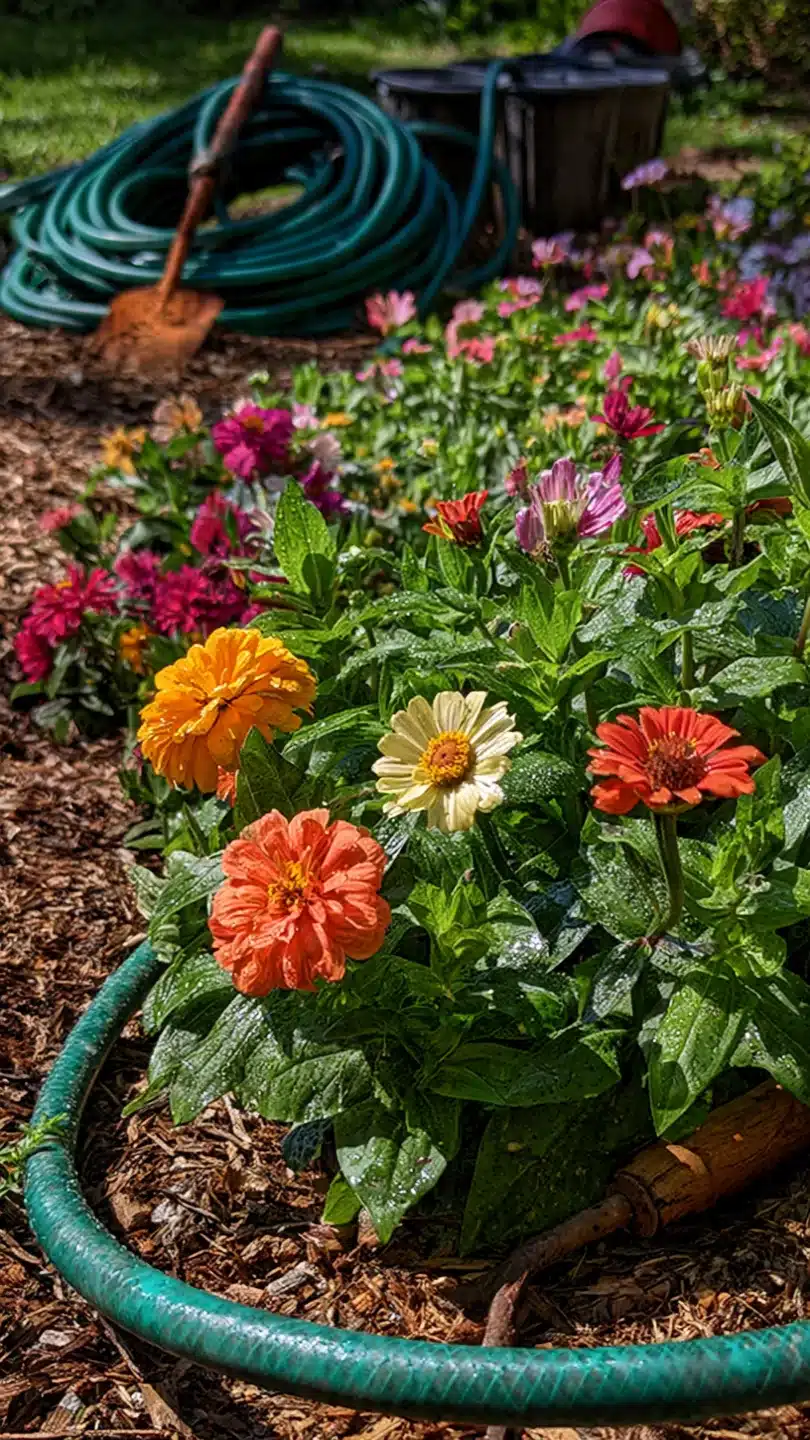
The key to reliable summer color is not chasing the brightest catalog photos but matching each flower’s light and water requirements to your site’s actual conditions. Most lists overlook this and leave gardeners with mid-July gaps or dead plants after the first heat wave.
This guide covers 10 summer flowers proven to bloom from June through September in typical US, UK, Canada, and Australia gardens. It excludes spring-only bulbs, cool-season annuals, and indoor plants. Every recommendation ties directly to measurable factors: daily sun hours and how fast your soil dries.
By the end you can decide exactly which two or three to plant this season based on your yard’s sun exposure, watering schedule, and goals such as pollinator support or cut-flower production.
Bottom line: Use the decision grid below to select summer flowers that fit your site instead of forcing mismatched plants.
The Yield Grid Decision Grid
Branch 1: Full-sun gardens with rapid soil drying (more than 6 hours direct sun daily and soil surface dry to 1 inch within 48 hours after rain or watering). Recommended: Items 1, 3, 7, 9, and 10 below.
Branch 2: Pollinator-focused gardens with moderate moisture (4-6 hours sun and soil that stays evenly moist but never waterlogged). Recommended: Items 2, 5, and 6 below.
Branch 3: Limited-space or cut-flower gardens (containers, small beds, or bouquets as the main goal). Recommended: Items 4 and 8 below.
For more full-sun options across seasons, see the full sun flowers guide.
Quick Comparison Table
| Option | Key mechanism | Best for | Decision Grid Branch | Effort Score |
|---|---|---|---|---|
| Zinnias | Heat-triggered continuous flowering on upright stems | Hot, dry beds | Branch 1 | 3 |
| Cosmos | Self-seeding airy foliage that shades soil | Pollinator draw | Branch 2 | 2 |
| Marigolds | Strong scent that deters certain insects | Hot, dry beds | Branch 1 | 2 |
| Sunflowers | Single tall central stem with large composite heads | Cut-flower production | Branch 3 | 4 |
| Salvia | Vertical flower spikes that rebloom after cutting | Pollinator draw | Branch 2 | 3 |
| Echinacea | Perennial daisy with prominent cone center | Pollinator draw | Branch 2 | 1 |
| Black-eyed Susan | Tough perennial rhizomes that spread slowly | Hot, dry beds | Branch 1 | 1 |
| Dahlias | Tuber-produced large blooms on branched stems | Cut-flower production | Branch 3 | 5 |
| Coreopsis | Perennial with thread-like foliage and nonstop small daisies | Hot, dry beds | Branch 1 | 2 |
| Lavender | Aromatic foliage paired with upright purple spikes | Hot, dry beds | Branch 1 | 2 |
1. Zinnias
Best for: Branch 1
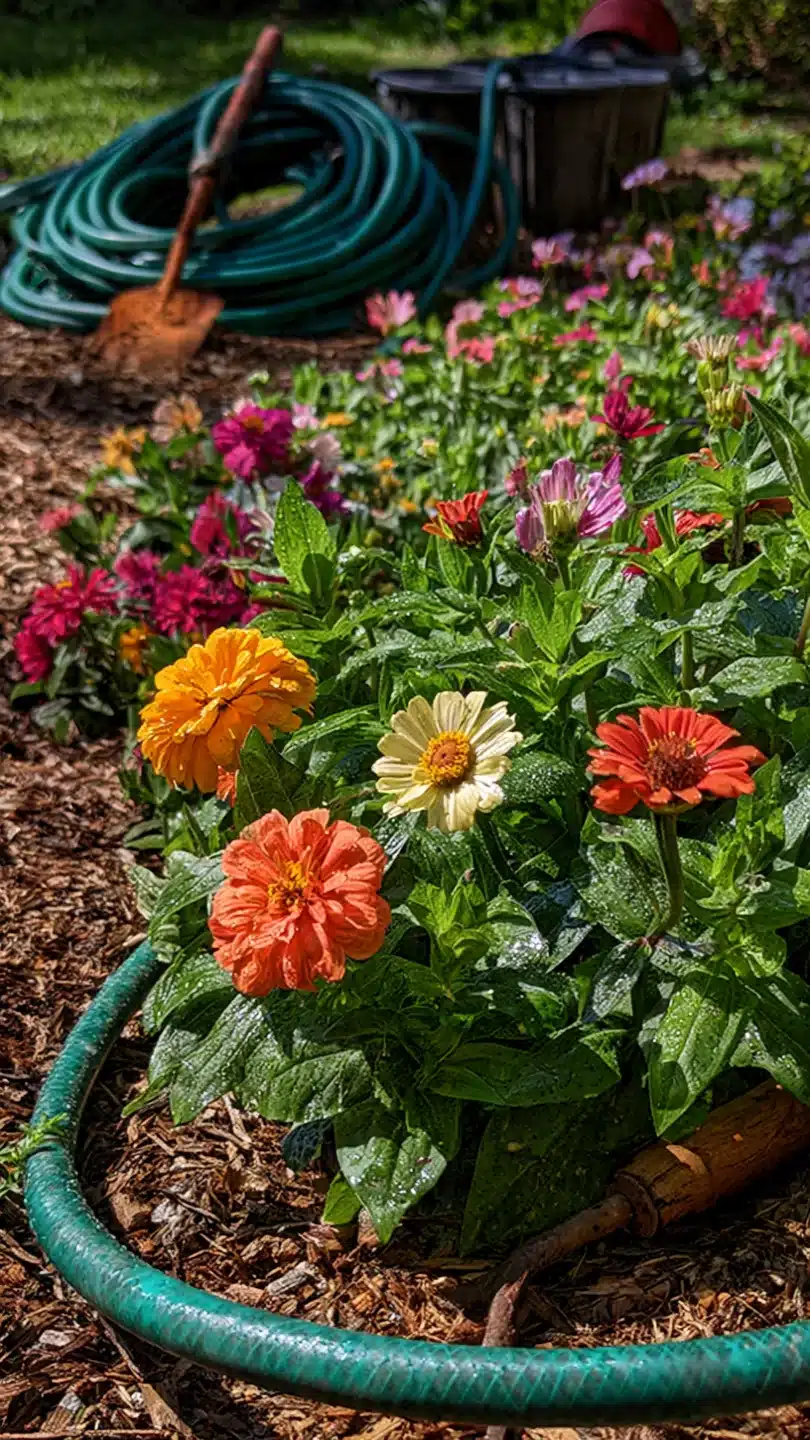
Zinnias deliver the fastest color payoff among summer flowers when conditions match their needs. They thrive once soil temperature holds above 70 F (21 C) and air stays consistently warm. Start by sowing seeds directly 1/4 inch deep after the last frost, spacing plants 8 to 12 inches apart in rows. Pinch the main stem at 12 inches tall to create bushier growth and more side blooms. Water at the base to keep foliage dry and reduce mildew risk in humid areas. Common mistake: planting too early when nights dip below 55 F (13 C), which stalls germination and invites rot. Edge case: in regions with sudden 100 F (38 C) spikes they continue blooming without pause if soil drainage stays sharp. For variety selection and spacing details see the zinnias guide.
2. Cosmos
Best for: Branch 2
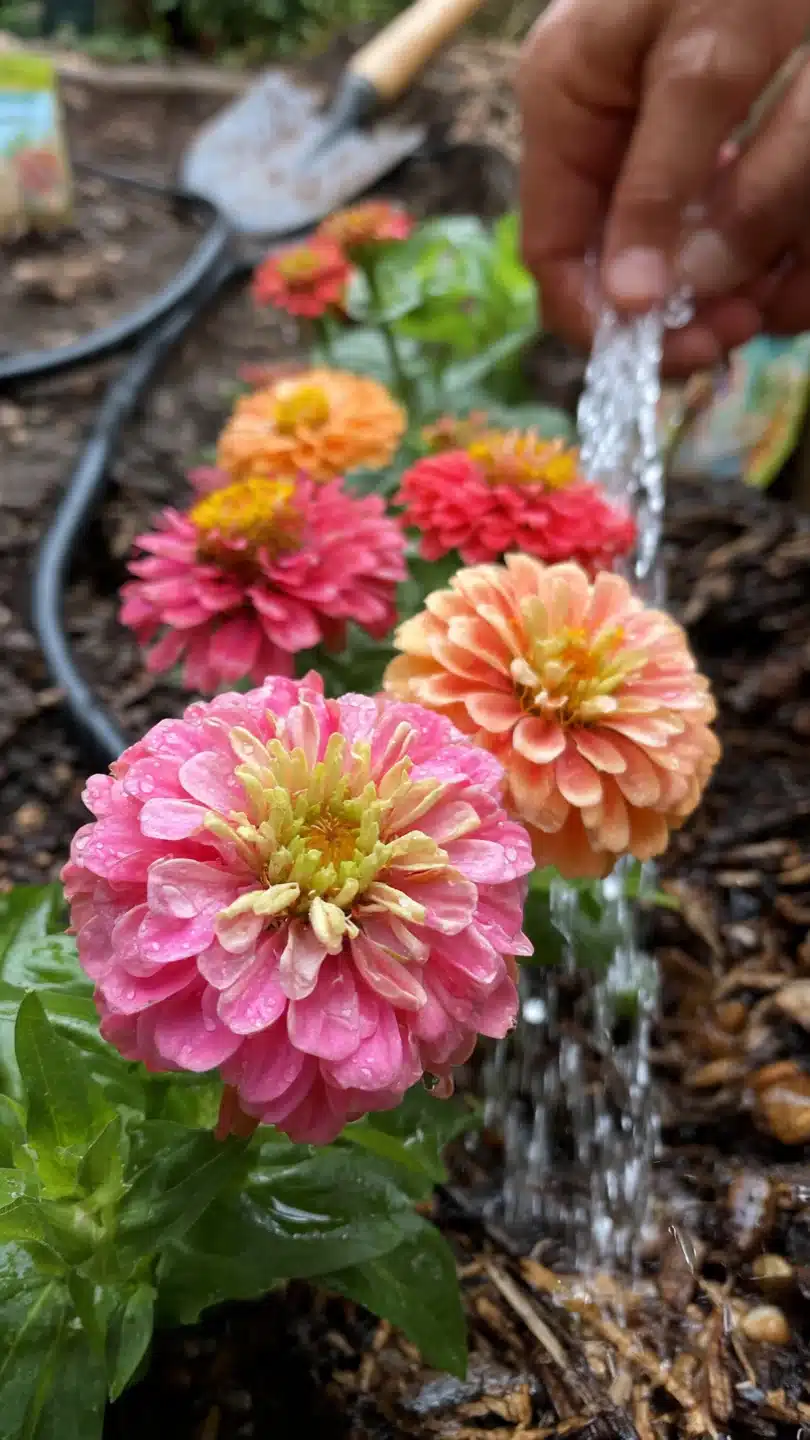
Use Cosmos when you want light, airy height that draws bees and butterflies without heavy feeding or watering. Skip them in compacted clay that stays wet for days or in deep shade under 4 hours of sun. They self-seed readily the following year if you leave a few spent heads, making them nearly self-sustaining after the first season.
3. Marigolds
Best for: Branch 1
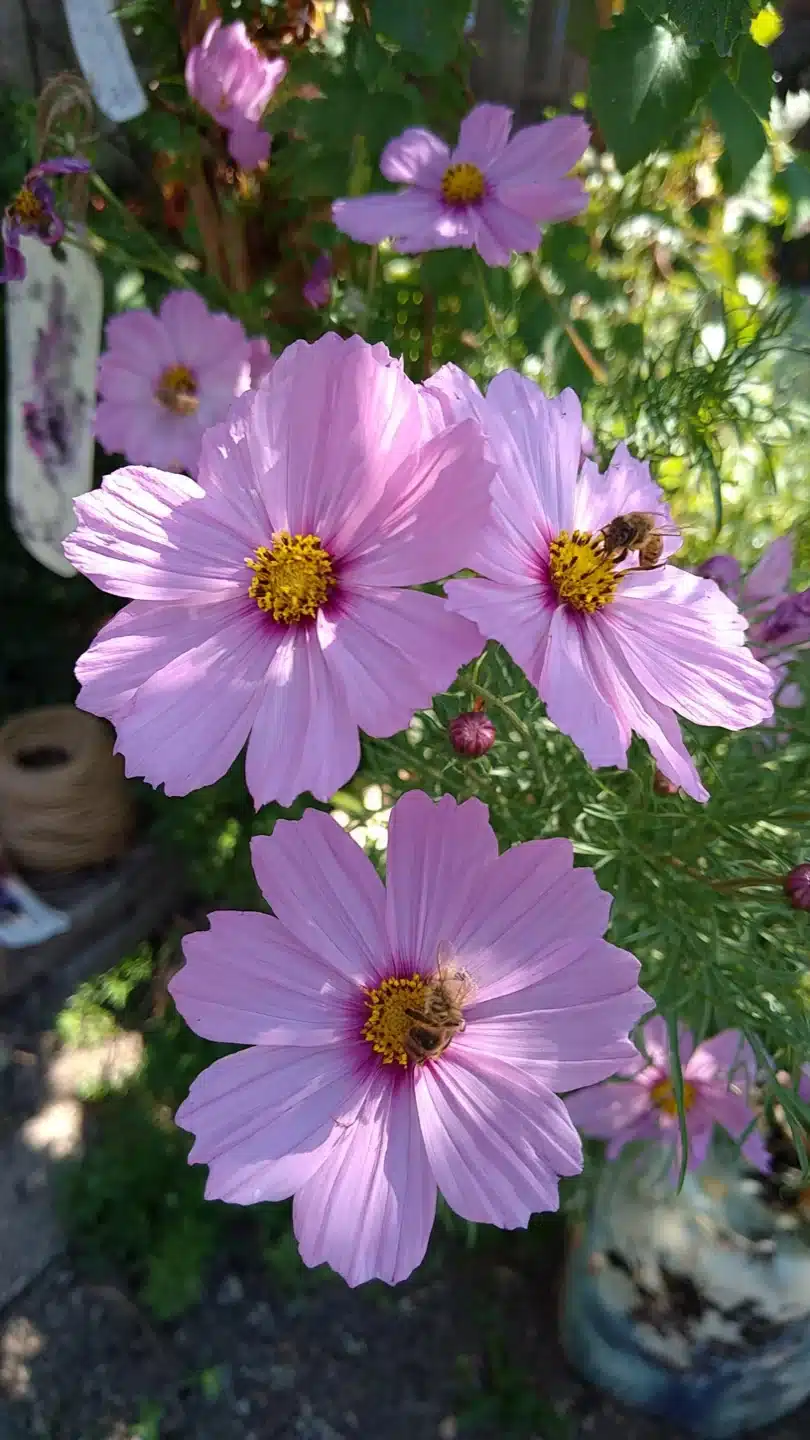
Marigolds excel in hot, dry beds because their strong root systems pull moisture efficiently while the foliage scent repels some soil pests. Plant transplants or direct-sow seeds 6 inches apart once soil reaches 65 F (18 C). Water only when the top 2 inches feel dry. Threshold rule: if daytime temperatures stay above 85 F (29 C) for weeks they bloom without pause; below that threshold bloom density drops and foliage yellows. In windy sites choose dwarf varieties under 12 inches to avoid lodging. They pair well at the front of mixed beds where their orange and yellow tones anchor brighter perennials.
4. Sunflowers
Best for: Branch 3
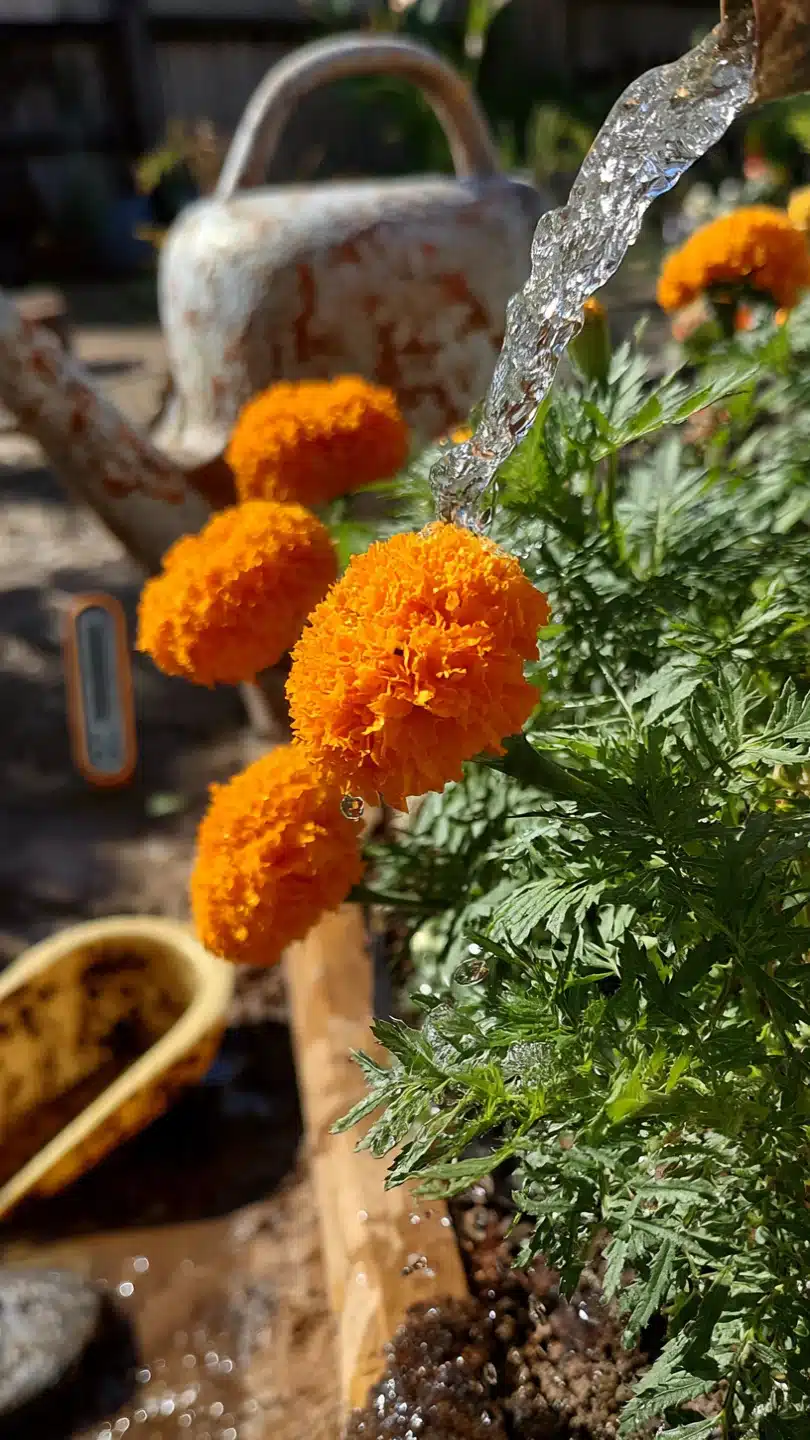
Sunflowers suit cut-flower production or tall vertical accents in small spaces when you follow a 10-minute workflow. Measure your bed, mark spots 18 inches apart, and push seeds 1 inch deep. Water once at planting and again only when the top 3 inches of soil dry. Upgrade option: choose branching varieties for multiple smaller heads instead of one giant bloom. Stake at 18 inches tall with soft ties if wind exceeds 15 mph regularly. Harvest when petals open fully but centers remain tight for longest vase life.
5. Salvia
Best for: Branch 2
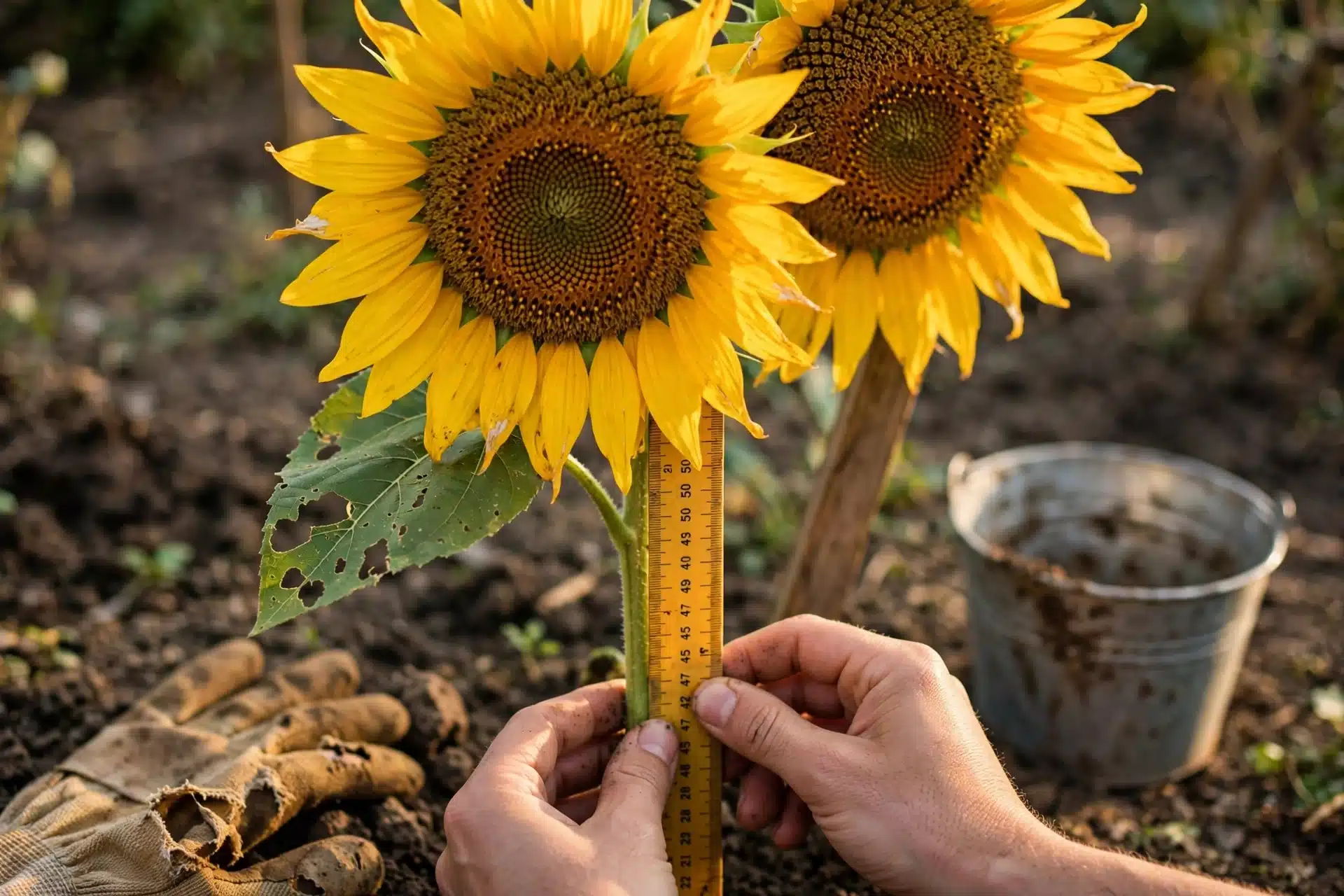
Salvia works for pollinator gardens because its vertical spikes provide landing platforms for bees and hummingbirds. Blueprint: space plants 12 to 18 inches apart in average garden soil, cut the first spent spike back to the first set of leaves to trigger a second flush, and avoid overhead watering. Mistake to avoid: leaving old spikes intact, which halts new bud formation.
6. Echinacea
Best for: Branch 2
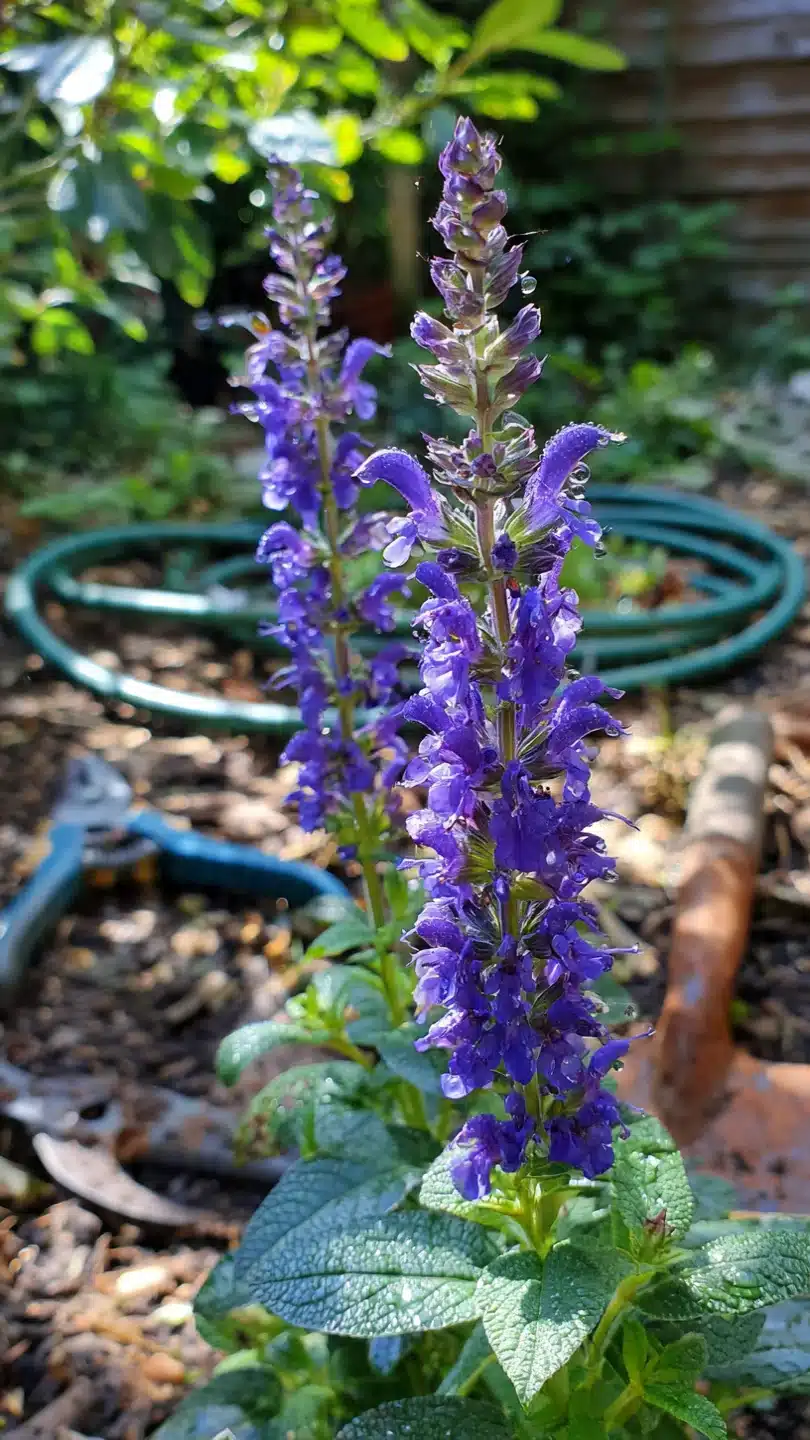
Echinacea attracts pollinators reliably once established because its prominent cone centers supply nectar and pollen through late summer. Use versus skip: plant it for low-effort structure in moderate-moisture beds, but skip in heavy shade or constantly soggy soil where crowns rot. Edge case: in regions with sudden drought it survives better than most perennials if mulched 2 inches deep with bark.
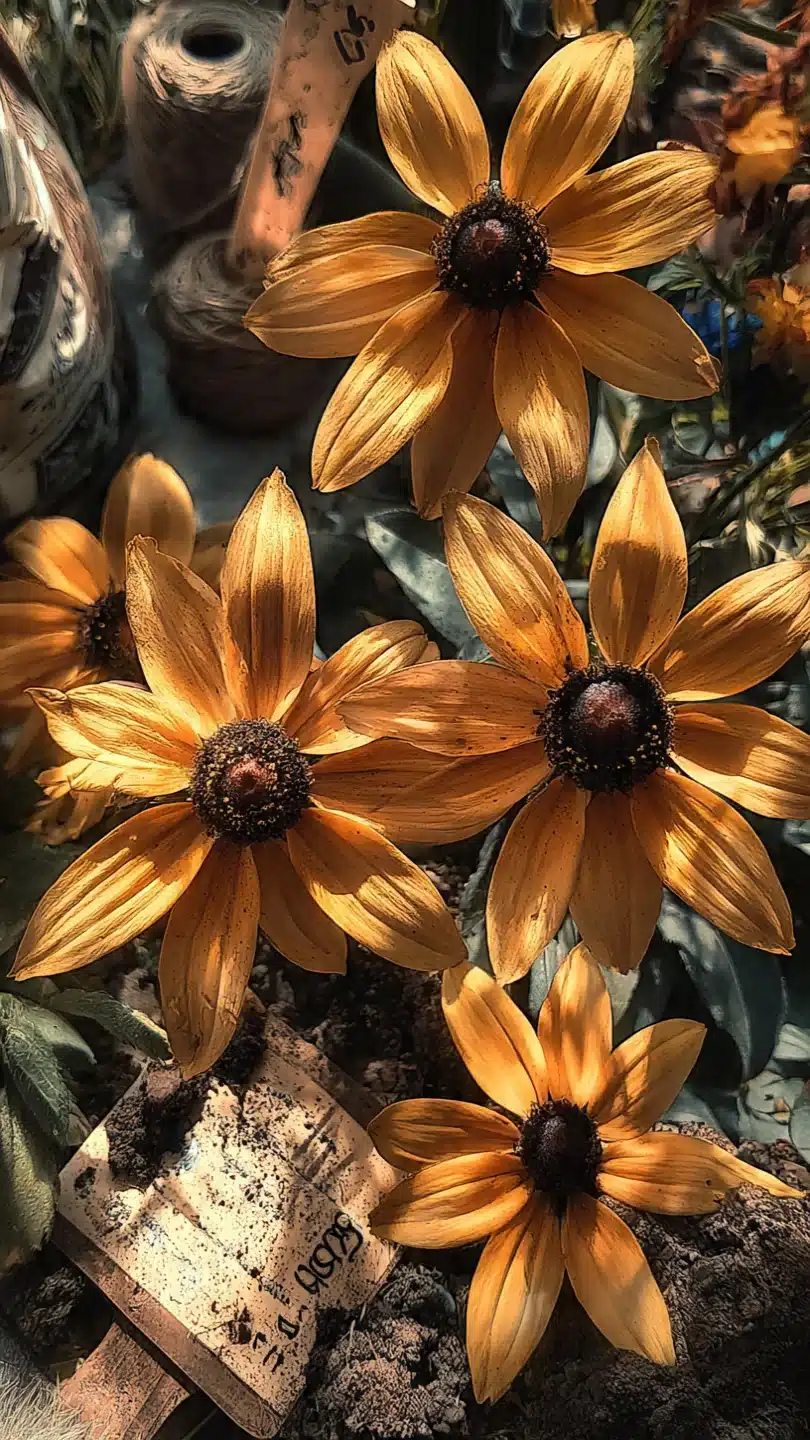
7. Black-eyed Susan
Best for: Branch 1
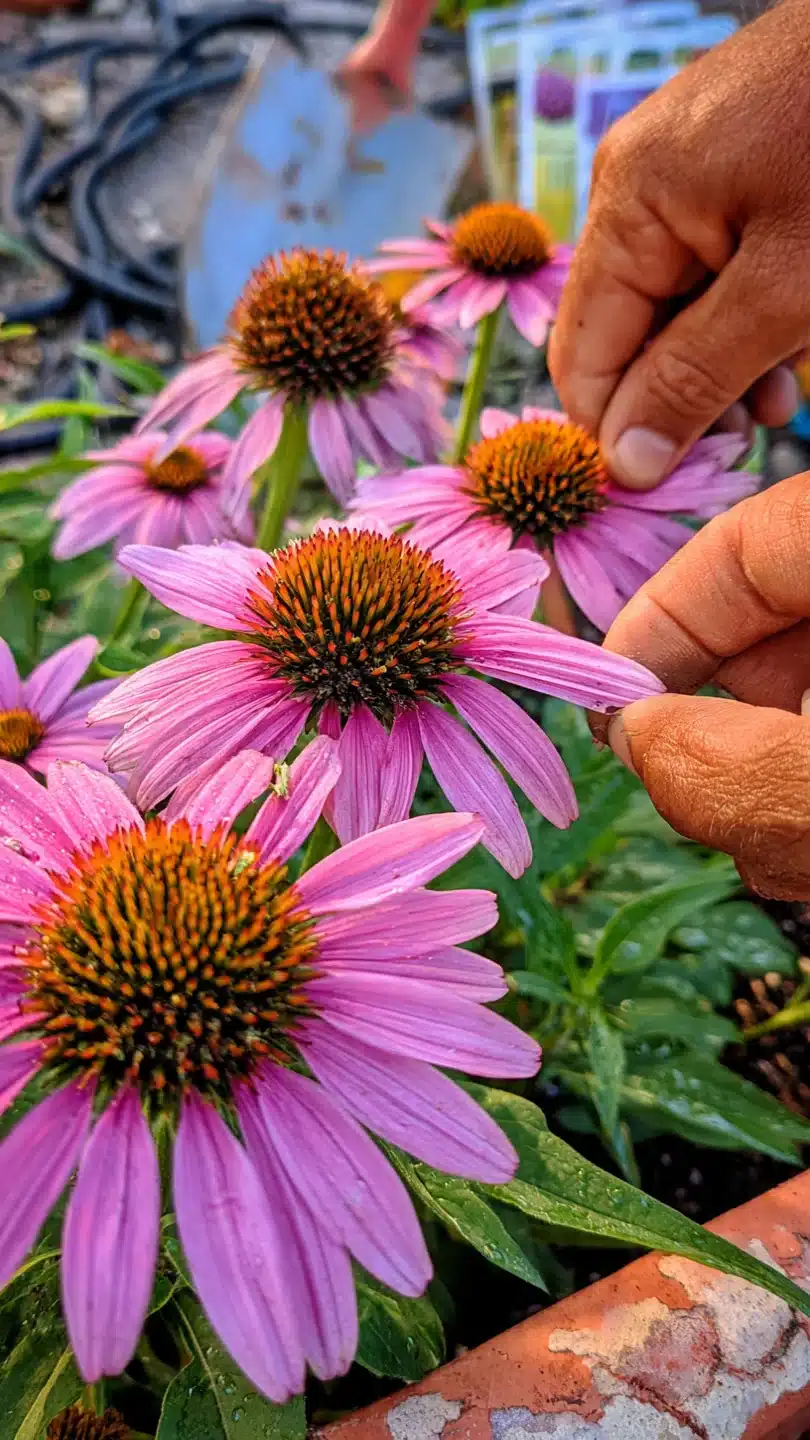
Black-eyed Susan handles heat and drought through deep rhizomes that store water and nutrients. Threshold rule: plant only when soil temperature exceeds 60 F (16 C) in spring; water deeply once every 10 days once established rather than light daily sprinkles. If your site receives less than 6 hours of sun the stems stretch and flowering drops sharply. Divide clumps every third year in early spring to maintain vigor without crowding. For full cultivation steps see the black-eyed Susan guide.
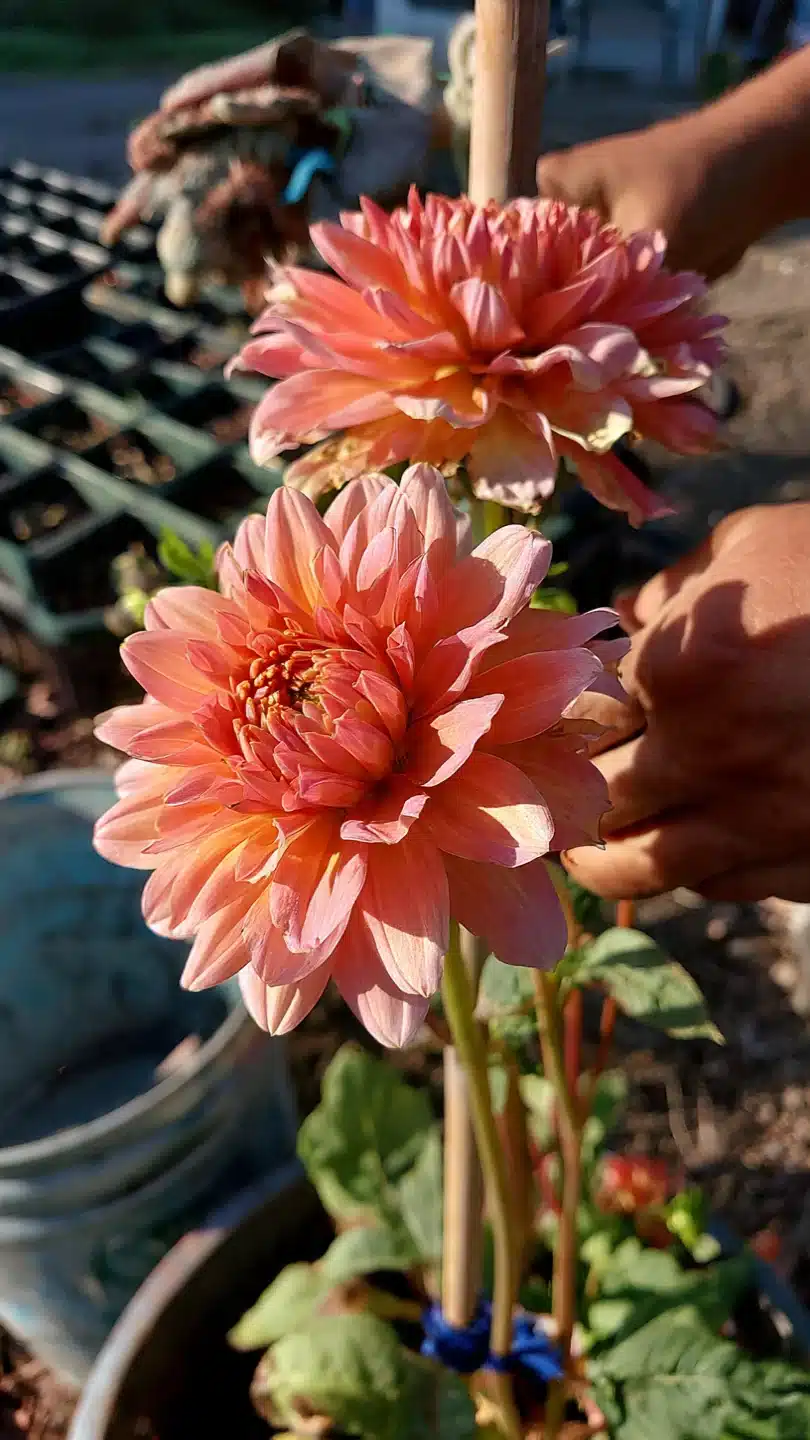
8. Dahlias
Best for: Branch 3
Dahlias deliver showy cut flowers when you follow this 10-minute workflow: plant tubers 4 to 6 inches deep with eyes facing up after soil warms to 60 F (16 C), space 18 to 24 inches apart, and insert a sturdy stake at planting time. Pinch the main stem at 12 inches to encourage branching. Upgrade option: select dinner-plate types for large bouquets or ball forms for tighter arrangements. Lift and store tubers in a cool dry place before first frost in zones colder than 8.
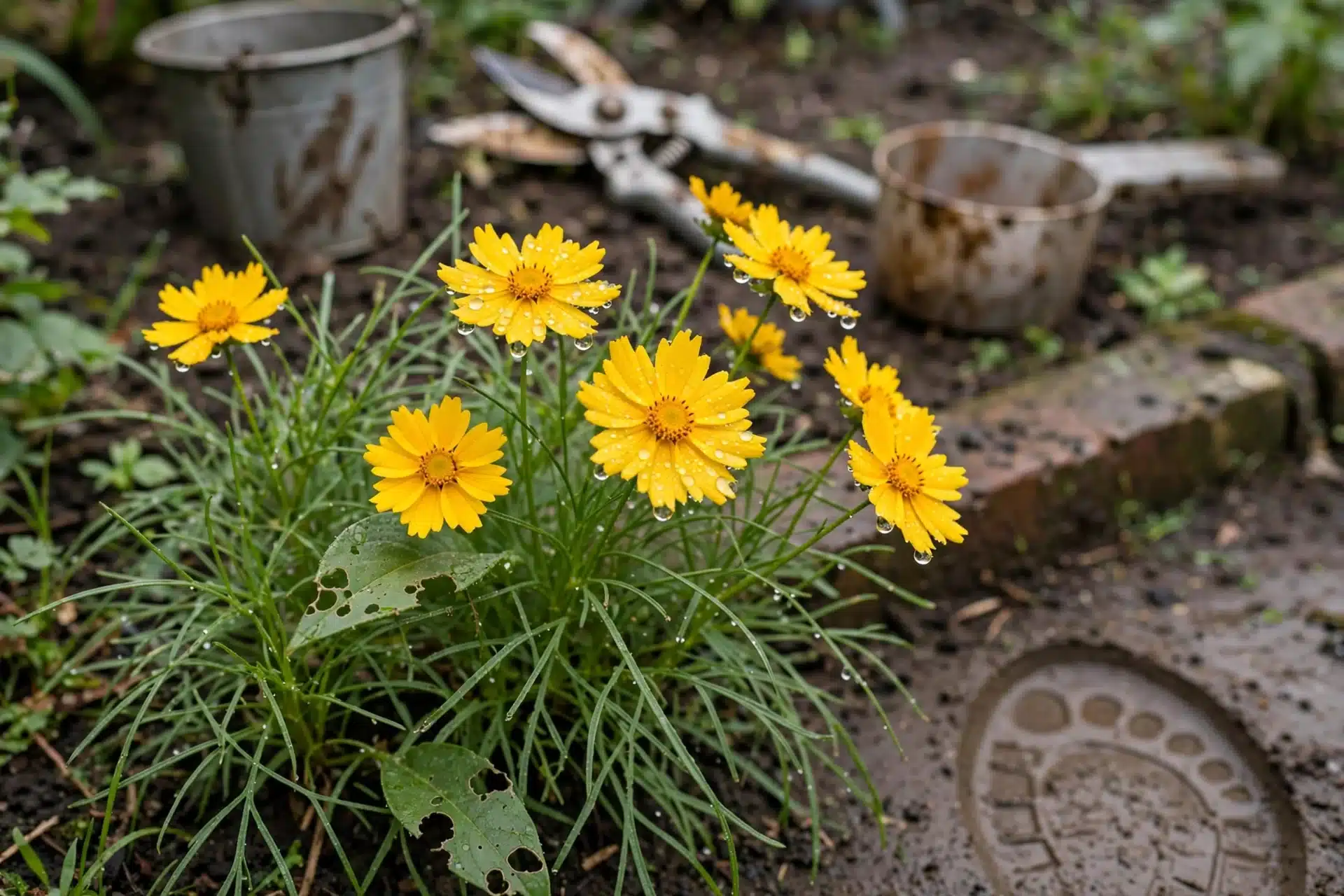
9. Coreopsis
Best for: Branch 1
Coreopsis provides nonstop small daisies in hot dry beds because its fine foliage loses little water through transpiration. Blueprint: space plants 12 inches apart, cut the entire plant back by one-third after the first heavy bloom flush, and avoid rich fertilizer that produces foliage at the expense of flowers. Common mistake: overwatering once established, which shortens bloom period and invites root issues.
10. Lavender
Best for: Branch 1
Lavender suits hot dry beds through its silvery foliage that reflects heat and reduces water loss. Use versus skip: plant it for aromatic spikes and pollinator support in well-drained spots, but skip in heavy clay or high-humidity regions where fungal issues develop quickly. Edge case: in coastal gardens with salt spray it tolerates conditions that kill many other summer flowers.
Starter Stack (What to Choose First)
For Branch 1 Gardens
Start with Zinnias and Black-eyed Susan. Zinnias give instant annual color while Black-eyed Susan adds perennial backbone that returns each year. Together they cover the full season with overlapping bloom times and complementary yellow-orange tones. Planting time: 45-90 minutes for a 20-square-foot bed. Seed or transplant cost range: 8-15 dollars.
For Branch 2 Gardens
Start with Cosmos and Salvia. Cosmos offers airy height and self-seeding while Salvia supplies vertical nectar spikes. The combination draws a wider range of pollinators and fills vertical space without competing for the same light levels. Planting time: 30-60 minutes for a 15-square-foot bed. Seed or transplant cost range: 10-18 dollars.
For Branch 3 Gardens
Start with Sunflowers and Dahlias. Sunflowers provide tall dramatic stems while Dahlias supply varied shapes for arrangements. Both respond well to staking and produce harvestable blooms within the same 10-12 week window. Planting time: 40-75 minutes for a 10-square-foot bed or large containers. Tuber or seed cost range: 12-22 dollars.
When This Won’t Work
These summer flowers require at least 4 hours of direct sun; if your site measures under that threshold because of tree cover or buildings none will produce full bloom density and stems will stretch weakly. Measure with a sun calculator app at midsummer noon to confirm before planting. In that case shift to dedicated shade options instead.
Heavy clay soil that remains saturated longer than 3 days after rain also causes root rot across the list. Test by digging a 12-inch hole, filling it with water, and timing how long it drains; if longer than 4 hours amend with compost or grow in raised beds.
Choosing the Right Option for Your Situation
Budget Threshold
Under 20 dollars: choose seed packets of Zinnias, Cosmos, or Marigolds for the largest coverage area. Above that range invest in established transplants of Echinacea or Black-eyed Susan for faster results.
Time Threshold
Under 1 hour of weekly maintenance: select low-effort perennials such as Echinacea, Black-eyed Susan, or Coreopsis. Higher time budgets open options like Dahlias that reward regular deadheading and staking.
Soil Type Constraint
Sandy or fast-draining soil favors Zinnias, Marigolds, Black-eyed Susan, and Lavender. Clay soil requires raised beds or containers for Sunflowers and Dahlias to prevent waterlogging.
Yes/No checklist:
Does your garden receive 6+ hours of direct sun? Yes → prioritize Branch 1.
Do you want maximum pollinator activity? Yes → prioritize Branch 2.
Is your main goal cut flowers or container displays? Yes → prioritize Branch 3.
Is soil moisture low and drainage sharp? Yes → any branch works with the matching items.
Expert Q&A
How do you extend bloom time into early fall without extra fertilizer?
Deadhead consistently every 7-10 days and cut back spent stems to the first healthy leaf set. This redirects energy into new buds rather than seed production. Combine with 1 inch of organic mulch in late July to keep soil temperatures stable as nights cool.
Which summer flowers pair best with vegetables for natural pest control?
Marigolds and Salvia work well interplanted with tomatoes or beans. Their strong scents deter certain beetles and aphids while their flowers attract beneficial insects that prey on pests. Space them 12 inches from crop rows to avoid competition for water.
How should you overwinter tender summer bulbs like Dahlias in colder zones?
Dig tubers after the first light frost, cut stems to 6 inches, brush off soil, and store in a cool dark place between 40-50 F (4-10 C) in slightly damp peat moss or vermiculite. Check monthly for rot and discard any soft tubers.
What soil amendment improves drainage fastest for clay-heavy sites?
Incorporate 2-3 inches of coarse compost or horticultural grit and till to 8 inches deep in spring before planting. This creates channels without changing overall pH and allows roots to establish before summer heat arrives.
How do annual versus perennial summer flowers differ for long-term garden planning?
Annuals like Zinnias and Cosmos deliver instant color but require replanting each year. Perennials such as Echinacea, Black-eyed Susan, and Coreopsis establish deeper roots in year one and return larger each season with progressively less care after the second year.
Conclusion
The decision grid removes guesswork by tying each summer flower directly to your measurable sun hours and soil drying rate. The single biggest mistake is skipping early deadheading, which halts new buds within two weeks across almost every option listed.
Pick your top two matches from the grid today, plant according to the soil-temperature windows, and next head to the pollinator flowers guide for companion ideas that extend season-long interest.