
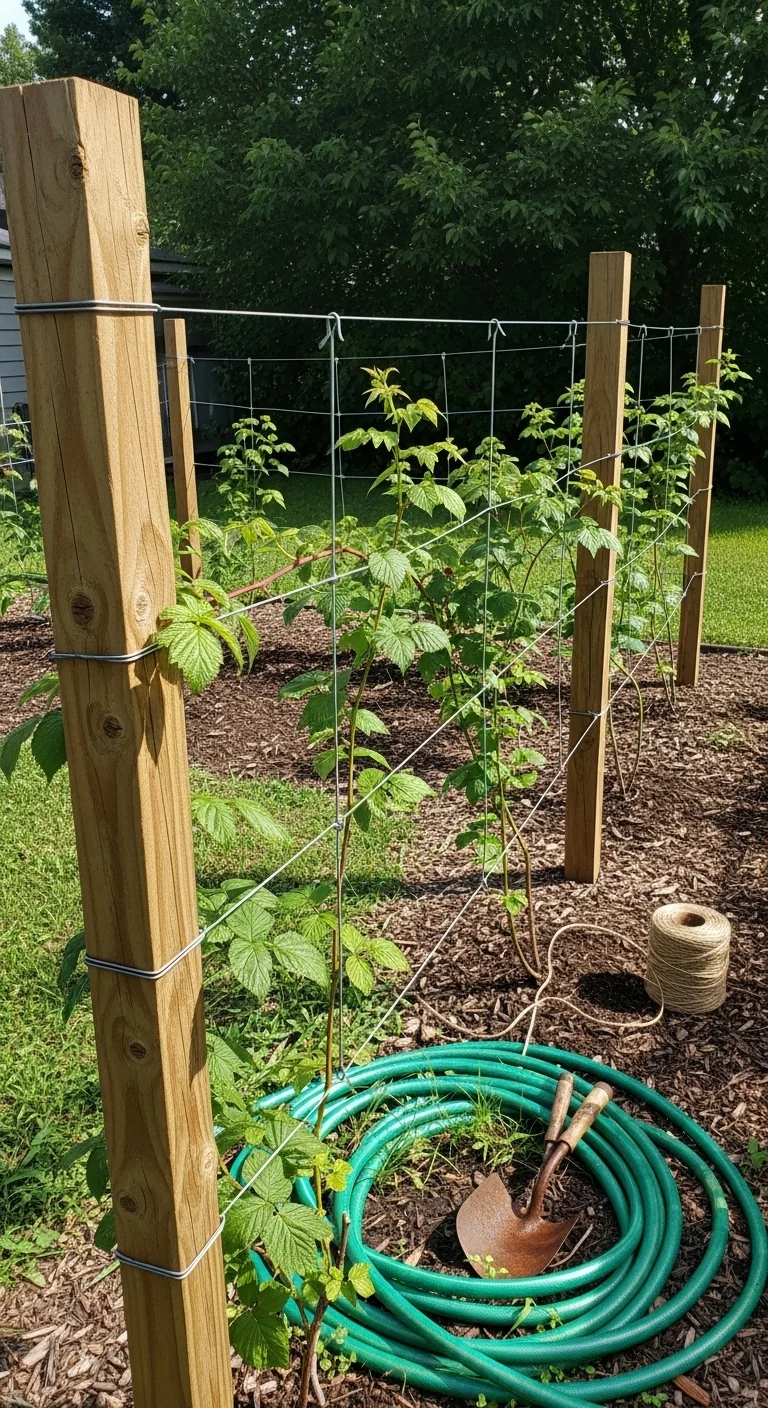
Raspberry support systems deliver the most value when chosen according to your varieties cane fruiting habit. Primocane types need containment only while floricane types benefit from systems that separate new and old growth each season.
This listicle reviews eight practical support options for home fruit gardens. It includes DIY post and wire setups plus compact alternatives. Commercial vineyard equipment and purely ornamental structures fall outside the scope.
Readers will gain exact wire heights, post spacing, and adjustment rules drawn from extension guidelines. You can select the option that fits your patch size and maintenance level then install with confidence.
Align raspberry supports with your specific variety type and available space to reduce tying time and improve access during harvest.
The Yield Grid Decision Grid
Branch 1 applies when your raspberries are primocane-bearing (fruit primarily on first-year canes) and row length stays under 25 feet or plants grow in containers. Recommended: Items 1, 2 and 6 below.
Branch 2 applies to floricane-bearing raspberries (fruit on second-year canes) in rows with 4 to 8 foot spacing between plants. Recommended: Items 3, 4 and 8 below.
Branch 3 applies to any variety where canes exceed 6 feet regularly or sites with consistent wind exposure. Recommended: Items 5 and 7 below. For integration with seasonal cane removal consult our raspberry pruning guide.
Quick Comparison Table
| Option | Key mechanism | Best for | Decision Grid Branch | Effort Score |
|---|---|---|---|---|
| Simple Post-and-Wire I-Trellis | Two horizontal wires on vertical posts | Primocane small patches | Branch 1 | 2 |
| Individual Stake System | One stake per cane with twine tie | Very small or container gardens | Branch 1 | 1 |
| V-Trellis System | Angled posts with offset wires for cane separation | Floricane rows needing airflow | Branch 2 | 3 |
| T-Trellis with Cross Arms | T-shaped crossbars supporting parallel wires | Standard floricane rows | Branch 2 | 3 |
| Heavy T-Post Containment | Metal T-posts with multiple wire levels | Vigorous or windy sites | Branch 3 | 2 |
| Tepee Frame Support | Three or four poles tied at apex | Container or patio patches | Branch 1 | 1 |
| Modular Panel Trellis | Prefab panels or hog panel sections | High vigor patches | Branch 3 | 4 |
| Fence-Mounted Fan Training | Wires or ties fanning canes along fence | Space-saving floricane | Branch 2 | 2 |
Simple Post-and-Wire I-Trellis
Best for: Branch 1
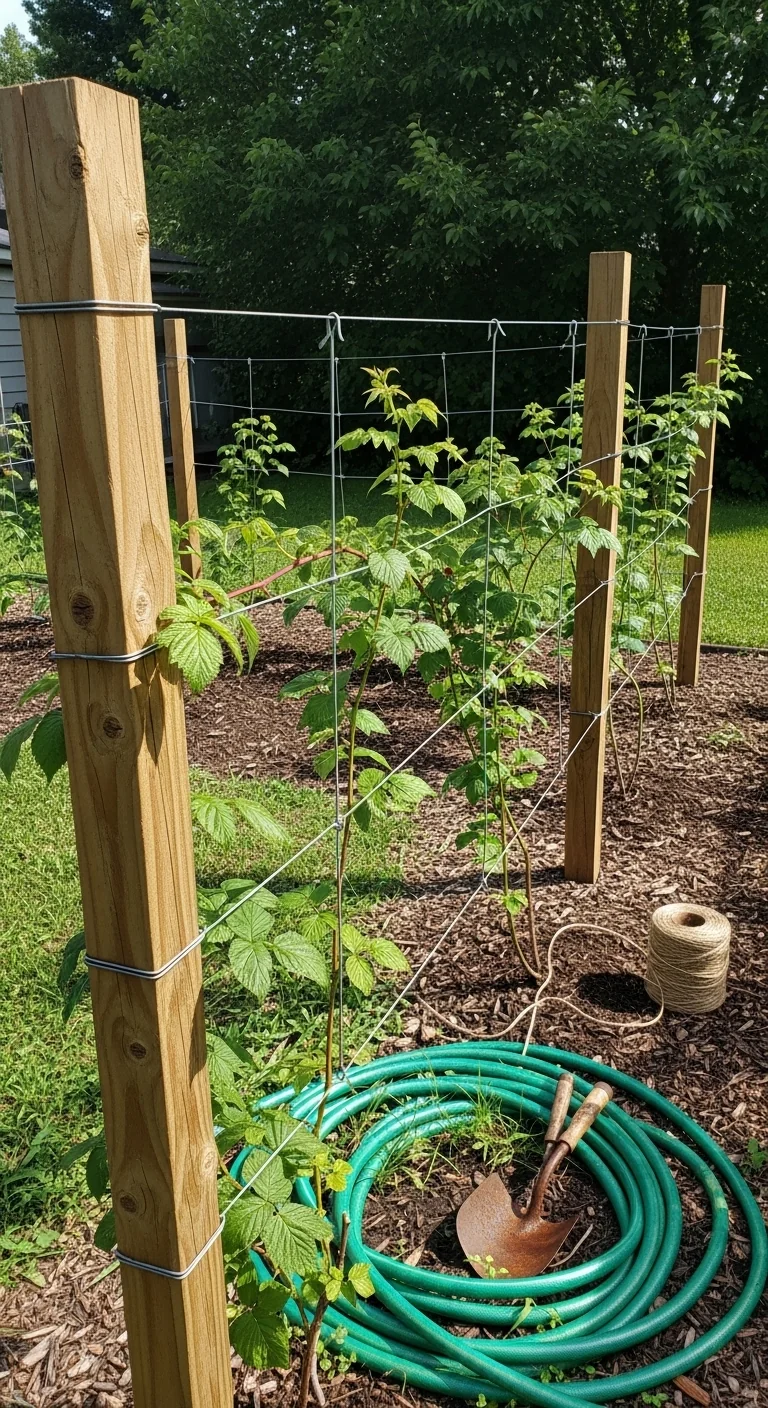
This system uses vertical posts spaced 10 to 15 feet apart with two horizontal wires. It suits primocane varieties in short rows because the wires contain canes without separating growth layers. Drive posts 2 feet into the ground. String 12-gauge galvanized wire at 3 feet and 5 feet above soil level. Tie fruiting canes loosely to the wires using soft twine. The main mistake occurs when wires sit too high at planting, forcing canes to lean before they reach support height. Similar setups work well for related cane fruits see blackberry trellis ideas. Once installed the structure requires only annual checks for wire tension and post stability.
Individual Stake System
Best for: Branch 1
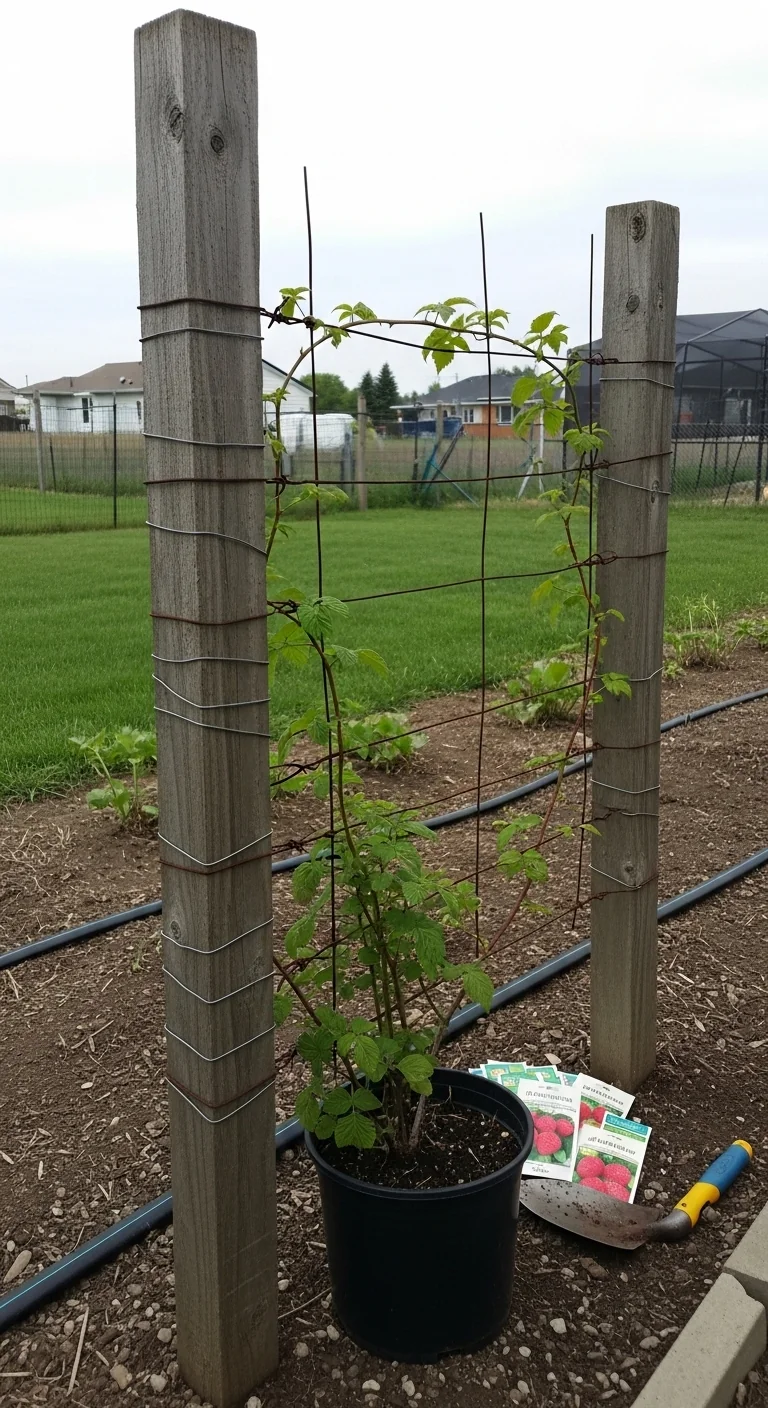
Use this when you grow fewer than 12 plants or work in containers. Drive one 5-foot stake beside each cane and tie loosely at 3 feet with twine. Pros include low material cost and quick setup. Cons appear in larger patches where individual tying becomes time-consuming. Skip entirely if your patch exceeds 20 canes or if wind regularly bends unsupported growth. Edge case: it works best for everbearing types mowed to ground level each winter.
V-Trellis System
Best for: Branch 2
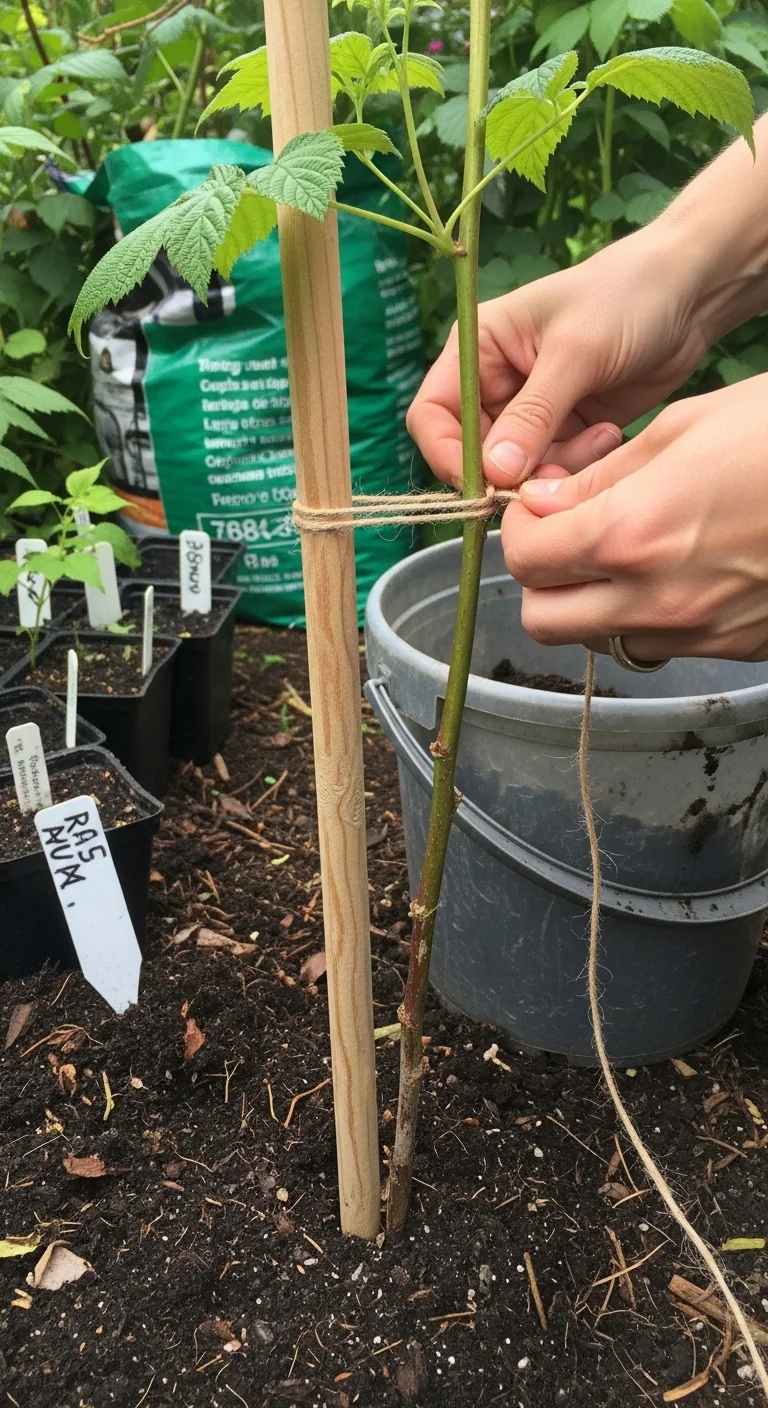
Apply the V-trellis only when canes reach at least 4 feet before fruit set begins and row spacing allows access from both sides. Angle posts 20 to 30 degrees outward then run wires along the outer edges. This creates space for primocanes to grow upright in the center while floricanes lean outward. Adjust wire height once per season if vigor changes. The system prevents overcrowding in floricane rows but requires initial setup time.
T-Trellis with Cross Arms
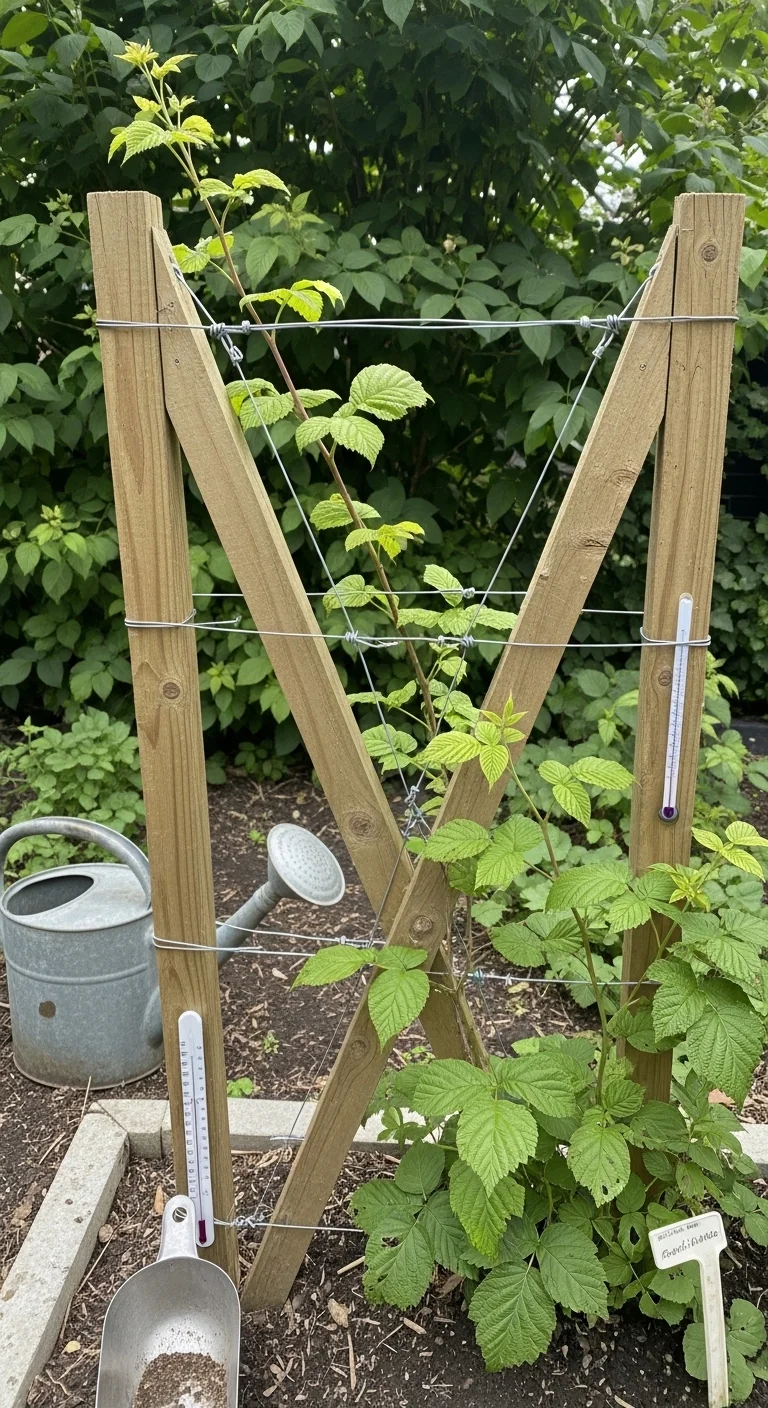
Best for: Branch 2
Build in 10 minutes per post by attaching 2-foot cross arms at 3 feet and 5 feet on vertical posts. Run parallel wires on each side of the T to form a hedge. Steps include setting posts 2 feet deep every 12 feet, screwing cross arms level, and stringing wire. Upgrade option adds a third wire at 18 inches for early-season support. This workflow suits floricane rows because it keeps canes upright during heavy fruit load without constant retying. Compare to adaptable trellis designs in melon trellis ideas for material alternatives.
Heavy T-Post Containment
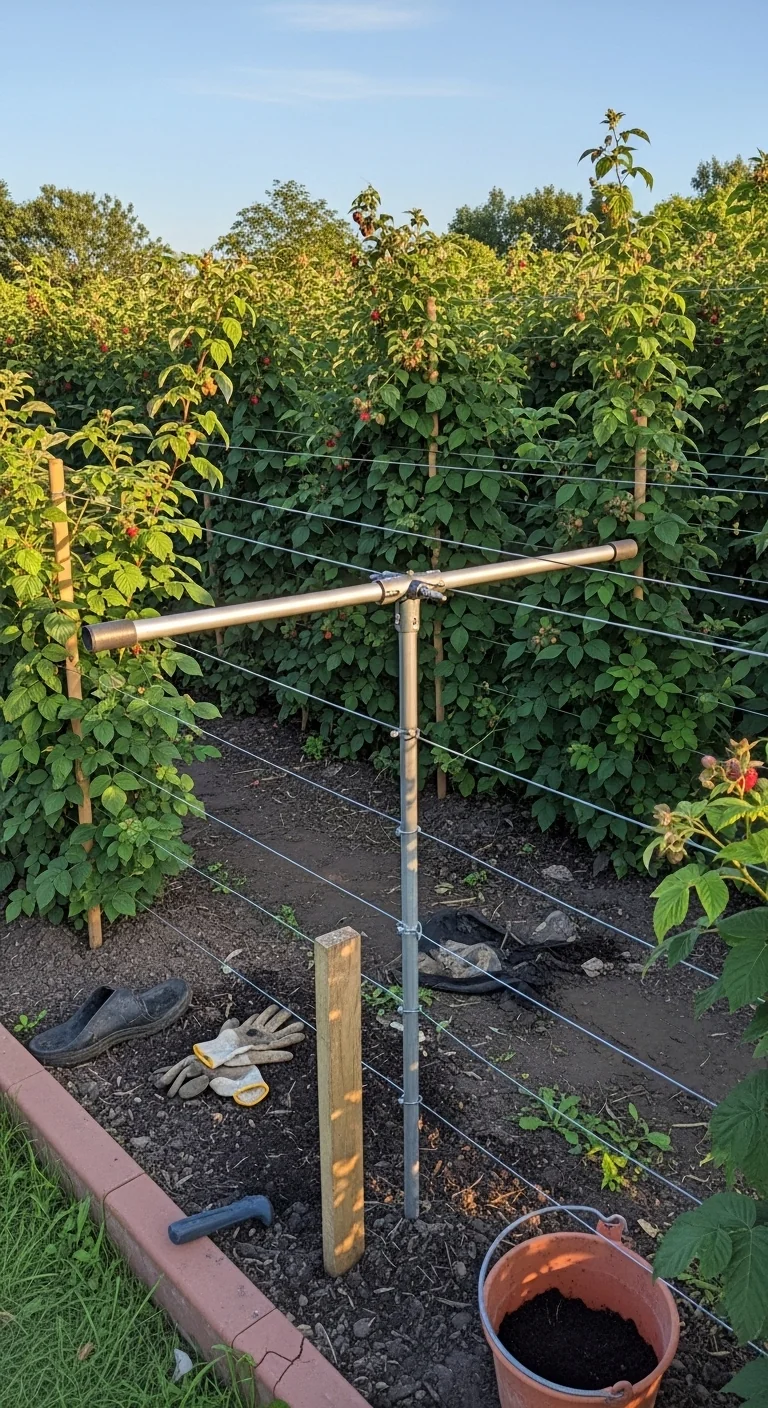
Best for: Branch 3
Drive metal T-posts every 8 to 10 feet and string three wires at 2 feet, 4 feet, and 6 feet. This contains vigorous canes in windy sites. It requires only seasonal tension checks. Use it when wood posts rot within two seasons or when fruit weight pulls unsupported canes down repeatedly.
Tepee Frame Support
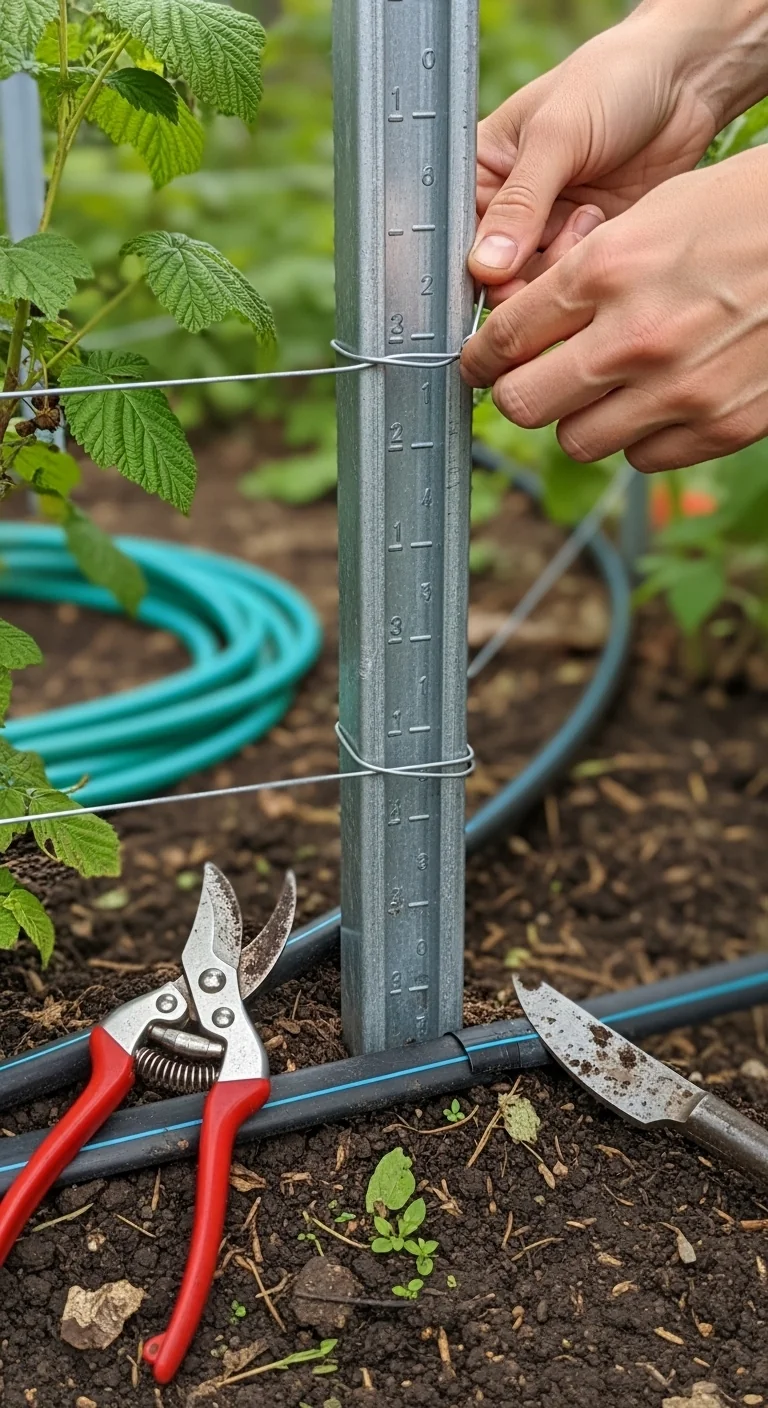
Best for: Branch 1
Choose the tepee when growing in containers or on patios with three or four 6-foot poles. Tie poles at the top and space bases 3 feet apart. Lean canes against the frame and secure with twine. Pros include portability and zero ground penetration. Cons surface in rows longer than 10 feet where multiple frames become cumbersome. Skip if your site experiences strong gusts that could topple the structure. Edge case: it pairs well with dwarf primocane varieties that stay under 4 feet.
Modular Panel Trellis
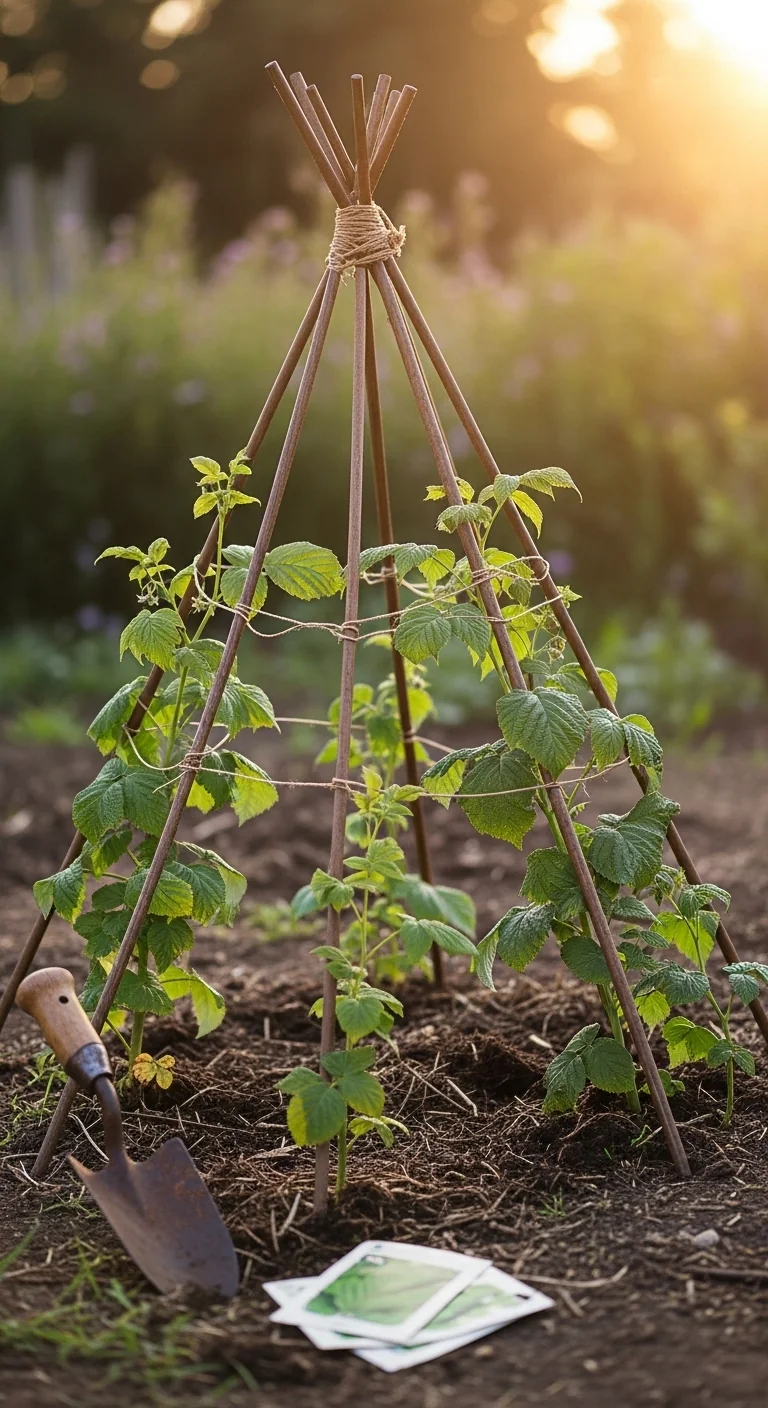
Best for: Branch 3
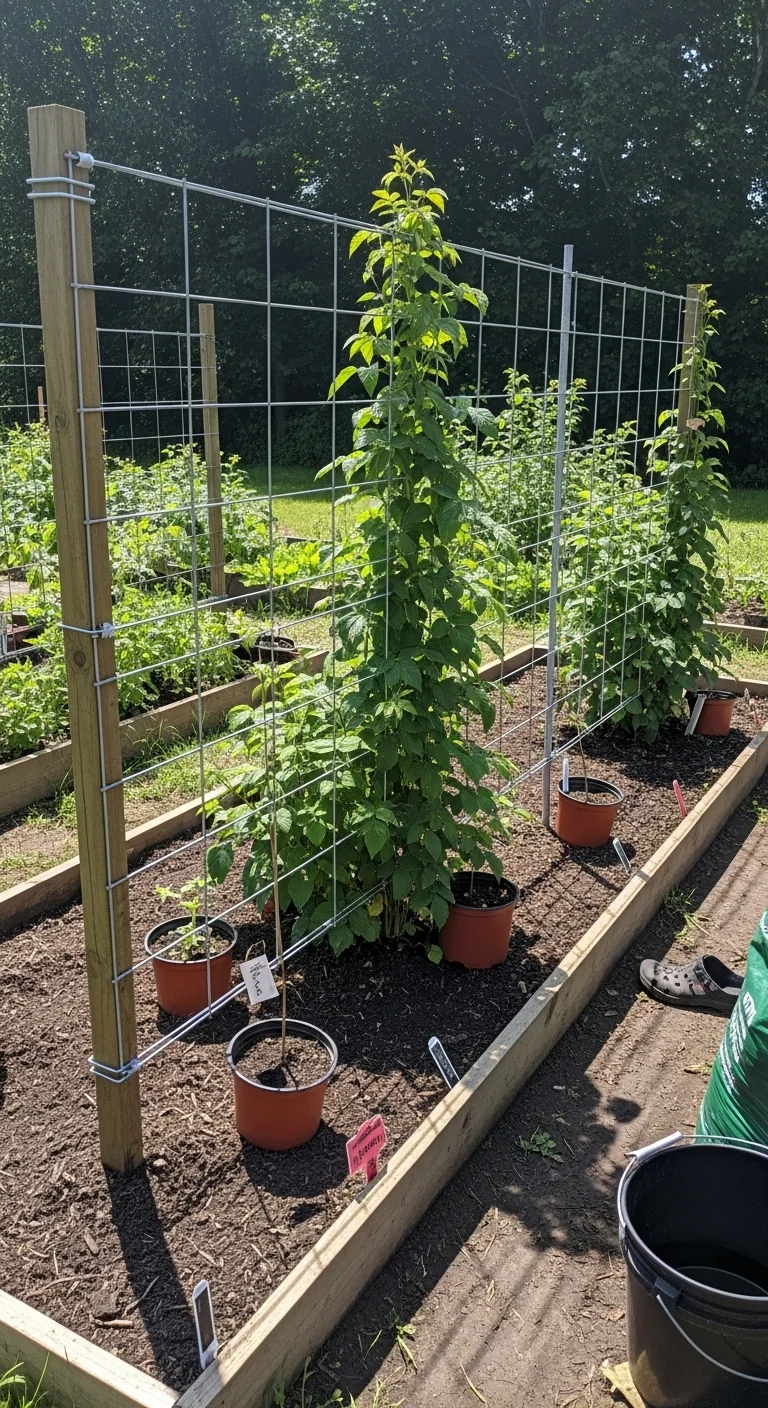
Install only when canes exceed 7 feet or wind speeds regularly challenge lighter systems. Bolt prefabricated panels or hog panels to posts spaced 8 feet apart. This creates a rigid wall that withstands heavy loads. The panel height should reach 6 feet minimum. It demands more upfront assembly than wire-only options but eliminates most annual adjustments. Threshold check: measure cane height mid-season and switch if over 6 feet before fruit ripens.
Fence-Mounted Fan Training
Best for: Branch 2
Attach wires or eye bolts to an existing fence at 2-foot intervals then fan canes outward. Space ties every 12 inches along the cane. It saves ground space in floricane rows and works when row width stays under 3 feet. Limit use to fences that face full sun at least 6 hours daily.
Starter Stack (What to Choose First)
For Branch 1 Growers
Begin with the simple post-and-wire I-trellis paired with the individual stake system. The combination provides containment for short primocane rows while allowing quick replacement of any damaged stakes. Materials cost 20 to 45 dollars. Install time ranges from 30 to 75 minutes.
For Branch 2 Growers
Start with the V-trellis system and T-trellis with cross arms. Together they separate canes for better airflow and easier picking in standard rows. Materials cost 35 to 60 dollars. Install time ranges from 60 to 120 minutes.
For Branch 3 Growers
Begin with heavy T-post containment and modular panel trellis. The pair handles tall vigorous canes and wind without collapse. Materials cost 40 to 80 dollars. Install time ranges from 90 to 150 minutes.
When This Won’t Work
Supports fail when posts shift more than 2 inches after the first winter or when canes tangle despite wires because spacing between plants stays under 18 inches. In both cases switch to wider spacing or add temporary stakes until the next season. Another measurable failure occurs in loose or sandy soil where posts cannot hold tension after heavy rain. Prepare the site with compacted fill or raised beds before resetting any system.
Choosing the Right Option for Your Situation
Budget Threshold
Under 30 dollars total materials favors the simple post-and-wire I-trellis or individual stake system. These rely on basic lumber or rebar and standard wire.
Time Threshold
Under 60 minutes total install favors the tepee frame or individual stake system. Both avoid crossbar assembly and extensive wire stringing.
Technical Constraint
When soil drains poorly or wind exceeds typical garden levels select metal T-post options over wood. Metal resists rot and provides greater stability once driven 2 feet deep.
Yes if your patch fits Branch 1 conditions.
No if canes already exceed 6 feet without support.
Yes if you can access both sides of the row.
No if posts cannot be driven at least 2 feet deep.
Expert Q&A
What post spacing keeps wires taut across a full row?
Space posts 10 to 15 feet apart for most home rows. Closer spacing at 8 feet becomes necessary only when canes grow taller than 7 feet or wind exposure remains constant. Measure distance with a tape before driving any post to avoid slack wire later.
Do supports require height changes between seasons?
Yes when switching between primocane and floricane varieties or when vigor increases after year two. Raise the top wire by 6 inches if new canes regularly surpass previous heights. Lower wires stay fixed at 18 to 24 inches for early support.
How do angled versus straight post systems affect airflow around canes?
Angled V-trellis posts open the center of the row so primocanes grow straight while floricanes lean outward. Straight I-trellis or T-trellis systems crowd all growth together. The difference appears most clearly after fruit set when inner leaves receive more light in angled setups.
Can an existing fence replace a full freestanding trellis?
Yes if the fence stands at least 6 feet tall and receives full sun. Attach eye bolts every 2 feet vertically then fan canes along the plane. Limit this approach to patches under 20 feet long because longer runs lose tension at the ends.
What wire gauge and material lasts longest in humid climates?
Twelve-gauge galvanized wire resists rust for at least five seasons in most regions. Stainless steel wire adds cost but extends life beyond ten seasons where rainfall stays high. Avoid plain steel wire because it corrodes within two seasons and weakens under fruit weight.
Conclusion
The key decision remains matching the support system to your raspberry variety cane habit rather than defaulting to the first trellis design seen online. This single choice determines how easily you manage separation of growth layers each year.
The most common mistake involves installing a rigid system that ignores the need to separate primocanes from floricanes. Review your current varieties then explore bird netting for fruit trees to protect supported plants once established.