
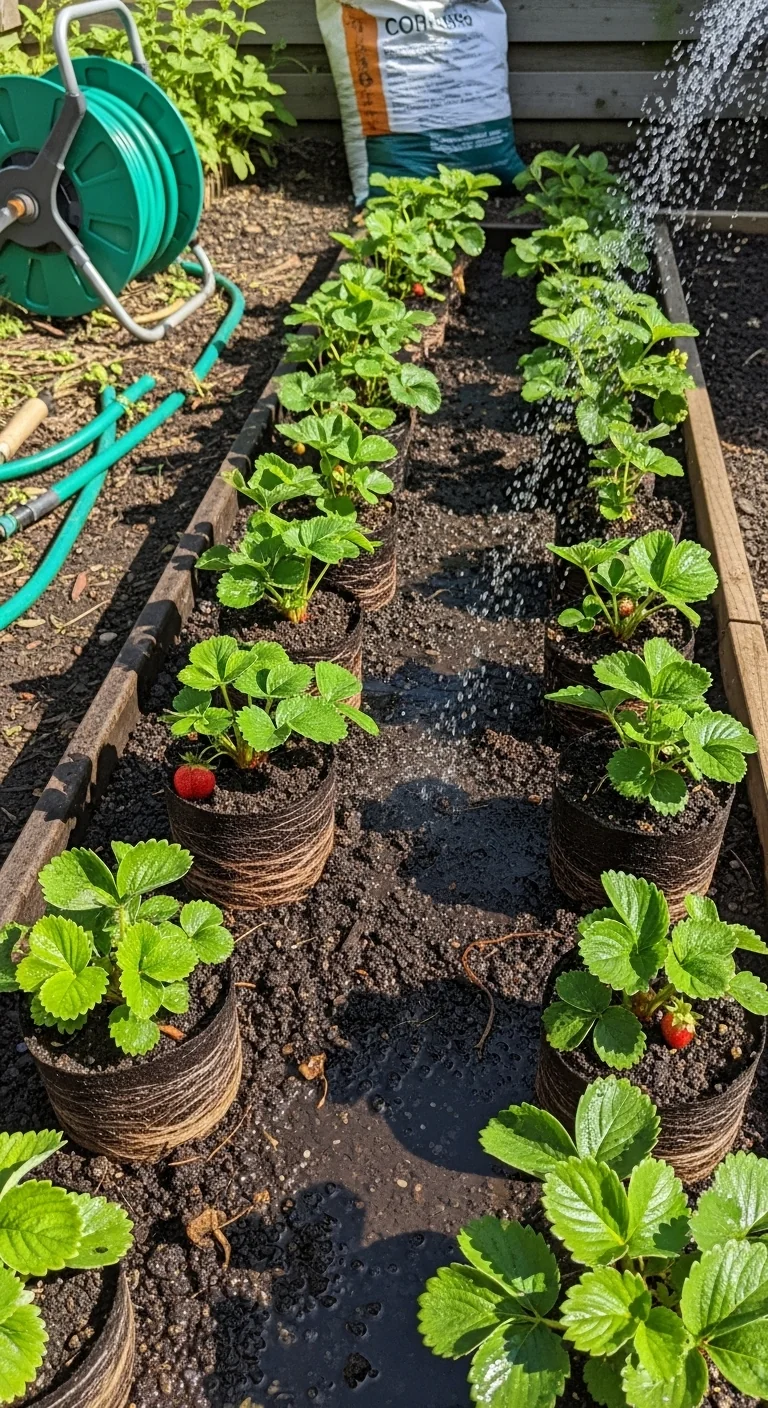
The real reframing with strawberries in containers is that the container itself controls root zone stability more than variety or soil mix alone. Confined spaces amplify daily temperature swings and moisture loss, so the container must support consistent damp conditions while allowing runner placement for ongoing production across seasons.
This guide covers nine distinct container setups with exact specifications on volume, drainage details, and maintenance mechanics. It focuses on practical systems for home growers in temperate regions. It excludes in-ground beds, large-scale commercial production, and purely decorative options without production focus.
By matching your measured space and daily access to the right setup, you gain the ability to select a system that prevents common root stress and fits your exact conditions for reliable fruiting.
Align the container to your space footprint and watering access to establish a productive strawberry system without repeated trial adjustments.
The Yield Grid Decision Grid
Branch 1 applies if your available growing space measures 4 square feet or less and daily plant checks remain feasible. Recommended: Items 2, 3, 6 below. For comparable small-fruit container approaches, see the blueberries in containers guide.
Branch 2 applies if your growing space measures 4 to 12 square feet and average summer daytime temperatures stay between 60F and 80F (15C and 27C). Recommended: Items 1, 4, 5 below.
Branch 3 applies if your dedicated space exceeds 12 square feet and the goal includes runner-based expansion over multiple seasons. Recommended: Items 7, 8, 9 below.
Quick Comparison Table
| Option | Key mechanism | Best for | Decision Grid Branch | Effort Score |
|---|---|---|---|---|
| Modified 5-Gallon Buckets | Custom drilled drainage holes plus gravel layer for root aeration | Custom volume control in moderate spaces | Branch 2 | 2 |
| Strawberry Pocket Pots | Side planting pockets for multiple plants in vertical footprint | Maximizing plants in tight vertical areas | Branch 1 | 3 |
| Wire Hanging Baskets | Coco liner with elevated drainage for air circulation | Utilizing overhead space on balconies | Branch 1 | 4 |
| Fabric Grow Bags | Breathable fabric walls for air pruning of roots | Improved root density in variable moisture conditions | Branch 2 | 3 |
| Self-Watering Planters | Built-in reservoir that maintains even soil dampness | Reduced daily watering frequency | Branch 2 | 1 |
| Window Box Troughs | Extended shallow profile with multiple drain points | Linear placement along railings or ledges | Branch 1 | 3 |
| Modular Vertical Stackers | Interlocking tiers with shared runner channels | Layered expansion for runner propagation | Branch 3 | 4 |
| Oversized Terracotta Pots | Porous walls for natural cooling and evaporation control | Stable root temperatures in warmer conditions | Branch 3 | 3 |
| Large Trough Containers | Wide rectangular base with uniform depth for colony growth | Perennial patch development in open areas | Branch 3 | 2 |
Modified 5-Gallon Buckets
Best for: Branch 2
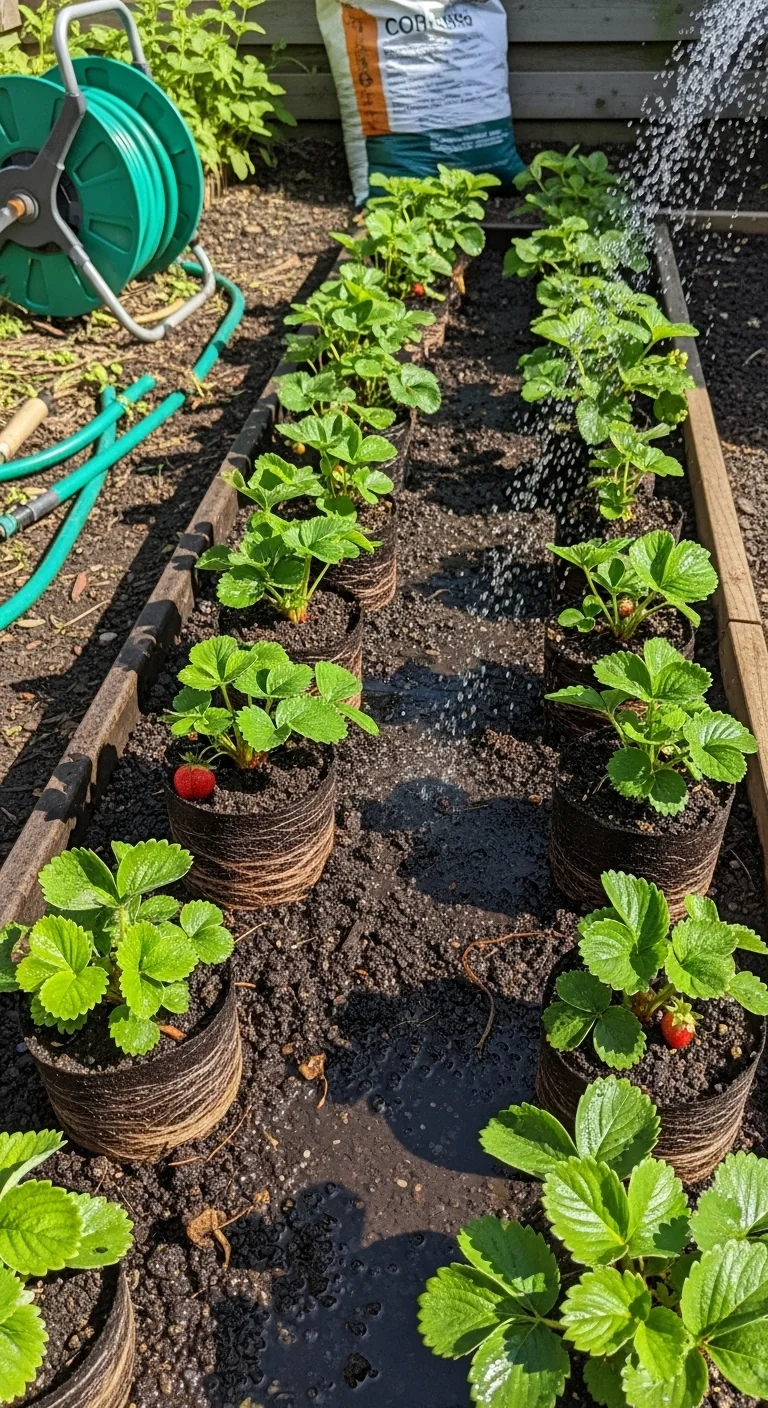
These buckets deliver the minimum 10-inch depth and 12-inch diameter required for strong root development in strawberries. Start with food-grade buckets, drill four 0.25-inch holes 1 inch up from the base to prevent clogging, then add a 2-inch gravel layer before filling with a mix of two parts potting soil, one part perlite, and one part bark. Plant up to three bare-root crowns at the soil line, spacing them 6 inches apart. Water to field capacity after planting, then maintain soil at just-damp levels by checking daily in heat above 80F (27C). The main mistake occurs when drainage holes sit directly on the base, trapping water at the root zone. Follow a balanced feeding schedule modeled on the fruit tree fertilizing approach, scaled for small fruits, applied at label rates every four weeks during active growth. This setup supports one or two seasons of production before soil refresh.
Strawberry Pocket Pots
Best for: Branch 1
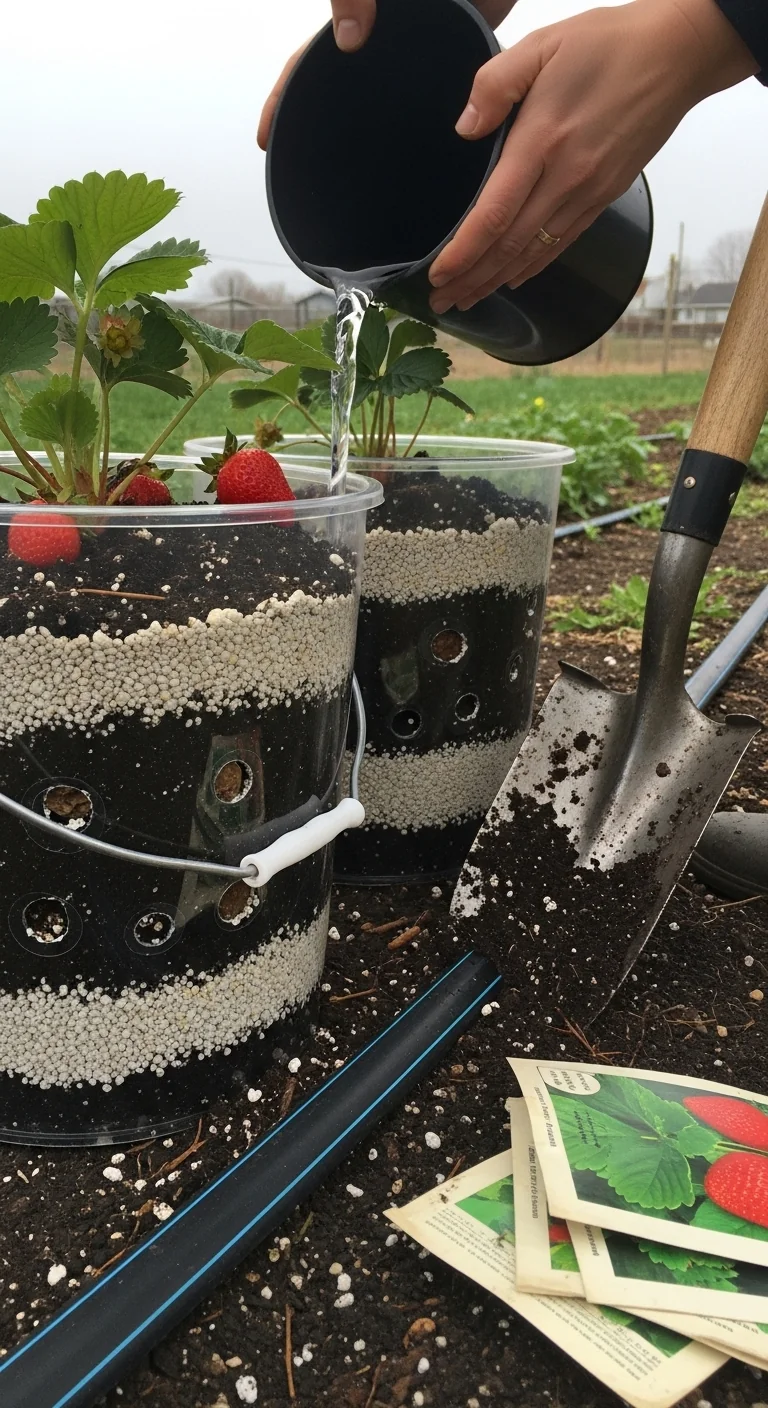
Use these when vertical space is the only option. The side pockets allow three to five plants per 12-inch tall pot while keeping total footprint under 2 square feet. Skip them if summer winds exceed 15 mph regularly, as exposed roots in pockets dry faster than in solid pots. Edge case: in areas with winter lows below 20F (-7C), move the entire unit indoors for protection rather than attempting on-site mulching.
Wire Hanging Baskets
Best for: Branch 1
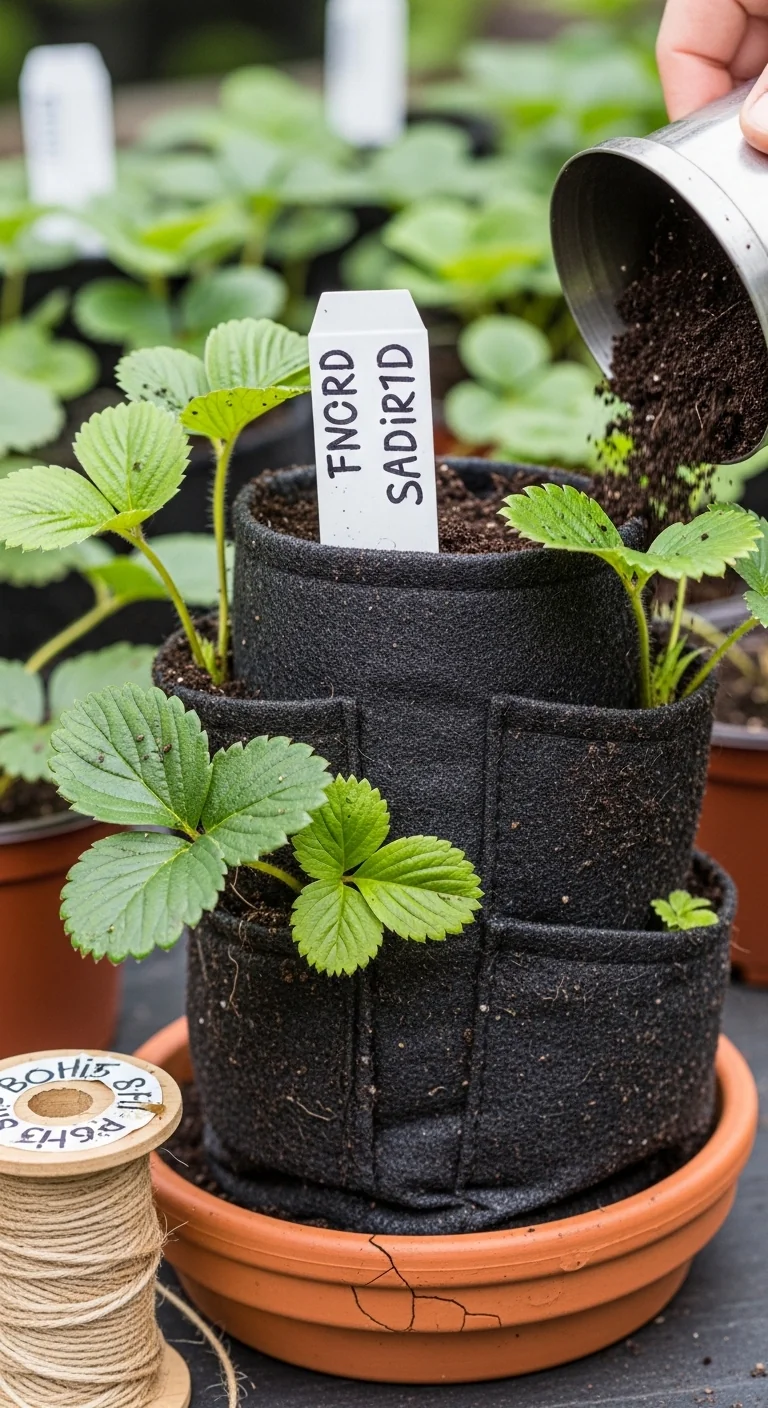
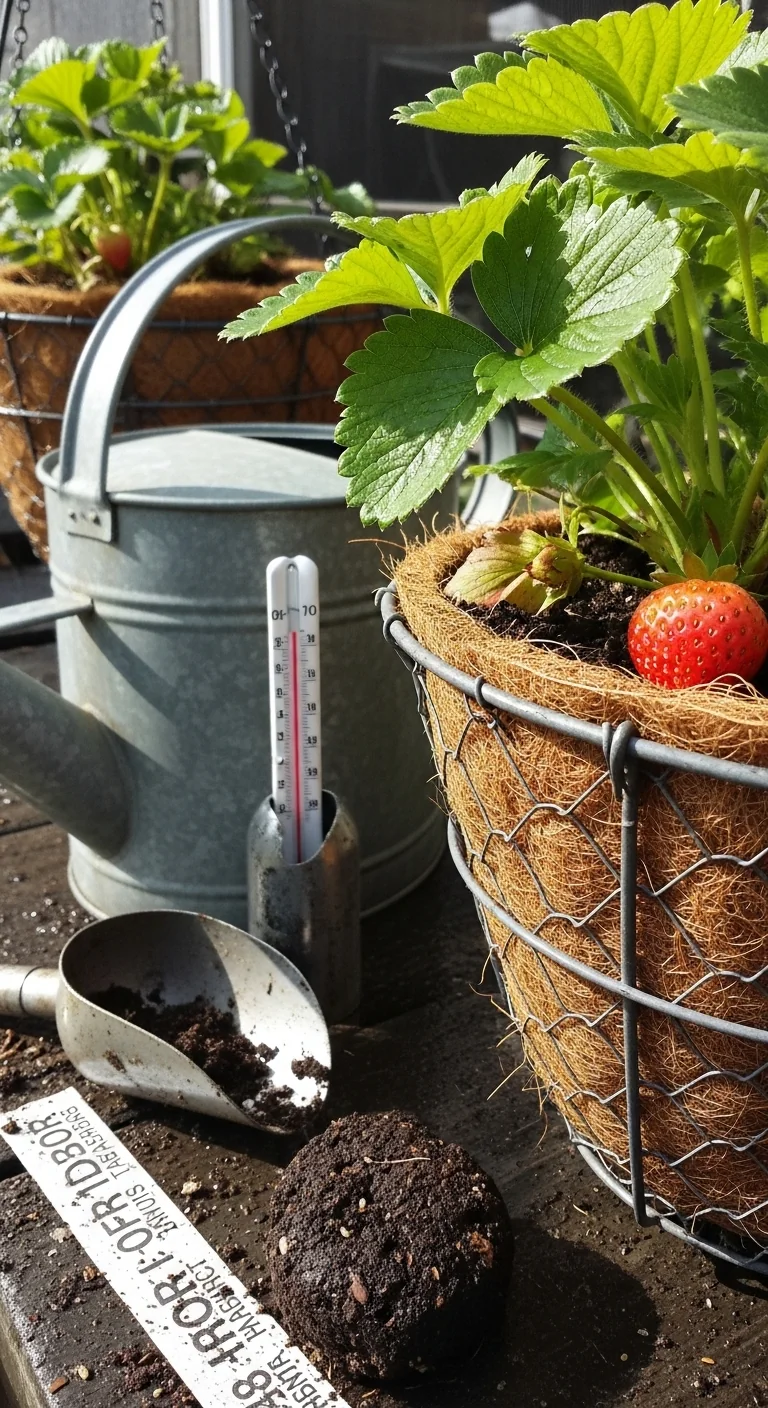
Wire hanging baskets work when overhead clearance reaches at least 6 feet and full sun hits for 6 to 8 hours daily. Maintain soil dampness by watering until it drips from the bottom, then wait until the top inch feels dry before the next cycle. Threshold rule: if daytime temperatures stay above 80F (27C) for more than five consecutive days, increase watering frequency to twice daily with half the volume each time to avoid root temperature spikes. Adjust liner thickness to 0.5 inch for better moisture retention in hot conditions.
Fabric Grow Bags
Best for: Branch 2
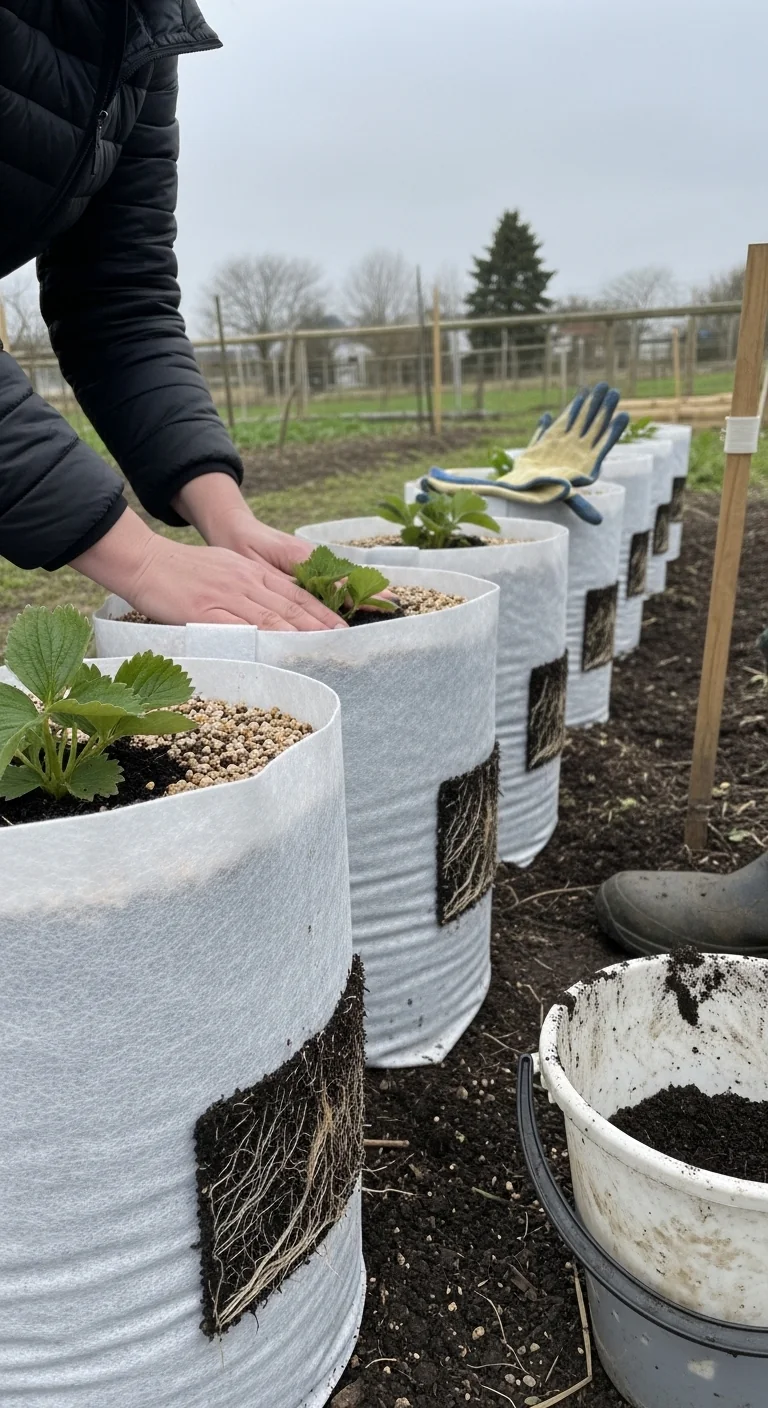
Fabric grow bags promote air pruning at the bag walls, creating a denser, more efficient root system suited to the confined environment of containers. Select 5-gallon or larger sizes with at least 10 inches of depth, fill with the standard perlite-bark-potting soil blend, and plant crowns so the soil covers the roots but not the crown itself. Position bags on a saucer with drainage holes to catch runoff. Water to saturation, then allow the top 1 inch to dry before rewatering. The breathable fabric reduces compaction compared with rigid pots. Combine soil testing with pH adjustment to the 5.5 to 6.5 range using the blueberry soil pH guidelines, since strawberries share the same preference. Refresh the top 3 inches of mix each spring before new growth emerges.
Self-Watering Planters
Best for: Branch 2
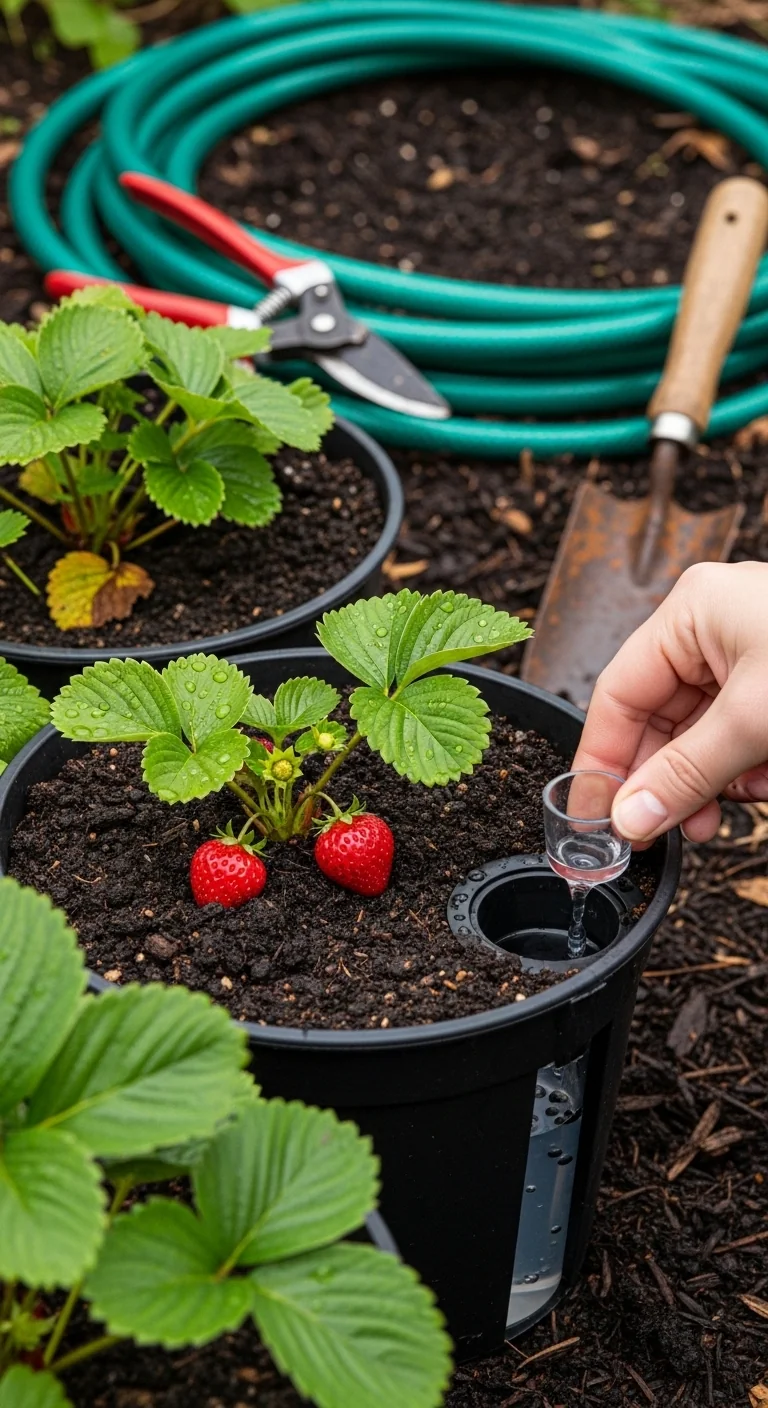
Self-watering planters suit growers who cannot check plants daily. The reservoir keeps soil consistently damp without sogginess when filled to the marked line every 7 to 10 days. Use versus skip: choose them for consistent moisture in moderate spaces, but skip if your water contains high salts, as the closed system can concentrate minerals over time. Edge case: empty the reservoir completely before any forecast of temperatures below 28F (-2C) to prevent cracking.
Window Box Troughs
Best for: Branch 1
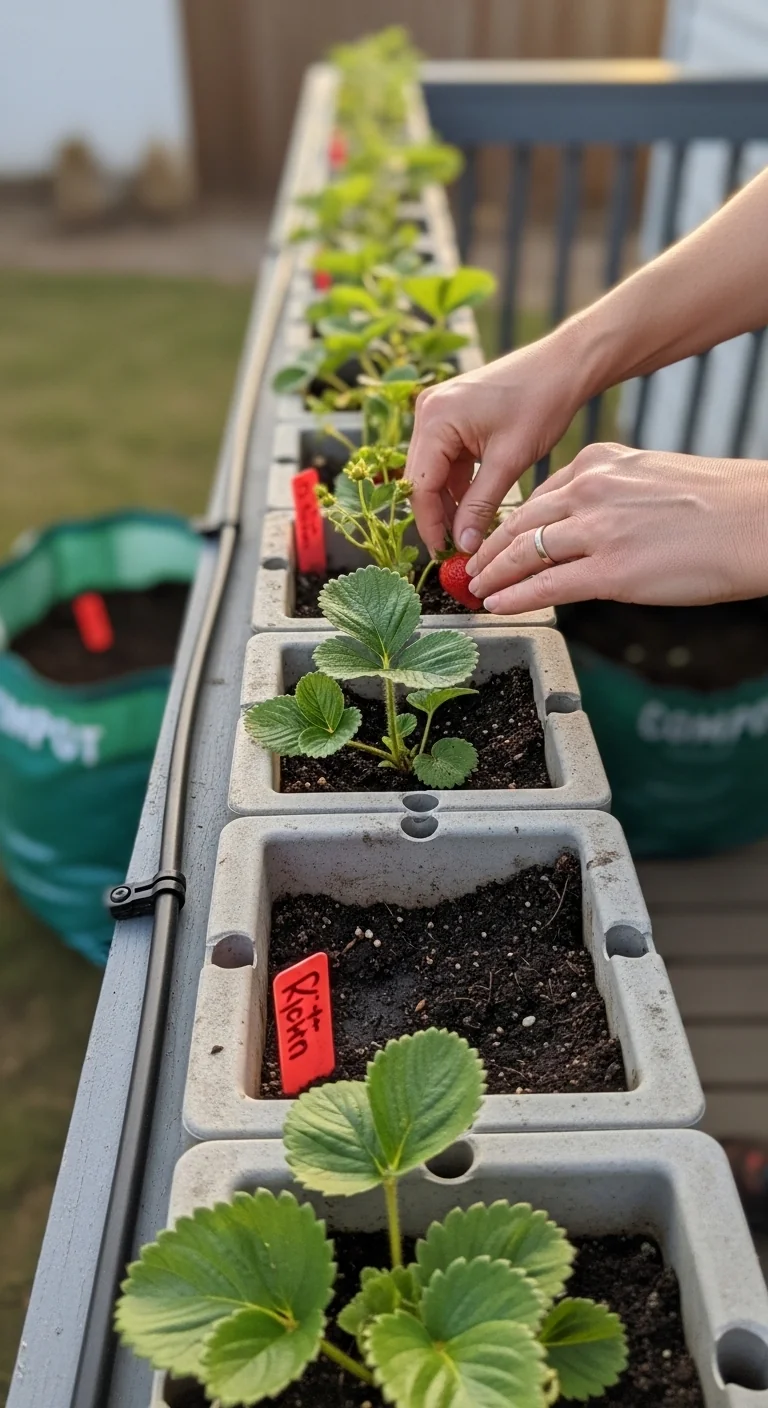
Window box troughs fit railings or ledges when linear space measures 3 to 6 feet long and 8 inches wide. Threshold rule: ensure at least four 0.25-inch drainage holes per linear foot, spaced evenly, and elevate the box 1 inch off the surface with risers. If soil dries in under 24 hours during 80F (27C) weather, add a 1-inch mulch layer of straw to slow evaporation. Plant in staggered rows 6 inches apart to allow runner exploration within the trough.
Modular Vertical Stackers
Best for: Branch 3
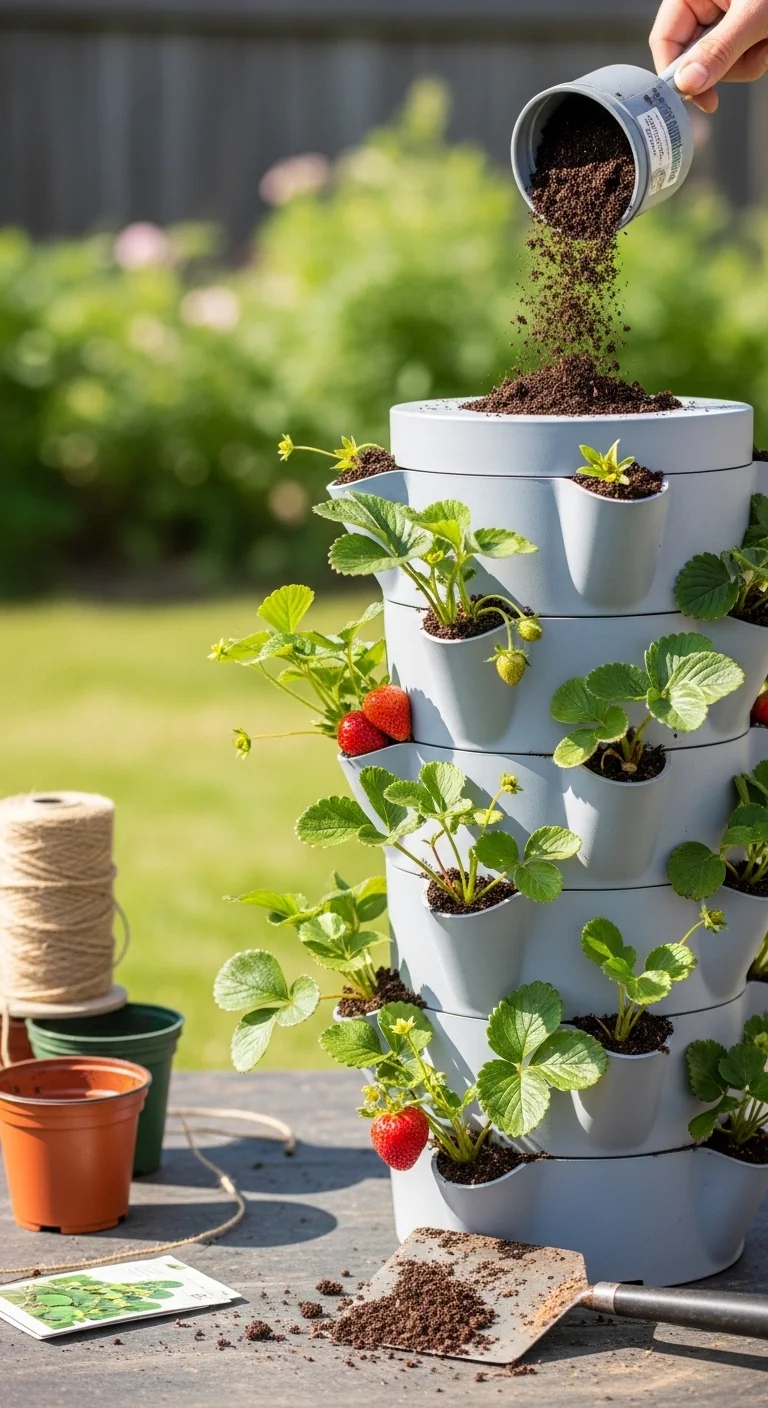
Modular vertical stackers consist of interlocking tiers, each holding 3 to 4 plants, with channels that direct runners downward into lower tiers without transplant shock. Begin with a base tier filled to 10-inch depth using the perlite-bark mix, plant crowns at soil level, then add tiers as runners root. Secure the stack with stakes if wind exceeds 10 mph. Prune excess runners only after they establish in the new tier. Maintain the entire column with the raspberry pruning timing adapted for strawberries, removing spent foliage after the main harvest. This system scales to 12 or more plants in under 4 square feet of floor space while supporting colony growth.
Oversized Terracotta Pots
Best for: Branch 3
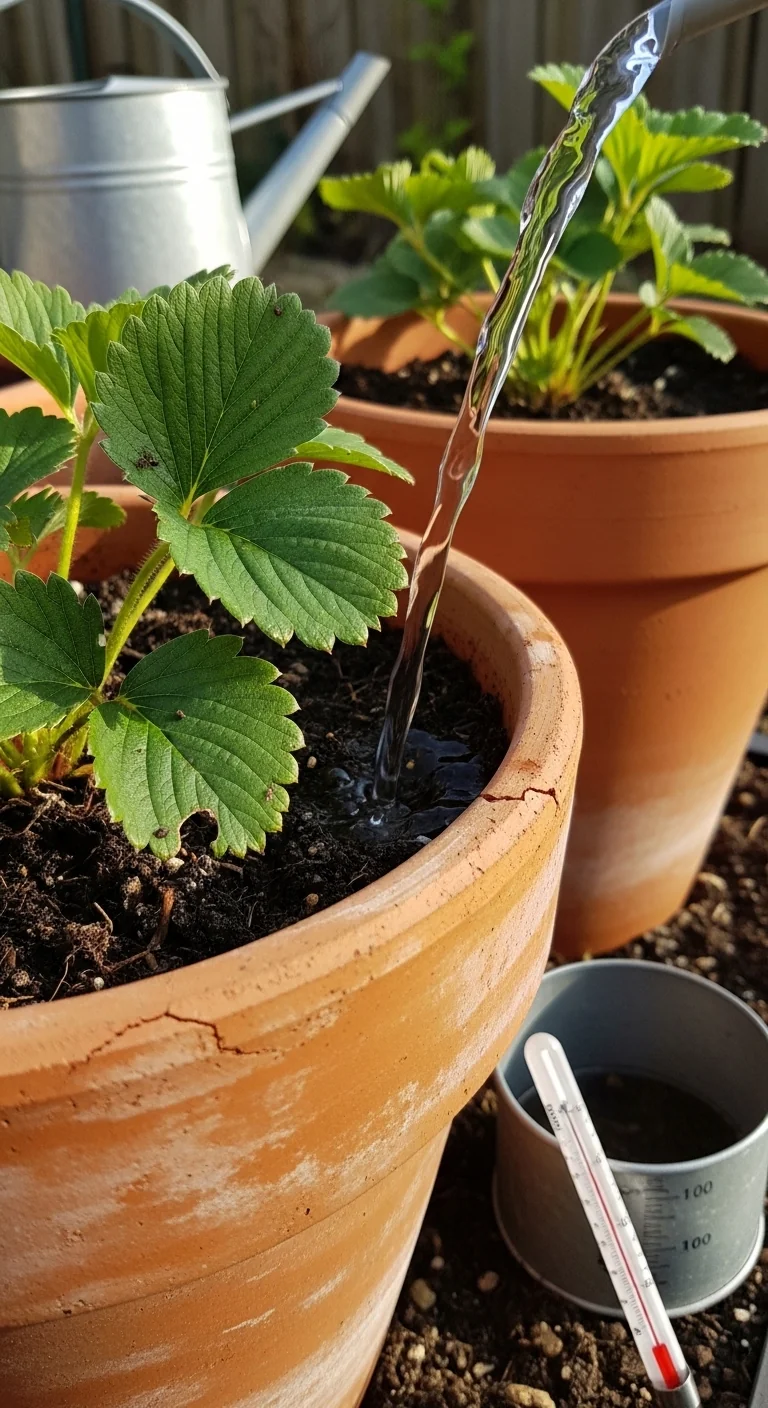
Use oversized terracotta pots (18-inch diameter and 12-inch depth minimum) when stable root temperatures matter more than frequent watering. The porous walls provide natural cooling in summer but increase evaporation, so water when the top 2 inches feel dry. Use versus skip: ideal for warmer microclimates within branch 3, but skip if daily access is under 5 minutes because the material dries faster than plastic. Edge case: in areas with hard water, line the interior with plastic sheeting to slow mineral buildup.
Large Trough Containers
Best for: Branch 3
Large trough containers (24 inches wide by 12 inches deep) create colony conditions that let runners root in place for perennial expansion. Fill with the standard well-draining mix and plant at 8-inch centers initially. Threshold rule: maintain 1 inch of standing space between soil surface and rim to allow mulch and prevent overflow during heavy rain. If winter lows drop below 20F (-7C) for more than two weeks, move the trough against a south-facing wall or into a garage for insulation.
Starter Stack (What to Choose First)
For Branch 1 Growers
Start with strawberry pocket pots plus wire hanging baskets. The pockets handle ground-level planting while baskets use overhead space, creating a vertical system that fits under 4 square feet total. Setup takes under 30 minutes with initial cost in the 20 to 40 dollar range.
For Branch 2 Growers
Start with modified 5-gallon buckets plus self-watering planters. Buckets provide customizable drainage while self-watering maintains even moisture, reducing daily checks. Setup takes under 45 minutes with initial cost in the 25 to 50 dollar range.
For Branch 3 Growers
Start with modular vertical stackers plus large trough containers. Stackers enable layered runner expansion while troughs anchor the base colony. Setup takes under 60 minutes with initial cost in the 40 to 70 dollar range.
When This Won’t Work
Container systems for strawberries fail when summer daytime temperatures remain above 85F (29C) for more than 10 consecutive days without afternoon shade or when winter lows stay below 20F (-7C) for extended periods without relocation to protected storage. In both cases root stress occurs because containers lack the thermal buffering of in-ground soil. The alternative action is to shift to raised bed methods that provide natural insulation and larger soil mass.
Switch when this won’t work by reviewing the strawberry raised beds approach for your conditions.
Choosing the Right Option for Your Situation
Budget Threshold
If total setup cost stays under 50 dollars, select modified 5-gallon buckets or fabric grow bags using household materials for drainage and liners.
Time Threshold
If weekly maintenance stays under 15 minutes, select self-watering planters or large trough containers that reduce daily checks.
Technical Constraint
If tap water pH measures above 7.5, select terracotta or fabric options paired with pH-adjusted mix to reach the 5.5 to 6.5 target range before planting.
Yes: full sun for 6 to 8 hours daily.
Yes: ability to check soil dampness twice weekly.
Yes: space meets the branch footprint minimum.
Yes: access to well-draining potting mix components.
Expert Q&A
How often should soil get refreshed in established strawberry containers?
Refresh the top 3 inches of soil mix each spring before new growth starts. Full replacement occurs every two seasons to restore drainage and nutrient availability without disturbing established crowns.
Can strawberries overwinter successfully in containers in zone 5 climates?
Yes, when pots move to an unheated garage or against a south-facing wall once temperatures drop below 28F (-2C). Insulate sides with bubble wrap or straw bales while keeping crowns exposed to air.
What spacing rules apply when directing runners into new containers?
Pin runners into adjacent modules once they develop three true leaves, spacing new plants 6 inches from the mother crown. Sever the runner connection only after the daughter plant shows independent root growth.
How does container material affect root temperature in hot summers?
Terracotta and fabric materials cool roots faster through evaporation and breathability than solid plastic, keeping internal soil temperatures closer to air temperature during peaks above 80F (27C).
When is the best time to divide overcrowded strawberry plants in pots?
Divide in early spring when new leaves emerge but before flowering begins. Lift the entire root mass, separate crowns with at least 4 inches of roots each, and replant immediately into fresh mix.
Conclusion
The key decision remains matching container volume, drainage, and thermal properties to your exact branch conditions. The number one mistake is using containers with insufficient drainage holes or depth under 10 inches, which leads directly to root zone sogginess or drying.
Take the next step by confirming your local planting window with the when to plant fruit trees timing framework adjusted for strawberries.