
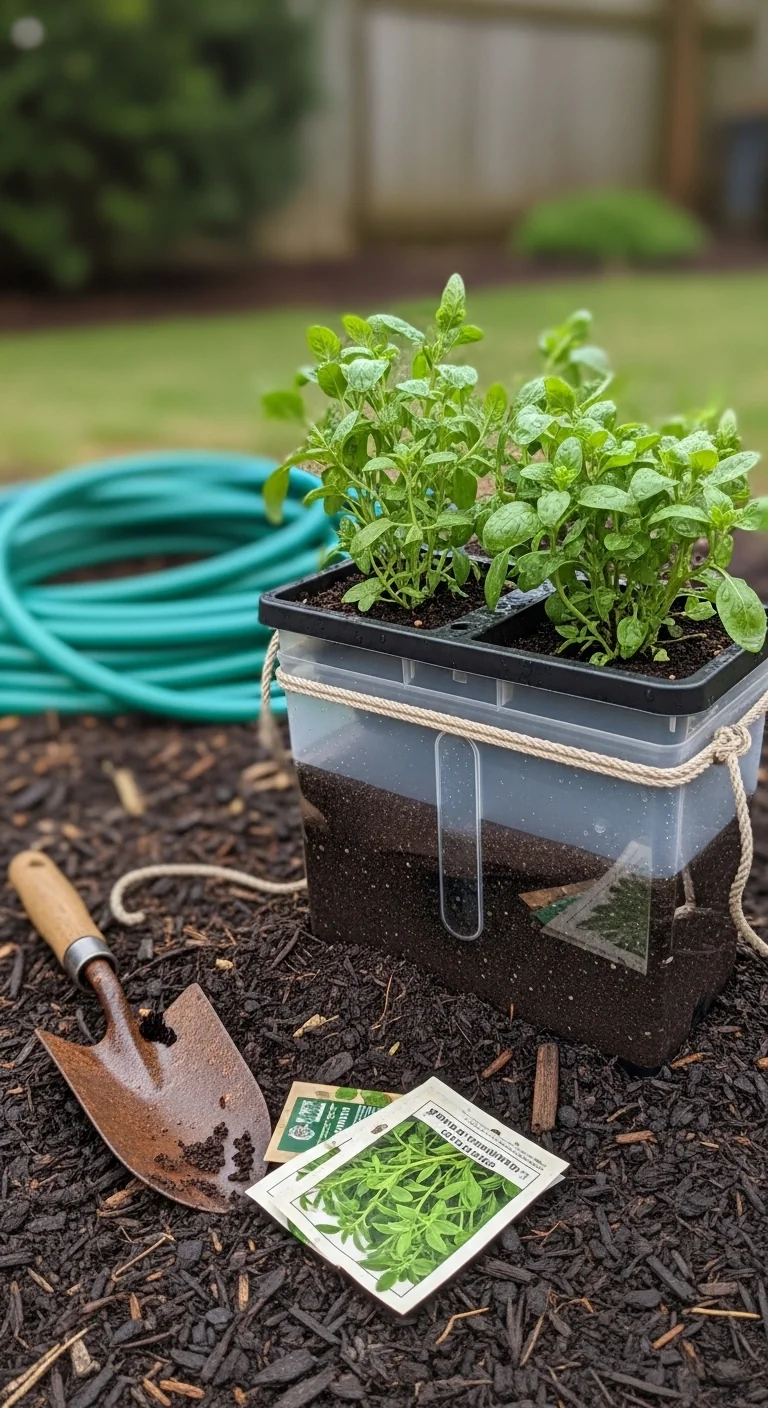
The real advantage of self watering herb planters comes from aligning the water delivery method with your herbs specific moisture preferences and your space evaporation rate. Wick systems deliver steady low volume moisture suitable for certain leafy herbs while larger reservoirs suit setups with higher demand.
This article focuses on passive self watering systems designed for herb containers and small beds. It excludes active hydroponic kits with pumps and full grow light systems.
You will gain a clear framework to pick the planter that fits your herb selection, available space, and how often you want to refill the reservoir. That lets you decide exactly which option delivers reliable results in your conditions.
Select the planter by first identifying your dominant herbs moisture profile and space constraints to eliminate guesswork in setup and maintenance.
The Yield Grid Decision Grid
Branch 1: Your setup features moisture-loving herbs such as basil, mint, or parsley in spaces with limited direct sun (fewer than 4 hours daily). Recommended: Items 1, 4, and 7 below.
Branch 2: Your herbs include a mix or outdoor balcony conditions with full sun exposure (more than 6 hours daily) and moderate evaporation. Recommended: Items 2, 5, and 8 below.
Branch 3: You prioritize low refill frequency for travel or forgetful schedules in any light level with perennial or drought-tolerant mixes. Recommended: Items 3, 6, and 9 below.
See our guide to best herbs for containers for pairing ideas.
Quick Comparison Table
| Option | Key mechanism | Best for | Decision Grid Branch | Reservoir Refill Frequency Class |
|---|---|---|---|---|
| Windowsill Wick Herb Planter Box with Cotton Ropes and Water Level Window | Cotton wick ropes drawing from bottom reservoir | Windowsill basil, parsley, or mint | Branch 1 | Biweekly |
| Terracotta Self-Watering Pot with Inner Reservoir Liner | Inner liner with overflow drain | Single herb pots on counters or patios | Branch 2 | Monthly |
| Modular Vertical Herb Tower with Shared Reservoir | Stacked tiers connected by capillary channels | Small space vertical mixes | Branch 3 | Biweekly |
| Raised Self-Watering Herb Box for Balconies with Overflow Drain | Large bottom reservoir with side fill port | Balcony thyme or oregano mixes | Branch 2 | Monthly |
| Ceramic Self-Watering Window Box with Capillary Mat | Mat under soil drawing from side reservoir | Windowsill chive or cilantro sets | Branch 1 | Weekly |
| Sub-Irrigation Planter Pot with Built-In Wick and Gauge | Submerged wick with visible water gauge | Indoor low-light setups | Branch 3 | Monthly |
| Connectable Trough Self-Watering System for Multiple Herbs | Interlinked troughs with shared overflow | Larger herb collections on decks | Branch 1 | Biweekly |
| Individual Self-Watering Herb Pot with Visual Indicator | Float indicator in separate reservoir chamber | Travel-friendly single pots | Branch 2 | Monthly |
| Elevated Self-Watering Planter Box with Trellis Compatibility | Elevated reservoir with drainage holes | Mixed perennial herbs outdoors | Branch 3 | Monthly |
Windowsill Wick Herb Planter Box with Cotton Ropes and Water Level Window
Best for: Branch 1
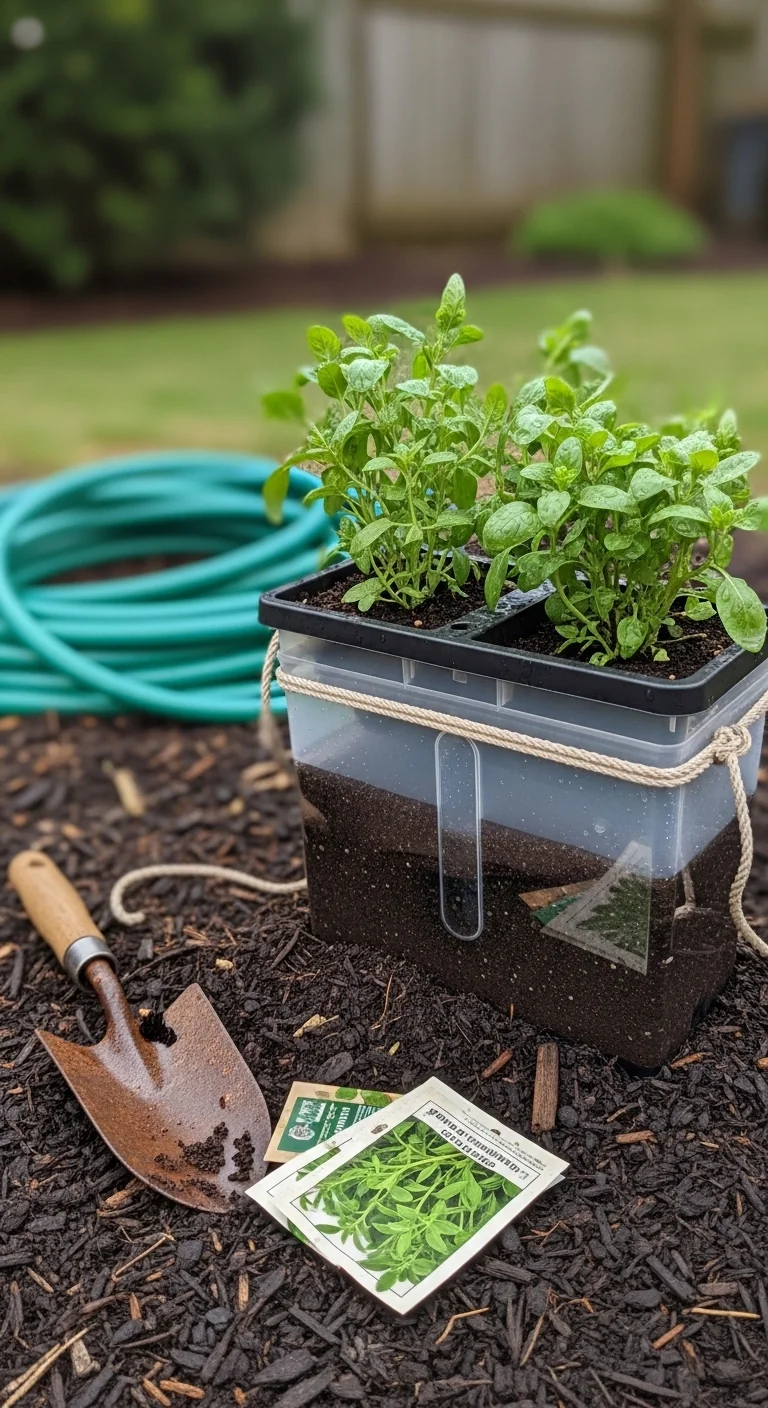
This planter uses two or more cotton ropes threaded through the base to pull water upward from a separate reservoir chamber. The transparent side window shows the exact water level so you refill only when it drops below the marked line. Fill the soil mix to the top line, insert the ropes fully into the reservoir, and plant your herbs directly. One common mistake occurs when the ropes sit loose or dry out during initial setup: soak them in water first to activate full capillary action. The design fits standard windowsills up to 12 inches wide and holds enough water for typical indoor evaporation rates in temperatures between 65 and 75 degrees Fahrenheit. Pair it with a well-draining soil mix to avoid compaction that slows the wicking rate. Learn more about soil mixes for herbs here.
Terracotta Self-Watering Pot with Inner Reservoir Liner
Best for: Branch 2
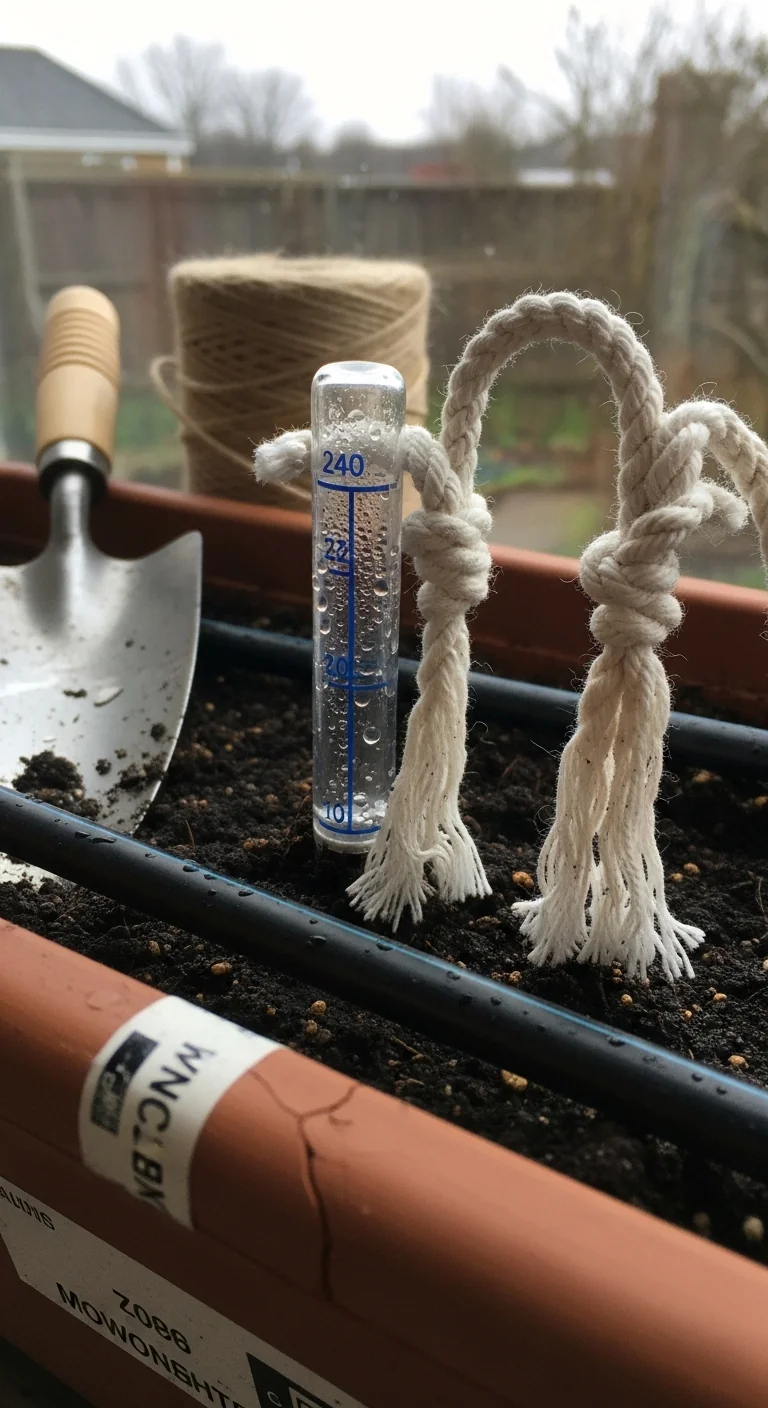
Use this when your balcony or patio receives direct sun and you want a classic look without daily checks. Skip it if your herbs prefer completely dry cycles between waterings because the liner keeps the bottom soil layer consistently damp. Edge case: in very hot conditions above 85 degrees Fahrenheit the terracotta exterior still allows some evaporation so the reservoir lasts slightly shorter than plastic versions.
Modular Vertical Herb Tower with Shared Reservoir
Best for: Branch 3
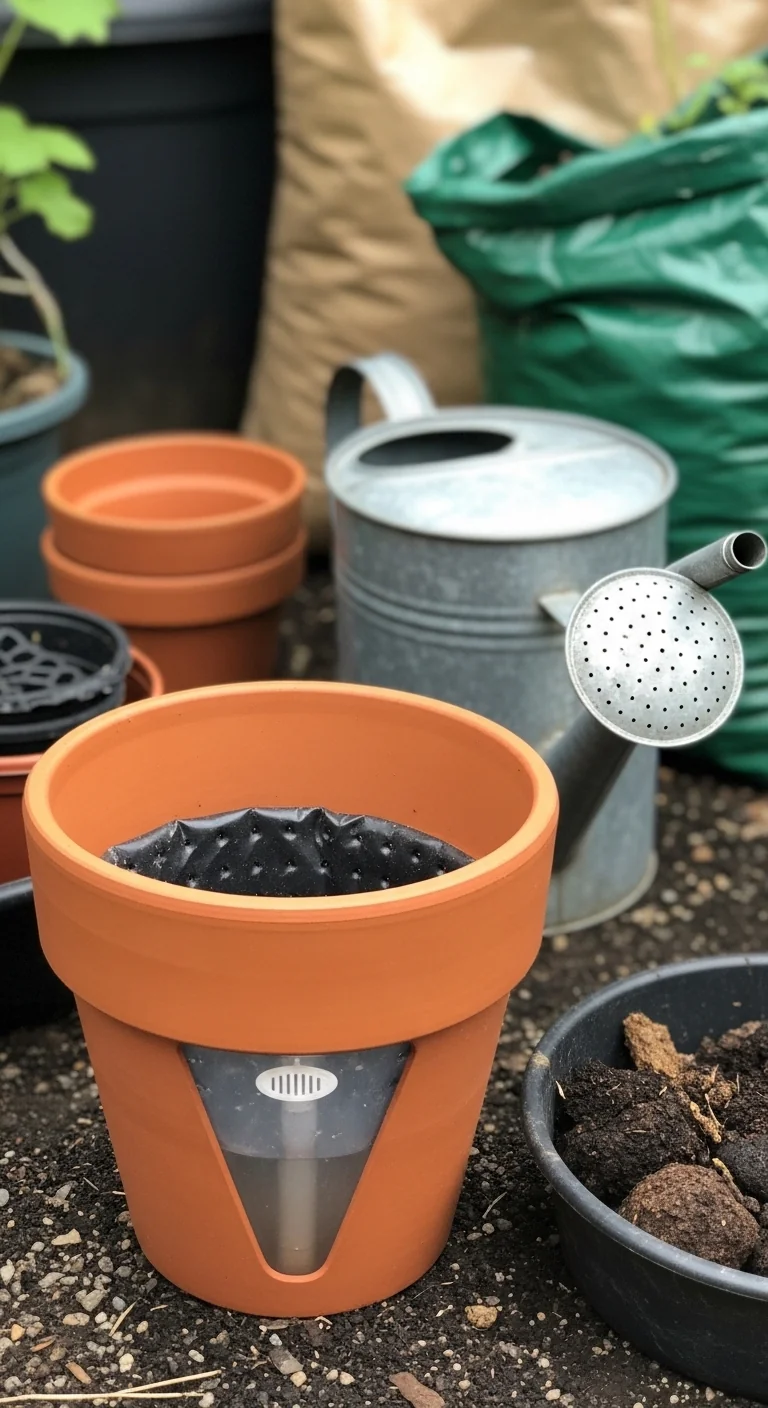
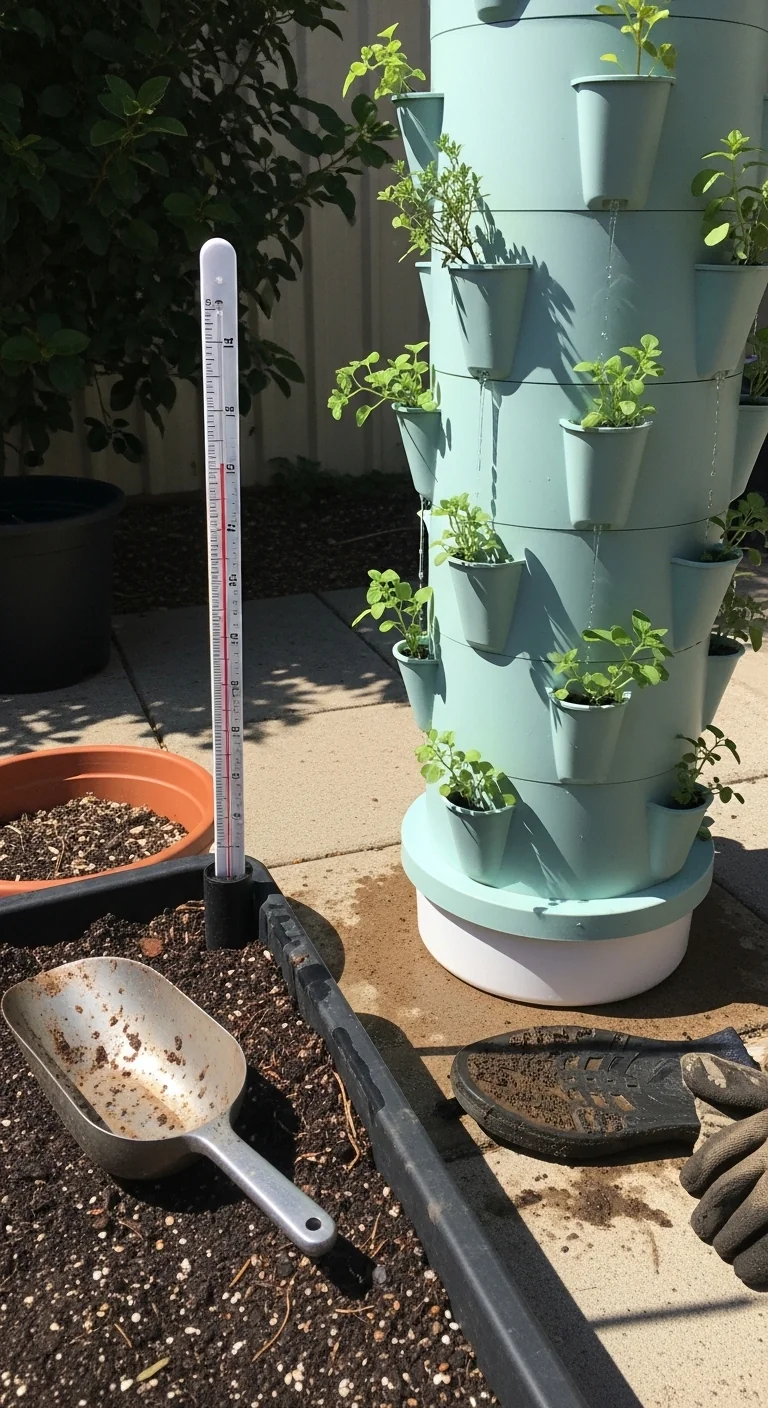
The tower works when your refill window must stay under biweekly in any light level. Adjust the top reservoir volume upward by one liter for every additional tier added to maintain even distribution across layers. In practice this keeps moisture levels stable when ambient humidity sits between 40 and 60 percent.
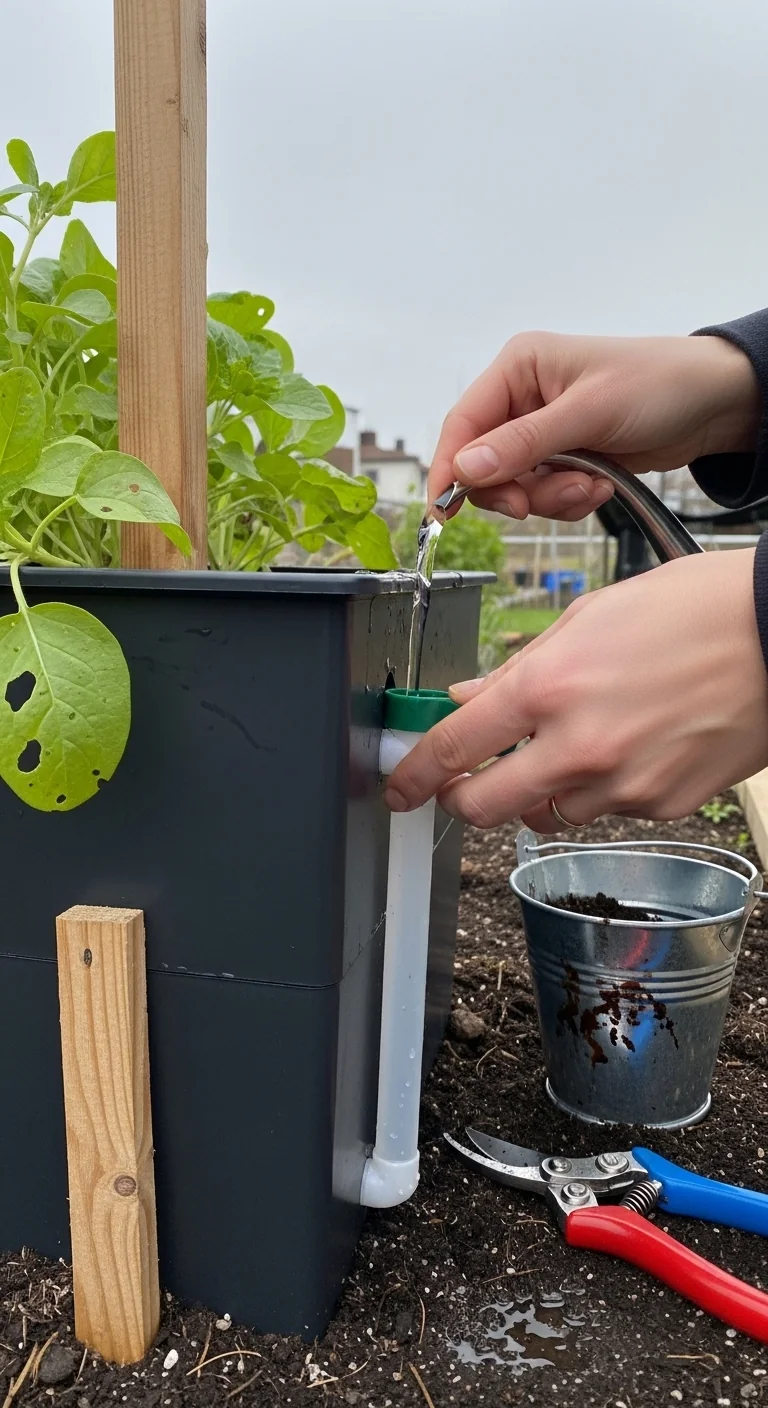
Raised Self-Watering Herb Box for Balconies with Overflow Drain
Best for: Branch 2
This box follows a 10-minute workflow. First position the empty box on your balcony surface. Pour 2 to 3 inches of gravel into the bottom reservoir chamber for stability. Add the soil layer to the marked fill line and plant herbs evenly spaced. Insert the overflow plug and fill the side port until water appears at the indicator. Upgrade option: connect two boxes side by side with a linking tube for shared watering across a longer railing. The overflow drain prevents standing water even after heavy rain. Complete the process in under 10 minutes and check the reservoir every four weeks under normal outdoor conditions. See beginner herb gardening tips for more setup ideas.
Ceramic Self-Watering Window Box with Capillary Mat
Best for: Branch 1
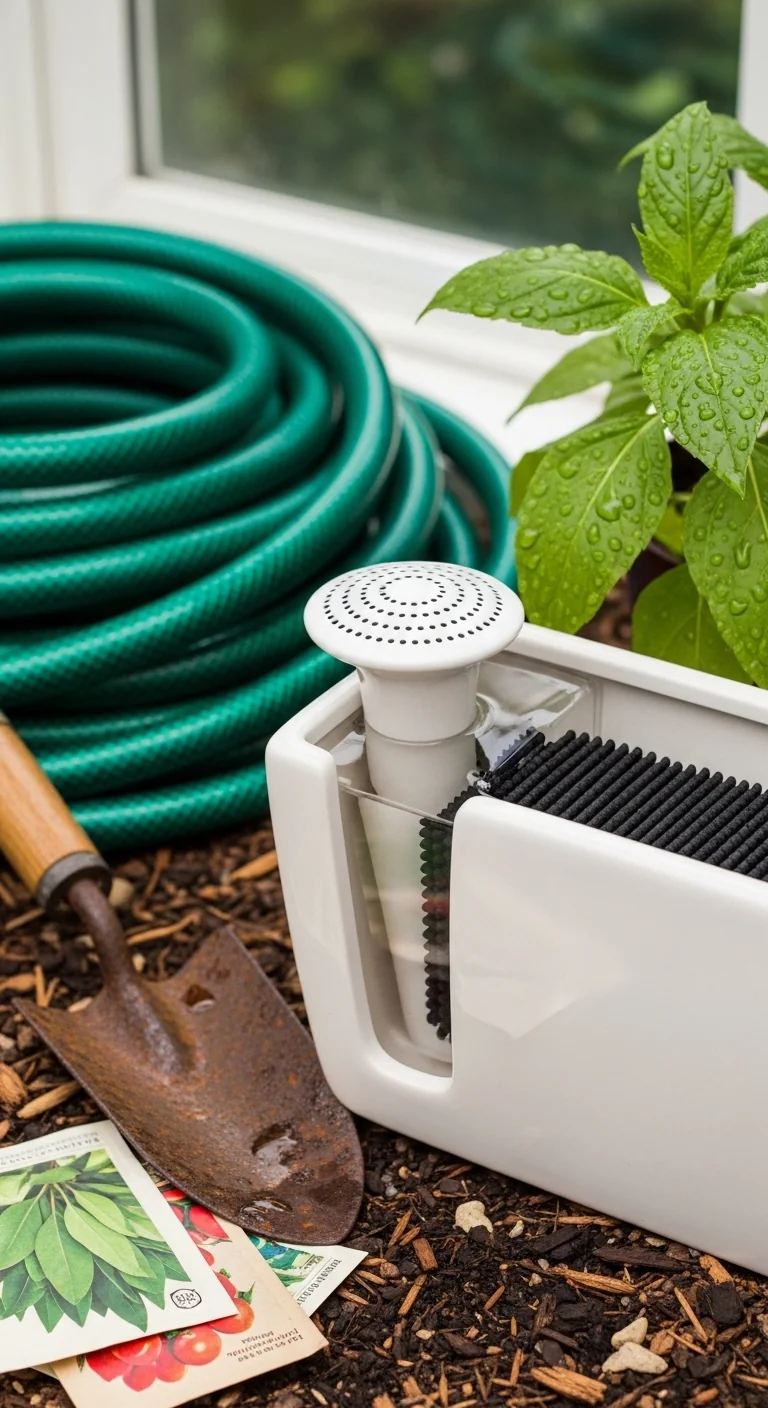
Use this ceramic box when you need a decorative windowsill option that blends with kitchen decor. Skip it if your space experiences temperature swings greater than 15 degrees daily because the mat can dry unevenly. Edge case: the porous ceramic exterior increases evaporation in dry indoor air below 40 percent humidity so top up the side reservoir more often than plastic counterparts.
Sub-Irrigation Planter Pot with Built-In Wick and Gauge
Best for: Branch 3
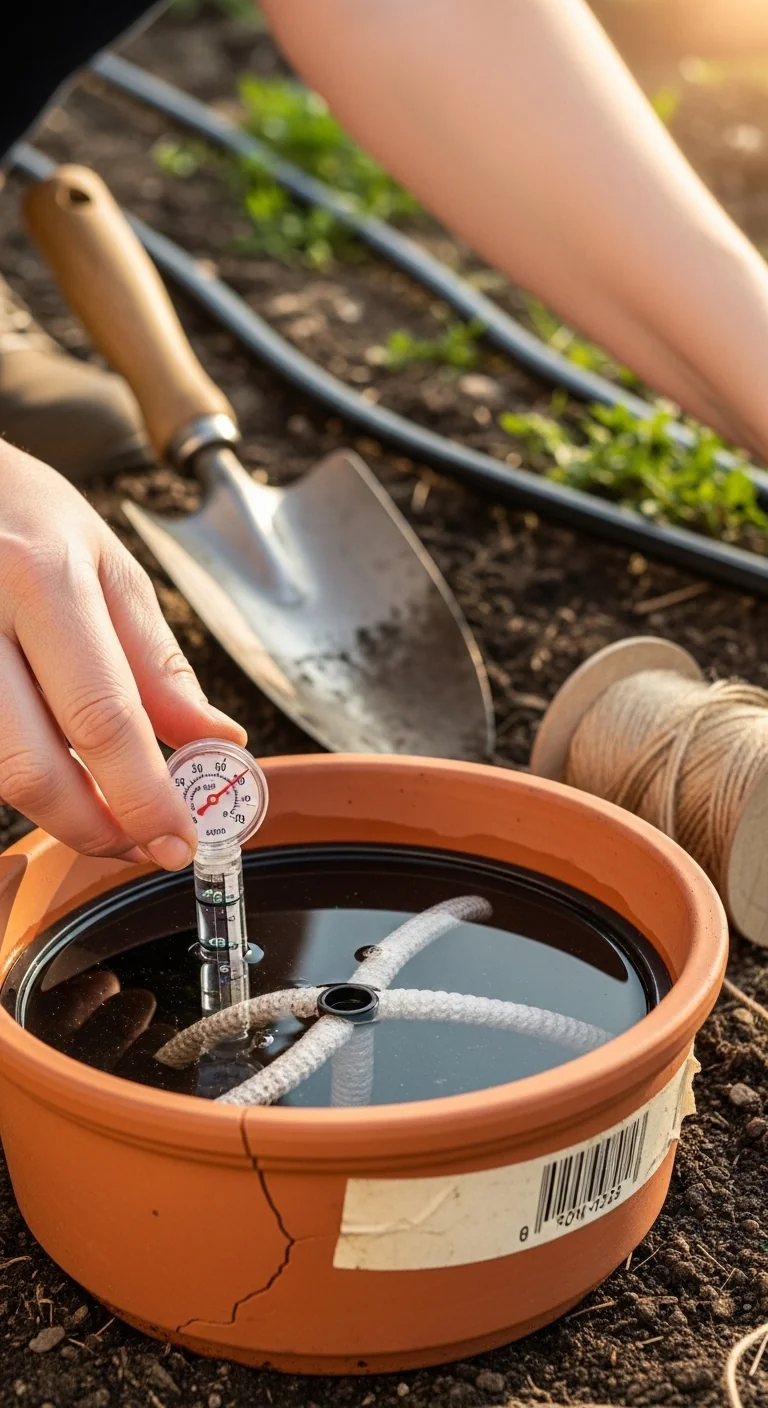
The sub-irrigation design keeps roots above the water line while the wick supplies only what the soil needs. It performs well in low-light indoor corners but avoid pairing it with drought-tolerant herbs because constant bottom moisture can reduce essential oil production. Rosemary in pots illustrates why these herbs need occasional dry periods.
Connectable Trough Self-Watering System for Multiple Herbs
Best for: Branch 1
Connectable troughs succeed when your windowsill or deck space exceeds 24 inches and you grow four or more herbs together. Measure your longest available surface first then add one trough section for every 12 inches of length. The shared overflow keeps all sections at identical water levels when temperatures stay between 60 and 80 degrees Fahrenheit. Thyme plant care shows how these troughs still allow slight dry down at the surface for Mediterranean types.
Individual Self-Watering Herb Pot with Visual Indicator
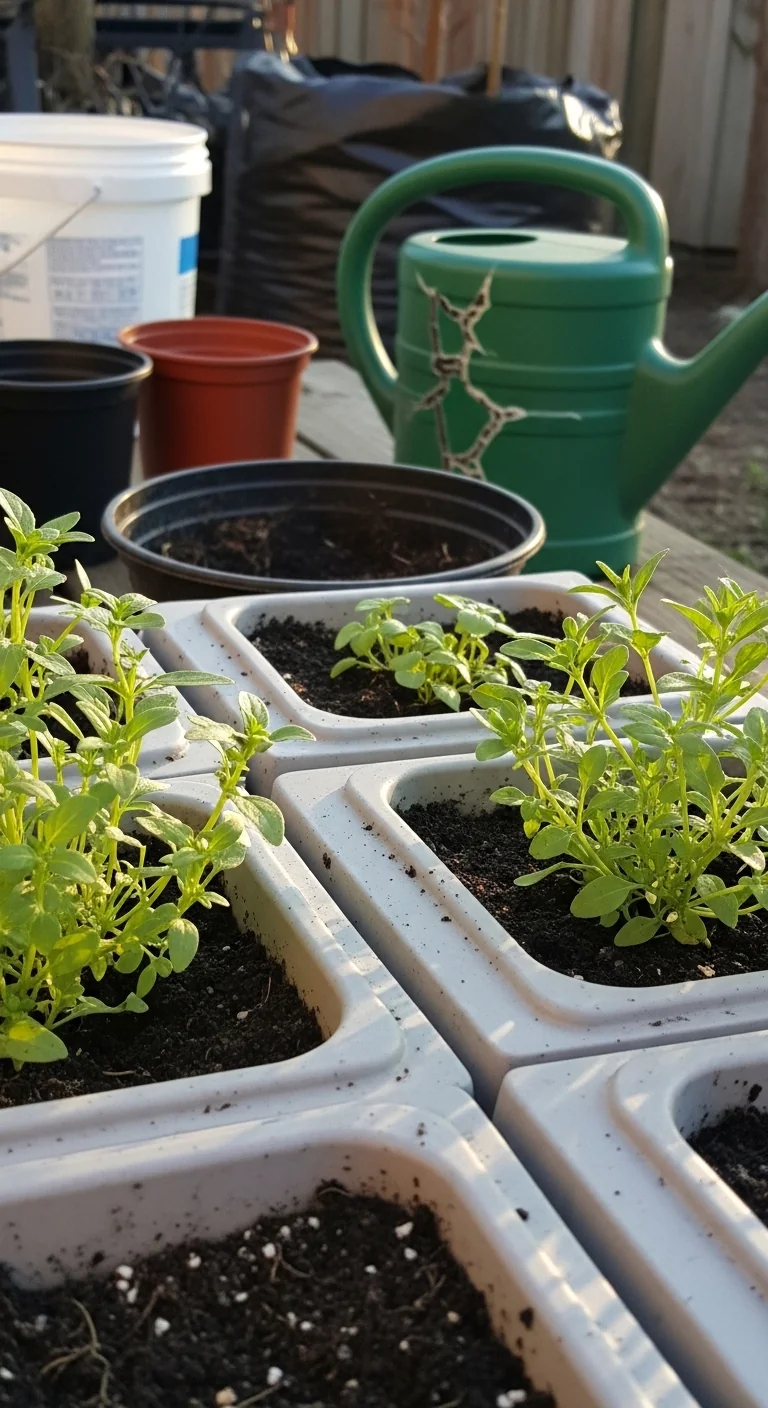
Best for: Branch 2
This pot fits travel schedules because the float indicator drops visibly when the reservoir reaches the 20 percent mark. Refill takes under two minutes and the design works on any flat surface.
Elevated Self-Watering Planter Box with Trellis Compatibility
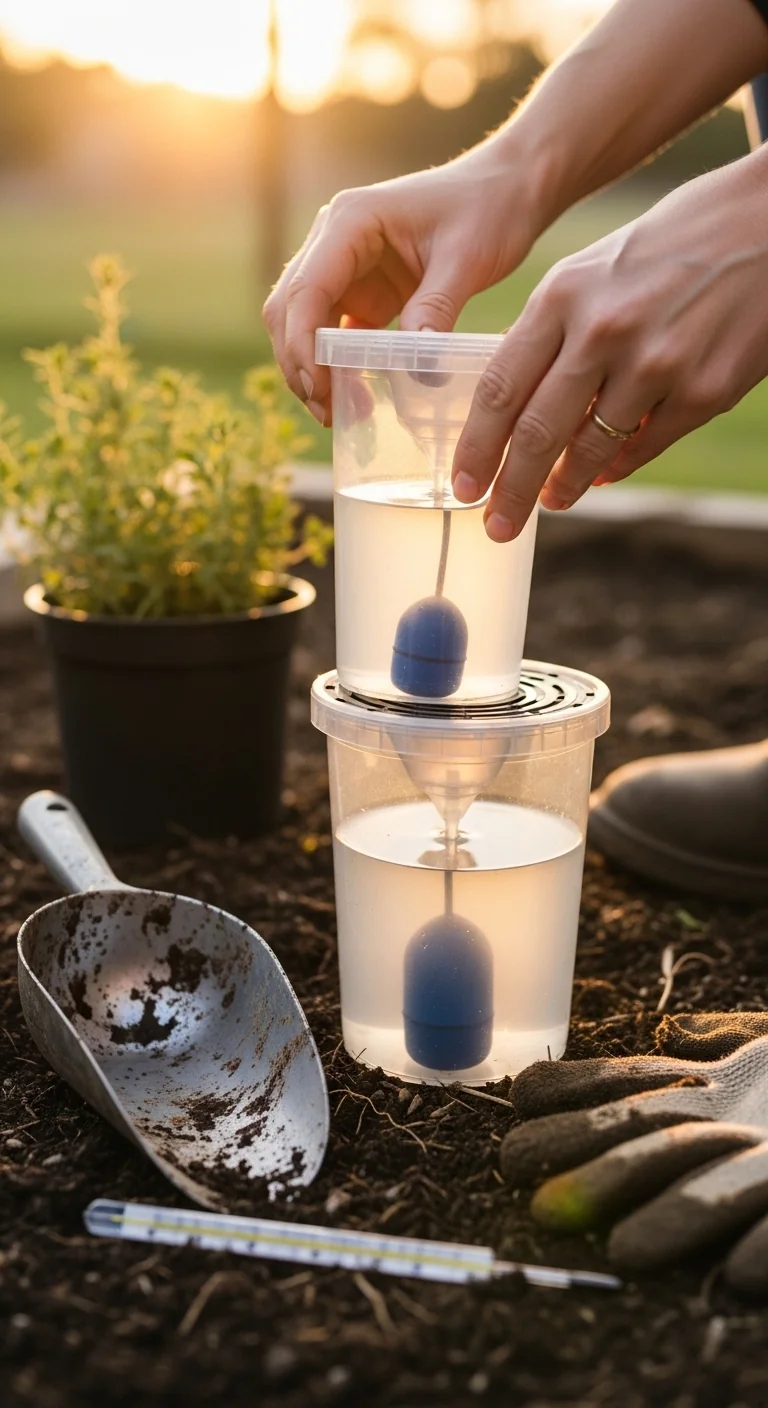
Best for: Branch 3
The elevated box uses a bottom reservoir separated by a perforated platform so roots never sit in water. It suits perennial mixes when you want monthly checks regardless of outdoor exposure.
Starter Stack (What to Choose First)
For Branch 1 (moisture-loving herbs in compact indoor spaces)
Start with the Windowsill Wick Herb Planter Box (Item 1) plus the Connectable Trough System (Item 7). The wick box gives instant visual feedback while the trough expands capacity without extra footprint. Typical cost range: 35 to 65 dollars. Setup time: 10 to 20 minutes.
For Branch 2 (mixed herbs on balconies with full sun)
Start with the Terracotta Self-Watering Pot (Item 2) plus the Raised Self-Watering Herb Box (Item 4). The single pot tests one herb type quickly while the raised box handles larger collections. Typical cost range: 40 to 80 dollars. Setup time: 15 to 25 minutes.
For Branch 3 (low refill frequency setups)
Start with the Modular Vertical Herb Tower (Item 3) plus the Elevated Self-Watering Planter Box (Item 9). The tower maximizes vertical space while the elevated box adds stability for perennials. Typical cost range: 50 to 90 dollars. Setup time: 20 to 30 minutes.
When This Won’t Work
Self watering herb planters fail when paired with drought-tolerant herbs that require soil to dry completely between waterings. In those cases the constant capillary moisture keeps roots too wet and can lower flavor intensity in leaves. The second measurable failure condition appears if reservoir water sits unchanged for more than 30 days in temperatures above 75 degrees Fahrenheit: algae forms on the inner walls and clogs wicks. Switch to standard drainage pots or add a weekly flush with plain water in those conditions. Drought-tolerant herbs lists the varieties better suited to conventional containers.
Choosing the Right Option for Your Situation
Budget threshold
Under 40 dollars: select wick windowsill boxes or single terracotta pots. Above 60 dollars: choose raised boxes or connectable troughs with overflow protection.
Time threshold
Refill every two weeks or less: pick biweekly class options such as wick boxes or vertical towers. Monthly or longer: choose reservoir boxes with larger capacity and visible gauges.
Technical constraint (light and herb type)
Indoor low light under 4 hours sun: use wick or capillary mat systems with moisture-loving herbs. Outdoor full sun: use elevated reservoir designs that tolerate higher evaporation.
Yes checklist: your dominant herbs prefer consistent moisture, your space fits the planter dimensions, refill interval matches your schedule. No checklist: you grow only drought-tolerant varieties, your area experiences extreme temperature swings over 20 degrees daily, or you cannot clean the reservoir monthly.
Expert Q&A
How does wick length affect moisture delivery in self watering herb planters?
Wick length determines how far and how quickly water travels upward. Shorter wicks under 4 inches deliver faster to small pots while longer wicks over 6 inches slow the rate for deeper reservoirs. Trim or extend wicks by 1 inch increments and test soil moisture at the surface after 48 hours to fine-tune delivery.
Can self watering systems change the essential oil concentration in culinary herbs?
Yes when constant moisture prevents the mild dry stress that concentrates oils in leaves of oregano or thyme. Mediterranean herbs show lower aroma intensity after 4 weeks in full self-watering setups. Grow those varieties in regular pots with deliberate dry periods between waterings instead.
What soil amendments help prevent algae in the reservoir?
Add a thin layer of activated charcoal or coarse perlite at the reservoir bottom before filling. These materials absorb excess nutrients and limit light penetration. Replace the layer every 60 days when you empty and rinse the chamber.
How do self watering planters perform in high humidity climates like coastal areas?
In humidity above 70 percent evaporation slows so reservoirs last longer than labeled intervals. Check the water level every 10 days instead of the standard 14 and add a small fan near the planter to increase air flow around the soil surface.
Is there a way to convert a standard pot to self watering for herbs?
Yes by inserting a wick cord through a drainage hole and placing the pot inside a larger outer container that holds water. The wick must contact the reservoir water at all times. This conversion works for herbs that tolerate even moisture but test it first on one plant for two weeks.
Conclusion
Self watering herb planters succeed when the mechanism matches your herbs moisture profile and your exact space conditions rather than defaulting to any low-maintenance label. The number one mistake remains pairing drought-tolerant types with constant bottom watering which reduces flavor and risks root problems.
Your next step: audit your current herb list against moisture preferences then pick the matching planter from the decision grid. Start small with one item to confirm fit before scaling up. Companion planting herbs helps you fill the chosen planter for maximum harvest density.