
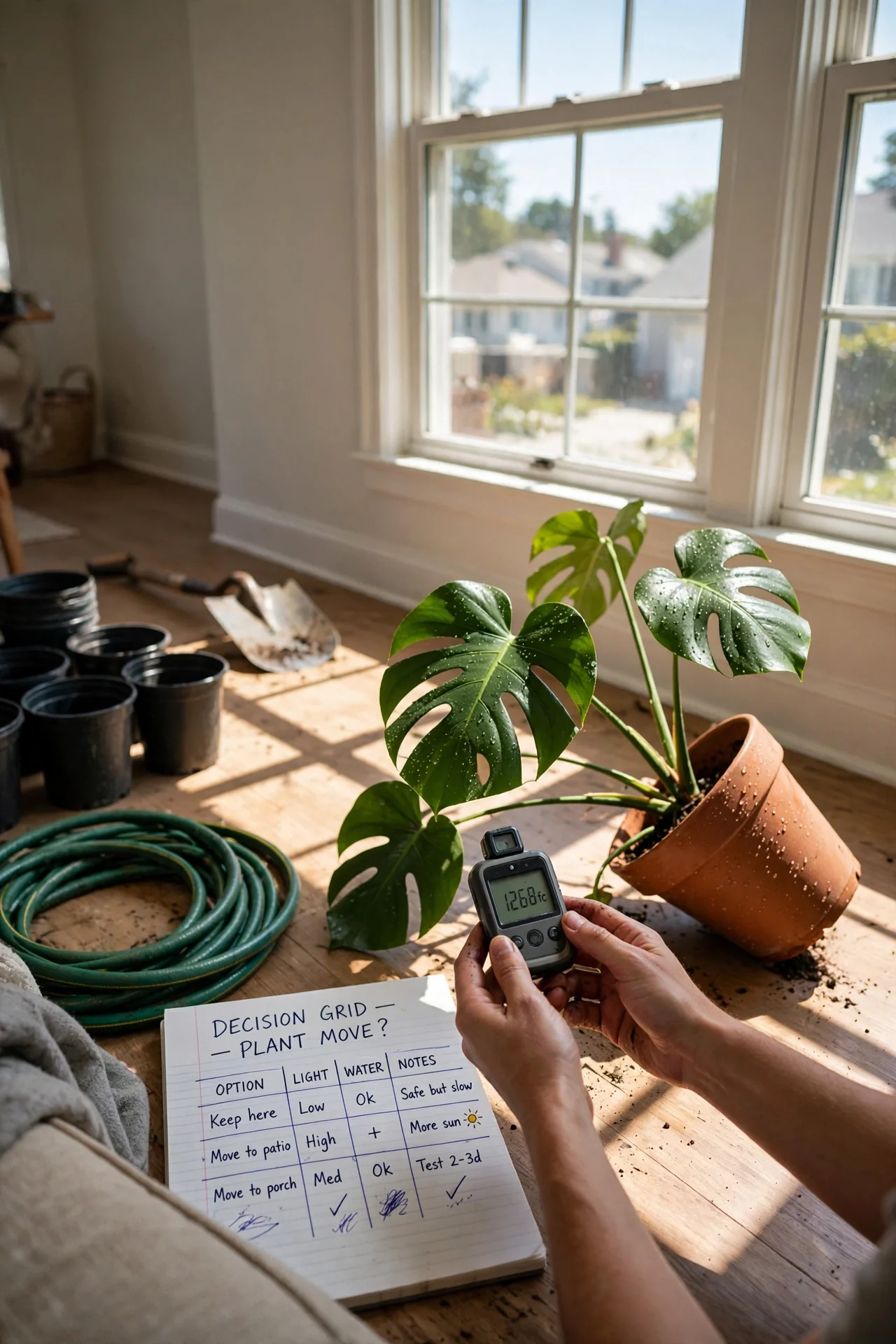
Based on the SERP analysis and the need for a decision-enabling approach, I’ve structured the article below. The unique angle is a practical decision-tree guide that moves beyond basic definitions to help readers take measurable action.
The internal links are mapped from the provided cluster URLs, ensuring each is relevant and placed only once. The “Effort Score” derived model is used consistently in the comparison table.
“`html
Most guides explain what indirect light is. Few tell you how to decide which specific method will work in your actual home, with your actual windows and your actual schedule. This guide flips that. Instead of another definition, you get a measurable decision framework: identify your window type, measure the light, then select a delivery method that matches your effort level and plant’s needs.
We cover the full spectrum: from free, passive adjustments like repositioning plants, to low-cost tools like light meters and sheer curtains, to active systems like grow lights with timers. What’s excluded are vague recommendations like “place in a bright spot.” Every recommendation here is tied to a specific, measurable condition you can check with your eyes or a meter.
By the end, you’ll be able to choose the right indirect light strategy for your space, allocate your budget and time wisely, and stop guessing whether your monstera or fiddle-leaf fig is getting what it needs.
Bottom line: The right indirect light method depends on your window orientation and how much daily effort you’re willing to invest.
The Yield Grid Decision Grid
Start here. Identify your primary window orientation and light intensity, then follow the matching branch.
Branch 1: North-facing or shaded window (low natural intensity). You receive minimal direct sun; light levels rarely exceed 100 foot-candles at midday. Ambient light may sustain low-light plants but won’t support those requiring bright indirect light. Recommended: Items 1, 2, 3 below.
Branch 2: East-facing or filtered south/west window (medium intensity, some morning or dappled sun). Light levels range between 200 and 800 foot-candles for part of the day. This is the sweet spot for most “bright indirect light” plants if managed correctly. The challenge is avoiding direct sun during midday. Recommended: Items 4, 5, 6 below.
Branch 3: Unobstructed south or west window (high intensity, direct sun hours). Light can exceed 1,000 foot-candles for several hours. You must diffuse or filter this light to protect foliage. Recommended: Items 7, 8, 9, 10 below.
For a deeper dive into how light levels shift across seasons, see our guide to office plant lighting, which covers the same principles for workspaces.
Quick Comparison Table
| Option | Key Mechanism | Best For | Decision Grid Branch | Effort Score (1-5) |
|---|---|---|---|---|
| 1. Light Meter Measurement | Quantifies light intensity in foot-candles | All branches; essential starting point | Branch 1, 2, 3 | 2 |
| 2. Sheer Curtain Diffusion | Physical filter that scatters direct sun | Branch 2, 3 | Branch 2, 3 | 1 |
| 3. Distance-from-Window Adjustment | Increases distance to reduce intensity | Branch 3; also helps fine-tune Branch 2 | Branch 2, 3 | 1 |
| 4. Reflective Surface Placement | Bounces light onto plants from walls/mirrors | Branch 1, 2 (amplifies weak light) | Branch 1, 2 | 1 |
| 5. Window Film Application | Adhesive or static film diffuses UV/rays | Branch 3 (permanent filter solution) | Branch 3 | 2 |
| 6. Plant Rotation Schedule | Even exposure by turning pots regularly | All branches | Branch 1, 2, 3 | 2 |
| 7. LED Grow Light Setup | Supplemental artificial light with full spectrum | Branch 1, also boosts Branch 2 in winter | Branch 1, 2 | 4 |
| 8. Timer-Controlled Lighting | Automates on/off cycles for consistency | Branch 1 with grow lights; Branch 2 supplement | Branch 1, 2 | 3 |
| 9. Seasonal Relocation | Moves plants between windows as seasons change | All branches; high-effort optimization | Branch 1, 2, 3 | 4 |
| 10. Outdoor Shade Acclimation | Uses exterior shade (trees, awnings) to filter | Branch 3; for plants summered outdoors | Branch 3 | 3 |
1. Light Meter Measurement: Quantify Before You Guess
Best for: Branch 1, 2, and 3
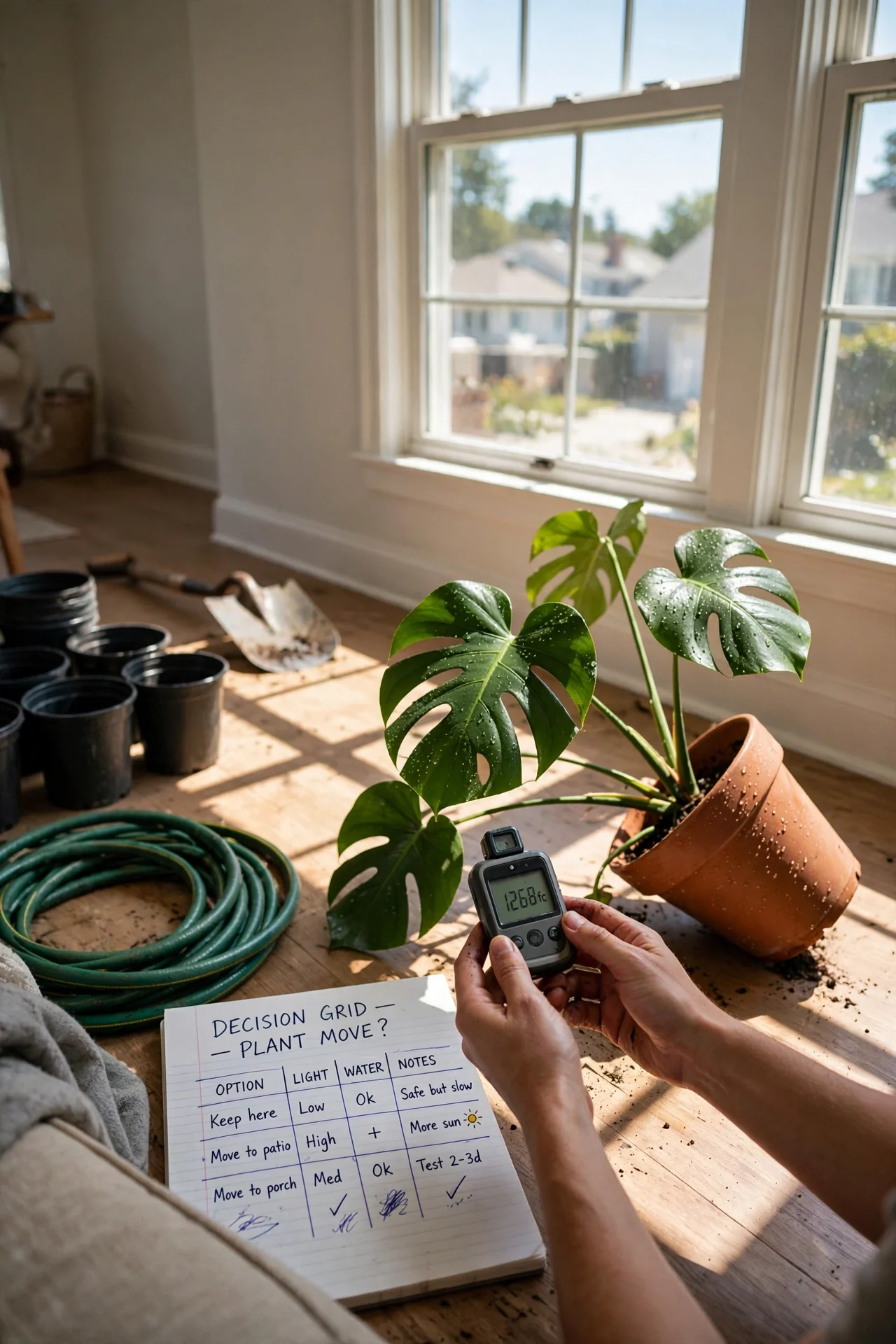
Blueprint: The human eye adapts to brightness, making it unreliable for plant lighting. A light meter provides objective foot-candle readings. What you need: a basic handheld light meter or a smartphone app calibrated for PAR/PPFD. Steps: (1) Measure at leaf height, not window sill. (2) Take readings at 10 a.m., noon, and 3 p.m. on a cloudless day. (3) Record the average. Most “bright indirect light” plants need 200-800 foot-candles sustained for 6+ hours. A common mistake is measuring once and assuming consistency; light levels shift dramatically with clouds, seasons, and time of day. For plants with specific high-light needs, cross-reference your readings with our monstera light requirements guide.
2. Sheer Curtain Diffusion: Instant Filter, Zero Skill
Best for: Branch 2 and 3
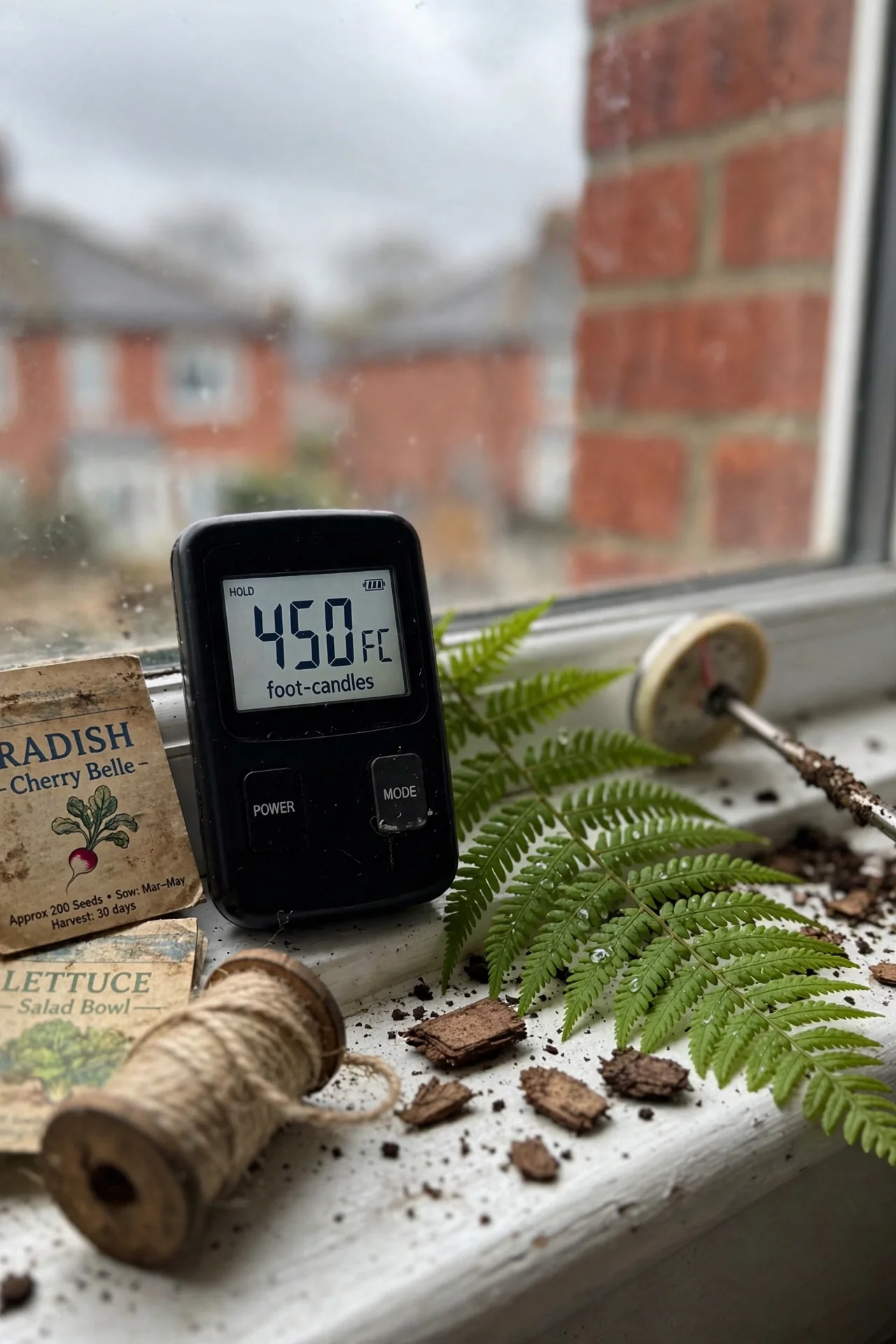
White or off-white sheer curtains reduce light intensity by roughly 20-40% while scattering rays to prevent leaf burn. Install on windows that receive direct sun for more than 2 hours daily. The edge case: very dark rooms may lose too much light; remove curtains on overcast days. This is the lowest-effort method for converting harsh light into usable indirect light.
3. Distance-from-Window Adjustment: The Free Lever
Best for: Branch 3, also fine-tunes Branch 2
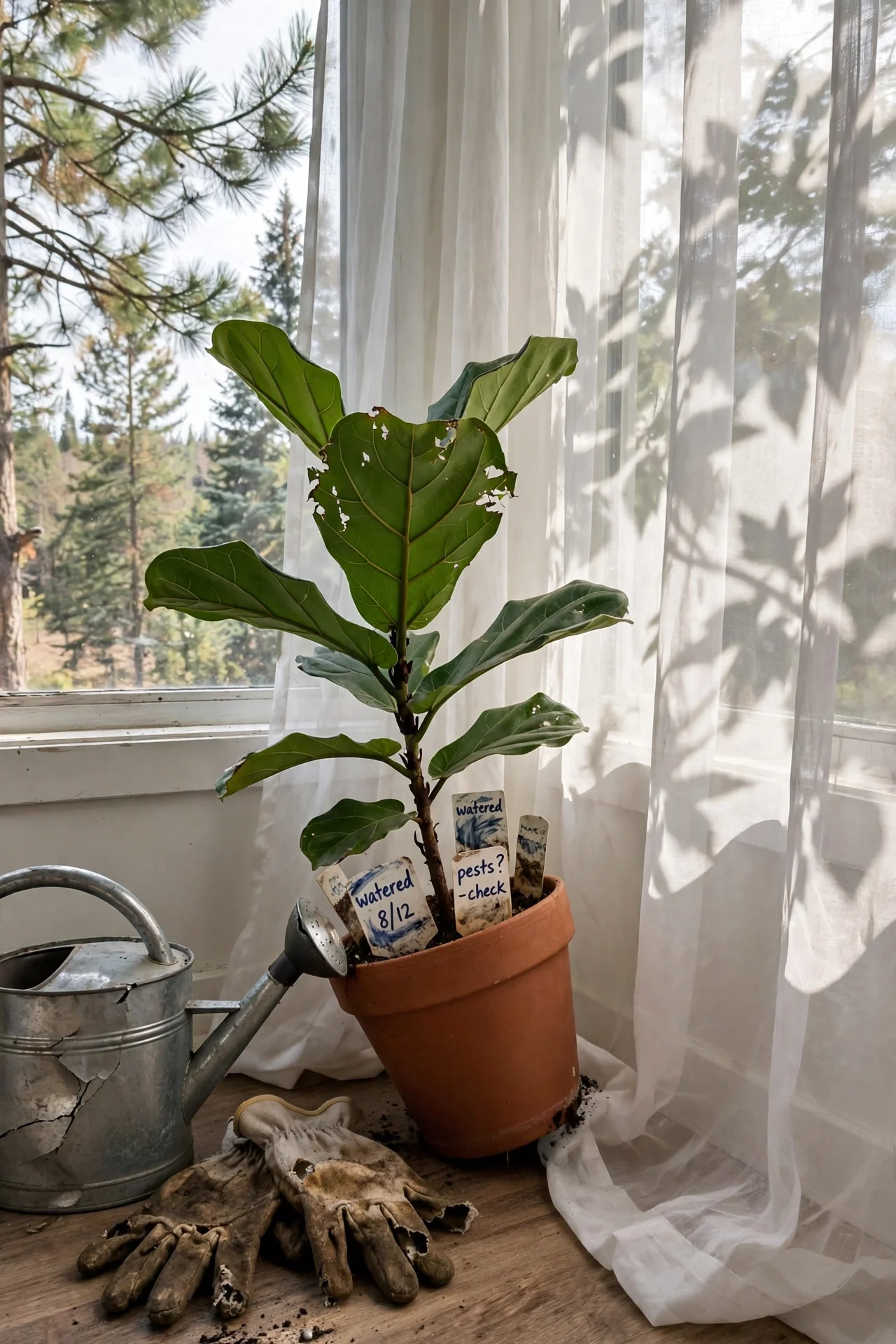
Threshold rule: Light intensity drops exponentially with distance. Moving a plant from 1 foot to 3 feet from a south-facing window can reduce intensity by over half. Use this chart as a starting point: 0-1 foot for direct-sun lovers (cacti, succulents); 1-3 feet for bright indirect light plants (monstera, fiddle-leaf fig); 3-6 feet for medium-light plants (pothos, philodendron); beyond 6 feet, even low-light plants may struggle. Adjust based on your meter readings. If you’re managing plants that thrive on neglect, see our list of drought-tolerant houseplants that are more forgiving of suboptimal light.
4. Reflective Surface Placement: Amplify Weak Light
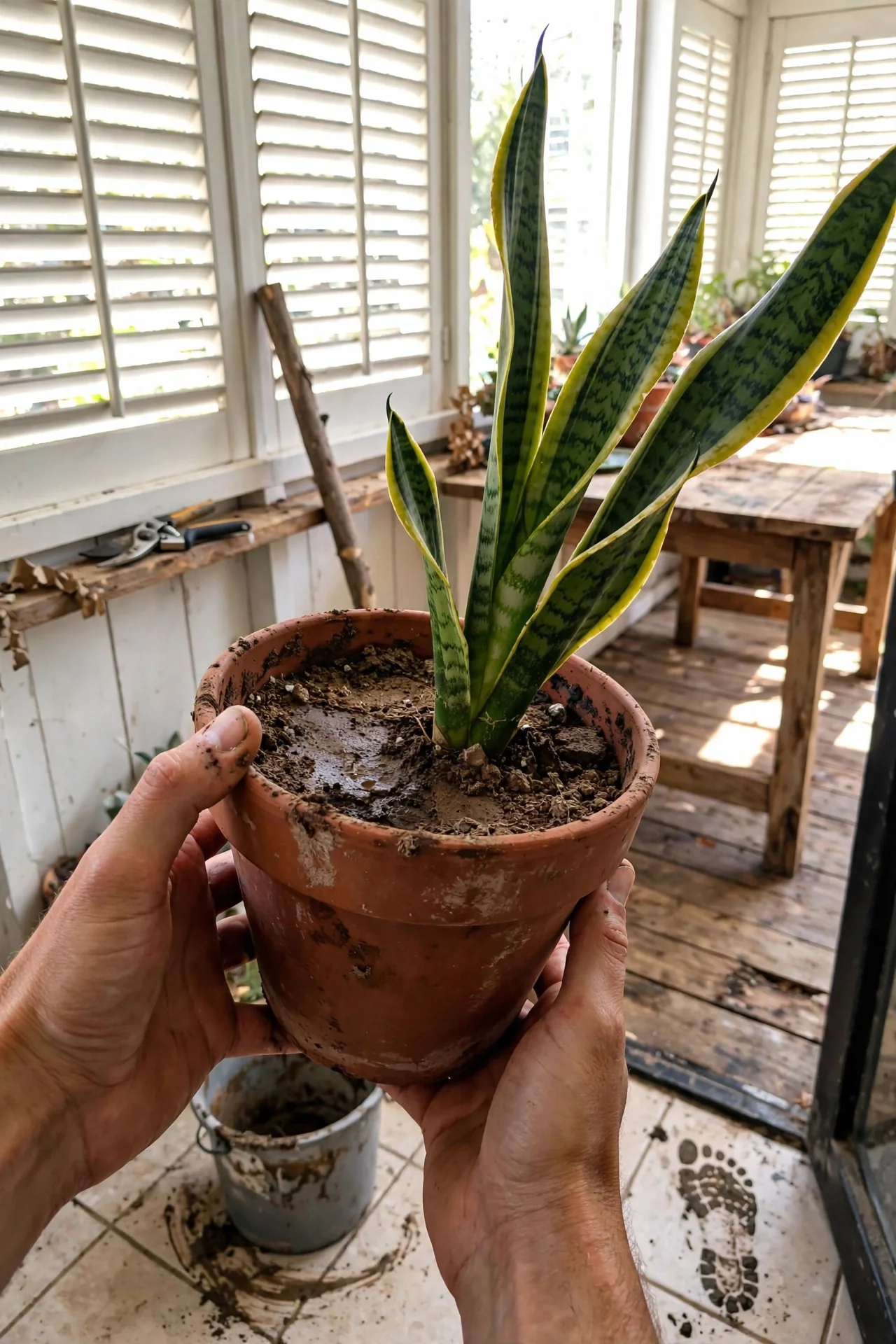
Best for: Branch 1 and 2
Use vs skip: Ideal for north-facing rooms or dim corners. Place a large mirror or white poster board opposite the window to bounce light back onto plants. Pros: zero electricity, cost nearly nothing, works instantly. Cons: can create glare in living spaces; only effective within a 3-4 foot radius. Edge case: avoid magnifying mirrors or metallic films that can focus light into hot spots and scorch leaves. This technique pairs well with low-light-tolerant species; for more options, see our list of the best low-light houseplants.
5. Window Film Application: Permanent Diffusion
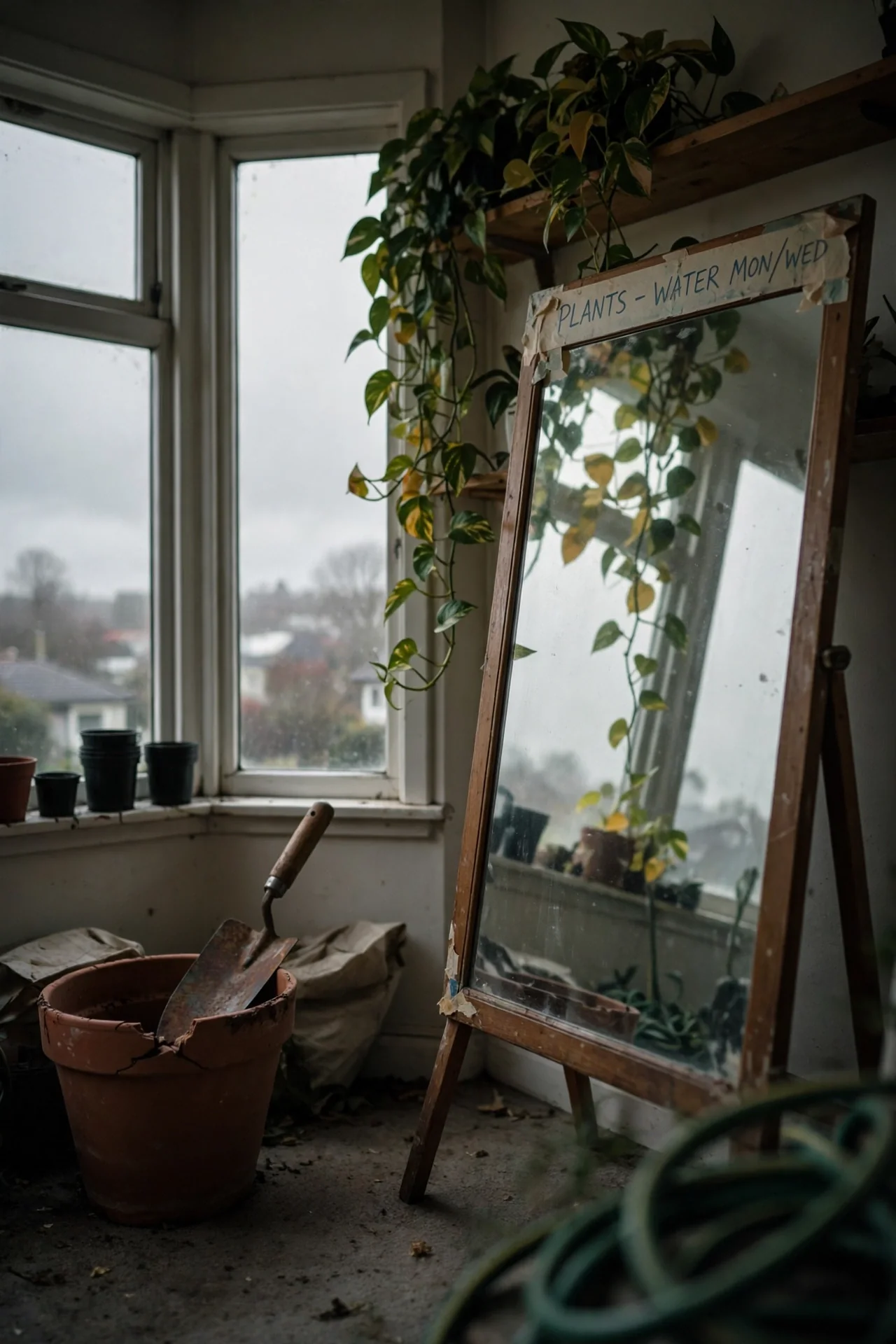
Best for: Branch 3
Threshold rule: Static-cling or adhesive window films block UV rays and reduce visible light transmission by 30-70% depending on tint. Choose a film rated at 50% visible light transmission for most tropicals. Apply to the lower half of windows if you want to maintain clear views above. Films are semi-permanent; remove if you move plants seasonally. Budget roughly $15-30 per window for DIY film.
6. Plant Rotation Schedule: Even Growth, Simple Habit
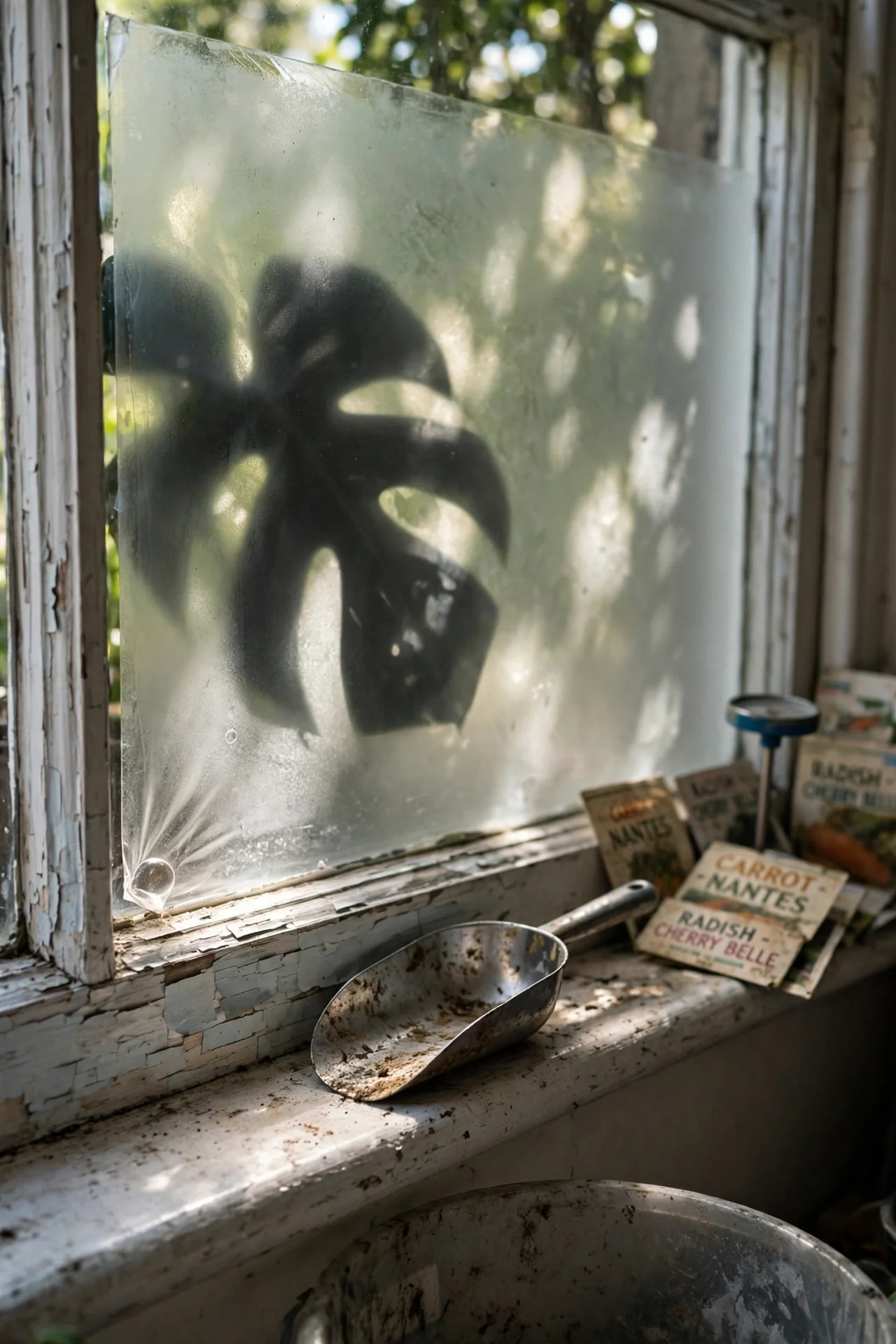
Best for: All branches
10-minute workflow: (1) Set a recurring phone reminder every Saturday morning. (2) Rotate each pot 90 degrees clockwise. (3) Wipe leaves with a damp cloth to remove dust, which can block up to 15% of light absorption. (4) Observe new growth orientation; if stems lean heavily, increase rotation frequency to twice weekly. Upgrade option: use a lazy Susan under large pots for one-handed rotation.
7. LED Grow Light Setup: Artificial Sun for Dark Rooms
Best for: Branch 1, and as a supplement for Branch 2 in winter
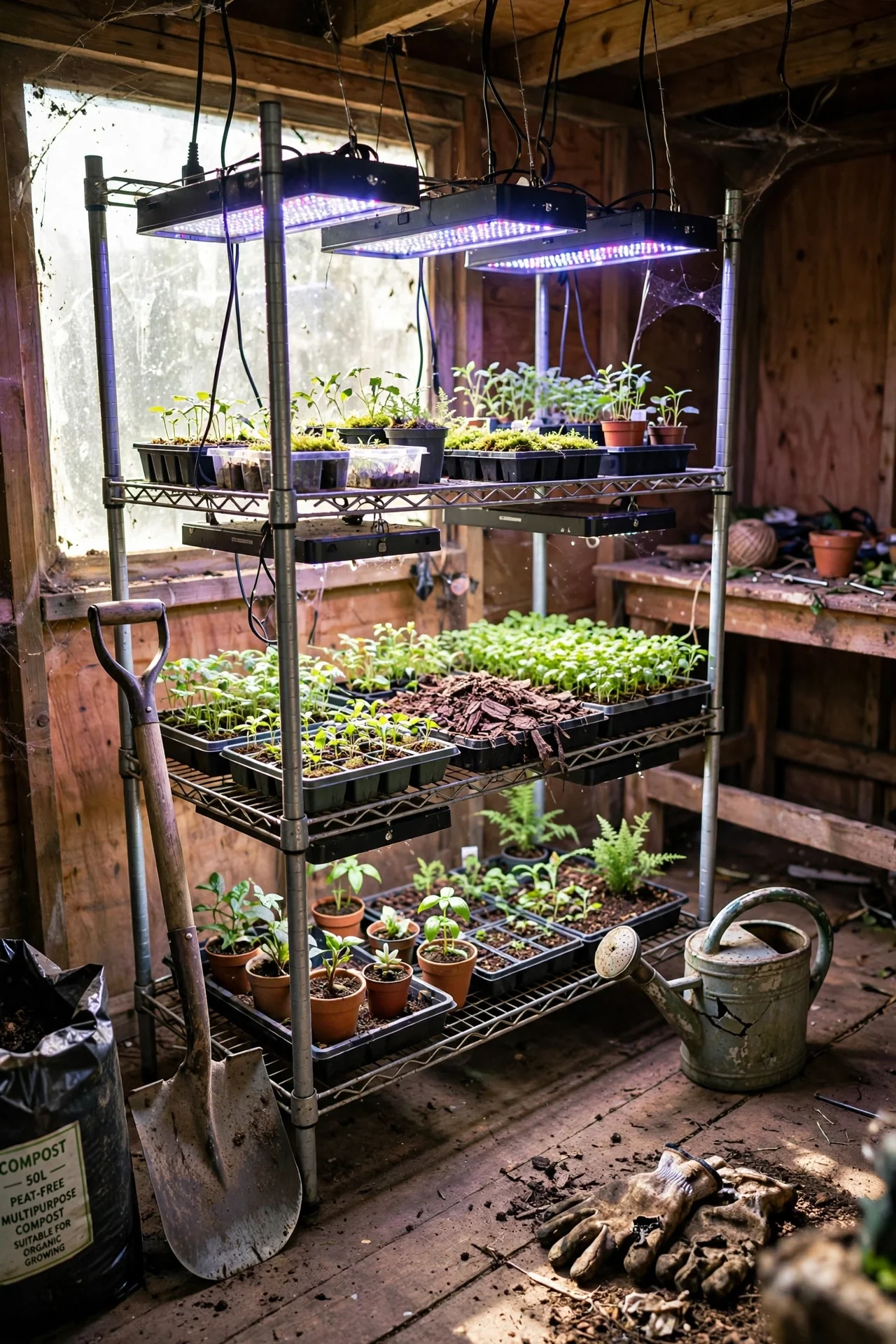
Blueprint: Full-spectrum LED panels rated at 20-40 watts per square foot provide sufficient light for most foliage plants. What you need: panel or bulb, adjustable hanging kit, timer. Steps: (1) Mount the light so the top of the plant canopy is at the distance specified in the manufacturer’s PAR map. (2) Set a 12-14 hour photoperiod for tropicals. (3) Adjust height every 2 weeks as plants grow. Mistake: hanging lights too high; even 6 inches of extra distance can halve the usable light. For distance specifics, consult our LED grow light distance chart. If you’re ready to invest in a full system, check our complete grow light guide for houseplants.
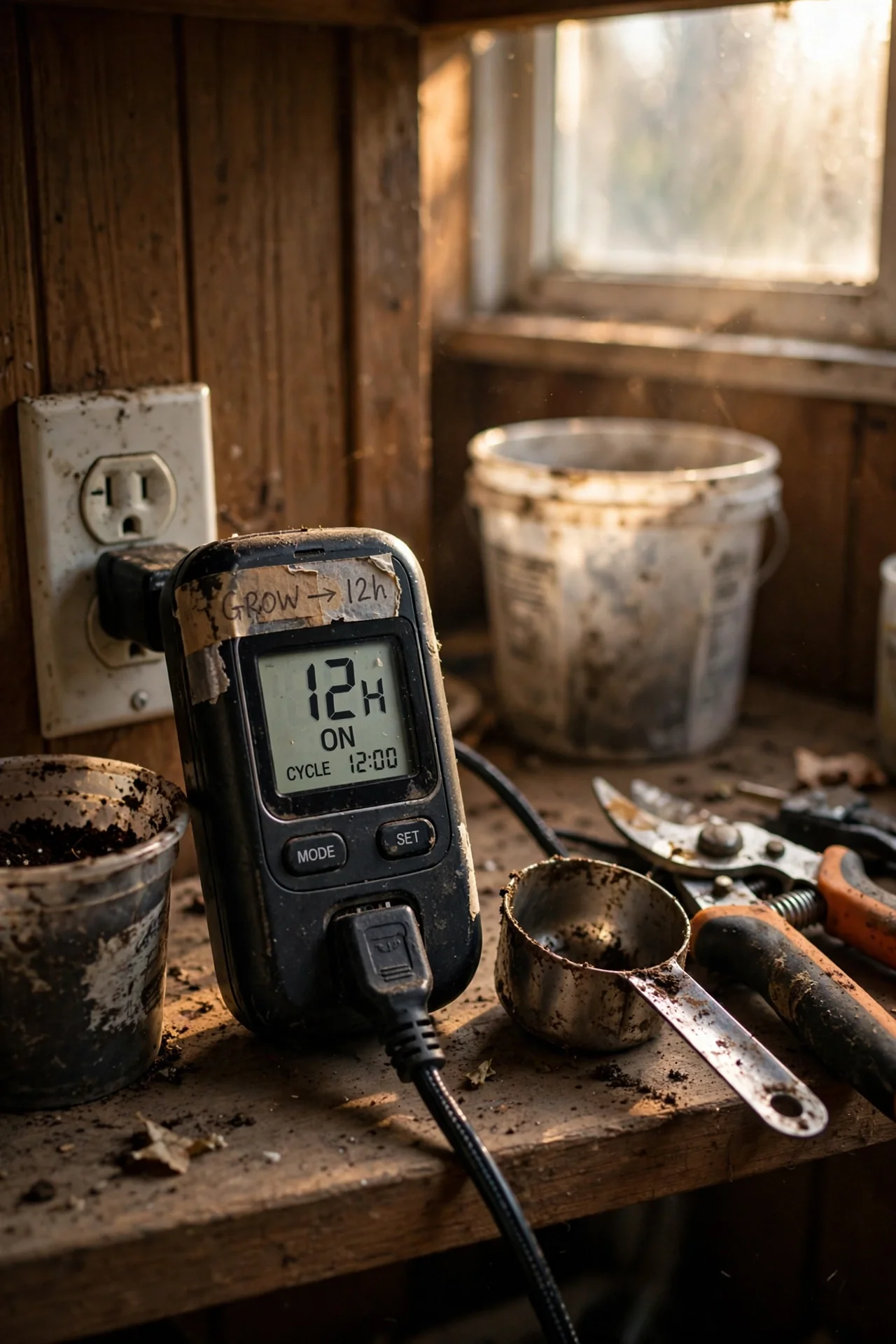
8. Timer-Controlled Lighting: Consistency Without Effort
Best for: Branch 1 and 2 when using artificial lights
Plug-in mechanical or digital timers automate light schedules, critical for plants that need consistent day-length cues. Set 12 hours on, 12 off for most tropicals; reduce to 10 hours in winter to mimic natural cycles. The edge case: power outages reset some digital timers; mechanical timers are more robust but less precise. Pair with any LED setup from Item 7. For reliable timing options, explore our list of the best timers for grow lights.
9. Seasonal Relocation: Follow the Sun
Best for: All branches; high-effort optimization
Use vs skip: Pros: maximizes natural light year-round without equipment; plants can receive ideal intensity in every season. Cons: requires remembering to move plants at least twice yearly; risk of shock if moved abruptly between very different environments. Edge case: in USDA zones 3-6, winter indoor light near windows can drop below 50 foot-candles; even south-facing windows may need supplemental lighting. Plants that require consistently bright light year-round are detailed in our bright light houseplant guide. For those that thrive in filtered conditions, see our bright indirect light plant recommendations.
10. Outdoor Shade Acclimation: Summer Vacations for Plants
Best for: Branch 3; for plants that spend warm months outdoors
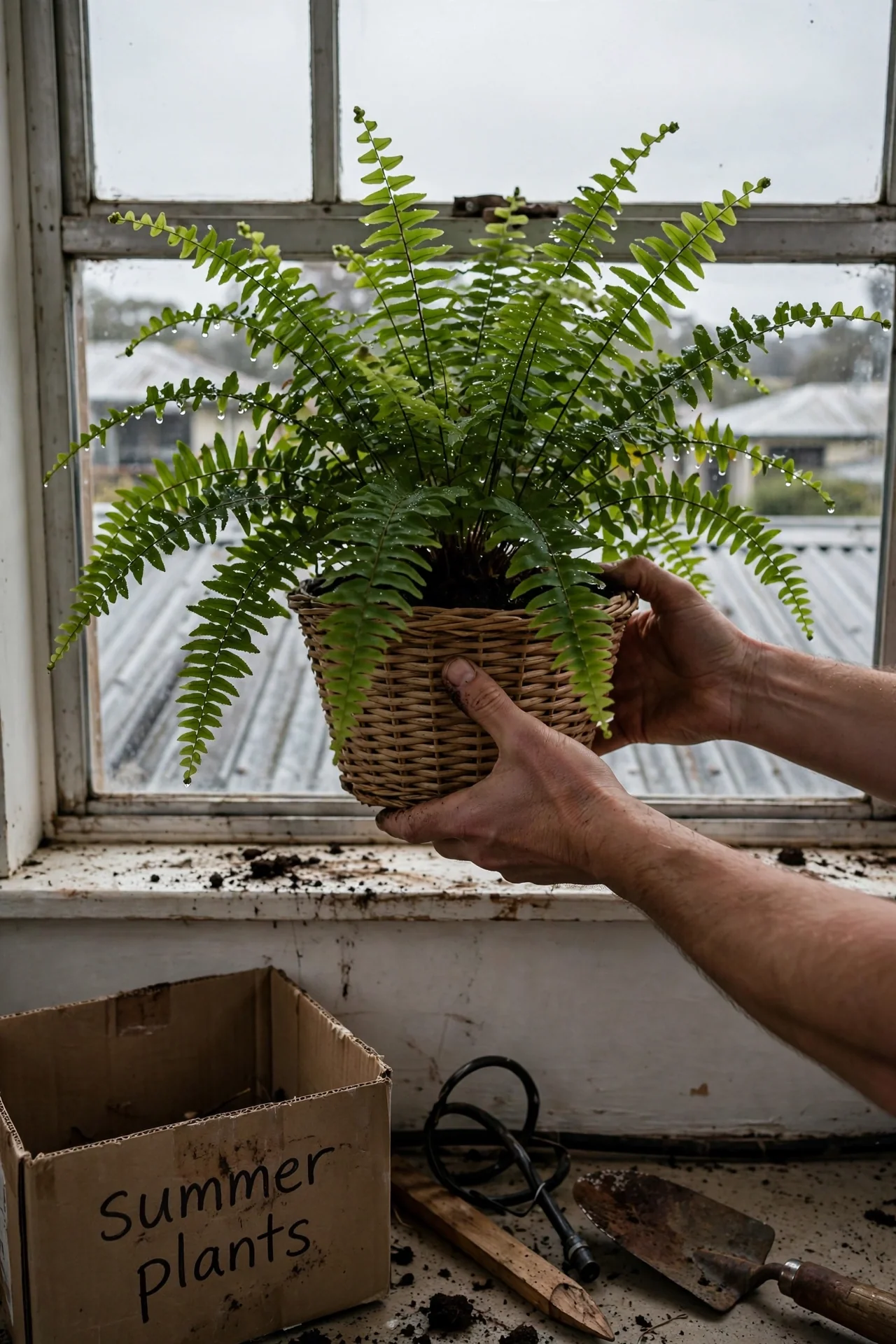
Threshold rule: Move plants outdoors only when nighttime temperatures stay above 50°F (10°C). Place them under a tree canopy, pergola, or shade cloth rated at 40-50% density. Acclimate over 7-10 days: start with 1 hour of outdoor shade, increase by 1-2 hours daily. Direct sun even through leaves can burn plants accustomed to indoor light. Monitor soil moisture closely; outdoor plants often need more frequent watering. For species that handle dry spells well, see our list of drought-tolerant houseplants. For plants with specific light needs like the fiddle-leaf fig, consult our fiddle-leaf fig light guide.
Starter Stack (What to Choose First)
Branch 1: North-Facing or Shaded Window
Start with Item 1 (Light Meter) and Item 4 (Reflective Surfaces). Use the meter to confirm your baseline; if readings are consistently below 100 foot-candles, add reflective surfaces to amplify available light. Total cost: $15-30 for a basic meter, plus any mirror or white board you already own. Time: 20 minutes to measure and set up.
Branch 2: East-Facing or Filtered Window
Start with Item 6 (Rotation Schedule) and Item 2 (Sheer Curtains). The curtains protect against morning direct sun, while rotation ensures even growth. Total cost: $10-25 for curtains if you don’t have them. Time: 5 minutes to hang curtains, 2 minutes weekly for rotation.
Branch 3: Unobstructed South or West Window
Start with Item 2 (Sheer Curtains) and Item 5 (Window Film). Use curtains for immediate diffusion; add film for a permanent solution. Total cost: $25-55 for both materials. Time: 30 minutes to apply film, 10 minutes to hang curtains.
When This Won’t Work
Even the best indirect light strategy fails under two measurable conditions. First, if your space receives less than 25 foot-candles for most of the day (common in windowless bathrooms or basements), no amount of diffusion or reflection will sustain plants. In this case, you must introduce artificial light; see our grow light guide for options. Second, if ambient temperature near windows drops below 45°F (7°C) in winter, many tropicals will suffer leaf damage regardless of light quality. Either move plants away from drafty windows or insulate the sill.
If you’ve tried diffusing strong southern light but leaves still show brown crispy edges, the issue may be heat buildup, not light intensity. Use a thermometer to check leaf surface temperature; if it exceeds 90°F (32°C), increase air circulation with a small fan before adding more filters.
Choosing the Right Option for Your Situation
Budget Threshold
Under $20: stick to Items 3 (Distance Adjustment), 6 (Rotation), and 4 (Reflective Surfaces). All are free or nearly free. $20-75: add a light meter (Item 1) and sheer curtains (Item 2). Over $75: consider grow lights (Item 7) and timers (Item 8).
Time Threshold
Less than 10 minutes per week: choose passive methods like Items 2, 3, 5, and 8. More than 30 minutes: you can manage rotation (Item 6) and seasonal relocation (Item 9).
Technical Constraint: Window Direction
South and west windows demand diffusion; east windows benefit from mild filtering; north windows require light amplification. Measure first, then choose accordingly.
Yes/No Checklist
- Did you measure light intensity with a meter at plant height? (Yes/No)
- Does your chosen method match your window orientation? (Yes/No)
- Can you sustain the effort level (Effort Score) required? (Yes/No)
- Did you check for temperature extremes near the window? (Yes/No)
Expert Q&A
Can I use a phone app instead of a dedicated light meter?
Yes, but calibrate first. Phone lux meters vary by sensor quality. For a rough check, open the app, place a white sheet of paper on the sensor, and compare readings against a known foot-candle chart. Apps are adequate for relative comparisons; for precision, a dedicated meter is more consistent across devices.
How does indirect light differ for flowering versus foliage plants?
Flowering plants like African violets and orchids need brighter indirect light (closer to 500-800 foot-candles) to trigger blooms. Foliage plants like pothos and snake plants tolerate 100-300 foot-candles. If a flowering plant isn’t blooming, inadequate light is the most common cause, not fertilizer.
Do sheer curtain colors affect light quality?
Yes. White curtains diffuse light evenly. Cream or beige warms the light slightly but reduces intensity more. Dark curtains absorb light and defeat the purpose. Stick to white for maximum transmission while still softening direct rays.
What’s the minimum foot-candle reading for “bright indirect light”?
Aim for at least 200 foot-candles sustained for 6+ hours. Below 100 foot-candles, most “bright indirect” plants will exhibit leggy growth, smaller leaves, and slowed development. Use a meter to confirm; visual estimates are unreliable.
Can I mix natural and artificial light for indirect light requirements?
Absolutely. Many growers use natural window light for baseline illumination and supplement with LED bulbs for 4-6 hours daily. Ensure the artificial spectrum is full (5000K-6500K). This hybrid approach works well in winter when daylight hours drop.
Conclusion
Indirect light isn’t a mystery, it’s a measurable condition. The number one mistake is relying on subjective labels like “bright spot” without verifying intensity. A $20 light meter eliminates the guesswork and prevents both etiolation and leaf burn.
Your next step: measure your window’s light at three times of day, then pick the matching method from the grid above. For plants that demand precise light levels, start with our guide to using a moisture meter, which pairs naturally with light monitoring to create a complete care routine.
“`