
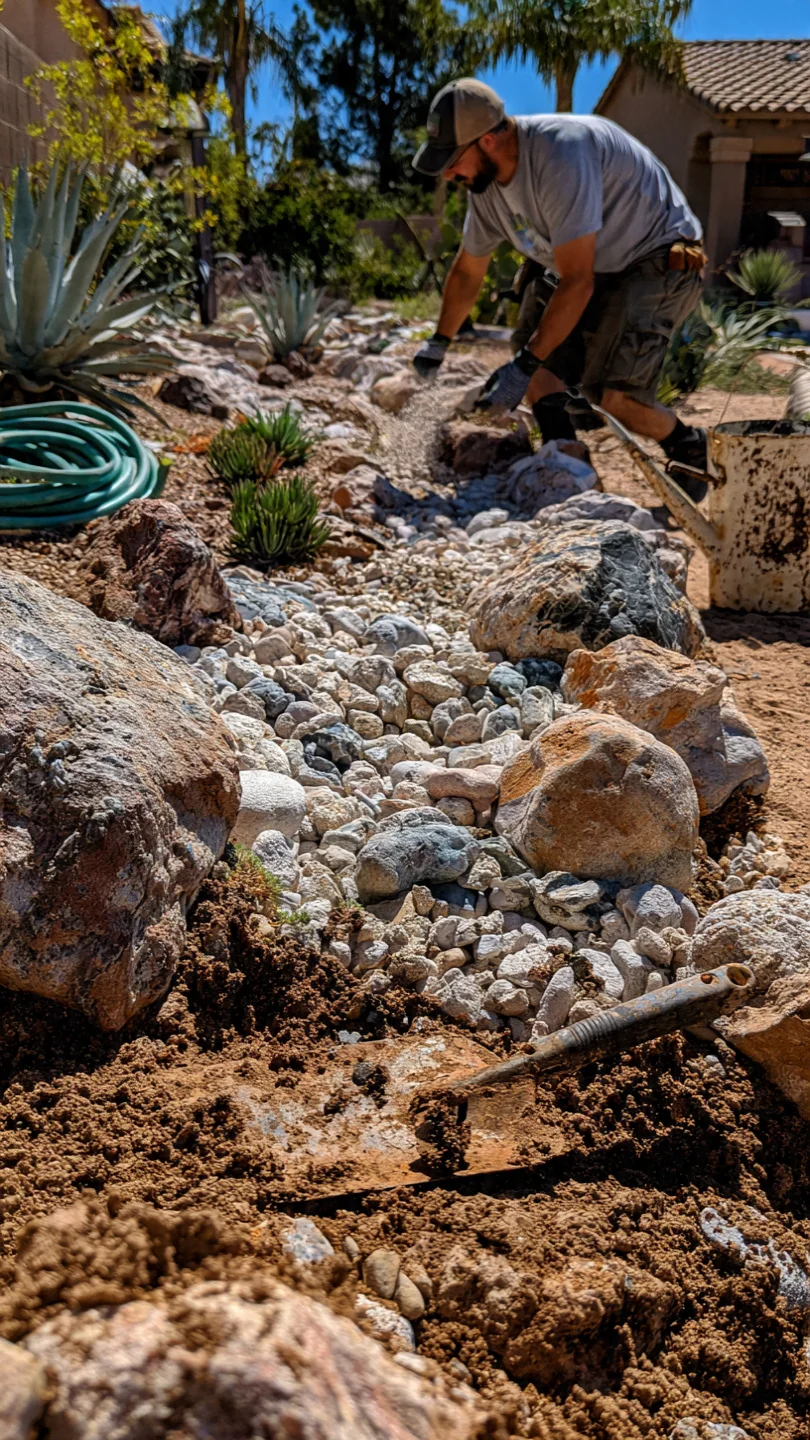
Standard desert garden advice repeats the same rock-and-cactus template regardless of yard specifics. The effective approach starts with two quick site measurements: soil drainage rate and daily sun hours. These data points let you select designs that harness existing conditions for layered ornamental effects instead of fighting them.
This list covers nine design layouts focused on ornamental impact in arid settings. It includes measurable thresholds for layout, spacing, and materials. It excludes full plant inventories, irrigation retrofits, or generic shopping lists.
After reading, you will match your yard’s measurements to the correct decision-grid branch and know exactly which three designs to implement first, along with their installation sequence and material depths.
Bottom line: Match your yard’s drainage rate and sun exposure to the right branch to create a desert garden that requires only annual adjustments.
The Yield Grid Decision Grid
Branch 1: Soil drains at 1 inch per hour or faster and receives 8 or more hours of direct sun daily. Recommended: Items 1, 4, and 7 below.
Branch 2: Soil drains slower than 0.5 inch per hour or receives 4 to 7 hours of direct sun daily. Recommended: Items 2, 5, and 8 below.
Branch 3: Site has a slope of 5 percent grade or steeper or hardscapes within 10 feet of the planting area. Recommended: Items 3, 6, and 9 below. Explore complementary xeriscape techniques here.
Quick Comparison Table
| Option | Key mechanism | Best for | Decision Grid Branch | Effort Score |
|---|---|---|---|---|
| Layered Boulder and Gravel Foundation Beds | 3-inch gravel base topped by 4- to 6-inch boulders set at 2-foot intervals | Fast-draining full-sun yards | Branch 1 | 1 |
| Sculptural Cactus and Agave Clusters | Single-species groupings spaced 3 times mature width | Moderate-drainage partial-sun yards | Branch 2 | 2 |
| Dry Creek Bed Pathways | 2-inch river rock channel edged with 12-inch boulders | Sloped sites or near hardscapes | Branch 3 | 1 |
| Sunken Succulent Courtyards | 18-inch recessed bed with 2-inch decomposed granite cap | Fast-draining full-sun yards | Branch 1 | 2 |
| Vertical Agave and Yucca Walls | Plants anchored in pockets spaced 18 inches apart vertically | Moderate-drainage partial-sun yards | Branch 2 | 3 |
| Tiered Slope Plant Pockets | Retaining rows of 8-inch boulders creating 2-foot-wide terraces | Sloped sites or near hardscapes | Branch 3 | 2 |
| Raised Planter Rock Edging | 12-inch stacked boulders forming 24-inch-wide raised beds | Fast-draining full-sun yards | Branch 1 | 1 |
| Minimalist Rock Mulch Islands | Isolated 4-foot-diameter circles of 3-inch gravel with central specimen | Moderate-drainage partial-sun yards | Branch 2 | 1 |
| Boulder-Integrated Windbreak Screens | Staggered 3- to 5-foot boulders placed 4 feet apart in linear rows | Sloped sites or near hardscapes | Branch 3 | 2 |
Layered Boulder and Gravel Foundation Beds
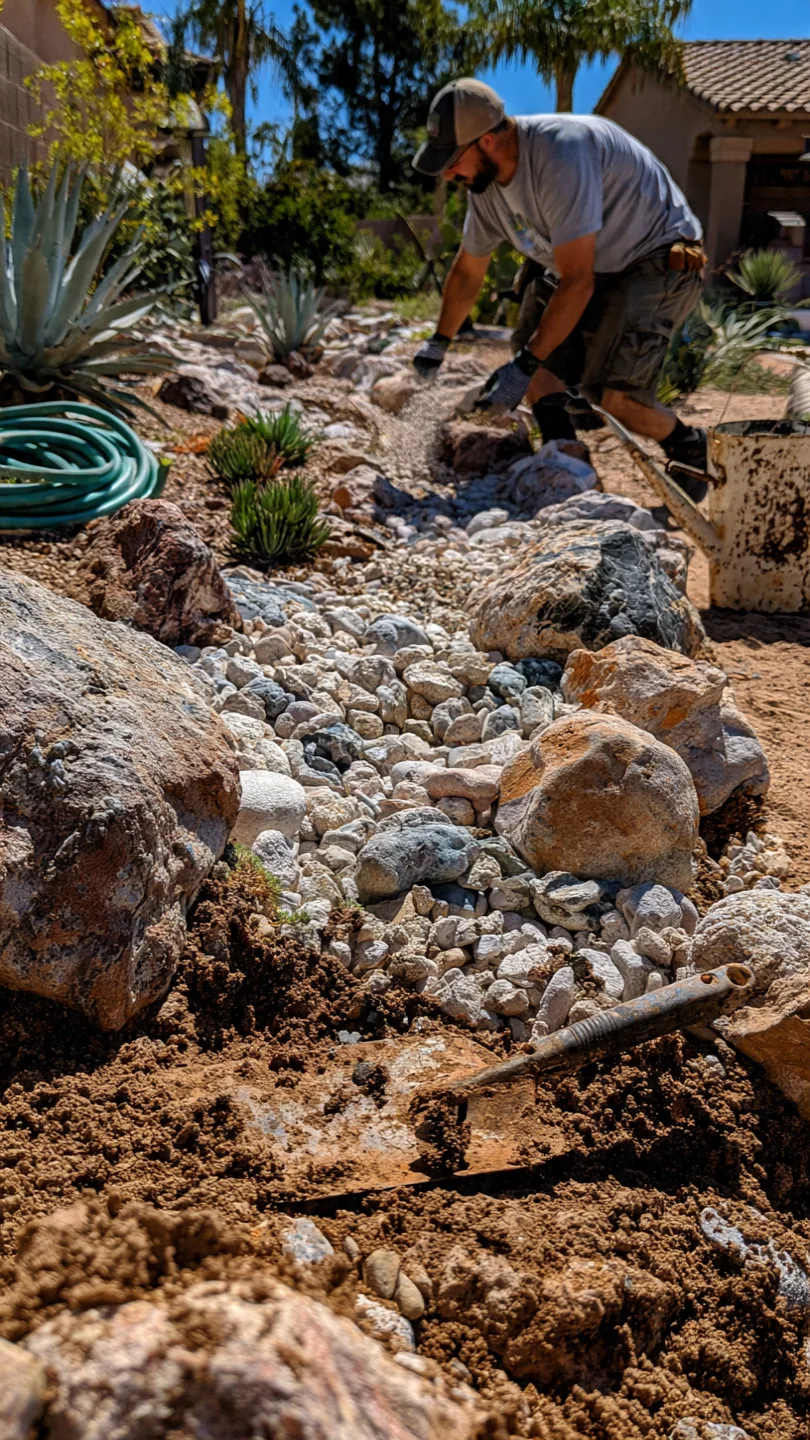
Best for: Branch 1
Blueprint
For fast-draining full-sun yards, start with a 10- by 20-foot rectangle measured from the house foundation. Remove existing turf or weeds to 4 inches deep. Spread 3 inches of 3/8-inch gravel as base, then position 4- to 6-inch boulders every 2 feet in a staggered pattern. Fill gaps with additional gravel to 2 inches below grade. Plant between boulders using 18-inch spacing for succulents or agaves. Finish by raking gravel flush. Common mistake: placing boulders closer than 18 inches, which blocks air flow and invites rot in summer heat. This layout integrates directly with rock garden ideas for larger expanses.
Sculptural Cactus and Agave Clusters
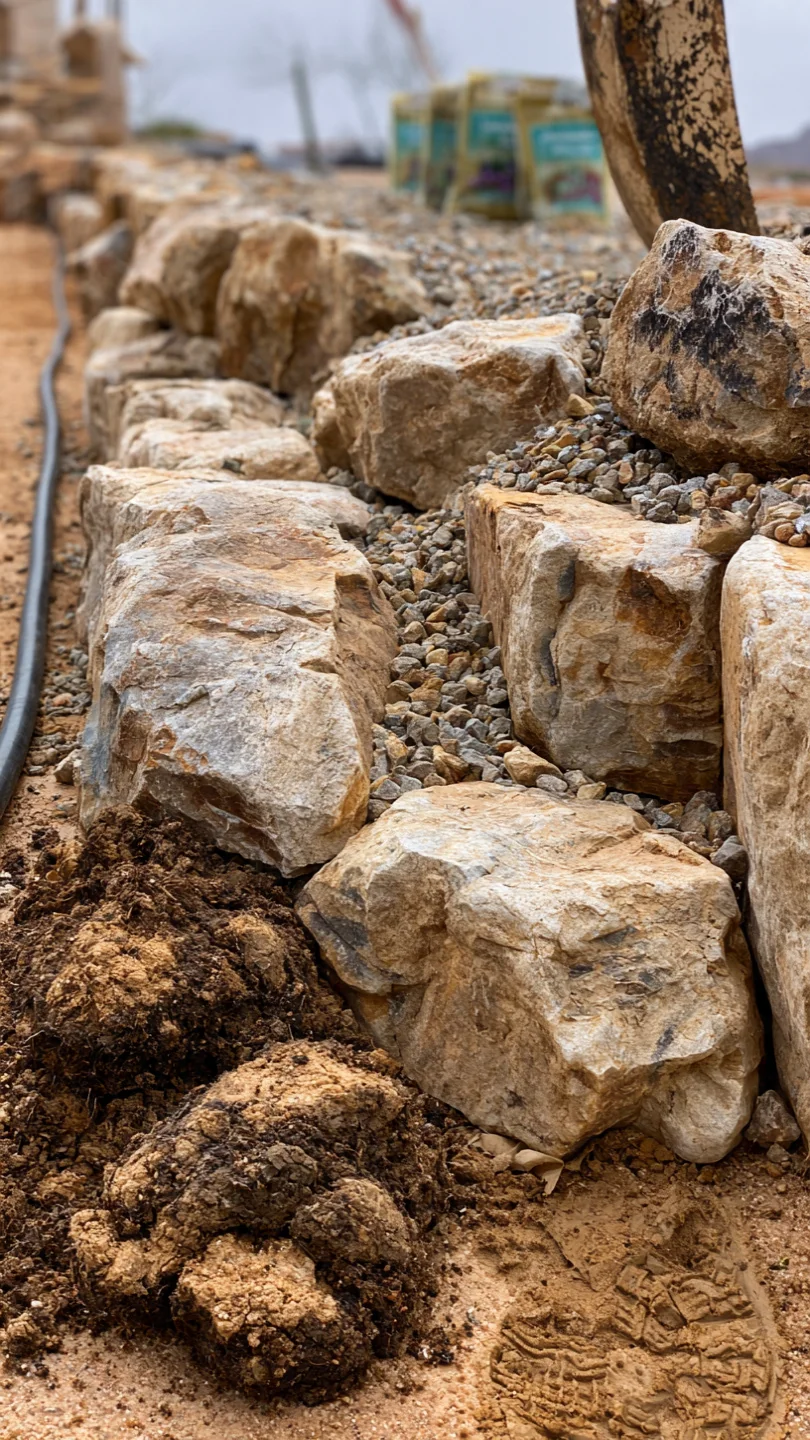
Best for: Branch 2
Use versus skip
Use these clusters when your yard has moderate drainage and receives 4 to 7 hours of sun: they create strong vertical accents without crowding. Skip if your site drains faster than 1 inch per hour, because the tight grouping then retains too much heat at soil level. Edge case: avoid planting within 3 feet of south-facing walls where reflected sun pushes surface temperatures above 120 degrees Fahrenheit in peak summer.
Dry Creek Bed Pathways
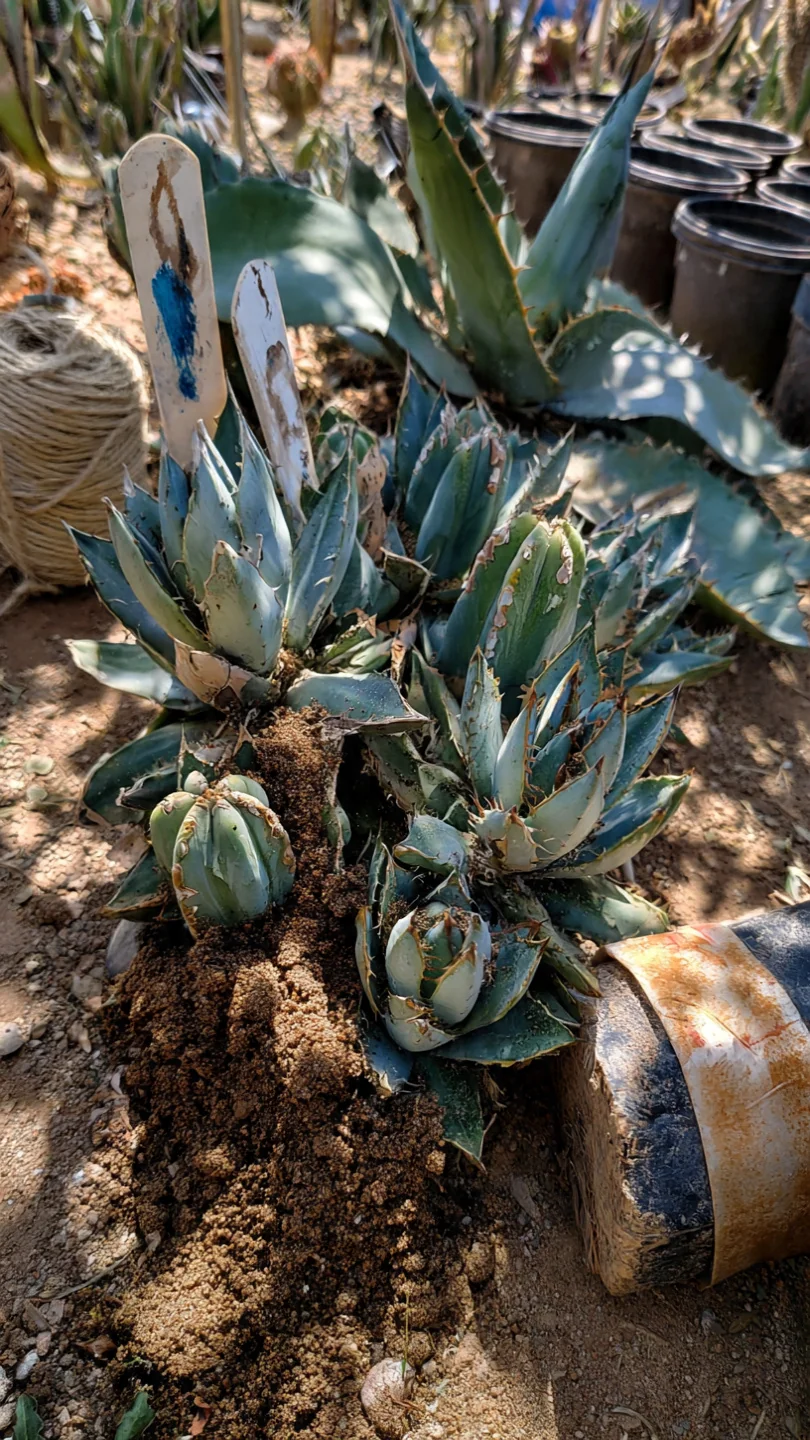
Best for: Branch 3
Threshold rule
Build only when slope exceeds 5 percent grade or hardscapes sit within 10 feet. Dig a 12-inch-deep channel 3 feet wide, line with landscape fabric, and fill with 2 inches of 3/4-inch river rock. Edge both sides with single rows of 12-inch boulders set 6 inches apart. The rule: maintain channel depth at least 1 inch deeper than surrounding grade to ensure water sheet flow. Adjust boulder spacing to 8 inches on slopes steeper than 10 percent to prevent washout. This approach extends naturally from gravel garden ideas.
Sunken Succulent Courtyards
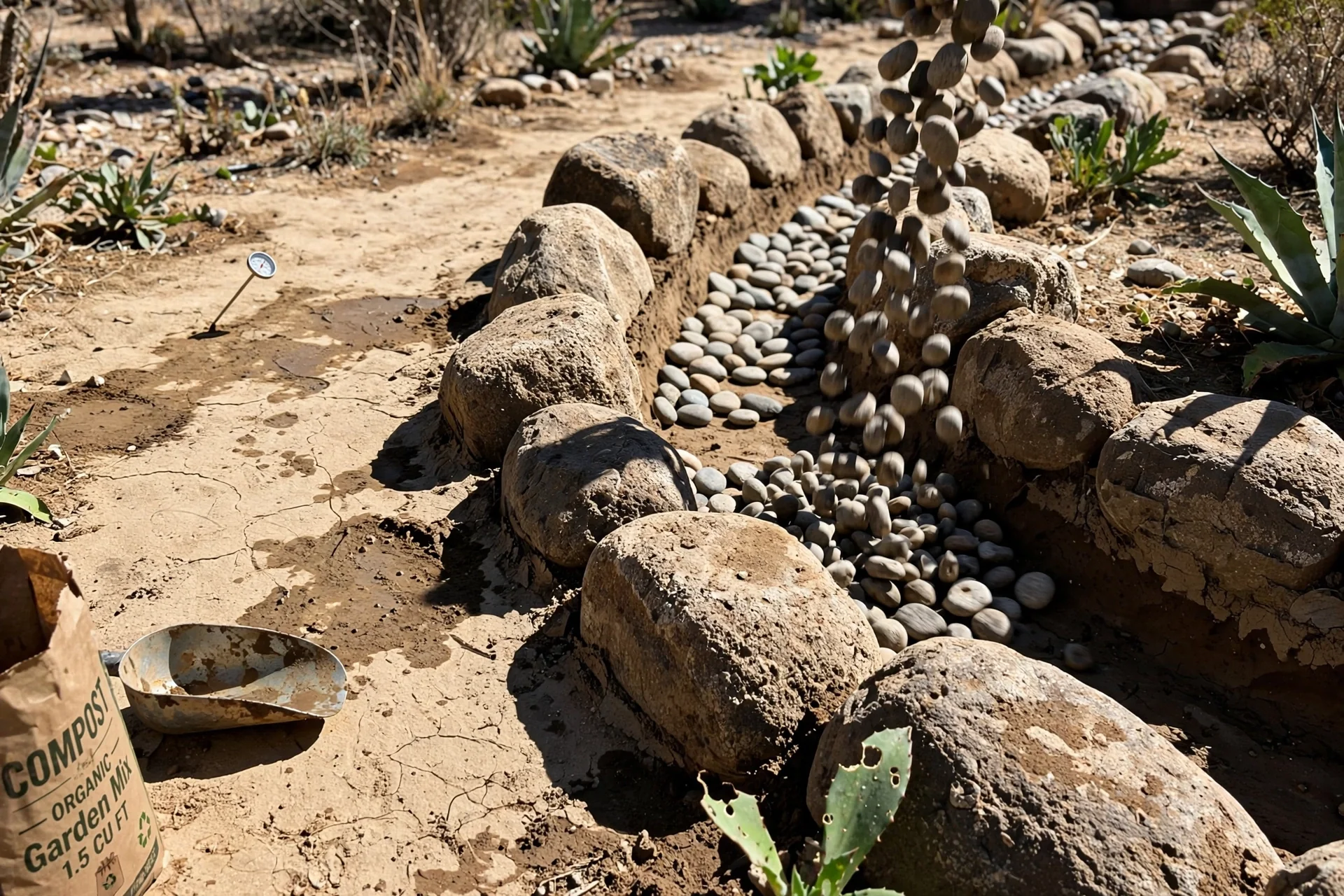
Best for: Branch 1
Blueprint
For fast-draining full-sun yards, excavate a 12- by 15-foot area to 18 inches deep, keeping the removed soil aside. Line the perimeter with 6-inch boulders set vertically to retain the depression. Backfill with native soil mixed 50:50 with coarse sand to 12 inches, then top with 2 inches of decomposed granite. Space succulents 24 inches apart in offset rows. Water once at planting, then rely on natural rainfall. This design pairs with low-maintenance garden ideas when you want a central gathering space.
Vertical Agave and Yucca Walls
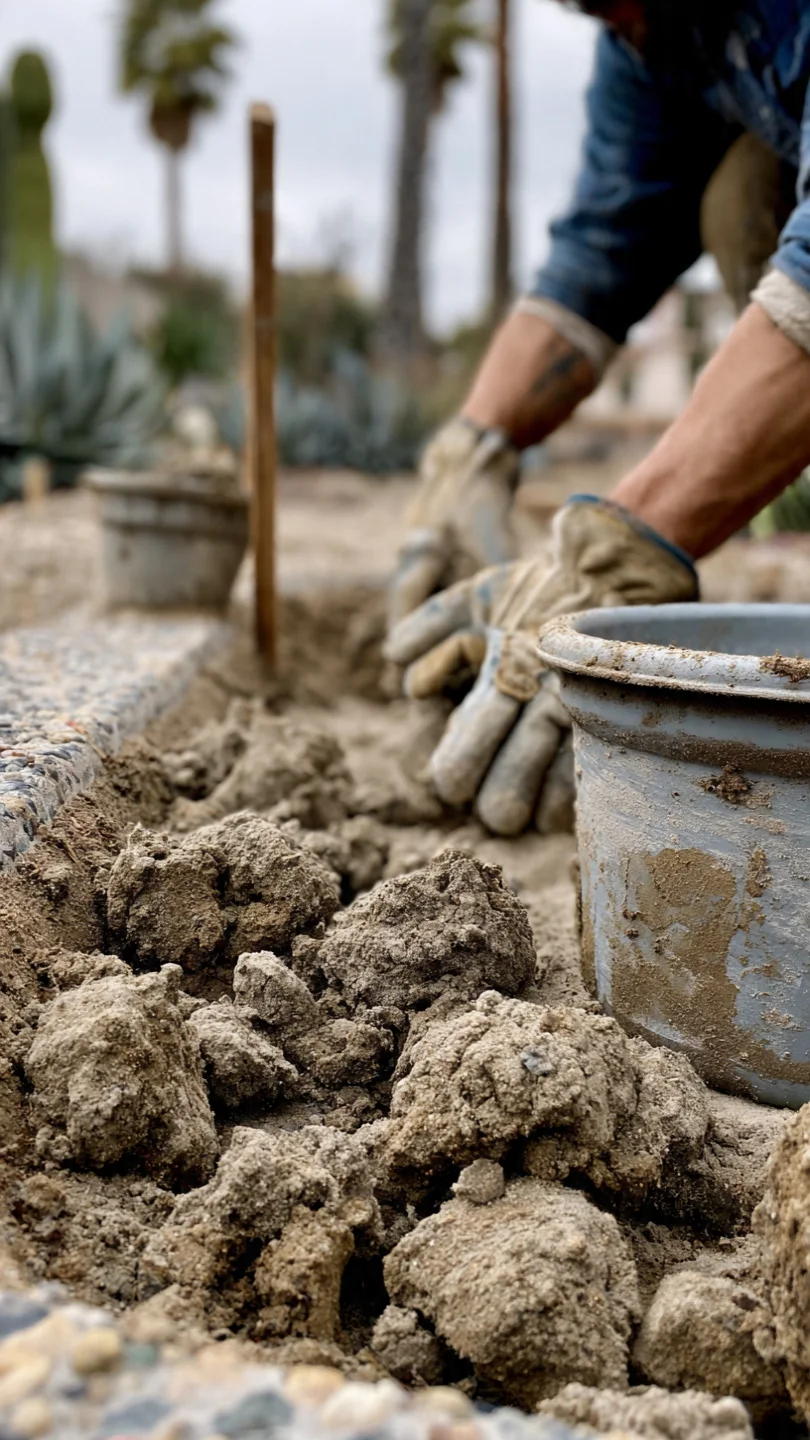
Best for: Branch 2
Use versus skip
Use these walls on moderate-drainage sites where space is limited to 3 feet wide: they deliver height without spreading footprint. Skip on slopes steeper than 8 percent, because soil pockets erode before roots establish. Edge case: install only after confirming soil pH stays between 6.5 and 8.0, because values below 6.0 cause iron deficiency visible as yellowing new growth within one season.
Tiered Slope Plant Pockets
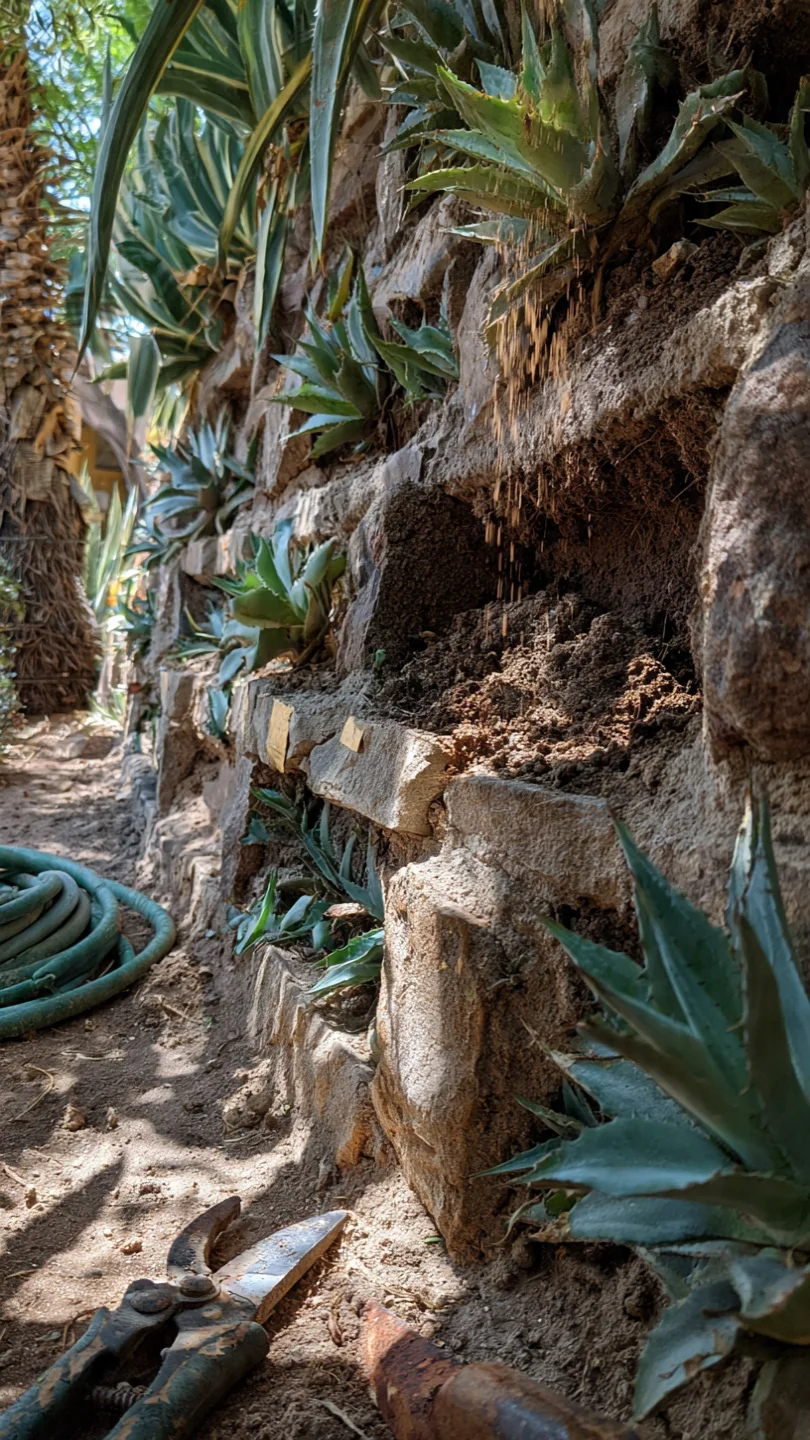
Best for: Branch 3
Threshold rule
Apply when slope reaches 5 percent grade or greater. Place 8-inch boulders in parallel rows 2 feet apart vertically, creating terraces 24 inches wide. Fill each terrace with native soil to 8 inches above the lower boulder line. Plant one specimen per pocket using 36-inch spacing. The rule: keep each terrace’s back edge 2 inches higher than the front to force water to pool briefly before draining. Re-check level after first heavy rain and adjust boulders if any terrace drops more than 1 inch.
Raised Planter Rock Edging
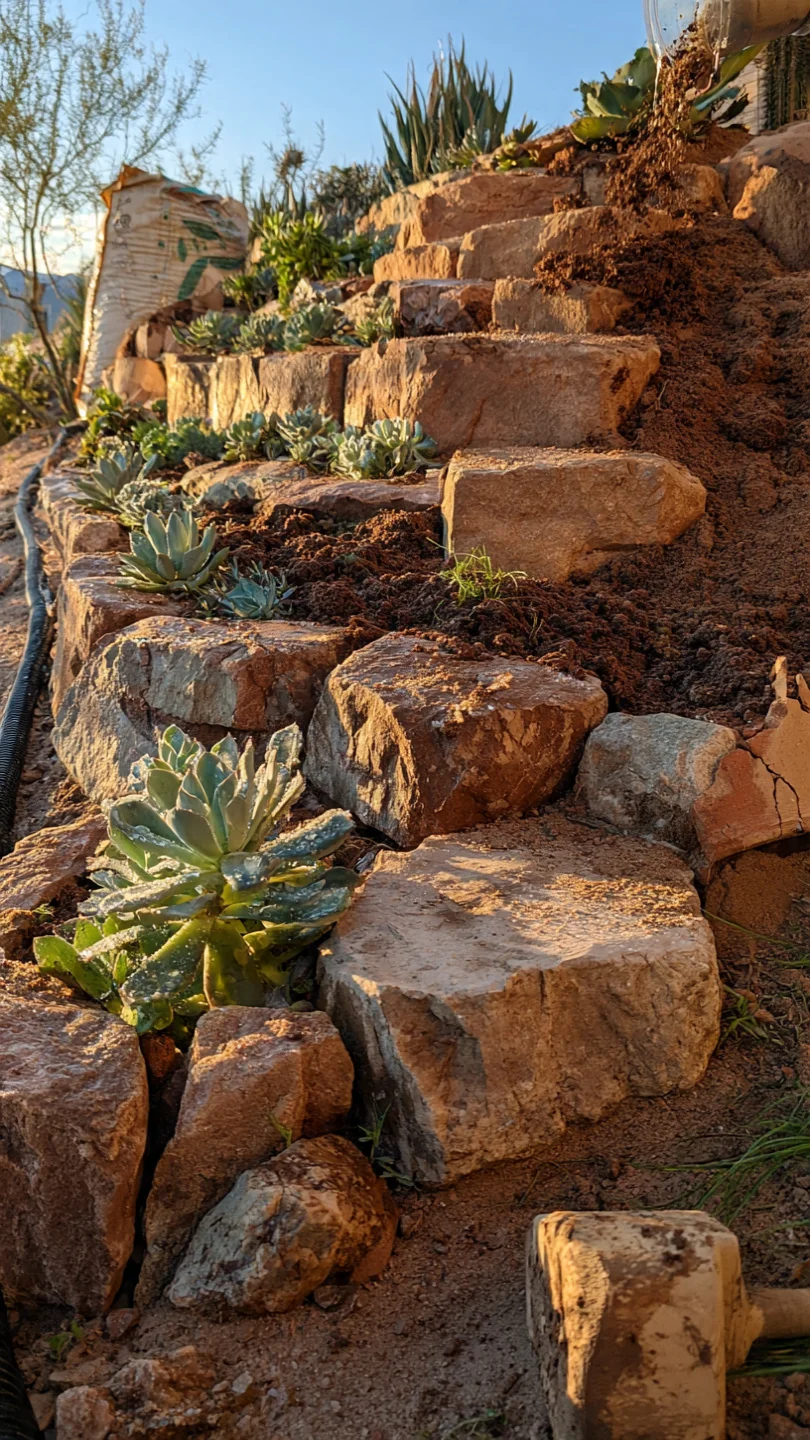
Best for: Branch 1
Blueprint
For fast-draining full-sun yards, mark 24-inch-wide rectangles 8 feet long. Stack 12-inch boulders two courses high along the perimeter, backfilling inside with amended native soil to 10 inches. Top-dress with 2 inches of gravel. Install plants at 18-inch centers. This edging creates instant definition and elevates root zones above reflected heat. Extend the concept with vertical garden ideas on adjacent walls for added layers.
Minimalist Rock Mulch Islands
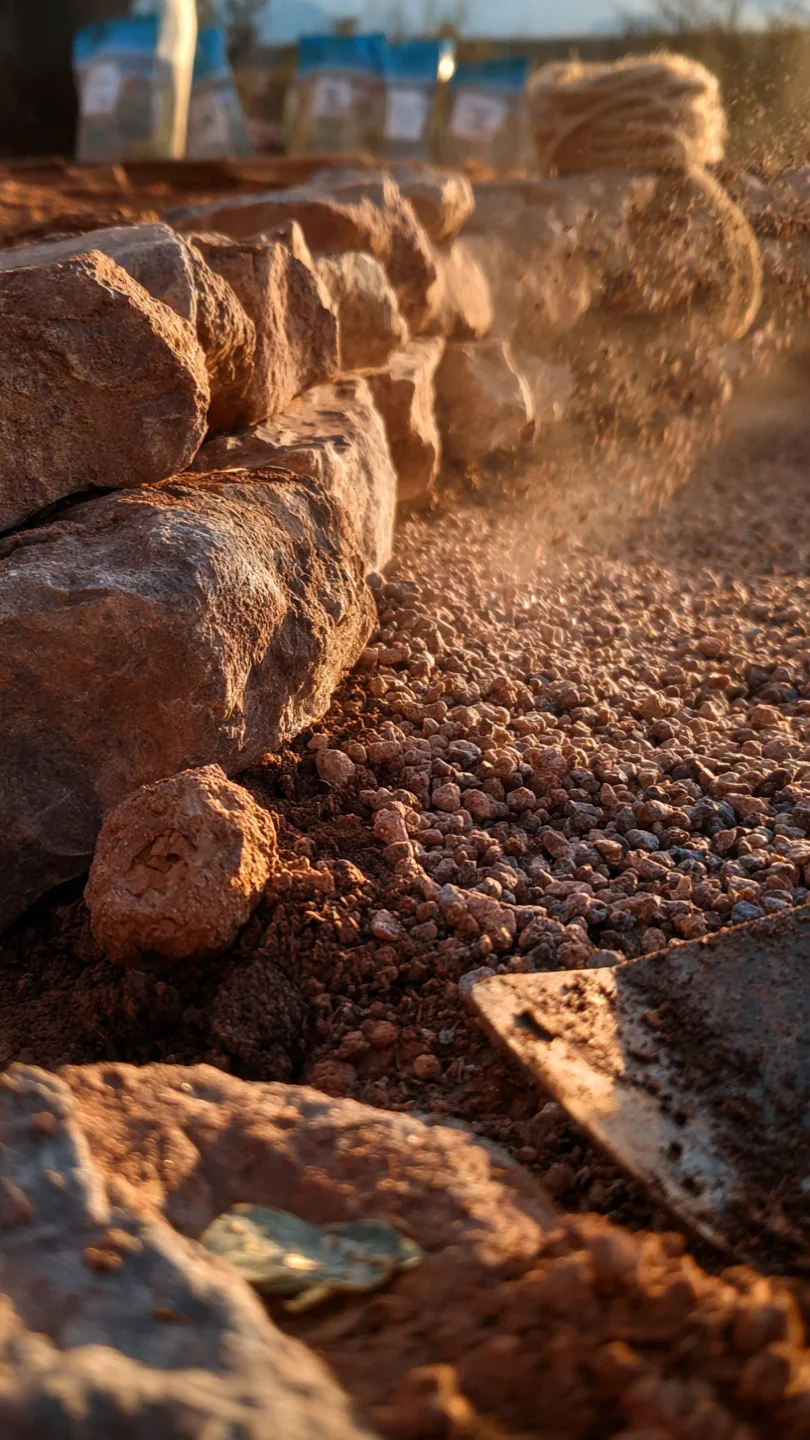
Best for: Branch 2
Use versus skip
Use these 4-foot-diameter islands when partial sun limits full coverage: each becomes a self-contained focal point. Skip if your yard already has more than 30 percent hardscape, because additional circles fragment the visual plane. Edge case: place islands at least 6 feet from any structure to avoid root competition with foundation plantings.
Boulder-Integrated Windbreak Screens
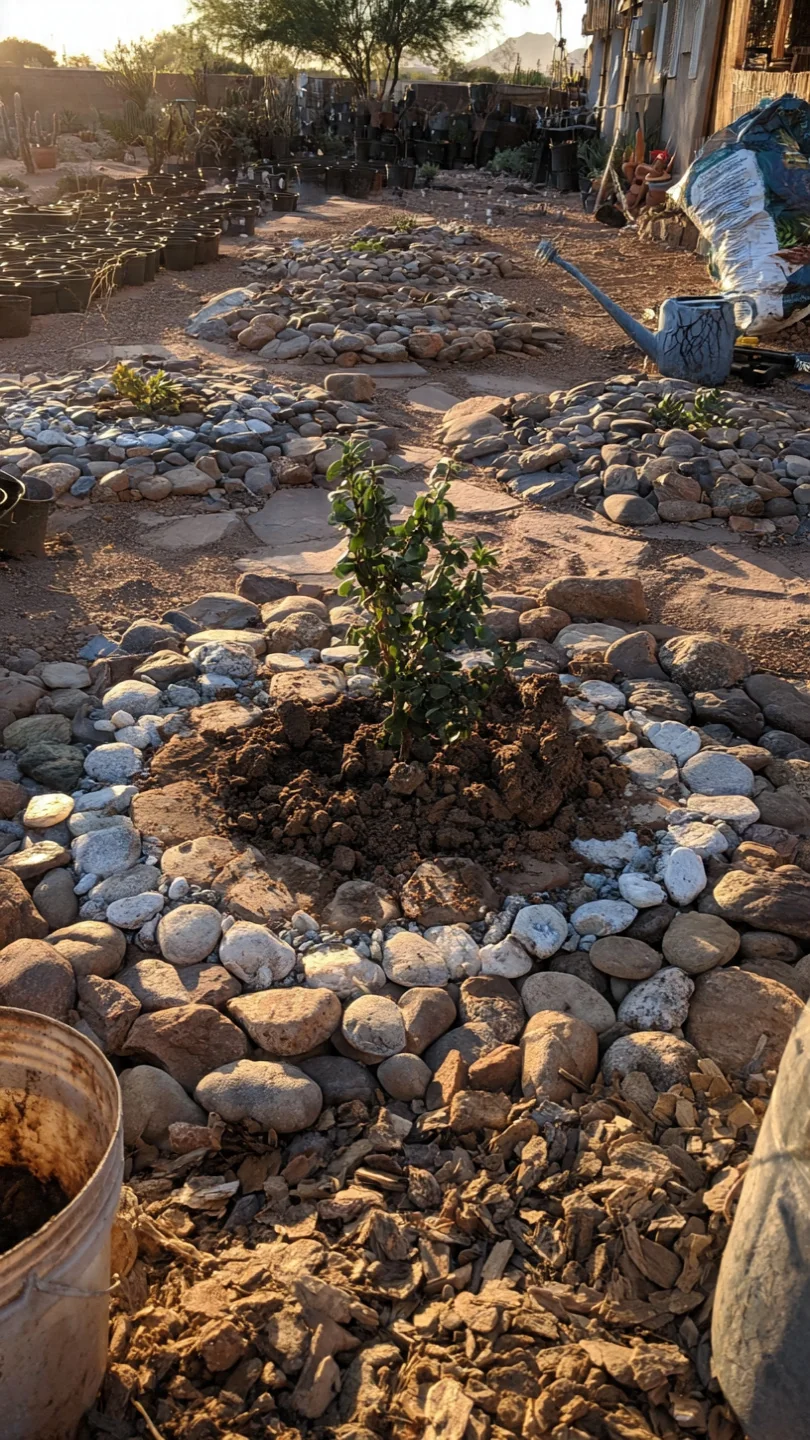
Best for: Branch 3
Threshold rule
Deploy when sustained winds exceed 15 miles per hour or hardscapes channel airflow. Stagger 3- to 5-foot boulders 4 feet apart in two offset rows running perpendicular to prevailing wind. Fill gaps with smaller rock to 18 inches high. The rule: maintain 3-foot gaps between boulders to allow filtered air movement while reducing velocity by half within 10 feet downwind. Check alignment after first major wind event and reposition any boulder that shifts more than 4 inches.
Starter Stack (What to Choose First)
For Branch 1
Start with Layered Boulder and Gravel Foundation Beds plus Sunken Succulent Courtyards. The foundation beds establish the outer frame in one weekend while the sunken courtyard creates immediate central interest. Combined materials and labor range from 2 to 4 days and 200 to 450 dollars for a 400-square-foot area.
For Branch 2
Start with Sculptural Cactus and Agave Clusters plus Vertical Agave and Yucca Walls. Clusters provide quick sculptural height at ground level while the vertical walls use narrow strips for added dimension. Combined timeline is 1 to 3 days with material costs of 150 to 350 dollars for a 300-square-foot area.
For Branch 3
Start with Dry Creek Bed Pathways plus Tiered Slope Plant Pockets. The pathways manage water flow immediately while the pockets stabilize the slope in stages. Combined effort spans 3 to 5 days with material costs of 250 to 550 dollars for a 500-square-foot area.
When This Won’t Work
These designs fail when soil drains slower than 0.25 inch per hour even after tilling in 30 percent coarse sand to 12-inch depth. Water then pools and promotes rot within one growing season. Switch instead to containers elevated on gravel pads to isolate root zones.
The layouts also fail on sites receiving under 4 hours of direct sun daily, measured by timing shadows at noon on the summer solstice. Plants stretch and lose compact form. Consider container garden ideas repositioned into brighter pockets instead.
Choosing the Right Option for Your Situation
Budget threshold
Under 300 dollars total materials: select any single item from your branch that uses only gravel and boulders already on site. Over 500 dollars: combine two items that share the same rock size to reduce delivery fees.
Time threshold
One weekend available: choose items rated Effort Score 1 or 2. Two or more weekends: include one Effort Score 3 item for vertical or tiered elements.
Technical constraint: existing slope or hardscape
If slope exceeds 8 percent or hardscape sits within 5 feet, limit choices to Branch 3 items only. Otherwise any branch item is viable after the drainage test.
Yes/No checklist
Does your drainage test meet the branch minimum?
Does daily sun hours match the branch range?
Is space at least 10 feet wide for the chosen layout?
Are boulders or gravel locally available within 20 miles?
Expert Q&A
How does a desert garden design differ from general xeriscaping?
Desert designs treat sun exposure and drainage rate as primary drivers for layout shape and plant spacing, whereas xeriscaping focuses mainly on water zones and plant water-use categories. Desert versions emphasize ornamental layering through boulder placement and gravel depth to create visual depth even when plants are dormant.
What two measurements should I take before choosing any layout?
Dig a 6-inch-wide hole 12 inches deep, fill with water, and time how many minutes it takes to drop 1 inch for drainage rate. Then stand in the center of the future bed at solar noon on a clear day and count hours of full sun exposure. Record both values to assign the correct branch.
Can these designs integrate with an existing concrete patio or driveway?
Yes. Keep all plant material and gravel at least 3 feet from concrete edges to prevent root heaving. Use the dry creek bed pathway to direct sheet flow away from the hardscape and maintain a 2-inch height difference between the bed and patio surface.
Do any of these layouts support pollinators without extra water?
Layouts that incorporate native perennials or agave in Branch 3 pockets provide nectar sources during bloom windows while relying solely on natural rainfall. Space flowering specimens 24 inches apart to allow pollinator movement between plants.
What is the best way to add lighting without increasing maintenance?
Install low-voltage solar fixtures anchored directly into gravel mulch rather than soil. Position lights 18 inches from boulders to highlight texture without casting shadows that encourage weed growth in low-light pockets.
Conclusion
The core decision is always the same: run the drainage and sun tests first, then follow the matching branch to the recommended items. The number-one mistake is skipping those measurements and defaulting to a generic rock-and-cactus template that underperforms in your specific microclimate.
Take the next step by mapping your yard’s measurements onto the decision grid today and ordering the shared rock sizes for your starter stack. See modern garden design for clean-line refinements once the base layers are in place.