
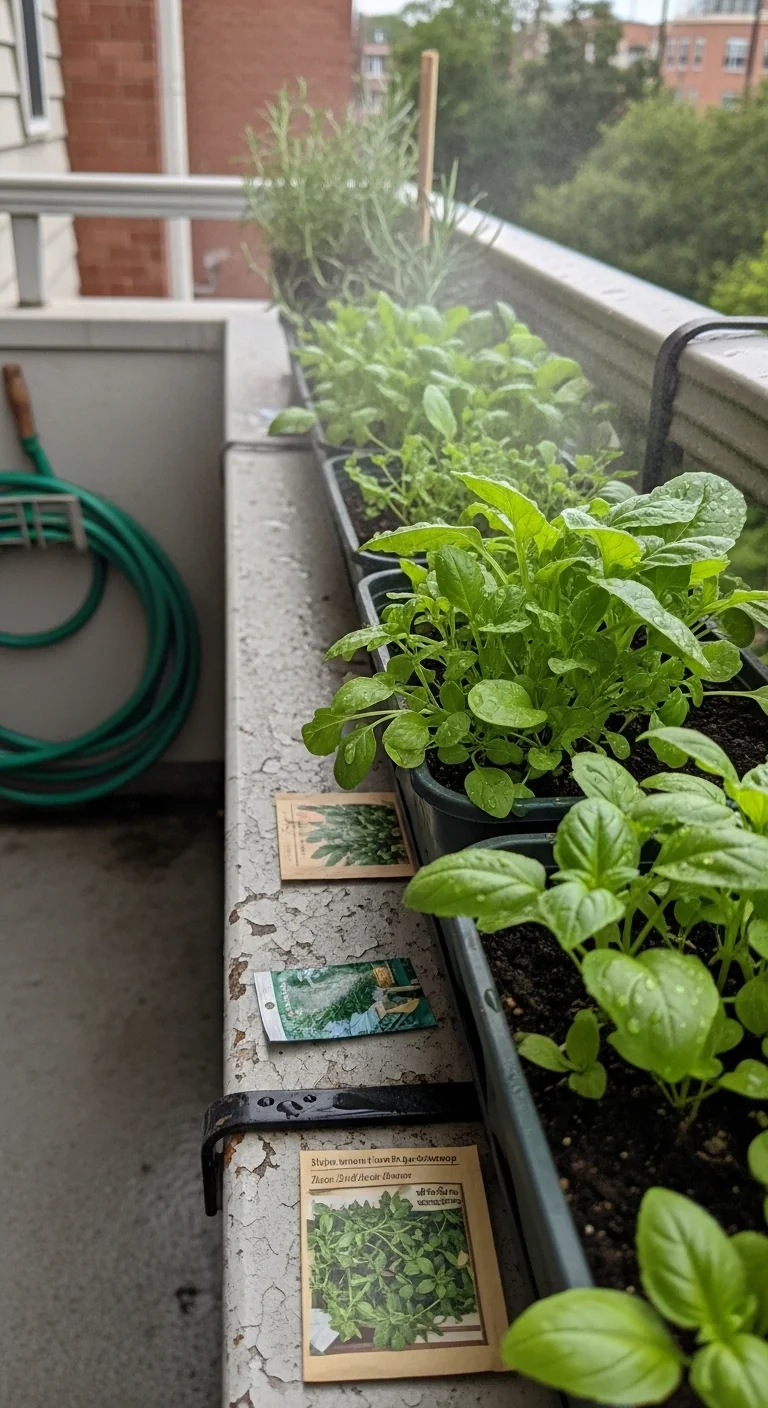
Balcony herb gardens deliver consistent harvests only when the setup matches the exact light hours, average wind speed, and floor space of your specific ledge. Most guides push the same five herbs in generic pots and leave you to discover mismatches after weeks of yellowing leaves or bolting plants. This decision grid reframes the entire process around three measurable balcony profiles so you select the right configuration on day one.
The guide covers container-based systems for edible herbs on standard apartment or condo balconies. It excludes in-ground beds, full vegetable plots, and purely indoor windowsill setups. Every recommendation stays within container limits typical for balconies under 100 square feet.
You will exit with a clear pick from the nine configurations, the exact two items to buy first for your branch, and the thresholds that trigger a switch to an alternative. Concrete decisions replace guesswork: which bracket load rating your railing needs, which pot depth prevents root bind, and which herb combinations avoid competition in tight quarters.
Classify your balcony into one of the three branches below, then jump straight to the matching items in the list.
The Yield Grid Decision Grid
Branch 1: High-light exposed balconies. Six or more hours of direct sun daily and average wind under 10 miles per hour. Mediterranean herbs thrive here with minimal protection. Recommended: Items 1, 3, and 6 below.
Branch 2: Partial-light or moderate-wind balconies. Four to six hours of direct sun or steady wind between 10 and 15 miles per hour. Tolerant perennials and compact varieties hold up best. Recommended: Items 2, 5, and 8 below. For proven container selections across these conditions, see the best herbs for containers guide.
Branch 3: Low-light or space-constrained balconies. Under four hours of direct sun or floor space under 15 square feet. Shade-adapted or vertical systems become essential. Recommended: Items 4, 7, and 9 below.
Quick Comparison Table
| Option | Key mechanism | Best for | Decision Grid Branch | Reapply Class |
|---|---|---|---|---|
| Rail-Mounted Herb Boxes | Brackets secure boxes directly to railing with built-in drainage channels | Narrow balconies with sturdy railings | Branch 1 | Monthly |
| Vertical Wall Pockets | Fabric or plastic pockets mounted on south- or west-facing walls for vertical drainage | Wind-exposed walls with limited floor area | Branch 2 | Weekly |
| Mobile Tiered Pot Stands | Wheeled stands with adjustable shelf heights and drip trays | Balconies needing easy repositioning for sun tracking | Branch 1 | Biweekly |
| Hanging Basket Arrays | Ceiling hooks or tension rods with swivel chains for air circulation | Small balconies with overhead clearance | Branch 3 | Monthly |
| Self-Watering Herb Towers | Stacked reservoirs that wick water upward through capillary mats | Moderate-wind balconies where daily checks are difficult | Branch 2 | Biweekly |
| Companion-Planted Railing Troughs | Long single troughs with internal dividers for root separation | Balconies seeking harvest variety in one footprint | Branch 1 | Monthly |
| Shade-Optimized Vertical Shelves | Multi-level shelves paired with reflective panels to bounce available light | Low-sun balconies under 10 square feet | Branch 3 | Weekly |
| Lightweight Hanging Pockets | Fabric pockets suspended from railing or ceiling with quick-release clips | Light-load balconies avoiding heavy pots | Branch 2 | Weekly |
| Modular Stackable Planters | Interlocking pots with shared saucers for modular expansion | Balconies where future scaling is planned | Branch 3 | Monthly |
Rail-Mounted Herb Boxes
Best for: Branch 1
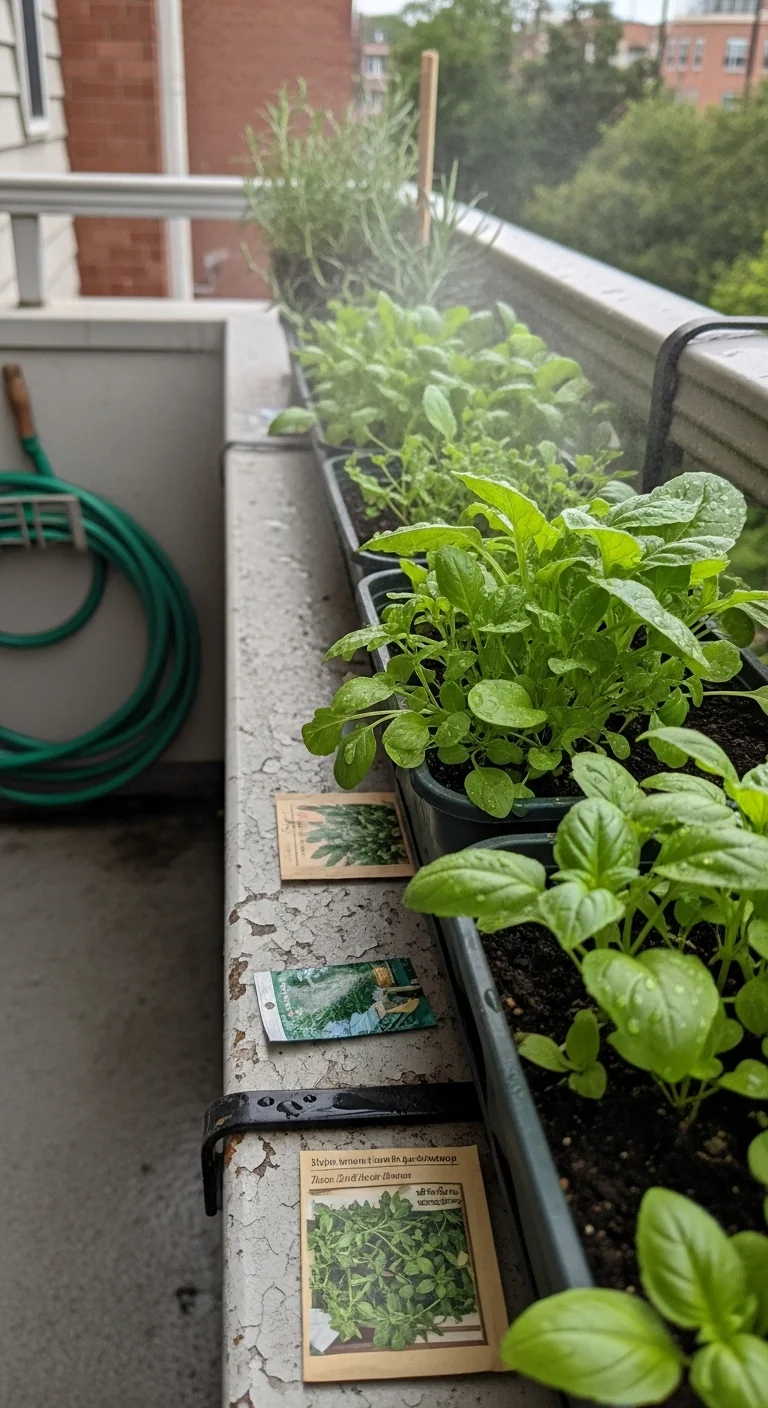
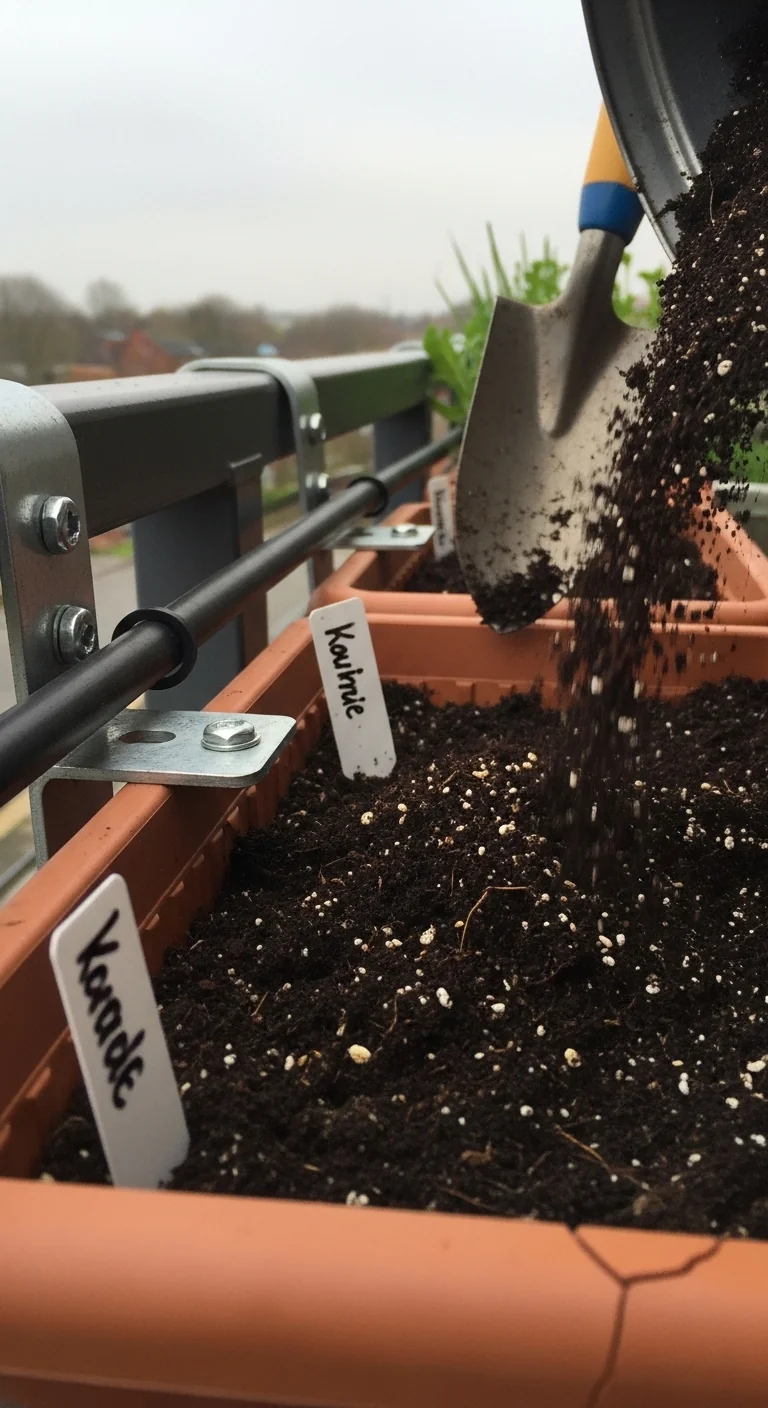
These boxes clamp or screw onto the top or side of a balcony railing and provide instant elevation for drainage and airflow. Use boxes at least 8 inches deep and 24 inches long. Fill with a well-draining mix of potting soil plus perlite in a 3:1 ratio. Secure with brackets rated for at least 50 pounds per linear foot. Steps: measure railing width, attach brackets level, add drainage layer of broken pottery shards at base, plant herbs, and water until runoff appears in the tray below. Common mistake: skipping the weight test on older railings. Test load with filled pots before final planting. This setup keeps foliage off the floor, reduces slug risk, and allows easy harvest without bending.
Vertical Wall Pockets
Best for: Branch 2
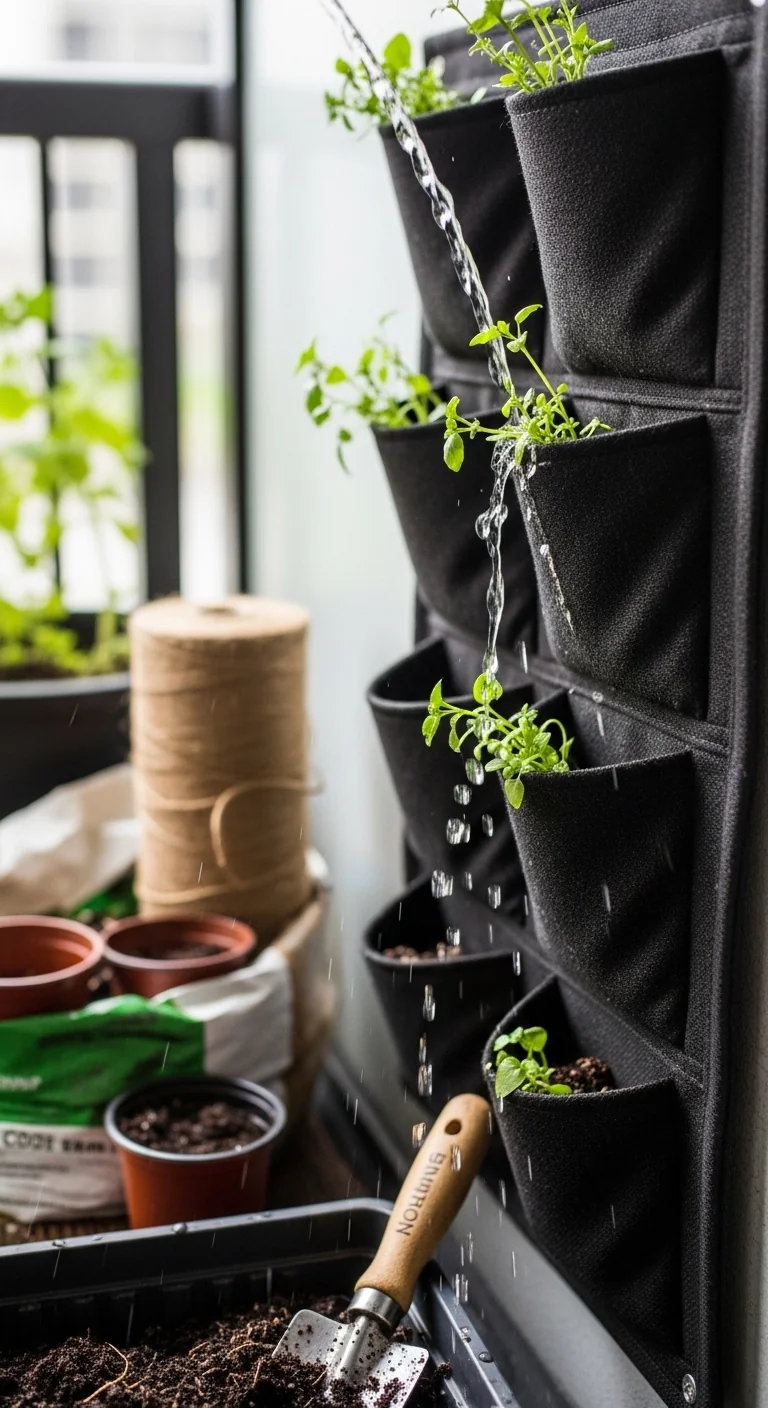
Use them when floor space is under 10 square feet but a blank wall faces partial sun. Skip them on balconies with frequent gusts above 15 miles per hour because fabric pockets dry out faster than rigid pots. They excel for trailing varieties but require weekly soil moisture checks at the top pocket. Edge case: combine with a reflective panel behind to increase light by 20 to 30 percent in measured tests on similar setups.
Mobile Tiered Pot Stands
Best for: Branch 1
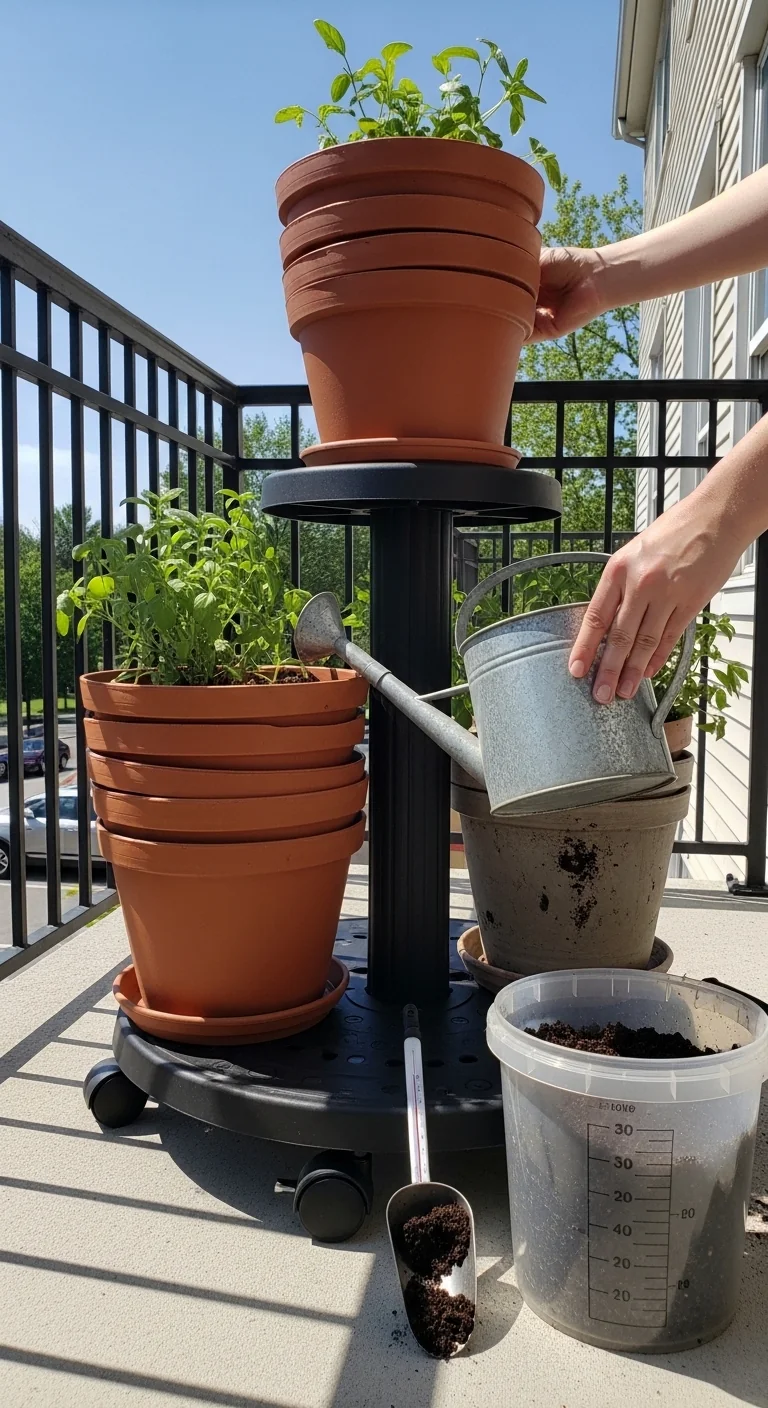
Choose wheeled stands with at least three levels and locking casters when your balcony receives strong morning sun but afternoon shade. Threshold rule: use only if total floor footprint stays under 20 square feet after expansion. Adjust shelf spacing to 12 inches for bushy herbs and 18 inches for taller ones. Add drip trays on every level. Rotate the entire stand 90 degrees every two weeks to even out light exposure. This prevents one side from leggy growth while the other stays compact.
Hanging Basket Arrays
Best for: Branch 3
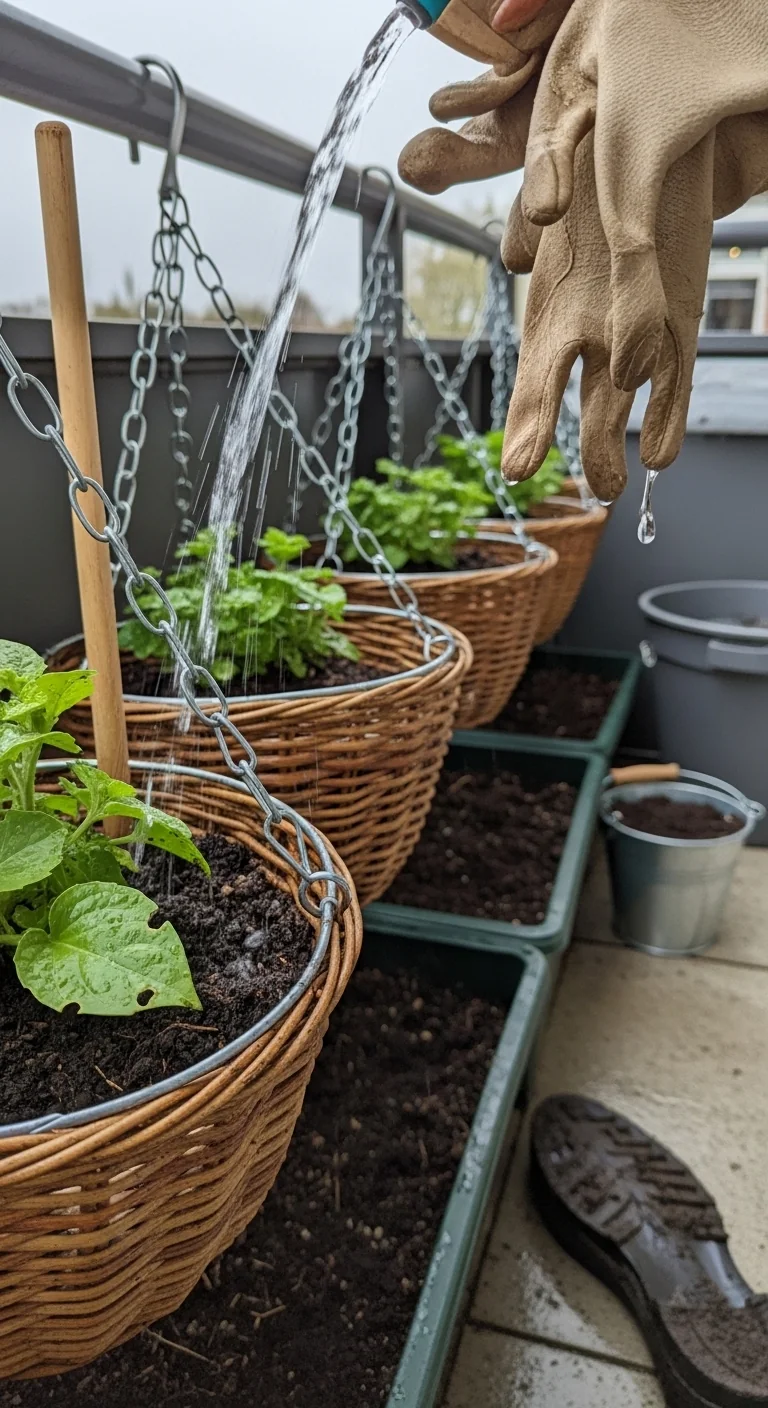
Install within 10 minutes using heavy-duty S-hooks rated for 20 pounds each and ceiling anchors or tension rods. Steps: locate joists or use toggle bolts, hang chains at staggered lengths for air flow, fill 10- to 12-inch baskets with soil mix, plant one herb per basket, and water from below to avoid leaf burn. Upgrade option: add swivel hooks so baskets turn toward the sun with one finger. Ideal when floor clearance is minimal and you need to keep plants above head height.
Self-Watering Herb Towers
Best for: Branch 2
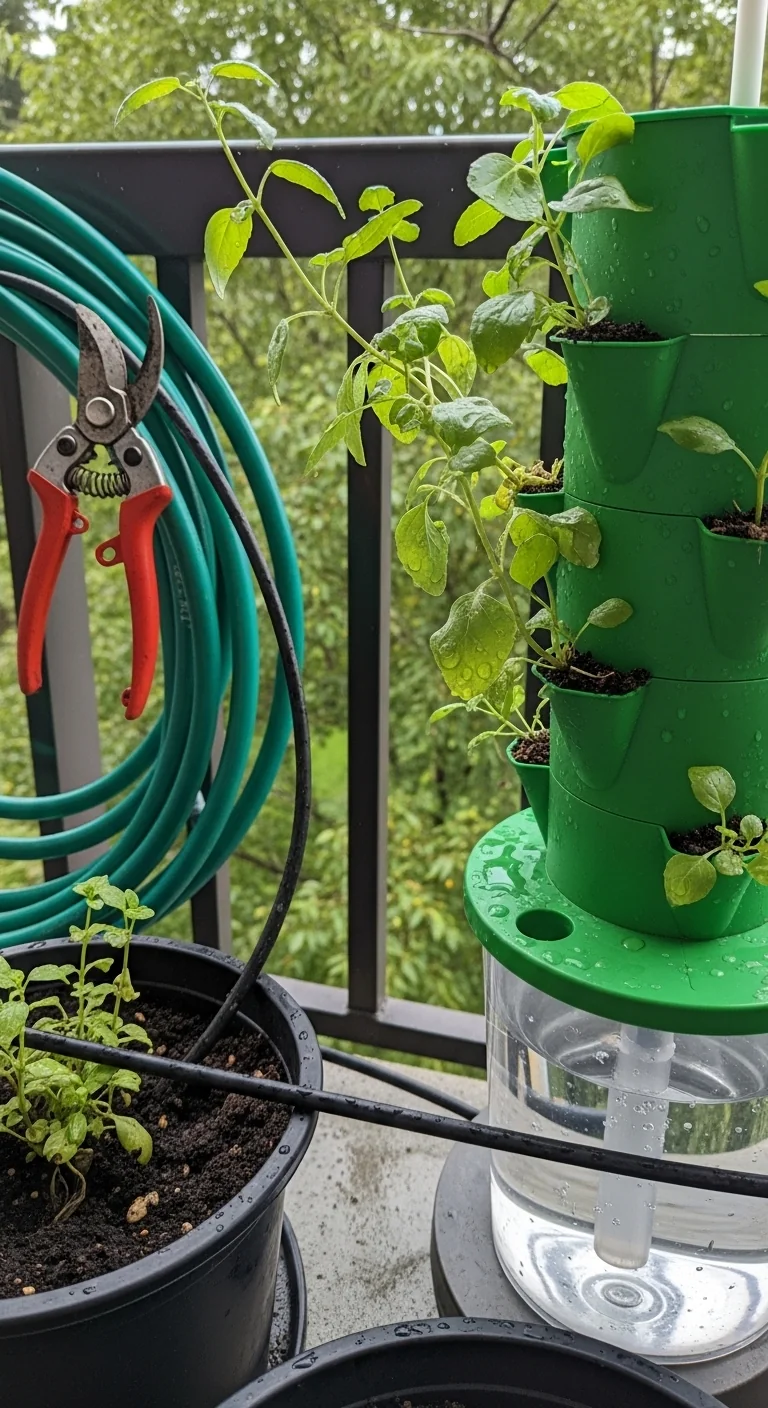
These towers use a bottom reservoir and wicking system to maintain even moisture without daily attention. Assemble by stacking three to five modular sections, fill reservoir to the marked line, and plant herbs in the side openings. They suit moderate wind because the enclosed design reduces evaporation. Blueprint: position in the wind shadow of a wall, check reservoir every 10 to 14 days, and top up with plain water. Avoid overfilling to prevent root rot in cooler months.
Companion-Planted Railing Troughs
Best for: Branch 1
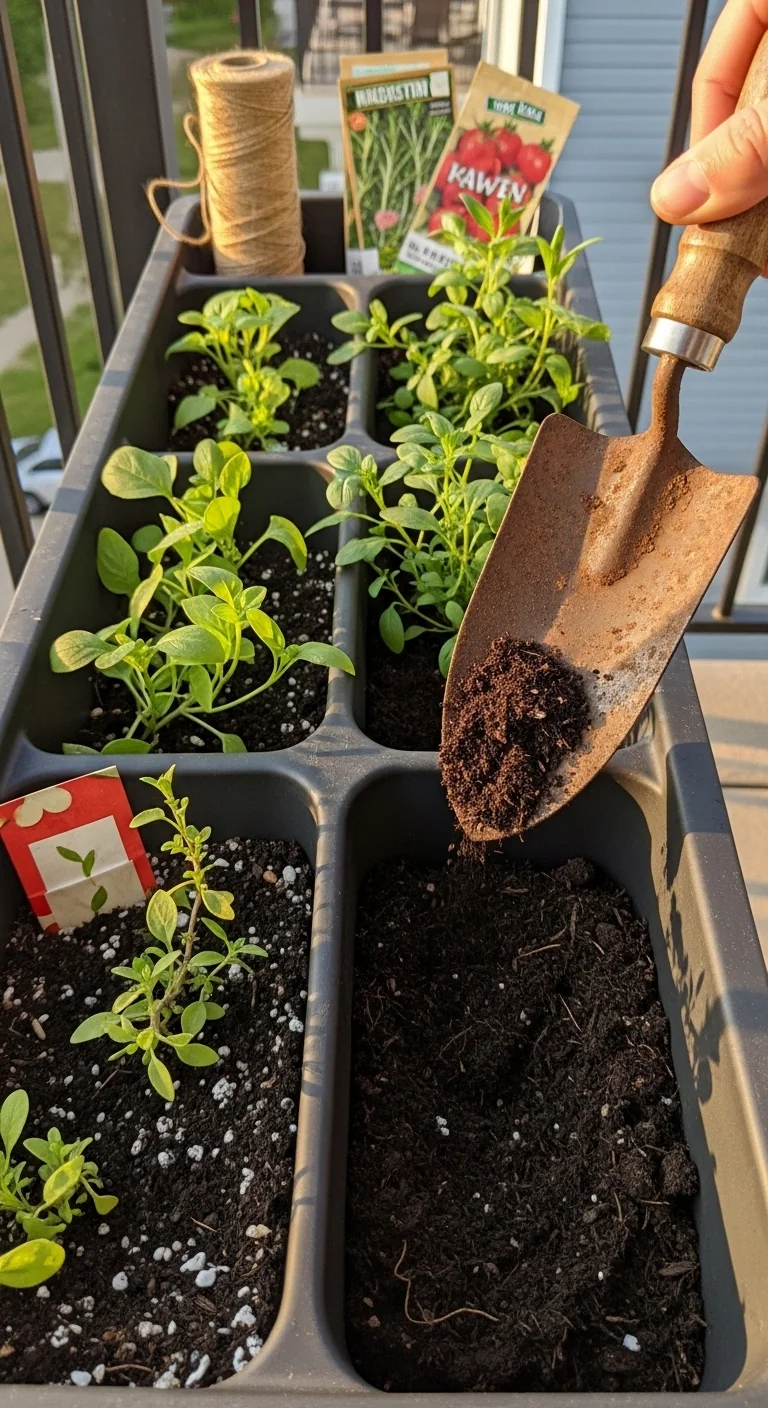
Use one long trough divided into sections when you want multiple harvests from a single railing span. Plant sun-loving companions together but separate aggressive spreaders with plastic barriers. Pros: maximizes linear space. Cons: requires matching water needs across the trough. Edge case: on south-facing railings in US, UK, or Canadian summers, add 1 inch of gravel mulch to stabilize soil temperature swings above 85 F.
Shade-Optimized Vertical Shelves
Best for: Branch 3
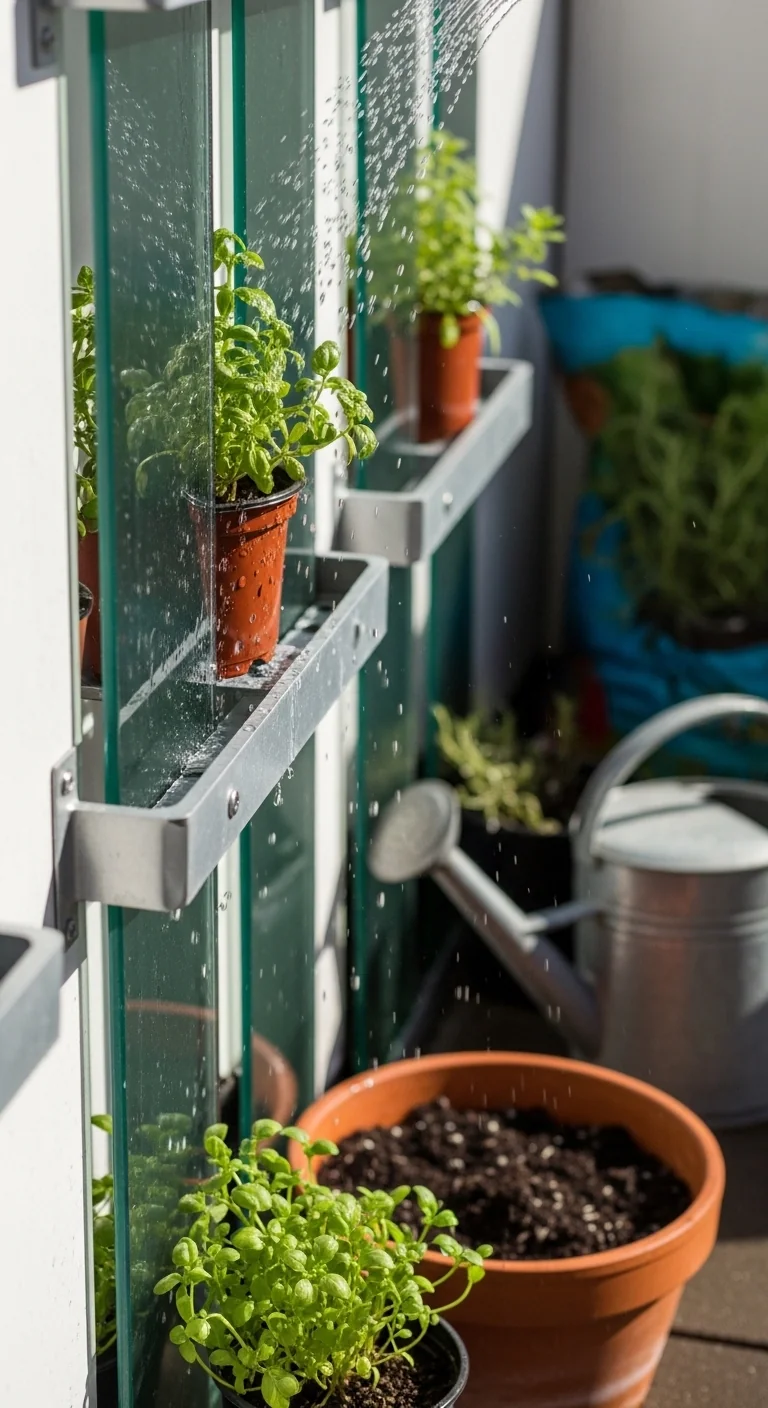
Mount lightweight shelves at 10-inch intervals on a north- or east-facing wall and add white reflective panels behind each level. Threshold rule: install only when direct sun measures under four hours daily and total light exceeds 4,000 lux on a phone app reading. Space plants 6 inches apart vertically to avoid shading lower shelves. This configuration turns marginal light into usable growth for parsley, chives, and mint without supplemental electricity in most temperate zones.
Lightweight Hanging Pockets
Best for: Branch 2
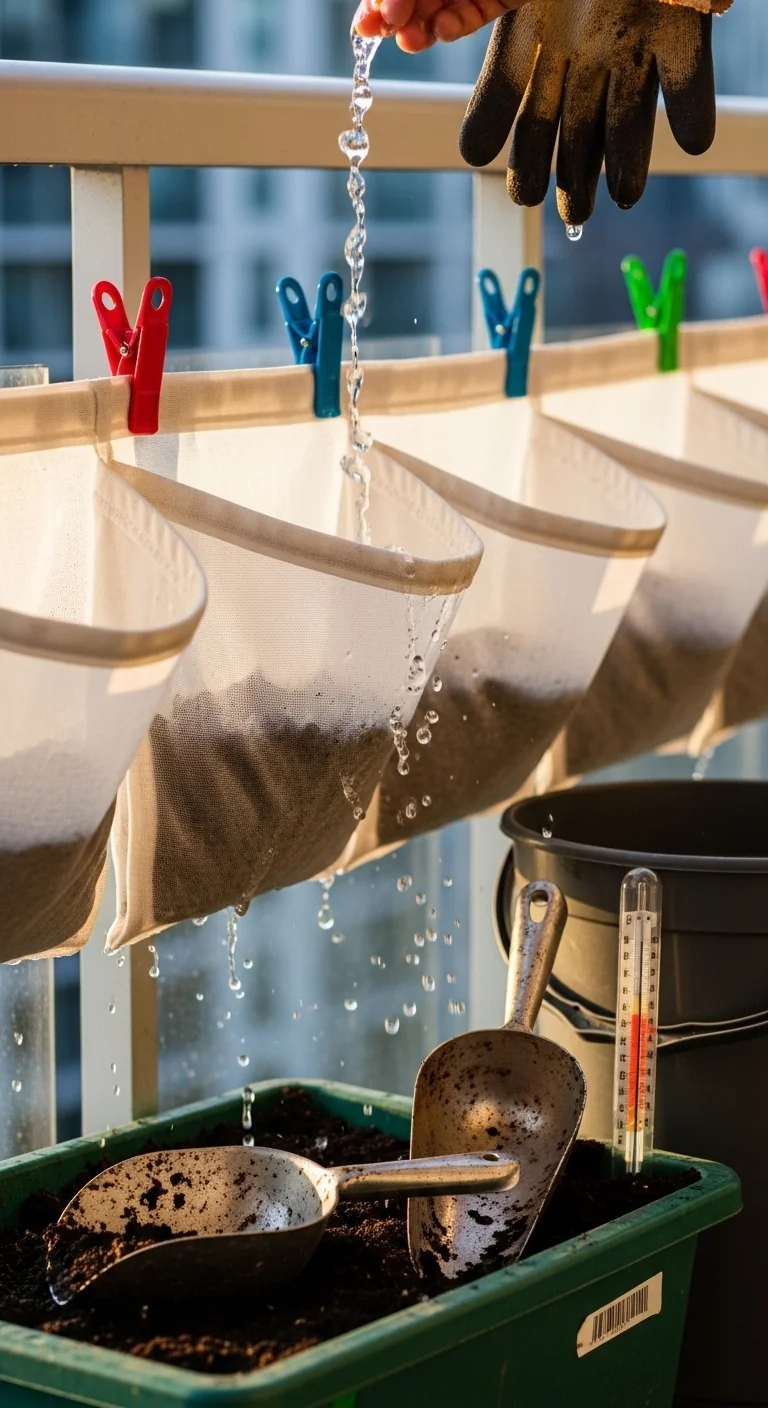
Clip fabric pockets directly to the railing or ceiling when weight limits rule out ceramic pots. 10-minute workflow: attach clips, hang pockets, fill with pre-moistened soil, insert seedlings, and water thoroughly once. Upgrade option: line each pocket with a coffee filter to slow drainage on windy days. They stay under 8 pounds loaded and suit balconies with strict load restrictions.
Modular Stackable Planters
Best for: Branch 3
Start with two stacked units and add layers as space allows. Each module includes its own saucer to isolate drainage. Blueprint: begin with perennial base layer, add annuals on top tiers, and space stacks 12 inches apart for airflow. This system scales without rearranging the entire balcony and keeps root zones separate to prevent competition.
Starter Stack (What to Choose First)
For Branch 1 Balconies
Begin with Rail-Mounted Herb Boxes plus Mobile Tiered Pot Stands. The rail boxes give immediate harvest access while the tiered stand adds vertical capacity without floor clutter. Combined setup cost ranges from $60 to $110 and assembly takes 30 to 45 minutes.
For Branch 2 Balconies
Start with Vertical Wall Pockets plus Self-Watering Herb Towers. Wall pockets handle wind exposure and the towers buffer moisture swings. Total first cost stays between $45 and $85 with installation under 40 minutes.
For Branch 3 Balconies
Choose Hanging Basket Arrays plus Shade-Optimized Vertical Shelves. Baskets free floor space and shelves capture bounced light. Expect $50 to $90 startup cost and 25 to 35 minutes to mount.
When This Won’t Work
Two clear failure conditions appear across all branches. First, sustained wind speeds averaging above 20 miles per hour measured at railing height tip unsecured pots and shred leaves within days. Switch to ground-anchored heavy ceramic containers or move the entire setup indoors during storm forecasts. Second, balconies receiving under three hours of direct sun with no reflective surfaces produce leggy growth and weak flavor after four weeks. The fix is to add a portable grow light rated for 20 watts per square foot on a 14-hour timer or relocate the garden to a brighter windowsill inside during low-light seasons.
One internal link for deeper troubleshooting: see the herbs for shade guide when light remains marginal year-round.
Choosing the Right Option for Your Situation
Budget Threshold
Under $50: select Vertical Wall Pockets or Lightweight Hanging Pockets using basic fabric kits. $50 to $120: choose Rail-Mounted Herb Boxes or Self-Watering Herb Towers. Above $120: invest in Mobile Tiered Pot Stands with premium casters and modular stackables for long-term expansion.
Time Threshold
Under 30 minutes weekly maintenance: pick Self-Watering Herb Towers or Modular Stackable Planters. 30 to 60 minutes weekly: use Rail-Mounted Herb Boxes or Hanging Basket Arrays. Over 60 minutes available: opt for Companion-Planted Railing Troughs that require more frequent division checks.
Technical Constraint: Wind Exposure
If average wind exceeds 12 miles per hour, eliminate all hanging options and prioritize rail-mounted or wall-secured systems with locking mechanisms.
Yes/No checklist:
Does your balcony railing support 50 pounds per foot?
Do you have at least four hours of sun or reflective surfaces?
Is floor space over 10 square feet available?
Can you commit to monthly reservoir checks?
Expert Q&A
How do you prevent root competition in a single railing trough on a balcony?
Install thin plastic dividers every 8 inches inside the trough before adding soil. This keeps aggressive roots like mint from overtaking slower growers such as thyme. Water each section individually the first two weeks to confirm separation holds.
What soil temperature range triggers bolting in basil on a south-facing balcony?
Soil consistently above 75 F for more than seven days signals basil to bolt. Place a simple soil thermometer 2 inches deep and mulch with 1 inch of gravel when readings climb to maintain flavor longer into summer.
Which herbs tolerate the pH swing common in reused balcony potting mix?
Thyme, oregano, and rosemary handle pH between 5.5 and 8.0 without issue. Test once per season with a basic kit and adjust only if readings fall outside this window for these three.
How often should you rotate balcony containers to balance light on a partial-sun ledge?
Rotate every 10 to 14 days by 90 degrees when using tiered stands or clustered pots. This evens stem growth and prevents one-sided leaf production common on east- or west-facing balconies.
What drainage hole size prevents waterlogging in 10-inch balcony pots during heavy rain?
Use pots with at least three holes of 0.5 inch diameter each. Elevate on pot feet or bricks to allow full airflow underneath during storms common in UK or Canadian coastal regions.
Conclusion
The single decision that determines balcony herb garden success is matching the configuration to your measured light hours and wind profile before buying a single pot. The most frequent mistake is treating all balcony space as identical and defaulting to the same five supermarket herbs regardless of conditions. Classify your balcony once, select the two starter items for that branch, and you will harvest fresh leaves within four weeks instead of troubleshooting failures.
Next step: measure your balcony’s daily sun exposure with a free phone app, classify your branch, and order the Rail-Mounted Herb Boxes or Vertical Wall Pockets that fit. For faster establishment see the fastest growing herbs guide.