
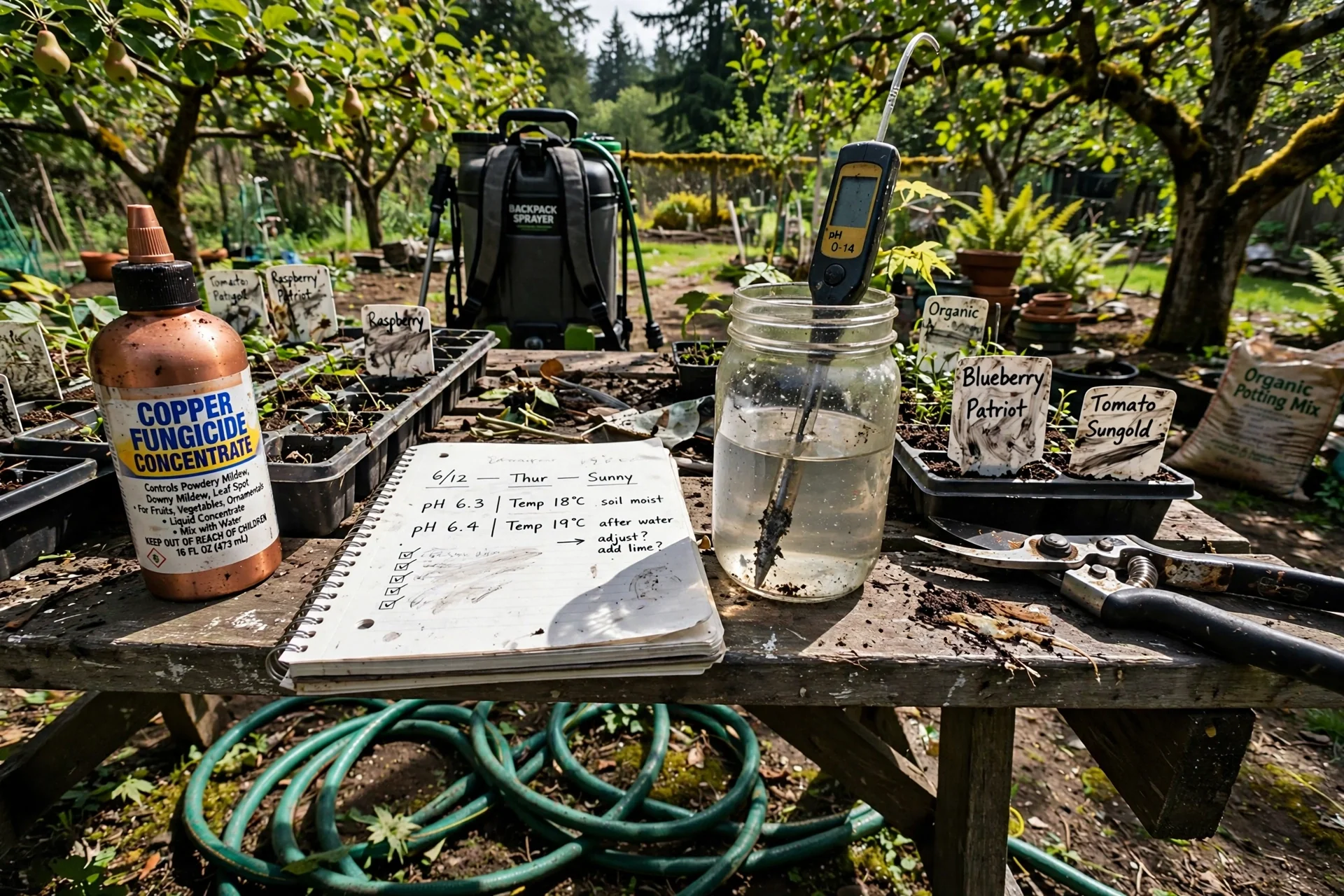
Copper fungicide is not a single product you grab off the shelf and spray. It is a category of formulations, each releasing copper ions at a different rate, under different pH and temperature conditions. The most common reason copper fungicide fails or burns foliage is not a bad product. It is applying the wrong formulation for your water pH, your temperature window, or your soil’s existing copper load. This article reframes the purchase decision around those three measurable variables.
We cover the major copper fungicide formulations available to home gardeners and small-scale growers: fixed coppers, copper soaps, Bordeaux mixtures, copper oxychloride, and combination products. We exclude commercial agricultural formulations requiring specialized licenses, and we do not cover copper-based algaecides or wood preservatives, which are separate product categories with different safety profiles.
By the end of this guide, you will be able to identify which copper formulation matches your spray water pH, your seasonal temperature range, and your garden’s copper history. You will also know exactly when copper fungicide is the wrong tool, and what to use instead.
Bottom line: Test your spray water pH before buying copper fungicide; if it falls below 6.5, you need a formulation buffered for acidic water, or you risk phytotoxicity.
The Yield Grid Decision Grid
Not every copper fungicide suits every situation. The three branches below are separated by measurable conditions, not vague preferences. Identify which branch describes your garden, then use the recommended items to narrow your choice.
Branch 1: You need a dormant-season protectant. Your fruit trees or ornamental shrubs are leafless, temperatures are below 75 degrees F, and you want a single application that adheres through winter rain. Your primary targets are peach leaf curl, fire blight, and apple scab inoculum. Recommended: Items 1, 4, 6 below.
Branch 2: You are managing an active fungal outbreak during the growing season. Leaves are present, temperatures range between 60 and 85 degrees F, and you need a formulation gentle enough for tender tissue but persistent enough to protect new growth as it expands. Your primary targets are powdery mildew, black spot, downy mildew, and early blight. Recommended: Items 2, 3, 5, 9 below.
Branch 3: You garden in a high-rainfall region or have heavy soil with known copper accumulation. You receive more than 30 inches of annual rainfall, or a soil test shows copper levels above 50 mg/kg. You need low-copper formulations or alternatives that reduce further loading. Your primary targets are the same diseases, but your constraint is environmental. Recommended: Items 7, 8, 10 below; see also insecticidal soap options for non-copper paths.
Quick Comparison Table
| Option | Key Mechanism | Best For | Decision Grid Branch | Reapply Class |
|---|---|---|---|---|
| 1. Fixed Copper Hydroxide | Slow-release copper ions from insoluble particles | Dormant fruit trees, fire blight prevention | Branch 1 | Once-per-season |
| 2. Copper Octanoate (Soap) | Copper salt of fatty acid; low metallic copper load | Active-season vegetables, organic gardens | Branch 2 | Weekly |
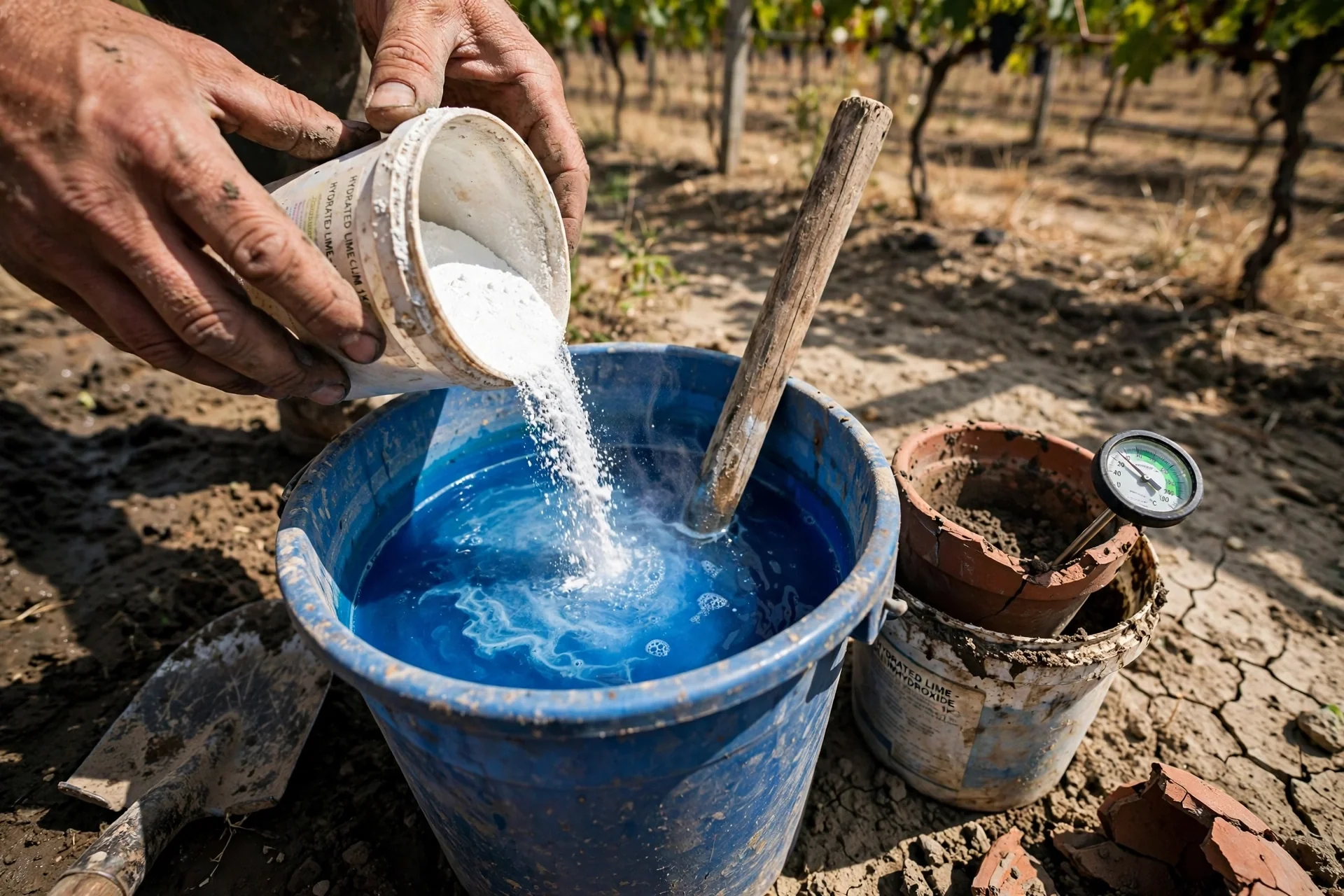
| 3. Bordeaux Mixture | Copper sulfate neutralized with hydrated lime | Rainy-climate vineyards, potato blight | Branch 2 | Biweekly |
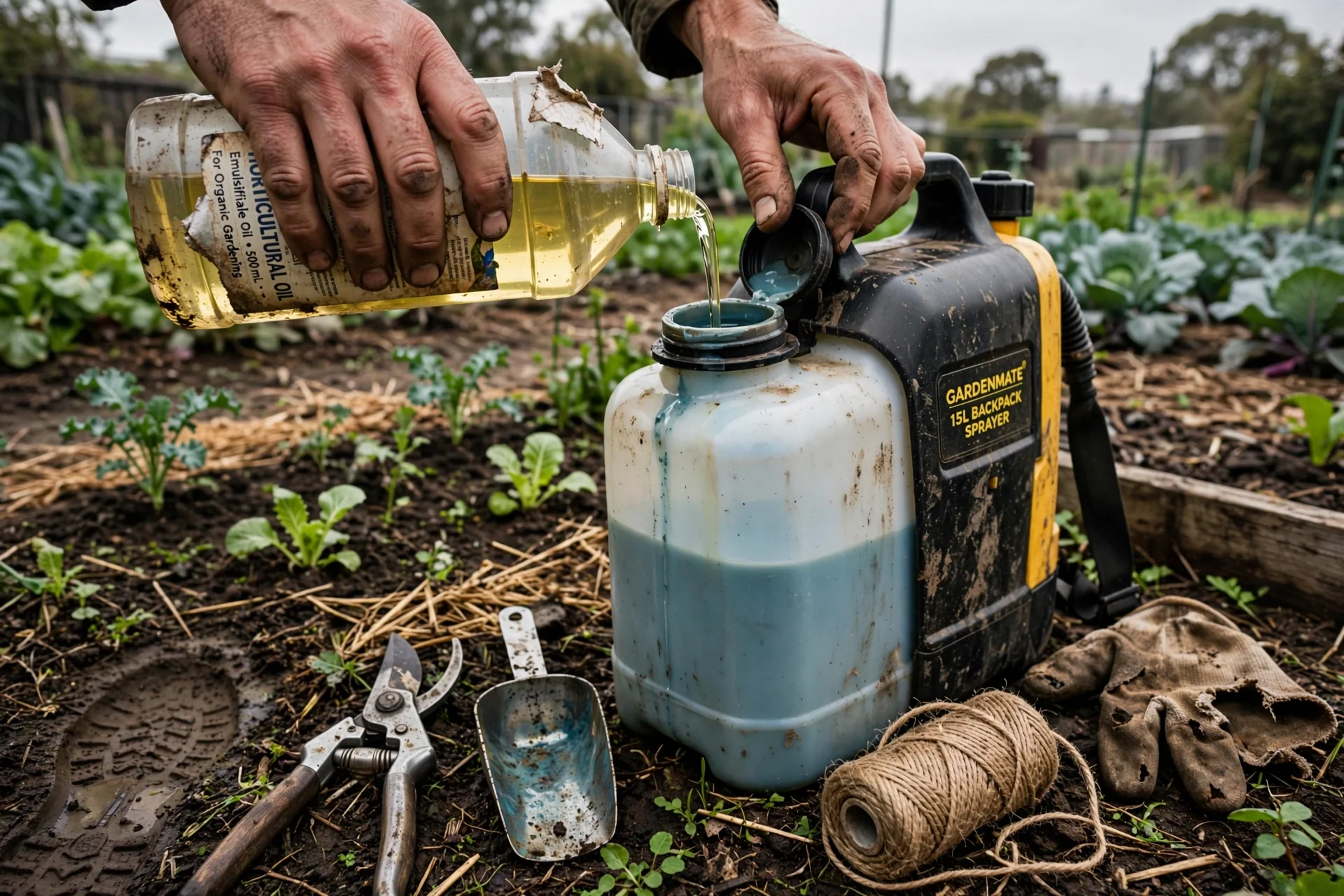
| 4. Copper plus Horticultural Oil | Copper fungicide with oil as spreader-sticker | Delayed-dormant peach, apple, and pear | Branch 1 | Once-per-season |
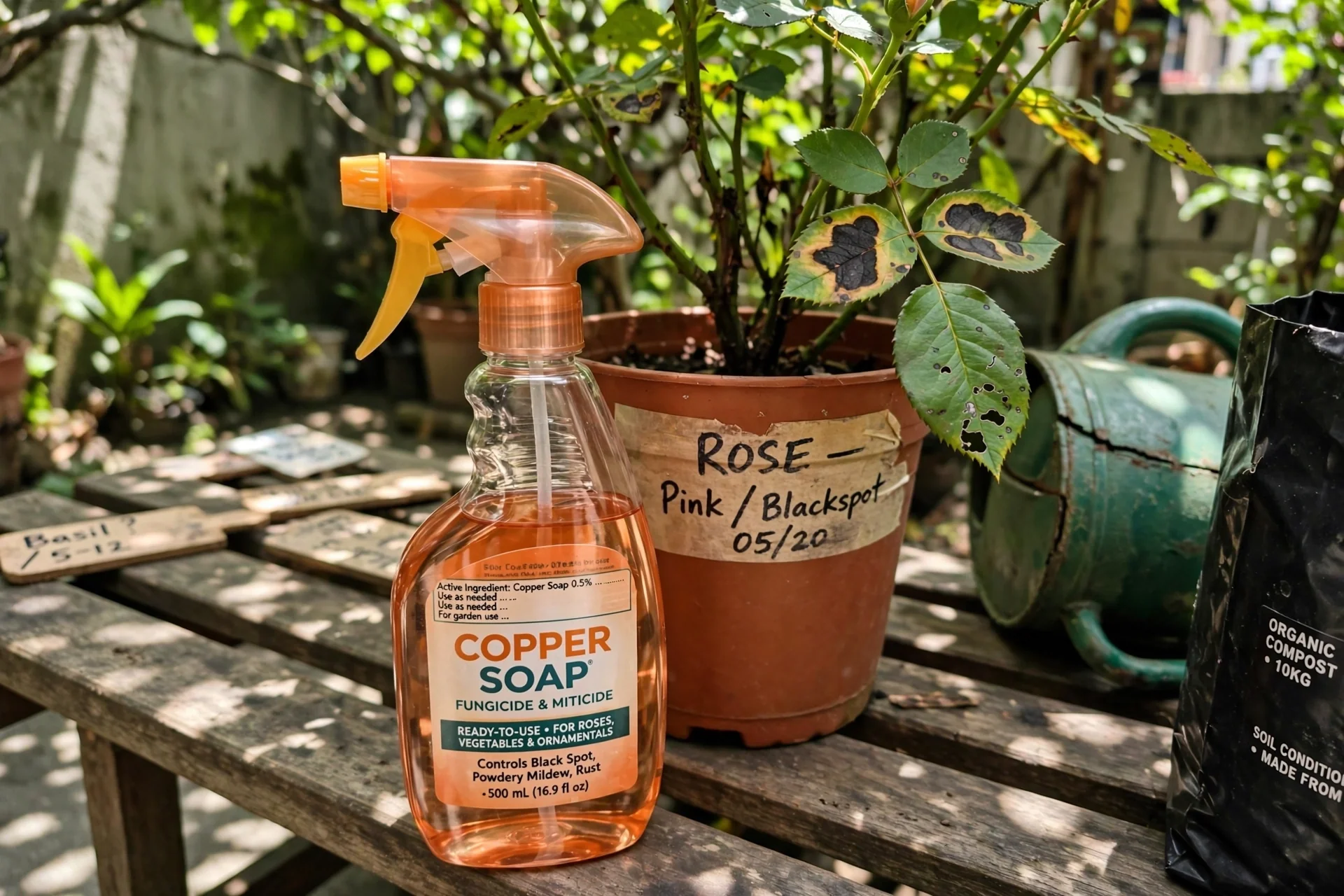
| 5. Ready-to-Use Copper Soap RTU | Pre-diluted copper octanoate, no mixing | Small gardens, container plants, beginners | Branch 2 | Weekly |
| 6. Tribasic Copper Sulfate | Fixed copper with three copper atoms per molecule | Long residual on ornamentals, low solubility | Branch 1 | Monthly |
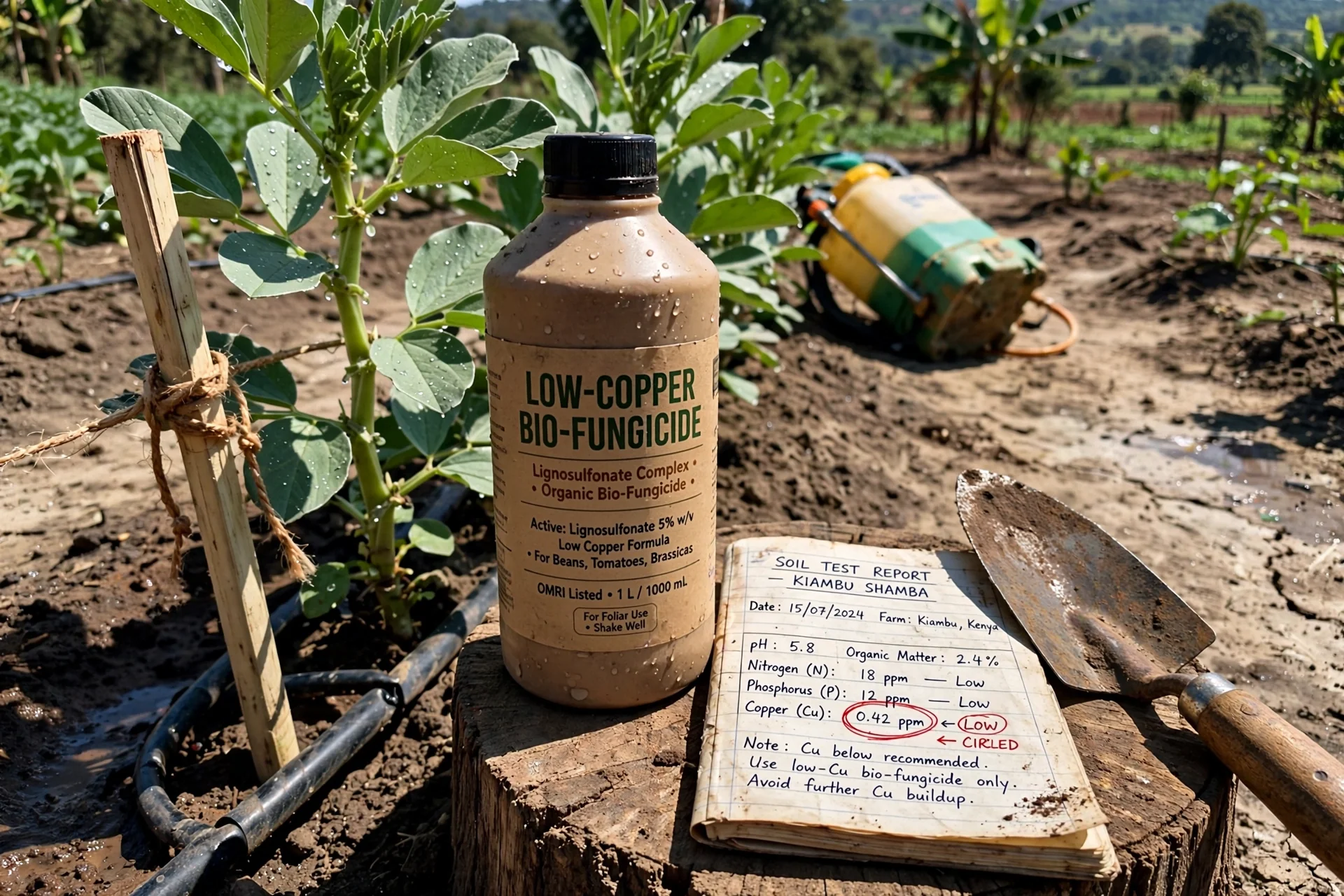
| 7. Low-Copper Bio-Formulation | Copper complexed with lignosulfonate or gluconate | High-rainfall zones, soils with copper buildup | Branch 3 | Weekly |
| 8. Copper plus Sulfur Tank Mix | Copper for downy mildew, sulfur for powdery mildew | Vineyards, cucurbits with dual disease pressure | Branch 3 | Biweekly |
| 9. Dual-Release Copper (Hydroxide plus Oxychloride) | Fast initial release plus slow residual release | Organic production, extended protection | Branch 2 | Biweekly |
| 10. Copper-Free Systemic Alternative | Plant defense activator or potassium bicarbonate | Soils exceeding 50 mg/kg copper, aquatic proximity | Branch 3 | Weekly |
1. Fixed Copper Hydroxide: The Dormant-Season Standard
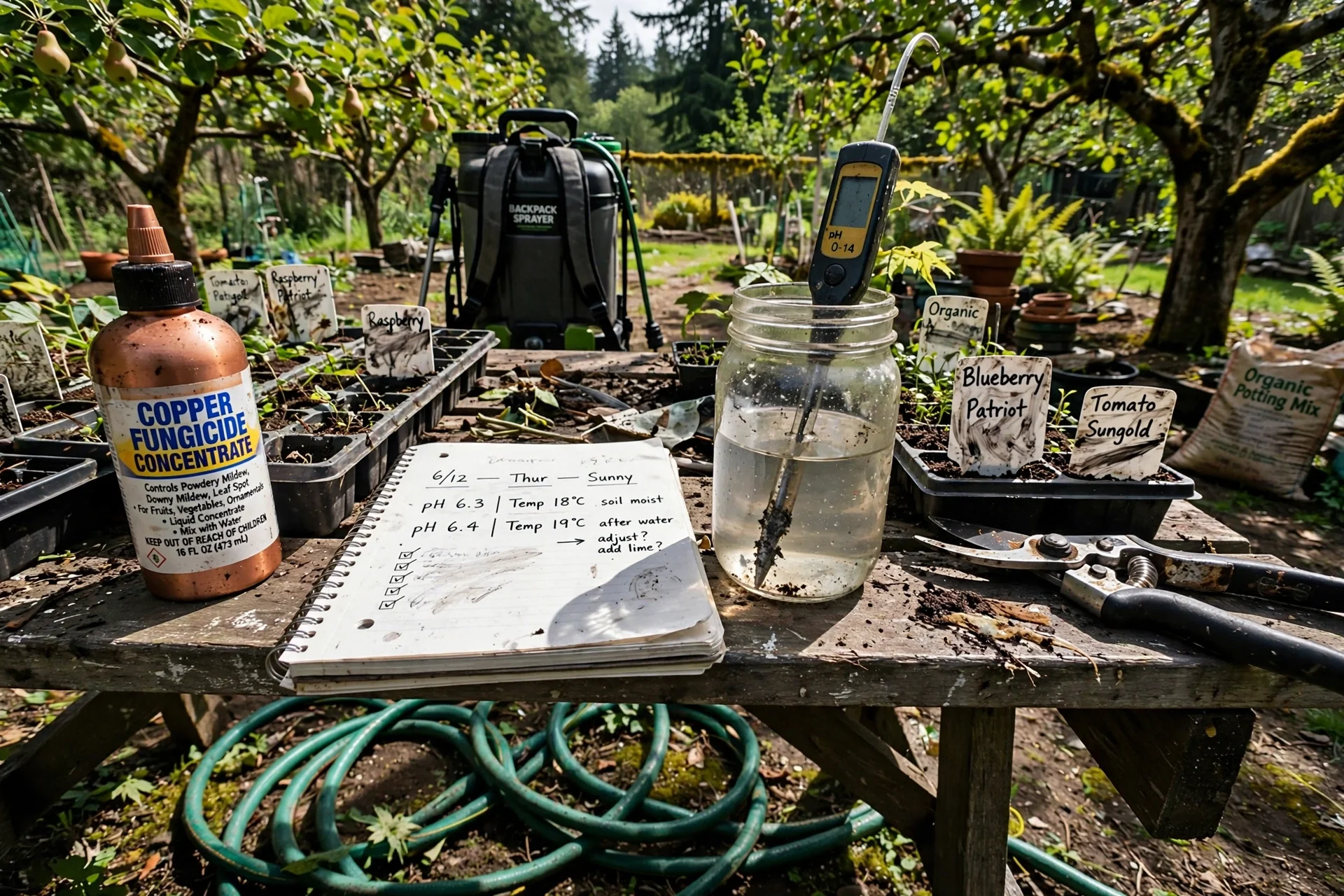
Best for: Branch 1 (dormant-season protectant)
What it is: Fixed copper hydroxide is an insoluble copper compound that releases copper ions slowly when wetted by rain or dew. Unlike soluble copper sulfate, it does not dump copper ions all at once, which is why it causes less phytotoxicity on dormant wood.
What it is for: Application on leafless fruit trees (apple, pear, peach, nectarine) during the dormant period, ideally between silver tip and quarter-inch green tip. It targets fire blight (Erwinia amylovora), peach leaf curl (Taphrina deformans), and apple scab (Venturia inaequalis) inoculum overwintering on bark and bud scales.
Key steps: Mix per label rates; typical dilution for copper hydroxide 50WP is 1 to 2 tablespoons per gallon. Apply when temperatures stay between 40 and 75 degrees F. Do not apply if a hard freeze is forecast within 48 hours, as freeze-damaged tissue absorbs excess copper. One thorough dormant application is usually sufficient; a second may follow at bud swell if disease pressure was high the prior year.
Common mistake: Applying fixed copper after green tissue exceeds half an inch. Once leaves unfurl, fixed copper becomes phytotoxic because copper ions overload the thin cuticle of new growth. If you miss the dormant window, switch to a copper soap formulation instead. For tomato diseases like early blight that appear later, see our blight on tomatoes guide.
2. Copper Octanoate (Copper Soap): The Low-Risk Entry Point
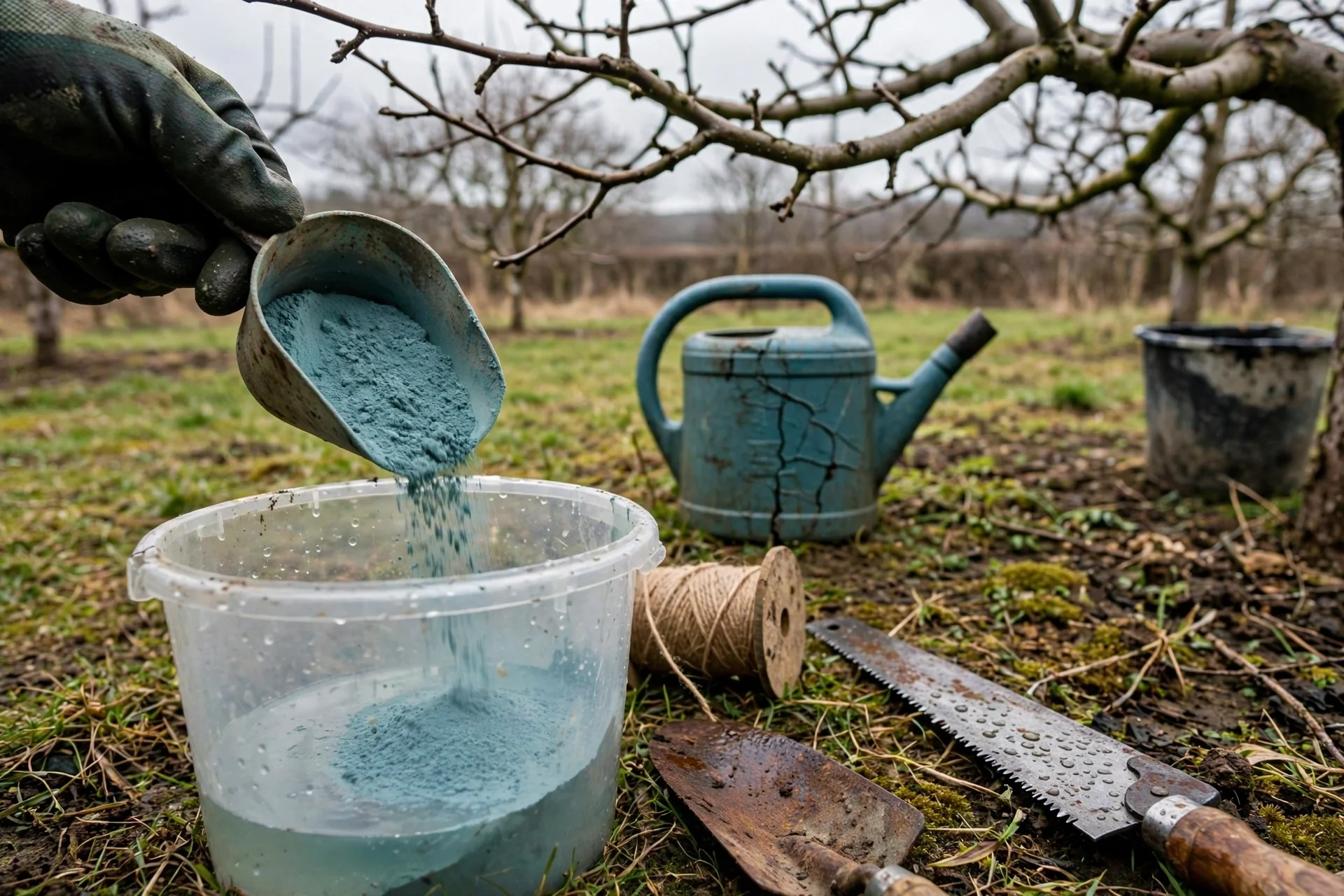
Best for: Branch 2 (active growing season)
Pros: Copper octanoate, also called copper soap, contains a very low percentage of metallic copper (typically 0.08% in ready-to-use formulations). It is OMRI-listed, has a zero-day pre-harvest interval on many labels, and is safe on open blooms where fixed coppers would cause petal burn. It washes off easily, so reapplication after rain is required.
Cons and edge case: The low copper load means it degrades quickly under UV and rain; expect to reapply every 7 to 10 days. In high-disease-pressure seasons (extended wet periods above 80 degrees F), copper soap alone may not provide adequate control. In those conditions, upgrade to a dual-release formulation.
3. Bordeaux Mixture: The Rainy-Climate Workhorse
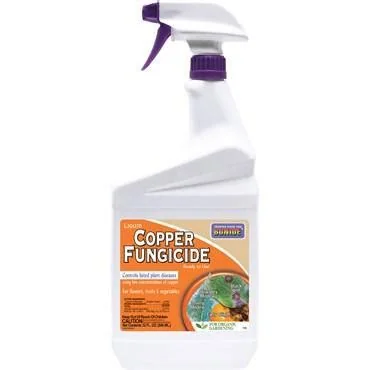
Best for: Branch 2 (active season, wet regions)
Bordeaux mixture combines copper sulfate with hydrated lime, creating a suspension that adheres to leaf surfaces longer than fixed coppers. The lime neutralizes the acidity of copper sulfate, raising the spray solution pH and reducing the risk of copper ion dumping. This formulation excels in regions where rainfall exceeds 30 inches annually, on crops like grapes, potatoes, and tomatoes. The threshold that matters: spray water pH must stay between 6.5 and 8.5. If your source water tests below pH 6.0, Bordeaux mixture is risky because the acid can dissolve excess copper from the precipitate. For powdery mildew specifically, pairing Bordeaux with sulfur in a tank mix can improve coverage; read about sulfur timing in our powdery mildew control guide.
4. Copper plus Horticultural Oil: The Delayed-Dormant Combination
Best for: Branch 1 (dormant-season protectant)
10-minute workflow: (1) Verify trees are between silver tip and quarter-inch green tip; if green tissue exceeds half an inch, skip this combo and use oil alone. (2) Fill your sprayer halfway with water, add the copper hydroxide or fixed copper product at the label’s dormant rate, then add horticultural oil at 1 to 2 percent concentration. (3) Top off with water while agitating continuously; oil and copper separate quickly without constant mixing. (4) Spray bark, branches, and bud scales to runoff; avoid spraying if the temperature will drop below 40 degrees F within 24 hours. (5) Triple-rinse your sprayer immediately after use; dried copper-oil residue is extremely difficult to remove.
Upgrade option: If you are also targeting overwintering insect eggs like aphids or mites, add a horticultural oil at the higher labeled rate for insect suppression, not just as a spreader-sticker.
5. Ready-to-Use Copper Soap Spray: No Mix, No Math
Best for: Branch 2 (small gardens, container plants)
Pros: Pre-diluted copper octanoate in a trigger-spray bottle eliminates measuring errors. It is ideal for treating a handful of tomato plants, a small rose bed, or indoor plants where concentrate mixing would be wasteful. Labels typically allow use up to the day of harvest.
Cons and edge case: Cost per application is high if you treat more than about 50 square feet. The low copper concentration (often 0.08%) means disease suppression, not eradication; it works best when applied before symptoms appear. If rust pustules are already visible on rose leaves, an RTU copper soap will slow spread but will not cure existing infection. For established rust problems, see our rust on roses guide.
6. Tribasic Copper Sulfate: Long Residual on Ornamentals
Best for: Branch 1 (dormant and extended-interval use)
Tribasic copper sulfate (CuSO4 plus 3Cu(OH)2) is a fixed copper with lower solubility than copper hydroxide, giving it a longer residual on plant surfaces. The threshold that matters: this formulation works best when spray water pH is between 7.0 and 8.5. At pH below 6.5, solubility increases sharply, risking phytotoxicity. This is why tribasic copper sulfate is often recommended for alkaline irrigation water regions such as parts of the southwestern US and Australia. Apply it once at leaf fall for peach leaf curl, or at bud swell for fire blight. Do not use on plants in the Rosaceae family (including photinia, cotoneaster, and flowering quince) during active growth, as these species are copper-sensitive.
7. Low-Copper Bio-Formulations: For Soils With Accumulation
[[YG_IMAGE:inline_image_7]]Best for: Branch 3 (high-rainfall regions, copper-loaded soils)
Conventional copper fungicides add 2 to 8 pounds of metallic copper per acre per application. In orchards with decades of copper use, soil copper levels can exceed 100 mg/kg, well above the 20 to 30 mg/kg background for most agricultural soils. At these levels, copper suppresses beneficial soil fungi, reduces earthworm activity, and can exceed European Union food-safety thresholds in bean crops. Low-copper bio-formulations use copper complexed with lignosulfonate or heptagluconate, delivering a fraction of the metallic copper while maintaining efficacy through improved leaf penetration. These products are particularly relevant for growers in the UK and EU, where copper fungicide use is under regulatory pressure as a candidate for substitution. Pair with neem oil applications for a broader pest-and-disease strategy that reduces total copper inputs.
8. Copper plus Sulfur Tank Mix: Dual Disease Coverage
Best for: Branch 3 (vineyards, cucurbits)
What it is: A tank mix combining a copper fungicide (targeting downy mildew and bacterial diseases) with wettable sulfur (targeting powdery mildew). This combination addresses two disease groups simultaneously and, per research on grapevines, sulfur can enhance copper efficacy against downy mildew in certain conditions.
Key steps: Add copper first to a half-filled tank, agitate, then add sulfur. Do not reverse the order; sulfur clumps if added to concentrated copper solution. Apply before temperatures exceed 85 degrees F, as sulfur causes phytotoxicity above that threshold. Keep the mix agitated during spraying.
9. Dual-Release Copper (Hydroxide plus Oxychloride): Fast Start, Long Tail
Best for: Branch 2 (organic production, extended protection)
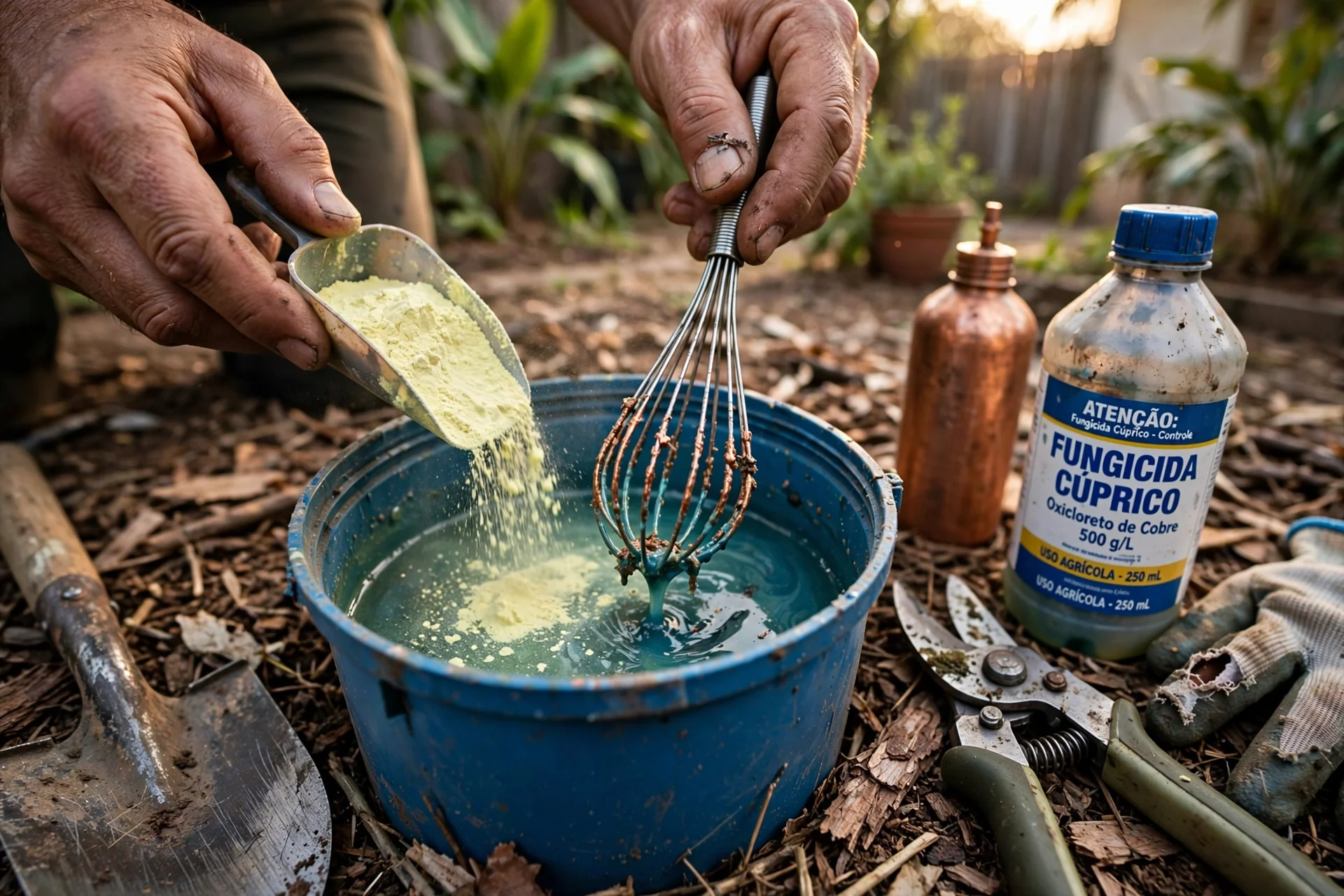
Products combining copper hydroxide with copper oxychloride offer two release profiles: hydroxide provides rapid copper ion availability for immediate protection, while oxychloride dissolves more slowly, extending the protective window. This dual-release mechanism matters most during periods of rapid plant growth (spring flush on fruit trees, pre-bloom on tomatoes), where new tissue expands faster than a single-release product can cover. The threshold: dual-release formulations typically carry a 7-to-14-day reapplication interval on the label, but in practice, rainfall amount dictates the actual interval. Less than 1 inch of rain may not require reapplication; between 1 and 2 inches of rain, cut the interval in half; more than 2 inches warrants a full reapplication. For a broader organic pest control framework, see our sulfur spray guide.
10. When to Skip Copper Entirely: Alternatives for Constrained Sites
Best for: Branch 3 (copper-loaded soils, aquatic proximity)
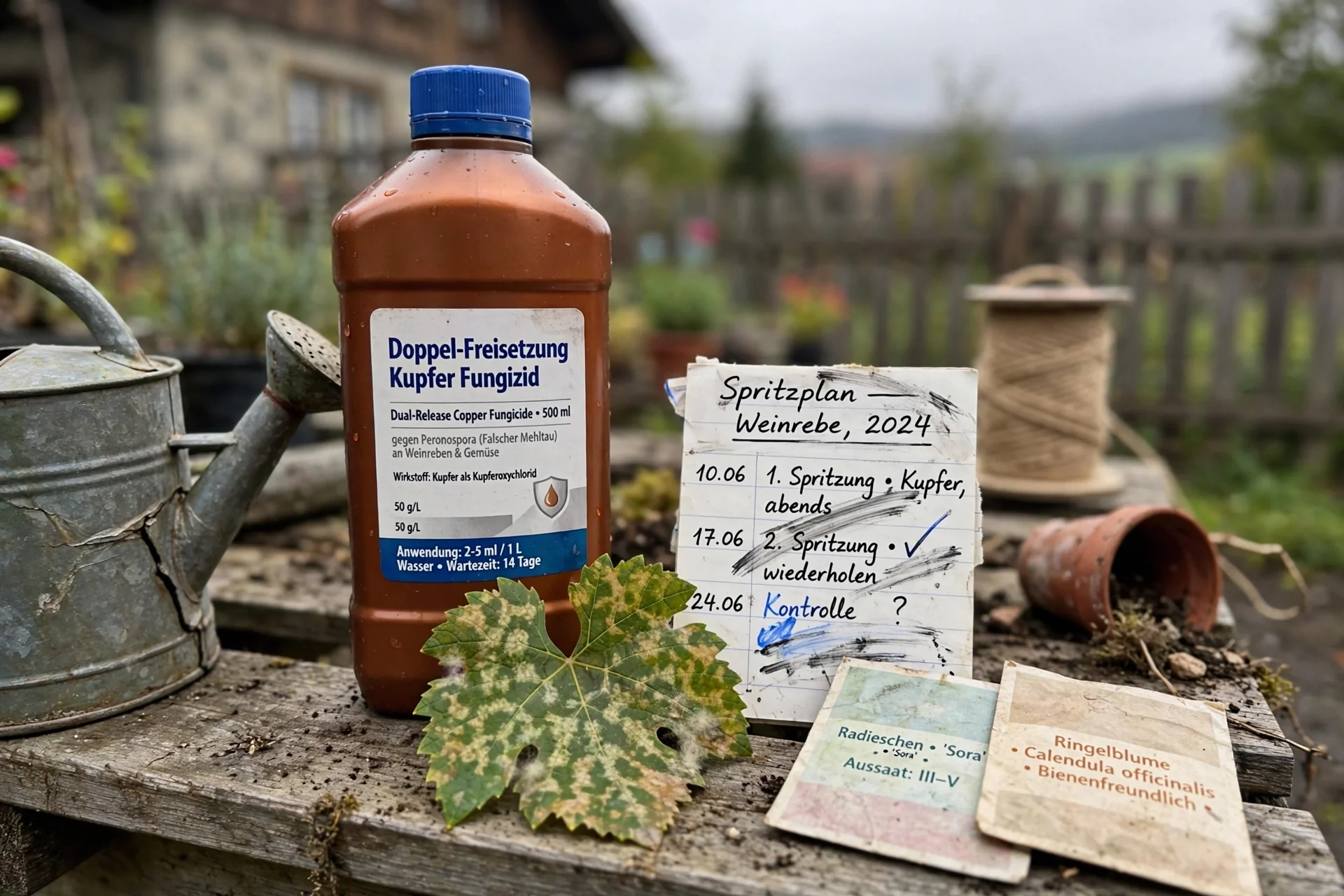
Pros: Potassium bicarbonate, Bacillus subtilis biofungicides, and plant defense activators (such as Reynoutria sachalinensis extract) provide disease suppression without adding metallic copper to soil. They are safe near ponds, streams, and drainage ditches where copper runoff threatens aquatic invertebrates. In organic high-tunnel tomato production, some biofungicides have performed comparably to copper for powdery mildew management.
Cons and edge case: These alternatives typically require weekly application and are less effective against bacterial diseases (bacterial spot, bacterial speck, fire blight) compared to copper. If your primary challenge is a bacterial pathogen, copper remains the more reliable option unless regulatory or soil constraints force an alternative. When using any pesticide near water, review our bee-safe pest control guidelines to protect pollinators as well.
Starter Stack (What to Choose First)
Branch 1 Starter: Dormant-Season Protection
Buy a fixed copper hydroxide concentrate and a separate horticultural oil. The copper handles peach leaf curl and fire blight inoculum; the oil smothers overwintering insect eggs and acts as a spreader-sticker. Apply once between leaf fall and bud swell, when daytime temperatures stay between 45 and 65 degrees F. Estimated cost: $18 to $32 for both concentrates, which will cover 2 to 4 average-sized fruit trees for a season. The synergy: oil improves copper adhesion to bark, extending the protective window through winter rain.
Branch 2 Starter: Active Growing Season
Start with a ready-to-use copper soap spray for immediate spot treatment, and keep a copper octanoate concentrate on hand for larger areas. The RTU handles small outbreaks on a few plants without mixing; the concentrate covers vegetable beds and rose gardens economically. Apply every 7 to 10 days during wet periods. Estimated cost: $12 to $16 for an RTU bottle plus $15 to $22 for a concentrate, sufficient for a 200-square-foot garden for approximately 6 to 8 weeks. The synergy: the RTU trains your eye on coverage quality; the concentrate scales that skill to larger areas.
Branch 3 Starter: Low-Input Strategy
Purchase a low-copper bio-formulation (copper lignosulfonate or copper heptagluconate) paired with a potassium bicarbonate product for powdery mildew. Alternate applications: copper bio-formulation one week, potassium bicarbonate the next. This rotation reduces total copper deposition by roughly half compared to a copper-only schedule. Estimated cost: $28 to $48 for both products, covering approximately 300 square feet for a season. The synergy: alternating modes of action reduces selection pressure for copper-resistant pathogen strains.
When This Won’t Work
Failure condition 1: Your spray water pH is below 6.0 and you cannot adjust it. Copper fungicides become excessively soluble in acidic water, releasing toxic levels of free copper ions that burn leaf tissue. Symptoms appear as brown marginal scorch within 24 to 48 hours. If you cannot raise pH by adding a buffering agent or using hydrated lime at a 1:2 ratio of copper to lime, switch to a non-copper fungicide such as potassium bicarbonate or a Bacillus subtilis product.
Failure condition 2: You are applying copper during a heat wave with daytime temperatures consistently above 90 degrees F. Even fixed coppers become phytotoxic at high temperatures because plant cuticles thin and stomata remain open under heat stress, increasing copper uptake. If you must treat during hot weather, use the lowest labeled rate of a copper octanoate formulation and apply in the early morning when leaf temperatures are lowest. For sites where summer heat is the norm and disease pressure is high, consider using bee-safe alternatives that avoid copper entirely during bloom and peak pollinator activity.
In both failure scenarios, the alternative action is the same: pause copper applications, irrigate to reduce plant stress, and switch to a protectant with a different mode of action until conditions return to the safe window.
Choosing the Right Option for Your Situation
Budget Threshold
Ready-to-use sprays cost $12 to $18 per quart and treat approximately 50 to 75 square feet. Concentrates cost $15 to $35 per pint or pound and make 8 to 32 gallons of spray. If your garden exceeds 100 square feet of treated area, concentrates are more economical even after accounting for the cost of a sprayer. In the UK and Canada, copper fungicide products are typically priced 15 to 30 percent higher than US equivalents. In India and the Philippines, copper oxychloride is widely available at lower cost and is the dominant formulation for smallholder vegetable production.
Time Threshold
Dormant copper application takes roughly 30 to 60 minutes for two to four fruit trees, once per season. In-season copper spraying requires 15 to 30 minutes per application, repeated every 7 to 14 days during the growing season. If you cannot commit to reapplication after every rainfall event exceeding 1 inch, choose a fixed copper with longer residual (tribasic copper sulfate) over copper soap.
Technical Constraint: Spray Water pH
Test your spray water with a pH meter or test strips before purchasing. If pH is between 6.5 and 8.5, any copper formulation is safe. If pH is between 6.0 and 6.4, use only fixed coppers or Bordeaux mixture (which includes lime). If pH is below 6.0, either buffer your water or skip copper entirely. This single test is the highest-value action in this entire guide.
Yes/No Checklist:
- Is your spray water pH between 6.5 and 8.5? If no, buffer or choose a non-copper alternative.
- Are daytime temperatures forecast to stay below 85 degrees F for 48 hours after application? If no, delay spraying.
- Have you checked your soil copper level within the past three years? If no and you have sprayed copper for more than five consecutive seasons, order a soil test before the next application.
- Is there a pond, stream, or drainage ditch within 50 feet of the treatment area? If yes, use a low-copper formulation and avoid spraying before forecast rain.
Expert Q&A
How long does copper fungicide remain effective on leaves after application?
Field assessments indicate an effective protective life of roughly two to three weeks under dry conditions, though chemical residues can be detected on leaves for several months. Rainfall is the primary factor shortening effectiveness. Less than 1 inch of rain may not require reapplication; more than 2 inches typically warrants a full respray. Copper oxychloride has a half-life on grape leaves of approximately 24 days.
Can I mix copper fungicide with insecticidal soap or neem oil?
It depends on the copper formulation. Fixed coppers and copper octanoate are generally compatible with insecticidal soaps when the mixture is sprayed immediately. Do not combine copper with lime sulfur; the reaction produces soluble copper compounds that are highly phytotoxic. Always perform a jar test: mix small quantities, wait 15 minutes, and check for precipitate, gel formation, or color change before filling your sprayer.
What is the pre-harvest interval for copper fungicide on vegetables?
Pre-harvest intervals vary by formulation. Copper octanoate products often carry a zero-day PHI, meaning you can harvest the same day after the spray dries. Copper hydroxide formulations typically require 3 to 14 days between the last application and harvest, depending on the crop. Always check the specific product label; the PHI for tomatoes may differ from the PHI for grapes even within the same brand.
Does copper fungicide accumulate in garden soil, and should I worry?
Yes, copper accumulates. Long-term orchard studies show that copper does not degrade or volatilize; it binds to soil organic matter and clay particles, building up over years of repeated application. Soils in avocado orchards with decades of copper use can show copper levels several times higher than unsprayed reference soils. One soil test after five consecutive seasons of copper use is a prudent baseline measurement.
Are there plants that should never be sprayed with copper fungicide?
Several ornamental species are notably copper-sensitive. Ivy geraniums (Pelargonium peltatum) develop severe leaf spotting. Certain apple cultivars, including ‘Golden Delicious’ and ‘Jonathan’, are prone to copper-induced fruit russeting. Ferns and bromeliads absorb copper through their fronds and are easily damaged. Always test on a small area and wait 48 hours before treating an entire sensitive plant.
Conclusion
The single decision that determines copper fungicide success or failure happens before you open the bottle: testing your spray water pH. If that number falls between 6.5 and 8.5, you have a wide range of formulations to choose from based on your season, crop, and disease target. If it falls outside that range, buffer your water or switch to a non-copper alternative.
The most common mistake is applying fixed copper on green, actively growing tissue. Fixed copper belongs on dormant wood. During the growing season, copper soap or a dual-release formulation is almost always the safer choice. For guidance on keeping your entire pest control program safe for the animals that share your garden, see our safe pest control for pets recommendations.