
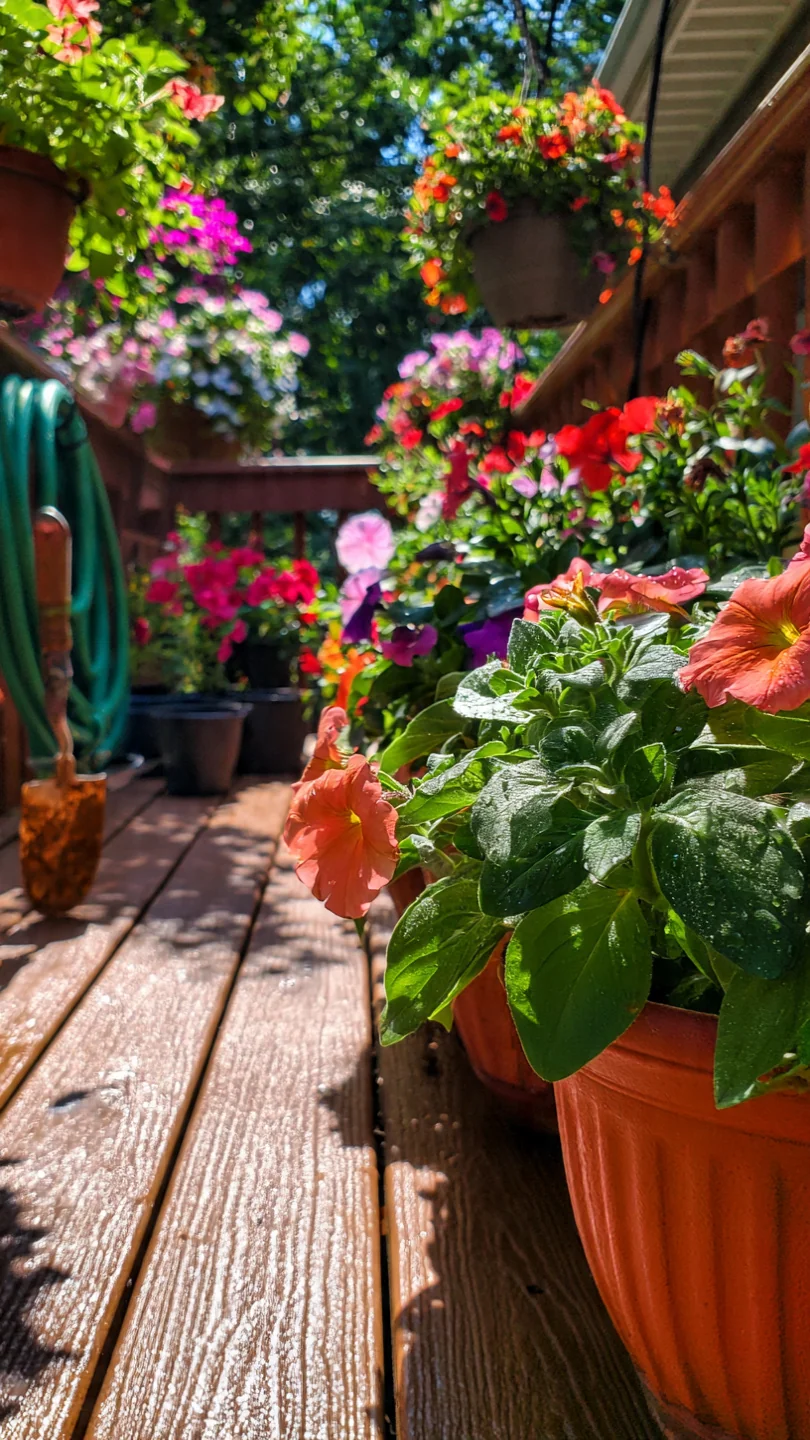
Deck garden ideas usually focus on aesthetics alone and ignore the physical realities of elevated outdoor spaces. The better approach starts with three measurable conditions: daily sunlight hours, usable square footage, and average wind exposure. Match these to the right design type and you avoid plants that flop, pots that tip, or layouts that crowd the space.
This guide focuses on ornamental container, vertical, and integrated setups suitable for standard residential decks. It leaves out in-ground beds, permanent construction projects, and edible-focused layouts.
You will gain a clear mapping of which designs fit your exact deck and how the top two per branch work together for balanced visual layers. That means fewer purchases, faster setup, and ornamental results that hold through the season.
Bottom line: Measure your deck conditions first, then select from the grid below to install a design that performs reliably.
The Yield Grid Decision Grid
Branch 1: Decks receiving more than 5 hours of direct sunlight daily and at least 150 square feet of open space.
Recommended: Items 1, 4, and 7 below.
Branch 2: Decks receiving 3 to 5 hours of direct sunlight or measuring 80 to 150 square feet.
Recommended: Items 2, 5, and 8 below.
Branch 3: Decks receiving fewer than 3 hours of direct sunlight, under 80 square feet, or exposed to average wind speeds above 15 miles per hour.
Recommended: Items 3, 6, and 9 below.
For container techniques that adapt across all branches, see our container garden ideas.
Quick Comparison Table
| Option | Key mechanism | Best for | Decision Grid Branch | Effort Score |
|---|---|---|---|---|
| Stacked Container Towers for Layered Ornamental Impact | Modular pot stacking on wheeled bases for adjustable height | Vertical color in full-sun open decks | 1 | 2 |
| Rail-Mounted Planter Boxes for Edge Definition | Brackets that clamp to flat railings for instant elevation | Eye-level interest on medium decks | 2 | 3 |
| Secured Hanging Basket Systems for Overhead Color | Swivel hooks and weighted chains for wind stability | Low-floor impact in shaded or small decks | 3 | 3 |
| Integrated Bench Planters with Climbers for Dual Function | Bench structure that doubles as planter support | Seating plus screening in sunny large decks | 1 | 2 |
| Wall-Mounted Vertical Shelving for Space-Efficient Displays | Bracketed shelves that hold multiple pot sizes | Wall coverage on medium decks | 2 | 2 |
| Compact Low-Profile Riser Clusters for Small Decks | Stepped wooden platforms that keep pots low and stable | Ground-level layering in tight or windy spaces | 3 | 1 |
| Multi-Level Riser Platforms for Dynamic Levels | Tiered platforms built from pressure-treated lumber | Elevated interest across large sunny decks | 1 | 3 |
| Seasonal Swap Pot Clusters for Year-Round Interest | Grouped pots on saucers that allow easy rotation | Flexible color changes on medium decks | 2 | 4 |
| Overhead Frame with Trailing Plants for Subtle Canopy | Freestanding or post-mounted frame for trailing growth | Soft overhead screening in low-light decks | 3 | 2 |
Stacked Container Towers for Layered Ornamental Impact
Best for: Branch 1
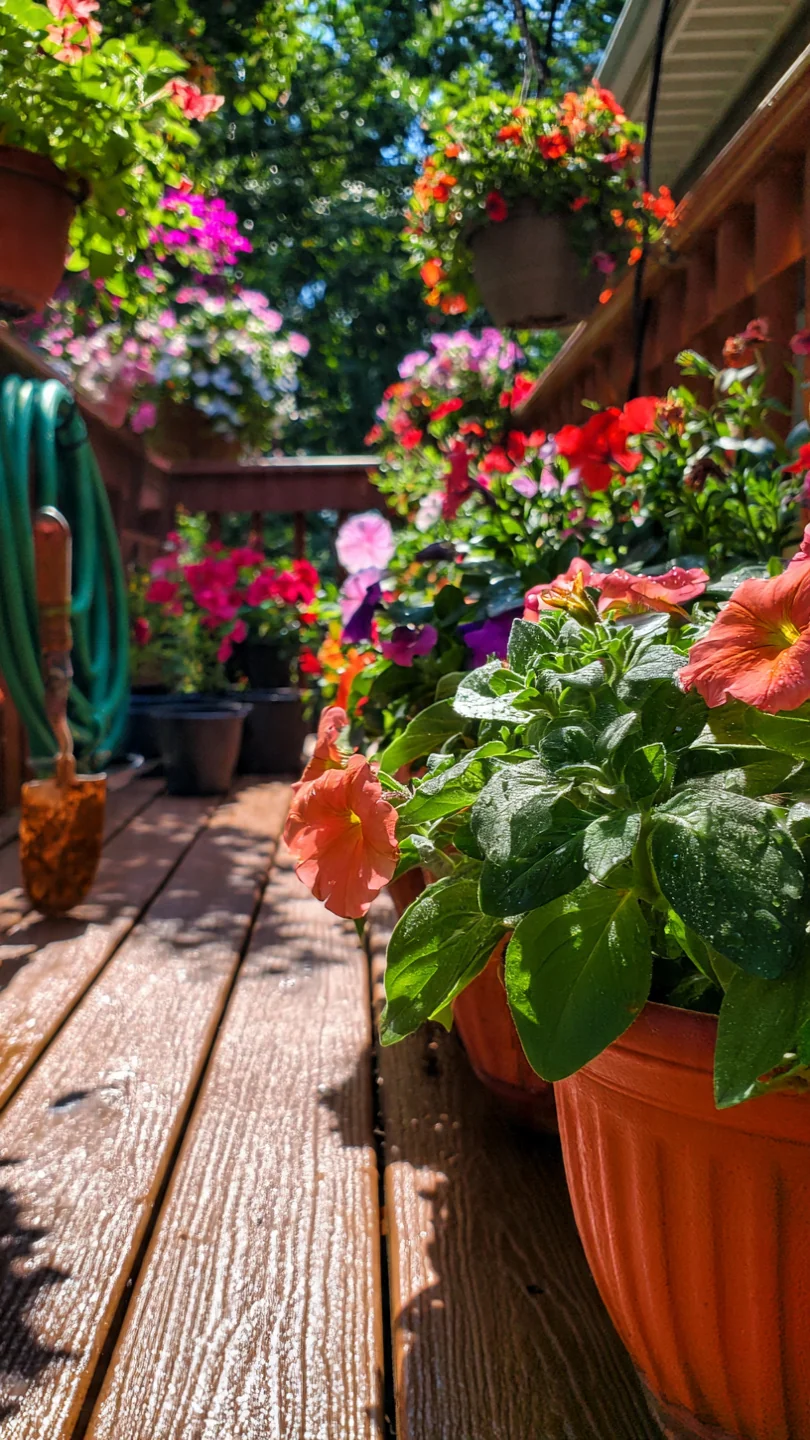
Blueprint: This design stacks three progressively larger pots on a single mobile base to create instant height and visual layers using only 2 square feet of deck space. It suits decks with ample sun and room by delivering focal points without permanent fixtures.
Steps: Choose weatherproof pots with drainage holes in 12 inch, 16 inch, and 20 inch diameters. Place gravel in the bottom third of each for stability and drainage. Plant sun-loving ornamentals such as coreopsis in the top tier, mid-height lilies in the middle, and trailing petunias at the base. Lock wheels after positioning 24 inches from any edge.
Avoid the mistake of skipping saucers under each tier, which leads to water runoff staining the deck below. Pair it with vertical accents from our vertical garden ideas for even more dimension.
Rail-Mounted Planter Boxes for Edge Definition
Best for: Branch 2
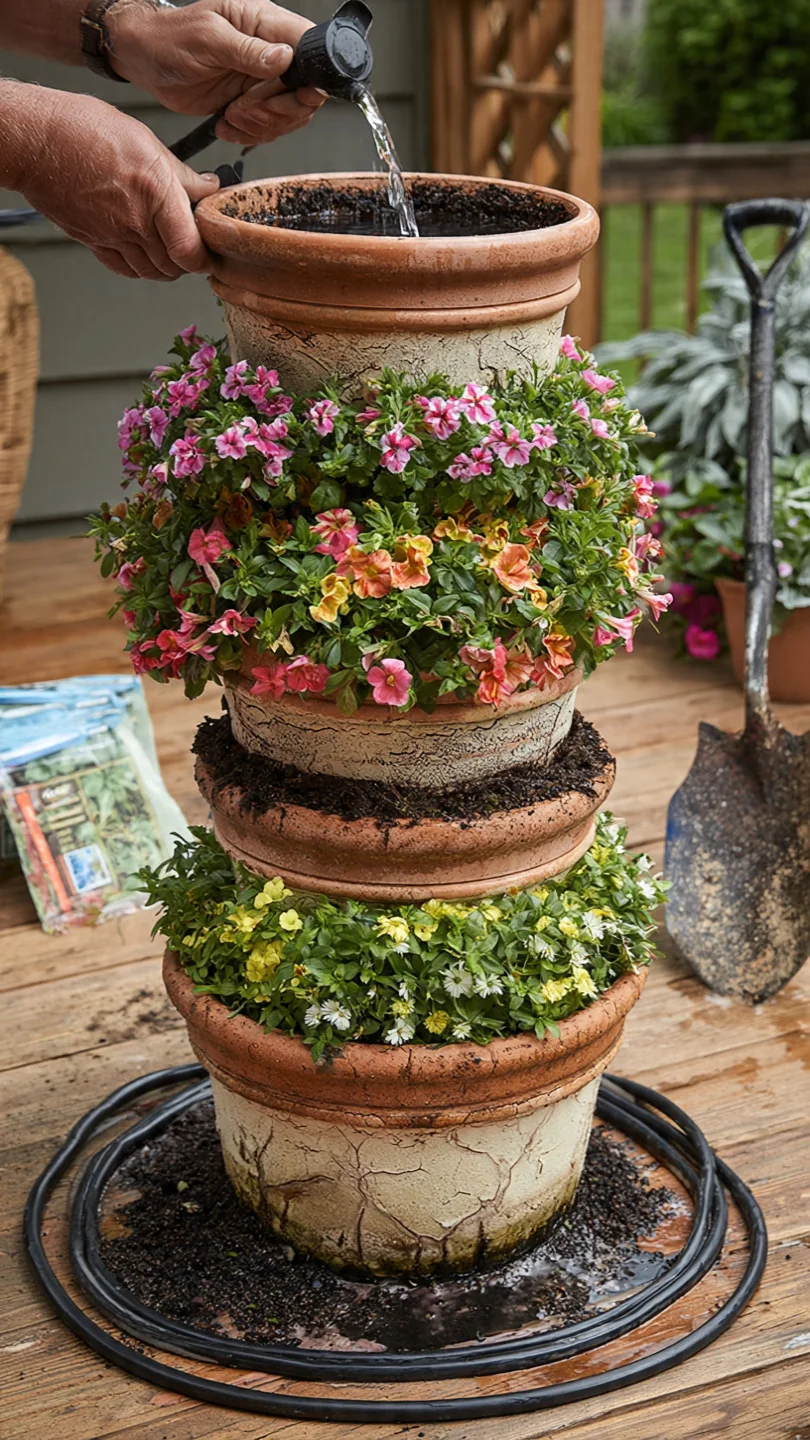
Use rail-mounted planter boxes when your deck has flat, wide railings and moderate sun levels. Skip them if railings are narrow under 3.5 inches or if you prefer completely freestanding options.
Pros include eye-level color without taking floor space and easy access for deadheading. Cons involve limited soil volume that dries faster in summer heat. Edge case: Secure with rust-proof brackets if children or pets use the deck regularly.
See how similar rail techniques apply in balcony garden ideas.
Secured Hanging Basket Systems for Overhead Color
Best for: Branch 3
Threshold rule: Use hanging baskets only when your deck has overhead joists or beams that can support added weight and wind speeds stay below 25 miles per hour. Adjust by adding chain extenders if clearance to floor is under 7 feet.
Choose coconut fiber liners for better moisture retention in low light and select shade tolerant trailing plants like ivy or fuchsia. Install with swivel hooks to prevent twisting in breezes. This keeps the design stable and ornamental even in compact or shaded conditions.
Integrated Bench Planters with Climbers for Dual Function
Best for: Branch 1
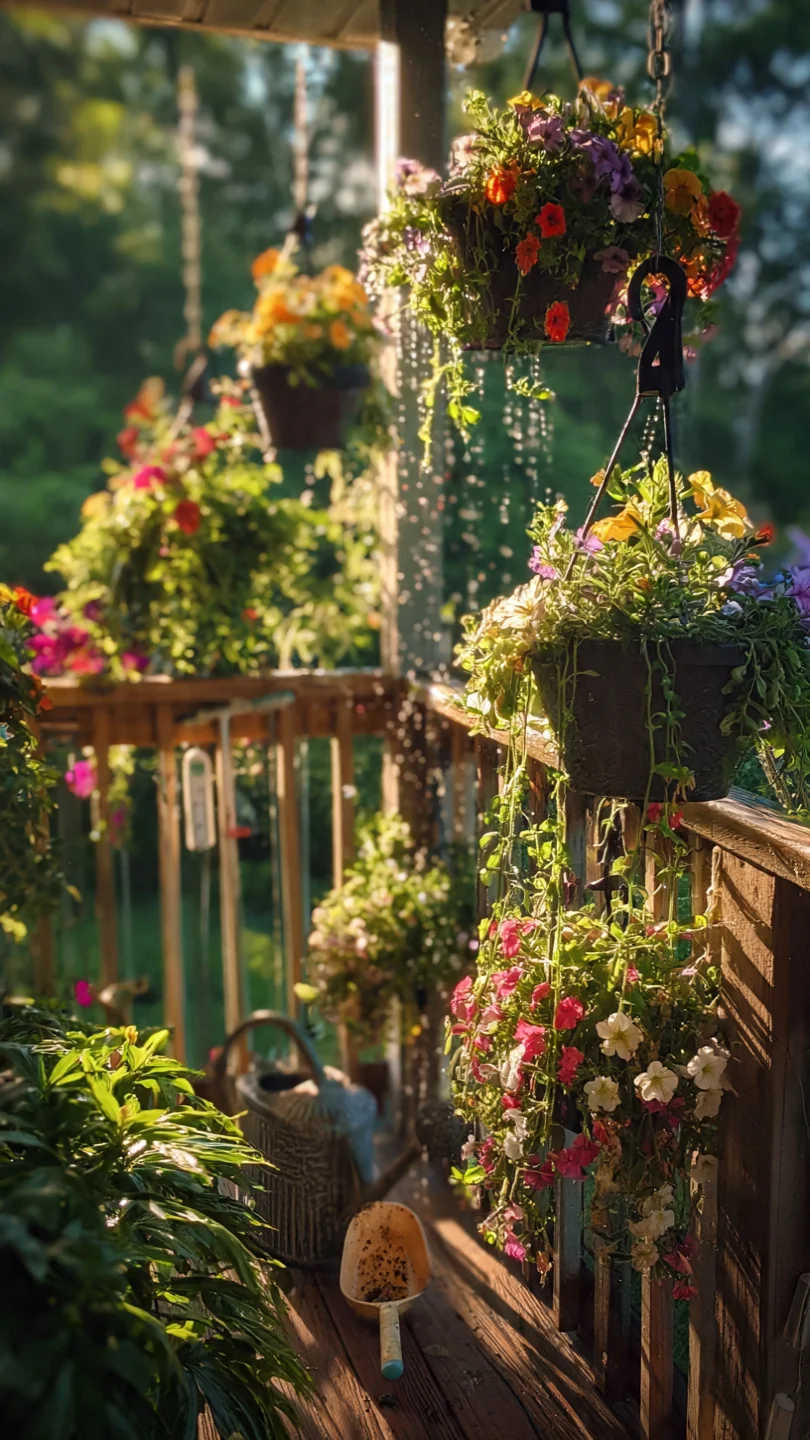
10-minute workflow: Measure bench footprint and select pre-made planter boxes that match length. Attach with exterior screws into joists. Fill with mix and plant climbers like clematis at ends. Add cushions. Upgrade option: Integrate solar lights along the top rail.
This creates seating plus vertical ornamental screening in one step for larger sunny decks. It maximizes function while the climbers provide seasonal color changes. The mechanism relies on the bench structure supporting the added planter weight without extra bracing if joists are standard spacing.
Ensure deck railing height allows comfortable seating at 18 inches above planters. For comparable space use see small patio ideas.
Wall-Mounted Vertical Shelving for Space-Efficient Displays
Best for: Branch 2
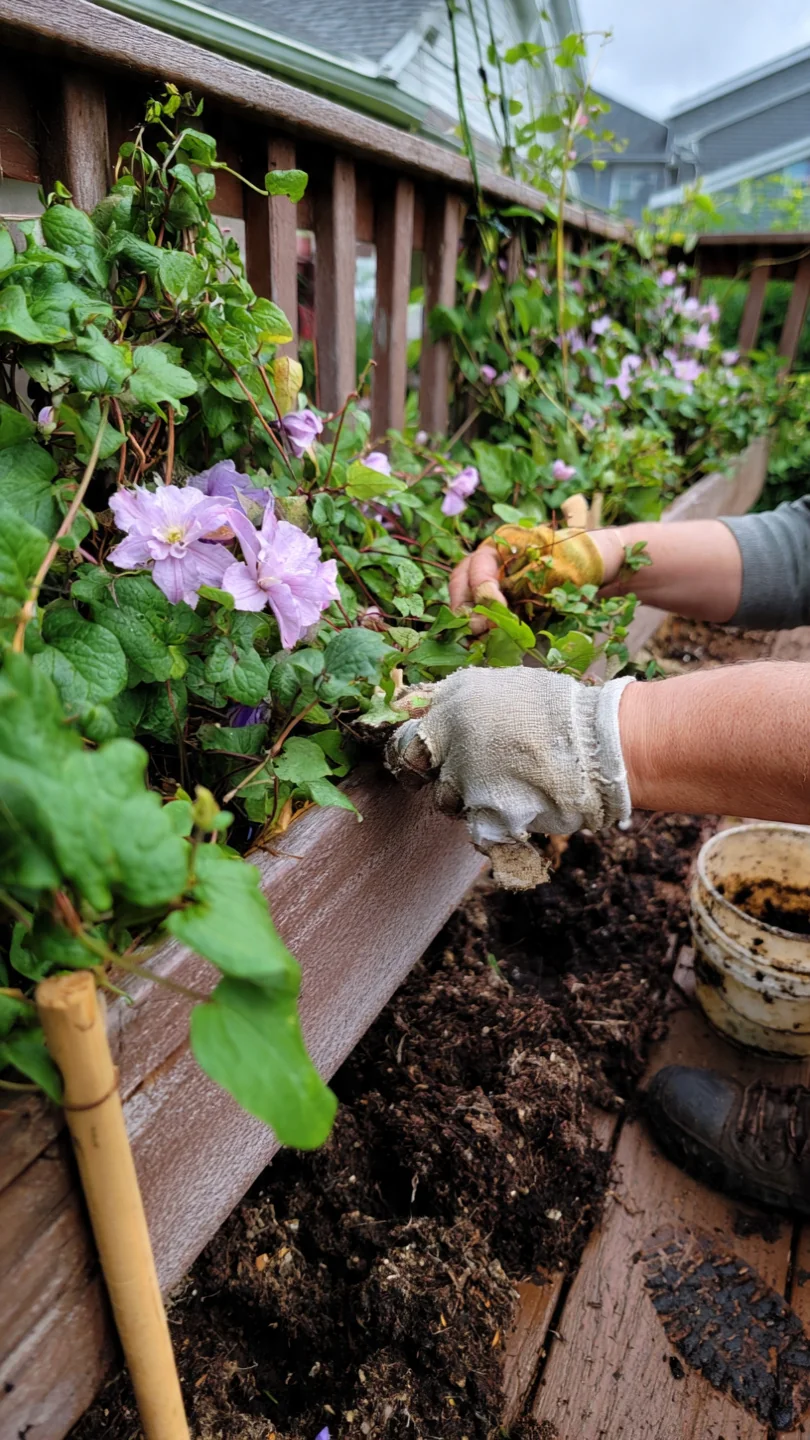
Blueprint: Mount three staggered shelves at 18 inch, 30 inch, and 42 inch heights on a solid wall or post using heavy-duty brackets. Each shelf holds two to four pots depending on size.
For medium decks this delivers wall coverage without floor obstruction. Fill shelves starting with largest pots at the bottom for stability. Plant a mix of upright and trailing ornamentals to create cascading texture.
Avoid overloading any single shelf beyond its bracket rating. Combine with lighting options from our outdoor lighting ideas to highlight the display after dusk.
Compact Low-Profile Riser Clusters for Small Decks
Best for: Branch 3
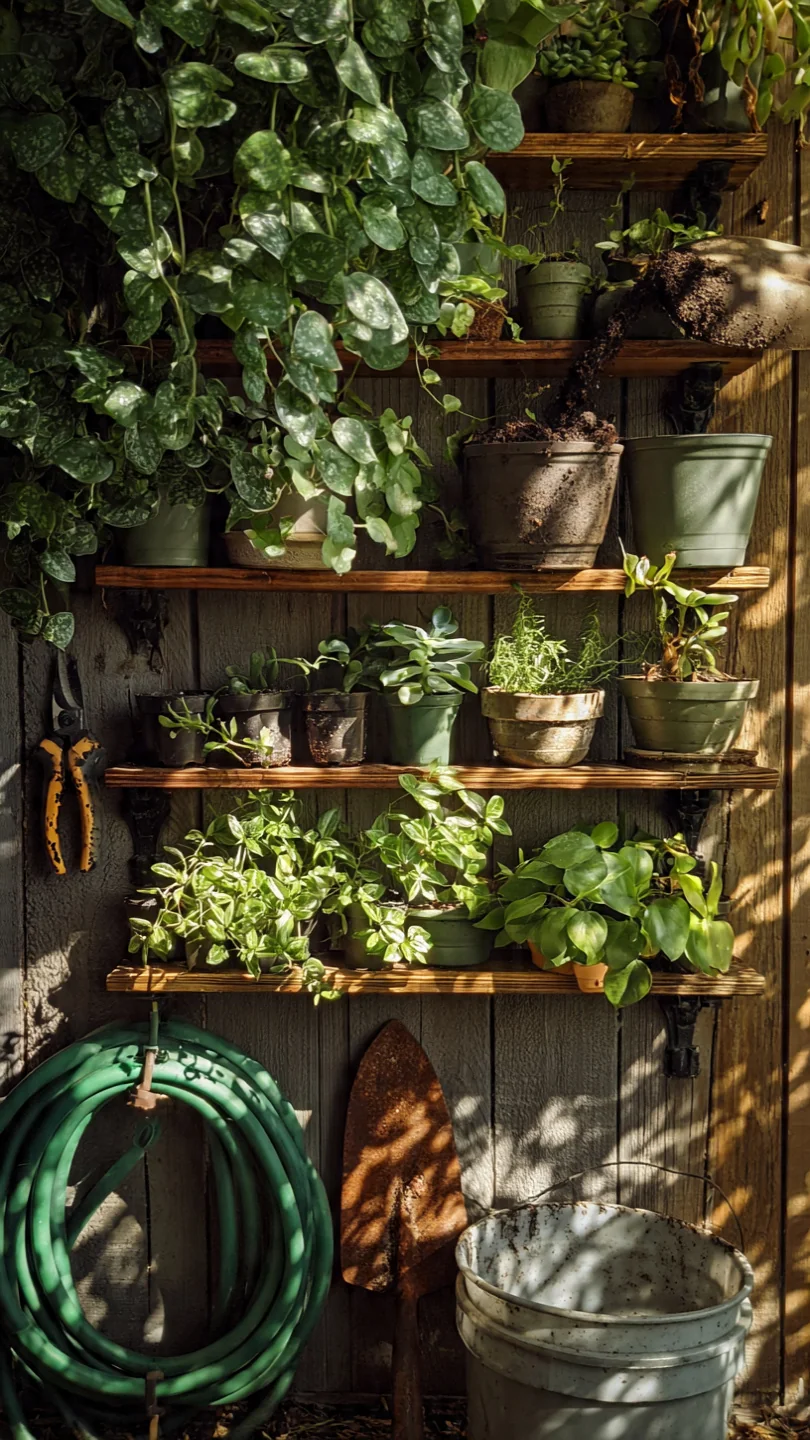
Use compact low-profile riser clusters when floor space is limited and wind exposure is a concern. Skip them if your deck has significant slope that would require leveling shims over 2 inches high.
Pros include quick assembly from standard lumber and low center of gravity for stability. Cons appear only if you choose tall plants that catch wind. Edge case: Add sandbags to the base layer on decks with frequent gusts.
Multi-Level Riser Platforms for Dynamic Levels
Best for: Branch 1
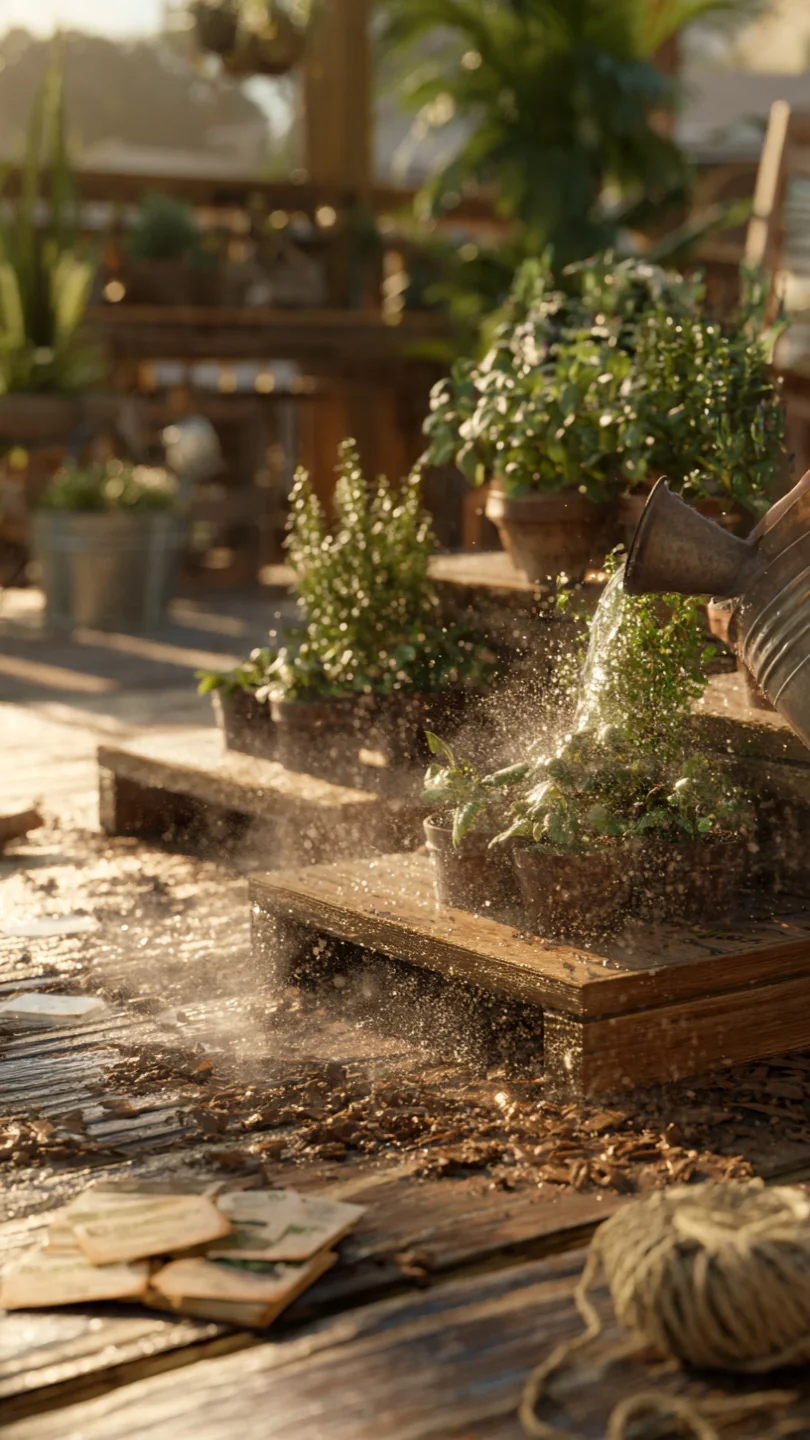
Threshold rule: Build multi-level riser platforms only when your deck can accommodate platforms up to 12 inches high and total added weight stays within standard residential load limits. Adjust platform width to leave at least 36 inches of clear walkway.
Use pressure-treated lumber for the frame and top with exterior deck boards. Arrange pots on each tier to create a stepped effect that draws the eye upward. This works best in sunny large decks where the levels add depth without blocking movement.
Combine with privacy elements from our patio privacy ideas for screened corners.
Seasonal Swap Pot Clusters for Year-Round Interest
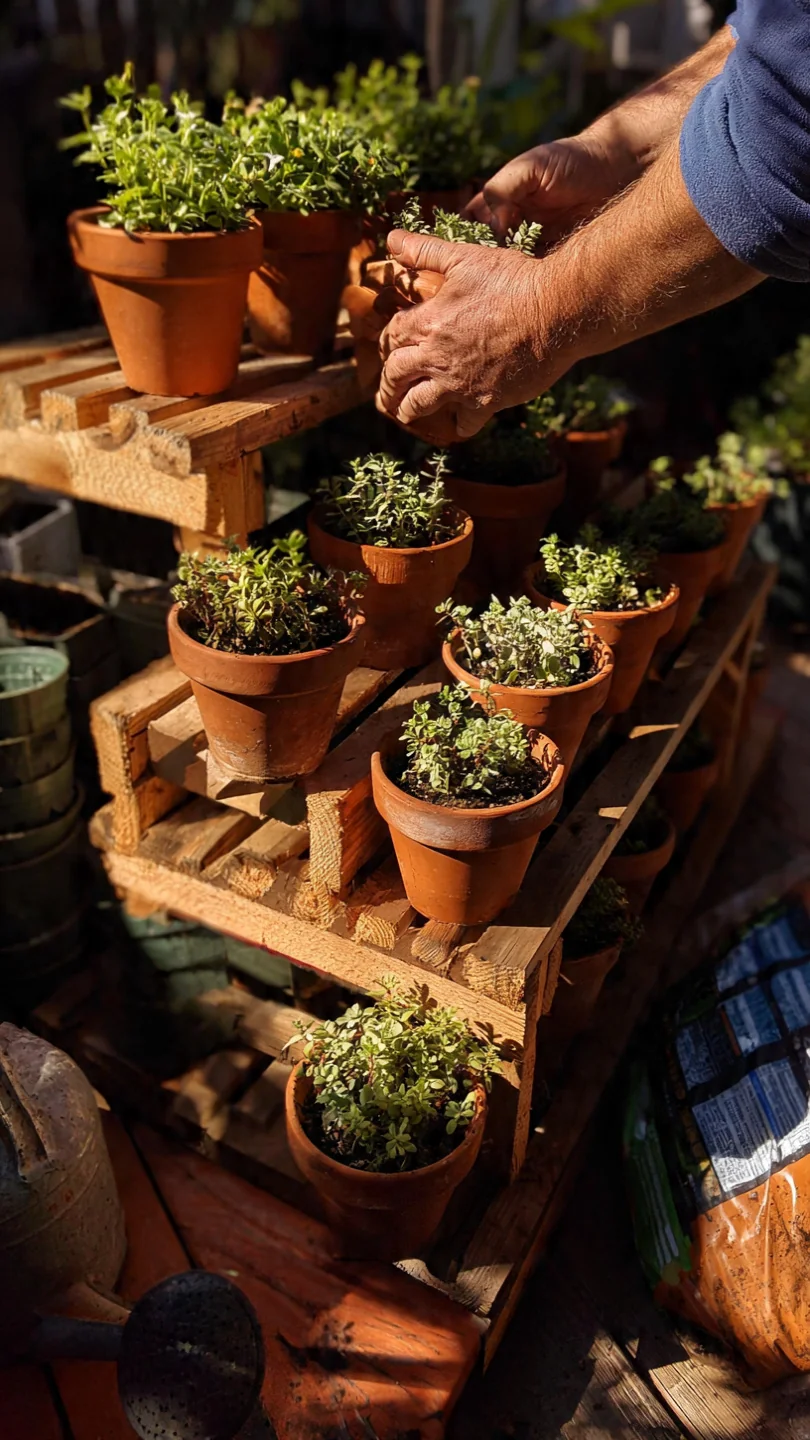
Best for: Branch 2
10-minute workflow: Group five to seven matching pots on saucers in a loose cluster near the seating area. Swap out spent plants with fresh seasonal ornamentals. Refresh soil in the top 2 inches only.
This keeps color changing through the year on medium decks with moderate sun. The saucers prevent deck staining and allow easy movement for cleaning.
Overhead Frame with Trailing Plants for Subtle Canopy

Best for: Branch 3
Blueprint: Assemble a freestanding or post-mounted frame using lightweight metal or wood posts no taller than 8 feet. Stretch wire or string across the top for trailing plants to climb.
For low-light or small decks this adds soft overhead screening without heavy construction. Plant shade-tolerant trailers such as creeping jenny or dichondra at the base and train them upward. The open design allows air circulation even in shaded corners.
Position the frame to avoid blocking access paths. It pairs naturally with seating arrangements from our garden seating ideas.
Starter Stack (What to Choose First)
Branch 1: High-Sun Large Decks
Start with stacked container towers and integrated bench planters. The towers deliver vertical color while benches add seating and ground-level interest. Setup costs range from 250 to 450 dollars and require 4 to 6 hours of work.
Branch 2: Medium Conditions
Begin with rail-mounted planter boxes and wall-mounted vertical shelving. They combine edge definition with wall coverage for balanced coverage without crowding. Setup ranges from 180 to 350 dollars and 2 to 4 hours.
Branch 3: Low-Sun or Small Windy Decks
Choose secured hanging basket systems and compact low-profile riser clusters. Hanging adds height safely while risers keep everything low and stable. Budget 150 to 300 dollars with 3 to 5 hours install time.
When This Won’t Work
These designs will not perform if your deck flexes noticeably under added weight or if local building codes restrict any attached fixtures above railing height. In both cases consult a structural engineer before proceeding and consider freestanding containers only.
They also fail on decks with extreme shade combined with poor drainage where soil stays saturated for more than 48 hours after rain. Switch to elevated risers only and test soil moisture weekly.
Choosing the Right Option for Your Situation
Budget Threshold
If your available budget is below 300 dollars select from branch 3 designs first and scale up one item at a time as funds allow.
Time Threshold
If you have fewer than 4 hours for initial setup limit choices to rail-mounted or hanging systems that require no custom assembly.
Technical Constraint: Wind Exposure
If average wind speeds exceed 20 miles per hour prioritize secured hanging or low-profile options and add weight to bases for stability.
Yes/No Checklist
Deck receives at least 3 hours of sun daily? Yes / No
Usable space over 50 square feet? Yes / No
Railing or wall surface available for mounting? Yes / No
Maintenance tolerance includes biweekly checks? Yes / No
Expert Q&A
How do deck materials affect ornamental plant selection?
Wood decks absorb moisture and can rot under constant soil contact, so elevate all planters at least 1 inch with feet. Composite decks reflect more heat, favoring heat-tolerant species such as gaura or salvia that handle warmer soil conditions.
What role does reflected light play in low-sun deck gardens?
Light-colored deck surfaces can increase effective light through reflection, allowing shade plants like hostas to perform better than expected in marginal conditions. Test placement with a simple light meter at plant level during peak hours.
How to combine deck garden designs with existing furniture layouts?
Keep at least 36 inches of clear walkway around furniture groups and position taller elements behind seating rather than in front. Cluster low-profile risers beside chairs to create natural side tables without blocking movement.
Do deck garden designs need different winter protection than ground gardens?
Yes. Elevated decks lose heat faster, so move frost-sensitive pots to a sheltered spot against the house wall or wrap containers in burlap when temperatures drop below freezing for several nights.
How can lighting enhance ornamental deck gardens after dark?
Place low-voltage path lights at the base of stacked towers or risers to cast upward shadows that highlight plant texture. Solar spotlights on vertical shelving create depth without wiring.
Conclusion
The key decision is always matching the three measurable deck conditions to the branch rather than selecting by appearance alone. The most common mistake is underestimating wind or load, leading to unstable setups that require replacement mid-season.
Review your deck measurements against the decision grid and begin with the starter stack recommendation for your branch. For more planter inspiration see our porch planter ideas.