
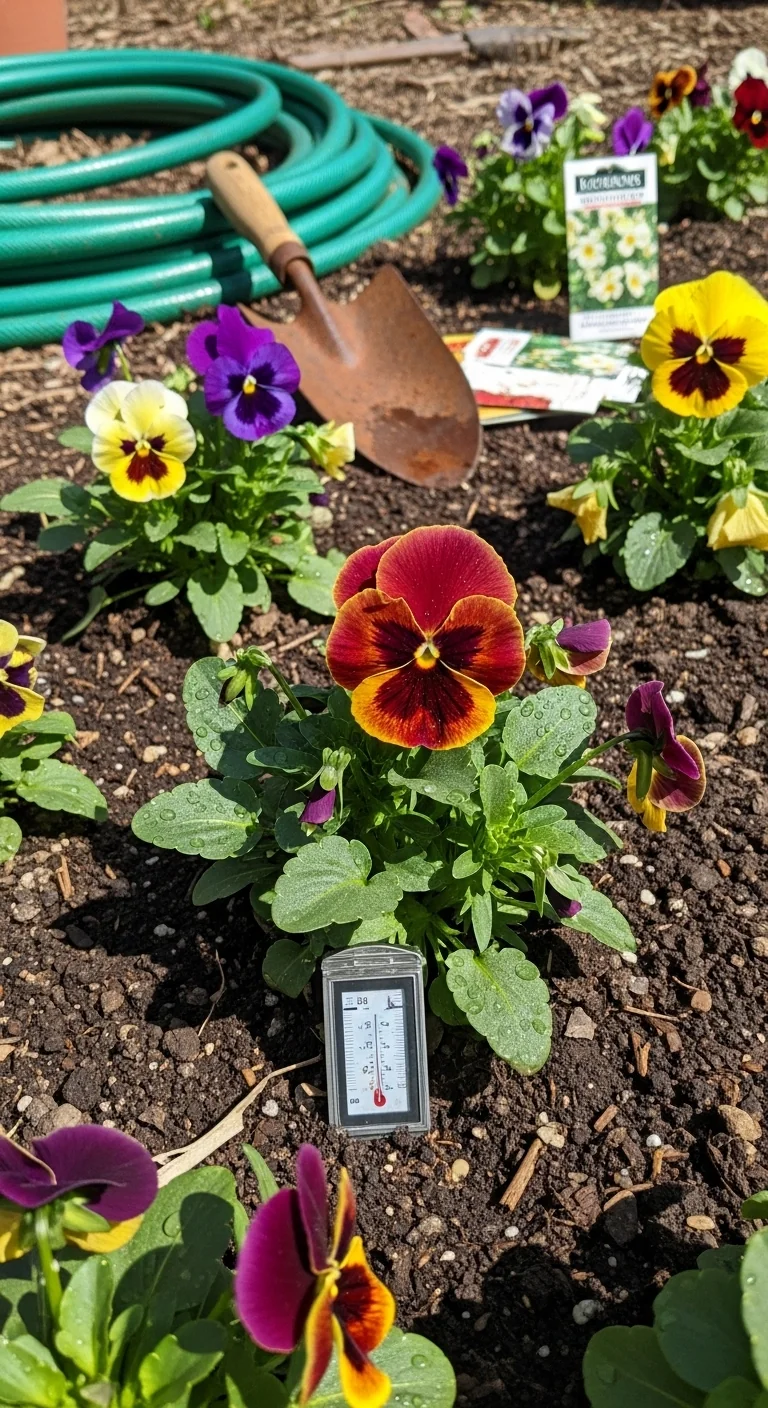
Pansy varieties are not interchangeable. Series bred for specific traits deliver different bloom windows when daytime temperatures swing 20 degrees or more or when light levels drop below six hours. Matching the variety to your site conditions avoids the common mid-season collapse that generic recommendations overlook.
This guide evaluates nine established series for performance in US, UK, Canada, Australia, New Zealand, and Ireland gardens. It focuses on measurable factors such as temperature thresholds, plant habit, and flower mechanism. General soil preparation or basic watering schedules are excluded.
You will exit with a short list of two or three varieties that fit your exact light exposure, temperature range, and space constraints, plus the first purchases to make this season.
Align variety selection to your garden’s dominant temperature window and use case for reliable color without mid-season replacement.
The Yield Grid Decision Grid
Branch 1: Daytime highs regularly reach 70F or above at plant height during the bloom window (measured with a soil thermometer at 2 inches depth). These conditions stress standard pansies within four weeks. Recommended: Matrix Pansy Series, Frizzle Sizzle Series, and Majestic Giant Series below.
Branch 2: Nighttime lows drop below 25F for three or more nights in fall or early spring, or soil temperatures stay under 45F at planting. Recommended: Cool Wave Pansy Series, Delta Pro Series, and Bolero Series below.
Branch 3: Hanging baskets, window boxes, or edging where trailing spread or compact mound habit matters more than upright height (space under 18 inches wide). Recommended: Imperial Series, Panola Series, and WonderFall Pansy below. For more full-sun options see full-sun flowers.
Quick Comparison Table
| Option | Key mechanism | Best for | Decision Grid Branch | Effort Score |
|---|---|---|---|---|
| Matrix Pansy Series | Compact habit plus heat-tolerant breeding | Warm-season extension | Branch 1 | 2 |
| Cool Wave Pansy Series | Trailing stems up to 24 inches | Baskets and vertical displays | Branch 2 | 1 |
| Delta Pro Series | Uniform bloom size and fast establishment | Consistent cool-season color | Branch 2 | 3 |
| Frizzle Sizzle Series | Ruffled petal edges for texture | Heat-stressed beds needing visual interest | Branch 1 | 2 |
| Bolero Series | Semi-double flowers with layered petals | Cold snaps in early spring | Branch 2 | 3 |
| Imperial Series | Antique-shade color blending | Shaded containers or edging | Branch 3 | 2 |
| Majestic Giant Series | Large 4-inch flower diameter | Impact in full-sun beds | Branch 1 | 4 |
| Panola Series | Smaller multiflora blooms with spreading habit | Low edging or rock gardens | Branch 3 | 1 |
| WonderFall Pansy | Prolific trailing with self-cleaning tendency | Hanging displays needing minimal upkeep | Branch 3 | 2 |
Matrix Pansy Series
Best for: Branch 1
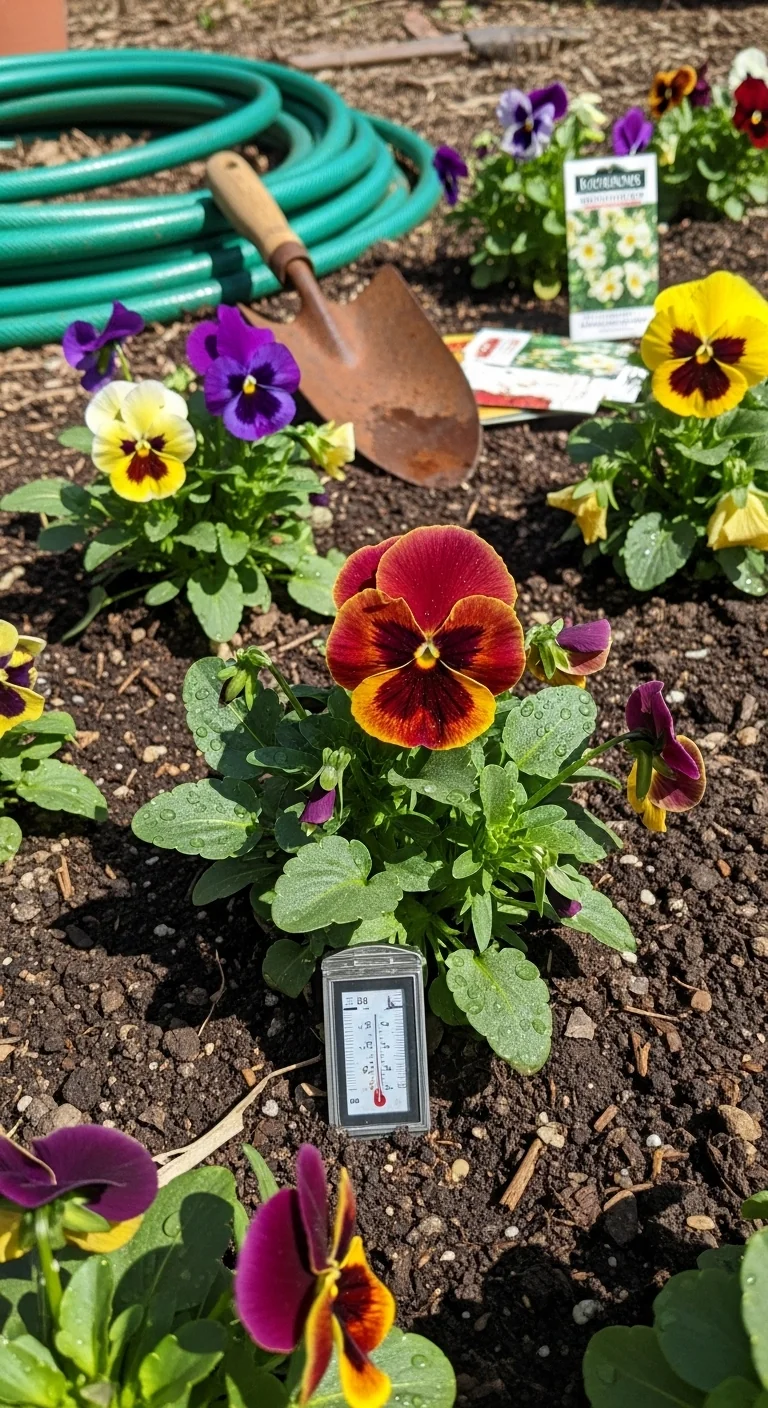
The Matrix series was developed by PanAmerican Seed specifically for gardens where daytime temperatures climb into the 70s. Its compact 6- to 8-inch mound habit resists flopping even when soil temperatures hit 68F. Plant spacing of 6 inches on center keeps air flow high enough to limit foliar disease in humid conditions. Threshold rule: if your soil thermometer reads above 65F at 2-inch depth on planting day, choose Matrix over any standard large-flowered type. One unique detail is its short internodes that keep flowers visible above foliage even after three weeks of heat. For full-sun performance data see related guides. Follow with monthly liquid feed at label dilution after the third week to sustain bud set. This series is the baseline choice when heat is the primary constraint.
Cool Wave Pansy Series
Best for: Branch 2
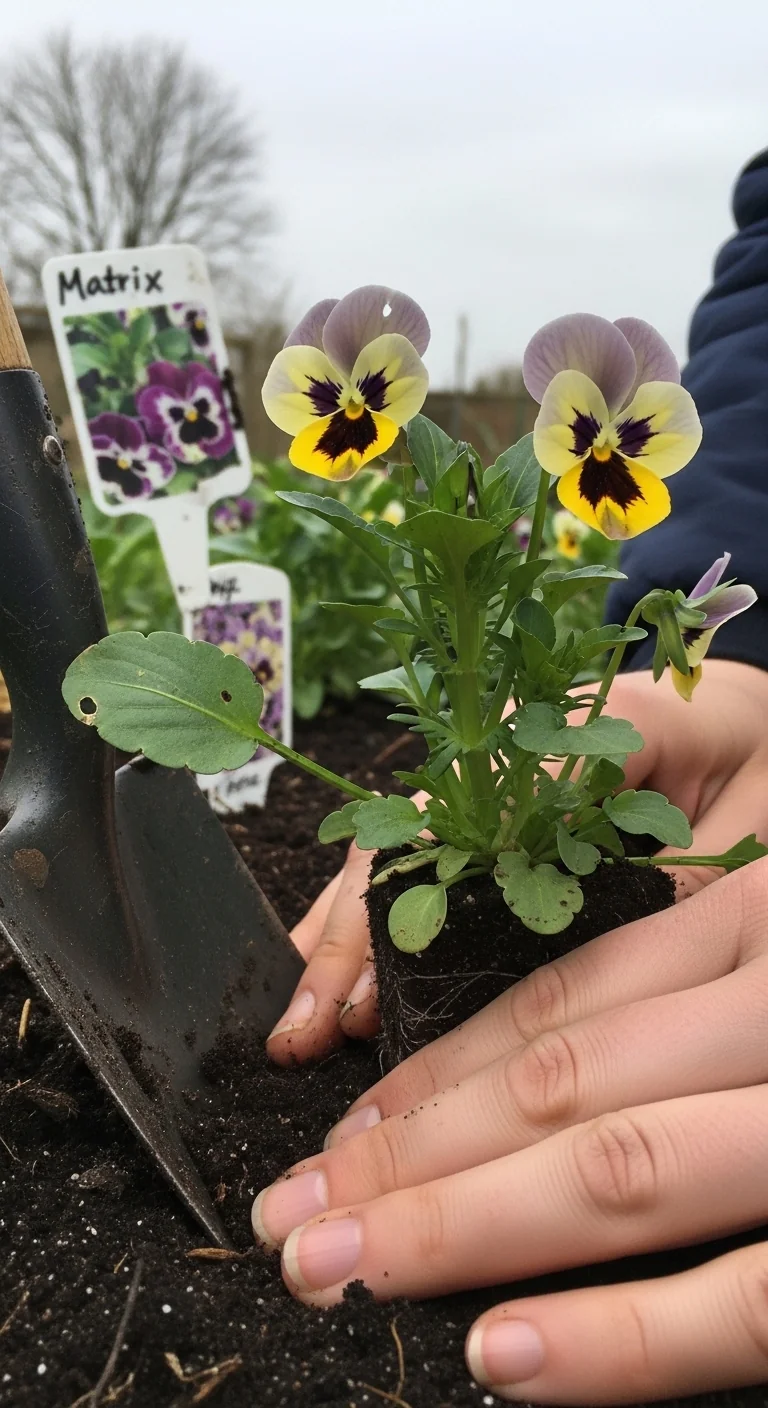
Cool Wave produces trailing stems that reach 24 inches, making it the first choice for baskets in zones with hard freezes. Its breeding emphasizes cold tolerance down to 20F without blackening of foliage.
Delta Pro Series
Best for: Branch 2
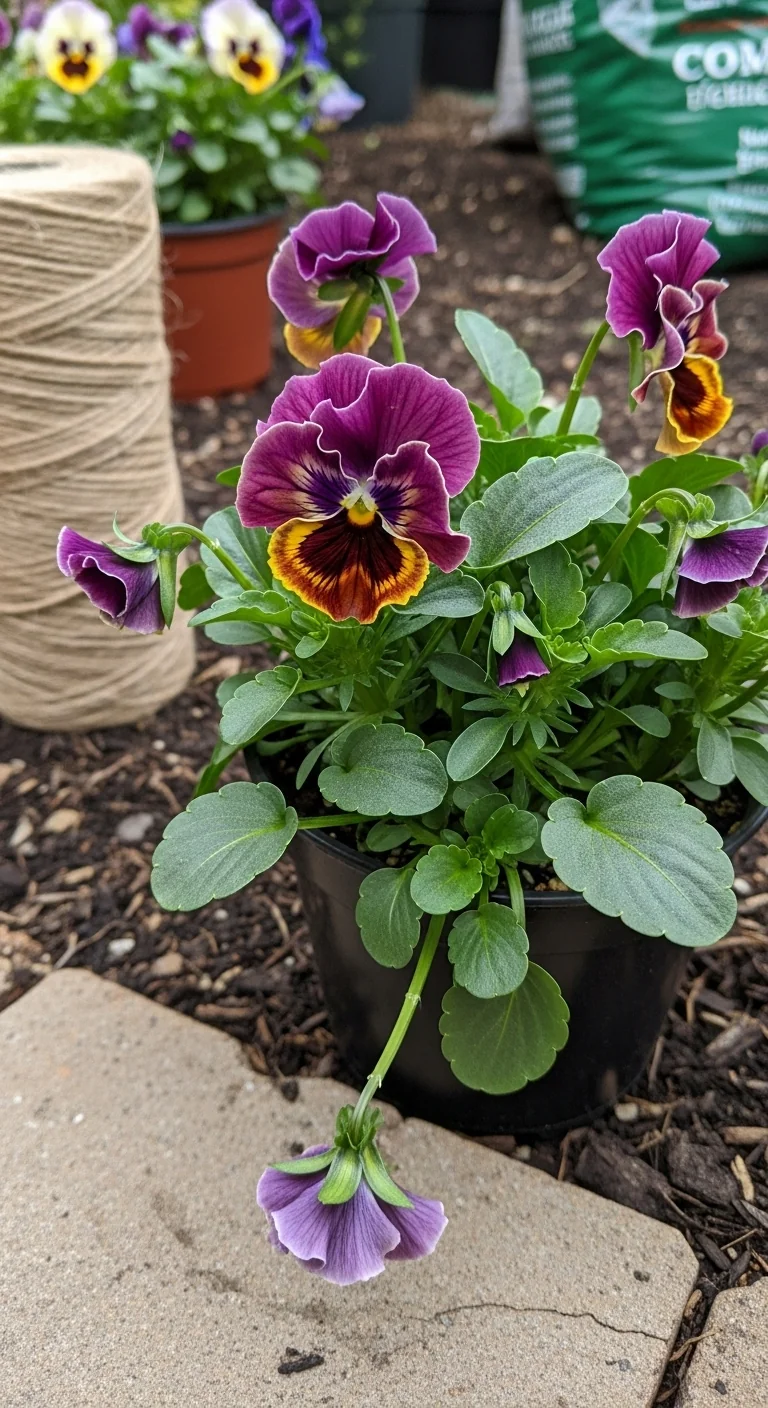
Delta Pro offers uniform 3-inch blooms and finishes faster than older lines, which matters when soil temperatures stay below 50F for the first 14 days after transplant. The series establishes root mass quickly in cool conditions, reducing transplant shock. Use it in borders where consistent height of 8 inches is required. One edge case: in regions with late spring frosts it continues bud formation when night lows hit 28F. Pair it with a 2-inch layer of pine bark mulch to buffer soil temperature swings. This series fits gardens that experience extended cool periods without extreme heat later.
Frizzle Sizzle Series
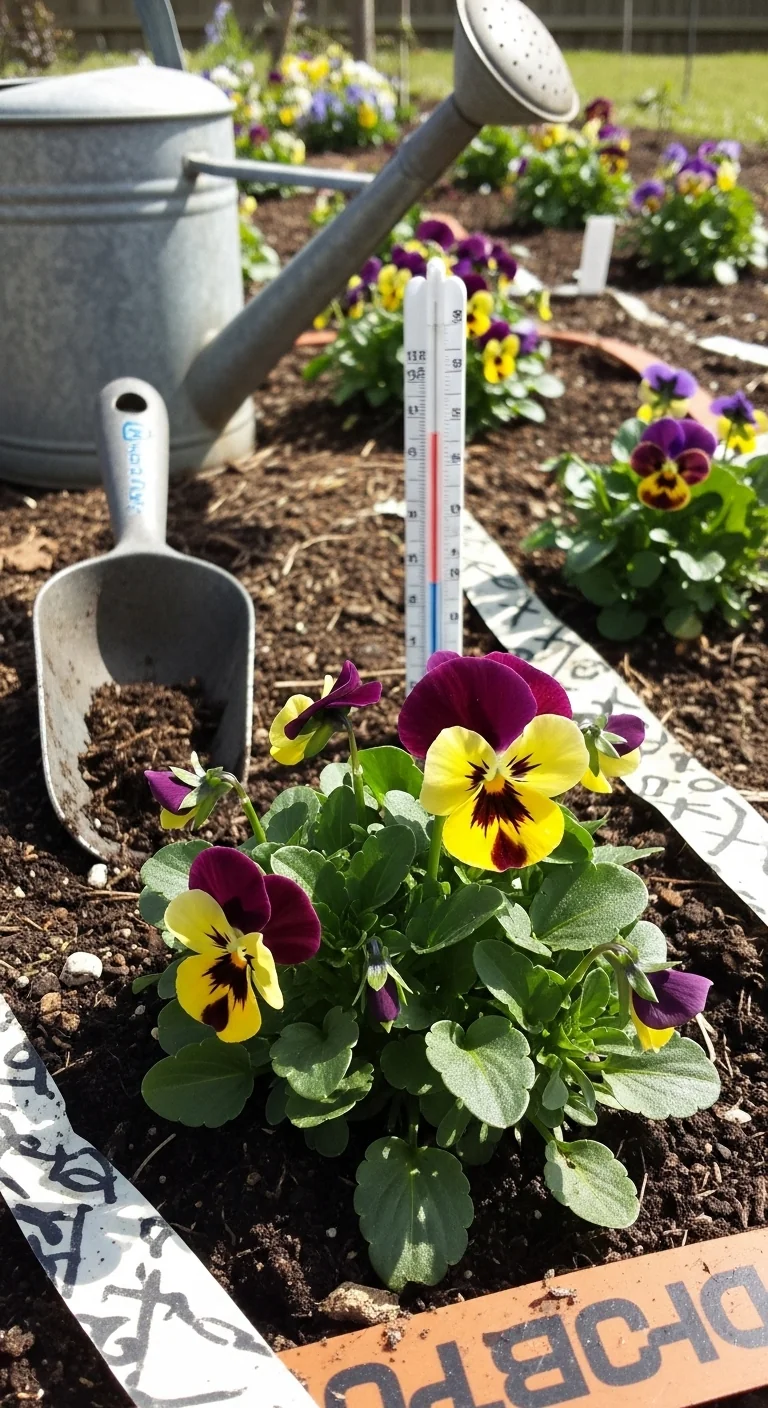
Best for: Branch 1
Frizzle Sizzle delivers deeply ruffled petals that add texture when heat stress flattens standard blooms. The ruffled edge mechanism increases surface area for pollen presentation while the compact plant stays under 7 inches tall. Blueprint: site in full sun, space 8 inches apart, apply balanced fertilizer at planting, and monitor soil moisture to 1 inch per week. Common mistake is planting too close, which reduces air flow and invites powdery mildew when humidity exceeds 70 percent. The series maintains color intensity longer than smooth-petaled types once daytime highs exceed 75F. Rotate this into beds where visual interest must last through early summer temperature spikes.
Bolero Series
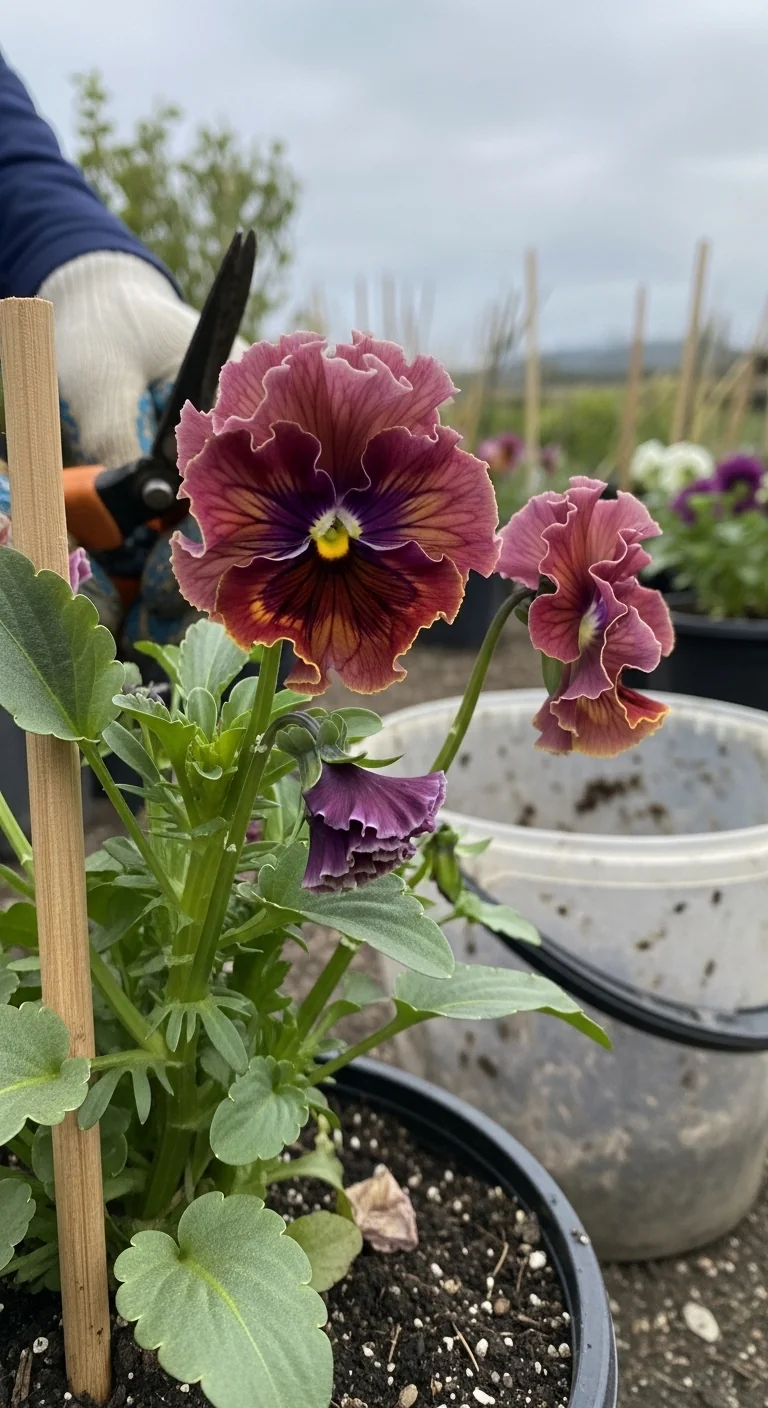
Best for: Branch 2
Bolero features semi-double layered petals that hold up through light freezes down to 22F. Its mounded habit fills gaps faster than single-flowered lines in early spring.
Imperial Series
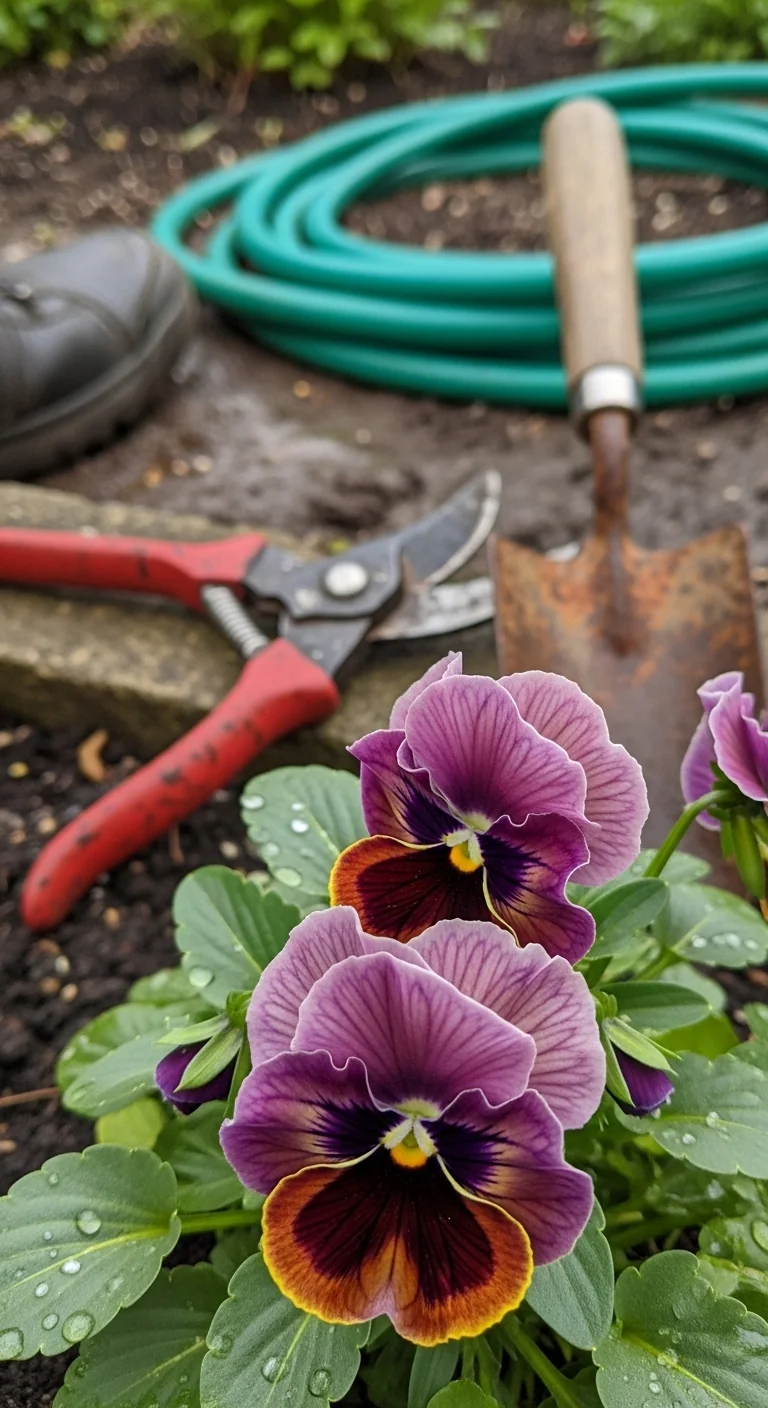
Best for: Branch 3
Imperial Antique Shades blend soft pastel tones that read well in lower light. The series tolerates as little as four hours of direct sun when afternoon shade drops temperatures by 8 to 10 degrees. In containers it reaches 10 inches wide without legginess. Threshold rule: if your basket or window box receives morning sun only, Imperial maintains flower size better than heat-selected lines. One constraint is its slower establishment in heavy clay; amend with 30 percent perlite by volume before planting. Use this series where color harmony matters more than maximum bloom count.
Majestic Giant Series
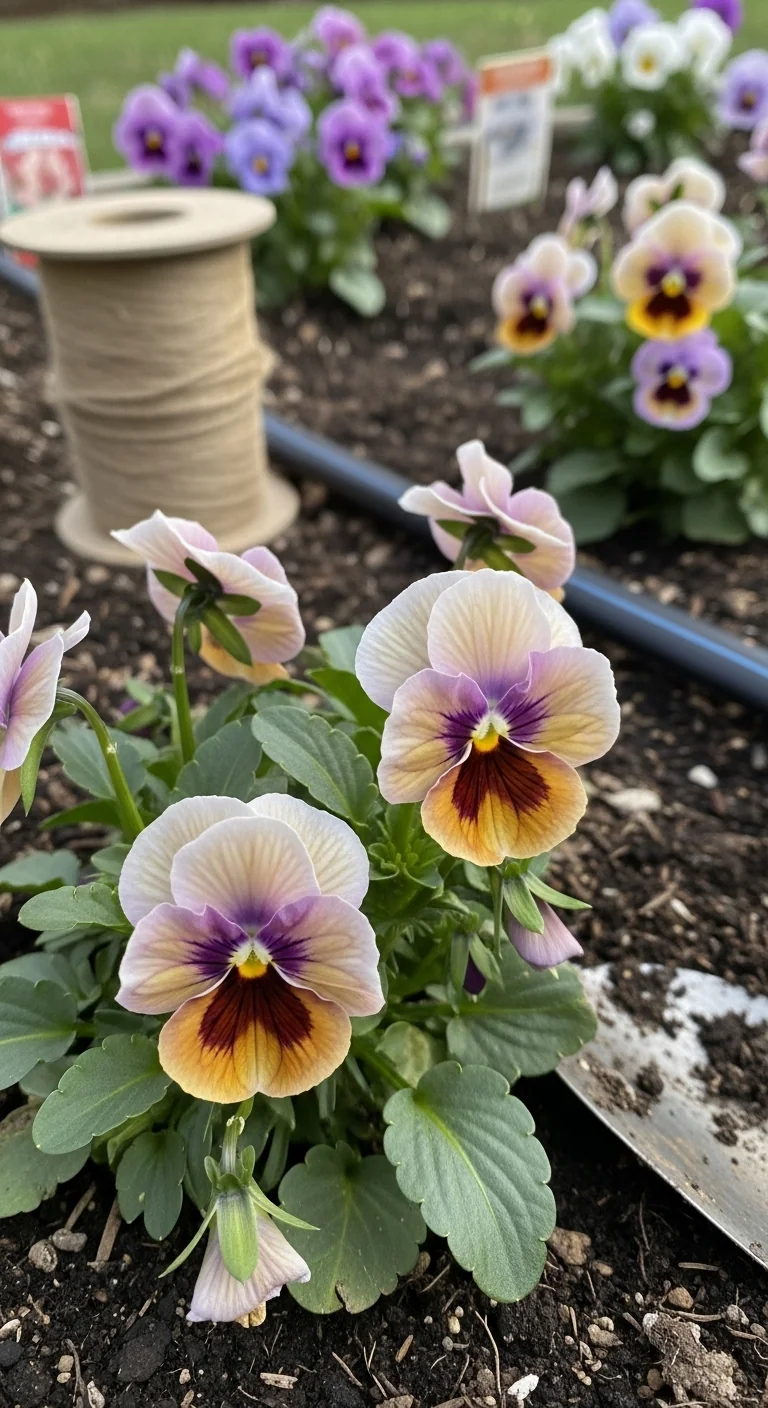
Best for: Branch 1
Majestic Giant produces flowers up to 4 inches across, the largest standard size available. Its breeding prioritizes petal substance that resists wind and rain damage in exposed beds. The upright habit reaches 10 inches, creating strong vertical impact when massed. In gardens where daytime highs hit 78F the large blooms still open fully if soil is kept at consistent moisture. Unique detail: the series responds to a single mid-season trim of spent stems by producing a second flush within 18 days. This makes it suitable for high-visibility borders that must deliver size even under moderate heat stress. Avoid it in baskets because the tall stems tip under their own weight.
Panola Series
Best for: Branch 3
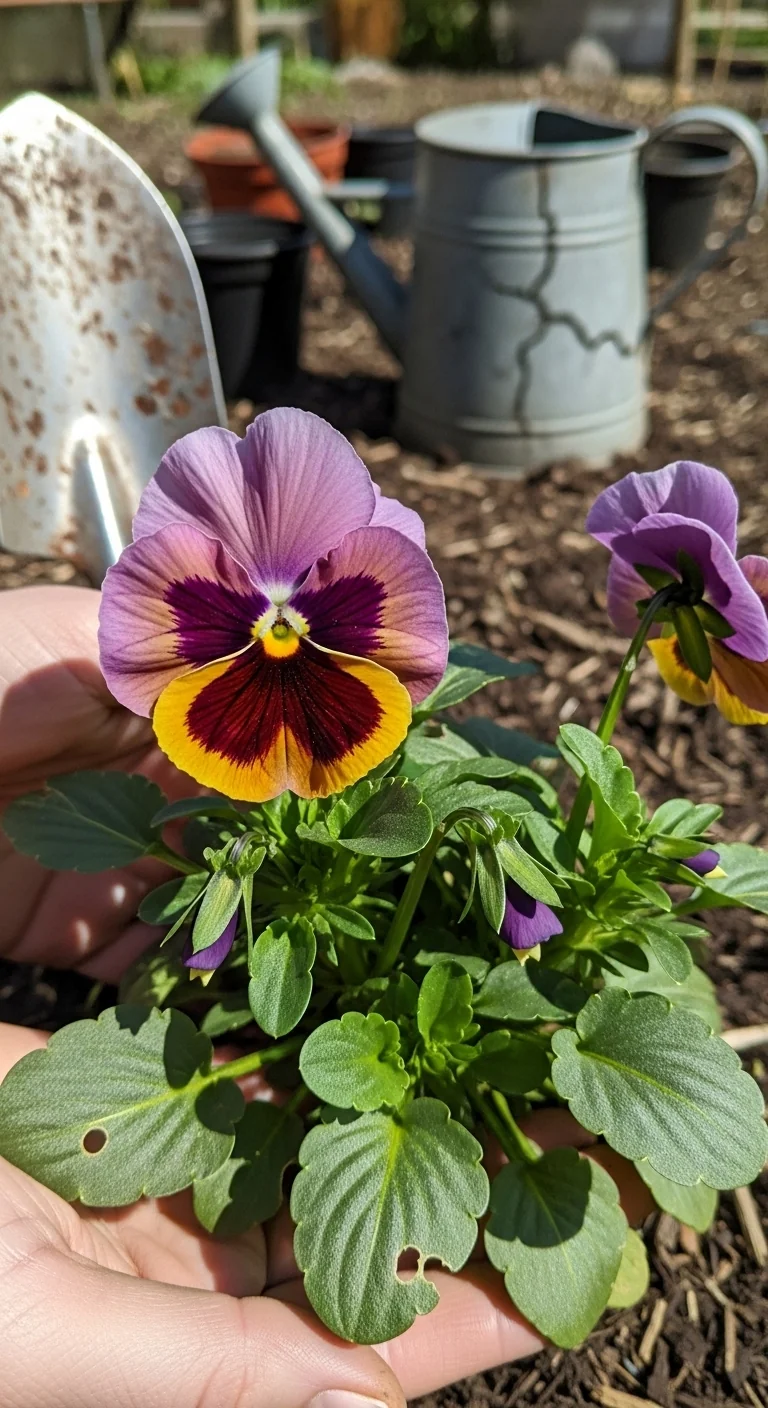
Panola produces smaller multiflora blooms on spreading plants that stay under 6 inches tall. It fills rock gardens or narrow edging strips without crowding neighboring perennials.
WonderFall Pansy
Best for: Branch 3
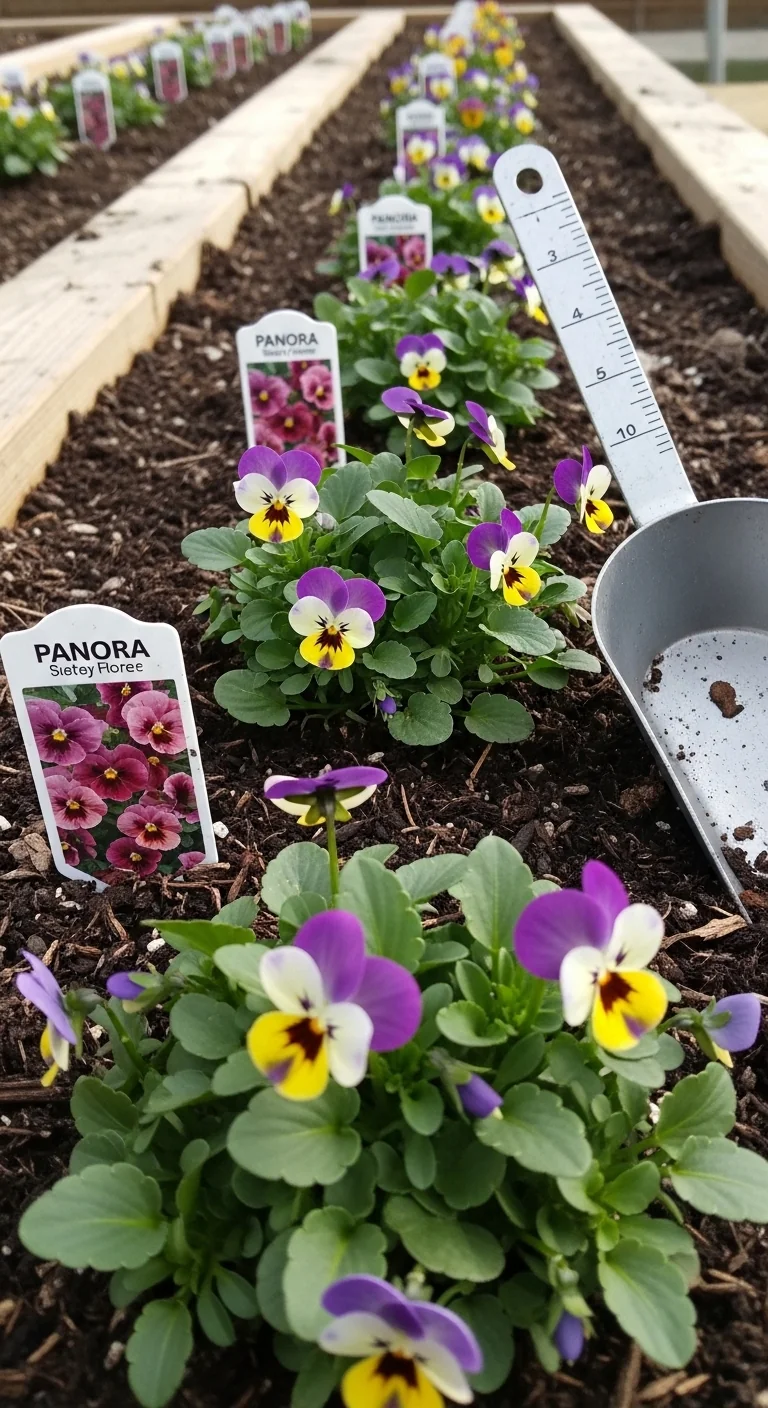
WonderFall combines trailing habit with a self-cleaning tendency that drops faded petals naturally. It performs in baskets where manual deadheading is impractical. The series spreads 18 to 24 inches in one season when given 12 inches of vertical drop space. One measurable condition is soil temperature at planting: keep above 48F to avoid delayed rooting. For more container ideas see related guides. This variety fits gardeners who want color without weekly maintenance checks.
Starter Stack (What to Choose First)
For Branch 1 (heat-challenged sites)
Start with Matrix Pansy Series plus Frizzle Sizzle Series. Matrix supplies the heat-tolerant backbone while Frizzle Sizzle adds textured ruffles that remain visible longer. Combined cost for a 6-pack of each falls in the 18-28 dollar range. Planting time for a 10-square-foot bed is 25-35 minutes.
For Branch 2 (cold-snap zones)
Start with Cool Wave Pansy Series plus Delta Pro Series. Cool Wave provides trailing coverage for baskets while Delta Pro fills borders with uniform height. Combined cost for a 6-pack of each falls in the 16-26 dollar range. Planting time for a 10-square-foot bed or three 12-inch baskets is 20-30 minutes.
For Branch 3 (containers and edging)
Start with Imperial Series plus WonderFall Pansy. Imperial delivers color harmony in low light while WonderFall handles the trailing element with minimal upkeep. Combined cost for a 6-pack of each falls in the 17-27 dollar range. Planting time for three 12-inch baskets or 8 linear feet of edging is 15-25 minutes.
When This Won’t Work
Pansies fail when soil pH falls outside the 5.4 to 5.8 range for more than two weeks after planting. Below 5.0 iron deficiency appears as yellowing between veins; above 6.5 manganese uptake drops and blooms shrink. Test soil before planting and amend only with sulfur or lime in the exact amount indicated by a lab report.
They also collapse when soil temperature at 2-inch depth exceeds 72F for seven consecutive days without afternoon shade. Foliage wilts and buds abort regardless of watering. In either case switch to violas or other cool-season annuals that tolerate wider pH or heat swings. For deadheading techniques that extend performance on borderline plantings see related guides.
Choosing the Right Option for Your Situation
Budget threshold
If your total spend must stay under 40 dollars for a 20-square-foot bed or six baskets, select from the Panola Series or Cool Wave Series first. These deliver the lowest effort scores and require only one initial fertilizer application at planting.
Time threshold
If you can devote no more than 10 minutes per week to maintenance after planting, limit choices to Cool Wave Series or WonderFall Pansy. Both exhibit strong self-cleaning habits and trailing growth that hides minor spent blooms.
Technical constraint (light exposure)
If your site receives four hours or less of direct sun daily, restrict selection to Imperial Series or Delta Pro Series. These maintain flower size and color saturation better than large-flowered types under reduced light.
Yes/No checklist:
– Does your daytime high average stay below 70F? Yes: any series works.
– Are you planting in baskets under 18 inches wide? Yes: choose trailing types only.
– Will soil temperature exceed 65F within four weeks? Yes: select Matrix or Frizzle Sizzle.
– Can you test soil pH before purchase? No: amend first or choose a different cool-season flower.
Expert Q&A
Do pansies function as short-lived perennials in zones 4-6?
In zones 4-6 some series such as Cool Wave can overwinter and return the following spring if cut back to 2 inches after the first hard frost and mulched with 2 inches of pine needles. Success depends on soil drainage staying above average through winter; heavy clay soils reduce survival to under two seasons.
How does flower size affect cutting performance for bouquets?
Larger-flowered series like Majestic Giant last 5-7 days in vases when cut at the tight bud stage and placed in water with a commercial preservative. Smaller multiflora types from Panola last only 3-4 days but produce more stems per plant, suiting mass arrangements.
Can pansies be interplanted with spring bulbs without competition?
Yes when planted 4 inches apart and bulbs are set at their recommended depth. The shallow-rooted pansy habit sits above most bulb foliage and does not compete for nutrients if a balanced slow-release fertilizer is applied at planting.
What role does pinching play in early-season branching?
Pinching the central stem at the four-leaf stage on upright series increases side shoots by two to three per plant. Perform the pinch when stems reach 3 inches tall; later pinching reduces total bloom count for the first flush.
Are there measurable differences in slug resistance among series?
Compact series with thicker foliage such as Matrix show lower slug damage because leaves sit closer to the ground and dry faster after rain. Trailing types require copper tape or diatomaceous earth barriers around container rims to achieve the same protection level.
Conclusion
The single most reliable decision is to match one variety from the correct Decision Grid branch to your site’s temperature and space profile. The number-one mistake remains planting a generic large-flowered type into a heat-prone or shaded bed and expecting uniform performance.
Next step: measure your soil temperature at 2-inch depth and light hours this week, then order the two-series Starter Stack that aligns with your branch. For fall planting strategies see fall flowers.