
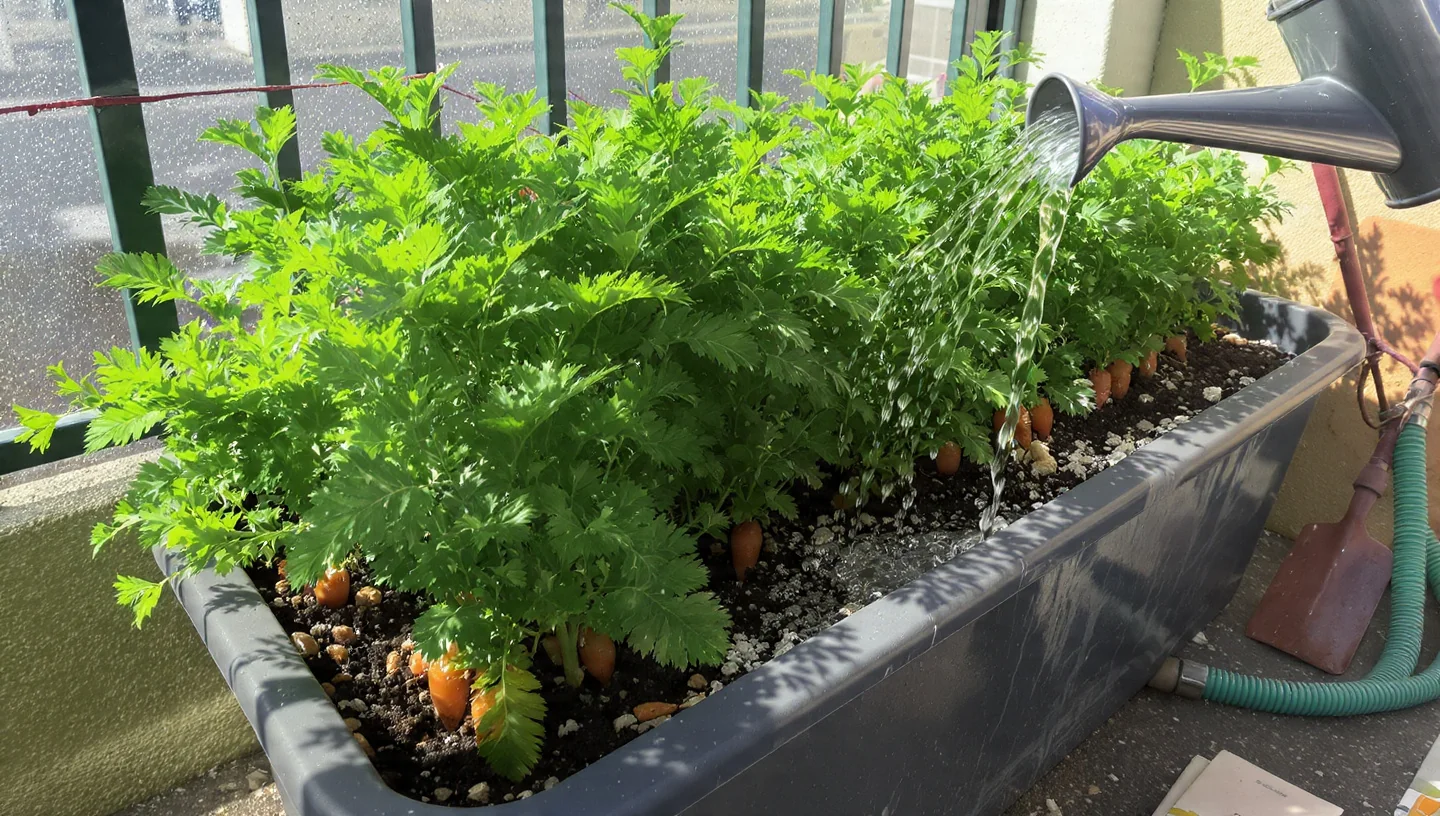
The standard advice for carrots in containers pushes a single deep-pot solution. This reframes the approach: treat each container as a zoned root environment by selecting varieties whose mature root length aligns exactly with your available depth. This unlocks reliable growth even in the tightest urban setups.
This guide covers variety-specific setups across shallow, medium, and deep containers for direct-sown carrots. It excludes in-ground beds and non-soil systems such as hydroponics. Focus stays on measurable conditions such as interior pot depth in inches, soil temperature thresholds for germination, and consistent moisture levels.
You will walk away able to evaluate your available containers, select the matching variety and setup, and avoid root deformities such as forking or stunting through precise geometry.
Bottom line: Measure your container depth first, match it to a compatible carrot variety, and follow the zoned setup steps to control harvest timing in small spaces.
The Yield Grid Decision Grid
Branch 1: Containers measuring under 8 inches deep from soil surface to bottom. Recommended: Items 1, 4, and 7 below.
Branch 2: Containers measuring 8 to 12 inches deep. Recommended: Items 2, 5, and 8 below.
Branch 3: Containers measuring over 12 inches deep. Recommended: Items 3, 6, and 9 below.
These branches align with how carrots perform among best vegetables for containers.
Quick Comparison Table
| Option | Key mechanism | Best for | Decision Grid Branch | Effort Score |
|---|---|---|---|---|
| Thumbelina Carrots in Shallow Window Boxes | Short 4-inch roots fit precise shallow geometry | Balconies with strict height limits | Branch 1 | 4 |
| Little Finger Carrots in Grow Bags | Flexible fabric walls promote even drainage and aeration | Patios needing portable medium-depth options | Branch 2 | 3 |
| Mokum Nantes Carrots in 5-Gallon Buckets | 12-plus-inch depth supports full root extension | Small patios with stable deep containers | Branch 3 | 2 |
| Paris Market Carrots in Terracotta Window Boxes | Round roots match shallow profile with natural breathability | Window ledges requiring classic aesthetics | Branch 1 | 4 |
| Chantenay Carrots in Lightweight Planters | Medium root length pairs with easy-to-move construction | Urban decks with frequent repositioning | Branch 2 | 3 |
| Imperator Carrots in Large Grow Bags | Extended depth accommodates long roots without compaction | Balconies allowing vertical space use | Branch 3 | 2 |
| Atlas Carrots in Shallow Terracotta Pots | Compact roots thrive in minimal-depth stable vessels | Tight entryways or railings | Branch 1 | 4 |
| Red-Cored Chantenay Carrots in Medium Plastic Pots | 8-to-12-inch depth balances root growth with weight control | High-rise apartments with weight restrictions | Branch 2 | 3 |
| Yaya Carrots in Deep Rectangular Planters | Full-depth profile maximizes straight root formation | Larger patios seeking high-volume harvests | Branch 3 | 2 |
1. Thumbelina Carrots in Shallow Window Boxes
Best for: Branch 1
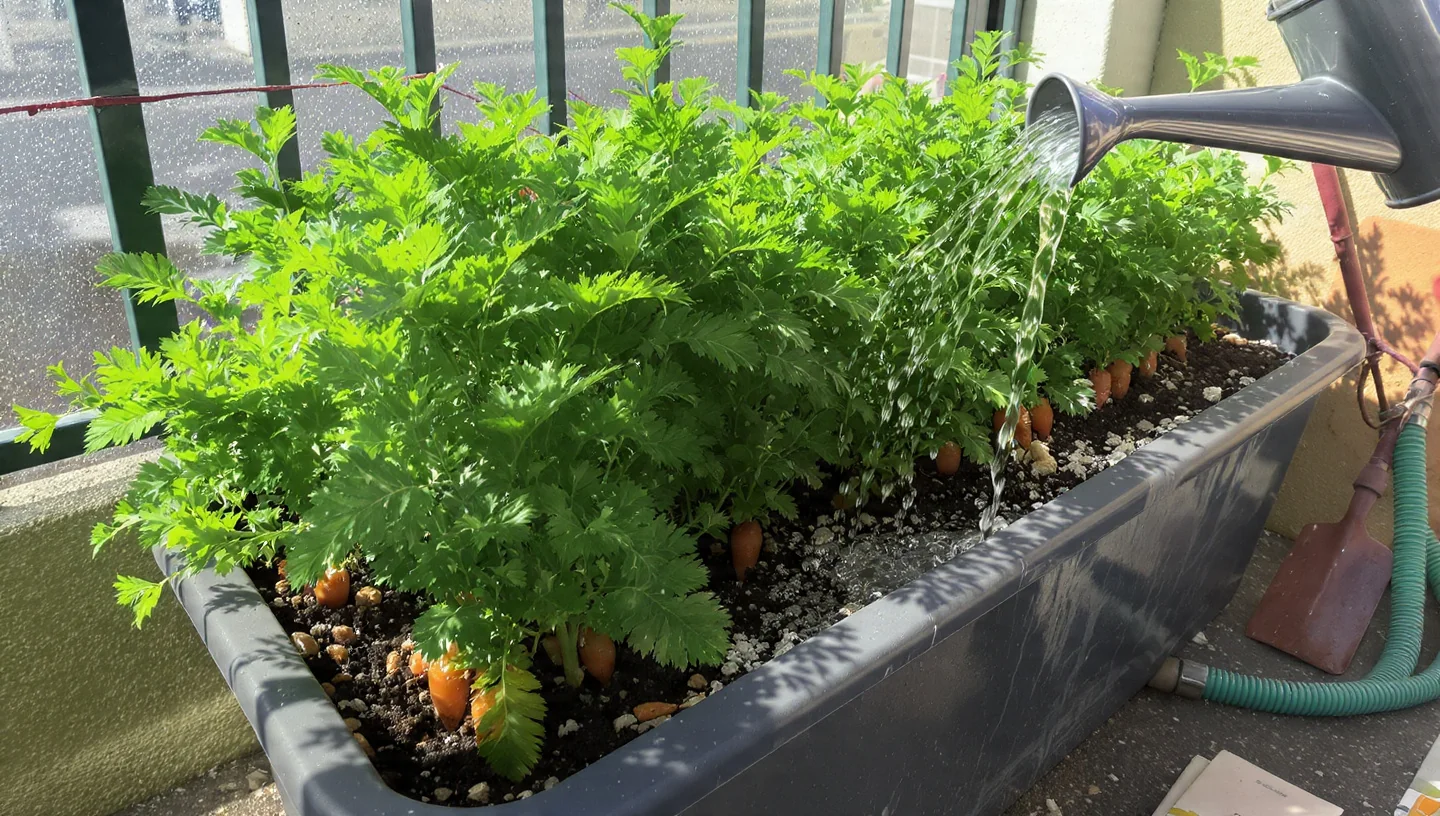
Thumbelina carrots produce rounded roots reaching only 4 inches at maturity. This blueprint works for any window box measuring under 8 inches deep on apartment balconies or railings where vertical space is limited. Fill the box to within 1 inch of the rim using a loose mix of potting soil amended with sand for drainage. Sow seeds 1/4 inch deep and space them 2 inches apart in rows. Thin seedlings to 3 inches once they reach 2 inches tall. Maintain even soil moisture and place in full sun. Harvest at 50 to 60 days when roots reach finger size. The key mistake is skipping the sand amendment, which leads to compaction and deformed roots. Best soil for container gardening details the exact ratios that prevent this issue.
2. Little Finger Carrots in Grow Bags
Best for: Branch 2
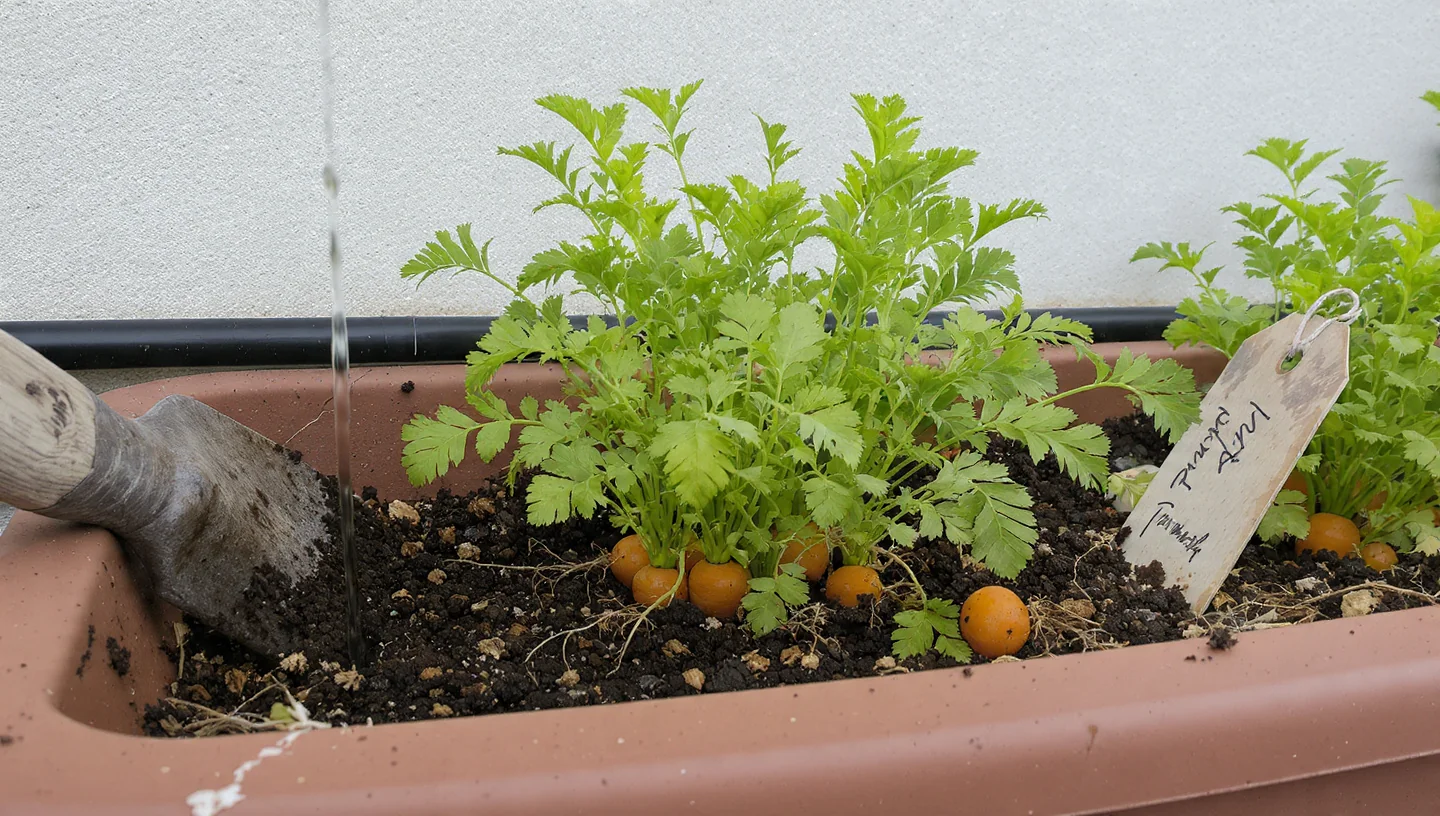
Use this setup when you have 8 to 12 inches of depth and value portability between sun pockets. Pros include superior side aeration that reduces rot risk compared with rigid pots. Skip it if your location experiences frequent high winds above 15 miles per hour, as lightweight bags can tip without anchoring. Edge case: during periods when air temperature exceeds 85 degrees Fahrenheit, the fabric sides dry faster than expected and require an extra daily moisture check to avoid stunted roots.
3. Mokum Nantes Carrots in 5-Gallon Buckets
Best for: Branch 3
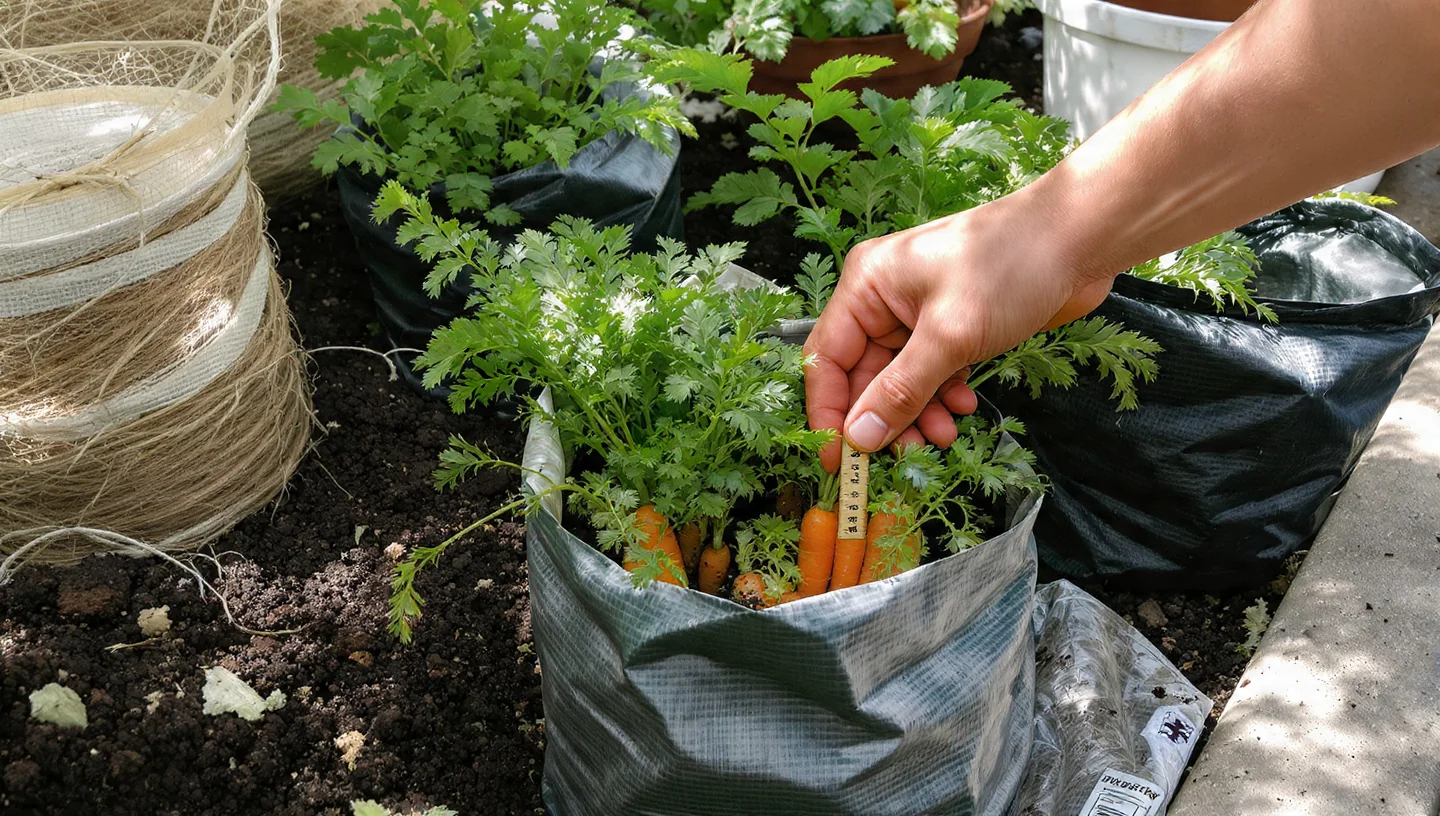
Mokum Nantes carrots reach 8 inches long and need at least 12 inches of soil depth to develop straight, full-size roots. The threshold rule here is simple: measure interior bucket depth from rim to bottom and confirm it exceeds 12 inches before sowing. Adjust by filling only to 1 inch below the rim to maximize usable depth while preventing overflow during watering. If depth falls short by even 2 inches, switch to a shorter variety immediately to avoid pencil-thin roots. This single measurement prevents the most common urban failure mode of mismatched geometry.
4. Paris Market Carrots in Terracotta Window Boxes
Best for: Branch 1
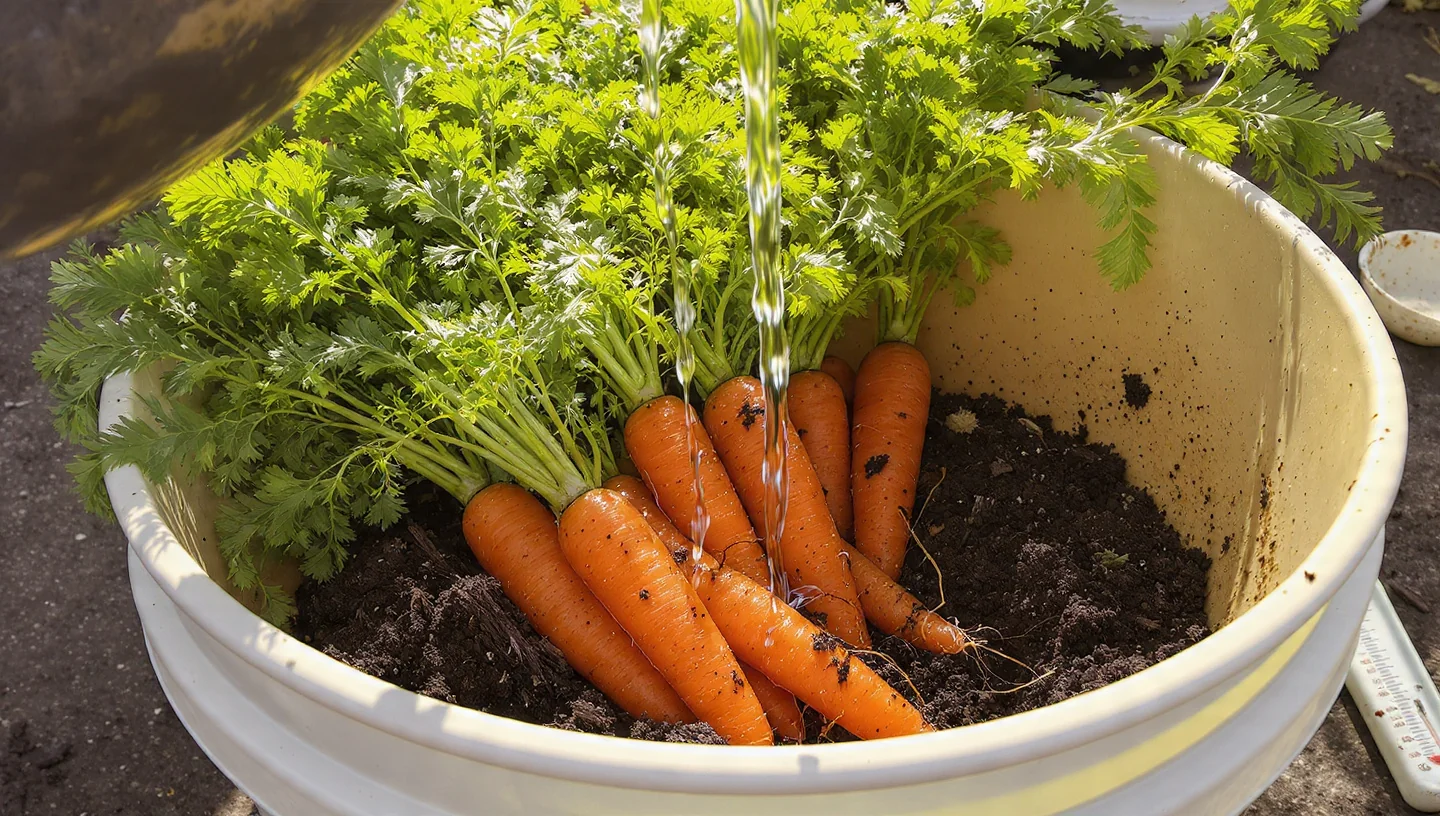
Paris Market carrots form globe-shaped roots under 5 inches long. This 10-minute workflow fits any shallow terracotta window box under 8 inches deep. Step 1: drill or confirm drainage holes if absent. Step 2: add a 1-inch layer of coarse sand at the base. Step 3: fill with loose amended soil and sow seeds 1/4 inch deep at 2-inch spacing. Step 4: water gently until soil is moist and place in full sun. Upgrade option: line the interior with landscape fabric to extend container life in freeze-thaw cycles. Total time stays under 10 minutes per box once materials are gathered.
5. Chantenay Carrots in Lightweight Planters
Best for: Branch 2
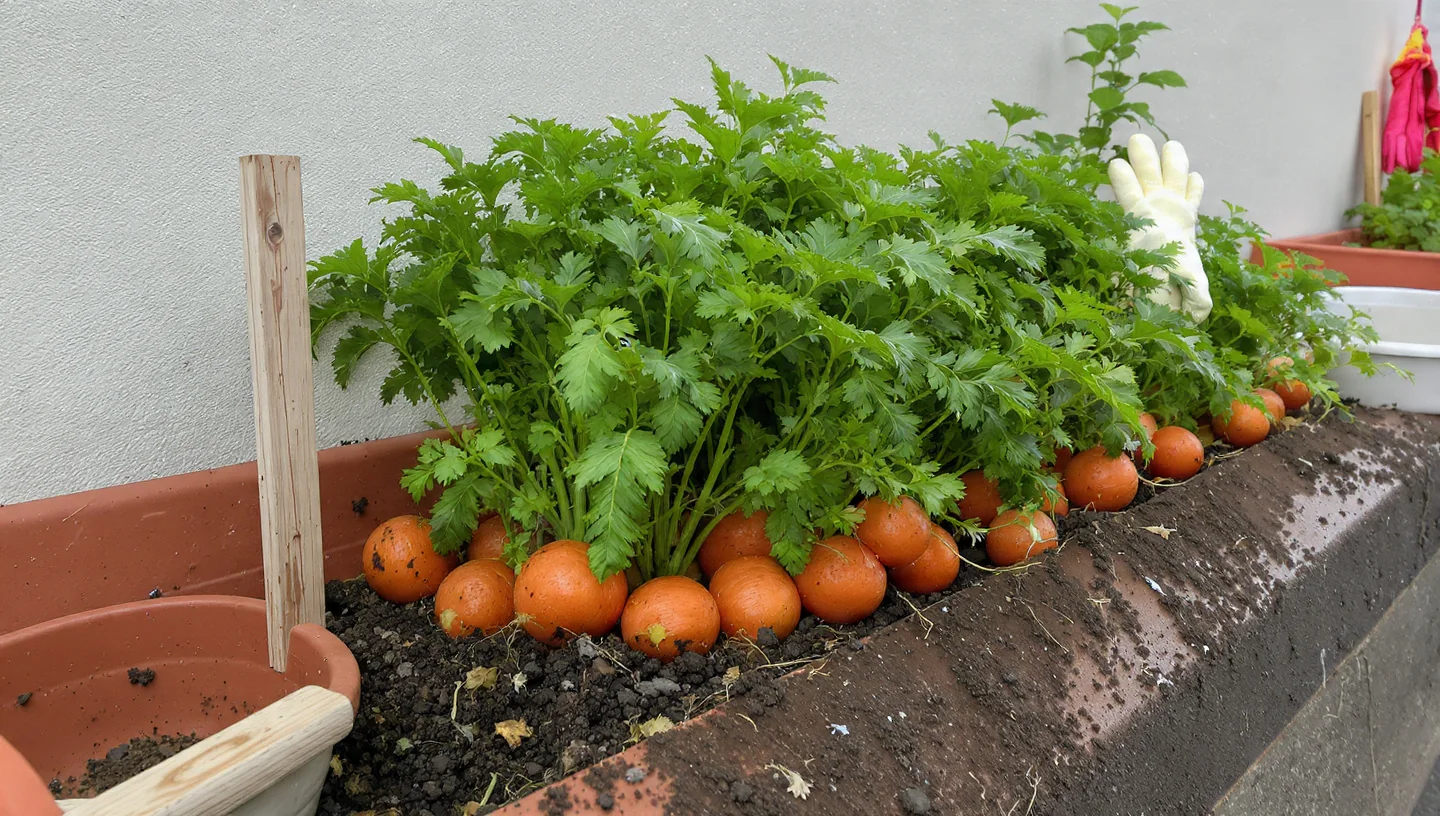
Chantenay carrots develop conical roots 6 to 8 inches long suited to 8-to-12-inch depths. Fill lightweight planters with a well-draining mix and sow seeds directly 1/4 inch deep. Space rows 3 inches apart and thin to 3 inches between plants at the two-leaf stage. Position for 6 to 8 hours of direct sun and maintain consistent moisture. Container gardening for beginners covers the exact thinning technique that prevents competition without root disturbance.
6. Imperator Carrots in Large Grow Bags
Best for: Branch 3
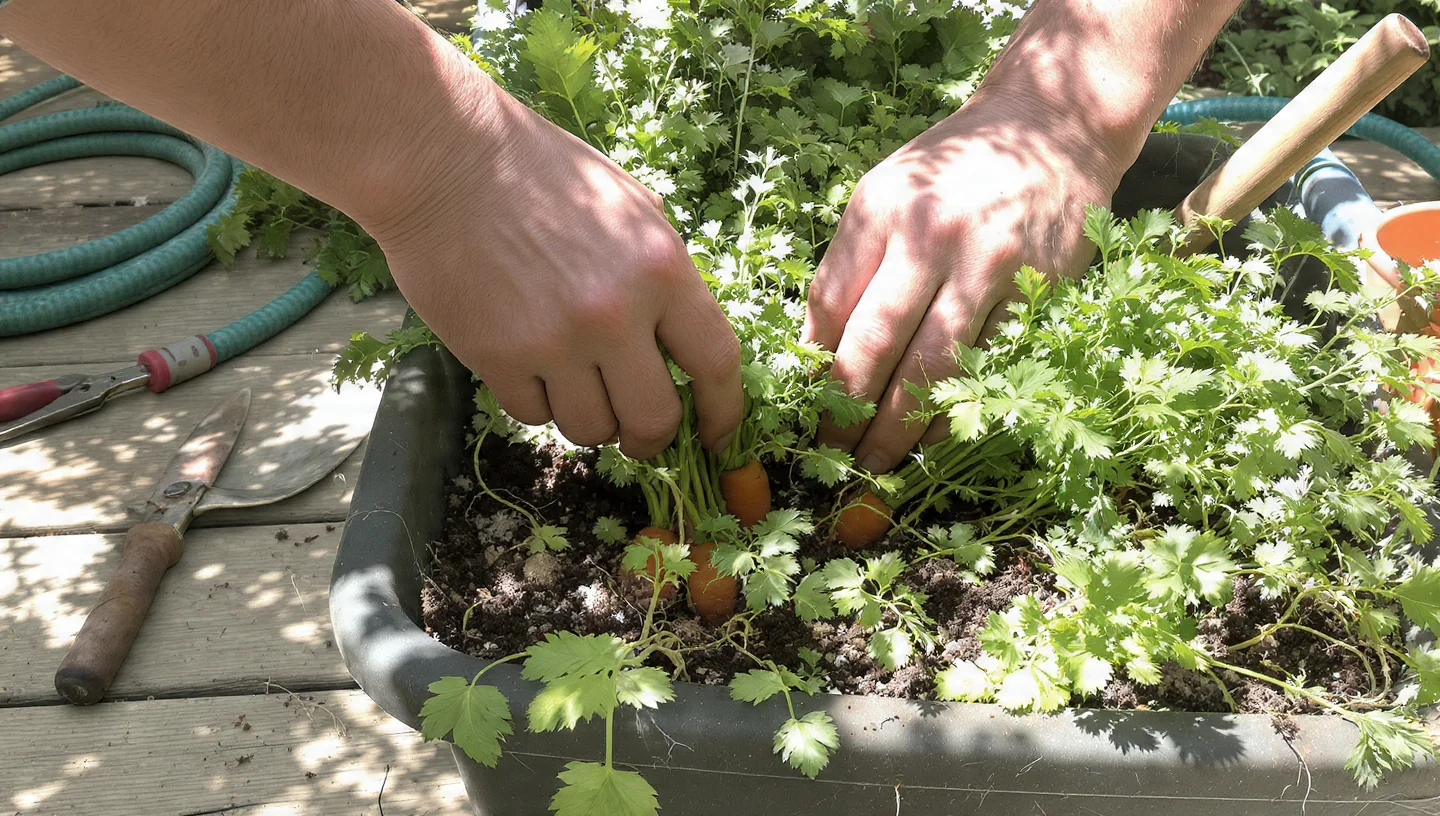
Use this setup for long Imperator carrots that require over 12 inches of depth when you need a flexible, lightweight solution on windy balconies. Pros include breathable walls that keep soil temperatures stable and reduce overheating. Skip if your grow bag fabric shows signs of UV degradation after one season, as weakened material can tear under root pressure. Edge case: in regions with heavy summer rain, elevate bags on risers to ensure excess water drains freely and avoids root rot.
7. Atlas Carrots in Shallow Terracotta Pots
Best for: Branch 1
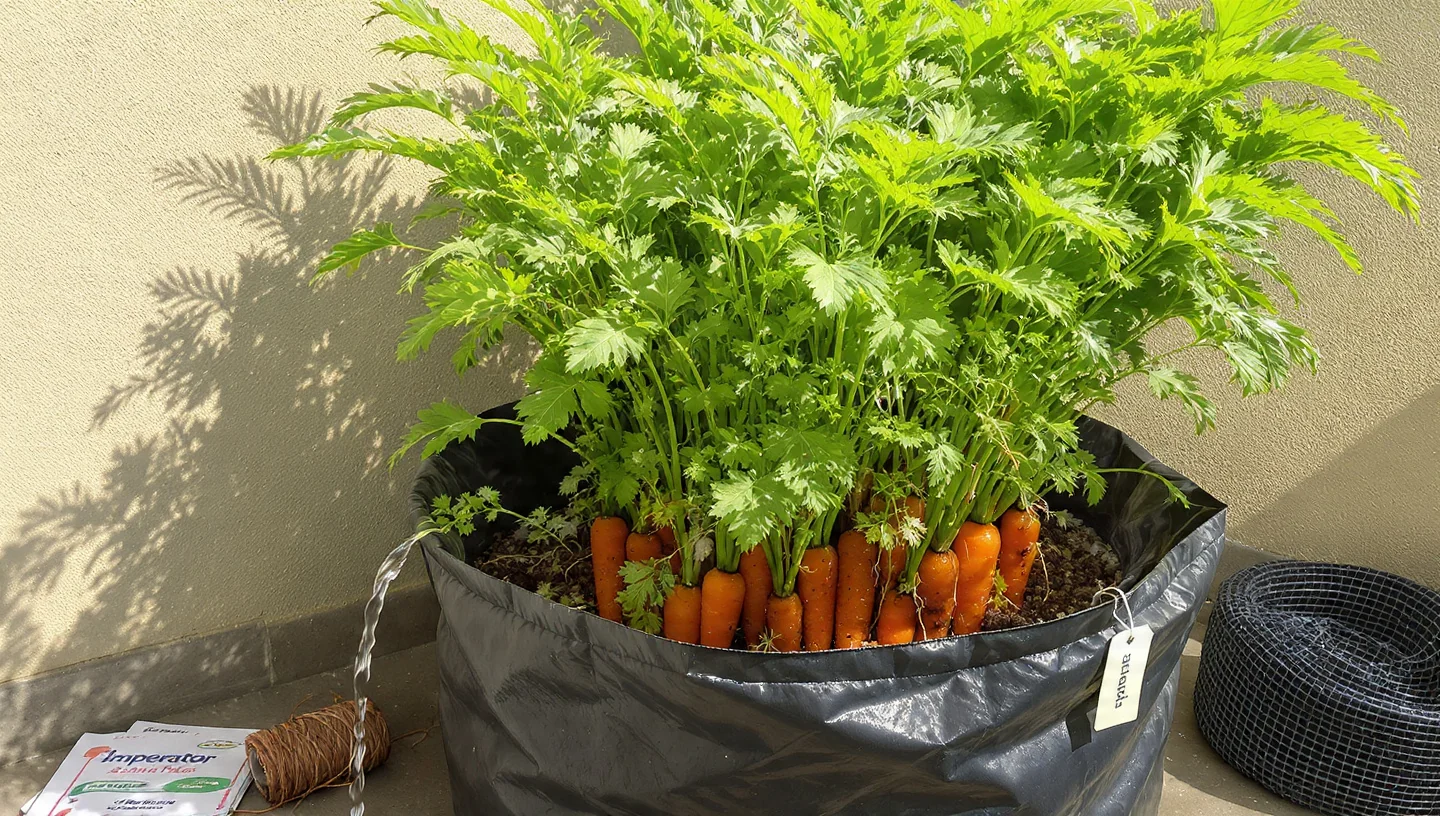
Atlas carrots stay under 5 inches long and suit shallow terracotta pots under 8 inches deep. The threshold rule centers on soil temperature at sowing: confirm it registers between 45 and 85 degrees Fahrenheit using a simple probe thermometer inserted 2 inches down. If below 45 degrees, delay planting by one week and recheck. If above 85 degrees, move the pot to afternoon shade until temperatures drop. This single adjustment prevents failed germination in early spring or late fall plantings. Combine with 2-inch seedling spacing for uniform root sizing.
8. Red-Cored Chantenay Carrots in Medium Plastic Pots
Best for: Branch 2
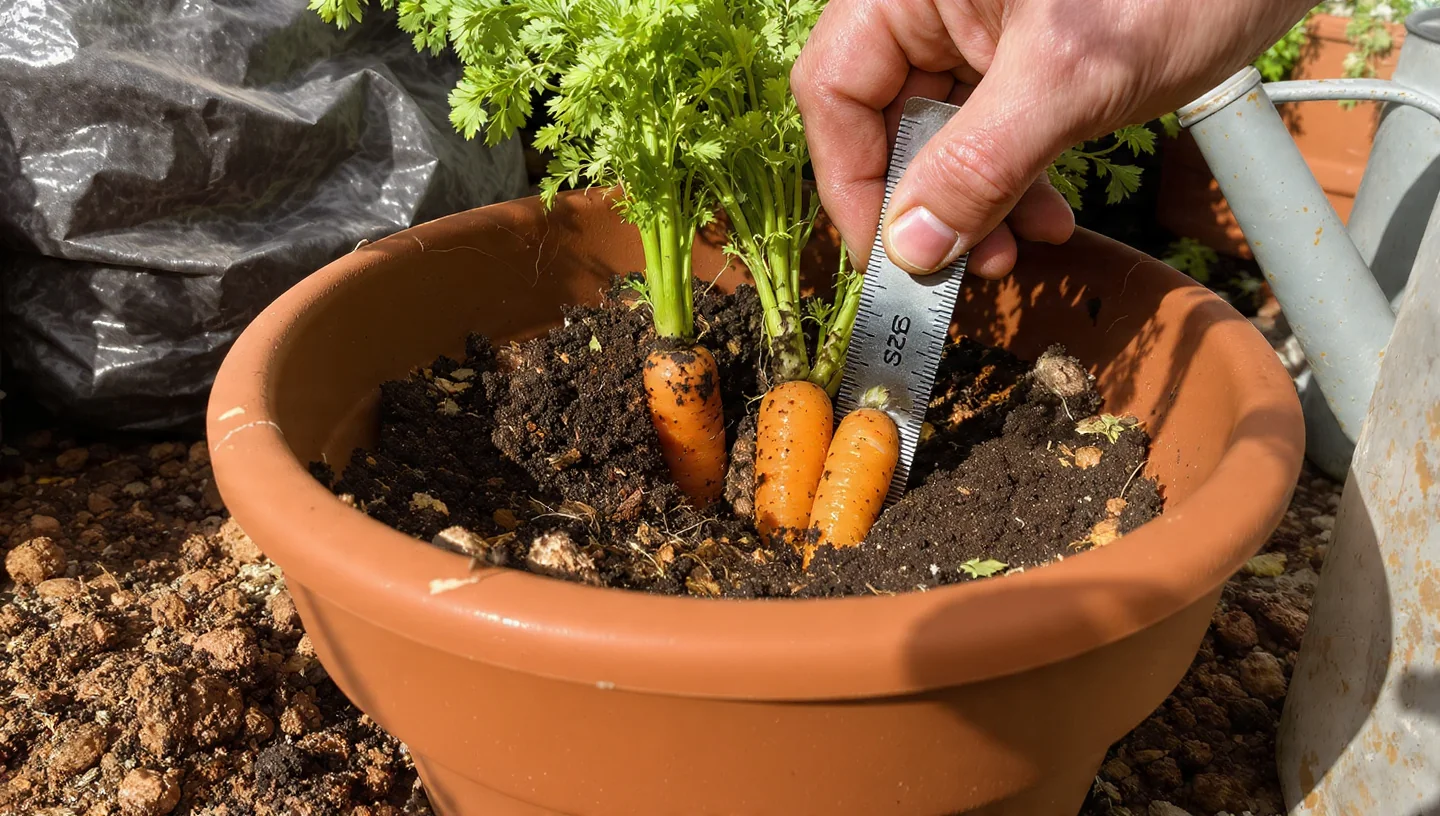
This 10-minute workflow suits 8-to-12-inch plastic pots for Red-Cored Chantenay carrots. Step 1: rinse the pot and add drainage holes if missing. Step 2: fill with loose soil mix. Step 3: sow seeds 1/4 inch deep in staggered rows 3 inches apart. Step 4: water until evenly moist and label with sowing date. Upgrade option: add a saucer with pebbles to create a humidity reservoir that reduces daily checks during warm spells. The entire process fits into one short session and scales easily for multiple pots.
9. Yaya Carrots in Deep Rectangular Planters
Best for: Branch 3
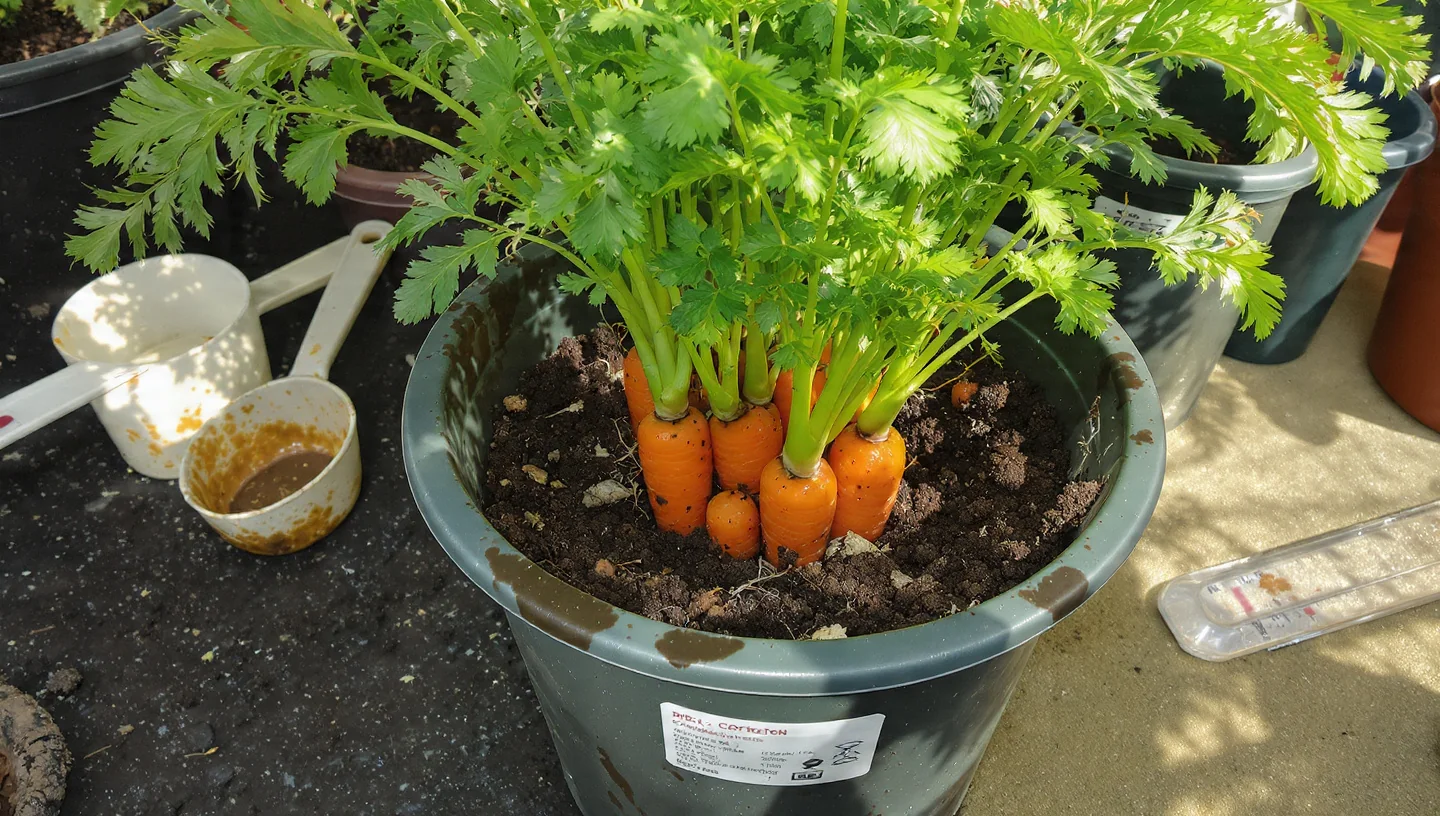
Yaya carrots reach 7 to 9 inches and perform best in deep rectangular planters over 12 inches. Fill the planter with a low-nutrient loose mix and sow seeds 1/4 inch deep at 3-inch spacing. Thin seedlings once they reach 2 inches tall to maintain airflow and reduce disease pressure. Position in full sun and monitor soil moisture to the 4-inch depth. Harvest begins at 60 days when shoulders show 1 inch across. This blueprint emphasizes direct sowing to eliminate transplant shock that commonly stunts container roots.
Starter Stack (What to Choose First)
For Branch 1 (Shallow Containers)
Start with Items 1 and 4. Thumbelina and Paris Market short-root varieties synergize by allowing denser planting in the same limited depth while sharing identical loose-soil needs. Setup takes 15 to 30 minutes per container and costs 10 to 25 dollars in basic materials.
For Branch 2 (Medium Depth Containers)
Start with Items 2 and 5. Little Finger and Chantenay setups complement each other through similar 8-to-12-inch depth requirements and portable construction that lets you optimize sun exposure daily. Setup takes 20 to 35 minutes per container and costs 20 to 40 dollars in materials.
For Branch 3 (Deep Containers)
Start with Items 3 and 6. Mokum Nantes and Imperator pairings work together by filling the full depth profile for straight roots and higher volume per square foot. Setup takes 25 to 40 minutes per container and costs 25 to 50 dollars in materials.
When This Won’t Work
If soil temperatures stay below 45 degrees Fahrenheit at sowing time, germination can take longer than 21 days or fail entirely. The alternative action is to wait until soil warms or move containers to a sheltered spot with bottom heat mats for the first two weeks.
If you cannot maintain even soil moisture and allow the top inch to dry out repeatedly, roots develop cracks or fork. The alternative action is to install a simple drip irrigation line or switch to self-watering containers that buffer fluctuations.
Less than 6 hours of direct sun daily keeps roots small and pale regardless of depth match. Relocate pots to brighter microclimates or consider a different crop such as leafy greens for that location.
Choosing the Right Option for Your Situation
Budget Threshold
If your total materials budget stays under 30 dollars per container, select Branch 1 options using basic window boxes or recycled terracotta. Above 30 dollars, move to Branch 2 or 3 for longer-term durability.
Time Threshold
If you can commit only 10 minutes weekly to checks and watering, choose Branch 3 deep setups that retain moisture longer. Under 10 minutes available, limit to one or two containers maximum.
Technical Constraint: Sunlight Hours
If your space provides 6 to 8 hours of full sun, any branch works. Below 6 hours, add reflective mulches or skip carrots for shade-tolerant alternatives.
Yes if your container depth matches one of the three branches and you commit to direct sowing.
No if you plan to transplant seedlings or use nutrient-rich garden soil.
Yes if you can measure and maintain soil moisture daily in the first 30 days.
No if temperatures regularly fall outside the 45-to-85-degree germination window without protection.
Expert Q&A
What soil temperature range ensures reliable carrot germination in containers?
Soil between 45 and 85 degrees Fahrenheit supports germination within 10 to 21 days. Below 45 degrees delays sprouting significantly and increases damping-off risk. Above 85 degrees reduces viability and slows emergence. Insert a soil thermometer 2 inches deep and wait for the safe range before sowing in early spring or fall.
How far apart should you thin carrot seedlings in containers to avoid competition?
Thin to 2 inches apart for baby and round varieties and 3 inches apart for medium or long types once seedlings reach 2 inches tall. Closer spacing produces smaller roots while wider spacing allows full size. Remove thinnings by snipping at soil level to avoid disturbing remaining roots.
Can you succession sow carrots in the same container multiple times per season?
Yes, in containers 12 inches or deeper you can sow a second crop 60 days after the first if you refresh the top 2 inches of soil and maintain even moisture. Short varieties in shallower containers usually support only one cycle per season due to nutrient depletion.
What companion plants work well with carrots in shared container setups?
Radishes or green onions planted at the container edges deter carrot fly while using the same loose soil and sun needs. Keep companions to 20 percent of the surface area to avoid crowding the main carrot roots. Harvest companions first to free space as carrots mature.
How do you harvest carrots from containers without damaging neighboring roots?
Loosen soil around the target carrot with a narrow trowel inserted 4 inches deep, then grasp the foliage base and pull gently while twisting. Water the container thoroughly the day before to ease extraction. Leave neighboring carrots undisturbed for continued growth.
Conclusion
Carrots in containers succeed when depth zoning replaces the generic deep-pot default. The single biggest mistake is using compacted or overly rich soil mixes, which forces roots to fork regardless of variety choice.
Review your available containers against the decision grid today and begin with the Starter Stack recommendations for your branch. Next step: expand your options with lightweight planters.