
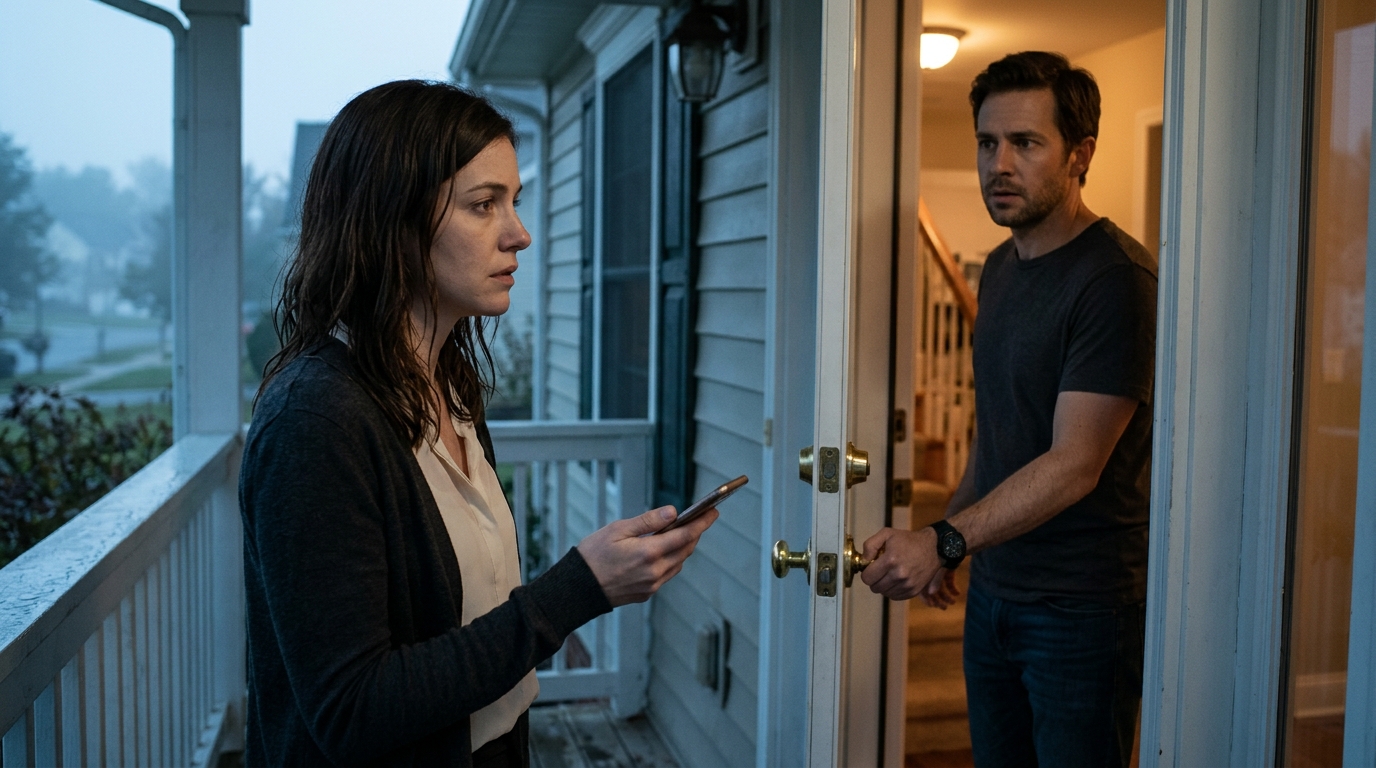
Who are you?
The answer arrived almost immediately.
Rachel Morgan. I used to handle Daniel’s business accounts. We need to talk before he destroys the records.
Emily recognized the name. Rachel had worked with Daniel for nearly two years at a small property investment company. Emily had met her at a holiday dinner, where Rachel had been polite but unusually quiet whenever Daniel spoke about money.
Why is my name on an account? Emily typed.
The response came in two parts.
Because he used your information to open a credit line connected to the business.
Then:
I have documents showing the transfers. He told me you had approved them.
Emily’s fingers went cold.
She had never approved a business credit line.
Daniel stood across the table, watching her read. “Who is Rachel?”
Emily looked up.
“You tell me.”
His expression shifted. The change was subtle, but unmistakable. Recognition came first, followed by irritation, then a flash of panic he tried to hide.
“She has nothing to do with us,” he said.
“She says she handled your accounts.”
“She was an employee. She was fired.”
“For what?”
“Stealing.”
Emily remembered the sealed envelope in the kitchen drawer. A week earlier, Daniel had told her it contained paperwork for their mortgage review. He had insisted she leave it alone because the bank had sent duplicate forms.
Now she wondered what else he had placed in front of her under the cover of ordinary household business.
“Did you open a credit line using my information?” she asked.
Daniel struck the table with his palm.
“This is ridiculous!”
The sudden noise made Emily jump, but she stayed seated.
“Answer the question.”
“You don’t understand how businesses work.”
“Then explain it to me.”
He paced toward the window, rubbing his forehead.
“You’ve always trusted me to handle these things.”
“That doesn’t mean you can use my name without permission.”
He turned back.
“I did it for our future.”
The words landed between them like a confession.
Emily slowly stood.
“What did you do?”
Daniel stared at her. For a second, he looked like someone who had stepped onto a bridge and only then noticed the missing boards.
“Nothing you need to worry about,” he muttered.
But Emily had spent the night outside because he wanted to punish her for asking questions. She wasn’t going to let him send her away from the truth again.
Rachel’s evidence
Emily arranged to meet Rachel at a busy café that afternoon. She told Daniel she was going to see a friend and refused to disclose the location.
He threatened to call a lawyer. Then he threatened to tell their families that Emily had become unstable. Finally, he offered to transfer money into her personal account if she would stop asking questions.
Each attempt made his explanation less believable.
Rachel arrived carrying a laptop and a thick folder. She looked older than Emily remembered, with dark circles beneath her eyes.
“I should have contacted you sooner,” she said.
“Why didn’t you?”
“Because I believed him when he said you knew about everything.”
Rachel explained that Daniel had been transferring money from their joint savings into an account connected to his property company. At first, the amounts were small enough to look like ordinary expenses. Later, they became larger and more frequent.
He had told Rachel that Emily was aware of the transactions and that the two of them were reorganizing their finances before purchasing another property.
Rachel had processed several documents under that assumption.
Then she discovered that the supposed property purchase did not exist.
The payments were going toward a private rental, expensive hotel stays, and outstanding debts belonging to a woman named Vanessa Reed. Rachel had found emails suggesting Daniel planned to leave Emily once the business debt was manageable.
But the affair was only one part of the scheme.
Daniel had also used Emily’s personal information to establish a credit line tied to the business. If the company defaulted, Emily could face questions about debts she had never knowingly agreed to incur.
“Did you see my signature?” Emily asked.
Rachel opened the folder.
“I saw documents bearing your name. I can’t tell you who physically signed them. That’s why I’ve preserved the original records and the emails.”
She turned the laptop toward Emily.
One message from Daniel read: She trusts me with the finances. She won’t check until we’re already out of the house.
Emily read it twice.
The man who had accused her of betraying their marriage had been preparing to leave her with financial damage he had concealed.
“Why send the message this morning?” Emily asked.
“Because I learned he was planning to delete the online account records and claim that you had authorized the transfers. Last night, he told me you were leaving him for someone else and that you might try to destroy his business.”
Emily remembered Daniel’s accusation on the porch.
He had not invented it because he believed it. He had invented it because he needed a story.
Rachel lowered her voice.
“He wanted to make you look dishonest before you found the evidence. If you confronted him, he could claim you were acting out of jealousy or trying to retaliate.”
Emily felt tears rise, but she blinked them back.
“Did you help him?”
Rachel did not look away.
“I processed transactions I should have questioned. I accepted his explanations because I wanted to believe I was doing my job correctly. When I understood what was happening, I copied records I was authorized to access and spoke with a lawyer. I’m prepared to cooperate with the proper investigation.”
Emily appreciated that Rachel did not pretend she had been blameless.
For the first time in months, someone was giving her facts instead of demanding trust.
The envelope in the kitchen drawer
That evening, Emily returned to the house with Rachel’s contact details and copies of the documents she had been given. She did not confront Daniel immediately.
Instead, she photographed the joint account statements, downloaded the records available to her, and contacted her bank to report transactions she did not recognize. She asked what steps were needed to secure her accounts and dispute any unauthorized borrowing.
She also arranged a consultation with an attorney.
Then she opened the kitchen drawer.
The sealed envelope Daniel had told her not to touch was still there. It contained mortgage paperwork, business correspondence, and a copy of a credit agreement bearing Emily’s name.
The signature looked similar to hers, but she knew she had not signed that document.
She photographed every page and placed the originals back where she had found them.
Daniel arrived home at seven.
He saw the envelope on the table and stopped.
“You went through my things.”
“Our things,” Emily replied.
“You have no idea what you’ve started.”
“I know there’s a credit line in my name that I never approved. I know our savings have been drained. And I know you were planning to leave me with the consequences.”
His face reddened.
“You think Rachel is telling the truth? She stole from me!”
“Then you should welcome an investigation.”
He laughed bitterly.
“You’ll destroy our marriage over a few transfers?”
Emily looked at him.
“You locked me outside overnight to punish me for something I didn’t do. You used my name without my permission. You lied about our money. The marriage didn’t become unsafe when I discovered the evidence. It became unsafe when you decided I didn’t deserve the truth.”
Daniel moved toward her, then stopped when she reached for her phone.
“Who are you calling?”
“My lawyer.”
He tried a different approach.
He reminded her of their first apartment, their wedding, and the plans they had made. He said the business had suffered unexpected losses. He said he had panicked. He promised he would repair everything if she would give him one more chance.
Emily listened without interrupting.
She had once believed love meant finding the explanation beneath another person’s worst behavior. Now she understood that an explanation did not erase the harm.
“You can explain it to the bank,” she said. “And to the lawyer.”