
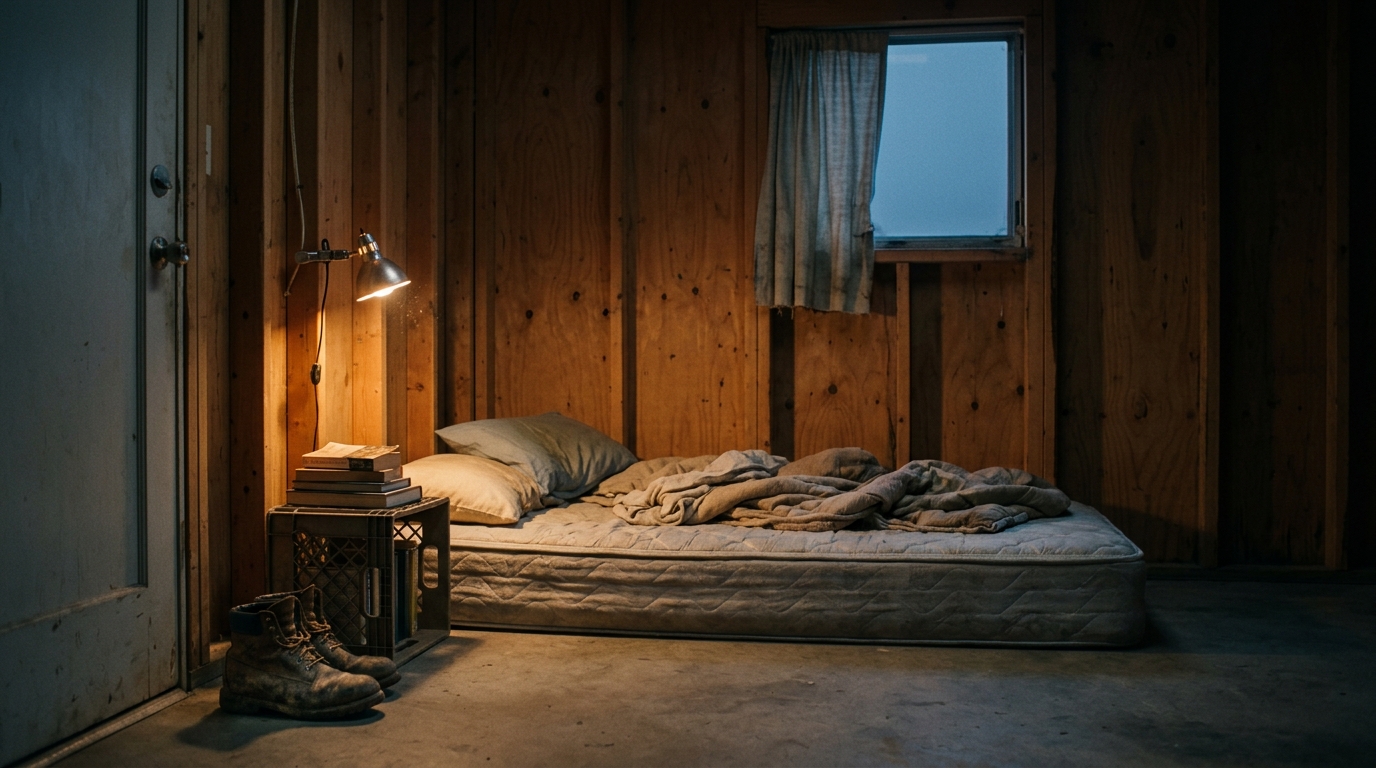
By the end of summer he’d moved into a shared apartment near campus and landed a part-time job at the school’s IT help desk. He still flinched when people raised their voices and still apologized for taking up space, but he was learning that healing mostly looks like drinking coffee in a quiet room. In a new notebook he wrote a list of truths, starting with the line that he didn’t need permission to become someone his family never imagined.
The For Sale Sign
Late one night, studying for a midterm, Ryan got a Facebook message from Mrs. Langford, a former neighbor whose garden used to spill into his family’s yard. His parents’ house was for sale, she wrote, and she thought he had a right to know. He pulled up the listing and found the same white shutters and the same crooked oak shadow, under a description about a home “lovingly maintained for over two decades.” Then he clicked through to the photo of bedroom one. His room had become a guest suite, with neutral walls, beige bedding and generic prints, and no trace of the person who’d grown up there.
He wanted to see it once more, so he borrowed a collared shirt from a roommate and booked a tour under a made-up name, posing as a buyer. The agent, a chipper woman named Sasha, said the sellers were motivated and had already moved most of their things out. The treehouse he’d built with his uncle at twelve was gone, leaving a patch of dirt and a few rusty nails. Afterward he sat in a parked car until the engine cooled and decided he wasn’t going to let them write him out of the story.
He started with research. Public records showed the mortgage wasn’t paid off and his parents were a few months behind, which raised questions about why they were selling. He called Milo, an old classmate who now freelanced in cybersecurity and owed him a favor, and asked him to find out what the sellers were hiding. In thirty-six hours Milo found that the listing skipped a serious basement plumbing problem and that the disclosure paperwork had been falsified. Ryan saved copies and waited.
Meanwhile the college invited him to speak at fall orientation as a first-generation student, and he realized his parents could watch him succeed while their own paperwork came apart. He also had a third card. Mason had old screenshots from a school iPad, jokes about taking cash from their dad’s wallet and having a friend sign off on community service hours. Ryan told himself he’d only use them if pushed.
When the time came, he picked his moment. After the buyers had spent money on inspection and financing, an anonymous package arrived with a flash drive holding photos of the basement flooding, the falsified disclosure, and a note telling them to ask the agent about the sump pump. Three days later the listing disappeared and the buyers walked, leaving his parents behind on payments with no way to hide the problem from the next buyer.
Ryan gave his speech while a local news crew filmed, and the city college board ran a full profile on him that spread among classmates, teachers and neighbors, and eventually reached his parents. His mom left a passive-aggressive comment about kids who don’t appreciate family sacrifice. Ryan then sent an anonymous email to the admissions office at the school Mason wanted, describing falsified community service records and attaching three screenshots. Whether they acted didn’t matter much to him. He wanted Mason to know, for once, that he wasn’t untouchable.
His parents came to him separately. His dad turned up at the help desk with bloodshot eyes and his tie loose, saying they needed to talk. Ryan asked if this was because the house was unsellable and Mason’s applications were stalling. His dad said they’d gotten the point and asked him to come home, and Ryan told him there was no home left, that they had burned it down themselves. Two weeks later his mom slid a note under his door saying she saw their mistakes but he was being cruel. Ryan mailed back a photo of himself holding his scholarship award in front of the college banner, with her own words on the back: “This is what consequences look like.” It was the last thing he ever sent them.
The house was foreclosed on. Mason transferred, but not to the school he’d wanted, and his parents moved into a smaller, older rental two counties away with a lawn they don’t post pictures of. Ryan graduated with honors and now works with a nonprofit that helps first-generation students who have no family support. He mentors kids who feel invisible, and he has an apartment, a dog, a full fridge and friends who chose him.
Reflection: The part of this story that actually worked was the slow part: the graveyard shifts, the boxed cake, the essay he cried over. The sabotage at the end is harder to cheer for, because the forged paperwork was his parents’ doing but the anonymous tip about a teenager’s old jokes was Ryan’s, and I suspect he knows it. What he was really after was proof that he existed, and he’d already built that with his own name in blue frosting.