
Garage Rooms and Missing Transcripts
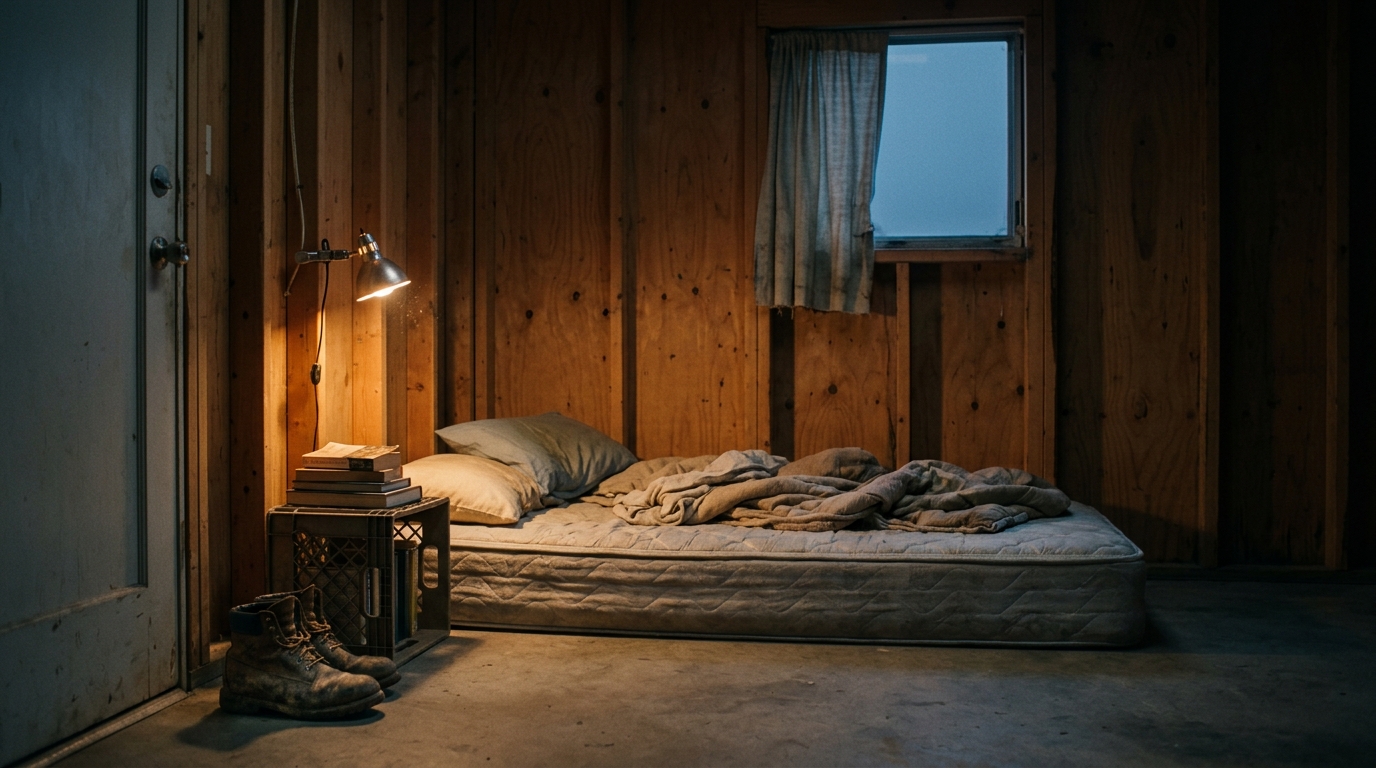
He didn’t go back. A second voicemail came two days later, angrier, informing him that family doesn’t just vanish, which struck Ryan as rich coming from people who’d made him feel like a ghost for years. He moved from a church shelter to the garage of Lynn, a retired mechanic with a soft spot for strays of every kind, who rented him a mattress behind plywood walls and a curtain for $130 a week. It smelled like oil and rust, but it was warm, and for once Ryan didn’t have to tiptoe. He unloaded trucks at a warehouse and filled out college applications at the library on computers that timed out every thirty minutes.
Mason found him first. Ryan walked out of the library one afternoon and saw his brother leaning against a car far too nice for him, scrolling his phone. “You look like crap, bro,” Mason said, and then delivered the pitch: Mom’s freaking out, Dad’s being weird, everyone is waiting for you to crawl back so things can go back to normal. Ryan asked if normal included the birthday cake with Mason’s name on it. Mason shrugged it off as a mix-up and said Ryan took things too seriously. “They never mean anything by it,” Ryan told him. “That’s the problem.” Before he left, he asked whether anyone had told Mason what they said the night he walked out, and Mason had no answer.
The calls stopped after that, and Ryan assumed they’d turned his room into a gym or storage space. Then an email arrived from his high school counselor, Mrs. Dero, written in the careful tone of someone unsure whether to sound worried or polite. His transcripts had been requested and withdrawn. His parents had called the school, said he wouldn’t be attending college, and asked that all application correspondence be canceled. Ryan spent two days untangling it and saved most of his applications, but a few deadlines had passed and he lost a scholarship he’d had a real shot at. Calling it control felt too generous. This was sabotage.
A month later a letter arrived in his dad’s handwriting with no return address and no apology. It held a bulleted list of what Ryan had to do before they’d discuss him coming home: stop blaming others for his unhappiness, apologize for ghosting them, recognize their sacrifices, and accept that everything they did came from love. He laughed, crumpled it up and tossed it. It read like a contract designed to make him the problem again.
In early spring Lynn handed him a thick envelope that a stranger had dropped off. It came from a lawyer’s office and said Ryan was being removed retroactively as a dependent from his parents’ tax records, that he was no longer part of their household, and that he had until the end of the month to collect his belongings before they’d be disposed of. A sticky note was attached in his mother’s handwriting: “This is what consequences look like.” Something in him hardened. It felt less like anger or sadness than like clarity.
The Book at the Bottom of the Backpack
Rock bottom, he found, doesn’t announce itself. It looks like walking home after a double shift with soaked boots and realizing you don’t have a home, just a garage with no insulation and a curtain for a door. He skipped two shifts, stopped answering when Lynn knocked, and lay awake listening to the wind rattle the garage door. Lynn didn’t push. He slid an extra sandwich across the workbench and said whatever this was wouldn’t last forever, unless Ryan let it.
What pulled him out was small. At the bottom of his backpack was his worn copy of Into the Wild, which he’d read three times, and it fell open to a line he’d underlined in red years earlier: happiness is only real when shared. It should have stung. Instead he saw that he’d spent his whole life offering himself to people who never wanted the gift, and that he couldn’t change them, only himself.
The next morning he went back to work, apologized to his supervisor and took the graveyard shift to make up for what he’d missed. He budgeted hard, even turned off his phone data, and did extra chores for Lynn, who kept pressing twenties on him “for groceries.” He reapplied to community college on his own and wrote an essay so honest he cried after hitting submit. A free Python class he’d been dabbling in paid off when he solved a shipping software glitch that two logistics guys were grumbling about, and word got around. There was no raise and no title, but people started learning his name.
In early summer an email arrived: accepted, with a scholarship that would cover tuition if he kept working part time. He read the word “congratulations” over and over, then borrowed Lynn’s kitchen to bake a boxed cake. It came out lopsided and a little burned, and he wrote “Ryan” across it in blue frosting. No shared celebration, no lecture, just his own name on something he’d made.
News travels in a small town. An old neighbor told him at the grocery store that his mom must be so proud, and Ryan said, “Must be.” Days later his mom left a voicemail, calm and flat, saying they’d heard about school, were glad he was doing well, and hoped he’d remember where he came from. He played it five times and noticed he wasn’t angry, just free.