
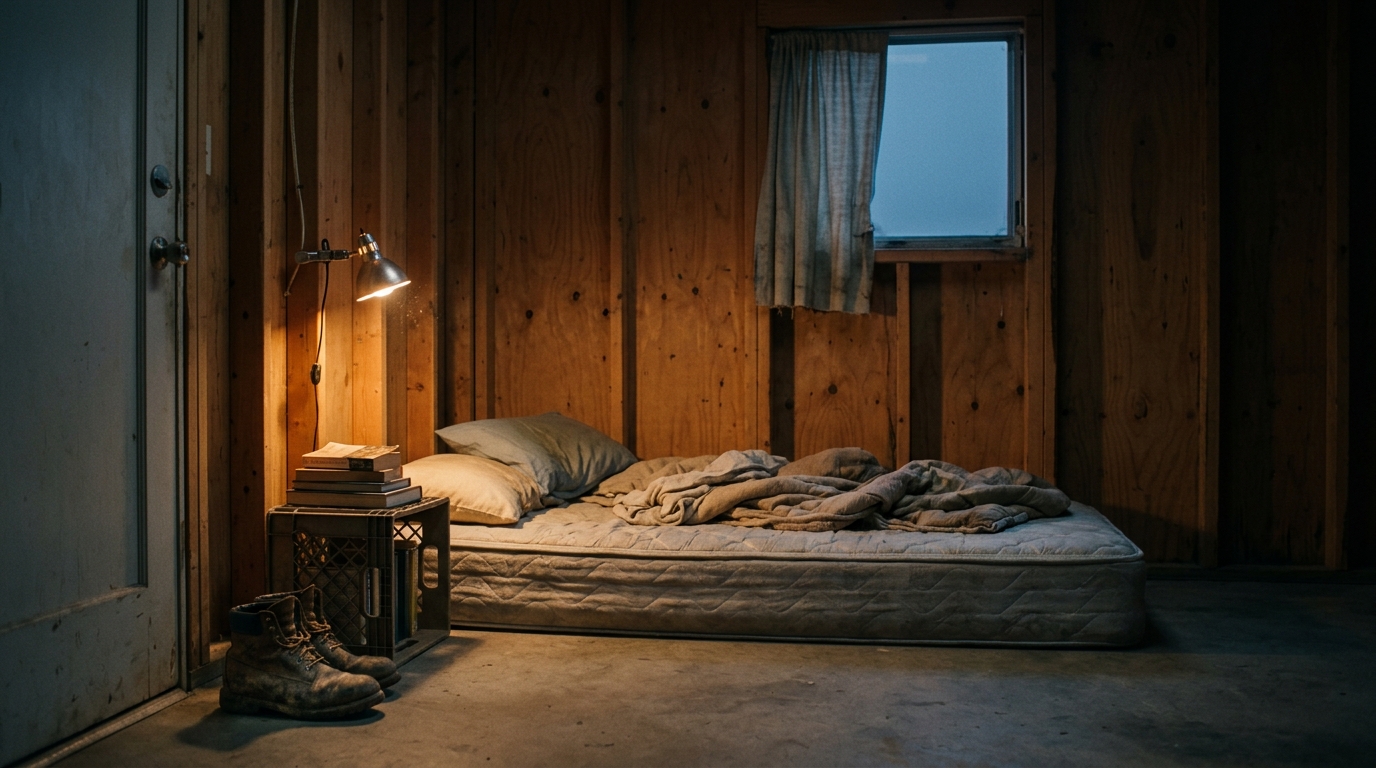
Ryan grew up as the overlooked son in a house that adored his younger brother, and on his 18th birthday he walked out and never moved back in. This is a story about family favoritism, an estranged son starting over, and how far a person will go once he decides to stop begging for his parents’ approval.
This one got more reactions in our team chat than anything else this month. People kept stopping mid-read to announce what they would have done in Ryan’s place. I changed my mind about him twice before I got to the end. Read it, then tell us whether you’d have done the same.
The Boy Who Counted the Days
Ryan started counting down to his eighteenth birthday when he was seventeen, and it had nothing to do with excitement about adulthood. He knew that once he turned eighteen he could legally leave. From the street, his family’s house looked like a catalog photo, with two stories, white shutters and a big oak tree in the front yard. Inside, he always felt like a guest who’d overstayed, breathing air that belonged to other people.
The reason had a name, and the name was Mason. His brother was two years younger and seemed to have been born with a permanent pass. Mason could back the family car into the mailbox and get asked if he was feeling okay, while Ryan once forgot to vacuum before dinner and lost a week to being grounded. Their parents had endured several miscarriages before Mason arrived, and Ryan suspected that was when they decided one son was a miracle and the other was background.
So Ryan learned to be small. His dad’s voice went tight and clipped whenever he walked into a room, as if Ryan were a problem nobody had solved yet. His mom never yelled, which was somehow worse, because she looked straight through him. He kept his grades up, stayed out of trouble and stocked grocery shelves to pay for college himself, since his dad only grunted that he was smart and would figure it out. Mason got a laptop at sixteen “for school” and mostly used it for games and scrolling. When Ryan asked to borrow it for his college applications, his mom told him to ask his brother, and his brother said no.
A Cake With Someone Else’s Name
Ryan’s eighteenth birthday fell on a Saturday. He didn’t expect much, maybe a card or a family dinner, mostly some sign that he’d survived eighteen years in a house that barely tolerated him. He came downstairs late and found his dad tying a bow on a sleek black box while Mason bounced on his heels beside it. Nobody looked up. His mom said “perfect timing” and told Mason to open it, and it took Ryan a few seconds to understand the gift wasn’t his.
Inside was a silver watch with a leather band and Roman numerals. Mason strapped it on and said he didn’t have to borrow Ryan’s old one anymore, and their dad ruffled his hair and said he’d earned it by working so hard lately. Ryan knew Mason’s big accomplishment that week involved a girl in his chemistry class. When his mom finally noticed him standing there, she told him not to look so sour, that gifts weren’t the point, and that someday he’d understand what matters is who you become. She said it in the calm, wise voice she saved for moments when she wanted to be the reasonable one.
Ryan asked about cake. Mason said they’d already had it while Ryan was asleep, and when Ryan asked whose name was on it, the kitchen went quiet for a beat too long. “Mine,” Mason said with a smirk. “It was kind of a joint thing, but it’s not your birthday. Don’t be dramatic.” Ryan laughed, a short sharp sound that didn’t feel like his own, because the alternative was crying in front of them.
That night he sat on his bed in the dark and finally said the thing he’d known for years: no amount of effort would ever make him Mason. He packed a hoodie, a water bottle, some granola bars and the sixty dollars hidden in his sock drawer, plus a bus schedule he’d printed at the library weeks earlier. At midnight he slipped out the back door. He figured he’d be gone a day or two.
Two weeks later his phone lit up with his dad’s number. He let it ring twice and answered on the third, and heard a voice he barely recognized, quiet and choked. “Your room’s still here. Please pick up. Just tell me where you are.” Something had shifted, though Ryan couldn’t tell what, and the unsettling part was that he wasn’t sure he wanted to go back.