
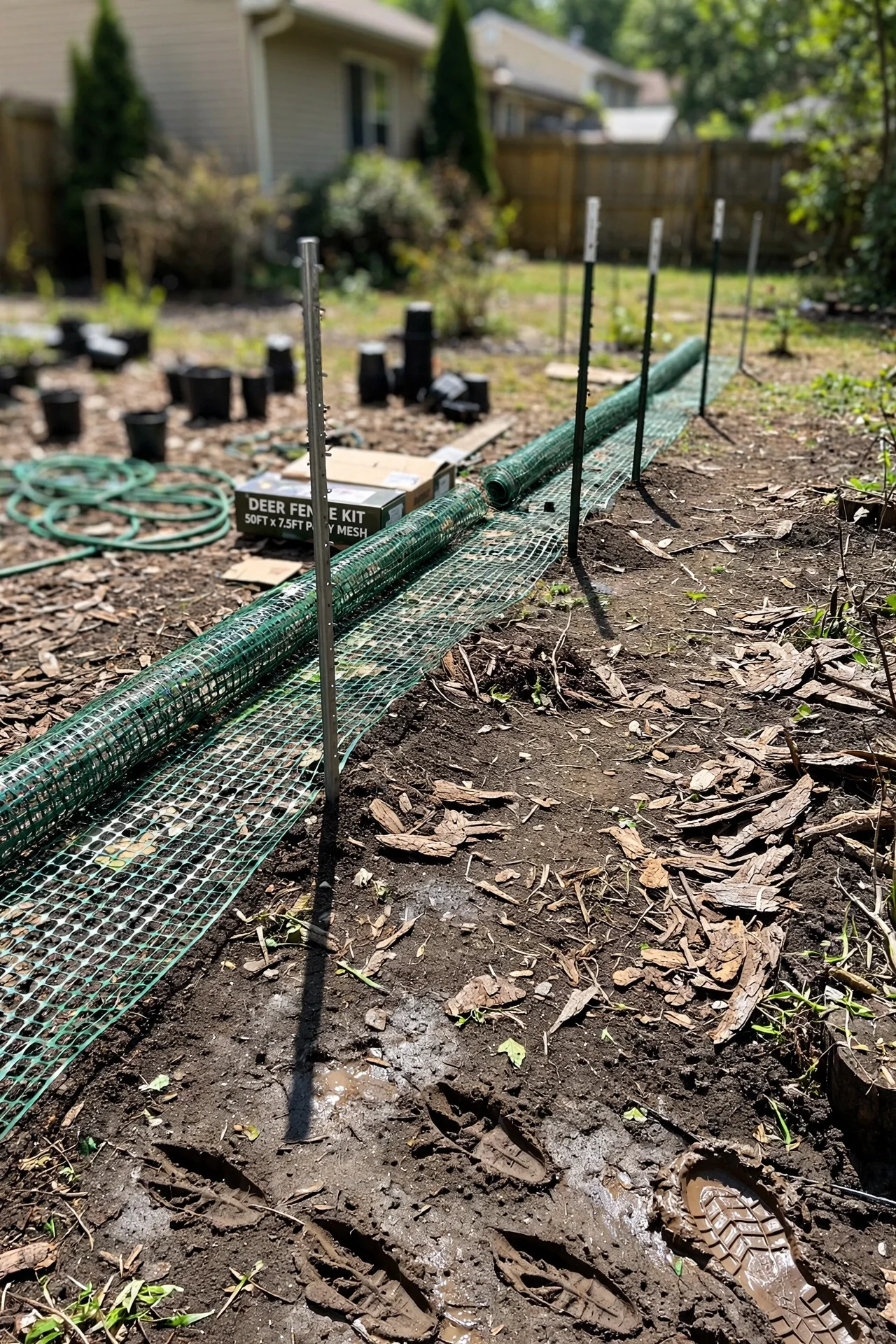
Most deer fence kit advice pits polypropylene against metal on price and thickness. The real decision happens before you compare materials: how intense is your deer pressure, and is your site permanent or seasonal? A lightweight mesh that works for occasional suburban browsers will fail within days against a determined rural herd. Matching barrier type to pressure level and site constraints is the difference between a fence that excludes deer and one that merely decorates the garden perimeter.
This guide examines complete deer fence kits across three categories: polypropylene mesh systems, metal hex-web and welded wire enclosures, and electric deterrent setups. It does not cover individual components, custom professional installations, or solid wood privacy fencing, which belong to a different decision process.
You will leave with a clear framework for choosing a kit type based on measurable factors: deer visitation frequency, garden square footage, installation time commitment, and maintenance tolerance. Each recommendation ties back to one of three decision branches, so you can skip the comparison noise and go straight to what fits your situation.
Bottom line: If you estimate deer pressure incorrectly by even one tier, the fence will either be overbuilt and unnecessarily expensive or underbuilt and breached within weeks.
The Yield Grid Decision Grid
Every deer fence kit belongs to one of three pressure-response categories. Identify your site conditions below, then follow the branch to the recommended items.
Branch 1: Low Pressure, Seasonal Garden
- Deer sightings are occasional (less than once per week).
- Protected area is under 500 sq ft (46 m²).
- You want a removable or seasonal solution.
Recommended: Items 1, 5, 11 below.
Branch 2: Moderate Pressure, Permanent Garden
- Deer visit daily; tracks or droppings are visible most mornings.
- Protected area is 500–2,000 sq ft (46–186 m²).
- You can commit to periodic inspection and maintenance.
Recommended: Items 2, 3, 6, 8, 9, 12 below.
Branch 3: High Pressure, Large Area or Valuable Crops
- Deer herds are a constant presence; property borders woodland or farmland.
- Protected area exceeds 2,000 sq ft (186 m²).
- Budget is not the primary constraint; reliability is.
Recommended: Items 4, 7, 10 below.
Before installing any kit, confirm your garden’s water access is adequate. A properly sited garden hose splitter simplifies multi-zone watering inside the protected perimeter.
Quick Comparison Table
| Option | Key Mechanism | Best For | Decision Grid Branch | Effort Score (1–5) |
|---|---|---|---|---|
| 1. Polypropylene Mesh Starter | Physical barrier, UV-stabilized poly mesh | Small seasonal gardens, low deer pressure | Branch 1 | 2 |
| 2. Electric Polywire Quick-Set | Psychological deterrent, pulsed shock | Moderate pressure, perimeter protection | Branch 2 | 3 |
| 3. Metal Hex-Web Economy | Physical barrier, galvanized hexagonal wire | Moderate pressure, budget under $200 | Branch 2 | 2 |
| 4. Welded Wire Permanent | Physical barrier, rigid welded steel | High pressure, orchards, permanent setups | Branch 3 | 1 |
| 5. Solar-Powered Electric | Psychological deterrent, solar-charged energizer | Moderate pressure, remote sites without AC power | Branch 2 | 4 |
| 6. 3D Polywire Deterrent | Depth-perception confusion, double offset wires | Moderate pressure, large perimeter on a budget | Branch 2 | 3 |
| 7. Heavy-Duty Poly Mesh Reinforced | Physical barrier, thick poly with bottom edge guard | High pressure, gardens with rabbit pressure too | Branch 3 | 2 |
| 8. Portable Electric Netting | Psychological deterrent, movable mesh with built-in posts | Moderate pressure, rotational crop protection | Branch 2 | 5 |
| 9. Galvanized Fixed-Knot | Physical barrier, knotted steel wire grid | High pressure, livestock areas, long life | Branch 3 | 1 |
| 10. DIY PVC Frame Poly Cover | Physical barrier, PVC pipe frame with poly skin | High pressure, small intensive beds | Branch 3 | 3 |
| 11. Budget Poly Roll with Bamboo | Physical barrier, lightweight poly with natural posts | Low pressure, one-season use, under $75 | Branch 1 | 2 |
| 12. High-Tensile Smooth Wire Electric | Psychological deterrent, high-tensile wire with powerful charger | High pressure, large acreage, permanent perimeter | Branch 3 | 3 |
1. Polypropylene Mesh Starter Kit
Best for: Branch 1
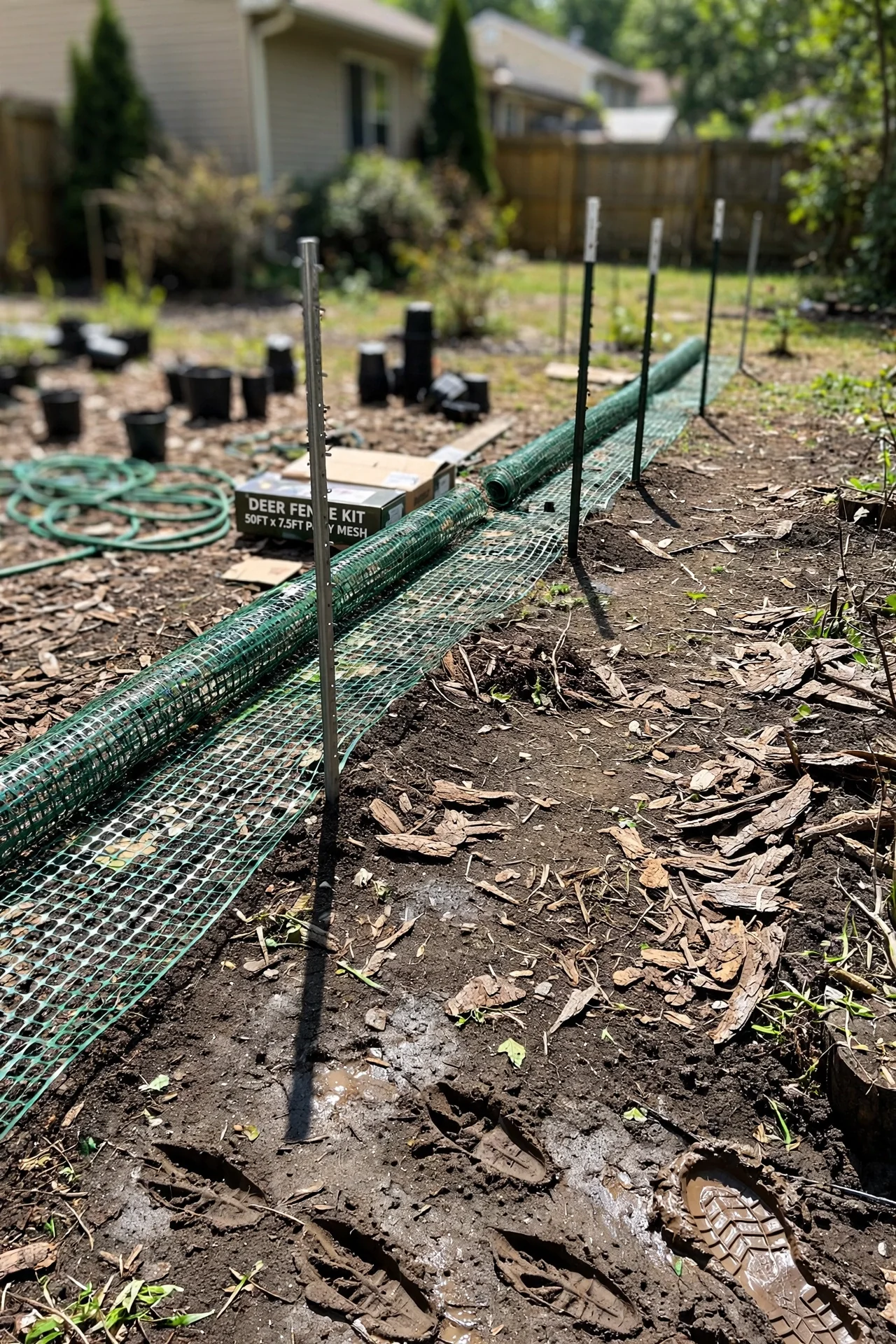
What: A 7 ft x 100 ft UV-stabilized polypropylene mesh roll with 3/4-inch openings, typically bundled with adjustable poles, zip ties, and ground staples. For: Gardeners who see deer only a few times a season and need a lightweight, removable barrier that allows light and air through.
Steps: (1) Measure perimeter and clear a 1-foot path. (2) Drive posts at 10–12 foot intervals, angling corner posts slightly outward. (3) Unroll mesh and attach to posts with self-locking ties at top, middle, and bottom. (4) Pin the bottom edge to the ground with sod staples every 5 feet. (5) Walk the perimeter and tug-test each attachment point.
Common mistake: Leaving slack in the mesh. Deer push their noses under loose sections; a taut bottom edge is more important than perfect vertical alignment. In snow-prone regions, remove the mesh before winter: a 6-inch wet snow load can stretch poly mesh permanently and reduce effective height the following season.
Pair this kit with a properly planned drip irrigation starter kit to keep plants watered inside the enclosure without dragging hoses over the fence line.
2. Electric Polywire Quick-Set Kit
Best for: Branch 2
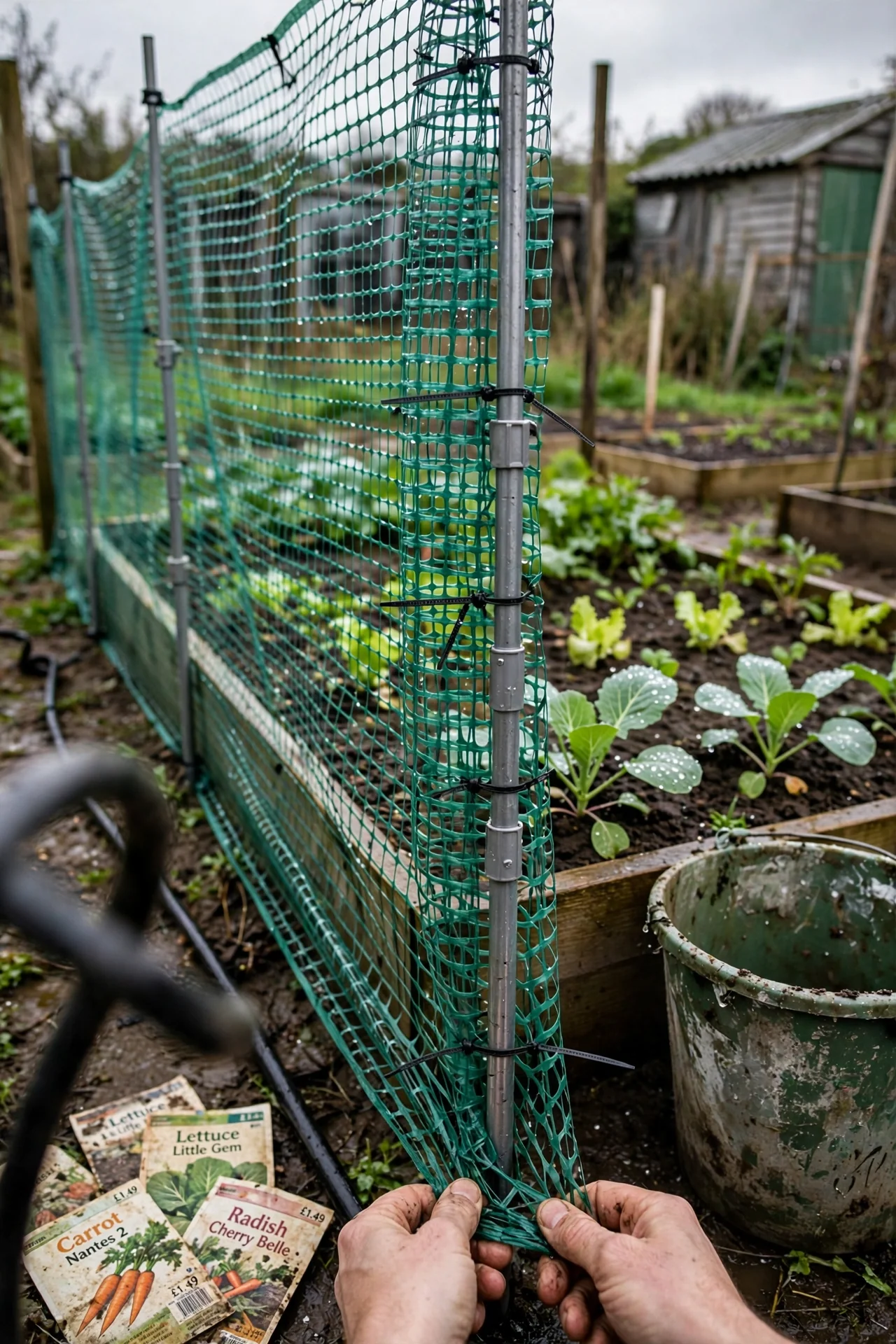
Use if: You need a fast-deploy deterrent on a moderate budget and have access to 110V power or a solar charger. Skip if: You cannot commit to monthly voltage checks; anything below 3,000V becomes a curiosity rather than a deterrent. Polywire is lightweight and easy to repair but vulnerable to wind damage and falling branches. For alternative plant protection during fence downtime, see our shade cloth ideas.
3. Metal Hex-Web Economy Kit
Best for: Branch 2
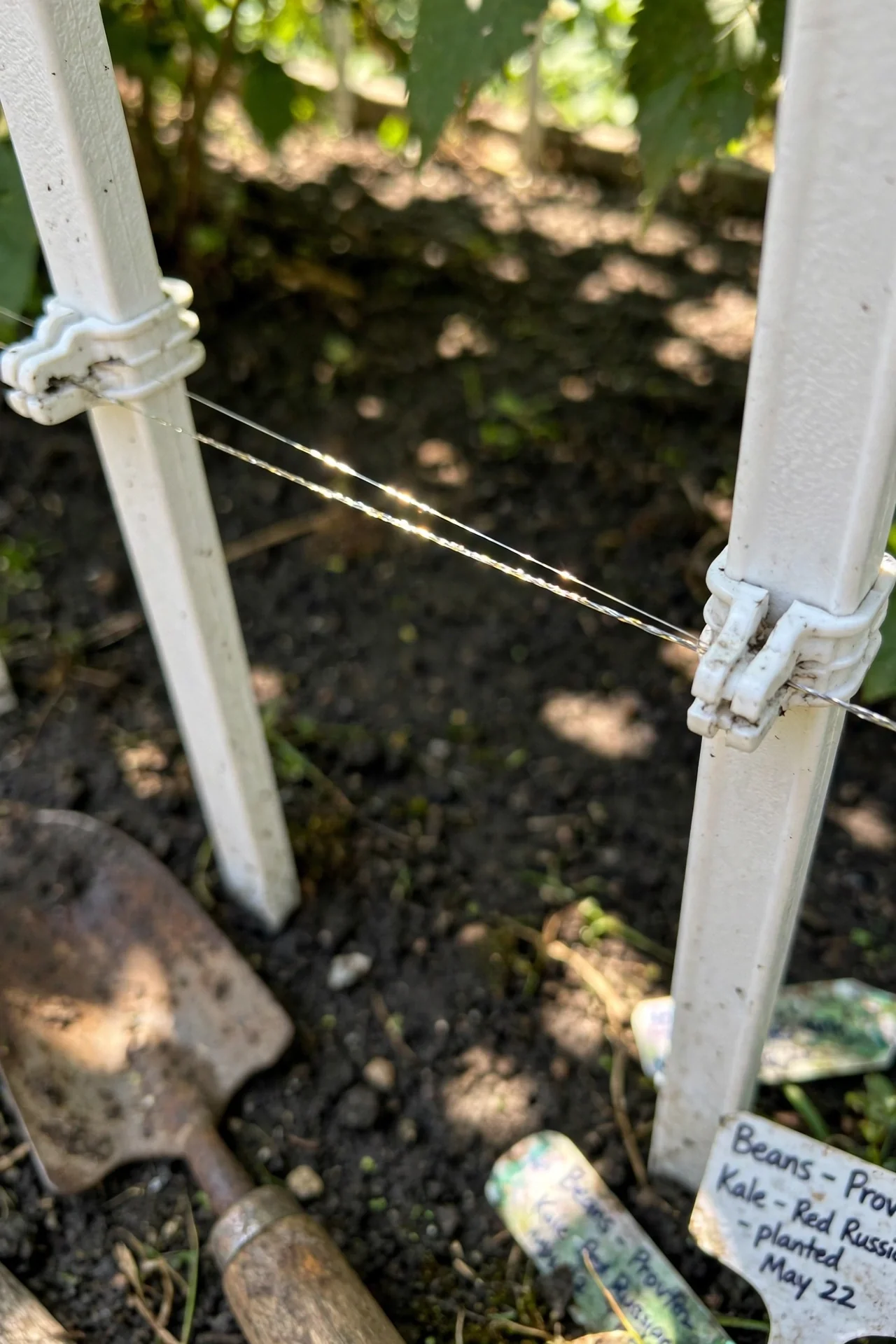
Threshold rule: If your total linear footage exceeds 200 feet, switch to welded wire or fixed-knot. Hex-web (chicken wire style) works well for enclosures under 200 feet where deer pressure is steady but not aggressive. The mesh must be 1-inch or smaller: anything larger lets fawns squeeze through and adult deer get a nose-hold to lift the bottom. Galvanized hex-web lasts 7–10 years in dry climates but may rust within 5 years in coastal or high-humidity zones. Fold 6 inches outward at the base and stake it down; deer probe the ground line first. For supporting tall plants inside the protected area, consider tomato cage alternatives that work alongside the fence perimeter.
4. Welded Wire Permanent Kit
Best for: Branch 3
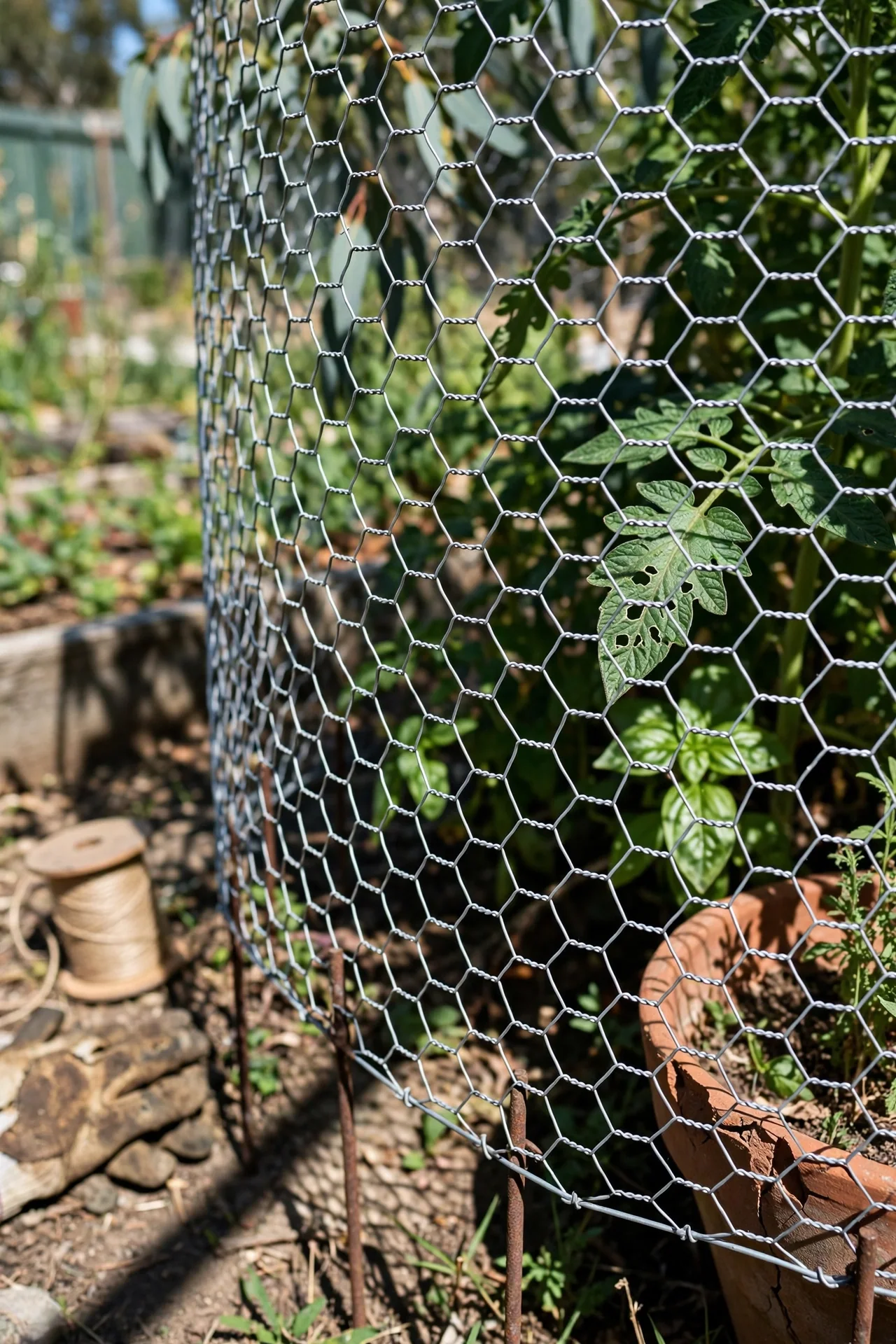
What: A rigid welded steel wire fence, typically 7.5–8 ft high, with 2×4-inch graduated mesh (smaller openings near the bottom). For: Orchards, vineyards, and large vegetable gardens where deer pressure is constant and the fence must remain standing for 15–25 years.
Steps: (1) Set corner and end posts in concrete, ensuring they are plumb. (2) Run a top monofilament tension wire and bottom ground wire between corners. (3) Attach welded wire panels to posts using heavy-gauge wire ties at 12-inch intervals. (4) Fold the bottom 6 inches of wire outward (away from the garden) and pin with 8-inch landscape staples every 4 feet. (5) Install a gate with a spring-loaded latch that closes automatically; deer will exploit any gap left open.
Common mistake: Skipping the outward fold at the base. Deer routinely nose under fences; an outward fold creates a horizontal plane they cannot lift. If your site has rocky soil that prevents deep post-setting, hire a professional for corner posts alone; the wire panels can be DIY-attached afterward.
A fenced garden still needs consistent moisture. A garden misting system can be installed along the interior fence line to water plants without obstructing access.
5. Solar-Powered Electric Fence Kit
Best for: Branch 2
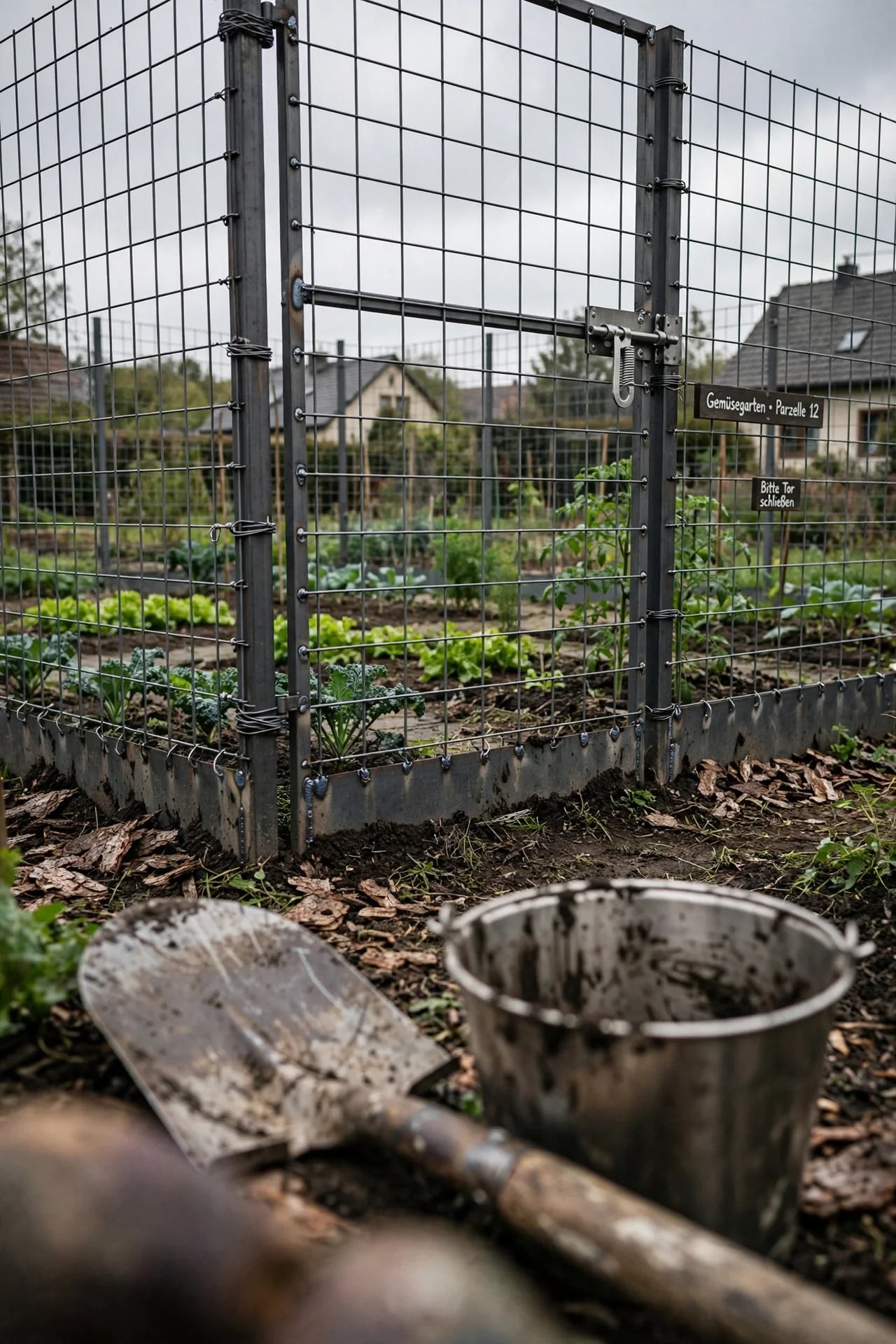
Use if: Your site lacks grid power and you can position the solar panel facing south (northern hemisphere) or north (southern hemisphere) with at least 6 hours of direct sun. Skip if: Your garden sits in deep shade or under tree canopy; the battery will fail to charge. Solar energizers output 4,000–8,000V in full sun but drop sharply on cloudy days. Install a voltage tester and check weekly. Keep installation tools organized with a tool belt for gardeners.
6. 3D Polywire Deterrent System
Best for: Branch 2
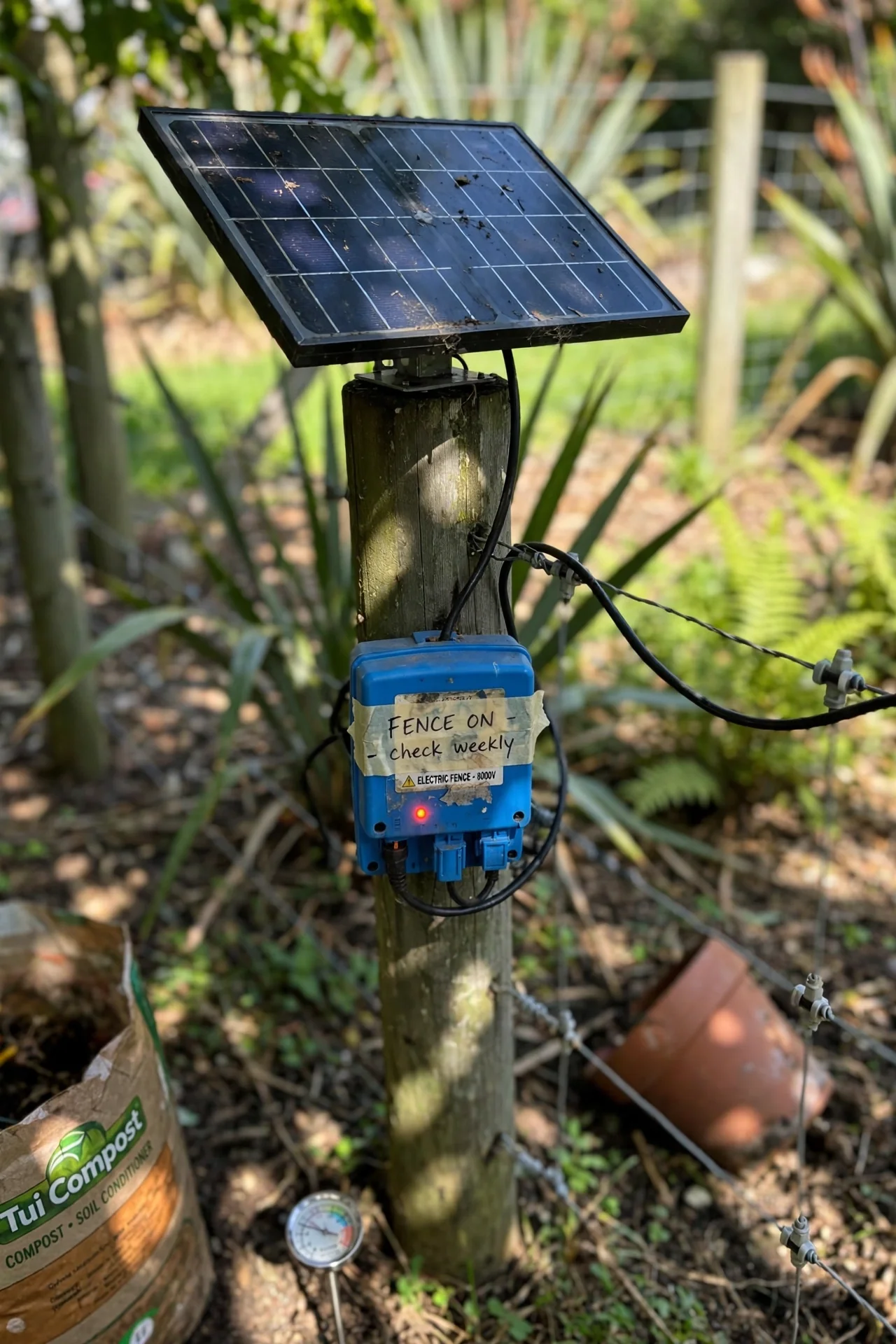
Threshold rule: For this system to work, you must maintain two offset fences spaced 3–4 feet apart. The outer fence stands at 30 inches high with two strands; the inner fence reaches 48 inches with three strands. Deer perceive the double barrier as a single wide obstacle and refuse the jump because depth perception fails at close range. This design uses less material than a single tall fence but requires precise spacing. If the gap between fences narrows to less than 2 feet, deer may attempt the jump. Sloped ground complicates alignment; work uphill and adjust strand heights relative to the terrain. When cutting posts to length for uneven ground, wear proper chainsaw safety gear to prevent injury.
7. Heavy-Duty Poly Mesh with Reinforced Bottom Edge

Best for: Branch 3
What: A 7.5–8 ft high polypropylene mesh with a denser weave (breaking strength above 700 lb) and a sewn-in or welded bottom edge that resists chewing. For: Gardens facing both deer and smaller pests like rabbits and groundhogs, where a single barrier must exclude multiple species.
Steps: (1) Dig a 4-inch trench along the fence line. (2) Bury the reinforced bottom edge in the trench and backfill; this prevents burrowing animals from tunneling under. (3) Install heavy-duty T-posts at 8–10 foot intervals, not the wider spacing some kits suggest; the heavier mesh exerts more pull on posts. (4) Run a monofilament top wire and tension it with a ratchet tightener until the mesh stands firm without sagging. (5) Inspect the bottom burial line after heavy rains; erosion can expose the edge.
Common mistake: Assuming reinforced bottom means no trenching is needed. The reinforcement resists chewing but does not block a rabbit that can dig 2–3 inches in soft soil. Always bury the edge, especially in sandy or loamy ground.
After the fence is up, sowing directly inside the protected area is efficient with a seed sower tool, which lets you plant rows without disturbing the fence line.
8. Portable Electric Netting Kit
Best for: Branch 2
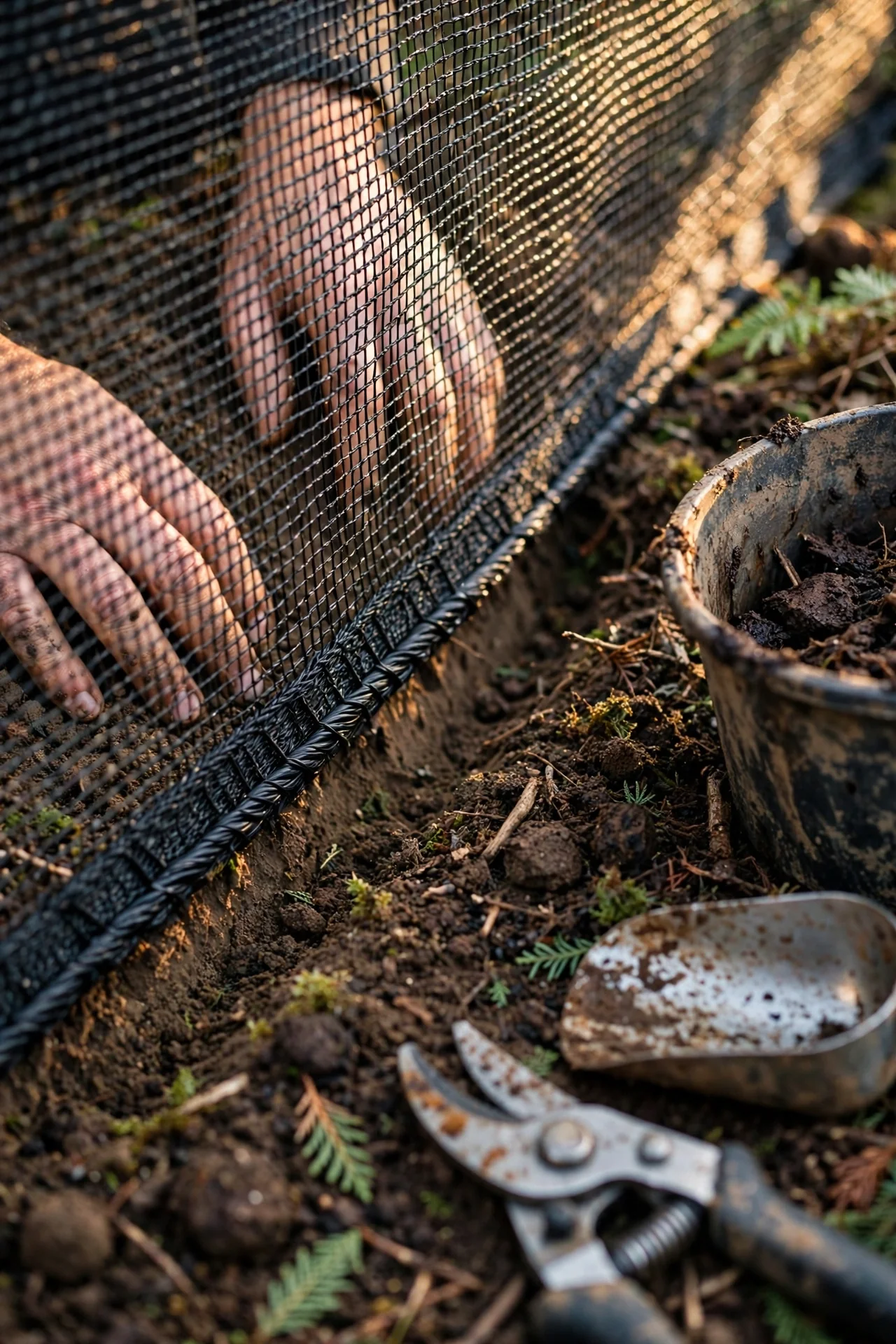
Use if: You move your garden plot annually or need temporary protection for a spring crop that gets harvested by July. Skip if: Your site experiences wind gusts above 25 mph; the netting acts like a sail. Portable netting kits include built-in posts and an energizer hookup, but the posts are thin fiberglass rods that snap under ice or heavy bird perching. Re-tension monthly.
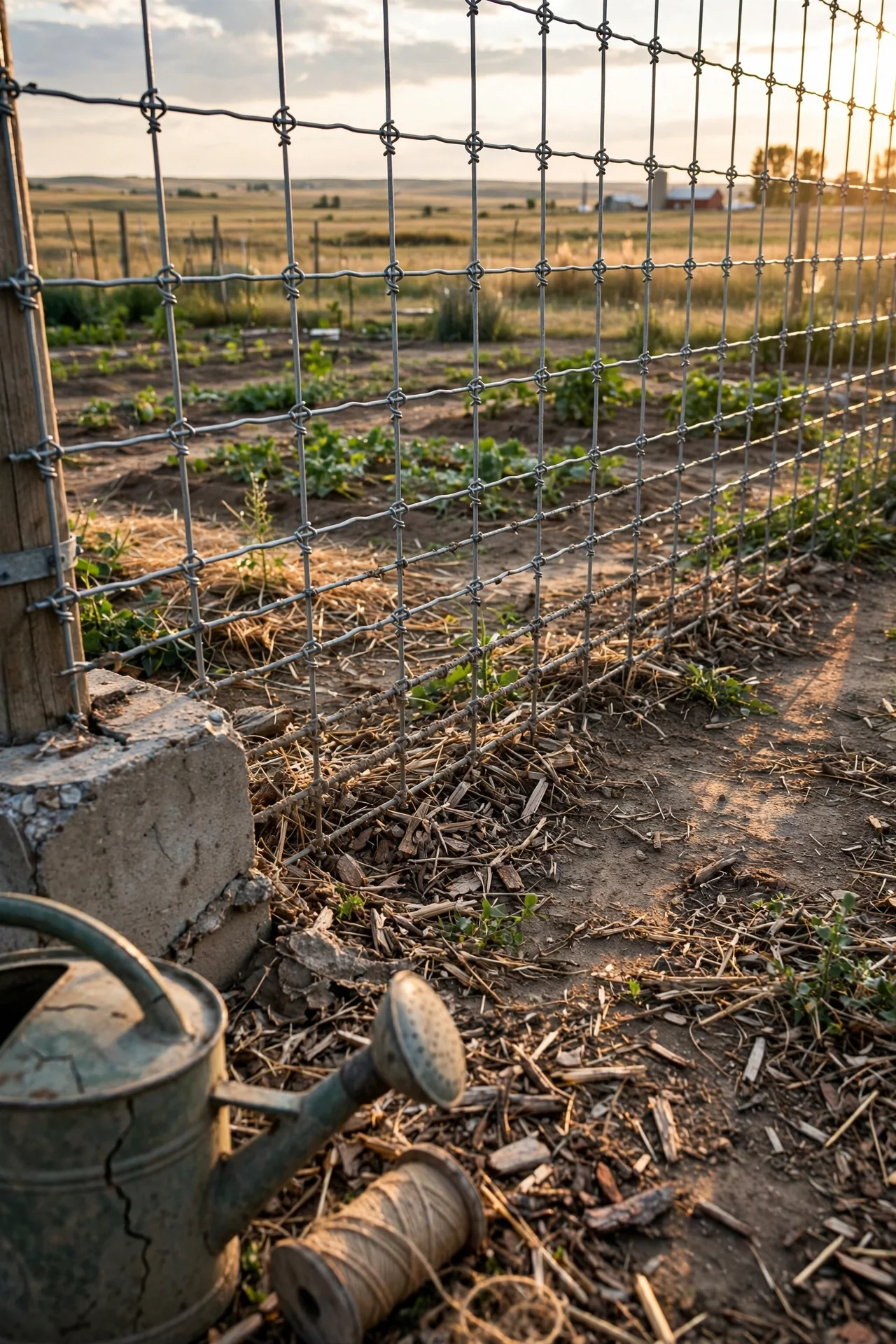
9. Galvanized Steel Fixed-Knot Kit
Best for: Branch 3
Threshold rule: Choose fixed-knot over welded wire if your fence line exceeds 500 feet or you live in a region with freeze-thaw cycles that heave posts. The fixed-knot design allows each wire joint to flex independently; if one wire breaks, the surrounding mesh holds its shape rather than unraveling. This matters in high-deer-pressure zones where a single breach can escalate overnight. Posts must be set at 10-foot intervals maximum; wider spacing allows deer to squeeze between wires. Fixed-knot mesh is heavier than poly, so corner posts require concrete footings. Expect a 20-year lifespan with galvanized Class 3 coating.
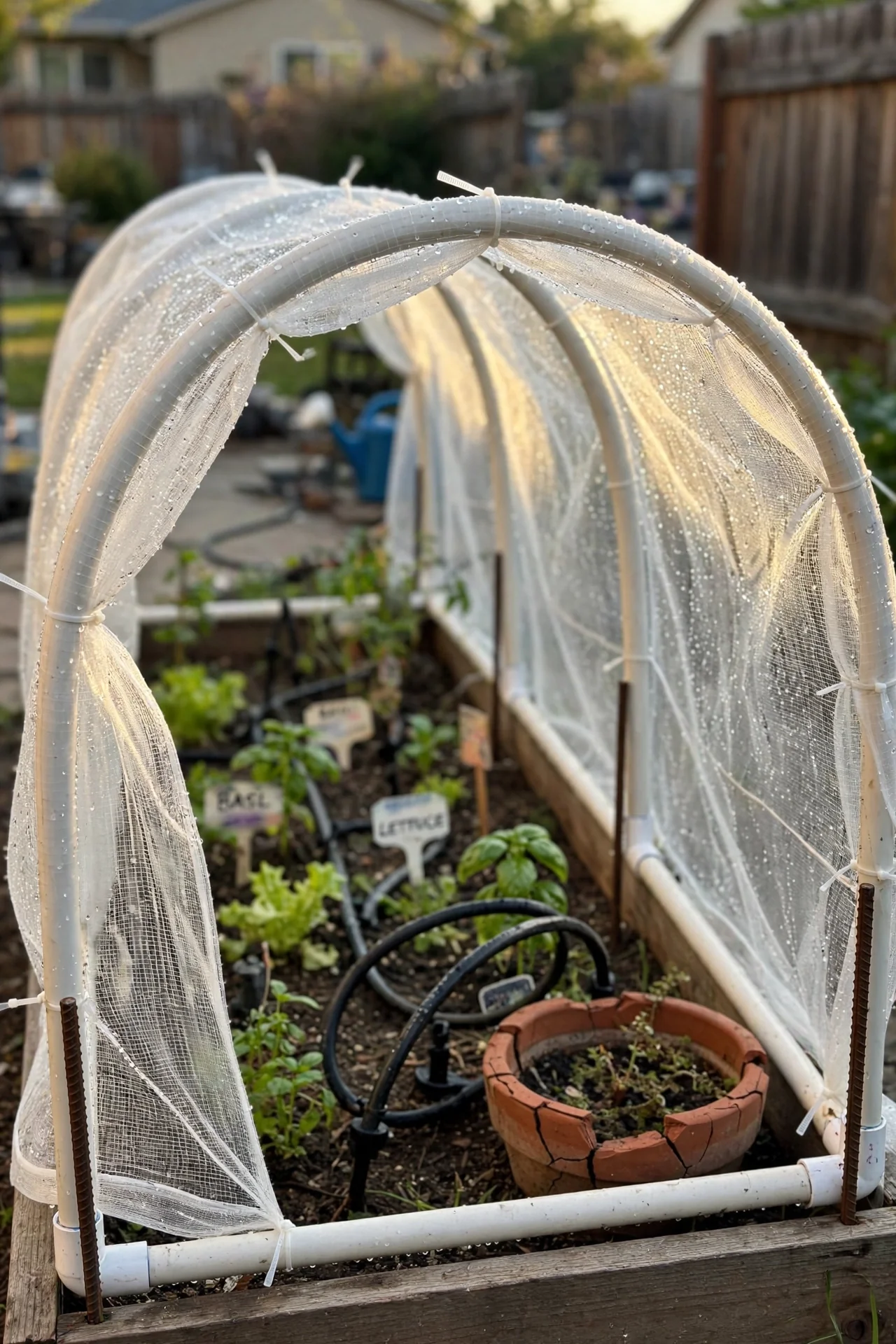
10. DIY PVC Frame Poly Cover Kit
Best for: Branch 3
What: A rigid frame constructed from 1-inch PVC pipe, covered with poly mesh or clear polyethylene sheeting, creating a walk-in enclosure. For: Small, intensive beds (under 200 sq ft) where both deer exclusion and season extension are desired.
Steps: (1) Drive 2-foot lengths of rebar into the ground at 4-foot intervals along the bed perimeter; these serve as anchors for PVC hoops. (2) Bend 10-foot PVC pipes over the rebar to form arches. (3) Run a ridge pole across the top of the arches and secure with zip ties. (4) Drape poly mesh or sheeting over the frame and secure the edges to the ground with sandbags or landscape staples. (5) Leave one end openable for access; use velcro or a zipper kit.
Common mistake: Using schedule-20 PVC instead of schedule-40. Schedule-20 pipes crack in cold weather; schedule-40 rated to 20°F (-7°C) holds up better but still becomes brittle below 10°F (-12°C). In hard-freeze zones, remove the poly covering before winter storms to prevent frame collapse.
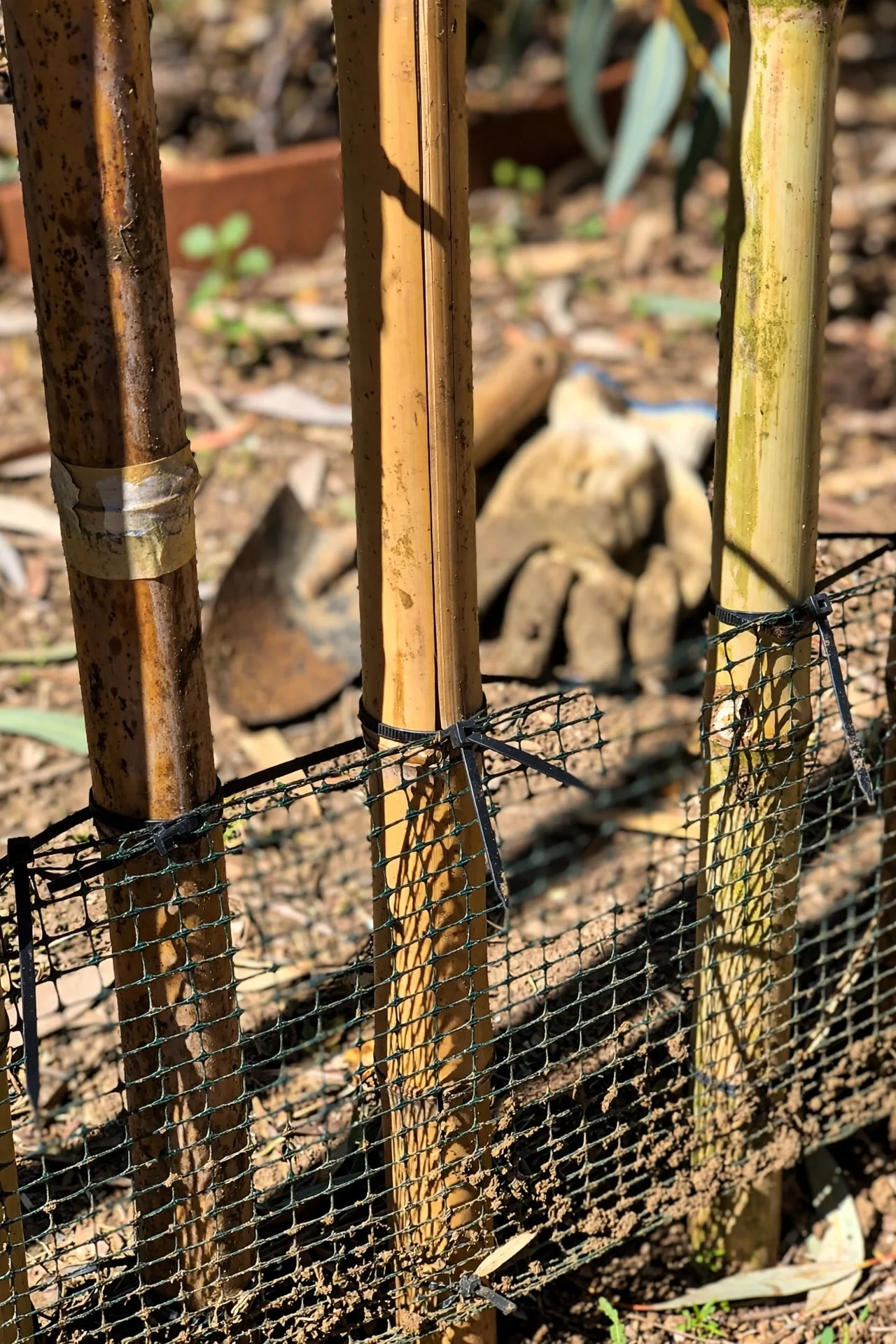
11. Budget Poly Roll with Bamboo Poles
Best for: Branch 1
Use if: You need a one-season barrier for under $75 and deer pressure is light. Skip if: You garden in a rainy climate; bamboo poles absorb moisture and rot within 18–24 months. The poly roll itself is standard 3/4-inch mesh, but the bamboo lacks the rigidity of metal posts and bends under tension. Suitable for a single tomato bed or a small flower border, not a full vegetable garden.
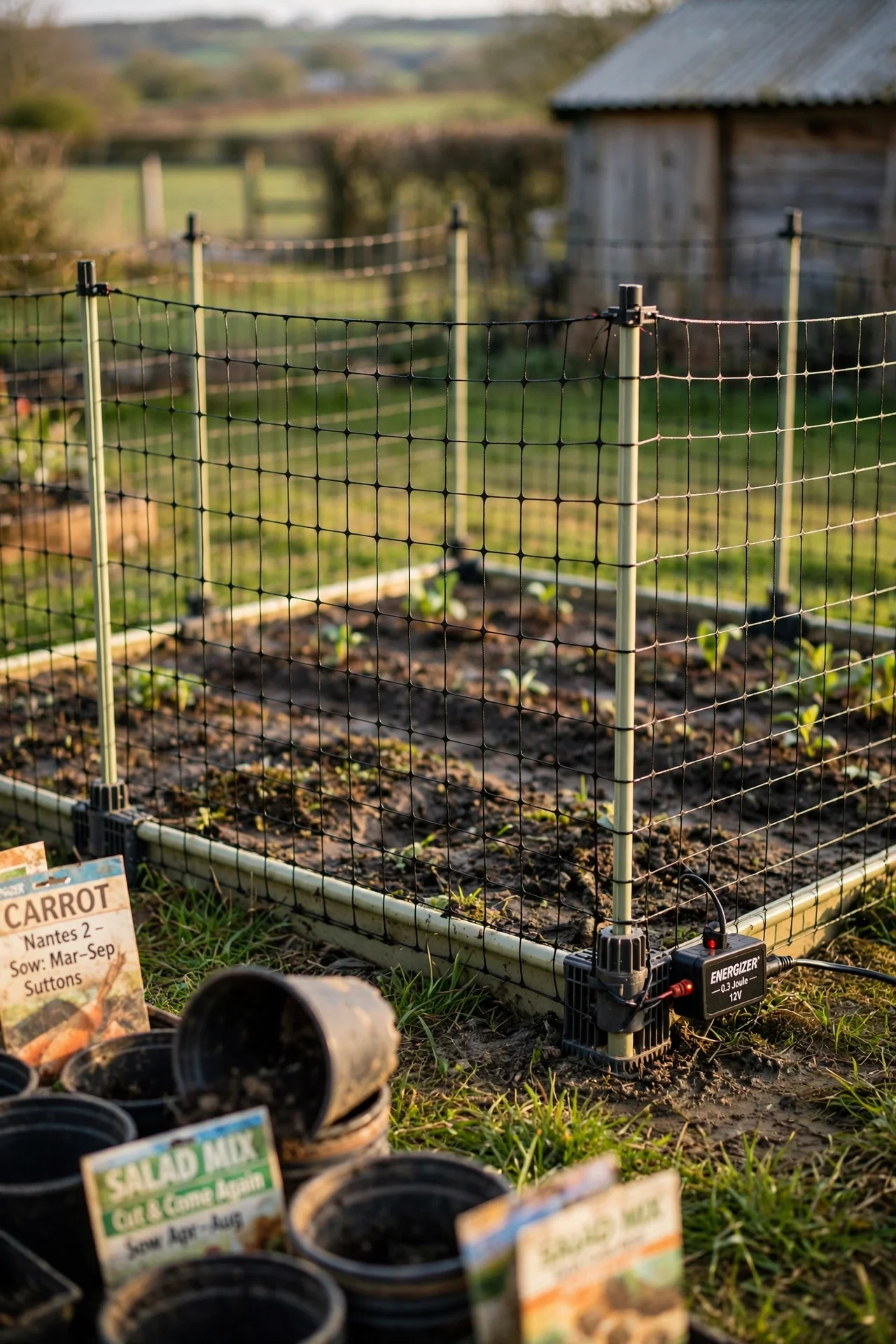
12. High-Tensile Smooth Wire Electric Kit
Best for: Branch 3
Threshold rule: Install this system only if your soil holds enough moisture for a ground rod to establish a reliable earth return circuit. Dry, sandy, or gravelly soil breaks the electrical connection. High-tensile electric fences rely on a complete circuit: the animal touches the wire, current travels through its body into the ground, and back to the ground rod. Use a low-impedance energizer rated for at least 5 joules of output; weaker units cannot push current through fur or dry vegetation. Wire tension must be maintained at 150–200 psi; a sagging wire shorts out on vegetation and drains the energizer.
Starter Stack (What to Choose First)
Branch 1 Starter: Poly Mesh Plus Electric Backup
Combine Item 1 (Polypropylene Mesh Starter Kit) with Item 5 (Solar-Powered Electric Fence Kit). The mesh provides a visual and physical barrier; the single electric strand 30 inches off the ground teaches deer to avoid the perimeter entirely. Total cost: $140–$220. Installation time: 4–6 hours for a 100-foot perimeter. This pairing handles both browsing deer and the occasional bold individual that tests the mesh.
Branch 2 Starter: Hex-Web and Polywire Combo
Combine Item 3 (Metal Hex-Web Economy Kit) with Item 6 (3D Polywire Deterrent System). The hex-web blocks physical entry; the double offset wires create a psychological barrier that stops deer from even approaching the metal fence. Together they cover both push-through and jump-over tactics. Total cost: $300–$500. Installation time: one weekend for a 200-foot perimeter.
Branch 3 Starter: Welded Wire Plus Fixed-Knot Perimeter
Combine Item 4 (Welded Wire Permanent Kit) for the primary garden with Item 9 (Galvanized Fixed-Knot Kit) for the outer property line. This two-layer approach stops deer at the boundary before they reach your valuable crops. It is expensive ($800–$1,500 for materials) and labor-intensive, but it is the standard for orchards and market gardens where a single breach could mean thousands in lost product.
When This Won’t Work
Failure condition 1: Deer pressure exceeds the fence height. In regions where white-tailed deer populations exceed 30 per square mile, an 8-foot fence may still be jumped if deer can see a safe landing zone on the other side. If your garden abuts a steep downhill slope, deer can clear a taller fence because the effective height from their takeoff point is reduced. In that case, double fencing with a 3D offset or switching to a solid wood fence that blocks sight lines is necessary.
Failure condition 2: The kit is installed without addressing the bottom edge. Regardless of material, if the bottom 6 inches of fence are not buried, staked, or folded outward, deer will nose under it within the first week. This is the single most common failure mode reported by garden centers. If your soil is too rocky to trench, use a double layer of landscape staples every 2 feet and pile gravel along the outside base; deer dislike walking on unstable surfaces.
For off-season protection when the fence is down, consider hose storage ideas that keep irrigation lines organized and prevent tripping hazards during reinstallation.
Choosing the Right Option for Your Situation
Budget Threshold
If your budget is under $150, restrict your search to Branch 1 items (poly mesh kits with basic posts). Between $150 and $500, Branch 2 options open up, including electric systems and metal hex-web. Above $500, Branch 3 permanent solutions become available. Remember to add $30–$60 for a post driver and tensioning tools if you do not already own them.
Time Commitment Threshold
If you have one afternoon to install and minimal ongoing time, choose a physical barrier with an Effort Score of 1–2. If you can commit 30 minutes weekly during growing season for voltage checks and vegetation trimming, electric systems with Effort Scores of 3–5 become viable. Be realistic: a neglected electric fence is less effective than a moderately maintained poly mesh barrier.
Technical Constraint: Soil Type and Grounding
Electric fence kits require a functioning earth ground. In sandy, gravel, or extremely dry soil, grounding is difficult. You may need to install a dual-ground rod system or switch to a physical barrier. Test your soil by inserting a ground rod and measuring resistance; anything above 500 ohms will degrade energizer performance.
Yes/No Checklist:
1. Have you observed deer tracks or droppings on your property more than twice in the past week? (Yes = Branch 2 or 3)
2. Is your protected area larger than 1,000 sq ft? (Yes = Branch 2 or 3)
3. Do you have access to a 110V outlet within 100 feet of the garden, or adequate sun for a solar panel? (No = avoid electric-only kits)
4. Can you commit to at least two maintenance checks per month during growing season? (No = avoid electric kits)
Expert Q&A
Can I use a deer fence kit on a slope?
Yes, but choose flexible mesh systems (polypropylene or fixed-knot) rather than rigid welded wire panels. On slopes steeper than 15 degrees, install posts closer together (every 6–8 feet) and step the fence in horizontal runs rather than following the contour diagonally, which creates gaps at the low end.
What is the minimum height a deer fence kit needs to be effective?
Six feet is the absolute minimum for low-pressure suburban areas. Seven feet stops most deer under moderate pressure. Eight feet is the standard for high-pressure rural sites. Height is measured from ground level, not post length; a 6-inch gap at the bottom reduces effective height by the same amount.
Do I need a permit to install a deer fence?
In many US municipalities, fences under 8 feet do not require a permit, but some areas have height restrictions for front yards or visibility setbacks. Check local codes. In the UK, fences over 2 meters (6.6 feet) may require planning permission. In Canada and Australia, rural properties face fewer restrictions than urban lots.
How long does a typical deer fence kit last?
Polypropylene mesh kits last 5–10 years with UV stabilizers. Metal hex-web lasts 7–10 years in dry climates, less in coastal areas. Welded wire and fixed-knot galvanized steel can last 15–25 years. Electric energizers typically need replacement every 5–7 years, while the polywire or tape may need replacing every 3–5 years due to UV degradation.
Can I install a deer fence kit without concrete for the posts?
Yes, for poly mesh and light metal hex-web kits, driven posts without concrete are sufficient on level ground. For welded wire, fixed-knot, or any fence on a slope, concrete-set corner and end posts are strongly recommended. Wind load and ground heave will shift unset posts within two seasons in most climates.
Conclusion
The single biggest mistake in deer fence kit selection is underestimating local deer pressure and overestimating the effectiveness of a lightweight barrier. Match the barrier type to your pressure tier, not your budget alone. A $70 poly roll will not stop a herd that visits nightly; a $1,200 fixed-knot perimeter is overkill for a suburban yard with occasional browsers.
Next step: Measure your garden perimeter and count deer sightings for one week before purchasing. That data will place you squarely in Branch 1, 2, or 3. For ground preparation before fence installation, a garden rake clears debris and levels the fence line.