
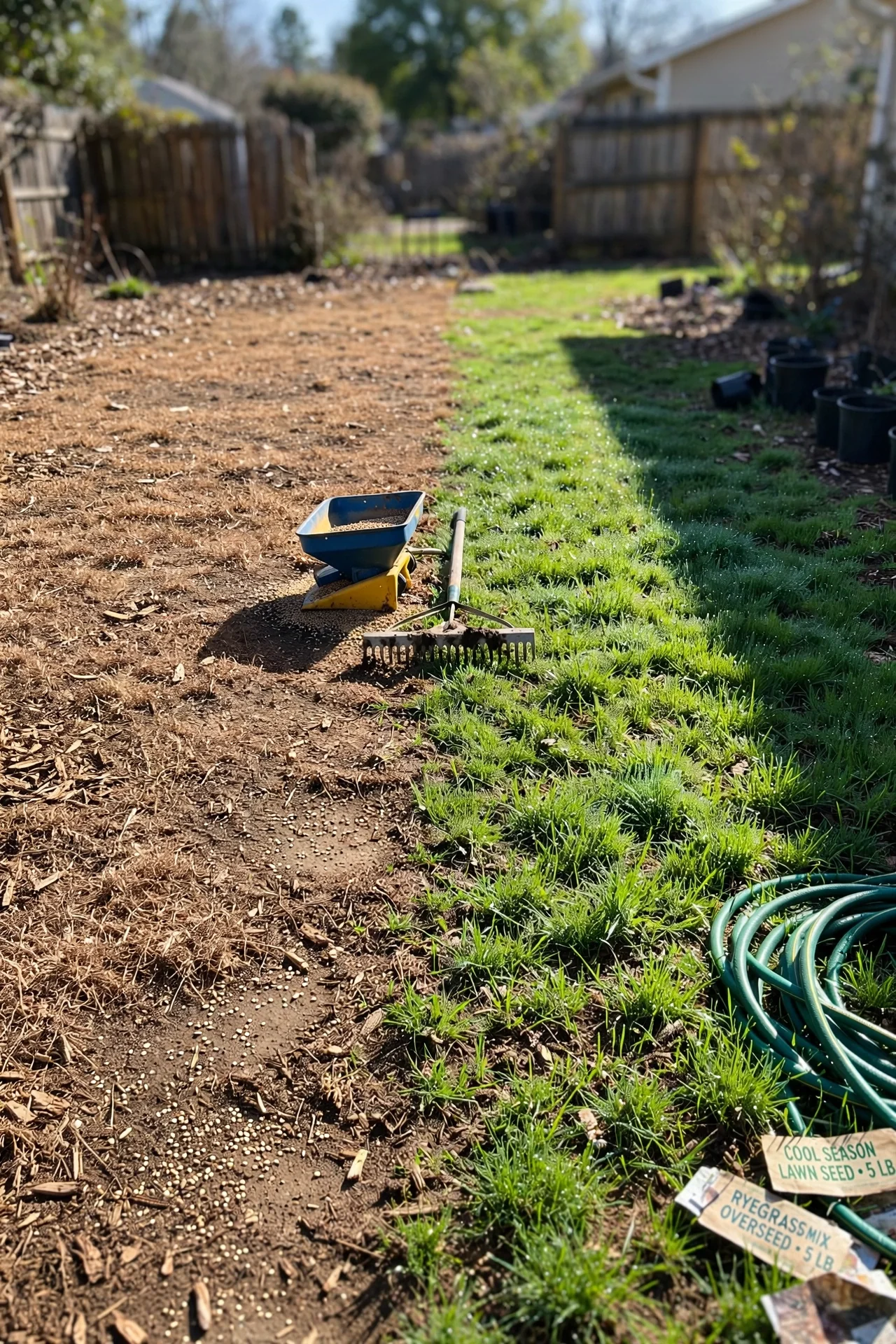
The search for the best grass seed for overseeding usually starts with brand names and bag labels. That approach misses the one factor that determines whether new seedlings survive past the first season: dormancy timing. When the grass you add wakes up and goes dormant on a different schedule than the grass already in your lawn, one of them will be smothered, starved, or baked before the year ends. This guide reframes the decision around growth-cycle compatibility: choose seed that sleeps and wakes with your existing turf, and overseeding stops being a gamble.
We cover grass seed types, not branded retail products. Every option in this article is a species or functional blend suited to overseeding existing lawns in the United States, United Kingdom, Canada, Australia, New Zealand, South Africa, and Ireland. We exclude pasture renovation, hydroseeding, and full lawn replacement. The recommendations assume you are thickening a living lawn, not starting from bare soil.
By the time you finish scrolling, you will know which grass type fits your lawn's seasonal rhythm, how to prepare the seedbed without undoing existing grass, and which mistakes reliably cause overseeding failure. There are no outcome percentages here, just measurable conditions: soil temperature windows, seeding rates, mowing height thresholds, and timing rules you can act on.
Bottom line: The seed you choose must enter active growth when your existing grass is also actively growing, or the stronger one will take all the light, water, and space.
The Yield Grid Decision Grid
Use the three branches below to find your starting point. Each branch ends with a recommended set of list items further down the page.
Branch 1 – Cool-Season Lawn (green in winter, struggles in summer heat): Your lawn is likely Kentucky bluegrass, tall fescue, fine fescue, or perennial ryegrass. It grows most vigorously when soil temperatures are between 50°F and 65°F (10°C to 18°C). Overseed in early fall, at least four weeks before the first killing frost. If you are unsure of your soil's nutrient baseline, a soil test taken two to three weeks ahead will tell you whether phosphorus or lime is needed before seed hits the ground. Recommended: Items 1, 2, 3, 4, 9 below.
Branch 2 – Warm-Season Lawn (browns off in winter, thrives in summer): Your lawn is likely Bermuda grass, zoysia, buffalo grass, or centipede grass. It grows most vigorously when soil temperatures stay above 65°F (18°C). You can overseed with a compatible warm-season variety in late spring, or use a cool-season temporary grass (perennial ryegrass) in fall for winter colour, knowing it will fade as temperatures rise. Recommended: Items 6, 7, 8, 5 below.
Branch 3 – Transition-Zone or Mixed Lawn (unpredictable dormancy): Your lawn may contain both cool- and warm-season patches, or you live where winters are mild and summers are long. The safest strategy is a blend built around turf-type tall fescue because it handles both heat and cold better than most single species. Overseed in early fall, and if you need a fast nurse crop to hold soil while the fescue establishes, add a small proportion of perennial ryegrass. Recommended: Items 2, 1, 9 below.
Quick Comparison Table
| Option | Key Mechanism | Best For | Decision Grid Branch | Effort Score |
|---|---|---|---|---|
| Perennial Ryegrass | Germinates in 5-10 days; establishes fast and crowds out weeds | Quick winter colour; bare-spot repair | 1, 3 | 3 |
| Tall Fescue | Deep roots (up to 2-3 ft); heat and drought tolerant | High-traffic lawns; transition zones | 1, 3 | 2 |
| Kentucky Bluegrass | Rhizomes spread to fill gaps; dense, uniform appearance | Sunny cool-season lawns needing self-repair | 1 | 4 |
| Fine Fescue | Fine blades with low water and nutrient demand | Shaded areas; low-input lawns | 1 | 2 |
| Annual Ryegrass | One-season nurse crop; dies when heat arrives | Temporary winter cover on warm-season lawns | 2, 3 | 1 |
| Bermuda Grass | Aggressive stolons and rhizomes; thrives in full sun and heat | Thickening existing warm-season lawns | 2 | 3 |
| Zoysia Grass | Slow establishment but dense, wear-tolerant turf once mature | Plug-assisted overseeding; long-term Southern lawns | 2 | 4 |
| Buffalo Grass | Low-growing native warm-season grass; minimal water once established | Low-maintenance sunny lawns; erosion control | 2 | 1 |
| Cool-Season Blend | Multi-species synergy; each compensates for another's weakness | Homeowners who want balanced performance without deep analysis | 1, 3 | 3 |
| Sun/Shade Mix | Contains both light-demanding and shade-tolerant species | Lawns with mixed light conditions and no single dominant exposure | 1, 3 | 3 |
1. Perennial Ryegrass – Fast Germination for Quick Coverage
Best for: Branch 1 & Branch 3
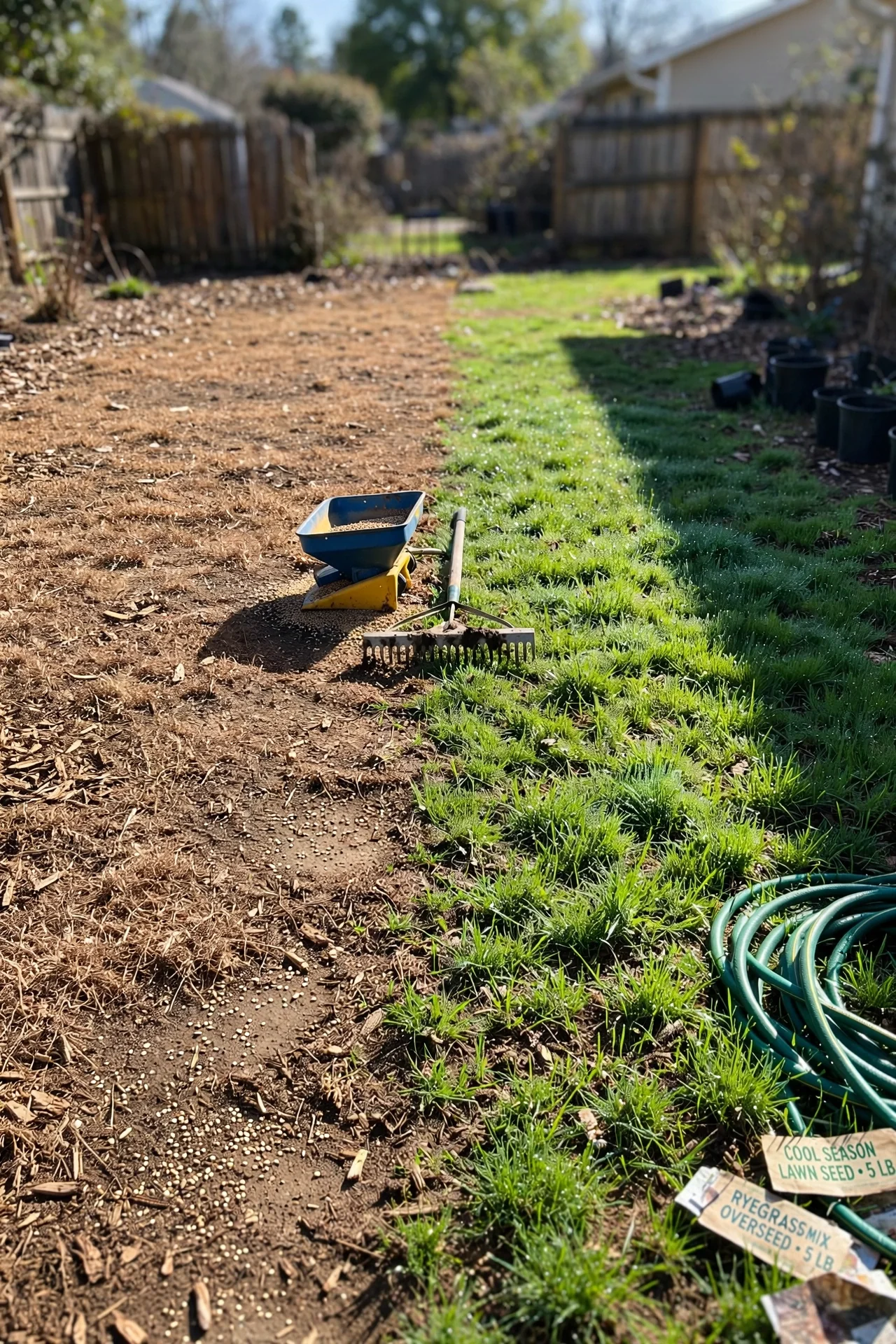
What: A cool-season bunchgrass that germinates in 5 to 10 days when soil temperatures are between 50°F and 65°F. Its rapid emergence makes it the go-to for overseeding warm-season lawns that need winter green, and for patching bare spots in cool-season lawns.
For: Overseeding into dormant Bermuda or zoysia lawns for winter colour; filling thin areas in tall fescue or Kentucky bluegrass lawns; and acting as a nurse crop in blended seedings.
Steps: (1) Mow the existing lawn to 1.5 inches and bag clippings. (2) Core-aerate or rake lightly to expose soil. (3) Broadcast seed at 5 to 10 pounds per 1,000 square feet (8-10 pounds for overseeding onto warm-season turf). (4) Roll or drag a weighted mat to press seed into soil contact. (5) Water lightly twice daily until germination, then reduce to once daily for two more weeks.
Common mistake: Applying pre-emergent herbicide within 60 days before overseeding perennial ryegrass prevents root development. If you need to address weeds first, use a post-emergent product and wait the label-prescribed interval before seeding. For guidance on repairing larger bare areas, see our bare spot repair guide.
2. Tall Fescue – Deep Roots, Broad Tolerance
Best for: Branch 1 & Branch 3
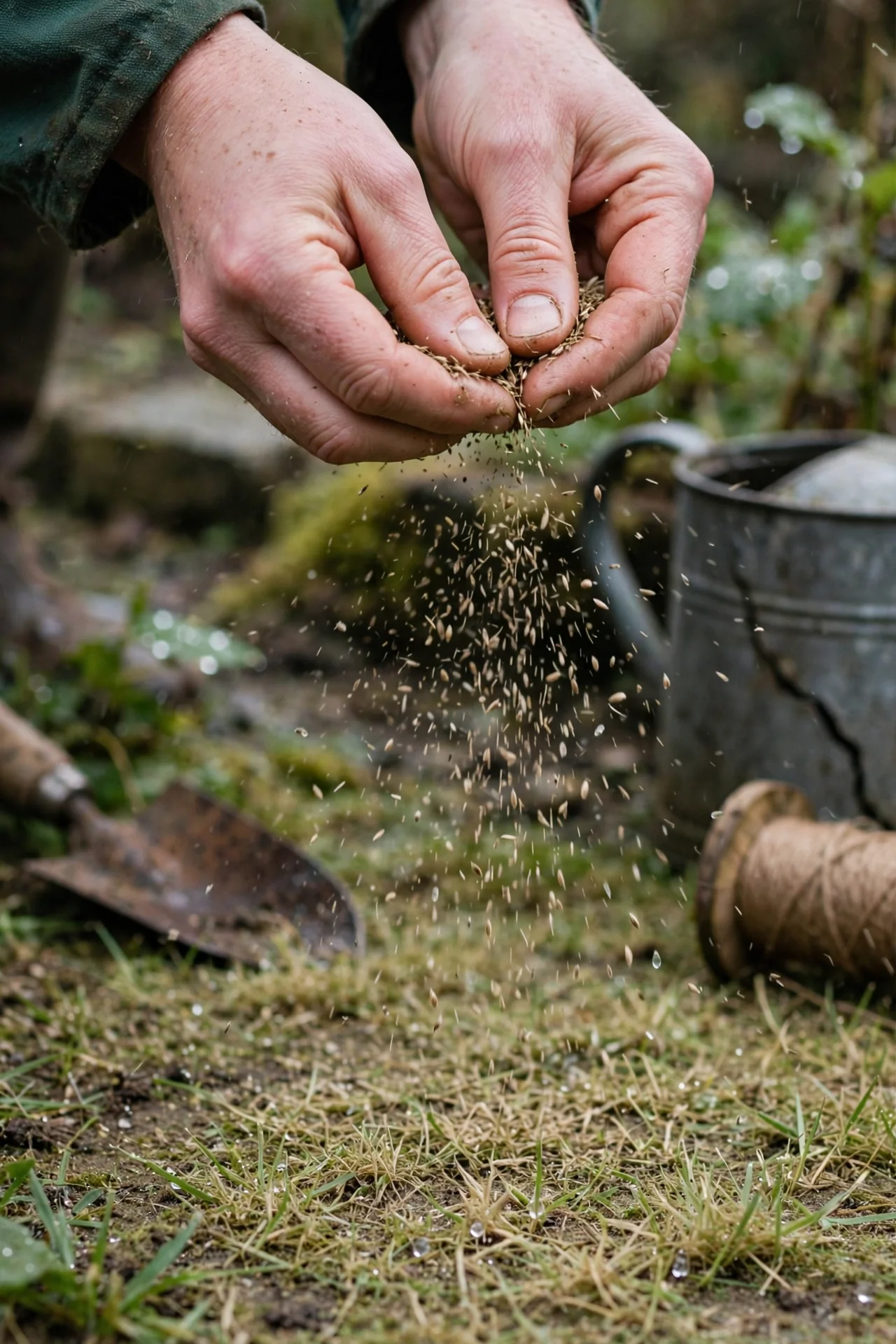
Skip tall fescue if your lawn is mowed below 2 inches; the species needs taller cutting heights (2.5 to 4 inches) to maintain root depth. Use it when you want a durable, heat-tolerant turf that stays green through moderate drought. Overseed at 3 to 4 pounds per 1,000 square feet onto existing tall fescue turf, or 6 to 8 pounds for thin stands. Edge case: in heavy clay soils, combine overseeding with core aeration to avoid surface pooling that drowns seedlings. More on year-round fescue management in our tall fescue care guide.
3. Kentucky Bluegrass – Rhizomes That Fill the Gaps
Best for: Branch 1
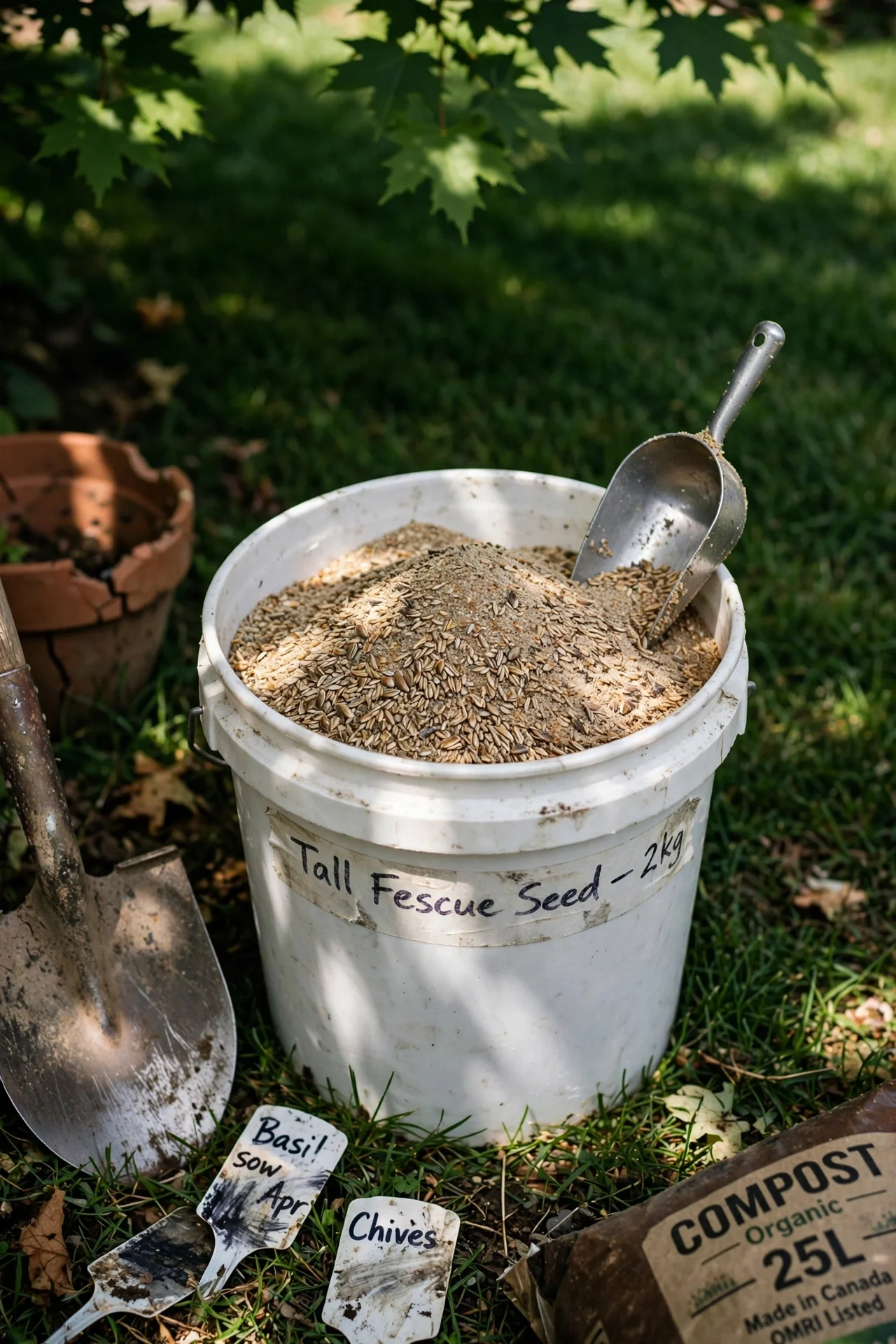
Threshold rule: Kentucky bluegrass needs a consistent soil temperature of 50°F to 65°F at a 2-inch depth for 14 to 21 days to germinate. If your soil thermometer reads below 45°F, germination may take 30 days or fail entirely. Adjustment: Overseed only when daytime air temperatures are between 60°F and 75°F. Seeding rate is 2 to 3 pounds per 1,000 square feet for overseeding; going heavier wastes seed because bluegrass seedlings self-thin. After establishment, this species spreads via rhizomes, filling gaps without re-seeding each year. For full establishment and maintenance requirements, refer to our Kentucky bluegrass care page.
4. Fine Fescue – The Shade Solution That Sips Water
Best for: Branch 1
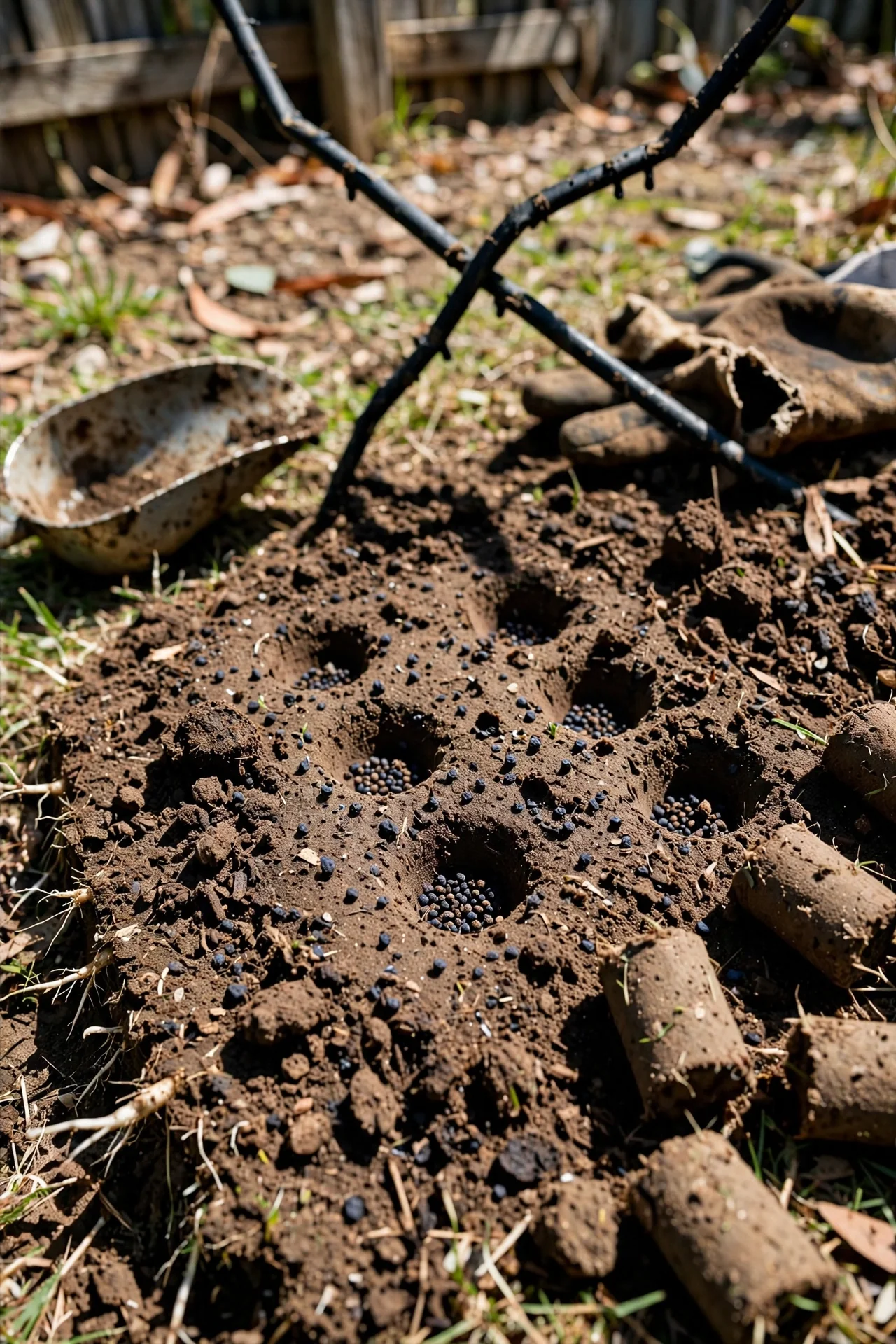
10-minute workflow: (1) Identify the shaded zones where existing grass is thinning (under trees, along north-facing walls). (2) Remove leaf litter and debris to expose soil. (3) Broadcast fine fescue seed at 3 to 6 pounds per 1,000 square feet. (4) Tamp seed with a leaf rake turned flat-side down; fine fescue seed is small and needs only light soil contact. (5) Water with a mist nozzle until the top half-inch of soil darkens. Upgrade option: If the shaded area also stays damp, mix fine fescue with a shade-tolerant tall fescue variety to reduce disease risk. Fine fescue requires less water than Kentucky bluegrass once established, but consistent moisture during the first 14 days is non-negotiable. For a broader watering strategy that supports new seed without overwatering, see our lawn watering guide.
5. Annual Ryegrass – The One-Season Temporary Cover
Best for: Branch 2 & Branch 3
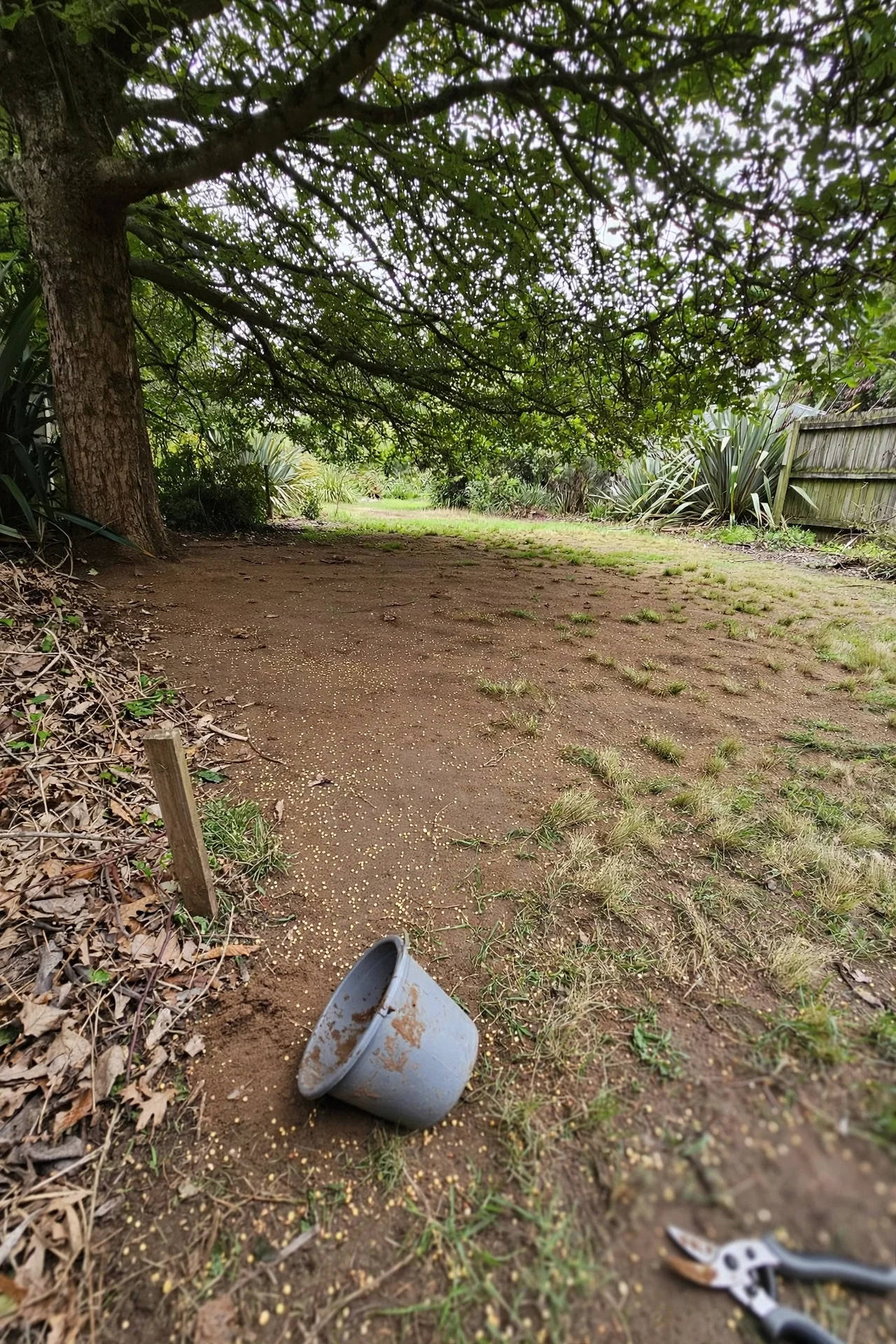
Annual ryegrass germinates even faster than perennial ryegrass, often in 4 to 7 days, but it will not survive summer heat and is not a permanent solution. Use it when you need immediate erosion control on a bare slope, or as a winter green cover on a dormant Bermuda lawn that you plan to let go brown again by late spring. The seeding rate is 10 to 12 pounds per 1,000 square feet. The major constraint: avoid applying pre-emergent herbicide in the same window, because annual ryegrass seedlings are sensitive to residual herbicide activity. For timing pre-emergent applications safely around overseeding, check our pre-emergent timing guide.
6. Bermuda Grass – Warm-Season Aggression, Handled Carefully
Best for: Branch 2
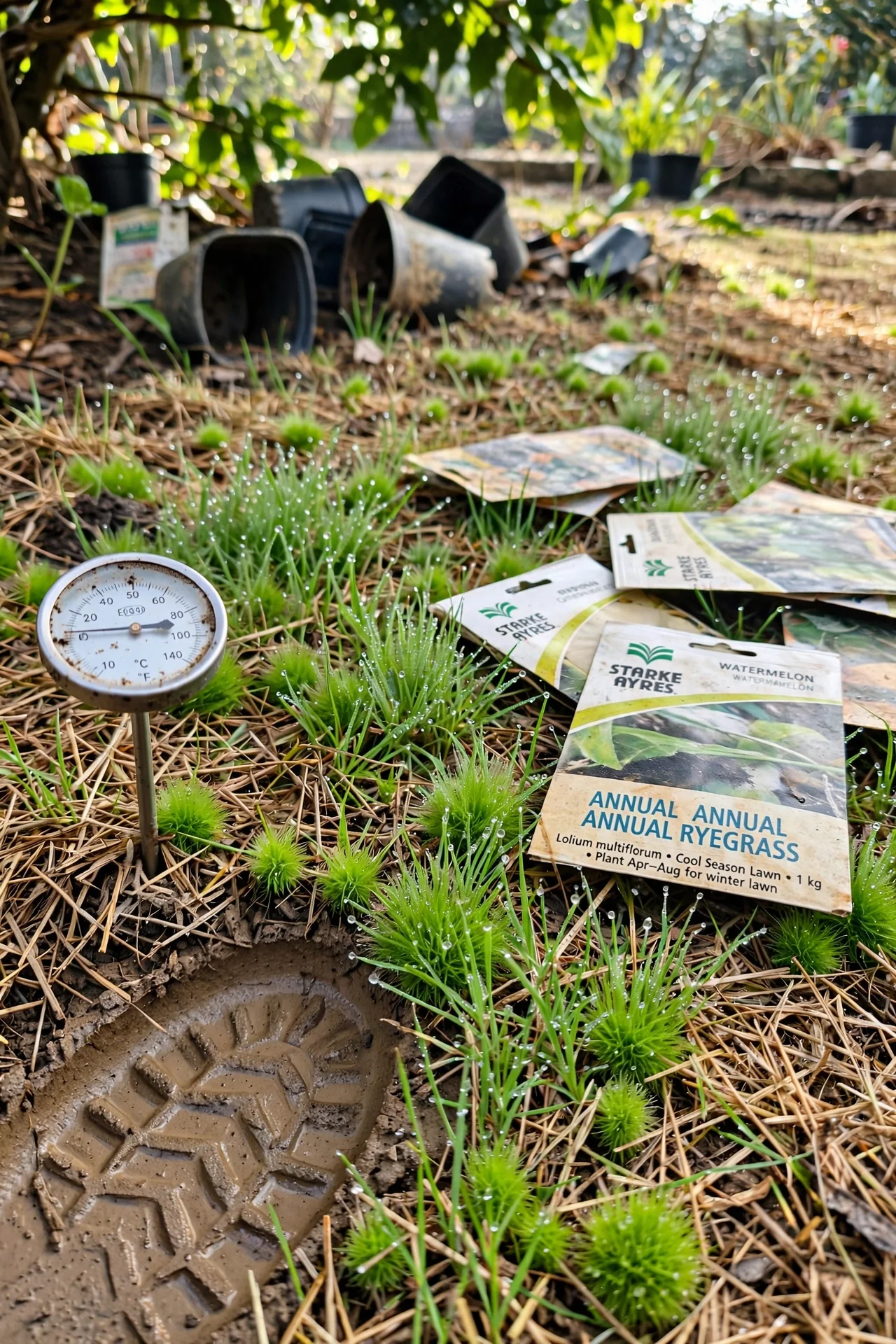
Pros: Bermuda grass spreads aggressively via stolons and rhizomes, knitting into existing Bermuda turf quickly when overseeded at 1 to 2 pounds per 1,000 square feet. It thrives in full sun and tolerates heavy foot traffic. Cons: It will not germinate below soil temperatures of 65°F, and it invades flower beds and neighbouring lawns if not contained by edging. Edge case: If your existing Bermuda lawn has significant shade, overseeding with more Bermuda will not fix the thin area; Bermuda requires at least 6 hours of direct sun. In that case, consider a shade-tolerant groundcover instead. For ongoing Bermuda lawn maintenance after overseeding, see our Bermuda grass care guide.
7. Zoysia Grass – Slow Start, Long-Term Payoff
Best for: Branch 2
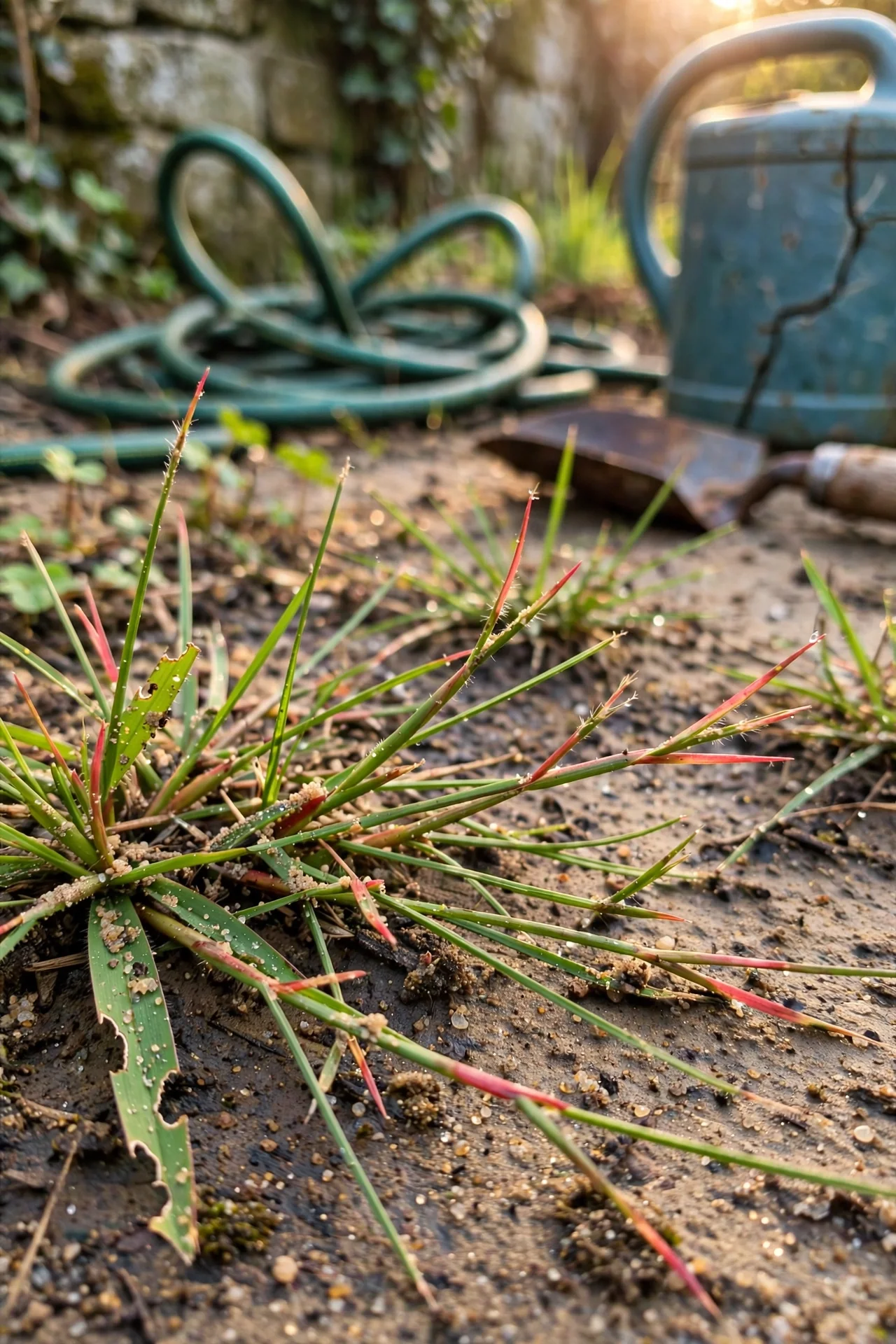
Threshold rule: Zoysia seed germinates slowly, often requiring 14 to 21 days at consistent soil temperatures above 70°F. Adjustment: If soil temperatures drop below 65°F at night during the germination window, seedling emergence stalls and weed invasion becomes likely. For overseeding, zoysia is typically established via plugs rather than seed, because seeded zoysia varieties are less common and require longer establishment. If you choose seed, apply at 1 to 2 pounds per 1,000 square feet and keep the seedbed consistently moist for a full three weeks. Once established, zoysia forms a dense, wear-tolerant turf that crowds out weeds. For species-specific cultural practices, see our zoysia grass care page.
8. Buffalo Grass – Low-Input Native Option
Best for: Branch 2
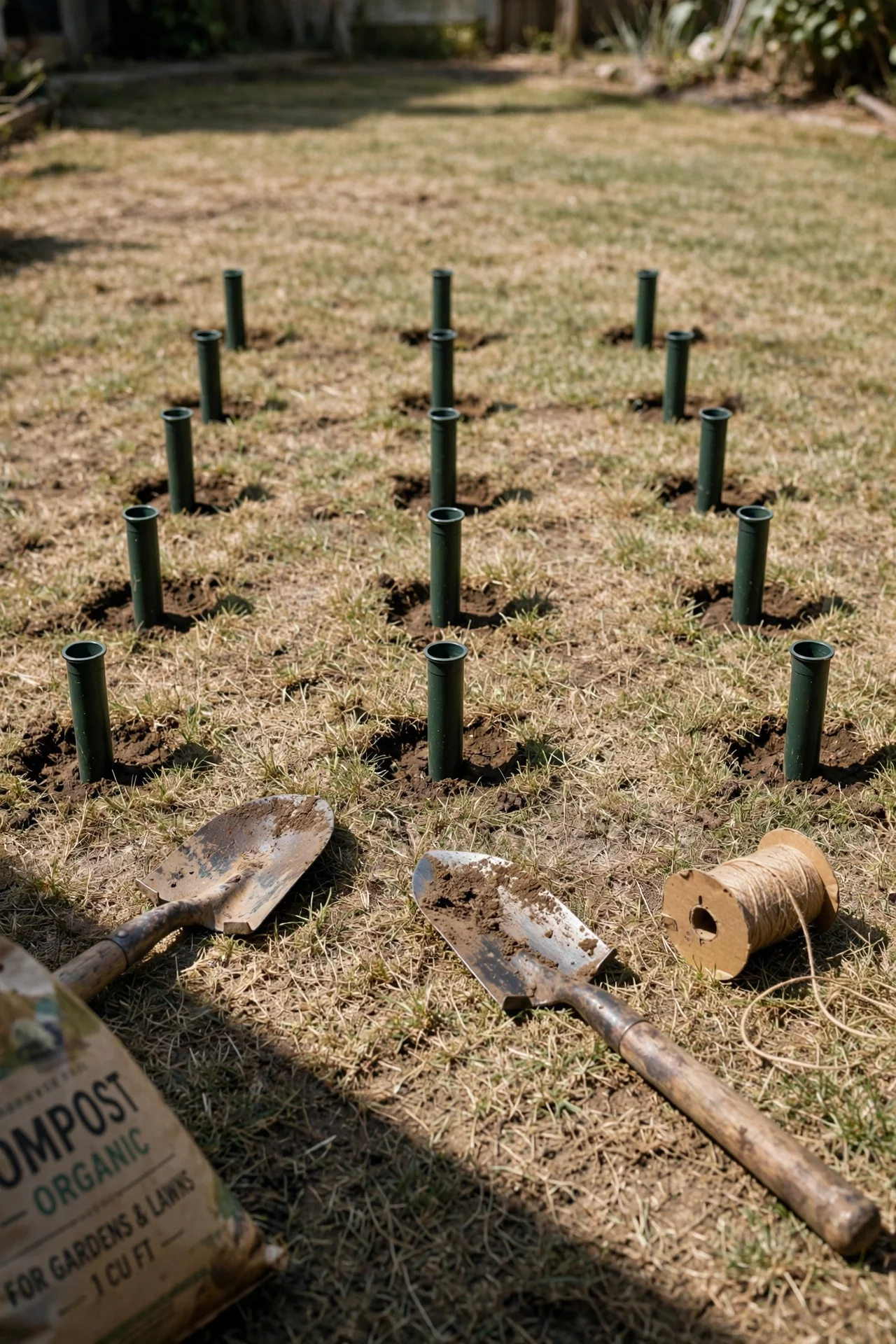
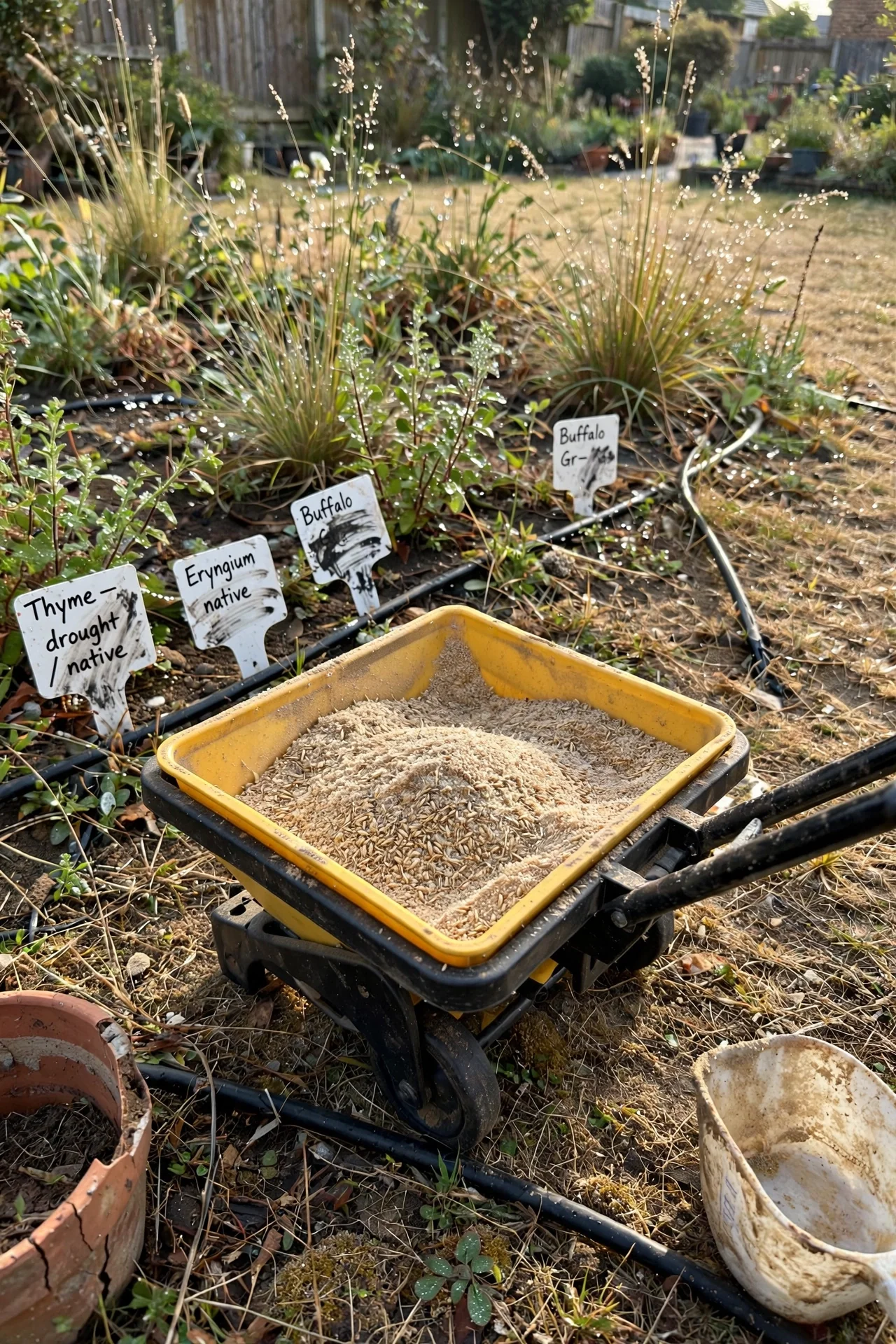
Buffalo grass is a warm-season native that thrives in low-fertility soils and full sun. It requires less mowing and less water than Bermuda once established. The seeding window opens when soil temperatures reach 60°F in spring. Overseed at 2 to 3 pounds of pure live seed per 1,000 square feet. Mix seed with a dry carrier (sand or milorganite) to achieve even distribution; buffalo grass seed is light and can blow away in wind. Germination can take 21 to 28 days, so patience and consistent moisture are essential. For a complete guide to establishing a low-input buffalo grass lawn, see our buffalo grass lawn page.
9. Cool-Season Blend – The Reliable All-Rounder
Best for: Branch 1 & Branch 3
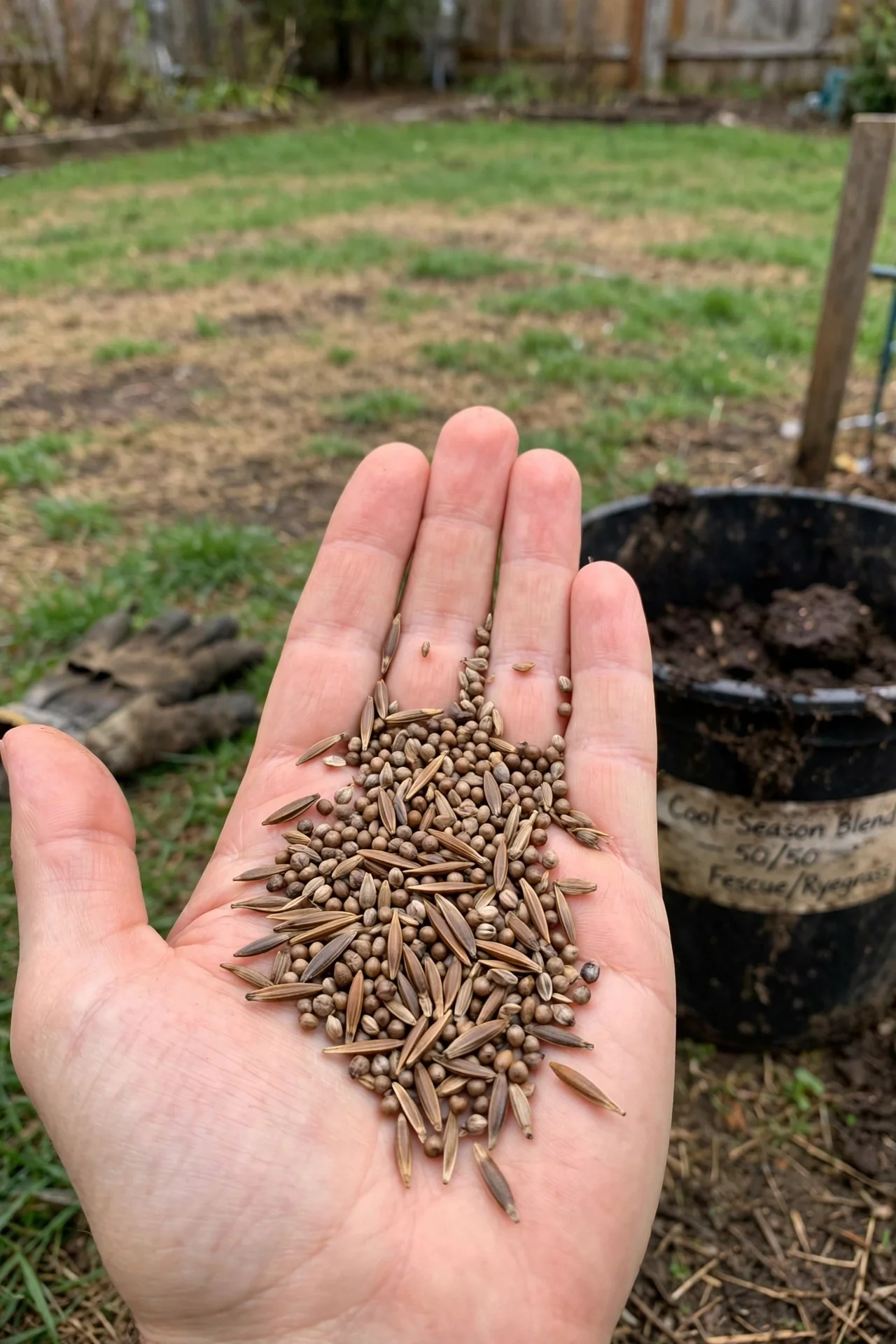
What: A cool-season blend typically contains tall fescue, Kentucky bluegrass, and perennial ryegrass in proportions that balance fast establishment (ryegrass), drought tolerance (fescue), and self-repair (bluegrass). This synergy means the blend performs adequately across varying light, moisture, and traffic conditions.
For: Homeowners who want a single bag to handle both sunny and partially shaded areas without analysing individual species.
Steps: (1) Mow existing grass to 2 inches. (2) Core-aerate or dethatch lightly. (3) Apply starter fertiliser at 0.5 pounds of nitrogen per 1,000 square feet. (4) Broadcast blend at 6 to 8 pounds per 1,000 square feet. (5) Irrigate to keep the top inch of soil moist for 14 days.
Mistake: Assuming the blend composition matches what your lawn needs. Check the seed label; if the blend is heavy on perennial ryegrass (over 50 percent), it may dominate and crowd out slower species before they establish. A soil test before overseeding helps you avoid guessing on nutrients. For the testing protocol, see our guide here.
10. Sun/Shade Mix – One Bag for Mixed Light Conditions
Best for: Branch 1 & Branch 3
Pros: Sun/shade mixes are designed to accommodate the reality that most lawns have both full-sun and shaded sections. They combine sun-loving species (perennial ryegrass, Kentucky bluegrass) with shade-tolerant ones (fine fescue, shade-tolerant tall fescue). This avoids the scenario where a single-species seed fails in half the yard.
Cons: No single species will perform optimally across the entire lawn. The sun-loving component may thin in deep shade, and the shade component may scorch in full afternoon sun if water is insufficient.
Edge case: If your lawn has extreme light contrasts (for example, a dense tree canopy on one side and open exposure on the other), a uniform sun/shade mix may still leave uneven results. In that situation, spot-seed the shaded area with fine fescue and the sunny area with tall fescue or Kentucky bluegrass separately. For guidance on fertilising newly seeded areas without burning tender roots, refer to our lawn fertiliser schedule.
Starter Stack (What to Choose First)
Branch 1 – Cool-Season Lawn Starter Stack
Choose Tall Fescue (Item 2) as your primary seed for its heat tolerance and deep root system, and add Perennial Ryegrass (Item 1) at 10 to 15 percent of the total seed weight for fast germination that protects the slower fescue seedlings. Together they establish coverage in 7 to 14 days while building long-term durability. Budget estimate: seed cost for 1,000 square feet ranges from $12 to $25 USD (or £10 to £20 GBP), depending on blend proportions and retailer.
Branch 2 – Warm-Season Lawn Starter Stack
Start with Bermuda Grass (Item 6) if you have full sun and want fast knitting into existing Bermuda turf. Pair it with Annual Ryegrass (Item 5) if you need winter green coverage, but accept that the annual ryegrass will die out by late spring. The combination keeps soil covered year-round. Budget estimate: $15 to $30 USD per 1,000 square feet when buying both seed types separately. For low-maintenance lawns, substitute Buffalo Grass (Item 8) for Bermuda, but expect a longer establishment timeline (21 to 28 days to germination).
Branch 3 – Transition Zone Starter Stack
Lead with a Cool-Season Blend (Item 9) that is at least 50 percent turf-type tall fescue. Supplement with Perennial Ryegrass (Item 1) only if you need visible results within 7 days. The blend's diversity handles temperature swings better than a single species. Budget estimate: $18 to $30 USD per 1,000 square feet for a quality blend containing zero weed seed or other crop.
When This Won't Work
Failure condition 1: Soil temperature outside the germination window. If your soil temperature at a 2-inch depth is below 45°F (7°C) for cool-season seed or below 60°F (15°C) for warm-season seed, germination will stall. Seed that sits in cold, wet soil for more than two weeks is vulnerable to rot and fungal disease. The fix: wait until the soil thermometer consistently reads within the target range, even if that means delaying overseeding by several weeks. The calendar date matters less than the measured temperature.
Failure condition 2: Pre-emergent herbicide still active in the soil. Many common pre-emergent products (prodiamine, dithiopyr, pendimethalin) create a chemical barrier that stops all seed germination, including the grass seed you paid for. If you applied a pre-emergent in spring for crabgrass control, check the product label for the waiting period. Some require 8 to 16 weeks before overseeding is safe. If you are within the restricted window, skip overseeding this season or mechanically break the barrier by core-aerating and topdressing with a quarter-inch of compost before seeding. For more on herbicide timing, see our pre-emergent timing guide.
Choosing the Right Option for Your Situation
Budget Threshold
If your budget is tight, avoid Kentucky bluegrass and zoysia, which require higher upfront seed cost and more maintenance inputs. Annual ryegrass (for temporary cover) and tall fescue provide the lowest cost per square foot while still delivering reliable germination. Expect to spend between $8 and $15 USD per 1,000 square feet for these budget-tier options.
Time Threshold
If you need visible green in under 10 days, perennial ryegrass is your only reliable choice. Kentucky bluegrass and zoysia require three weeks or longer, and buffalo grass can take a month. If you have a narrow window before an event or frost, prioritize speed of emergence over permanence.
Technical Constraint: Soil pH
Most lawn grasses perform best when soil pH is between 6.0 and 7.0. If your soil test shows a pH below 5.5, nutrients become locked up and seedlings will struggle regardless of seed quality. Apply lime at the rate recommended by the soil test report and incorporate it 4 to 6 weeks before overseeding. If pH is above 7.5, iron chlorosis can occur in Kentucky bluegrass and fine fescue; in that case, tall fescue tolerates higher pH better.
Yes/No Checklist:
– Did you measure soil temperature at a 2-inch depth this morning? Yes / No
– Have you confirmed no pre-emergent herbicide was applied within the restricted window? Yes / No
– Is the seed type you selected matched to the dormancy schedule of your existing grass? Yes / No
– Do you have a watering plan to keep the seedbed moist for at least 14 days? Yes / No
Expert Q&A
Can I mix grass seed types myself instead of buying a pre-blended bag?
Yes, and doing so gives you precise control over the final composition. A common custom blend for cool-season overseeding is 60 percent tall fescue, 20 percent perennial ryegrass, and 20 percent Kentucky bluegrass by weight. Always blend seeds immediately before spreading and calibrate your spreader for each species individually because seed sizes differ.
What is the single most common mistake that kills overseeded grass?
Letting the seedbed dry out during the first 10 days. Grass seed must remain in continuous contact with moist soil to germinate. Once the radicle emerges, even a few hours of dry conditions can kill the seedling. Light, frequent watering beats heavy, infrequent watering during this window.
Should I scalp my lawn before overseeding?
Mow lower than usual, but avoid scalping down to the crown. For cool-season lawns, cut to 1.5 inches. For warm-season lawns being overseeded with a winter ryegrass, cut to 1 inch. Cutting too low exposes the soil to rapid drying and stresses the existing grass, reducing its ability to compete with weeds while the new seed establishes.
How long should I wait to mow after overseeding?
Wait until the new grass reaches a height at least one-third taller than your target mowing height. For tall fescue, that means waiting until seedlings are roughly 3.5 to 4 inches before the first cut. Use a sharp blade and avoid turning the mower on wet soil, which can uproot young plants.
Does overseeding with a different grass species create a patchy, mismatched lawn?
It can, if the two species have visibly different blade textures, colours, or growth habits. Perennial ryegrass has a shiny leaf blade, while tall fescue is wider and duller, and the contrast can be noticeable in pure stands. To minimise the patchwork effect, overseed the entire lawn uniformly rather than spot-seeding, and choose species with similar texture when possible.
Conclusion
The best grass seed for overseeding is not the one with the highest germination count on the label; it is the one whose growth rhythm aligns with the grass already in your lawn. When those internal clocks match, seedlings establish without a fight. The most common failure point is ignoring the soil temperature window: seed applied outside its germination range simply becomes expensive bird feed.
Next step: measure your soil temperature this afternoon at a 2-inch depth, and identify which decision grid branch applies to your lawn. Then use the item recommendations in that branch to select your seed type. For the complete step-by-step technical protocol, from soil preparation through first mowing, see our lawn care for beginners guide.