
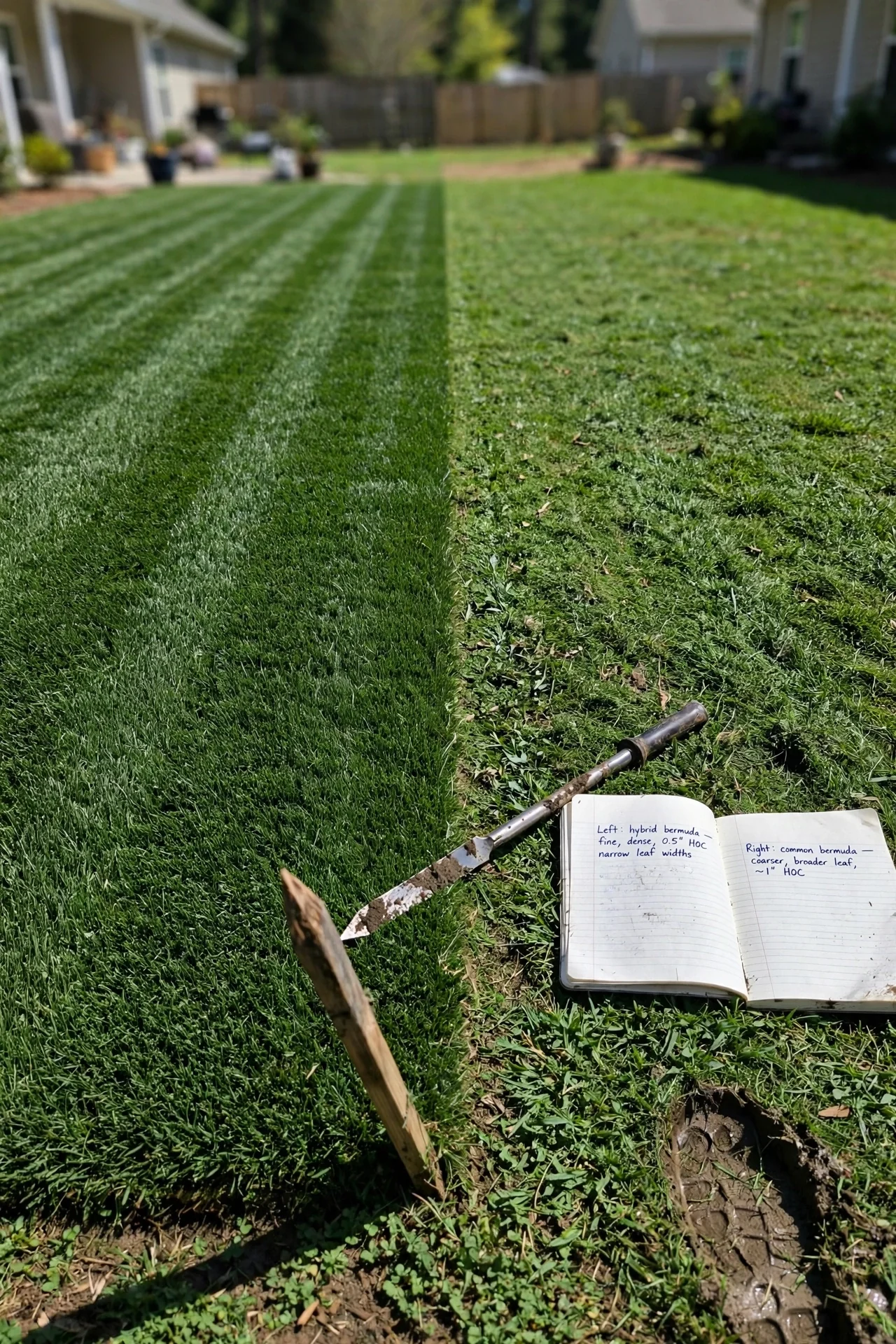
Most bermuda grass care guides treat every lawn as if it responds to the same set of inputs. In practice, a seeded common bermuda yard and a sodded Tifway 419 hybrid are fundamentally different plants with different nitrogen demands, cutting-height tolerances, and recovery patterns. Recognizing which game you are playing changes which practices matter and which are wasteful.
This guide covers mowing, fertilization, irrigation, weed control, thatch management, and seasonal timing for both common bermudagrass and hybrid cultivars, across full-sun sites in USDA zones 7b and warmer. It excludes athletic field protocols, which operate at maintenance frequencies that do not translate to home lawns. Every recommendation is tied to a measurable condition (height, rate, temperature, or soil-test value) so you can verify whether it applies to your situation.
By the end, you will be able to place your lawn into one of three decision branches, identify which handful of practices actually move the needle, and know where you can safely reduce effort without sacrificing density.
Bottom line: Match your nitrogen total and cutting height to whether you have common or hybrid bermuda, and spend your remaining time on mowing frequency and water timing rather than chasing products.
The Yield Grid Decision Grid
Bermuda grass lawns split into three practical branches based on grass type, available equipment, and how much input you are willing to commit.
Branch 1: The Precision Lawn. You have a named hybrid (Tifway, TifTuf, Latitude 36, etc.), access to a reel mower, and you are willing to apply nitrogen four times per growing season on a schedule tied to a lawn fertilizer schedule. Soil temperature at 4-inch depth reaches 65°F consistently before the first application. Recommended: Items 1, 3, 4, 7, 9, 11 below.
Branch 2: The Resilient Yard. You have common bermuda (seeded) or an unknown variety, you mow with a rotary mower, and you want solid performance without maximum input. You apply nitrogen two to three times per year and are comfortable letting the lawn go semi-dormant during peak summer heat if water is scarce. Recommended: Items 2, 5, 6, 8, 10, 12 below.
Branch 3: The Low-Input Groundcover. You need erosion control or green cover on a large area, full sun is present, but you are not aiming for a manicured turf surface. You apply nitrogen once, maybe twice, per year and mow only when the grass approaches seed-head height. Recommended: Items 3, 6, 10, 12 below.
Quick Comparison Table
| Option | Key Mechanism | Best For | Decision Grid Branch | Effort Score (1–5) |
|---|---|---|---|---|
| 1. Hybrid Nitrogen Strategy | Split N applications totaling 4 lb/1,000 ft²/season | High-density hybrid lawns | Branch 1 | 3 |
| 2. Common Bermuda N Budget | 3 lb N/1,000 ft²/season, three applications | Seeded common bermuda | Branch 2 | 2 |
| 3. Soil Testing Before Fertilizing | Lab pH and nutrient baseline | All branches | Branch 1, 2, 3 | 1 |
| 4. Reel Mowing at 1 Inch or Lower | Frequent, precise cutting to maintain density | Level hybrid lawns | Branch 1 | 5 |
| 5. Rotary Mowing at 1.5–2 Inches | One-third rule maintained weekly | Common bermuda, uneven terrain | Branch 2 | 3 |
| 6. Deep, Infrequent Irrigation | 1 inch per week, 1–2 sessions, morning only | All branches | Branch 1, 2, 3 | 2 |
| 7. Pre-Emergent Split Application | Two applications, spring soil temps 55°F and 70°F | High-maintenance lawns | Branch 1 | 2 |
| 8. Post-Emergent Spot Treatment | Targeted herbicide on visible weeds only | Moderate-input lawns | Branch 2 | 1 |
| 9. Core Aeration in Late Spring | Pulling plugs when growth is vigorous | Compacted soils, high-traffic zones | Branch 1, 3 | 2 |
| 10. Thatch Monitoring and Verticutting | Mechanical removal when thatch exceeds 0.5 inch | Over-fertilized lawns | Branch 2, 3 | 2 |
| 11. Overseeding with Annual Ryegrass | Cool-season green cover during dormancy | Hybrid lawns where winter color matters | Branch 1 | 4 |
| 12. Bare-Spot Repair with Sprigs or Plugs | Vegetative fill-in during active growth | All branches | Branch 1, 2, 3 | 3 |
1. Feed Your Hybrid Like a Performer, Not a Pasture
Best for: Branch 1
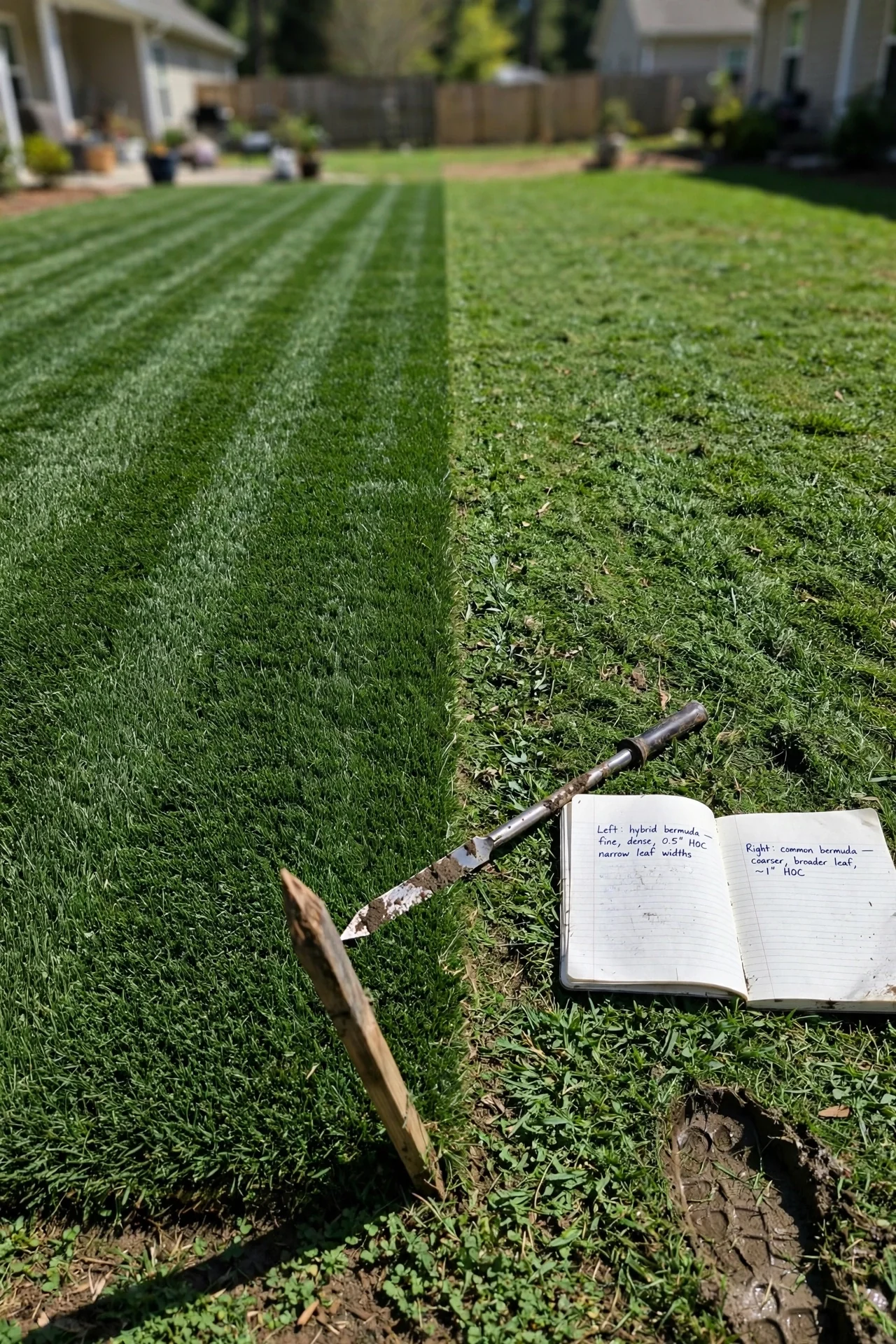
What: Deliver 4 pounds of actual nitrogen per 1,000 square feet over the growing season, split across four applications roughly four weeks apart, starting when soil temperature at 4 inches reaches 65°F and ending no later than August 15.
For: Named hybrid cultivars (Tifway 419, TifTuf, Latitude 36, etc.) where density, color, and recovery speed are priorities. Hybrids have higher nitrogen demand than common bermuda and will thin without adequate fertility.
Steps: (A) Pull a soil test before the first application to confirm pH is between 5.8 and 7.2; adjust with lime or sulfur if needed. (B) Apply 1 pound N per 1,000 square feet using a fertilizer with at least a portion of slow-release nitrogen, such as 32-0-10 at 3.1 pounds of product per 1,000 square feet. (C) Repeat at four-week intervals. (D) Skip the September application if a soil test shows adequate potassium; excess late nitrogen increases winterkill risk.
Mistake: Using the same nitrogen total on hybrid and common bermuda. Common bermuda requires roughly 3 pounds N per 1,000 square feet per season (April, June, August), and pushing it to hybrid rates accelerates thatch buildup without proportional density improvement.
2. Set the Mower Height to Match Your Grass Type
Best for: Branch 2
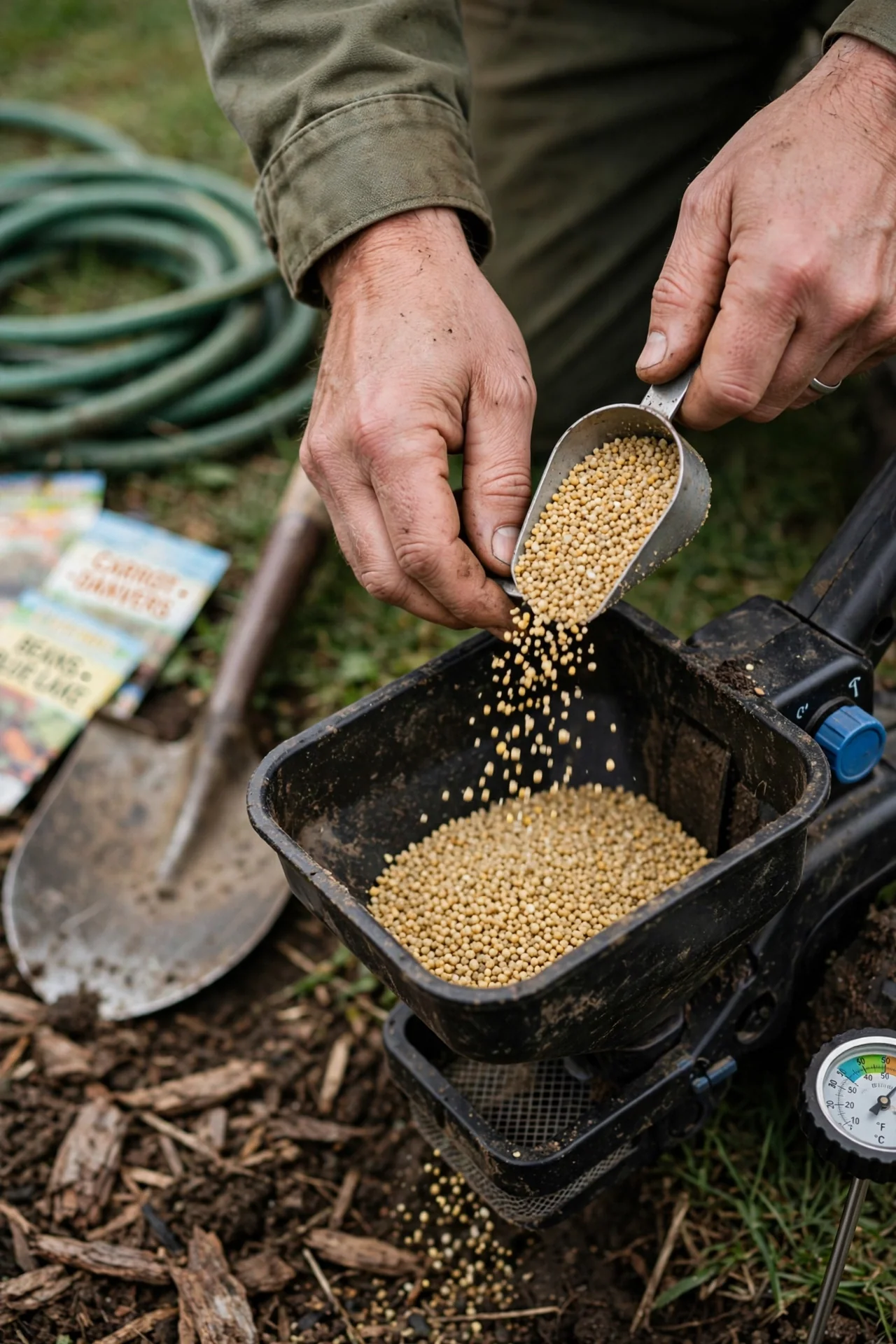
Common bermuda performs best at 1.5 to 2 inches with a rotary mower, while hybrids can be taken down to 0.75 to 1 inch with a reel mower on a level surface. The one-third rule is the real governor: never remove more than one-third of the blade in a single cut. If you mow at 1 inch, cut when the grass reaches 1.5 inches. For more guidance on mowing height across grass types, see best mowing height.
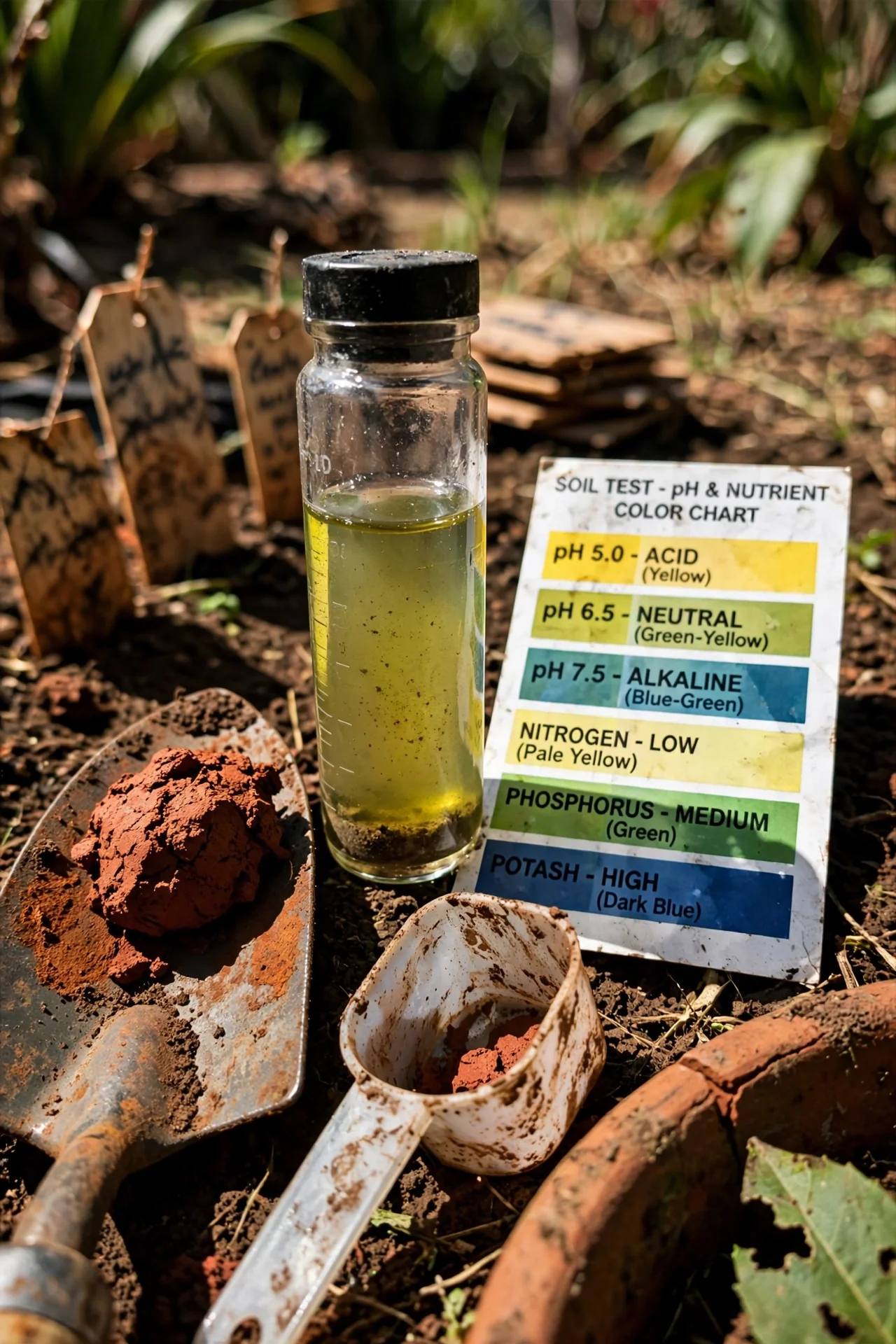
3. Start With a Soil Test Before You Touch a Spreader
Best for: Branch 1, 2, 3
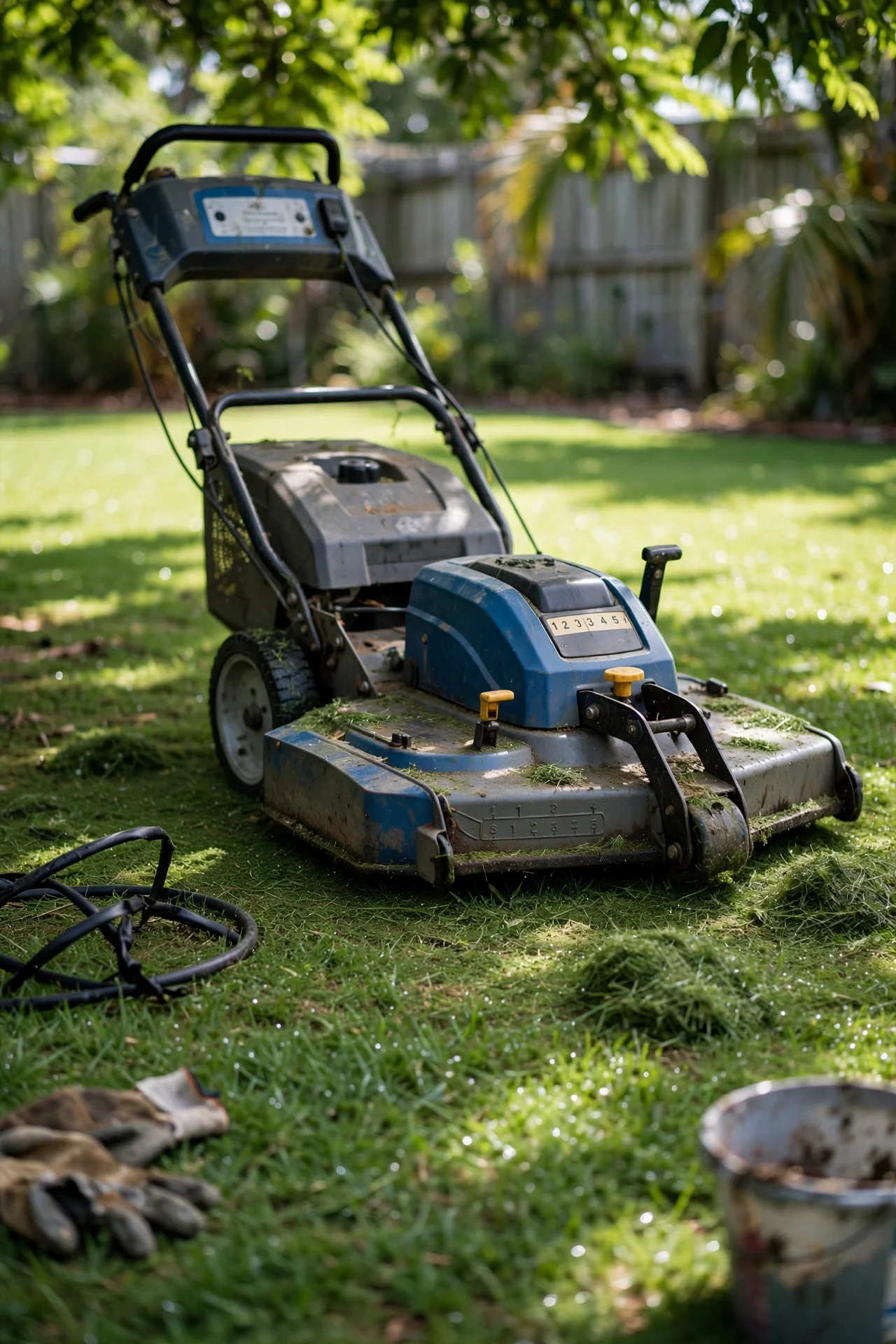
Use when: You have never tested the soil, it has been more than three years since the last test, or the lawn shows uneven color despite consistent fertilization. Guessing pH and nutrient levels leads to wasted product and can push phosphorus into runoff.
Skip when: You have a recent lab report showing pH within 5.8–7.2 and adequate phosphorus and potassium. In that case, proceed directly to nitrogen-only applications.
Edge case: High-traffic lawns on heavy clay may show adequate nutrient levels on paper but still underperform because compaction limits root access. In that scenario, prioritize core aeration before adding more fertilizer.
4. Reel-Mow Hybrid Bermuda on a 10-Minute Workflow
Best for: Branch 1
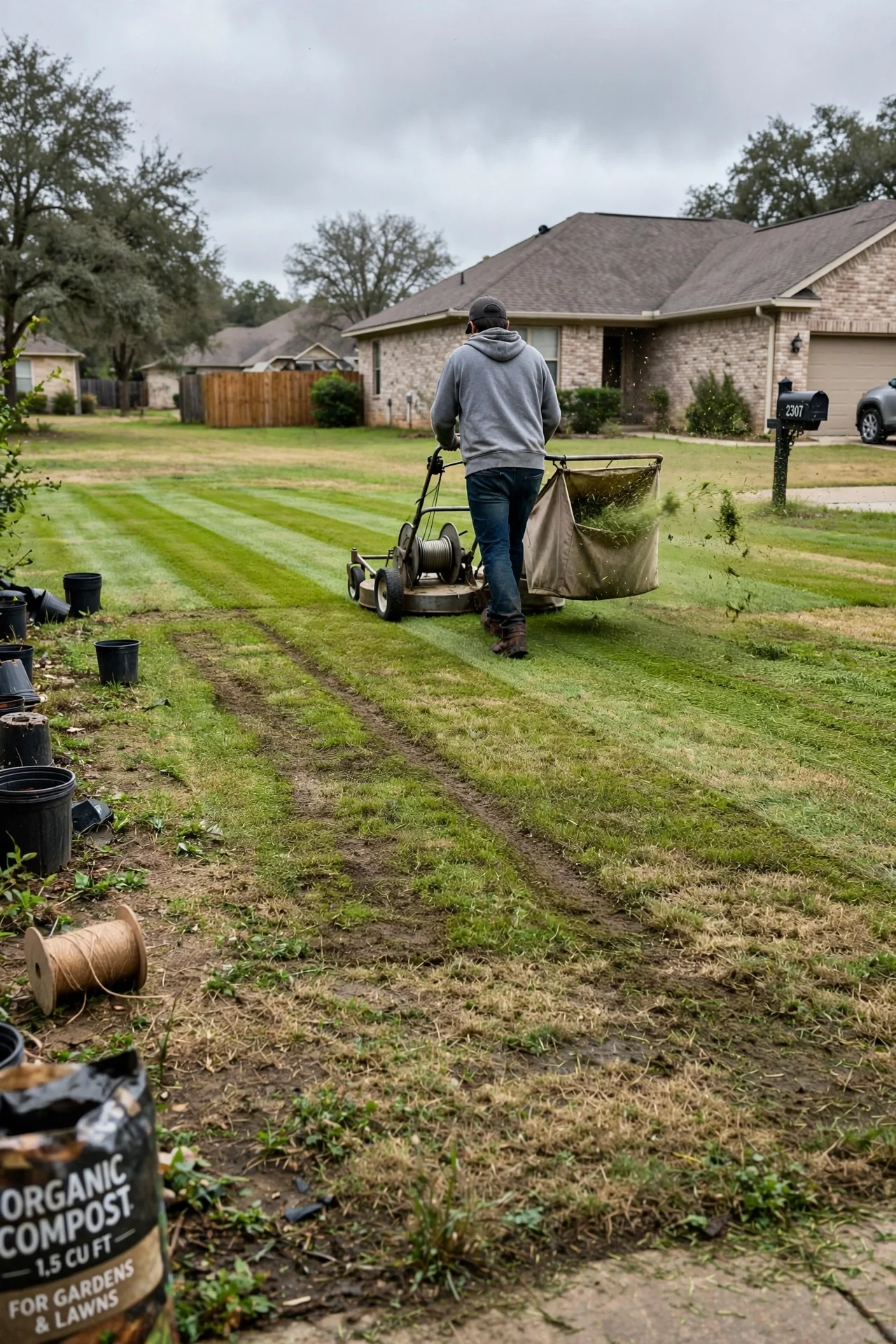
Setup (one-time): Level low spots with a sand-soil mix during late spring when the grass is actively growing. Backlap or sharpen reel blades every 8–10 mowing hours; dull blades fray leaf tips and create a grayish cast.
Weekly workflow: (1) Walk the lawn before mowing and note any areas where the grass exceeds 1.5 inches; those spots dictate mowing urgency. (2) Mow in a different direction from the previous session to prevent grain. (3) Leave clippings in place unless clumping occurs; clippings return nitrogen equivalent to roughly one additional fertilizer application per season. (4) After mowing, check for scalped patches on high spots and note them for leveling during the next aeration window.
Upgrade option: If your hybrid lawn is larger than 2,000 square feet, a powered reel mower with a grass catcher reduces cleanup time and maintains cut quality during peak growth when mowing may be required every third day in June.
5. Water Deeply, Not Daily
Best for: Branch 2
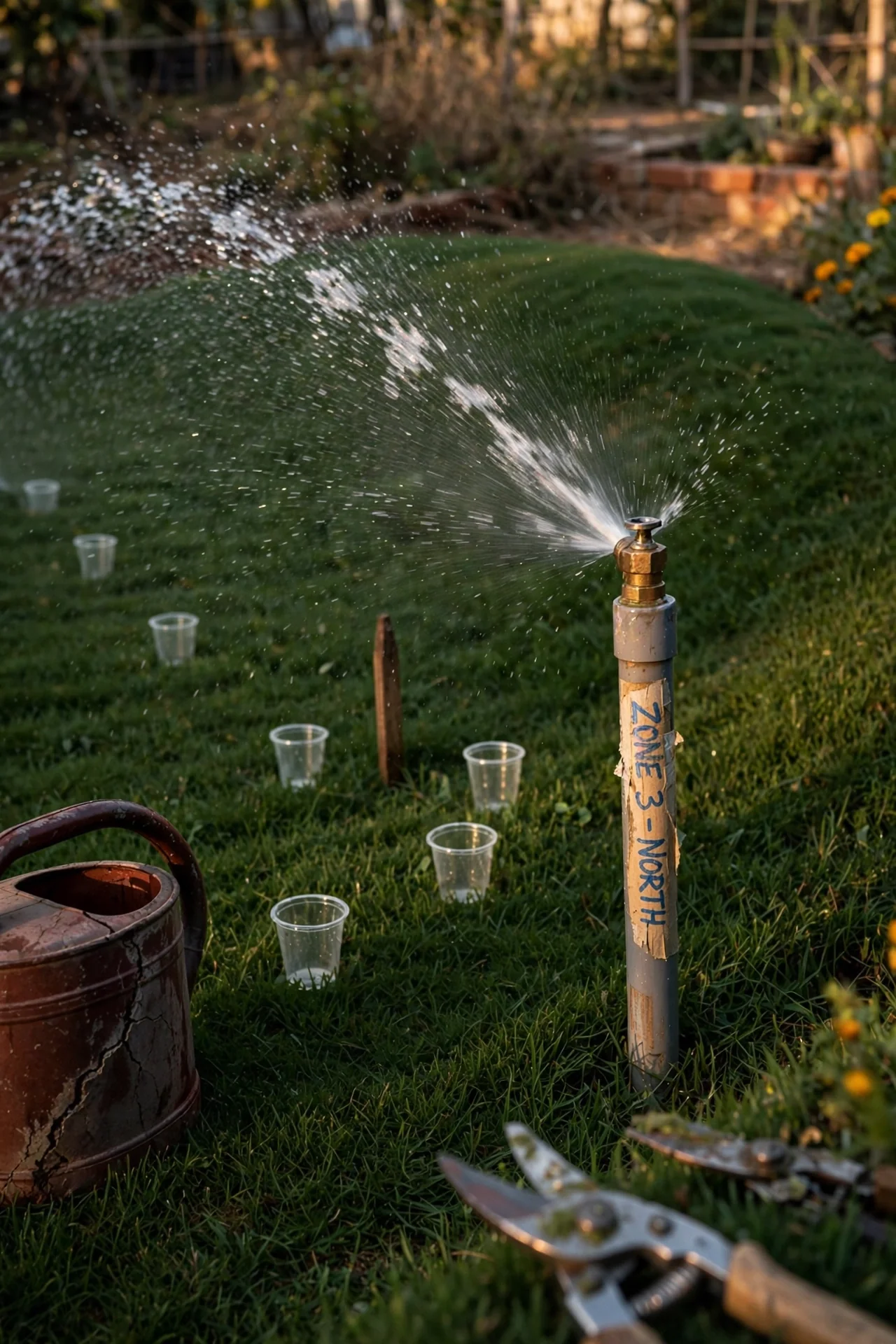
Apply 1 inch of water per week, including rainfall, split into one or two sessions. Morning irrigation (before 9 a.m.) reduces disease pressure compared to evening watering. Use catch cups to measure actual output from your system; sprinkler run times are not a reliable proxy. Established bermuda signals thirst when leaf blades fold lengthwise or footprints remain visible for more than 30 minutes after walking.
6. Know When to Skip the Weed-and-Feed
Best for: Branch 2, 3
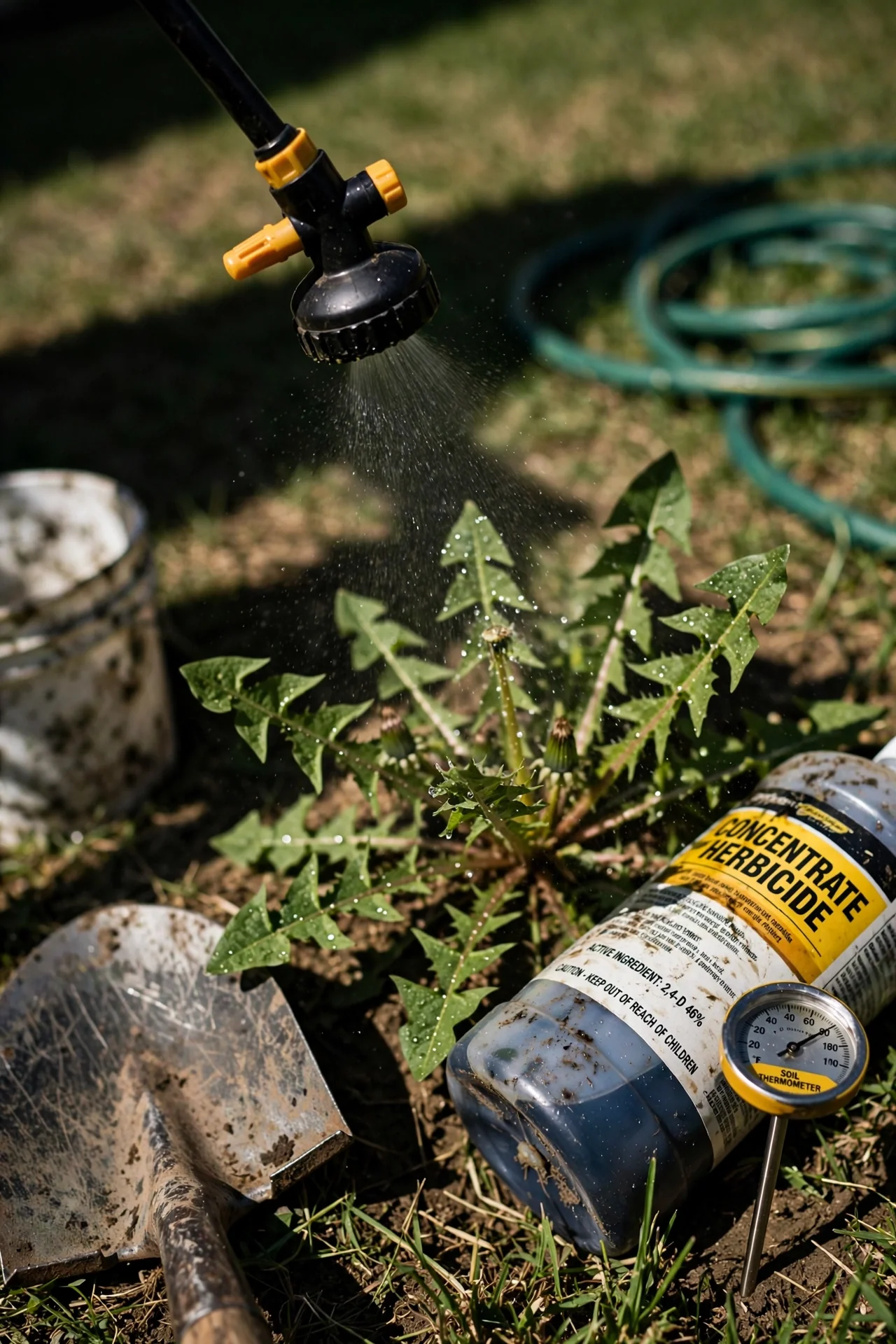
Use when: You have identified a specific weed problem that matches the herbicide mode of action. For example, a post-emergent containing quinclorac targets crabgrass without harming established bermuda. Spot-treating individual weeds with a pump sprayer minimizes chemical load and cost.
Skip when: Weeds are sparse and the lawn is dense enough to outcompete new invaders. Blanket applications of combination products apply herbicide to soil that does not need it and add phosphorus that many soils already contain in excess.
Constraint: Do not apply most post-emergent herbicides when temperatures exceed 90°F; bermuda under heat stress can suffer temporary yellowing. Refer to post-emergent weed control for temperature cutoffs by product.
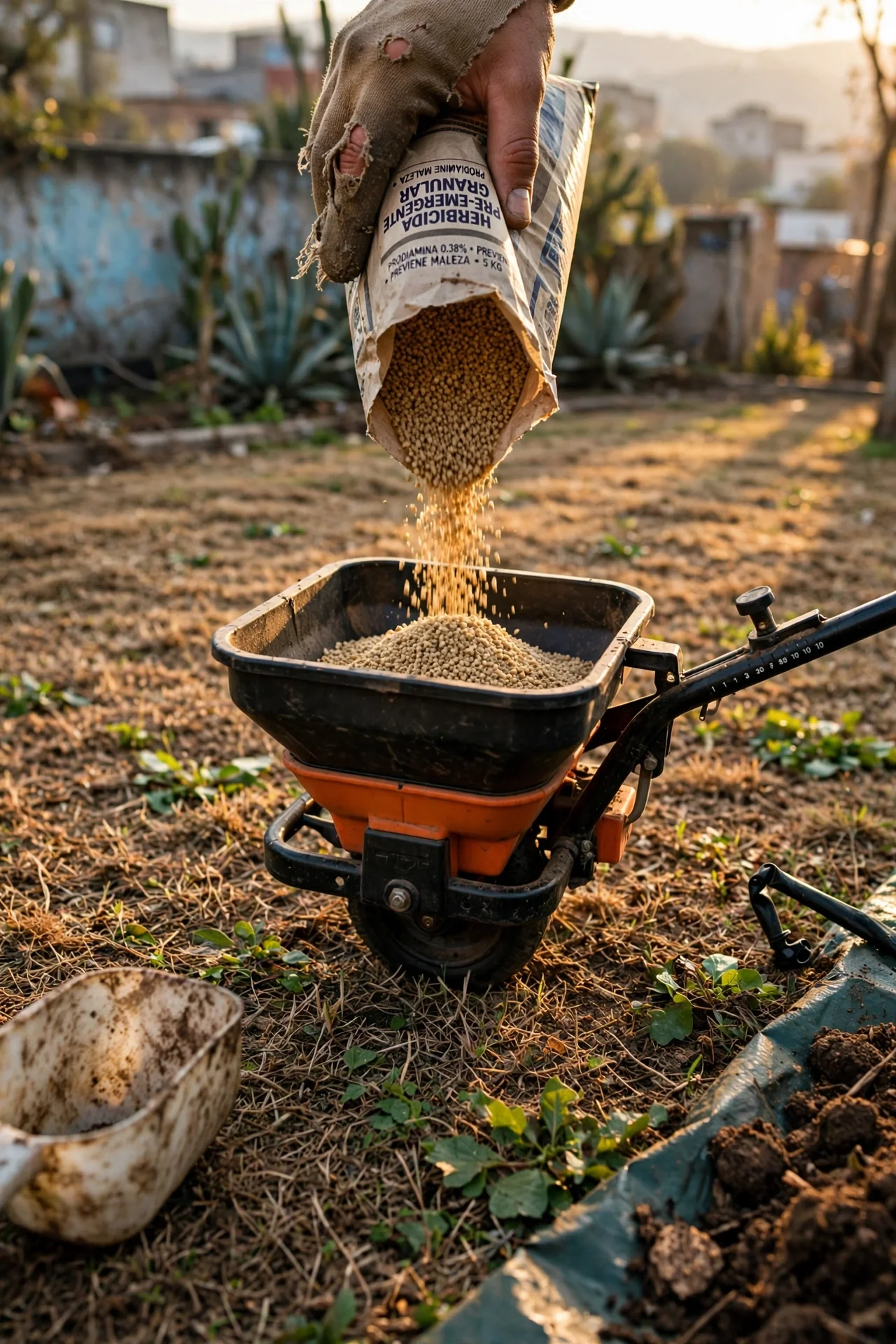
7. Split Your Pre-Emergent Into Two Passes
Best for: Branch 1
Pros: Two half-rate applications, one when soil temperature reaches 55°F (targeting crabgrass and goosegrass) and another at 70°F (targeting late-germinating weeds like spurge), provide more consistent control than a single full-rate application. This approach accounts for the staggered emergence window of warm-season annual weeds across a 6–8 week period.
Cons: Requires accurate soil temperature monitoring using a probe thermometer at a 2-inch depth. Calendar-based timing (e.g., “apply on March 15”) fails across different climate zones.
Edge case: If you plan to overseed with ryegrass in the fall, check the pre-emergent label for the required waiting interval. Some products prevent ryegrass germination for up to 12 weeks after application.
8. Let Clippings Lie
Best for: Branch 2
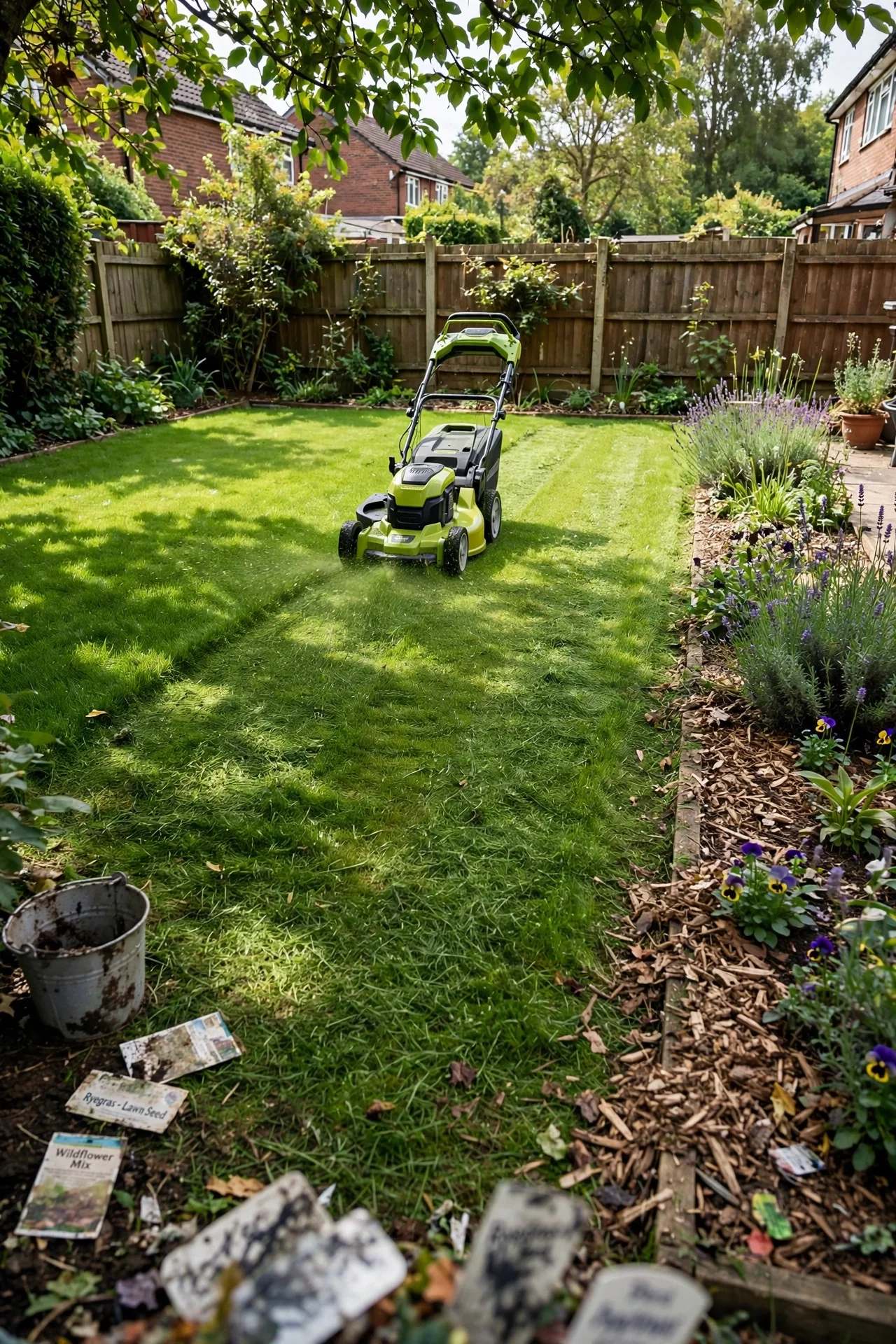
Returning clippings rather than bagging them recycles nitrogen, reduces fertilizer demand, and does not contribute to thatch when mowing frequency follows the one-third rule. The exception is when disease is active (e.g., large patch or dollar spot); in those cases, bag and dispose of clippings for two to three mowing cycles to reduce inoculum.
9. Aerate Only When You Can Prove Compaction
Best for: Branch 1, 3
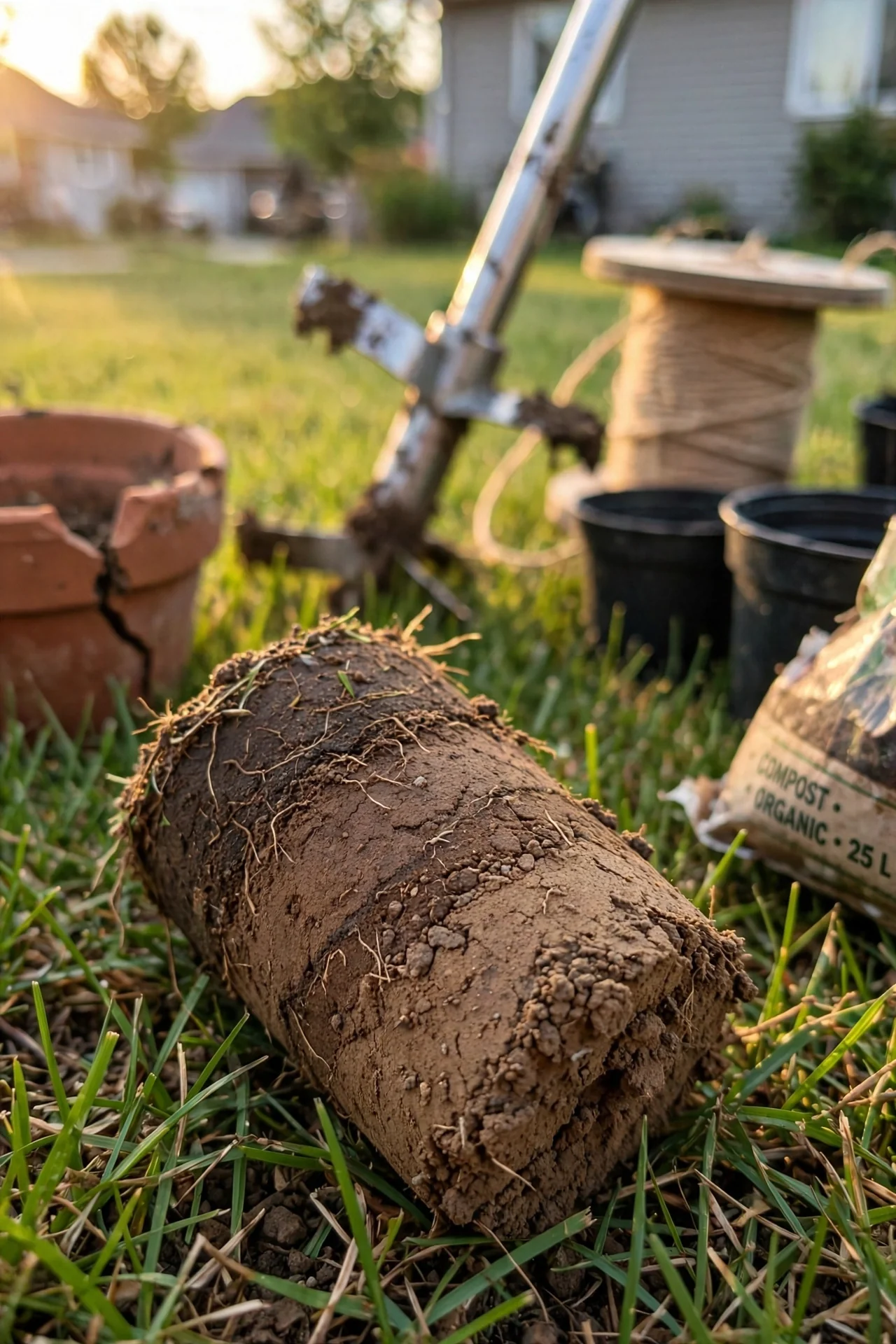
What: Core aeration removes plugs of soil, creating pathways for water, oxygen, and nutrients to reach the root zone. Hire a core aerator (not spike aerator) or rent one for roughly $60–90 per half-day.
For: Lawns where water puddles after irrigation, a screwdriver cannot be pushed 4 inches into the soil by hand, or high-traffic paths show thin growth. Late spring to early summer is the window, when bermuda is growing vigorously enough to recover within 10–14 days.
Steps: (A) Water deeply the day before to soften soil. (B) Flag sprinkler heads and shallow utility lines. (C) Make two passes in perpendicular directions. (D) Leave cores on the surface to break down naturally; they disappear within two to three mowing cycles. (E) If a soil test indicates phosphorus or potassium deficiency, apply fertilizer immediately after aeration when nutrient pathways are open.
Mistake: Aerating in early spring before bermuda has fully greened up. Dormant or semi-dormant grass cannot recover quickly, and aerating cool, wet soil increases compaction rather than relieving it.
10. Watch the Thatch Clock
Best for: Branch 2, 3
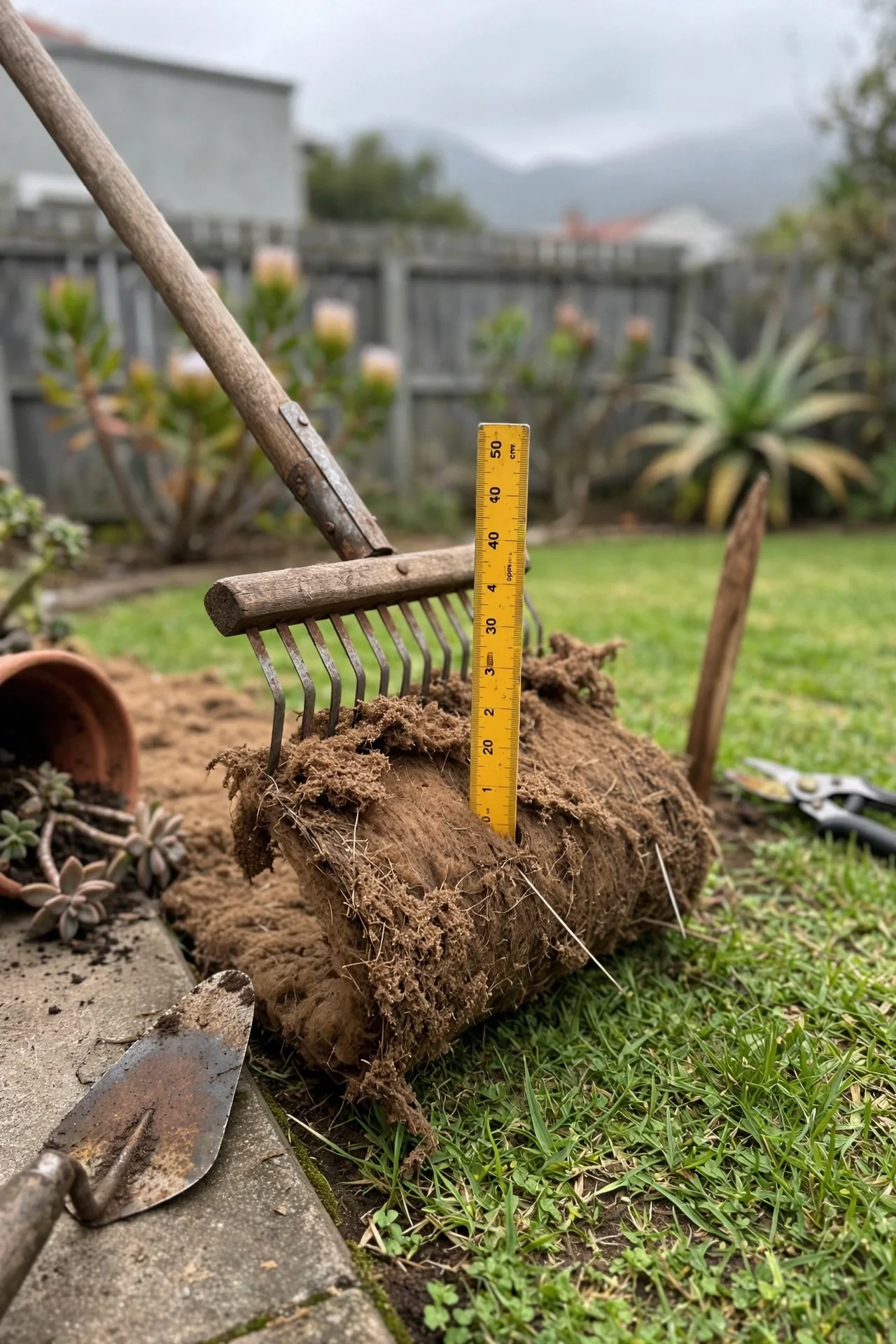
Thatch becomes a problem when the layer of living and dead stems between green blades and soil exceeds 0.5 inch. At that threshold, water and fertilizer sit above the root zone, roots grow into the thatch instead of soil, and the lawn becomes vulnerable to drought and disease. Verticut or power-rake during active growth (late spring through mid-summer), never during spring green-up or fall dormancy transition. If you are unsure whether your lawn has a thatch problem, lawn disease identification can help distinguish thatch-related stress from pathogen symptoms.
11. Overseed Only If Winter Color Justifies the Cost
Best for: Branch 1
Overseeding hybrid bermuda with annual ryegrass in fall (when soil temperatures drop to 70–75°F) provides green winter cover but creates a competitive transition in spring. The ryegrass must be chemically removed or scalped aggressively as bermuda exits dormancy; otherwise, it delays green-up by several weeks. New sod care practices for establishment-phase bermuda apply similarly to overseeded lawns during the transition window.
12. Fill Bare Spots During the Growth Window
Best for: Branch 1, 2, 3
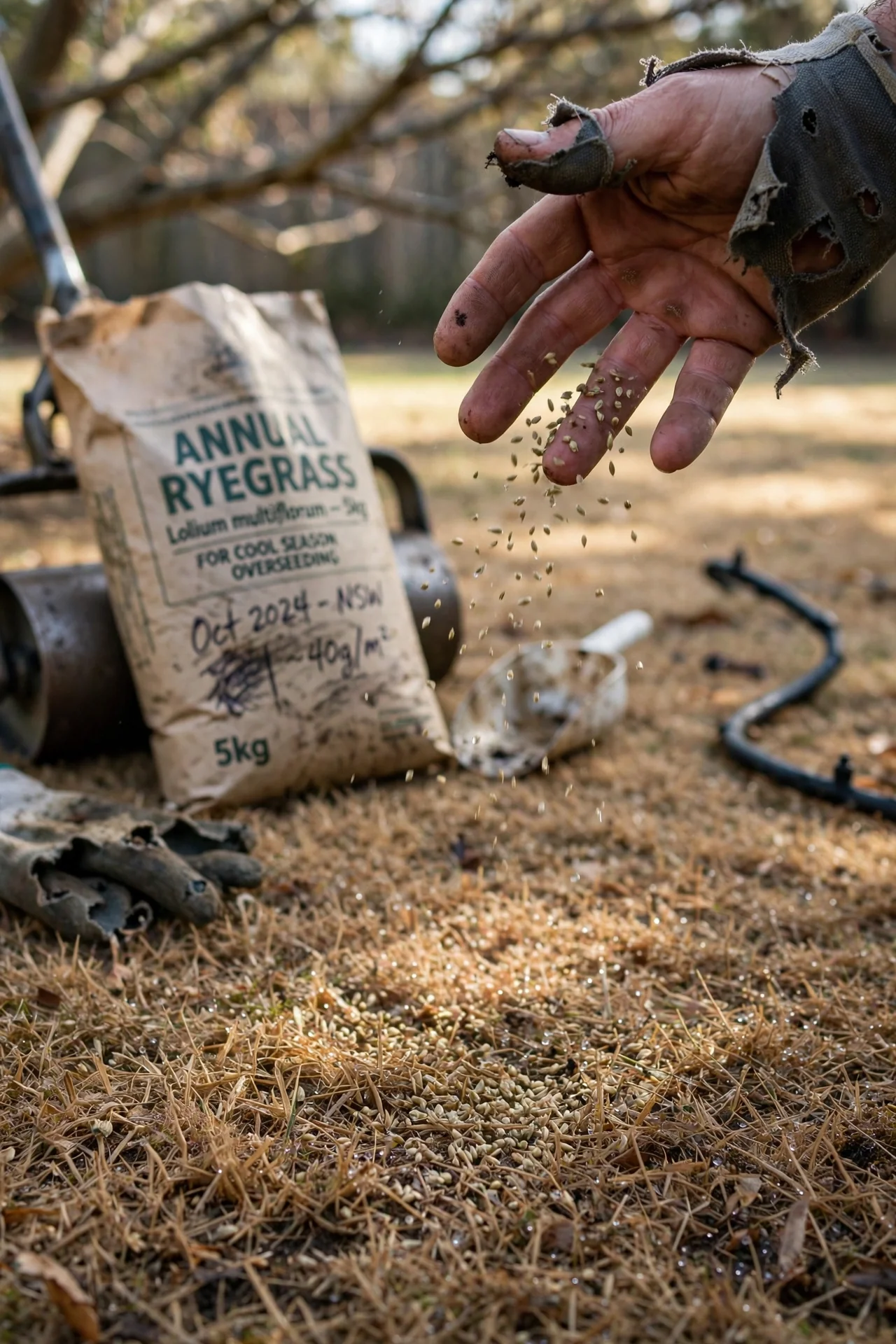
Setup: Identify bare areas larger than a dinner plate. Loosen the top 2 inches of soil with a garden fork. For common bermuda, broadcast seed at 1–2 pounds per 1,000 square feet and cover with no more than 0.25 inch of soil or compost. For hybrids, plant sprigs or plugs on 6–12 inch centers; they spread laterally during peak summer heat.
10-minute workflow: (1) Rough up the soil surface. (2) Distribute seed, sprigs, or plugs. (3) Water lightly daily until germination or rooting (typically 7–10 days for seed, 14–21 days for plugs). (4) Gradually reduce watering frequency as roots establish. Do not apply pre-emergent herbicide to repaired areas until the new grass has been mowed at least twice.
Upgrade option: For hybrid lawns with recurring bare spots in the same locations, check for buried construction debris, shallow utility lines, or reflected heat from south-facing walls. These microsite conditions override standard care and require physical correction. For step-by-step repair instructions, see fix bare spots in lawn.
Starter Stack (What to Choose First)
Branch 1: The Precision Lawn Starter Stack
Begin with Item 3 (soil test) and Item 9 (core aeration). Together, these establish the subsurface conditions that make precise nitrogen and mowing inputs effective. If you apply hybrid nitrogen rates without first confirming pH and aeration status, a significant portion of the fertilizer never reaches the root zone. Estimated cost: $20–40 for a lab soil test; $60–90 for a half-day core aerator rental. Time: one afternoon for both tasks, with results unfolding over the following four weeks.
Branch 2: The Resilient Yard Starter Stack
Begin with Item 2 (mower height and frequency) and Item 5 (deep, infrequent watering). These two practices account for the majority of observable lawn quality differences in common bermuda, and neither requires purchasing a product. Adjust the mower deck to 1.5 or 2 inches and calibrate irrigation to deliver 1 inch per week. Estimated time: 15 minutes to set mower height and measure sprinkler output with catch cups.
Branch 3: The Low-Input Groundcover Starter Stack
Begin with Item 3 (soil test) and Item 10 (thatch assessment). If the soil test shows pH below 5.5, a single lime application may improve nutrient availability enough to sustain cover without supplemental nitrogen. If thatch exceeds 0.5 inch, a single verticutting session during summer removes the barrier that prevents rain from reaching roots. Estimated cost: $20–40 for the soil test; $50–80 for a verticutter rental. These are one-time or once-every-few-years interventions that make passive maintenance viable.
When This Won’t Work
Failure condition 1: Less than 6 hours of direct sun. Bermuda grass is the least shade-tolerant of the common warm-season turfgrasses. If your lawn receives fewer than 6 hours of direct sunlight per day during the growing season, the grass will thin progressively regardless of fertilizer, water, or mowing quality. The alternative is to switch to a more shade-tolerant species in affected zones. For a comparison, see zoysia grass care.
Failure condition 2: Soil pH below 5.0 or above 8.0. Outside this range, nutrient availability collapses even when soil tests show adequate levels. Bermudagrass can survive at pH 5.0 but will not respond to nitrogen applications. Correcting pH requires lime (for acidic soils) or elemental sulfur (for alkaline soils), and the full adjustment can take six to twelve months before grass response becomes visible. If you are in this situation, delay intensive practices and address pH first using rates specified by a lab soil test.
Choosing the Right Option for Your Situation
Budget Threshold
If your annual lawn budget is under $120 per 1,000 square feet, prioritize a soil test (Item 3), correct mowing height (Item 2), and one nitrogen application in June (Item 2 or 1). Defer reel mowing, overseeding, and split herbicide programs. These three items account for the largest quality gains at the lowest cost.
Time Threshold
If you can commit no more than two hours per week to lawn care during the growing season, choose Branch 2 practices and avoid the reel mowing and overseeding commitments of Branch 1. Weekly rotary mowing at 1.5–2 inches plus monthly irrigation checks fit within this window during peak growth.
Technical Constraint: Slope and Surface
Reel mowing below 1 inch requires a surface that is nearly level. Slopes steeper than roughly 5 degrees, pronounced undulations, or exposed tree roots will cause scalping that opens the canopy to weed invasion. If your lawn has these features and you cannot regrade, stay at 1.5 inches or higher with a rotary mower regardless of grass type.
Yes/No Checklist
- Does the lawn receive at least 6 hours of direct sun? Yes: Proceed. No: Reconsider species.
- Has a soil test been done within the last three years? Yes: Use existing data. No: Start with Item 3.
- Is the lawn hybrid (Tifway, TifTuf, etc.)? Yes: Branch 1 applies. No: Branch 2 or 3 applies.
- Can you mow at least weekly during May through September? Yes: Any branch. No: Choose Branch 3 only.
Expert Q&A
How do I tell if my bermuda is common or hybrid without a tag?
Check the leaf texture and seed head. Common bermuda produces viable seed heads readily in summer and has a coarser leaf blade. Hybrids produce few to no seed heads and have finer blades. If the lawn was installed from seed, it is almost certainly common bermuda. If it arrived as sod with a named variety on the invoice, it is hybrid.
Why does my bermuda grass turn brown after I fertilize?
If browning appears within 24–48 hours of application, it is likely fertilizer burn from exceeding the recommended rate or applying to wet foliage. Water thoroughly to leach excess salts from the leaf zone. If browning appears weeks later in expanding patches, consider disease (large patch or spring dead spot) rather than fertilizer injury.
Can I switch from a rotary to a reel mower mid-season?
Yes, but lower the height gradually over two to three weeks. Dropping from 2 inches to 0.75 inch in one mowing will scalp the lawn, removing green tissue and exposing brown stems. Reduce height by no more than one-third per mowing session until you reach the target. Do this during active growth, not during spring green-up.
Is it normal for bermuda grass to go completely brown in winter?
Yes. Bermudagrass enters dormancy when soil temperatures drop below roughly 55°F and loses all green color after the first hard frost. This is normal and not a sign of disease or deficiency. Do not fertilize or heavily water dormant bermuda; wait until consistent spring green-up across at least 50% of the lawn before resuming active care.
What is the biggest difference between bermuda and zoysia care?
Nitrogen demand. Zoysia requires less nitrogen (1.5–2 pounds per 1,000 square feet per season) and develops thatch more readily if over-fertilized. Bermuda, especially hybrid, needs more nitrogen and tolerates higher mowing frequency. Zoysia also greens up roughly two to three weeks later in spring and holds color longer into fall.
Conclusion
The decision that shapes every other choice in bermuda grass care is whether you are managing common or hybrid grass. That single determination sets your nitrogen budget, mowing height, and whether reel mowing or overseeding are worth the effort. The most frequent mistake is applying hybrid-level inputs to common bermuda and then fighting the thatch and disease that follow.
If you take one action after reading this guide, pull a soil test and confirm your pH before your next fertilizer application. Without that number, every other input is a guess. Once you have results, use the spring lawn care checklist to map your next steps onto a seasonal timeline that matches your branch.