
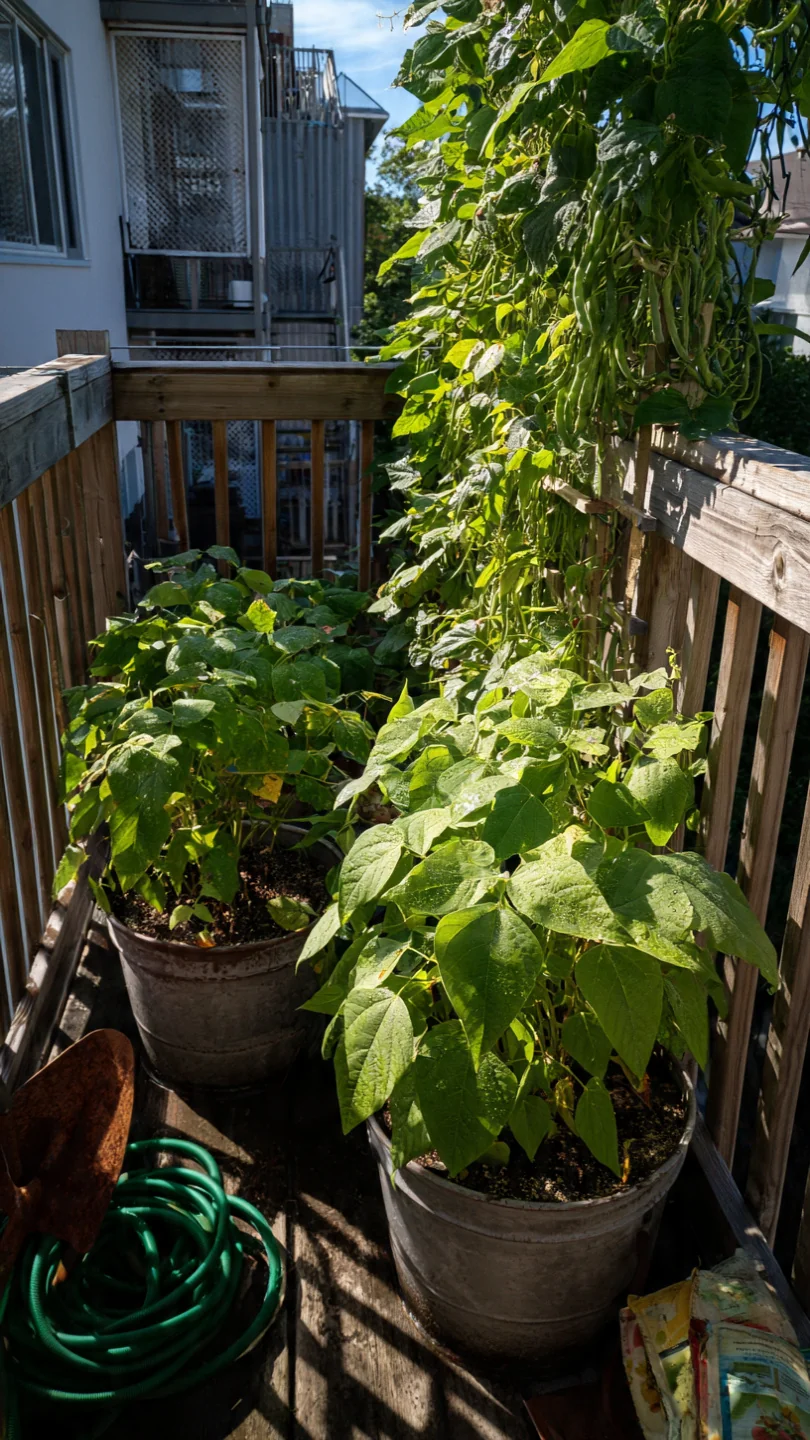
Container success with beans hinges on one decision most guides skip: aligning the bean type’s growth habit and minimum soil depth with your specific container volume and support setup.
This guide covers bush and pole snap beans suited to urban pots, grow bags, and window boxes. It excludes dry beans, favas, and in-ground planting.
You will finish with a clear choice of setup that fits your space constraints, time available, and pot inventory so you can direct-sow confidently and harvest pods between 45 and 65 days after germination.
Bottom line: First match growth habit to your pot’s soil depth and support options, then the rest falls into place.
The Yield Grid Decision Grid
Branch 1 applies when your available soil depth measures 6 to 7 inches and you have no vertical support options (limited balcony floor space). Recommended: Items 1, 3, and 6 below.
Branch 2 applies when your soil depth reaches 8 inches or more and you have access to a railing, wall, or trellis (vertical opportunity). Recommended: Items 2, 4, and 7 below.
Branch 3 applies when you need lightweight containers under 20 pounds empty for easy movement (rooftop or rental flexibility). Recommended: Items 5, 8, and 9 below.
For more pairings across vegetables, see our best vegetables for containers guide.
Quick Comparison Table
| Option | Key mechanism | Best for | Decision Grid Branch | Effort Score |
|---|---|---|---|---|
| Bush Beans in 5-Gallon Buckets | Compact determinate growth, no support needed | Limited floor space | Branch 1 | 2 |
| Pole Beans on Balcony Railings | Vertical vine training along existing structures | Existing railings | Branch 2 | 3 |
| Grow Bags for Bush Beans | Aeration fabric prevents root circling | Dense planting | Branch 1 | 1 |
| Pole Beans with Built-In Trellis | Immediate cage or pole insertion at planting | Vertical space | Branch 2 | 2 |
| Lightweight Planters for Pole Beans | Portable fabric or plastic under 20 pounds | Mobility needs | Branch 3 | 2 |
| Window Box Bush Bean Clusters | Wide shallow profile for surface planting | Balcony edges | Branch 1 | 1 |
| Vertical Trellis Pole Beans | Modular netting or string support | Walls or fences | Branch 2 | 3 |
| Soil Mix Optimization for Beans | Equal parts compost and perlite blend | All setups | Branch 3 | 3 |
| Successive Sowing in Containers | Staggered 2-week plantings | Extended harvest | Branch 3 | 3 |
Bush Beans in 5-Gallon Buckets
Best for: Branch 1
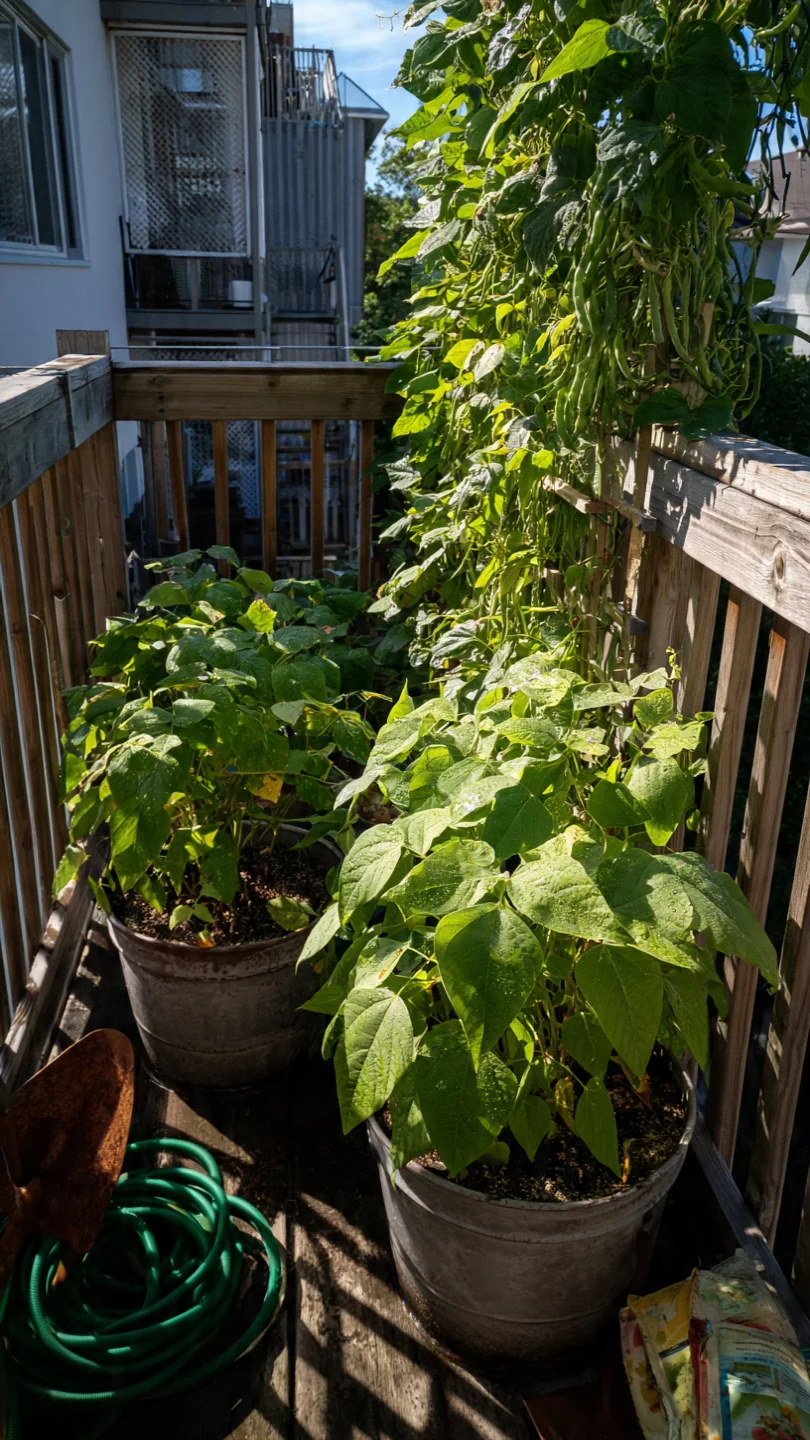
Use this blueprint when your space limits you to floor-level pots with 6 to 7 inches of soil depth. Fill each 5-gallon bucket with a mix of two-thirds high-quality potting soil and one-third compost. Plant seeds 1 inch deep and 3 inches apart, allowing up to nine plants per 12 inches of surface diameter. Water when the top 2 to 3 inches of soil feels dry to the touch. Insert no support since bush varieties stay compact and determinate.
Common mistake to avoid: skipping drainage holes, which leads to waterlogged roots. This setup works for varieties such as Topcrop or Provider. Setup takes under 30 minutes per bucket and requires only monthly diluted liquid vegetable fertilizer if none was mixed in at planting. See our 5-gallon bucket garden ideas for compatible layouts.
Pole Beans on Balcony Railings
Best for: Branch 2
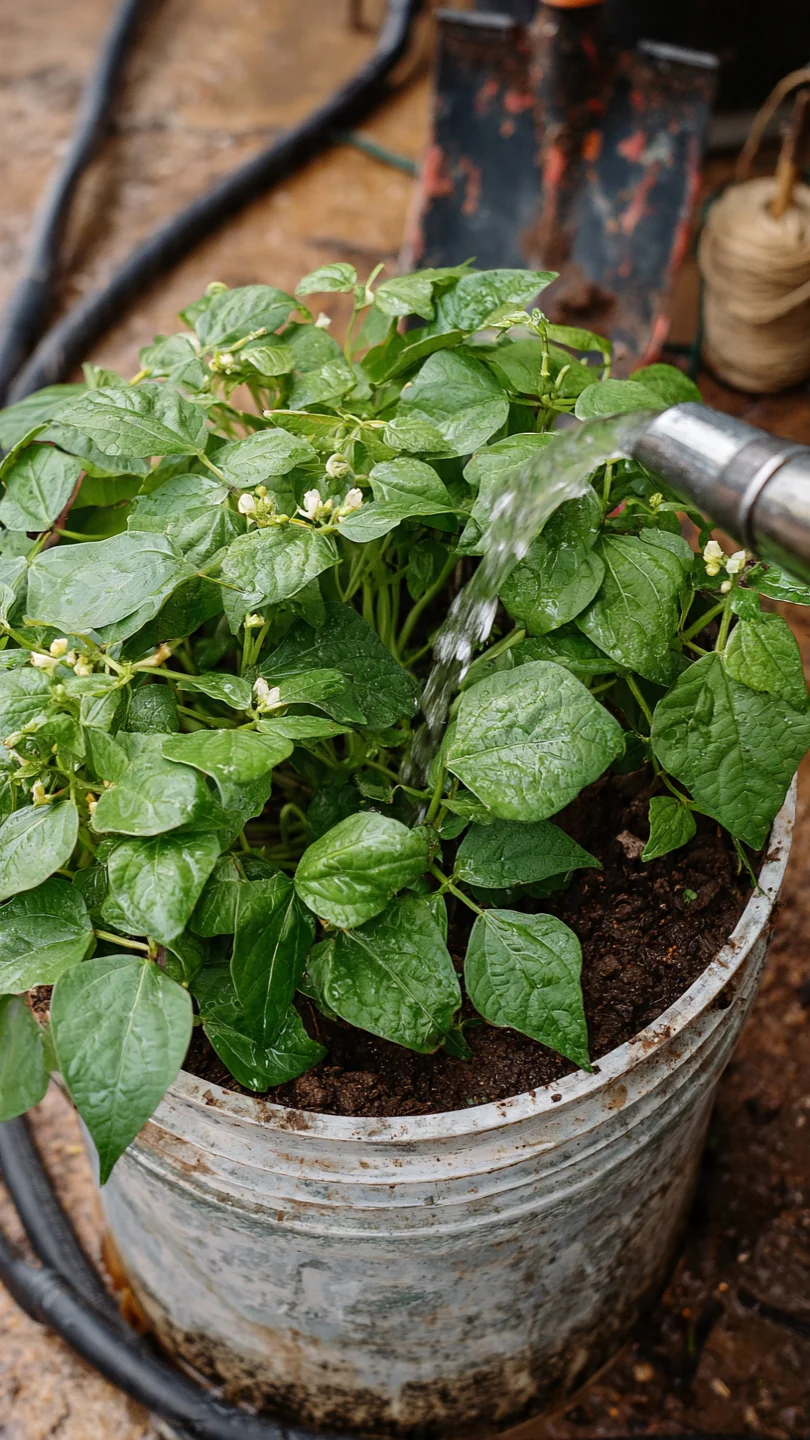
Use versus skip: train vines along railings when you have sturdy horizontal bars at least 6 feet high. Pros include zero extra materials and natural airflow. Skip if high winds exceed 20 miles per hour regularly, since unsupported vines snap. Plant two to three seeds around each railing post at 1 inch deep once soil reaches 55 degrees Fahrenheit.
Grow Bags for Bush Beans
Best for: Branch 1
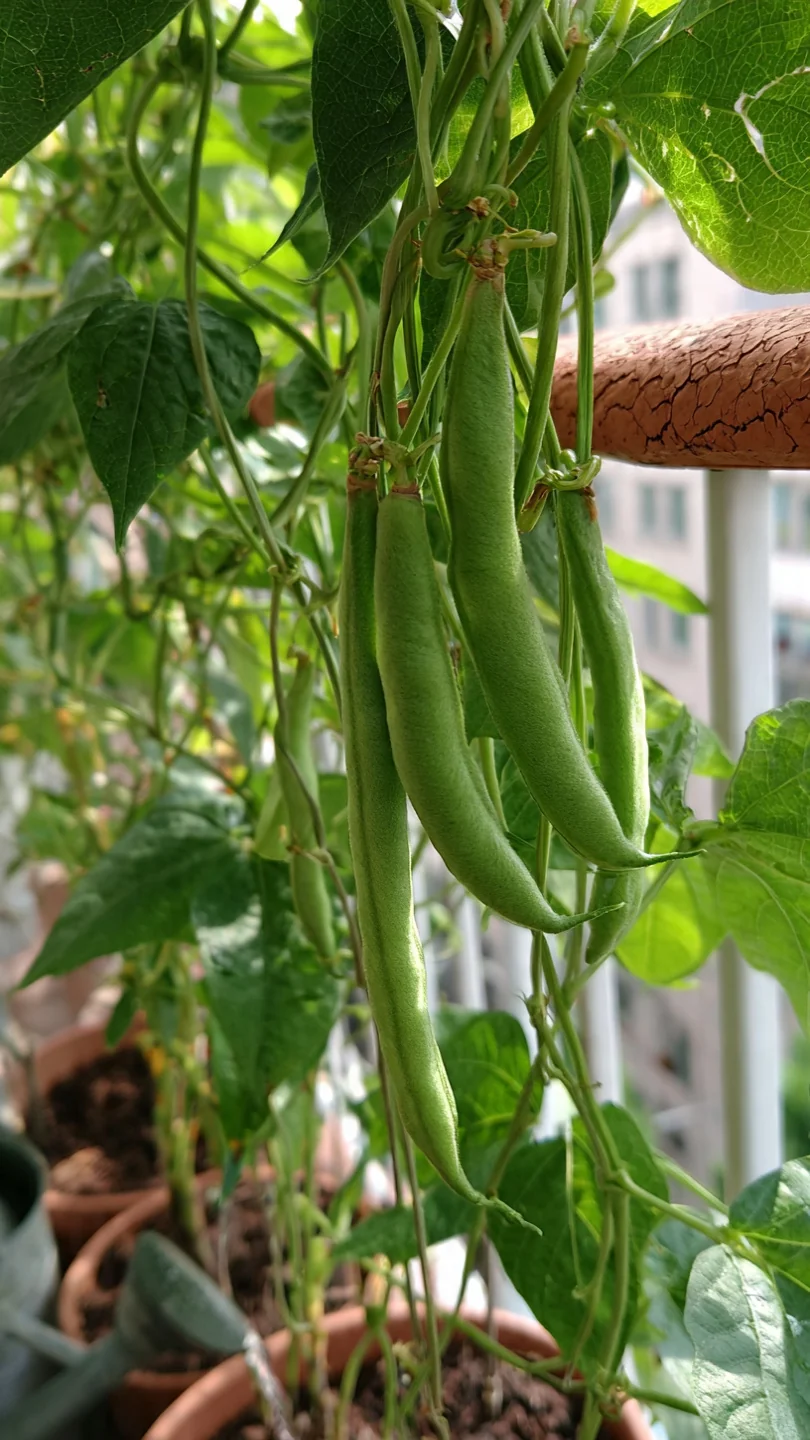
Threshold rule: select bags of 5 gallons or larger when you want dense planting without root circling. Fabric sides allow air pruning, so maintain 6 to 7 inches of soil depth minimum. Sow seeds 1 inch deep at 3-inch spacing. Water when the top 2 to 3 inches dry, and refresh the top inch of mix monthly to keep drainage open. This option suits successive sowing every two to three weeks for steady supply.
Pole Beans with Built-In Trellis
Best for: Branch 2
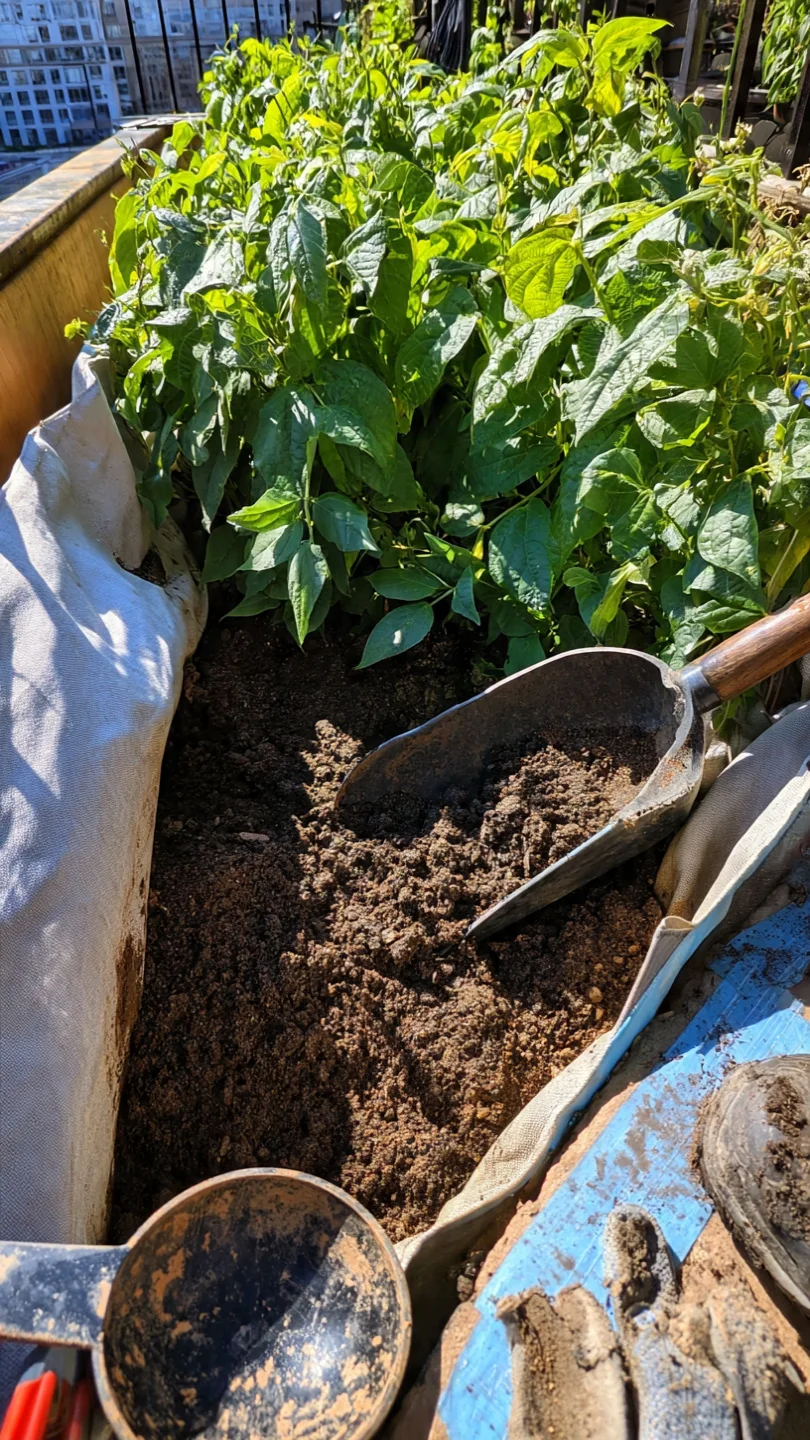
Follow this 10-minute workflow when your container holds 8 inches or more of soil. At planting time, insert a tomato cage or single sturdy pole into the center of the pot. Sow two to three seeds 1 inch deep around the base of the support. Train emerging vines upward by gently tying to the structure with soft twine every 7 days. Use varieties such as Kentucky Wonder or Blue Lake pole. Upgrade option: add a second cage for heavier pod loads in containers 18 inches wide or wider. Full setup stays under 10 minutes per pot.
Lightweight Planters for Pole Beans
Best for: Branch 3
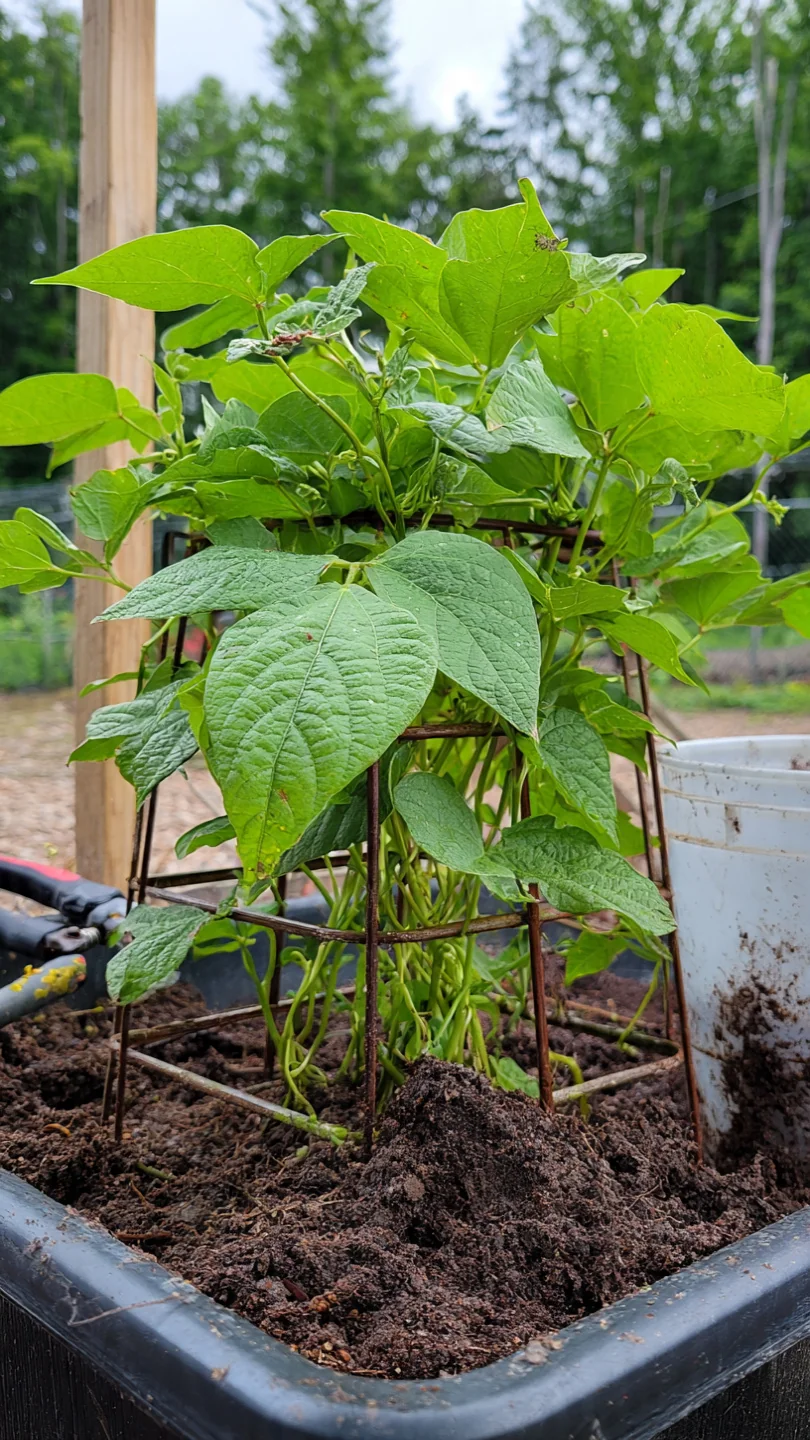
Choose fabric or thin-walled plastic planters under 20 pounds empty when you need to shift containers for sun tracking or storage. Ensure 8-inch minimum soil depth and add a lightweight trellis insert at sowing. Plant seeds 1 inch deep around the support. These options maintain the same watering rule (top 2 to 3 inches dry) but heat up faster than heavy terracotta, so check moisture daily during peak summer. See our grow bags gardening techniques for exact filling ratios.
Window Box Bush Bean Clusters
Best for: Branch 1
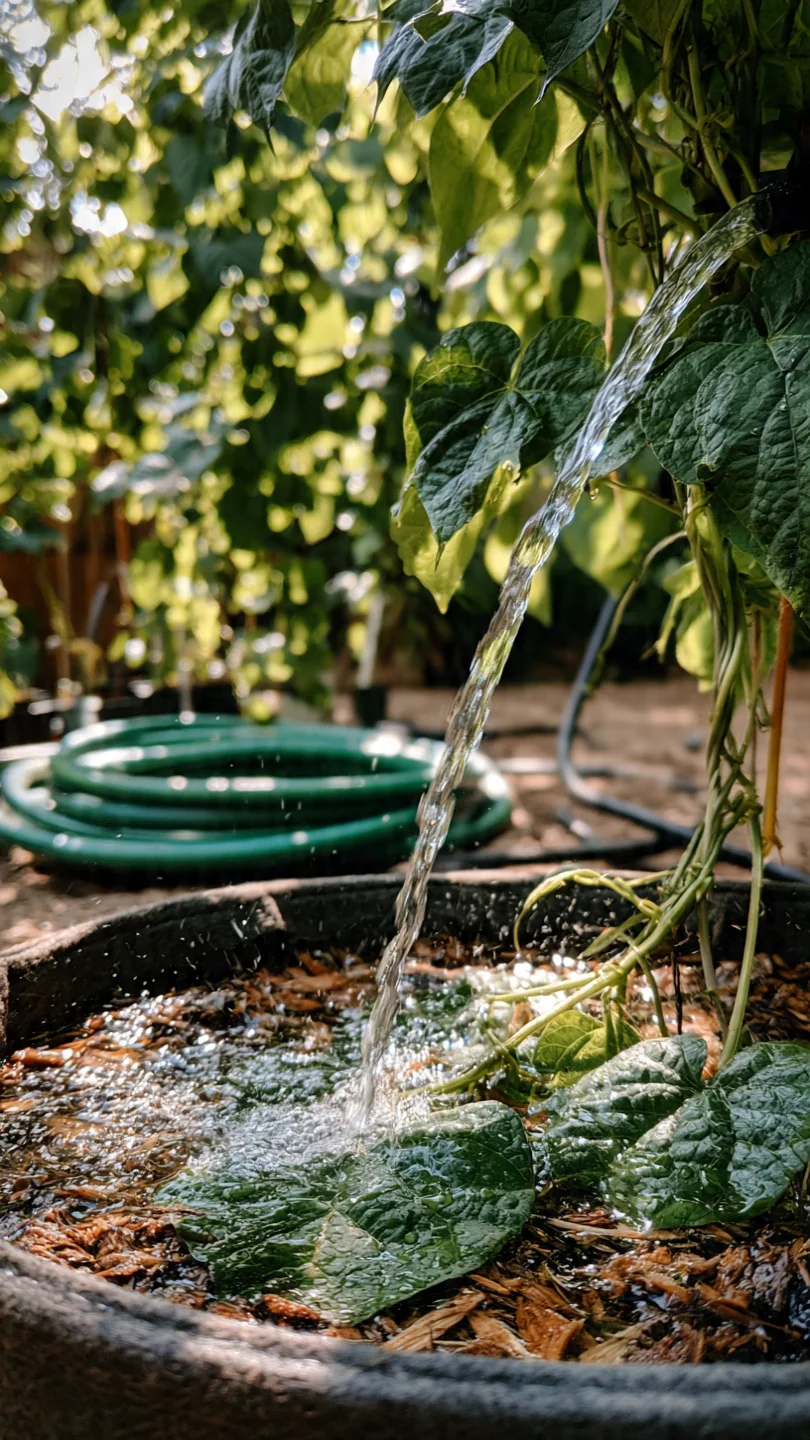
Threshold rule: use boxes at least 15 inches wide and 6 inches deep when balcony rail space is your only option. Plant seeds 1 inch deep and thin seedlings to 6 inches apart once they reach 4 inches tall. This delivers surface-level production without vertical demands. Water consistently when the top 2 to 3 inches dry, and mulch lightly with straw to retain moisture. Varieties such as Mascotte stay under 16 inches tall and fit neatly along edges.
Vertical Trellis Pole Beans
Best for: Branch 2
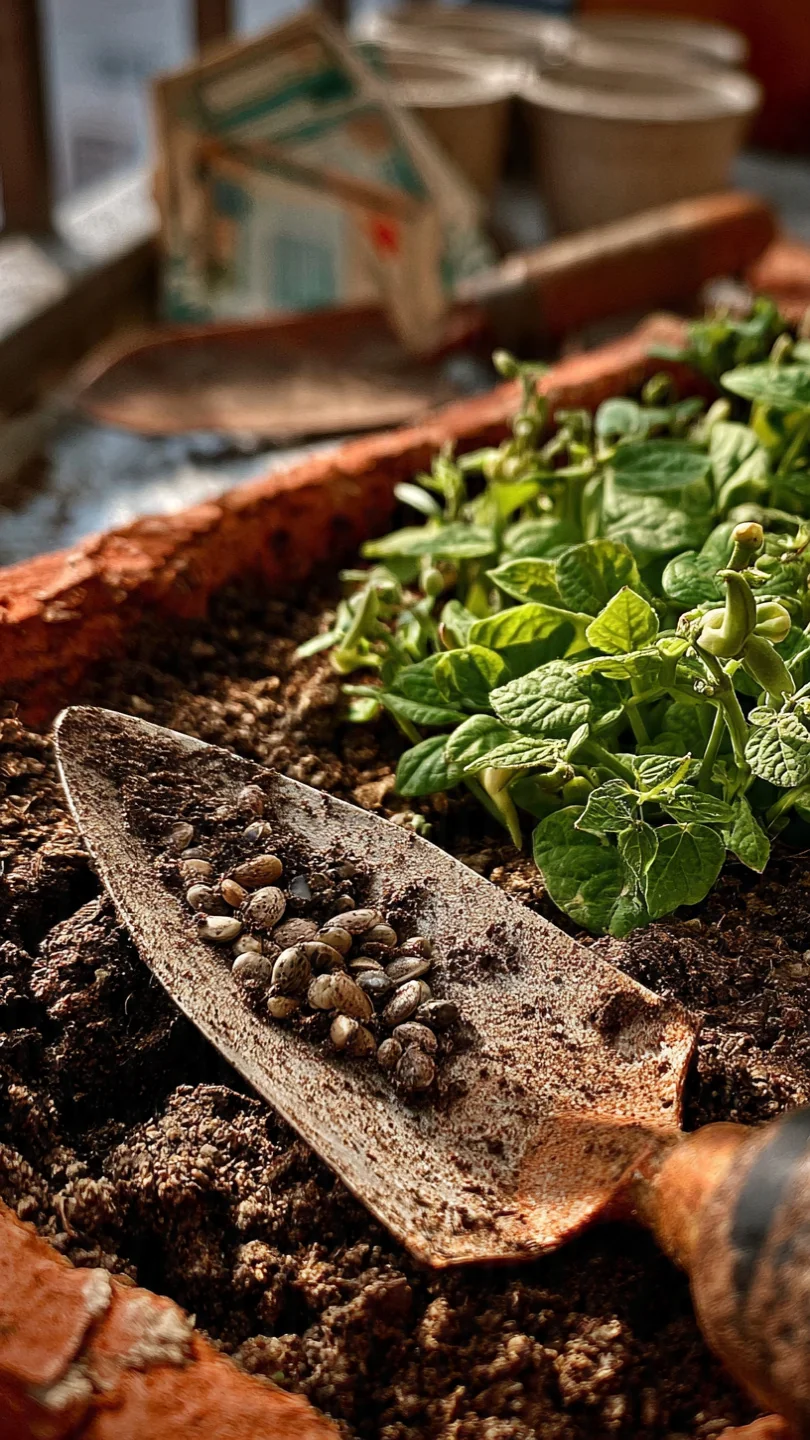
Blueprint: build or install modular netting or string trellis against a wall or fence before sowing. Fill pots or grow bags with 8 to 9 inches of soil mix, then plant seeds 1 inch deep and 3 inches apart at the base. Train vines weekly by weaving through the grid. This setup maximizes vertical real estate while keeping roots contained. Incorporate the same fertilizer schedule as other pole options. For full trellis options, see our container trellis ideas.
Soil Mix Optimization for Beans
Best for: Branch 3
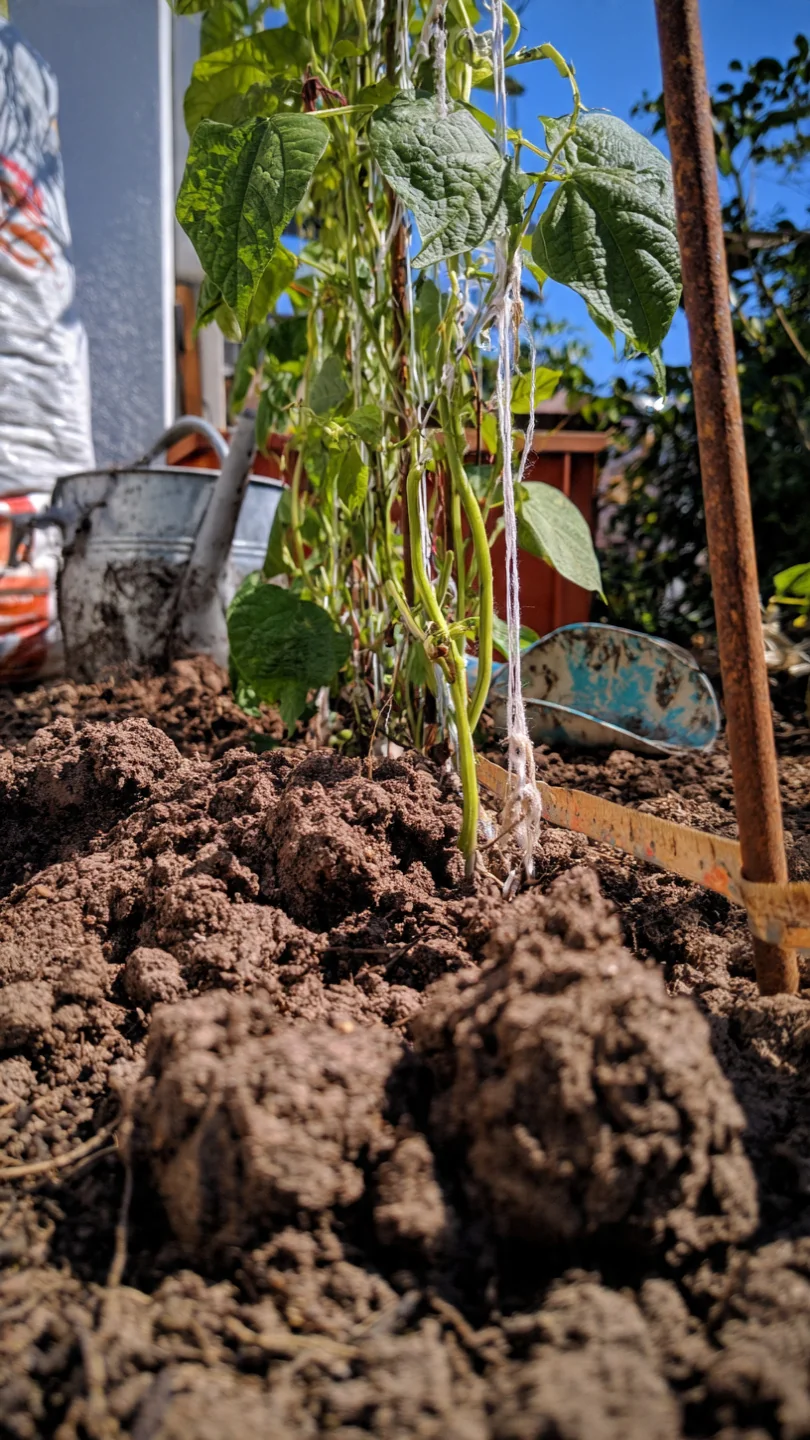
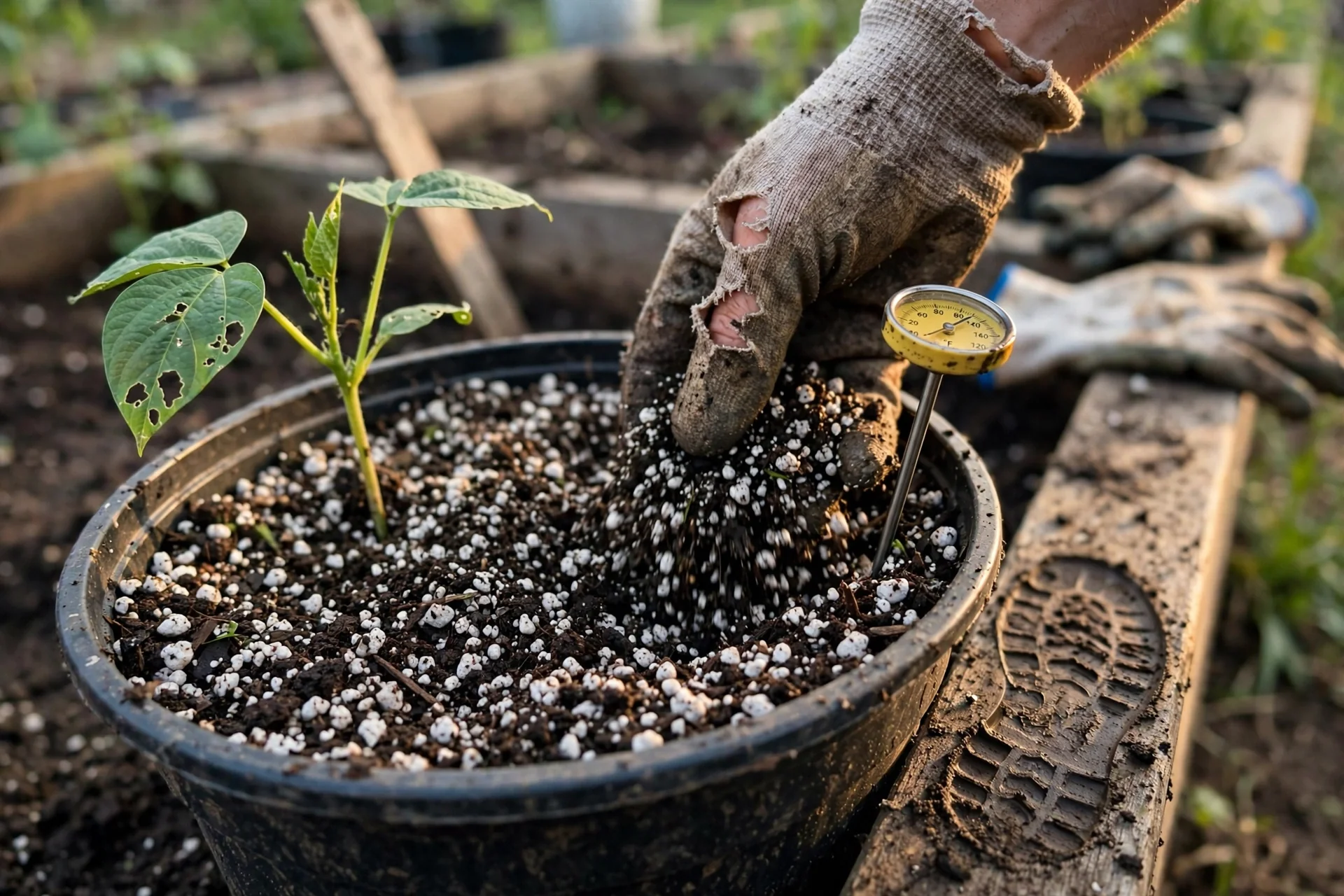
Blend equal parts compost or sphagnum moss with pasteurized soil and vermiculite or perlite when your containers must drain fast in hot conditions. This mix supports nitrogen fixation without added heavy fertilizer. Test drainage by pouring 1 quart of water through a filled pot: it should exit within 30 seconds. Adjust perlite upward by one part if drainage slows. Apply this optimized mix across any branch for consistent results.
Successive Sowing in Containers
Best for: Branch 3
Stagger plantings every two to three weeks starting when soil temperature holds at or above 55 degrees Fahrenheit. Use the same container and mix from your primary setup but reserve space for new seeds. This keeps production rolling through summer without exhausting a single pot. Thin each wave to proper spacing and maintain the top 2 to 3 inches dry watering rule. Harvest pods when medium sized and firm to encourage more flowering.
Starter Stack (What to Choose First)
For Branch 1: Small depth, no support
Start with Bush Beans in 5-Gallon Buckets plus Grow Bags for Bush Beans. The buckets provide stable weight at ground level while grow bags add aeration for denser clusters in the same space. Combined setup time stays under 45 minutes total and uses only existing floor area.
For Branch 2: Adequate depth with vertical access
Start with Pole Beans with Built-In Trellis plus Vertical Trellis Pole Beans. The cage gives instant structure at planting while the wall trellis scales production upward. Synergy comes from training vines across both supports for maximum airflow and pod access in under 60 minutes total setup.
For Branch 3: Lightweight and movable
Start with Lightweight Planters for Pole Beans plus Soil Mix Optimization for Beans. Fabric planters stay portable while the custom mix prevents compaction during movement. Expect 30 to 45 minutes for initial filling and sowing with no heavy lifting required.
When This Won’t Work
Beans fail in containers when soil temperature stays below 55 degrees Fahrenheit at sowing time: seeds rot instead of germinating. Wait until consistent readings reach or exceed this threshold or start seeds indoors in biodegradable pots for transplant once conditions improve.
They also fail when containers lack unobstructed drainage holes or when soil stays soggy beyond 48 hours after watering: roots drown and plants yellow. Switch to fabric grow bags, which breathe naturally, or drill extra holes in rigid pots before refilling.
For consistent moisture management across all setups, see our watering container plants guide.
Choosing the Right Option for Your Situation
Budget threshold
Under 20 dollars per container favors plastic buckets or basic grow bags over premium fabric systems. Measure by checking local nursery prices for 5-gallon sizes and basic potting mix bags.
Time threshold
Under 15 minutes weekly maintenance favors bush bean options in any branch since they need no vine training. Pole setups add 5 to 10 minutes weekly for tying but deliver longer harvest windows.
Technical constraint: drainage speed
Choose fabric or perlite-heavy mixes when your climate keeps humidity above 70 percent for weeks at a time. Test any mix by timing how fast 1 quart of water drains through a filled sample pot.
Yes/No checklist:
– Does your pot provide the required soil depth for the chosen habit?
– Can you maintain top 2 to 3 inches dry between waterings?
– Will you install support before sowing for pole types?
– Is soil temperature at or above 55 degrees Fahrenheit?
Expert Q&A
Can beans share a container with tomatoes without nutrient competition?
Yes, when you keep total plants to four or fewer in a 10-gallon or larger pot and use the 2/3 potting mix to 1/3 compost blend. Beans fix nitrogen that benefits tomatoes, but space them 6 inches apart and monitor soil moisture so neither dries out during flowering.
How does container depth affect pod quality in pole beans?
Depths below 8 inches restrict root expansion and lead to smaller pods or earlier flowering stoppage. Stick to 8 to 9 inches minimum for pole varieties to support full vine growth and consistent pod size through the season.
What spacing adjustment helps successive sowing in the same pot?
Reserve half the surface for the next sowing wave while harvesting the first. Thin each new batch to 6 inches for bush types or keep 3 inches around supports for pole types to avoid crowding that reduces airflow and pod set.
Do grow bags require different watering frequency than plastic pots for beans?
Yes, fabric sides increase evaporation so check the top 2 to 3 inches daily in temperatures above 85 degrees Fahrenheit. Plastic pots hold moisture longer and may need watering only every second or third day under the same conditions.
Which varieties tolerate light afternoon shade in containers?
Bush types such as Mascotte or Provider handle 4 to 5 hours of direct sun plus dappled afternoon shade better than pole varieties. Pole beans need full sun for strong vine growth and pod production.
Conclusion
The decision grid makes beans in containers reliable by forcing you to match growth habit to measured pot volume and support before sowing. The number one mistake is planting without confirming soil depth and drainage, which leads to stunted plants and short harvests.
Take the next step: audit your current pots against the three branches, then build your first setup using the starter stack recommendations. Head to our container gardening for beginners resource to gather the exact materials and get planting this season.