
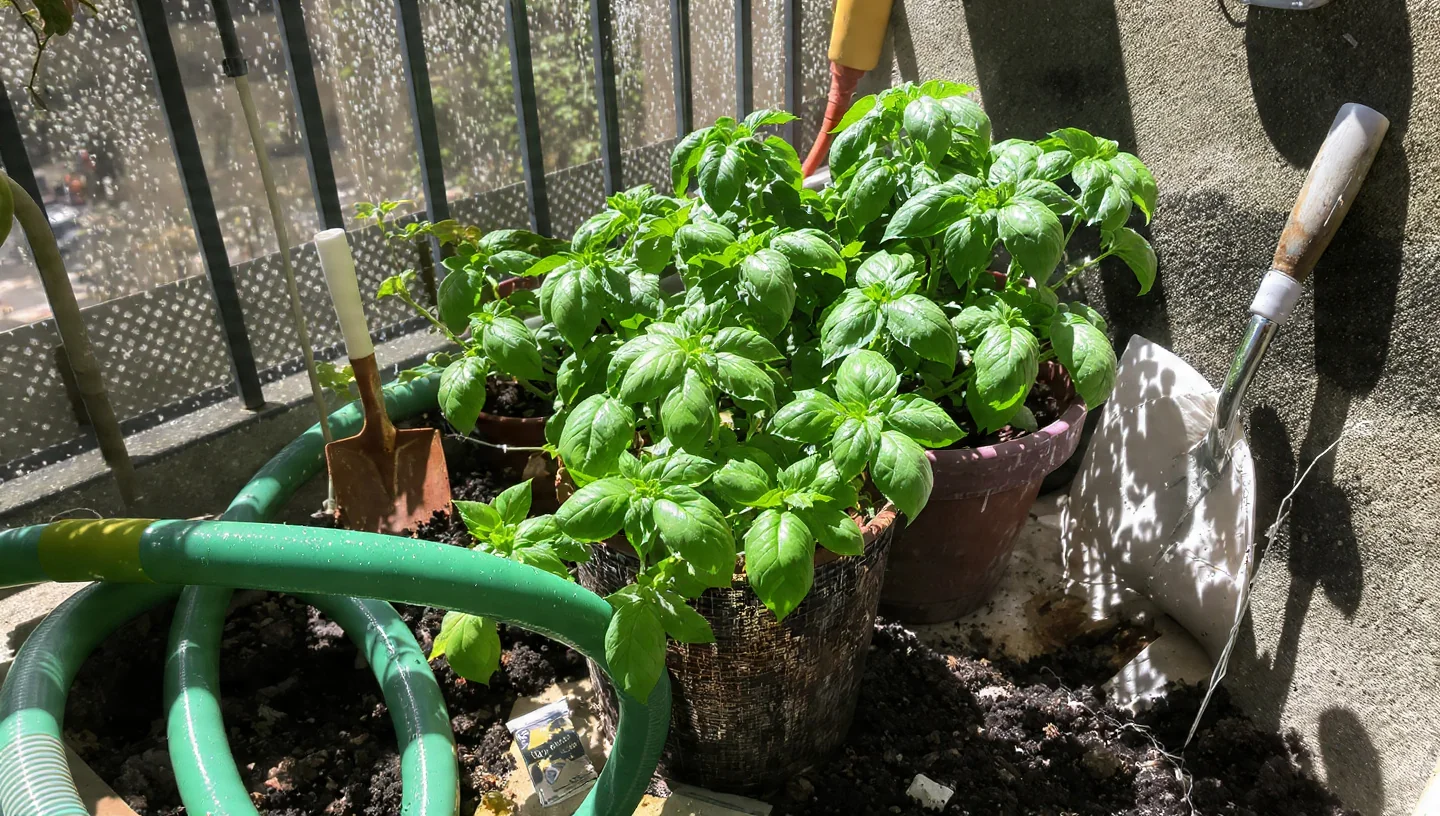
The real barrier to steady basil leaf production in containers is not a lack of care routines. It is the mismatch between pot material, depth, and soil volume versus the plant’s dense, shallow root system that requires steady oxygen exchange while handling high transpiration in warm urban microclimates.
This listicle scopes exactly 10 container systems suited to small-space urban gardening in the US, UK, Canada, Australia, India, Germany, and the Netherlands. It focuses on sweet basil and common culinary varieties in pots or similar vessels. It excludes in-ground beds, full hydroponics, or large-scale commercial setups.
You will finish with a clear decision path: evaluate your daily direct sun hours, minimum night temperature, and available floor or railing space to pick the system that keeps roots oxygenated and foliage flavorful through the growing season.
Bottom line: Match pot depth of at least 8 inches and material to your measured light hours and temperature range to avoid mid-season wilting or bitter leaves.
The Yield Grid Decision Grid
Branch 1: 6 or more hours of direct sun daily and daytime temperatures that stay above 65 F (18 C). Recommended: Items 1, 4, and 7 below.
Branch 2: 4 to 6 hours of direct sun or daytime temperatures that range 55 to 65 F (13 to 18 C). Recommended: Items 2, 5, and 8 below.
Branch 3: Fewer than 4 hours of direct sun or total space under 1 square foot per pot. Recommended: Items 3, 6, 9, and 10 below. See more container gardening ideas to layer multiple systems.
Quick Comparison Table
| Option | Key mechanism | Best for | Decision Grid Branch | Effort Score |
|---|---|---|---|---|
| Five-Gallon Bucket Basil Setup | Deep soil volume plus bottom drainage holes | Steady root expansion in full sun | Branch 1 | 1 |
| Terracotta Classic Pot System | Porous walls for rapid evaporation | Humid or moderate-light spots | Branch 2 | 3 |
| Self-Watering Pot Reservoir | Built-in water chamber with wicking | Stable moisture without daily checks | Branch 3 | 2 |
| Fabric Grow Bag Approach | Breathable sides for air pruning | Mobile setups on rooftops or patios | Branch 1 | 2 |
| Window Box Balcony Rail | Shallow wide profile for railing mount | Edge-of-balcony light access | Branch 2 | 3 |
| Plastic Pot for Quick Moves | Lightweight and non-porous walls | Frequent repositioning in variable light | Branch 3 | 4 |
| Hanging Basket Elevation | Overhead air flow and drainage | Vertical space with strong sun | Branch 1 | 3 |
| Upcycled Container Drainage Hack | Custom bottom holes in found objects | Budget reuse in limited areas | Branch 2 | 1 |
| Thyme Companion Cluster Pot | Shared soil volume with complementary herb | Pest deterrence through proximity | Branch 3 | 2 |
| Lightweight Planter Stack | Modular vertical tiers with separate drainage | Small footprint with multiple plants | Branch 3 | 4 |
Five-Gallon Bucket Basil Setup
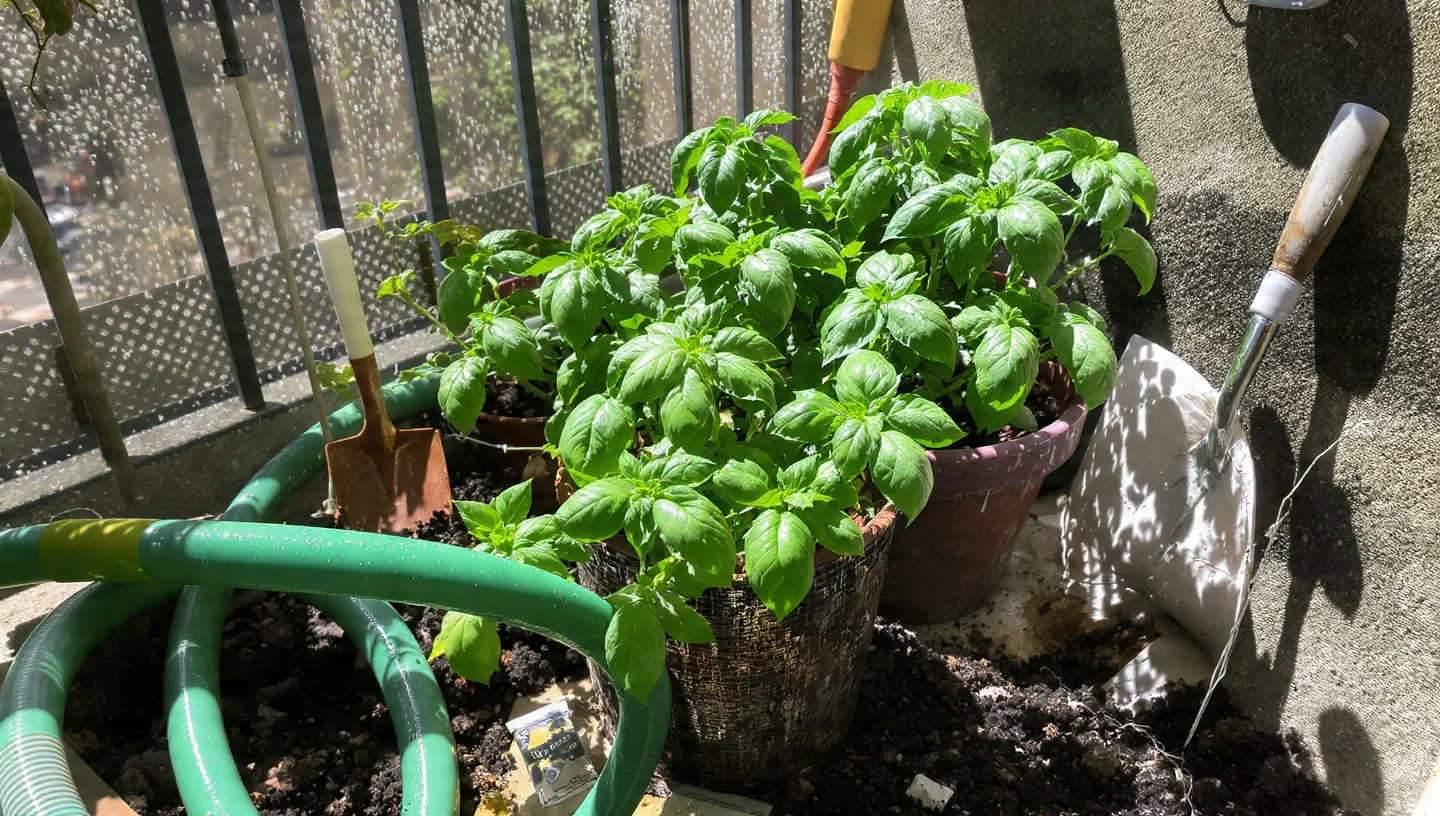
Best for: Branch 1
This blueprint uses a standard 5-gallon food-grade bucket with four 0.5-inch drainage holes drilled in the base. Fill to 2 inches below the rim with potting mix amended for drainage. Plant 3 to 4 basil seedlings spaced 6 inches apart. The extra depth allows roots to reach 10 to 12 inches, reducing early root-bound stress in high-light conditions where transpiration peaks. Threshold rule: maintain soil moisture by watering only when the top 1 inch feels dry, typically every 2 to 3 days in 80 F (27 C) weather. Edge case: in areas with heavy summer rain, elevate the bucket on bricks to prevent water pooling. Read the full 5-gallon bucket garden guide for exact hole placement templates.
Terracotta Classic Pot System
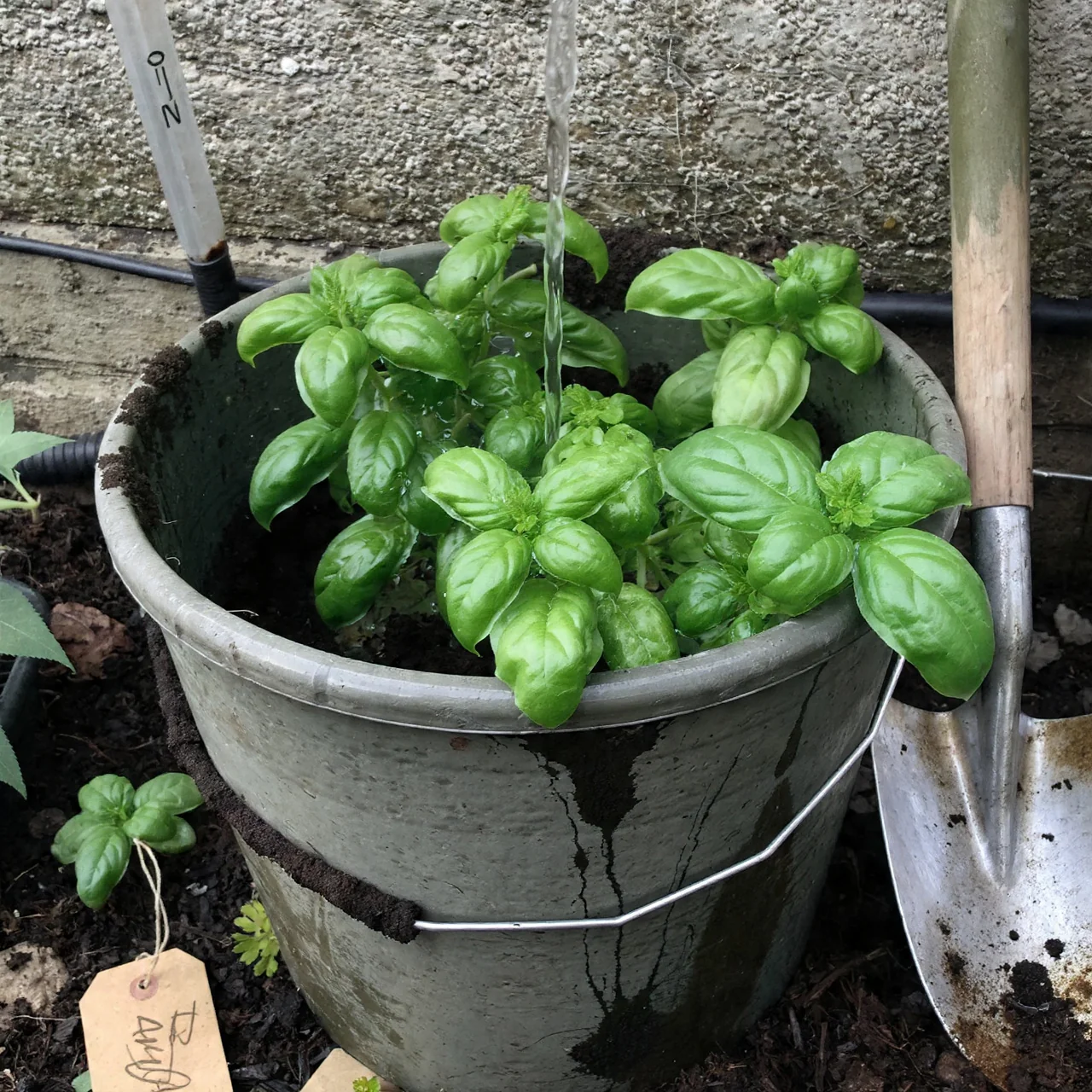
Best for: Branch 2
Use vs skip: choose this when humidity stays above 60 percent because the porous clay pulls excess water from the soil faster than plastic. Skip if your spot drops below 55 F at night for more than three nights in a row. Unique detail: the material naturally buffers temperature swings better than glazed ceramic in moderate light.
Self-Watering Pot Reservoir
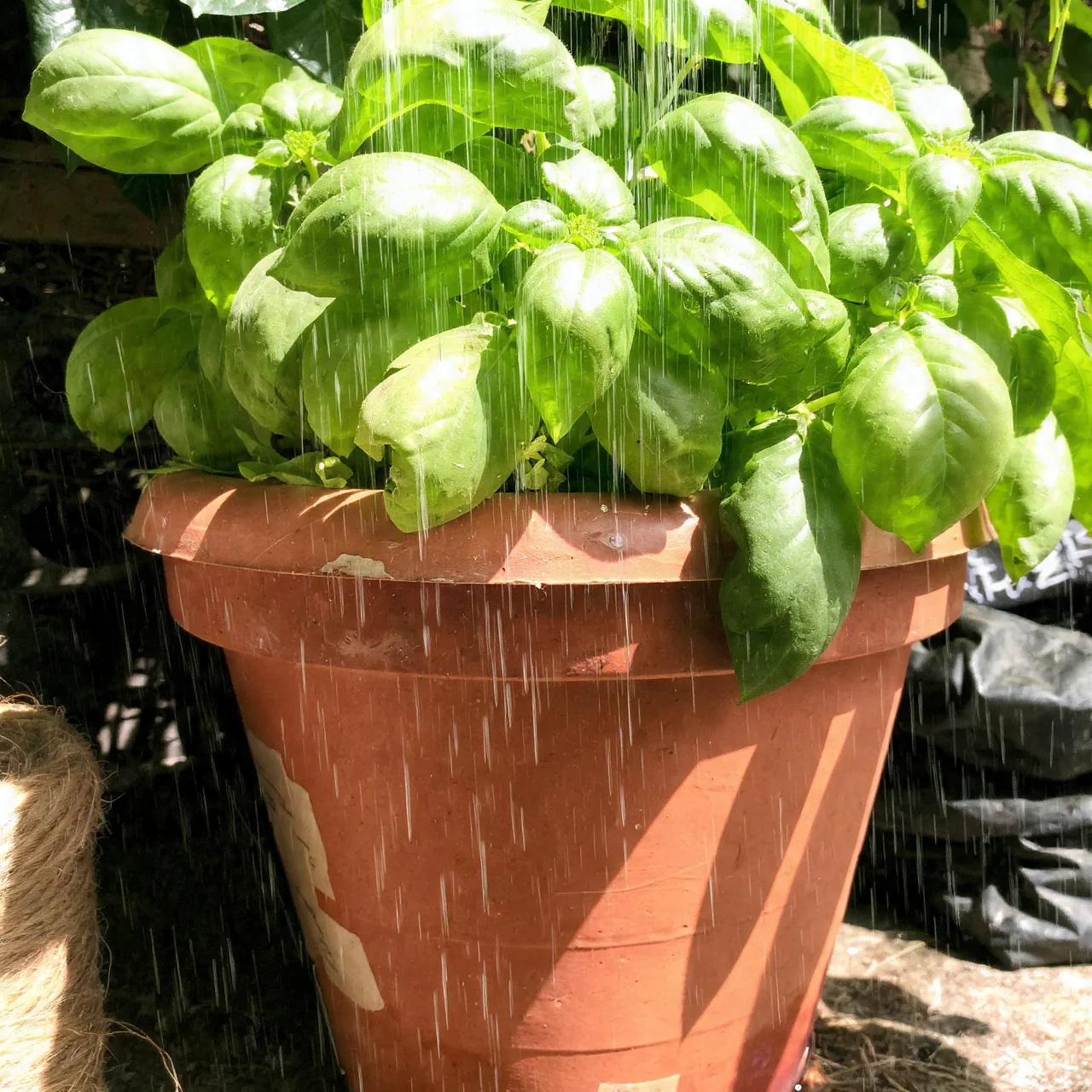
Best for: Branch 3
Blueprint: select a 10- to 12-inch pot with a 2-inch-deep built-in reservoir and fill the growing chamber with well-draining mix. Insert the wicking strip before planting. The mechanism keeps the root zone evenly moist without surface saturation. Adjustment: refill the reservoir every 5 to 7 days once established. This setup answers the adjacent query about consistent moisture for windowsill basil without overwatering risk. See the best soil for container gardening to match the mix to the reservoir type.
Fabric Grow Bag Approach
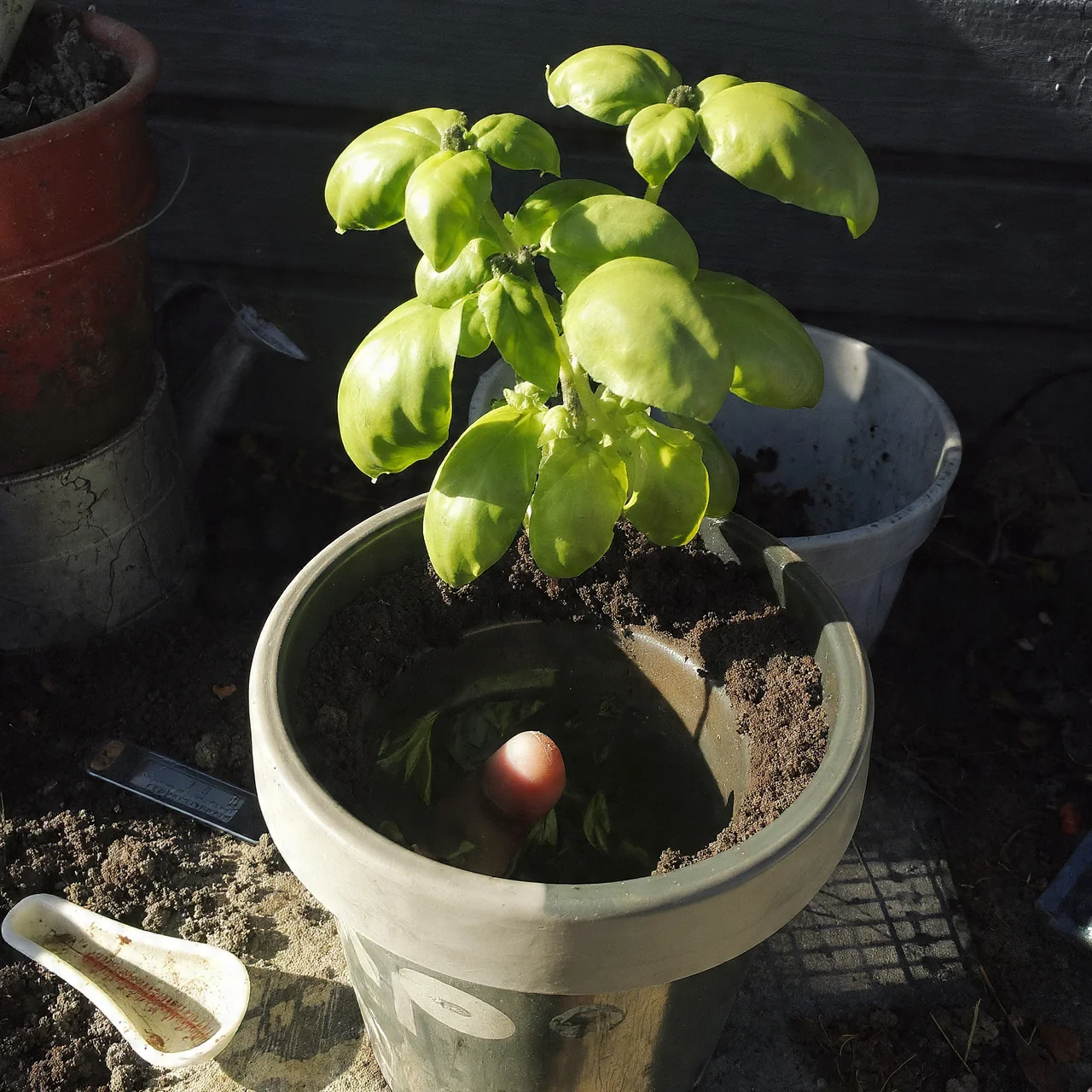
Best for: Branch 1
Threshold rule: use 5- to 7-gallon fabric bags with at least 10 inches of depth for full-sun spots. The breathable fabric air-prunes roots at the sides, encouraging denser feeder roots instead of circling. Water when the bag feels light, roughly every 48 hours in peak heat. Edge case: in windy rooftops, anchor the bag with a brick ring to stop tipping. Setup takes under 10 minutes and costs 5 to 12 dollars per bag. Compare with other lightweight planters.
Window Box Balcony Rail
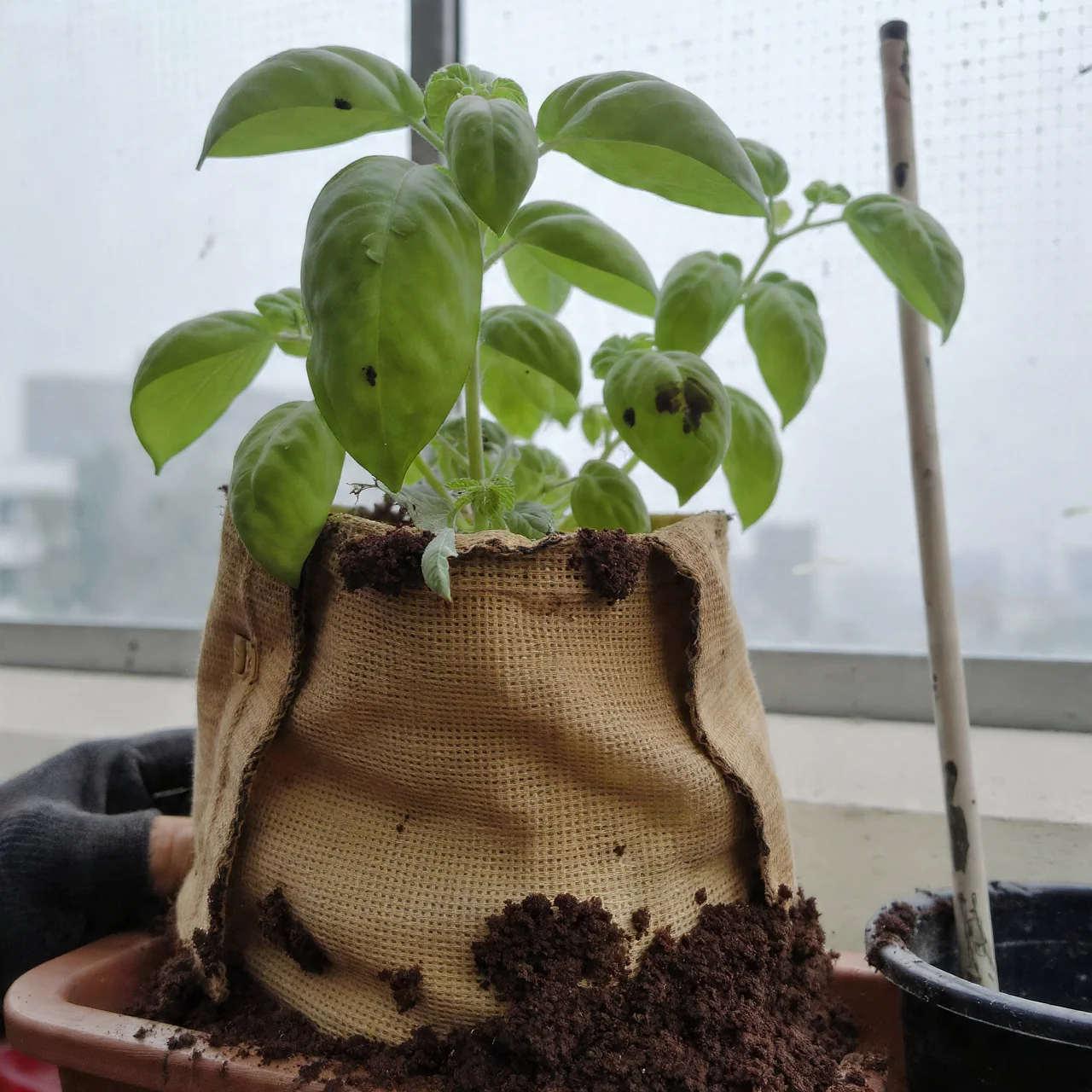
Best for: Branch 2
Use vs skip: ideal for railing-mounted boxes 8 inches deep and 24 inches long when sun hits the edge of the balcony but not the center. Skip if rail vibration exceeds light gusts. The wide profile spreads roots laterally, matching basil’s natural habit in partial light.
Plastic Pot for Quick Moves
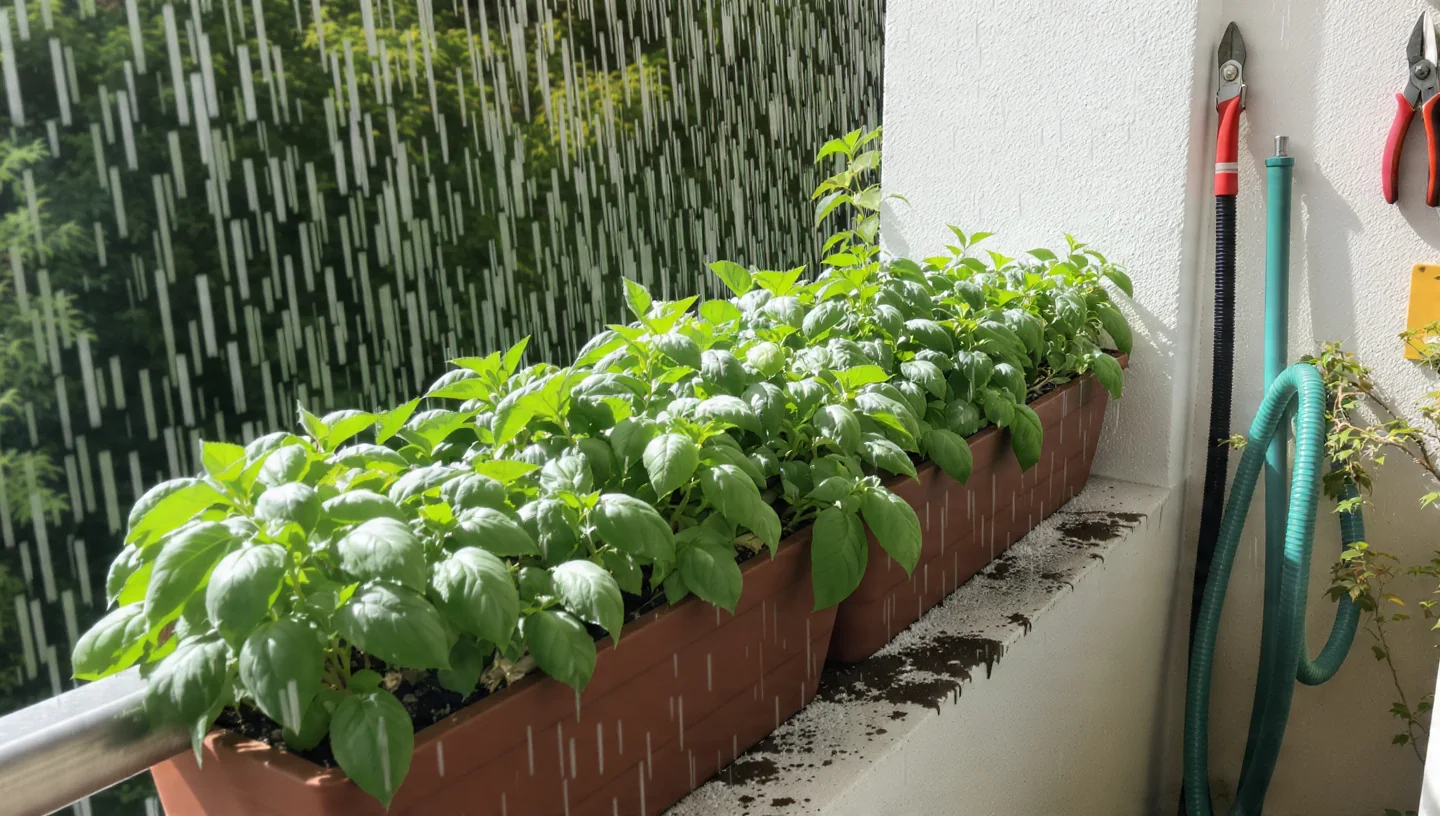
Best for: Branch 3
Blueprint: choose 10-inch or larger plastic pots with multiple side and bottom drainage holes. The non-porous walls hold moisture longer than terracotta, suiting lower-light or cooler spots. Move the pot to chase sun patches in 5 minutes or less. Threshold rule: check soil at 1-inch depth daily during the first 14 days after transplant. Compare terracotta versus plastic pots for your exact light profile.
Hanging Basket Elevation
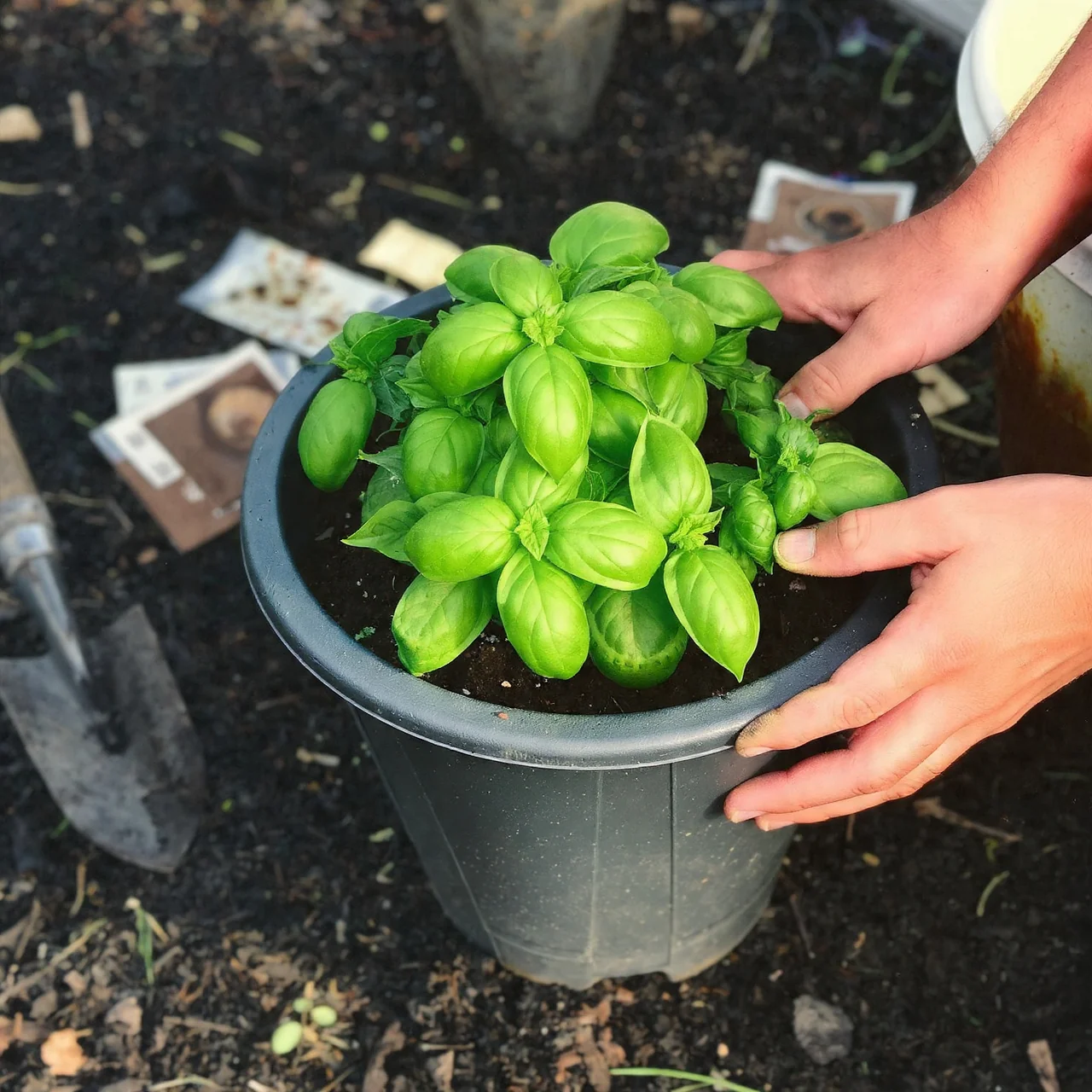
Best for: Branch 1
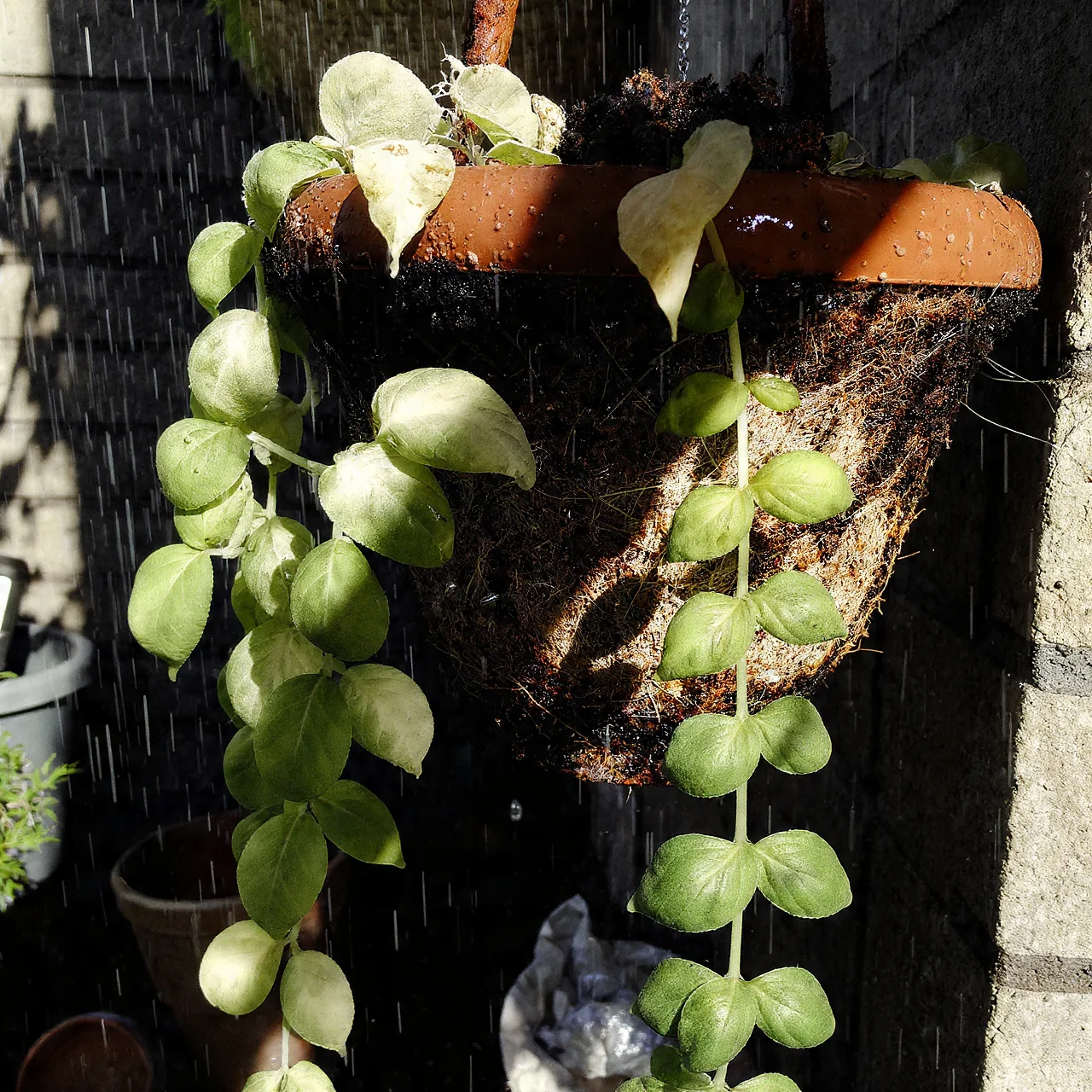
10-minute workflow: line a 12-inch hanging basket with coir, fill with potting mix, and plant 2 to 3 basil seedlings in the center. Hang at eye level for easy harvest. The overhead position improves air circulation around foliage and speeds drainage after rain. Upgrade option: add a drip saucer underneath if the basket sits above a walkway. Unique detail: elevation keeps leaves drier than ground-level pots, reducing fungal pressure in humid full-sun zones. Explore additional hanging basket ideas.
Upcycled Container Drainage Hack
Best for: Branch 2
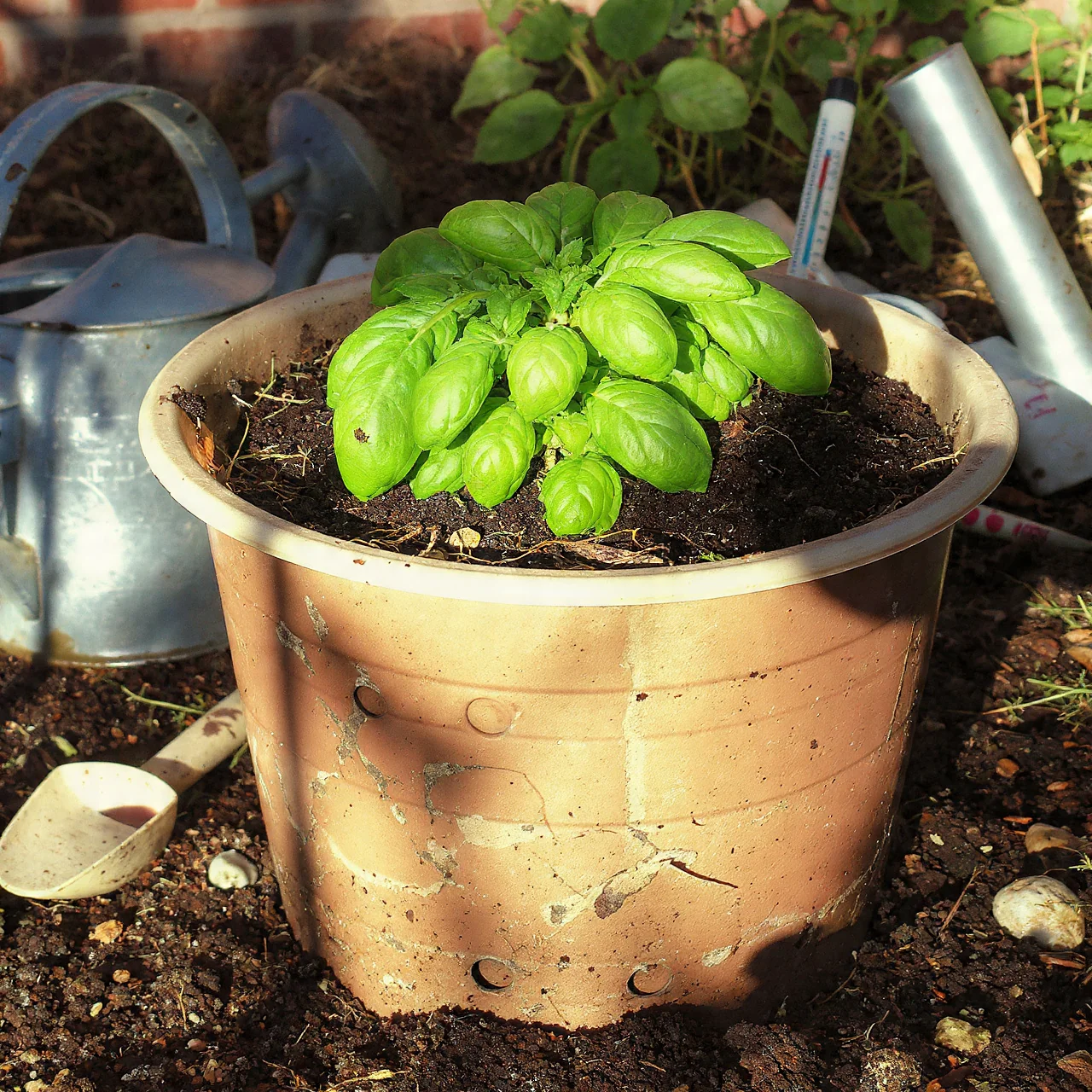
Use vs skip: repurpose clean 2- to 3-gallon plastic food tubs or metal cans by drilling six 0.25-inch holes in the bottom. Skip any container that previously held chemicals. The low cost and instant availability suit variable moderate-light balconies.
Thyme Companion Cluster Pot
Best for: Branch 3
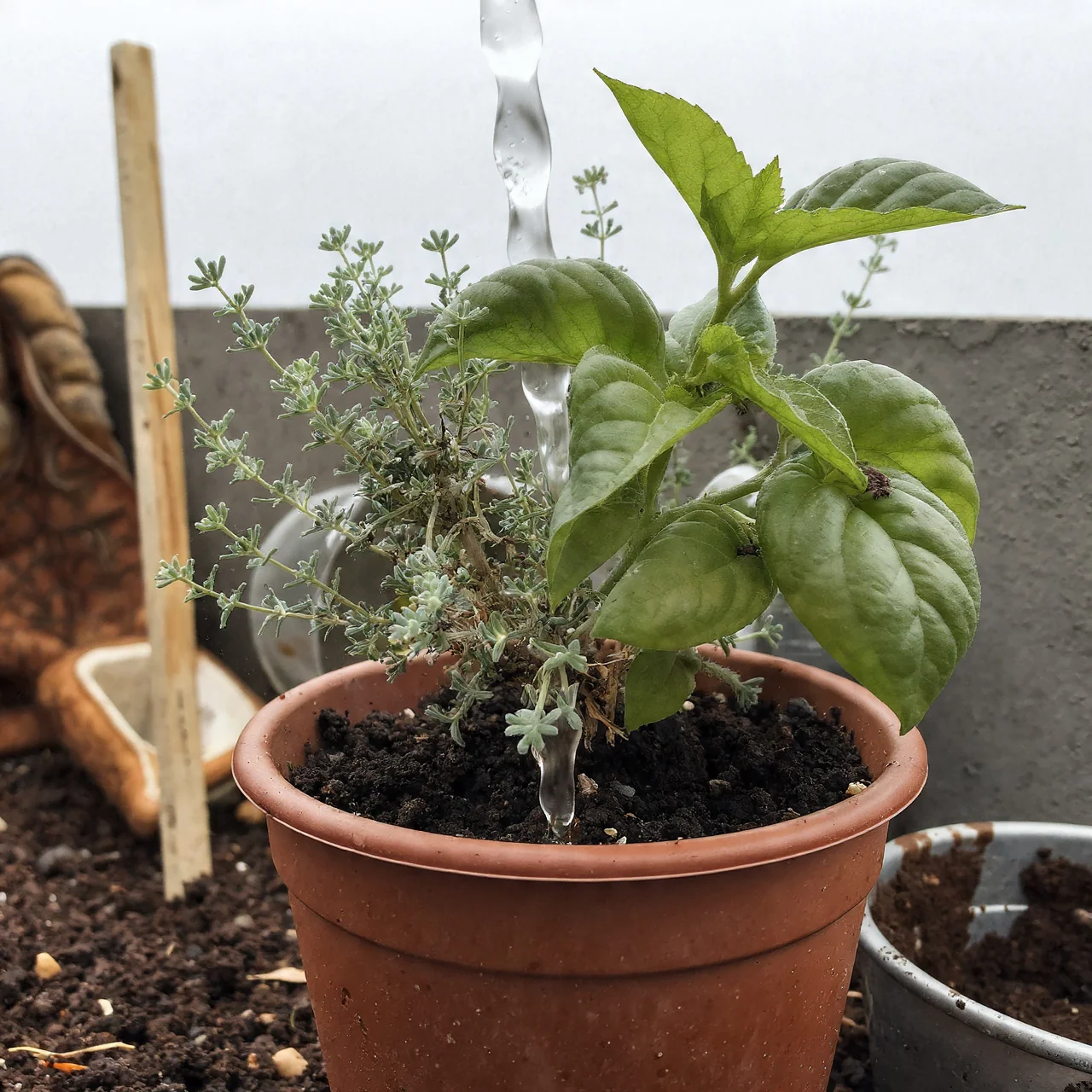
Blueprint: plant one basil and two thyme seedlings in a 12-inch shared pot. Thyme’s aromatic oils deter certain insects while the combined root zones stay oxygenated in low-light conditions. Water the cluster when the top inch dries, usually every 4 days. Edge case: harvest basil outer leaves first to keep thyme from being shaded. See the full thyme in containers guide for pairing ratios.
Lightweight Planter Stack
Best for: Branch 3
Threshold rule: stack two or three 8-inch-deep lightweight planters vertically with 4 inches between tiers on a single stand. Each tier drains independently. The total footprint stays under 1 square foot while giving basil its needed depth. In low-light zones, rotate the stack weekly to even exposure. Setup time is 15 minutes and weight stays under 20 pounds when wet. Start here if new to container gardening.
Starter Stack (What to Choose First)
For Branch 1 (full sun and warm temps)
Begin with the Five-Gallon Bucket Basil Setup and the Hanging Basket Elevation. The deep bucket anchors root growth while the elevated basket adds vertical airflow and harvest access. Combined setup cost ranges from 12 to 28 dollars. Weekly maintenance time totals 10 to 15 minutes.
For Branch 2 (moderate light or cooler temps)
Start with the Terracotta Classic Pot System and the Window Box Balcony Rail. Terracotta controls moisture in humid air while the rail box maximizes edge light. Combined setup cost ranges from 18 to 35 dollars. Weekly maintenance time totals 12 to 18 minutes.
For Branch 3 (low light or tiny spaces)
Begin with the Self-Watering Pot Reservoir and the Thyme Companion Cluster Pot. The reservoir stabilizes water in shade while the cluster adds natural pest resistance in tight quarters. Combined setup cost ranges from 15 to 25 dollars. Weekly maintenance time totals 8 to 12 minutes.
When This Won’t Work
Basil in any pot system stalls when night temperatures drop below 50 F (10 C) for more than five consecutive nights. Foliage yellows and flavor turns bitter even with correct light. Move pots indoors to a south-facing window or cover with frost cloth rated for 5 degrees of protection until nights warm again.
The second measurable failure occurs when soil stays saturated in the top 2 inches after 48 hours. Roots lose oxygen and rot sets in regardless of pot type. Repot immediately into fresh mix with 20 percent added perlite and resume watering only after the top inch dries. Follow the watering container plants guide for exact timing adjustments.
Choosing the Right Option for Your Situation
Budget threshold under 25 dollars total
Choose the Upcycled Container Drainage Hack or Fabric Grow Bag Approach. Both deliver full-season performance without specialty purchases.
Time threshold under 10 minutes weekly maintenance
Select the Self-Watering Pot Reservoir or Five-Gallon Bucket Basil Setup. Both minimize daily checks once established.
Technical constraint: night temperatures frequently dip to 50 F (10 C)
Opt for the Plastic Pot for Quick Moves or Lightweight Planter Stack. Both allow indoor relocation in under 5 minutes.
Yes/No checklist:
Do you have at least 8 inches of pot depth available?
Does your spot receive 4 or more hours of direct sun?
Can you check soil moisture every 3 days?
Is your minimum night temperature above 50 F most weeks?
Expert Q&A
Which basil varieties resist bolting longest in containers during hot spells above 85 F (29 C)?
Genovese and Valentino types hold leaf quality longer than Thai or lemon basil when daytime heat exceeds 85 F. Pinch flower buds the moment they appear and maintain consistent soil moisture to delay bolting by 2 to 3 weeks compared with unchecked plants.
Can supermarket basil plants be divided and repotted successfully for longer production?
Yes. Gently separate the dense clump into 3 or 4 sections, each with its own roots, and move each into an 8-inch pot with fresh mix. Keep the new plants in bright indirect light for 7 days before full sun exposure. Most sections resume growth within 10 days.
How do you propagate basil from stem cuttings taken from a mature potted plant?
Cut 4-inch stems just below a leaf node, remove lower leaves, and place in a jar of water on a windowsill. Roots appear in 7 to 10 days at room temperature above 68 F (20 C). Transplant to soil once roots reach 1 inch long.
What is the minimum pot size that still produces harvestable leaves all season in low-light urban balconies?
An 8-inch-deep pot with 10-inch diameter holds enough volume for 2 plants and yields usable leaves every 10 to 14 days when light averages 4 hours. Smaller pots require more frequent feeding and still risk root crowding by midsummer.
Does basil in pots benefit from companion planting with other herbs in the same container?
Yes. Pairing with thyme or chives in a shared 12-inch pot improves air circulation around basil stems and reduces aphid pressure through scent masking. Space companions 4 inches from the basil crown to avoid competition for the same soil layer.
Conclusion
The single decision that determines success with basil in pots is matching pot depth and material to your exact daily light hours and temperature range rather than defaulting to any available container. The number-one mistake across all systems is using pots shallower than 8 inches, which forces roots to circle and triggers early wilting regardless of watering schedule.
Next step: measure your sun exposure for one full day and pick the matching item from the decision grid above. See the complete herbs in containers guide to expand your collection once basil is established.