
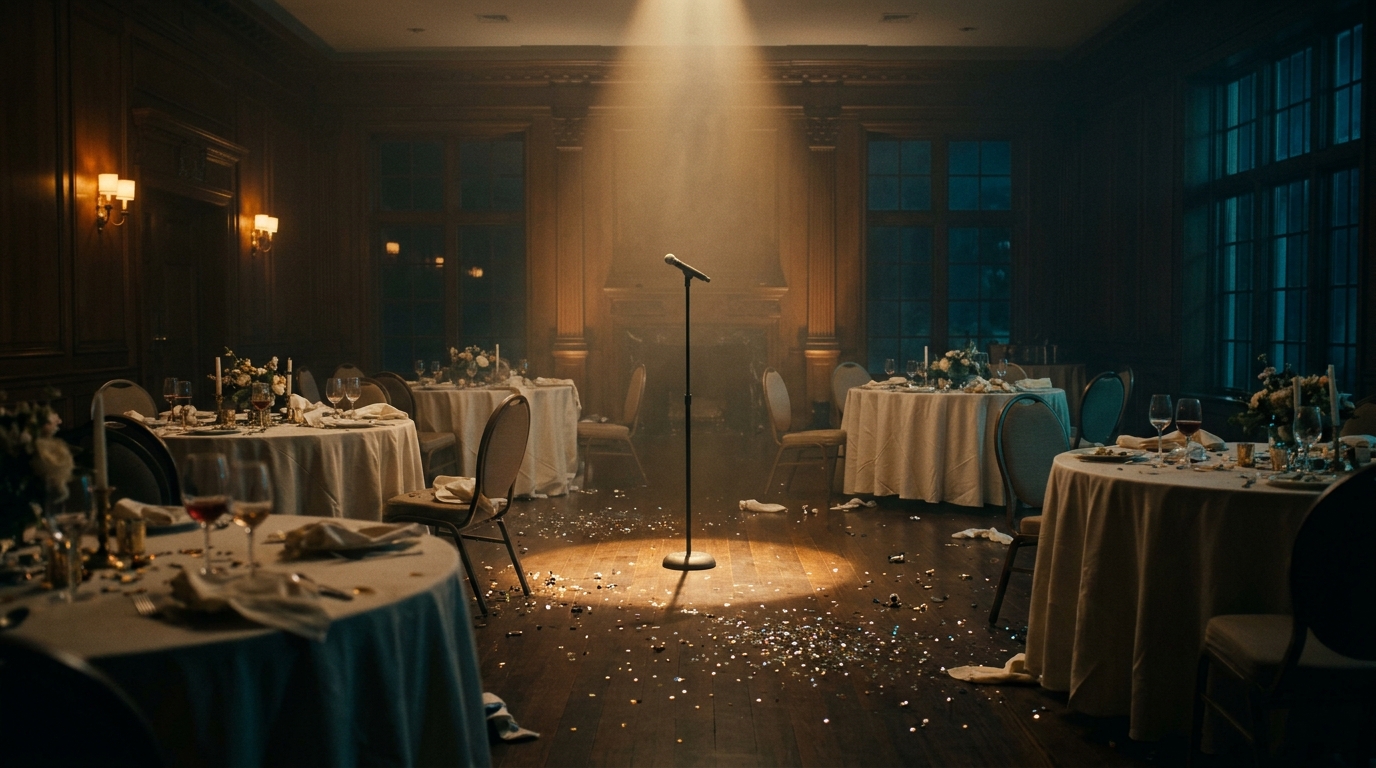
A comedian mother, a country club full of horrified guests, and a wedding three months away. When the payback finally came, it left Dana with a question she hadn’t planned for.
When a mother turns her daughter’s private mental health crisis into stand-up material at the engagement party, the family drama doesn’t stop at one bad night. It spills into a roast, a wedding that almost gets postponed, and a hard question about personal boundaries and what revenge can actually fix.
A Mother Who Needed the Last Laugh
Dana grew up with a mother who treated every room like a stage. Gina had been doing stand-up at open mics for years, never getting past a five-minute set in a dive bar, yet she introduced herself as a professional comedian. Being funny was her entire personality, and she wasn’t picky about who paid for the punchline.
The material usually came from home. When Dana wet the bed at seven, the story got told at her own birthday party. When she bled through her pants at school after her first period, Gina made it her closing bit and kept it in rotation for months. A kid learns fast what a parent considers fair game, and Dana learned that nothing about her body or her fears was only hers.
Years later she met Luke, and after four years together they got engaged. His parents hosted the engagement party at their country club, with about two hundred guests, including his father’s business partners and most of the people who mattered in his life. Dana hoped for one ordinary evening where her mother stayed in the audience.
Gina arrived already drunk, wearing a sequined dress like she was there to collect an award. She cut into conversations with jokes that kept missing, and the guests smiled politely while checking the time. Halfway through dinner she clinked her glass for a speech nobody had asked her to give.
The Toast That Emptied the Room
Gina began warmly, saying how proud she was that her daughter had found someone willing to marry her despite everything. Then she promised a funny story about why she’d never expected this day to come. It was about the year Dana turned nineteen and had a mental health crisis that ended in a hospital.
She performed it like a set. She mimicked Dana crying and acted out her pleading for help, then put on a voice for the moment Dana said she wanted to die. She described the rush to the emergency room and the seventy-two-hour hold, made beeping noises for the heart monitor, and got down on the ballroom floor to show how Dana had collapsed.
Nobody laughed. Luke’s mother had tears in her eyes, his father looked ill, and Luke’s brother stood up and walked out. Gina pressed on to what she called the best part: Dana telling her psychiatrist she felt worthless, and the doctor answering, “Well, at least you’re self-aware.” She cracked up at her own line while two hundred people sat in horrified silence.
Luke knew none of it. Dana had always planned to tell him in her own time and her own words, and instead he was getting the worst year of her life as dinner entertainment, beside a grandmother gripping her necklace and business partners trading looks. When Gina finally noticed the quiet, she said “Tough crowd” and sat down like she’d had a great night.
The family left almost at once. Half of them never spoke to Dana again, having quietly decided she was unstable or that it ran in the family after meeting Gina. Luke nearly called off the engagement, and it took months of couples therapy before he believed that what happened at nineteen was a single crisis from years ago.
Gina never apologized. She called Dana too sensitive, said comedy comes from truth, and worked the engagement party into her next set as a bit about how rich people have no sense of humor. She told her daughter she should be grateful for being memorable. There’s a particular loneliness in watching someone treat your worst day as free material, because the hurt arrives with a laugh track and you’re the only one expected not to mind.