
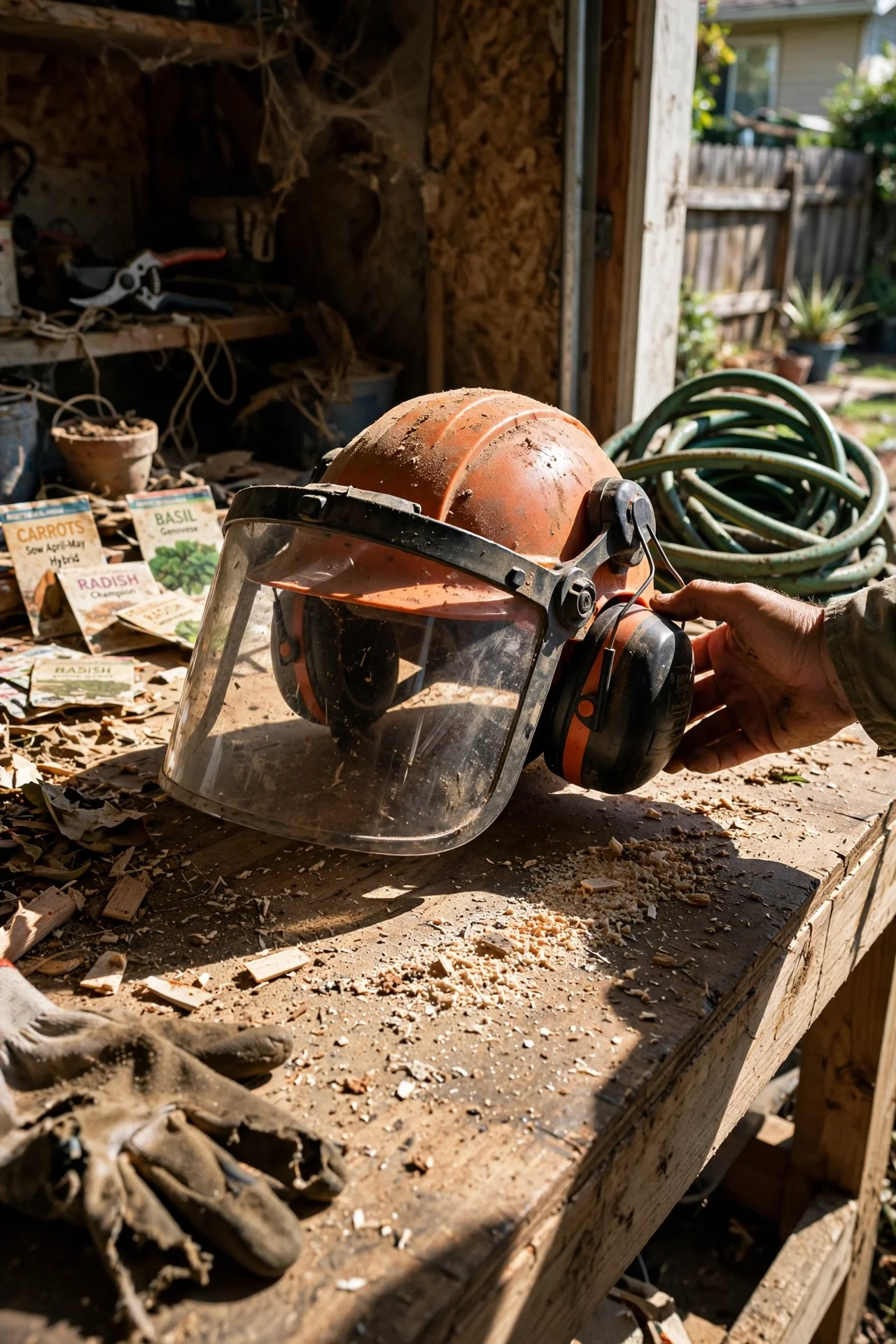
A chainsaw helmet with a face shield stops a flying branch. But if your hearing protection is separate and cheap foam plugs that fall out when you sweat, you are unprotected against the 95 to 115 dBA noise levels a gas saw produces hour after hour. Most gear checklists treat each item as an independent box to tick. Chainsaw safety gear works as a layered system: every piece compensates for the blind spot of another, and removing one layer shifts risk elsewhere. This guide reframes your purchase decisions around that interdependence.
This article covers the full stack of wearable personal protective equipment for ground-based chainsaw operation: head protection systems (helmet, visor, earmuff combos), upper-body protection (gloves, jackets), leg protection (chaps, trousers, aprons), and footwear. It excludes saw-mounted safety features (chain brakes, low-kickback bars), training certifications, and worksite protocols. Those matter but are outside the gear-buying decision we are mapping here.
By the end, you will know which combination of gear matches your specific usage intensity, which standards actually signal protection versus marketing, and where the biggest hidden risk lives in a typical homeowner setup. No invented outcome percentages. No “top 10” filler. Just decision logic backed by the standards that govern this equipment.
Bottom line: The single most dangerous gap in a chainsaw safety setup is the lower body: legs and knees receive roughly two-thirds of all chainsaw injuries, yet leg protection is the item homeowners most frequently skip.
The Yield Grid Decision Grid
Branch 1: Occasional Use (storm cleanup, firewood cutting fewer than 10 days per year)
You use a chainsaw reactively, not routinely. Your gear needs to store compactly, deploy fast, and cost less than the saw itself. You are rarely cutting overhead and your sessions are short (under 2 hours). The dominant risk is complacency: because chainsaw use is infrequent, the temptation to skip one piece of gear is highest. Choose gear that requires zero assembly per use.
Recommended: Items 1, 2, 3, 4 below.
Branch 2: Regular Property Maintenance (weekly or biweekly use, mixed tasks)
You are on a rural property, managing woodlots, clearing fence lines, or processing firewood through the season. Sessions last 2 to 5 hours. Comfort and durability start competing with upfront cost. The dominant risk shifts to cumulative exposure: vibration, noise, and repetitive strain across months. Your gear must address long-term damage, not just acute injury. Leg protection moves from optional to essential.
Recommended: Items 3, 5, 6, 7, 8 below.
Branch 3: Professional or High-Intensity Use (daily or near-daily, felling, climbing, production)
You earn your living with a saw, or you manage large acreage requiring sustained cutting. Gear failure is not an inconvenience; it is a career-ending risk. You need full all-round leg protection (Type C trousers, not just front-protection chaps), the highest cut-resistance class your saw’s chain speed demands, and gear engineered for all-day wear in variable weather. Cost is secondary to certified protection.
Recommended: Items 5, 6, 7, 8, 9 below.
Before buying individual items, understand which pieces interact. Our guide to garden tool belts explains how carrying your gear systematically reduces the temptation to work without it.
Quick Comparison Table
| Option | Key Mechanism | Best For | Decision Grid Branch | Effort Score (1 to 5) |
|---|---|---|---|---|
| Chainsaw Helmet System | Impact-resistant shell with integrated mesh/clear visor and SNR-rated earmuffs | All users | Branch 1, 2, 3 | 1 |
| Cut-Resistant Gloves (Class 1) | Ballistic nylon or leather backing with vibration-dampening palm | Occasional to regular use | Branch 1, 2 | 2 |
| Chainsaw Chaps (Type A, Front Protection) | Layered ballistic nylon pads that jam the chain on contact | Homeowners, occasional users | Branch 1 | 1 |
| Steel-Toe Chainsaw Boots (Class 1) | Cut-resistant upper (ballistic nylon) plus steel toe cap and slip-resistant sole | All users | Branch 1, 2, 3 | 1 |
| Chainsaw Trousers (Type C, Full Protection) | Full-leg wraparound cut-retardant fabric rated to EN 381-5 or ASTM F1897 | Professionals, high-intensity | Branch 2, 3 | 2 |
| Anti-Vibration Gloves (ISO 10819) | Certified vibration transmissibility reduction across palm and fingers | Regular to professional use | Branch 2, 3 | 2 |
| Chainsaw Safety Jacket | Cut-resistant panels on upper body with high-visibility and water-repellent outer | Professional, cold-weather | Branch 3 | 2 |
| Chainsaw Apron (Type A) | Single-panel front protection, lightweight, quick on/off | Hot climate, short tasks | Branch 1, 2 | 1 |
| Integrated Forestry Helmet (Premium) | ANSI Z89.1 helmet with 25+ dB SNR muffs, dual visor (mesh plus clear) | Professional, daily use | Branch 3 | 1 |
1. Chainsaw Helmet System: The Non-Negotiable First Layer
Best for: Branch 1, 2, 3
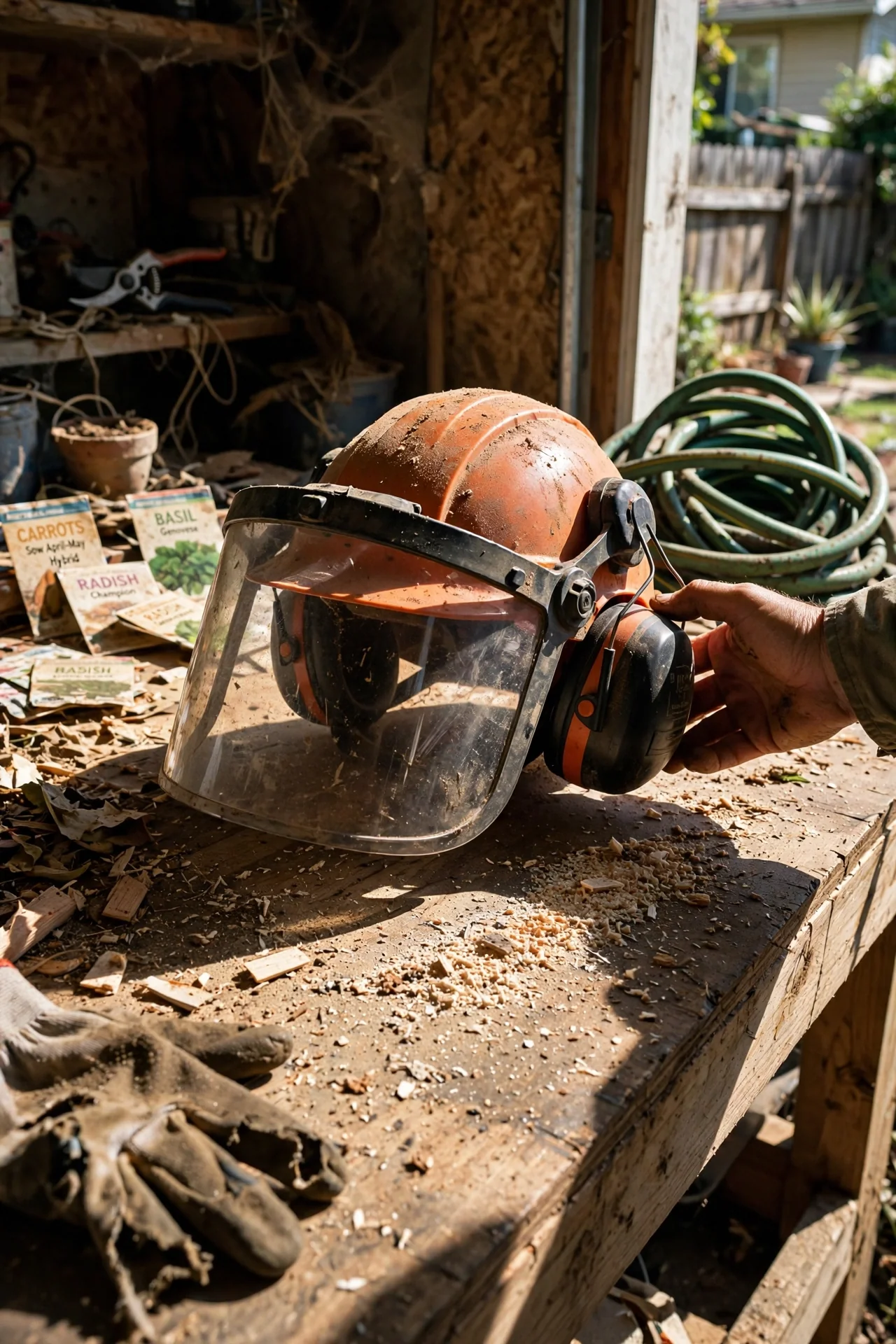
What: A chainsaw helmet is a three-in-one system: a hard hat rated for impact from above (falling limbs or kickback), a face shield (mesh or clear polycarbonate visor), and hearing protection (earmuffs with a Noise Reduction Rating, typically SNR 23 to 26 dB). The key mechanism is integration: components are mounted to a single shell so you cannot forget one.
For: Every chainsaw user, no exceptions. A gas-powered chainsaw produces 95 to 115 dBA at the operator’s ear. Prolonged exposure above 85 dBA causes permanent hearing loss. The helmet shell absorbs impacts that safety glasses alone cannot.
Steps: (1) Verify the helmet meets ANSI Z89.1 (US) or EN 397 (EU). (2) Check that earmuffs carry an SNR or NRR rating printed on the cup; a minimum SNR 23 is appropriate for chainsaw noise levels. (3) Confirm the face shield is either steel mesh (best for ventilation and fog-free use) or clear polycarbonate (needed when fine dust is a concern). (4) Adjust the ratchet suspension so the helmet sits level and the visor does not press on your nose.
Common mistake: Buying a helmet that has a visor but no earmuffs, then supplementing with foam earplugs. Foam plugs inserted incorrectly lose up to 15 dB of their rated protection. An integrated muff system removes insertion error from the equation.
Keeping your helmet shell free of sap and debris extends its service life. Our method for disinfecting garden tools works equally well on PPE surfaces without degrading the plastic.
2. Cut-Resistant Gloves (Class 1): Grip Security Meets Skin Protection
Best for: Branch 1, 2
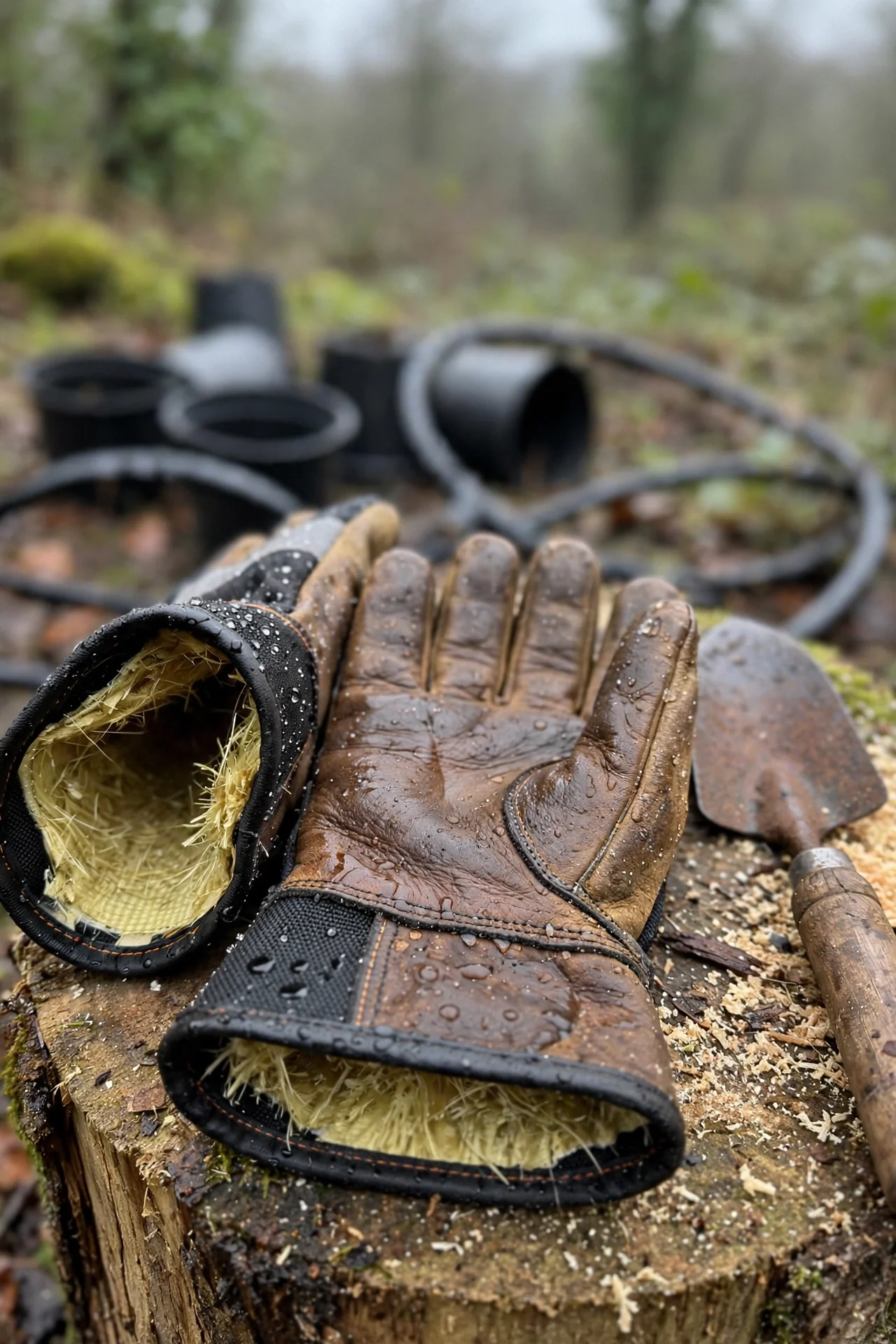
Leather gloves with ballistic nylon reinforcement on the back of the hand serve two purposes: they prevent cuts when handling the chain during sharpening, and they dampen vibration transmitted through the handle. Look for gloves rated to EN 381-7 (chainsaw-specific cut resistance). A common failure is wearing general-purpose work gloves; these lack the nylon backing that jams a chain on contact rather than tearing open.
3. Chainsaw Chaps (Type A): The Item That Prevents the Most Common Injury
Best for: Branch 1
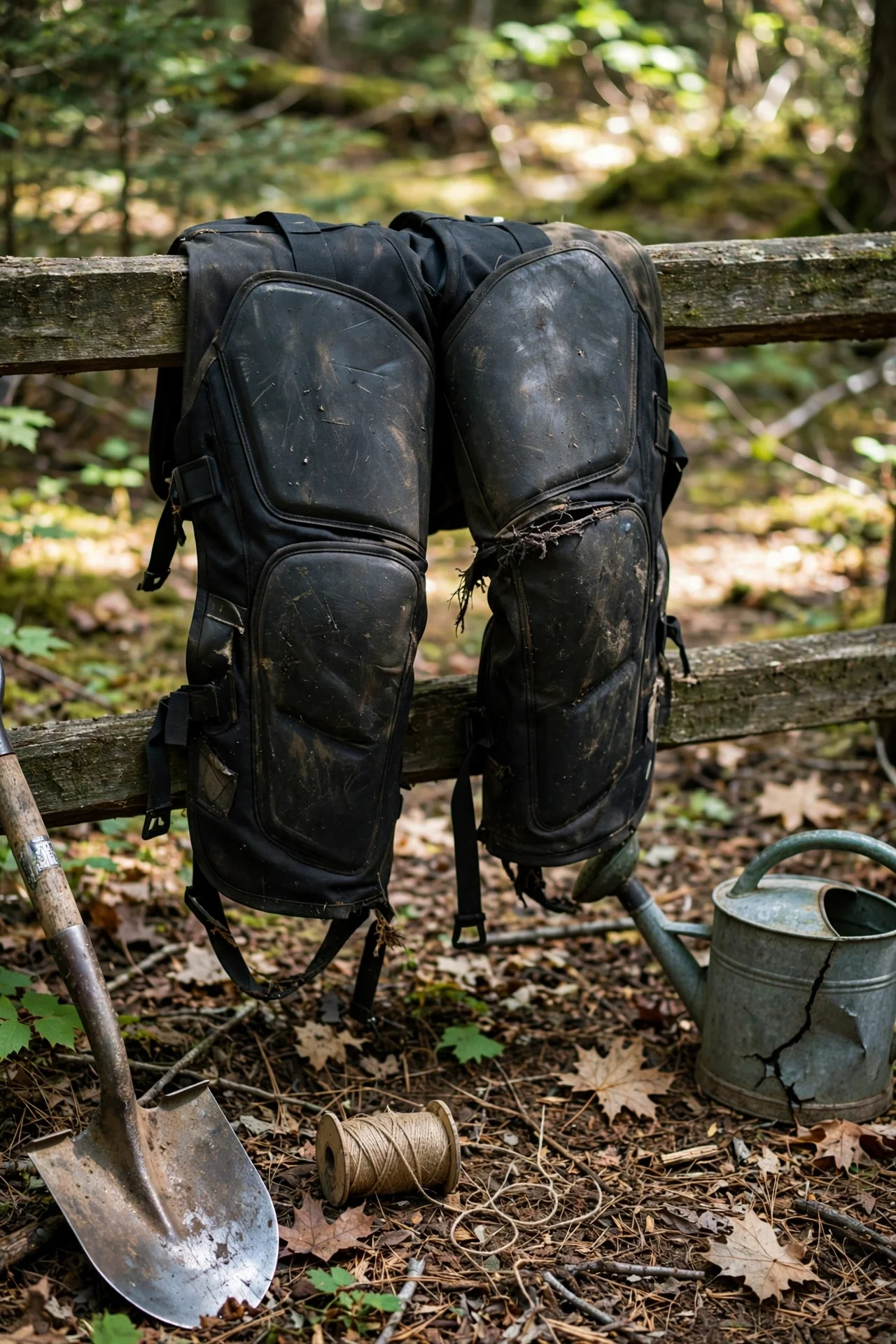
Chainsaw chaps wrap around the front of each leg from waist to ankle, secured by adjustable straps. Inside, multiple layers of ballistic nylon or Kevlar fiber are designed to pull apart and jam the saw’s sprocket the instant the chain makes contact. This is not cut resistance in the conventional sense; it is a deliberate mechanical entanglement that stops the chain within fractions of a second.
Chaps are rated to ASTM F1897 (US) or EN 381-5 (EU). The standard you need depends on your saw’s chain speed. A homeowner saw with a chain speed up to 20 meters per second needs Class 1 (20 m/s) protection. Using Class 1 chaps with a professional saw exceeding 24 m/s creates a mismatch where the protection may not engage fast enough. The hidden constraint: chaps protect only the front of the leg. The back of the calf, inner thigh, and hamstring remain exposed. For tasks requiring turning, backing up, or working on uneven ground, that gap becomes significant.
4. Steel-Toe Chainsaw Boots (Class 1): Your Foundation Against Falling Weight and Chain Contact
Best for: Branch 1, 2, 3
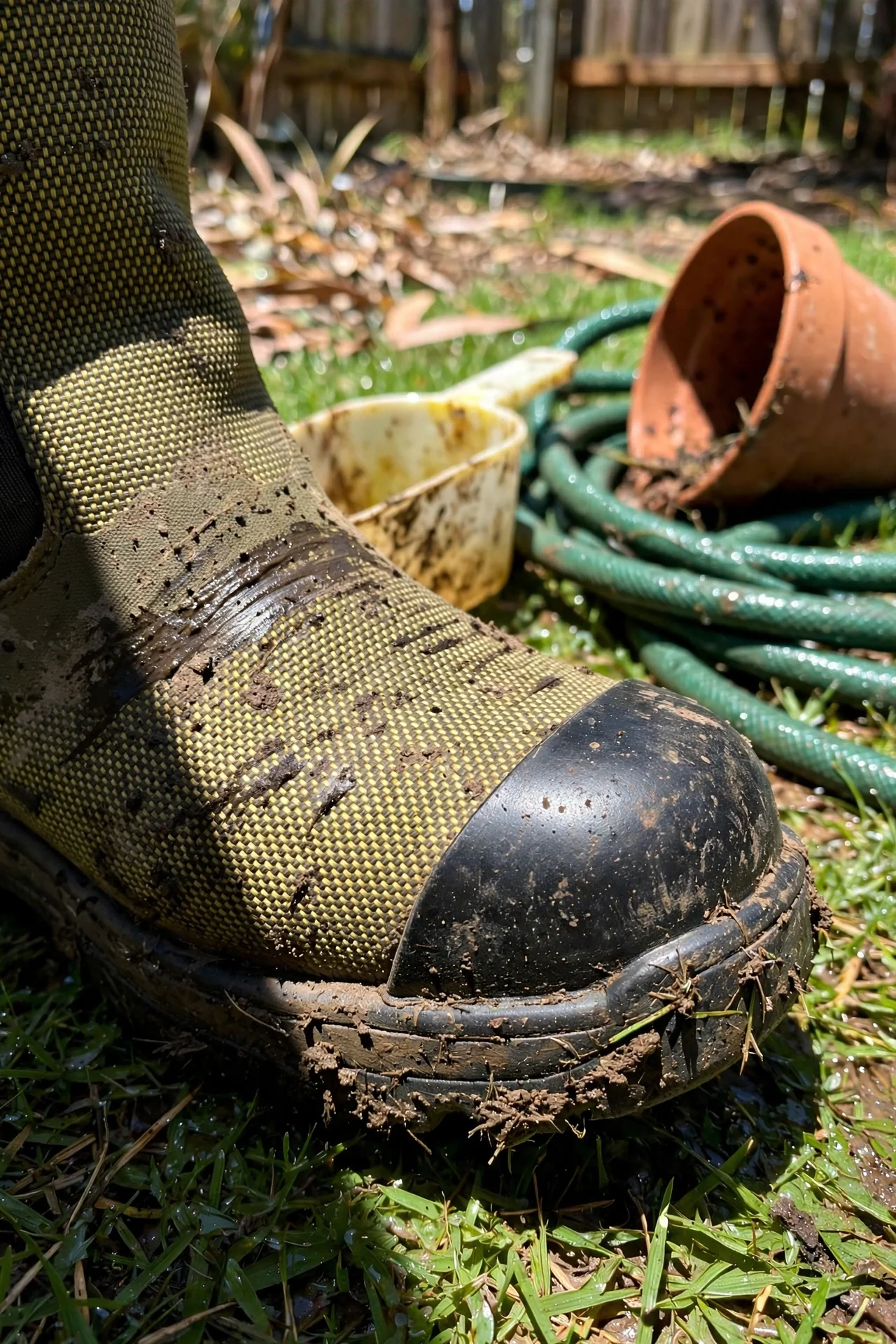
What: Chainsaw-specific safety boots combine a steel or composite toe cap (impact protection against falling logs) with a cut-resistant upper, typically ballistic nylon, and a slip-resistant sole rated for the terrain you work on. The cut-resistant material wraps the foot and ankle, the area most vulnerable when a saw kicks back downward.
For: Every chainsaw user. Standard steel-toe work boots without cut-resistant uppers offer zero protection against a running chain contacting the foot.
Steps: (1) Verify the boot is certified to EN ISO 20345 (with a chainsaw cut-resistance add-on meeting EN 381-3) or ASTM F2413 with cut-resistant rating. (2) Choose sole type based on terrain: rubber soles for wet ground and snow, hobnail or grip soles for rough, uneven terrain. (3) Ensure the boot covers the ankle; chainsaw injuries to the lower leg frequently occur just above standard shoe height.
Upgrade option: For professional use in wet conditions, boots with a waterproof breathable membrane (such as Sympatex) prevent saturation without trapping sweat during long shifts.
After working in muddy conditions, proper boot cleaning prevents the cut-resistant fabric from degrading. See our guide to removing rust from tools for techniques that also apply to cleaning metal hardware on boots.
5. Chainsaw Trousers (Type C): Full-Leg Coverage for Sustained Exposure
Best for: Branch 2, 3
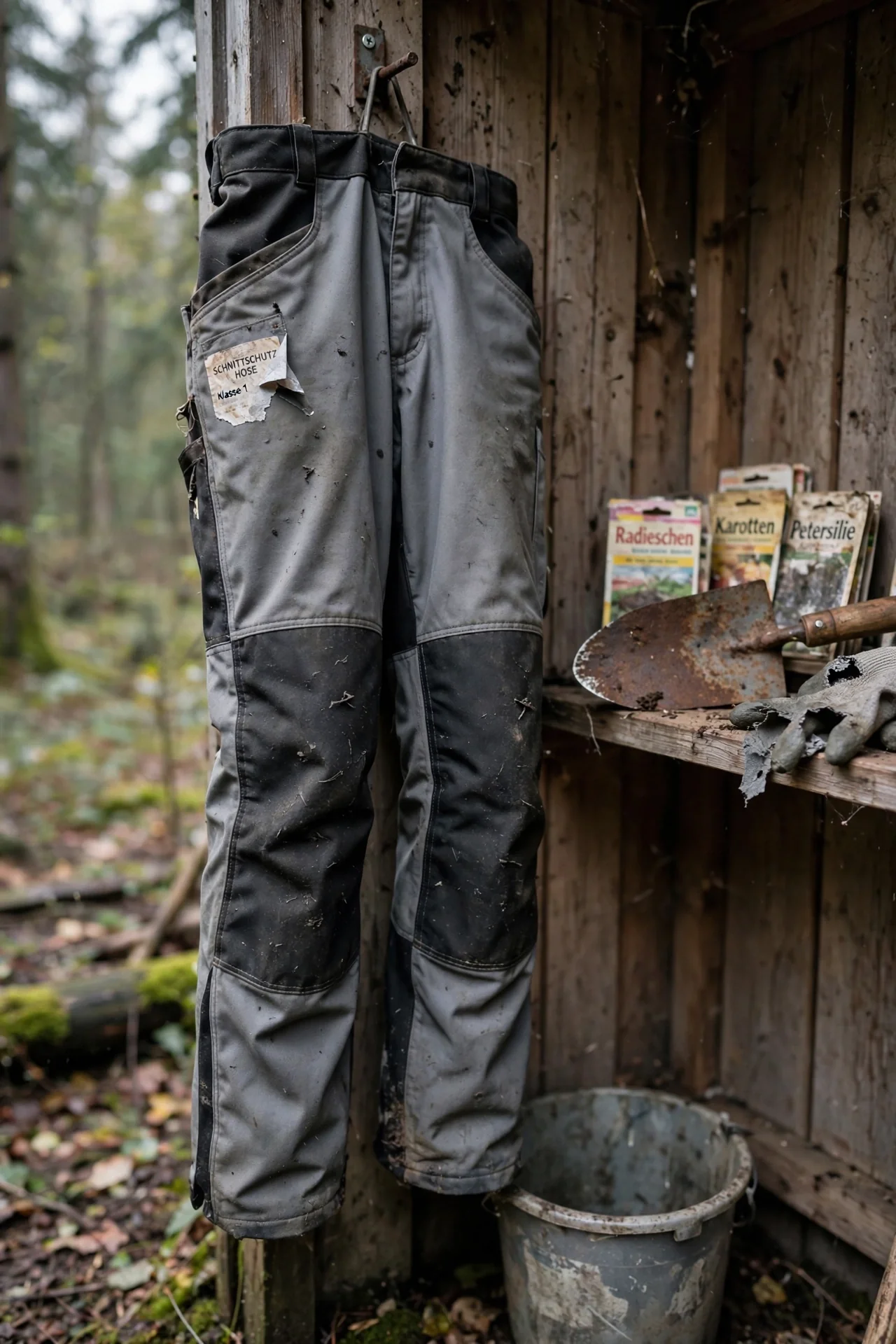
Unlike chaps, chainsaw trousers provide 360-degree leg protection from waist to ankle, including the back of the calf and inner thigh. They are classified under EN 381-5 by both type and class. Type C means all-round protection; Type A (front-only) is the chap equivalent in trouser form. Class 1 is tested at 20 m/s chain speed, Class 2 at 24 m/s, Class 3 at 28 m/s.
The decision rule: match the trouser class to your saw’s maximum chain speed, not your typical cutting speed. A saw that can run at 24 m/s needs Class 2 trousers even if you rarely run it wide open. The edge case: in hot weather, Type C trousers can raise body temperature measurably compared to chaps. For summer professional use, look for models with rear ventilation vents or four-way stretch fabric that reduces the number of layers needed to achieve the same protection class.
6. Anti-Vibration Gloves (ISO 10819): Addressing Cumulative Damage
Best for: Branch 2, 3
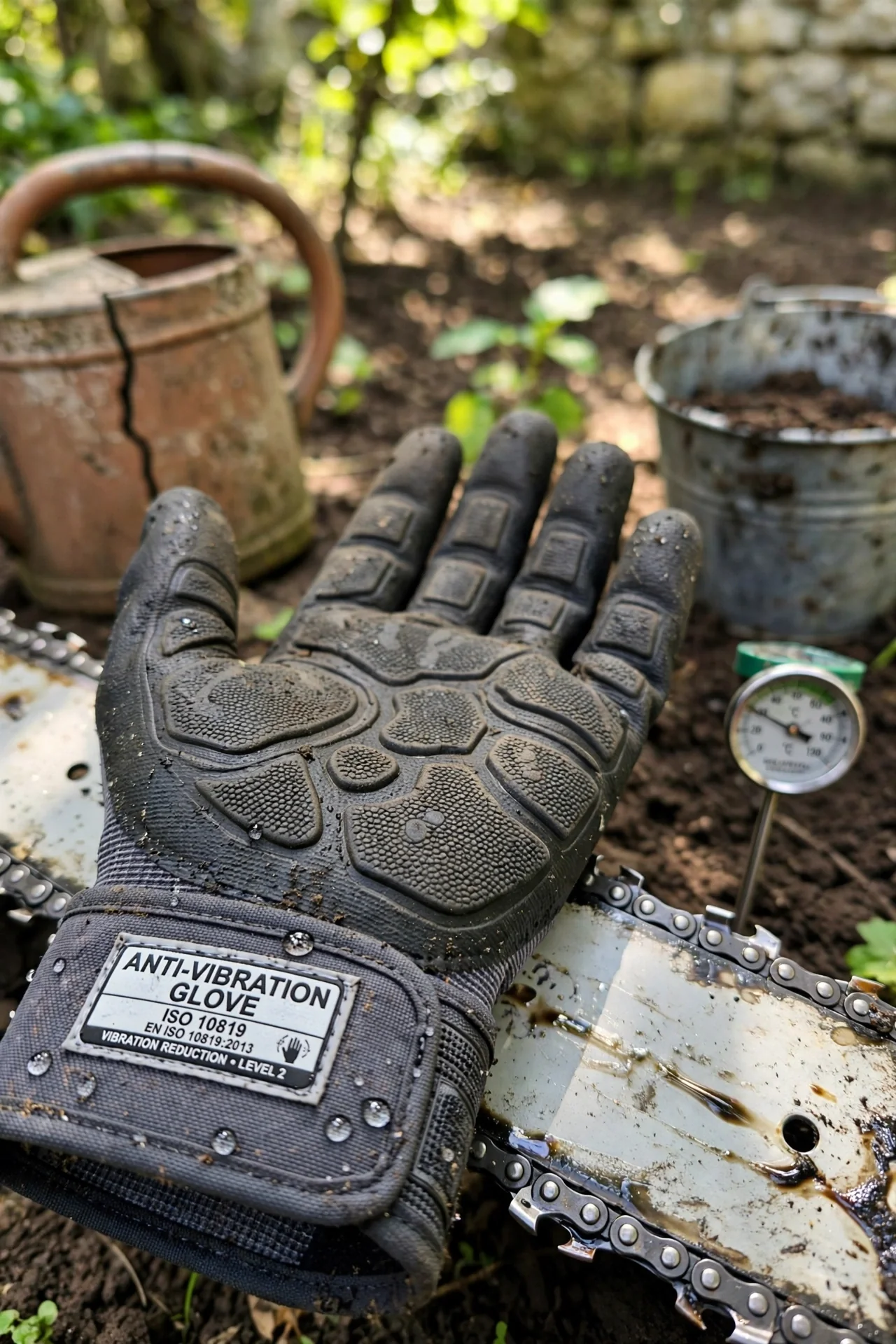
Standard chainsaw gloves reduce cuts. Anti-vibration gloves reduce the transmission of high-frequency vibration from the handle to the palm and fingers, the mechanism behind Hand-Arm Vibration Syndrome (HAVS). The certifying standard is ISO 10819:2013, which specifies laboratory measurement of vibration transmissibility. A glove meeting this standard has a vibration-reducing material covering the palm, fingers, and thumb. Chainsaws typically produce vibration frequencies in the 50 to 300 Hz range, overlapping with the glove’s effective damping window. This item replaces, not supplements, a standard cut-resistant glove: choose one pair that meets both EN 381-7 (cut) and ISO 10819 (vibration).
7. Chainsaw Safety Jacket: Upper Body Protection Professionals Should Not Skip
Best for: Branch 3
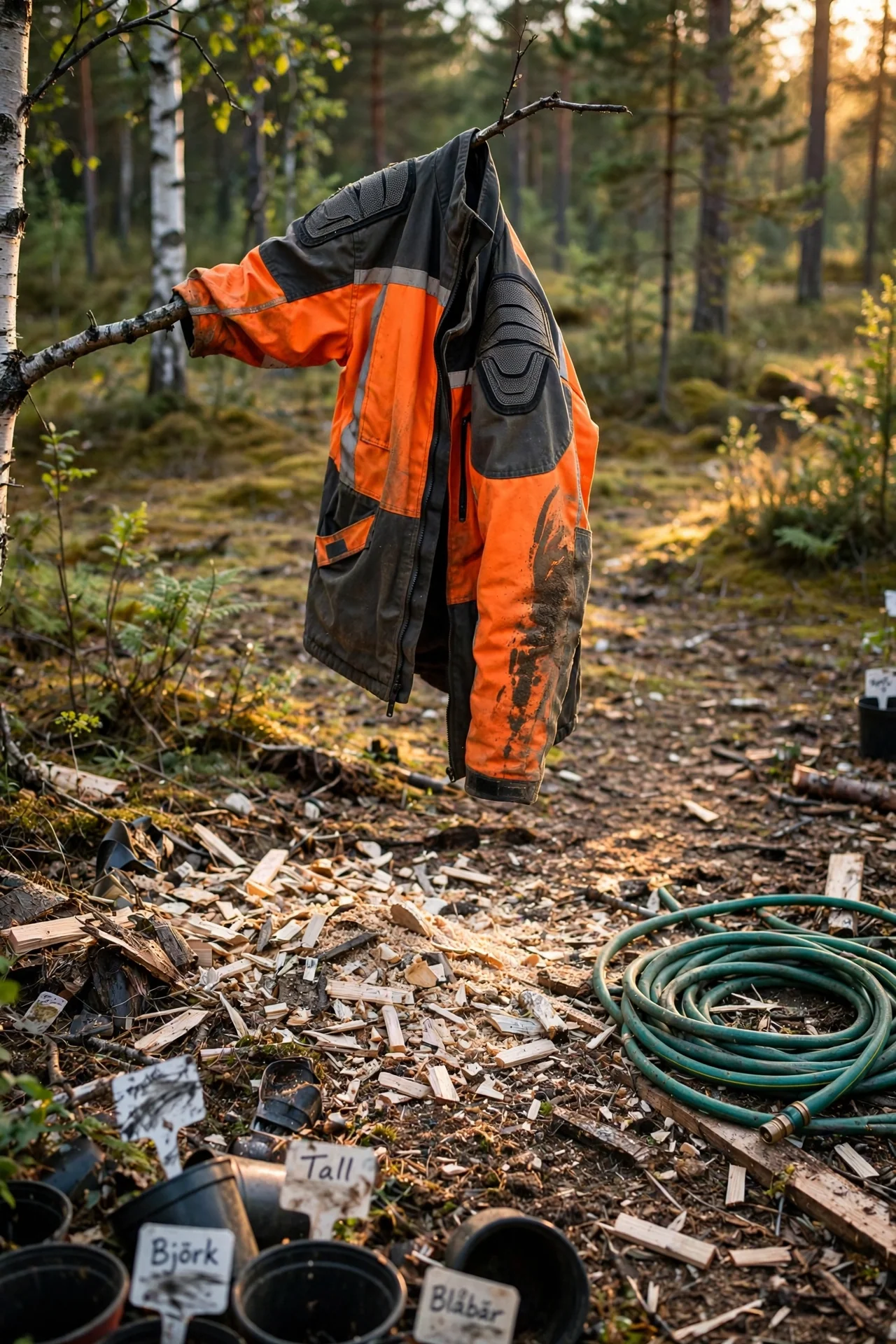
What: A chainsaw safety jacket incorporates cut-resistant panels across the shoulders, upper arms, and chest, the areas most likely to contact a moving chain during kickback or when the operator stumbles. The outer shell is typically high-visibility orange or yellow with water-repellent treatment.
For: Professional arborists, loggers, and anyone felling trees where kickback at chest height is a real possibility. Homeowners cutting firewood at waist level derive less marginal benefit from a jacket versus chaps and a helmet.
Steps: (1) Verify the jacket meets EN 381-11 (protection for the upper body). (2) Check that cut-resistant panels cover the full shoulder yoke and outer arm, not just a small patch. (3) In cold climates, choose a jacket with kidney protection and windproof panels. (4) In warm climates, look for jackets with ventilation zippers and four-way stretch sections that do not compromise the cut-resistant layer.
Common mistake: Wearing a non-rated high-visibility vest over street clothes and assuming it provides chainsaw protection. It does not. Only a jacket with integrated cut-resistant fibers meets the standard.
Storing your jacket properly between uses prevents mildew from compromising the cut-resistant fibers. Our garden tool organizer ideas include wall-mounted solutions that work for PPE storage.
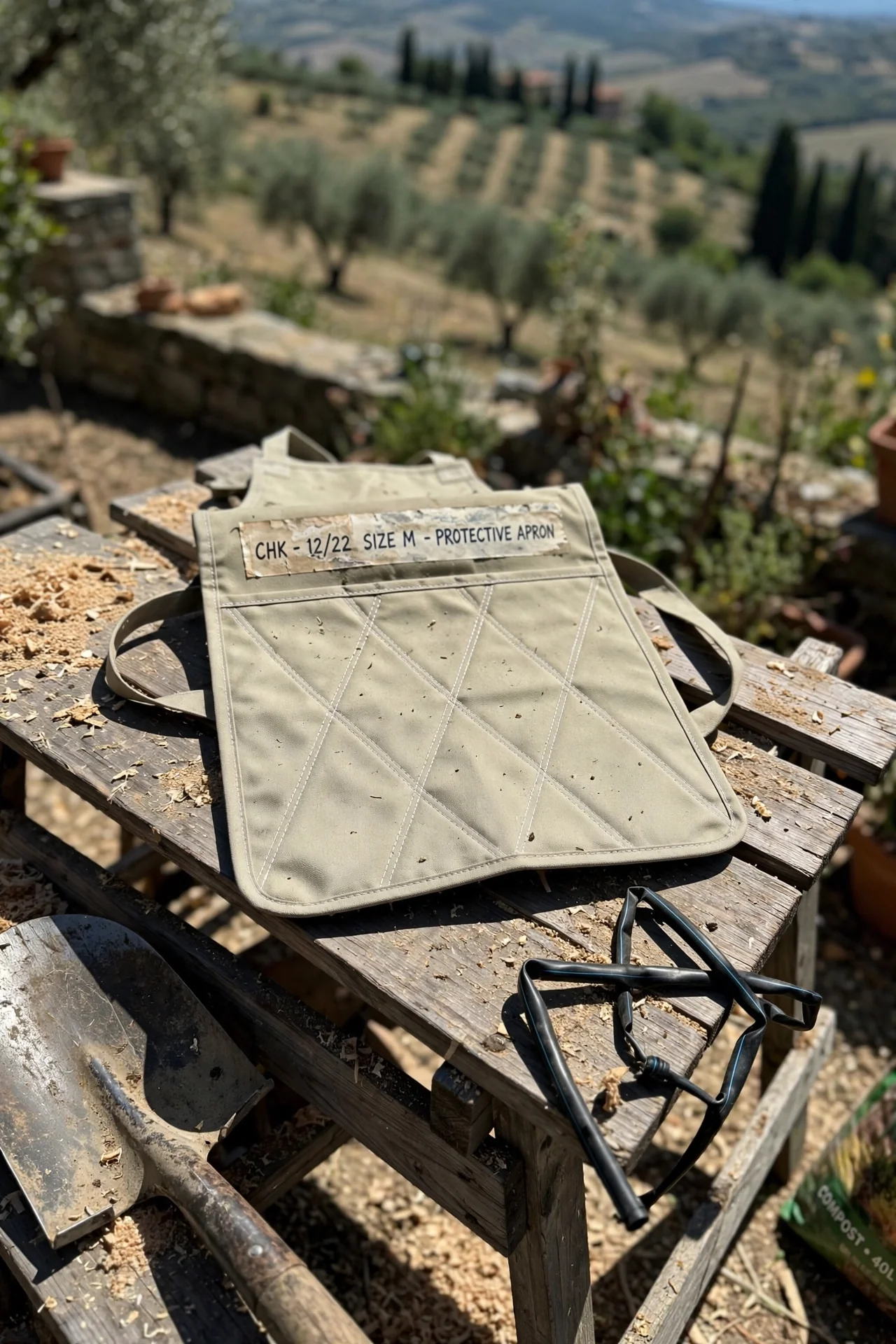
8. Chainsaw Apron (Type A): Lightweight Front Protection for Hot Climates
Best for: Branch 1, 2
A chainsaw apron is a single-panel front protector that covers from waist to below the knee, secured with a waist belt and sometimes leg straps. It weighs roughly 1 to 1.2 kg, compared to 1.5 to 2.5 kg for full trousers. The trade-off is explicit: you get front-only protection with no coverage on the back of the legs or inner thighs. Aprons work best for short-duration tasks in hot weather where the ventilation advantage of an open back is meaningful. They are not a substitute for trousers when working on slopes or when turning frequently with a running saw.
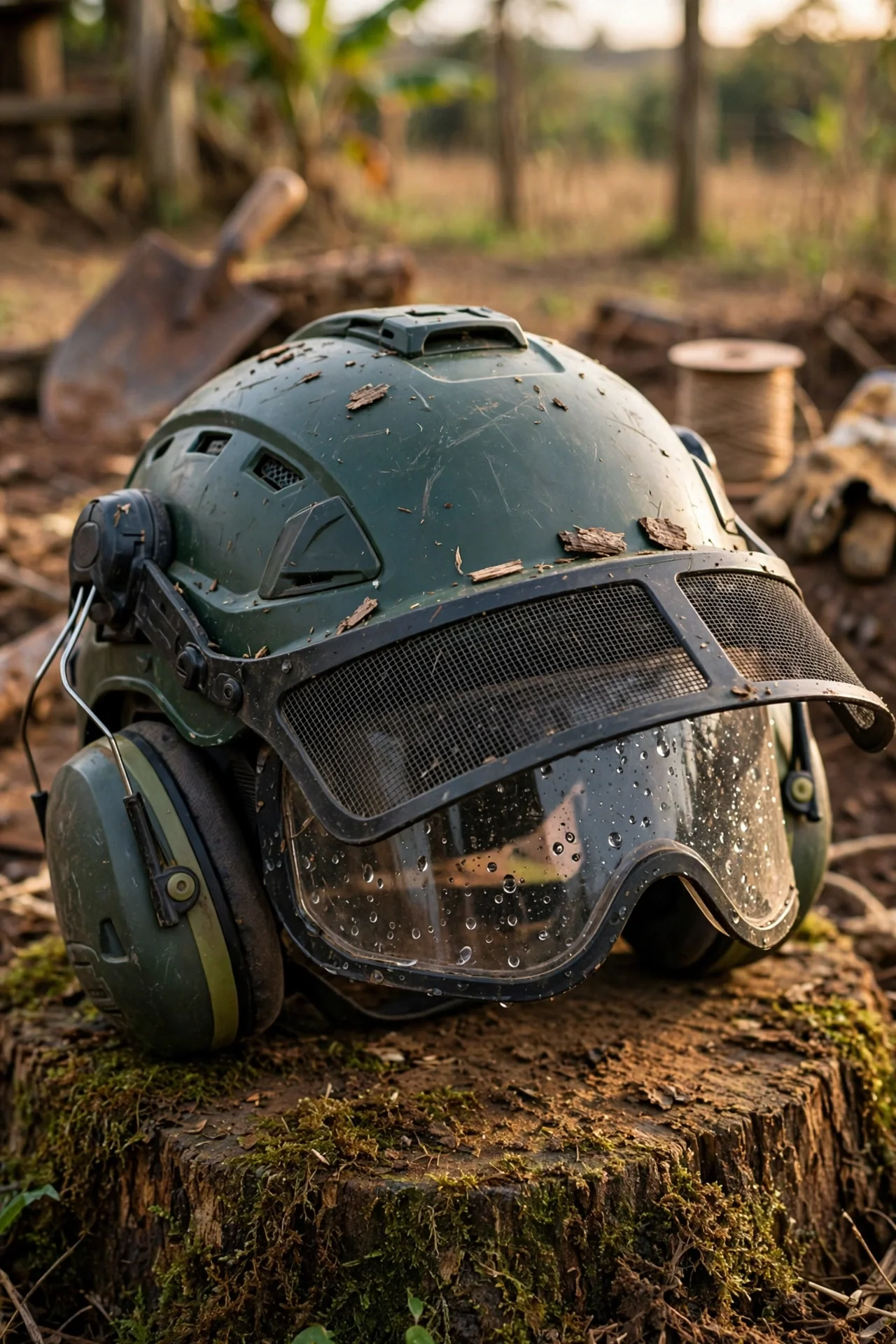
9. Integrated Forestry Helmet (Premium): One System, Zero Assembly
Best for: Branch 3
A premium forestry helmet upgrades every component of the basic helmet system. The hard hat meets ANSI Z89.1 Type I (top impact) with a six-point ratchet suspension for all-day stability. The earmuffs achieve SNR 25 dB or higher. The visor system includes both a steel mesh visor (for ventilation and debris deflection) and a clear polycarbonate visor (for fine dust and rain) that can be swapped or flipped down independently. The chin strap is rated to keep the helmet on during a fall. For professional daily use, the time saved by not assembling separate components pays back the price difference within months. The measurable threshold: if you wear the helmet more than 100 hours per year, the premium integrated system justifies its cost through comfort and compliance alone.
Starter Stack (What to Choose First)
Branch 1: The Weekend Storm-Cleanup Kit
Start with a chainsaw helmet system (Item 1) and chainsaw chaps (Item 3). The helmet protects the three most vulnerable zones (head, eyes, ears) in a single unit you cannot partially forget. Chaps address the statistically highest-risk injury category (legs and knees). Together, these two items cost roughly $90 to $180 and store on a single hook. Add steel-toe boots (Item 4) as budget allows; if you already own steel-toe work boots, upgrade to chainsaw-rated only when those wear out. Synergy: the helmet’s integrated earmuffs mean you are not fumbling with separate earplugs while rushing to clear a downed limb before dark.
Branch 2: The Property Owner’s Steady-Use Loadout
Begin with chainsaw trousers (Item 5) and anti-vibration gloves (Item 6). Trousers provide the all-round leg protection that chaps lack, which matters when you are working on uneven ground and turning frequently. Anti-vibration gloves address the cumulative hand-arm vibration that builds across weekly sessions. Expect to spend $180 to $350 for this pair. The synergy: trousers and anti-vibration gloves together address the two injury categories that develop silently over time (HAVS and lower-limb lacerations) rather than the acute injuries that get all the attention.
Branch 3: The Professional’s Daily Driver System
Invest first in a premium integrated forestry helmet (Item 9) and Type C chainsaw trousers with Class 2 or 3 rating (Item 5). The helmet’s dual-visor system eliminates the need to swap between mesh and clear shields when conditions change midday. Class 2 or 3 trousers cover the chain-speed range of professional saws. Budget $300 to $550 for this pair. The synergy: the helmet’s higher SNR rating combined with full-wrap leg protection means you are protected at the two points where professional injuries are most severe, without gaps that cheaper gear leaves open.
When This Won’t Work
This layered protection system breaks down under two measurable conditions. First, when the chain speed of your saw exceeds the class rating of your leg protection. A Class 1 chap or trouser tested at 20 m/s will not reliably stop a chain running at 28 m/s. The cut-retardant fibers require a minimum chain speed to engage and jam the sprocket; below that threshold they may not activate, but above their rated ceiling they may be overpowered before the fibers can bind. Always check your saw’s maximum chain speed (listed in the owner’s manual) against the class printed on the leg protection label.
Second, when gear is washed or dried improperly. Chainsaw protective fabrics rely on the integrity of internal ballistic fibers. Chlorine bleach, fabric softener, and high-heat drying degrade these fibers. Once the inner layers are compromised, the garment looks intact but offers no meaningful protection. If your leg protection has been washed with bleach or dried on a high-heat cycle, the only safe action is replacement. For guidance on maintaining your tools without damaging them, see our recommended tool sharpening kit.
Choosing the Right Option for Your Situation
Budget Threshold
A basic homeowner setup (helmet system plus chaps plus boots) costs $150 to $300. If that exceeds your budget, prioritize the helmet system first ($40 to $100), then chaps ($50 to $100). Never skip leg protection because of cost; the emergency room copay for stitches alone exceeds the price of chaps. Professional setups range from $400 to $800 for a full ensemble.
Time Threshold
If you use a chainsaw fewer than 20 hours per year, buy chaps (Type A) rather than trousers (Type C). The time saved donning and doffing chaps versus trousers is minimal, but the ventilation difference matters for short, intense bursts of work. Above 50 hours per year, switch to trousers for the all-round protection that matters when fatigue sets in.
Technical Constraint: Chain Speed Matching
Electric chainsaws (corded or battery) typically have lower maximum chain speeds than gas saws. A 40V battery saw may peak at 14 to 16 m/s, meaning Class 1 leg protection provides a comfortable safety margin. A 60cc gas saw can reach 24 to 28 m/s, requiring Class 2 or 3. Check your manual before buying leg protection.
Yes/No Checklist:
– Did you match the chain speed class of your leg protection to your saw’s maximum chain speed?
– Does your helmet system include integrated earmuffs rated SNR 23 or higher, not separate earplugs?
– If you work more than 50 hours per year, are you using Type C trousers rather than Type A chaps?
– Have you verified that every item carries the relevant ANSI, ASTM, or EN standard marking on the label?
Expert Q&A
Can I wear standard steel-toe work boots instead of chainsaw-specific boots?
Standard steel-toe boots protect against falling objects but lack the cut-resistant upper (ballistic nylon) that chainsaw-specific boots have. A running chain contacting standard leather will cut through in a fraction of a second. Chainsaw boots are tested to EN 381-3, which requires the upper to resist a defined chain speed for a minimum duration. If you only own standard boots, add chainsaw gaiters as a temporary layer.
How do I know when my chainsaw chaps or trousers need replacing?
Replace leg protection immediately after any chainsaw contact that damages the outer shell, even if the inner layers appear intact. The protective fibers work by pulling out and jamming the sprocket; once they have been deployed once, they cannot deploy again in the same location. Also replace if you see cuts, tears, or abrasion that expose the inner protective layers, or if the garment has been washed with chlorine bleach.
Is there chainsaw safety gear designed specifically for women?
Yes. Several manufacturers now produce women’s-fit chainsaw trousers with adjusted waist-to-hip ratios, higher waist rises, and longer leg lengths relative to waist size compared to unisex or men’s fits. Arbortec’s Breatheflex Pro and Clogger’s Zero Gen2 women’s models are tested to the same EN 381-5 standards as men’s gear. Gloves and boots in women’s sizing are also entering the market, though availability is still more limited than men’s ranges.
Does hot-weather chainsaw gear actually keep you cooler, or is it marketing?
Measurable differences exist. Chainsaw trousers with rear ventilation vents and four-way stretch fabric (using fewer protective layers to achieve the same class rating) can reduce the body temperature differential compared to standard multi-layer trousers. Clogger’s Zero line uses Nilit Breeze yarn to regulate temperature and adds inner thigh vents. However, no chainsaw trouser will feel cool in 35-degree heat; the benefit is reducing the excess heat burden by a few degrees, which matters for sustained work.
What standard should I look for on gloves: EN 388 or EN 381-7?
EN 388 covers general mechanical risks (abrasion, cut, tear, puncture). EN 381-7 is specific to chainsaw protection and tests the glove’s ability to resist cutting by a powered chainsaw chain. For chainsaw use, EN 381-7 is the relevant standard. A glove can have a high EN 388 cut score and still fail a chainsaw-specific test because the mechanisms differ: general cut resistance uses a blade under controlled pressure, while chainsaw protection requires the material to jam the chain.
Conclusion
The chainsaw safety gear market segments cleanly into three tiers, but the standards that govern protection do not care which tier you choose. A $60 pair of ASTM F1897-rated chaps stops a chain just as effectively as $300 trousers in the same class. The difference is coverage area, comfort, and durability. The number one mistake is buying gear based on price rather than matching the protection class to your saw’s actual chain speed.
Start with the helmet system and leg protection. Those two items alone address the injury categories that account for the majority of chainsaw-related emergency room visits. From there, layer in gloves, boots, and upper-body protection as your usage frequency and intensity increase. For organizing your complete gear setup in a way that makes grabbing it a one-step habit, see our pegboard tool wall guide.