
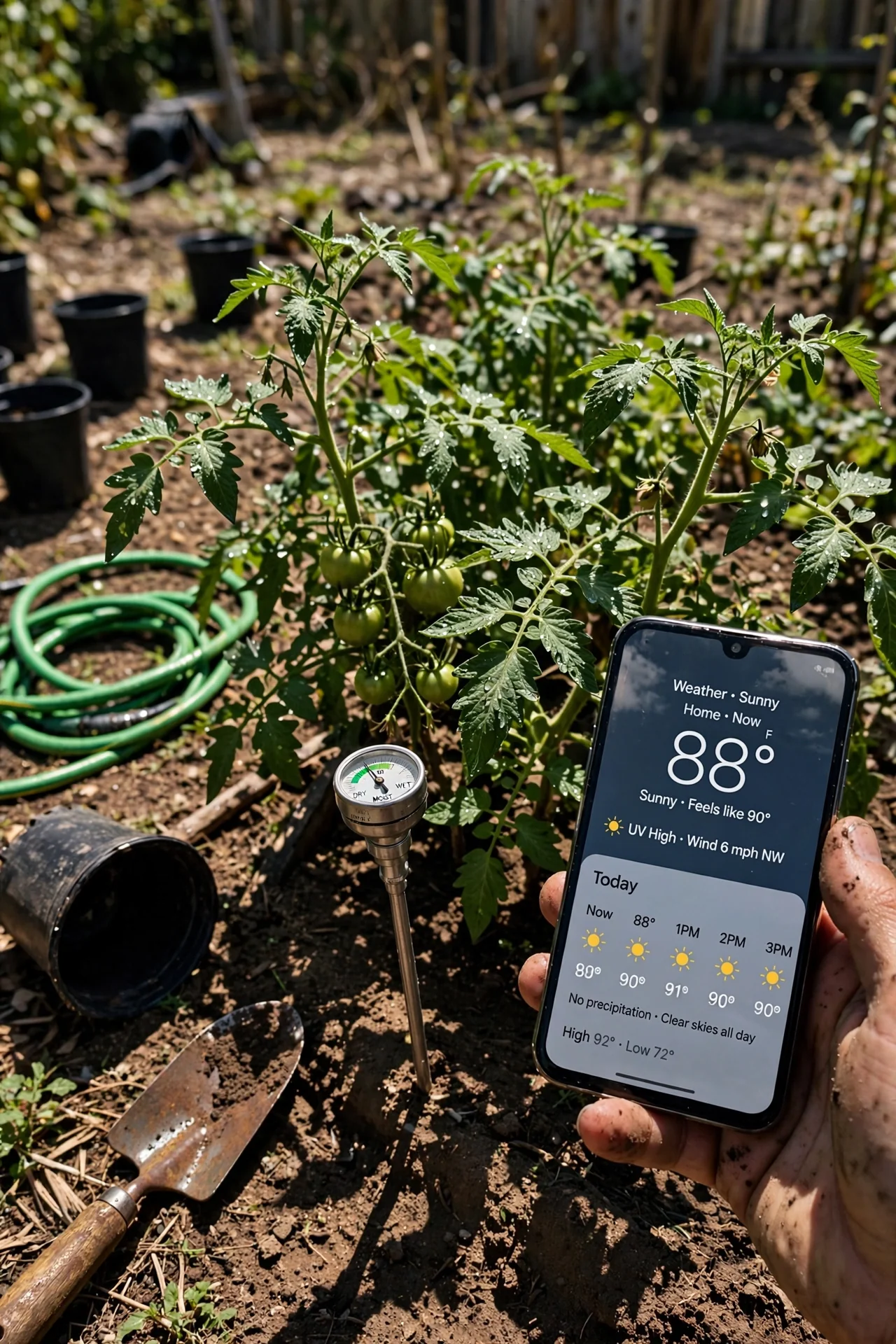
The question “best time to water plants” typically returns a one-size answer: early morning. That answer is directionally correct but functionally incomplete. It ignores the variable that matters most — whether your soil actually needs water when the clock says it is time. This guide reframes the question around a decision grid. You choose a timing strategy based on two conditions you can measure right now: soil moisture at root depth and the day’s forecast high temperature. The clock becomes a secondary tool, not the starting point.
We cover outdoor in-ground gardens, raised beds, container plantings, and newly installed landscapes. We do not cover hydroponic systems, greenhouse climate control, or indoor houseplant care, each of which follows different humidity and transpiration rules. The strategies below assume you are using a hose, watering can, drip line, or sprinkler — and that your water source is standard municipal or well water, not recycled greywater.
By the end of this article, you will know which timing window fits your situation this week, which irrigation method pairs best with that window, and how to adjust when a heat wave or a rainy spell resets the equation. Every recommendation ties back to a measurable threshold: soil moisture percentage, air temperature, or container weight.
Bottom line: Morning watering is the default, but the correct time is the one that delivers water to roots when soil moisture drops below the wilting point for your plant type — not when a schedule says so.
The Yield Grid Decision Grid
Branch 1: Soil Is Dry Below 2 Inches AND Forecast High Is Below 85°F (29°C)
Water early morning, roughly 5:00 a.m. to 9:00 a.m. Cool soil and low evaporation let moisture penetrate to the root zone before the sun pulls it away. Foliage dries by mid-morning, reducing fungal pressure. This is the highest-efficiency window for routine irrigation. Recommended: Items 1, 4, 7 below.
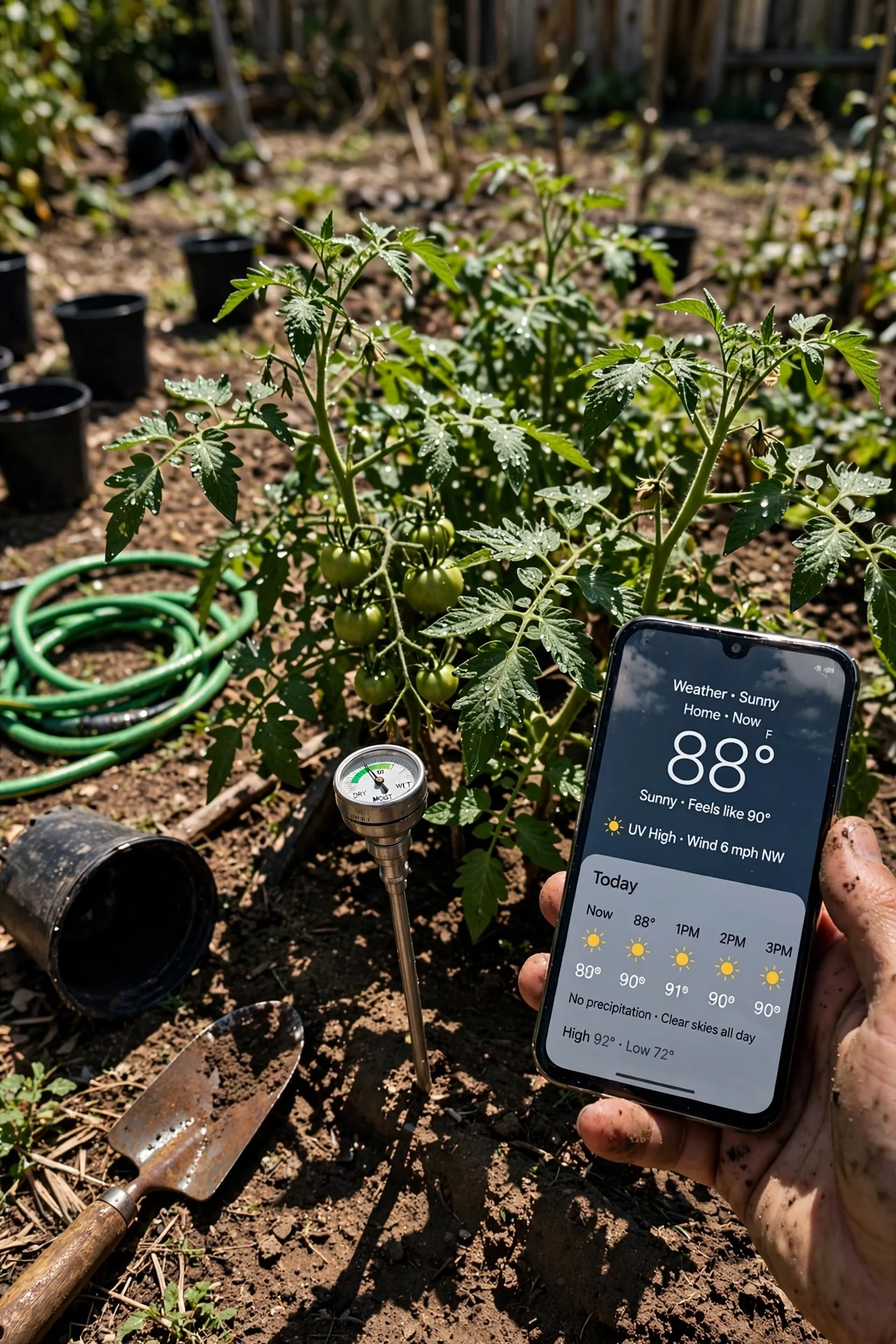
Branch 2: Soil Is Dry Below 2 Inches AND Forecast High Is Above 85°F (29°C)
Split the application. Give roughly two-thirds of the total water volume early morning, then finish with the remaining third in late afternoon (4:00 p.m. to 6:00 p.m.) when the sun is off the garden but leaves still have time to dry before nightfall. This prevents midday heat stress without wasting water to evaporation. Recommended: Items 2, 5, 8 below.
Branch 3: Soil Is Moist Below 2 Inches (Regardless of Temperature)
Skip watering. Recheck soil moisture the next morning. If you are running an automated irrigation controller, pause it. Persistent moisture at root depth invites root rot, fungus gnats, and nutrient leaching. The only exception: newly installed plants still in their establishment window. For those, see the establishment protocol in our watering newly planted trees guide. Recommended: Items 3, 6, 9 below.
Quick Comparison Table
| Option | Key Mechanism | Best For | Decision Grid Branch | Effort Score |
|---|---|---|---|---|
| 1. Morning Deep Soak | Slow, low-evaporation delivery | Established trees, shrubs, perennials | Branch 1 | 1 |
| 2. Split-Application Soak | Two-part hydration around peak heat | Vegetable beds, annuals in heat waves | Branch 2 | 3 |
| 3. Skip-Day Protocol | Soil moisture monitoring before action | All gardens after rain or in cool weeks | Branch 3 | 5 |
| 4. Drip Line Dawn Run | Targeted root-zone delivery, no foliage wetting | Roses, tomatoes, shrubs in humid regions | Branch 1 | 1 |
| 5. Late Afternoon Rescue Watering | Immediate wilt response, minimal leaf contact | Containers, hanging baskets on hot days | Branch 2 | 3 |
| 6. Moisture Meter Check Day | Instrument-based go/no-go decision | Indoor/outdoor pots, raised beds | Branch 3 | 5 |
| 7. Pre-Dawn Sprinkler Cycle | Full-coverage irrigation, dries by sunrise | Lawns, groundcover, wildflower meadows | Branch 1 | 1 |
| 8. Container Dunk Method | Submersion hydration, no foliage contact | Potted plants, nursery stock | Branch 2 | 3 |
| 9. Olla Pot Refill Check | Passive clay-pot seepage, refill when empty | Raised beds, in-ground vegetables | Branch 3 | 1 |
1. Morning Deep Soak
Best for: Branch 1
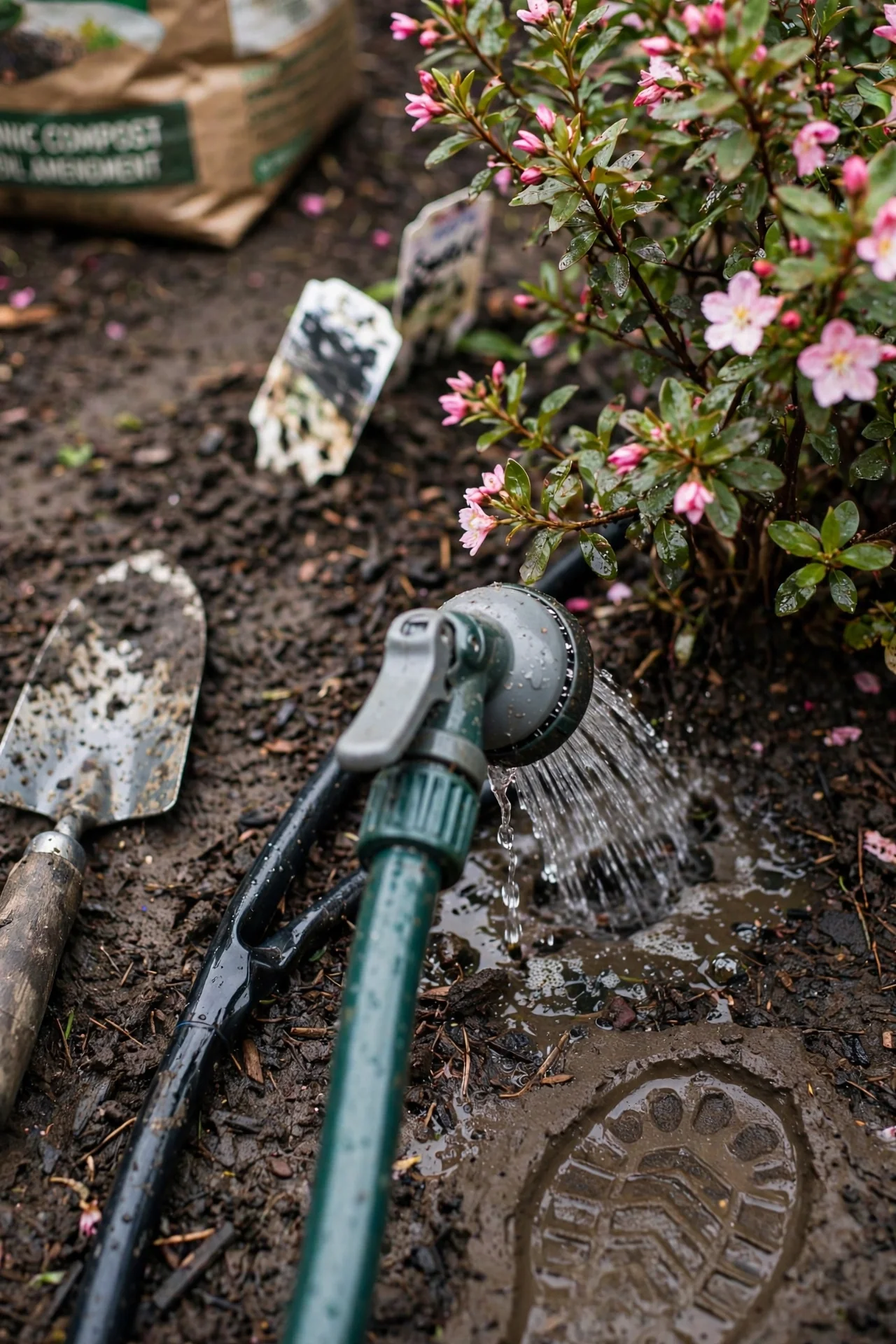
What: Apply water slowly to the base of established plants between 5:00 a.m. and 8:00 a.m. using a hose-end wand, soaker hose, or drip emitter.
For: Trees, shrubs, and perennials planted more than one full season ago.
Steps: (1) Check soil moisture at 4–6 inch depth. If it holds a loose ball shape, skip. (2) Run water at half pressure for 20–45 minutes per root zone, depending on soil type. (3) Wait 24 hours, then recheck at 6 inches. Soil should feel damp but not soggy.
Mistake to avoid: Brief daily sprinkles. They train roots to stay shallow and collapse in drought. A deep soak once or twice a week builds drought resilience better than shallow daily watering. This principle applies equally to watering hydrangeas, which wilt dramatically when surface roots dry out yet recover poorly from constantly wet crowns.
2. Split-Application Soak
Best for: Branch 2
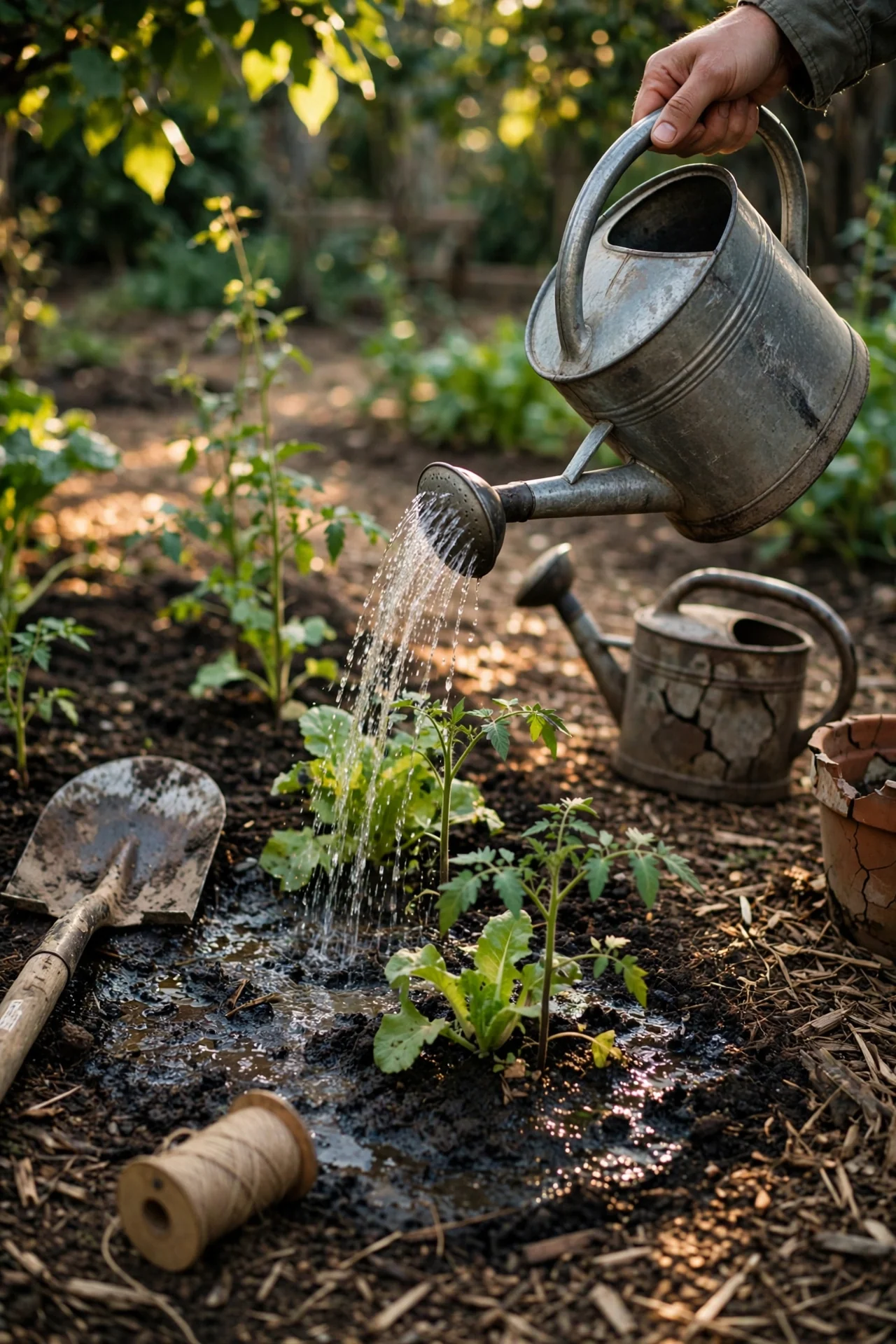
When temperatures climb above 85°F, a single morning watering may not carry plants through the afternoon. Divide the total weekly water volume: apply roughly two-thirds at dawn and the remaining third between 4:00 p.m. and 6:00 p.m. This keeps the root zone from desiccating without leaving foliage wet overnight. The late-afternoon portion should target the soil surface only; avoid overhead spray after 4:00 p.m. to reduce fungal risk.
3. Skip-Day Protocol
Best for: Branch 3
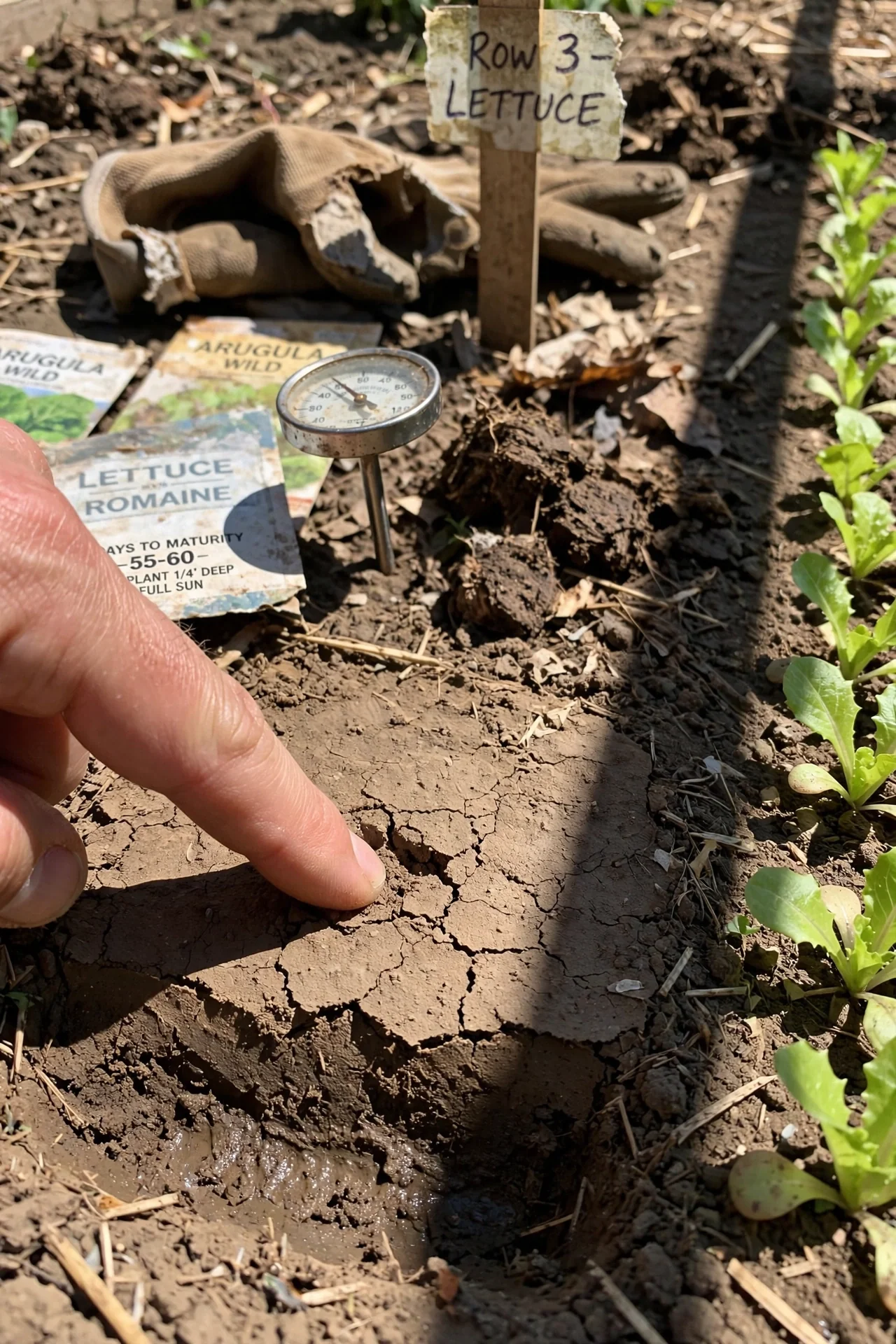
Use this when: Soil feels cool and damp below 2 inches, or rain fell within the past 24 hours.
Pros: Prevents root rot, reduces fungus gnat populations, saves water, and forces roots to grow deeper searching for moisture. In clay soils, skipping a day can be the difference between healthy aeration and anaerobic root death.
Cons/edge case: Newly transplanted seedlings still need daily shallow watering for 7–10 days regardless of deeper soil moisture. Their root systems are not yet accessing the lower soil profile.
Skip: Use this protocol only when soil below 2 inches is visibly damp and cool to the touch.
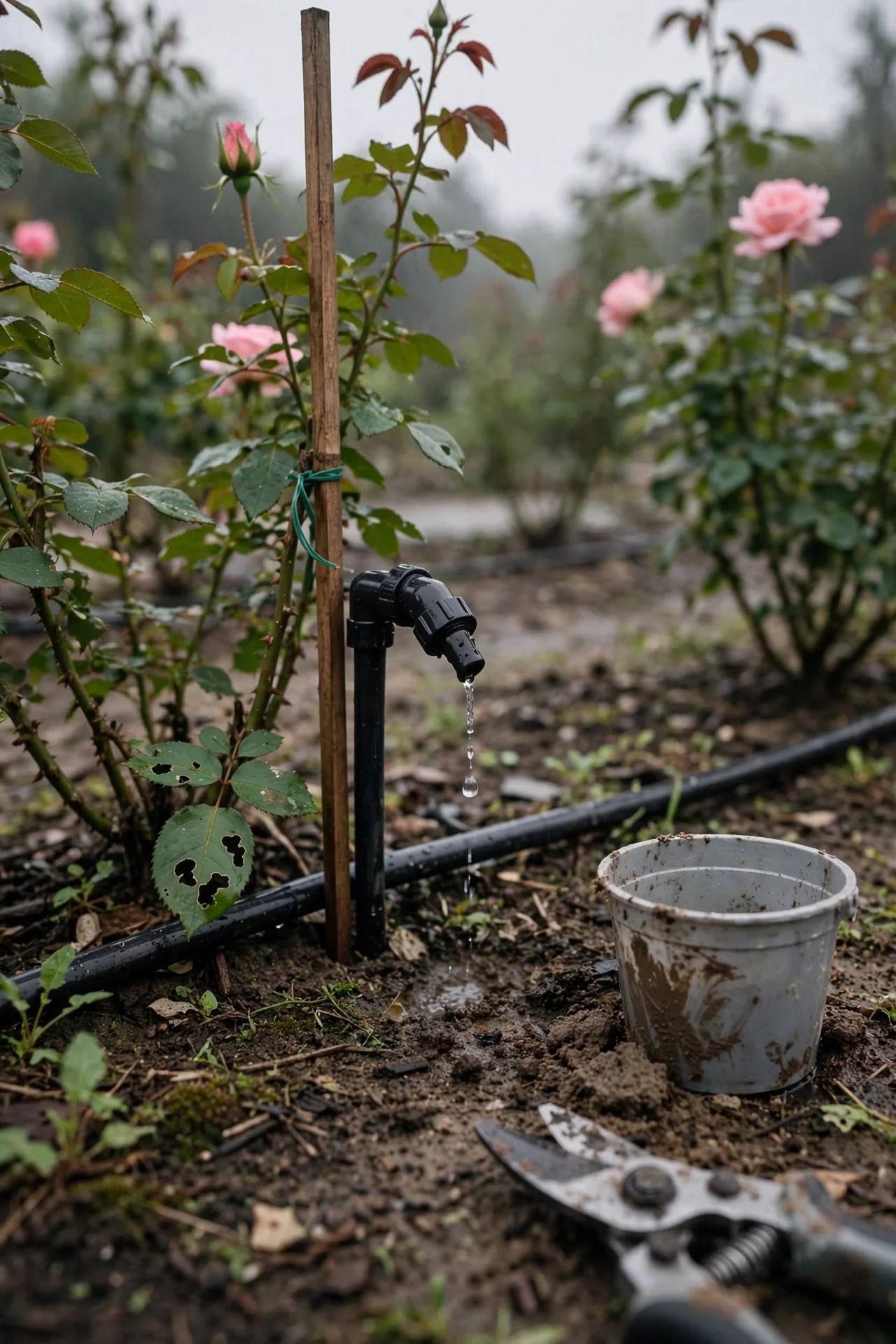
4. Drip Line Dawn Run
Best for: Branch 1
What: Set a drip irrigation timer to begin at 4:30 a.m. and finish by 7:00 a.m., delivering 0.5 to 1 gallon per emitter per hour depending on plant size.
For: Roses, tomatoes, peppers, shrubs, and any plant susceptible to powdery mildew or black spot.
Steps: (1) Confirm emitters are positioned 2–4 inches from the stem on established plants. (2) Run the system and check for pooling — pooling after 10 minutes signals a clog or excessive flow rate. (3) Adjust run time seasonally: 30 minutes in spring, 45–60 minutes in peak summer.
Mistake to avoid: Placing emitters directly against the stem, which encourages crown rot. The drip irrigation design fundamentals for gardens apply identically whether you are watering tomatoes or ornamentals. See our guide on drip irrigation for gardens for layout diagrams.
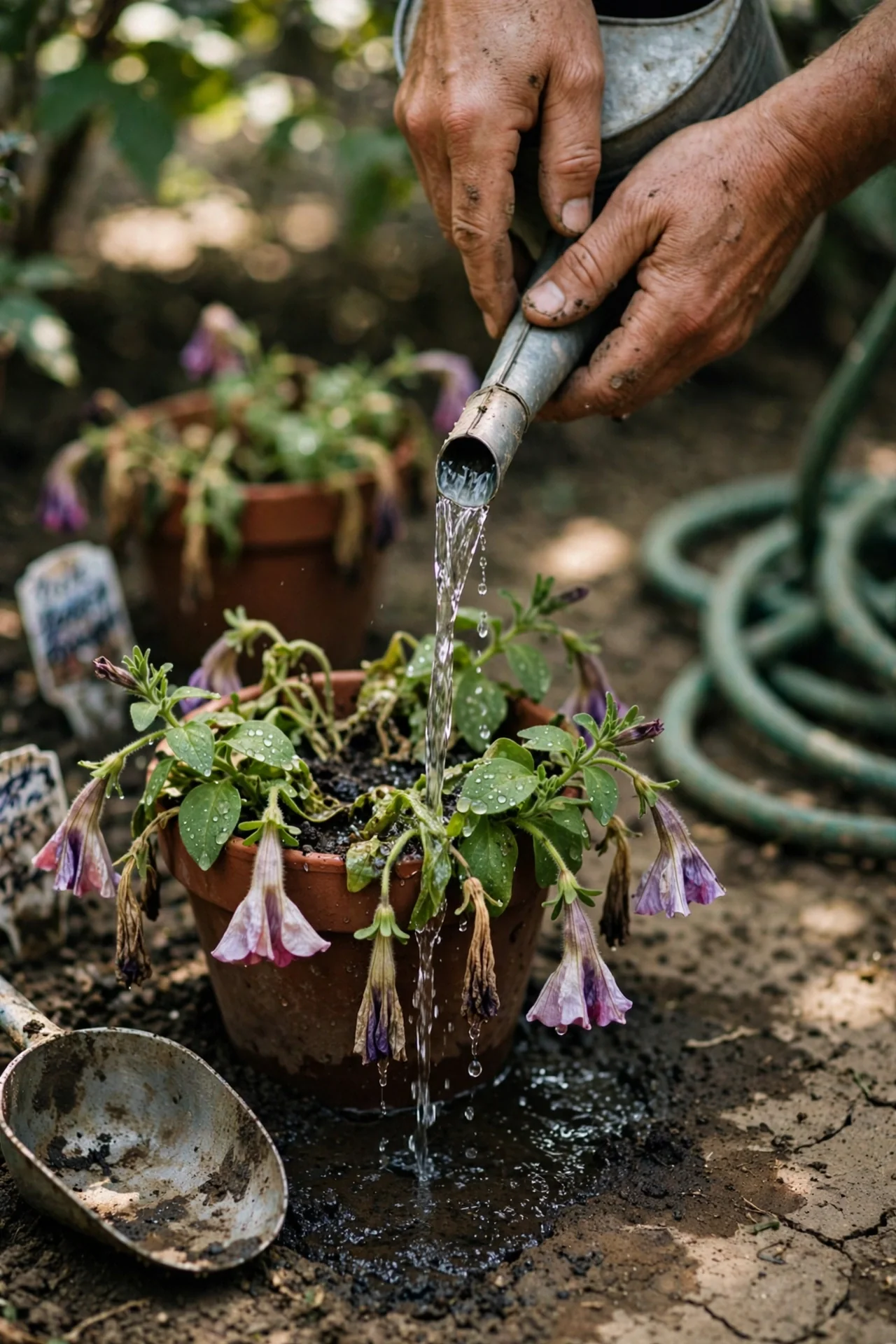
5. Late Afternoon Rescue Watering
Best for: Branch 2
If plants are visibly wilting by 3:00 p.m. on a day above 90°F, do not wait for evening. Water immediately at the soil line, avoiding leaves. Use a watering can with a narrow spout or a hose set to a gentle trickle. The goal is to reduce root-zone temperature and restore turgor pressure. After the heat wave passes, return to a morning schedule.
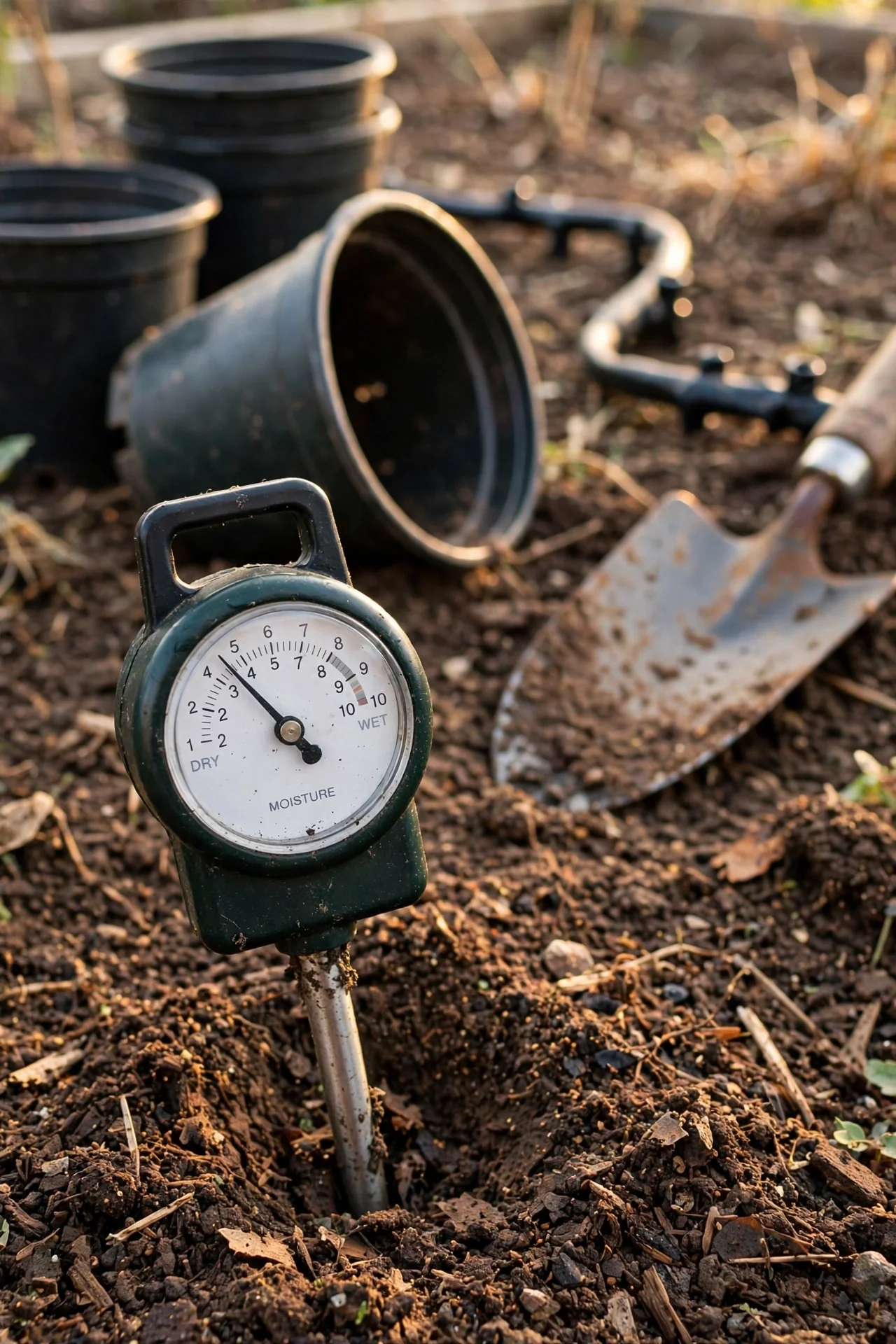
6. Moisture Meter Check Day
Best for: Branch 3
Threshold rule: Insert a moisture meter to 4 inches in the root zone. A reading below 3 on a 1–10 scale (or below roughly 25 percent soil moisture for calibrated meters) signals it is time to water. Above that, skip. For succulents and Mediterranean herbs, the trigger point drops to roughly 15 percent soil moisture. If your meter reads consistently above 40 percent for three consecutive days, reduce your irrigation frequency regardless of what the calendar says. If you are growing cucumbers, peppers, or strawberries, their shallow root systems dry out faster than tomatoes; check those beds first. Our crop-specific guides for how often to water cucumbers and how often to water peppers provide target moisture ranges by growth stage.
7. Pre-Dawn Sprinkler Cycle
Best for: Branch 1
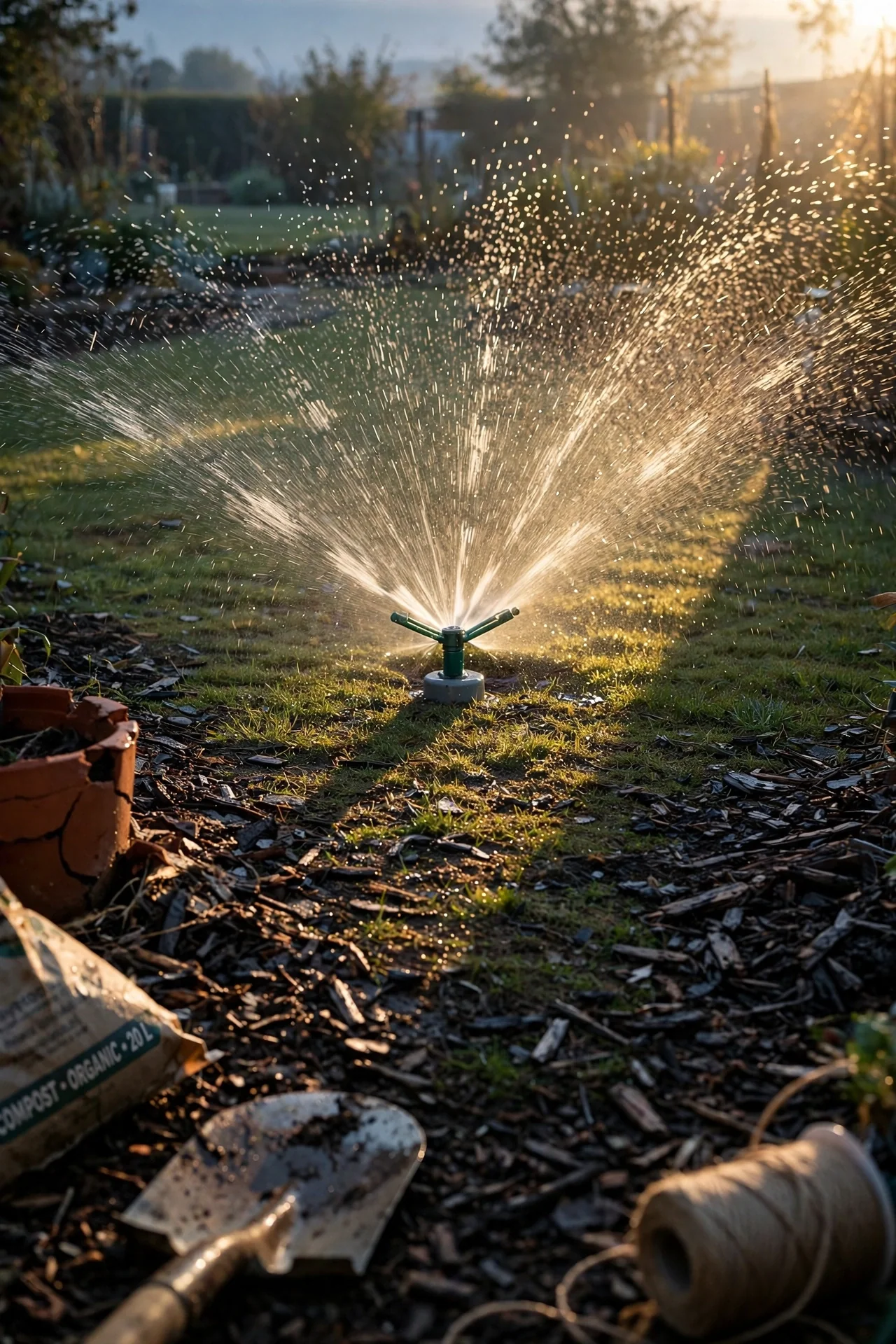
What: Program an oscillating or rotary sprinkler to start at 4:00 a.m. and finish by sunrise. This timing ensures foliage dries before fungal pathogens activate and maximizes the water that reaches the soil rather than evaporating.
For: Lawns, groundcover beds, wildflower meadows, and large perennial borders where drip irrigation is impractical.
Steps: (1) Set a catch cup test: place shallow cans across the spray pattern and run the system for 15 minutes. Measure collected depth. (2) Target 0.5 inch per session for lawns, 0.75–1.0 inch for flower beds. (3) Adjust run time accordingly.
Mistake to avoid: Running sprinklers in windy conditions (above 10 mph). Wind distorts the spray pattern and can waste more water than midday evaporation. This applies whether you are watering a newly seeded lawn or an established turf. For establishment-phase timing, see our lawn-specific schedules for watering newly seeded lawns and watering sod.
8. Container Dunk Method
Best for: Branch 2
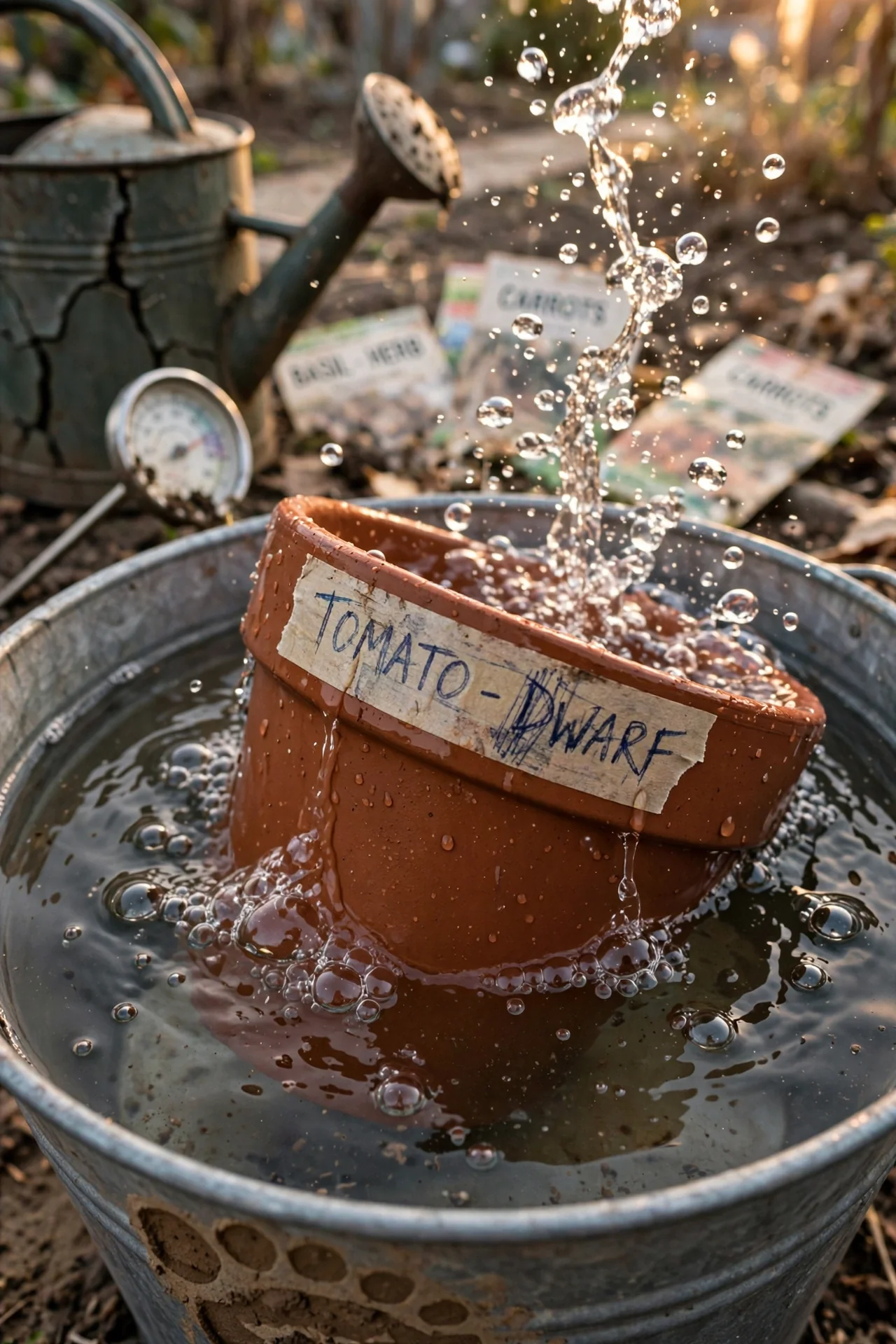
During heat waves, fill a bucket or basin with water and submerge the entire container until air bubbles stop rising. Lift, drain for 2–3 minutes, then return to its saucer. This method saturates the entire root ball in one pass and reduces the frequency of watering on consecutive hot days. Works best for pots under 12 inches in diameter.
9. Olla Pot Refill Check
Best for: Branch 3
Threshold rule: Check olla water level every 3–4 days by lifting the lid and visually inspecting the interior. If the olla is more than half empty, refill it. If it is still more than half full and the surrounding soil is moist below 2 inches, skip refilling. In heavy clay soils, olla pots can over-saturate a small radius; space them at least 18 inches apart. In sandy soils, expect refills every 2–3 days. Ollas work by passive capillary action, making them ideal for gardeners who cannot water daily. Our olla irrigation guide covers sizing, placement, and crop pairing.
Starter Stack (What to Choose First)
Branch 1 Starter Pair: Morning Deep Soak + Drip Line Dawn Run
Combine hand-watering deep soaks for your largest plants with an automated drip system for everything else. Set the drip timer for 5:00 a.m., then do your manual deep soak immediately after. Total time investment: roughly 30 minutes twice per week in spring, three times per week in peak summer. Equipment cost: a basic digital hose timer starts around $35, a 50-foot drip kit around $40.
Branch 2 Starter Pair: Split-Application Soak + Container Dunk Method
On days forecast above 85°F, set a phone reminder for 5:00 a.m. and another for 4:30 p.m. Do in-ground plants in the morning, then dunk your containers in the late afternoon. Total time: roughly 20 minutes per session. This pair prevents the most common hot-weather mistake: watering everything once in the morning and losing container plants to afternoon desiccation.
Branch 3 Starter Pair: Moisture Meter Check Day + Olla Pot Refill Check
Use a moisture meter to decide whether to water at all, and rely on ollas to deliver water passively when the meter says go. This combination works particularly well for gardeners who tend to overwater. Meter cost: $12–$25 for a basic analog model. Olla cost: roughly $20–$35 per pot. Time per session: 10 minutes to insert the meter in 3–5 spots and check olla levels.
When This Won’t Work
Failure condition 1: You are watering on a fixed municipal schedule. If your city restricts irrigation to specific days and hours that do not align with the Decision Grid (for example, odd-even address watering between 10:00 a.m. and 6:00 p.m. only), you lose the ability to choose timing. In that case, prioritize delivery method over clock time. Use drip irrigation or soaker hoses rather than sprinklers, and apply water directly to the soil surface. Even at suboptimal times, root-zone delivery with minimal leaf contact reduces disease risk and evaporation. If drip is not feasible, watering during the allowed window is still better than skipping entirely. For automated systems that adjust to local restrictions, see our review of smart irrigation controllers.
Failure condition 2: Soil drainage is severely compromised. If water pools on the surface for more than 60 seconds after application, or if you can squeeze water from a handful of soil taken at 4 inches depth 48 hours after the last irrigation, your soil is not draining adequately. No timing strategy will fix anaerobic root conditions. The corrective action is physical: core-aerate the area, incorporate coarse organic matter, or install a raised bed with imported loam. Until drainage improves, water only when a moisture meter reads below 20 percent at 4 inches, and apply half the volume you normally would.
Choosing the Right Option for Your Situation
Budget Threshold
If your total equipment budget is under $50, prioritize a moisture meter ($12–$25) and a watering wand with a shut-off valve ($15–$25). These two tools enable every Branch 1 and Branch 3 strategy. Skip automated timers and ollas until your second season. If your budget exceeds $150, add a programmable hose timer and a basic drip kit, which together unlock the Branch 2 split-application approach with minimal daily effort.
Time Threshold
If you have fewer than 15 minutes per day for garden maintenance, choose Branch 1 only. Install a timer-driven drip system for in-ground plants and accept that container plants may need a backup plan during vacations. If you have 30–45 minutes on hot days, Branch 2 split applications become practical. Branch 3 (skip-day protocol) demands the most attention because it requires checking soil conditions daily, but it saves the most water over a season.
Technical Constraint: Water Pressure
If your outdoor spigot delivers below 30 PSI static pressure, avoid sprinklers entirely. Low pressure produces large droplets that compact soil and run off rather than infiltrate. Use soaker hoses or drip emitters rated for low-pressure operation (many are rated to work at 10–25 PSI). If you are unsure of your pressure, a simple pressure gauge that threads onto the spigot costs about $10.
Quick Yes/No Checklist
- Did you check soil moisture at 2–4 inch depth before watering today? If no, stop and check first.
- Is the forecast high above 85°F? If yes, use a Branch 2 split schedule.
- Are leaves staying wet more than 8 hours after watering? If yes, switch to soil-level delivery.
- Has it rained 0.25 inch or more in the past 24 hours? If yes, skip watering today.
Expert Q&A
Does the best watering time change with the seasons?
Yes, primarily because day length and evaporation rate shift. In early spring and late fall, when soil stays cool and days are short, a single morning watering every 4–7 days often suffices. In peak summer, you may need to shift from Branch 1 to Branch 2 as temperatures cross the 85°F threshold. Winter watering, where soils are not frozen and air temperatures are above 40°F, should happen mid-morning so water has time to percolate before nighttime freezing.
Is watering at midday ever better than not watering at all?
If a plant is visibly wilting, water it immediately regardless of the time of day. The old claim that midday water droplets scorch leaves has been repeatedly debunked. The real downside of midday watering is evaporation loss, not leaf damage. Direct the water to the soil, avoid wetting foliage if possible, and accept that some volume will be lost. A wilted plant that gets midday water will recover faster than one left dry until evening.
How does container size affect the best watering time?
Small containers (under 10 inches in diameter) heat up faster and dry out sooner than large ones. In hot weather, check small pots by 2:00 p.m.; if the top inch is bone dry, water immediately regardless of the morning schedule. Large containers (over 16 inches) retain moisture longer and can usually follow a standard morning-only schedule. Terracotta pots lose moisture through their walls and need more frequent checking than glazed ceramic or plastic containers of the same size.
What is the best time to water plants when using a rain barrel?
Rain barrel water is typically cooler than hose water, especially in the morning. Apply it early in the day so the cooler temperature does not shock heat-stressed roots later. If your barrel is gravity-fed, pressure will be low; use a soaker hose or watering can rather than a sprinkler. Avoid applying cold rain barrel water in the evening during cool spring or fall weeks, as the combination of cold water and dropping nighttime temperatures can slow root activity.
Can I water at the same time every day using an automated system?
Automated timers are useful, but a fixed daily schedule ignores soil moisture variability. The better approach is to set a timer for the preferred window (early morning) but pair it with a rain sensor or soil moisture sensor that overrides the schedule when the ground is already wet. During cool, overcast weeks, manually reduce the frequency. The timer handles the clock; you handle the judgment of whether watering is needed at all.
Conclusion
Timing matters, but conditions matter more. The single change that most improves garden health is checking soil moisture before turning on the tap. When you align your watering window with real root-zone demand, morning, split, or skip-day strategies all produce better results than a rigid clock-driven habit.
The number one mistake is watering on a fixed schedule without ever touching the soil. Fix that, and the rest of the timing decisions become straightforward. If you are designing a new garden bed or retrofitting an existing one, start with water delivery infrastructure before you plant. Our guide to wicking beds explains one approach that eliminates daily timing decisions entirely.