
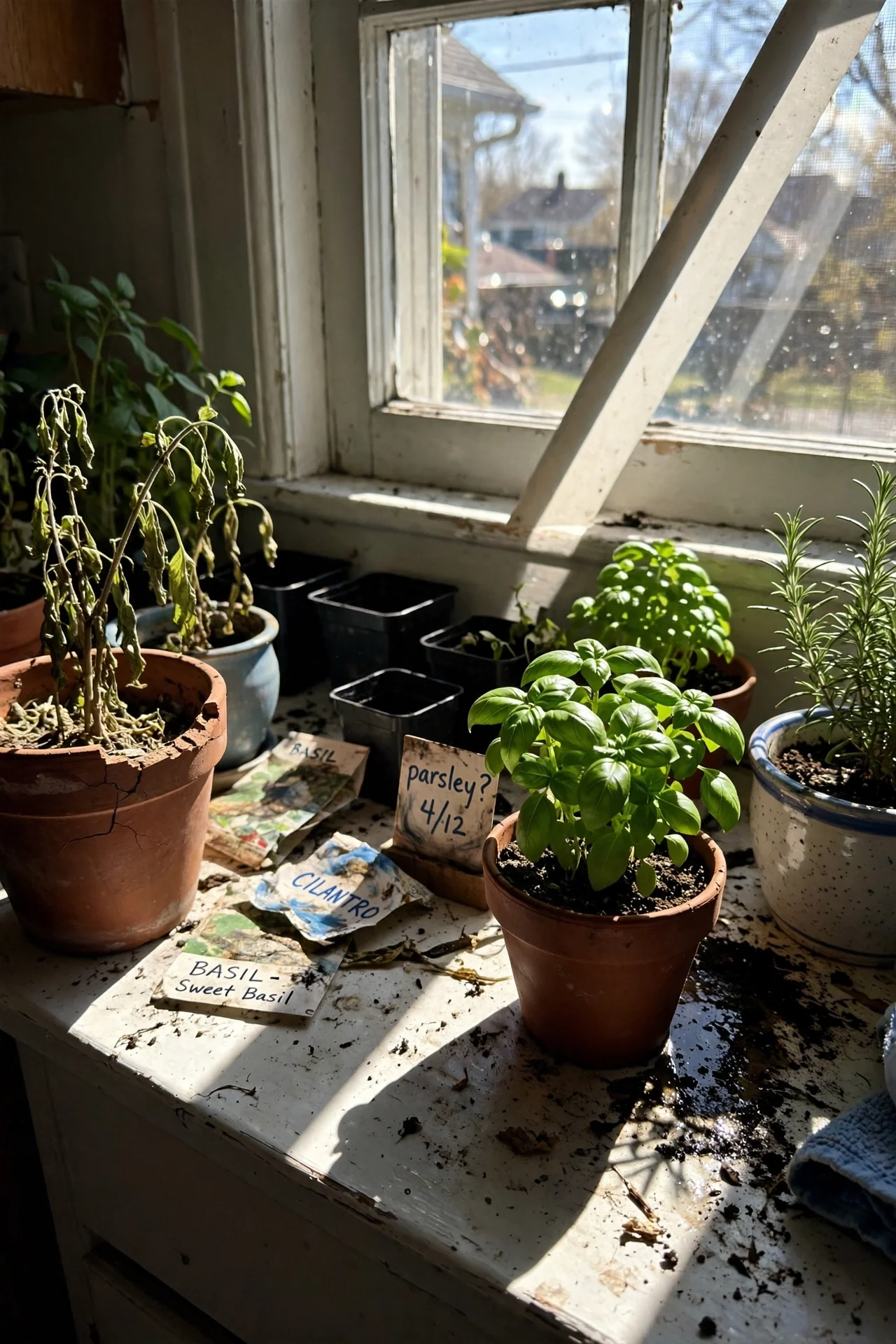
Forget choosing basil because you love pesto. The real question is whether your sunniest window delivers 2 hours or 5 hours of direct sun. Every herb on this list is filtered by light threshold first, because failing to meet a plant’s minimum daily light integral is why rosemary drops leaves, basil gets leggy, and cilantro bolts overnight. Shift your thinking from “which herbs do I cook with” to “which herbs match the light I actually have,” and indoor gardening stops being a gamble.
This guide covers culinary herbs that complete a harvest cycle on a windowsill or under budget-friendly grow lights. We exclude large woody perennials like bay laurel and lemon verbena, which need container sizes beyond typical indoor space, and fruiting plants that require hand pollination. You will find soft-stemmed annuals, compact perennials, and the few aromatics that tolerate partial shade without losing flavor.
By the end, you will know exactly which herbs to start from seed, which to buy as transplants, and where a cheap LED panel pays for itself versus where it is wasted electricity. You will also see a quantified effort score for each option, so you can pick the herbs that fit your weekday schedule, not a fantasy of daily misting.
Bottom line: A successful indoor herb garden starts by measuring window light hours, not by picking your favorite flavors first.
The Yield Grid Decision Grid
Choose your growing condition from the three branches below. Each branch filters the list to herbs that can thrive under that light reality. If you guess wrong, you will still get leaves, but they will be thin, pale, and nearly flavorless.
Branch 1: Bright Window (4+ hours of direct sun daily)
A south- or southwest-facing sill that gets unobstructed sun from late morning through mid-afternoon. You can grow the widest range of herbs here, including woody Mediterranean types that demand high light to develop essential oils. Recommended: Items 1, 6, 7, 8, 10, 11 below.
Branch 2: Medium Light (2–4 hours of direct sun, or bright indirect all day)
East-facing windows with good morning sun, or west-facing sills that get filtered afternoon light. Many soft-leaf herbs will grow acceptably here, but growth will be slower and leaves larger and thinner than outdoor specimens. Recommended: Items 2, 4, 5 below.
Branch 3: Low Light or Artificial Only (under 2 hours of direct sun)
North-facing windows, or spaces where you rely exclusively on LED grow lights. Only a handful of culinary herbs stay productive here without turning bitter. A simple windowsill herb garden setup with supplemental light changes what is possible. Recommended: Items 3, 9 below.
Quick Comparison Table
| Option | Key mechanism | Best for | Decision Grid Branch | Effort Score (1–5) |
|---|---|---|---|---|
| 1. Basil | High-light C3 annual; needs heat and consistent moisture | Frequent harvesters with a south window | Branch 1 | 3 |
| 2. Chives | Bulb-forming allium; dies back and regrows | Forgetful waterers who want a cut-and-come crop | Branch 2 | 1 |
| 3. Mint | Aggressive rhizome spreader; tolerates low light | Containment-first growers with limited sun | Branch 3 | 2 |
| 4. Parsley | Biennial taproot; slow to start, long harvest window | Those willing to wait for germination | Branch 2 | 2 |
| 5. Cilantro | Short-day annual; bolts when root zone warms | Cool windowsill growers who succession sow | Branch 2 | 3 |
| 6. Thyme | Woody perennial; drought-adapted, needs sharp drainage | Bright, dry indoor spots | Branch 1 | 2 |
| 7. Oregano | Low-growing perennial; flavor intensifies with light stress | Growers who want flavor without frequent watering | Branch 1 | 2 |
| 8. Rosemary | Woody shrub; requires high light and air movement | Bright, well-ventilated rooms | Branch 1 | 3 |
| 9. Lemon balm | Mint-family perennial; tolerates shade but sprawls | Low-light kitchens needing a mild citrus herb | Branch 3 | 2 |
| 10. Sage | Soft-wooded perennial; prone to powdery mildew in still air | Growers who can provide air circulation and full sun | Branch 1 | 2 |
| 11. Dill | Taprooted annual; rapid upward growth, short productive life | Bright spots where tall plants won’t shade other pots | Branch 1 | 3 |
1. Basil (Genovese type)
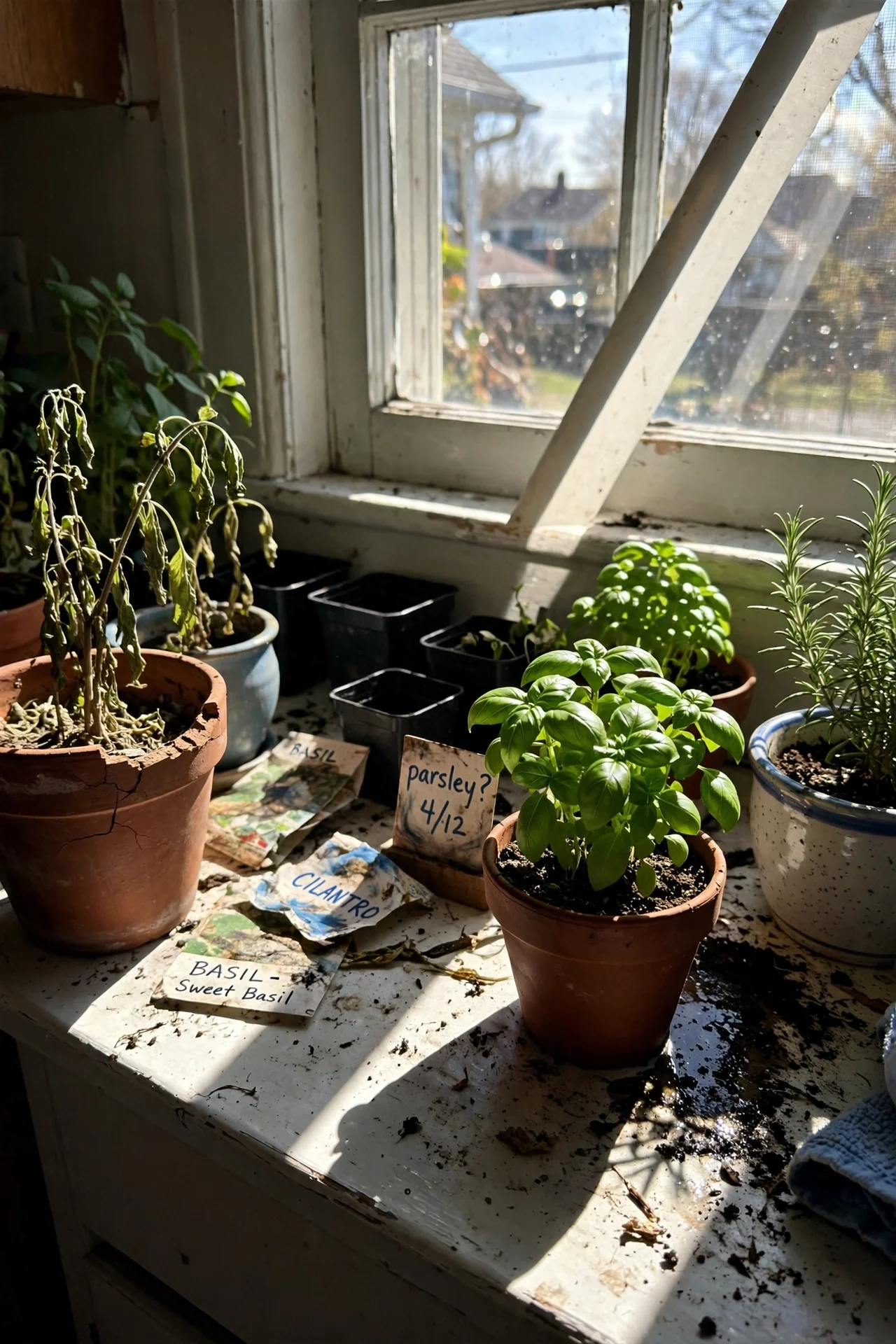
Best for: Branch 1
What it is: A warm-season C3 annual that demands both high light and soil temperatures above 65°F (18°C) to avoid damping off.
What you get: Continual harvest of large leaves for 4–6 months if you pinch flowers weekly.
Blueprint steps: (1) Start from seed in a 6-inch pot with drainage; (2) place on a south sill under a simple LED panel if daylight drops under 12 hours; (3) harvest above the second set of true leaves to encourage branching.
Common mistake: Watering on a fixed schedule. Basil roots rot when the top inch of mix stays wet. Instead, lift the pot daily until you learn the dry weight. A deep watering when it feels light beats frequent sips.
Indoor garden setup ideas help you avoid overcrowding, which basil hates.
2. Chives
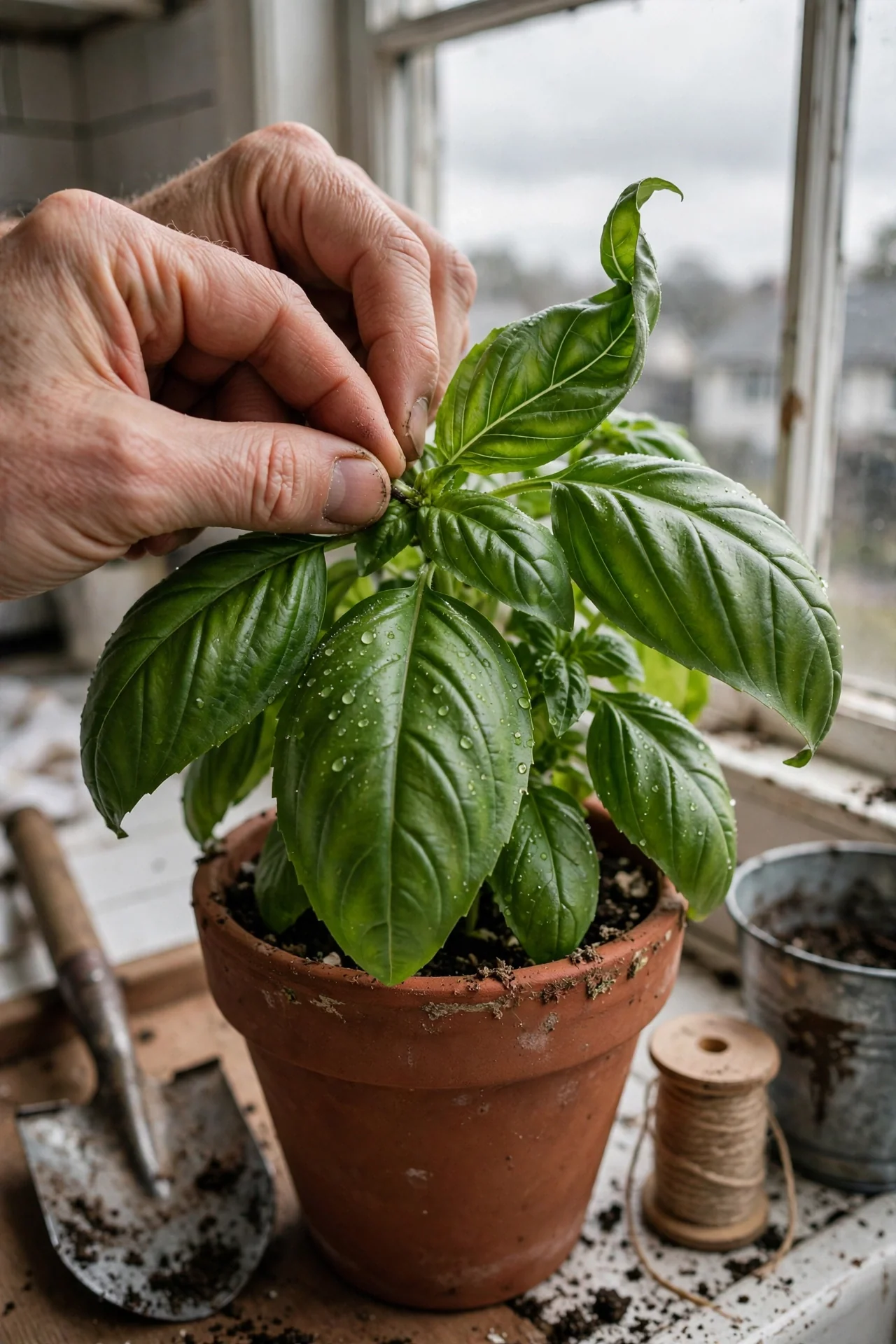
Best for: Branch 2
Skip if: You want a quick crop. Chives from seed take 6–8 weeks to reach cutting size. Buy a small transplant instead if patience is short.
Use if: You forget to water occasionally. The bulbs store reserves, and the leaves simply pause growth during a dry spell rather than collapse. Snip individual leaves at the base with scissors; never shear all at once.
3. Mint
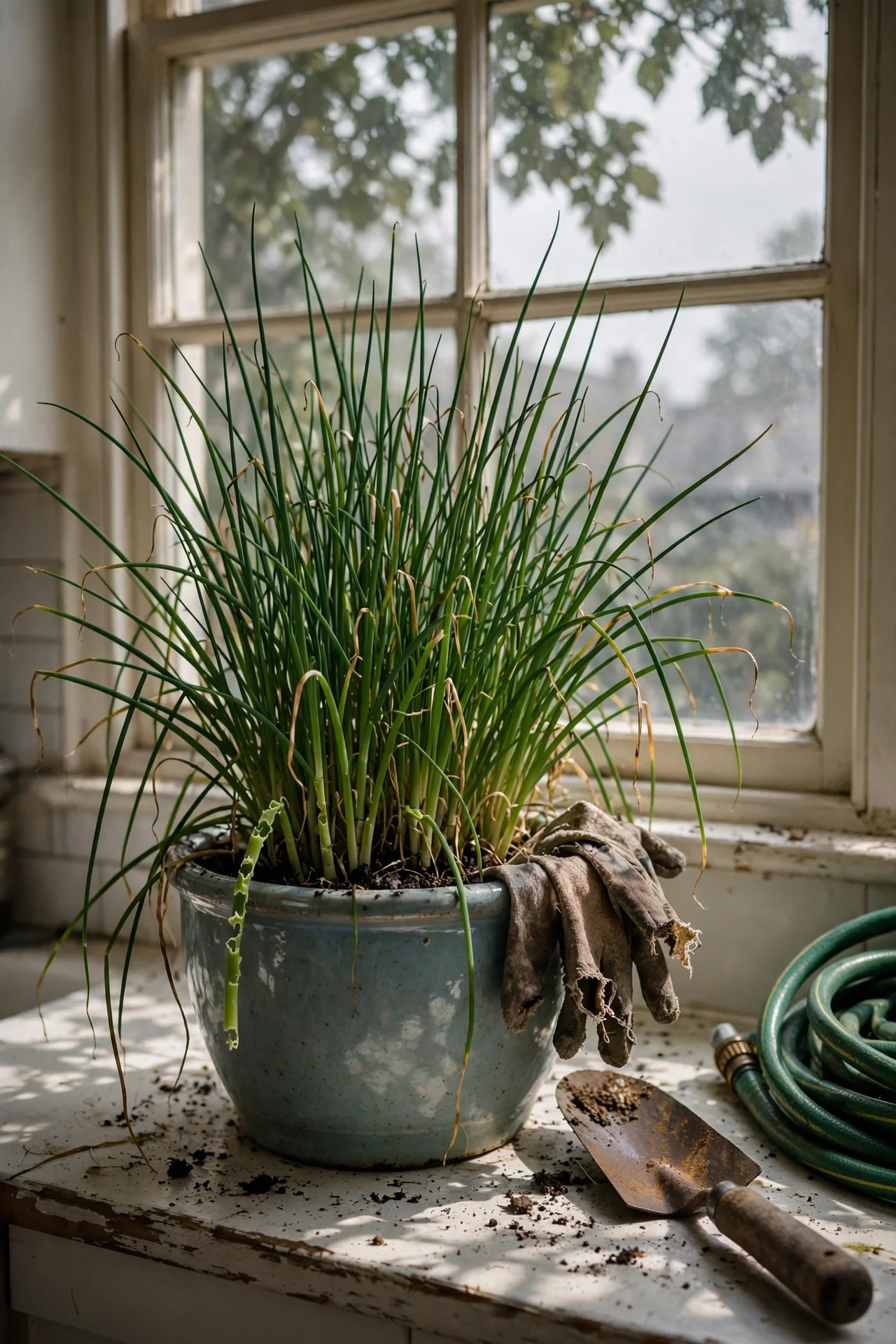
Best for: Branch 3
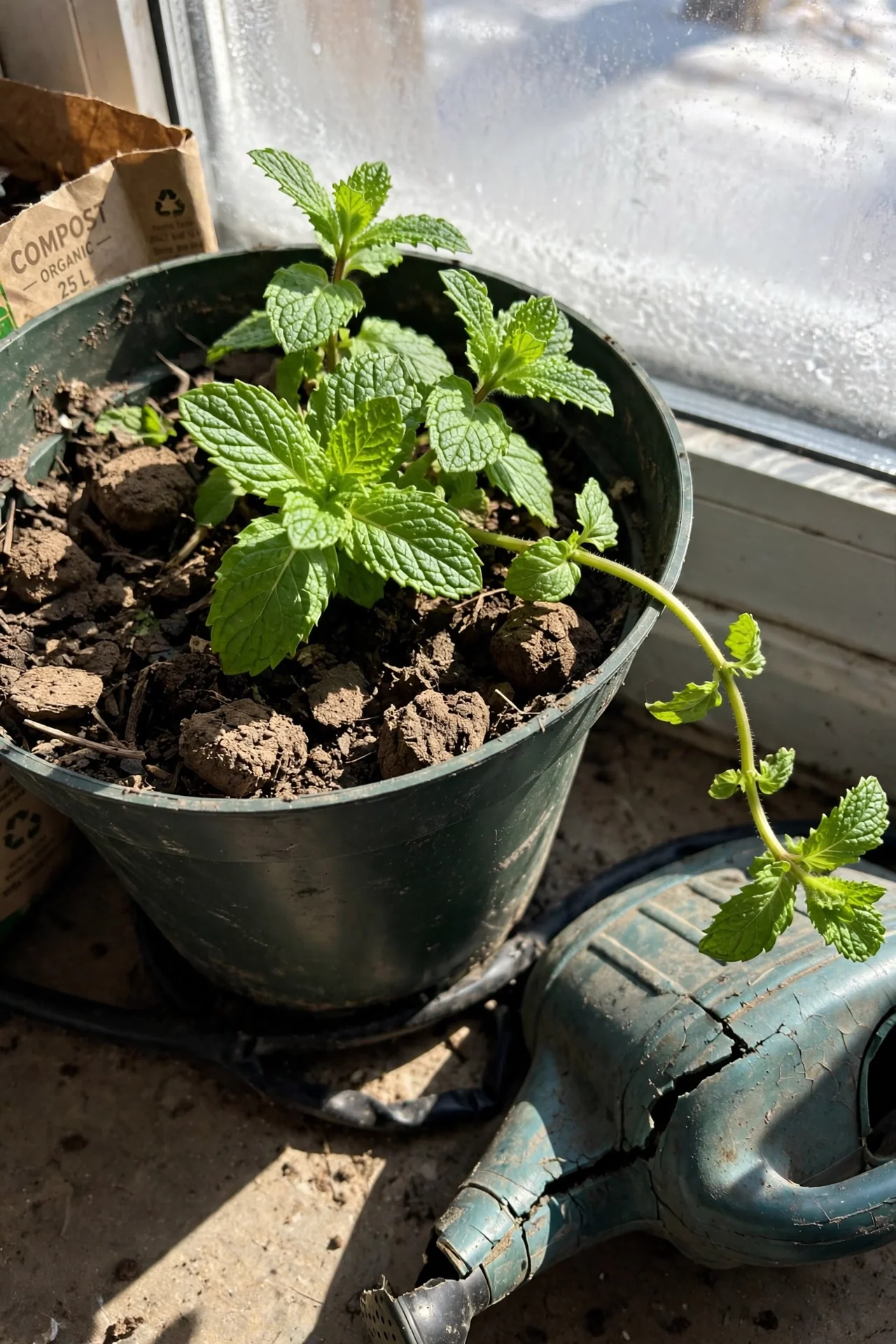
Mint is the only culinary herb on this list that remains productive in a north-facing window or under a single 15-watt LED bar. Its aggressive rhizome habit forces a rule: always grow it in its own pot, never in a shared planter. When the stems elongate and leaves become spaced more than 1 inch apart, cut the entire plant back to 2 inches tall; new compact growth will emerge in 10 days. A mason jar herb garden works only if you add a net pot and an air gap for roots; sitting in water will kill mint in two weeks.
4. Parsley (Flat-leaf)
Best for: Branch 2
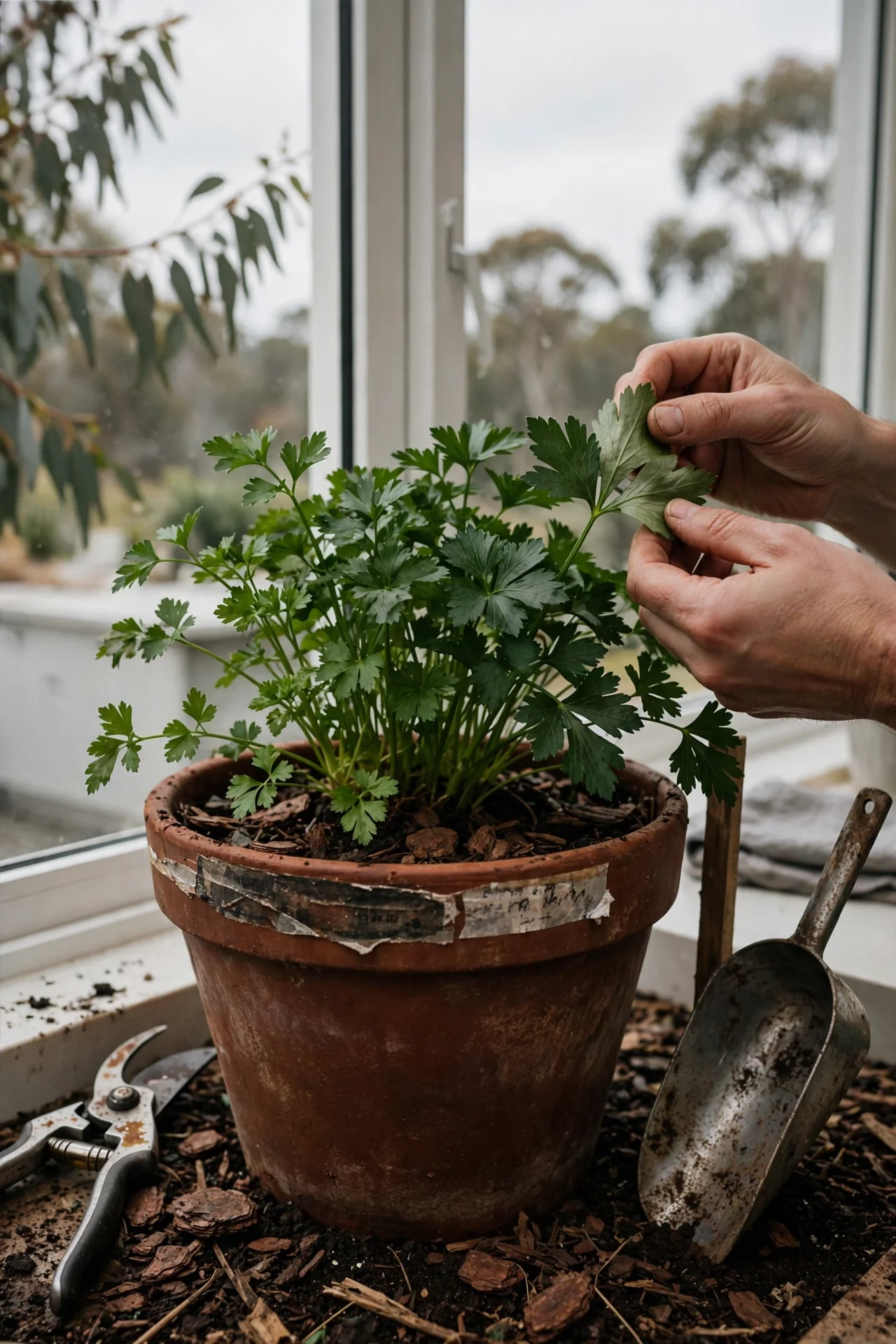
What it is: A biennial that produces leaves for 12–18 months indoors before flowering.
What you get: Steady, moderate harvests with a texture that holds up in cooking.
Threshold rule: Parsley germination stalls below 50°F (10°C) soil temperature. Indoors, use a heat mat set to 70°F (21°C) for the first 10 days, then remove it. If seedlings appear pale, increase light duration to 14 hours; leaf color will deepen within a week.
Adjustment: Once established, switch to the best soil for indoor herbs: a mix with 20–30% perlite by volume prevents the root rot parsley is prone to in heavy potting soil.
5. Cilantro
Best for: Branch 2
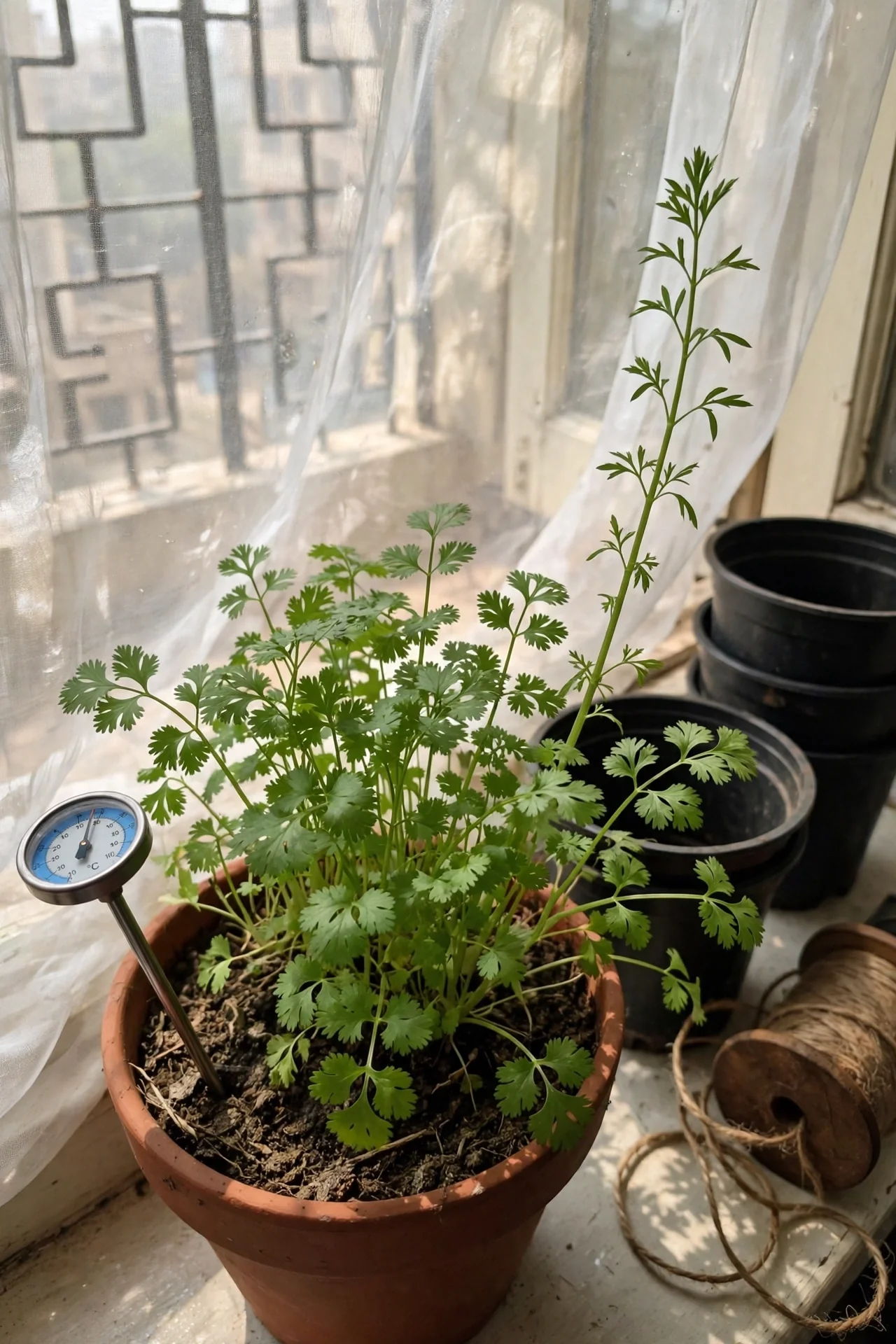
Use if: You want a quick crop for fresh salsas and you understand it will bolt. The threshold is root-zone temperature: once the pot exceeds roughly 75°F (24°C), the plant shifts to flower mode within 7 days.
Skip if: You cannot provide a cool windowsill or succession-sow every 3 weeks. Sow seeds directly into the final pot; cilantro transplant shock triggers immediate bolting. See the full indoor schedule at growing cilantro indoors.
6. Thyme (Common or Lemon)
Best for: Branch 1
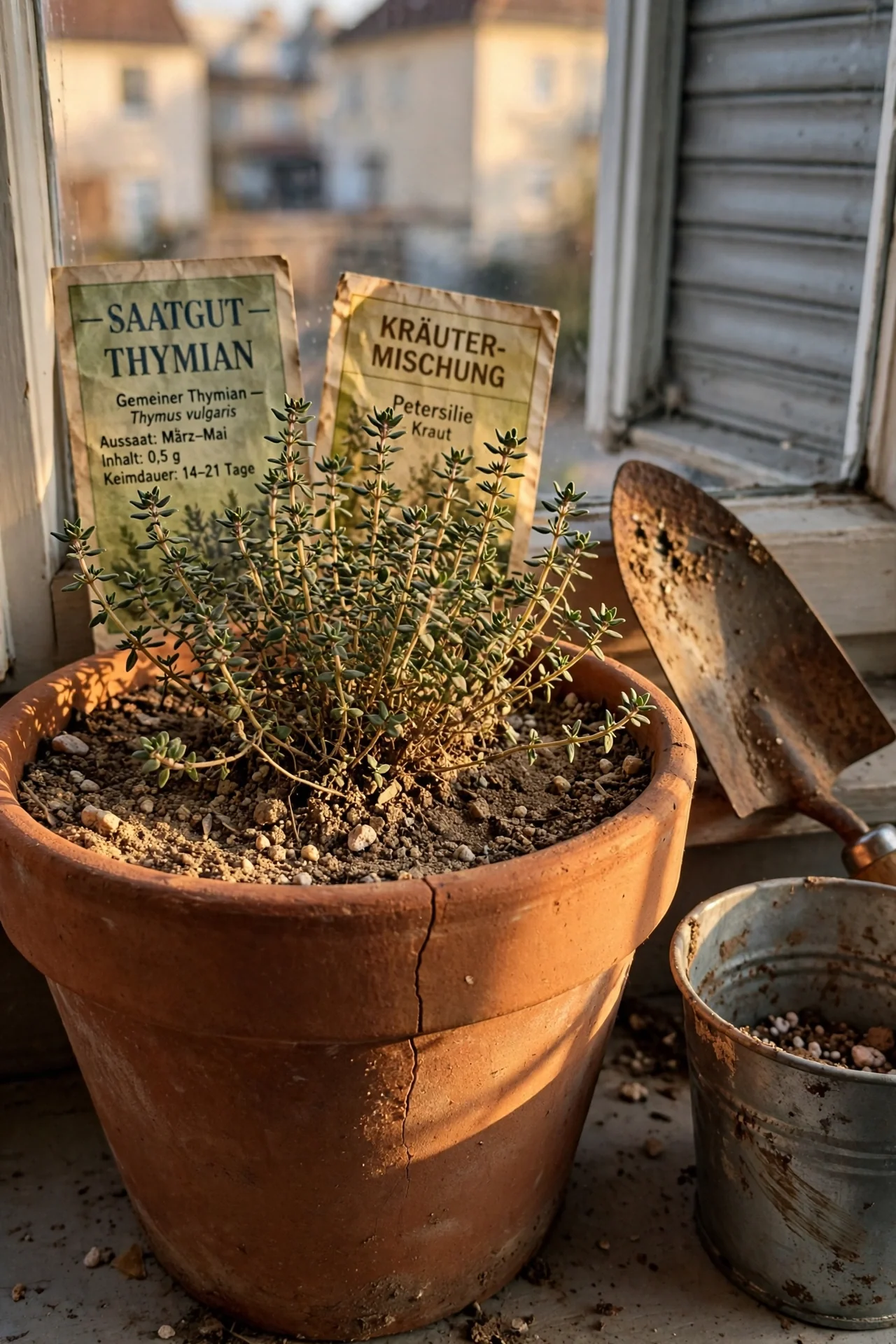
Thyme succeeds indoors only when two rules are met. First, soil must be lean and gritty: mix 50% cactus potting mix with 50% coarse sand by volume. Second, allow the pot to dry until the top 2 inches are bone-dry before watering. If you follow these rules, thyme will live for years. The most common failure is rich, moisture-retentive soil that turns the woody base black within a month. A herb garden starter kit often includes thyme; check if the kit’s soil meets this drainage requirement before sowing.
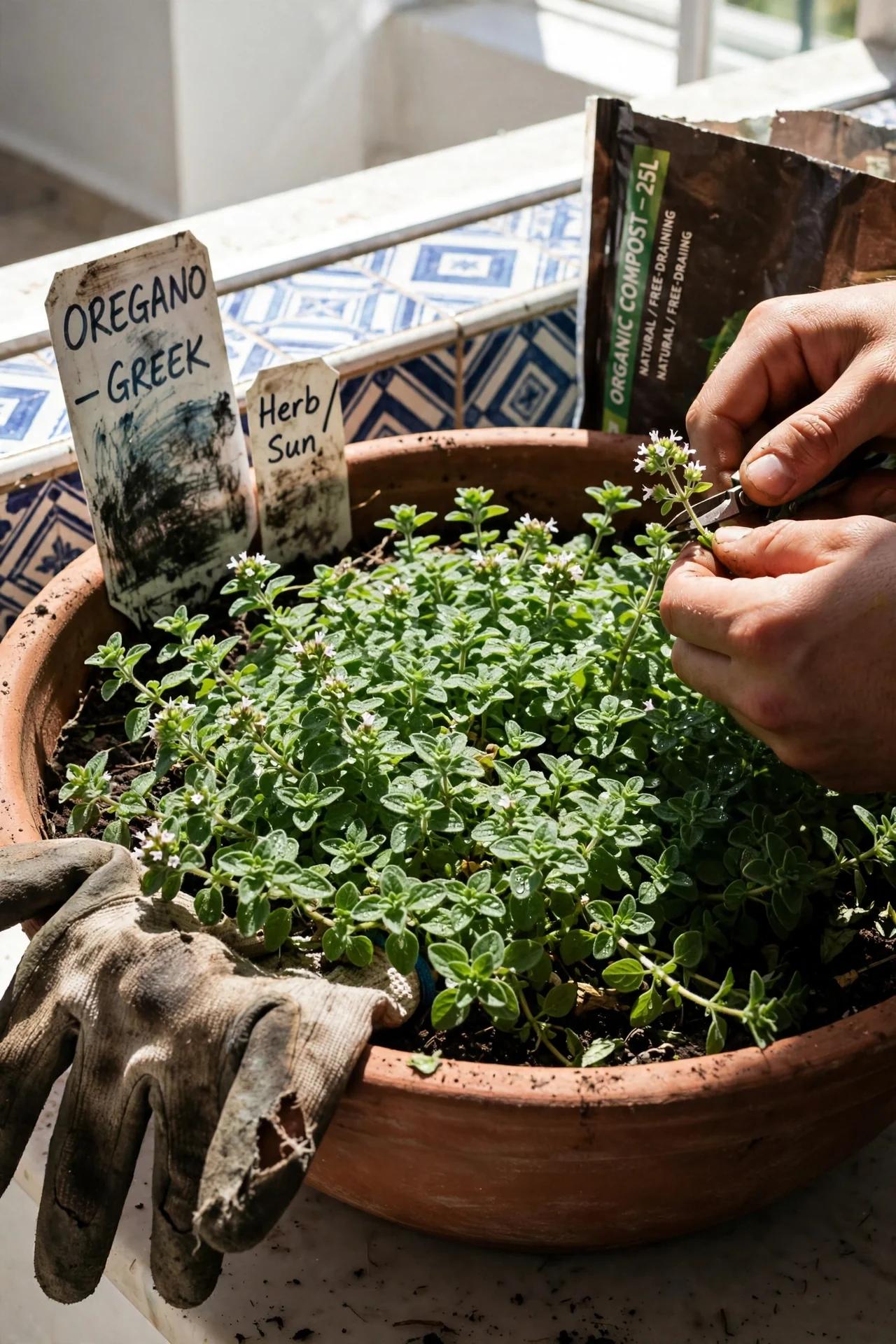
7. Oregano (Greek)
Best for: Branch 1
What it is: A low-spreading perennial from rocky Mediterranean hillsides.
What you get: Intense flavor that increases when you deliberately stress the plant with less water.
10-minute workflow: (1) Water deeply only when leaves begin to feel soft rather than firm. (2) Every 2 weeks, cut back any flowering stems to 1 inch above a leaf pair. (3) Once a month, rinse leaves with room-temperature water to dislodge dust and discourage spider mites. (4) If growth slows, a single dose of half-strength liquid seaweed extract restarts it without overfeeding. Upgrade option: move the pot outdoors to partial shade for 2 weeks in summer to rejuvenate vigor; return indoors before night temperatures drop below 50°F (10°C).
DIY indoor herb garden designs with separate oregano pots give you this dry-down control.
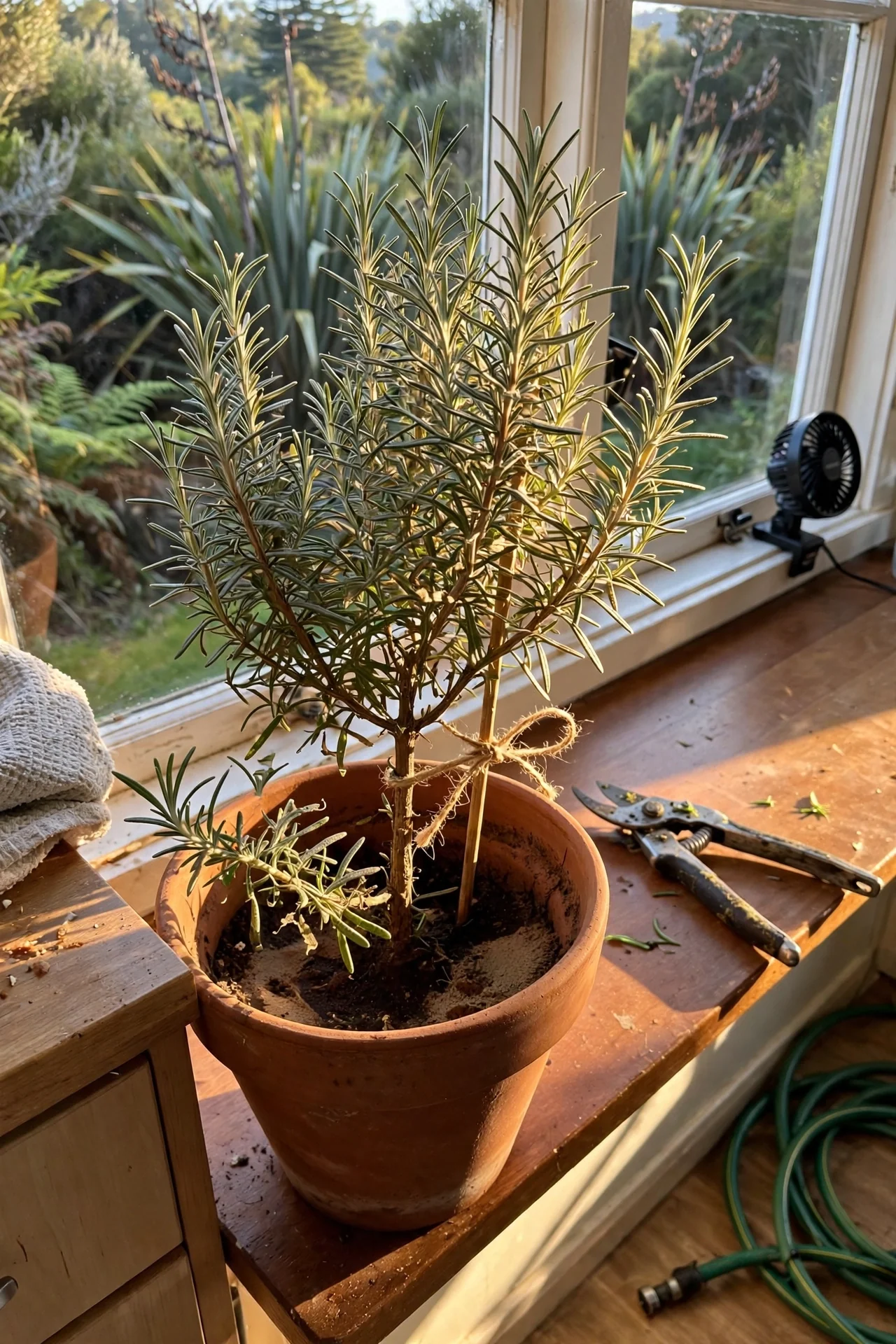
8. Rosemary
Best for: Branch 1
Use if: You have a south-facing window and can run a small fan for 2 hours daily. Without air movement, rosemary develops powdery mildew even when not overwatered.
Skip if: Your home humidity stays above 60%. In that environment, the leaf surface stays wet long enough for fungal spores to germinate. Choose a different herb. The detailed humidity and pruning balance is covered in growing rosemary indoors.
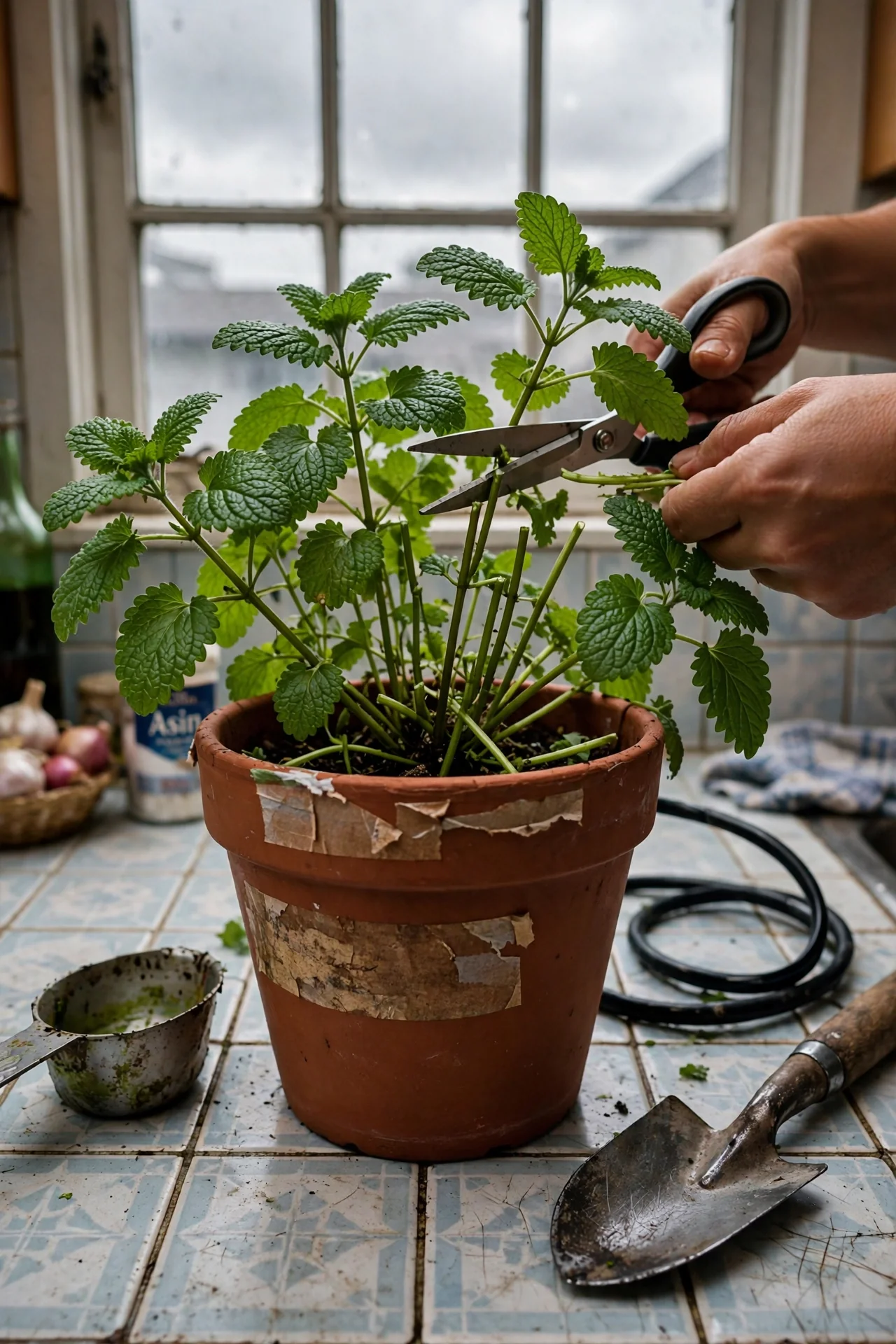
9. Lemon Balm
Best for: Branch 3
Lemon balm behaves like mint in a dim kitchen: it grows, just with longer internodes and milder flavor. Cut it back hard every 4 weeks to prevent it from becoming a stringy mess. The key constraint is pot size; a 6-inch pot limits root run and keeps the plant manageable. It will not achieve the dense, bushy form of outdoor plants, but the leaves will still scent water and tea. No additional fertilizer is needed in low light, as excess nitrogen makes the already weak stems even floppier.
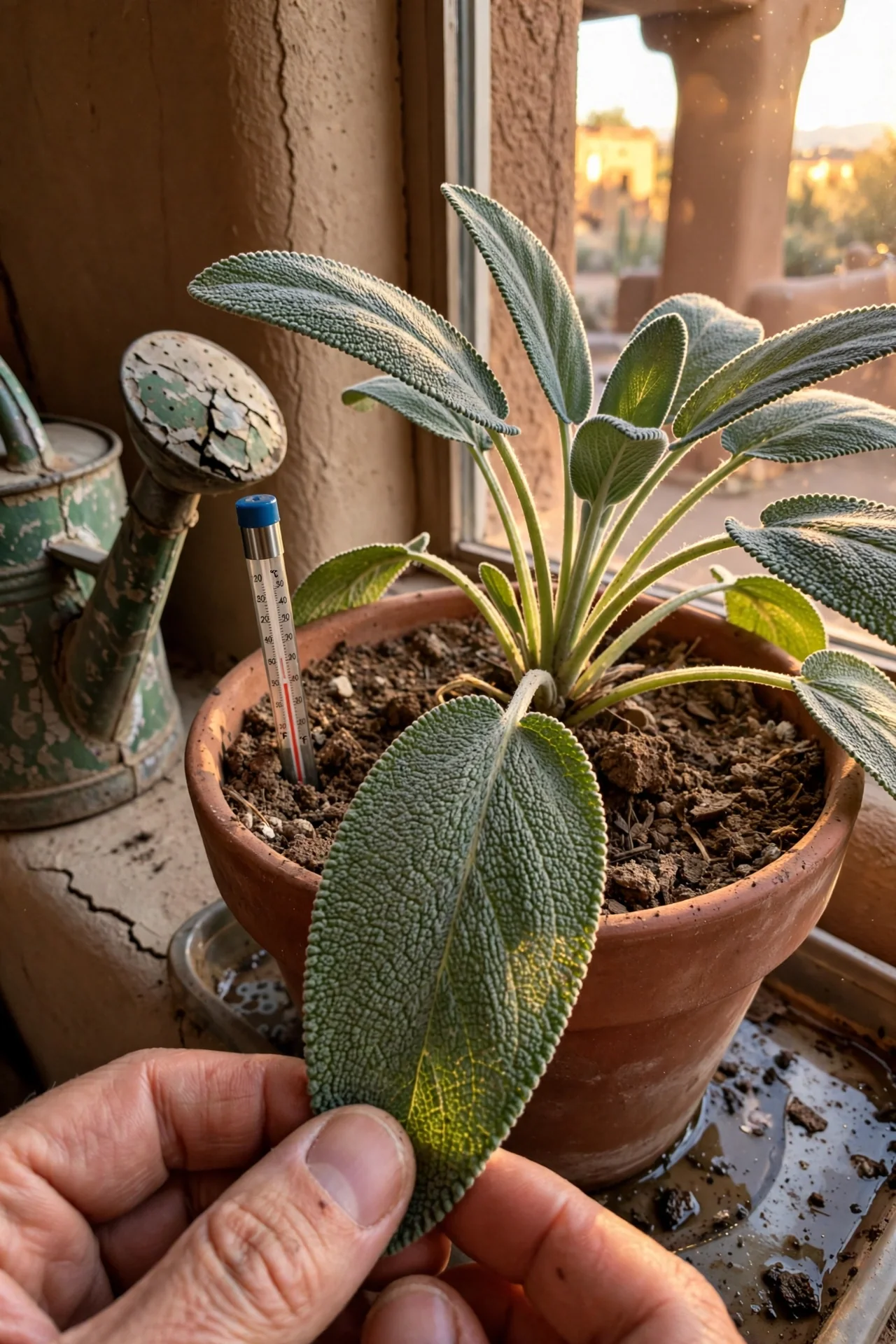
10. Sage (Common Broadleaf)
Best for: Branch 1
What it is: A soft-wooded perennial that requires full-spectrum light to produce the thick, fuzzy leaves that hold its signature savory notes.
What you get: A slow-growing but reliable source of leaves for months, provided you do not overwater.
Blueprint: (1) Pot in unglazed terracotta with a mix of 60% potting soil and 40% coarse perlite. (2) Place directly on the sill where it gets 5+ hours of direct sun; if stems bend, rotate the pot 90 degrees every 3 days. (3) Water only when the pot feels noticeably light; sage leaves turn yellow and drop if the roots sit in damp soil for more than 48 hours. (4) Harvest by snipping individual leaves or short stem tips, never removing more than one-third of the foliage at once.
Mistake to avoid: Misting the leaves. Sage is a dry-climate plant; wet foliage indoors invites powdery mildew. Use a kitchen herb garden ideas layout that separates sage from higher-humidity plants like basil.
11. Dill
Best for: Branch 1
Use if: You have vertical space and a deep pot at least 10 inches tall. Dill’s taproot aborts when it hits the bottom of a shallow container, and the plant bolts early.
Skip if: You cannot stake it. Indoor-grown dill becomes top-heavy once it reaches 12 inches; a thin bamboo stake prevents collapse without damaging the root. Harvest the feathery leaves just before the flowers open for peak flavor.
Starter Stack (What to Choose First)
If you are in Branch 1 (Bright Window)
Start with basil and thyme. Basil delivers quick, tangible harvests that build confidence, while thyme teaches you the dry-down watering rhythm Mediterranean herbs demand. Pair them because both need full sun but basil’s thirst gives you a contrasting check: if your thyme is dry but basil isn’t drooping, you water only basil. Together they cost roughly $12–$20 for seeds and two 6-inch pots, and require about 10 minutes of attention per week.
If you are in Branch 2 (Medium Light)
Start with chives and parsley. Chives survive missed waterings, and parsley provides a steady leafy harvest with minimal intervention. Parsley’s slow germination can be offset by buying a small transplant for $4–$6, while chives grown from a nursery start will give you cuts within 2 weeks. Expect a combined setup cost of $15–$25 and a weekly care time of 5 minutes, primarily harvesting.
If you are in Branch 3 (Low Light or Artificial Only)
Start with mint and lemon balm. Both are near-indestructible in low light if you give each its own container and prune aggressively. Mint in a 6-inch pot and lemon balm in a separate 6-inch pot cost about $10 for two transplants. You will spend maybe 5 minutes per week cutting them back to maintain compact growth; the payoff is fresh leaves for tea and garnishes even in a north-facing kitchen.
When This Won’t Work
This list fails if your brightest window receives zero direct sun and you refuse to add a grow light. Mint and lemon balm will survive, but all Branch 1 and 2 herbs will stretch, lose flavor, and attract fungus gnats. In that scenario, the alternative is to buy a simple LED panel with a timer and target a daily light integral of at least 10 mol/m²/day; without that, you are essentially composting seeds in slow motion.
A second failure condition is growing rosemary or sage in a room with still air and humidity consistently above 65%. Within weeks, you will see white powdery patches on leaves that no amount of pruning will cure. The fix is not a fungicide indoors; it is moving the plant to a drier, airier location or switching to herbs that tolerate high humidity, like mint or lemon balm.
If you are determined to grow Mediterranean herbs in a humid bathroom with a frosted window, expect disappointment. The alternative action is to set up a small herb shelf in a living area with better airflow and, if necessary, a compact clip-on fan running for a few hours each day.
Choosing the Right Option for Your Situation
Budget threshold
If your total budget is under $25, focus on seeds for chives, basil, and cilantro, plus a single bag of potting mix with added perlite. Start in recycled nursery pots with drainage holes. Skip pre-built systems and specialty planters until you confirm you can keep herbs alive for 60 days.
Time threshold
If you have fewer than 10 minutes per week to tend plants, restrict yourself to Effort Score 1 and 2 herbs: chives, mint, thyme, oregano, sage, lemon balm. Avoid basil, cilantro, rosemary, and dill, which demand more frequent checks to avoid bolting or mildew.
Technical constraint (light measurement)
Before buying any plant, measure the actual direct sunlight hours on your intended sill. Use a free light meter app or simply observe on a clear day. Fewer than 4 hours means Branch 2; fewer than 2 hours means Branch 3. The single most reliable predictor of indoor herb failure is guessing instead of measuring.
Yes/No checklist:
Yes: you have a window with at least 2 hours of direct sun OR a grow light.
Yes: you can lift a pot to judge its water weight.
Yes: you will harvest regularly, even if you don’t need the herbs immediately.
No: you plan to use garden soil from outdoors; it compacts and introduces pests.
Expert Q&A
Why does my indoor basil get tall, thin, and stop producing large leaves?
Insufficient light is almost always the cause. Basil needs a minimum daily light integral around 12 mol/m²/day. When light is inadequate, internodes stretch, and the plant prioritizes height over leaf expansion. Even a bright window may need a supplementary LED panel in winter to keep basil compact and productive.
Can I reuse potting soil from a failed indoor herb for a new plant?
It is risky. The old mix may harbor fungal spores, gnat larvae, or accumulated soluble salts from fertilizer. If you must reuse it, pasteurize it in an oven at 180°F (82°C) for 30 minutes, then mix in fresh perlite to restore structure. A new $6 bag of potting mix is usually cheaper than the time and risk.
What is the safest way to get rid of fungus gnats on indoor herbs?
Dry out the top inch of soil thoroughly, then apply a quarter-inch layer of horticultural sand or fine gravel as a mulch. Sticky traps catch adults. Avoid any product that contains imidacloprid on edible herbs. Consistent underwatering solves the root cause better than any spray.
Is it better to start herbs from seed or buy starter plants indoors?
For slow herbs like rosemary and thyme, a starter plant is more reliable and saves months. For fast annuals like basil, cilantro, and dill, seed is cost-effective and avoids the transplant shock that sometimes comes with nursery stock. Match your patience to the herb’s germination time.
Do herbs need fertilizer when grown under artificial light?
Yes, but at reduced strength. Under lights, plants photosynthesize consistently and deplete nutrients faster than in a dim window. Use a balanced liquid fertilizer diluted to half the label rate every 3–4 weeks. Overfeeding under artificial light produces rapid, weak growth with less essential oil.
Conclusion
The single most actionable decision you can make is to measure your window light hours and shop from the matching branch, not from a generic “top 10” list. Ignoring this leads directly to the number one mistake: treating all herbs as if they need the same watering and light. Basil under low light fails; mint in desert-dry air scorches.
If your measurement puts you in Branch 3, your next step is straightforward: evaluate a small LED panel that clips onto a shelf. The right light opens up more of this list, and the best grow lights for herbs need not be expensive or complicated.