
“`html
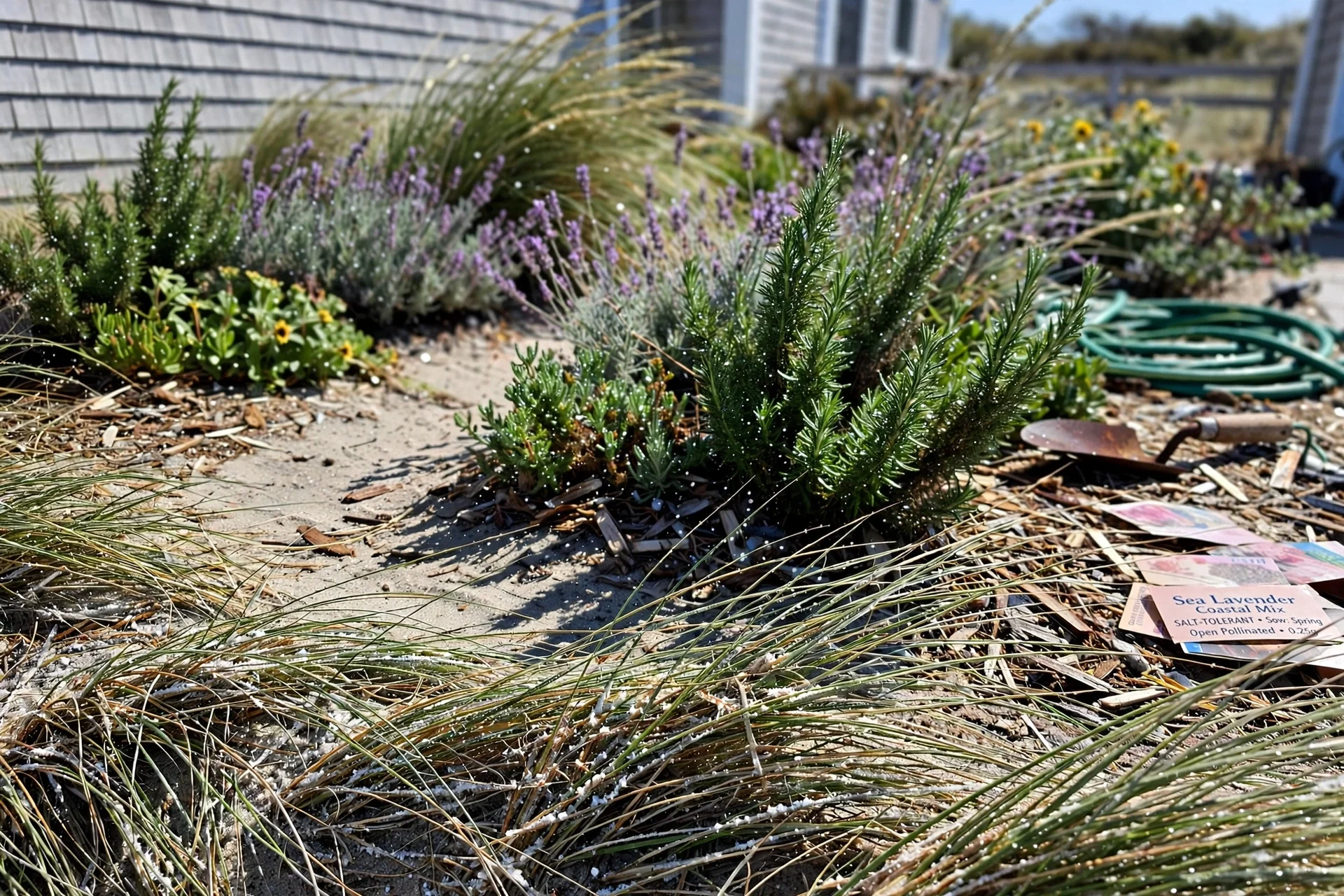
Coastal garden ideas deliver lasting ornamental impact only when you divide your site into three exposure zones based on distance to the shoreline, prevailing wind direction, and soil drainage patterns. This zoning approach turns salt spray, shifting sand, and gusts into design assets by creating self-reinforcing layers of resilient plants and hardscape that protect inner display areas.
The ideas here focus on ornamental gardening for properties in the US, UK, Canada, Australia, and New Zealand. They emphasize design layouts, hardscape choices, and plant groupings suited to sandy soils and coastal conditions. Excluded are edible landscaping, full erosion-control engineering, or inland garden adaptations.
You gain decision tools to match each idea to your exact site conditions, select starter combinations that build protection quickly, and avoid layouts that collapse under repeated salt exposure or wind stress. Concrete criteria help you prioritize what to install first and where.
Bottom line: Map your exposure zones first, then select matching designs to create an ornamental coastal garden that strengthens over time instead of fighting the elements.
The Yield Grid Decision Grid
Branch 1: High exposure. Shoreline within one-eighth mile, frequent visible salt spray on leaves, and sustained winds that move light debris. Focus on low-profile stabilization and mass plantings. Recommended: Items 1, 3, and 6 below. For supporting low-maintenance garden ideas that align with these conditions, see our dedicated guide.
Branch 2: Medium exposure. One-eighth to one mile from water, sandy soil that drains in under 30 minutes after rain, and moderate wind that affects taller stems. Emphasize drainage layers and flexible elements. Recommended: Items 2, 5, and 8 below.
Branch 3: Low exposure. Sheltered by natural dunes or structures yet still coastal with occasional salt mist and fast-draining soil. Prioritize ornamental texture and seating integration. Recommended: Items 4, 7, and 9 below.
Quick Comparison Table
| Option | Key mechanism | Best for | Decision Grid Branch | Effort Score (1-5) |
|---|---|---|---|---|
| 1. Layered Dune Grass Systems with Ornamental Accents | Dense root networks bind sand while taller accents sit behind natural filters | Stabilizing frontal areas with visual movement | 1 | 4 |
| 2. Coastal Gravel Mulch Beds for Quick Drainage | Loose aggregate layer prevents compaction and leaches salt during rainfall | Creating clean, low-weed pathways and planting zones | 2 | 2 |
| 3. Permeable Native Shrub Screens | Staggered planting allows wind to pass through while slowing salt-laden air | Building mid-zone protection without blocking views | 1 | 3 |
| 4. Elevated Rock Garden Pockets for Sandy Slopes | Raised stone arrangements improve drainage and create microclimates | Sloped sites needing structural definition and texture | 3 | 5 |
| 5. Strategic Container Groupings for Flexible Protection | Movable pots cluster to shield tender displays and allow seasonal repositioning | Adapting to changing wind patterns or storm forecasts | 2 | 1 |
| 6. Ornamental Grass Mass Plantings | Clumped grasses create living mulch that filters spray and adds seasonal color | Filling large open areas with low-care texture | 1 | 2 |
| 7. Mediterranean-Inspired Dry Garden Sections | Gravel and herb layers mimic dry coastal conditions for compact form | Areas seeking structured yet relaxed ornamental style | 3 | 3 |
| 8. Terraced Slope Designs with Groundcover Layers | Retaining edges and cascading covers slow water flow and stabilize soil | Handling elevation changes while maintaining flow | 2 | 4 |
| 9. Integrated Seating Areas with Weathered Accents | Built-in benches and driftwood elements create focal points in protected pockets | Maximizing enjoyment in lower-exposure zones | 3 | 3 |
1. Layered Dune Grass Systems with Ornamental Accents
Best for: Branch 1
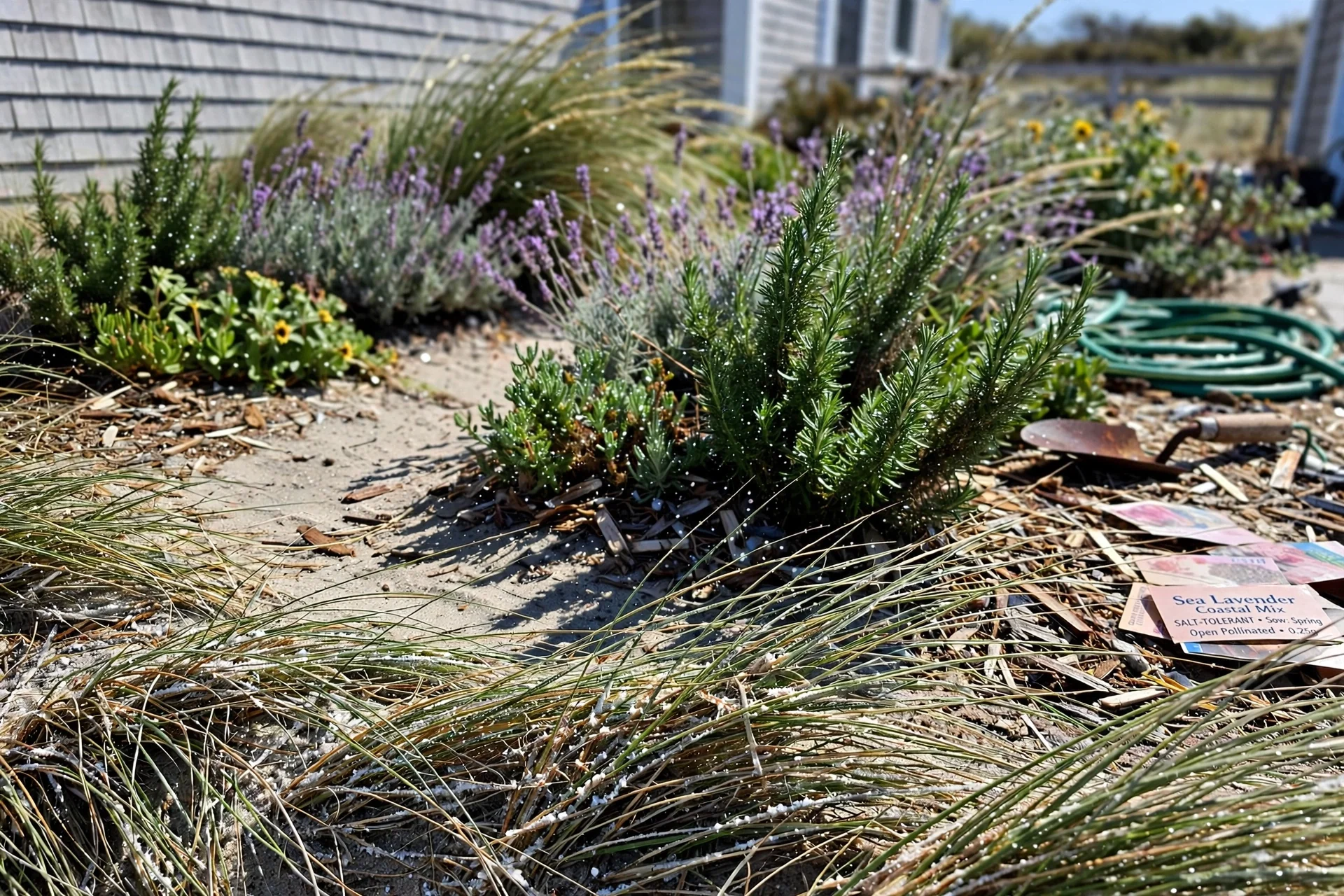
Layered dune grass systems establish the first line of defense in high-exposure coastal sites by using native grasses to trap sand and reduce wind velocity at ground level. Behind this living barrier, insert salt-tolerant ornamental accents such as sea holly or thrift that rise above the grass canopy for color and structure without catching full gusts.
Blueprint starts with site mapping: measure wind direction over one week to align rows perpendicular to prevailing flows. Install grasses in staggered masses spaced 12 to 18 inches apart to allow air movement. Add accents at least 10 feet inland from the primary grass line. Finish with a 2-inch gravel collar at the base to deter weeds and aid drainage.
Common mistake: placing tall accents in the front row, which turns them into sails and leads to stem breakage during storms. This design delivers ongoing sand stabilization while creating rhythmic ornamental waves visible from the house or path.
2. Coastal Gravel Mulch Beds for Quick Drainage
Best for: Branch 2
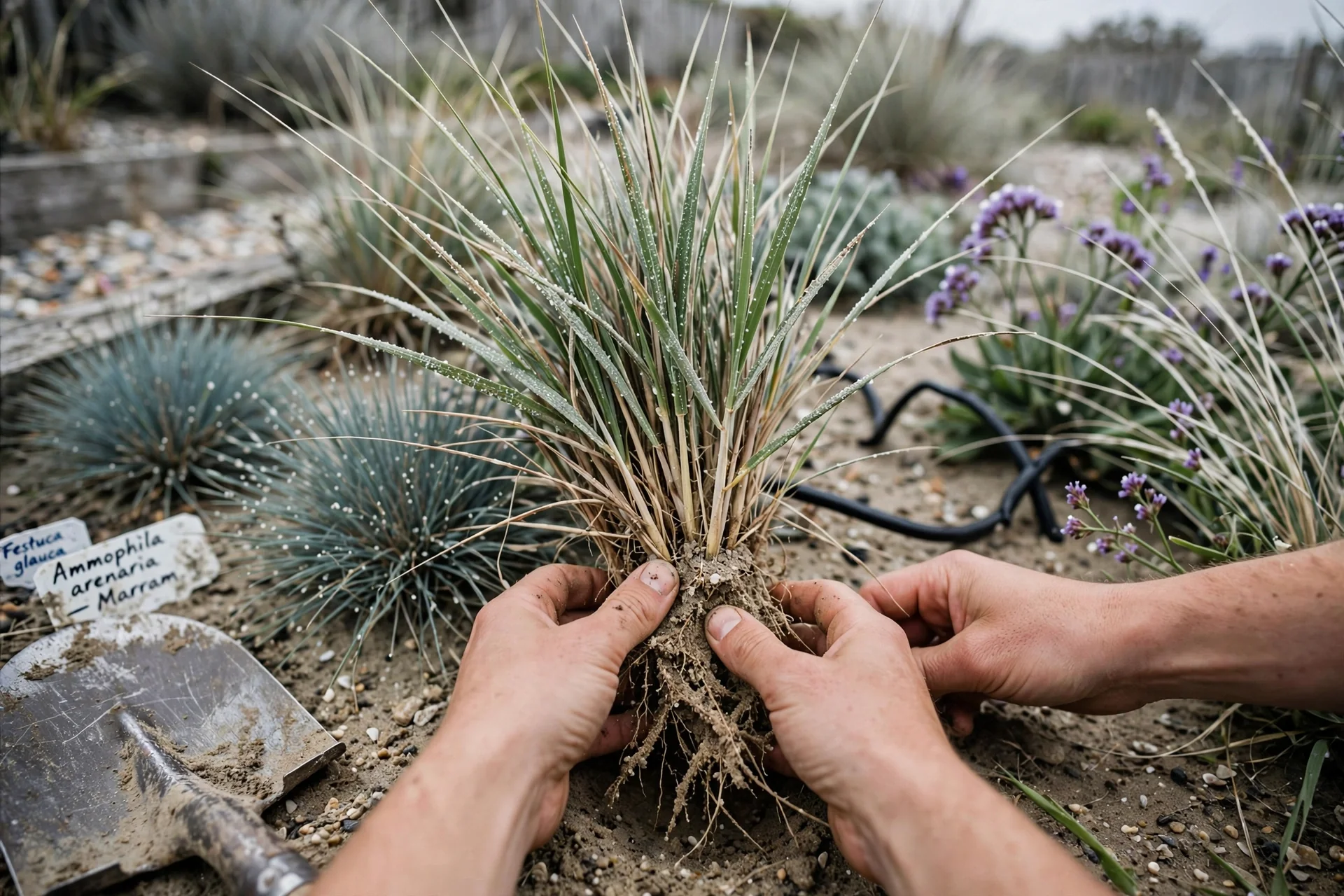
Use versus skip: deploy coastal gravel mulch beds when your medium-exposure site has sandy soil that puddles briefly after rain or shows salt crust after dry spells. Skip if your area has heavy foot traffic that displaces loose stone or if you prefer lush lawn-style coverage. These beds pair especially well with our gravel garden ideas for seamless integration.
3. Permeable Native Shrub Screens
Best for: Branch 1
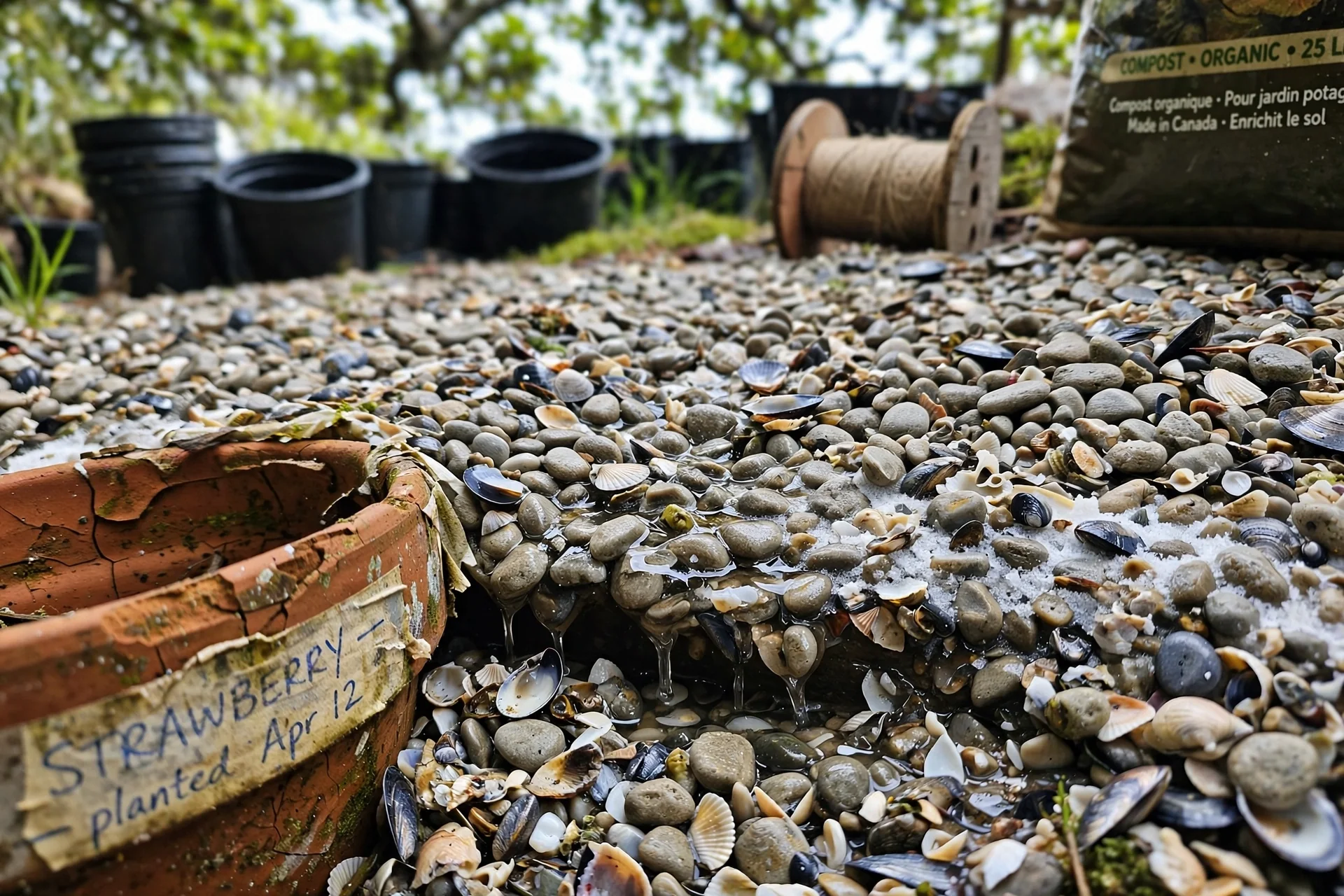
Permeable native shrub screens rely on a threshold rule: install only when wind measurements at plant height exceed 12 mph on more than half of spring and fall days. Choose species such as wax myrtle or groundsel that maintain open branching even at maturity. Space plants 3 to 4 feet apart in a double staggered row to create filtration without solid blockage.
Adjust the depth of the screen based on available space: one row suffices for moderate filtering, two rows for stronger protection of inner beds. Edge the base with low ornamental perennials to hide bare soil during establishment. This setup protects ornamental displays behind it while preserving ocean views.
4. Elevated Rock Garden Pockets for Sandy Slopes
Best for: Branch 3
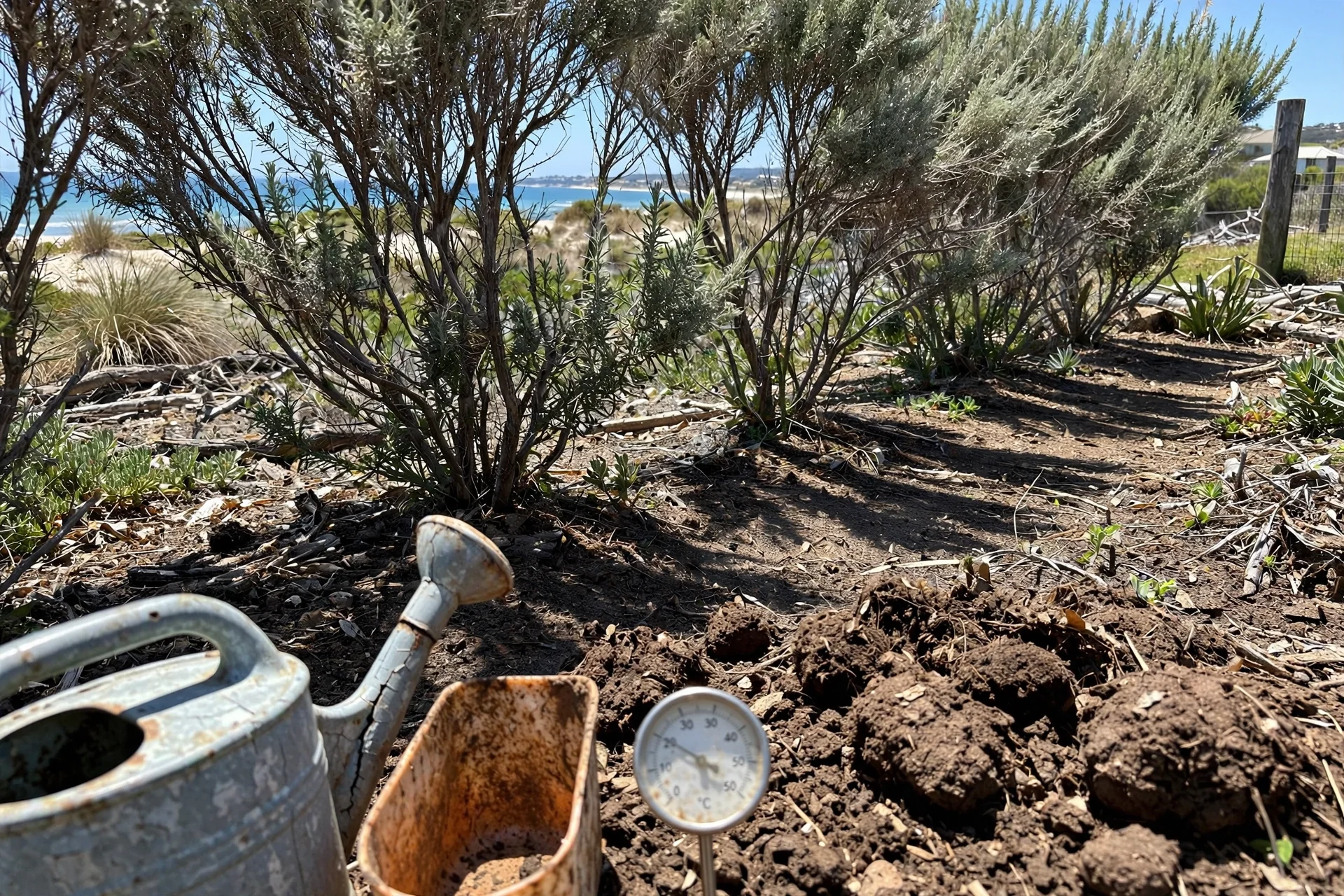
10-minute workflow for elevated rock garden pockets: first, walk the slope and mark pockets every 8 to 10 feet where drainage naturally concentrates. In each pocket, excavate 8 inches deep and backfill with a 50-50 mix of existing sand and coarse gravel. Position larger rocks to form low retaining lips on the downslope side. Plant 3 to 5 compact ornamentals such as lavender or sedum per pocket. Upgrade option: incorporate small driftwood pieces for visual anchors that weather naturally.
This method counters rapid drainage on slopes while creating defined ornamental pockets that require no frequent irrigation once established. It also prevents soil wash during heavy rains common in coastal zones.
5. Strategic Container Groupings for Flexible Protection
Best for: Branch 2
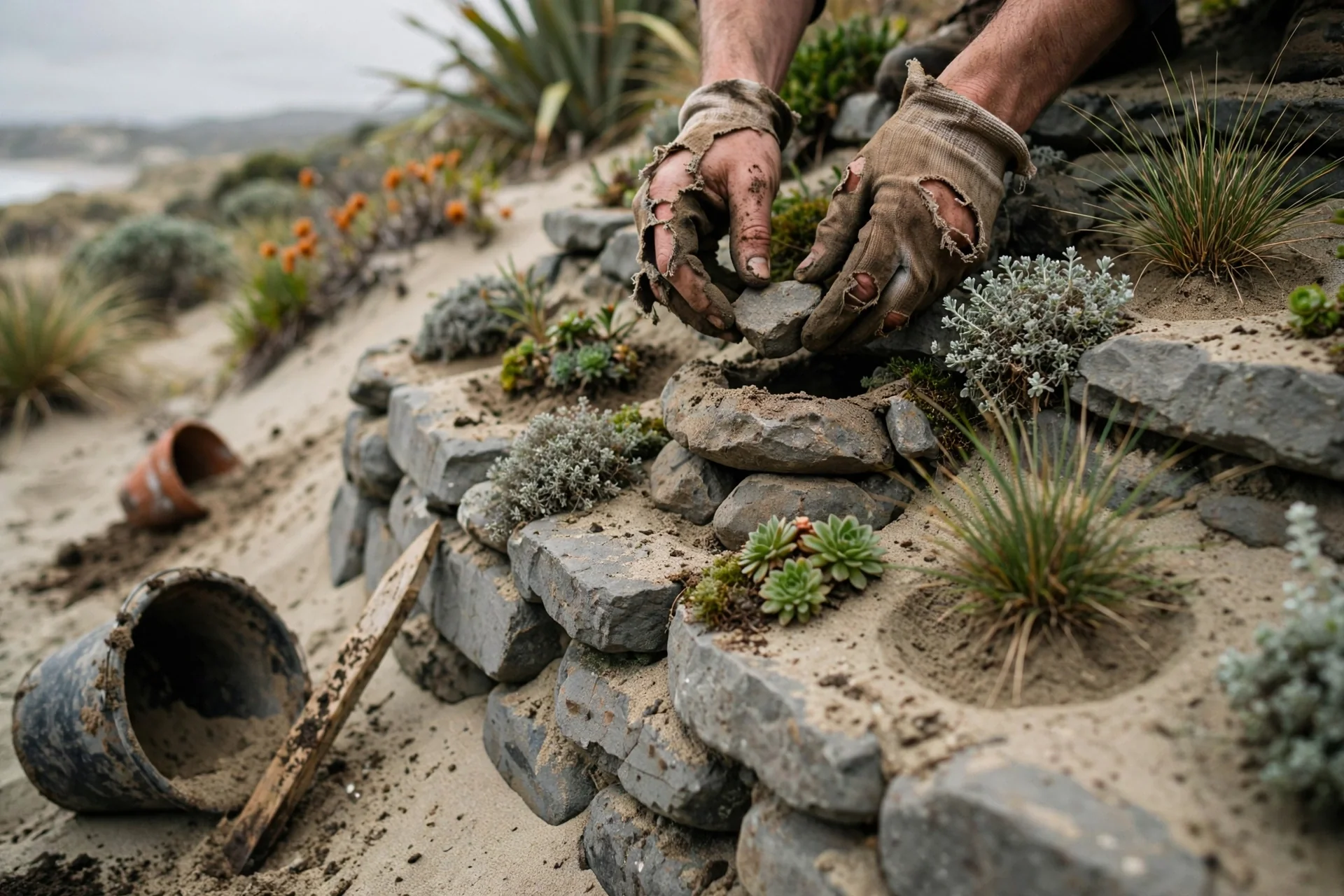
Strategic container groupings allow repositioning before storms or during peak salt periods. Group three to five large pots (at least 18 inches in diameter) in a semicircle on the windward side of sensitive displays. Fill with fast-draining potting mix amended with extra perlite. Choose salt-tolerant ornamentals such as agapanthus or cordyline for the containers themselves. This approach appears in greater detail in our container garden ideas.
6. Ornamental Grass Mass Plantings
Best for: Branch 1
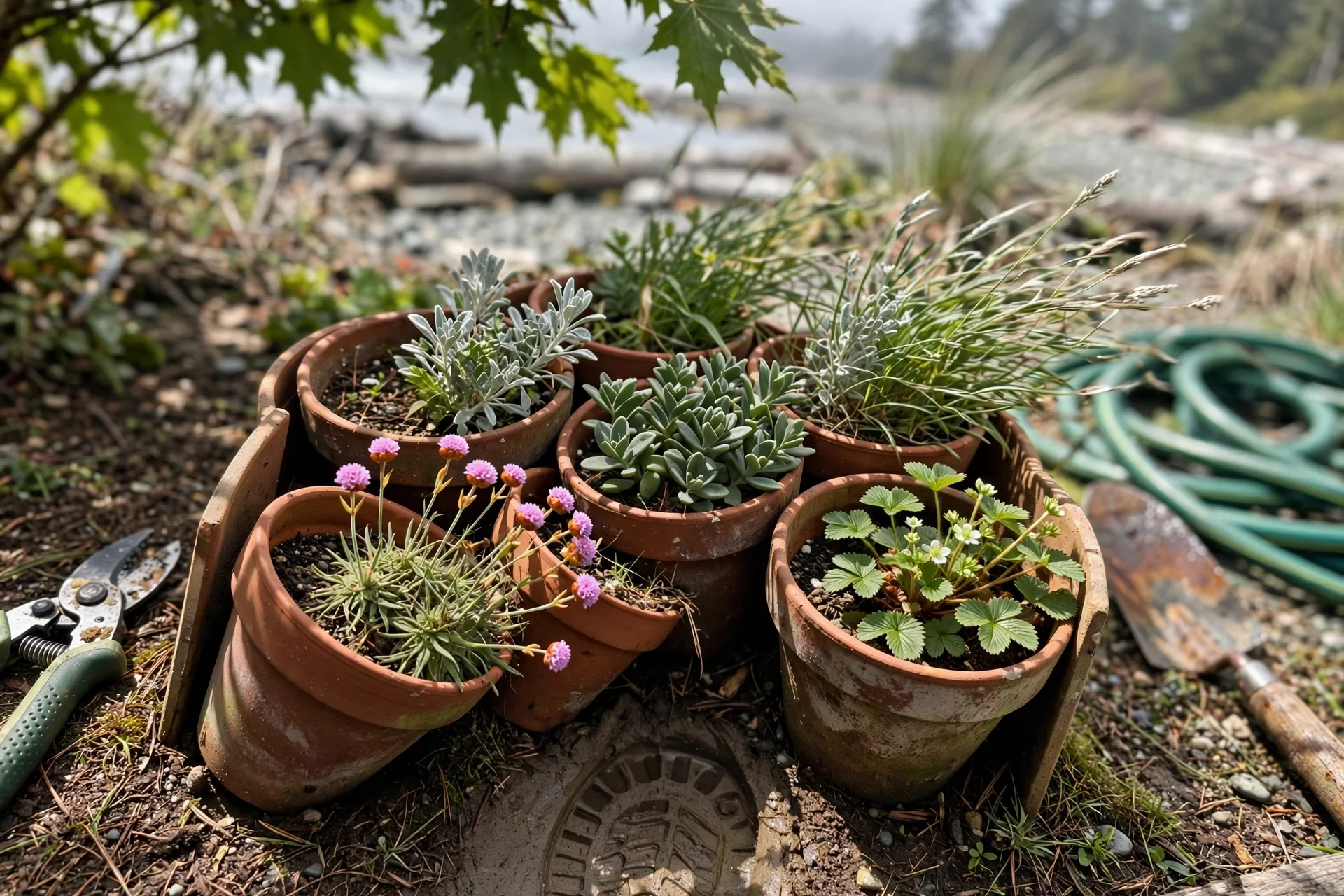
Ornamental grass mass plantings create living mulch that filters salt spray at the leaf level while adding movement and seasonal seed heads. Plant in groups of at least nine individuals spaced 18 inches apart to form self-supporting clumps. Varieties such as pink muhly or blue fescue perform reliably in sandy coastal soils with minimal supplemental water after the first season.
Edge the mass with low stones or shells to contain spread and enhance the coastal aesthetic. The massed habit protects individual plants from wind whipping and reduces bare-soil evaporation. See our xeriscape ideas for complementary dry-tolerant companions.
7. Mediterranean-Inspired Dry Garden Sections
Best for: Branch 3
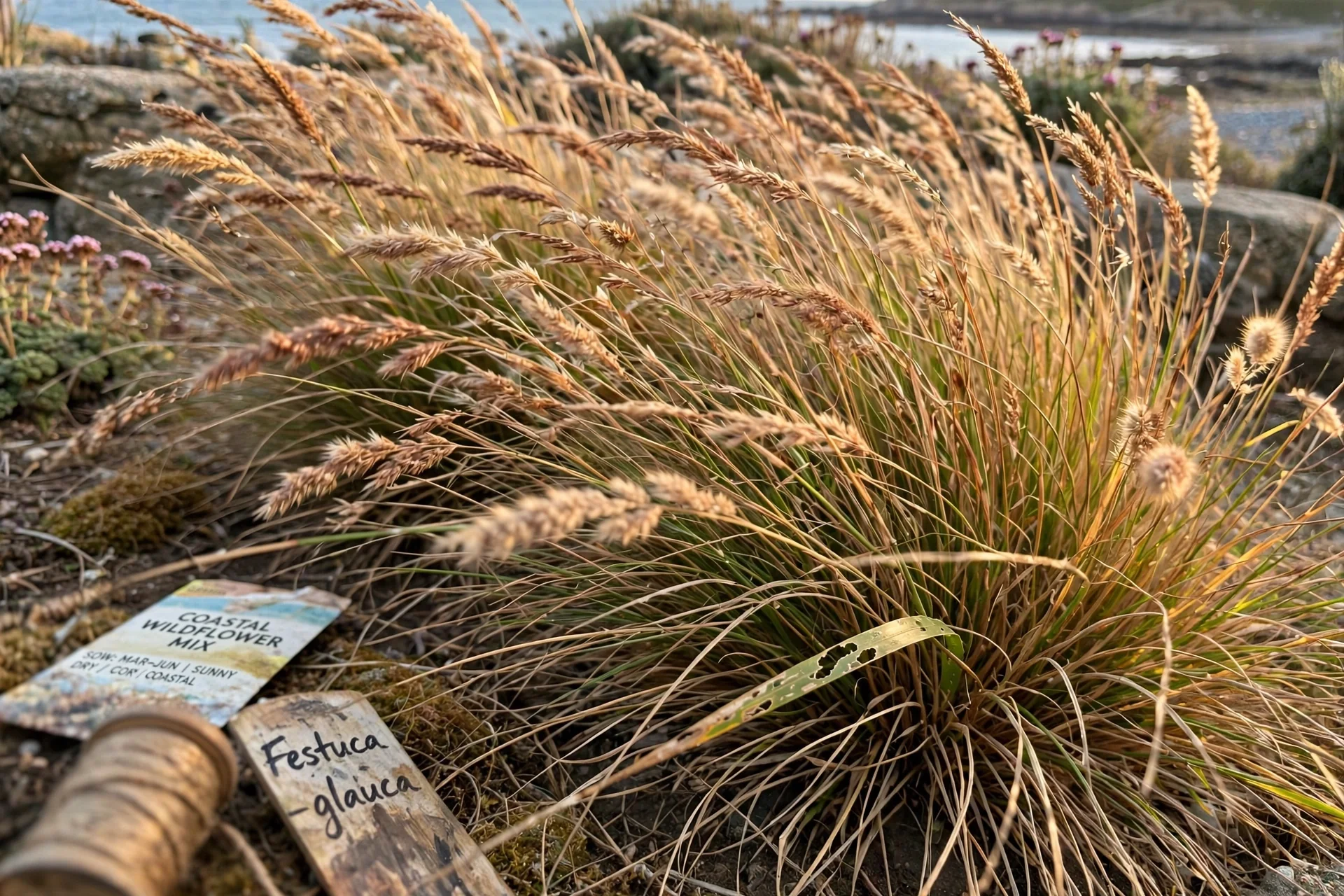
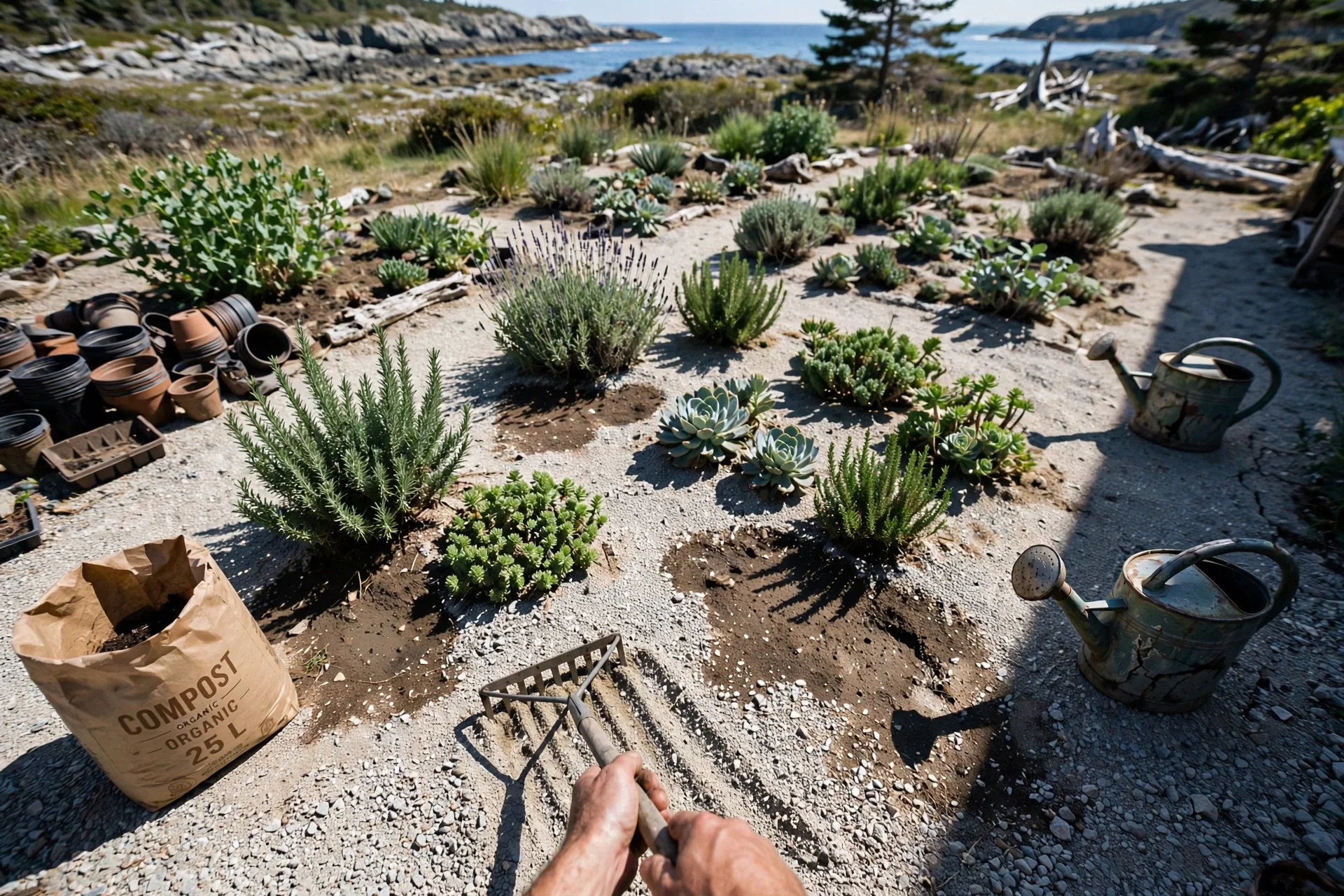
Mediterranean-inspired dry garden sections adapt well to low-exposure coastal pockets by using gravel surfaces and compact shrubs that stay naturally tight in windy conditions. Lay a 3-inch base of mixed pea gravel and crushed shell, then plant herbs such as rosemary and sage alongside ornamental succulents. The loose surface reflects heat and reduces soil salinity buildup over time.
This layout requires only annual light raking to maintain appearance. It draws directly from our mediterranean garden ideas for structured yet relaxed planting palettes suited to coastal dryness.
8. Terraced Slope Designs with Groundcover Layers
Best for: Branch 2
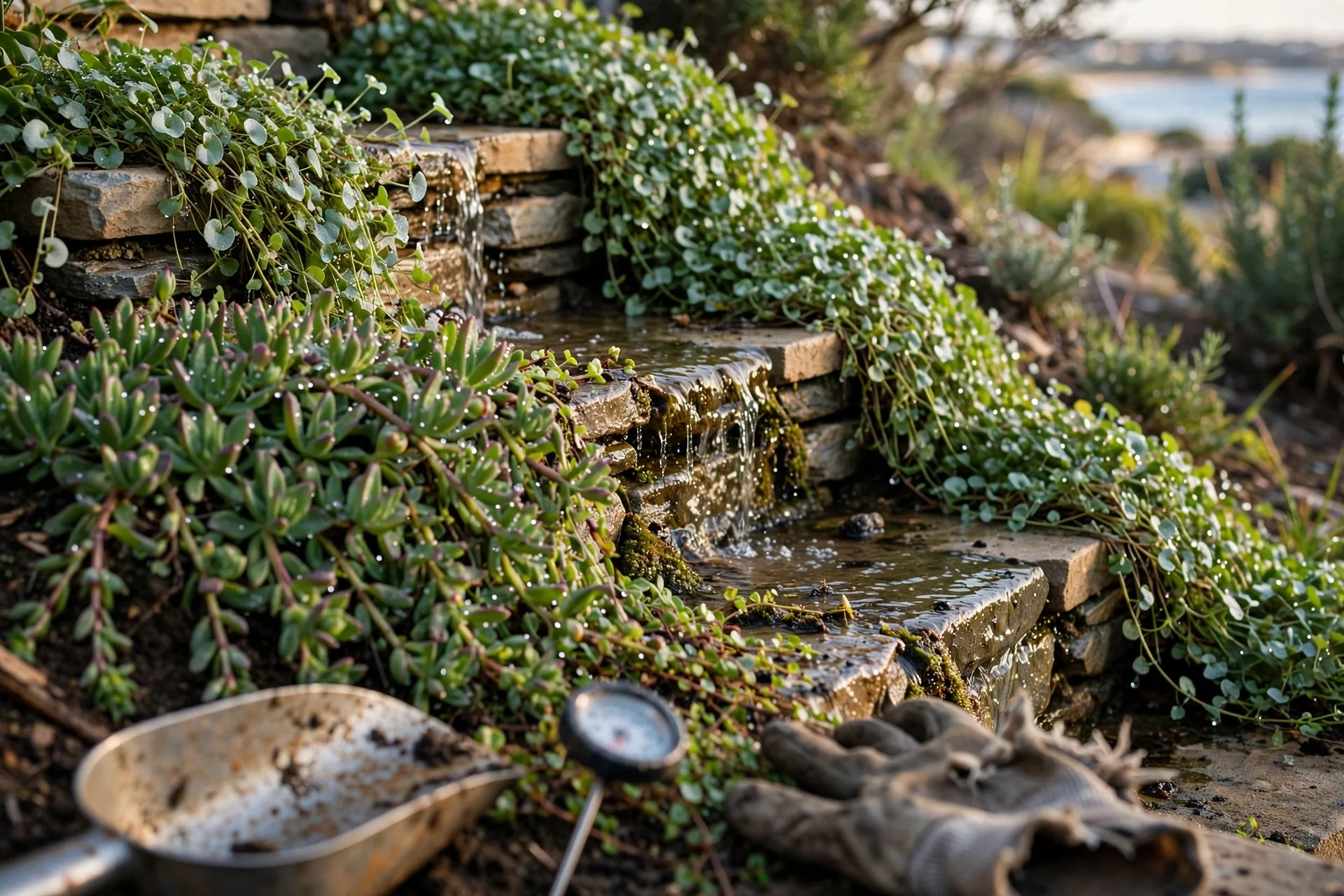
Terraced slope designs address elevation changes in medium-exposure sites by creating shallow steps reinforced with low retaining edges of stacked stone or timber. Between terraces, plant cascading groundcovers such as creeping thyme or ice plant that root into the slope and slow runoff. Each terrace level receives a 2-inch gravel top dressing to maintain drainage.
Limit terrace height to 12 inches per step to avoid excessive construction while still stabilizing soil. This configuration integrates with our slope landscaping ideas for reliable results on coastal inclines.
9. Integrated Seating Areas with Weathered Accents
Best for: Branch 3
Integrated seating areas place simple benches or Adirondack chairs within protected low-exposure pockets, surrounded by weathered wood or stone accents that echo beach debris. Position seating to face the water yet remain shielded by nearby grass or shrub layers. Use local stone or recycled timber for the base to blend with the site.
Add low ornamental plantings at the perimeter for soft framing without obstructing views. These zones become the primary enjoyment spaces once the outer defenses are in place.
Starter Stack (What to Choose First)
For Branch 1 (High exposure)
Start with Item 1 (Layered Dune Grass Systems) plus Item 6 (Ornamental Grass Mass Plantings). The dune grass establishes the outer stabilizer within the first growing season while the mass planting fills immediately behind it for added filtration and texture. Combined materials and labor range from 300 to 700 dollars and require two weekends of work.
For Branch 2 (Medium exposure)
Begin with Item 2 (Coastal Gravel Mulch Beds) plus Item 8 (Terraced Slope Designs). Gravel beds provide instant drainage across flat areas while terracing handles any slope sections. Together they create a clean framework that supports future plant additions. Expect costs of 250 to 550 dollars and one weekend plus one follow-up day.
For Branch 3 (Low exposure)
Launch with Item 4 (Elevated Rock Garden Pockets) plus Item 9 (Integrated Seating Areas). Pockets define structure on slopes or flat zones while seating turns the space usable right away. Synergy comes from using the same stone palette for both elements. Budget 400 to 800 dollars and allow two to three weekends depending on slope complexity.
When This Won’t Work
These coastal garden ideas will not succeed on sites that experience regular tidal inundation where water stands for more than 24 hours after storms. Salt accumulation then exceeds what even tolerant species can process, leading to widespread decline regardless of zoning. Switch instead to elevated hardscape-only designs or consult local coastal regulations for permitted structures.
A second failure condition occurs on properties with persistent heavy shade from neighboring buildings or tall trees. Coastal ornamentals selected here require full sun for compact growth and salt resistance. In such cases, move to container groupings that can be relocated to sunny windows during peak seasons. Our container garden ideas offer detailed layouts for these situations.
Choosing the Right Option for Your Situation
Budget threshold
If your total project budget sits under 500 dollars, select from Items 2, 5, or 6. These rely primarily on plant masses and simple mulch rather than stone or timber. Above 500 dollars, Items 4 and 8 become viable for added structure.
Time threshold
Weekend warriors should limit to Items 2, 5, or 6, each completable in one or two days. For those with two or more weekends available, Items 1, 4, and 8 provide higher long-term returns through layered defense.
Technical constraint: soil drainage speed
Dig a test hole 12 inches deep and fill with water. If it drains in under 20 minutes, any of the nine ideas work. If drainage exceeds 40 minutes, prioritize Items 2 and 4 to avoid salt retention in slower soils.
Yes/No checklist:
– Does your site match one Decision Grid branch? Yes → proceed.
– Can you install the Starter Stack first? Yes → begin there.
– Is drainage adequate or improvable with gravel? Yes → select matching items.
– Do you have full sun in target zones? Yes → all options viable.
Expert Q&A
How do I measure my garden’s exposure zone accurately?
Walk the property on three separate days with steady wind and note where salt residue appears on test leaves or where debris collects. Combine this with distance to the shoreline: under one-eighth mile equals high exposure. Record wind direction with a simple flag or app over one week to confirm prevailing patterns.
What height works best for coastal windbreak plantings?
Keep the mature height of the first windbreak row under 4 feet in high-exposure zones to prevent sail effect. Stagger subsequent rows slightly taller only if space allows, maintaining permeable gaps so air flows through rather than over the top and creating turbulence behind.
Can I add a water feature without increasing salt problems?
Yes, but locate it in Branch 3 sheltered pockets and line the basin with gravel to promote quick evaporation of any salt-laden overflow. Choose a shallow fountain style that circulates water daily rather than still ponds that concentrate minerals.
How often should I wash salt from ornamental foliage in coastal gardens?
Apply overhead irrigation for 10 to 15 minutes after any dry period lasting longer than 10 days when winds have carried visible spray. This timing prevents buildup on leaves while the fast-draining soils prevent root issues from extra water.
What edge treatment prevents gravel from migrating into lawn areas?
Install a 4-inch deep metal or recycled plastic edging buried halfway, with the exposed lip angled slightly inward. This contains loose aggregate on sloped or windy sites without requiring constant maintenance.
Conclusion
The core decision in coastal garden design is matching your exposure zone to the right layered layout. The most frequent mistake is installing tall or solid elements in high-exposure areas, which amplifies wind damage instead of reducing it. Zoning and starting with the recommended stack prevent that outcome and deliver ornamental gardens that improve with each season.
Next step: review your site drainage and wind patterns this weekend, then install the Starter Stack for your branch. For complementary ideas that replace traditional lawns in coastal settings, explore our lawn alternatives guide.
“`