
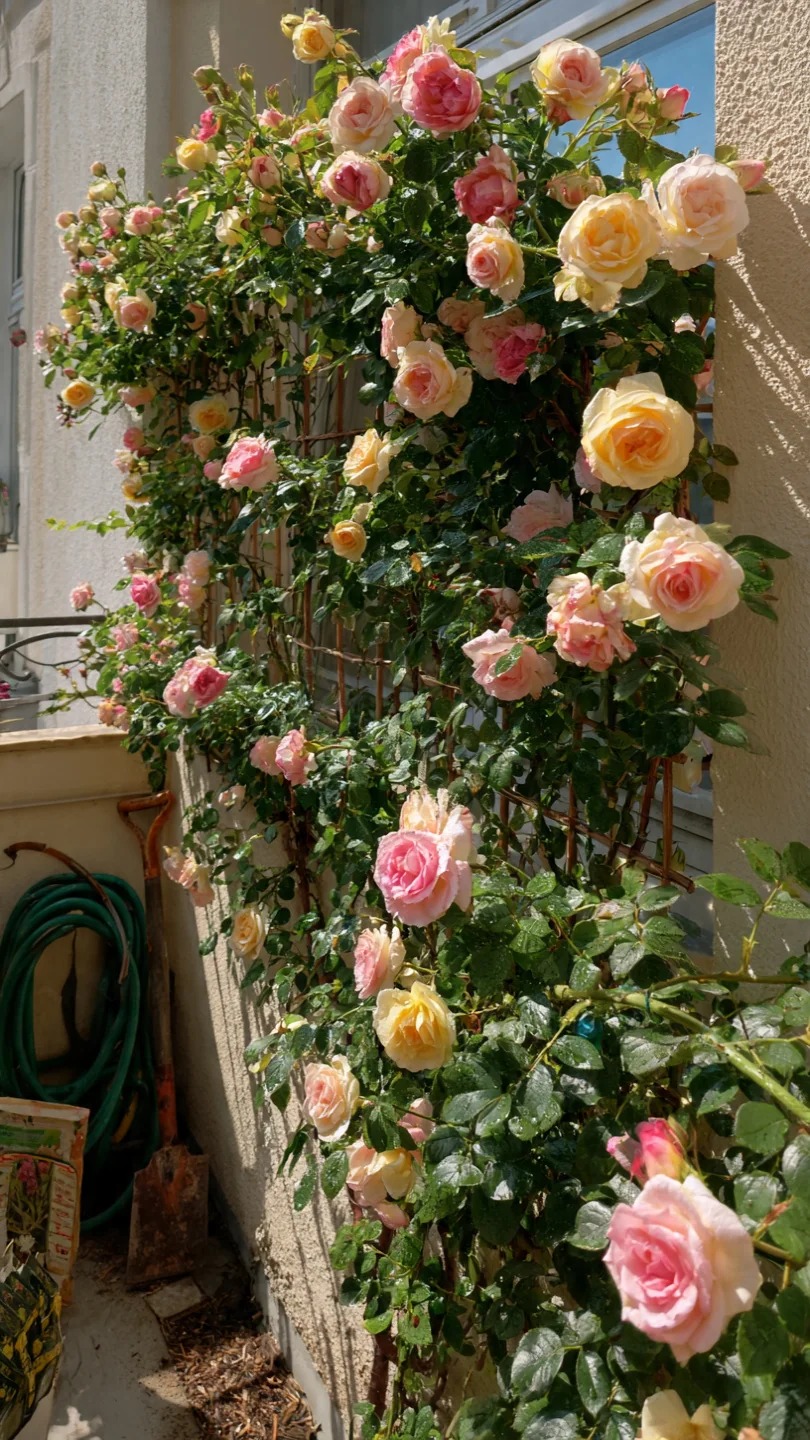
The climbing rose trellis that lasts aligns its load-bearing points, horizontal tie spacing, and wall clearance directly to your rose variety’s cane stiffness and your balcony or patio constraints. Most options ignore this match and fail under bloom weight or trap moisture against walls.
This guide covers only vertical supports suited to urban small spaces: wall-mounted grids, compact freestanding forms, and low-footprint arches. It excludes large pergolas, ground-cover roses, and non-climbing varieties.
You will finish with a clear choice that prevents collapse, promotes airflow, and simplifies training, no matter if your space measures under 3 square feet or sits beside a narrow path.
Bottom line: Match the trellis mechanics to your Decision Grid branch first, then install once and train horizontally for reliable coverage.
The Yield Grid Decision Grid
Branch 1: Limited footprint (under 3 square feet of ground space and wall or fence available). Conditions include balconies or narrow patios where depth stays below 12 inches. Recommended: Items 1, 4, and 7 below.
Branch 2: Moderate patio space (3 to 6 square feet footprint with open ground). Conditions include small yards needing upright height without blocking light. Recommended: Items 2, 5, and 8 below.
Branch 3: Path or entrance coverage (arch required over walkway or gate). Conditions include 4 to 8 feet of width where height frames a passage. Recommended: Items 3, 6, and 9 below.
For year-round performance in any branch, follow the vertical garden maintenance guide.
Quick Comparison Table
| Option | Key mechanism | Best for | Decision Grid Branch | Effort Score |
|---|---|---|---|---|
| Wall-Mounted Wire Grid Trellis | Horizontal wires at 12 to 18 inch intervals with 4 to 6 inch wall gap | Airflow on vertical surfaces | 1 | 1 |
| Freestanding Obelisk Trellis | Tapering square frame with cross braces | Compact upright growth in open ground | 2 | 2 |
| Cattle Panel Garden Arch | Curved heavy-gauge wire panel between posts | Pathway coverage with strong load capacity | 3 | 4 |
| Wooden Lattice Panel | Diagonal slats forming 6 inch diamonds anchored to frame | Traditional look with easy tie points | 1 | 3 |
| PVC Pipe Vertical Frame | Schedule 40 pipes joined with elbows and tees | Lightweight custom height in tight spots | 2 | 2 |
| Metal Rose Arbor | Powder-coated steel arch with vertical bars | Durable entrance framing | 3 | 3 |
| Bamboo Ladder Trellis | Vertical canes with horizontal rungs tied at 12 inch spacing | Natural material in humid microclimates | 1 | 1 |
| Modern Modular Panel | Interlocking powder-coated steel grids | Expandable clean lines | 2 | 2 |
| DIY Pallet Vertical Trellis | Disassembled pallet slats remounted vertically | Repurposed wood with wide spacing | 3 | 3 |
Wall-Mounted Wire Grid Trellis
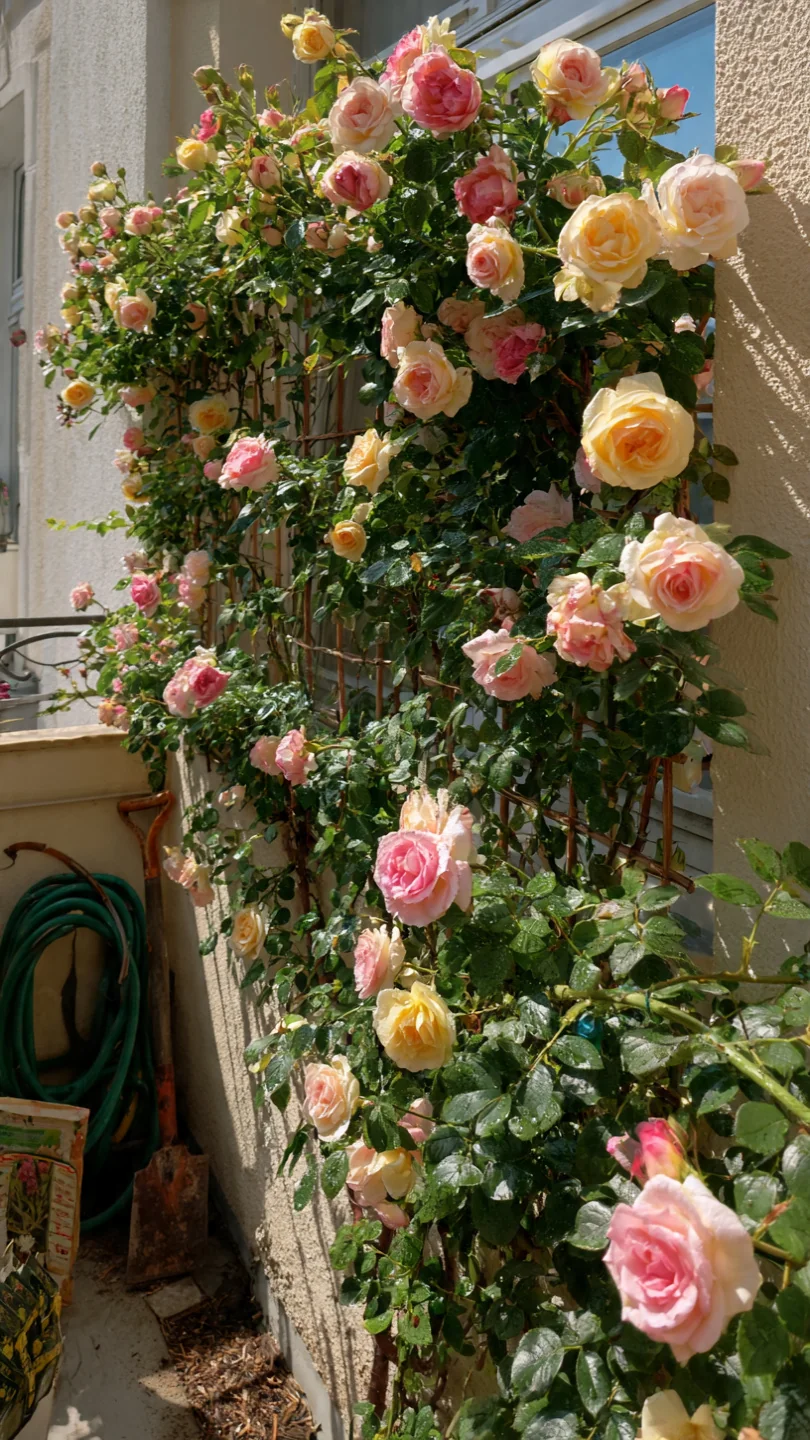
Best for: Branch 1
Horizontal wire spacing matters more than pattern. Set the lowest wire 24 inches above soil, then repeat every 12 to 18 inches up to the target height of your rose. This forces canes sideways and triggers side shoots for bloom density. Maintain a 4 to 6 inch gap between grid and wall using stand-off brackets or spacers to keep foliage dry and reduce black spot risk in humid urban air. Edge case: stiff-caned hybrid tea climbers need extra cross wires every 24 inches horizontally to prevent bowing. Threshold rule: if your rose reaches over 12 feet at maturity, double the top two wire gauges to 12 gauge minimum. Training takes under 20 minutes per season once established.
Freestanding Obelisk Trellis
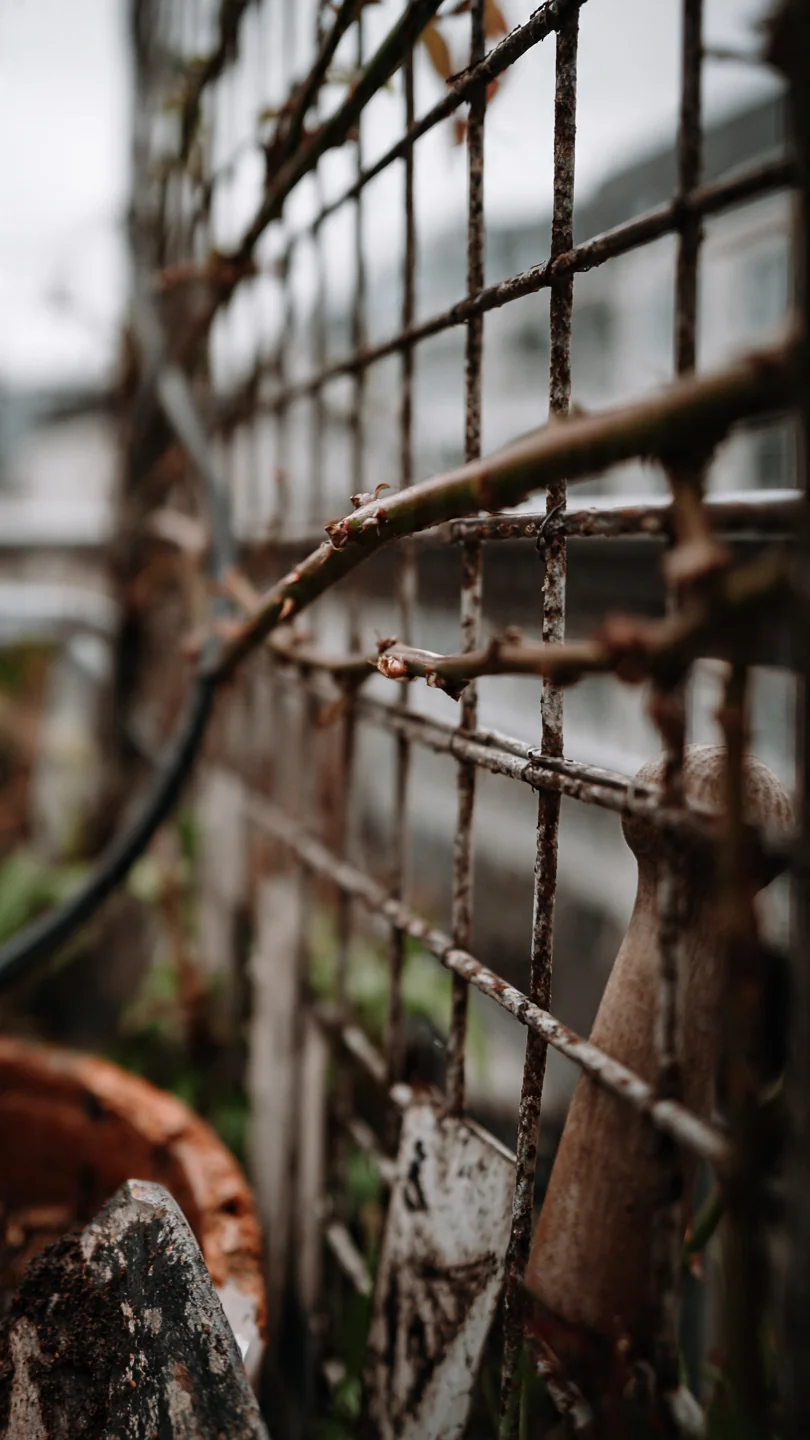
Best for: Branch 2
Use this when ground space allows a 2 foot by 2 foot base but you need 6 to 8 feet of height without wall access. Skip it for ramblers with flexible canes over 15 feet because the taper restricts spread and forces vertical growth that reduces flowers.
Cattle Panel Garden Arch
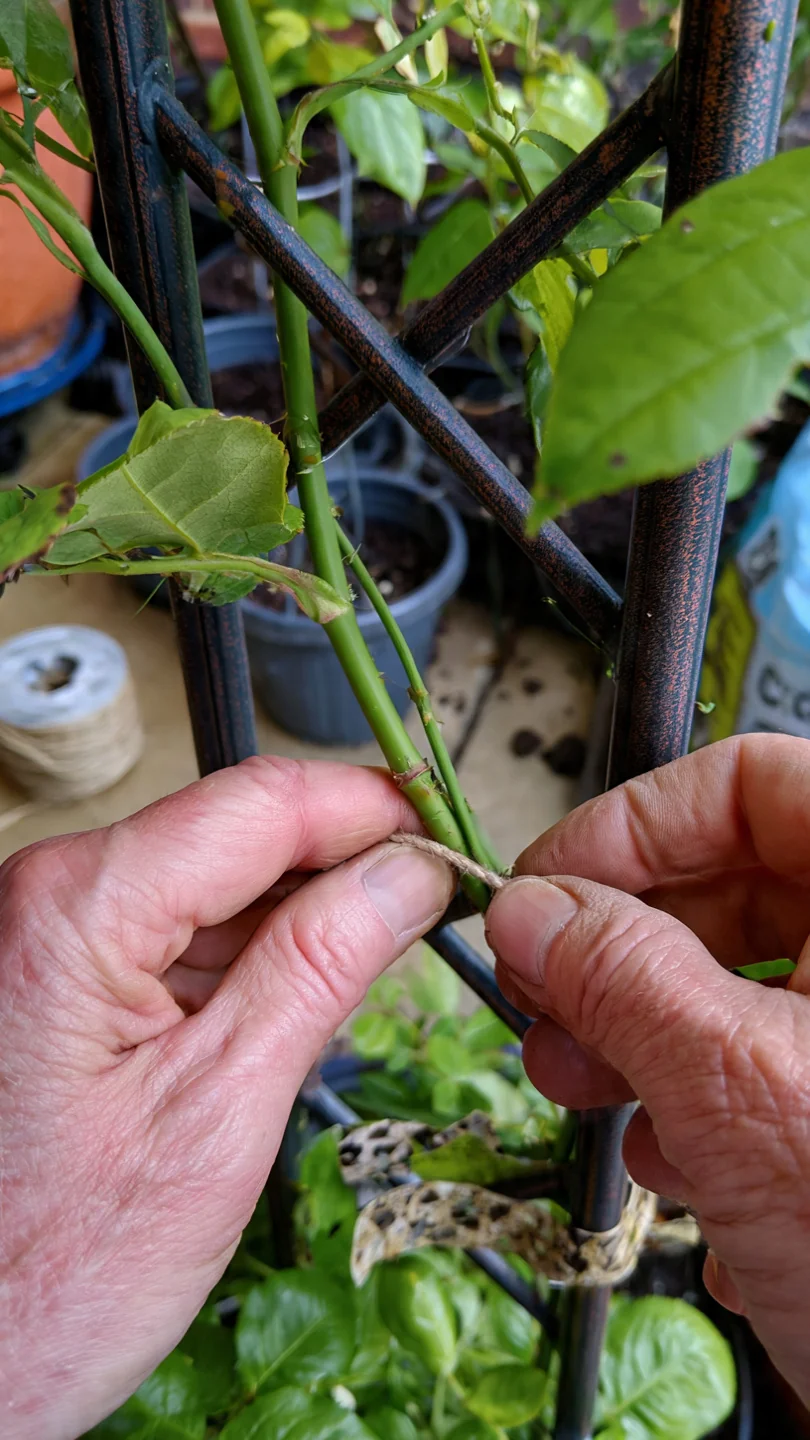
Best for: Branch 3
Blueprint: sink two 4 by 4 posts 24 inches deep and 48 to 60 inches apart. Bend a 50 inch wide heavy-gauge cattle panel into an arch and secure with wire ties. Add two horizontal braces at 36 and 60 inches height for cane training. Total build uses only post hole digger, level, and pliers. Mistake to avoid: using light-gauge garden fencing instead of cattle panel, which sags under wet bloom weight.
Wooden Lattice Panel
Best for: Branch 1
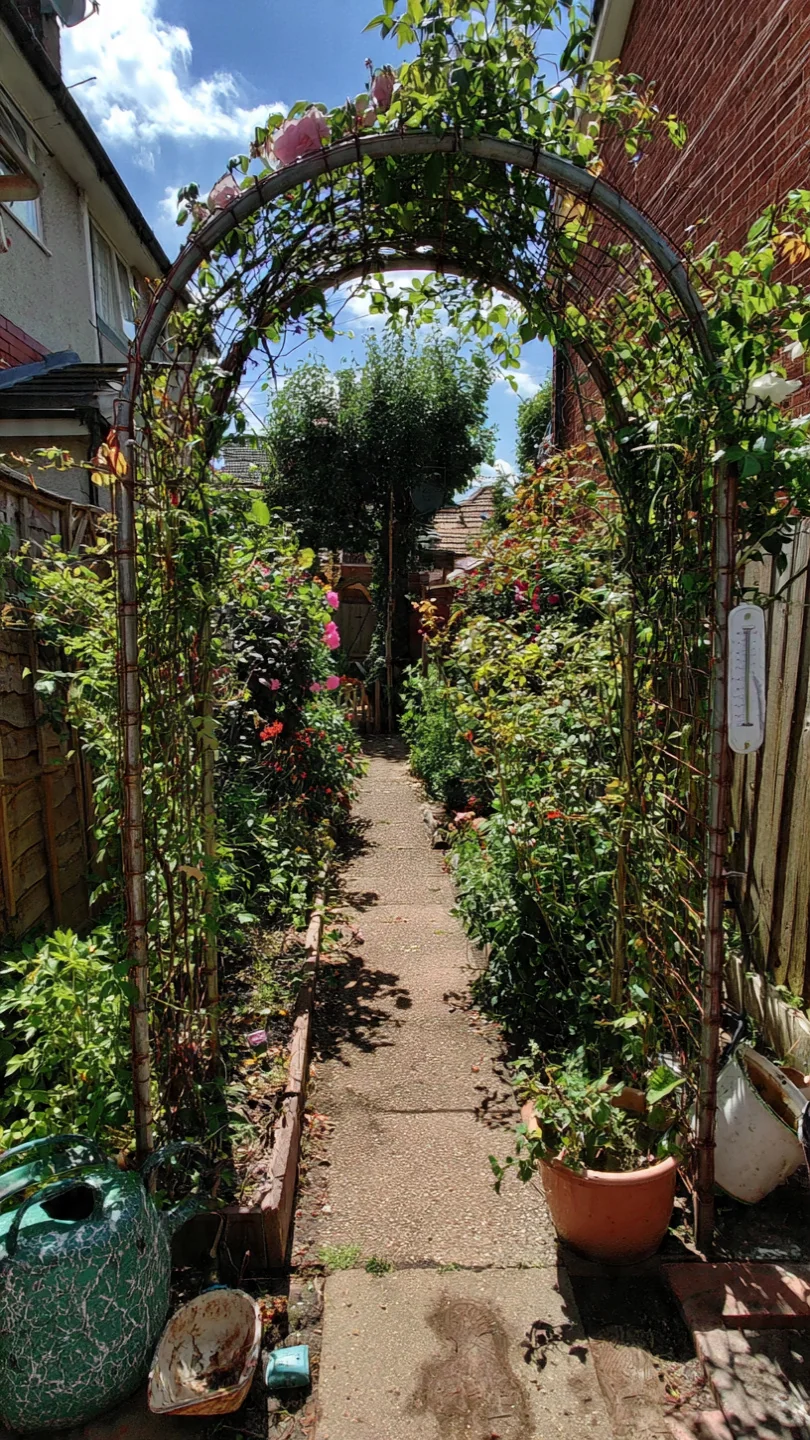
10-minute workflow: pre-assemble a 4 by 8 foot cedar frame on sawhorses, screw lattice sheets to the front, attach 4 inch stand-off blocks to the back, then mount to wall studs with lag screws. Upgrade option: add a second panel offset by 12 inches for layered depth and easier pruning access. This gives classic diamond tie points every 6 inches while the gap preserves airflow. In small urban settings the panel covers 32 square feet of vertical surface with zero ground footprint.
PVC Pipe Vertical Frame
Best for: Branch 2
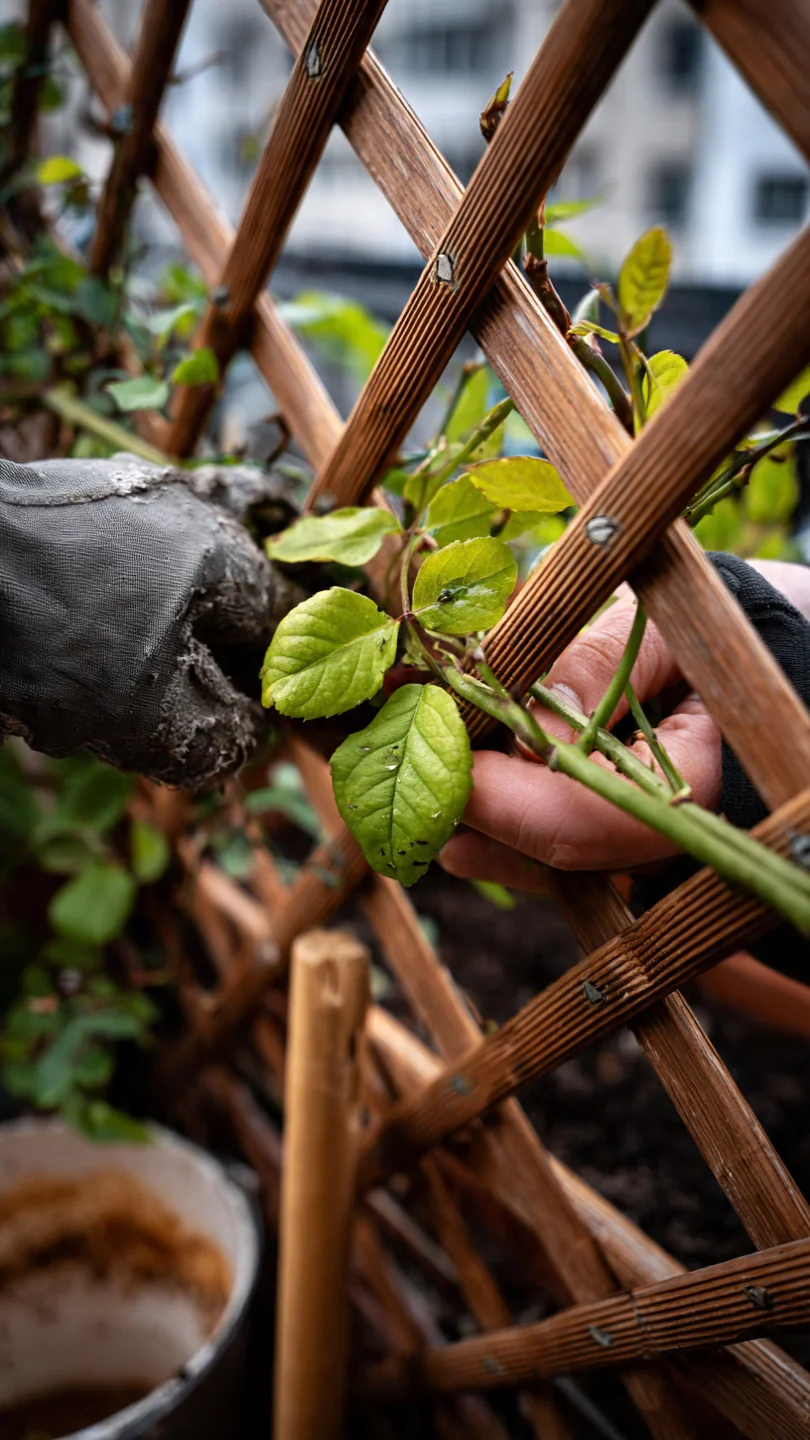
Choose when weight stays light and you want to adjust height seasonally. Skip in high-wind zones above 15 mph average because joints flex over time.
Metal Rose Arbor
Best for: Branch 3
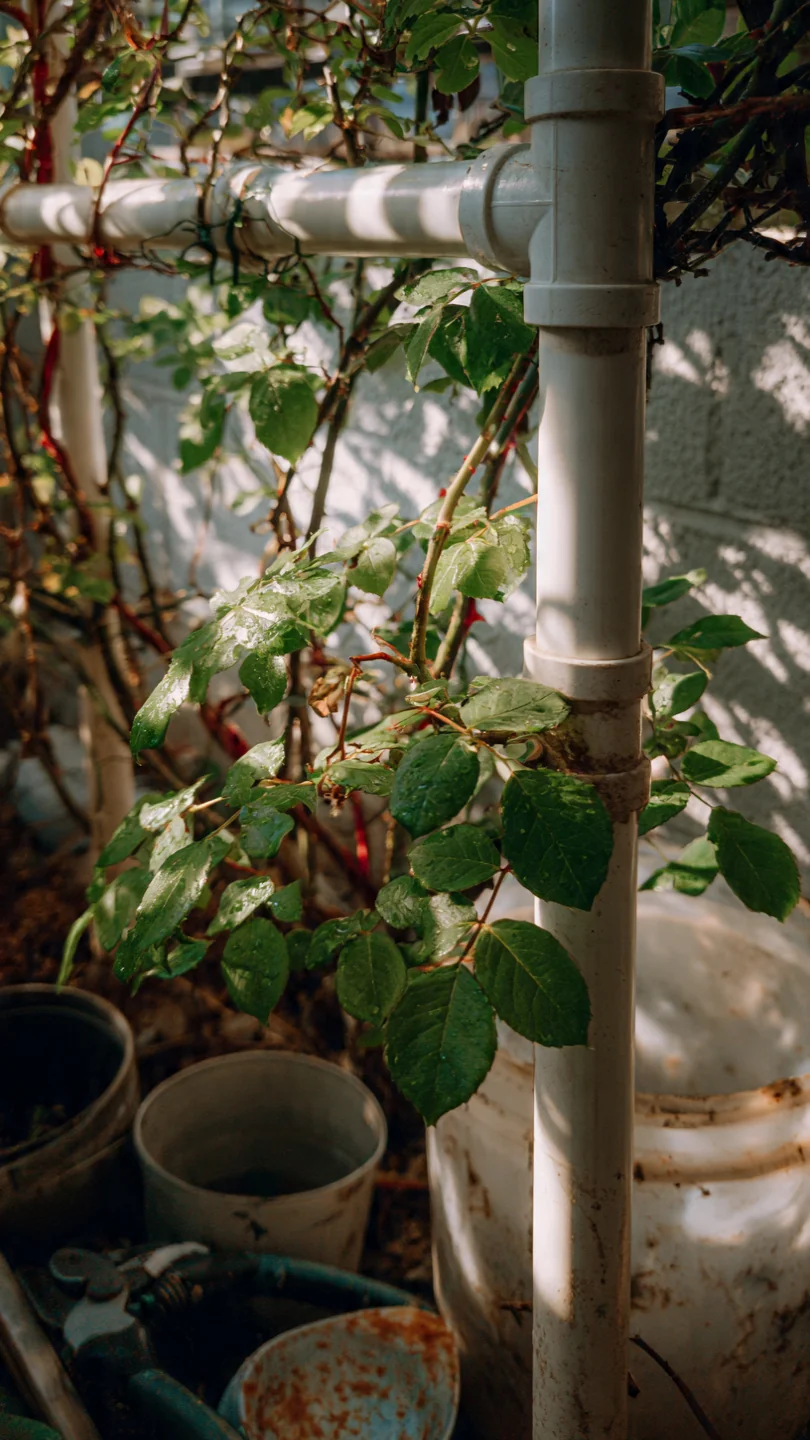
Powder-coated steel bars spaced 6 inches apart handle heavy canes without rust in most climates. Anchor legs 18 inches into soil or concrete footings for stability. The arch form naturally guides canes outward, creating even coverage on both sides of a path. In urban gardens this option frames entrances while using under 5 square feet of ground space.
Bamboo Ladder Trellis
Best for: Branch 1
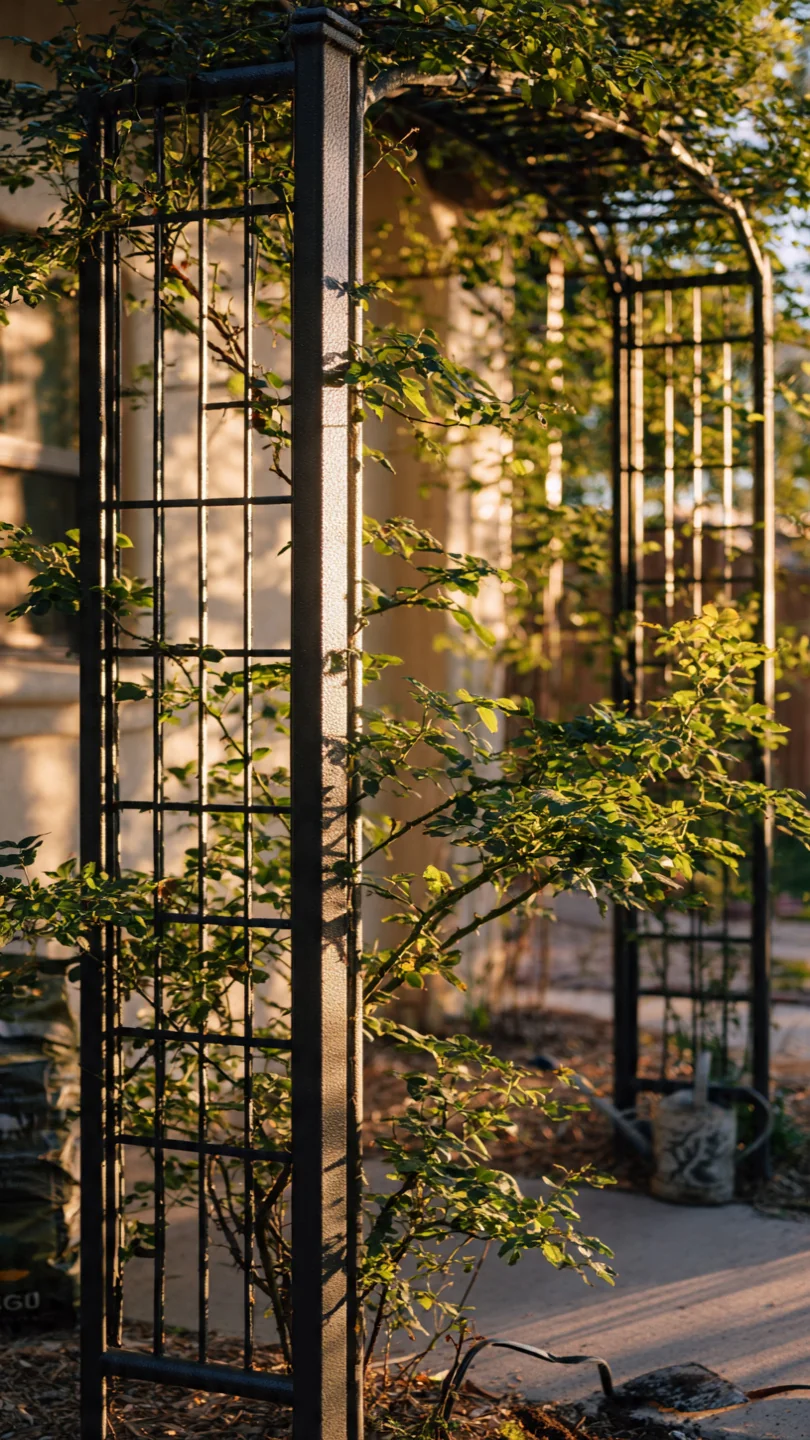
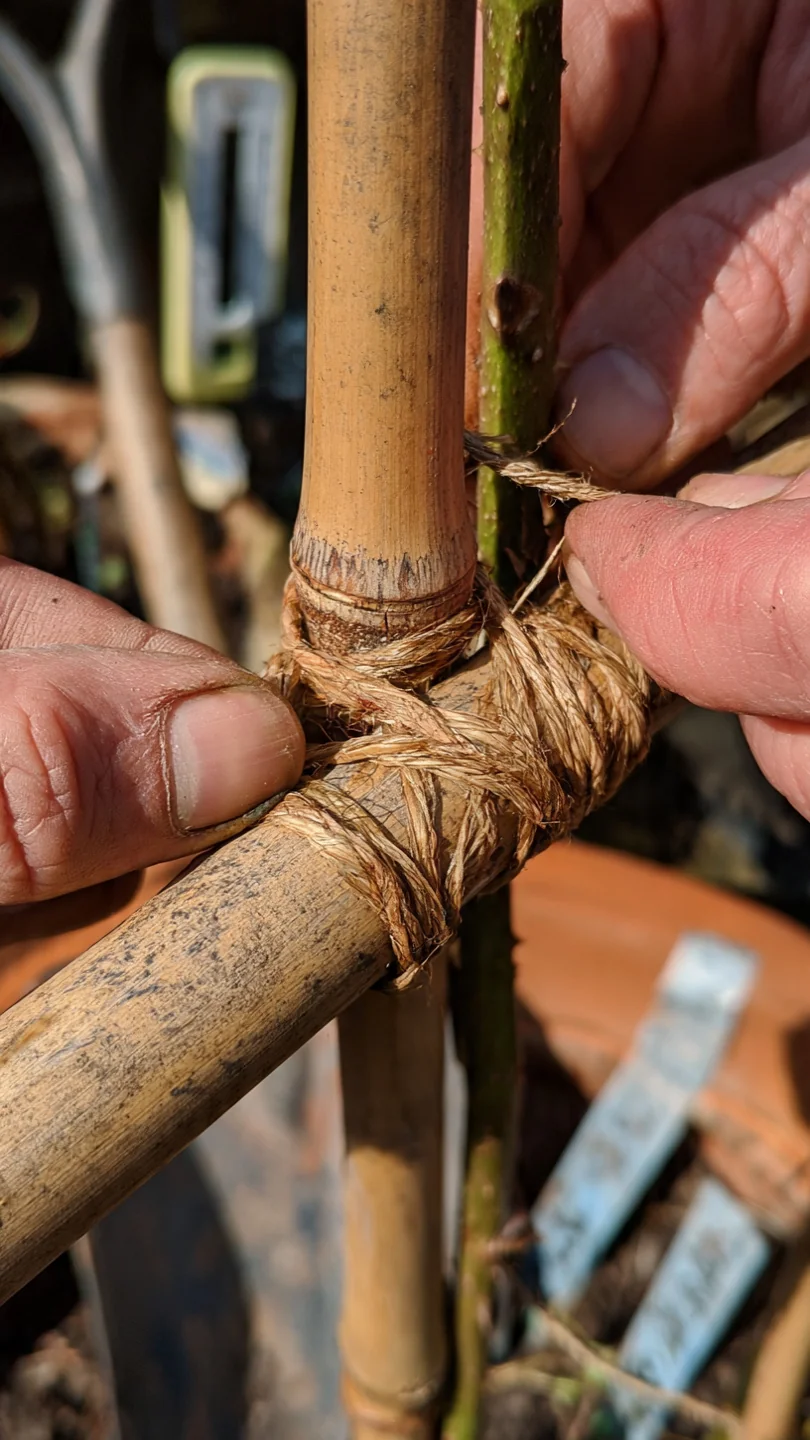
Threshold rule: select bamboo poles at least 1.5 inches thick and lash rungs every 12 inches with weatherproof twine or copper wire. The natural nodes give grip points that roses cling to without slipping. In humid microclimates bamboo resists rot better than softwood when treated with linseed oil once per season. Edge case: pair with a 4 inch wall gap to avoid moisture wicking into the canes.
Modern Modular Panel
Best for: Branch 2
Use when clean lines matter and future expansion is possible. Skip if your rose produces thick basal canes over 1 inch diameter because the narrow grid slots limit early training.
DIY Pallet Vertical Trellis
Best for: Branch 3
Disassemble heat-treated pallets, select straight slats, and mount them vertically on a pressure-treated frame spaced 8 inches apart. The wide gaps suit flexible rambler canes that weave naturally. Secure the frame to existing fence posts or set in concrete for arch use. This repurposed build matches the strength of store-bought options at lower material cost while fitting narrow urban pathways.
Starter Stack (What to Choose First)
For Branch 1 Limited Footprint
Start with Wall-Mounted Wire Grid Trellis plus Wooden Lattice Panel. The wire grid provides precise horizontal training while the lattice adds decorative fill and extra tie points. Combined install time stays under 45 minutes and covers 40 square feet of wall with full airflow.
For Branch 2 Moderate Patio Space
Start with Freestanding Obelisk Trellis plus PVC Pipe Vertical Frame. The obelisk gives instant structure and the PVC frame extends height or width as the rose matures. Total setup uses under 5 square feet and allows seasonal repositioning.
For Branch 3 Path or Entrance Coverage
Start with Cattle Panel Garden Arch plus Metal Rose Arbor. The cattle panel delivers load strength across the span and the metal arbor adds refined vertical bars for training detail. Together they frame 6 to 8 feet of walkway within one afternoon.
When This Won’t Work
Climbing rose trellises fail when the rose vigor exceeds 20 feet of spread or when the structure sits flush against a wall in areas with over 60 percent summer humidity. In both cases canes overload the supports or foliage stays damp and invites disease. Measure your variety’s mature width on the tag before buying. If conditions match either failure point, switch to a lower-vigor climber or move to a container-grown setup with a freestanding obelisk.
Another measurable limit appears in sustained winds above 20 mph: lightweight PVC or thin bamboo options twist within the first season. Replace with metal or cattle panel anchored at least 24 inches deep.
Choosing the Right Option for Your Situation
Budget Threshold
Under low budget stay with wire grid or bamboo ladder options that use hardware-store parts. Move to modular steel panels only when mid-range budget allows powder-coated durability.
Time Threshold
If under 30 minutes available choose bolt-on wall grids or obelisks. Full arches or pallet builds require 2 to 4 hours including anchoring.
Technical Constraint (Wind Exposure)
In exposed urban rooftops or corners select metal or cattle panel only. Avoid lattice or PVC where gusts exceed 15 mph average.
Yes/No checklist:
Do you have wall or fence studs within 24 inches? Yes leads to Branch 1.
Is ground space over 3 square feet and open? Yes leads to Branch 2.
Does the spot frame a path under 8 feet wide? Yes leads to Branch 3.
If none match, reconsider rose variety first.
Expert Q&A
How far behind the wall should any trellis sit to prevent disease?
Keep a consistent 4 to 6 inch gap using stand-off brackets or blocks. This spacing allows air to circulate behind foliage and dries canes after rain or dew, reducing fungal pressure in small urban gardens.
What horizontal spacing works best for training stiff-caned climbing roses?
Space tie points 12 to 18 inches apart starting 24 inches above soil. Wider gaps let flexible ramblers weave but cause stiff hybrid tea canes to sag under bloom weight.
Can the same trellis design handle both roses and heavier vines like wisteria?
No. Rose canes stay under 1 inch thick while wisteria woody stems reach 2 inches and add far more torsional load. Use rose-rated supports only for roses.
How deep must posts go for an arch in freeze-thaw climates?
Set posts at least 24 inches below frost line or use concrete footings. Shallower anchors shift within the first winter and misalign the entire structure.
What material lasts longest near saltwater or road salt spray?
Powder-coated steel or heavy-gauge galvanized cattle panel outlasts wood and untreated bamboo by several seasons because neither rots nor splinters under repeated salt exposure.
Conclusion
The correct climbing rose trellis comes down to one decision: match its horizontal supports and clearance gap to your exact space and rose type instead of defaulting to the prettiest shape. The number one mistake remains installing without the 4 to 6 inch wall gap or skipping horizontal ties, both of which shorten the structure’s life and reduce blooms.
Next step: pick your Decision Grid branch, gather the two Starter Stack items, and install this weekend. For clean modern lines once your roses establish, see the modern vertical garden page.