
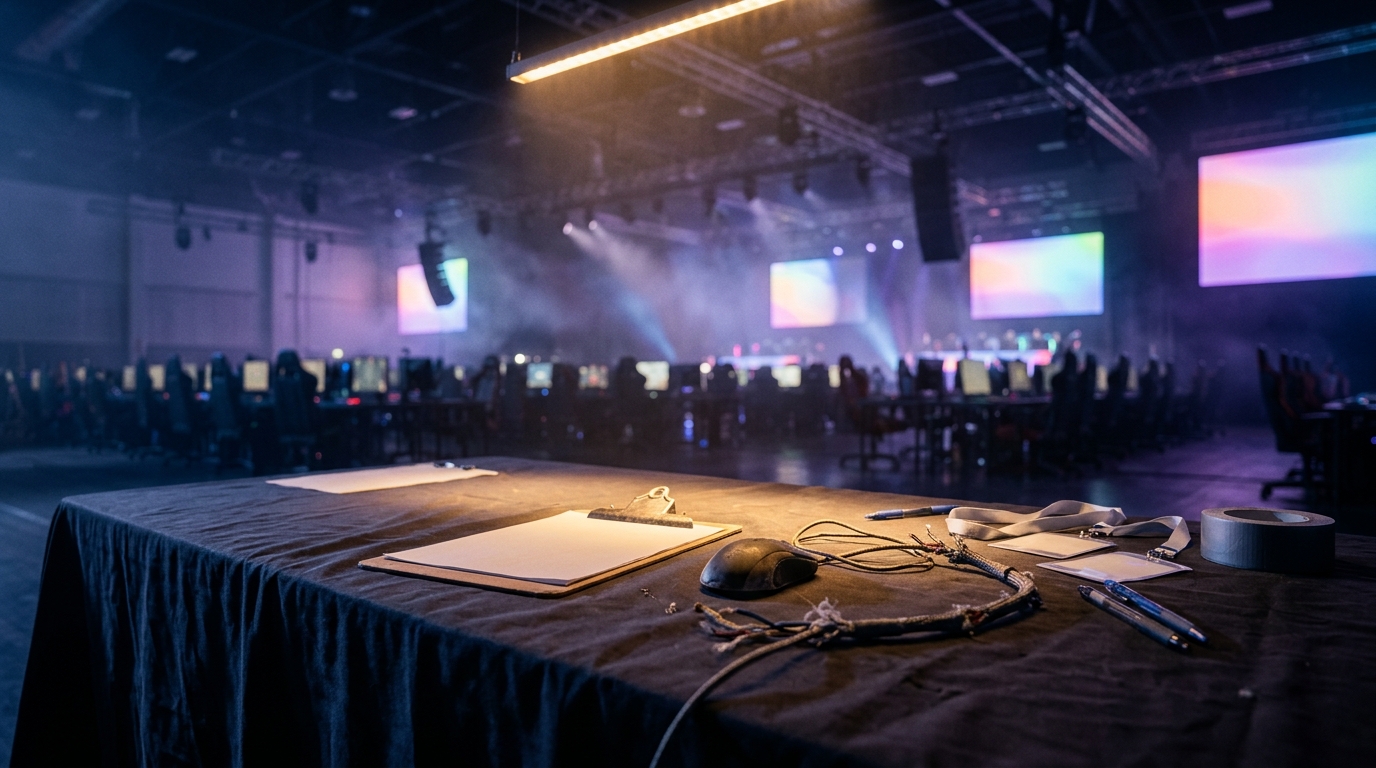
At the regional qualifier, Ashley wore her Void Killer jersey in the audience while staff walked the floor in shirts that read ask me about our harassment policy. In the fourth round, Bridget’s opponent muttered something that made her hesitate. She looked up, found Ashley, and got a single nod. Then she took the match apart so completely that he shoved his chair back and stormed off.
Bridget won the title that afternoon and pointed at Ashley before accepting the trophy. Ashley cried and wasn’t embarrassed about it. Local coverage mentioned the program, applications poured in, and within three weeks it had grown from 15 pairs to 40, with pros Moira had recruited among the new mentors.
Ashley still checked Calvin’s stream now and then. It held 28 viewers, half of them suspicious accounts, and he was playing a different game because the bans had locked him out of his old one. Auto kept resurfacing on forums under new names, and someone always recognized his writing within hours. Kevin disappeared into an IT job far from gaming. The footage followed all of them.
Heather won her first major eight months into the program and credited the support system in her interview. Then an event manager named Lynette invited Ashley to join a panel on inclusive competitive spaces, and in the Q&A a girl who looked about twelve asked how to cope with being afraid to compete in person. Ashley told her the fear made sense because the risks were real, and that support made them manageable. Six more people asked for the application link.
A Voice Over the Speakers
Bridget’s first major brought hundreds of competitors and streaming coverage. Ashley walked her through registration, then took a seat where Bridget could spot her. Bridget reached the semifinals, took a round off a five-year veteran, lost, and shook his hand properly. Her interview credited the program and the new rules, and applications tripled in three days. Ashley won her tenth title at that same event and used her own interview to ask for more mentors.
Heather later signed with one of the biggest teams in competitive gaming, among the first women on its roster. Two other tournament organizations asked Ashley to help rewrite their harassment policies, and both adopted rules stricter than what she’d proposed. Some players grumbled about political correctness, which told her the policies were catching the right people.
Ten months after that first major, Bridget reached another final, a five-game series against a pro four years into her career. She lost the deciding game on a risky play, took second place at 15, and smiled anyway. Coverage called her the youngest finalist in the event’s history and analyzed her play without mentioning her gender once.
Then, as the crowd drifted out, a man shouted that she had probably cheated. Bridget walked to the stage microphone, which was still live, and asked whether he wanted to say that again, adding that her mentor was Void Killer. The silence lasted a beat. Someone laughed, then others joined, until the whole room was laughing at him. He pushed out through a side exit while people clapped Bridget on the back.
Watching it, Ashley realized she’d been describing her own work wrong. She had always pictured herself holding a door open for other girls. Bridget never waited for anyone to hold anything open. She walked in and treated the room as hers.
The program turned one year old with 85 mentor pairs across nine games, a Discord server of more than 200 members, and organizations in six countries asking how it worked. Ashley won her 11th championship, announced she would step back from full-time competing to lead the program, and soon watched Bridget become the youngest champion in that tournament’s history, still playing under the tag Ashley’s Mouse.
The program then became a formal nonprofit with Moira as executive director, able to pay for travel, equipment and entry fees for girls who couldn’t otherwise afford them. Fourteen months after the day at registration, Ashley won her 12th title in Seattle, and coverage spent more time on the nonprofit than on the trophy. Calvin’s stream was down to 40 viewers by then, mostly scam bots. She checks it sometimes, and she has stopped apologizing for that.
Reflection: Harassment like this depends on the target standing alone and the room staying quiet. What changed things for Ashley was the written rules, the staff who enforced them, and the witnesses who finally spoke up, along with the trophies. I think that’s the part worth keeping: a decent community has to be built on purpose and maintained, like any other piece of infrastructure.