
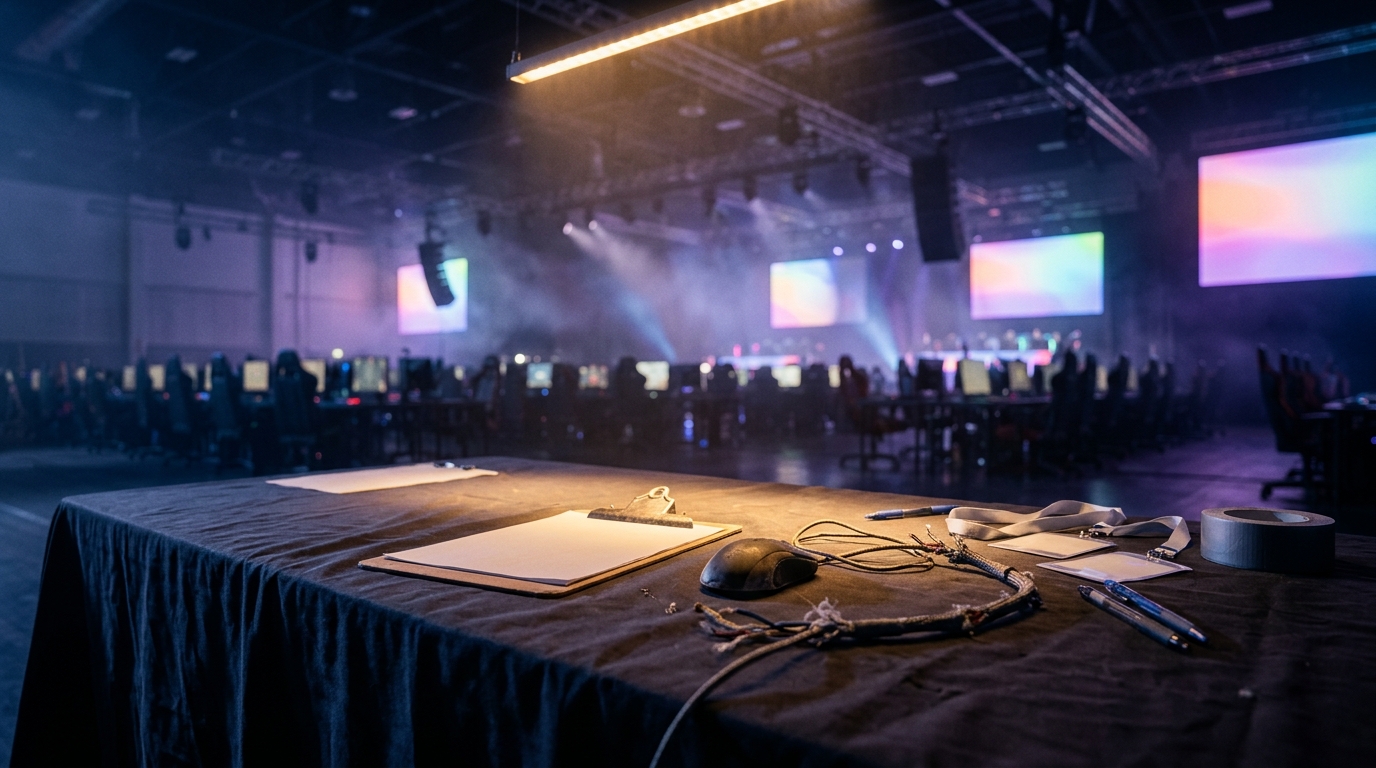
By the finals, the story had moved through the entire hall. People had filmed the registration scene, including Kevin wrecking her mouse and Calvin’s hand across her face. The organizers pulled all three men aside during the semifinal break, and they returned looking gray. Ashley won the final for her sixth title, and when she raised the trophy the crowd chanted her tag loudly enough to rattle the walls.
In the post-match interview, the host asked about competing live for the first time, and she told the truth, including every detail about what the three men had done. The footage was everywhere within hours, then on gaming news sites, then in mainstream outlets. Calvin’s team dropped him before sunset. Auto lost his streaming partnership, and Kevin’s sponsorships evaporated overnight.
Three weeks later, the tournament organization announced a permanent ban for all three, lifetime and without appeal. Calvin posted a video saying he’d made mistakes and was working on himself, and the comments were shut off within the hour. An apology that can’t survive its own comment section usually wasn’t about the people who got hurt.
The Inbox That Wouldn’t Empty
The messages started that night and never really stopped. Girls wrote about controllers yanked out of their hands at LAN events, about being followed to their cars, and about quitting because someone insisted they only won because the other player went easy on them. Ashley read every one, usually after midnight when she should have been sleeping. What bothered her most was how ordinary everyone had treated all of it, as though harassment were part of the furniture of gaming.
Three weeks after the tournament, an organizer named Moira Osborne emailed her. Moira ran registration and handled competitor complaints, and she wanted help writing an anti-harassment protocol with real consequences, not a conduct code buried on page seven of the rulebook. Ashley answered within the hour. Over the next three weeks, on video calls with Moira, two other organizers and a lawyer who specialized in event safety, she described everything that had happened at that table, down to the wrist and the hand over her mouth.
The policy they drafted required harassment training before anyone could register, immediate removal for physical intimidation, and lifetime bans for documented patterns of abuse. It covered everything from the registration line to online behavior after the event, and Moira pushed for an anonymous reporting option so witnesses could submit evidence safely. The lawyer made sure every line could actually be enforced.
Two months later, Ashley attended the first event run under the new rules, as both a competitor and an observer. From across the hall she watched a man in a green jersey lean over a girl filling out her forms and say something about her appearance. Security reached him in under two minutes, pulled him aside, and walked him through the printed policy. He got a formal warning on his competitor file, with a lifetime ban waiting at three strikes, and he looked genuinely stunned that anyone cared. His surprise told Ashley more about the old days than any statistic could.
The girl he’d targeted found Ashley afterward and thanked her. She said she had almost not registered, afraid of exactly what had just been stopped, but Ashley’s interview had convinced her to try. Ashley carried that conversation around for days, wondering how many others had stayed home.
Ashley won that event too, her seventh championship. A week later a journalist named Cleo Darling asked for an interview about women in competitive gaming, and Ashley agreed because Cleo promised to center other voices. Near the end, Cleo asked whether answering messages one at a time was the best use of her. By then more than 300 were sitting unread. Ashley took the question to Moira, and within a day it had a shape: pair experienced women with newcomers, so nobody has to walk into registration alone.
Applications opened, and in 24 hours there were 47 mentees and 12 mentors. Ashley read every mentee form herself. One came from 17-year-old Heather, who had four years of clean play behind her and had never attended a single LAN, because the thought of walking in alone made her physically sick. Ashley took her on personally and promised to sit next to her at her first event.
Two Girls and Two Registration Tables
Two months in, Heather told Ashley she was ready for a small regional event. She dropped her equipment bag twice before reaching the door and could barely hold the pen at registration, so Ashley carried the bag and stayed beside her through the paperwork. Nobody said anything out of line. Heather won three matches, lost in the semifinals, and walked off glowing, because being there without feeling unwelcome was worth more to her than a trophy.
Next came Bridget, a 14-year-old who had spent years playing online with her voice off and her gender hidden. Her application said Ashley’s interview was why she wanted to try. She played with the same aggressive style Ashley remembered from her own early days, and the same fear of being seen. They met twice a week, and Ashley taught her breathing techniques, how to recognize someone trying to rattle her, and what to do when her own hands started shaking.
When Bridget asked whether people would treat her the way Calvin had treated Ashley, Ashley gave her a straight answer. Some might try, but organizers enforced the rules now, and bystanders spoke up more than they used to. She promised to sit where Bridget could find her.