
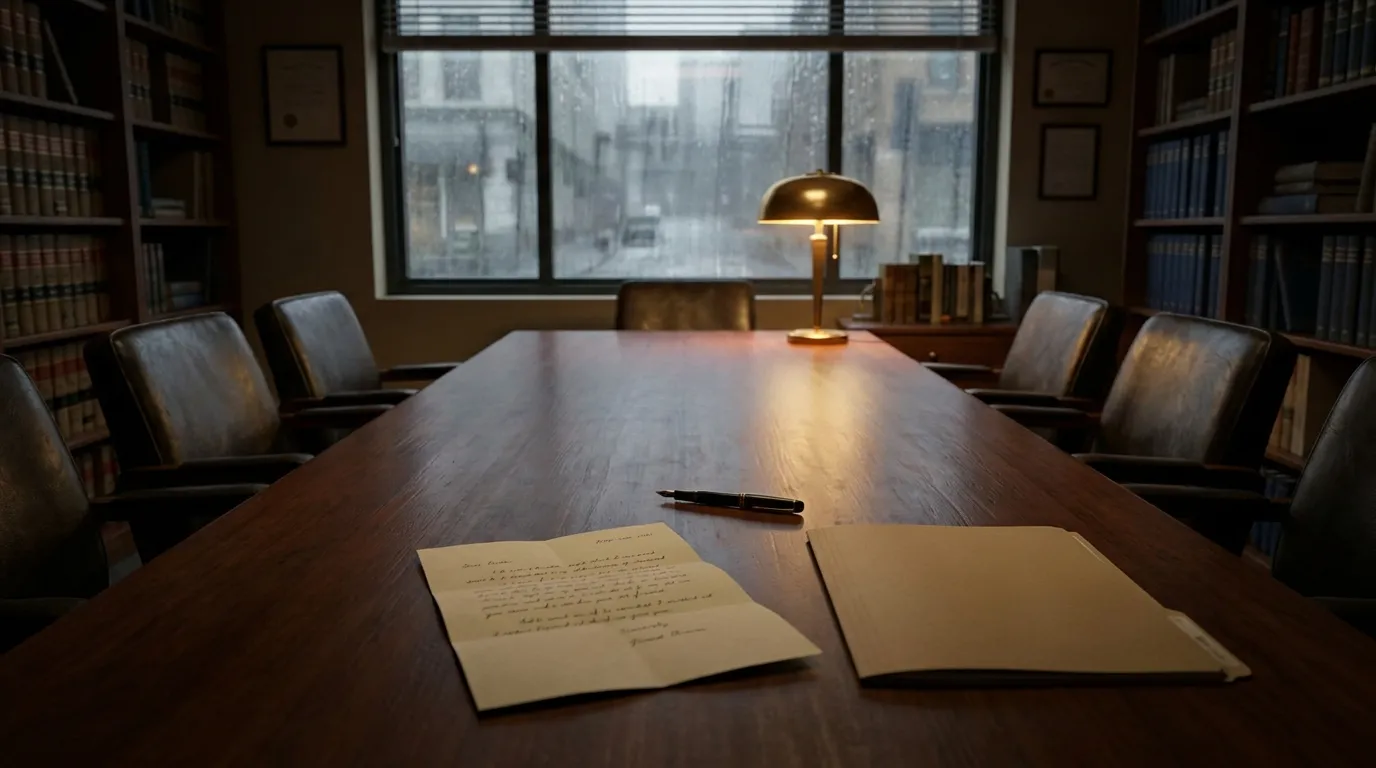
Then, on a rainy afternoon, a piece of his family’s world fell into his lap. A couple he was counseling, deep in debt, mentioned that Ryan had pitched them on a family investment project the year before. The paperwork had looked off, they said, so they’d walked away. A few days later at the cabin, with rain drumming on the tin roof, Mark went through the drawer where Grandpa kept his meticulous records and found a handwritten letter tucked between two envelopes.
Grandpa had written about Ryan and Emma directly. He’d watched them circle when they smelled money, the letter said, and he’d written clauses into the will to protect Mark that they wouldn’t know about unless Mark pressed the matter. If they tried to coerce him or change the terms, they would forfeit their claims. Mark understood he’d been handed a shield hidden in plain sight, and that timing would decide everything.
So he waited, and he collected. He kept every text and every arrogant, threatening email, talked with people Ryan had pitched, and stayed close to the attorney, who began sharing small details about how thoroughly Grandpa had prepared. Emma eventually left a frantic voicemail saying Ryan was already working with their father on a plan to liquidate assets, and that Mark shouldn’t think he could outsmart them. Buried in the threat was confirmation. They were spending money that wasn’t theirs and counting on him to bend.
The Meeting at the House
The call came on a gray afternoon, and his father didn’t bother with a greeting. There would be a family meeting at the house tomorrow, he said, and Mark should stop dragging his feet and bring the paperwork. They’d settle this once and for all. Mark let the silence stretch, the way Grandpa had taught him, and when his father added that he shouldn’t embarrass himself, he simply said, “I’ll be there.”
He hadn’t set foot in his childhood home since the funeral. The same worn carpet and framed photos greeted him, only colder somehow. Ryan and Emma were already at the dining table, glowing with anticipation, and their father sat at its head like a judge waiting to pass sentence, his fiancée’s hand resting on his arm. Ryan tapped a thick stack of documents and said everything was ready, and Emma slid a pen across the table.
Mark sat down slowly. “So this is it,” he said. “You’ve all decided what’s best for me.” Then he mentioned, almost casually, that he’d been to the attorney’s office the week before to go over Grandpa’s will again. Emma’s smirk faltered. He unfolded a paper and set it on the table: Grandpa had added a clause, he explained, and anyone who tried to coerce or pressure him into signing over his inheritance forfeited their share.
Ryan laughed too loudly and called it a bluff. Mark offered to show him the paperwork, which the attorney had already filed with the court. Every message, every voicemail, every time they’d pushed papers across a table was documented, and it was enough. “You wouldn’t,” Emma whispered, her face gone pale. “Grandpa gave me more than property,” Mark said. “He gave me protection from exactly this, and you walked right into it.”
Ryan shoved the papers aside and threatened to fight it in court, and Mark told him the harder he fought, the deeper he’d bury himself. Emma, shrill now, said Mark had manipulated Grandpa and would waste everything. “Maybe I will, maybe I won’t,” he said, standing. “But it was never yours to decide. And now, because you couldn’t help yourselves, it won’t be yours at all.” Their father spoke last, low and almost pleading. They were family, he said, and Mark would regret this.
Mark looked at him, really looked, at the man who had never defended him. “The only thing I’d regret is letting you take what Grandpa meant for me to protect,” he said. He slipped the letter back into his jacket and walked to the door. Pausing there, he looked back at his stunned family at the same table where they’d once laughed at him. “Grandpa saw you clearly,” he said. “And now so do I.”
Outside, the rain had stopped and the air felt lighter than it had in years. Mark realized he’d never been the weak one in that family. The weakness had been theirs all along, in their greed, their arrogance, and their refusal to look at the person sitting right in front of them. Grandpa had trusted him, and Mark had finally proven him right.
Reflection: Mark’s family treated his quiet as an empty space they could fill with their own plans, and that was the whole mistake. People who push others around assume silence means weakness because they’ve rarely had to sit in it themselves. His grandfather taught him to be patient, which is a different thing from being small, and his family never noticed the difference.
We’d love to hear from anyone who has sat through a will reading, or any family meeting, where the loudest voices assumed they’d already won. Did you speak up in the moment, or did you wait like Mark did? Plenty of readers tell us it took years to work out which approach was right for them. Share yours in the comments, because we read every one.