A mediator from the provincial office arrived, someone who had handled disputes like this before. He listened as grandfather talked about generations of tradition and grandmother described binding as a gift of love that secures a daughter’s future. Then Dr. Crimson walked him through the ward, where one girl’s feet smelled of infection even after daily cleaning and another couldn’t put weight on hers without screaming. The mediator’s face shifted slightly, but he gave nothing away.
The pressure kept growing. One night someone sliced open the back wall of her tent with a knife, and Dr. Crimson moved her to a small room with real walls and a lock. Meanwhile the family’s blockade stopped the supply cart, so the camp washed and reused old bandages while medicine bottles ran low. Staff argued about whether protecting one child was worth risking everyone else’s care, and the girl, sitting against her wall, felt there was no choice that wouldn’t hurt someone.
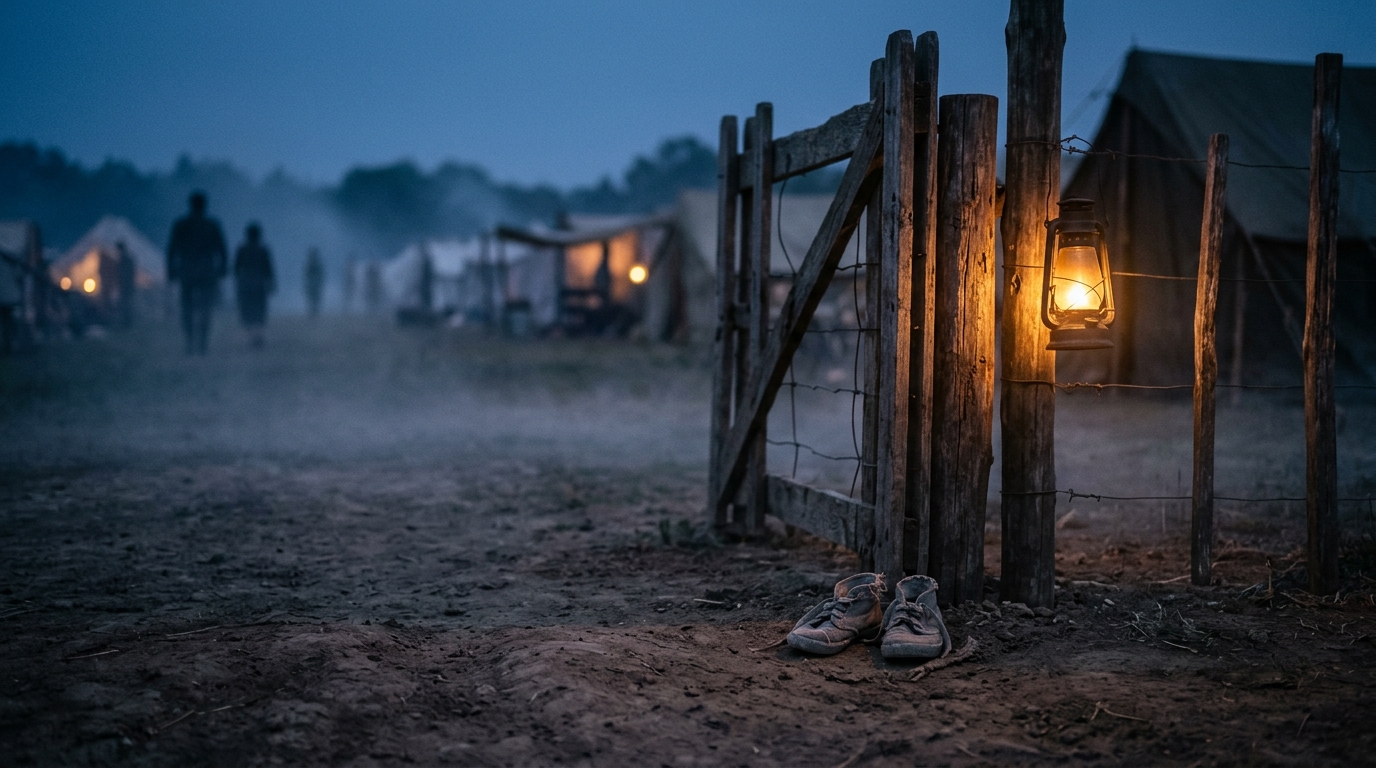
The magistrate agreed to hear the case in three days. Mrs. Catherine told her honestly that he could order her home if he decided tradition outweighed foreign medical opinion. They practiced her answers every evening until she could say them without crying, and at night the girl lined up her borrowed shoes beside the bed with cloth stuffed in the toes, so she could run in them if she had to.
On the day, twenty relatives stood in neat rows in their best clothes. Grandmother, at the front, described binding as an act of love that mothers perform so daughters can have good marriages and security, and several onlookers nodded as though they believed her. Dr. Crimson answered with five years of case notes: blackened feet, gangrene, girls who couldn’t stand unaided. He added that a six-year-old had died two weeks earlier from binding complications, and the courtyard went quiet. Then the magistrate called the girl forward, and she forced her voice to work. She said she’d run because she wanted to keep her feet whole, and she described her oldest sister leaning on walls and her second sister’s lost toes. He did not rule that day, but he ordered that she could remain at the camp while he reviewed everything.
Brick Walls and Blue Shoes
Outside the courtyard, a cousin spat near her feet and called her a disgrace, and the relatives turned their backs. Her mother wouldn’t meet her eyes. Over the next days a dozen of them shoved against the camp gate hard enough to bend the wood. Through the fence slats the girl caught her second sister’s eye and watched her mouth a single word: run.
That afternoon the girl from the ward with the infected feet died. She was six years old and had been bound for just eight months. Villagers who had once sided with the camp began blaming Dr. Crimson, because a foreigner is an easy target for grief and fear. The magistrate, shaken by the news, sent a red-sealed order approving her transfer to the mission at once.
They left before dawn, with the girl hidden under a tarp between grain sacks, her borrowed shoes clutched to her chest. At the district checkpoint two of her uncles stepped into the road and demanded to search the cart. The tarp tore away, and a hand closed around her ankle exactly like the night she escaped, and she froze. Mrs. Catherine jumped down waving the magistrate’s order, camp staff formed a barrier around the cart, and someone ran for the constable. He read the order aloud and warned that interfering with it carried serious penalties, and the uncle finally let go.
Behind the mission’s high brick walls, her new room had a lock that worked from the inside, and the teacher showed her how to use it. That evening a small child delivered a folded note to the gate. Her family had struck her name from the family register, and in their records she no longer existed as a daughter. She felt like crying and felt lighter at the same time, and she noticed both were true. Mrs. Catherine promised nothing. Choosing this, she said, meant living with rejection and judgment, and running had only been the start.
Weeks of ordinary routine followed. She learned to wrap her own feet in soft cloth that supported without binding, and she learned the characters for tree, water, and sky. A second, shakier note slipped through the gate saying her second sister was being punished with extra work but was alive, and glad she’d gotten away. Then the magistrate issued his final notice: she could not be forced home while her feet were still healing, and the mission would hold temporary guardianship. Mrs. Catherine reminded her that this protection was conditional and could change.
One evening in class she wrote her own name with a brush, with nobody guiding her hand, and under it she added the character for “run.” That night she set the plain blue cloth shoes Mrs. Catherine had given her beside the bed, toes pointed at the door, and for the first time it wasn’t about escape. Tomorrow she’d put them on and walk to breakfast on her own feet. They still hurt when she stood too long, and the cuts were healing into pink scars that would likely never fade, but she fell asleep easier than she had since the first terrified nights.
Reflection: What stays with me is how little the adults in this story needed to be villains to do real harm. Grandmother measured and frowned out of conviction, her mother stayed silent out of habit, and the whole village nodded because nodding was easier than asking what the bones were for. It took one stubborn child, a doctor who wouldn’t back down, and a teacher who refused to lie to her about the odds to interrupt a custom nobody had questioned. Honestly, the most useful thing Mrs. Catherine did was tell her the truth, because a safe place that pretends there’s no danger isn’t safe at all.