
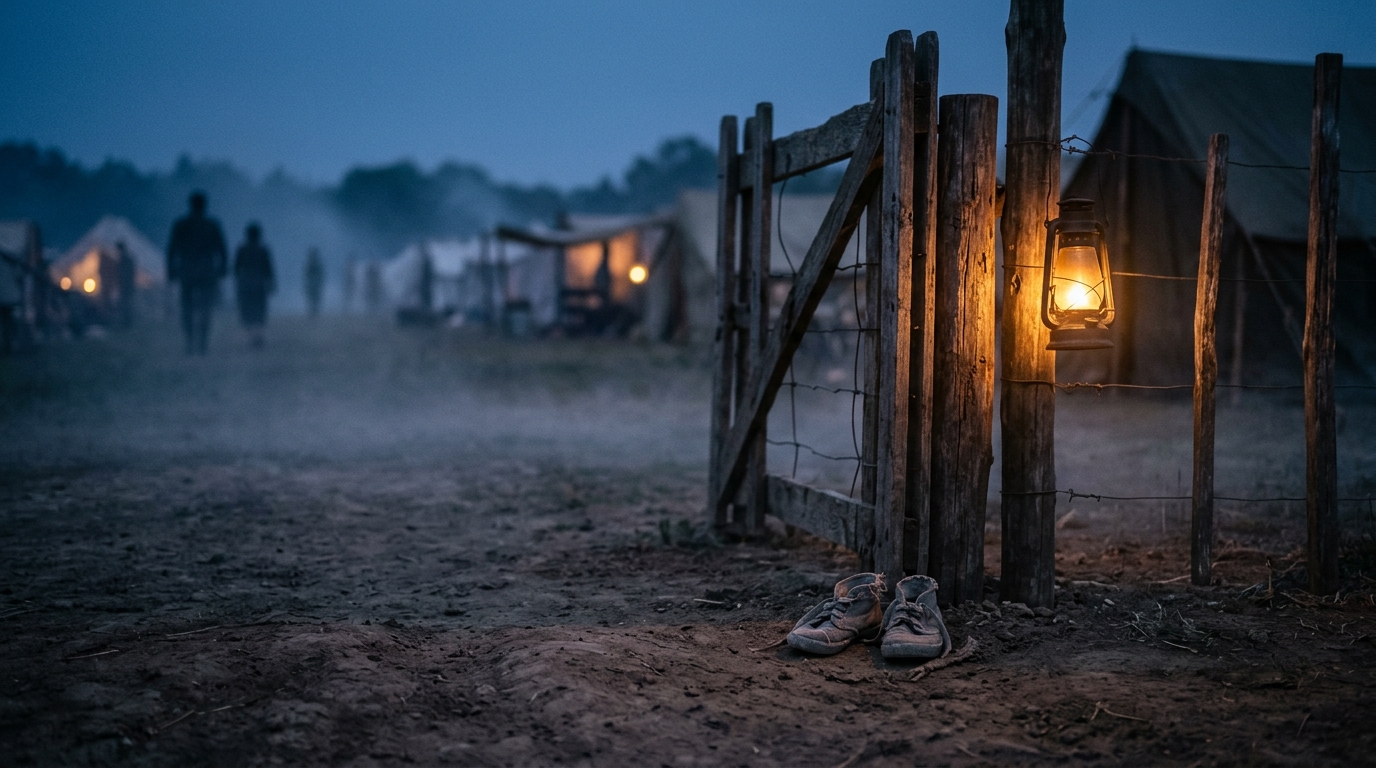
Then the mornings turned into training. Grandmother would grab the girl’s feet without warning and bend them, readying the bones. She made the child walk on the sides of her feet for hours, and had aunts hold her down while she pressed her thumbs into the arches until the girl screamed. “The bones must learn to yield,” she said, which is a strange thing to say about a four-year-old.
The night before the new date, the family soaked her feet in animal blood and herbs to soften the bones and threw her a party for becoming a woman. Her sisters could barely stand, let alone dance, but everyone around them kept up the pretense that it was beautiful. Grandfather gave a speech about family honor, her uncles toasted a husband who didn’t exist yet, and the local matchmaker sat taking notes on her father’s business and calculating her value. A room full of adults looked at a small child and saw a transaction, and every one of them was smiling.
In the middle of the celebration, her second sister slipped her a knife. “Run,” she whispered. “I can’t, but you can.” The family was ready for runners by then, so all the girls were locked in during binding week, with boards over the windows and guards at the doors. An uncle slept right outside her room.
Over the Screen and Into the Dark
At midnight she cut through the bedroom screen with the knife and started down a rope of bedsheets she’d been knotting together for months. The moment her feet hit the ground, the dogs started barking and her uncle’s hand closed around her ankle. “Going somewhere, little one?” he asked. She slashed at his hand and drew blood, and he let go, cursing. Then she ran barefoot through the dark streets, her unbroken feet carrying her over stones and thorns.
Behind her came shouting, more dogs, and the noise of her family rousing the neighbors to hunt down their runaway. The mission school was six villages away, and everyone knew that was where runaways went. She could hear horses on the main road and her grandfather sending men to check the mission first, so she turned the other way, toward the foreign medical camp at the edge of the district. It was twice as far. She waded through rice paddies and tore through forest paths until her clothes hung in strips.
At dawn she collapsed by the roadside, bleeding and delirious. Mrs. Catherine, a mission teacher who happened to be heading for the same camp, lifted her onto a cart, covered her with grain sacks, and told her not to make a sound. At a checkpoint the girl’s uncle searched the cart and never thought to look beneath the grain.
At the camp, Dr. Crimson cleaned and wrapped her feet while Mrs. Catherine held her hand. “They’ll come,” the girl kept saying. “They’ll take me back.” “Not while I’m here,” Mrs. Catherine said. It was kind, and she wanted to believe it, but she could still feel her uncle’s grip on her ankle. By that afternoon her family had arrived at the gate, all twenty of them.
A Gate Full of Relatives
Staff hid her in a storage tent while grandmother’s voice cut across the camp, demanding the foreign doctor return what she called stolen property. Dr. Crimson answered that nobody could take a patient out of his care without the patient’s agreement. Grandfather shouted that foreigners had no authority over Chinese daughters. Neither side moved an inch. Her relatives and neighbors spread blankets and opened food baskets outside the gate, settling in for as long as it took.
Inside, the girl wedged herself between crates and tried to make her body smaller. Mrs. Catherine taught her to count her breath in fours, in, hold, out, until her hands were steady enough to hold a cup of water. Through the tent wall she could hear the adults arguing about whether tradition or physical safety should win when families demand their daughters back. The vocabulary was beyond her, but the argument wasn’t. It was her second sister’s scream about wanting to be a teacher, answered by people who had already decided tradition mattered more.
The next morning, a different voice rose at the gate. It was her mother, quiet and demanding nothing, asking the girl to come home and accept her fate like a good daughter. Her face looked tired and sad, and for a moment, watching through a gap in the tent wall, the girl felt her determination begin to crack. Then she remembered helping her oldest sister to the outhouse the month before, and how every small step had made her cry. She turned away without calling out. The woman asking her to give in was probably acting out of the only kind of love the house had ever taught her.